






Who Was Nibbling on Our Passion Fruit?

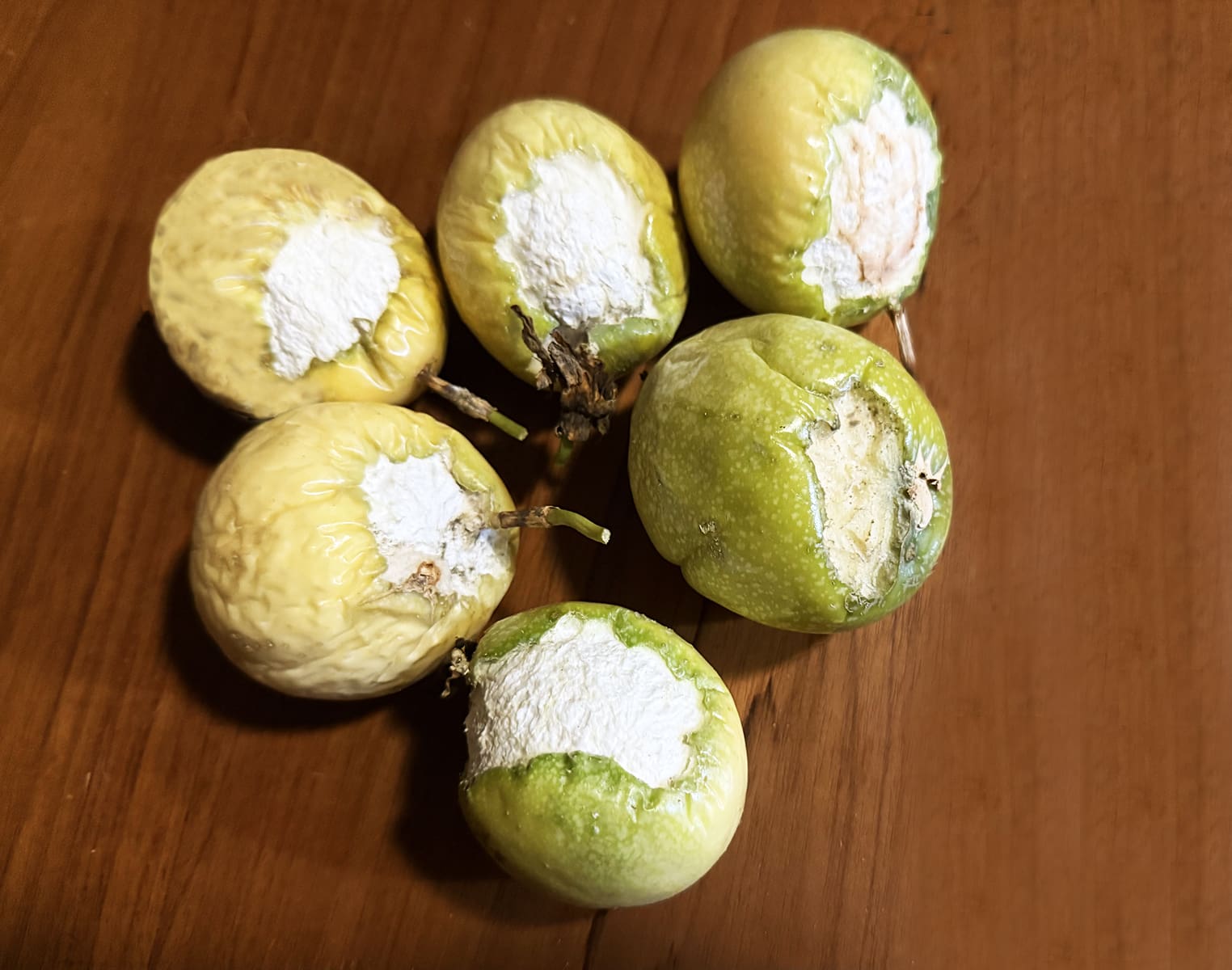
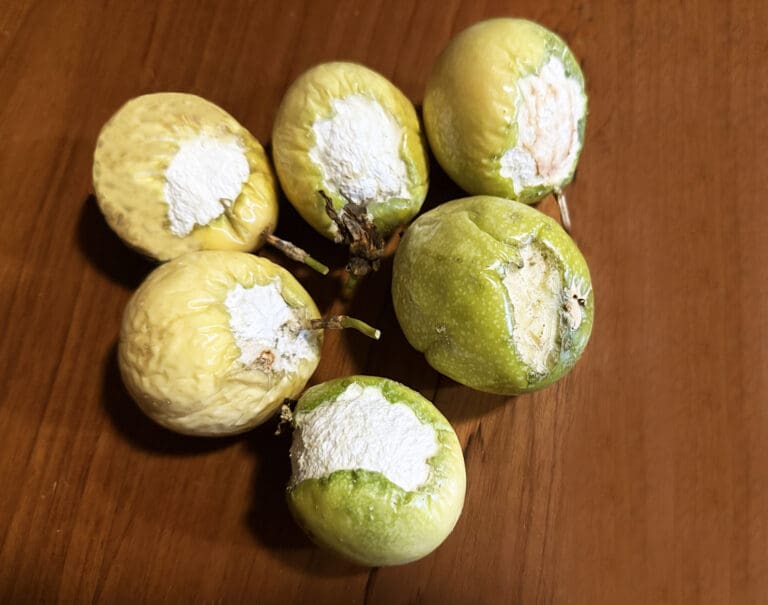
Some of the passion fruits we harvested were partially skinned. (Photo by Gail Karlsson)
We were delighted to have a bountiful passion fruit harvest this year. However, we got frustrated when they kept hanging on the vines high up in the trees until long after our holiday guests were gone.
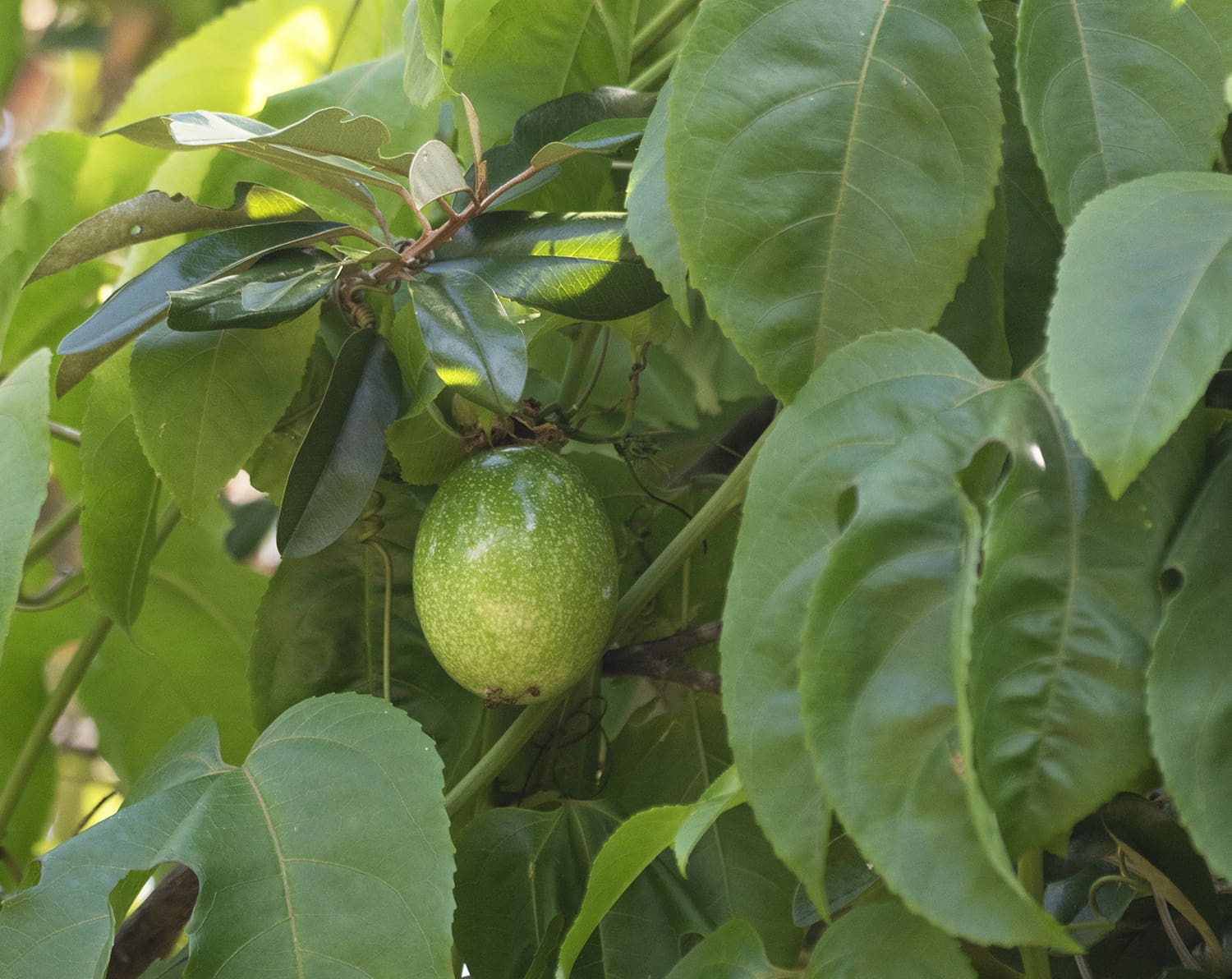
Passion fruits usually stay on the vine until they start to turn yellow. (Photo by Gail Karlsson)
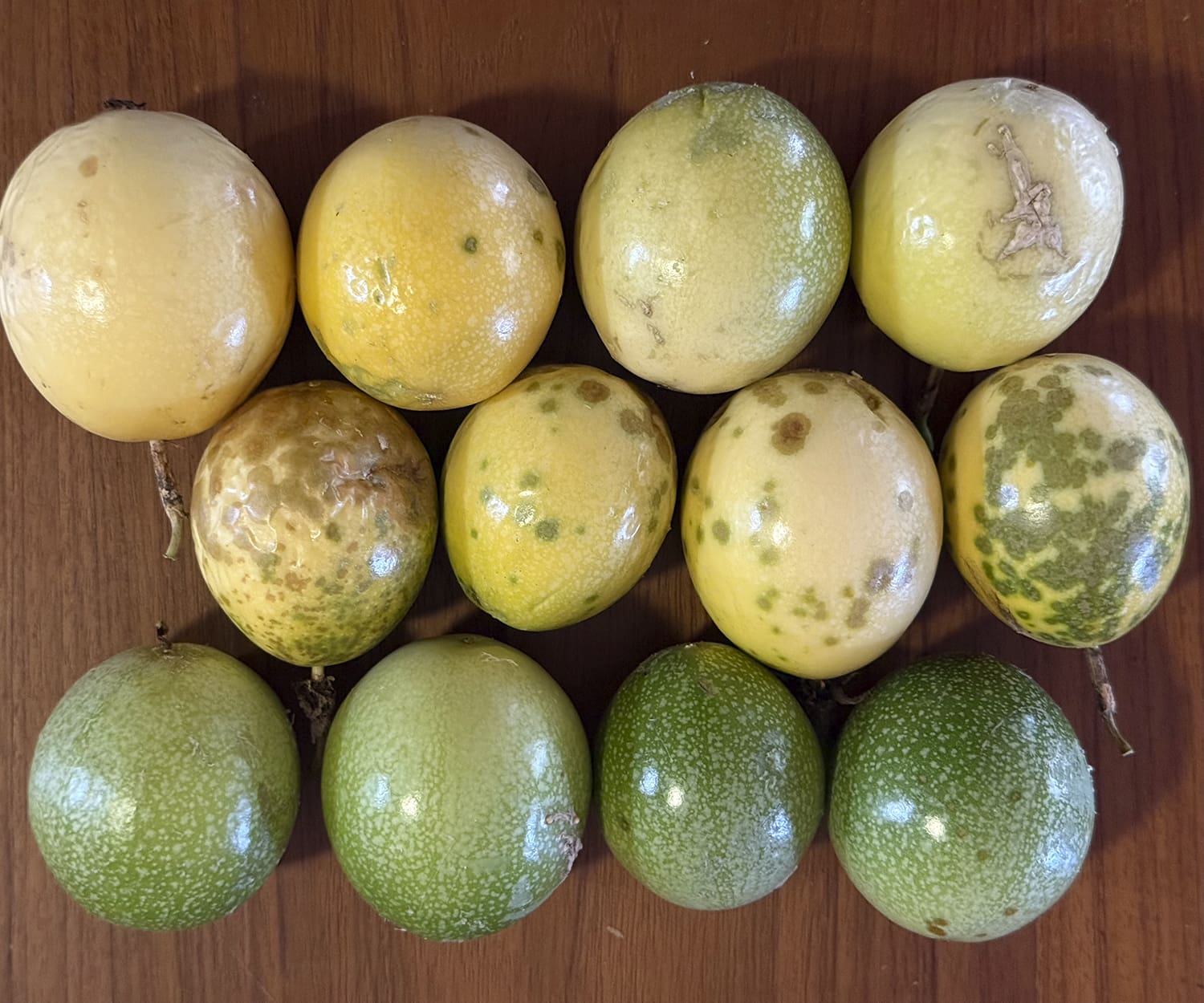
My husband went out every morning to check if any fruit had fallen, and finally one day came in triumphantly with a perfect yellow one. He cut it in half and shared it with me. It smelled heavenly and we just slurped out the seeds and pulp. Then there were no more for maybe a couple of weeks. When more started dropping, he realized they were rolling and not just lying right under the trees. Some of them went back pretty far into the bush and maybe eluded him for a day or so.   Most of them were fine, though they weren’t all yellow yet. As they ripen their skins get crumply and messy looking on the outside. Then they are the sweetest.
Our freshly harvested passion fruits ranged from green to yellow. (Photo by Gail Karlsson)
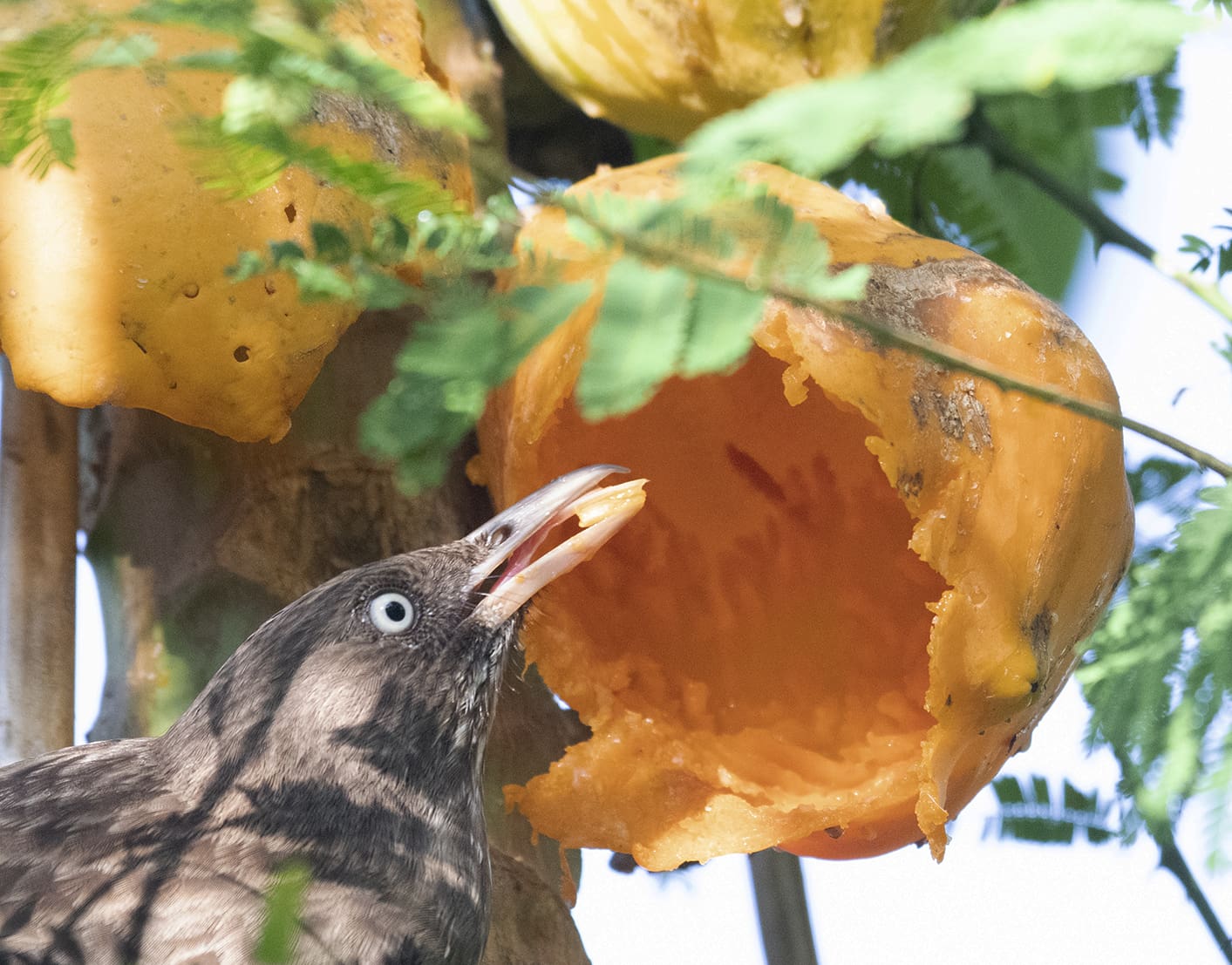
But there were quite a few that turned out to have been nibbled. And nibbled in a very particular way – just an area of the skin was taken off. The pulp and seeds were still intact behind the membrane that contains them. We thought this was very strange. Who would bite a passion fruit and not eat the juicy pulp? We thought about possible fruit bandits. So many possibilities. Birds? I saw some pearly-eyed thrashers up on the vines. I didn’t think they would be content with just the skin, though. They have sharp beaks and can hollow out our papayas entirely, just leaving part of the skin hanging there. However, passion fruits have much thicker skin, and I didn’t see any hanging ones that seemed partially eaten. So maybe not thrashers.
Pearly-eyed thrashers like to eat fruit but are not just nibblers. (Photo by Gail Karlsson)
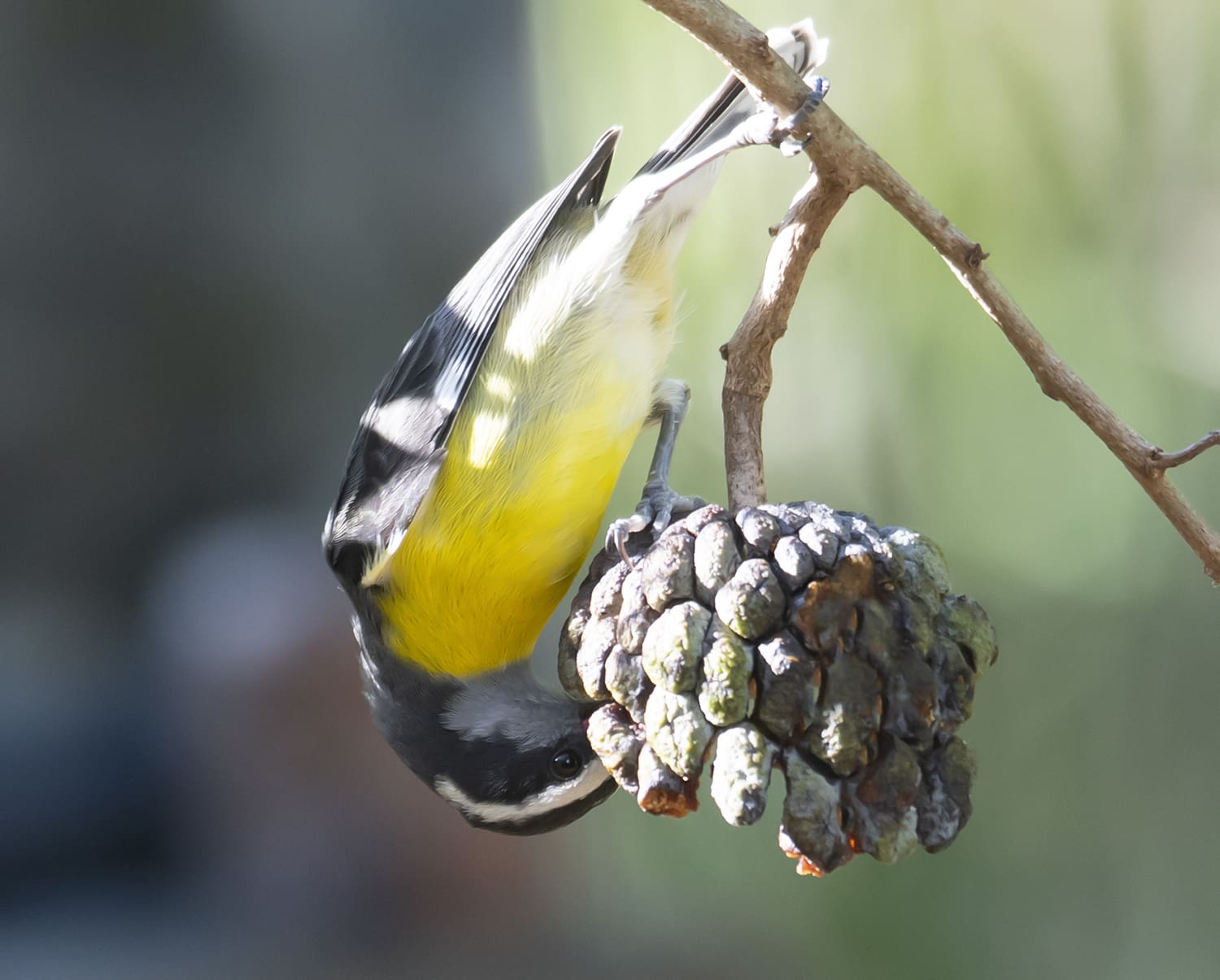
I have seen bananaquits pecking at our sugar apples, especially when the fruits are super soft. Again, though, they tend to go after fruit on the tree and anyway might not have been able to puncture the passion fruit skin.
Bananaquits like to peck at softer fruits. (Photo by Gail Karlsson)
Deer? There are plenty of deer foraging around our house. Mostly they eat leaves and young shoots. Probably they would eat passion fruit lying on the ground, though I think they would chomp down the whole thing, not just nibble.
White-tailed deer are voracious eaters so probably would consume the whole fruit. (Photo by Gail Karlsson)
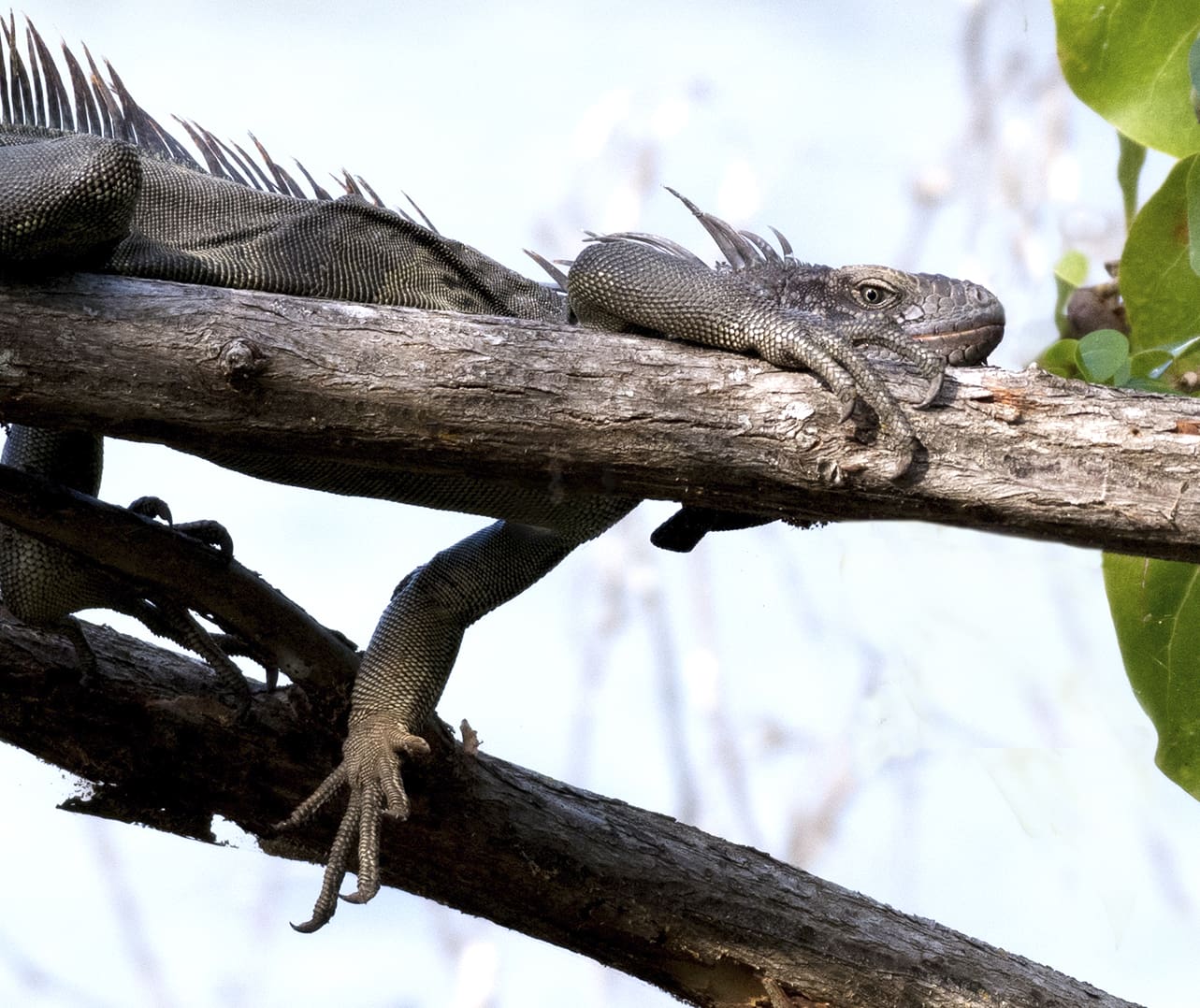
Iguanas? These days we don’t have many iguanas near the house. When I do see them, they are lounging around on the trees down by the pond. They are vegetarians and can climb trees or grab fruit on the ground. But they are more gobblers than nibblers
Green iguanas do eat fruits but probably don’t nibble. (Photo by Gail Karlsson)
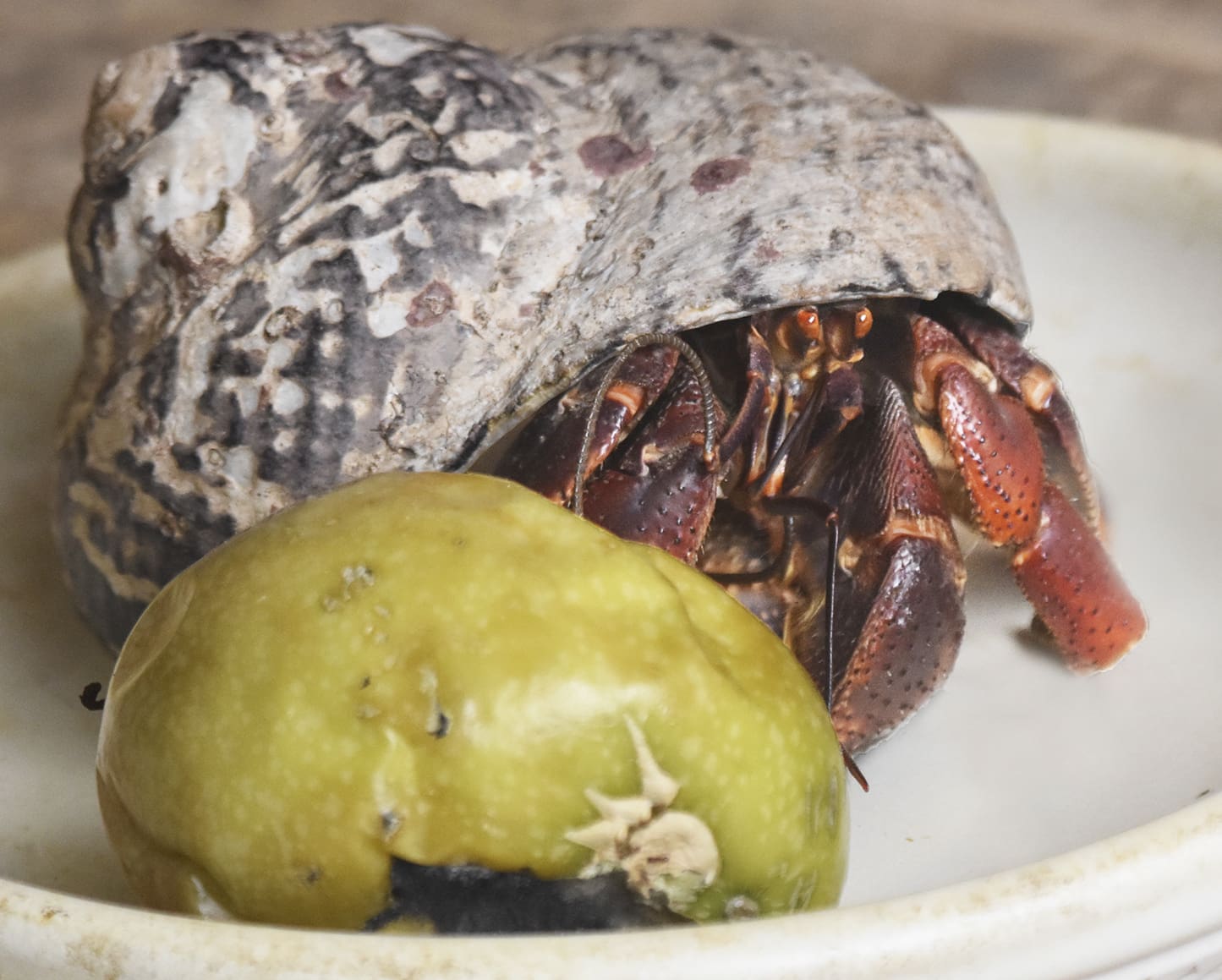
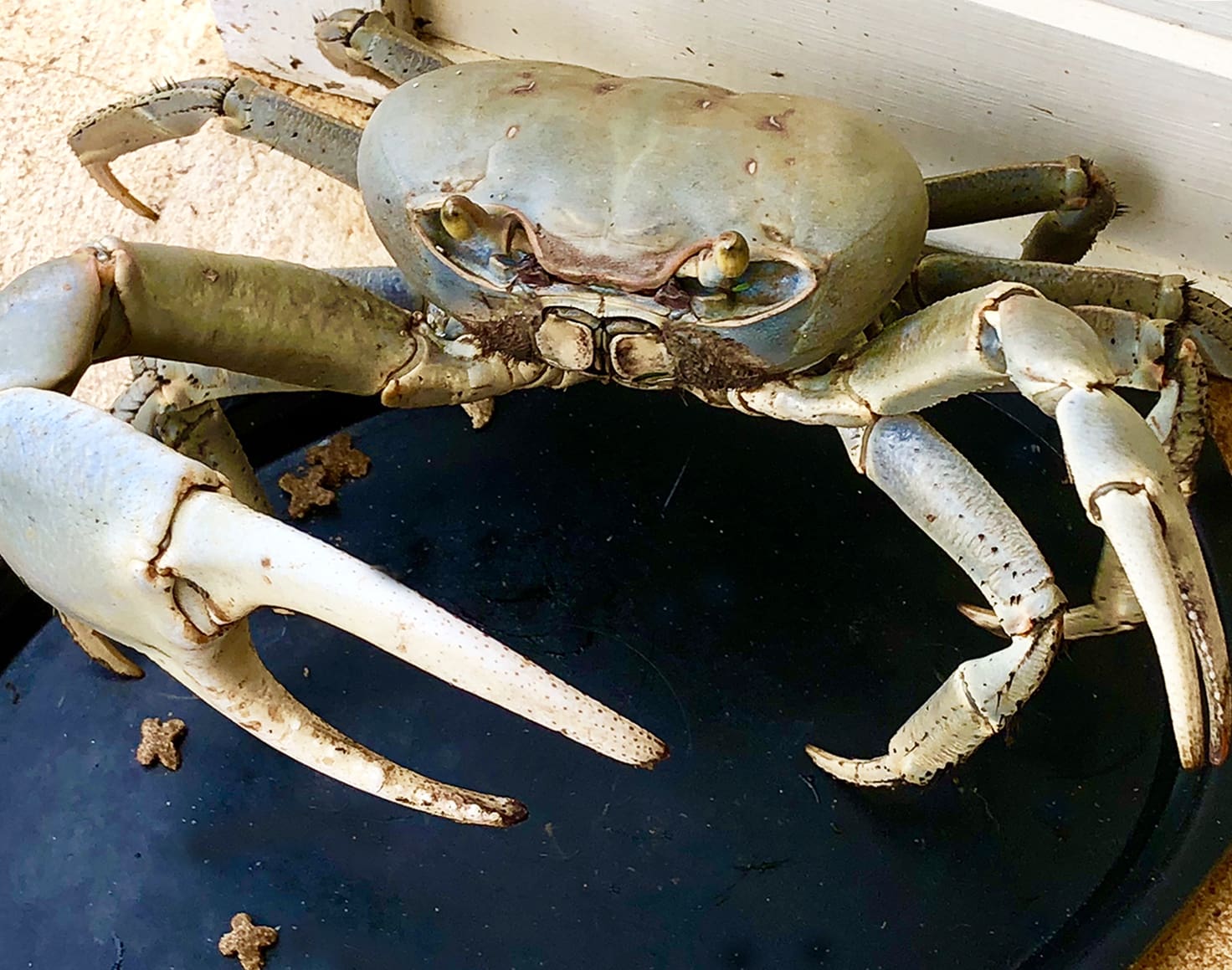
Bats I thought of the local fruit bats – they are small and might be nibblers. I asked my friend Kevel Lindsay, who has done bat research on St. John, but he was doubtful since I wasn’t seeing any damage to the fruits hanging on the vines. Kevel thought it could be either a hermit crab or a land crab doing the nibbling. And he also mentioned various insects that might also be attracted to a fruit lying on the ground. Crabs? We did see an enormous hermit crab roaming around out back during the passion fruit dropping period. It sometimes eats kibbles out of the cats’ bowl and sleeps in the storage area. I put a partially eaten passion fruit in the bowl to tempt the hermit crab, and it crawled in to investigate but left without touching it. Maybe just not hungry.
The big hermit crab rejected my offering of a partially eaten passion fruit. (Photo by Gail Karlsson)
Since we live next to the wetlands, there are large land crabs that often come by to scavenge along the ground at night. They eat fruits and leaves as well as insects and worms, and also check out spilled cat food. They are likely nibblers since their mouths might not be able to bite deep into the interior of the passion fruit.
Large land crabs could have been nibbling the passion fruits. (Photo by Gail Karlsson)
All that’s left of the passion fruits now are the seeds sprouting in various pots and a jar of frozen pulp I extracted for flavoring drinks. Meanwhile besides having fun gathering and savoring the tasty fruits we also enjoyed the backyard investigations of our creature neighbors. —————————————————————————————————- Gail Karlsson is the author of a new photo book Looking for Birds on St. John, as well as two other books about nature in the Virgin Islands – The Wild Life in an Island House, and a guide book Learning About Trees and Plants – A Project of the Unitarian Universalist Fellowship of St. John. Follow her on Instagram @gailkarlsson and at gvkarlsson.blogspot.com.

St. Croix Abattoir to Resume Operations March 18

0
The St. Croix Abattoir is continuing to undergo essential maintenance by Abattoir staff members and will resume operations on Tuesday, March 18.  The Abattoir team, after being temporarily reassigned to support the 2025 Virgin Islands Agriculture and Food Fair, will continue to ensure the safety of the Abattoir for our staff members and the integrity of our product. For more information on the resuming of the Abattoir’s operations, please contact Director of the Abattoir Curleen Rogers at curleen.rogers@doa.vi.gov, or our Public Information Officer Veronique Joseph at veronique.joseph@doa.vi.gov.

VIDE Athletes of the Week

0
The VIDE Athletes of the Week are: St. Thomas-St. John District Varsity Alahya Jackson, a junior playing basketball at Charlotte Amalie High School St. Croix District Varsity Zamuoy Swanston, a senior playing basketball at St. Croix Central High School Congratulations to our stellar Student-Athletes!
Zamouy Swanston
Alahya Jackson

Aubrey Pickering, Jr. Dies

0
Aubrey Pickering, Jr. has died and is survived by
Aubrey Pickering, Jr.
Mother: Phyllis Pickering Daughter: Audena Pickering Sons: Delano Lindley, Andrew Daniel and Adryan Xavier Grand Children: Jayceon Hunter and Essy Richardson Sisters: Lynell Pickering-Blucher, Lori Pickering, and Lorita Pickering-Hamilton Brother-In-Laws: Henirol Blucher, Sr. and Curtis Hamilton Niece: Aleta Hamilton Nephews: Lionel Blucher, Henirol Blucher, Jr., Adjon Thomas and Aiden Liburd  Aunts: Sonia Stephens-Malone, Laverne Reed-Clarke, Daisy and Elia Pickering Uncles: Basil Blyden, James Stephens and Roy Pickering  The First viewing will be held Monday, March 17, 2025 from 5 to 7 p.m. at Omar Brown Sr. Fire Station.  The Second Viewing will be held Tuesday, March 18, 2025 from 9 to 10 a.m. at Blyden Memorial Chapel with service to follow 10 a.m. Interment: Veterans Crypt Smith Bay Eastern Cemetery  Pictures and tributes can be submitted to tributesforbooke104@yahoo.com by Friday, March 7, 2025. The Family is requesting to wear festive colors.  Funeral Arrangement by Turnbull’s Funeral Home and Crematory Services

Federal Funding Freeze Upends Caribbean Projects

0
Pausing federal funding puts humanitarian and economic programs across the Caribbean in limbo. The exact impact was hard to judge as the White House has pulled much of the data offline. (Screenshot of a White House webpage where former Vice President Kamala Harris announced funding for Caribbean projects.)
A year ago Wednesday, the White House announced $43 million in funding for humanitarian efforts, biodiversity initiatives, and disaster preparedness projects in the Caribbean. The routine allotment of 0.00006 percent of the $6.9 trillion federal budget did not garner much fanfare in February 2024. Halting the promised funding, however, highlights its importance. President Donald Trump’s rapacious axing of long-held federal priorities — including the U.S. Agency for International Development, established by President John F. Kennedy in 1961 — dried up funds meant to encourage private investment in projects that strengthened island economies and living conditions. Announced Feb. 26, 2024, one endeavor now on indefinite hold was to create disaster-resilient clean water programs that would benefit an estimated one million people in Haiti, according to the U.S. State Department. Another program helped the Caribbean community combat HIV/AIDS and COVID-19 in Jamaica. With $1.75 million in funding, USAID also supported the development of CARICOM Development Fund’s Resilience Fund and advisory services to support fundraising and investment. The State Department estimated the Resilience Fund would raise $100 million to expand investment in adaptation and climate change efforts in the Eastern and Southern Caribbean. Preparing small businesses for investment involves strengthening financial transparency, governance, and other internal structures, said an industry expert who asked not to be identified. These efforts reduce investor risk while ensuring sustainable growth. A well-prepared business can secure better investment terms, deploy capital effectively, and accelerate expansion, the industry expert said. Small businesses and nonprofits that receive federal funds soon learn the rigors of accepting those funds, which includes in-depth reports on how they are used. Government money isn’t cheap, one Virgin Islands nonprofit organizer said shortly after the funding freeze was announced in late January. They spoke on condition of anonymity for fear of reprisal by the White House. Precisely which programs were on hold, which were ending altogether, and what those programs did, was difficult to ascertain because the White House shut down the USAID website and many associated webpages. CARICOM officials also did not immediately reply to questions about which programs depended on U.S. government funding and the importance of those funds. In Central America, WOLA, the nonprofit Washington Office on Latin America, polled organizations that worked with migrants, asylum-seekers, and refugees; defending human rights; promoting good governance and transparency; strengthening civil society; women’s rights; and counter-narcotics efforts. It found a pause of U.S. government assistance would cut funding at least 77 percent of these efforts, causing at least 70 percent to cut staff. In the Eastern and Southern Caribbean, many USAID and State Department projects were administered through the Bridgetown-based U.S. Embassy to Barbados, Antigua and Barbuda, Dominica, Grenada, St. Kitts and Nevis, St. Lucia, and St. Vincent and the Grenadines. Embassy officials deferred questions about the promised funding to the U.S. State Department in Washington D.C. The State Department Press Office responded to the Source that all U.S. foreign assistance funded by or through the State Department and USAID paused for a comprehensive review. “Programs that align with U.S. national interests will continue, while those that do not will be discontinued,” a State Department spokesperson wrote without providing a name. Last February, USAID’s $20 million Caribbean Climate Investment Program pledged $3.6 million for two climate-related Caribbean investment projects. Partnering with two private advisory firms, the money was set to strengthen and prepare small and medium-sized companies for investment. USAID Administrator Power recently announced $6.1 million in funding for the new Caribbean Resilient Economies and Sectors program. This program is meant to reduce barriers to public and private finance to build climate and disaster resilience and support the adoption of climate-smart practices in critical sectors. Another $5.8 million was pledged to reduce threats to coastal-marine biodiversity and build more climate-change resilient Caribbean communities, according to a 2023 White House announcement that has now been taken offline. The programs were to protect endangered ecosystems and species, such as mangroves and coral reefs, as well as communities of sharks, rays, marine turtles, and more. The work was also to enhance climate resilience and the well-being of local communities, including women, youth, people with disabilities, LGBTQ+, and Indigenous people. Trump has been particularly zealous about undoing federal protections for these groups, ending all programs to ensure diversity, equity, inclusion, and accessibility. Several State Department webpages that have so far survived the federal purge are for the U.S.-Caribbean Partnership to Address the Climate Crisis 2030 and the U.S. Strategy for Engagement in the Caribbean. The U.S.-Caribbean Partnership to Address the Climate Crisis 2030 aims to bring the region in line with the Paris Climate Accord and other environmental initiatives: regulatory road maps and electrical sector reforms in the Dominican Republic and St. Lucia, renewable energy in Antigua, geothermal energy development in Dominica, and clean energy programs in Barbados, Jamaica, St. Kitts and Nevis, and Suriname. The four-pillar program also encourages outside investment in the Caribbean, food security, and building regional partnerships. The U.S. Strategy for Engagement in the Caribbean seeks to increase security, combat violent crime and drug smuggling, head off health threats, and encourage investment and education opportunities in the Caribbean.

VIPA Board Approves JetBlue Incentive Funding Plus Three Action Items

0
Boschulte tells VIPA Board why he thinks JetBlue deserves a larger incentive to expand service to V.I. (Source file photo)

A top V.I. Tourism Department official told the Port Authority Board of Governors the incentive they are offering a major air carrier doesn’t go far enough. Tourism Commissioner Joseph Boschulte expressed his concerns at a scheduled board meeting held Tuesday.

The commissioner – who is also a Port Authority board member — spoke just before a vote to approve a one-year incentive package for JetBlue Airways. An agency spokesperson explained after the meeting that the customary incentive offer is two years, but other pending agreements kept the board from offering more at this time.

Boschulte said Tourism had held talks with JetBlue about expanding its service to the Virgin Islands; most recently, the airline added flights between St. Croix and San Juan — the board ratified a vote Tuesday, signaling its favor for that move.

“It’s a step in the right direction, but one year’s worth of incentives is not enough,” Boschulte said. If JetBlue executives were left feeling like they had been shortchanged, they could change their minds about increasing flights to the territory.

Fellow board member Celestino White took the opportunity to encourage a new view of where Tourism finds value in the travel market. “Who can talk to these airlines about connecting our Caribbean people?” White said. He told the board about his recent experience on a trip to Antigua and the extra time and expense involved.

White added he had heard from several Eastern Caribbean travelers who shared similar experiences. “We are tourists too, and we spend a lot,” White said.

Boschulte acknowledged the comments made at Tuesday’s meeting. “We are aggressively pursuing that same narrative,” he told the board.

Before adjourning the session, board Chair Willard John encouraged White to submit his concerns as a formal agenda item so the board could fully consider it.

The two-and-a-half-hour meeting included three action items requiring board members to vote: replacing the perimeter fence at the Cyril E. King Airport and upgrading VIPA’s computer system by implementing an enterprise server hardware solution.

Agency spokeswoman Monifa Marrero Brathwaite explained that the enterprise server is the component that drives the computer system’s administrative functions.

Board members also voted to adopt the Port Authority’s Title 6 Implementation Plan and procedures, which allow the agency to implement programs and policies that serve the disabled.

That approval vote allows the agency to conform to guidelines set by the federal Americans with Disabilities Act, the spokeswoman said.

Julian’s Welding was awarded a contract to replace the St. Thomas’ Cyril E. King Airport perimeter fence for $159,901.48. Evertech Group, LLC won the contract to install the enterprise server hardware at a cost not to exceed $150,000.

Board members in attendance Tuesday included Willard John, Joseph Boschulte, Kevin Rodriguez, Leona Smith, Celestino White, and Gordon Rhea.
New Schedule for Health Card and Health Permit Services

0
The VI Department of Health’s Environmental Health Office on St. Thomas is announcing a new weekly schedule for the issuance of health cards and health permits, effective immediately. The Environmental Health Office will now process health card applications only on Mondays and Wednesdays. On Tuesdays, the office will be closed to the public for internal operations. On Thursdays, the office will process health permit applications only. On Fridays, the office will process applications for both health cards and health permits. The office will maintain its normal operating hours of 8 a.m. to 5 p.m. daily. Mondays: Health Card Processing Only Tuesdays: Closed to the Public Wednesdays: Health Card Processing Only Thursdays: Health Card Processing Only Fridays: Health Card and Health Permit Processing “The updated schedule allows us to streamline our operations and better serve the public,” said VI Health Commissioner Justa Encarnacion. “We appreciate the community’s cooperation and encourage individuals to plan accordingly when visiting our office for services.”

New Research Center for the Caribbean Open

The University of the Virgin Islands (UVI), the University of Puerto Rico Comprehensive Cancer Center (UPRCCC), and the University of Puerto Rico Medical Sciences Campus (UPRMSC) announced the launch of the Caribbean Climate Change Adaptation, Cancer, and Health Disparities Research Center (CARIB-CARES), on Tuesday at UVI’s LaVerne Ragster Administration and Conference Center Building. This new research and training center is dedicated to addressing critical issues affecting the Caribbean region and will focus exclusively on research related to climate change, the cancer continuum, and health disparities. Supported by the United States National Cancer Institute (NCI) within the National Institutes of Health (NIH), CARIB-CARES will receive an allocation of $3.43 million over a three-year period. Its mission is to tackle the impact of climate change on cancer prevention and control, as well as related health disparities in Puerto Rico and the United States Virgin Islands. “This partnership between leading institutions of research demonstrates our deep commitment to fostering research and innovation that uplift our communities and drive solutions for a healthier, more resilient future,” emphasized UVI President Dr. Safiya George. She further stated, “This initiative addresses two of the most pressing challenges of our time – climate change and cancer disparities in the U.S. Caribbean. It represents a significant step forward in our commitment to addressing the health challenges faced by our communities.” The launch of CARIB-CARES coincides with the seventh anniversary of Hurricane Maria, underscoring its relevance to the region. Since the hurricane’s impact, UVI and UPR have been at the forefront of research on how climate phenomena affect treatment strategies and the quality of life of cancer patients. “Through this collaboration, we will conduct research that we hope will help to sustain resilient and healthy island communities and identify cancer threats synergized by climate change pressures in this region,” said Dr. Noreen Michael, UVI Caribbean Exploratory Research Center director and CARIB-CARES principal investigator. Dr. Ana Patricia Ortiz, director of CARIB-CARES, lead investigator at the UPRCCC and principal investigator, remarked, “CARIB-CARES will allow us to expand the research we are conducting to increase our understanding of the impact of climate change and its stressors on the cancer control continuum  in the Caribbean region, including cancer risk, prevention, detection, diagnosis, treatment and survivorship.” The new center will foster collaborations with the Graduate School of Public Health at the Medical Sciences Campus, UVI, and other institutions such as the University of South Florida and the American Cancer Society. This multi-institutional effort aims to create educational and training activities that benefit affected communities. Dr. Pablo Méndez-Lázaro, UPR associate professor at the Medical Sciences Campus and principal investigator, noted, “Island territories like Puerto Rico and the U.S. Virgin Islands are extremely vulnerable to multiple climate stressors. Access to information about the impact of environmental stressors tied to climate change will help us make better decisions.” CARIB-CARES will also include a community component that offers training on climate change adaptation, with a focus on cancer prevention and control. Drs. Nancy Cardona and Marievelisse Soto-Salgado will lead a research project addressing issues related to climate stressors and environmental pollution in vulnerable communities. Dr. Humberto M. Guiot, interim executive director of Comprehensive Cancer Center for the University of Puerto Rico (CCCUPR), stated, “It is a great honor to collaborate with UVI on the creation of CARIB-CARES, given the importance of climate change in public health.” Extreme weather events have disrupted cancer prevention and screening programs, resulting in delays in diagnosis and treatment. According to Dr. Ortiz, “Hurricanes Irma and Maria impacted cancer prevention and control efforts in Puerto Rico, as evidenced by our research studies.” Through CARIB-CARES, UVI and UPR aim not only to increase research capacity but also to improve the quality of life of cancer patients in the region by addressing the challenges presented by climate change.

AG Rhea Joins 38-State Coalition Calling on Congress To Crack Down on Organized Retail Crime

0
V.I. Attorney General Gordon C. Rhea has joined a bipartisan coalition of attorneys general from 38 states and territories urging Congress to take action against the rise of organized retail crime, which has caused more than $121 billion in losses nationwide and poses a growing threat to businesses and communities, including the U.S. Virgin Islands. “In light of the alarming rise in organized retail crime across our nation, I am proud to join a bipartisan coalition of 38 states and territories in urging Congress to take decisive action,” Rhea said. “This growing issue not only threatens the livelihoods of retailers but also impacts local communities and economies, including the U.S. Virgin Islands. It is imperative that we work together to implement effective measures that protect businesses and ensure the safety of consumers. Together, we can combat this challenge and restore integrity to our retail environment.” The coalition calls on the 119th Congress to reintroduce legislation increasing federal penalties for supply chain thefts, a key driver of organized retail crime. Cargo theft continues to disrupt supply chains and increase prices on essential goods such as baby formula and clothing. The previously introduced Combating Organized Retail Crime Act of 2023 (H.R. 895/S.140) and the Organized Retail Crime Center Authorization Act of 2023 (S. 139) would provide resources for state and federal enforcement efforts to target organized crime groups behind large-scale retail theft, according to the press release. Several attorneys general have already formed task forces and prosecution units to address the problem. The proposed legislation would enhance coordination between state and federal agencies by establishing an Organized Retail Crime Coordination Center at the Department of Homeland Security. This center would facilitate intelligence sharing to combat the increasingly complex and cross-border nature of these crimes, the press release stated. The letter to Congress was co-led by the attorneys general of Connecticut, Georgia, Illinois, and South Carolina. Other participating attorneys general represent Alabama, Alaska, Arizona, Arkansas, Delaware, the District of Columbia, Florida, Hawaii, Iowa, Kentucky, Louisiana, Maryland, Michigan, Minnesota, Nebraska, Nevada, New Hampshire, New Jersey, New Mexico, New York, North Carolina, Ohio, Oklahoma, Oregon, Pennsylvania, Rhode Island, South Dakota, Tennessee, Utah, Vermont, Virginia, Washington, and West Virginia, the release stated. To read the full letter, click here.

VIPD Launches Territory-Wide Gun Buyback Program

The Virgin Islands Police Department, in partnership with Sens. Franklin Johnson and Dwayne DeGraff, is organizing a gun buyback initiative across the territory. Residents can turn in unwanted firearms for cash, with no questions asked and no identification required.

The program is designed to reduce gun violence and enhance public safety. Events will be held on the following dates:

  • St. Croix – Saturday, March 8, from 8:30 a.m. to 3 p.m. at the Agricultural Fair Grounds East Entrance
  • St. Thomas – Saturday, March 22, from 8:30 a.m. to 3 p.m. at the Omar Browne Fire Station
  • St. John – Saturday, March 29, from 8:30 a.m. to 3 p.m. (Location to be announced)

“There is a safe and convenient way to dispose of unwanted firearms,” said VIPD Commissioner Mario Brooks. “This initiative allows community members to turn in guns with no risk and receive fair compensation on-site.”

An appraiser will be present to determine the value of each firearm. There is no limit to the number of firearms an individual can surrender. Officials reserve the right to refuse acceptance of any firearm.

For more information, visit www.vipd.vi.gov.