The flag of the U.S. Virgin Islands. (Shutterstock photo)
Dear Friend and Virgin Islander,
I’m Attorney Russell Pate. As an attorney, I fight every day for good, regular, hard-working people like you. I believe that a senator’s No. 1 job is being a good steward for future generations.
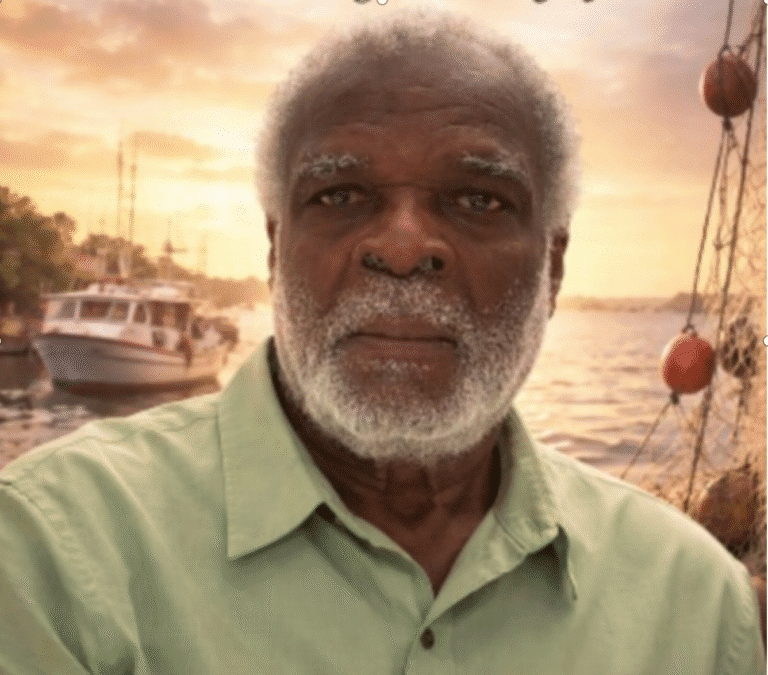
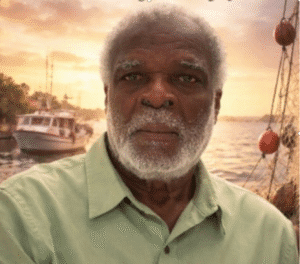
St. Croix attorney Russell Pate.
We must protect our islands, beaches, and culture while creating a more effective and accountable government. Our government should serve all Virgin Islanders — not just the elite and their special interests — but all ah we. Make sure to vote! Virgin Islanders risked their lives for equal rights to vote: Princess Breffu, General Buddhoe, the Four Queens, Queen Coziah — they fought for freedom, justice, dignity and equal rights. Your vote continues their fight for justice and fairness.
For voters and those running for office in 2026, I have some thoughts on reform. For most of the issues below, I have already drafted legislation.
Safe Communities
Justice Reform
Quality of Life
Economic Opportunity
Empowerment for All ah We
Safe Communities
a. Murders: Mainland states have fewer than 10 murders per 100,000 people, yet the USVI has 30 to 60 murders every year. Fear of murder of our children is on every parent’s mind, and it contributes to brain drain of our youth. Many of our promising Virgin Islanders leave the territory by high school. During the coronavirus pandemic the governor issued Emergency COVID Orders. The Senate should request the governor issue an Emergency Crime Order that will allow us to stop these outlaws killing our children. When criminals see consequences, violence will stop. Also, to double-down on violent crime; we ask the Feds to help prosecute more murders in the federal courts.
b. Gun Licenses: We have the strictest gun laws under the U.S. Flag, yet the highest murder rate per capita. Even the U.S. government is suing the USVI for unconstitutional overly-strict gun laws. After 40 years, we need to try something new. The criminal element has illegal firearms; while law-abiding citizens have a confusing and expensive firearm permit process. Our firearm licensing system evolved because U.S. Navy officers (who ran the V.I. from 1917-1931) believed in Jim Crow laws and did not want “colored” citizens to be armed for self-defense. Forty-three states have simple, straightforward gun licensing rules for law-abiding citizens. The Senate should just adopt the moderate rules of a small state, like Vermont or Maine.
c. Traffic Enforcement: We live on an island. We should have no deaths from traffic accidents. It’s innocent families who suffer when reckless or drunk drivers put every law-abiding driver at risk. It’s 5% of reckless drivers causing 90% of the accidents by overtaking, speeding, or driving while drunk or high. No family should suffer injury to their precious child, spouse, or grandparent because of a reckless driver. The Senate should work with Government House to bolster traffic law enforcement, along with making some key law changes, such as:
Dash-Camera Law: Dash-cam footage of reckless driving can be sent to the police department, so tickets can be assessed as a lien on the recklessly driven car. Community policing will make everyone safer.
Over-Service of Alcohol Law: 47 states out of 50 States and Washington, D.C., have laws against the over-service of alcohol; if a bar or restaurant has patrons highly intoxicated and sends them out to drive, and they kill, paralyze or harm an innocent motorist, the innocent person has a claim for reckless over-service; but not the drunk. The Virgin Islands has no law protecting innocent motorists (and innocent children) in this regard. You and your family members are on your own. In my legal practice, I have seen families bankrupted because they were hit by a drunk driver who carried only $10,000 in car insurance, while the surgeries and rehabilitation for a broken leg, arm, or brain injury were over $150,000. This loophole can be fixed by adopting the legal protections of one of 47 states or Washington, D.C., that protect their innocent citizens.
Insurance Coverage Law: When you’re hit by a reckless driver who then leaves the USVI to go back home (wherever in the world that may be), sometimes the insurance company will say “since you cannot find and sue the driver” you get no insurance coverage. This is unfair: We are islands with visiting tourists from around the world. We also drive on the left side, confusing unfamiliar drivers, contributing to our higher accident rates. A direct-action law allows innocent motorists to access the insurance that has been bought and paid for to cover their injuries, instead of insurance companies playing games. Guam, the North Marianna Islands, Puerto Rico, and many states have direct-action laws to protect their residents. I have a draft bill based on Guam’s law that will protect you and your family.
Justice System Reform
a. Court Delay: Justice delayed is justice denied. Just like an island-wide WAPA power outage, court delay affects every person. Businesses cannot quickly enforce contracts; people negligently injured do not have money for rehabilitation or surgery; parents die and children do not get their timely inheritance. The majority of the state trial courts clear 95% of criminal trials in less than 1.5 years and civil trials in less than 2 years.
b. Specialization: Efficiency comes from specialization. Each island has four trial judges, so I believe that each should specialize: Two judges can handle criminal cases, and the other two handle civil cases. Also, magistrates should be converted to full judges so they can handle all disputes, instead of being pigeon-holed.
c. Court Modernization: Our local courts do not follow the modern practices of the 50 states. Most state trial courts hold monthly motion hearings and rule from bench on the transcript record instead of writing lengthy published opinions.
d. Court Interest: The Virgin Islands had a 9% post-judgment interest rate, but it was reduced to 4% in 2000, yet most states have interest set at 9-13%. Justice delayed is a problem, but when interest is so low, those harmed are now double-harmed when their final payment is eroded by inflation and cost-of-living far outpacing the 4% interest rate. The 9% rate should be restored.
e. Witness Fees and Juror Pay: Juror pay and witness fees are tied to a 1957 law of $4 a day. I drafted Bill 35-0121 to raise juror pay and witness fees to modern values. That Bill passed Committee, but the whole Senate never voted on this simple modernization measure. The Senate should fix this so jurors are paid in 2026 dollars, not 1957 dollars.
f. Delay and Death: There are some cases pending in court for 10, 20, or even 30 years. We are human. People die. The USVI has a unique and bizarre substitution statute for death, 5 V.I.C. § 78, which unfortunately can disqualify people who patiently waited but died before court resolution. The Statute should be amended to follow the federal substitution rule that is used by all the federal courts and most states. Or the Statute deleted, so the court adopted the federal rule.
g. Statute of Limitations: When a person is hurt wrongfully, he or she has two years to sue. However, many injured people must travel off-island for medical care and may not return within the two-year window. Most states have three years (or more) as their limitation period, even though those states have adequate medical care right at home. It would be more fair if the USVI moves to three years to ensure that our residents are taken care of medically and financially.
h. Bad Faith Insurance Law: In all 50 states, when there is a disaster, be it a fire, earthquake, hurricane, or car accident, there’s a clear law, called a “Bad-Faith Insurance Law,” that makes sure the insurance company is protecting the best-interests of the insured. Unfortunately, the USVI has no Bad-Faith Insurance Law Statute. Thankfully, Judge Almeric Christian wrote clear case law in 1981 setting a common law Bad-Faith Standard. Still, having the Senate codify Judge Almeric Christian’s standard into Statute would make the law clearer, help encourage earlier amicable settlements and reduce delays in the courts.
i. Judges: Judges are initially nominated by the governor and confirmed by the Senate. However, after six years, judges are re-nominated by the governor. This keeps judges under the thumb of the governor, who directs the Department of Justice in handling every criminal prosecution and government civil lawsuit in court. Most states use a governor to initially nominate, but then use either their Legislature, a special committee, or retention-elections to decide judicial retention. Judges should be independent. The USVI should have the Senate handle retention, so that a judge’s track record, rather than relationship to a governor, can be assessed for re-nomination.
Quality of Life and Infrastructure
a. Beach Access: In 25 years Dorsch Beach in Frederiksted will be no more. Villas and condos will cover the beach, with fence lines right up to the road. Gone will be the days of parking near the beach, carrying food and chairs, and children running to the beach. The 1971 Open Beach Access Law is 55 years old. It must be updated to mandate that all roads near the beach have a 12-foot easement on either side for parking, so emergency vehicles can pass. All beachfront housing must have easement public parking and access walkways on the side of the property to the beach. If we don’t protect beach access, it will be lost to our children’s children.
b. Roads and Sidewalks: We live in Paradise. Every man, woman, and child should be able to walk across the island in safety. Sidewalks must be a priority. With sidewalks, locals and tourists alike can walk, jog, or run from Frederiksted Pier to Point Udall or on St. Thomas from Port to Paradise Point. Like other islands, we should use traffic circles. Traffic circles are hurricane-proof, with no stoplights to lose power or be knocked down by wind. Potholes are also a risk to road safety. We should utilize a brigade of good behavior inmates to assist in filling the many potholes around our islands that turn a simple commute into a nightmare.
c. Derelict Buildings and Historical Preservation: Derelict buildings foster crime, litter and ruin island pride. Historical areas like New Orleans have derelict building laws. A building that cannot be renovated to be productive rots away. The Historical Commission tends to focus on people who are actively trying to remodel old buildings, yet does nothing about the hundreds of structures falling into ruin. People attempting to improve old buildings should not be punished. The Historical Commission should be directed to focus only on abandoned derelict buildings.
d. WAPA and Solar Power: The Virgin Islands is in the tropics. The sun is our No. 1 resource. We should have the best laws encouraging solar power. After hurricanes Irma and Maria, the federal government promised $4 billion to WAPA. That is more than $40,000 for every man, woman, and child in the Virgin Islands. We should channel funding to solar panels for every home and business. No more WAPA bills. No more random outages. No more diesel needed for generators. Free solar energy to power homes and electric cars. No more buying gasoline. No more car exhaust. No more road smog; only pure Caribbean air.
e. Uber and Taxis: We live in the 21st century. The Taxicab Commission is a disaster. Tourists expect Uber and Lyft. Not having modern ride-share services is like the USVI not accepting credit cards. Further, people use these apps for safety, security, and peace-of-mind that their location and trip is being tracked. Further, modern taxi services cut down on drunk driving deaths and accidents. It’s time to deregulate and let more people enter into the transportation business. Young people should have the opportunity to open up a transportation business, or drive for Uber and Lyft, for the convenience of both locals and tourists.
f. Tourism: Tourism is best improved by focusing first on Virgin Islanders. Fix WAPA, fix the roads, have sidewalks, fix old buildings, stop the murders, have a working taxi system, in sum, take care of residents (and tourists will benefit too).
Economic Opportunity
a. Tax Refunds: Tax refunds are the people’s money, not a forced government loan. Perhaps we should consider that no salary shall be paid to the governor, lieutenant governor, commissioners, and senators, until yearly tax refunds are paid.
b. Get Government Out of Business: Government should never be in business. In a free, fair, and open democracy, businesses are the players, and the government is the referee. A referee makes sure the playing field is even and that no one is cheating. A referee should never step into the game and play. Business decisions by the Government of the Virgin Islands have been one disaster after another, and it is time to put an end to this chain of events.
c. One-Stop-Shop for Business: A business license requires the business owner to navigate the complex red-tape at DLCA, DPNR, Fire Services, BIR, Finance, Labor, Department of Health, and others. We need a One-Stop-Shop for business compliance. A One-Stop-Shop where people are greeted: “Good day taxpayer, how may I help you.”
d. EDC (Tax Credits): The USVI rolls out the red-carpet using tax credits for stateside millionaires, while our Virgin Islanders’ children are told to “do their best” in crumbling schools. Tax subsidies are used as a Band-Aid for larger problems. The USVI should be fair to all businesses, local and stateside, by removing red-tape regulations, making government offices more helpful, overhauling the gross receipts tax, and removing the need for “connections.” Once we have a fair system, no tax subsidies would be needed to draw foreign businesses to the USVI.
e. Teachers and Doctors: What is wealth, without health? If you are sick, how can you work and be productive? How can our children lead the USVI (and the world) if they are not properly educated in clean and healthy schools? You do not build a house from the top to the bottom. Tax credits for EDC/EDA focus on the top, when our children and our health are the real foundation of a productive society.
We need more teachers in our territory. And, our children deserve the best teachers. We should modify our tax laws so that local schoolteachers from pre-K to UVI only pay ½ tax to the BIR. This can encourage qualified teachers to remain in the territory. The foundation of every successful society is the education of its children.
All medical professionals (MDs, DOs and RNs) should be exempt from Gross Receipts, to encourage more health-care professionals to practice in the USVI.
The USVI has a dangerous law called Certificates of Need (CONs) that reduces health care. These CONs create needless hurdles for doctors to open up new hospitals, clinics, surgical centers, and to buy new modern equipment. We want the USVI to have the best doctors and most modern equipment so that the USVI can be a medical destination, instead of a medical desert. We should abolish CONs from the VI Code.
Empowering Virgin Islanders (this lion should roar!)
Virgin Islanders have always fought for their Human Rights: 1733 St. John slave rebellion, 1848 Emancipation, 1878 Fireburn, and 1892 Dollar-for-Dollar coal strike. The USVI was purchased in 1917. Waiting 109 years for equal treatment is too long. Don’t give up on the fight for equality.
a. End the Custom Zone: Puerto Rico is inside the Custom Zone, while we are outside. We should end the discriminatory Custom Zone; the indignity of going through Custom screenings at the airport (where your phone, tablet or laptop can be searched without a warrant or even reasonable suspicion) and being treated like second-class citizens. Also, end the frustrating and arbitrary duties on cargo shipments. Perhaps the best solution is to have it both ways: we keep two special ports for St. Thomas and St. Croix outside the Custom Zone, but allow the rest of the islands to be inside the Custom Zone; a win-win.
b. Elected Attorney General: We should change the laws to have elections for a Virgin Islands Attorney General who serves the people, not the governor. An elected Attorney General has independence to investigate local corruption. Also, for the nay-sayers, the Revised Organic Act doesn’t not bar this change. The A.G. should be elected in off-governor election years.
c. Numbered Senate Seats: Senators competing against each other in elections makes it harder for them to work together to create effective laws. A simple fix is “numbered seats” where each senate seat has an assigned permanent number. Then candidates can run for a specific seat number. Numbering seats is a better solution than sub-districting because it avoids partisan districting maps. Also, numbering reduces the “bullet vote.”
d. Our Own Constitution: The USVI has had five Constitutional Conventions. All failed (and cost millions). The Revised Organic Act (ROA) is already our Constitution. Just adopt the ROA and create a simple amendment process, like a super-majority vote in the Senate, so Virgin Islanders will finally be in local control of their rights and their destiny.
e. Military Draft: The USVI has one of the highest rates of military service, with heroes fighting for freedom abroad in WWI, WWII, Korea, Vietnam, Iraq and Afghanistan, while freedoms and equal rights are denied at home. The Senate should draft a resolution for our young men NOT to be drafted, until we have the right to vote in Congress and for the U.S. President. The United States’ 250th birthday is in 2026; for that celebration, the best gift the United States can give itself is equality for ALL its citizens.
f. The VOTE in Washington: The Senate can change the election laws so we can vote for two Senators and a Representative in Congress. When we elect our three congressional representatives, we charter an airplane and fill it will military veterans (holding pictures of other veterans killed or injured in foreign wars) to escort our representatives to Congress to their rightful seats in the House and Senate.
g. European Union: For 109 years, the United States has treated Virgin Islanders as second-class citizens, refusing voting rights and equal rights to U.S. citizens in the USVI. We must stand up for ourselves. It’s possible the USVI could be traded to Denmark for Greenland, or sold outright. We should explore whether the European Union will allow the USVI to join their Parliament. This is an option of last resort. But if the USA says we will “never be equal,” or seeks to trade or sell the USVI, we should have a back-up plan.
— Russell Pate is an attorney on St. Croix.
Editor’s Note: Opinion articles do not represent the views of the Virgin Islands Source newsroom and are the sole expressed opinion of the writer. Submissions can be made to visource@gmail.com.
The sound of gunfire echoed across Peter’s Rest early Sunday morning, as more than 100 rounds were fired in the area near Carlos Bar, according to the Virgin Islands Police Department.
The 911 Emergency Call Center received a ShotSpotter alert around 4:50 a.m., with multiple residents also calling to report what officials described as an “enormous amount” of gunfire.
Shortly after, staff at the Juan F. Luis Hospital reported that two gunshot victims had been dropped off in a private vehicle. Both individuals were admitted and are being treated for injuries sustained in the incident.
Officers, along with detectives from the Criminal Investigation Bureau and forensic units, responded to the scene as the investigation got underway. Authorities have not released additional details, and the incident remains under active investigation.
Crime Stoppers is offering a cash reward for information leading to an arrest. Anyone with information is asked to call 1-800-222-TIPS or 911.
There is a kind of tiredness in the Virgin Islands that sleep does not fix.
It is not the fatigue of a long workday. It is not the soreness after a double shift. It is deeper than that. It is the exhaustion that comes from carrying everything, for everyone, all the time.
We carry aging parents whose bodies are slowing down while the cost of care rises. We carry adult children navigating a world more expensive and uncertain than the one we inherited. We carry two jobs because one is not enough. We carry church commitments, family obligations, community expectations, and the unspoken rule that if you are capable, you must always show up.
We carry hurricane trauma that never fully left our nervous systems. Some of us still sleep lightly when the wind changes direction. Some of us stockpile water and batteries without joking about why. Some of us feel a low-grade anxiety every June, at the beginning of hurricane season, that we pretend is just preparation.
We carry strong woman expectations that leave little room for softness. The eldest daughter, who never collapses. The professional woman who must be composed. The mother who absorbs everything and rarely releases anything. Strength becomes identity. And identity becomes a cage.
We carry man up expectations that silence emotion. Boys taught early that tears are weakness. Men expected to provide, protect, and endure without complaint. When vulnerability does surface, it is often misunderstood or mocked. So it gets swallowed. And swallowed emotions do not disappear. They settle.
The quiet exhaustion of Virgin Islanders is not accidental. It is cultural. It is generational. It is historical.
We come from people who survived colonization, economic instability, migration, and storms that erased entire neighborhoods. Resilience is in our blood. But somewhere along the way, resilience turned into relentless endurance. We normalized fatigue as proof of character. We wear I tired like a badge of honor.
When someone says, How you doing, the automatic answer is I good. Even when we are not.
We rarely ask the follow-up question. Are you actually okay?
Mental health in our community is still whispered about. Therapy is something some people believe is for elsewhere. Depression is called laziness. Anxiety is called worrying too much. Grief is rushed. Trauma is minimized. We move on quickly because we believe we must.
But the body keeps score. The mind keeps score.
Unresolved stress shows up as high blood pressure, diabetes, insomnia, irritability, panic attacks, and quiet hopelessness. It shows up in short tempers. It shows up in numbing behaviors. It shows up in disconnection from people we love.
Across St. Croix, St. Thomas, St. John and Water Island, the pattern is similar. Families stretched thin. Caregivers burning out. Young adults navigating uncertainty. Elders carrying unspoken memories. A community that prides itself on strength but struggles with rest.
There is nothing weak about admitting you are overwhelmed. There is nothing shameful about saying you need help. In fact, it may be one of the most courageous acts in a culture that rewards endurance.
Seeking mental health support is not a betrayal of resilience. It is an evolution of it.
Therapy is not about being broken. It is about having a space where you do not have to be strong. A place where you can say the things you cannot say at home. A place where you can unpack trauma without being judged for it. A place where someone asks, without agenda, how this is affecting you.
We need to normalize mental health check ins the same way we normalize annual physicals. We need to normalize conversations about stress before it becomes crisis. We need to teach our children emotional vocabulary beyond fine and mad. We need to let men be complex. We need to let women rest without guilt.
If you are carrying aging parents, it is okay to admit it is heavy. If you are supporting adult children, it is okay to feel conflicted between love and fatigue. If you are still shaken by storms years later, that is not weakness. Trauma does not expire just because the roof was rebuilt.
There are counselors and mental health professionals in the territory. There are support groups. There are church-based resources. There are telehealth options. Seeking help does not mean broadcasting your business. It means protecting your peace.
We must also check on each other more intentionally. Instead of casual greetings, try a deeper one. How are you really doing? Instead of assuming strength, offer support. Instead of praising overwork, encourage balance.
The quiet exhaustion of Virgin Islanders does not have to become our identity. We can remain resilient without being perpetually drained. We can honor our history without repeating its emotional suppression.
Across St. Croix, St. Thomas, St. John and Water Island, there are people holding everything together with tired hands and steady faces. If you are one of them, hear this gently.
You are allowed to rest.
You are allowed to say this is hard.
You are allowed to seek help.
Try owning and tapping into that vulnerable side. Take a moment to recognize how you truly feel. Ask yourself what is showing up for you and why. Acknowledge it without judgment. Give language to it. Sit with it.
And when someone you trust asks how you are doing, consider offering a little more of the truth.
Editor’s Note: Opinion articles do not represent the views of the Virgin Islands Source newsroom and are the sole expressed opinion of the writer. Submissions can be made to visource@gmail.com.
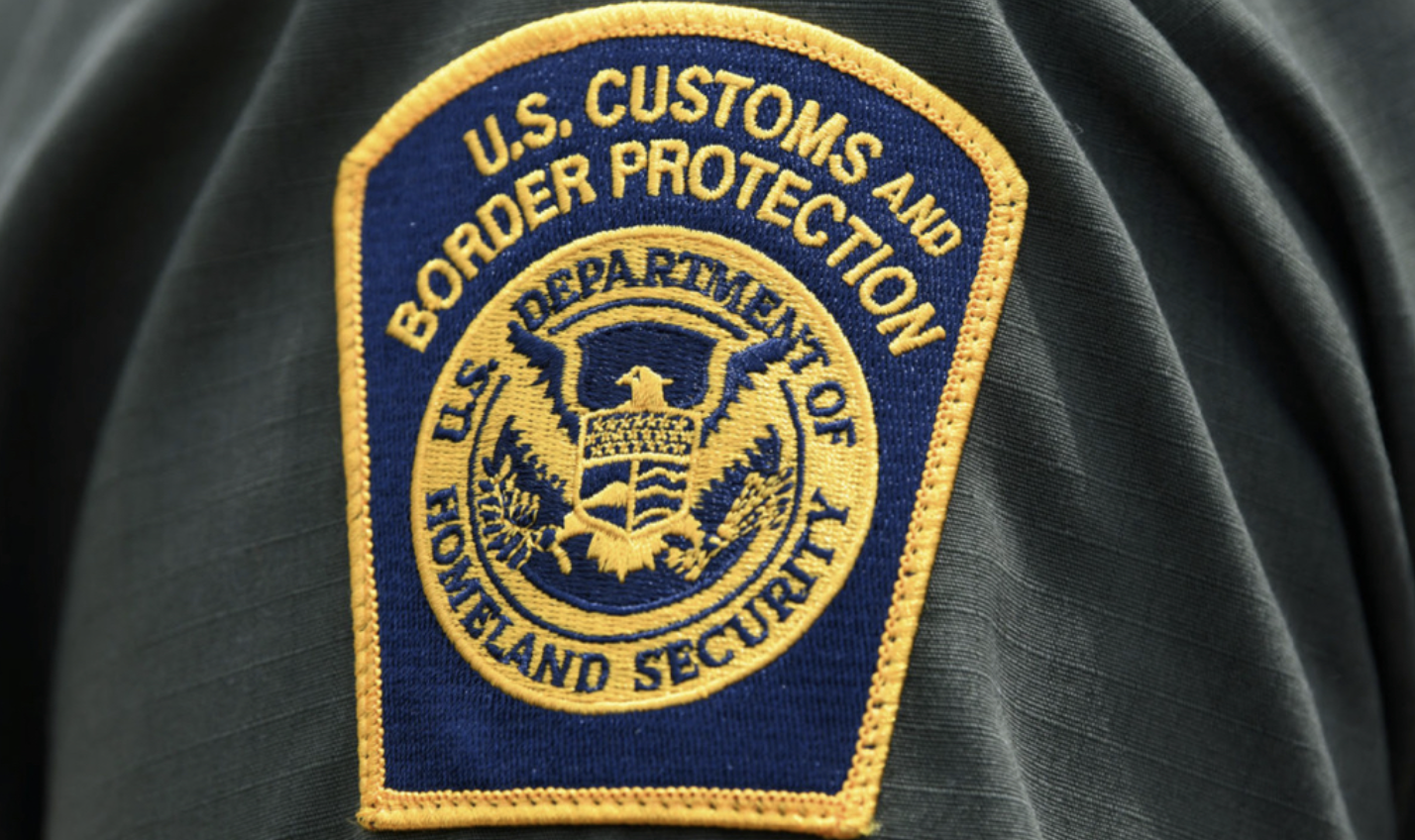
U.S. Customs and Border Protection is introducing Pay.gov for electronic payment of duties, taxes, and fees in the U.S. Virgin Islands as part of a broader modernization effort. (Source file photo)U.S. Customs and Border Protection announced the rollout of Pay.gov for electronic payment of duties, taxes, and fees on imported goods in the U.S. Virgin Islands, marking a shift toward a more automated commercial process.
In the coming months, importers will be able to submit payments online through Pay.gov, reducing reliance on paper-based transactions at ports of entry across the territory, according to the press release from Customs and Border Protection.
The system will apply to cargo arriving from the continental United States, Puerto Rico and foreign locations. CBP said it will prioritize cargo transactions completed through electronic payment systems as part of the transition.
The platform allows users to create accounts to store payment information, track transactions and manage recurring payments. Payments for formal entries may be made by ACH debit from a U.S. bank account, with data syncing in real time with Automated Commercial Environment records. Informal entries may be paid by credit or debit card, the release stated.
“Pay.gov is a game changer for the U.S. Virgin Islands,” said Area Port Director Todd Bellew. “This new platform will make it faster and easier for importers to meet their obligations, while giving CBP the tools to process cargo more efficiently and securely. It’s a win for trade and for the territory.”
CBP said the change is part of a broader effort to modernize trade operations in the territory. The agency plans to introduce additional digital systems, including electronic manifest requirements.
Carriers will be required to submit cargo manifests electronically through the Automated Commercial Environment and Electronic Data Interchange systems, providing advance cargo information. Specific port codes must be used for shipments to St. Thomas, St. John and St. Croix, depending on origin, the release stated.
Carriers must test their systems with CBP to ensure proper data transmission. Importers and filers must continue to request cargo release through the USVICEI mailbox for authorization, the release stated.
CBP said a grace period will be provided to allow carriers and importers to adjust. After that period, penalties may be assessed for noncompliance, and cargo release could be delayed.
The changes are authorized under the Trade Act of 2002 and federal regulations governing customs operations in the U.S. Virgin Islands, CBP said.
The Virgin Islands Board of Education is excited to announce the extension of its transformative one-time Amnesty Program for Professional Educator Certification holders. This groundbreaking initiative is designed to empower educators, offering enhanced flexibility and innovative opportunities to meet certification requirements while advancing their professional growth.Board of Education
Through streamlined processes and adjusted standards, VIBE is paving the way for educators whose certifications have expired or who face challenges with recertification.
Amnesty for Conditional Certificate Holders
If you hold an expired conditional certificate, this is your moment! The amnesty program allows you to apply for a penalty-free extension, granting an additional three years to complete necessary certification requirements. Whether it’s coursework, testing, or teaching experience, this extension ensures you have the time and resources to achieve your goals.
Amnesty for Recertification Candidates
For educators seeking recertification, VIBE is making the journey more accessible by temporarily reducing the required professional development hours. During this program, recertification will require just 75 hours of professional development, a significant adjustment from the standard 125 hours outlined in the Professional
Staff Certification & Higher Education policy.
“We are proud to launch this amnesty program as a testament to our unwavering support for educators and their professional journeys,” said Dr. Kyza A. Callwood, Chairperson of the Board. “This initiative reflects our deep commitment to empowering educators, equipping them with the tools to succeed in the classroom, and fostering a brighter future for our students.”
This exciting opportunity is effective immediately and will remain available until Dec. 31, 2026. For more information, visit www.myviboe.com or contact your district certification officer via email at jedwards@myviboe.com on St. Thomas, dmheath@myviboe.com on St. Croix, or call 340-774-4546 for St. Thomas or 340- 772-4144 for St. Croix. This is your opportunity to reignite your professional certification journey with confidence and ease. Join us in shaping the future of education in the Virgin Islands.
The St. Croix District Office of the Insular Superintendent wishes to inform you that the school redistricting process is now in its final stage and will soon go live. As we prepare to distribute official notifications regarding your child(ren)’s school placement, your immediate attention is required.
Students arrive for class at the St. Croix Educational Complex in 2018. (Photo by Bill Kossler)
To ensure you receive accurate and timely information, please review the following:
Log into your PowerSchool Parent Portal as soon as possible.
Confirm that your residential address and demographic information are accurate and up to date.
Parents/guardians may update contact information (such as email addresses and phone numbers) directly in PowerSchool without district approval.
If updates to other information are needed, contact your child’s school directly for assistance.
Please note that any changes to your residential address must be supported by valid proof of residency, such as:
Lease agreement
Utility bill
Deed
Property tax bill
Residency changes require in-person documentation submission through the Division of Student Services Office.
Deadline: All updates must be completed by April 10, 2026.
We understand that transitions such as this may raise questions, and we are committed to supporting you throughout this process. Ensuring your information is accurate will help us provide a smooth and efficient redistricting experience for all families.
Thank you for your prompt attention and continued partnership in supporting your child’s education.
Cedric Nathaniel Jeffers
Sunrise: June 24, 1943 – Sunset: March 16, 2026
It is with deep sorrow that the family of Cedric Nathaniel Jeffers announces his passing on March 16, 2026. Cedric was a beloved father, grandfather, brother, uncle, and friend who will be remembered for his kindness, strength, and the love he shared with his family and friends throughout his life.
He leaves to cherish his precious memories: his loving daughter Angella Lewis of St. Kitts; his devoted sons Kennedy Caines of St. Croix and Shevon Jeffers of Nevis; and his beloved grandchildren Tyrese, Shevonje, and Vondre Jeffers of Nevis and Elijah, Jeshuah, and Yazhid Lewis of St. Kitts. He is also survived by his brothers Wilfred Richards and Robert Carl Jeffers of St. Croix, Edmond Mills, Joseph Maynard, and Gilbert Maynard of Nevis, Roderick Jones of Atlanta, and Vincent Jeffers of Detroit; his sister Linette Mercado of St. Croix; his son-in-law John Lewis of Canada; and his sisters-in-law Claristina Jeffers and Rosemary Richards of St. Croix, Hyacinth Maynard of Nevis, and Lillian Jeffers of Detroit.
Cedric Nathaniel Jeffers
He also leaves behind a host of nieces including Lornette Mills and Samantha Maynard of St. Croix; Neila, Glenicia, Tysha, Estisha, and Tamica Maynard of Nevis; Roshundia Jeffers and Jean Jeffers of New York; Michelle Maynard of St. Kitts; Esther Weekes and Louvina Charles of St. Maarten; Deborah Weekes-Claxton and Claudia McCall of St. Kitts; Carmen Jones and Jessica Jones-Alexander of Orlando; and Shemira Mercado and Shakyma Mercado Williams of St. Croix. He is further survived by his nephews Elroy, Chesley, and Shefton Mills of St. Croix; Edmond Mills of Connecticut; Mannix Maynard of North Carolina; Sylvin Mercado of Indiana; Ryan and Travis Maynard of Nevis; Morris Weekes of St. Kitts; and David Weekes of St. Maarten.
Cedric also leaves to mourn his great-nieces Keosha, Keshaunadia, and Keshyra Quinn, Je’Taia Hanley, Sy and Eve Mercado, Dequilla, Riancia, Nyla, and Tarianna Maynard, Vincia William, and Talia Harris; his great-nephew Brian Maynard; his great-great nieces Mila Ortiz, Kai’J Maynard, Khimarah France, and Ti’Shanika Hanley; and his great-great nephews Khari Newton, Amari Young, Mekhi Maynard, Nazari Norford, and Amir Forbes.
He will also be fondly remembered by his special friends Joycelyn Stapleton, Miriam Pereira, Frances Jones and Family, and Mable Peets of St. Croix; Evelyn Hamilton and family, Vincent Liburd, Rupert Griffin, Sonia Morton, Icilma Hanley, and Bernadine Walters of St. Kitts; Alita Browne and family, Alexis “Fox” Browne, Irick Browne, Alden Browne, Mervin “Tiba” Davis, and Joseph “Wallaboy” Eddy of Nevis; Nardia Francis of Pennsylvania; Nicole Davis of Connecticut; Pamela Browne of Carolina; and Bashley, Mong, Moses, and Hardy of St. Croix, along with many other relatives and friends too numerous to mention.
A funeral service will be held on Saturday, April 11, 2026 at Beeston Hill Wesleyan Holiness Church. Viewing will begin at 9 a.m. followed by the service at 9:30 a.m. Interment will follow at Kingshill Cemetery.
The University of the Virgin Islands Lady Buccaneers enter the track and field season with a small roster but a clear sense of what they want to be. The 2026 Lady Buccaneers roster includes athletes with running experience, but the group remains relatively new to the collegiate level. The focus early in the season will be on development, versatility, and finding where this year’s three-athlete squad can make its biggest impact.
Pilar Swinson (left) and Londyn Hall. (Submitted photo)
UVI’s women’s side features senior Aisha Sabur, sophomore Londyn Hall, and true freshman Pilar Swinson. Hall is expected to set the pace for the Lady Buccaneers and arrives as a runner the program believes can pose a real challenge to opponents across the season. Sabur returns as an established member of the team, while Swinson gives UVI a new dimension as the first athlete in program history to compete in the hurdles, a notable step for a roster still building its event range.
Sabur’s shift may be one of the most important storylines of the season. After competing in the 100 and 200 during the 2023-24 season, she has turned her focus exclusively to the long jump. That move gives the Buccaneers a veteran presence in the field events and could help define the team’s identity as it searches for points in multiple areas rather than relying only on sprint races.
Head Coach Dale Joseph expressed satisfaction with the progress of the women’s program, stating, “I am pleased with the direction we have taken in developing the women’s program. Over the years, the team has expanded its participation to include events such as the shot put and javelin. This season, we are further broadening our scope by introducing hurdles and reintroducing the long jump, an event in which we have not recently fielded a competitor.”
The season will begin on March 28 at the Nova Southeastern University Shark Invitational in Fort Lauderdale, providing UVI with its initial challenge against regional South Florida programs. Following this, the Buccaneers will compete at the Embry-Riddle Running Elements Classic in Daytona Beach from April 2-4, a meet that has become annual in the Buccaneers’ schedule. These initial competitions will be crucial in assessing how quickly the Lady Buccaneer newcomers adapt to collegiate competition and evaluating the team’s standing as they approach the core of the season.
The season will close at the 2026 HBCUAC Track and Field Championship, where UVI will face off with their conference rivals. The Buccaneers are slated to compete at the Championships from April 30-May 2 in Shreveport, Louisiana. For this developing squad, the early meets in Florida are essential for establishing form, but the primary objective is to peak by championship time. At that point, Hall’s potential, Sabur’s transition to the long jump, and Swinson’s debut in the hurdles will provide the program with a comprehensive assessment of its competitive standing.
The University of the Virgin Islands enters the 2026 men’s track and field season with a small but balanced roster and a clear point of emphasis under head coach Dale Joseph. Now in his third consecutive season leading the Buccaneers, Joseph is continuing the work of revitalizing a program he previously guided from 2007 to 2020, with UVI set to rely on a six-man team that features sprinters, middle-distance depth, and javelin throwers.
The Buccaneers’ identity starts with versatility. Team captain Rayhan Sabur is expected to be one of the anchors in the 100- and 200-meter races, joined by two other sprinters, sophomore Gabriel Elcock and junior Ahsan Ambo, in those events. Senior V’Andre Rochester gives UVI another option on the track, competing in the 200 and 400. Freshman Lance Latare adds range to the lineup by taking on both the 1,500 meters and the javelin, while Zahir Mbengue will focus solely on the javelin throw. That mix gives UVI event coverage across the track and field slate, even with a compact roster.
Elcock is the lone returner from last season, while Rochester and Sabur are back with the program after a year away. Their most recent competition came at the 2024 Gulf Coast Athletic Conference Championship, giving the Buccaneers some experience to build around. Ambo is in his first season with the team, and freshmen Latare and Mbengue will make their collegiate track and field debuts this spring, making development just as important as results in the early meets.
“The team is relatively inexperienced, and we are throwing them into the fire early on and will see how they perform,” said Joseph. “However, the team has been working hard, and I think they will fare well. They’ll be put to the test when we line up in our first few meets. We’ll be able to see where we currently stand and build towards our ultimate goal at the end of the season, which is a good showing at the conference championships.
The season opens March 28 at Nova Southeastern University, where UVI will line up against regional South Florida institutions in its first test of the year. The Buccaneers then head to Daytona Beach for the Embry-Riddle Running Elements Classic, scheduled for April 2-4, a meet UVI has regularly attended. Those opening competitions should give Joseph a clearer read on his group and on how quickly the newcomers can settle into collegiate competition.
The schedule builds toward the HBCUAC Track and Field Championships, where the Buccaneers will close the season against familiar conference competition. The HBCUAC Track and Field Championship is scheduled for April 30 – May 2 in Shreveport, Louisiana, with the championship meet serving as the program’s main target. For a team still shaping its depth, the formula is straightforward: score where the sprinters can create opportunities, find points in the javelin, and continue the steady rebuild Joseph is trying to establish with this year’s group.
Check out our weekly weather forecast with Jesse Daley, covering Sunday, March 29, through Saturday, April 4.
Please stay safe and follow the Source for more weather updates!





 There is a kind of tiredness in the Virgin Islands that sleep does not fix.
It is not the fatigue of a long workday. It is not the soreness after a double shift. It is deeper than that. It is the exhaustion that comes from carrying everything, for everyone, all the time.
We carry aging parents whose bodies are slowing down while the cost of care rises. We carry adult children navigating a world more expensive and uncertain than the one we inherited. We carry two jobs because one is not enough. We carry church commitments, family obligations, community expectations, and the unspoken rule that if you are capable, you must always show up.
We carry hurricane trauma that never fully left our nervous systems. Some of us still sleep lightly when the wind changes direction. Some of us stockpile water and batteries without joking about why. Some of us feel a low-grade anxiety every June, at the beginning of hurricane season, that we pretend is just preparation.
We carry strong woman expectations that leave little room for softness. The eldest daughter, who never collapses. The professional woman who must be composed. The mother who absorbs everything and rarely releases anything. Strength becomes identity. And identity becomes a cage.
We carry man up expectations that silence emotion. Boys taught early that tears are weakness. Men expected to provide, protect, and endure without complaint. When vulnerability does surface, it is often misunderstood or mocked. So it gets swallowed. And swallowed emotions do not disappear. They settle.
The quiet exhaustion of Virgin Islanders is not accidental. It is cultural. It is generational. It is historical.
We come from people who survived colonization, economic instability, migration, and storms that erased entire neighborhoods. Resilience is in our blood. But somewhere along the way, resilience turned into relentless endurance. We normalized fatigue as proof of character. We wear I tired like a badge of honor.
When someone says, How you doing, the automatic answer is I good. Even when we are not.
We rarely ask the follow-up question. Are you actually okay?
Mental health in our community is still whispered about. Therapy is something some people believe is for elsewhere. Depression is called laziness. Anxiety is called worrying too much. Grief is rushed. Trauma is minimized. We move on quickly because we believe we must.
But the body keeps score. The mind keeps score.
Unresolved stress shows up as high blood pressure, diabetes, insomnia, irritability, panic attacks, and quiet hopelessness. It shows up in short tempers. It shows up in numbing behaviors. It shows up in disconnection from people we love.
Across St. Croix, St. Thomas, St. John and Water Island, the pattern is similar. Families stretched thin. Caregivers burning out. Young adults navigating uncertainty. Elders carrying unspoken memories. A community that prides itself on strength but struggles with rest.
There is nothing weak about admitting you are overwhelmed. There is nothing shameful about saying you need help. In fact, it may be one of the most courageous acts in a culture that rewards endurance.
Seeking mental health support is not a betrayal of resilience. It is an evolution of it.
Therapy is not about being broken. It is about having a space where you do not have to be strong. A place where you can say the things you cannot say at home. A place where you can unpack trauma without being judged for it. A place where someone asks, without agenda, how this is affecting you.
We need to normalize mental health check ins the same way we normalize annual physicals. We need to normalize conversations about stress before it becomes crisis. We need to teach our children emotional vocabulary beyond fine and mad. We need to let men be complex. We need to let women rest without guilt.
If you are carrying aging parents, it is okay to admit it is heavy. If you are supporting adult children, it is okay to feel conflicted between love and fatigue. If you are still shaken by storms years later, that is not weakness. Trauma does not expire just because the roof was rebuilt.
There are counselors and mental health professionals in the territory. There are support groups. There are church-based resources. There are telehealth options. Seeking help does not mean broadcasting your business. It means protecting your peace.
We must also check on each other more intentionally. Instead of casual greetings, try a deeper one. How are you really doing? Instead of assuming strength, offer support. Instead of praising overwork, encourage balance.
The quiet exhaustion of Virgin Islanders does not have to become our identity. We can remain resilient without being perpetually drained. We can honor our history without repeating its emotional suppression.
Across St. Croix, St. Thomas, St. John and Water Island, there are people holding everything together with tired hands and steady faces. If you are one of them, hear this gently.
You are allowed to rest.
You are allowed to say this is hard.
You are allowed to seek help.
Try owning and tapping into that vulnerable side. Take a moment to recognize how you truly feel. Ask yourself what is showing up for you and why. Acknowledge it without judgment. Give language to it. Sit with it.
And when someone you trust asks how you are doing, consider offering a little more of the truth.
Editor’s Note: Opinion articles do not represent the views of the Virgin Islands Source newsroom and are the sole expressed opinion of the writer. Submissions can be made to
There is a kind of tiredness in the Virgin Islands that sleep does not fix.
It is not the fatigue of a long workday. It is not the soreness after a double shift. It is deeper than that. It is the exhaustion that comes from carrying everything, for everyone, all the time.
We carry aging parents whose bodies are slowing down while the cost of care rises. We carry adult children navigating a world more expensive and uncertain than the one we inherited. We carry two jobs because one is not enough. We carry church commitments, family obligations, community expectations, and the unspoken rule that if you are capable, you must always show up.
We carry hurricane trauma that never fully left our nervous systems. Some of us still sleep lightly when the wind changes direction. Some of us stockpile water and batteries without joking about why. Some of us feel a low-grade anxiety every June, at the beginning of hurricane season, that we pretend is just preparation.
We carry strong woman expectations that leave little room for softness. The eldest daughter, who never collapses. The professional woman who must be composed. The mother who absorbs everything and rarely releases anything. Strength becomes identity. And identity becomes a cage.
We carry man up expectations that silence emotion. Boys taught early that tears are weakness. Men expected to provide, protect, and endure without complaint. When vulnerability does surface, it is often misunderstood or mocked. So it gets swallowed. And swallowed emotions do not disappear. They settle.
The quiet exhaustion of Virgin Islanders is not accidental. It is cultural. It is generational. It is historical.
We come from people who survived colonization, economic instability, migration, and storms that erased entire neighborhoods. Resilience is in our blood. But somewhere along the way, resilience turned into relentless endurance. We normalized fatigue as proof of character. We wear I tired like a badge of honor.
When someone says, How you doing, the automatic answer is I good. Even when we are not.
We rarely ask the follow-up question. Are you actually okay?
Mental health in our community is still whispered about. Therapy is something some people believe is for elsewhere. Depression is called laziness. Anxiety is called worrying too much. Grief is rushed. Trauma is minimized. We move on quickly because we believe we must.
But the body keeps score. The mind keeps score.
Unresolved stress shows up as high blood pressure, diabetes, insomnia, irritability, panic attacks, and quiet hopelessness. It shows up in short tempers. It shows up in numbing behaviors. It shows up in disconnection from people we love.
Across St. Croix, St. Thomas, St. John and Water Island, the pattern is similar. Families stretched thin. Caregivers burning out. Young adults navigating uncertainty. Elders carrying unspoken memories. A community that prides itself on strength but struggles with rest.
There is nothing weak about admitting you are overwhelmed. There is nothing shameful about saying you need help. In fact, it may be one of the most courageous acts in a culture that rewards endurance.
Seeking mental health support is not a betrayal of resilience. It is an evolution of it.
Therapy is not about being broken. It is about having a space where you do not have to be strong. A place where you can say the things you cannot say at home. A place where you can unpack trauma without being judged for it. A place where someone asks, without agenda, how this is affecting you.
We need to normalize mental health check ins the same way we normalize annual physicals. We need to normalize conversations about stress before it becomes crisis. We need to teach our children emotional vocabulary beyond fine and mad. We need to let men be complex. We need to let women rest without guilt.
If you are carrying aging parents, it is okay to admit it is heavy. If you are supporting adult children, it is okay to feel conflicted between love and fatigue. If you are still shaken by storms years later, that is not weakness. Trauma does not expire just because the roof was rebuilt.
There are counselors and mental health professionals in the territory. There are support groups. There are church-based resources. There are telehealth options. Seeking help does not mean broadcasting your business. It means protecting your peace.
We must also check on each other more intentionally. Instead of casual greetings, try a deeper one. How are you really doing? Instead of assuming strength, offer support. Instead of praising overwork, encourage balance.
The quiet exhaustion of Virgin Islanders does not have to become our identity. We can remain resilient without being perpetually drained. We can honor our history without repeating its emotional suppression.
Across St. Croix, St. Thomas, St. John and Water Island, there are people holding everything together with tired hands and steady faces. If you are one of them, hear this gently.
You are allowed to rest.
You are allowed to say this is hard.
You are allowed to seek help.
Try owning and tapping into that vulnerable side. Take a moment to recognize how you truly feel. Ask yourself what is showing up for you and why. Acknowledge it without judgment. Give language to it. Sit with it.
And when someone you trust asks how you are doing, consider offering a little more of the truth.
Editor’s Note: Opinion articles do not represent the views of the Virgin Islands Source newsroom and are the sole expressed opinion of the writer. Submissions can be made to 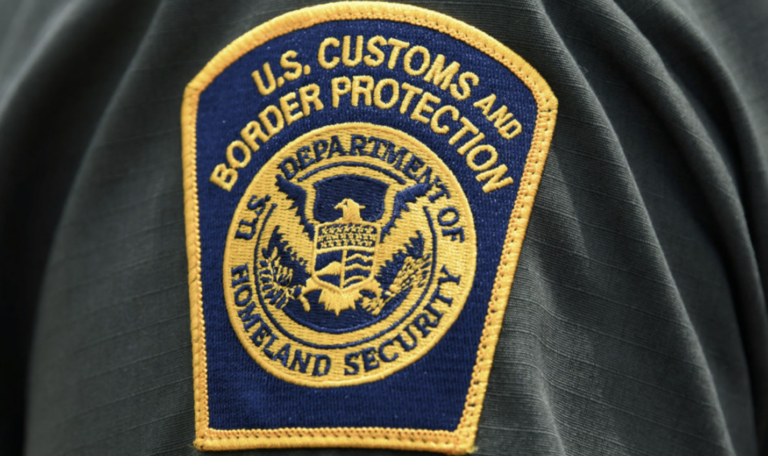






 The Buccaneers’ identity starts with versatility. Team captain Rayhan Sabur is expected to be one of the anchors in the 100- and 200-meter races, joined by two other sprinters, sophomore Gabriel Elcock and junior Ahsan Ambo, in those events. Senior V’Andre Rochester gives UVI another option on the track, competing in the 200 and 400. Freshman Lance Latare adds range to the lineup by taking on both the 1,500 meters and the javelin, while Zahir Mbengue will focus solely on the javelin throw. That mix gives UVI event coverage across the track and field slate, even with a compact roster.
Elcock is the lone returner from last season, while Rochester and Sabur are back with the program after a year away. Their most recent competition came at the 2024 Gulf Coast Athletic Conference Championship, giving the Buccaneers some experience to build around. Ambo is in his first season with the team, and freshmen Latare and Mbengue will make their collegiate track and field debuts this spring, making development just as important as results in the early meets.
“The team is relatively inexperienced, and we are throwing them into the fire early on and will see how they perform,” said Joseph. “However, the team has been working hard, and I think they will fare well. They’ll be put to the test when we line up in our first few meets. We’ll be able to see where we currently stand and build towards our ultimate goal at the end of the season, which is a good showing at the conference championships.
The season opens March 28 at Nova Southeastern University, where UVI will line up against regional South Florida institutions in its first test of the year. The Buccaneers then head to Daytona Beach for the Embry-Riddle Running Elements Classic, scheduled for April 2-4, a meet UVI has regularly attended. Those opening competitions should give Joseph a clearer read on his group and on how quickly the newcomers can settle into collegiate competition.
The schedule builds toward the HBCUAC Track and Field Championships, where the Buccaneers will close the season against familiar conference competition. The HBCUAC Track and Field Championship is scheduled for April 30 – May 2 in Shreveport, Louisiana, with the championship meet serving as the program’s main target. For a team still shaping its depth, the formula is straightforward: score where the sprinters can create opportunities, find points in the javelin, and continue the steady rebuild Joseph is trying to establish with this year’s group.
The Buccaneers’ identity starts with versatility. Team captain Rayhan Sabur is expected to be one of the anchors in the 100- and 200-meter races, joined by two other sprinters, sophomore Gabriel Elcock and junior Ahsan Ambo, in those events. Senior V’Andre Rochester gives UVI another option on the track, competing in the 200 and 400. Freshman Lance Latare adds range to the lineup by taking on both the 1,500 meters and the javelin, while Zahir Mbengue will focus solely on the javelin throw. That mix gives UVI event coverage across the track and field slate, even with a compact roster.
Elcock is the lone returner from last season, while Rochester and Sabur are back with the program after a year away. Their most recent competition came at the 2024 Gulf Coast Athletic Conference Championship, giving the Buccaneers some experience to build around. Ambo is in his first season with the team, and freshmen Latare and Mbengue will make their collegiate track and field debuts this spring, making development just as important as results in the early meets.
“The team is relatively inexperienced, and we are throwing them into the fire early on and will see how they perform,” said Joseph. “However, the team has been working hard, and I think they will fare well. They’ll be put to the test when we line up in our first few meets. We’ll be able to see where we currently stand and build towards our ultimate goal at the end of the season, which is a good showing at the conference championships.
The season opens March 28 at Nova Southeastern University, where UVI will line up against regional South Florida institutions in its first test of the year. The Buccaneers then head to Daytona Beach for the Embry-Riddle Running Elements Classic, scheduled for April 2-4, a meet UVI has regularly attended. Those opening competitions should give Joseph a clearer read on his group and on how quickly the newcomers can settle into collegiate competition.
The schedule builds toward the HBCUAC Track and Field Championships, where the Buccaneers will close the season against familiar conference competition. The HBCUAC Track and Field Championship is scheduled for April 30 – May 2 in Shreveport, Louisiana, with the championship meet serving as the program’s main target. For a team still shaping its depth, the formula is straightforward: score where the sprinters can create opportunities, find points in the javelin, and continue the steady rebuild Joseph is trying to establish with this year’s group. 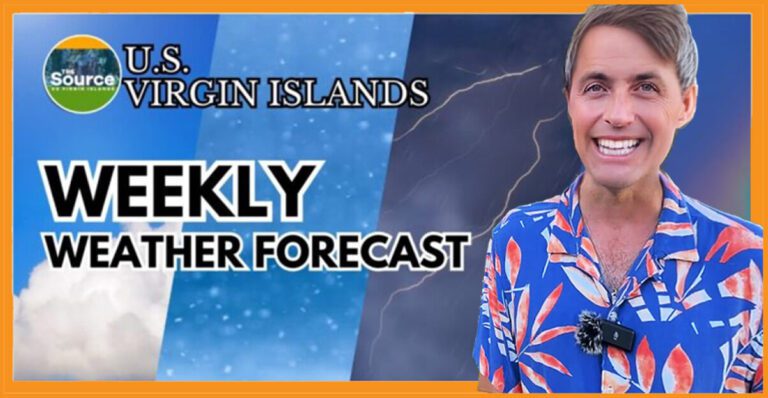


Op-Ed: Thoughts on Our Future
Dear Friend and Virgin Islander,
I’m Attorney Russell Pate. As an attorney, I fight every day for good, regular, hard-working people like you. I believe that a senator’s No. 1 job is being a good steward for future generations.
We must protect our islands, beaches, and culture while creating a more effective and accountable government. Our government should serve all Virgin Islanders — not just the elite and their special interests — but all ah we. Make sure to vote! Virgin Islanders risked their lives for equal rights to vote: Princess Breffu, General Buddhoe, the Four Queens, Queen Coziah — they fought for freedom, justice, dignity and equal rights. Your vote continues their fight for justice and fairness.
For voters and those running for office in 2026, I have some thoughts on reform. For most of the issues below, I have already drafted legislation.
Safe Communities
a. Murders: Mainland states have fewer than 10 murders per 100,000 people, yet the USVI has 30 to 60 murders every year. Fear of murder of our children is on every parent’s mind, and it contributes to brain drain of our youth. Many of our promising Virgin Islanders leave the territory by high school. During the coronavirus pandemic the governor issued Emergency COVID Orders. The Senate should request the governor issue an Emergency Crime Order that will allow us to stop these outlaws killing our children. When criminals see consequences, violence will stop. Also, to double-down on violent crime; we ask the Feds to help prosecute more murders in the federal courts.
b. Gun Licenses: We have the strictest gun laws under the U.S. Flag, yet the highest murder rate per capita. Even the U.S. government is suing the USVI for unconstitutional overly-strict gun laws. After 40 years, we need to try something new. The criminal element has illegal firearms; while law-abiding citizens have a confusing and expensive firearm permit process. Our firearm licensing system evolved because U.S. Navy officers (who ran the V.I. from 1917-1931) believed in Jim Crow laws and did not want “colored” citizens to be armed for self-defense. Forty-three states have simple, straightforward gun licensing rules for law-abiding citizens. The Senate should just adopt the moderate rules of a small state, like Vermont or Maine.
c. Traffic Enforcement: We live on an island. We should have no deaths from traffic accidents. It’s innocent families who suffer when reckless or drunk drivers put every law-abiding driver at risk. It’s 5% of reckless drivers causing 90% of the accidents by overtaking, speeding, or driving while drunk or high. No family should suffer injury to their precious child, spouse, or grandparent because of a reckless driver. The Senate should work with Government House to bolster traffic law enforcement, along with making some key law changes, such as:
Dash-Camera Law: Dash-cam footage of reckless driving can be sent to the police department, so tickets can be assessed as a lien on the recklessly driven car. Community policing will make everyone safer.
Over-Service of Alcohol Law: 47 states out of 50 States and Washington, D.C., have laws against the over-service of alcohol; if a bar or restaurant has patrons highly intoxicated and sends them out to drive, and they kill, paralyze or harm an innocent motorist, the innocent person has a claim for reckless over-service; but not the drunk. The Virgin Islands has no law protecting innocent motorists (and innocent children) in this regard. You and your family members are on your own. In my legal practice, I have seen families bankrupted because they were hit by a drunk driver who carried only $10,000 in car insurance, while the surgeries and rehabilitation for a broken leg, arm, or brain injury were over $150,000. This loophole can be fixed by adopting the legal protections of one of 47 states or Washington, D.C., that protect their innocent citizens.
Insurance Coverage Law: When you’re hit by a reckless driver who then leaves the USVI to go back home (wherever in the world that may be), sometimes the insurance company will say “since you cannot find and sue the driver” you get no insurance coverage. This is unfair: We are islands with visiting tourists from around the world. We also drive on the left side, confusing unfamiliar drivers, contributing to our higher accident rates. A direct-action law allows innocent motorists to access the insurance that has been bought and paid for to cover their injuries, instead of insurance companies playing games. Guam, the North Marianna Islands, Puerto Rico, and many states have direct-action laws to protect their residents. I have a draft bill based on Guam’s law that will protect you and your family.
Justice System Reform
a. Court Delay: Justice delayed is justice denied. Just like an island-wide WAPA power outage, court delay affects every person. Businesses cannot quickly enforce contracts; people negligently injured do not have money for rehabilitation or surgery; parents die and children do not get their timely inheritance. The majority of the state trial courts clear 95% of criminal trials in less than 1.5 years and civil trials in less than 2 years.
b. Specialization: Efficiency comes from specialization. Each island has four trial judges, so I believe that each should specialize: Two judges can handle criminal cases, and the other two handle civil cases. Also, magistrates should be converted to full judges so they can handle all disputes, instead of being pigeon-holed.
c. Court Modernization: Our local courts do not follow the modern practices of the 50 states. Most state trial courts hold monthly motion hearings and rule from bench on the transcript record instead of writing lengthy published opinions.
d. Court Interest: The Virgin Islands had a 9% post-judgment interest rate, but it was reduced to 4% in 2000, yet most states have interest set at 9-13%. Justice delayed is a problem, but when interest is so low, those harmed are now double-harmed when their final payment is eroded by inflation and cost-of-living far outpacing the 4% interest rate. The 9% rate should be restored.
e. Witness Fees and Juror Pay: Juror pay and witness fees are tied to a 1957 law of $4 a day. I drafted Bill 35-0121 to raise juror pay and witness fees to modern values. That Bill passed Committee, but the whole Senate never voted on this simple modernization measure. The Senate should fix this so jurors are paid in 2026 dollars, not 1957 dollars.
f. Delay and Death: There are some cases pending in court for 10, 20, or even 30 years. We are human. People die. The USVI has a unique and bizarre substitution statute for death, 5 V.I.C. § 78, which unfortunately can disqualify people who patiently waited but died before court resolution. The Statute should be amended to follow the federal substitution rule that is used by all the federal courts and most states. Or the Statute deleted, so the court adopted the federal rule.
g. Statute of Limitations: When a person is hurt wrongfully, he or she has two years to sue. However, many injured people must travel off-island for medical care and may not return within the two-year window. Most states have three years (or more) as their limitation period, even though those states have adequate medical care right at home. It would be more fair if the USVI moves to three years to ensure that our residents are taken care of medically and financially.
h. Bad Faith Insurance Law: In all 50 states, when there is a disaster, be it a fire, earthquake, hurricane, or car accident, there’s a clear law, called a “Bad-Faith Insurance Law,” that makes sure the insurance company is protecting the best-interests of the insured. Unfortunately, the USVI has no Bad-Faith Insurance Law Statute. Thankfully, Judge Almeric Christian wrote clear case law in 1981 setting a common law Bad-Faith Standard. Still, having the Senate codify Judge Almeric Christian’s standard into Statute would make the law clearer, help encourage earlier amicable settlements and reduce delays in the courts.
i. Judges: Judges are initially nominated by the governor and confirmed by the Senate. However, after six years, judges are re-nominated by the governor. This keeps judges under the thumb of the governor, who directs the Department of Justice in handling every criminal prosecution and government civil lawsuit in court. Most states use a governor to initially nominate, but then use either their Legislature, a special committee, or retention-elections to decide judicial retention. Judges should be independent. The USVI should have the Senate handle retention, so that a judge’s track record, rather than relationship to a governor, can be assessed for re-nomination.
Quality of Life and Infrastructure
a. Beach Access: In 25 years Dorsch Beach in Frederiksted will be no more. Villas and condos will cover the beach, with fence lines right up to the road. Gone will be the days of parking near the beach, carrying food and chairs, and children running to the beach. The 1971 Open Beach Access Law is 55 years old. It must be updated to mandate that all roads near the beach have a 12-foot easement on either side for parking, so emergency vehicles can pass. All beachfront housing must have easement public parking and access walkways on the side of the property to the beach. If we don’t protect beach access, it will be lost to our children’s children.
b. Roads and Sidewalks: We live in Paradise. Every man, woman, and child should be able to walk across the island in safety. Sidewalks must be a priority. With sidewalks, locals and tourists alike can walk, jog, or run from Frederiksted Pier to Point Udall or on St. Thomas from Port to Paradise Point. Like other islands, we should use traffic circles. Traffic circles are hurricane-proof, with no stoplights to lose power or be knocked down by wind. Potholes are also a risk to road safety. We should utilize a brigade of good behavior inmates to assist in filling the many potholes around our islands that turn a simple commute into a nightmare.
c. Derelict Buildings and Historical Preservation: Derelict buildings foster crime, litter and ruin island pride. Historical areas like New Orleans have derelict building laws. A building that cannot be renovated to be productive rots away. The Historical Commission tends to focus on people who are actively trying to remodel old buildings, yet does nothing about the hundreds of structures falling into ruin. People attempting to improve old buildings should not be punished. The Historical Commission should be directed to focus only on abandoned derelict buildings.
d. WAPA and Solar Power: The Virgin Islands is in the tropics. The sun is our No. 1 resource. We should have the best laws encouraging solar power. After hurricanes Irma and Maria, the federal government promised $4 billion to WAPA. That is more than $40,000 for every man, woman, and child in the Virgin Islands. We should channel funding to solar panels for every home and business. No more WAPA bills. No more random outages. No more diesel needed for generators. Free solar energy to power homes and electric cars. No more buying gasoline. No more car exhaust. No more road smog; only pure Caribbean air.
e. Uber and Taxis: We live in the 21st century. The Taxicab Commission is a disaster. Tourists expect Uber and Lyft. Not having modern ride-share services is like the USVI not accepting credit cards. Further, people use these apps for safety, security, and peace-of-mind that their location and trip is being tracked. Further, modern taxi services cut down on drunk driving deaths and accidents. It’s time to deregulate and let more people enter into the transportation business. Young people should have the opportunity to open up a transportation business, or drive for Uber and Lyft, for the convenience of both locals and tourists.
f. Tourism: Tourism is best improved by focusing first on Virgin Islanders. Fix WAPA, fix the roads, have sidewalks, fix old buildings, stop the murders, have a working taxi system, in sum, take care of residents (and tourists will benefit too).
Economic Opportunity
a. Tax Refunds: Tax refunds are the people’s money, not a forced government loan. Perhaps we should consider that no salary shall be paid to the governor, lieutenant governor, commissioners, and senators, until yearly tax refunds are paid.
b. Get Government Out of Business: Government should never be in business. In a free, fair, and open democracy, businesses are the players, and the government is the referee. A referee makes sure the playing field is even and that no one is cheating. A referee should never step into the game and play. Business decisions by the Government of the Virgin Islands have been one disaster after another, and it is time to put an end to this chain of events.
c. One-Stop-Shop for Business: A business license requires the business owner to navigate the complex red-tape at DLCA, DPNR, Fire Services, BIR, Finance, Labor, Department of Health, and others. We need a One-Stop-Shop for business compliance. A One-Stop-Shop where people are greeted: “Good day taxpayer, how may I help you.”
d. EDC (Tax Credits): The USVI rolls out the red-carpet using tax credits for stateside millionaires, while our Virgin Islanders’ children are told to “do their best” in crumbling schools. Tax subsidies are used as a Band-Aid for larger problems. The USVI should be fair to all businesses, local and stateside, by removing red-tape regulations, making government offices more helpful, overhauling the gross receipts tax, and removing the need for “connections.” Once we have a fair system, no tax subsidies would be needed to draw foreign businesses to the USVI.
e. Teachers and Doctors: What is wealth, without health? If you are sick, how can you work and be productive? How can our children lead the USVI (and the world) if they are not properly educated in clean and healthy schools? You do not build a house from the top to the bottom. Tax credits for EDC/EDA focus on the top, when our children and our health are the real foundation of a productive society.
We need more teachers in our territory. And, our children deserve the best teachers. We should modify our tax laws so that local schoolteachers from pre-K to UVI only pay ½ tax to the BIR. This can encourage qualified teachers to remain in the territory. The foundation of every successful society is the education of its children.
All medical professionals (MDs, DOs and RNs) should be exempt from Gross Receipts, to encourage more health-care professionals to practice in the USVI.
The USVI has a dangerous law called Certificates of Need (CONs) that reduces health care. These CONs create needless hurdles for doctors to open up new hospitals, clinics, surgical centers, and to buy new modern equipment. We want the USVI to have the best doctors and most modern equipment so that the USVI can be a medical destination, instead of a medical desert. We should abolish CONs from the VI Code.
Empowering Virgin Islanders (this lion should roar!)
Virgin Islanders have always fought for their Human Rights: 1733 St. John slave rebellion, 1848 Emancipation, 1878 Fireburn, and 1892 Dollar-for-Dollar coal strike. The USVI was purchased in 1917. Waiting 109 years for equal treatment is too long. Don’t give up on the fight for equality.
a. End the Custom Zone: Puerto Rico is inside the Custom Zone, while we are outside. We should end the discriminatory Custom Zone; the indignity of going through Custom screenings at the airport (where your phone, tablet or laptop can be searched without a warrant or even reasonable suspicion) and being treated like second-class citizens. Also, end the frustrating and arbitrary duties on cargo shipments. Perhaps the best solution is to have it both ways: we keep two special ports for St. Thomas and St. Croix outside the Custom Zone, but allow the rest of the islands to be inside the Custom Zone; a win-win.
b. Elected Attorney General: We should change the laws to have elections for a Virgin Islands Attorney General who serves the people, not the governor. An elected Attorney General has independence to investigate local corruption. Also, for the nay-sayers, the Revised Organic Act doesn’t not bar this change. The A.G. should be elected in off-governor election years.
c. Numbered Senate Seats: Senators competing against each other in elections makes it harder for them to work together to create effective laws. A simple fix is “numbered seats” where each senate seat has an assigned permanent number. Then candidates can run for a specific seat number. Numbering seats is a better solution than sub-districting because it avoids partisan districting maps. Also, numbering reduces the “bullet vote.”
d. Our Own Constitution: The USVI has had five Constitutional Conventions. All failed (and cost millions). The Revised Organic Act (ROA) is already our Constitution. Just adopt the ROA and create a simple amendment process, like a super-majority vote in the Senate, so Virgin Islanders will finally be in local control of their rights and their destiny.
e. Military Draft: The USVI has one of the highest rates of military service, with heroes fighting for freedom abroad in WWI, WWII, Korea, Vietnam, Iraq and Afghanistan, while freedoms and equal rights are denied at home. The Senate should draft a resolution for our young men NOT to be drafted, until we have the right to vote in Congress and for the U.S. President. The United States’ 250th birthday is in 2026; for that celebration, the best gift the United States can give itself is equality for ALL its citizens.
f. The VOTE in Washington: The Senate can change the election laws so we can vote for two Senators and a Representative in Congress. When we elect our three congressional representatives, we charter an airplane and fill it will military veterans (holding pictures of other veterans killed or injured in foreign wars) to escort our representatives to Congress to their rightful seats in the House and Senate.
g. European Union: For 109 years, the United States has treated Virgin Islanders as second-class citizens, refusing voting rights and equal rights to U.S. citizens in the USVI. We must stand up for ourselves. It’s possible the USVI could be traded to Denmark for Greenland, or sold outright. We should explore whether the European Union will allow the USVI to join their Parliament. This is an option of last resort. But if the USA says we will “never be equal,” or seeks to trade or sell the USVI, we should have a back-up plan.
— Russell Pate is an attorney on St. Croix.
Editor’s Note: Opinion articles do not represent the views of the Virgin Islands Source newsroom and are the sole expressed opinion of the writer. Submissions can be made to visource@gmail.com.