


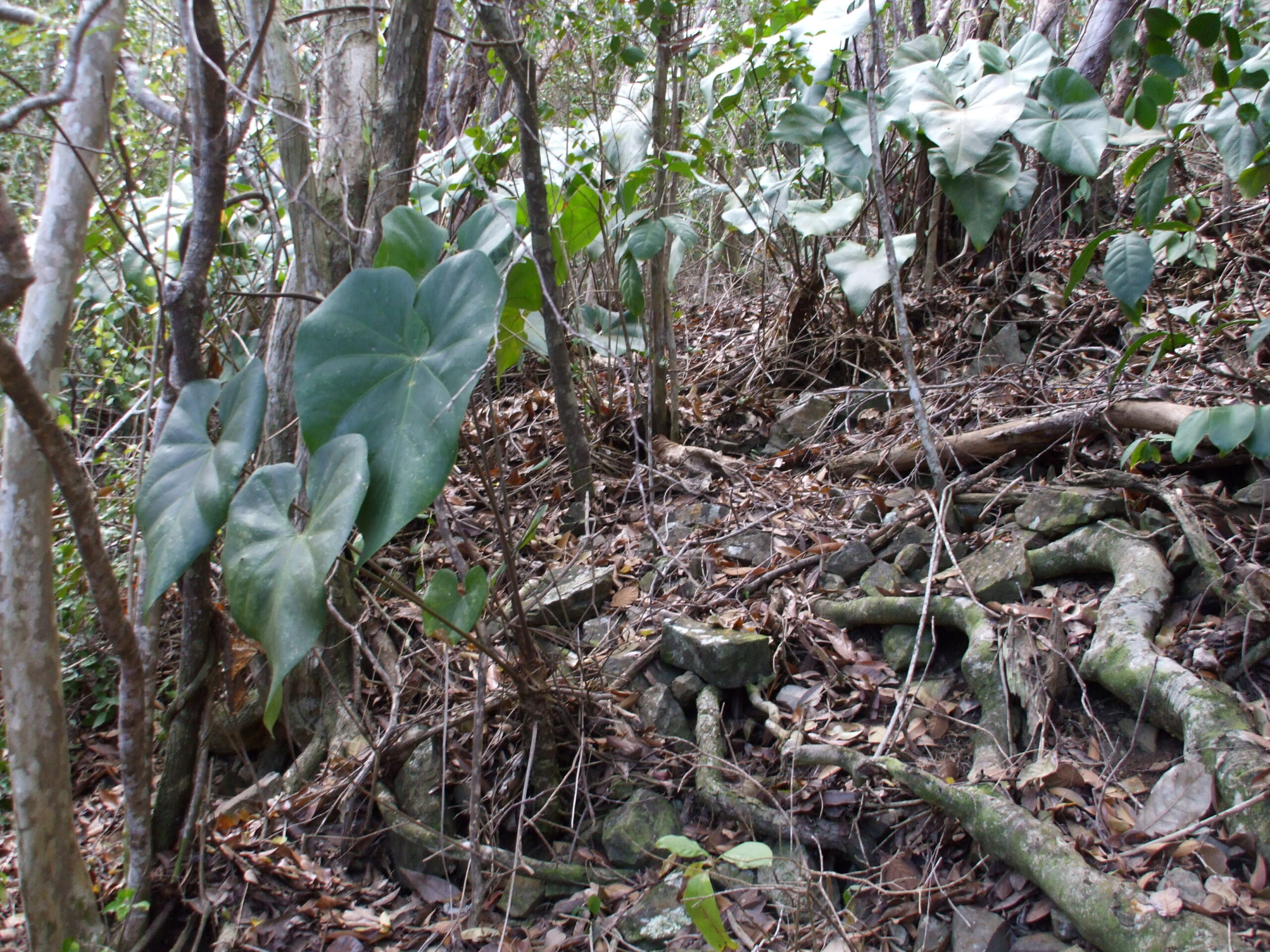
In Part 3 of this series on the forests in the Maroon Sanctuary Territorial Park on St. Croix, I will discuss understory plants briefly and the general ecological make-up of tree ecosystems throughout the park. Basically, understory simply means plants growing beneath the forest canopy without extensive light penetration onto the forest floor. Sweet lime, a non-native understory plant (Triphasia trifolia), for example, is one of our invasive species plants in the Virgin Islands, found both in the northwest and northeast central forests of the park environment.
Hairy wild coffee (Psychotria pubescens), Inkberry (Randia aculeata), Kre-Kre (Tetrazygia elaegnoides), Anthuriums (Anthurium cordifolium), Long Strap Ferns (Campyloneurum phyllitidis) are just a few of the all-native understory plants in the Maroon Park. Kre-Kre, one of my favorite ornamental plants, is a very uncommon species in the wild. These plants are found in upland tropical moist forests and moist gallery forests in the northeast central and northwest of the Maroon Park.
The Long Strap Ferns are extremely rare on St. Croix. The fern grows in high humidity environments. You can find them on tree trunks, on dead woods, or on moist rocks, mostly in the upland moist tropical forests of the park. The Anthurium is another understory plant that only grows in upland tropical moist forests in both the northwest and northeast central forests of the park.
According to the botanical document of trees in Puerto Rico and the Virgin Islands, there were about 551 species that are native. Since then, the list has expanded to some 630 on both islands. Puerto Rico accounts for the most native trees, due to the geological make-up of the island’s environment. Nevertheless, because of rainfall distribution, soil types, and elevations, native and non-native trees grow in different ecological niches of the environment.

For example, there is a reason why a mango tree (Mangifera indica), which is non-native to the Caribbean region, wouldn’t produce mangoes at 2,000 feet above sea level. It’s because the elevation is too high. Therefore, trees grow in different ecological life zones based on many factors of the environment. Now, I will mention some of the trees in the Maroon Sanctuary Territorial Park that are common, uncommon, rare, etc.
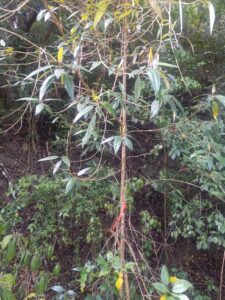
Trumpet tree (Cecropia peltate) is a native species and is extremely rare in the wild on St. Croix. This is an evergreen tree about 70 feet high with a trunk about 2 feet in diameter. On the northeast central part of Maroon Park, I saw one Trumpet tree growing along the Scenic Road. This tree requires high rainfall and tends to grow along streambeds, but also grows in open areas. Cow Itch Cherry, touch me not, or Stinging Bush Wall, all common names of (Malpighia infestissima) is another native plant of St. Croix, Buck Island, Puerto Rico, and possibly Cuba. This is an endangered species plant and is found in the coastal environment of the northwest Maroon Park. This plant is locally and federally protected by law.
Spice guava (Myrcianthes fragrans) is native to the Virgin Islands and rare in the wild. In the northwest of the park forest, there are two large Spice guava trees about 200 or 250-years-old. They are growing in the virgin forest of the park. These trees are also found in the upland tropical moist forests of the northeast central area of the park about 200 to almost 1,000 feet above sea level. Genip (Melicoccus bijugatus), one of the fruits the Maroons (runaway slaves) relied on for food, is a non-native species tree that predominates in certain areas of the park forest.
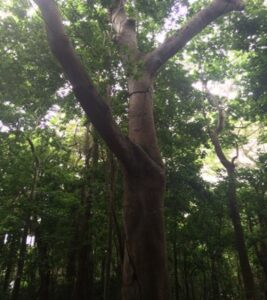
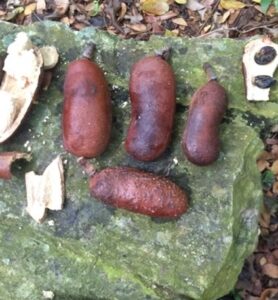
The Guavaberry (Myrciaria floribunda), another tree native to the Virgin Islands, is found frequently in certain elevations of both the northwest and northeast central areas of the park. The fruits were once a source of energy for the Maroons. Another native tree in the park forest is the Stinking-Toe Tree or West Indian Locust (Hymenaea courbaril). In the northwest area of the park forest, there are few trees growing wild. However, the largest concentration of the Stinking-Toe trees is in the northeast central region, particularly in Estate North Star. There are trees that are about 150 to almost 200 years old. Stinking-Toe was one of the fruits eaten by runaway slaves in the wilds of Maroon Country.
Other trees in the park forest are Turpentine (Bursera simaruba), which dominated the northeast central of the park forest, as well as White Cedar or Pink Poui (Tabebuia heterophylla), Fiddlewood (Citharexylyum fruticosum), Black Mampoo (Guapira fragrans), Yellow Prickle (Zanthoxylum monophylum), Green Heart (Guettarda scabra), Hog plum (Spondias mombin), Silk cotton/Kapok (Ceiba pentandra), Pigeonberry (Bourerria succulenta), etc. All trees mentioned above are native to the Virgin Islands.
There are lots more trees that I didn’t mention in the park forests such as West Indian almond (Terminalia catappa), Galba or Maria (Calophyllum calaba), Gre-Gre or Black Olive (Bucida buceras), and Bay-rum tree (Pimenta racemose). However, I should mention that between the 1940s and 1980s, the USDA Forest Service conducted forest experimental research plots throughout the island of St. Croix.
Annaly Bay, Bodkins, Estate Annaly, Mount Eagle, and Mount Stewart, which are now part of the Maroon Park, were some of the tree planting sites on St. Croix for over 80 years. Different species of mahogany trees, such as Pacific variety (Swietenia humilis) and the teak timber species (Tectona grandis), were planted. Today, these trees have become part of the landscape and forest ecosystems of the northwest and northeast central park of Maroon Country.
In Part 4, the last installment of this series, I will give a brief botanical history of individuals who contributed to the Virgin Islands forest history.
Read Part 1 of the series here and Part 2 here.
— Olasee Davis is a bush professor who lectures and writes about the culture, history, ecology and environment of the Virgin Islands when he is not leading hiking tours of the wild places and spaces of St. Croix and beyond.
Editor’s Note: Opinion articles do not represent the views of the Virgin Islands Source newsroom and are the sole expressed opinion of the writer. Submissions can be made to visource@gmail.com.