Young adults interested in conservation, agriculture and workforce development have until June 11 to apply for a paid training program on St. Thomas and St. John, according to a press release from CHANT.
The St. Thomas–St. John USVI Conservation Corps Program will select up to 10 participants ages 18 to 30 for hands-on training and work experience in conservation, environmental stewardship, agriculture, climate resilience, community service, leadership development and workforce readiness, CHANT said in the press release.
Participants will receive training in environmental restoration, native planting, trail maintenance, land stewardship, agriculture, documentation and outreach, tool safety, teamwork and community engagement, the press release stated.
According to the release, trainees may also participate in certification and training opportunities, including CPR and First Aid, OSHA training, financial literacy, professional development, swimming and scuba activities, GED assistance and career exploration programs.
The program is being offered through partnerships with organizations including The Art Exchange, Ascension Livity Inc., CWORI, GRROE, Environmental Rangers, Nia Farms, We Grow Food Inc., Taitu Farm and the Virgin Islands Department of Agriculture. The organizations will help provide training, mentorship, project sites and career exposure opportunities, the release stated.
Participants will work on projects supporting the environmental, cultural and community well-being of St. Thomas and St. John while exploring careers in conservation, agriculture, environmental management and community development, according to the release.
Space is limited. Additional information and applications are available at chantvi.org/conservation-corps. Interested applicants can also email dcooper@chantvi.org or call or text 340-643-6863.
Funding for the program is provided through the National Oceanic and Atmospheric Administration and the Virgin Islands Department of Planning and Natural Resources, according to the release.
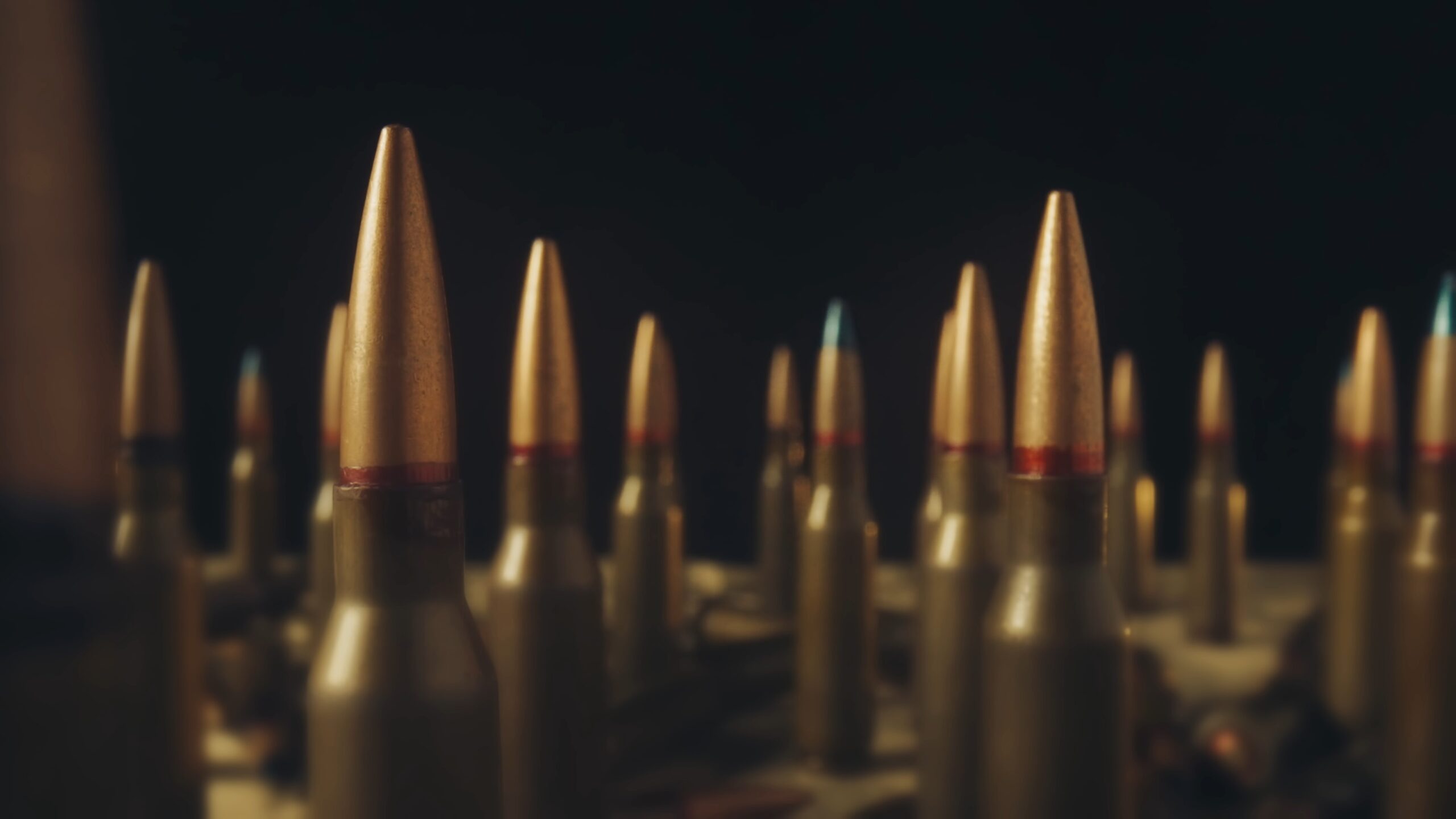
A St. Thomas man allegedly tried to smuggle 500 rounds of ammunition into the territory for resale, according to court records. (Shutterstock image)
Officers from the Department of Homeland Security detained a St. Thomas man last week who had allegedly packed 500 rounds of live ammunition in his and a travel companion’s suitcases.
Kareem Eric Casimir, 32, allegedly acknowledged he had not declared the bullets to airline or federal security personnel on St. Thomas or in Miami, where the flight departed. He allegedly told investigators he had bought the ammunition — 150 rounds of 9mm bullets, 50 rounds of 380 automatic ammunition, 100 rounds of .40 ammunition, and 200 rounds for a .223 weapon — in Florida and planned to sell them in the territory, according to court records.
The bullets were split between Casimir’s bag and one belonging to Tonia Mella, according to court records. It was unclear how Casimir was able to board the plane in Florida with the stockpile. It was also unclear why Mella, who allegedly told federal agents she knew of the bullets, was not charged.
Casimir was charged with failure to provide written notice of a firearm to a common carrier — a felony punishable by up to five years’ imprisonment and a $250,000 fine. He was released on $10,000 bond after surrendering his passport.
The arrest comes two years after Casimir was arrested for allegedly stealing and attempting to dismantle a Jet Ski. Police found Casimir on June 10, 2024, after a wanted poster had been printed. He faced charges of unauthorized use of a vehicle, damaging and tampering with a vehicle and possession of stolen property.
In January 2019, Casimir was charged with assault and disturbance of the peace but charges were dropped a month later.
IN THE SUPERIOR COURT OF THE VIRGIN ISLANDS
DIVISION OF ST. THOMAS & ST. JOHN
IN THE MATTER OF THE
ESTATE OF JEFFREY CHARLES CLABAUGH A/K/A JEFFREY C. CLABAUGH
A/K/A JEFFREY CLABAUGH
Deceased.
PROBATE NO. ST-2026-PB-00060
NOTICE OF PETITION FOR
DEVISEE UNDER FOREIGN WILL TO BE RECOGNIZED AND PLACED IN POSSESSION OF PROPERTY
NOTICE IS HEREBY GIVEN that a Petition for Devisee Under Foreign Will to be Recognized and Placed in Possession of Property has been filed on behalf of the Estate of Jeffrey Charles Clabaugh a/k/a Jeffrey C. Clabaugh a/k/a Jeffrey Clabaugh, deceased, pursuant to V.I. R. Prob. 24.
All persons having claims against the Estate are required to present them, verified by affidavit, with the Superior Court of the Virgin Islands, Division of St. Thomas & St. John, or ATTN: Alex T. LeJeune, Esq., BoltNagi PC, Attorneys for the Estate, 4608 Tutu Park Mall, Ste. 202, St. Thomas, U.S. Virgin Islands 00802.
All persons indebted to the Estate are to make payment promptly to the Estate of Jeffrey Charles Clabaugh a/k/a Jeffrey C. Clabaugh a/k/a Jeffrey Clabaugh in care of the undersigned attorney.
Respectfully submitted,
Dated: June 8, 2026
/s/ Alex T. LeJeune__________
Alex T. LeJeune, Esq.
BoltNagi PC
4608 Tutu Park Mall, Ste. 202
St. Thomas, USVI 00802
(340) 774-2944 Telephone
(340) 776-1639 Fax
alex.leJeune@vilaw.comAttorney for the Estate of Jeffrey Charles Clabaugh a/k/a Jeffrey C. Clabaugh a/k/a Jeffrey Clabaugh
Ronald Ernst Russell, affectionately known as Ronnie, passed away peacefully at his sister’s home in New York on May 6, 2026, at the age of 71.Ronald Russell
Born on June 10, 1954, Ronnie was raised by his maternal grandmother, the revered educator and culture bearer Eulalie Rivera. Over the course of his life, Ronnie served his community as a distinguished attorney, Virgin Islands Senator, and President of the 29th Legislature. He represented the Virgin Islands as a sprinter at the 1976 Montreal and 1984 Los Angeles Olympics; was instrumental in the creation of the Virgin Islands Supreme Court; and remained a lifelong musician, performing guitar with the Soul Busters, and eventually the Ronnie Russell Band. Ronnie was a devoted family man, a man of deep faith, and a cornerstone of Frederiksted. He will be remembered for his warm smile, welcoming personality, passion for music and dedication to the Virgin Islands.
Ronnie was preceded in death by his grandmother, Eulalie Rivera; his mother, Grace Rivera Russell; his father, Edwin G. Russell; and his uncle, Angel Rivera.
He is survived by his step-mother, Louise Russell; his wife, Royette Valmond Russell; and his seven children: Angelique Piper, Kamal Russell, Aja Barretto, Andrea Russell-Broyles, Ronaqua Russell, Samantha Smith, and Mayah Russell.
He is also survived by his siblings, Edwin “Eddie” Russell, Edward Russell, Renee Russell, and his nieces and nephews. Eddie’s children: Stephanie Russell Nichols, Diane Russell, Esq., Edwin Russell, Jamila A. Russell, Kai Russell Gonzague, Monifa Russell Victoria, Rashida K. Russell, Kwasi Barnes, PhD, Makeda A. Russell, Shari Russell, and Mia Russell. Edward’s Children: Tanya Russell Foletti, Chad Russell, Darryl Russell, Shani Russell Sadiq, Alphaeus Russell, Terandrose Russell. As well as a host of grandchildren, godchildren, and extended family including the Rohlsen Family.
He leaves behind cherished friends: Sandy Richardson, Kelly Barretto, Aquanette Chinnery, Diana Russell, Cherene Williams Walters, Roy Delemos, Claire Roker, Gustav James and Family, Sam Raphael, Sherry and Alaric Gardine, Lenny Larson and Family, Devin Carrington, Bobby and Tony Richards, Wallace Williams, Marlon Williams and Family, Dr. Gerd Daniel Pust, and a host of other friends and family, too many to mention.
The public is invited to pay their respects during the official Lying in State on Tuesday, June 9, 11:30 a.m. – 3 p.m. at the St. Croix Legislature. A celebration of life service will be held on Wednesday, June 10 at Holy Trinity Lutheran Church in Frederiksted:
• Viewing: 10 a.m.
• Service: 11 a.m.
• Repast: 12 p.m. to 4 p.m. at LEVELS in Christiansted (across from Luncheria)
Lastly, on Thursday, June 11 at 5 p.m., to honor Ronnie’s favorite running route, the family will be hosting a “Walk and Dip” consisting of a walk or jog from Claude O. Markoe to Dorche Beach, followed by a sunset dip at 6 p.m.
Please send tributes to ronaldrusselltributes@gmail.com. Funeral Arrangement by James Memorial Funeral Home.
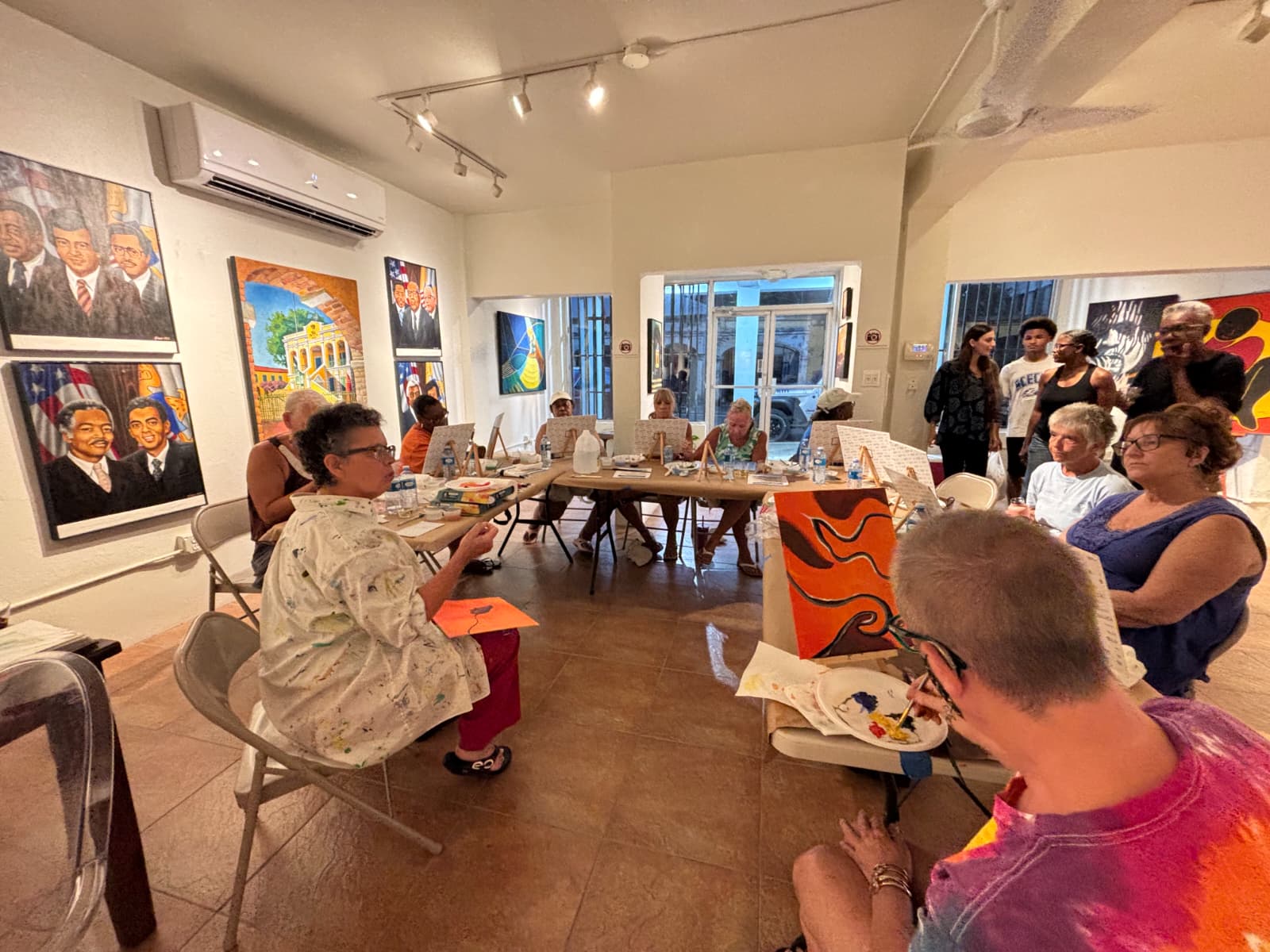
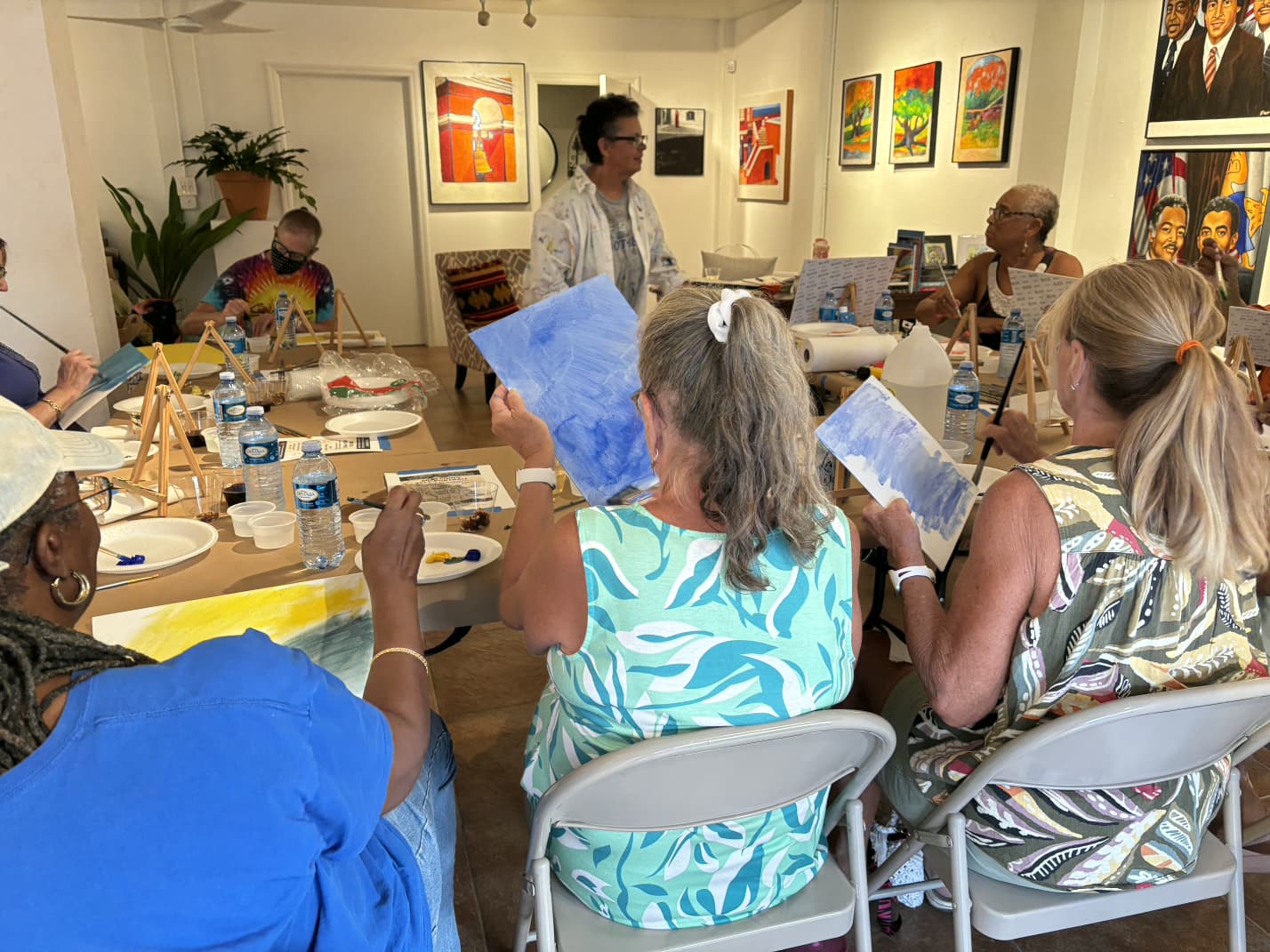
The recent Art of Healing Through Painting class, led by Victoria Rundberg-Rivera, is a prime example of the positive impact art classes can have on attendees’ hearts and minds. (Photo by Denise Lenhardt Benoit)
The Art of Healing, Threads of Resilience, Healing Arts, Heritage and Culture Series hosted by the VI Breast Cancer Project continues on Monday from 3 to 6 p.m. with a Self-Portrait Sketching Class, at Fort Frederik on King Street in downtown Frederiksted on St. Croix. Curator and artist Monica Marin is the featured instructor. Enrollment is open to all cancer survivors, and seating is limited. A few seats remain.
Studies have shown that art has a way of soothing the soul. Whether you create art as a vocation or as a novice, it has a calming and often therapeutic effect on our well-being. This is the intent behind the art therapy classes, which began in early 2022 with a Sip & Pour art class that was hosted in cooperation with the Caribbean Museum Center for the Arts.
A cancer survivor herself, co-founder Diane J. Hampton continues to advocate for the inclusion of the U.S. Virgin Islands in the national dialogue on cancer research. She designed the Art of Healing, Threads of Resilience, Healing Arts, Heritage and Culture Series as a means to uplift and inspire cancer survivors during the most challenging time of their lives, the release states.
Held on the evening of May 25 at the Cane Roots Gallery in Christiansted, the Art of Healing Through Painting class drew cancer survivors and patients in treatment, who expressed their appreciation for the free classes, which have ranged from vision board healing to silk dyeing, wire sculpture, and watercolor painting. (Photo by Denise Lenhardt Benoit)
The recent Art of Healing Through Painting class, led by Victoria Rundberg-Rivera, is a prime example of the positive impact art classes can have on attendees’ hearts and minds. A retired physician, author/poet/painter, Rundberg-Rivera is a virtual Renaissance woman. Held on the evening of May 25 at the Cane Roots Gallery in Christiansted, the event drew cancer survivors and patients in treatment, who expressed their appreciation for the free classes, which have ranged from vision board healing to silk dyeing, wire sculpture, and watercolor painting. Mona Petersen, a cancer survivor and ardent supporter of the VIBCP, said she found the painting class very revealing, adding, “I was amazed to discover my ‘inner artist’, a skill set I never knew I had.”
The art classes and forums hosted by the Virgin Islands Breast Cancer Project are sponsored by the St. Croix Foundation for Community Development and are free for all cancer survivors. Woodworking and other art classes are planned for later this summer and fall.
For registration, email vibreastcancerproject@gmail.com.
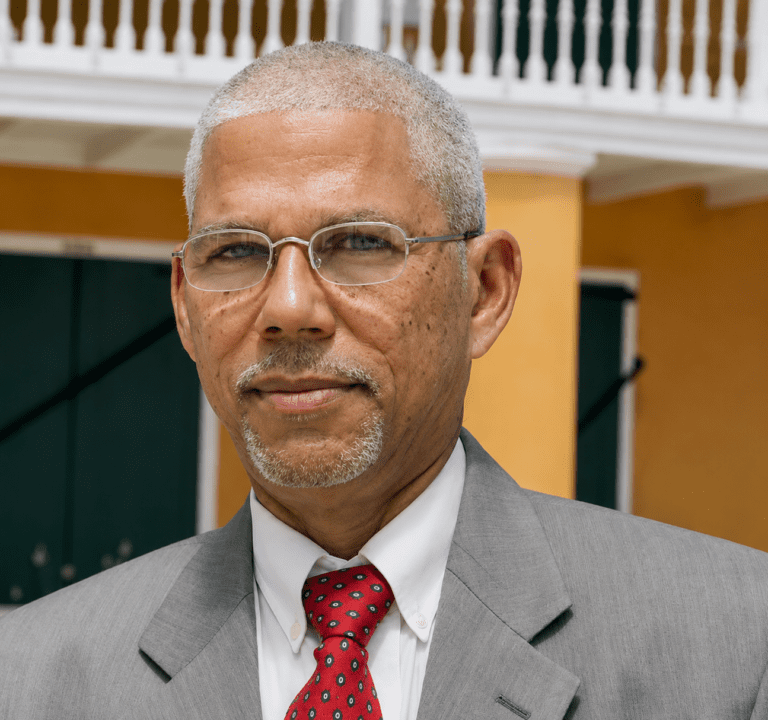
In his biweekly column, Langley Shazor speaks to issues important to men within the territory.
Love is not a single language. It is a collection of dialects shaped by experience, upbringing, and expectation. One of the greatest misunderstandings between men and women is not about whether love exists, but about how it is felt. Many women experience love through emotional closeness, consistent communication, and visible affection. Many men experience love through respect, trust, and acknowledgment of effort. When these languages are not understood, both sides feel unloved even when love is present.
For many men, respect is not about superiority. It is about significance. It is the sense that their role, their effort, and their intentions matter. When a man feels respected, he feels secure in the relationship. That security gives him the freedom to be open, generous, and emotionally available. When he feels dismissed or constantly corrected without balance, it can quietly erode his confidence. The issue is rarely about ego alone. It is about identity.
From a young age, boys are often taught that their value comes from competence. They are praised when they solve problems, fix what is broken, or take initiative. Over time, competence becomes tied to worth. In adulthood, when effort goes unnoticed or intentions are assumed to be careless, it can feel like rejection. Respect communicates that his effort is seen even when the outcome is imperfect. It says, “I trust you. I value you. I believe in your intention.”
This does not mean men require blind agreement or immunity from accountability. Respect is not silence in the face of wrong. It is the tone and posture with which correction is delivered. A conversation grounded in dignity preserves connection. A conversation driven by contempt fractures it. When disagreements maintain mutual regard, they strengthen the relationship instead of weakening it.
Women often interpret respect differently. For many women, feeling secure in a relationship comes from emotional consistency and attentiveness. They want to know their feelings will be received without dismissal. When that emotional security is shaken, they may respond with intensity. The challenge arises when each person is expressing love in a way the other does not instinctively recognize.
If a woman expresses frustration about feeling unheard, she is often asking for reassurance. If a man expresses frustration about feeling disrespected, he is often asking for acknowledgment. Neither is inherently wrong. The breakdown occurs when these requests are interpreted as attacks rather than invitations.
Respect in a man’s language often looks like trust. Trust that his effort is sincere. Trust that he is capable. Trust that he is not the enemy in every conflict. When a man feels that his partner assumes the best of him rather than the worst, he responds with greater openness. Suspicion tightens communication. Trust expands it.
Respect also looks like appreciation. Verbal acknowledgment of effort, even small effort, reinforces connection. Many men are motivated not by applause but by affirmation. When appreciation is absent, it can create quiet discouragement. When appreciation is present, it fuels engagement. A man who feels valued is far more likely to initiate affection, conversation, and vulnerability.
The absence of respect can create defensiveness. If every mistake is magnified and every strength minimized, a man may retreat emotionally. He may become guarded, not because he does not care, but because he feels perpetually evaluated. Respect provides breathing room. It allows growth without humiliation. It allows correction without shame.
At the same time, men must recognize that respect is reciprocal. Demanding respect while offering little emotional safety creates imbalance. Respect cannot be commanded. It is cultivated through consistency, integrity, and humility. A man who listens attentively, speaks calmly, and follows through on his word naturally earns respect. It becomes mutual rather than negotiated.
Understanding this difference in emotional language reduces unnecessary conflict. When a woman offers reassurance and affirmation intentionally, she often sees a shift in energy. When a man offers emotional attentiveness and validation intentionally, he sees the same. Love begins to feel less like a negotiation and more like collaboration.
There is also a cultural component to consider. Public discourse often frames respect as hierarchy. In healthy relationships, respect is partnership. It is not about control. It is about mutual regard. It is about speaking to one another in ways that preserve dignity even in disagreement.
When respect and emotional security are both present, something powerful happens. Communication becomes less reactive. Affection becomes more natural. Conflict becomes productive rather than destructive. Both partners begin to feel safe enough to reveal their deeper selves.
Men do not need perfection. They need partnership that acknowledges their effort and trusts their intention. Women do not need dominance. They need consistency and emotional presence. When both are given, love deepens in ways that surprise even the people involved.
Respect is not the absence of love. It is one of its expressions. For many men, it is the clearest signal that love is real. When that signal is strong, vulnerability increases. Walls lower. Conversations open.
Understanding that respect functions as love in a man’s language does not diminish a woman’s needs. It enhances clarity. It allows both sides to express care in ways the other can receive. The bridge between men and women strengthens not when one language wins, but when both are spoken fluently.
When love and respect move together, connection stabilizes. And stability, over time, becomes trust.
Editor’s Note: Opinion articles do not represent the views of the Virgin Islands Source newsroom and are the sole expressed opinion of the writer. Submissions can be made to visource@gmail.com.
Overall winners of the 42nd Annual Women’s Race with their trophies following Sunday’s event on St. Croix. Bridget Klein, center, captured first place overall, while Kennedy James, left, finished second and Aisa Williams, right, earned third place. (Source photo by Diana Dias)
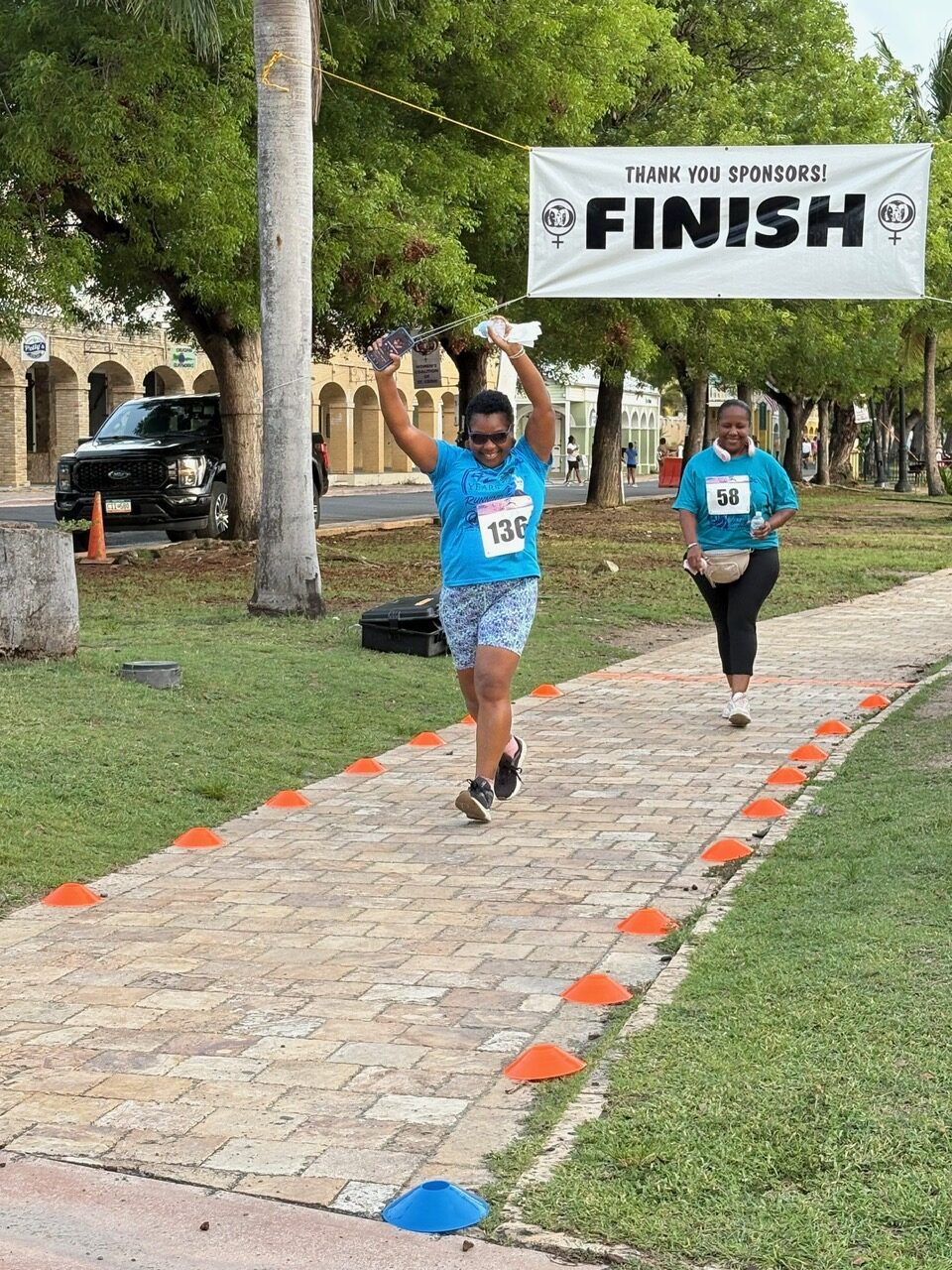
More than 200 women and girls gathered on St. Croix Sunday evening for the 42nd Annual Women’s Race, embracing this year’s theme, “For Hope, Healing and Peace.”
Hosted by the Women’s Coalition of St. Croix, the annual event serves as both a community celebration and a fundraiser supporting programs for individuals impacted by violence. This year also marked the coalition’s 45th year of service and advocacy in the territory.
Before the race began, Zumba Queen Roxanne Serrano energized participants with a lively warm-up session, helping prepare runners and walkers for the 5 p.m. start.
In the overall standings, Bridget Klein once again claimed first-place honors. Kennedy James finished second overall, while Aisa Williams secured third place.
Among the younger competitors, Grace Eatmon earned first place in the 9-13 age category. Amel Bain finished second, and Grace Chewning took third place.
Race organizers also recognized winners across numerous age divisions and presented participation awards to celebrate the accomplishments and dedication of those who took part in the annual event.
With arms raised in triumph, a participant completes the 42nd Annual Women’s Race on Sunday evening as fellow walkers and runners make their way to the finish line. The annual event serves as a fundraiser and awareness campaign for the Women’s Coalition of St. Croix. (Source photo by Diana Dias)
The Women’s Race has long been one of the territory’s most recognized community events. According to WCSC Executive Director Dr. Clema S. Lewis, the race has become a symbol of strength and solidarity for survivors and supporters alike.
“For 41 years, the Women’s Race has stood out in this community as the event that supports victim-survivors in our community,” Lewis said in a previous statement. “It has allowed them to actively participate in an activity that’s been a symbol of strength, solidarity, and the enduring spirit of our community.”
Delegate to Congress Stacey Plaskett, center, joins her fellow members of Delta Sigma Theta Sorority, Inc., during the 42nd Annual Women’s Race on Sunday in Christiansted. (Source photo by Diana Dias)
The Women’s Coalition of St. Croix’s mission is to support and empower people impacted by violence. The organization provides free and confidential services in English and Spanish to individuals of all gender identities and sexual orientations. Programs and advocacy services assist those experiencing or recovering from domestic violence, sexual violence, dating violence, and stalking.
Volunteers distribute refreshments and fresh fruit to participants following the 42nd Annual Women’s Race on Sunday in Christiansted. The postrace gathering provided runners and walkers an opportunity to refuel and celebrate after completing the event, which raised awareness and support for the Women’s Coalition of St. Croix’s programs and services. (Source photo by Diana Dias)
The event was made possible through the support of numerous sponsors, including Neighborhood Pharmacy, Good Hope Country Day School, Delta Sigma Theta Sorority, the Ladies of Zeta Phi Beta, Vivot, and many others.
Runners and walkers gather near the finish area after completing the 42nd Annual Women’s Race. (Source photo by Diana Dias)
As participants crossed the finish line and gathered for awards and fellowship, the evening reflected the spirit of this year’s theme, promoting hope, healing, and peace throughout the St. Croix community while helping raise awareness and support for the coalition’s vital programs and services.
A participant displays a commemorative towel provided by Vivot, one of the sponsors of the 42nd Annual Women’s Race, following Sunday’s event in Christiansted. (Source photo by Diana Dias)
For more information about the Women’s Coalition of St. Croix and its services, call 340-773-9272.









 In his biweekly column, Langley Shazor speaks to issues important to men within the territory.
Love is not a single language. It is a collection of dialects shaped by experience, upbringing, and expectation. One of the greatest misunderstandings between men and women is not about whether love exists, but about how it is felt. Many women experience love through emotional closeness, consistent communication, and visible affection. Many men experience love through respect, trust, and acknowledgment of effort. When these languages are not understood, both sides feel unloved even when love is present.
For many men, respect is not about superiority. It is about significance. It is the sense that their role, their effort, and their intentions matter. When a man feels respected, he feels secure in the relationship. That security gives him the freedom to be open, generous, and emotionally available. When he feels dismissed or constantly corrected without balance, it can quietly erode his confidence. The issue is rarely about ego alone. It is about identity.
From a young age, boys are often taught that their value comes from competence. They are praised when they solve problems, fix what is broken, or take initiative. Over time, competence becomes tied to worth. In adulthood, when effort goes unnoticed or intentions are assumed to be careless, it can feel like rejection. Respect communicates that his effort is seen even when the outcome is imperfect. It says, “I trust you. I value you. I believe in your intention.”
This does not mean men require blind agreement or immunity from accountability. Respect is not silence in the face of wrong. It is the tone and posture with which correction is delivered. A conversation grounded in dignity preserves connection. A conversation driven by contempt fractures it. When disagreements maintain mutual regard, they strengthen the relationship instead of weakening it.
Women often interpret respect differently. For many women, feeling secure in a relationship comes from emotional consistency and attentiveness. They want to know their feelings will be received without dismissal. When that emotional security is shaken, they may respond with intensity. The challenge arises when each person is expressing love in a way the other does not instinctively recognize.
If a woman expresses frustration about feeling unheard, she is often asking for reassurance. If a man expresses frustration about feeling disrespected, he is often asking for acknowledgment. Neither is inherently wrong. The breakdown occurs when these requests are interpreted as attacks rather than invitations.
Respect in a man’s language often looks like trust. Trust that his effort is sincere. Trust that he is capable. Trust that he is not the enemy in every conflict. When a man feels that his partner assumes the best of him rather than the worst, he responds with greater openness. Suspicion tightens communication. Trust expands it.
Respect also looks like appreciation. Verbal acknowledgment of effort, even small effort, reinforces connection. Many men are motivated not by applause but by affirmation. When appreciation is absent, it can create quiet discouragement. When appreciation is present, it fuels engagement. A man who feels valued is far more likely to initiate affection, conversation, and vulnerability.
The absence of respect can create defensiveness. If every mistake is magnified and every strength minimized, a man may retreat emotionally. He may become guarded, not because he does not care, but because he feels perpetually evaluated. Respect provides breathing room. It allows growth without humiliation. It allows correction without shame.
At the same time, men must recognize that respect is reciprocal. Demanding respect while offering little emotional safety creates imbalance. Respect cannot be commanded. It is cultivated through consistency, integrity, and humility. A man who listens attentively, speaks calmly, and follows through on his word naturally earns respect. It becomes mutual rather than negotiated.
Understanding this difference in emotional language reduces unnecessary conflict. When a woman offers reassurance and affirmation intentionally, she often sees a shift in energy. When a man offers emotional attentiveness and validation intentionally, he sees the same. Love begins to feel less like a negotiation and more like collaboration.
There is also a cultural component to consider. Public discourse often frames respect as hierarchy. In healthy relationships, respect is partnership. It is not about control. It is about mutual regard. It is about speaking to one another in ways that preserve dignity even in disagreement.
When respect and emotional security are both present, something powerful happens. Communication becomes less reactive. Affection becomes more natural. Conflict becomes productive rather than destructive. Both partners begin to feel safe enough to reveal their deeper selves.
Men do not need perfection. They need partnership that acknowledges their effort and trusts their intention. Women do not need dominance. They need consistency and emotional presence. When both are given, love deepens in ways that surprise even the people involved.
Respect is not the absence of love. It is one of its expressions. For many men, it is the clearest signal that love is real. When that signal is strong, vulnerability increases. Walls lower. Conversations open.
Understanding that respect functions as love in a man’s language does not diminish a woman’s needs. It enhances clarity. It allows both sides to express care in ways the other can receive. The bridge between men and women strengthens not when one language wins, but when both are spoken fluently.
When love and respect move together, connection stabilizes. And stability, over time, becomes trust.
In his biweekly column, Langley Shazor speaks to issues important to men within the territory.
Love is not a single language. It is a collection of dialects shaped by experience, upbringing, and expectation. One of the greatest misunderstandings between men and women is not about whether love exists, but about how it is felt. Many women experience love through emotional closeness, consistent communication, and visible affection. Many men experience love through respect, trust, and acknowledgment of effort. When these languages are not understood, both sides feel unloved even when love is present.
For many men, respect is not about superiority. It is about significance. It is the sense that their role, their effort, and their intentions matter. When a man feels respected, he feels secure in the relationship. That security gives him the freedom to be open, generous, and emotionally available. When he feels dismissed or constantly corrected without balance, it can quietly erode his confidence. The issue is rarely about ego alone. It is about identity.
From a young age, boys are often taught that their value comes from competence. They are praised when they solve problems, fix what is broken, or take initiative. Over time, competence becomes tied to worth. In adulthood, when effort goes unnoticed or intentions are assumed to be careless, it can feel like rejection. Respect communicates that his effort is seen even when the outcome is imperfect. It says, “I trust you. I value you. I believe in your intention.”
This does not mean men require blind agreement or immunity from accountability. Respect is not silence in the face of wrong. It is the tone and posture with which correction is delivered. A conversation grounded in dignity preserves connection. A conversation driven by contempt fractures it. When disagreements maintain mutual regard, they strengthen the relationship instead of weakening it.
Women often interpret respect differently. For many women, feeling secure in a relationship comes from emotional consistency and attentiveness. They want to know their feelings will be received without dismissal. When that emotional security is shaken, they may respond with intensity. The challenge arises when each person is expressing love in a way the other does not instinctively recognize.
If a woman expresses frustration about feeling unheard, she is often asking for reassurance. If a man expresses frustration about feeling disrespected, he is often asking for acknowledgment. Neither is inherently wrong. The breakdown occurs when these requests are interpreted as attacks rather than invitations.
Respect in a man’s language often looks like trust. Trust that his effort is sincere. Trust that he is capable. Trust that he is not the enemy in every conflict. When a man feels that his partner assumes the best of him rather than the worst, he responds with greater openness. Suspicion tightens communication. Trust expands it.
Respect also looks like appreciation. Verbal acknowledgment of effort, even small effort, reinforces connection. Many men are motivated not by applause but by affirmation. When appreciation is absent, it can create quiet discouragement. When appreciation is present, it fuels engagement. A man who feels valued is far more likely to initiate affection, conversation, and vulnerability.
The absence of respect can create defensiveness. If every mistake is magnified and every strength minimized, a man may retreat emotionally. He may become guarded, not because he does not care, but because he feels perpetually evaluated. Respect provides breathing room. It allows growth without humiliation. It allows correction without shame.
At the same time, men must recognize that respect is reciprocal. Demanding respect while offering little emotional safety creates imbalance. Respect cannot be commanded. It is cultivated through consistency, integrity, and humility. A man who listens attentively, speaks calmly, and follows through on his word naturally earns respect. It becomes mutual rather than negotiated.
Understanding this difference in emotional language reduces unnecessary conflict. When a woman offers reassurance and affirmation intentionally, she often sees a shift in energy. When a man offers emotional attentiveness and validation intentionally, he sees the same. Love begins to feel less like a negotiation and more like collaboration.
There is also a cultural component to consider. Public discourse often frames respect as hierarchy. In healthy relationships, respect is partnership. It is not about control. It is about mutual regard. It is about speaking to one another in ways that preserve dignity even in disagreement.
When respect and emotional security are both present, something powerful happens. Communication becomes less reactive. Affection becomes more natural. Conflict becomes productive rather than destructive. Both partners begin to feel safe enough to reveal their deeper selves.
Men do not need perfection. They need partnership that acknowledges their effort and trusts their intention. Women do not need dominance. They need consistency and emotional presence. When both are given, love deepens in ways that surprise even the people involved.
Respect is not the absence of love. It is one of its expressions. For many men, it is the clearest signal that love is real. When that signal is strong, vulnerability increases. Walls lower. Conversations open.
Understanding that respect functions as love in a man’s language does not diminish a woman’s needs. It enhances clarity. It allows both sides to express care in ways the other can receive. The bridge between men and women strengthens not when one language wins, but when both are spoken fluently.
When love and respect move together, connection stabilizes. And stability, over time, becomes trust.