The Virgin Islands Waste Management Authority is reminding all permitted waste haulers, contractors, and individuals transporting waste of their responsibility to properly secure all loads during transport to prevent littering and protect public health and safety.
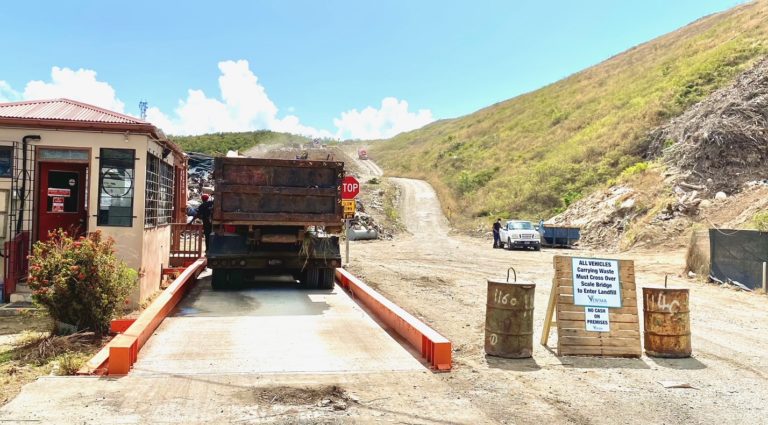
Waste haulers must use tarps, reminds the Waste Management Authority. (Photo courtesy of the V.I. Waste Management Authority)
Unsecured waste loads can result in debris being blown from vehicles onto roadways, public property, and surrounding communities. This creates serious safety hazards for motorists, contributes to environmental pollution, and increases clean-up costs across the Territory.
Under Virgin Islands Code Title 19, Chapter 56, Section 1563-4, “No person shall haul or transport loose waste, such as paper, rags, ashes, or other material of such kind as to be subject to be blown about by the wind or otherwise scattered in such manner as to litter the streets or other public places.”
Failure to comply with this law may result in fines of $1,000 per offense and/or imprisonment for up to 180 days. Environmental Enforcement Officers will continue monitoring compliance with waste transportation requirements.
VIWMA encourages haulers and residents to remain vigilant and responsible when transporting waste to help keep the Virgin Islands clean, safe, and beautiful.
For more information, please contact the Division of Education and Communications Management at 340-715-9100 or email communications@viwma.org. To report violations, please email customer_care@viwma.org. Stay connected with VIWMA on Facebook, X, and LinkedIn for updates.
In a letter to congressional appropriations leaders, the coalition asked Congress to include continued funding for the Legal Services Corporation, or LSC, in the fiscal year 2027 Commerce, Justice, Science, and Related Agencies Appropriations bill.
(Photo courtesy Government House of the VI Facebook)
The coalition emphasized that LSC plays a critical role in ensuring access to justice for people who cannot afford legal representation in civil matters and remains a wise investment of federal resources.
Legal Services of the Virgin Islands (LSVI), a nonprofit organization with offices in St. Thomas and St. Croix, is partially funded locally by the LSC. LSVI provides civil legal assistance to low income and underserved individuals across the United States Virgin Islands. Since 1969, LSVI has been committed to making equal justice a reality for all who need it. “Legal Services of the Virgin Islands provides a critical lifeline to residents who cannot afford legal representation,” said Attorney General Gordon C. Rhea. “Continued federal support through the Legal Services
Corporation helps ensure that vulnerable individuals and families throughout our territory have access to the legal resources they need to protect their rights and secure justice.”
Created by Congress in 1974, LSC supports a nationwide network of 129 independent legal aid organizations operating more than 900 offices in every state, the District of Columbia, and U.S. territories. Nearly 95% of LSC’s federal funding is distributed directly to local legal aid providers that help millions of Americans each year address critical civil legal issues involving housing, family safety, consumer protection, veterans’ benefits, and disaster recovery.
In their letter, the attorneys general highlighted the vital role LSC-funded programs play in expanding access to justice in rural communities where attorney shortages can leave residents without legal assistance when facing significant civil legal challenges. The coalition also noted that studies show every dollar invested in civil legal aid generates an average of seven dollars in societal benefits, making LSC an effective and efficient use of taxpayer resources.
In addition to the U.S. Virgin Islands, the letter was led by the attorneys general of Colorado, North Carolina, Pennsylvania, and Tennessee and joined by the attorneys general of Alaska, American Samoa, Arizona, California, Connecticut, Delaware, the District of Columbia, Georgia, Hawaii, Illinois, Iowa, Kansas, Louisiana, Maine, Maryland, Massachusetts, Michigan, Minnesota, Nevada, New Hampshire, New Jersey, New Mexico, New York, the Northern Mariana Islands, Oklahoma, Oregon, Rhode Island, South Dakota, Utah, Vermont, Virginia,
Washington,
The U.S. Virgin Islands Department of Human Services, Office of Child Care and Regulatory Services (OCCRS) is informing the public that it is shifting its application intake to an exclusively in-person format, effective Thursday. To provide the best possible service, our staff is currently focused on face-to-face intake operations. Please note the following updates:
V.I. Department of Human Services — Office of Child Care and Regulatory Services
• In-Person Processing: All Child Care Applications and Pre-applications MUST now be submitted in person at the OCCRS office in your respective district. Staff are on-site to receive applications, conduct interviews, and assist families directly.
• Online Submissions Currently Unavailable: To ensure everyone is served efficiently, we are transitioning entirely to in-person service; therefore, new applications and pre-applications submitted by email will not be processed at this time. OCCRS apologizes for this temporary disruption to our online options.
Important Note for Existing Applicants: If you have already submitted an electronic application prior to this announcement, please rest assured that your paperwork is safely in our queue and is actively being processed. There is no need to resubmit in person. We truly appreciate the community’s understanding, patience, and cooperation as we work through this operational transition to better serve Virgin Islands familiesPlease visit or contact the Office of Child Care and Regulatory Services in your respective district at the locations listed below:
ST. THOMAS DISTRICT Knud Hansen Complex / Building A 1303 Hospital Ground
St. Thomas, VI 00802
Phone: (340) 774-0930
ST. CROIX DISTRICT #129 Golden Rock
Christiansted, St. Croix, VI 00820
Phone: (340) 772-7147
ST. JOHN DISTRICT DHS Headquarters in St. John St. John Multipurpose Building Cruz Bay,
St. John, VI 00830 Phone: (340) 776-6334
As the Fourth of July holiday draws near, the Virgin Islands Fire and Emergency Medical Services reminds residents and visitors of the importance of adhering to local laws governing the sale, possession, and use of fireworks. These laws are designed to protect individuals, property, and emergency personnel.
Only licensed people are allowed o have, buy, or sell explosives in the Virgin Islands. (Source photo by Kit MacAvoy)
Below is the applicable section of the Virgin Islands Code:
U.S. Virgin Islands Code
Title 23 – Internal Security and Public Order
Chapter 9 – Fire Prevention Code
Subchapter VI – Fireworks (§§ 731 — 733)
§ 733. Exceptions
Universal Citation: V.I. Code tit. 23 V.I.C. § 733
Nothing in this subchapter shall be construed to prohibit any resident wholesaler, dealer, or jobber to sell at wholesale such fireworks as are not herein prohibited; or the sale of any kind of fireworks provided the same are to be shipped directly out of the Virgin Islands; or the use of fireworks by railroads or other transportation agencies for signal purposes or illumination, or the sale or use of blank cartridges for a show or theatre, or for signal or ceremonial purposes in athletics or sports, or for use by military organizations.
(a) The manufacture of fireworks is prohibited within the Virgin Islands.
(b) Except as hereinafter provided it shall be unlawful for any person to offer for sale, expose for sale, sell at retail, or use or explode any fireworks. The Commissioner may adopt reasonable rules and regulations for the granting of permits for supervised public displays of fireworks by the government of the Virgin Islands, fair associations, amusement parks, and other organizations or groups of individuals. Every such display shall be handled by a competent operator approved by the Commissioner, and shall be of such a character, and so located, discharged or fired as in the opinion of the Commissioner, after proper inspection, shall not be hazardous to property orendanger any person.
(c) Application for permits shall be made in writing at least three days in advance of the date of the display. After such privilege shall have been granted, sale, possession, use and distribution of fireworks for such display shall be lawful for that purpose only. No permit granted hereunder shall be transferable.
Subchapter V – Explosives (§§ 711 — 719)
§ 718. Penalties
Universal Citation: V.I. Code tit. 23 V.I.C. § 718
A person who violates any provision of this act is guilty of a misdemeanor and shall be fined not more than $500 or imprisoned for not more than 1 year, or both; Provided, That any person found in possession of explosives without a proper permit shall be guilty of a felony and shall be fined not more than $5,000 or imprisoned for not more than 10 years, or both.
For official reference and updates, please visit the Legislature of the United States Virgin Islands website and select “VI Code”.
The Caribbean Community Theatre concludes its 41st season with Sarah & Addie, a collection of short Crucian plays. There will be a total of six performances over two weekends: Fridays and Saturdays at 8 p.m., on June 12, 13, 19 and 20, and two Sunday matinée shows at 4 p.m. on June 14 and 21.
The entire cast of Sarah & Addie (Submitted photo)
Written by the late Anton C. Teytaud in Crucian dialect, Sarah & Addie is a collage of entertaining vignettes centering on the island “market women” of the 1940s – 1960s who were looked to as important sources of humorous commentary, philosophy and the daily wisdom of the times. It has been said that in New York the best-informed people are the taxi drivers. In other places it is the local barbers. On St. Croix, if you wanted to find out the latest gossip, you went to the market.
Sarah & Addie is directed by Eileen Bishop Des Jardins. Cast members include Andrea Christian, Glenderlyn David, Sheelene Gumbs and Cleone Lynch as Sarah & Addie (2 sets), with Wanson Harris as “Lil Joe” and Michael Baker, Maia Franklin, Jessica Gallivan, Kathy Minnis-Olson, Robert Reffell, Diondra Setorie, and Carmen Simmonds appearing as customers, locals and tourists.
All performances of Sarah & Addie will be held at the Caribbean Community Theatre at #18 Estate Orange Grove in Christiansted, St. Croix.Tickets are sold at the box office at CCT prior to each performance: $20 for adults; $18 for senior citizens (age 65+); $15 for college students with ID and CCT members; and $10 for students/children under age 18.
For more information, handicap assistance, please email for reservations: eileencct@gmail.com.
CCT box office opens for ticket sales (for CASH ONLY) at 7:15 PM on show nights, and at 3:15 PM for the Sunday matinée shows. Please arrive early for best parking and seating.
General admission tickets are sold in advance on Eventbrite; see link: https://www.eventbrite.com/d/united-states–saint-croix/sarah-and-addie/
This performance is not recommended for children under age eight.
Sarah & Addie is jointly supported by a grant from the Virgin Islands Council on the Arts and the National Endowment for the Arts in Washington, DC, a federal agency. This show is also co-sponsored by Armrey Industries, Susan & Crystal Atkins-Weathers, J. Benton Construction, Crucian Café, Crucian Gold, Des Jardins-Jaquays Family, ib designs, Marshall + Sterling Insurance/Baker Magras & Associates, Team Consultants, and The VIVOT Group.
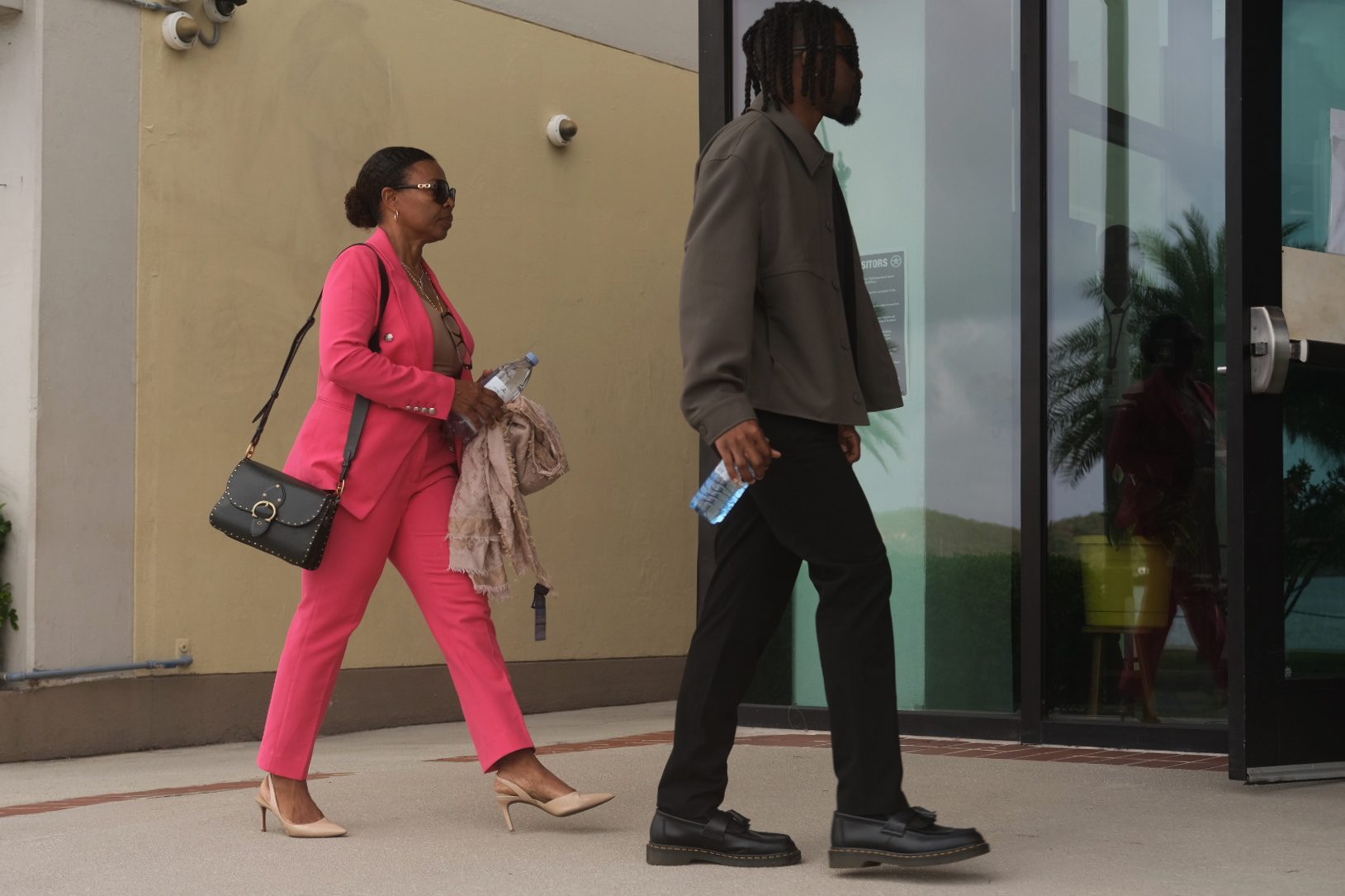
V.I. Management and Budget Director Jenifer O’Neal arrives at the federal courthouse ahead of her sentencing hearing Thursday morning on St. Thomas. The hearing was briefly paused amid apparent friction between O’Neal and her attorney, Dale Lionel Smith. (Source photo by Kit MacAvoy)
A federal judge sentenced former V.I. Management and Budget Director Jenifer O’Neal to seven years in prison Thursday, closing a chapter in the corruption and bribery scandal that first came to light two years ago and that has seen three high-ranking government officials and others convicted and incarcerated.
O’Neal’s sentencing came two days after her codefendant, former V.I. Police Commissioner Ray Martinez, was sentenced to 10 years in prison for what U.S. District Judge Mark Kearney described Thursday as being the “quarterback” of a kickback scheme involving federal COVID-19 relief funds and David Whitaker, a former cybersecurity contractor with a long history of fraud. Whitaker, who cooperated with the government during their investigation and prosecution of Martinez and O’Neal — and during a separate case against former V.I. Sports, Parks and Recreation Commissioner Calvert White and businessman Benjamin Hendricks — was sentenced to 22 months in prison Wednesday.
Before handing down O’Neal’s sentence, Kearney said that it had been Martinez’s job to protect Virgin Islanders against crime in the streets but that it was O’Neal’s job to protect against financial crimes within the territory’s government. Instead, she participated in a scheme that began in earnest in 2022 when Whitaker began bribing Martinez in order to get paid for work performed by his company, Mon Ethos Pro Support.
“Somebody has to be a cop,” Kearney said. “Somebody has to say ‘no.’ Somebody has to say, ‘I can’t trust you.’”
Kearney continued that anyone who left the room Thursday with the impression that O’Neal was unaware of the arrangement between Martinez and Whitaker hadn’t paid attention to the evidence shown to jurors at trial. In one conversation recorded by Whitaker after he began cooperating with investigators, Kearney noted that O’Neal expressed trepidation about a $17,730 security deposit used as a down payment for her Havensight coffee shop, Java Grande, because she doesn’t “like traces of anything.”
“‘Wire’ means it’s traced,” she said.
Kearney referenced another conversation during which Whitaker told O’Neal: “I know for a fact that if I didn’t know you and Ray, I’d never get paid.”
“At all,” O’Neal agreed. “At all. Consider yourself blessed.”
That, Kearney said Thursday, is how corruption works.
“It’s a wink and a nod,” he said.
Earlier Thursday, Assistant U.S. Attorney Cherrisse Amaro referenced another piece of evidence shown at trial that demonstrated O’Neal’s awareness. Mon Ethos secured a nearly $1.5 million VIPD surveillance camera contract in October 2023 that was funded under the federal American Rescue Plan Act, which was meant to help struggling communities during the COVID-19 pandemic. The conspirators devised to skim from fraudulently inflated Mon Ethos invoices. In January 2024, Whitaker texted O’Neal to ask whether she had approved a $216,000 payment.
Whitaker said that Martinez may never speak to them again “if he doesn’t get the $70k” for his restaurant, Don Felito’s Cookshop. The call in which Martinez arrived at that figure was also recorded.
O’Neal’s response, Amaro said, spoke volumes.
“Lol,” she said, using a common abbreviation for a phrase typically used to convey amusement. “I’ll check with my staff.”
In short order, O’Neal directed OMB’s federal grants manager, Jamie Gaston, to rubber-stamp any pending ARPA-funded invoices.
“She was needed to help move the money and she did exactly that,” Amaro said of O’Neal.
Amaro also introduced evidence not seen at trial. In August 2023, Whitaker texted O’Neal pictures of luxury items including Christian Louboutin shoes and a Louis Vuitton handbag. O’Neal sent one of the pictures back to Whitaker with a red circle around a pair of shoes and said she was a size 40.
“Or just the bag is fine,” she said before telling him to send it to her home in Maryland. She later confirmed receipt.
“The defendant was not motivated by need,” Amaro said. “She was motivated by greed.”
Kearney’s sentence of incarceration was equal to the government’s recommendation, which was outlined in a memorandum filed in U.S. District Court last week. O’Neal’s own sentencing request did not appear on the docket until midday Thursday — a week late and after her sentencing hearing had already started. The untimely filing came after O’Neal’s attorney, Dale Lionel Smith, emailed the memo and letters from O’Neal’s supporters directly to the court Monday. Smith asked that the materials be filed under seal because they contained personal and identifying information and the “letter writers were assured that their letters would be read only by the court and parties and not placed on the public docket.”
Kearney denied the request Wednesday and ordered Smith to file the memo and letters immediately. That he still hadn’t done so by the start of Thursday’s hearing apparently caused friction between O’Neal and Smith, which played out in open court. Kearney eventually asked O’Neal if she was satisfied with her representation.
“I have issues, your honor, to be quite honest,” she said, citing previous conversations she said she’d had with Smith about the importance of meeting court deadlines. “How do I proceed right now? I don’t know.”
Smith told the court that disagreements between lawyers and their clients happen.
“That’s all this is,” he said. “It will be resolved, and she will be sentenced.”
Kearney adjourned the hearing for three hours to allow the attorney and client to get on the same page and comply with his filing order. The memo, which did eventually appear on the public docket Thursday, outlined a sentencing request of two years of probation — or one year of home confinement — and was accompanied by 29 letters from supporters who asked Kearney for leniency on O’Neal’s behalf.
Those supporters included V.I. Public Works Commissioner Derek Gabriel, who wrote that he had never observed conduct that caused him to question O’Neal’s integrity during the 15 years he’s known her. Former Human Services Commissioner Dr. Anita Roberts, who once oversaw federal grants at OMB, called O’Neal “one of the few individuals who stood firm in compliance practices.” Former Water and Power Authority head and West Indian Company board chair Hugo Hodge Jr. wrote that he found the criminal conduct associated with O’Neal “extremely out of character and not anything close to the character of the professional that I know her to be.” Planning and Natural Resources Commissioner Jean-Pierre Oriol called the charges against O’Neal “inconsistent with the person that she truly is.”
Thursday’s hearing did not include oral statements from O’Neal’s supporters and neither did she address the court.
In the sentencing memo, Smith laid groundwork for an appeal and claimed that O’Neal is “actually innocent of the crimes charged in the indictment” because the government’s investigation never established a “quid pro quo,” which is “an essential element of bribery.” Smith attempted to instead frame the money O’Neal received as a gift when addressing the court Thursday afternoon. Her long-running friendship with Martinez, Smith said, made O’Neal “unaware of how corrupt he is.”
Kearney was not swayed. Moments later, he characterized O’Neal as the one person who could get Whitaker’s company — and Martinez — paid, “and she was bought off for a lease payment and a pair of shoes,” along with whatever else Whitaker gifted her. A visiting judge from the Eastern District of Pennsylvania, Kearney said that he’s enjoyed meeting the people and learning about the culture of the U.S. Virgin Islands.
“And yet, we face corruption case after corruption case,” he said, adding that people have told him that that’s how business is done in the territory. “Well, in the United States, that’s not how we do business.”
O’Neal was given until June 23 to self-report to the custody of the U.S. Bureau of Prisons. After prison, she faces three years of supervised release. She was also ordered to pay a $50,000 fine, $34,345 in restitution and to forfeit $17,730 along with all “property constituting, or derived from” proceeds traceable to her wire fraud charge.
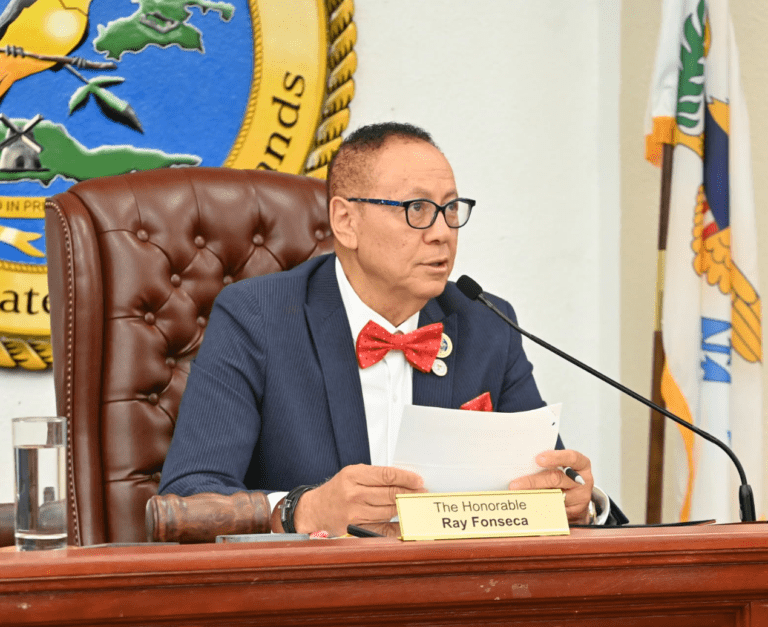
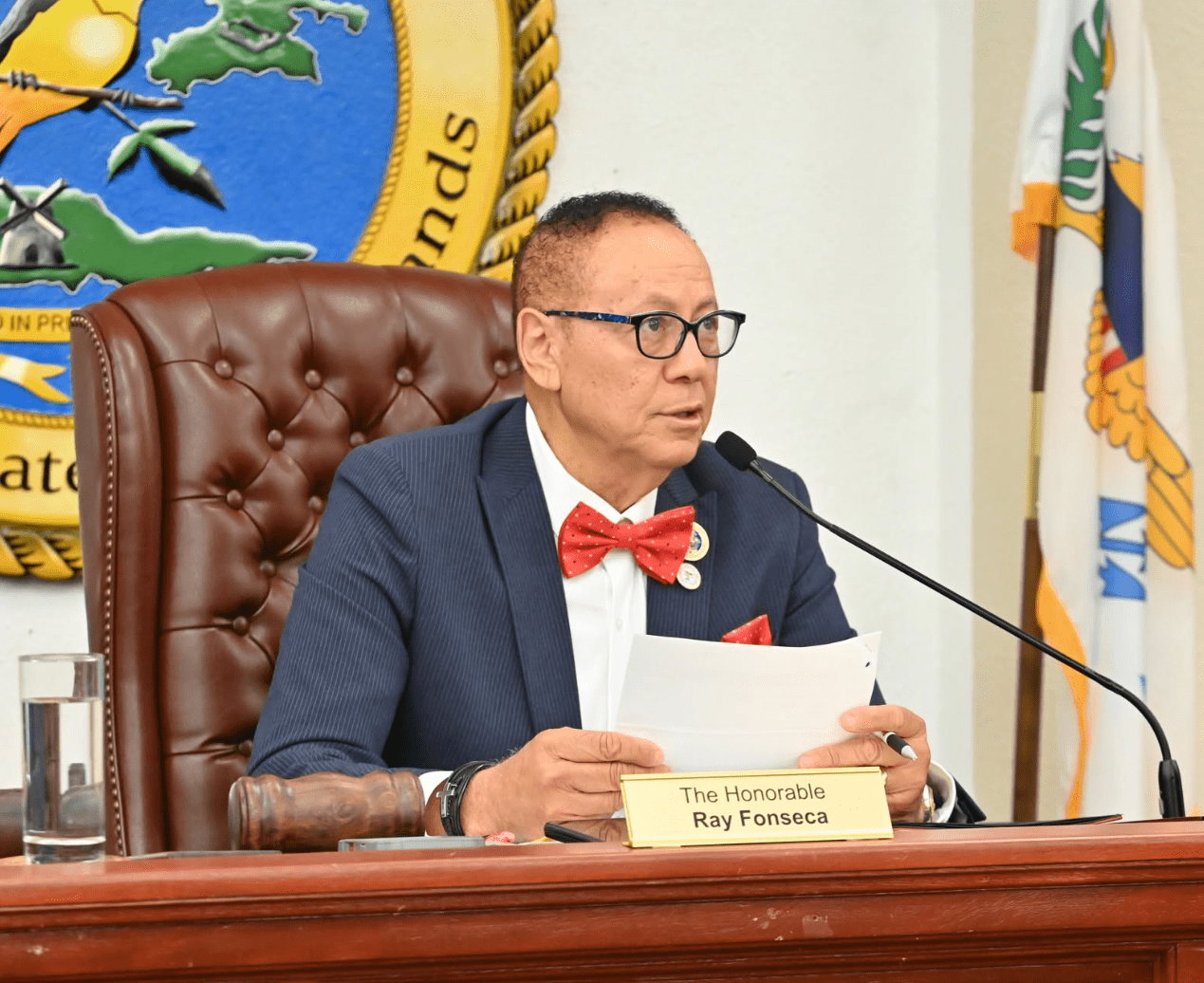
Sen. Ray Fonseca, chairman of the Senate Committee on Health, Hospitals and Human Services, presides over a hearing on the territory’s mental and behavioral health system. (Photo courtesy V.I. Legislature)
The Senate Health, Hospitals and Human Services Committee on Thursday reviewed the territory’s mental and behavioral health system, hearing testimony on staffing shortages, facility delays and gaps in services.
Assistant Health Commissioner Nicole Craigwell-Syms warned that mental illness is a “significant and growing public health concern” in the territory, citing rising rates of depression, anxiety, substance use disorders and serious mental health conditions. She said the challenges are driven by economic stress, trauma, social isolation and limited access to care, while chronic workforce shortages, geographic barriers and resource constraints make it difficult to meet demand.
“If we are serious about improving behavioral health outcomes in the Virgin Islands, we must equally be serious about building the system required to support them,” Craigwell-Syms told lawmakers. “Effective behavioral health care cannot exist without the necessary infrastructure, sustainable funding, adequate workforce, and coordinated services.”
Residents who require hospital-level psychiatric care are often treated at off-island facilities, and many have limited continuity of care once they return home. Craigwell-Syms said the territory lacks a permanent supportive housing system for people with serious mental illness who are discharged from inpatient or residential treatment programs. As a result, some residents face housing instability, repeated psychiatric crises, frequent emergency room visits and increased interactions with law enforcement.
While the Health Department has expanded outpatient services, case management, school-based programs, telehealth and mobile outreach efforts, officials said those programs continue to operate within a system that lacks key long-term treatment and housing resources.
Lawmakers spent considerable time questioning the status of two facilities viewed as central to the territory’s plans for expanded behavioral health and long-term care services: the proposed behavioral health campus at Estate Anna’s Hope on St. Croix and the Eldra Schulterbrandt Residential Facility on St. Thomas.
Craigwell-Syms testified that planning work for Anna’s Hope envisions a comprehensive behavioral health campus with crisis stabilization services, a secure forensic unit and supportive housing. However, engineering assessments found that existing structures on the site could not be renovated to modern standards, and the full project carries an estimated cost of about $240 million.
Officials said that the price tag has forced the department to treat the master plan as a long-term goal and instead pursue a phased approach focused on smaller, more affordable projects, including a concept for modular or tiny-home units to provide supportive housing while officials seek funding for larger facilities
“Our goal is to build what we can and keep building as we receive funding,” Craigwell-Syms said, explaining that tiny-home style units would serve as transitional housing while the department looks for funding for larger facilities.
Senators also questioned the status of the Eldra Schulterbrandt Residential Facility on St. Thomas, where officials said a shortage of nurses and ongoing renovations have limited occupancy in the existing 32-bed facility to about 20 residents. A newer building damaged during the 2017 hurricanes remains tied up in a dispute with FEMA over whether it should be repaired or rebuilt, limiting the territory’s ability to expand capacity for long-term care residents.
Several senators questioned the status of settlement funds previously allocated by law for behavioral health initiatives, including money tied to the Jeffrey Epstein-related settlement. Sen. Novelle E Francis said he had sponsored or cosponsored multiple pieces of legislation related to behavioral health funding and expressed concern that the funds had not yet reached the Department of Health.
Sen. Alma Francis Heyliger said health officials should not have to “beg” for funding that has already been approved by the Legislature and warned that delays in releasing the money undermine public trust and limit access to care. Citing concerns that settlement dollars tied to the Epstein case have been used for purposes beyond what lawmakers intended, she argued that the Legislature shares responsibility if it does not intervene. “If we, as a legislature, ain’t going to stand up and stop the craziness, we are partially at fault,” Heyliger said
The testimony described a behavioral health system in which outpatient and community services are expanding, but significant gaps remain in infrastructure, inpatient care and supportive housing, while senators said they will continue seeking clearer accounting of past appropriations and will continue monitoring long-delayed facilities and programs.
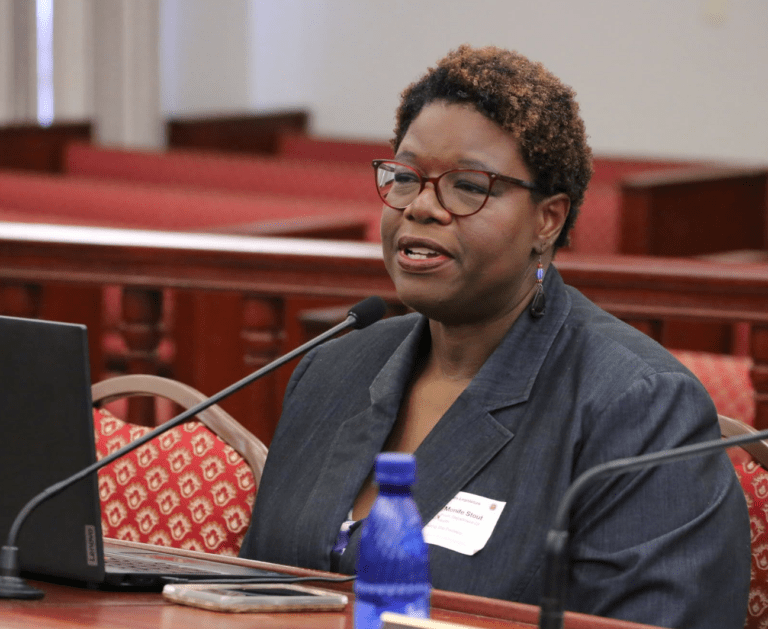
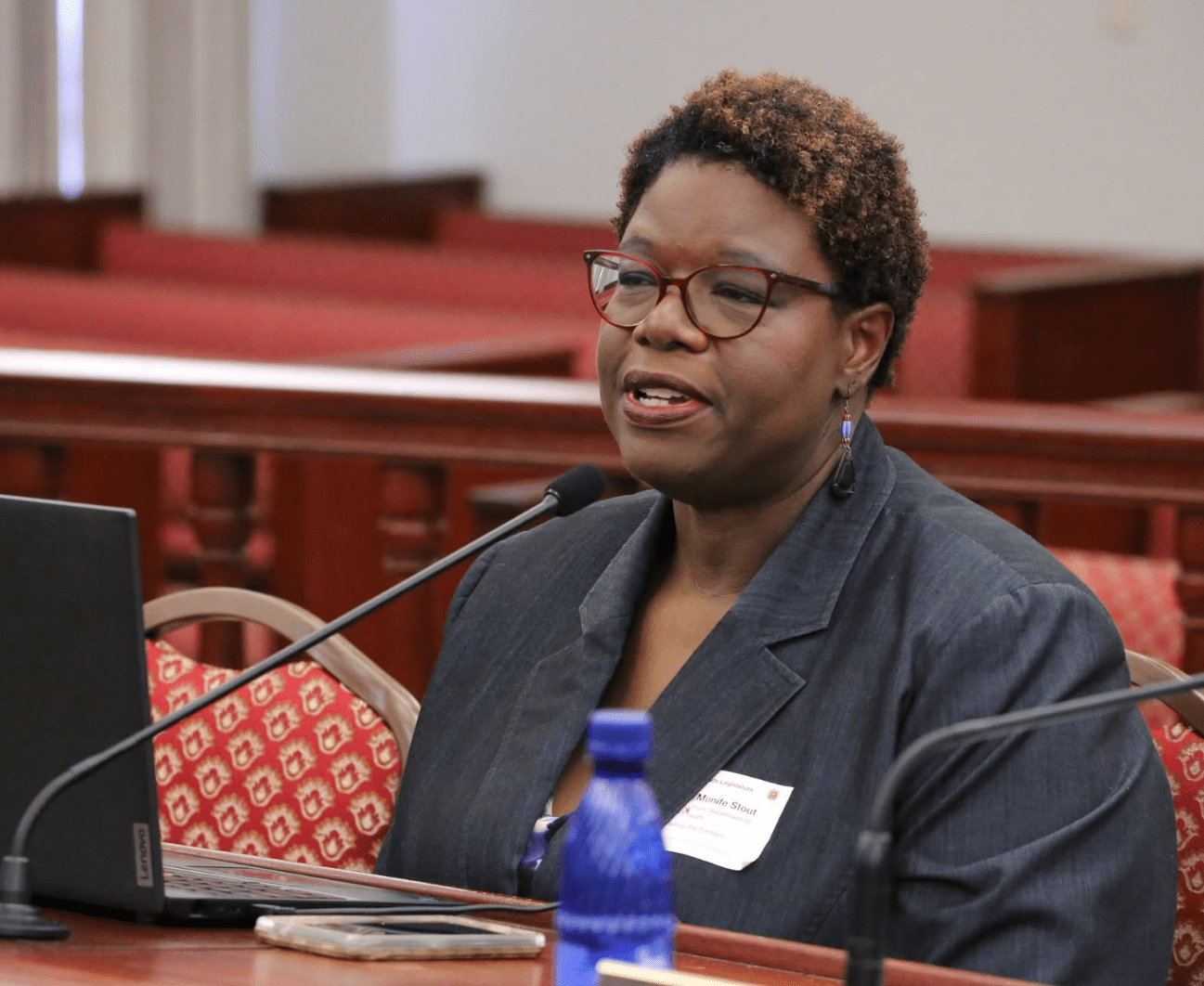
Immunization Program Director Monife Stout testifies before the Senate Health, Hospitals and Human Services Committee in support of Bill 36‑0278, which would require providers to report childhood vaccinations to the Virgin Islands Immunization Registry and formalize the school exemption process. Stout also urged senators to consider phasing out non‑medical exemptions. (Photo courtesy V.I. Legislature)
The Senate Health, Hospitals and Human Services Committee on Thursday advanced a bill that would tighten the tracking of school vaccinations in the Virgin Islands and spell out in law which students must be immunized to attend class.
Bill No. 36-0278, sponsored by Sen. Ray Fonseca, was approved on a 6-0 vote with one senator absent and now heads to the Rules and Judiciary Committee. The measure would require doctors, clinics and hospitals to report childhood vaccinations to the Virgin Islands Immunization Registry within a set deadline. It would also formalize the steps parents must take if they seek an exemption from school immunization requirements.
Health officials said the registry already exists and has been rebuilt on a modern platform since the 2017 hurricanes, but not all providers use it consistently. Immunization Program Director Monife Stout testified that 77% of vaccinating providers are enrolled in the registry and only 74% regularly upload data, leaving important gaps in the record.
Health officials told lawmakers the bill is needed because incomplete reporting has left the department uncertain about the vaccination status of hundreds of children. Stout said 820 children born between 2020 and 2025 appear in the system as unvaccinated simply because there is no record of shots, exemptions or refusals for them.
“This creates uncertainty regarding their true vaccination status and highlights the importance of a complete and timely immunization report,” she told senators.
The bill also says providers would be legally required to enter childhood vaccinations into the registry within a set time frame rather than doing so on an inconsistent basis. Health officials said that step, combined with clearer rules on exemptions, is intended to give the department a more complete picture of student vaccination records and improve its ability to respond to outbreaks.
Under current practice, parents may request exemptions for medical, religious or personal reasons. Families seeking exemptions must meet with Department of Health staff, receive counseling on the benefits of vaccination and submit paperwork that is reviewed by the department’s medical director and commissioner. Exemptions must be renewed annually.
Health officials told lawmakers they want to phase out non‑medical exemptions altogether. Their recommendation is to remove both religious and personal‑preference exemptions from the law and limit waivers to children who cannot safely receive vaccines for documented medical reasons. That suggestion sparked the sharpest exchanges of the hearing, as senators tried to balance public‑health concerns with religious and parental rights.
Sen. Marvin Blyden, who called the legislation “a no-brainer,” said he was uncomfortable with eliminating religious exemptions. “I understand the importance of being vaccinated, but when it comes to religion, I don’t think we want to go there or touch that,” he said.
Sen. Alma Francis Heyliger similarly emphasized parental choice, arguing that families who oppose vaccination should retain the ability to opt out. “I don’t want to be one of those that take away people’s rights,” she said.
Committee Vice Chair Sen. Hubert Fredrick also questioned whether the government should remove that option altogether. “If they feel that this is a little too intrusive for them and their children, I think there should be a provision in there to allow them to opt out,” he said.
Senate President Milton Potter likewise expressed skepticism about eliminating religious exemptions, noting that most states continue to allow them.
Sen. Kurt Vialet, who said he intends to support the bill, argued that exemptions should be more closely scrutinized to ensure they are based on genuine religious beliefs rather than being used as a “way out” of vaccination requirements. He said he would like to strengthen the bill’s language while still protecting individual rights and guarding against the return of preventable childhood diseases such as measles.
Stout said her recommendation to phase out nonmedical exemptions is rooted in data from other jurisdictions showing that vaccination rates improved after eliminating religious exemptions. She cited information presented at a national immunization summit indicating that states such as California, Maine, Mississippi, New York and West Virginia saw “significant improvements in vaccination rates” after eliminating religious exemptions.
Health officials also sought to address concerns about access. They noted that most routine childhood vaccines are available at no cost to eligible uninsured and underinsured children through the federally funded Vaccines for Children program, which operates at 14 sites across the territory.
As Bill 36‑0278 moves to the Rules and Judiciary Committee, lawmakers appear largely united on the need for more complete vaccination records and stronger reporting requirements. The bill the committee approved does not remove religious or other non‑medical exemptions, but whether those opt‑outs should remain available is likely to be one of the measure’s most closely debated issues as it moves forward.
Fort Frederiksted (Screenshot from online meeting)
The Virgin Islands Department of Planning and Natural Resources is inviting the public to help shape the future of exhibits at Fort Frederik Museum on St. Croix as officials move forward with plans to reimagine the historic landmark as a center for Virgin Islands history, culture and community storytelling.
During a Wednesday virtual town hall, DPNR officials and museum consultants outlined preliminary concepts for new exhibits that would explore the history of the U.S. Virgin Islands through themes including Indigenous heritage, migration, colonialism, slavery, resistance, emancipation, labor movements, cultural creativity and the transfer of the territory from Danish to American rule. The project is currently in its conceptual phase, with officials emphasizing that community feedback will play a critical role in determining the museum’s final direction. A similar meeting was held on Tuesday for Fort Christian Museum on St. Thomas.
Monica Marin, DPNR’s chief curator and project lead, said the goal is to create a museum experience that “reclaims, honors and memorializes the authentic stories of Frederiksted and St. Croix” while connecting local history to broader Caribbean and global narratives. She noted that Fort Frederik and Fort Christian, both national historic monuments, will share some interpretive themes while maintaining exhibits unique to their respective islands and communities.
Among the proposed exhibit topics are the island’s original Indigenous inhabitants, the impact of European colonization, the role of Fort Frederik in the 1848 Emancipation Uprising, post-emancipation labor struggles, and the contributions of Virgin Islanders to the global Black liberation movement. Officials also highlighted plans to incorporate oral histories, personal narratives and local artistic perspectives throughout the museum experience.
Community members offered several suggestions during the discussion, including the creation of a family history center where residents and visitors could research genealogy and document family connections to the Virgin Islands. Participants pointed to successful models at other museums, including the National Museum of African American History and Culture in Washington, D.C., and a museum in St. Barts that allows families to contribute genealogical information through interactive displays.
DPNR officials responded favorably to the idea, noting that plans are already being considered for dedicated spaces where oral histories and community memories can be recorded and preserved. The concept aligns with broader goals of making the museum a place where residents can document their own connections to Fort Frederik and the island’s history.
Questions were also raised about accessibility and the use of exhibit space within the historic structure. Participants noted that portions of the fort, including upper levels, may present challenges for visitors with mobility limitations. In response, Marin said potential technological solutions such as augmented reality and virtual tours would allow visitors to experience otherwise inaccessible areas of the fort.
Additional exhibit concepts presented during the meeting included immersive projections, augmented reality experiences, audio stations, interactive document displays, recording booths for oral histories, tactile exhibits, commissioned artwork by local artists and rotating community-curated exhibits. Officials said these features would help bring historical narratives to life while ensuring the museum remains engaging for students, visitors and residents alike.
Assistant Commissioner Jozette Walker explained that funding for the conceptual design work comes through a grant administered by the U.S. Department of Commerce’s Economic Development Administration. Approximately $500,000 was awarded for exhibit planning at both Fort Frederik and Fort Christian museums.
DPNR is encouraging the public to participate in an online survey and submit feedback on exhibit themes, design concepts and priorities. Officials said community input gathered through the survey and town hall meetings will be compiled and provided to exhibit designers as the project moves into its next phase.
Just two milligrams of fentanyl could kill a person, according to federal officials. A St. Croix man pleaded guilty to smuggling 88,670 milligrams of the deadly synthetic opioid. (Shutterstock image)
A Virgin Islands man pleaded guilty to smuggling 88.67 grams of fentanyl into St. Croix by mail, enough to potentially kill every resident of the island, officials said Wednesday.
Mario Felix, 36, mailed a black book from Hollywood, Florida, hollowed out to conceal 800 tablets of fentanyl on Dec. 27, 2022, according to the U.S. Justice Department. Federal officers discovered the book Dec. 31 of that year and, using fingerprints and other evidence, tracked the parcel to Felix.
The total weight of fentanyl Felix smuggled came to 88.67 grams, or 88,670 milligrams. Just two milligrams of the incredibly powerful synthetic opioid can be lethal to adults, depending on body size and other factors, according to the Drug Enforcement Administration.
The 44,335 doses were enough to potentially kill each of St. Croix’s roughly 41,000 year-round residents.
Attempted possession with intent to distribute fentanyl carries a mandatory minimum term of five years and a maximum term of 40 years of imprisonment, prosecutors said. It was not clear when Felix, who has many other arrests, might be sentenced.
In 2010, Felix pleaded guilty to reckless endangerment, destruction of property, and firearms offenses.
In 2011, federal officers charged Felix with possession with intent to distribute crack cocaine, powder cocaine, and marijuana, as well as firearms charges.
In 2014, he pleaded guilty to possessing, distributing, or manufacturing a controlled substance in a deal with local prosecutors that dropped multiple firearm charges. In 2016, he pleaded no contest to tampering with a vehicle and destruction of property.
In 2020, he was charged federally with illegal possession of firearms and ammunition by a felon in a school zone.
Felix was also arrested for additional felonies in 2009, in 2011, and in 2012 but court records available online were incomplete and didn’t offer details.