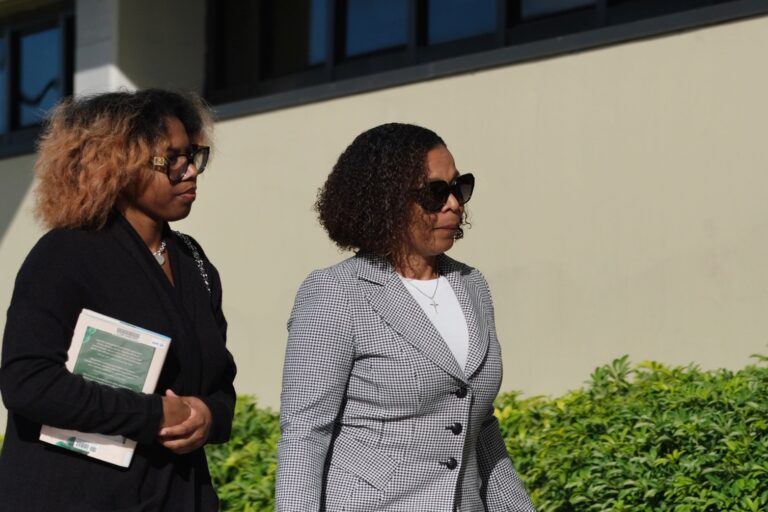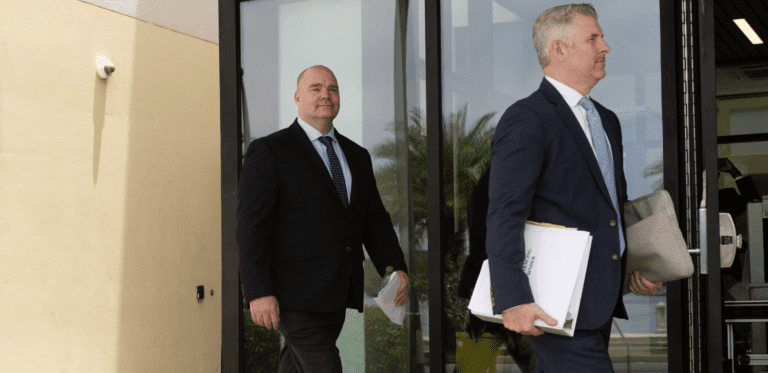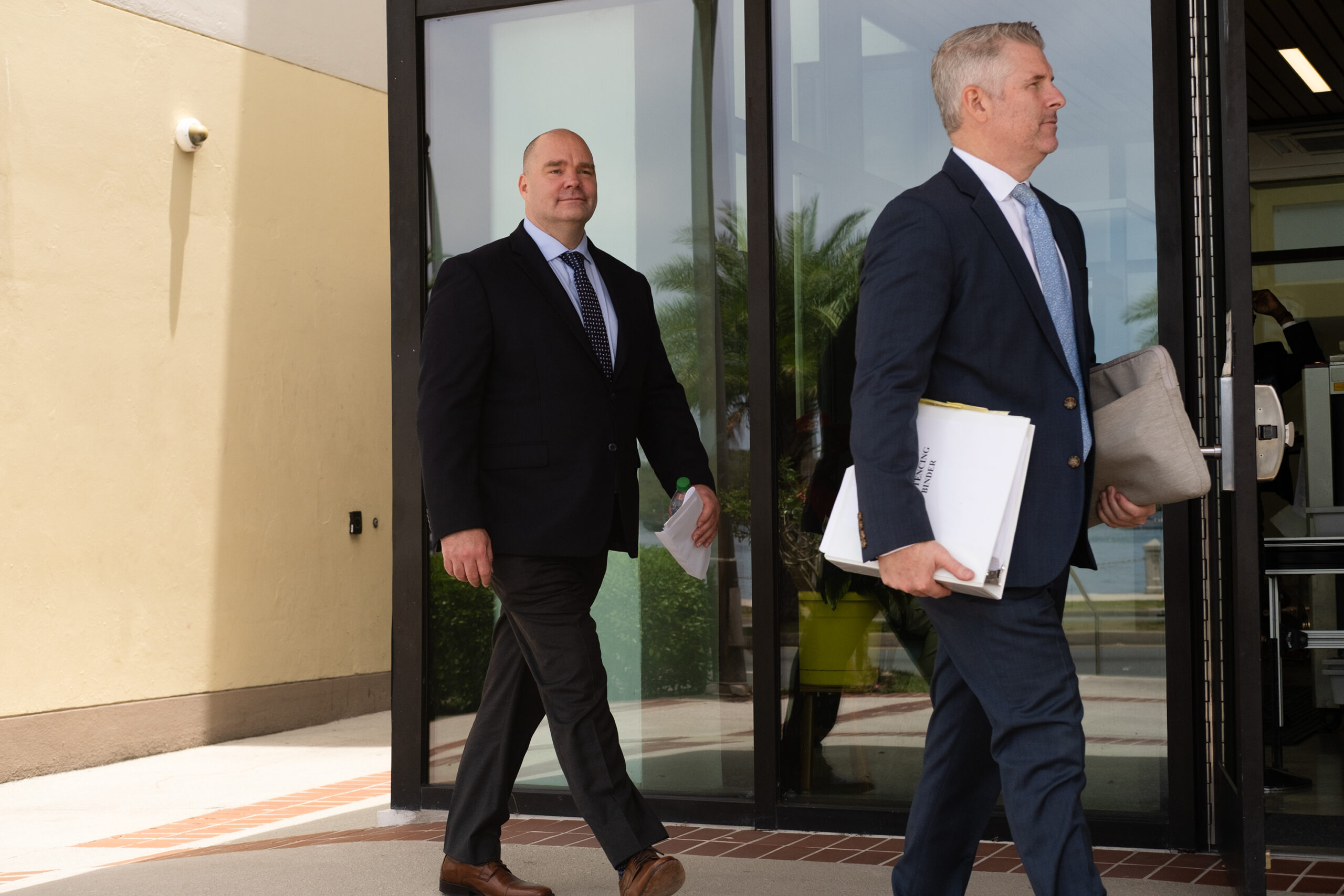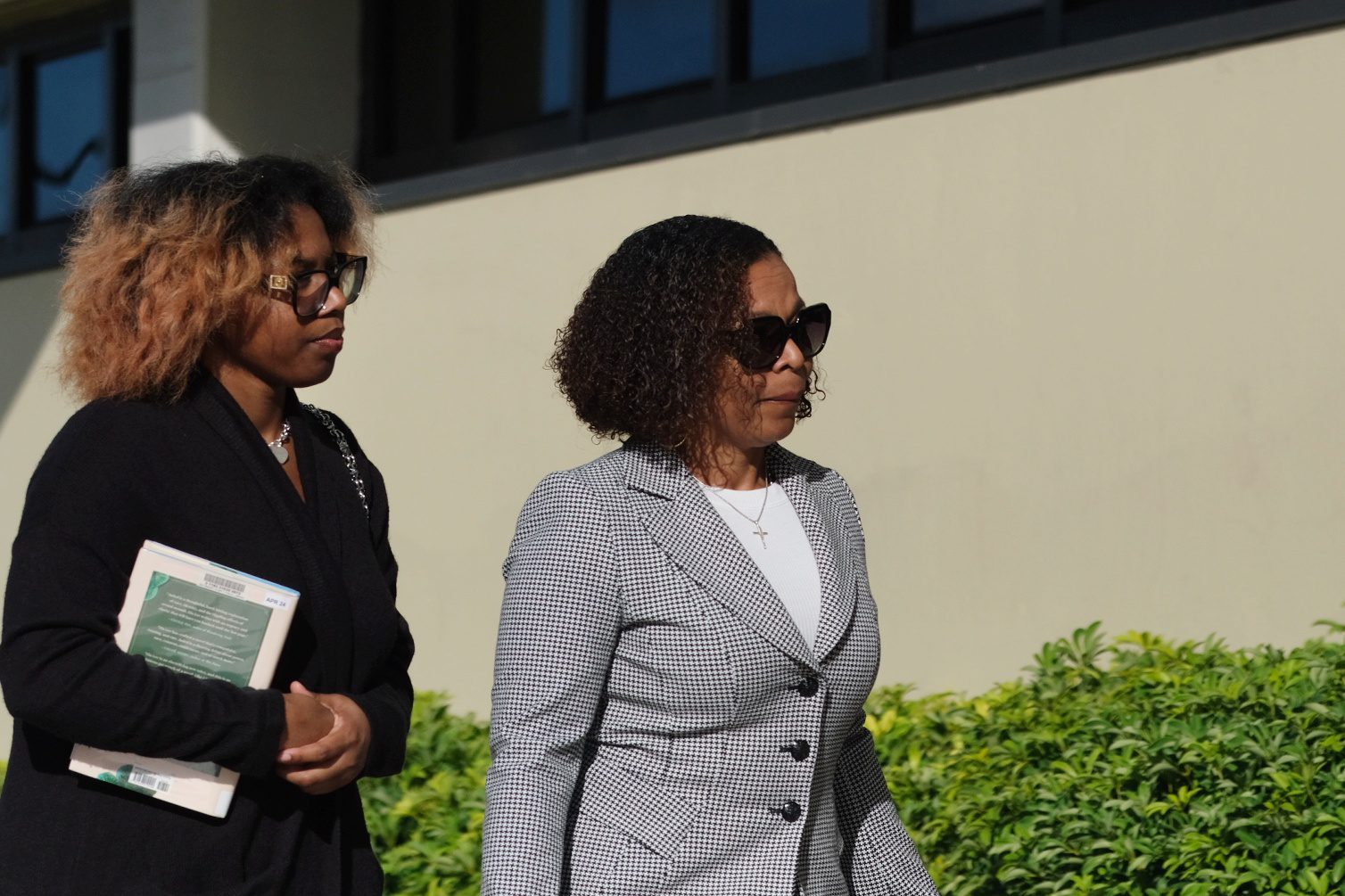
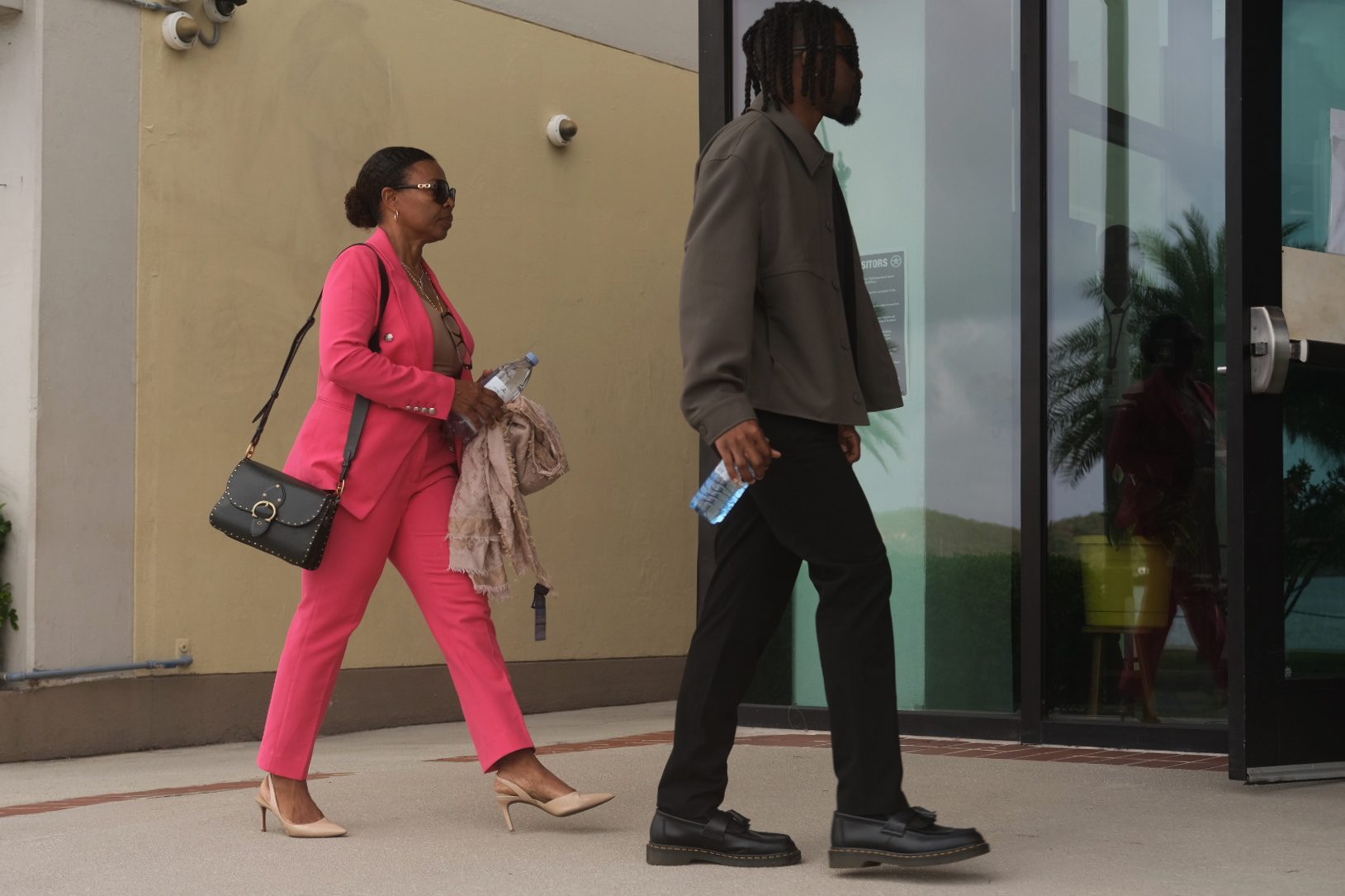
A federal judge sentenced former V.I. Management and Budget Director Jenifer O’Neal to seven years in prison Thursday, closing a chapter in the corruption and bribery scandal that first came to light two years ago and that has seen three high-ranking government officials and others convicted and incarcerated.
O’Neal’s sentencing came two days after her codefendant, former V.I. Police Commissioner Ray Martinez, was sentenced to 10 years in prison for what U.S. District Judge Mark Kearney described Thursday as being the “quarterback” of a kickback scheme involving federal COVID-19 relief funds and David Whitaker, a former cybersecurity contractor with a long history of fraud. Whitaker, who cooperated with the government during their investigation and prosecution of Martinez and O’Neal — and during a separate case against former V.I. Sports, Parks and Recreation Commissioner Calvert White and businessman Benjamin Hendricks — was sentenced to 22 months in prison Wednesday.
Before handing down O’Neal’s sentence, Kearney said that it had been Martinez’s job to protect Virgin Islanders against crime in the streets but that it was O’Neal’s job to protect against financial crimes within the territory’s government. Instead, she participated in a scheme that began in earnest in 2022 when Whitaker began bribing Martinez in order to get paid for work performed by his company, Mon Ethos Pro Support.
“Somebody has to be a cop,” Kearney said. “Somebody has to say ‘no.’ Somebody has to say, ‘I can’t trust you.’”
Kearney continued that anyone who left the room Thursday with the impression that O’Neal was unaware of the arrangement between Martinez and Whitaker hadn’t paid attention to the evidence shown to jurors at trial. In one conversation recorded by Whitaker after he began cooperating with investigators, Kearney noted that O’Neal expressed trepidation about a $17,730 security deposit used as a down payment for her Havensight coffee shop, Java Grande, because she doesn’t “like traces of anything.”
“‘Wire’ means it’s traced,” she said.
Kearney referenced another conversation during which Whitaker told O’Neal: “I know for a fact that if I didn’t know you and Ray, I’d never get paid.”
“At all,” O’Neal agreed. “At all. Consider yourself blessed.”
That, Kearney said Thursday, is how corruption works.
“It’s a wink and a nod,” he said.
Earlier Thursday, Assistant U.S. Attorney Cherrisse Amaro referenced another piece of evidence shown at trial that demonstrated O’Neal’s awareness. Mon Ethos secured a nearly $1.5 million VIPD surveillance camera contract in October 2023 that was funded under the federal American Rescue Plan Act, which was meant to help struggling communities during the COVID-19 pandemic. The conspirators devised to skim from fraudulently inflated Mon Ethos invoices. In January 2024, Whitaker texted O’Neal to ask whether she had approved a $216,000 payment.
Whitaker said that Martinez may never speak to them again “if he doesn’t get the $70k” for his restaurant, Don Felito’s Cookshop. The call in which Martinez arrived at that figure was also recorded.
O’Neal’s response, Amaro said, spoke volumes.
“Lol,” she said, using a common abbreviation for a phrase typically used to convey amusement. “I’ll check with my staff.”
In short order, O’Neal directed OMB’s federal grants manager, Jamie Gaston, to rubber-stamp any pending ARPA-funded invoices.
“She was needed to help move the money and she did exactly that,” Amaro said of O’Neal.
Amaro also introduced evidence not seen at trial. In August 2023, Whitaker texted O’Neal pictures of luxury items including Christian Louboutin shoes and a Louis Vuitton handbag. O’Neal sent one of the pictures back to Whitaker with a red circle around a pair of shoes and said she was a size 40.
“Or just the bag is fine,” she said before telling him to send it to her home in Maryland. She later confirmed receipt.
“The defendant was not motivated by need,” Amaro said. “She was motivated by greed.”
Kearney’s sentence of incarceration was equal to the government’s recommendation, which was outlined in a memorandum filed in U.S. District Court last week. O’Neal’s own sentencing request did not appear on the docket until midday Thursday — a week late and after her sentencing hearing had already started. The untimely filing came after O’Neal’s attorney, Dale Lionel Smith, emailed the memo and letters from O’Neal’s supporters directly to the court Monday. Smith asked that the materials be filed under seal because they contained personal and identifying information and the “letter writers were assured that their letters would be read only by the court and parties and not placed on the public docket.”
Kearney denied the request Wednesday and ordered Smith to file the memo and letters immediately. That he still hadn’t done so by the start of Thursday’s hearing apparently caused friction between O’Neal and Smith, which played out in open court. Kearney eventually asked O’Neal if she was satisfied with her representation.
“I have issues, your honor, to be quite honest,” she said, citing previous conversations she said she’d had with Smith about the importance of meeting court deadlines. “How do I proceed right now? I don’t know.”
Smith told the court that disagreements between lawyers and their clients happen.
“That’s all this is,” he said. “It will be resolved, and she will be sentenced.”
Kearney adjourned the hearing for three hours to allow the attorney and client to get on the same page and comply with his filing order. The memo, which did eventually appear on the public docket Thursday, outlined a sentencing request of two years of probation — or one year of home confinement — and was accompanied by 29 letters from supporters who asked Kearney for leniency on O’Neal’s behalf.
Those supporters included V.I. Public Works Commissioner Derek Gabriel, who wrote that he had never observed conduct that caused him to question O’Neal’s integrity during the 15 years he’s known her. Former Human Services Commissioner Dr. Anita Roberts, who once oversaw federal grants at OMB, called O’Neal “one of the few individuals who stood firm in compliance practices.” Former Water and Power Authority head and West Indian Company board chair Hugo Hodge Jr. wrote that he found the criminal conduct associated with O’Neal “extremely out of character and not anything close to the character of the professional that I know her to be.” Planning and Natural Resources Commissioner Jean-Pierre Oriol called the charges against O’Neal “inconsistent with the person that she truly is.”
Thursday’s hearing did not include oral statements from O’Neal’s supporters and neither did she address the court.
In the sentencing memo, Smith laid groundwork for an appeal and claimed that O’Neal is “actually innocent of the crimes charged in the indictment” because the government’s investigation never established a “quid pro quo,” which is “an essential element of bribery.” Smith attempted to instead frame the money O’Neal received as a gift when addressing the court Thursday afternoon. Her long-running friendship with Martinez, Smith said, made O’Neal “unaware of how corrupt he is.”
Kearney was not swayed. Moments later, he characterized O’Neal as the one person who could get Whitaker’s company — and Martinez — paid, “and she was bought off for a lease payment and a pair of shoes,” along with whatever else Whitaker gifted her. A visiting judge from the Eastern District of Pennsylvania, Kearney said that he’s enjoyed meeting the people and learning about the culture of the U.S. Virgin Islands.
“And yet, we face corruption case after corruption case,” he said, adding that people have told him that that’s how business is done in the territory. “Well, in the United States, that’s not how we do business.”
O’Neal was given until June 23 to self-report to the custody of the U.S. Bureau of Prisons. After prison, she faces three years of supervised release. She was also ordered to pay a $50,000 fine, $34,345 in restitution and to forfeit $17,730 along with all “property constituting, or derived from” proceeds traceable to her wire fraud charge.