



The Virgin Islands Education Department told lawmakers Tuesday it aims to clear special education evaluation backlogs while tackling staffing shortages, inadequate facilities and multimillion-dollar funding gaps.
The Senate Education and Workforce Development Committee held an oversight hearing on special education services, questioning Education Commissioner Dionne Wells-Hedrington and other officials about federal compliance, staffing, aging facilities and funding needs.
State Director of the Office of Special Education Kathleen Merchant said state data show 641 students with disabilities in the St. Croix district and 431 in the St. Thomas-St. John district. Deputy Commissioner Renee Charleswell said about 80% of those students are educated in general education classrooms rather than separate special education settings, increasing demands on classroom teachers as staffing vacancies persist.
Much of Tuesday’s hearing centered on delays in completing special education evaluations and clearing long-standing backlogs tied to federal timelines under the Individuals with Disabilities Education Act.

For the St. Croix district, Wells-Hedrington testified that a backlog “inherited in 2024” stood at 403 students and now stands at 119, which she described as “roughly a 70% reduction” following summer referral work completed by July 8.
In the St. Thomas–St. John district, Wells-Hedrington said 44 initial evaluations had been started but remained incomplete, and 120 re-evaluations were currently out of compliance with special education requirements. Jurgen told senators the district also has 84 outstanding referrals, in addition to the incomplete evaluations and re-evaluations, highlighting the scope of pending special education cases.
Wells-Hedrington told lawmakers that both the St. Croix and St. Thomas–St. John districts received findings of noncompliance related to “child find” under the Individuals with Disabilities Education Act. State Special Education Director Kathleen Merchant explained that child find requires the territory to “identify and locate any child living within the jurisdiction who may be suspected of having a disability,” including taking referrals, obtaining parental consent and ensuring students are evaluated for special education services when concerns are raised.
Wells-Hedrington said the findings cited delays in timely identification and evaluation of students, failure to meet the required 45-day evaluation timeline, a backlog of pending referrals, inconsistent and incomplete referral data, insufficient specialized personnel and a vacant district special education director position in St. Thomas–St. John.
Because of those compliance problems and leadership gaps, Wells-Hedrington said the State Office of Special Education will assume oversight of St. Thomas–St. John’s special education operations for the 2026–27 school year under a corrective action plan developed to guide that support. She said the state office is working with lead partners at the U.S. Department of Education and has created an artificial intelligence “bot” to receive intake forms, time-stamp referrals as they are submitted and help the districts monitor processing so evaluations are completed within the 45-day timeline.
The department also continues to face staffing shortages. Wells-Hedrington said there are 41 special education teaching positions in the St. Croix district, while Deputy Superintendent of St. Croix Andrea Shillingford said 33 of those positions are filled and eight are vacant, along with seven vacant paraprofessional positions. In the St. Thomas–St. John district, Superintendent Stefan Jurgen reported 35 special education teachers with nine vacancies and 12 paraprofessional vacancies.
Wells-Hedrington said 19 special education teachers on St. Croix and 16 in St. Thomas-St. John are not certified in special education. She told senators that these are “critical, hard‑to‑fill areas” and said, “most of our special education positions are filled with internationals.” To help cover vacancies, the department has recruited teachers through the J-1 visa program, and six international teachers have accepted positions on St. Croix and are awaiting visa approval from the U.S. State Department.
The staffing shortages have also affected classroom capacity. Wells-Hedrington said several special education classrooms are operating above capacity, including Arthur Richards K‑8 at 128% of its rated capacity, Lew Muckle at 121% and St. Croix Educational Complex at 103%. She also said “several self-contained and extended resource classes are operating above the required student-to-staff ratio” because of paraprofessional shortages.
St. Croix Superintendent Carla Bastian Knight said the district does not currently have enough staff to meet the demand for special education services while working to clear evaluation backlogs.
Lawmakers also questioned education officials about facilities still experiencing problems years after the 2017 hurricanes. On St. Croix, the Division of Special Education continues operating from its office at La Grande Princesse, which Wells-Hedrington said still presents operational challenges despite recent maintenance. In St. Thomas-St. John, special education staff relocated from the Leonard Dober complex during the 2025-26 school year because of mold and air quality concerns and now work out of office space at Tutu Park Mall.
The department identified projected special education service contract shortfalls of $2.26 million in St. Croix and $2.3 million in St. Thomas-St. John, creating a combined funding gap of about $5 million. Wells-Hedrington said the department relies on vendors including Orange Tree to provide therapists and other related-service staff for speech, occupational and physical therapy that it cannot fully provide in-house. Without sufficient funding for those services, she said, “we will remain out of compliance.”
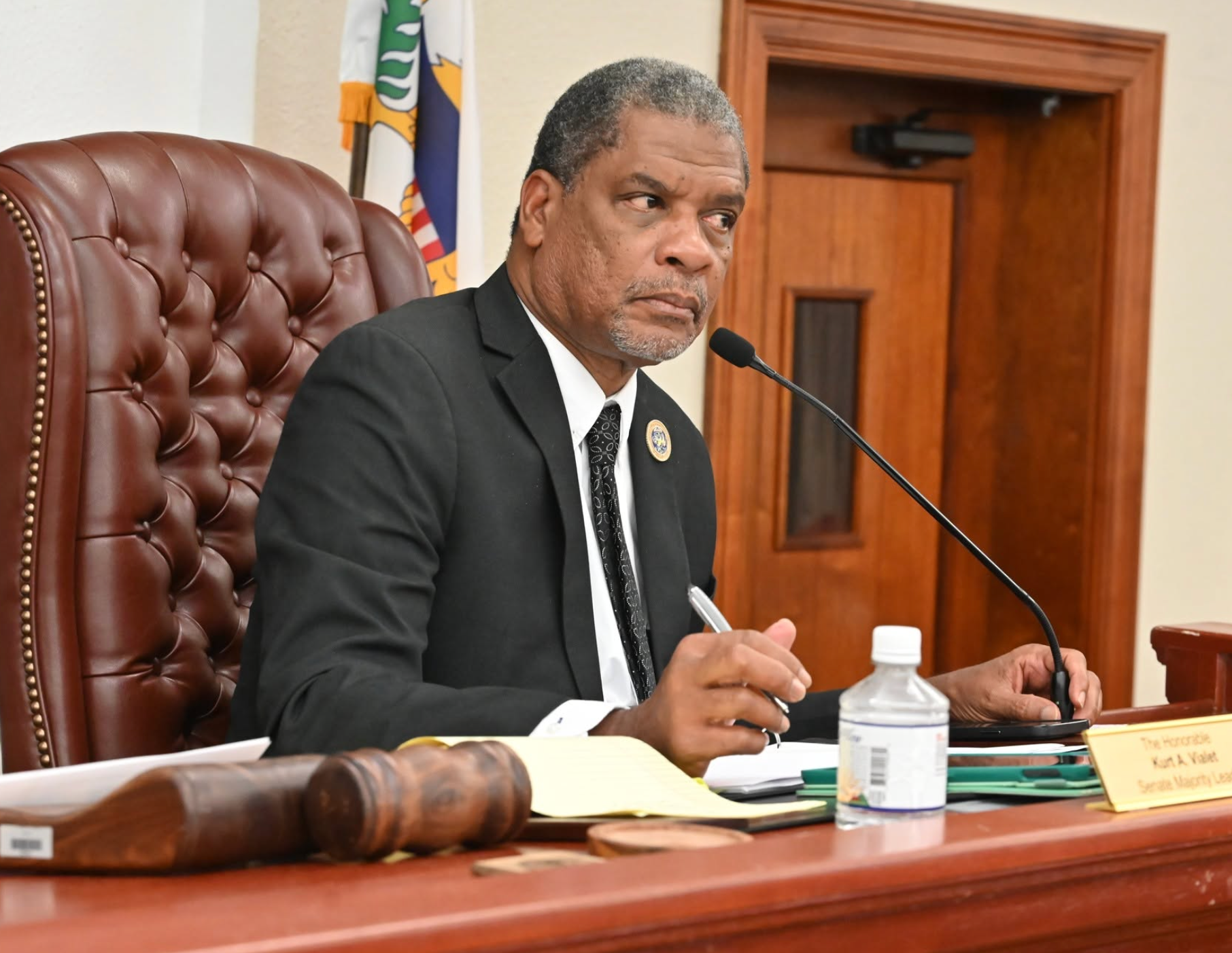
Several senators signaled they will revisit special education funding during budget deliberations, with Committee Chair Sen. Kurt A. Vialet saying lawmakers will “look at your budget very carefully and see how … we could place the money in the pockets that’s going to make the most impact.” Pointing to students who need services like speech therapy but aren’t receiving them because “we don’t have the monies,” Vialet said, “we just gotta do a better job.”
Asked what lawmakers should expect within a year, Wells-Hedrington said the department’s priority is eliminating evaluation backlogs in both districts. “The first thing I would say is that backlog gone,” she told senators. She said the new intake system and state oversight should help ensure evaluations are completed within the required 45-day timeline, while the department continues recruiting teachers and seeking funding for contracted services.