LATEST ARTICLES
DOH Offers Mental Health Support as Community Mourns Teen Killed in Friday Shooting

Arrest Made in Sexual Assault Investigation

VIPA Closes Cruz Bay Parking Lot for St. John Celebration Events
Michelle Smith Advances to NCAA Finals in Both the 400m Hurdles and 4x400m Relay


Three Virgin Islands Athletes Shine in Canada


15-Year-Old Dies After Shooting on Vester Gade on St. Thomas

Lawmakers Pass Sweeping Gun Law Overhaul Amid Debate Over Rights

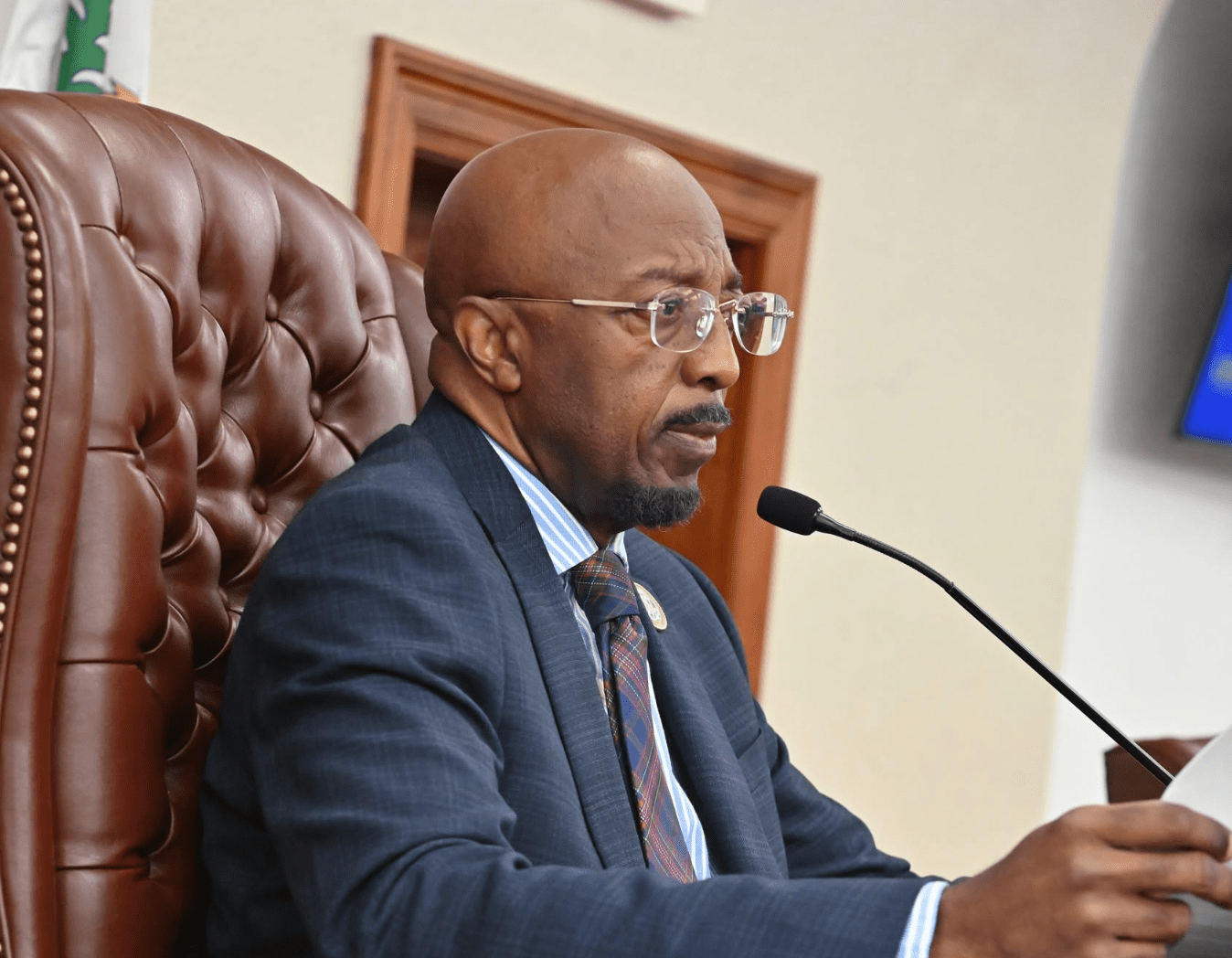
The 36th Legislature on Friday approved a sweeping overhaul of the Virgin Islands’ firearms laws, advancing legislation supporters say is necessary to comply with recent court rulings while opponents argue it imposes new burdens on law-abiding gun owners.
Senators first adopted Amendment No. 36-364, Rev. 4, a substitute amendment that replaced the bill’s original text in its entirety. They then approved Bill No. 36-0144, as amended, and sent it to Gov. Albert Bryan Jr. for action.
Under the bill, the territory would replace its long‑standing discretionary permitting system with what the Attorney General’s Office describes as a “shall‑issue” framework. Rather than requiring applicants to demonstrate a special need and leaving permit decisions largely to the police commissioner’s discretion, the Virgin Islands Police Department would be required to issue licenses to residents who meet objective eligibility standards written into the law, such as not being a convicted violent felon, not having been adjudicated dangerously mentally ill, and not being subject to a domestic‑violence restraining order. The bill sets deadlines for processing applications, requiring VIPD to act on completed license applications within 45 days and firearms registrations within 30 days.
The measure would also expand where licensed residents can legally carry handguns in public compared with current law, while maintaining prohibitions in designated “sensitive places” such as schools, government buildings and hospitals. It further bans or tightens controls on certain firearms and accessories, including automatic weapons, short-barreled rifles and shotguns, ghost guns, .50-caliber rifles, suppressors and conversion devices, and restricts magazines that hold more than 15 rounds, with limited grandfathering for some existing owners.
Supporters of the bill said the overhaul is necessary to bring the Virgin Islands’ gun‑permitting system into line with recent U.S. Supreme Court rulings and to address a federal lawsuit filed by the U.S. Justice Department over the territory’s permitting practices. Assistant Attorney General Sean Bailey said the current law gives the police commissioner broad discretion to require applicants to show a “special need” to carry a firearm, a standard the Supreme Court ruled unconstitutional in its Bruen decision.
Attorney General Gordon Rhea said “this act is about balance,” calling it “written to protect the constitutional rights of law‑abiding Virgin Islanders to keep and bear arms, and at the very same time to give our police the clear, common‑sense tools they need to keep illegal guns out of the wrong hands and keep our communities safe.”
Law enforcement officials also backed the measure as a modernization of the system. Assistant Police Commissioner Sean Santos called it a “balanced, comprehensive approach” that provides clearer guidance for officers while improving public safety and maintaining lawful gun ownership.
Opponents said that even with a “shall‑issue” structure, the bill still places most of its practical burden on lawful gun owners rather than illegal users of firearms. Virgin Islands Safe Gun Owners founder Kosei Ohno said the system adds repeated agency visits and fees per firearm for people who try to comply. “These bills only burden law‑abiding people who register, train, pay, wait, and try to obey,” he told senators, arguing that “criminals who illegally procure firearms are not going to give VIPD fingerprints, social security numbers [and] a permanent paper trail that follows them for life.”
Critics also focused on the expanded “sensitive places” list, including schools, hospitals and government buildings, warning it could expose licensed carriers to criminal liability during ordinary activities. Local Federal Firearms Licensee Ehren Henderson said a lawful gun owner should not face charges “while dropping their children off at school or arriving at a hospital in the emergency,” arguing that such rules “do not target criminals” who are already carrying illegally.
Detractors further objected to the 15‑round magazine limit, bans on suppressors and other accessories, and new training requirements. Henderson called the magazine restrictions “among the most troubling parts of the bill,” saying they “will not stop violent criminals” but “only weaken our ability to defend ourselves and our families.” Sen. Alma Francis Heyliger, who said she supports some updates such as a ghost-gun ban and streamlined reporting, nonetheless voiced concern that the suppressor ban and other penalties are “trying to criminalize law-abiding citizens” rather than focusing on the acts of criminals, and she and Sen. Carla J. Joseph were the two “no” votes.
Attorney Adam Christian warned that allowing “commissioner-approved” instructors without clear standards could reintroduce subjective discretion. Opponents ultimately argued that the bill shifts the risk and complexity onto people who already comply with the law while leaving the core problem of illegal guns largely unchanged. They also criticized the process, noting that key substitute language was circulated late and many testifiers said they were unable to access the latest amendment text online before the hearing.
Several senators voiced mixed views, saying they agreed the law needed updating but still had reservations about parts of the bill. Lawmakers also questioned whether the new restrictions would meaningfully reduce gun violence driven by illegal firearms.
Despite those concerns, a majority concluded the substitute was better than what currently exists and a necessary step to respond to recent court rulings and the ongoing DOJ lawsuit, noting that the act is drafted to be severable so that any provision struck down in court can be removed without undoing the entire framework.
Several members said they expect to revisit contentious issues such as suppressors, sensitive‑place rules and mental‑health provisions in the future. Senate President Milton Potter urged colleagues not to stall the measure over its imperfections, saying they should not let “perfect be the enemy of the good,” as the Legislature voted to send the bill to the governor for his consideration.
U.S. Virgin Islands to Leave Legacy in America’s Official Time Capsule




Magens Bay Board Hears Proposals for ‘Glamping’ and Cultural Tours

Magens Bay Authority board members meeting Friday heard a preliminary proposal for a “glamping” operation at the park as well as a pitch for tours highlighting aspects of Virgin Islands culture, such as the history of moko jumbies and how to walk on stilts, or the story of the johnny cake and how it is made.
Board members were enthusiastic about the proposals from Kyle Sexius, a native St. Thomian who graduated from Charlotte Amalie High School, served with the National Guard in Iraq and Afghanistan and traveled extensively before returning home.
“You go to these places and they don’t have half of what we have but the culture is speaking so loud,” he said, and he wants to see the same in the Virgin Islands, where the beauty of the place can sometimes blind people to the culture behind it all.
“I love the idea,” board Chair Barbara Petersen said, adding that a cruise ship company executive at this year’s Seatrade conference in Miami stressed that tourists today are looking for “experiences” that link them to the culture and history of a place, not just the sun, sand and sea, and Sexius’ proposals fit that bill.
“We have to do a better job” of differentiating the Virgin Islands from the rest of the ports that tourists stop at in the Caribbean. “What sets us apart from them” and will keep visitors coming back, she said.
Board member Jason Charles said they were “two very strong proposals and commended Sexius for returning home to contribute to the community. “I think this could be an asset to the beach,” he said, noting the territory’s tourism product needs to remain fluid and have new offerings. “I look forward to being able to work with you on this,” he told Sexius.
However, board members also expressed reservations, and cautioned that layers of approval would be required.
“I don’t want Magens Bay to try to be everything to everyone. We are mainly the beach,” said Cecile de Jongh. The authority also has existing contracts for cultural and history tours, which might present a conflict, she said. And the park already offers camping in the green spaces across from the beach for individuals or community groups such as the Boy Scouts, who bring their own gear.
Petersen also noted that the glamping proposal — essentially upscale camping — would require approvals from fire, police and environmental officials such as the Department of Planning and Natural Resources. Additionally, when Arthur Fairchild deeded Magens Bay to the people of the Virgin Islands in 1947 for use as a park, he stipulated that no hotels be built. The worry is that “people will say we are allowing a hotel to be built,” said Petersen, even though the structures would not be permanent.
Sexius — who is working on a similar proposal for land at Neltjeberg beach on the North Side of St. Thomas that he has declined to discuss with the Source just yet — presented the board members with booklets outlining his plans with renderings but would not share one with the media, saying everything is still preliminary and proprietary.
According to his presentation to the board, Sexius would start with about 15 to 2o dome-style tents secured to wooden platforms, ranging in size from 10 by 10 feet to 20 by 20 feet, nestled off trails in the woods across from the beach. Smaller units would have a shared bath — an environmentally friendly shower, sink and toilet — while the larger ones would have private amenities. In the event of a storm, everything could be removed, said Sexius, adding there would be 24-hour security.
“Everything is collaborative,” he told the board. “Whatever aligns with your guys’ mission,” he’ll work with that, Sexius said.
Because his plans are still preliminary, Petersen told him to keep in touch with General Manager Monique Simon, who will update the board and can arrange any future meetings on the proposals.
In other business, Bathhouse 1 that was destroyed in Hurricane Irma in September 2017 is set to reopen ahead of schedule by the end of the summer after it was completely replaced, thanks to millions of dollars in FEMA funding, which covered 90 percent of the cost.
The board also voted unanimously to contract with certified public accounting firm Benham & Hodge to conduct the 2023 and 2024 audits of Magens Bay, which are required by the government even though the authority is self-funded.
The board issued requests for proposals for the audit prep and the audit itself but received only two responses from firms that did not qualify because they did not have the required Virgin Islands licenses, said Petersen, so they had to solicit Benham & Hodge.
“It’s very hard and we’re not the only ones having a problem with that,” she said of the shortage of qualified auditors.
Board members Petersen, de Jongh, Charles and Alani A. Henneman, who is also assistant Tourism commissioner, attended Friday’s meeting. Robert Moron and Dayle Barry were absent.
Virgin Islands Alleges National Pharmacy Groups Broke Consumer Protection Laws