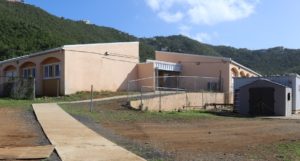
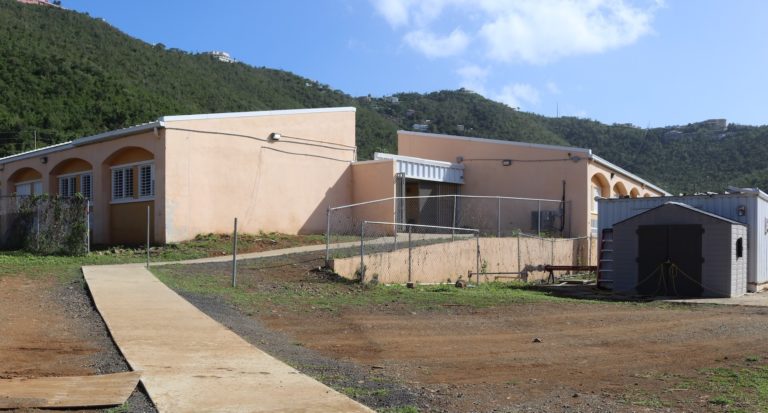
The Virgin Islands Port Authority has announced that its contractor has begun the demolition of the former Adelita Cancryn Junior High School property located along Veterans Drive in St. Thomas. This demolition marks the beginning of the first phase of the project to dredge the Charlotte Amalie Harbor to accommodate larger cruise ships at the West Indian Company Dock. Once cleared, the property will be utilized to store and transport dredged materials from the harbor dredging project, slated to begin next year.
Addelita Cancryn Intermediate and Junior High School (File photo)
Custom Builders has been awarded the contract for the demolition work, which began this week. The property is now being cleared, and secured fencing with controlled access will be erected. Building clearance and remediation will start on Jan. 16, 2026. Demolition of the structures on the property is scheduled to begin on Feb. 7, 2026. The daily working hours will be from 7:30 a.m. to 4:30 p.m., Monday to Friday, excluding public holidays.
The demolition project is expected to be completed by late September 2026. VIPA advises the public to exercise caution when navigating the area and adhere to all posted signs. For questions about the project, please contact VIPA’s public relations office at (340) 774-1629 or email info@viport.com.
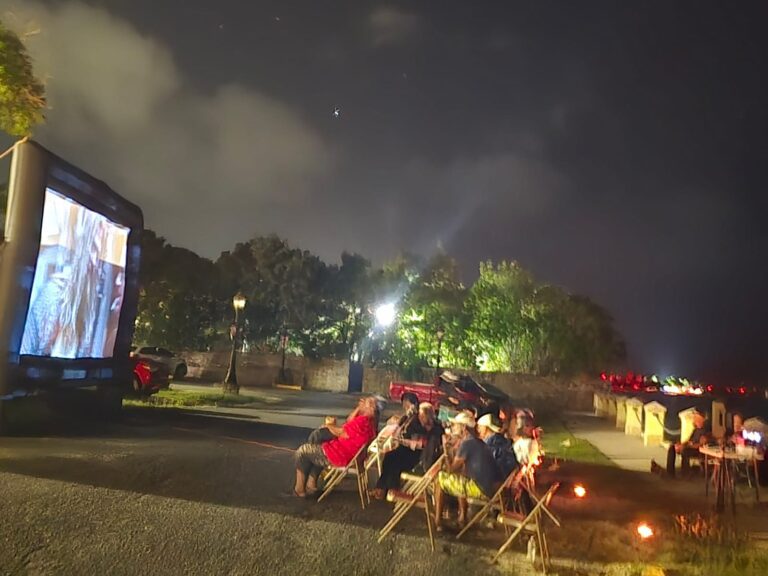
Frederiksted Health Care’s Division of Social and Community Programs hosted its first-ever Sunset Movie Night for the unhoused on Wednesday, Dec. 17, outside its Ingeborg-Nesbitt Clinic in Frederiksted.
Sunset Movie Night for the unhoused. (Submitted photo)
The free, oceanfront showing of Avengers: Endgame welcomed approximately 40 unhoused community members from across St. Croix and residents of WestCare the Village/VI Partners in Recovery. DSCP provided transportation for participants residing outside of Frederiksted town.
Attendees enjoyed popcorn, drinks, and other refreshments, along with “compassion kits” containing toiletries, hygiene and first-aid supplies, and practical items such as rain parkas, tents, and flashlights. The kits were provided through a grant from Mercy Corps, a global humanitarian aid organization.
“Too often, people experiencing homelessness are only seen through the lens of hardship,” said Aisha-Jamila Mussington, Director of DSCP. “Tonight, we wanted to shift that perspective—to create a moment of comfort, laughter, and belonging.”
Participants enrolled in DSCP’s Homeless Services Program also had the opportunity to connect informally with their case managers in a relaxed, social setting—outside the usual structure of goal-setting meetings focused on housing stability and long-term outcomes.
Consistent with all DSCP outreach events, free HIV testing was available onsite.
One attendee reflected on the evening’s impact, saying, “It might only be a couple of hours, but it means a lot. Tonight I can just sit back, watch a movie, and breathe. Tomorrow will come soon enough—I’ll deal with it then.”
Frederiksted Health Care remains committed to meeting people where they are, addressing immediate needs while fostering dignity, connection, and hope. For more information on DSCP and its programs, contact Ms. Mussington at 772-0260 ext. 3242 or amussington@fhc-inc.net.
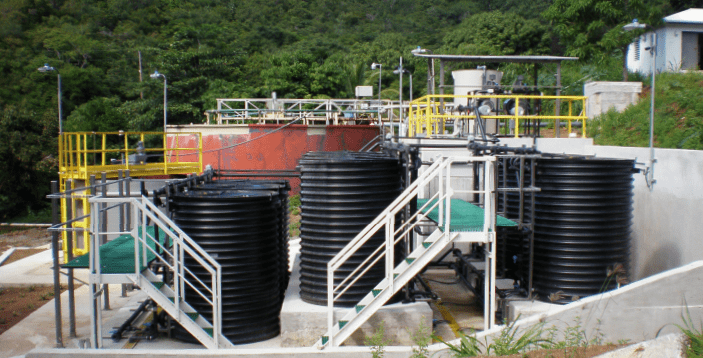
The Virgin Islands Waste Management Authority is taking decisive action to enhance the resilience of our wastewater infrastructure to safeguard the territory’s precious natural resources. To support vital operations, we will reinstate the Septage Disposal Fee on Jan. 1, 2026.Virgin Islands Waste Management Authority
The Public Services Commission approved the Septage Disposal Fee, which will be calculated at $75.58 per 1,000 gallons of wastewater. This fee will be imposed on all septage received at VIWMA treatment plants from private-sector companies that remove and transport wastewater from septic systems, portable toilets, and other privately owned wastewater treatment systems (e.g., treatment plants, sewer lines, pump stations, etc.). Wastewater collection points will be as follows:
St. Croix – Harold G. Thompson, Jr. Treatment Plant
St. Thomas – Mangrove Lagoon Treatment Plant
St. John – Cruz Bay Treatment Plant
Together, we can stabilize this system, restore environmental integrity, and build a stronger, safer, more sustainable Virgin Islands for generations to come.
For updates or further assistance, please contact the Division of Wastewater at (340) 715-9151 or Communications Management at communications@viwma.org. Follow us on Facebook, X, and LinkedIn.
The Virgin Islands Waste Management Authority (VIWMA) will reinstate its septage disposal fee beginning Jan. 1, 2026, which officials said strengthens funding for wastewater infrastructure across the territory.
The fee, which was approved by the Public Services Commission (PSC) and set at $75.58 per 1,000 gallons of wastewater, will apply to septage delivered to VIWMA treatment plants by private-sector companies that remove and transport wastewater from septic systems, portable toilets, and other privately owned wastewater treatment systems.
VIWMA representatives said the fee — legally permitted since 2017 — had been scheduled to take effect in mid-2025 but was postponed before now being implemented at the start of next year. VIWMA officials and haulers attended recent meetings to discuss how the fee will work and to outline what will and will not be accepted at treatment plants. The fee is expected to support ongoing operations, equipment upgrades, and maintenance needs at facilities across the territory, according to a recent news release.
Septage subject to the fee will be received at the Harold G. Thompson Jr. Treatment Plant on St. Croix, the Mangrove Lagoon Treatment Plant on St. Thomas, and the Cruz Bay Treatment Plant on St. John. VIWMA has said the revenue generated by the fee will help stabilize wastewater operations and better position the authority to maintain infrastructure critical to environmental and public health in the territory.
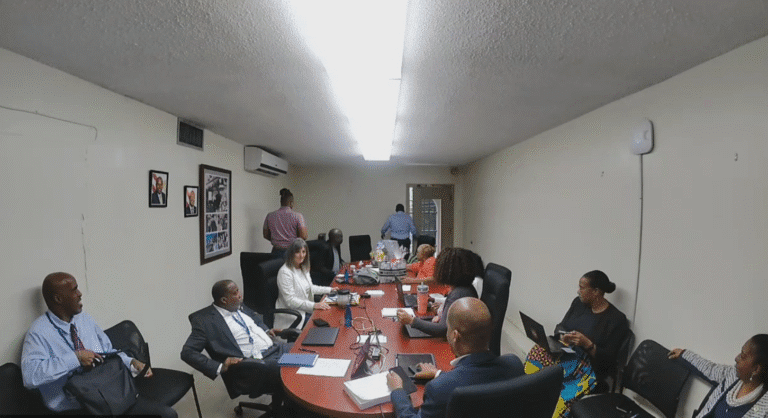
Joseph Boschulte officially returned to the boardroom this week, presiding over his first meeting as President and Chief Executive Officer of the West Indian Company Ltd. since reassuming the role. The WICO Board of Directors met Friday at the company’s headquarters on the West Indian Company Dock, where Boschulte outlined priorities for the year ahead and presented an optimistic outlook for the port operator.
Opening the meeting, Boschulte acknowledged WICO staff for their work during the fiscal year that ended Sept. 30. According to a company press release, he reported increased revenues, reduced expenses, and a projected 30 percent increase in cruise ship calls, with roughly 360 additional calls expected across fiscal years 2026 and 2027 compared to FY 2025.
Boschulte said the company is focused on both short- and long-term strategies to address operational challenges while identifying opportunities to strengthen profitability. Among the most significant priorities is the long-discussed dredging of Charlotte Amalie Harbor, a project WICO is advancing as a co-applicant alongside the U.S. Army Corps of Engineers and other partners, the release said.
Newly appointed board member and Tourism Commissioner Jennifer Matarangas-King emphasized the importance of increasing passenger volume in ways that benefit tourism and the broader community, from the WICO Dock through downtown Charlotte Amalie and over to Crown Bay. The board also elected officers for the next two years, naming Hugo V. Hodge Jr. as chairman, Vincent Richards as vice chairman, and retaining Roosevelt St. C. David as secretary. Boschulte publicly thanked outgoing chairman Jason P. Charles for guiding the board through the prolonged pandemic-related downturn in cruise traffic and helping position the company for recovery.
In executive session, board members discussed pending and potential litigation, trade secrets and proprietary information, personnel matters, and other issues protected under attorney-client privilege.
The governing board of the Virgin Islands Water and Power Authority on Friday authorized negotiations for a new liquefied petroleum gas supply contract and approved several infrastructure and financial oversight actions.
The board voted 5–0, with one member absent, to allow Executive Director Karl Knight to negotiate a two-year LPG contract with an option for a third year, following a second round of competitive bidding that produced lower prices and more flexible payment terms than WAPA’s expiring agreement at 59 cents per gallon.
Director of Project Management Maxwell George told the board that Empire Gas submitted the lowest bid at about 47.49 cents per gallon, roughly 11.5 cents below the current rate, but required WAPA to prepay for shipments, a condition officials said could strain cash flow and jeopardize fuel deliveries.
Carib LPG Trading Ltd offered the second-lowest price at 48.5 cents per gallon, or about 10.5 cents below the existing contract. Although slightly higher than Empire’s bid, Carib’s proposal includes a credit facility equivalent to roughly one shipment, estimated at about $3 million, along with hurricane-readiness measures, diversified supply options and a detailed corporate social responsibility plan.
“Carib also was very responsive to our corporate social responsibility,” George said, describing plans for “educational outreach in the local schools and with the authority through workshops, local charities and community based grant programs.”
Authority officials said both Carib and Empire’s proposals would generate substantial savings compared with the expiring contract. Based on typical shipment volumes of about 180,000 barrels per month, staff estimated annual savings of roughly $10 million under Empire’s rate and about $9.5 million under Carib’s.
George said the price difference was outweighed by the risk that prepayment terms could leave the utility unable to accept fuel when it is most needed. Knight said the credit facility included in Carib’s proposal is intended to prevent a repeat of recent episodes in which fuel ships arrived while WAPA was still scrambling to assemble cash.
“We think we have found a reasonable compromise,” Knight said, adding that past payment delays had forced the utility to ration fuel and triggered what he described as a “financial state of emergency.”
He said near-term savings will be used to reduce a cash deficit in the current budget and stabilize operations before any discussion of rate relief.
“I think we are now positioning ourselves … to have realized conversations about what our expenses look like,” Knight said, adding that he is “optimistic that 2026 looks favorable” as a time to begin earnest discussions with the Public Services Commission.
Chief Financial Officer Lorraine Kelly told the board that WAPA is still carrying approximately $160 million in deferred fuel costs — expenses not fully recovered through customer rates. Under a compromise with the PSC, she said, “when we get to June 30 of 2026 we will no longer have the benefit of carrying those costs,” and expects “something in the magnitude of about $120 million yet to be finalized and yet to be determined, will be written off at that time.” A new deferred fuel accounting track began July 1 of this fiscal year.
The board also approved a major cost reduction for the Christiansted’s Queen Street underground electrical project in Christiansted, St. Croix. The Feeder 1 upgrade, originally approved at about $7.63 million on a 75–25 federal-local cost share, was scaled back to roughly $4.83 million after rising construction costs caused FEMA to cap its contribution at the original award level. Staff said value-engineering changes — including the removal of some secondary ducts, manholes, street-lighting work, and certain testing requirements — will preserve the main underground feeder along Queen Street while restoring FEMA’s 75 percent share and reducing contractor retainage from 10 percent to 3 percent.
Knight also reported progress on disaster-recovery efforts, saying Kiewit has begun work on a “Northwest horizontal bundle” on St. Croix that combines water, underground electrical, telecommunications, and wastewater projects. He added that the Public Finance Authority has approved engaging RG Engineering to lead the prudent replacement of generation units at the Richmond plant on St. Croix and the Randolph Harley plant on St. Thomas, with contract negotiations to be handled through the Office of Disaster Recovery.
In an operations update, Knight briefed the board on a recent transformer failure and fire at the Richmond plant that contributed to a prolonged outage on St. Croix. Chief Operating Officer for Electric Systems Lower Lavender said a grounding transformer on the Aggreko side of the interconnection “was not included within the protection zone,” allowing a fault to persist until station-service systems tripped and the plant went dark. Crews have since relocated the grounding connection and tested protections.
To strengthen financial oversight, the board extended its contract with accounting firm BDO to complete required single audits and financial statement audits for fiscal years 2021 and 2022, triggered by WAPA’s receipt of $750,000 in federal funds. The amendment extends the completion date to July 30, 2026 and raises the contract’s not-to-exceed amount to $740,000, which Kelly said is expected to be covered entirely by FEMA management-cost funding.
The meeting concluded with recognition of outgoing employees including board member Juanita R. Young, who is stepping down after 18 years of service. Young said the experience gave her “an immense appreciation” for the work.
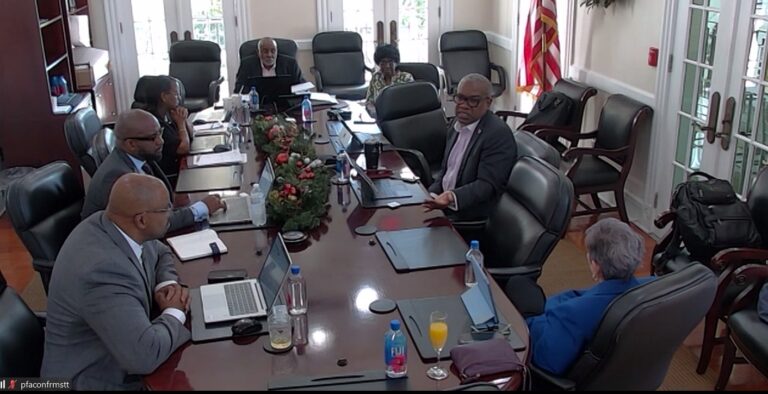
The V.I. Public Finance Authority governing board convened Friday morning over the video conferencing platform Zoom. (Screenshot from Zoom meeting)
The V.I. Public Finance Authority governing board Friday opted for Puerto Rico-based RG Engineering to carry out the Federal Emergency Management Agency-funded prudent replacements of the St. Thomas and St. Croix power plants.
V.I. Disaster Recovery Office director Adrienne Williams-Octalien reported to board members Friday that ODR received three bids after issuing a solicitation in June, and two met ODR’s evaluation criteria. RG’s bid for design and pre-construction services came in at $6,814,913 for the Randolph Harley power plant on St. Thomas and $6,849,913 for the Richmond power plant on St. Croix. The rejected bidder, a joint venture dubbed Power Solutions VI, bid $31,824,600 for each project.
RG Engineering’s total estimate for the power plants’ replacement amounted to $313,699,826.
Williams-Octalien said RG’s “knowledge of the territory was evident in their proposal, and they highlighted permitting challenges and all of the other requirements that will have to be overcome in order to put these generators back into the facilities.” Later, she explained that the solicitation was done through a “progressive design-build approach” to keep the projects on schedule and within budget.
Gov. Albert Bryan Jr., who chairs the PFA board, emphasized that “when we talk about fixing WAPA, these are two new power plants in addition to all the solar, wind, reconstruction that we have already done, undergrounding, composite poles,” the latest Wartsila generators and the government’s purchasing of Vitol’s propane infrastructure.
WAPA, he said, is essentially getting free power plant replacements.
On Friday, the PFA board also approved a renegotiation of the government’s existing $150 million line of credit with FirstBank Puerto Rico, which the government sought in order to “provide funding needed to advance disaster related recovery projects reimbursable through federal funding and other disaster related projects and to provide funding for the payment of vendors, retroactive wage payments and to address the other critical needs of the territory that due to cash flow deficiencies have not been able to be addressed in a timely manner,” according to the PFA.
“So what we wanted to do is we wanted to lower the amount of our guarantees, our cash guarantees, for this in order to free up some cash that we have as a government — some of those funds and proceeds from lawsuits and whatever — in order to be able to spend our money now for projects and everything,” Bryan said Friday.
This Saturday December 20th, the final Step Street Tour of 2025 invites the community to walk through history with an eye toward the future. The Holiday Edition tour, starting at 9:30am, promises a blend of seasonal cheer, local lore, and a curated look at the impactful changes shaping the western end of Main Street.
Facilitator Anna Monica Villa describes this last tour of the year as intentional. She believes that “where intention goes, energy flows”, which is why this tour is intentionally focused on the western end of Main Street, where something exciting is happening.
That excitement is a story of community led revival. The tour will highlight an area transitioning from shuttered buildings into a community hub. It is a hidden treasure where buildings are being creatively repurposed by community members to meet local needs. Participants will see first hand where the local artisans sell their work, where creatives like goldsmiths and cobblers craft in open workshops, and where historical structures are finding new life.
The holiday themed itinerary will guide guests through a series of significant locations. The journey begins at the beloved sandal maker Zora’s, in operation since 1962. Next, a newly renovated apartment building will offer participants a chance to hear the owner’s vision for the property and the towns future. The tour will then explore the historic Lange property, where derelict warehouses are being transformed; this site was once the bustling C&M Caron store and later the Magic Ice gallery.
The path continues to the beautiful event space and distillery at #13 Vimmelskaft Gade. A special stop will be the Enid M Baa Library, the former Lange family home, which now hosts the Made in the VI pop-up shop. There, Nadine Marchena Kean will share cherished local Christmas traditions with the group, followed by a brief shopping opportunity. The tour will also visit Berentzens Hus’ on Snegle Gade and conclude at The Creative Native, where Ama Denis presents powerful narratives through photography.
The experience, grounded in the tour’s theme of exploring seasons past while sharing dreams of the future, will last approximately two hours. It concludes with a festive guava berry tasting at Gladys Cafe. As a special thank you, each participant will receive a gift replica of the 1897 Map of Downtown. The first 20 attendees will also enjoy cookies provided by Mama Dukes.
The group will meet in the courtyard at Palm Passage and the tour will cost $35. For inquiries or to confirm last-minute participation, call 340-642-6756.
The Emancipation Garden Christmas Card, Inc. in partnership with the Virgin Islands Council on the Arts, proudly announces the 49th Annual Challenge of Carols, taking place Christmas morning at 5:45 a.m. in historic Emancipation Garden.
Christmas decorations
Since its founding in 1976, the Challenge of Carols has remained the longest-running Christmas cultural celebration in the U.S. Virgin Islands, uniting families, choirs, musicians, elders, and youth in a joyful tradition of music, storytelling, and shared community spirit.
2025 Honorees
Governor’s Award: Mr. Howard Jones
Recognized for a lifetime of contributions as an educator, musician, and author dedicated to preserving and advancing Virgin Islands culture.
Honorable Choirs Conductor: Mrs. Sara Connell
A respected director and spiritual leader who will conduct the choirs in this year’s featured selection.Luther Robles Award: Ms. Lillian “Lilly” Moolenaar
Honored for her many years as co-host of the Challenge of Carols, where she shared the microphone — and the magic of Christmas morning — with the late Athniel “Addie” Ottley, helping shape the warmth and identity of this treasured tradition.
Alexander “Ellick” Lloyd Award: UVI Voices of Inspiration Choir accepted by Choir Director, Mrs.Naomi Toussaint-Williams, recognizing the choir’s longstanding commitment to musical excellence and cultural enrichment across the territory.
Spirit of Christmas Award: Mr. Louis B. Taylor Jr. (Posthumously)
Celebrated for his generosity, artistry, and community service—embodying the unity and joy at the heartof the season
It is with heavy hearts that we announce the transition of the beloved soul of Arita G. George. She was a woman of strength, grace, and deep love whose life touched generations of family, friends, and all who had the honor of knowing her. Her legacy of devotion, wisdom, and compassion will forever remain in our hearts.
Arita G. George
She leaves to cherish her precious memories her loving family; Daughter, Diane Edwards; Son-in-Law, Tyrone Davis; Grandchildren, Derisse Baker, Jabria Sweeney, Ajai Sweeney, Dejani Sweeney, Jakwan Sweeney, and Ahijaa Sweeney; Great-Grandchildren, Mekai Thomas, Rekaii and Azaii Allen, Mia James, Ozias Sweeney; Sisters, Lucinda O’Neal, Brenda George, Marigold Russell, Bodil Samuel, Marva Dowling; Brothers, Darwin Schrader, Franklyn D. George, Sydney George Jr., Glendale George, Calhern George Sr., Eric George Sr., Rev. John C. George, Verne George, Evan George, Louiscito George, Nieces, Raquel Felix, Sherry Heywood, Denise Barnes, Olinda, Carmen, Ann, Yvonne, Yvette, Nadine, Janice, Doris, Deborah A. Russell, Janet T. Forbes, Janice Turnbull, La Verne V. Morrison, Denise Andrews, Delita Andrews, Doe’rain Deane, Deane Delita Samuel, Desiree Samuel Scottland, Lorraine S. Williams, Leona Phipps, Jermaine G. Thomas, Renee G. President, Nichole George, Aiesha George, Sharifa G. Jackson, Shanesha G. Richardson, Sasha George, Esmie George, Alicia Edwards; Nephews, Daren and Craig O’Neal, Steve, Leroy Jr., Darwin Simmonds, Onaldo, Ronald, Lester, Lamont, Melroy, Gordon, Ulmont Jr., Elton R. Russell, Dale A. McFarlane, Ashley R. Andrews Jr., Aldis Samuel Jr., Frank Samuel, Calhern George Jr., Carlos George, Menshiane Ashaki George Sr., Masii George, Sundiata George, Casimir St. Juste, Leonard St. Juste, Elton George, Eldred George, Evan George Jr., Solomon George, Simona George, Seth George, Simon George, Aleksander George, Victor George, Darren Edwards; Great-Nieces & Great-Nephews, Andreniki and Rodney Jr. Felix, Devin O’Neal, Aleeyah, Craig Jr., Jahmir, Jahmare, Hanibal, Doser O’Neal, Tamika, Victor Jr., Anthony Santos, Steve and Geneve Simmonds, Shamar, Kyshira, Leroy Simmonds III, Sherise and Anthony Jr. Barnes, Leon, Danita, Leah, Bryan, Aaron, Onaldo Jr., Damian, Syrita, Errol, Harold, Jasmine, Isiah, Bryan and Marcel, JeVon Phillipott; Sister-in-Law, Bodil Simmonds; Grandson-in-Law, Richard Allen Jr.; Granddaughters-in-Law, Tay Petersen, Aiyanna Stubbs, Kiana Elliot, Vaniqua Edwards; Adopted Daughter, Rachel Ballentine; Adopted Granddaughters, Reneah Guzman, Symone Carter, Serena Carter; Adopted Grandsons, Ky’shawn Parris, Kyvon Parris; Special Friends, Florabel Miller and Family, Mary B. Clarke, Mr. and Mrs. Albert Schuster, Sandra Felix, Meesha “Hatma,” Wilmot Edwards, Patricia Schrader, Laralee Hall and Family, Jean Smalls, Magie Barmble, Vernitta Thomas, Rev. Fisher, Lorraine Phillips, Chivonne, Vaughn, Marvin Matthews, Darrell Richards; Relatives, Raymond Williams and Family, Rena Thomas and Family, Byron Family; Special Thanks to Tay Petersen, Ms. Jarvis, Continuum Care, Joanne (CNA), Faye Martinez, Cheney Harvey, Lisa (RN), Kelly (RN), Cathy (RN), Sharon Williams, Debra Hansen. She is also remembered by all other friends, family, and all Grovians too numerous to mention.
Funeral service will be held on Monday, Dec. 29, 2025 at Refuge Tabernacle Church (Estate Grove Place). Viewing will begin at 9 a.m. with service at 10 a.m. Interment will follow at Kingshill Cemetery.
Professional services entrusted to James Memorial Funeral Home, Inc.