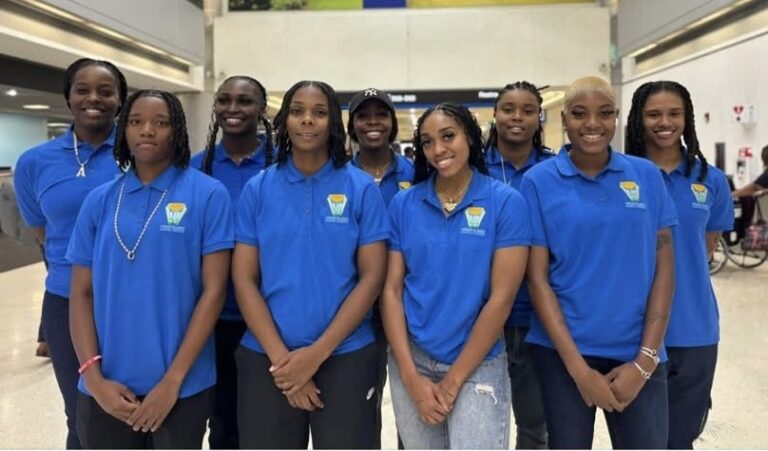
The University of the Virgin Islands Women’s basketball student-athlete Keshara Romain takes a hiatus from the team to compete as a member of the United States Virgin Islands Senior Women’s National Team in the International Basketball Federation 2025 Caribbean Basketball Championships.
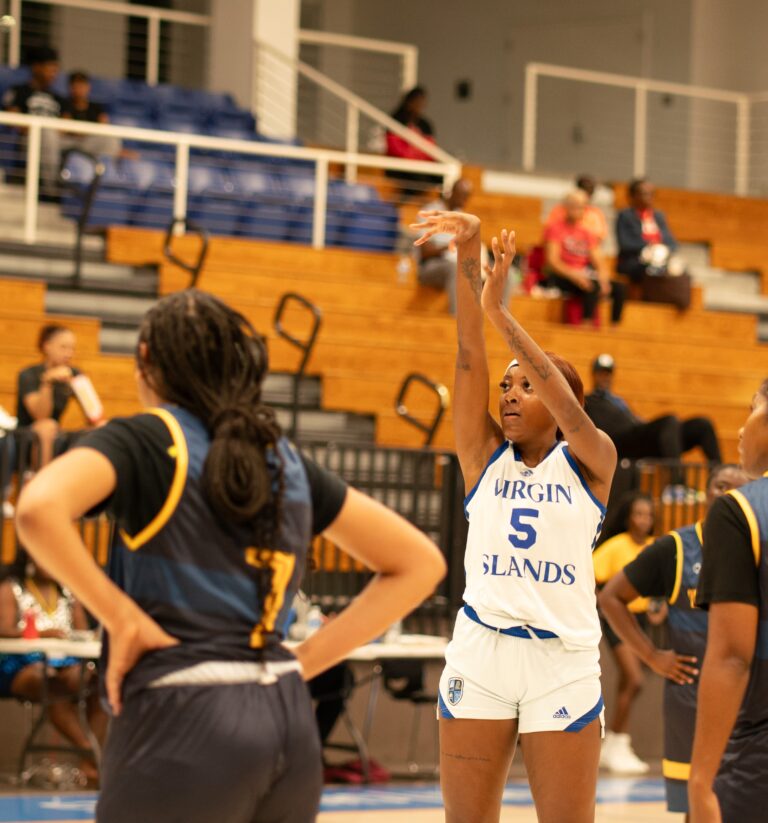
Keshara Romain at the free throw line. (Submitted photo)
The championships will be held at the Cliff Anderson Sports Hall in Georgetown, Guyana, from November 12 to 16, featuring teams from Suriname, Jamaica, the Bahamas, and the host nation, Guyana.
A native of St. Croix, Romain will be competing for the USVI Senior National Team for the second time. Her debut came at the 2024 FIBA Centrobasket Women’s Championship, where she played in five games, averaging 7.4 points and 5.6 rebounds per game.
Currently in her first year at UVI, Romain has started in four of the team’s five games this season, averaging 11.4 points, 14 rebounds, 2.2 steals, and 3.4 blocks per game for the Lady Buccaneers. In just the second official week of the National Athletic Intercollegiate Association season, the junior forward’s outstanding play earned her the titles of Historically Black Colleges and Universities Athletic Conference Defensive Player of the Week and Newcomer of the Week.
The first matchup for Romain and the USVI national team will come on Thursday, November 13, as they face off with the host team, followed by matchups with Suriname, Jamaica, and the Bahamas on November 14, 15, and 16, respectively, in the group phase before a champion is decided.
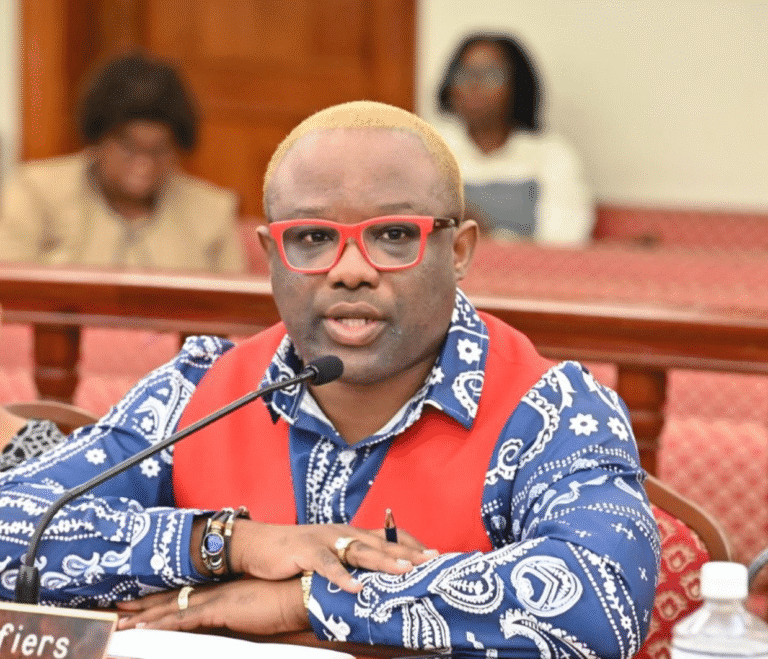
Senator Carla Joseph expressed thanks to Governor Albert Bryan, Jr., for signing into law Bill No. 36-0061, now Act 9049, a measure aimed at strengthening the University of the Virgin Islands’ ability to augment the recruitment of experienced faculty and technical personnel.
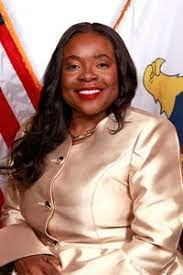
Senator Carla J. Joseph (Submitted photo)
Senator Carla Joseph commented, “Today is a great day for the University of the Virgin Islands and its history of providing excellent service in higher education in the USVI and the wider Caribbean Region.” She added, “The University is now able to expand its reach in tapping a wealth of knowledge, experience, and specialized skills from retired government workers in developing students and strengthening operations at the university.”
The incentive provided through the enacted law allows retirees who are receiving an annuity from the Government Employees Retirement System (GERS) to continue receiving their pension and now enroll in a separate, alternative UVI pension system to supplement their retirement.
Dr. Safiya George, President of UVI, spoke in favor of the law and stressed how important it is for employee well-being and institutional growth.
Senator Joseph said, “This is a win for the University because it can hire experienced faculty and other technical professionals who are needed to provide important services. It is also a win for experienced professionals to benefit as they help build our workforce,” she concluded.
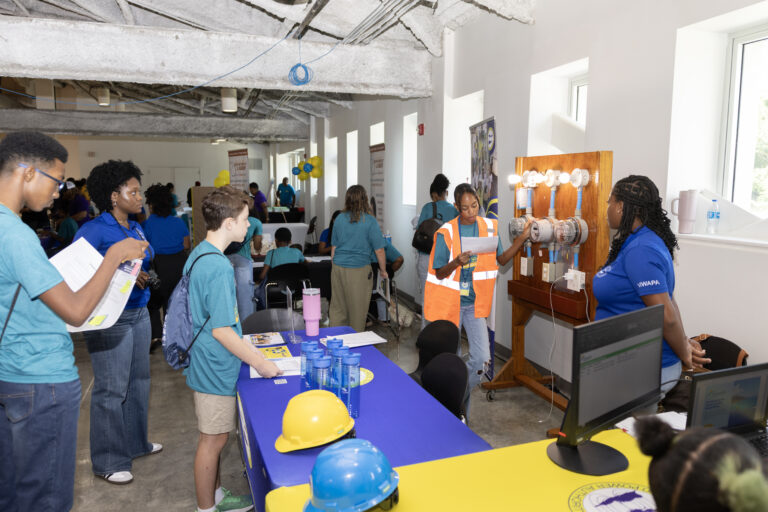
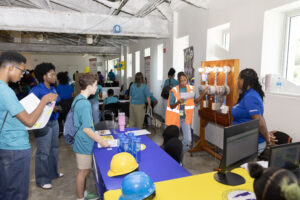
The Aliyah Boston Foundation ignited young minds at the electrifying Pathway to Purpose Youth Finance Summit, Saturday, Nov. 8, at the UVI Sports and Fitness Center on St. Thomas from 8:30 a.m. to 3:45 p.m.Students of financial literacy soak up lessons. (Submitted photo)
With 100 students registered and a buzzing waitlist of 5-6 eager participants stepping in when spots opened, 87 unstoppable teens showed up and owned the day.
Picture this: 87 fired-up students divided into dynamic groups of 20-25, diving into a round-robin adventure of financial mastery—Budgeting, Credit Scores, Investing, and the heart-pounding Virgin Islands’ Ventures simulated town! In VI Ventures, students stormed the streets of a fully immersive world, hitting up Keswick Insurance, Virgin Islands Housing Finance Authority, AB’s Snack Shack, Merchants Commercial Bank, Virgin Islands Water and Power Authority, Virgin Islands Department of Labor, Virgin Islands Bureau of Internal Revenue and Virgin Islands Ventures – Human Resources. For a full hour, they split roles: half the time as employees hustling through real-life missions—applying for loans at Merchant’s Bank, paying taxes at the Virgin Islands Bureau of Internal Review with a check, building resumes at the Department of Labor, or securing coverage at Keswick Insurance, Reading the Meter at Virgin Islands Water and Power Authority, et cetera —and the other half as business operators, calling the shots and serving up solutions.
Grab-and-go lunch and snacks kept the momentum blazing all day.
In the Budgeting Blitz, facilitators unleashed pro-level tips, then students flexed their skills! Assigned salaries tied to their chosen careers, they built budgets with high-stakes choices: rent or buy a home (and how big?), lease, buy, or skip the car for public transit, plus decisions on dining out, health insurance, lifestyle, and giving back. Every call shaped their empire!
The Investing Ignition session set the room on fire—students mastered stocks, bonds, ETFs, and the art of spotting winners. In teams of 5, they clutched $1,000 in Boston Bucks and invested. Five years of wild, unplanned market twists—scenarios that sent portfolios skyrocketing or plunging—revealed how their money exploded over time!
In the Credit Score Showdown, students unlocked the secret sauce of credit scores and their life-altering power. They watched interest rates flip-flop on identical loans based on good vs. bad credit, then battled in personalized Credit Score Jenga—each block a choice that boosted or busted their score!
The crowd went wild for the unfiltered Q&A showdown moderated by Deniece Turnbull, where Aliyah Boston took the stage! Students fired off real-talk questions about savings, resisting peer pressure, balancing a pro-athlete schedule, smart decision-making, investing, and spending wisely. Aliyah dropped gems straight from her journey, proving financial power is built one disciplined choice at a time.
This summit was rocket fuel for generational wealth, powered by Aliyah Boston’s fearless vision: the earlier you start, the more your money grows. Success isn’t flashy cars, designer labels, or blowing cash—it’s fiscal responsibility, knowing it’s not how much you make, it’s how much you KEEP. Every student walked away with motivational cards packed with positive affirmations for smart money moves and a reminder: when God blesses us, we’re called to bless others.
The grand slam? The Aliyah Boston Foundation is launching every participant’s future by opening an investment account for each of the 87 students and funding their first Exchange-Traded Fund (ETF) purchase!
Massive gratitude to our sponsors—International Private Bank and International Capital and Management (The Stephenson Family), Keswick Insurance, Parach Resource Management, University of the Virgin Islands, Merchants Commerical Bank, Perfected Claims, West Indies Company, Customs Builders, Color Max, MC + MC Design Group, Cost U Less for fresh fruits and snacks and Subway for epic cookies. Every partner helped fueled the fire. The Pathway to Purpose Youth Finance Summit wasn’t just an event—it was a revolution.
The International Basketball Federation (FIBA) Americas region is holding a women’s regional championship to determine who advances to the 2026 Centrobasket Women’s Championships and the USVI helps kick it off with a game against host Guyana Thursday night.
Five national delegations traveled to Georgetown, Guyana, to compete in this round-robin tournament, Nov. 12-16, 2025. The Bahamas, Jamaica, Suriname, United States Virgin Islands (USVI), and host Guyana will fight for three open spots in the 2026 FIBA Centrobasket Women’s Championships.
The USVI roster is filled with seasoned international players who were members of the 2023 USVI Central American and Caribbean (CAC) Games team, who brought home the gold medal. Lanese Bough, J-Naya Ephriam, Anisha George, Natalie Kleeman-Day, Naja Ngongba, Keshara Romain, and Imani Tate are all returning from that golden team. Victoria Hamilton and Taylor Jones are also experienced players on this roster. The last spot on this ten-women roster is La’Kaisah Graham, a 15-year-old Central High School Sophomore phenom who is making her international senior women’s team debut.
Head Coach Tajama Ngongba and assistant Clint Williams, are leading this talented group of women. They were at the helm in 2023 and are looking to keep this program moving in the right direction.
The tournament got underway on Wednesday, with the USVI receiving a bye on the first day. In the opening game, Jamaica defeated Suriname 86-47. Jamaica was led by Tiffany Reynolds, who scored 26 points and grabbed nine rebounds. Shakya Peroti was the top scorer for Suriname with 14.
The host Guyana got off to an electric start, scoring 102 while holding Bahamas to just 75 points. Amisha Ramlell and Ruth Adams lit up the scoreboard for the home team with 33 and 22 points, respectively. Lashann Higgs dropped 23 points in a losing effort for Bahamas.
The USVI tips off their tournament at 8:30 p.m. as they face the home team, Guyana, on Thursday, Nov. 13, 2025. Bahamas will take on Suriname at 4:30 p.m. in the first game of the day.
Click to view the live game: https://www.fiba.basketball/en/events/fiba-cbc-womens-championship-2025/games/130692-ISV-GUY
Kyza Callwood, chair of the Virgin Islands Board of Education, testifies before the Senate Education and Workforce Development Committee on Nov. 12. (Photo courtesy V.I. Legislature)
At a Senate Education and Workforce Development Committee hearing Wednesday, education officials acknowledged that high schools remain unable to deliver Virgin Islands and Caribbean history, more than four decades after lawmakers required the class.
The push to ensure local students learn the territory’s own history dates back to a 1983 law that advocates say remains vital to preserving Virgin Islands identity. “The board remains resolute in its belief in teaching Virgin Islands and Caribbean history,” said Kyza Callwood, chair of the Virgin Islands Board of Education. “It’s not merely a curricular requirement. It’s an act of cultural preservation, civic empowerment, and national pride. We stand ready to work with stakeholders to get the job done.”
Efforts to enforce and update the law have been renewed in recent years, most notably after a 2023 court ruling set new deadlines and clarified expectations for implementation. “We’re not dealing with the old original act. We’re dealing with Act Number 8730, which was enacted in 2023, and that is the interpretation that the court looked at,” said Jennifer Jones, legal counsel for the Board of Education.
While elementary and middle schools have rolled out the new history curriculum with relative ease, offering two 30-minute sessions each week, high schools have not kept pace. “There is absolutely … no issue with your grandchildren getting instruction in their history at the K-8 levels, elementary [and] middle school levels,” said Assistant Commissioner of the Virgin Islands Education Department Victor Somme III. However, for high schoolers, meeting the curriculum mandate is far more complicated.
The obstacles are twofold: crowded graduation requirements and schedules leave little room for additional courses, and there are not enough qualified staff or resources to support a new curriculum. “That is the elephant in the room,” said Renee Charleswell, the deputy commissioner for curriculum and instruction, referring specifically to the scheduling issue. “We have been struggling to provide guidance in that area … It’s still something that we haven’t worked out the kinks, in all honesty.”
Many high schools are running short on qualified teachers and instructional material. “One of the major challenges is providing our teachers with high-quality instructional materials in order to teach Virgin Islands history at each grade level in a separate course. That’s … one of the major challenges,” said Lauren Larsen, social studies coordinator for the St. Croix district.
The problem is worsened by personnel shortages: local educators now make up only about half the teaching force, with the remainder of positions filled by international hires. “We’re almost 50-50,” said Superintendent for the St. Croix district Carla Bastian-Knight, referring to the split. “We’re getting ready to lean on more internationals to come in and fill the current vacancies.”
Lawmakers expressed concern that current seniors or students close to graduation could be penalized by a sudden change in requirements. “You can’t have a retroactive application of this particular policy. So you can’t penalize a current senior …” warned Committee Chair Sen. Kurt A. Vialet.
Overlapping all these challenges is a bureaucratic impasse between the Board of Education and the Education Department. The board says it cannot give full approval of the curriculum without complete and final deliverables from the department. The department, in turn, insists it cannot distribute curriculum materials until it secures that full approval. “Full approval of the curriculum will result in distribution, and then the board can monitor, because we’d have full approval,” said Somme.
The department says it has already submitted several drafts and versions of the curriculum to the Board of Education, revising the documents each time it receives feedback. The board, however, continues to issue only conditional approval, asking for more changes or information before it will give final sign-off. This has created confusion over exactly what constitutes a complete set of deliverables.
Neither agency committed to a concrete timeline or deadline for their next steps, leaving the approval and rollout process undefined. Lawmakers pointed to ongoing misunderstandings and lack of clear communication as a central obstacle to progress. “There’s miscommunication going on, to be honest with you, between the board and the department,” said Sen. Marvin A. Blyden.
As Wednesday’s hearing wound down, the call for urgency was unmistakable. If action is not taken on credit limits, staffing, standards, and resource delivery, the long-standing goal of a territorywide Virgin Islands history curriculum may remain beyond reach, and the next generation of students could miss a key part of their own story.
Lawmakers and education officials said more meetings are planned. “The expectation of this committee is that the Board of Ed and the Department of Education, along with the stakeholders, will get together in the same room and get this job done so that the next time we have a meeting, we’ll be able to hear just progress and both entities totally align,” Vialet said.
For the third time in less than two weeks, schools on St. Thomas were disrupted by a series of bomb threats Wednesday morning — the latest in what officials describe as a “stressful and exhausting” cycle of false alarms that have triggered repeated evacuations, forced lockdowns, and taxed already thin security and emergency resources.
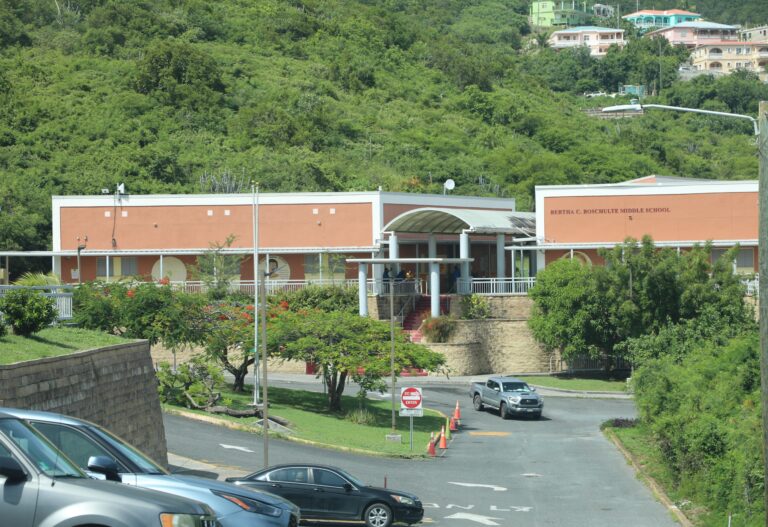
According to the Virgin Islands Police Department, threats were made to five campuses: Lockhart K-8 School, Charlotte Amalie High School, Ivanna Eudora Kean High School, Edith Williams Alternative Academy, and Bertha C. Boschulte Middle School
The FBI and local police cleared all schools later in the morning, finding no explosives.
Education Department Director of School Security Irvin Mason Sr. told the Source Wednesday that the pattern of calls has been intensifying. “It’s been hectic — very hectic,” Mason said. “Every time you get a bomb threat, you have to evacuate the school, even if you think it’s a prank. You can’t take chances when you’re dealing with hundreds of students and staff.”
The calls, Mason said, have consistently come through 911 rather than directly to the schools, triggering an immediate cascade of notifications. “Once 911 gets the call, they call me, then I contact the principal, the superintendent, the commissioner, and my public information officer,” he said. “It’s a chain reaction, and once we move, the evacuation process starts.”
Wednesday’s sequence began with a report involving four campuses, followed shortly after by a separate call naming BCB. Mason said that because two of those schools — Lockhart and Charlotte Amalie High — had undergone a complete morning sweep by security staff, monitors, and police K-9 units before the threat came in, he made the decision to lock down instead of evacuate.
“We had just finished searching every student, every backpack, every classroom,” Mason said. “We knew nothing was there, so instead of putting kids out in the heat again, we went into lockdown. No one in, no one out. It worked well and kept things calm.”
At other campuses, evacuation procedures were carried out with police and emergency personnel on scene. “You use up a lot of resources every time,” Mason said. “You have to move hundreds of children to safe areas, get water, bring in VIPD and the dogs, fire and rescue — it’s a full response. It’s not something you can do halfway.”
Mason confirmed that the FBI is assisting VIPD with tracing the calls, and that investigators “may have leads.” He didn’t share specific details, citing the active investigation, but said he believes things are moving. “We’re confident there’s progress being made,” he said. “We’ll get there.”
The Virgin Islands Police Department said in a statement that it “will leave no stone unturned” in its investigation and vowed to prosecute those responsible “to the fullest extent of the law.” Commissioner Mario Brooks urged residents to remain vigilant but calm. “Our children must not bear the burden of fear because of someone’s reckless act,” Brooks said
Education Commissioner Dionne Wells-Hedrington in a statement Wednesday said the repeated disruptions have been “deeply troubling and extremely disruptive” to teaching and learning. “We are committed to our students’ safety and are working diligently to ensure they can receive the education they deserve, without further interruption,” she said.
The Virgin Islands Board of Education also issued a statement condemning the threats as “irresponsible, unlawful, and jeopardizing the safety and well-being of our education community.” The Board emphasized that under its student discipline policy, making a bomb threat constitutes a Level IV offense — the most serious category — and could result in expulsion, restitution for damages, and criminal prosecution.
Lockhart K-8 has been recently targeted twice before — on Nov. 7 and again on Nov. 10. Mason said those evacuations went smoothly but strained staff and students, particularly at schools with younger children. “It takes a toll,” he said. “You have to keep them outside until the all-clear comes, and you don’t want that to become normal.”
Despite the disruption, Mason said the department’s goal is to strengthen readiness while maintaining a sense of calm. “We take every call seriously,” he said. “We can’t afford not to. But we also don’t want fear to control our schools.”
Authorities are asking anyone with information about the threats to call 911, the Virgin Islands Police Department at 340-774-2211, or Crime Stoppers USVI at 800-222-TIPS.
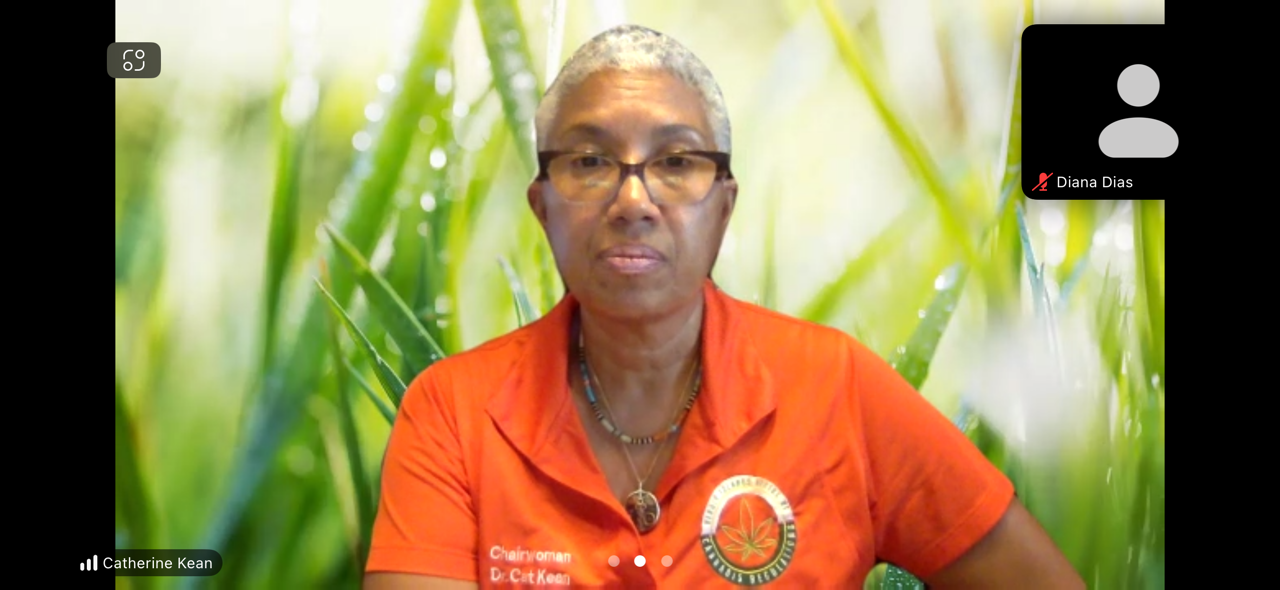
Chair Dr. Catherine Kean at Wednesday’s Cannabis Advisory Board meeting. (Screenshot from Zoom meeting)
During the most recent meeting of the Virgin Islands Cannabis Advisory Board, members received several key updates from the Office of Cannabis Regulation, reported by Executive Director Joanne Moorehead, including progress on licensing, compliance training, and federal and local legislative developments.
Moorehead began by noting that a new board member nomination had been forwarded to the Legislature by the governor’s office, with a Rules and Judiciary Committee hearing scheduled for Thursday. The addition is expected to help the board achieve a full quorum for future meetings.
She reported that the OCR has begun processing renewals for medical cannabis patients, marking the first time since registrations opened that patients are completing the renewal cycle. The territory currently has five registered practitioners on St. Thomas, four on St. Croix, and one on St. John, and registered patients are 20 on St. Thomas and 18 on St. Croix.
Moorehead also provided an update on licensing activity. The dispensary application period closed on Oct. 15, with about 20 applications received now under review before moving to the evaluation stage. The manufacturing license window is open until Dec. 19, marking the first phase without a cap on the number of licenses, unlike cultivation and dispensary categories.
The OCR continues to work toward securing a certified lab testing facility, which Moorehead emphasized as critical to the next stage of implementation. Agent registration remains ongoing, and upcoming licensing opportunities include research and development, third-party vendor approvals, and transporter certificates for companies moving cannabis products between licensees.
Enforcement capacity is also being strengthened. The OCR recently acquired field testing equipment that will allow enforcement teams to verify cannabis products on the spot, in coordination with other territorial and federal agencies. Two cannabis compliance auditors have joined the OCR and are currently undergoing training to assist licensees.
As part of those efforts, the OCR hosted a Cannabis Compliance Summit on Nov. 3 and 4, with sessions on St. Thomas and St. Croix. The event featured experts from the mainland United States and Canada, as well as local agencies such as the Bureau of Internal Revenue, who addressed key compliance areas including taxation, security, insurance, and banking. Roughly 40 participants registered for the summit. A recording from the St. Croix session may later be shared online.
Moorehead also highlighted that METRC, the seed-to-sale inventory tracking system, is now onboarding conditional licensees, giving them access to the learning platform as part of the rollout.
Additionally, the OCR has an open Request for Proposals on the government of the Virgin Islands procurement site for administrative hearing officer services, with a closing date of Dec. 10.
Moorehead also informed the board that an updated version of Sen. Clifford Joseph’s hemp-related bill will be heard in the Legislature on Nov. 20, coinciding with national discussions to close the federal hemp loophole that has allowed intoxicating cannabinoids to be sold under the 2018 Farm Bill. To read the bill, click here.
Tentatively, the next Cannabis Advisory Board meeting will take place on Dec. 4, at 2 p.m.
V.I. Tourism Department’s Division of Festivals Team. (Source photo by Diana Dias)
In collaboration with the University of the Virgin Islands and the Division of Festivals, “WOW Wednesday: A Vibe Like No Other” took place Wednesday at the Albert A. Sheen Campus Student Activities Center Terrace.
Students and visitors enjoyed an afternoon of eating, shopping, and dancing. WOW Wednesday featured local vendors, cultural showcases, live music, and a taste of what’s to come for the St. Croix Festival season.
Tourism Commissioner Nominee Jennifer Matarangas-King described the event as a “labor of love” and a joyful way to bring the excitement of festival season directly to campus.
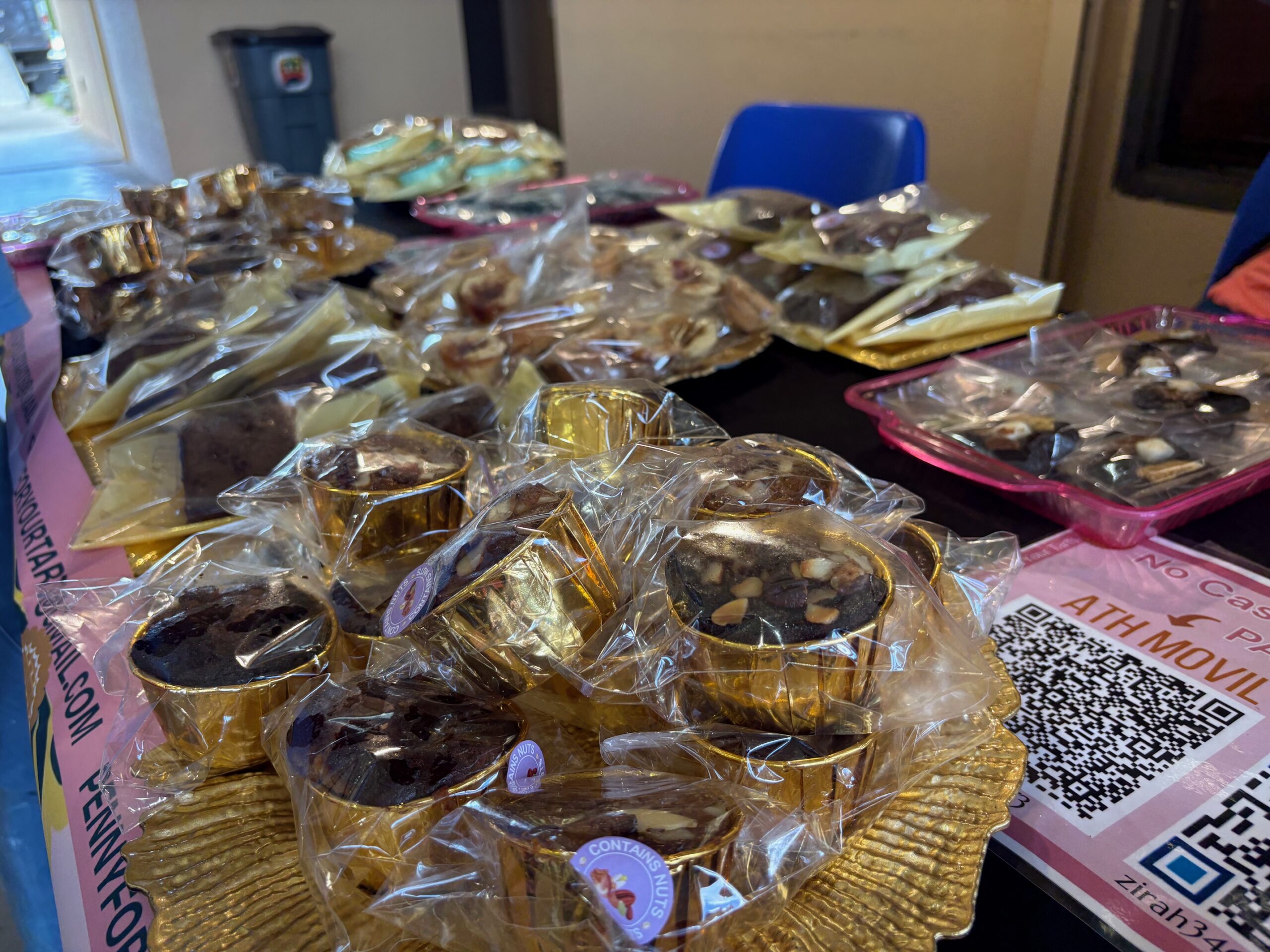
Penny for your tarts serving delicious treats at “WOW Wednesday” (Source photo by Diana Dias)
“Very happy to be here at WOW Wednesday. This is a labor of love for us — we’ve been working on this for a few weeks to bring our mini festival to campus and get our students excited about what we have to offer during the festival season,” Matarangas-King said. “It’s a full season packed with amazing events, and there’s really something for everyone. We want the community to know it’s going to be a culturally rich festival experience from beginning to end.”
She added that the department also used the event as an opportunity to encourage student involvement.
“We’re encouraging students to volunteer with the festival team,” she said. “We always need help, and it’s a great way to be exposed to the tourism industry and earn community service hours while doing something fun and meaningful.”
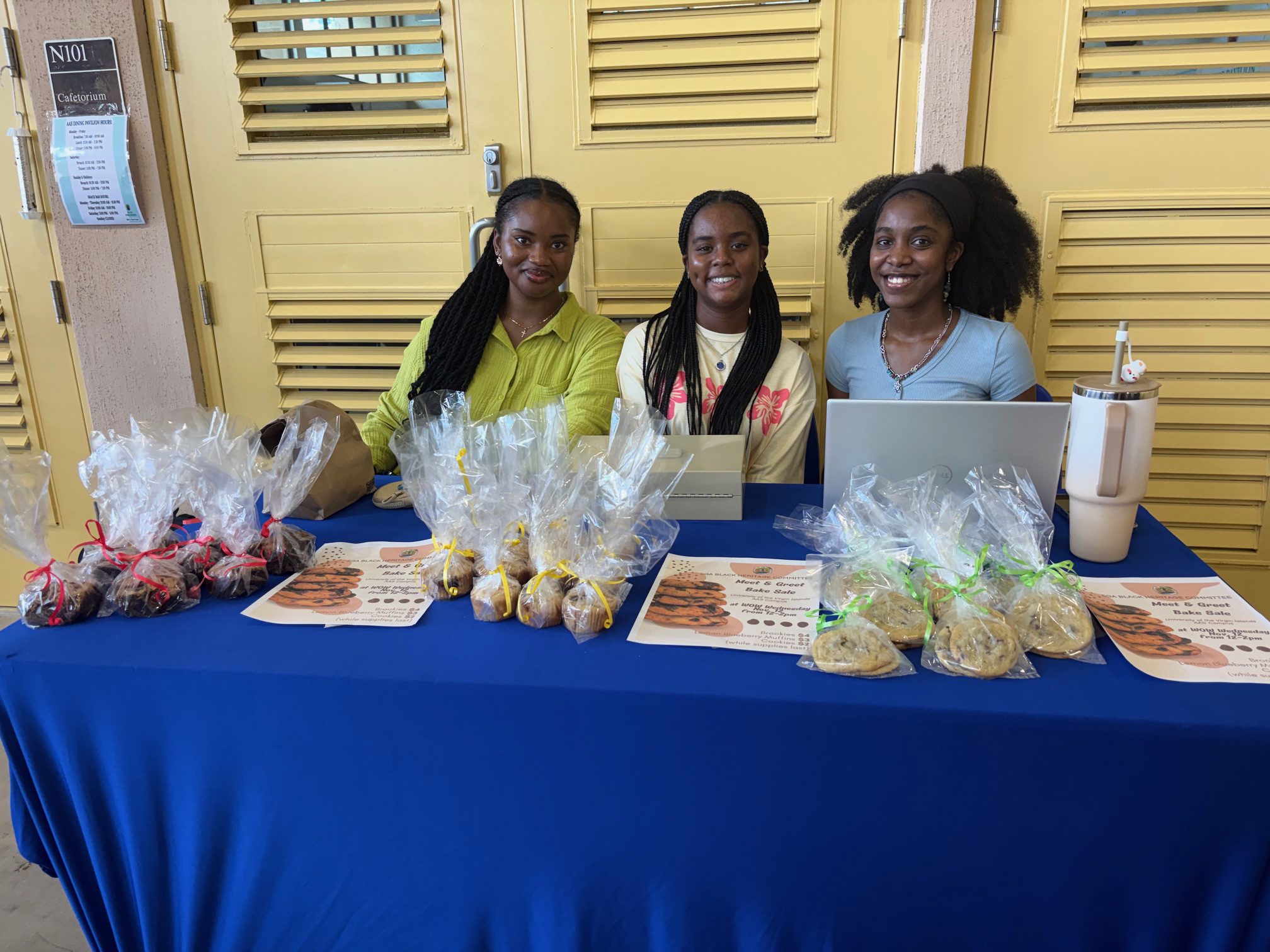
Student volunteers greet visitors with homemade treats during WOW Wednesday activities at the University of the Virgin Islands. (Source photo by Diana Dias)
Deputy Commissioner of Tourism Shamari Haynes said the department was eager to partner with UVI to help students see the opportunities available within the local tourism and hospitality industry.
“The Department of Tourism has partnered with the university to provide support and reengage with the hospitality program,” Haynes said. “We want students to know they don’t have to go far to gain experience. There’s an excellent program here, and we’re invested in the community. We just want to provide easy access and show that they’re part of the process too.”
The event featured live music, local vendors, masqueraders, and festival royalty, creating a lively atmosphere that mirrored the spirit of Carnival. Haynes said the goal was to blend culture and campus life while also encouraging student involvement in upcoming festivities.
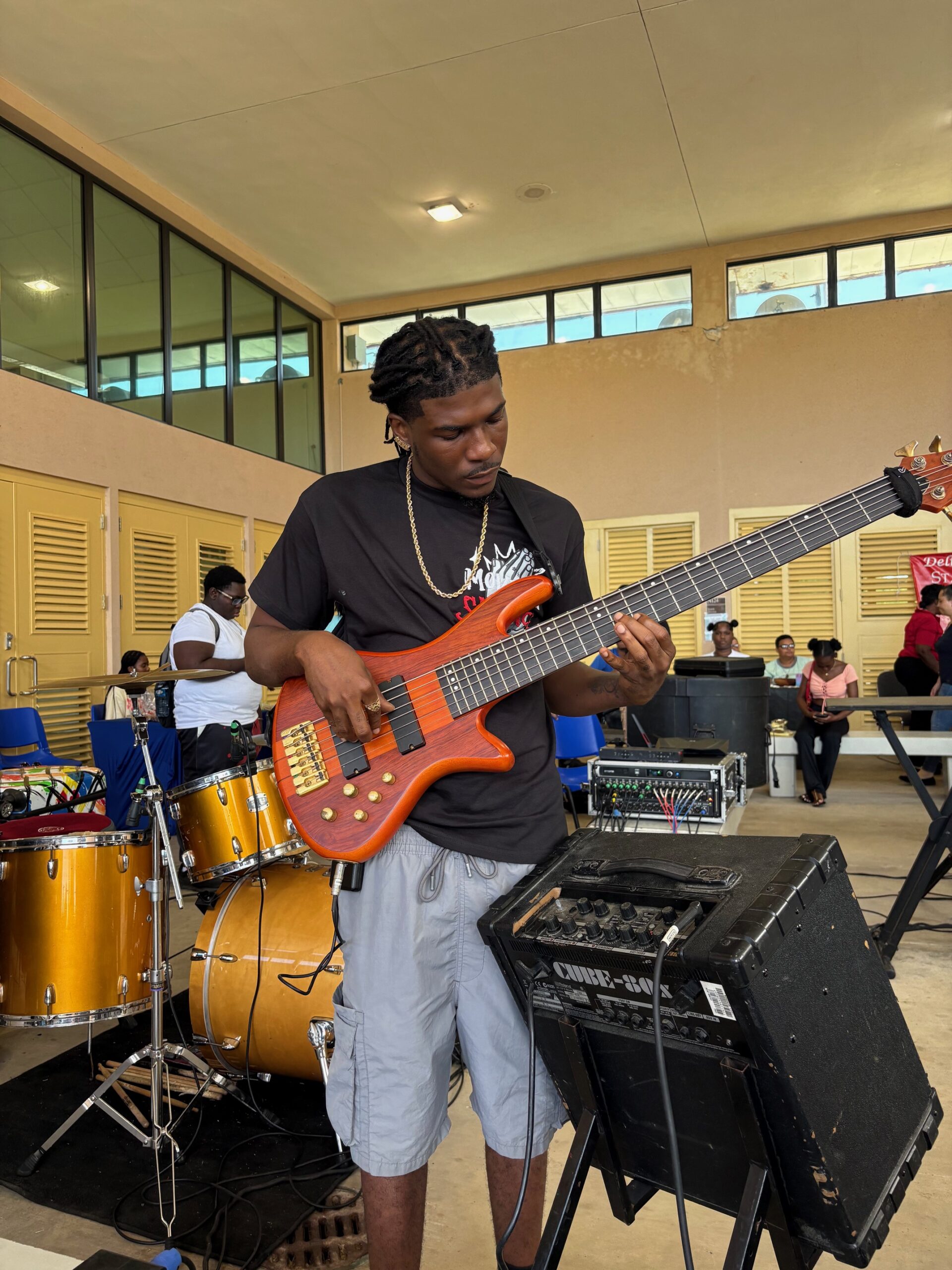
Live music was provided during WOW Wednesday while students enjoyed vendors, food and more. (Source photo by Diana Dias)
“We wanted to make sure all aspects of our culture were represented,” he said. “Many of our students come from different Caribbean islands or are exchange students, so this gives them a chance to experience that cultural connection. As we lead up to the Crucian Christmas Festival, we’re also encouraging students to volunteer, join parade troupes, and get involved. It’s about bridging the gap between our community, local businesses, and the students.”
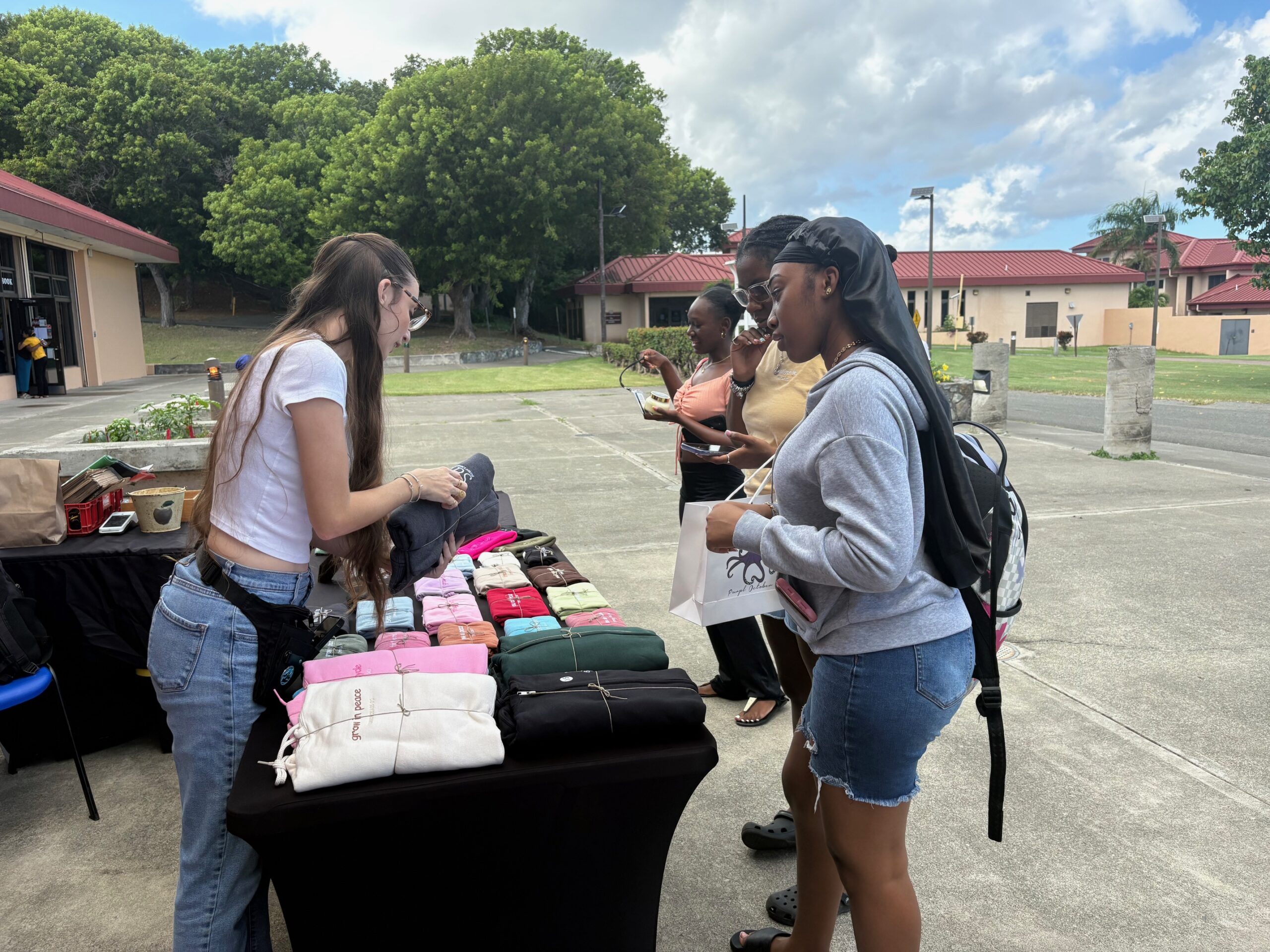
Popular T-shirt vendor “Upperclass OG” sells T-shirts to students at the University of the Virgin Islands. (Source photo by Diana Dias)
For Colvin T. Georges Jr., Ph.D., dean of students at the Albert A. Sheen Campus, the event represented not just celebration, but it was about building a sense of belonging.
“It’s important for students to build community, be around each other, form friendships and partnerships,” Georges said. “We really wanted to create a sense of connection and belonging to the university. Partnering with the Division of Festivals made perfect sense. There are so many students who want to feel connected to the institution, and this brings everyone together as we go into the holiday season.”
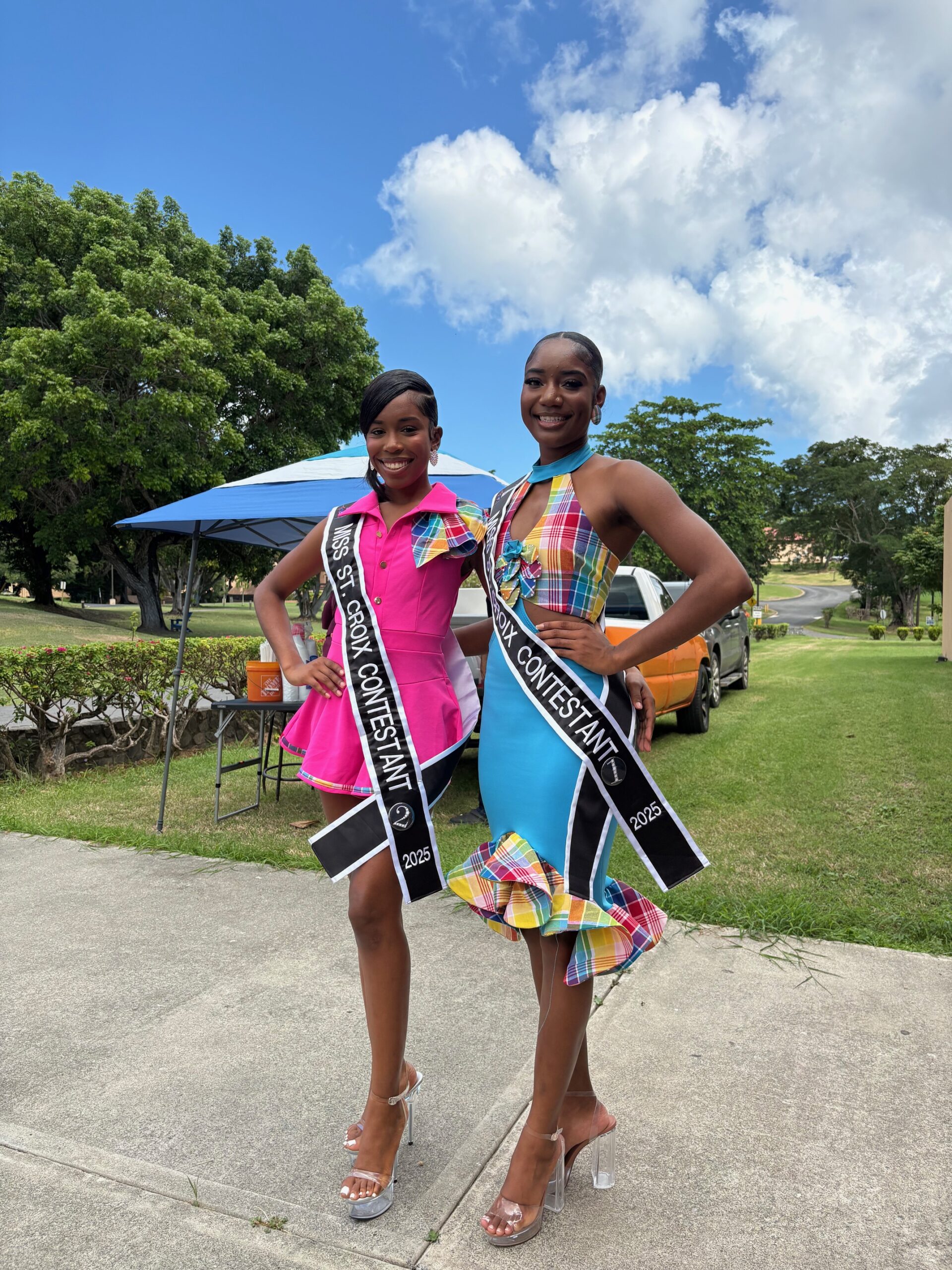
Miss. St. Croix contestants smile brightly at WOW Wednesday. (Source photo by Diana Dias)
Georges credited Michael Bell, director of Student Life and Leadership at Albert. A. Sheen Campus, for helping bring the idea to life. Bell, a UVI alumnus, joined the team earlier this year and immediately began working on ways to reenergize the St. Croix campus.
“We talked about breathing more life back into campus,” Georges said. “Michael took that vision and used his connections across the territory, especially with the Department of Tourism, to help make this partnership happen. It’s amazing to see it come to life.”
As 81C celebrates its fifth anniversary, the Charlotte Amalie-based arts organization is expanding across the territory with the opening of The Farmhouse Gallery at Prosperity Farm Distillery in Frederiksted, St. Croix. The new space officially debuts Friday, Dec. 19, with an inaugural exhibition featuring Virgin Islands artist Siyandi Matthias and a public opening event from 5 to 10 p.m.
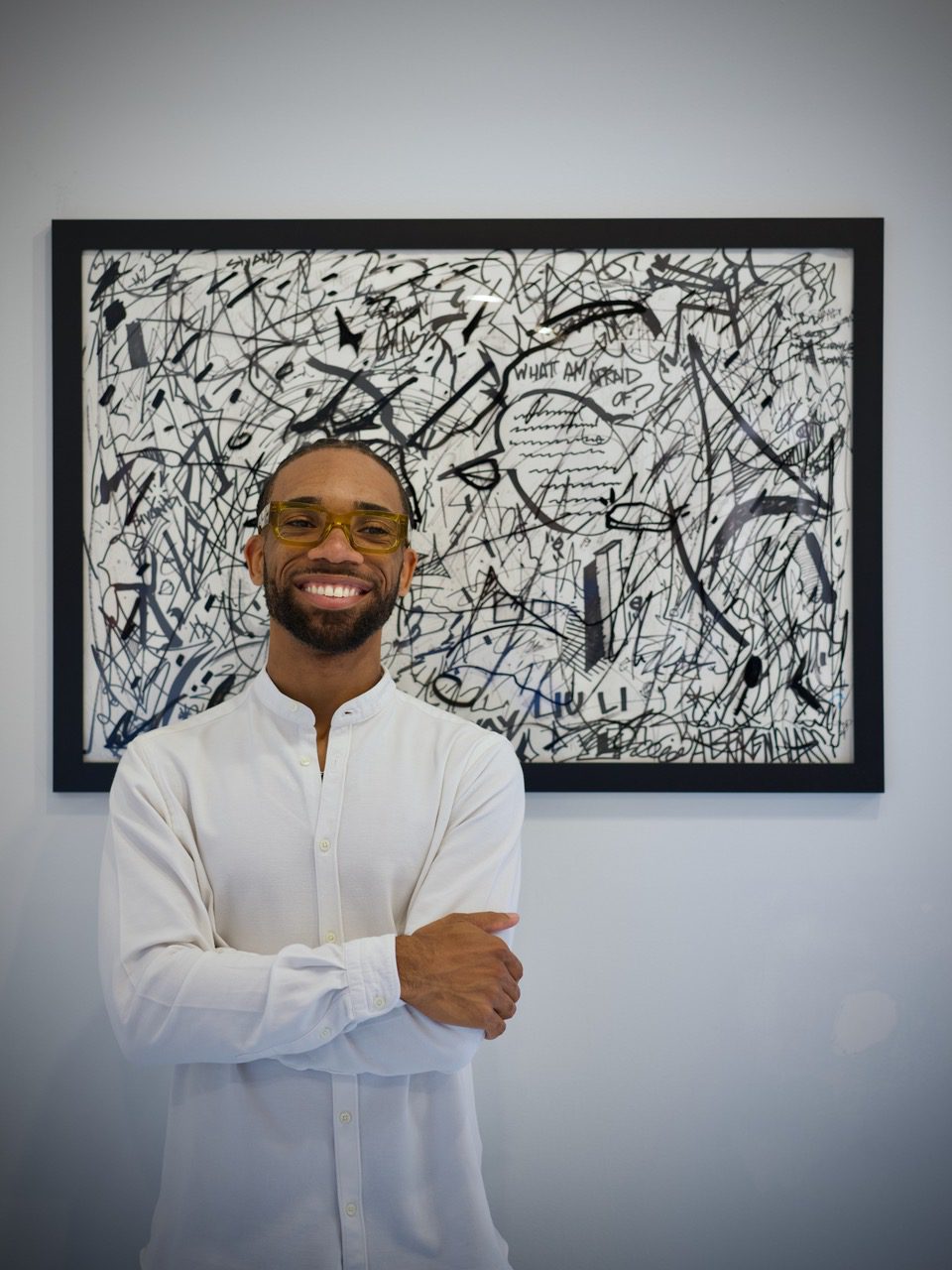
Artist Siyandi Matthias will headline the inaugural exhibition at The Farmhouse Gallery in Frederiksted, marking 81C Arts’ expansion to St. Croix. (Photo courtesy 81C)
The expansion reflects 81C’s growing influence in the Virgin Islands’ cultural economy, connecting art, education, and community engagement. Founded in 2020, 81C Arts — the nonprofit arm of Atelier St. Thomas Arts Foundation — has become a leading force in creative education, youth outreach, and historic revitalization, a press release announced.
“Our St. Croix expansion is a natural continuation of what we’ve been building over the past five years — a community-driven arts model rooted in collaboration and education,” said Zack Zook, founder and executive director of 81C Arts. “This new space strengthens connections across islands and celebrates the creativity that defines the Virgin Islands.”
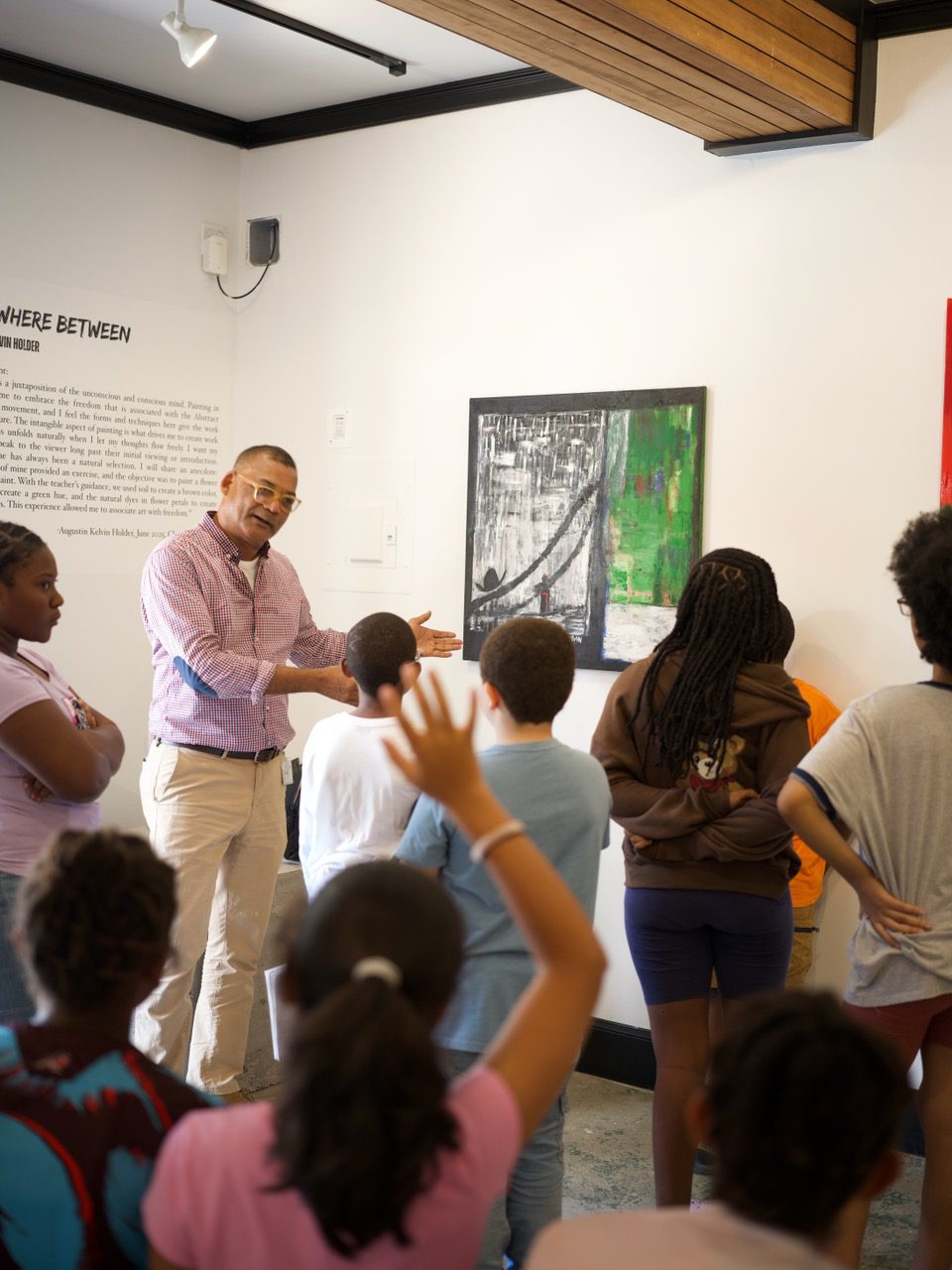
Students participate in 81C Arts’ Artist Dialogues Series on St. Thomas with Augustin Kelvin Holder, which connects young audiences with local artists for hands-on learning and creative discussion. (Photo courtesy 81C)
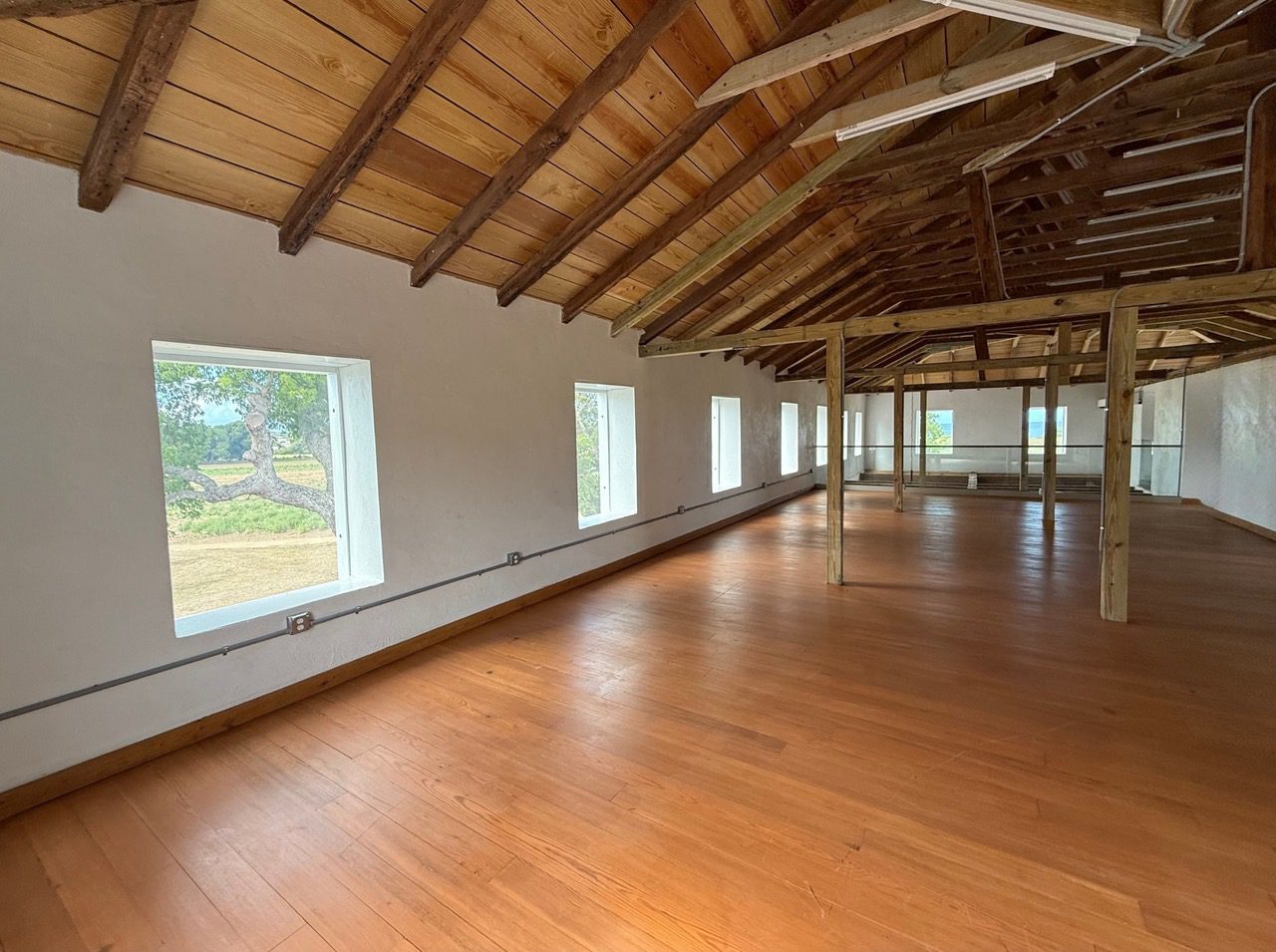
The Farmhouse Gallery will occupy a third-floor art space overlooking Prosperity Farm’s 180-acre estate, blending historic architecture with contemporary art. The partnership between 81C Arts and Prosperity Farm Distillery aims to create a multidisciplinary hub for exhibitions, youth programs, and cultural events that highlight the territory’s growing art and tourism industries, according to the press release.
The new Farmhouse Gallery at Prosperity Farm Distillery in Frederiksted will serve as 81C Arts’ St. Croix home for exhibitions, youth programs, and community events. (Photo courtesy 81C)
“Prosperity Farm is proud to collaborate with 81C Arts to bring contemporary art and youth programming to St. Croix,” said Mark Gelband of Prosperity Farm Distillery. “This partnership unites community and creativity while opening new avenues for cultural exchange.”
Over the past five years, 81C has hosted more than 30 major exhibitions, 100 pop-up showcases, and 1,000 annual student visits at its Charlotte Amalie gallery. Its educational initiatives, including the Artist Dialogues Series and DigiLocal digital arts program, have reached hundreds of young Virgin Islanders, the press release stated.
Guests gather at 81C’s Charlotte Amalie gallery during an exhibition opening, one of more than 30 professional shows hosted by the organization since 2020. (Photo courtesy 81C)
This latest expansion will also launch The Portfolio Project VI, a mentorship and scholarship program designed to prepare young artists for careers in the creative industries —supported by Merchants Commercial Bank, Christie’s International Real Estate USVI, and Orange Tree Staffing, the release stated.
“81C Arts’ programs are creating opportunities for self-awareness, confidence, and creative transformation among youth,” said Keturah Nelson, of the 81C Arts Advisory Council. “This expansion represents a powerful investment in our islands’ future.”
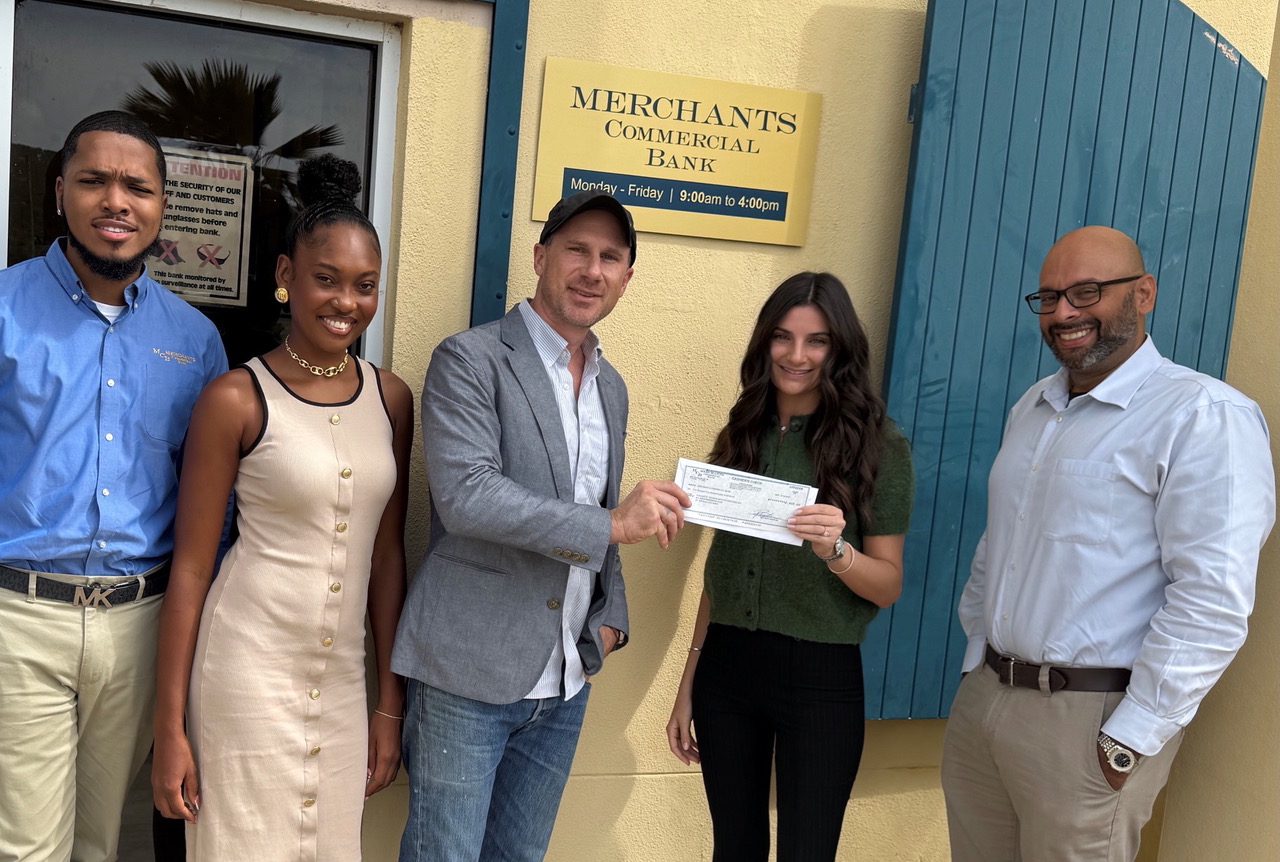
Merchants Commercial Bank presents a donation to support 81C Arts’ new Portfolio Project VI, advancing arts education and mentorship for young Virgin Islands artists. (Photo courtesy 81C)
The Dec. 19 opening of The Farmhouse Gallery marks both a celebration of 81C’s first five years and a bold step toward shaping the Virgin Islands as a premier Caribbean arts destination, the release stated.
For more information, visit 81CVI.com or follow @81CVI and @prosperity_farm_distillery on social media.
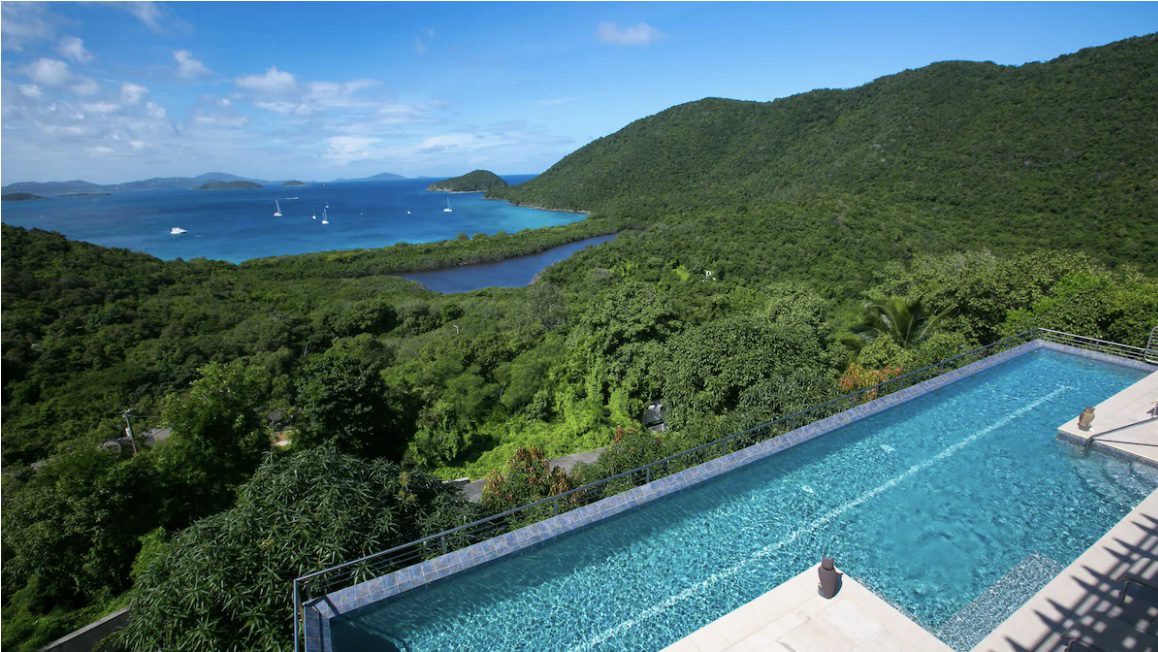
The villa “On A Clear Day” offers sweeping views of St. John and the surrounding cays and is among the featured stays in the Friends of Virgin Islands National Park’s Villas for the Park auction. (Photo courtesy Friends of Virgin Islands National Park)
Friends of Virgin Islands National Park will open bidding this Friday for its annual “Villas for the Park” auction and fundraiser, an initiative supporting the protection and preservation of the territory’s natural and cultural resources, a press release announced.
Running from Nov. 14 to Nov. 28, the online auction features 30 stays across St. John, St. Thomas, and St. Croix, giving residents and visitors a chance to enjoy local getaways while contributing to vital environmental programs, according to the press release.
“This auction is a wonderful opportunity for people to enjoy a stay in these beautiful Virgin Islands and help protect and preserve the magic that is Virgin Islands National Park and Virgin Islands Coral Reef National Monument,” said Tonia Lovejoy, executive director of Friends of Virgin Islands National Park. “We are continually in awe of the generosity of our community members who have donated stays to make this event possible.”
First launched in 2017 following the hurricanes that curtailed in-person events, “Villas for the Park” has become one of the nonprofit’s cornerstone fundraisers, now in its ninth year. Proceeds support Friends’ year-round initiatives, including sea turtle protection, trail management, School Kids in the Park, and Learn to Swim programs, the press release stated.
The auction catalog includes accommodations at Bombalassy Villa, Concordia Eco Resort, The Fred Boutique Resort & Spa, The Hills St. John, Villa Circe, and other properties, ranging from eco-friendly cottages to luxury villas, the release stated.
To register or view the full list of available stays, visit www.friendsvinp.org.