A large Savannah cat — half wild animal, half house cat — may be on the loose in St. Thomas. (Public domain photo by Jason Douglas)
Authorities were looking for a wild animal-domestic cat hybrid Thursday that had escaped its owners sometime earlier in the week on the south side of St. Thomas, Department of Planning and Natural Resources officials said.
The first-generation Savannah cat — a cross between a house cat and a serval, which normally lives in African wetlands — reportedly tore through a coop of chickens recently and may pose a danger to other birds, lizards, and possibly even to other cats and small dogs.
DPNR said it had received multiple calls from alarmed residents about the cat, which can weigh up to 25 pounds and leap eight feet at a standstill. One concerned St. Thomian was Sen. Ray Fonseca, who forwarded a neighbor’s social media message urging caution around the animal. The neighbor described the cat as the height of a medium-sized dog with the strength to tear open a wooden cage. She said the animal prowled her property between midnight and 5 a.m.
Not an expert in such wildlife, Jamal Nielsen, the DPNR’s media relations coordinator, declined to characterize the cat as dangerous or not. But an Oregon veterinarian with decades of experience with wild animals in Africa said the F1 Savannah cat was a menace capable of taking down prey as large as a goat kid.
She said typical cats posed a danger to fragile ecosystems and that a larger, faster, more aggressive version had no place on islands like St. Thomas.
A California Savannah cat breeder disagreed, saying the creature was simply playful and no more dangerous than a normal cat. She suggested it would make its way home in time and should be left alone. Other breeders, who sell male F1 kittens for up to $16,000 and females for up to $20,000, declined to return messages left Thursday seeking comment.
Nielsen said the cat’s owner had previously sought to import an actual serval but was thwarted by local laws against it. The Virgin Islands — unlike Alaska, Colorado, Delaware, Georgia, Hawaii, Iowa, Massachusetts, Nebraska, New Hampshire, New York, Rhode Island, parts of Texas, Vermont, and parts of Washington state — does not have a provision banning first-generation, or F1, Savannah cats.
Nielsen said the cat’s owners had been warned to recapture the animal before Tuesday or it may be trapped and potentially euthanized.
The Virgin Islands Code lists a $100 fine for allowing any “ferocious, or mischievous” animal to roam freely, he said.
Some breeders and Savannah cat enthusiasts online suggested F1 Savannahs are less sociable than their F2, or second generation, offspring and don’t like interacting with strangers or other pets unless properly socialized. They’re said to be not great with children, most other pets, or noisy environments.
Nielsen said anyone who sees the cat should call DPNR or the Agriculture Department.
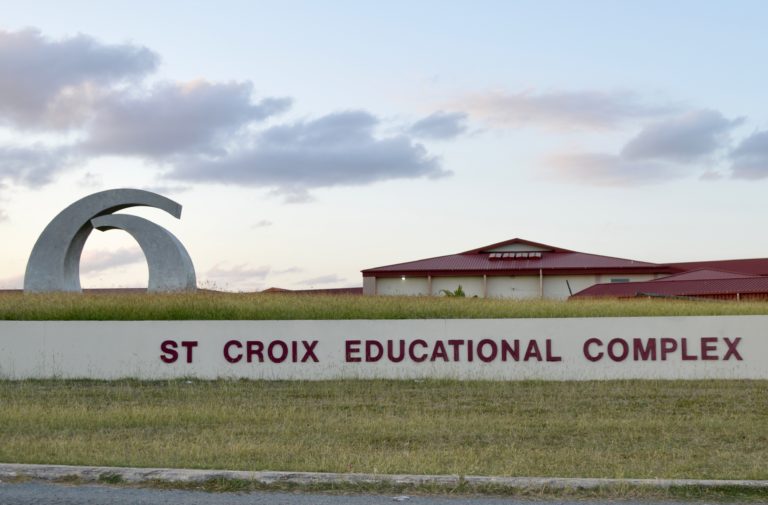
The family of a St. Croix Educational Complex student injured in 2024 has sued the V.I. Education Department and former contractor for damages after an industrial ceiling fan fell during class. (Source file photo)
The parents of a St. Croix Educational Complex student who was injured last year when an industrial ceiling fan fell during class sued the V.I. Education Department, the territory’s government and the contractor who installed the fan.
According to a lawsuit filed in V.I. Superior Court this week, the student and his family suffered a personal injury, disfigurement, emotional distress, loss of enjoyment of life and medical expenses, and they are seeking compensation “for his serious, severe, disabling and permanent injuries.”
Images of the student’s injury circulated widely on social media at the time and sparked widespread outrage and even protests over the condition of the territory’s public schools. The following week, the Education Department said it had suspended K&J Services, the contractor who had installed the fans, from future work with VIDE. In their complaint, the student’s family claimed that K&J “installed the industrial ceiling fan contrary to the industry standards” and that they “were not licensed and authorized to perform the work that they were contracted to perform” for the Education Department.
The family further claimed that the Education Department “negligently” failed to vet the contractor and that it “recklessly compounded its due diligence failure by failing to properly supervise and inspect the work being done to install the industrial ceiling fans.”
Though all 17 of the ceiling fans K&J installed throughout the St. Croix Educational Complex were removed, maintenance issues have persisted in many of the territory’s schools. Complex — along with St. Croix Central High School and the Career and Technical Education Center — began the 2025-2026 school year with an altered schedule due to incomplete air conditioning work. The John H. Woodson Junior High School opened weeks later while contractors completed roof repairs and mold remediation.
In 2008, the EPA identified “the problematic accumulation of oils, batteries and chemicals” at Chitolie Trucking Service. On Thursday, the EPA was back at Chitolie and ordered the company to stop polluting St. Croix’s Cane Garden Bay. (Photo courtesy Environmental Protection Agency)
A St. Croix industrial plant has been ordered to comply with the Clean Water Act after regulators found it was dumping pollution into a south-side bay, officials said Thursday.
The Environmental Protection Agency ordered Chitolie Trucking Service, which creates ready-mix concrete, to control its wastewater and stormwater pollution.
“Construction activities and facilities play a crucial role in local economies, but without proper controls, they can risk polluting nearby waterways,” said Michael Martucci, the EPA’s regional administrator. The run-off was discovered during an EPA and Department of Planning and Natural Resources inspection.
Chitolie Trucking provides multiple industrial services, including demolition, site clearance, transportation services, excavations, and more. Founder and owner Allan Chitolie did not immediately return messages seeking comment.
The Chitolie site is about 5,000 feet from the bay, with green space and wetlands between.
In the longer term, the EPA mandated Chitolie obtain the necessary permits from DPNR, including required pollution controls. EPA and DPNR will help ensure that the company understands its obligations under environmental regulations and that it operates in a manner that protects local water quality, Martucci said.
EPA officials in San Juan were not immediately able to describe the type of industrial wastewater leaked.
In 2008, the EPA identified “the problematic accumulation of oils, batteries and chemicals” at Chitolie’s Estate Pearl site.
Michelle Smith posted a time of 56.00 in the 400 m hurdles at her World Athletics Championships debut in Tokyo, Japan. (Photo courtesy World Athletics)
Michelle Smith, 19, and Omar Simpson, 24, made their World Athletics Championships debut among a sea of over 2,000 competitors at Japan National Stadium in Tokyo, Sept. 13-21.
Smith and Simpson represented the USVI in the 400-meter hurdles and 200-meter dash, respectively. Their journey to Tokyo tells a story of individual determination, personal faith, and national pride that extends far beyond their finishing times.
Smith’s road to Tokyo ran through Athens, Georgia, where she trains under coach Caryl Smith Gilbert at the University of Georgia. She followed an individualized training plan throughout the year, working alone rather than with the team to prepare for the world’s biggest stage.
“I’ve just been training by myself. I haven’t gotten much of a break, but I don’t really mind,” Smith explained, glancing up from an assignment. The sophomore biology major is currently in the throes of being both a student and world-class athlete, racing deadlines while conducting post-competition interviews.
St. Croix native Michelle Smith posed, all smiles ahead of her 400 m hurdles heat at the 2025 Tokyo Worlds. (Photo courtesy World Athletics)
Meanwhile, Simpson prepared for Tokyo with D4 Fire Training Group near Atlanta. Without the built-in structure and competition of college athletics, the postgraduate athlete had to create his own environment for elite-level preparation.
The athletes made time to explore Japan’s culture during their stay, picking up trinkets for friends while shopping in different cities. But when race day arrived, the magnitude of the moment hit home.
“Everyone decides to show up for the evening races, so the stadium was packed,” Simpson said. “I kept thinking about what I was going to do when they put the camera on me. It finally got to me, and I started raising my hands up … and the crowd really got louder!” he laughed.
Omar Simpson made his World Athletics Championships debut in Tokyo, Japan, with a 200 m time of 21.58. (Photo courtesy World Athletics)
The atmosphere proved unlike anything they had experienced in their young careers.
“At any meet, you expect the crowd to be quiet when a race is starting. But you could hear a pin drop in there, and it was always so loud that the silence was even more shocking than the noise,” Simpson added.
Competition at the World Championships proved as fierce as expected. Smith lined up in the 400-meter hurdles, where 41 competitors across eight heats battled for the top 24 qualifying times to reach the semifinals. She executed her race plan well, posting the fastest reaction time in her heat at .127 seconds, but her 56.00 time left her just seven-tenths of a second short of advancing. She faced defending champion Femke Bol of the Netherlands, who took the top spot in their heat and in the final.
Simpson found himself in the fifth heat of the 200 meters alongside Jamaica’s Bryan Levell, who would go on to finish third in the final. His 21.58 time landed him 49th overall in a stacked field that included now four-time 200-meter world champion Noah Lyles (USA), Kenneth Bednarek (USA), Levell, and Letsile Tebogo (BOT) — all of whom ran sub-20 seconds in the final. The competition was so tight that several athletes posted identical times, with the slowest qualifying mark being 20.43 seconds.
Despite not advancing to the later rounds, both athletes found deeper meaning in their World Championships experience. Their motivations reveal the personal drives that brought them to Tokyo’s biggest stage.
“I run for my coach, my family, the fans, and the territory,” Smith said. “And I draw strength from my self-belief, my faith, and words of encouragement from my coach and the people I love.”
For Simpson, who only began running during his junior year of high school, the journey carries a different weight.
“I run for myself to prove that I am the athlete said I couldn’t be,” he explained.
Faith plays a central role in Simpson’s approach to competition. “I recently got baptized, and I found strength through Jesus Christ. He wouldn’t put me in a situation I couldn’t handle, so I give it to Him and handle the rest.”
This Tokyo experience marked both a new height of competition and a foundation for future success. For Smith and Simpson, representing the U.S. Virgin Islands on the world’s biggest track and field stage was just the beginning of what they hope will be many more opportunities to carry their territory’s flag with pride. The national teammates expressed gratitude for sharing this milestone experience together and already have their sights set on the next World Athletics Championships in Beijing in 2027.
Caribbean Volunteer Services, Inc. has launched Speak Life VI — Your Lifeline of Encouragement, a text-based service delivering short messages of hope, encouragement, and resources directly to Virgin Islanders. The nonprofit introduced the service Monday and will expand next month to include multiple weekly messages in English, Spanish, and Haitian Creole, a press release announced.
“Our goal is simple: be a steady voice for a stronger us,” said Laurie Christian, founder of Caribbean Volunteer Services and former Teen Line Program Director. “Back in 2010, while directing the Teen Hotline at Lutheran Social Services, I connected with Dr. Aletha Baumann and the UVI Psychology Club to co-sponsor the very first Survivors of Suicide Loss Day in the Virgin Islands. That partnership helped root the event in our community. Speak Life VI is the next step in that same commitment — making sure every resident has access to encouragement, connection, and hope.”
The text service is also part of CVS’s preparations for the 2025 International Survivors of Suicide Loss Day, set for Saturday, Nov. 22, at Frederiksted Beach. The event will feature a sunset candlelighting ceremony to honor lives lost to suicide, followed by a community gathering with dinner and drinks available for purchase. A guest speaker will be announced in the coming weeks, according to the press release.
CVS has a long history of hosting the observance, adapting during the COVID-19 pandemic by moving the event online to ensure accessibility. Last year’s program, themed “Sunset Waves of Reflection, Resilience, and Renewal,” featured licensed psychologist Dr. Sophia Joseph Parrilla, who delivered a message of healing that resonated deeply with attendees, the press release stated.
Residents can opt in to Speak Life VI by texting LIFE to 877-717-1540. More information is available on the Caribbean Volunteer Services Facebook page.
The Family Of The Late Trevor Augustine Aldridge Is Saddened To Announce His Passing September 15, 2025. Trevor Augustine Aldridge
He Is Survived By His Wife: Kelly Goodson Aldridge; Daughter: Shanice Aldridge; Son: Alexander Aldridge; Grandchild: Lei’anni Aldridge; Brother: Martin Latouche; Sister: Teresa St. Louis; Aunt: Glenda Charles; Cousins: Monica Williams, Walter Verra, Angela Pascall; Mother-In-Law: Juanita Lipscomb; Sisters-In-Law: Athena Davis And Linda Latouche; Specials Friends: Tyronne Lake, Patterson Alleyene, Brian Saunders, Ayanna Francis, Juney White, Anaya Aldmond, Jeannetta Smith And Phaedra Lazenby. Many Other Relatives And Friends Are Too Numerous To Mention.
There Will Be A Viewing On Friday Sept. 26 at Divine Funeral Services Chapel From 5 p.m. To 6 p.m.
Funeral Service Will Be Held On Monday Sept. 29 at Altona Baptist Church, Viewing 9:30 a.m. And Funeral Service 10 a.m.
No Interment Service Will Be Held.
In response to the increasing challenges faced by caregivers in the Virgin Islands, AARP VI will collaborate with Dr. Migdalia Brathwaite and present a virtual four-part workshop series, Caring for the Caregiver, from September 29th through October 2nd from 5:30 p.m. to 7:30 p.m.“Caregiving is a natural part of the cycle of life. We begin our life journeys requiring caregiving, then broaden into self-care, transition into self-care while caring for others and ultimately require individually focused caregiving as we expand into our senior years. At the core of the caregiving journey is an ever-evolving cycle of balancing self-care and caring for others,” stated Dr. Migdalia Brathwaite, host of AARP VI’s four-part workshop series Caring for the Caregiver.
Caring for the Caregiver will walk you through the journey of the caregiving cycle. Day One will focus on the transition into becoming a caregiver, the internal narratives that support the transition, managing multiple caregiver networks and the importance of self-awareness in the caregiving journey. Day Two uses simple symbols to explore the complexity of finding the right balance in managing quality care for loved ones. Day Three explores recognizing the need for self-care as a caregiver, the misconception of the need to be an extraordinary caregiver and identifying other stressors such as compassion fatigue, loneliness and recognizing forgiveness as a self-care resource. Day Four explores what’s next in life after the caregiving journey has culminated and looks at the work of transitioning into new roles and creating brave new stories. For more information and registration:
https://states.aarp.org/virgin-islands/caring-for-the-caregiver-workshops-aarp-vi-trainingseries
AARP VI understands that some caregivers need more than a virtual experience; they need an in-person human connection. On September 29th, from 10 a.m. to 3 p.m., AARP VI and the VI Department of Human Services will collaborate to host the third component of their Elder Justice Summit: Safeguarding Older Virgin Islanders, Supporting Caregivers. This event will be held at My Brother’s Workshop Campus, St. Thomas, VI (behind Home Depot).
This powerful session is designed for caregivers and the older adults they care for, focusing on the impact of elder abuse and exploitation on both sides of the caregiving relationship—and, most importantly, how to stop and prevent it.
Featured Presentations:
• Shelby King Gaddy, Esq., Executive Director, Legal Services of the Virgin Islands – Safeguarding Legal Documents
• Risk Manager, First Bank Virgin Islands – Bank Safe: Protecting Your Finances
• Jessica Whyte, MA, LPC, NCC, Licensed Professional Counselor – The Emotional Side of Caregiving and Being Cared For
The summit will explore the emotional and psychological dimensions of caregiving, acknowledge the challenges and vulnerabilities caregivers and care recipients face, and share practical strategies to build resilience, protection, and compassion in elder care.
Breakfast and lunch will be provided. For more information and registration:
https://states.aarp.org/virgin-islands/aarp-vi-and-the-vi-department-of-human-servicescollaborate-to-host-the-third-component-of-their-elder-justice-summit-safeguardingolder-virgin-islanders-supporting-caregivers
Over 100 million Americans are 50 and older, including over 22,000 in the Virgin Islands. As the community ages, more adult children step into the role of caregiver. Learning and growing as a caregiver is an ongoing responsibility, and the caregiver’s self-care can be overlooked or buried beneath an avalanche of scheduled responsibilities. The question, “What about me?” can often be viewed as a luxury item when continued support is necessary. Discovering when to take time for self-care is a skill that requires development and must resonate at the heart of all caregivers. Taking time for self-care may be challenged by several barriers, including limiting beliefs, adjusting to role reversals and implementing new structures for caring. Caregiving can also contribute to behavioral health concerns such as burnout, negative self-talk, depression, compassion fatigue and loneliness. In short, the journey of caregiving is a uniquely personal experience. AARP VI understands the necessity of supporting caregivers across the territory and invites caregivers and those facing transition into the caregiving role to participate in these free educational and interactive events.
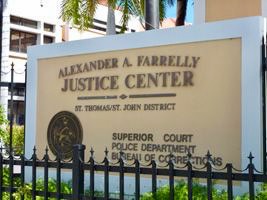
V.I. Superior Court Magistrate Judge denied The New York Times’s request to unseal reports compiled by the special master in the probate of Jeffrey Epstein’s estate. (Source file photo)
A V.I. Superior Court judge this week denied a request from The New York Times to unseal reports related to the estate of Jeffrey Epstein, noting that the court already deemed the records confidential in 2020 and that unsealing them now “would jeopardize innocent third parties.”
“The facts have not changed over the last five years,” V.I. Magistrate Judge Simone Van Holton-Turnbull wrote in an order signed Tuesday. “This case is still of immense public interest. Considering recent news media events, the case is at the most intense public interest since Mr. Epstein’s passing. The need to protect third parties from undue harassment, in particular the need to protect victims that were minors at the time, is thereby even greater than when the Estate’s motion was originally granted.”
Epstein pleaded guilty in 2008 to charges of procuring a child for prostitution and soliciting a prostitute as part of a sweetheart deal with federal prosecutors for which he only served 13 months in prison with work release. He was arrested again in 2019 and charged with sex trafficking minors. He died in a New York City jail cell that year in what the city’s medical examiner called a suicide by hanging.
The case attracted immediate and sustained international interest because of Epstein’s prior conviction, the scope of his alleged abuses and his associations with high-profile and wealthy people. The case also drew attention to the U.S. Virgin Islands, where Epstein received some $300 million in tax breaks from the territory’s Economic Development Commission while operating a web of shell companies from his primary residence on Little St. James.
New York Times reporter Matthew Goldstein first appealed to the court in June to unseal all seven reports compiled by the court-appointed special master reviewing Epstein’s estate.
“I believe these reports should be public because they contain critical information about the finances of the Epstein estate and are one way for the media, the public and Epstein’s nearly 200 victims to make sure that the estate is being properly liquidated and money is going to the appropriate places,” he wrote. “It is also another way for the public to best learn where Epstein had invested his money.”
Goldstein and The New York Times followed up their request on July 31 through local attorney Kevin Rames, who argued that the reports had been sealed “without any justification.”
The coexecutors of Epstein’s estate responded in August and argued that unsealing the reports would “subject those who have already transacted business with the Estate to harassment and threats” and would “deter others from transacting with the Estate as its assets continue to be administered.”
“Professional reporters and self-styled ‘internet sleuths’ alike scrutinize even routine administrative actions by the Estate,” they wrote. “As a result individuals and third-party vendors who may have never met Mr. Epstein but who have been identified as transacting with the Estate are subject to harassment and threats.”
Van Holton-Turnbull acknowledged the immense public interest in the case but wrote that the danger to third parties — and Epstein’s victims in particular — “is too great.”
“In an age where one’s personal information can become forever present and findable, whether by accidental posting or malicious and perverse intent, it is evermore imperative for Courts to protect sensitive details from prying eyes — especially when said details involves the sexual exploitation [sic],” she wrote. “By unsealing the requested documents, this Court finds that nothing but unnecessary pain awaits those within.”
The New York Times has asked the court to weigh in on Epstein-related documents before. In 2021, the newspaper sued the V.I. Economic Development Authority and its chief executive, Wayne Biggs Jr., for information related to Epstein’s Southern Trust Company. In that case, The New York Times said it failed to respond to an Open Records Act request for the company’s: income tax returns; audited financial statements; applications for tax incentives; company records supplied to the V.I. attorney general; related correspondence; and compliance reports prepared by Economic Development Commission staff.
Local attorney Kevin D’Amour wrote at the time that Biggs’s failure to comply with the local public records law is “unsound” and “not properly grounded in applicable law.” The New York Times later moved to dismiss its claims against the Virgin Islands Government in 2021 and against Biggs in 2022.
Separately, the newspaper is continuing to seek Epstein’s financial records sealed by the U.S. District Court of Southern New York as part of the Virgin Islands Government’s lawsuit against JPMorgan Chase, which was settled in 2023 for $75 million.
Goldstein wrote to Senior U.S. District Judge Jed Rakoff last month that some of the 300 exhibits the territory filed in 2023 contained financial statements related to accounts either controlled by Epstein or by his victims. Attorneys for JPMorgan and the territory responded three weeks ago, noting which of the exhibits they believe should remain sealed or redacted to protect the victims’ identities or “confidential supervisory information.” Rakoff has yet to rule on the matter.
The U.S. Justice Department said in a filing Wednesday that it does have the right to pursue an interlocutory appeal of a V.I. District Court order striking the death penalty in the murder case of Richardson Dangleben Jr., which the defense has argued the Third Circuit Court of Appeals should dismiss on jurisdictional and other grounds.
Barring dismissal, V.I. Public Defender Matthew Campbell asked in an emergency motion filed Friday that the appeal be expedited, given that Dangleben is set to stand trial starting Oct. 6 for the murder of V.I. Police Detective Delberth Phipps Jr. in July 2023 on St. Thomas.
The V.I. Justice Department initially filed a “no-seek” notice in February 2024, but reversed course in May after the Trump administration issued an executive order saying it would review all decisions not to seek the death penalty in eligible cases charged during the Biden administration, including Dangleben’s.
Campbell opposed the sudden about-face and, after briefing by both sides, V.I. District Court Chief Judge Robert Molloy struck the government’s notice of intent to seek the death penalty from the record in August, ordering that the case proceed as a non-capital case. In a Sept. 15 memorandum opinion explaining his decision, he cited a number of concerns, including the fact that the DOJ’s notice came more than a year after it said it would not seek capital punishment, was not based on new information not previously available to the government, was filed 22 months after Dangleben’s initial arrest, 19 months after his first indictment, and less than five months before trial.
Adam Sleeper, acting U.S. Attorney for the District of the Virgin Islands, filed a notice of appeal the same day and on Sept. 18, Third Circuit Clerk Patricia S. Dodszuweit advised that the case was listed for possible dismissal “due to jurisdictional defect” and gave the government until noon Wednesday to respond to Campbell’s emergency motion.
William A. Glaser of the DOJ’s Criminal Division in Washington, D.C., complied with that order, arguing in a response filed at 8:42 a.m. that the Third Circuit does have jurisdiction and that the appeal needn’t be expedited because it is unlikely Dangleben’s trial is going to start Oct. 6 anyway as the government’s notice of appeal from a Sept. 9 oral order dismissing two non-capital counts of the indictment is not due until Oct. 9, or three days after the trial is set to start.
“Dangleben argues that this Court lacks jurisdiction over the government’s noticed appeal. He is incorrect. Should the Solicitor General choose to pursue an appeal in this case, this Court has jurisdiction over this appeal under 18 U.S.C. § 3731 or, in the alternative, 28 U.S.C. § 1291 and the collateral order doctrine,” Glaser wrote in his 15-page response to Campbell’s emergency motion.
Five courts of appeal to consider the question have held that § 3731 — which governs appellate reviews of decisions in federal criminal cases — authorizes a government appeal from an order striking a notice of intent to seek the death penalty, said Glaser. “Contrary to Dangleben’s contention, it does not matter that § 3731 does not specifically mention ‘a Government appeal from a pre-trial order striking a notice of intent to seek death.’ … Striking a death notice is indistinguishable from ‘dismissing an indictment’ as to ‘one or more counts, or any part thereof.’”
By striking the government’s notice of intent to seek the death penalty on Count One, “the district court dismissed from the indictment the offense of capital using and carrying a firearm during a crime of violence resulting in death … while leaving the non-capital version of that offense in place,” he said.
Moreover, an appeal while the case has not concluded, which Campbell framed as highly unusual, is the government’s only remedy, said Glaser.
“The government likely could not challenge the order striking the death-penalty notice in an appeal from a final judgment. If the case proceeded to a non-capital trial and Dangleben is convicted, the Double Jeopardy Clause ordinarily would bar the government from retrying Dangleben for the capital version of the same crimes in a second trial,” he said.
Only if Dangleben himself obtained reversal of his (non-capital) convictions on grounds other than sufficiency of the evidence could the government seek to retry him for a capital offense, said Glaser, citing Burks v. United States. “Thus, absent a successful appeal by Dangleben himself, the government could not obtain any relief on appeal from a final judgment. This Court should follow the lead of five other circuits in determining that an order striking a death-penalty notice is appealable under § 3731.”
However, even if the court lacked jurisdiction under § 3731, the order would still be appealable under § 1291 and the collateral order doctrine, he said. The Supreme Court has recognized “a ‘small class’ of collateral rulings that, although they do not end the litigation, are appropriately deemed ‘final,’” which is the case here, he said.
As for expediting the appeal, the case is complex and would “ordinarily prompt extension requests from both sides,” he said, but the defense has indicated that it stands by the proposed schedule set forth in its emergency motion and will be ready for trial Oct. 6.
“Because the parties are unable to reach agreement, the United States proposes that briefing proceed with the ordinary deadlines applicable to criminal cases, with the opening brief due 30 days after the record is complete, the response brief due 21 days after service of the opening brief, and any reply brief due 21 days after service of the response brief,” Glaser wrote.
As for Dangleben’s contention that expedited review is necessary based on his speedy-trial rights and the psychological anguish of the uncertainty surrounding his punishment if he is convicted, this “is a serious criminal case involving the discharge of a firearm during a crime of violence resulting in death that, until the district court’s order, was noticed as a death-penalty case. Cases of this type ordinarily take time and are not well-served by hasty deadlines, especially the days-long deadlines that Dangleben requests,” said Glaser.
Federal officials have asked people sending packages to the mainland or Puerto Rico to assess the cost of their shipped items with the Zonos Prepay app and pay the required duty. (Screenshot of Zonos Prepay application)
Mailing something to the mainland used to be fairly easy. Virgin Islanders bought the postage and handed their parcel over to a postal worker. Not so in 2025. New federal rules require — in most cases — the use of a cumbersome mobile phone app to estimate the newly enforced tax burden of items transiting the U.S. Customs Zone. Congressional Delegate Stacey Plaskett asked Wednesday if the Virgin Islands should reconsider its outside-the-Customs-Zone status.
After the White House ended a tax exemption for overseas packages valued at less than $800, and the U.S. Postal Service partnered with U.S. Customs and Border Protection to launch the Zonos Prepay app. Plaskett said the territory should weigh the benefits and detriments of existing outside the U.S. Customs Zone.
“I have said, for more than 10 years, that the Virgin Islands should determine if being outside of the Customs Zone has the same benefit that it did over 100 years ago to our territory and residents. If not, the governor of the Virgin Islands as the individual with authority to enter into arrangements of this nature with the Federal Government should request such change which would then require the executive branch authorization,” Plaskett said in a written statement.
President Donald Trump’s Executive Order 14324 on Feb. 1 suspended duty-free “de minimis” treatment of packages under an $800 threshold. Those rules were briefly altered and withdrawn before being reinstated Aug. 29 with Executive Order 14324.
Of the U.S. territories, only Puerto Rico, which is within the Customs Zone, has been spared by the rule change that disproportionately weighs on the islands where so much is shipped in and out, Plaskett said.
“This change creates an additional unfair burden for territorial residents,” she said. “I am committed to finding solutions.
The free Zonos Prepay app allows package shippers to calculate and pay many duties before visiting the post office. And it’s mandatory for anyone shipping to the U.S. Customs Zone, Plaskett said.
Without a Declaration ID from this system, USPS cannot accept packages for delivery to the U.S. or Puerto Rico. The prepaid duty requirement does not apply in certain cases, including documents, goods without monetary value, gifts valued at $100 or less, items valued over $800, or returns, she said.
Government House did not immediately reply to messages asking if Gov. Albert Bryan Jr. planned to seek an exemption for the Virgin Islands.
















 “Caregiving is a natural part of the cycle of life. We begin our life journeys requiring caregiving, then broaden into self-care, transition into self-care while caring for others and ultimately require individually focused caregiving as we expand into our senior years. At the core of the caregiving journey is an ever-evolving cycle of balancing self-care and caring for others,” stated Dr. Migdalia Brathwaite, host of AARP VI’s four-part workshop series Caring for the Caregiver.
Caring for the Caregiver will walk you through the journey of the caregiving cycle. Day One will focus on the transition into becoming a caregiver, the internal narratives that support the transition, managing multiple caregiver networks and the importance of self-awareness in the caregiving journey. Day Two uses simple symbols to explore the complexity of finding the right balance in managing quality care for loved ones. Day Three explores recognizing the need for self-care as a caregiver, the misconception of the need to be an extraordinary caregiver and identifying other stressors such as compassion fatigue, loneliness and recognizing forgiveness as a self-care resource. Day Four explores what’s next in life after the caregiving journey has culminated and looks at the work of transitioning into new roles and creating brave new stories. For more information and registration:
https://states.aarp.org/virgin-islands/caring-for-the-caregiver-workshops-aarp-vi-trainingseries
AARP VI understands that some caregivers need more than a virtual experience; they need an in-person human connection. On September 29th, from 10 a.m. to 3 p.m., AARP VI and the VI Department of Human Services will collaborate to host the third component of their Elder Justice Summit: Safeguarding Older Virgin Islanders, Supporting Caregivers. This event will be held at My Brother’s Workshop Campus, St. Thomas, VI (behind Home Depot).
This powerful session is designed for caregivers and the older adults they care for, focusing on the impact of elder abuse and exploitation on both sides of the caregiving relationship—and, most importantly, how to stop and prevent it.
Featured Presentations:
• Shelby King Gaddy, Esq., Executive Director, Legal Services of the Virgin Islands – Safeguarding Legal Documents
• Risk Manager, First Bank Virgin Islands – Bank Safe: Protecting Your Finances
• Jessica Whyte, MA, LPC, NCC, Licensed Professional Counselor – The Emotional Side of Caregiving and Being Cared For
The summit will explore the emotional and psychological dimensions of caregiving, acknowledge the challenges and vulnerabilities caregivers and care recipients face, and share practical strategies to build resilience, protection, and compassion in elder care.
Breakfast and lunch will be provided. For more information and registration:
https://states.aarp.org/virgin-islands/aarp-vi-and-the-vi-department-of-human-servicescollaborate-to-host-the-third-component-of-their-elder-justice-summit-safeguardingolder-virgin-islanders-supporting-caregivers
Over 100 million Americans are 50 and older, including over 22,000 in the Virgin Islands. As the community ages, more adult children step into the role of caregiver. Learning and growing as a caregiver is an ongoing responsibility, and the caregiver’s self-care can be overlooked or buried beneath an avalanche of scheduled responsibilities. The question, “What about me?” can often be viewed as a luxury item when continued support is necessary. Discovering when to take time for self-care is a skill that requires development and must resonate at the heart of all caregivers. Taking time for self-care may be challenged by several barriers, including limiting beliefs, adjusting to role reversals and implementing new structures for caring. Caregiving can also contribute to behavioral health concerns such as burnout, negative self-talk, depression, compassion fatigue and loneliness. In short, the journey of caregiving is a uniquely personal experience. AARP VI understands the necessity of supporting caregivers across the territory and invites caregivers and those facing transition into the caregiving role to participate in these free educational and interactive events.
“Caregiving is a natural part of the cycle of life. We begin our life journeys requiring caregiving, then broaden into self-care, transition into self-care while caring for others and ultimately require individually focused caregiving as we expand into our senior years. At the core of the caregiving journey is an ever-evolving cycle of balancing self-care and caring for others,” stated Dr. Migdalia Brathwaite, host of AARP VI’s four-part workshop series Caring for the Caregiver.
Caring for the Caregiver will walk you through the journey of the caregiving cycle. Day One will focus on the transition into becoming a caregiver, the internal narratives that support the transition, managing multiple caregiver networks and the importance of self-awareness in the caregiving journey. Day Two uses simple symbols to explore the complexity of finding the right balance in managing quality care for loved ones. Day Three explores recognizing the need for self-care as a caregiver, the misconception of the need to be an extraordinary caregiver and identifying other stressors such as compassion fatigue, loneliness and recognizing forgiveness as a self-care resource. Day Four explores what’s next in life after the caregiving journey has culminated and looks at the work of transitioning into new roles and creating brave new stories. For more information and registration:
https://states.aarp.org/virgin-islands/caring-for-the-caregiver-workshops-aarp-vi-trainingseries
AARP VI understands that some caregivers need more than a virtual experience; they need an in-person human connection. On September 29th, from 10 a.m. to 3 p.m., AARP VI and the VI Department of Human Services will collaborate to host the third component of their Elder Justice Summit: Safeguarding Older Virgin Islanders, Supporting Caregivers. This event will be held at My Brother’s Workshop Campus, St. Thomas, VI (behind Home Depot).
This powerful session is designed for caregivers and the older adults they care for, focusing on the impact of elder abuse and exploitation on both sides of the caregiving relationship—and, most importantly, how to stop and prevent it.
Featured Presentations:
• Shelby King Gaddy, Esq., Executive Director, Legal Services of the Virgin Islands – Safeguarding Legal Documents
• Risk Manager, First Bank Virgin Islands – Bank Safe: Protecting Your Finances
• Jessica Whyte, MA, LPC, NCC, Licensed Professional Counselor – The Emotional Side of Caregiving and Being Cared For
The summit will explore the emotional and psychological dimensions of caregiving, acknowledge the challenges and vulnerabilities caregivers and care recipients face, and share practical strategies to build resilience, protection, and compassion in elder care.
Breakfast and lunch will be provided. For more information and registration:
https://states.aarp.org/virgin-islands/aarp-vi-and-the-vi-department-of-human-servicescollaborate-to-host-the-third-component-of-their-elder-justice-summit-safeguardingolder-virgin-islanders-supporting-caregivers
Over 100 million Americans are 50 and older, including over 22,000 in the Virgin Islands. As the community ages, more adult children step into the role of caregiver. Learning and growing as a caregiver is an ongoing responsibility, and the caregiver’s self-care can be overlooked or buried beneath an avalanche of scheduled responsibilities. The question, “What about me?” can often be viewed as a luxury item when continued support is necessary. Discovering when to take time for self-care is a skill that requires development and must resonate at the heart of all caregivers. Taking time for self-care may be challenged by several barriers, including limiting beliefs, adjusting to role reversals and implementing new structures for caring. Caregiving can also contribute to behavioral health concerns such as burnout, negative self-talk, depression, compassion fatigue and loneliness. In short, the journey of caregiving is a uniquely personal experience. AARP VI understands the necessity of supporting caregivers across the territory and invites caregivers and those facing transition into the caregiving role to participate in these free educational and interactive events.