




Need a Good Book? Go to Your Nearest Little Free Library

0
As St. John residents wait for repairs to be completed on the Elaine I. Sprauve Library, volunteers are doing what they can to get books in the hands of readers — especially young ones — through Little Free Library. Little Free Library is a nonprofit organization with more than 20,000 sites in 122 countries. The idea is simple: Build or buy a small enclosed box with shelves and put it in an accessible location, stock it with books, and invite people to take a book or share one.
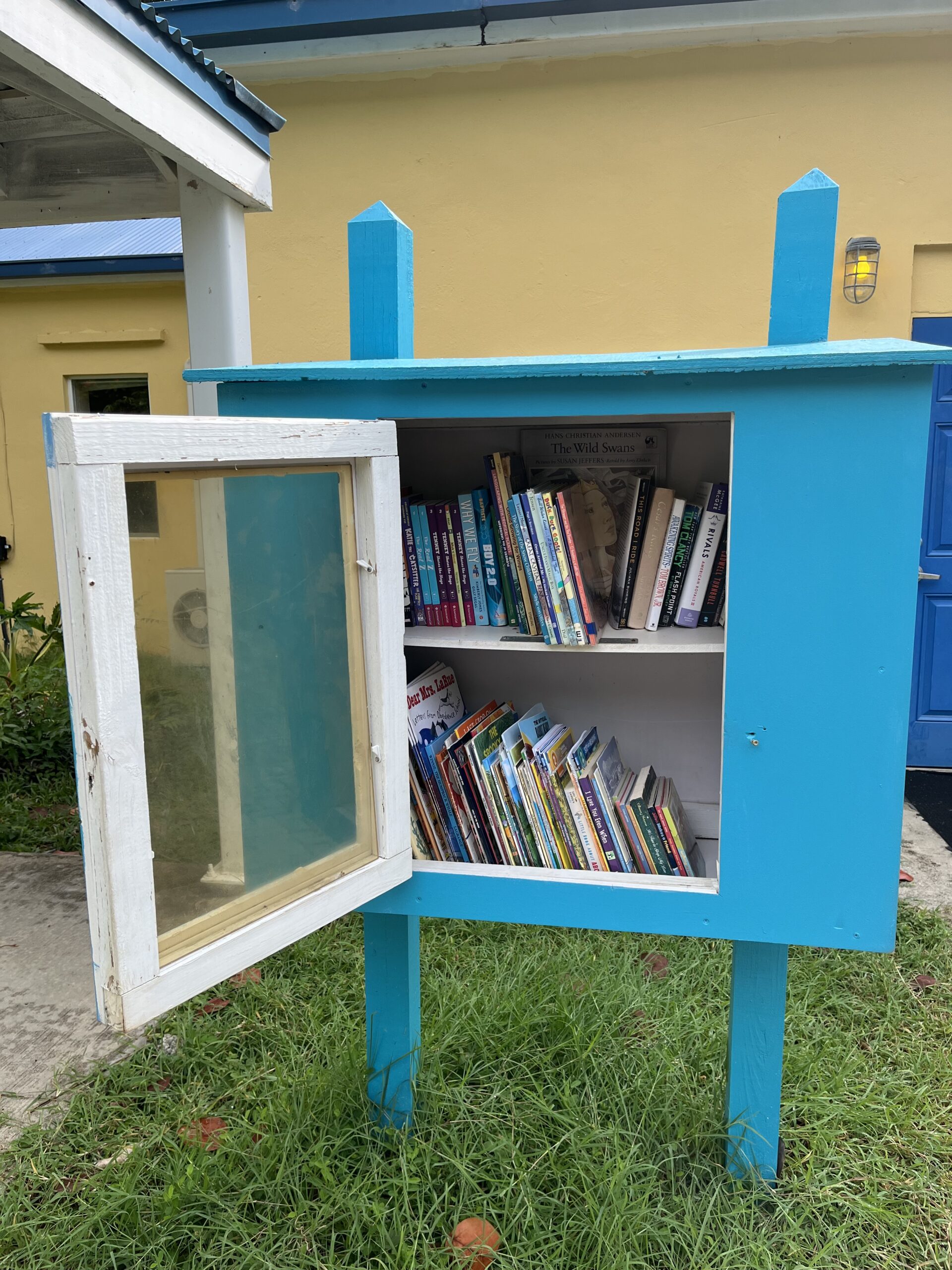
The Cruz Bay site contains books to appeal to a wide range of readers. (Photo by Janet Cook-Rutnik)
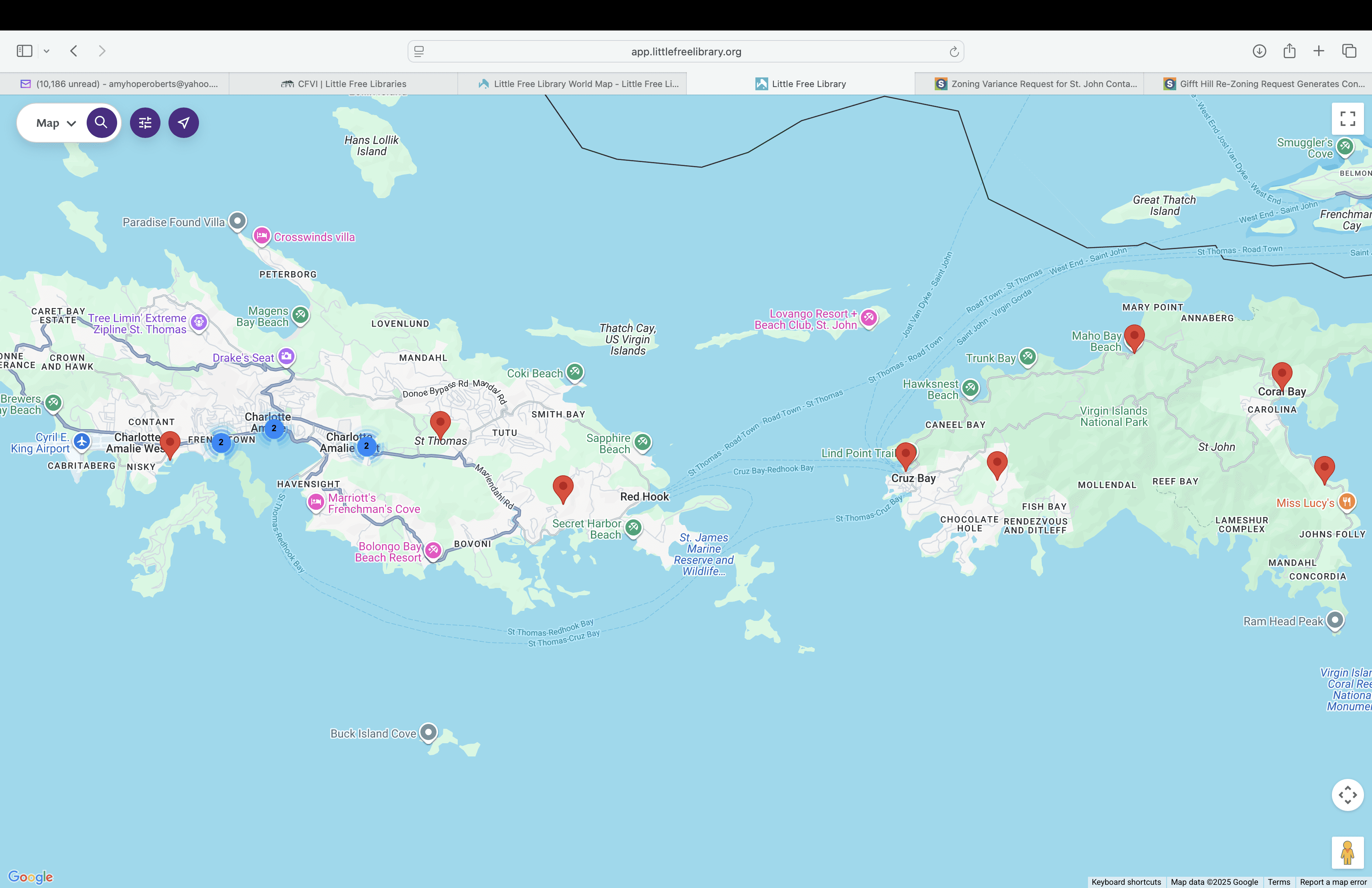
On St. John, the “official” sites are located in Frank Powell Park in Cruz Bay, Maho Bay (near the bar at Maho Crossroads,) Coral Bay (next to the fire station,) and at the offices of the Calabash Boom and Bellevue Village housing communities.   On St. Thomas, there are nine sites ranging from Crown Bay Marina to Ezra Fredericks Ballpark; William “Danny” Daniel serves as the St. Thomas coordinator.
A map on the website for Little Free Library shows sites on St. Thomas and St. John. (Screenshot from https://littlefreelibrary.org/map/)
On St. Croix, there are three sites in Frederiksted and Christiansted coordinated by Karen McIntosh-Bruce. Readers can view all the sites around the world on this map https://littlefreelibrary.org/map/.
A map on the website for Little Free Library shows sites on St. Croix.(Screenshot from https://littlefreelibrary.org/map/)
Little Free Library got its start in the Virgin Islands in 2019 when Princess Cruises introduced the idea, according to Beth Nuttall, director of grants and programs at the Community Foundation of the Virgin Islands. With the support of Yolanda Bryan and funding through the Tourism Department, trainees at My Brothers Workshop and others built the first set of little libraries and worked with the Sports, Parks and Recreation Department to place them at sites where youngsters gather.
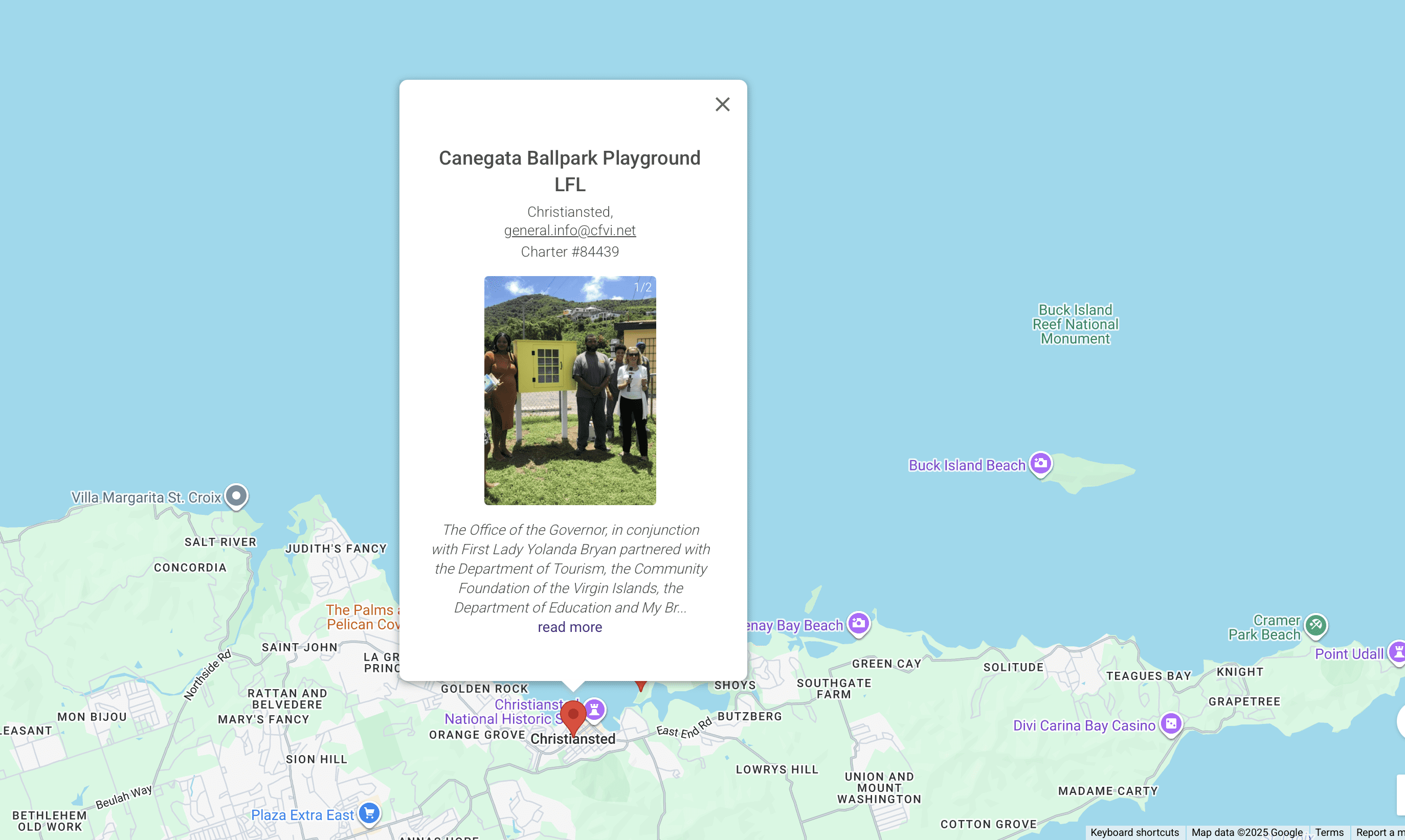
Readers can click on a site on the Little Free Library world map to get details on the location of a particular site. This is a close-up of the site at Canegata Ball Park on St. Croix. (Screenshot from https://littlefreelibrary.org/map/)
Now on St. John, volunteers (who all happen to be book lovers) often travel with a box of books in their cars to keep each Little Free Library well stocked. “I’m doing this for the kids who live here who don’t have continuous access to a library,” said volunteer Carol Beckowitz. (The Elaine I Sprauve Library on St. John has been open only intermittently since 2016.)
Little Free Library sites include books for young children. (Photo by Janet Cook-Rutnik)
“I want to participate in getting books into public spaces where people could freely pick and choose, at any time of the day, any day of the week, what they want to read – particularly kids,” Beckowitz continued. “The libraries are cute, colorful, inviting, highly democratic, and are built in a low-profile way that allows kids to browse the shelves as easily as adults.” In keeping with the mission to give children access to books, three Little Free Library sites on St. John — Bellevue, Calabash and Coral Bay — are devoted to books for youngsters. “We have so many wonderful children’s books,” said Janet Cook-Rutnik, who helps stock the site in Cruz Bay. “Some of them are bilingual. Some are for really young children and others are Young Adult Literature titles.”
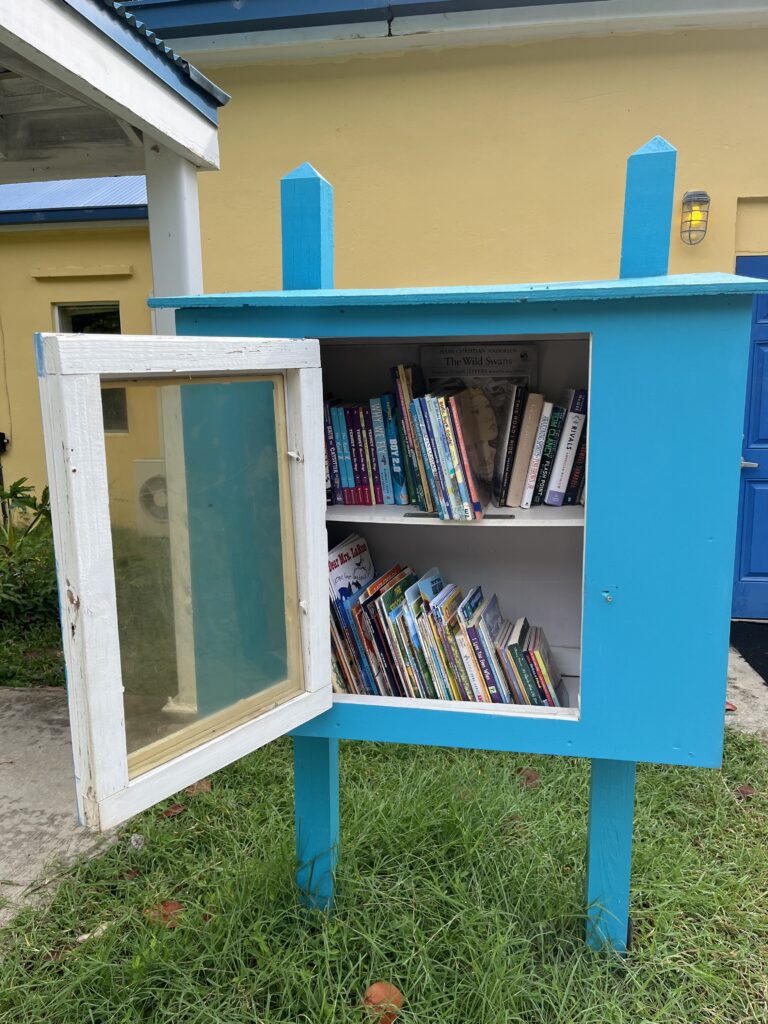
The Little Free Library site in Calabash Boom, like all sites, is designed to be accessible to children. (Photo by Trish Capuano, who serves as one of the coordinators for St. John)
The Community Foundation of the Virgin Islands acquires high-quality books for the Little Free Library sites through a number of ways. Some are donated by local authors, while others are distributed by publishers and educational nonprofit organizations.
Little Free Library sites include books for bilingual Spanish readers. (Photo by Janet Cook-Rutnik)
When Jeannie Bishop moved to St. John in 2024, she looked around for things to do while she waited for her nurse’s license to be approved. Jeannie’s husband, Paul, is the general manager of the Westin St. John Resort Villas, and after noticing that guests often searched for a good “beach read,” she volunteered to set up a free library in the lobby.
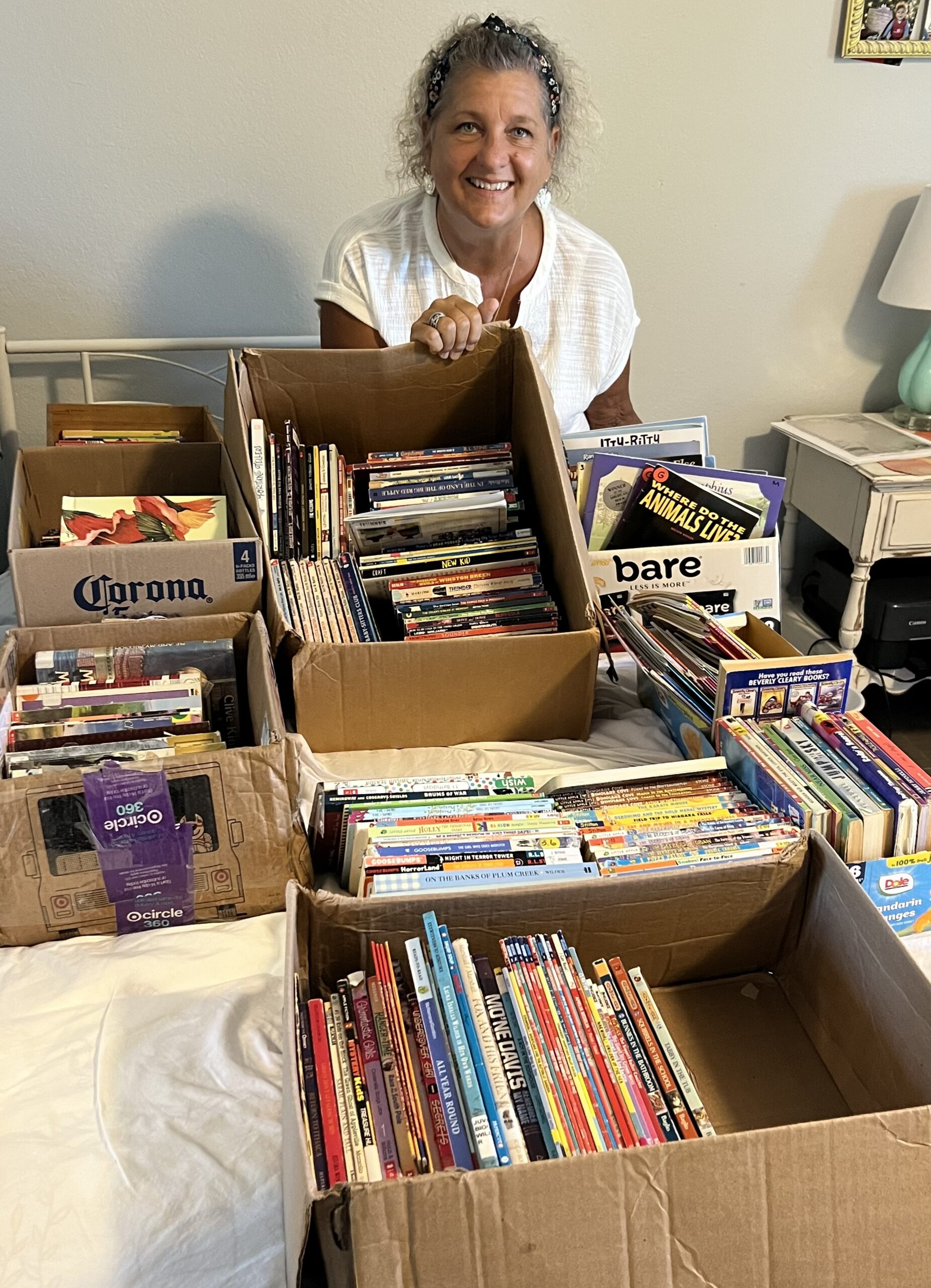
Jeannie Bishop looks over boxes of children’s books that she hopes to give away. (Submitted photo)
Bishop began collecting “gently used” books from local sources, which turned out to be fairly easy. The Pink Papaya Café and Bookstore had recently closed down, and the Resource Depot, where used goods are recycled, stopped accepting books for resale. Some of the books she collected were “not in the best condition,” she said, so she taught herself how to repair bindings and produce new covers. The Bishops have lived in a number of locations because of their careers, so she sent out a request for donations to her contacts in the States; soon, boxes of books started arriving. Now she has a surplus. “I have 15 boxes of children’s books in my house, and many more boxes stored at the Westin. I want to give them away to schools, day care centers, after-school programs,” said Bishop. She asked the Source to share her phone number, 321-438-2232, for anyone who wants to collect books to distribute.
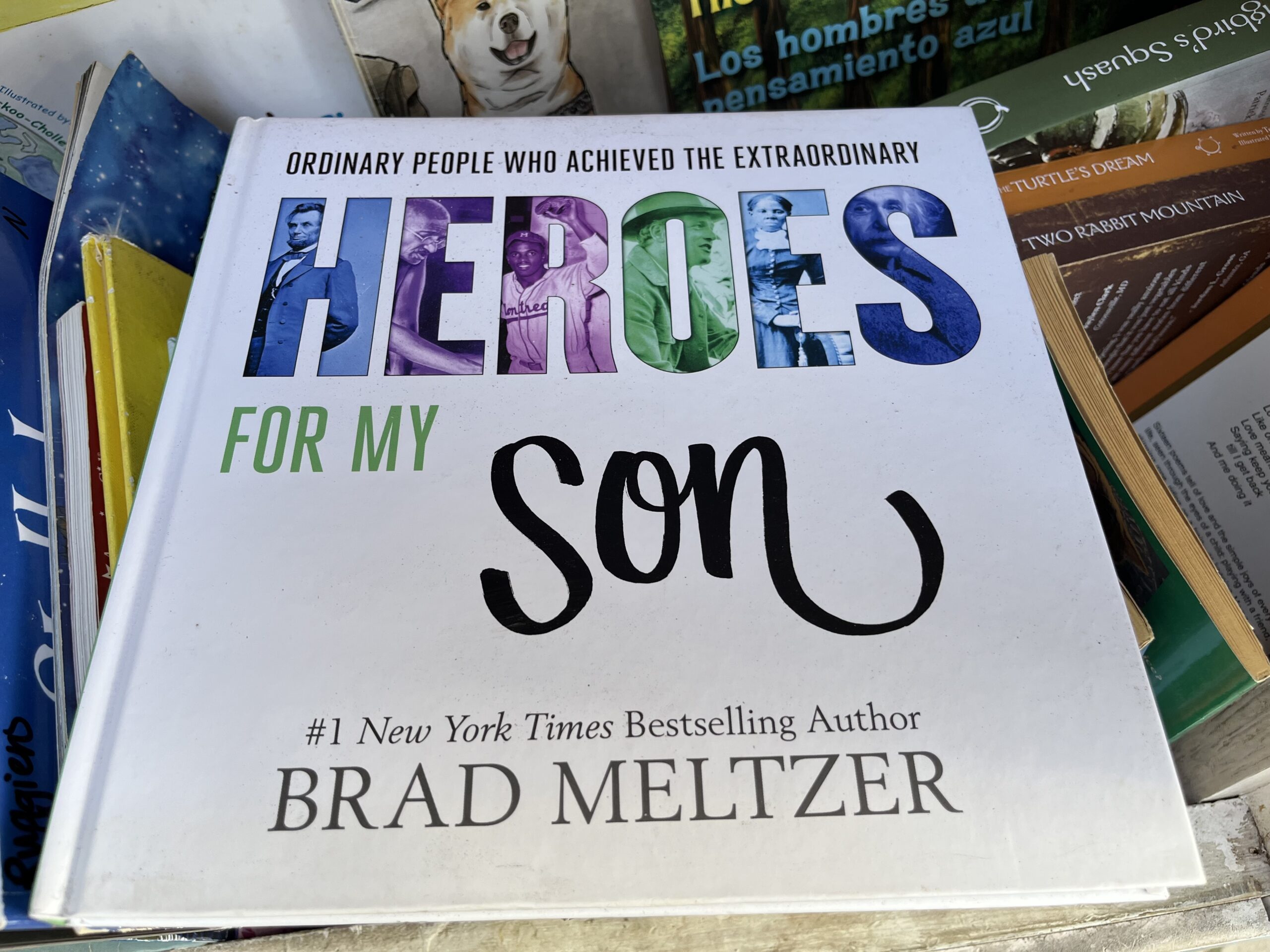
Little Free Library sites include books for boys. (Photo by Janet Cook-Rutnik)
On St. John, Little Free Libraries are not the only source for free books. Skinny Legs in Coral Bay sponsors a free lending library featuring a wide range of books for adults, and Cinnamon Bay campground now has a dedicated shelf for recycling books. At official Little Free Library sites, there is a plaque that states, “Take a book. Share a book,” but in fact, there is no requirement to replace a borrowed book. Most of the volunteers are happy just to see people find a book they like. “What goes around, comes around,” they say.

DOJ Has Until Noon Wednesday to Defend its Appeal of Death Penalty Order in Dangleben Case

0

The V.I. Justice Department has until noon Wednesday to respond to an emergency motion to dismiss, or at least expedite, its appeal of a V.I. District Court order striking the government’s bid to seek the death penalty in the murder case of Richardson Dangleben Jr., the clerk of the Third Circuit Court of Appeals has ruled.

Clerk Patricia S. Dodszuweit has also advised that the case has been listed for possible dismissal “due to jurisdictional defect.”

Jury selection for Dangleben, charged with murder and other crimes in the July 2023 shooting death of V.I. Police Detective Delberth Phipps Jr. on St. Thomas, is set to begin in less than three weeks, on Oct. 6.

The government stated in February 2024 that it would not seek the death penalty but abruptly changed course in May after the Trump administration issued an executive order saying it would review all decisions not to seek capital punishment in eligible cases charged during the Biden administration, which did not support the death penalty.

After briefing on the issue by both sides, District Court Chief Judge Robert Molloy in August struck the government’s notice of intent to seek the death penalty, citing a number of concerns, including the fact that the DOJ’s request was not based on new information not previously available to the government, it came more than a year after the initial “no-seek” decision, was filed 22 months after Dangleben’s initial arrest, 19 months after his first indictment, and less than five months before trial.

With the trial now less than three weeks away, the DOJ filed notice Sept. 15 that it intends to appeal Molloy’s order to the Third Circuit. Public Defender Matthew Campbell, who is representing Dangleben, filed an emergency motion Friday asking that the appeal be dismissed or at least expedited.

“This Court should dismiss the appeal for lack of jurisdiction. The Court immediately recognized, sua sponte, that jurisdiction may not lie for this appeal. It does not. It is a bedrock rule of federal law that the courts of appeals lack jurisdiction over a governmental appeal in a criminal case except in circumstances explicitly authorized by Congress. None of those circumstances applies here. The Government pretends otherwise, invoking 18 U.S.C. § 3731, which authorizes certain specified interlocutory appeals. But that statute does not authorize an appeal from an order striking a death-penalty notice,” according to Campbell’s emergency motion.

Barring that, the court “can at least mitigate the harm by providing expedited consideration of this motion to dismiss and/or expedite the appeal, and by promptly considering and disposing of the Government’s meritless appeal, so that the trial can proceed on its current schedule if Mr. Dangleben prevails on either jurisdictional or merits grounds,” Campbell wrote.

He noted that Molloy’s order is also “consistent with the decisions of every other district court to have ruled on this issue to date, nationwide,” as they too have faced 11th-hour reversals of no-seek notices by the government since President Donald Trump took office.

“Moreover, the Government has foregone an appeal in every one of those other cases, which suggests that it is aware of the weakness of its position,” said Campbell.

Additionally, the government’s “belated attempt to file a Death Notice and now to appeal its striking threatens to delay the trial that the district court had announced and both sides understood is scheduled to commence in just three weeks, on October 6. The district court has explained that it would not be inclined to ‘grant a continuance because delaying this trial solely to accommodate the government’s flip-flopping would implicate the Defendant[’s] constitutional speedy trial rights,’” the motion states.

The resulting delay of an appeal “will not only implicate Mr. Dangleben’s speedy trial rights, it will also exacerbate his psychological anguish because of the uncertainty surrounding the potential punishment” should he be convicted, Campbell wrote.


BVI Trademarks ‘Sailing Capital of the World’ Claim

0
Sailboats round Tortola’s iconic Steele Point. (Photo courtesy the British Virgin Islands Tourist Board and Film Commission)
The British Virgin Islands sailing industry is putting its mouth where its money is, trademarking several versions of “Sailing Capital of the World” after implementing dramatic rate hikes on charter boats from the U.S. Virgin Islands in June. The BVI trademarked “The British Virgin Islands – Sailing Capital of the World,” “British Virgin Islands – The Undisputed Sailing Capital of the Caribbean,” and “The British Virgin Islands – Sailing Capital of the Caribbean,” the British overseas territory’s Tourist Board and Film Commission announced Friday. The trademarks last a decade, backdated to May 7, 2024, Tourism Director Clive McCoy said in a written statement issued through the Caribbean Tourism Organization. “The British Virgin Islands has long been recognized as one of the best sailing destinations in the world thanks to our steady trade winds, navigable channels, manageable currents, multiple islands and protected bays,” McCoy said. “Securing these trademarks is a powerful step in protecting our identity, strengthening our position in the international market and ensuring that travelers, sailors and partners alike associate the BVI with sailing excellence.” The goal, he said, was to promote the BVI as “synonymous with sailing adventures.” On June 1, the BVI introduced a new fee structure for foreign-based charter vessels. Under the new regulations, term-charter operators are required to pay $7,500 annually for up to seven visits, with each additional visit priced at $2,100. An unlimited-entry license now costs $24,000 annually. Day-charter operators saw their annual fee increase from $200 to $8,500. Water taxi license fees remain unchanged at $2,500. BVI officials said the changes modernize outdated regulations and are intended to generate new revenue from the sector, which accounts for approximately 60% of the territory’s total visitor arrivals. Gov. Albert Bryan Jr. had attempted to negotiate a lower rate, sparking fears of a trade war between the neighboring islands. Lt. Gov. Tregenza Roach also met with BVI leaders and, despite high hopes and identifying common ground, was unable to sway his counterparts. The increases raised concerns within the USVI’s charter community. Several operators relocated their fleets to the BVI to avoid the foreign-vessel fees, and more could follow. The association has urged Bryan to implement reciprocal licensing fees for BVI-based vessels operating in USVI waters, as well as stricter enforcement of customs, licensing, and safety regulations. BVI officials argued some of the rates were outdated, having not changed in three decades. In March, BVI Premier Natalio Wheatley warned of economic turbulence in “strange and uncertain times” as U.S. President Donald Trump threatened wide-ranging tariffs against trade with most nations. “The impact of this turbulence will impact the Caribbean, including here in the Virgin Islands,” Wheatley said in a written statement in March. “We are also currently assessing the potential impact of tariffs by major countries on our local economy and how we can mitigate their effects on families and businesses. These are strange and uncertain times, and we need all hands on deck to manage the global economic headwinds ahead of us.”

UVI Athletics Meet and Greet Showcases Bucs’ Family Spirit

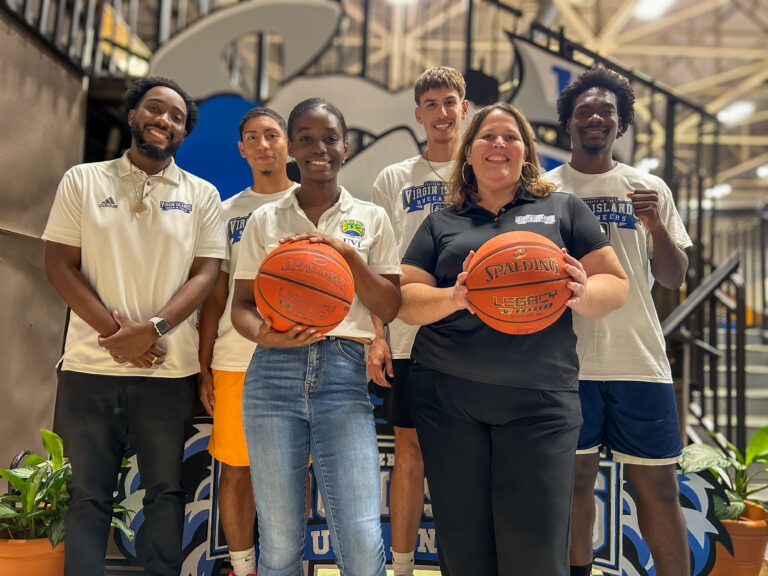
Student athletes from UVI’s track, cross country, and basketball teams pose with their coaches and mascot, Bucky, at Friday night’s Athletics Meet and Greet. (Source photo by Amara Stokes Gilbert)
University of the Virgin Islands’ Elridge Blake Sports Center on St. Thomas buzzed with excitement Friday night as UVI hosted its Athletics Meet and Greet, an event that proved to be nothing short of inspiring for the crowd of fans, faculty, and future Buccaneers. The evening kicked off with high energy as UVI’s dance team, the Dazzling Sapphires, took center stage to hype up the enthusiastic audience. Their electrifying performance set the perfect tone for what would become a celebration of athletic talent and community spirit. One by one, members of the track, cross country, and basketball teams took their turn at the microphone, introducing themselves to thunderous applause. Each student-athlete shared their role on the team, hometown, and a fun fact about themselves, showcasing personalities that had the crowd laughing and cheering throughout the night. The genuine camaraderie was on full display as teammates and coaches playfully cracked jokes with each other, creating an atmosphere that felt more like a family reunion than a formal introduction. Head coaches took moments to highlight their teams’ recent successes, including dual athlete Ariana Renault’s gold medal performance in the Sunrise 5K and the women’s basketball team’s successful completion of their grueling pre-season bootcamp.
Sports information director Shaquille Richardson, student body president Jenai Brooks, and student athlete advisor Julie Cruz are all smiles with men’s basketball players Joshua Rodgers, Brandon Rasmussen, and Chad Molloy following UVI’s 2025 Athletics Meet and Greet. (Source photo by Amara Stokes Gilbert)
Among the standout stories was that of cross-country athlete Abigail Pruitt, an Alaskan native pre-dental and dance double major. Pruitt, who is visiting UVI through the National Student Exchange Program, couldn’t contain her enthusiasm about the island experience. “I love the people here, and I love the sunshine,” Pruitt said with a bright smile. “There’s tropical weather and live music. I’m just living it up on the beach!” The atmosphere, she noted, is a welcome change from her home university in Idaho, and her teammates have made her feel like she’s been part of the UVI family forever. Julie Cruz, a two-time UVI alum who now serves as the student-athlete academic advisor, shared Pruitt’s sentiments. Cruz brought her own brand of energy to the event, calling each men’s basketball player to the microphone with the dramatic flair of boxing announcer Michael Buffer. “They have a spark. They’re determined. They have an open mindset, and they make this feel like a family,” Cruz said about working with the student athletes. “I mean, they already call me their school mom,” she laughed. “I love these chances to connect with them, not just in the academic realm, but in what they love doing.” The stands were packed with vocal supporters, including avid men’s basketball fans Kha’neisa Rivera, Destinee Fontaine, and Denae Petersen, whose smiles and enthusiastic cheers for their favorite players added to the electric atmosphere.
UVI mascot Bucky joins the fun, draining a free throw for a crowd of fans, faculty, and student athletes. (Source photo by Amara Stokes Gilbert)
Leading these talented teams are head coaches Dale Joseph (Men’s and Women’s Track and Cross Country), Stephanie Cooper (Women’s Basketball), Kevin Sheppard (Men’s Basketball), and Aminisha Bailey (Dazzling Sapphires Dance Team), whose pride in their student-athletes was evident throughout the evening. The meet and greet served as more than just an introduction – it was a testament to the tight-knit community that makes UVI athletics special. The family atmosphere that permeated the Elridge Blake Sports Center spoke volumes about the culture these coaches and student-athletes have built together. Follow The University of the Virgin Islands Athletics on Facebook and @uvi_athletics on Instagram for updates throughout the season.

Last-Minute Change on Plea Deal; Averts Trial in Glitters Robbery-Murder Case

0
Defendant Jamal Damian Lewis reversed his prior rejection of a guilty plea for his role in the December 2021 Glitters Jewelry Store robbery. (Shutterstock image)

The last of four defendants charged in connection with the December 2021 armed robbery at the Havensight Shopping Mall pleaded guilty in Superior Court. Defendant Jahmar Damian Lewis reversed a prior decision to reject a plea deal late Friday afternoon, with jury selection for his criminal trial set to begin on Monday morning.

Lewis was one of three people identified as part of a robbery team that entered Glitters Jewelry Store on Dec. 4, 2021. Two people were shot and wounded during the heist that netted an estimated $18,000 in merchandise. Gregoriana Julien — a customer in the store — later died of her injuries at the Roy L. Schneider Hospital.

A security guard on duty at the store suffered disabling injuries, according to investigators.

Had the case gone to trial, the defendant was facing 44 counts, including murder, robbery, assault, grand larceny, reckless endangerment, and multiple weapons offenses. Instead, on Friday before Superior Court Judge Carol Thomas Jacobs, Lewis admitted guilt to a single count of first-degree robbery.

Court documents filed after the hearing said the statute covering first-degree robbery was read aloud in the courtroom, followed by recital of a proffer statement by prosecutors. The proffer described the evidence the government planned to present at trial to prove the defendant’s guilt.

“ … The Court asked the People to give a Proffer to the Court of the evidence which would be offered to the Court or to the Jury had this matter proceeded to trial. The Defendant thereafter agreed with the People’s proffer,” a record of the proceedings said.

The judge accepted the plea and scheduled sentencing for Oct. 16, the same day when co-defendants Michiah Cozier, Akenda Weekes, and Junior Garcia are scheduled to hear their respective punishments.

Under the V.I. Code, Lewis faces a maximum sentence of 20 to 30 years in prison.
Why Don’t Hermit Crabs Make Their Own Shells?

0
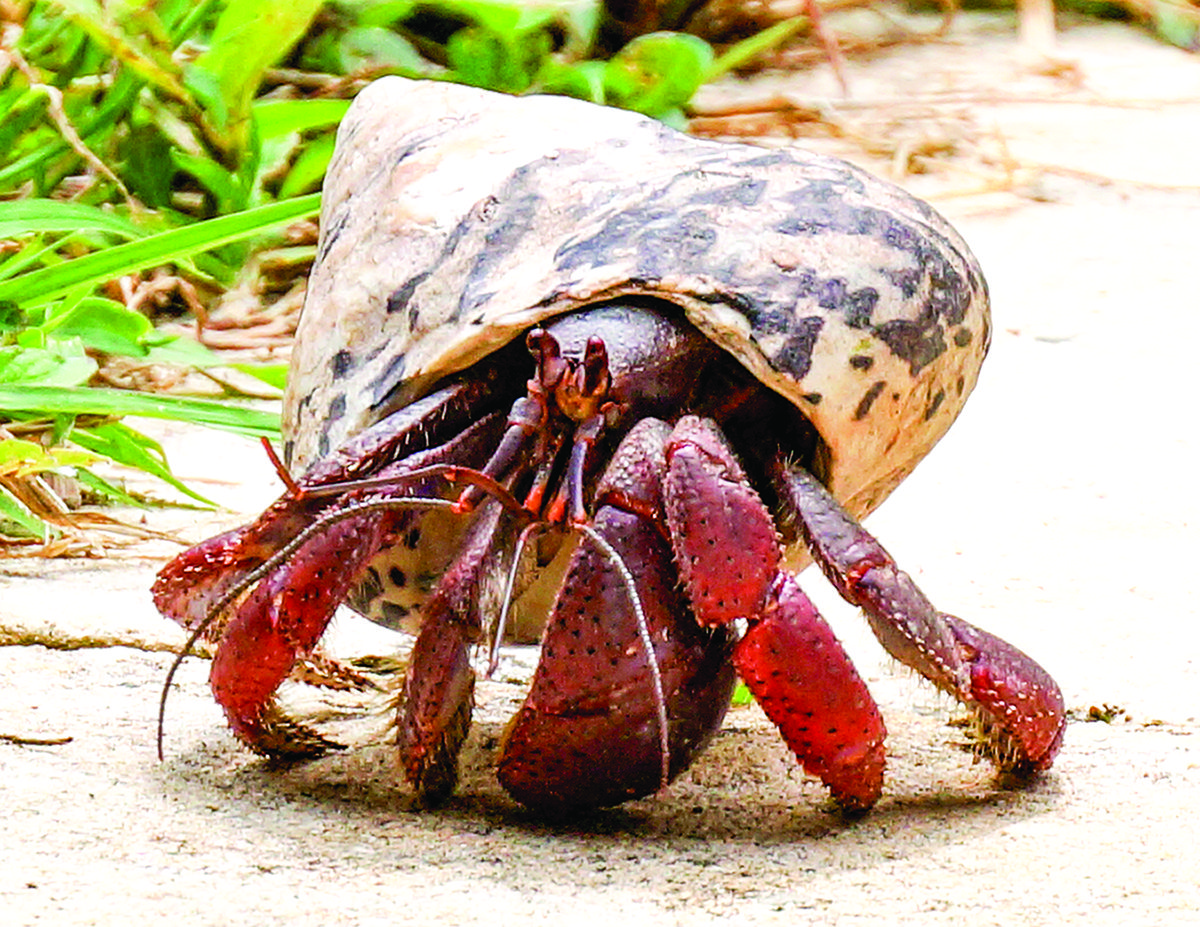
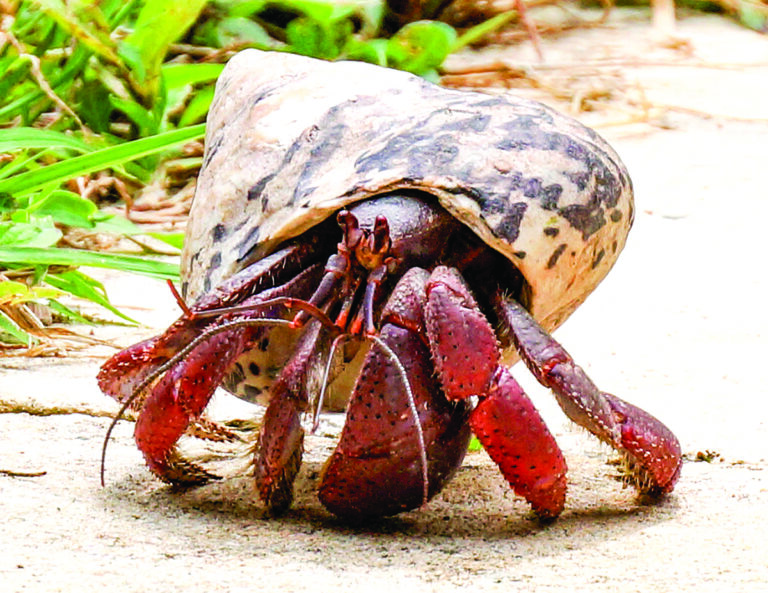
Hermit crabs have hard claws and legs, but soft abdomens they stick inside abandoned mollusk shells. (Photo by Gail Karlsson)

I enjoy having hermit crabs in the yard. They are cute and fun, and come by to snack on leftover cat food.

This large shell looks like it has seen a lot of use.

Cats may not be so happy to see these intruders. But even if they catch the snackers red-handed, they can’t do much damage to a hermit crab drawn up inside its shell.
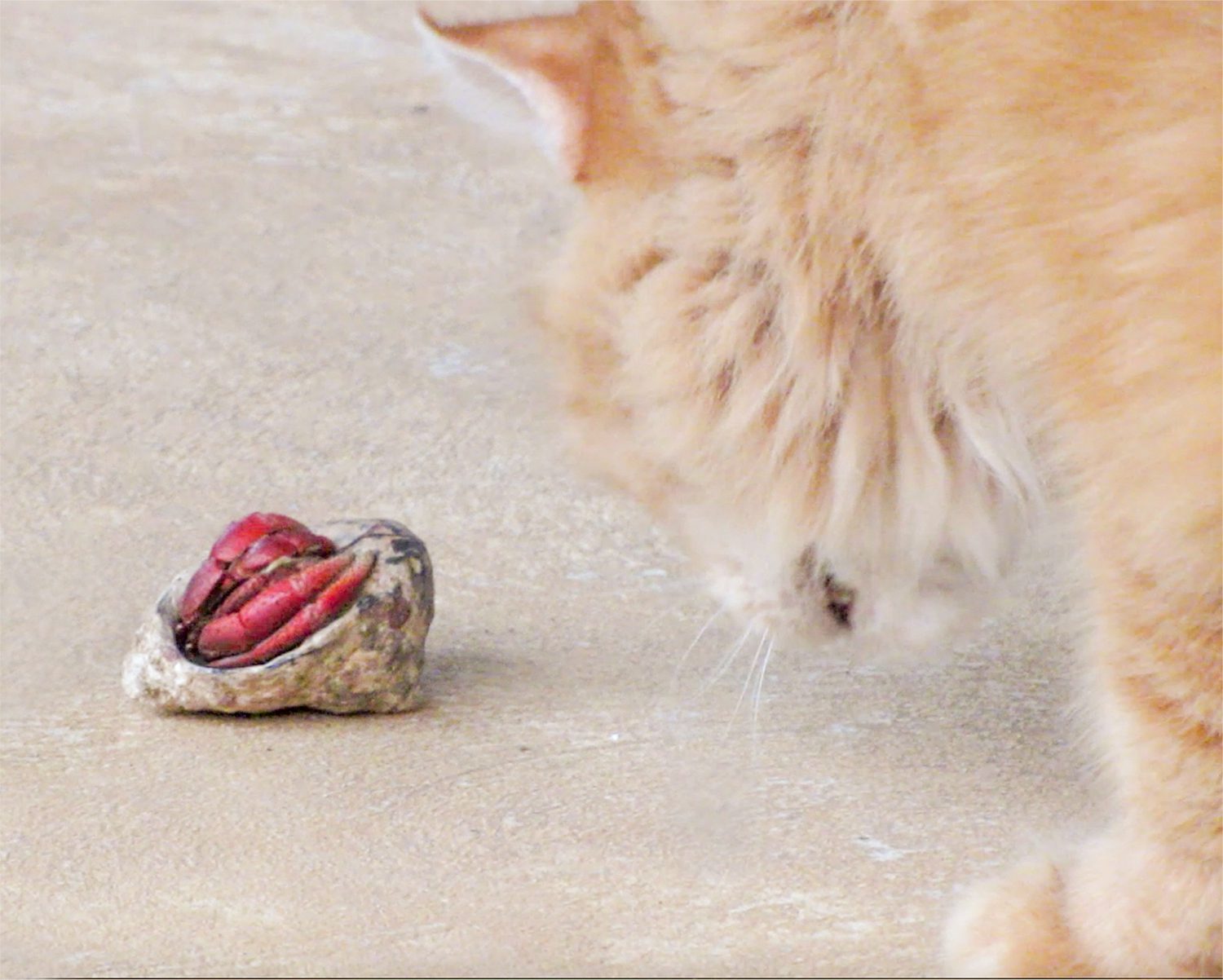
A hermit crab can stay inside its shell until the cat gets bored and leaves. (Photo by Gail Karlsson)

Though hermit crabs can hide inside their shells, their legs and claws usually stick out some. As they grow larger, their legs and claws hang out further, and they have to start searching for a bigger one.

Recently I started to wonder why, after over 150 million years, hermit crabs are still scrounging around for discarded mollusk shells to cover their butts.

Caribbean hermit crabs, or soldier crabs, (Coenobita clypeatus) commonly use cast-offs from West Indian Top Shells (Cittarium pica), otherwise known as whelks or wilks.
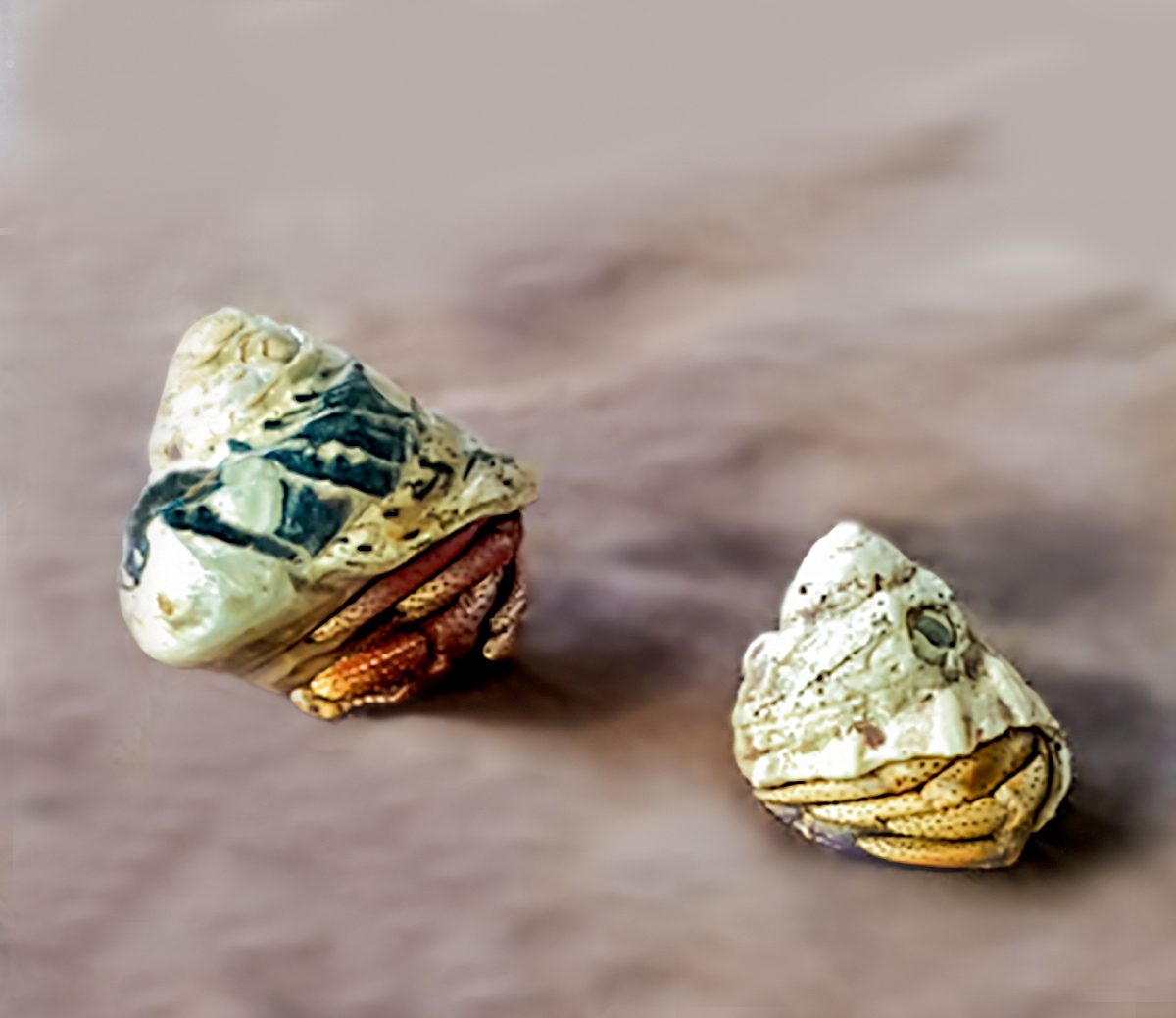
They are called ‘top shells’ because they resemble small spinning toys. (Photo by Gail Karlsson)

West Indian Top Shells, like other marine snails, build an exterior exoskeleton through a process called biomineralization. They have an organ called a mantle that secretes a thin layer of protein as a base, followed by layers of calcium carbonate, which they create using carbon and calcium ions drawn from the seawater. The calcium carbonate then solidifies to make the hard shell. Later on, the mantle can add to the edge of the shell, so the same shell can grow as the snail gets bigger.

Crabs also use calcium carbonate to make hard shells for themselves that cover their whole bodies. But their shells are fitted to their legs and bodies, and not expandable. In a process called molting, as the crab grows bigger, it forms a new, thin exoskeleton cover underneath the existing shell, and breaks out of the old one. Once out, the crab then quickly makes the new, soft exoskeleton harder using calcium carbonate.

Hermit crabs do the same kind of growing and molting as other crabs, but only their claws and legs get hardened up. The abdomen stays soft and the hermit crab needs to find a new larger shell to cover it. In late summer there are often mass molting events as the hermit crabs all migrate down to the shoreline and take off their shells, hoping to exchange too-small shells for bigger ones.

They also might do some quick mating when their shells are off. It’s a matter of life or death for the hermit crabs to get into new shells, not just for protection from predators but also to prevent them from getting dried out and cooking in the tropical sun.
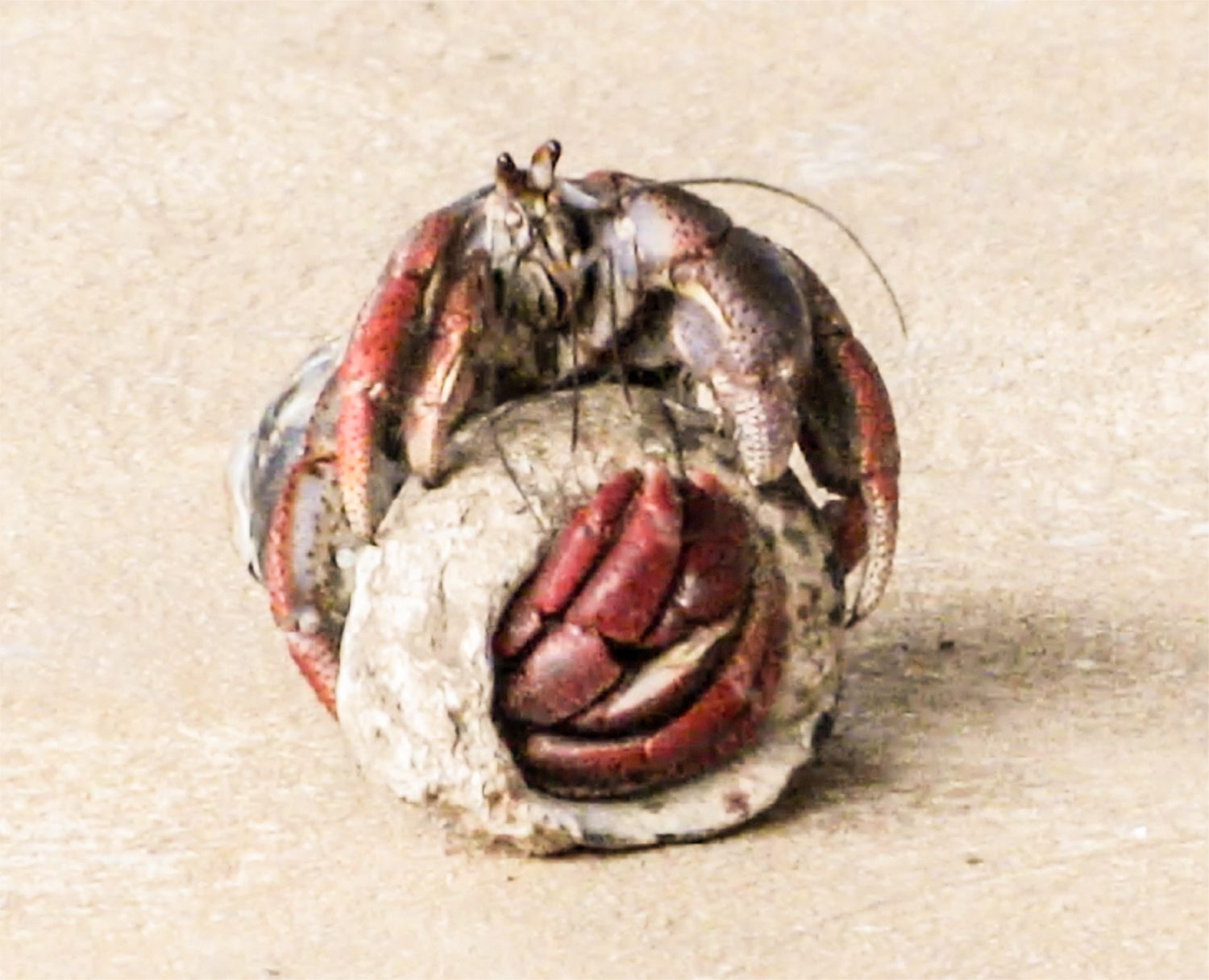
A male hermit crab will tap on a female’s legs to persuade her to come out and mate. (Photo by Gail Karlsson)

Female hermit crabs deposit their eggs in the water, where the eggs go through several free-floating phases of development before the baby hermit crabs start their transition to land. While in the water, they need to locate a discarded shell from a (dead) micro-mollusk, which are species of snails that remain tiny even as adults. Over time they will then work their way onto land and into ever larger shells.
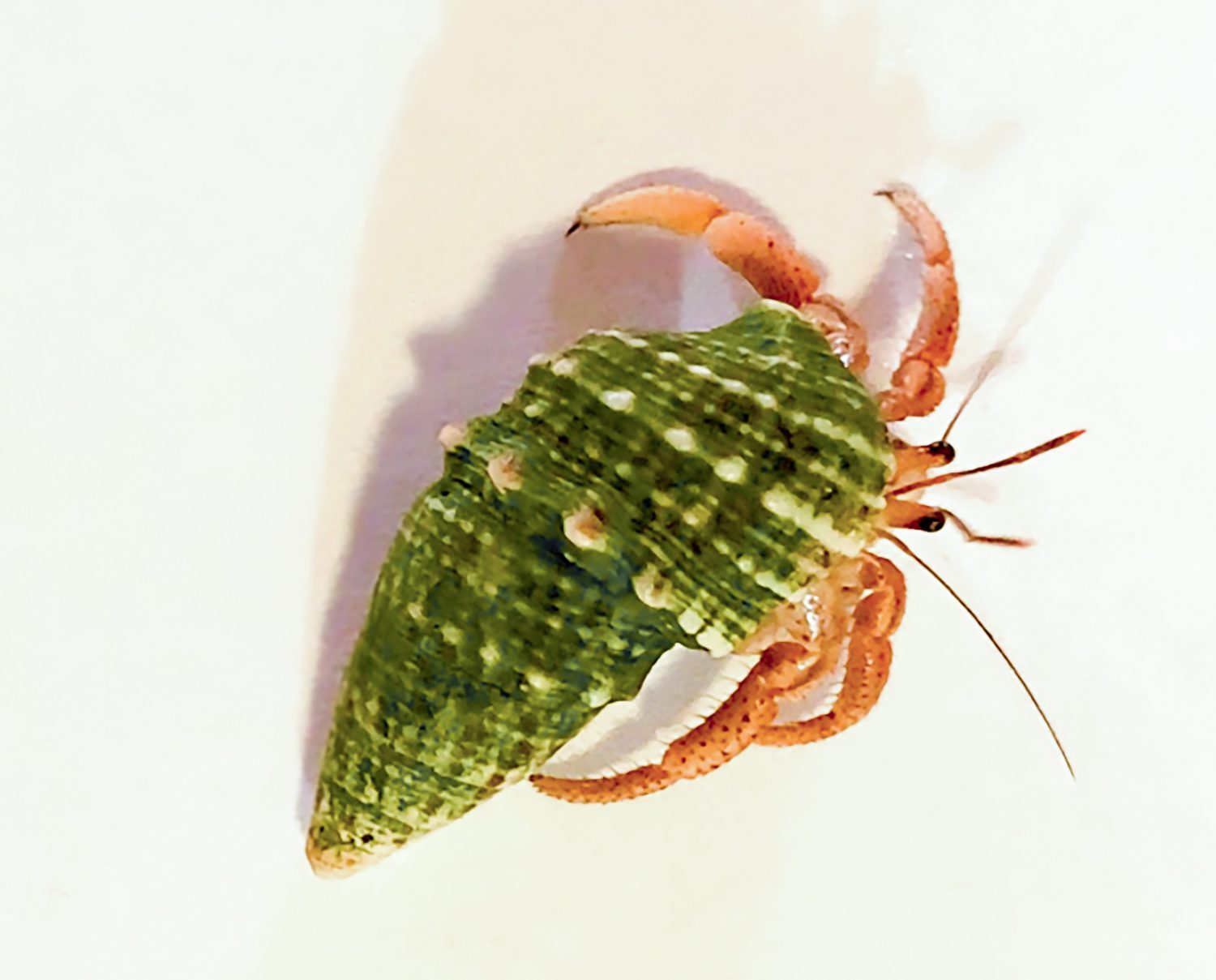
Small hermit crabs use shells other than top shells. (Photo by Gail Karlsson)

Depending on finding abandoned shells from other dead animals seems pretty iffy as a life strategy, although it does allow successful hermit crabs to avoid spending a lot of energy building and maintaining their own mobile homes. They are renters, not owners, which in some situations can be an advantage.

Still, the hermit crabs are heavily dependent on continued housing availability. There needs to be a large population of whelks – and intact shells left behind after they die or get eaten. In the Caribbean, an octopus or lobster will eat a whelk, as well as bonefish, porcupinefish, and rock hinds. The whelks are also attractive to shorebirds like oystercatchers, which are locally known as whelk-crackers. And then there a number of people who collect whelks for stew. Supplies of whole, empty shells can quickly become limited.

Hermit crabs are essentially recyclers, taking cast-off resources and reusing them, and in the process cleaning up the beaches. If they can’t find a shell that fits, they will sometimes end up wearing beach trash instead, which is a bit sad to see, but adaptive and enterprising of them.

A hermit crab’s survival plan is also a bit poetic, as each temporary shelter it finds will carry a history of prior lives, which it will carry on its back, and then pass along.

Gail Karlsson is the author of a photo book Looking for Birds on St. John, as well as two other books about nature in the Virgin Islands – The Wild Life in an Island House, and Learning About Trees and Plants – A Project of the Unitarian Universalist Fellowship of St. John. Follow her on Instagram @gailkarlsson and gvkarlsson.blogspot.com. More info at gailkarlsson.com.

Albertha Willie Springer Dies

0
The family of the late Albertha Willie Springer is saddened to announce her passing on Sept. 13, 2025.
Albertha Willie Springer
She is survived by her daughters: Stephanie, Aisha, and Ayanna Thompson; sons: Titus Thompson; grandchildren: Kadija and Aurora Thompson, and Skyler Edwin. Brothers: Emmanuel, Robert “Wilson,” and Tracey Willie Uncle: Joseph Nolien “UU.” Nieces: Jacqueline Willie, Jeanette, Pamela, and Theresa Baptist; Tabitha Durand; Christina John; and Natalie Constable: nephews: Valence John and Leo Taylor. She is also lovingly remembered by other relatives and friends too numerous to mention.

VIPD Arrests Two Suspects, Recovers Firearms in Williams Delight Case

0

Two men were arrested and multiple firearms recovered following a Virgin Islands Police Department operation Monday that stemmed from an assault in Williams Delight on St. Croix earlier this month, according to the department.

Police said detectives with the Criminal Investigation Bureau and the Special Operations Bureau executed Superior Court warrants and arrested 56-year-old Henry Emmanuel and 37-year-old Angel Santiago. During the search of Santiago’s residence, three firearms, ammunition, scopes and other firearm paraphernalia were confiscated, according to the police report.

The arrests were linked to a Sept. 3 assault reported at 10:42 p.m. when officers were dispatched via the 911 Emergency Call Center to Williams Delight. The victim, an adult male, was transported by ambulance to the Juan F. Luis Hospital emergency room with serious head and body injuries and admitted for further treatment, the police report stated

Detectives identified Emmanuel and Santiago as suspects during the investigation, leading to the warrants. Both men were advised of their Miranda rights, booked, and remanded to the John A. Bell Golden Grove Adult Correctional Facility, after being unable to post $100,000 bail, the report stated.

The men face multiple charges, including first-degree attempted murder, first- and third-degree assault, carrying firearms openly or concealed during a crime of violence, brandishing and using a deadly weapon, possession or sale of ammunition, and carrying or using a dangerous weapon. Santiago also faces additional charges for possession of firearms and ammunition, according to the report.

An advice of rights hearing is scheduled for Tuesday in Superior Court.

Gunfire Reported at Cane Bay Beach; No Injuries

0

Shots were fired during a large gathering at Cane Bay Beach on St. Croix Sunday evening, according to the Virgin Islands Police Department.

The 911 Emergency Call Center received several calls at 5:21 p.m. reporting gunfire in the area. A gray vehicle was seen leaving the scene, police said.

No injuries were reported.

The case remains under active investigation. Anyone with information is urged to contact 911, the VIPD Criminal Investigation Bureau at 340-778-2211, or Crime Stoppers VI at 1-800-222-8477 (TIPS).
UPDATE: Lockhart K-8 School Gets “All Clear” After Evacuation Over Potential Threat

0

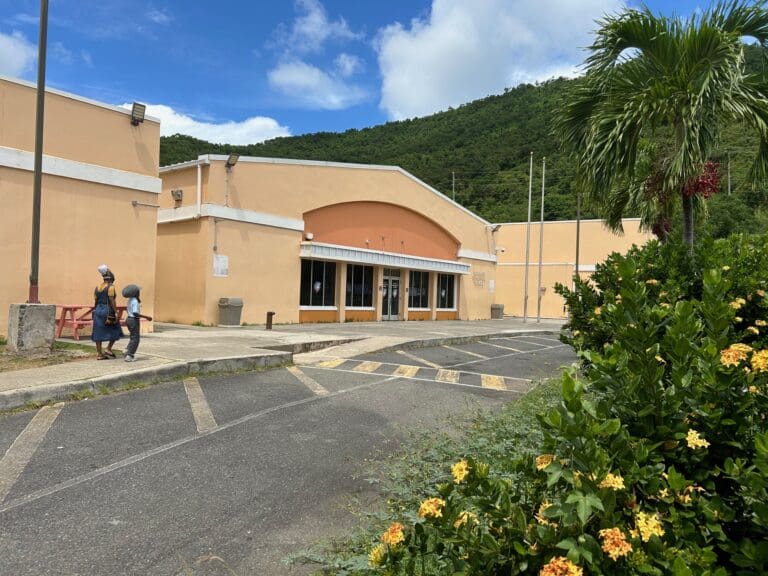
The V.I. Police Department has issued an “all clear” at Lockhart K-8 School on St. Thomas after the campus was placed on lockdown earlier Monday afternoon due to a “potential threat on campus,” the Education Department reported just after 4 p.m.

The lockdown went into effect after a call was received through 911, reporting a potential threat on campus, according to the initial alert that came just before 2:30 p.m. “The school immediately activated its safety protocols, and students were evacuated to the parking lot of the adjacent hospital to ensure their safety,” Education said.

Following the evacuation, the VIPD conducted a thorough search of the campus, it said. After completing their procedures, school officials received the “All Clear” from VIPD, confirming there were no active threats on the campus.

“Students were safely escorted back to the school grounds to retrieve their backpacks and personal belongings that had remained in the classrooms during the evacuation. The school day has ended, and operations will resume” Tuesday, the department said.

The incident remains under investigation by the VIPD and other law enforcement agencies.

3:26 p.m. Monday Lockhart K-8 School on St. Thomas has been evacuated following safety protocols due to a 9-1-1 call that indicated a potential threat on the school campus, the V.I. Education Department announced in an “urgent alert” issued Monday at 2:26 p.m. “Parents are asked NOT to pick up their children. All students are safe. VIPD is on the scene to conduct necessary searches to ensure the safety of the school campus,” according to the alert. The Source will update this story as more information becomes available.