





The Virgin Islands Healthcare Foundation, operated by Dialysis Clinic, Inc., is working with agencies across St. Croix to create islandwide disaster contingency plans to protect patients who rely on dialysis treatment.
“Dialysis is critical for those who have lost kidney function,” said Jodi Rodriguez, RN, nurse manager at the Sunny Isle facility. “The whole territory is trying to do this work together as a team. We are all on those joint meetings with the Department of Health and the network sharing how many machines we have, how many stations we have, the availability of staff and machinery. The whole territory is trying to work together as a team.”
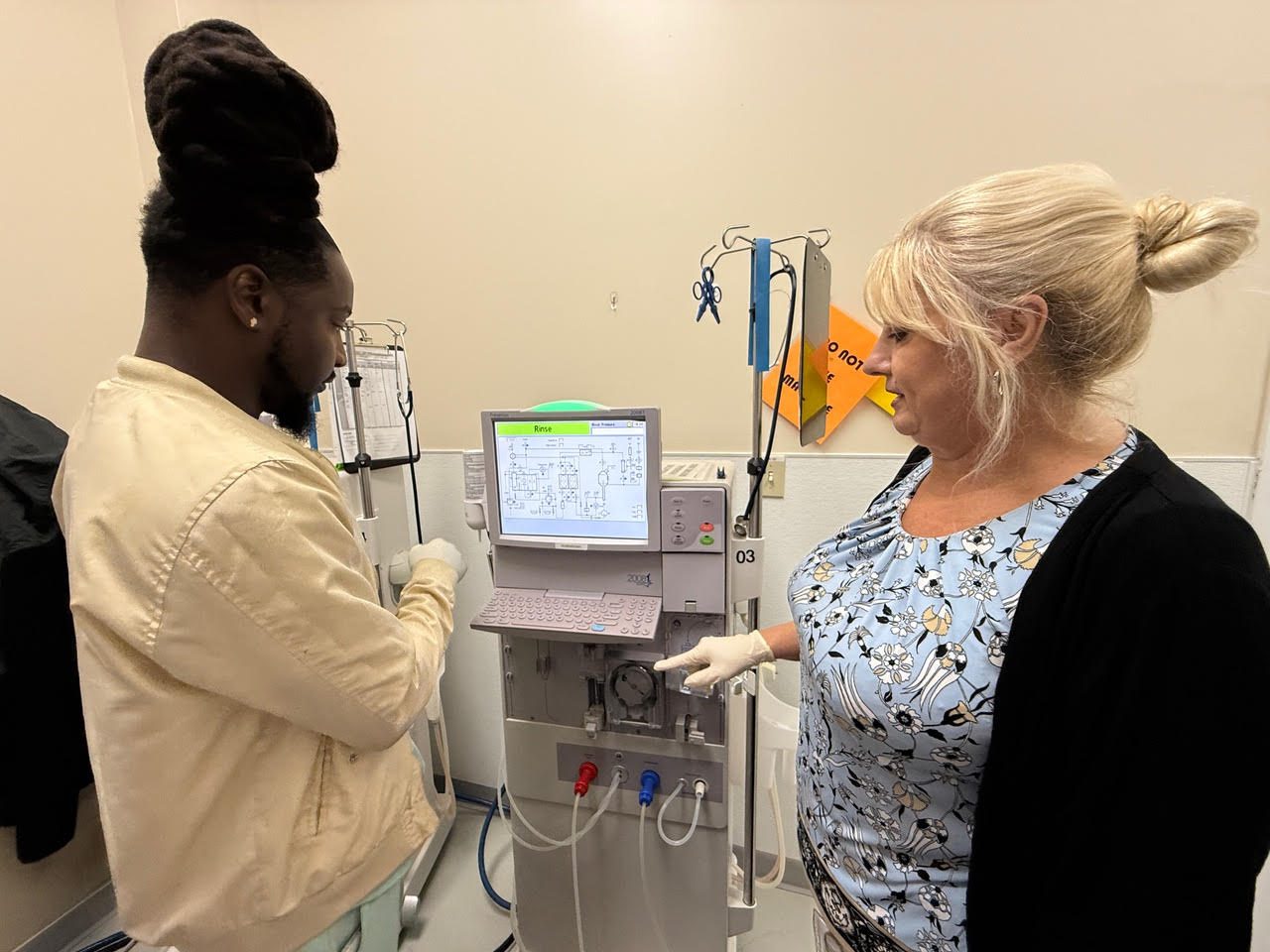
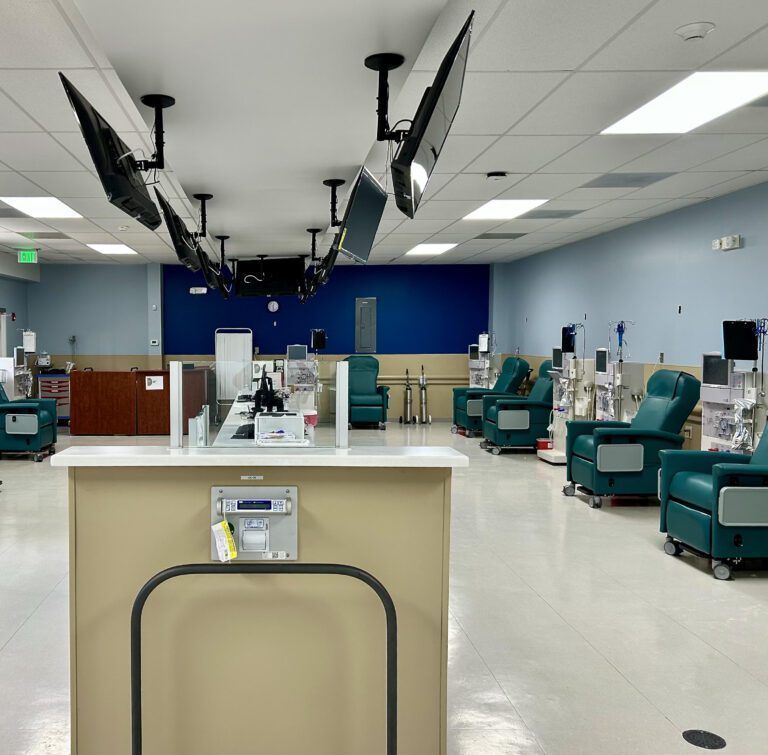
The Virgin Islands Healthcare Foundation, a nonprofit established in 2018, opened its St. Croix dialysis clinic in January at Sunny Isle, next to the Social Security office. The facility currently treats 31 patients and can accommodate up to 78. Most patients receive dialysis three times a week, with treatment available six days a week on Monday, Wednesday, Friday or Tuesday, Thursday, Saturday schedules. Treatment frequency may be adjusted based on fluid levels, toxins, or potassium concerns.
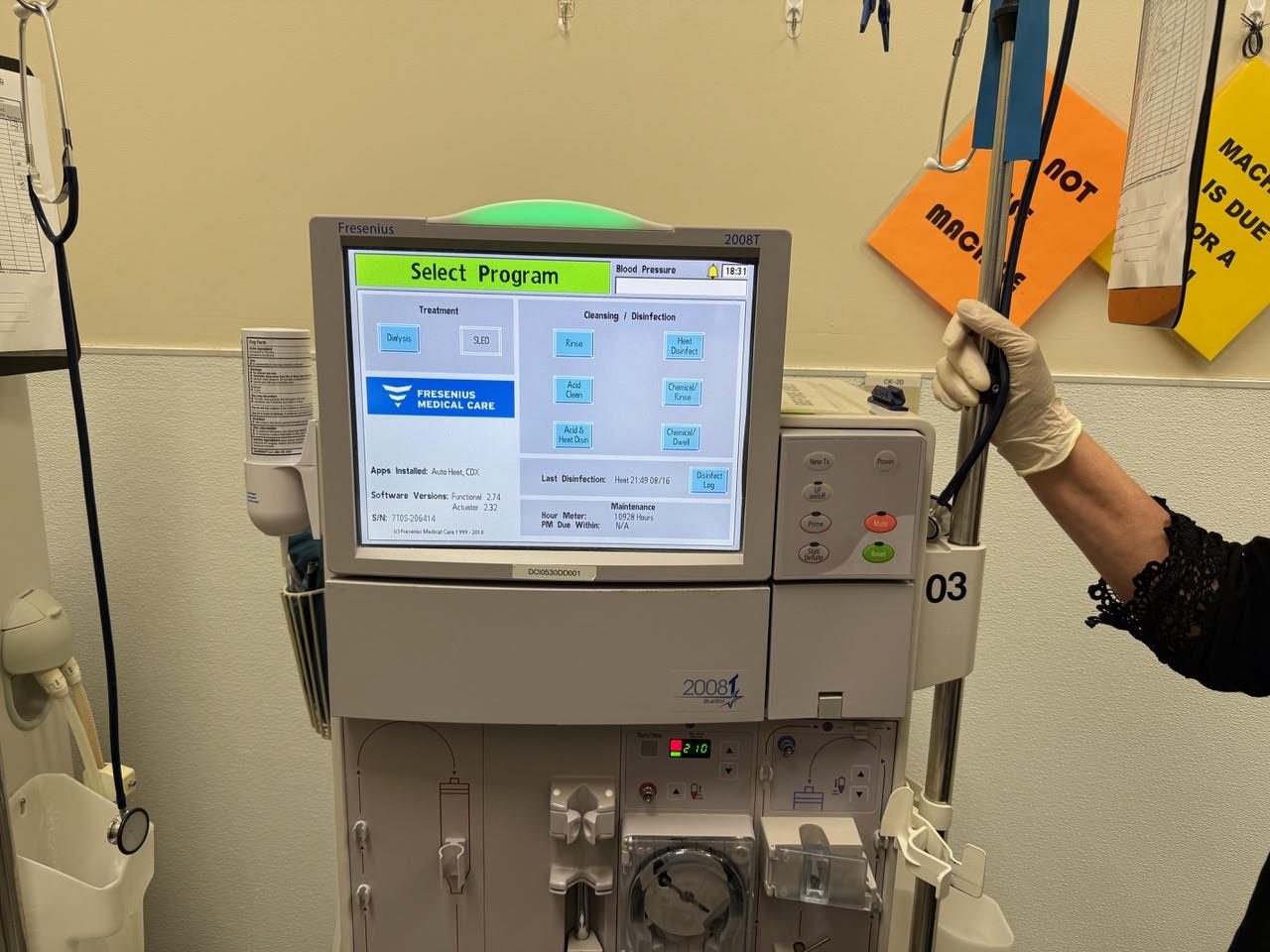
To prepare for emergencies, the clinic keeps updated contact, emergency, and personal information for all patients. Each patient also receives an emergency packet that includes national contact numbers for Dialysis Clinic, Inc., in case the local facility is unable to open. The clinic’s goal is to keep all patients on St. Croix. It operates on feeder 5A, which also powers the hospital, and has a backup diesel generator in place. Sharing the road with the hospital also improves the likelihood of quick access after a storm.
“When the governor puts a state of emergency, we are being guided by the government. At that point, we will only be able to say, this is what we have available, this is what’s running. And they’re going to leave us to determine that,” Rodriguez said. The team is also seeking hurricane passes for staff, patients, and drivers who transport patients.
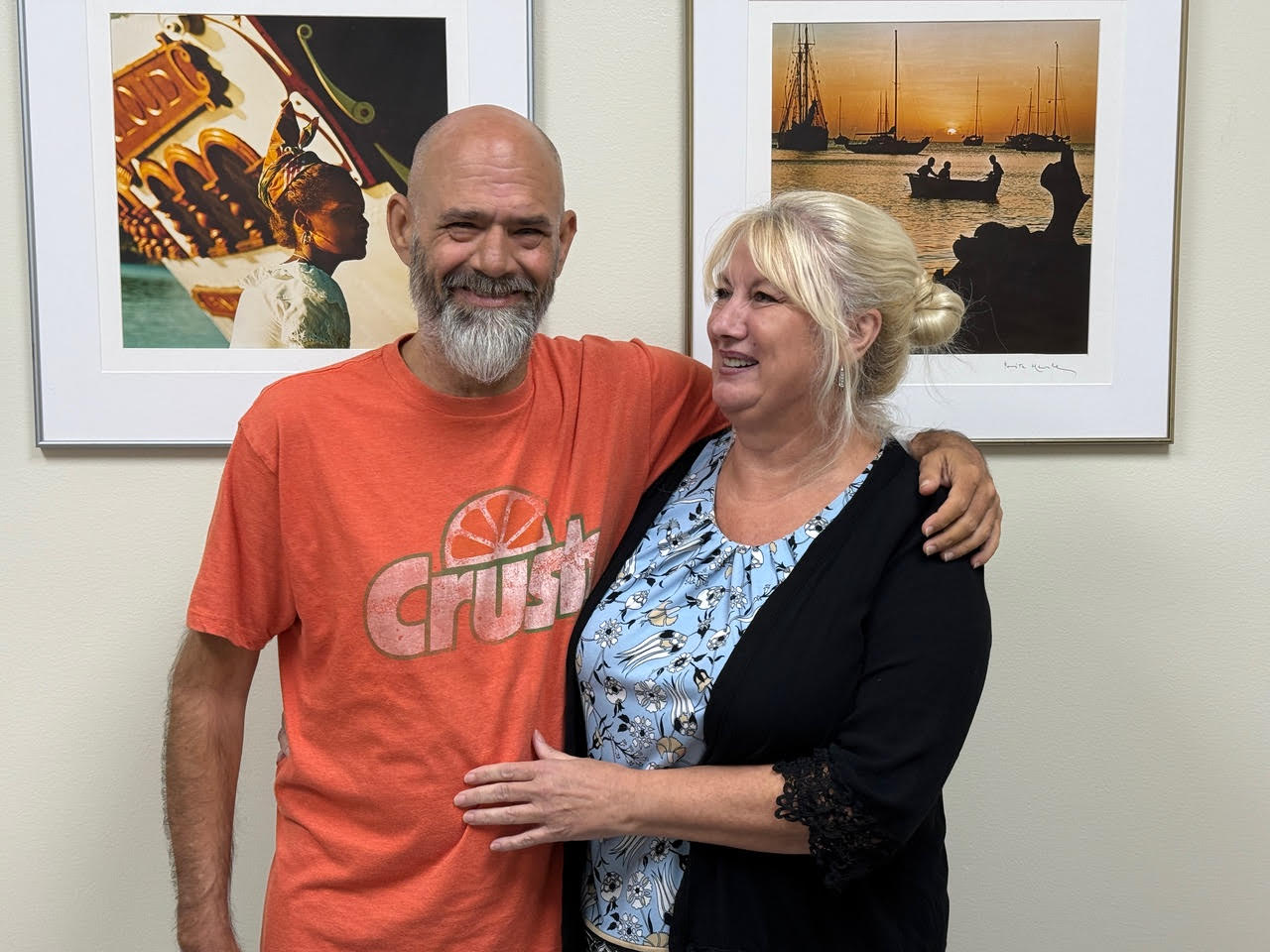
Kevin Marusa, one of the first patients at the clinic, said he understands what is at stake. “I went through full stage renal disease when I was 27 years old. It hasn’t all been dialysis. I was transplanted twice as well.” Now 52, Marusa said he intends to remain on St. Croix even during a major storm. “In the event of a major disaster, I will still come in, I’ll still be here every day at 06:30. My life depends on being here.”
The facility is stocked with three months of supplies, storm shutters, a cistern, a backup generator, and the ability to bring in water tanks. “This is a good strong building. All of our storm shutters are good,” Rodriguez said. She plans to return the day after any storm to check operations and, if necessary, retrieve patients herself.
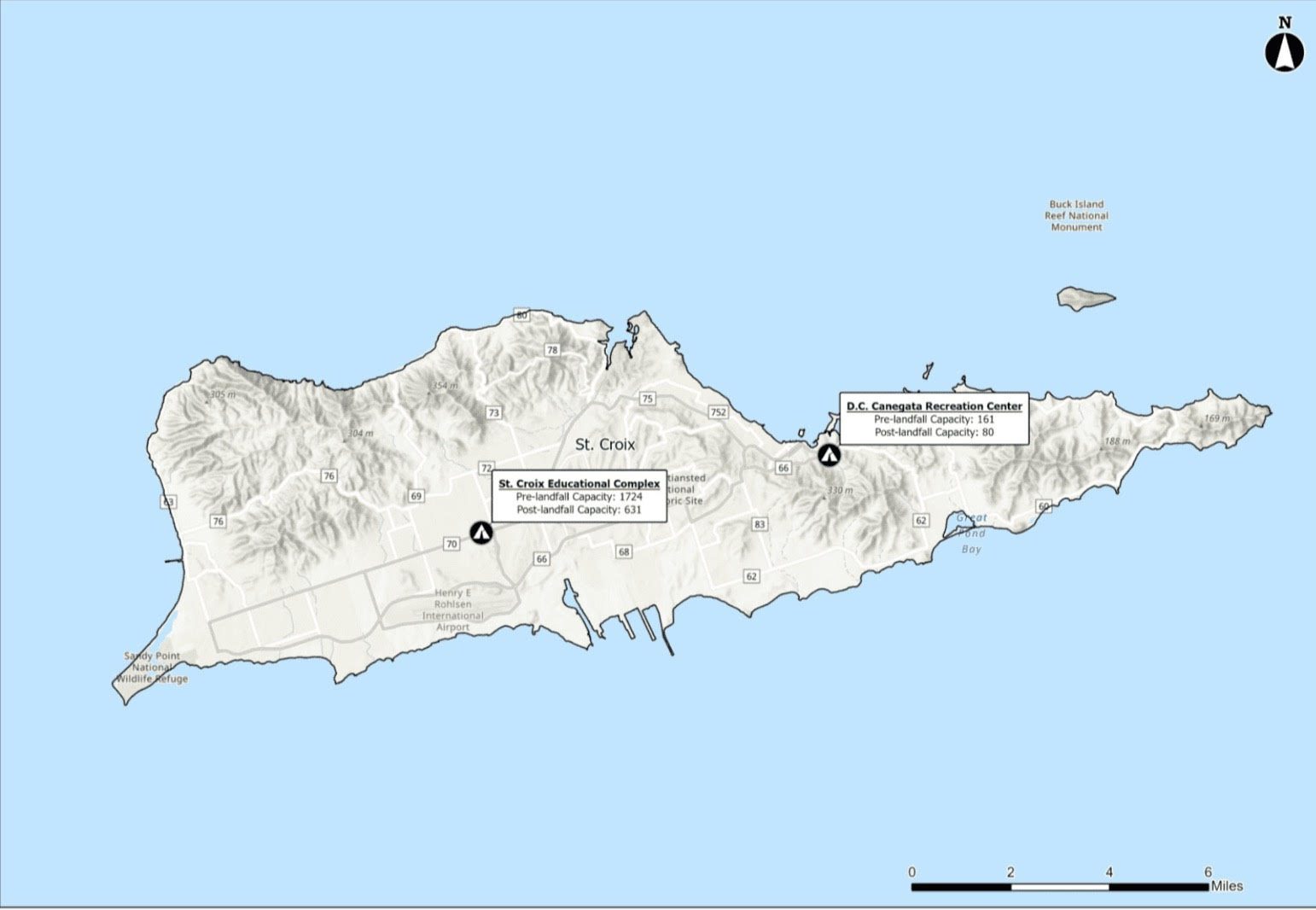
Emergency shelter capacity for 2025 has also been identified. Ryan Nugent of the V.I. Human Services Department said shelters on St. Croix include the St. Croix Educational Complex, with a pre-landfall capacity of 1,724 and post-landfall capacity of 631, and the D.C. Canegata Recreation Center, with a pre-landfall capacity of 161 and post-landfall capacity of 80. The Educational Complex is also pet-friendly.
Elderly, dependent adults, and persons with disabilities aged 60 and older can register with the Disaster Registry. Forms are available at the Human Services Department, the Bureau of Motor Vehicles, and the Virgin Islands Elections System.
Dialysis Clinic, Inc., operates as a not-for-profit corporation focused on kidney care innovation, addressing care gaps, supporting local communities, and investing in research to advance treatment and improve the lives of people with kidney disease.

“For a long time now, a large number of [escaped slaves] have established themselves on lofty Maroon Hill in the mountains toward the west end of the island [of St. Croix]. … They are there protected by the impenetrable bush and by their own wariness.”
Those are the words of Christian Oldendorp, a Danish missionary who visited the Caribbean island of St. Croix in 1767. His account is one of the few Danish historical records of Maronberg, a community of escaped slaves, known as Maroons, in the northwest mountain ranges of the island.
In 1733, the Danish West India-Guinea Company purchased St. Croix from France and quickly expanded the island’s sugar and cotton production. This also meant expanding the slave population to harvest lucrative plantations. But the Danes were never able to fully control the island — or the enslaved. By the end of the 1700s, nearly 1,400 people – more than 10% of the enslaved population — successfully escaped captivity. But where did they escape to? Only recently have researchers started to shed more light on this centuries-old mystery.
As an archaeologist specializing in slavery and resistance, I’ve excavated plantations in the Americas and used geographic information systems to model Maroon escape routes by sea. Recently, I turned my attention to Maroon settlements on land, working with a team of archaeologists to locate Maronberg.
Honoring a legacy
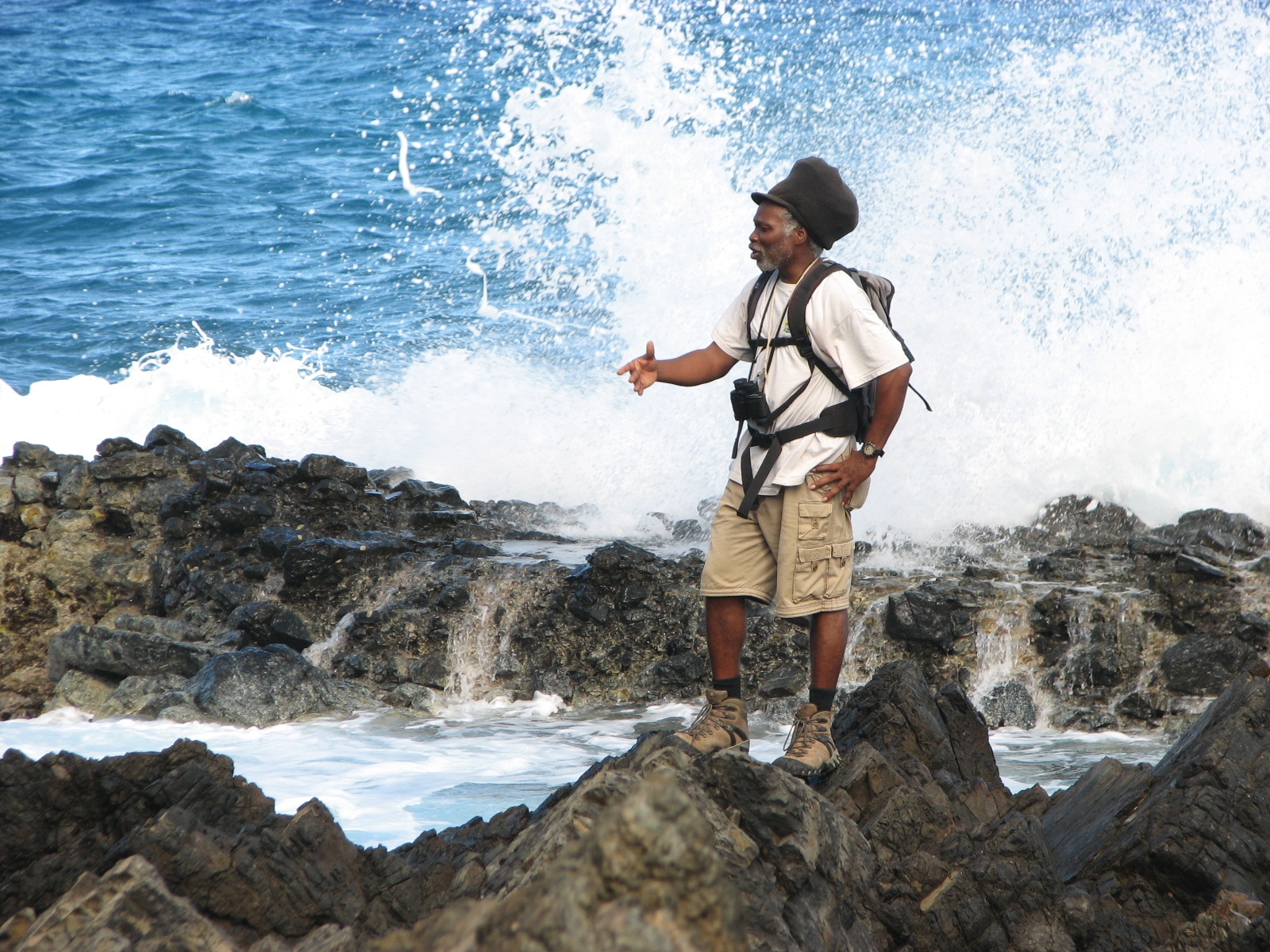
I first learned about Maronberg on a nature tour of St. Croix given by local activist and University of the Virgin Islands professor Olasee Davis in 2016. At that time, I was on the island to excavate a sugar plantation, a project that gave my colleagues and me a unique perspective on the enslaved experience in the Danish-controlled Caribbean.
In August 2025, Davis’ decades-long campaign to create an official heritage sanctuary to protect Maronberg finally came to fruition. The local government purchased 2,386 acres of land to serve as the U.S. Virgin Islands Maroon Territorial Park.
But one problem remains: We have yet to find the physical remains of the settlement. Locating and preserving Maronberg’s historical artifacts and buildings could provide new insight into residents’ way of life and give greater meaning to the sanctuary.
Fortunately, advanced computer modeling and high-resolution maps are helping us get closer to pinpointing the settlement.

Finding what was meant to remain hidden
Many Maroon settlements in the Americas have proved difficult to locate. This makes sense when you consider that their inhabitants were trying to hide from colonial settlers. If the Danes had found Maronberg, they would have either killed its inhabitants or forced them back into slavery.
Runaways tended to settle in areas that were intentionally difficult to access, like remote swampy or mountainous terrain. Houses and other shelters often consisted of semipermanent structures so that Maroons could relocate as needed to avoid detection.
The boundaries of Maronberg and the size of the settlement along the northwestern mountain range remain unknown. Colonial militias attempted periodic raids, but historical records report that they were met with rugged terrain, booby traps and counterattacks.
The missionary Oldendorp wrote: “[The Maroons] keep every approach safe by attempting carefully to conceal small, pointed stakes of poisoned wood so that the unwary pursuer might wound his foot on them and therefore be prevented from continuing the chase as a result of the unbearable pain.”
All those precautions paid off: The Danes were never able to penetrate the Maroons’ encampment.
Using new tech to see 300 years into the past
Recent attempts by researchers to locate Maronberg began in 2007, with more extensive geographic information systems mapping conducted in 2008. These digital, computer-based geographic programs allow researchers to store a range of geological data and model spatial patterns across vast terrains.
Pairing a historical map with a low-resolution elevation map from the U.S. Geological Survey, archaeologist Bo Ejstrud created a predictive model to assess the probable location of the Maroon settlement. He considered elevation, slope and colonial infrastructure to identify the most remote areas of St. Croix with the least visibility from colonial lines of sight.
Back in the 1700s, urban centers accounted for only a small percentage of the overall landmass of the 83-square-mile (215-square-kilometer) island. Much of the land was either plantations or uninhabited forests and mountains. Ejstrud’s model reaffirmed the likelihood of a Maroon settlement in the northwest region. But it left us with a massive survey area. The map also didn’t account for the possibility that the settlement moved over time.
In 2020, I teamed up with archaeologists Steven Wernke, from Vanderbilt University’s Spatial Analysis Research Laboratory, and Lauren Kohut, from Winthrop University’s Geospatial Environmental Modeling Lab. Together, we developed and visualized a more dynamic model using advances in mapping since 2008.
We began by digitizing two of the most detailed colonial maps of St. Croix — one from 1750 and another from 1799. These maps, created by Danish military engineers and surveyors, detail the spread of plantations, roads and settlements over time.
Next, in order to build a digital elevation model of the island’s terrain, we incorporated high-resolution light detection and ranging, or lidar, data collected by the National Oceanic and Atmospheric Administration. Whereas traditional digital elevation models can be skewed by dense vegetation and trees, lidar uses laser pulses that penetrate through the forest canopy to map the Earth’s surface. This technology allows us to analyze some of the most secluded, inaccessible areas on the island. Prior to 2013, lidar was too costly for archaeological research purposes. But these days, it’s built into many cellphones.
By layering these datasets in geographic information systems software, we created a suitability model that estimated where Maroon settlements were most likely to have existed. In addition to isolation and visibility, we also incorporated accessibility to water sources and terrain ruggedness to model the degree of mobility through the landscape.
This approach allowed us to simulate how the opportunities and constraints the landscape offered to people seeking refuge shifted as colonial society grew over time.
Mapping changes
In addition to providing more nuance to the picture of the areas where Maroons potentially settled, our research suggests that the Maroon settlement wasn’t static, but likely waned as colonial infrastructure increased on the island. Our model implies that the area of suitable land for clandestine Maroon communities shrank by more than 90% in just 50 years.
It’s possible that over time there were fewer runaways. More likely, more Maroons left the island by boat for destinations such as Puerto Rico and Tortola.
Where we go from here
Though our findings still don’t provide an exact location for Maronberg, they get us one step closer to locating the physical remains of this centuries-old Maroon community. The next step will be to visit these sites and survey them for evidence of historical settlement. Archaeological research at these sites would help us understand more about the Maroons who turned a rugged landscape into a sanctuary for freedom.
Ultimately, identifying artifacts and historical sites within the newly established U.S. Virgin Islands Maroon Territorial Park would help us develop educational tours and honor the Maroon legacy.
— Justin Dunnavant is an archaeologist and Assistant Professor of Anthropology at UCLA. His current research in the US Virgin Islands investigates the relationship between ecology and enslavement in the former Danish West Indies. In addition to his archaeological research, Justin is co-founder and President of the Society of Black Archaeologists, an AAUS Scientific SCUBA Diver, and consults for the Smithsonian’s National Museum of African American History and Culture. In 2021, he was inducted into The Explorers Club as one of “Fifty People Changing the World that You Need Know About” and selected as a National Geographics Emerging Explorer. His research has been featured on Netflix’s “Explained,” Hulu’s “Your Attention Please” and in print in American Archaeology and Science Magazine.— This article is republished from The Conversation under a Creative Commons license. The Conversation is the world’s leading publisher of research-based news and analysis. It is a unique collaboration between academics and journalists.

Luis Amaro Jr., 36, has been charged in connection with a reported domestic violence assault after police said his ex-girlfriend was attacked earlier this month, the Virgin Islands Police Department reported.
The woman reported the incident on Aug. 13 at the Richard N. Callwood Command, telling officers that Amaro assaulted her on Aug. 9 after questioning her about where she had been. She said he confronted her again on Aug. 10 when she returned home, throwing her to the ground and causing injuries to her tailbone before biting her on the face, leaving a wound on her left cheek, according to the police report.
Amaro appeared at the Domestic Violence Unit on Aug. 20, where he was informed of the complaint. He refused to give a statement and was arrested. Police said he was charged with third-degree assault domestic violence, simple assault domestic violence, and disturbance of the peace. He was booked, processed, and turned over to the Bureau of Corrections to await his Advice of Rights hearing, the police report stated.
The case remains under investigation by the Domestic Violence Unit. Police urged anyone with information to call 911, the Domestic Violence Unit at 340-715-5536, or the Office of the Police Chief.


 In her biweekly column, “State of the Territory,” former Sen. Janelle K. Sarauw delves deeper into issues of concern for V.I. residents.
Accountability is the cornerstone of public service. Without it, the people lose trust, and democracy itself begins to erode. The recent controversy involving Senator Bolques is not only about one individual’s conduct, but also about how the Legislature chose to handle the matter. The way this case was managed raises serious questions about the Senate’s willingness to uphold the standards it was elected to defend.
Much has been made of the sixty day rule, the statutory limit for reporting a complaint. That rule was treated as an immovable wall, as though nothing could be done once the window had closed. Yet the truth is that nothing prevented the Legislature from convening in session and voting to waive that rule, just as it has waived countless rules in the past when it was deemed necessary. Procedure should never become a shield against accountability. When the Senate chooses to apply rules rigidly in one instance but freely set them aside in another, it sends a troubling signal about priorities.
Equally concerning was the expectation that senators would vote on a recommendation without being given the full details of the charges. To their credit, several members raised this very point. It is unreasonable to expect legislators to cast a vote on so serious a matter without having the facts laid before them. By withholding the charging documents, the Legislature did not just weaken the process. It failed the public and, most importantly, it let the victims down.
One of the charges fell outside of the sixty day window, and yet the Legislature still did not have the decency to disclose what that charge was. Instead, they reduced the matter to a vague violation of the oath of office. That lack of transparency deprived the people of their right to know the seriousness of the conduct and shielded the senator from the full weight of public accountability.
The conduct of the senator at the center of this controversy further complicated matters. On the day of his reckoning, he arrived in a bright red suit, describing it as his “fire suit” to a local reporter. To many, that appeared less like humility in the face of scrutiny and more like a performance of defiance. Leadership is not about mocking accountability or celebrating technical escapes. Leadership is about facing the public squarely, acknowledging mistakes, and showing a willingness to rebuild trust. That is what the people of this territory deserve.
This situation also raises a broader policy question: why should there be a strict 60-day reporting window on allegations of harassment or misconduct? Victims often need months, even years, to summon the courage to come forward. A timeline that cuts them off so abruptly does not serve justice. When former Senator Steven Payne was investigated, the body proceeded with full transparency through a charging document. That openness allowed senators and the public alike to consider the matter with clarity. This time, secrecy and technical limitations prevented a full airing of the facts.
The people of St. John and the wider Virgin Islands deserve better. They deserve an at-large senator who reflects humility and accountability, and they deserve a Legislature that upholds transparency and consistency. The 60-day rule must be revisited so that victims are not silenced by arbitrary deadlines. More importantly, the Legislature itself must show that it can hold its members to the same high standards it asks of others.
True leadership is not about technical victories. It is about doing what is right, even when it is painful or inconvenient. It is about being willing to admit mistakes, to apologize sincerely, and to take steps to restore public trust. Anything less diminishes the office and betrays the people who placed their faith in it.
In her biweekly column, “State of the Territory,” former Sen. Janelle K. Sarauw delves deeper into issues of concern for V.I. residents.
Accountability is the cornerstone of public service. Without it, the people lose trust, and democracy itself begins to erode. The recent controversy involving Senator Bolques is not only about one individual’s conduct, but also about how the Legislature chose to handle the matter. The way this case was managed raises serious questions about the Senate’s willingness to uphold the standards it was elected to defend.
Much has been made of the sixty day rule, the statutory limit for reporting a complaint. That rule was treated as an immovable wall, as though nothing could be done once the window had closed. Yet the truth is that nothing prevented the Legislature from convening in session and voting to waive that rule, just as it has waived countless rules in the past when it was deemed necessary. Procedure should never become a shield against accountability. When the Senate chooses to apply rules rigidly in one instance but freely set them aside in another, it sends a troubling signal about priorities.
Equally concerning was the expectation that senators would vote on a recommendation without being given the full details of the charges. To their credit, several members raised this very point. It is unreasonable to expect legislators to cast a vote on so serious a matter without having the facts laid before them. By withholding the charging documents, the Legislature did not just weaken the process. It failed the public and, most importantly, it let the victims down.
One of the charges fell outside of the sixty day window, and yet the Legislature still did not have the decency to disclose what that charge was. Instead, they reduced the matter to a vague violation of the oath of office. That lack of transparency deprived the people of their right to know the seriousness of the conduct and shielded the senator from the full weight of public accountability.
The conduct of the senator at the center of this controversy further complicated matters. On the day of his reckoning, he arrived in a bright red suit, describing it as his “fire suit” to a local reporter. To many, that appeared less like humility in the face of scrutiny and more like a performance of defiance. Leadership is not about mocking accountability or celebrating technical escapes. Leadership is about facing the public squarely, acknowledging mistakes, and showing a willingness to rebuild trust. That is what the people of this territory deserve.
This situation also raises a broader policy question: why should there be a strict 60-day reporting window on allegations of harassment or misconduct? Victims often need months, even years, to summon the courage to come forward. A timeline that cuts them off so abruptly does not serve justice. When former Senator Steven Payne was investigated, the body proceeded with full transparency through a charging document. That openness allowed senators and the public alike to consider the matter with clarity. This time, secrecy and technical limitations prevented a full airing of the facts.
The people of St. John and the wider Virgin Islands deserve better. They deserve an at-large senator who reflects humility and accountability, and they deserve a Legislature that upholds transparency and consistency. The 60-day rule must be revisited so that victims are not silenced by arbitrary deadlines. More importantly, the Legislature itself must show that it can hold its members to the same high standards it asks of others.
True leadership is not about technical victories. It is about doing what is right, even when it is painful or inconvenient. It is about being willing to admit mistakes, to apologize sincerely, and to take steps to restore public trust. Anything less diminishes the office and betrays the people who placed their faith in it.
Editor’s Note: Opinion articles do not represent the views of the Virgin Islands Source newsroom and are the sole expressed opinion of the writer. Submissions can be made to visource@gmail.com.

While most executive branch employees are covered by the Division of Personnel’s sexual harassment policy, the Legislature operates under a separate 2013 manual, governed by its own internal rules. Unlike the Personnel policy, which triggers a strict series of investigative deadlines and external oversight, the Legislature’s process is almost entirely self-contained — and imposes a much shorter window for staff to file complaints.
Under current sexual harassment policy, legislative employees must submit a written complaint within 45 calendar days of the alleged incident and request a formal hearing within 60 days. Investigations are conducted internally, with final disciplinary decisions requiring a vote of the full Senate — even in cases involving sitting lawmakers.
By contrast, the Division of Personnel’s process — which governs most other government agencies — encourages prompt reporting but does not impose a filing deadline. Once a complaint is received, however, the timeline becomes rigid: within 24 hours, the report must be escalated to a supervisor, then transmitted to Personnel within five working days, and assigned to an investigator within another five. Investigations must be completed within 30 working days (extendable to 60), and a resolution must be issued within 180 days of the original filing.
The Division’s policy also provides that if a dispute arises between an agency head and Personnel over the investigation’s outcome, the matter is referred to the governor for final review — a layer of external oversight absent from the Legislature’s internal model.
Asked by the Source why the Legislature does not follow the Division of Personnel’s policy, Sen. Kenneth Gittens — chair of the Committee on Ethical Conduct that investigated the complaint against Bolques — said the answer lies in the government’s constitutional structure.
“The Legislature is a separate and coequal branch of government, and therefore not subject to policies established for the executive branch,” Gittens said in a written response to the Source. “That said, we do align with many of the same standards and share the Division’s sexual harassment training curriculum as part of our ongoing commitment to maintaining a safe and respectful workplace.”
Both policies require annual employee training, but only the Division mandates that completions be tracked. Its policy also requires supervisors to complete specialized training within their first year of employment. The Legislature’s manual, meanwhile, requires that policies and Affirmative Action Officer contact information be posted in every office and online — though the document is referenced but not included in full within the official rules, and not posted on its website. It was provided to the Source upon request by the Executive Director’s Office.
Who Sees What — and When?
As in the Bolques case, when the accused is a senator, the Legislature’s Committee on Ethical Conduct is responsible for investigating and recommending disciplinary action. That recommendation then goes to the full Senate for a vote. But several lawmakers expressed frustration during a recent session that they were not given access to the full complaint or supporting documentation — a concern that raised further questions about transparency within the process.
“Our responsibility is to gather the facts as thoroughly as possible and report our findings to the full body, which we did through a final report,” Gittens explained. “This document outlined the basis for our conclusions and the evidence considered.”
Gittens added that any restrictions on sharing additional materials stemmed from “allegations that, due to timing and procedural constraints, were outside the Committee’s jurisdiction,” and that stepping outside the rules would have been unethical.
Meanwhile, neither the Legislature’s policy nor its rules require referrals to the Justice Department — even in cases involving repeated harassment, stalking, or physical assault. The Senate president or executive director may take “direct institutional action” or assign an investigation without a formal complaint, but external reporting is discretionary.
“The Committee on Ethical Conduct conducted an administrative investigation, and the matter was addressed at that level,” Gittens said. “Should the complainant have additional information or choose to pursue the matter further, they are free to refer it to the Department of Justice at their own discretion.”
In August, Gittens filed legislation to expand the window for ethics complaints from 60 days to a full legislative term, plus 60 days into the next. He said the change is necessary to ensure complaints aren’t dismissed on technical grounds — particularly in cases that may emerge toward the end of a senator’s term.
Still, the proposal has reignited discussion about how internal complaints are handled — and whether the existing policy framework does enough to protect employees within the Legislature.
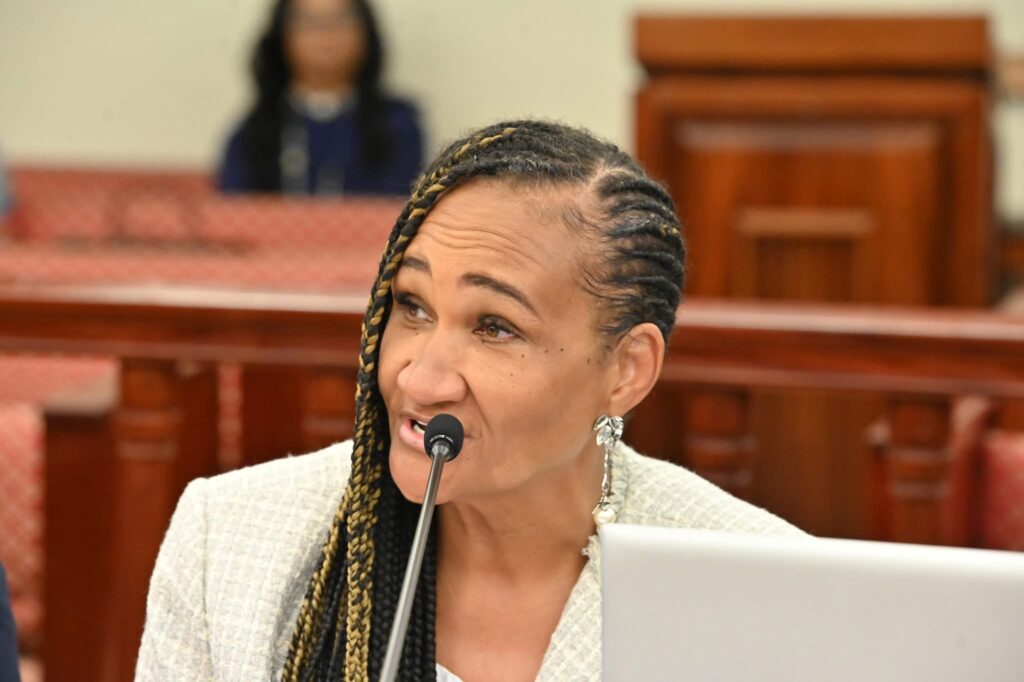
The session came less than a day after an early-morning fire damaged the Department of Education’s St. Thomas headquarters. Commissioner Dionne Wells-Hedrington said the blaze started around 1:15 a.m. Thursday in a storage room where outdated IT equipment was housed. It destroyed the room and spread into a restroom, but did not reach the adjacent server room, which powers internet access for schools and offices across the district.
“We are very aware of the vulnerability we now face,” she told lawmakers, adding that had the fire hit the servers, internet would have been out in schools across the district, along with the department offices. While it’s secure for now, she said she’s been working with Education’s provider to explore cloud backup options. Meanwhile, Bureau of School Construction and Maintenance Director Craig Benjamin said he met with the Fire Service the following morning and is awaiting their official report. Senators, however, worried about roof damage over the server area, with Sen. Kurt Vialet warning that heavy rain could cause additional problems.Looking at other repairs, Benjamin reported that on St. Croix, mold remediation at Woodson had been completed and new air conditioning units were being installed in classrooms, with the library and main office already outfitted. Test results on air quality were due after the Labor Day holiday, and the department said in a release Sunday night that a staggered reporting schedule should have students back in the classrooms on Sept. 8. Senators Friday acknowledged progress, including the long-awaited replacement of Woodson’s library air conditiong unit, which had been out of service for more than three years. “There’s a lot of frustration, but also a lot of good happening that we don’t always see,” Vialet said.
Friday, senators also touched on what they described as the “silent crisis” of chronic absenteeism. Both territorial superintendents said each district has six attendance counselors and itinerant staff, about 11 in total, who conduct home visits.
“We do see improvements when those visits are made,” said St. Croix Insular Superintendent Carla Bastian-Knight. “When we don’t, that’s when we tap into Human Services.” Still,Vialet argued that referrals alone aren’t enough. “The first time we file a child neglect case with Human Services, then you’re going to see improvement,” he said, noting that some kindergarteners had not yet reported to school two weeks into the term. “It comes back on Education because we see it in the test scores. We have to work to see how there can be coordination between Human Services and Education.” The point, he said, was underscored by safety incidents during opening week, when videos surfaced of an altercation at Charlotte Amalie High School and a neighborhood fight days later with students in Eudora Kean uniforms. Officials Friday confirmed that the students involved had been suspended and the cases accelerated for further disciplinary review. St. Thomas-St. John Insular Superintendent Stephan Jurgen, in further questioning from Vialet, said it’s not Education’s intention to give anyone a “pat on the back.”Those behavioral concerns, senators added, reflect the strain on the system’s limited mental health capacity. Wells-Hedrington acknowledged that staffing remains thin, with only a handful of psychologists and social workers spread across districts. Agreements with outside providers, including Master Key and Liberty Place, are helping to fill gaps, but coverage is inconsistent. Bastian-Knight said the department is embedding more social-emotional learning supports and trauma-informed training for staff. “This generation is carrying more than we can see, and it’s showing up in behavior, attendance, and engagement,” she said.
To address academic deficiencies alongside behavioral needs, the department has rolled out a Multi-Tiered System of Supports (MTSS) across all grades. The model groups students by need and offers escalating interventions in English Language Arts and Math. Jurgen said the shift allows schools to move away from one-size-fits-all instruction.
“We are now addressing how many years behind a student is and tailoring support to that need,” he said. Bastian-Knight added that the framework is not new—it was previously known as Response to Intervention—but said this time it comes with more coaching and oversight. Vialet pressed officials to ensure follow-through, and to hold administrators accountable in running their schools properly. Meanwhile, staffing levels remain a concern across the territory. Wells-Hedrington testified that as of the start of the school year, the department carried 51 teacher vacancies, up from 46 last year, along with shortages in critical support positions such as paraprofessionals, attendance officers, and school psychologists. She explained that recruitment efforts are ongoing, with new hires coming in from off-island contracts and stateside recruitment fairs, but the pipeline remains too thin locally. To stabilize the workforce, the commissioner pointed to several initiatives. One is a new partnership with the University of the Virgin Islands to expand teacher preparation programs, including scholarships and support for paraprofessionals to pursue certification. Another is the department’s “grow your own” strategy, which identifies high school students interested in teaching and supports them through college, with the expectation they return to the classroom. “We have to build from within,” Wells-Hedrington said, with Sen. Carla Joseph highlighting that only two students recently graduated from the University of the Virgin Islands, and asking the plan for building sustainability. To address the long-term gap, Wells-Hedrington said the department is working with the governor’s policy office and Career and Technical Education to create a career pathway beginning in eighth grade, where students would take exploratory courses, earn dual credits, and graduate high school with enough credits for an associate’s degree in education. From there, they could transition seamlessly into a bachelor’s program and enter the workforce sooner. “The goal is to launch the pathway next school year,” Wells-Hedrington said. Beyond teachers, the commissioner noted efforts to recruit more specialized staff, including licensed counselors and social workers, through targeted federal grants and partnerships with community providers. In addition, the department has rolled out new incentives for hard-to-fill positions, such as relocation stipends and bonuses for teachers in high-demand subject areas like math, science, and special education.On the basic needs front, officials said school lunch operations are fully up and running, with hot meals being served for the first time in years. Wells-Hedrington confirmed that kitchens are staffed and supply chains are steady, though aging equipment remains a challenge. Federal USDA funds have been tapped to replace outdated appliances and improve food service. But lawmakers were quick to point out that some schools still lack fully operational kitchens.
Sen. Franklin Johnson, in particular, pressed Benjamin for answers on why kitchens at Claude O. Markoe on St. Croix and Eulalie Rivera on St. Thomas remain incomplete. “If you don’t have a kitchen with tools and utensils, you can’t cook,” Johnson said. “This is unacceptable. I want a date.” Benjamin responded that both kitchens are federal funded American Recovery Act projects, but delays from change orders, theft, and repairs slowed progress, though both projects, he added, are being accelerated, with contractors working on the weekends. Benjamin said the funding was held up previously but the Bureau had recently received the “greenlight” to begin. Bastian-Knight added that Markoe’s renovation is a fully funded ARPA project that has been extended by multiple change orders, while Rivera’s kitchen was on track until thieves stripped out brand new equipment and damaged tile. “It was my understanding a community partner had offered to help replace what was stolen, but whether that’s happened I cannot say. What I can confirm is the funding for the project is there.” Benjamin said replacement equipment is in storage until electrical and tiling work are completed. Johnson, visibly frustrated, reminded officials this was not the first time the issue had come before the committee. “It’s been going on too long,” he said.The exchange highlighted the critical role of federal funding in sustaining the system. Wells-Hedrington said the department is currently managing more than $49 million in ARPA allocations. Those dollars, she explained, are underwriting everything from kitchen renovations and HVAC upgrades to MTSS implementation, summer learning programs, and expanded mental health services.
“ARPA has allowed us to move forward on projects that would otherwise have remained on a waiting list,” she said. But she also underscored its temporary nature: “We are putting these dollars into infrastructure, into people, into systems that our students need right now. But these dollars are time-limited. We have to make sure that the investments we’re making are sustainable once the federal relief expires.”
After several months of vacancy, hundreds of motorists have returned to the Fort Christian Parking Lot in Charlotte Amalie on St. Thomas.

In anticipation of a new paid parking system starting Tuesday, Public Works officials are advising anyone parked over the weekend to remove their vehicles by Monday.
Those who fail to comply will be subject to fees for parking overnight, effective as of midnight Tuesday. Public Works Commissioner Derek Gabriel says the new paid parking system is part of a modernization project that features numbered parking spots, accommodations for disabled drivers that meet federal compliance, and charging stations for electric vehicles.
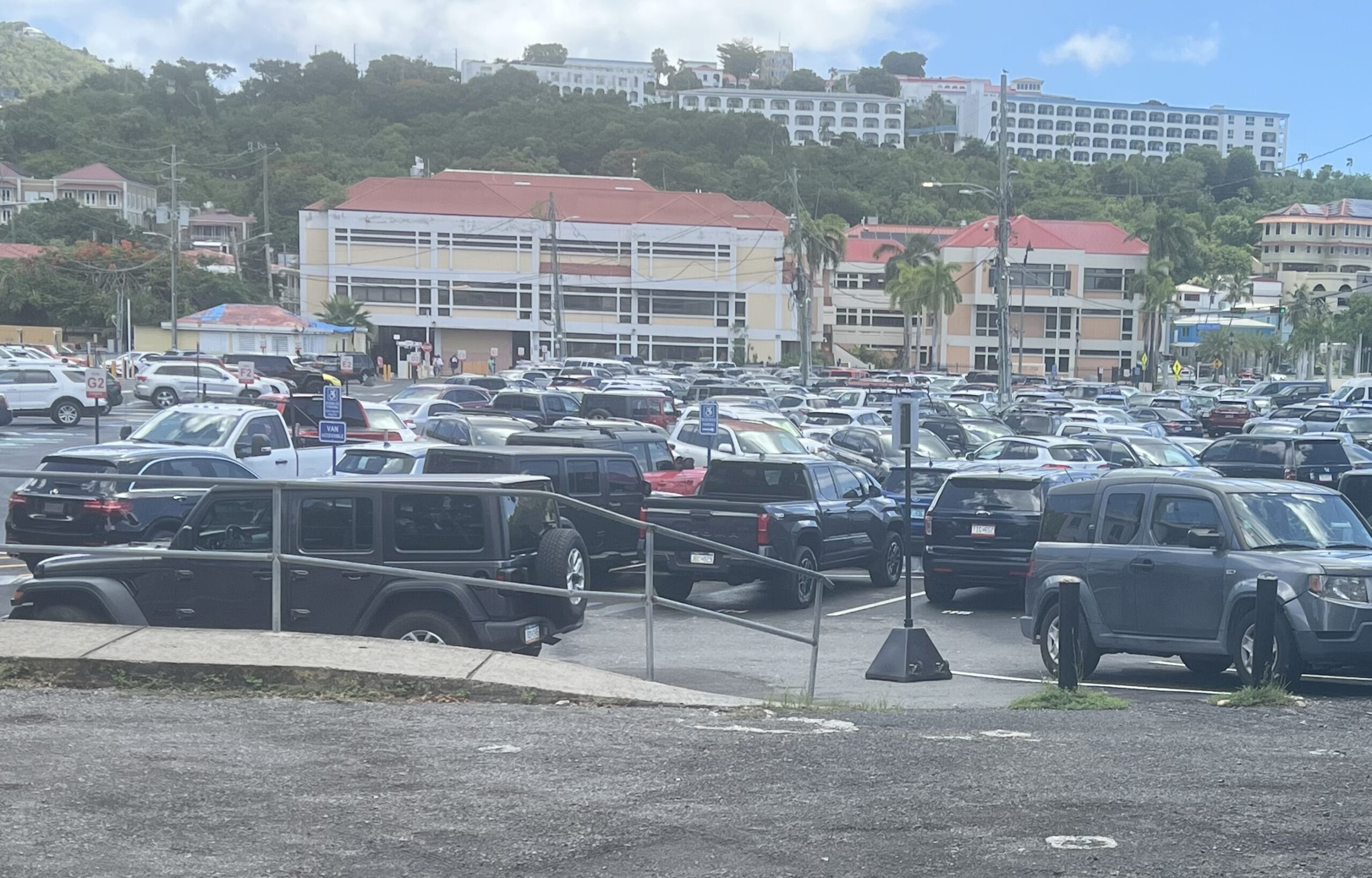
“This is something that we have been working on. I want to say since in 2024, right? We realized that the parking lot had been over 30 years since the parking lot had been paved … and there were a number of potholes, drainage issues, utility utilities that the underground utilities that needed to be repaired. And so we finally were able to make that happen this year,” Gabriel said.
The commissioner said the paid parking system is modeled after similar systems on the U.S. mainland, with inspiration taken from the parking lots managed by the V.I. Port Authority. With encouragement from Government House, the project included clearly marked spaces for designated disabled parking, along with signage directing users to newly-installed ramp access from the lot to the sidewalk in the northwest corner.

“For us to be finally ADA compliant, because we weren’t before these renovations that we recently made in the parking lot,” the commissioner said.
Repaving the lot was one of the first items on the task list, but allowing WAPA to upgrade its underground infrastructure and installing water systems for Carnival booths were also given priority. Underground infrastructure has been installed for the charging stations, which are expected to be in service by the end of the year.
Early work on the drainage system helped avert major flooding in the parking lot during the recent Carnival season. The year before, heavy rains produced enough flooding for promoters to cancel stage shows during the fete in 2024, he said.
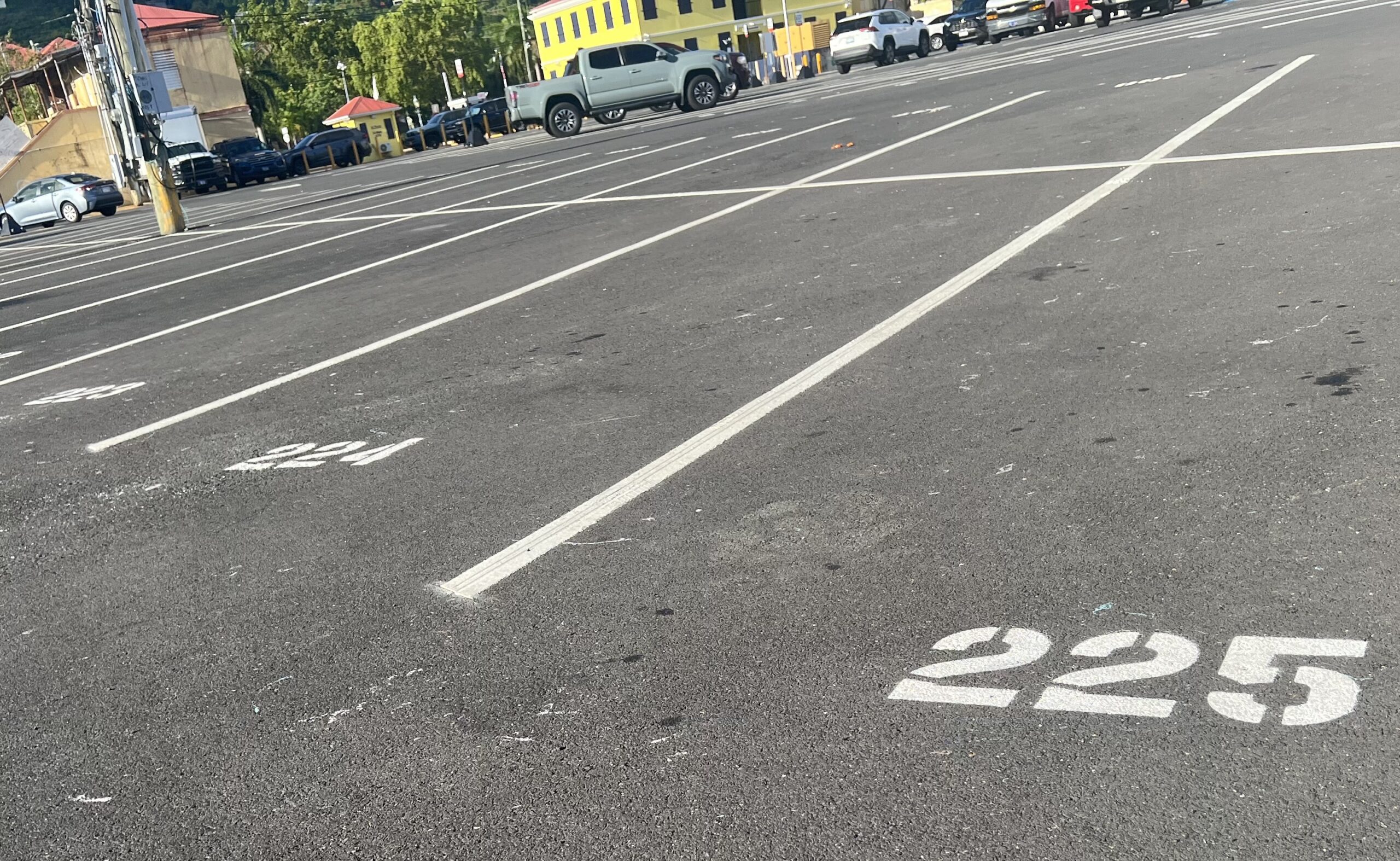
Numbered parking spots along with section markers were installed to help motorists remember where they parked. They also play a role in the new paid parking system, Gabriel said. For those who frequent the lot and pay by the month or more, parking spots can be tracked through the payment system. “We’re going to have it’s going to allow for payment input. But not only that, but we also are encouraging the public to get our monthly daily and annual passes. And of course, those passes also correspond to specific spaces,” the commissioner said.
Those who pay annually will receive stickers to place on their vehicles, which will allow them to bypass the toll booths.
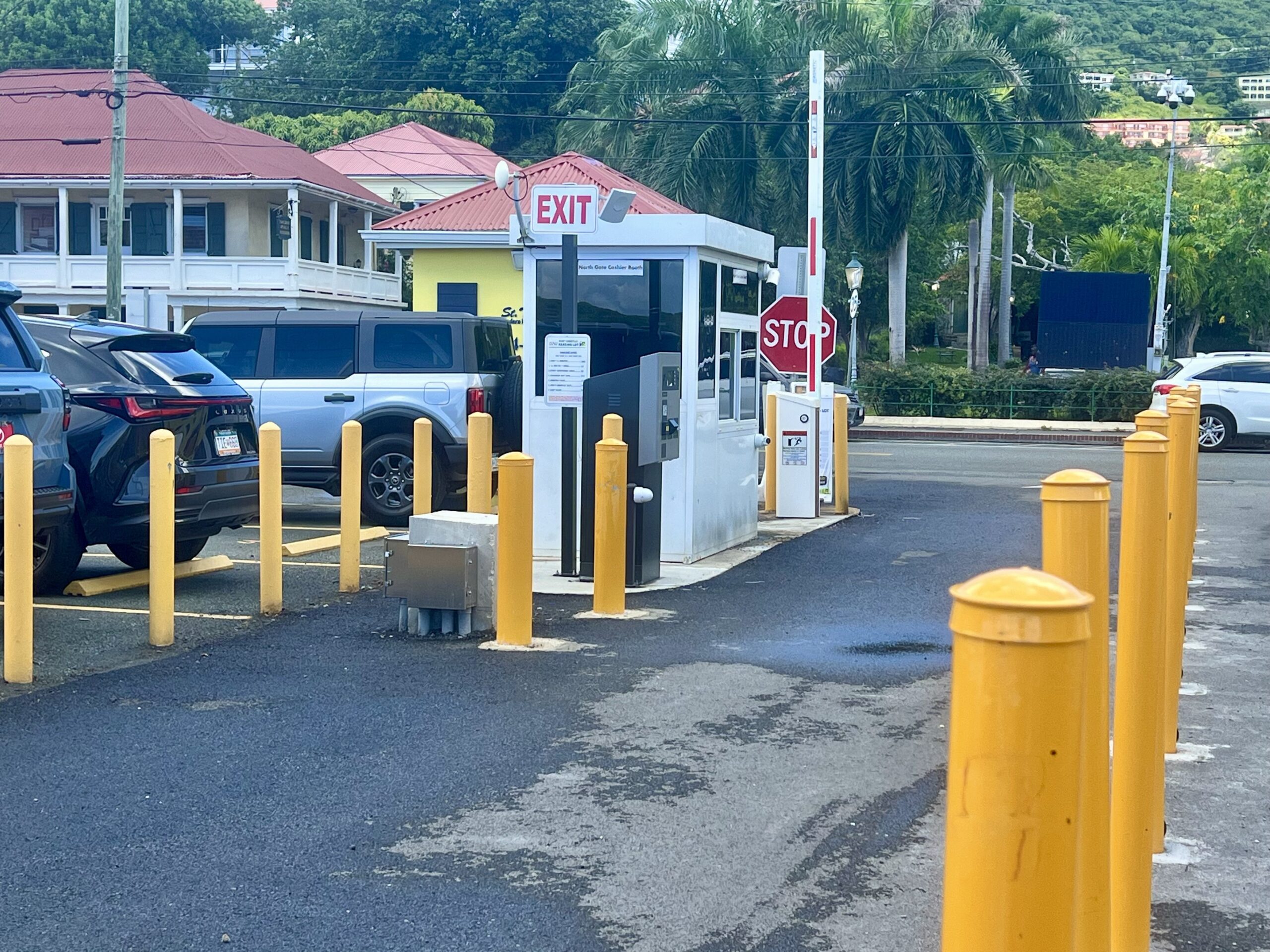
Booth attendants will remain in place for those who wish to pay cash between 8 a.m. and 5 p.m. The new system also allows Public Works to charge and collect fees before and after business hours.
Gabriel expressed confidence that motorists will adapt to the new system within a few days of regular use. He added that equipment and plans are already in the works to perform a similar upgrade at the Strand Street Parking Lot on St. Croix.
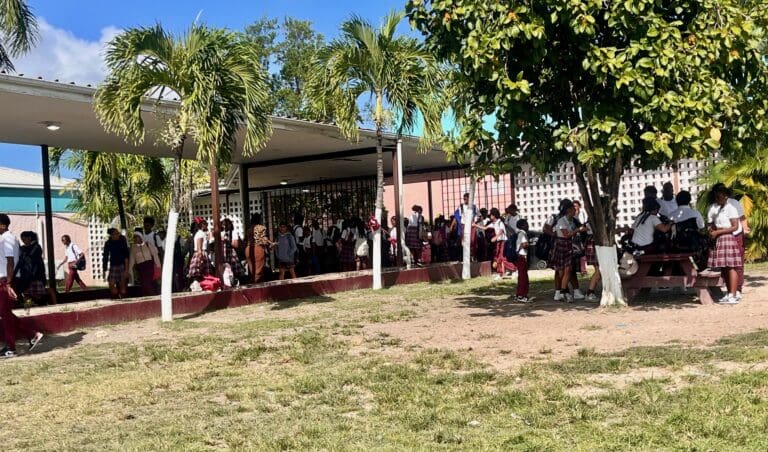
The Virgin Islands Education Department announced that John H. Woodson Jr. High School is expected to reopen for students on Monday, Sept. 8, provided mold testing and air quality results confirm the campus is safe.
The school, which did not open alongside others on Aug. 13, remained closed due to critical summer repairs, including roof work and mold remediation. The Bureau of School Construction and Maintenance has completed roof repairs and remediation, with air conditioning installations slated for completion this week, according to a press release issued by the department.
“Out of an abundance of caution, the Department will not reopen the school until confirmation is received that the campus is safe for all faculty, staff, and students,” officials stated.
The proposed reopening schedule begins with staff returning on Thursday, September 4, for classroom prep, orientation planning, and document coordination. Student orientation is scheduled for Friday, September 5, and full classes are set to resume the following Monday — pending satisfactory environmental results, the press release said.
Officials noted the delay has created challenges for the school community. “We understand the inconvenience and uncertainty this delay has caused, and we deeply appreciate the patience, understanding, and support of the John H. Woodson school community,” the release said.
Since 1999 the Virgin Islands Source – the only online newspaper of general circulation in the U.S. Virgin Islands – has been providing the community with reliable, accurate and balanced local journalism.
Contact us: visource@gmail.com
© 1999-2025 Virgin Islands Source