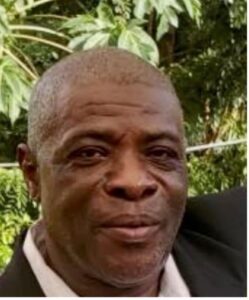
A 19-year-old St. Thomas man faces several charges after he was pulled over in Red Hook when officers with the Special Operations Bureau recognized his car as one that allegedly fled a traffic stop two weeks earlier, according to the V.I. Police Department.
On Saturday around 9:44 p.m. at American Yacht Harbor, Kerwan Warrington was driving a black Acura ILX withthe same license plate number involved in the incident Aug. 8 near Palm Passage in downtown Charlotte Amalie, in which the driver fled a traffic stop initiated by the officers for failure to display a front license plate — including swerving through heavy traffic, stop signs and red lights, police said.
When stopped on Saturday in Red Hook, officers confirmed Warrington was driving the vehicle during the earlier incident, took him into custody and had the car towed to the Alexander Farrelly Justice Complex, according to a probable cause fact sheet filed in V.I. Superior Court.
“An inventory search of the vehicle was conducted by Officer D. Duggins, and Officer B. Francis which revealed a license plate bearing number TIK-317 located in the trunk and on the rear passenger seat. Also located inside the vehicle was a black face mask, a black jacket, an empty box of Monarch FMJ 223 rounds, and a mason jar containing green leafy substance. A registration check confirmed this plate was assigned to a gray Jeep Wrangler reported stolen in St. John. The black Acura ILX was later released to Mr. Warrington’s mother,” the probable cause fact sheet stated.
Warrington was taken to the Richard N. Callwood Command, read his rights and placed under arrest for reckless endangerment, disobeying lawful orders, interfering with law enforcement discharge of duties, and failure to display a front license plate.
At his advice of rights hearing Monday in Magistrate Court on St. Thomas Warrington’s bail was set at $30,000 and he was released from custody with the conditions that he must live at a designated address in Estate Frydendahl, not leave the island without the court’s permission, report to the Office of Probation once a week, remain employed, refrain from using alcohol or drugs and not possess any firearms, ammunition or dangerous weapons.
It is with deep sorrow that the family of the late Andrew “Rupert” or “Black” Bannis announces his passing on Aug. 3, 2025.
Andrew Bannis
He leaves to cherish his memory his beloved wife, Heafline Bannis; his mother, Louisa Bannis; his daughters, Georgeline, Larisa, and Shanicia (Terrell); and his sons, Mark, Lenis, Carzworth (Merlis), Thaddeus, Marlon (Tonika), Abraham, Irvin, Durry, Darnell, and Okeem.
He will also be lovingly remembered by his grandchildren: Malike, Kayden, Marcel, Imani, Ariel, Khoryn, Abrea, Shamaicka, A’Manni, Darnell Jr., Cassanell, Rasai, Kairo, and Ziora.
He is survived by his brothers: Damian, Cletus, and Charles (Linda); sisters: Ruby, Katie (John), and Joanne; uncles: MacDonald, Alexander, Joel, and Knowlton; nieces: Julie, Angela, Ruthina, Helen, Aritha, Pamela, Sylma, Grace, Kim, Kay, Kessler, Liz, Tianna, Marese, Samona, Lawrencia, Clesha, Kimberly, Keisha, Shanice, and Noami; and nephews: Frank, Micheal, Keith, Jason, Danny, Thomas, Linton, Shawn, Marlon, Shernel, Cletus, Jevone, Corey, Gabriel, Shanon, and Shane.
Special friends include Julie St. Louis-Statie and Mary Wiltshire, along with many other
relatives and friends both near and far.
Friends and family viewing will be held on Friday, Aug. 29, 2025, between 3-5 p.m. at Divine Chapel, 129 Peter’s Rest, Christiansted, St. Croix.
Funeral services are scheduled to be held on Aug. 31, 2025, at Faith Seventh-day
Adventist in Frederiksted (across from the Frederiksted Post Office) with viewing at 9 a.m. and the service at 10 a.m.
Interment follows at the Kingshill Cemetery.
Annabelle Rosetta Stevens, a.k.a. “Bella” of Estate Diamond Ruby, transitioned into eternal life on Aug. 2, 2025. She was 88 years old.
Annabelle Rosetta Stevens
She was preceded in death by her mother, Cecelia Harris; father, Samuel Stevens; daughter, Annette McIntosh; niece, Jennifer Scholar; and brothers, Alphonso (Bobby) Stevens, Lloyd (Dove) Braffith, David Heyliger, Ira Samuel, Henry Stevens, Lawrence Stevens, and Joseph Stevens.
She is survived by her daughters, Hollis McIntosh, and Sandra McIntosh; grandchildren, Annetta Herve, Sean Smith, Schanel Silvest, Akisha Thomas, Akeena Pereira, and Carl Pereira IV; great-grandchildren, Shadiin Smith, Tai Smith, Neela Thomas, Carl Pereira IV, Yomari Pereira, Jo’Hara Pereira, and Jacob Avila Pereira; nieces, Teri Joseph, Lorna, Donna and Pamela Samuel, Edna Samuel-Henry, Jannet Cowart, Annette Clarke, Korin Stout, Eugenie Braffith, Elvina Braffith, Audrey Stanley, Paulette Joseph (husband Alfred Joseph), Brenda Stevens, and Sharon Stevens; great-nieces, Evelise Gomez, Xiomara Gomez, Shelise Roberts, Shania Milligan, Aleeyah Milligan, Anika Edwards, Jamila Joseph, Alisha Joseph, Aisha J. Woods, Beatrix Woods, and Jerisha Scholar; nephews, Oneal Woods (wife Gemma Woods), Eric Stevens, Winston Arnold, Alvin Milligan, Elroy Heyliger, Earl Braffith, Alimayo Braffith, Nathaniel and Jimmy Coppin, Daniel Samuel, Shayne Pemberton, Michael Samuel, and Marvin Thomas; great-nephews, Phillip Woods, Amadeo Milligan, Adrien Stanley, Andre Stanley, Michael Joseph, Tyrell Woods, Phillip J. Woods, Michael Woods, Jetta Scholar, Kahleed Scholar, Omari Scholar; special friends, Mary McIntosh, Odette Rennie, Johannes and McIntosh families; cousins and other relatives, Desilva Davis, Joycelin Schuster, Edward Stevens, Raymond Stevens, Hewitt and Harris families, and other relatives and friends too numerous to mention.
Funeral service will be held on Thursday, Sept. 4, 2025 at St. Patrick Catholic Church. Viewing will begin at 9:30 a.m., with service at 10:30 a.m. Interment will follow at Frederiksted Cemetery, St. Croix.
Professional services are entrusted to James Memorial Funeral Home, Inc.
The world is now racing into renewable energy, artificial intelligence, and the blue economy. Small nations that move quickly are already emerging as leaders. (Shutterstock image)
The Virgin Islands has never grown in isolation. Our greatest progress has always come when we aligned with larger global shifts. Today, we face another such moment — one that will determine whether future generations inherit opportunity or decline.
Lessons From Our Past
In the 1950s, when Cuba closed to U.S. tourists, St. Thomas and St. John quickly became premier destinations. Tourism flourished, creating jobs and establishing a cornerstone of our economy.
In the 1960s and 70s, Harvey Alumina and Hess Oil recognized the islands’ strategic location as a bridge between South America and U.S. markets. The refinery created thousands of high-paying jobs and injected billions into the economy.
These examples prove a simple truth: when the Virgin Islands positions itself within global trends, we thrive.
The Crossroads Today
The world is now racing into renewable energy, artificial intelligence, and the blue economy. Small nations that move quickly are already emerging as leaders. The Virgin Islands can do the same — but only with vision and urgency.
The risks of standing still are clear. During the Internet boom of the 1990s, we largely sat on the sidelines, while Silicon Valley created entire industries. The cost to us was missed opportunity, stagnant growth, and a “brain drain” of talent. If we repeat that mistake, we face deepening inequality, underfunded services, and an economy too dependent on vulnerable industries like tourism.
Seizing the Opportunity
To capture today’s wave of change, we must invest deliberately in:
Infrastructure: Territory-wide broadband, modern ports, and a renewable energy system capable of 300–500 megawatts to support data centers and advanced industries.
Education: Schools that integrate STEM and AI, vocational training in coding and green technologies, and partnerships with U.S. universities.
Entrepreneurship: Tax credits, startup financing, and streamlined permitting to empower local innovators.
Diversification: Expanding beyond tourism into clean energy hubs, AI and fintech startups, biotech labs, and blue economy ventures such as marine innovation and eco-tourism.
These steps are not abstract — they are practical pathways to new jobs, higher incomes, and reasons for our youth to stay and build their futures here.
A Call to Action
This opportunity is too great to ignore. Success requires unity across government, private sector, diaspora, and community. Public-private partnerships can attract capital while strengthening local entrepreneurship. Our diaspora, with its expertise and networks, must be central. And every Virgin Islander has a role—whether supporting startups, advocating bold policies, or investing in our future.
The future of the Virgin Islands will not arrive by chance. It will be defined by the decisions we make today. We can remain on the sidelines, or we can act boldly to build a diversified, resilient, and globally connected economy.
Virgin Islanders, our future is in our hands. Let’s build it — together.
— Bernard Dyer is a Virgin Islander in the diaspora, technologist, and strategist with more than 25 years of public-sector experience, including 16 years with Booz Allen Hamilton supporting digital transformation at the U.S. Food and Drug Administration. He is also a monthly co-host on WSTX 970 radio’s Community Digest, where he highlights new ideas and best practices to help build a more diversified and sustainable Virgin Islands economy.
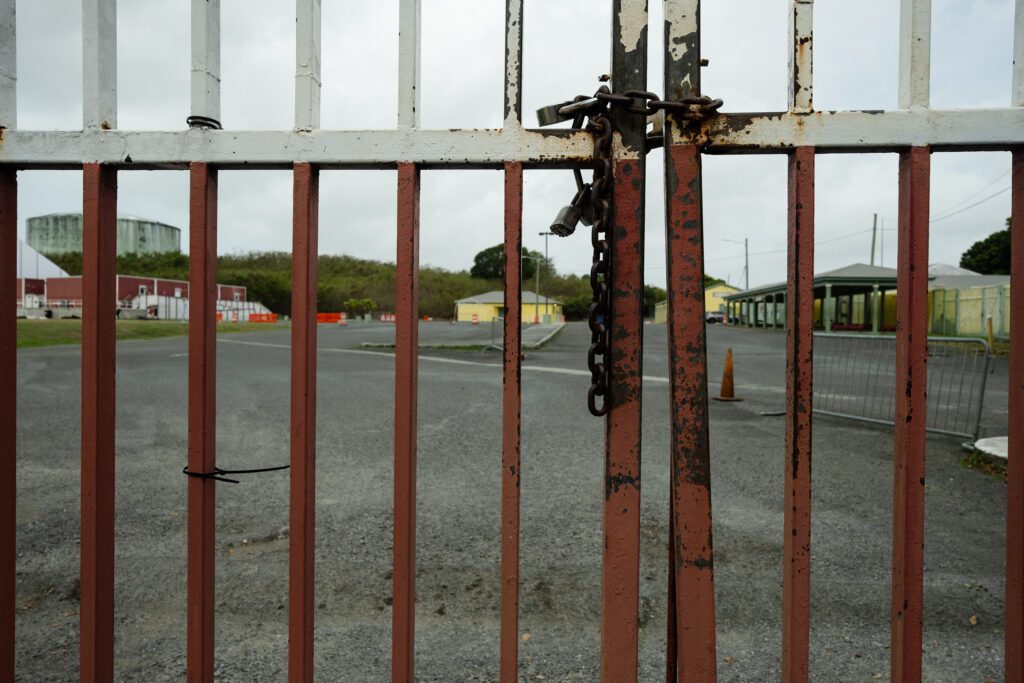
A lock keeps the entrance lane to St. Croix Central High School closed Monday morning. All public schools in the district closed after a bomb threat circulated widely on social media and a number of school monitors called in sick. (Source photo by Kit MacAvoy)
The message spread the way many do these days — as a voice note (and later a screen recording) that bounced from phone to phone and was passed through group chats and WhatsApp chains late Sunday night. Its language was explicit. Its threats — of bombs and violence targeting Black students — were both jarring and specific. And by Monday morning, schools across St. Croix were empty.
The Virgin Islands Education Department confirmed late Monday that every St. Croix public school campus had been cleared and would reopen Tuesday after extensive sweeps that also included private schools, with law enforcement maintaining a visible presence. Schools in the St. Thomas–St. John district — which were not closed Monday but still searched — have likewise been cleared. But the broader investigation, led by VIPD in partnership with the FBI, is still active and ongoing.
For Tafari Nelson, the day shifted in a heartbeat. His wife, who works at Juanita Gardine, had shared the voice note with him the night before. By Monday morning, he’d dropped his daughter at day care and was on the way to work when the call came to pick up his son. He made a U-turn.
On the ride home, Nelson used the time to talk with his son — calmly, but seriously — about what a bomb threat is and why it’s not something to ignore. At home, they sat together and recorded a short YouTube video, framed as a news report, that had garnered thousands of views by midday.
Nelson said he’d been thinking for a while about starting more intentional conversations between parents and children, and this moment felt like the right time to begin. It was also the first time, he said, that he’d seen a threat connected to a school incident in the territory that was explicitly racial. He called it “unforgivable” and said he hopes the sender is identified.
Maintenance workers continue repairs at John H. Woodson Junior High School Monday after all public schools in the district closed amid a bomb threat and shortage of school monitors. In-person classes at Woodson were delayed in order to let workers complete roof repairs, mold remediation and air quality testing. (Source photo by Kit MacAvoy)
Meanwhile, the threatening recording was first brought to the attention of Police Chief Uston A. Cornelius by a concerned parent late Sunday night, triggering a response. Cornelius alerted VIPD Commissioner Mario Brooks and reached out to Education officials. By Monday morning, officers were fanned out across St. Croix’s larger public high school campuses.
Cornelius said the protocol was simple: clear civilians, walk through with staff, and look for anything out of the ordinary. If nothing stands out, the building is returned to administrators. If something does, specialized units are called in. No suspicious items were found on the main campuses, but walk-throughs were extended “to satisfy the concerns of all involved.”
The decision to shut down all district schools, he added, came after consultations with Education and was largely driven by the absence of the schools’ monitors. A recent shift in scheduling aligned monitors’ contracts with the school year, rather than keeping them on 12-month schedules. Whether that played a role in the high number of absences on Monday is unclear, but their absence left an immediate gap in campus security.
Education Commissioner Dionne Wells-Hedrington, who flew to St. Croix Monday morning, said the department wasn’t willing to take chances. “A day can be made up — lives cannot,” she said, calling the decision to close schools a “straightforward” one given the circulating message and the lack of monitors in place.
Public schools in the St. Croix district closed early after a potential bomb threat circulated on social media and a number of school monitors called in sick. Law enforcement and the V.I. Education Department stated that there was no active threat made against schools in the St. Thomas-St. John district. (Source photo by Kit MacAvoy)
Upon landing, she immediately met with St. Croix Insular Superintendent Carla Bastian Knight. Wells-Hedrington emphasized that buildings would only reopen once police gave the all-clear — and once monitors were confirmed to return. Additional sweeps are scheduled for Tuesday morning, with monitors expected back on post.
While logistics drove the official response, it was the content of the recording that struck a nerve in the community. The voice note was blunt in its threat, naming schools as targets and singling out Black students. Wells-Hedrington said she was “surprised” to hear the language used in the message and is “eagerly awaiting” investigative findings. If a student is behind the recording, she said, the response must also include an understanding of what led to it — whether isolation, bullying, or other pressures — while also acknowledging that federal consequences could follow.
By Monday evening, the list of confirmed facts was short: no weapons or devices found, no suspect publicly identified, and school scheduled to resume the next morning. But the broader questions — who sent the message, why it was made, and what safeguards are needed going forward — are now in the hands of investigators and public safety officials.
Cornelius, for his part, acknowledged the demand for answers. “It’s still a work in progress,” he said. “But trust me — once we’re able to give the community updates on what’s transpiring, we’ll make sure the public is notified.”
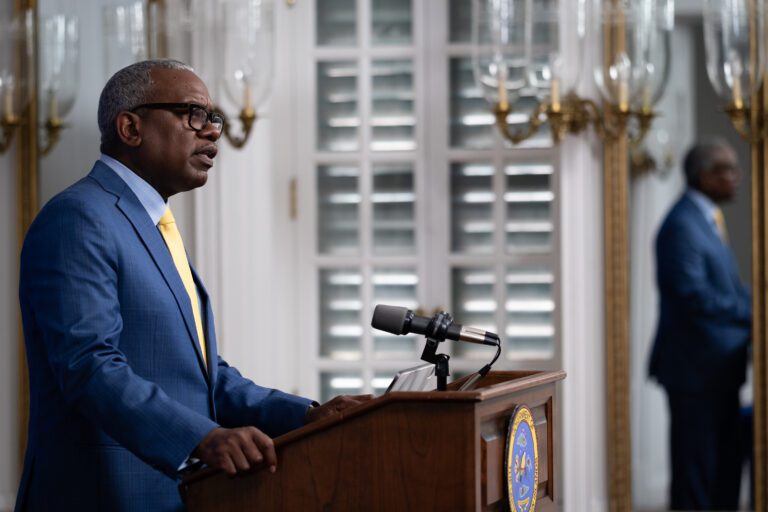
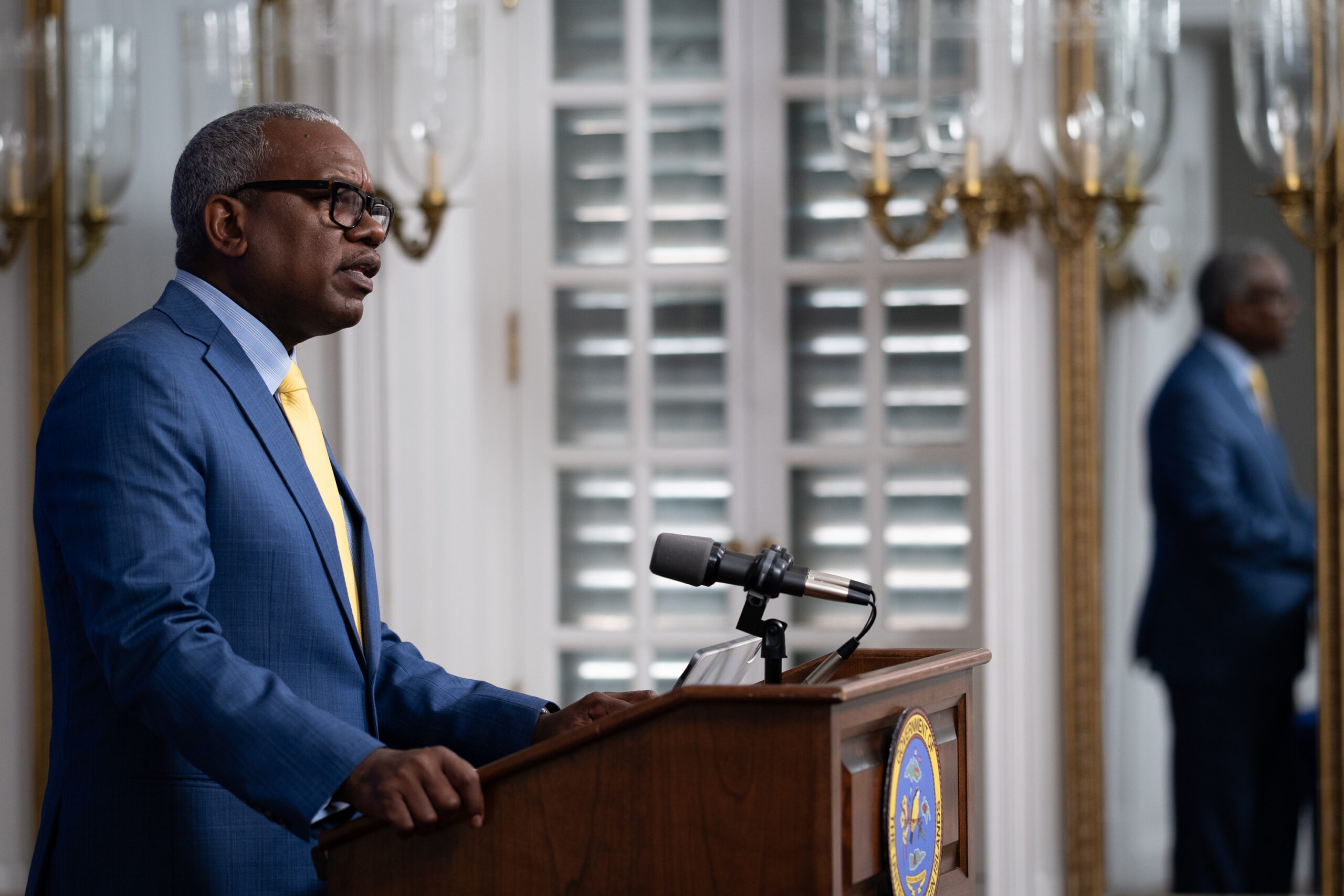
Gov. Albert Bryan Jr. addresses the public Monday during a press briefing held at Government House on St. Croix. (Source photo by Kit MacAvoy)
A press briefing led by Gov. Albert Bryan Jr. Monday included new details about a landmark land acquisition tempered by budget concerns, doubling down on the West Indian Company’s right to opacity and frustration over a bomb threat and school monitor sickout, which temporarily shuttered St. Croix schools.
Bryan called the bomb threat, which circulated over social media this weekend, a “reckless act that disrupted the lives of students, parents, educators and administrators … as a matter of fact, it really upset the entire community, and we simply will not tolerate it.”
“Let me be clear: there is no place in our community for threats that endanger our children or undermine their education, and we will pursue every avenue to hold accountable the individual or individuals responsible for this disruption,” he said before thanking school personnel for their response to the potential threat. “And I thank the students and their parents who endured the anxiety and uncertainty of this day.”
He was less thankful toward the multitude of school monitors who reportedly called in sick to work Monday.
“I understand that our monitors — like all members of our education workforce — may have concerns that they want to address, and I respect their right to make their voices heard,” he said. “But I also want to remind us, all of us, that there are already enough challenges beyond our control — storms, emergencies and now today’s threat — that interrupt regular instruction in our schools and our workplaces. Taking actions that needlessly add to those interruptions, no matter how well-intentioned, does not serve the best interest of our students.”
The V.I. Education Department confirmed Monday that campuses had been cleared and schools are set to reopen on Tuesday, but local and federal law enforcement’s investigation into the threat is ongoing.
Bryan, DPNR Sign Resolution Protecting Maroon Ridge, Annaly Bay
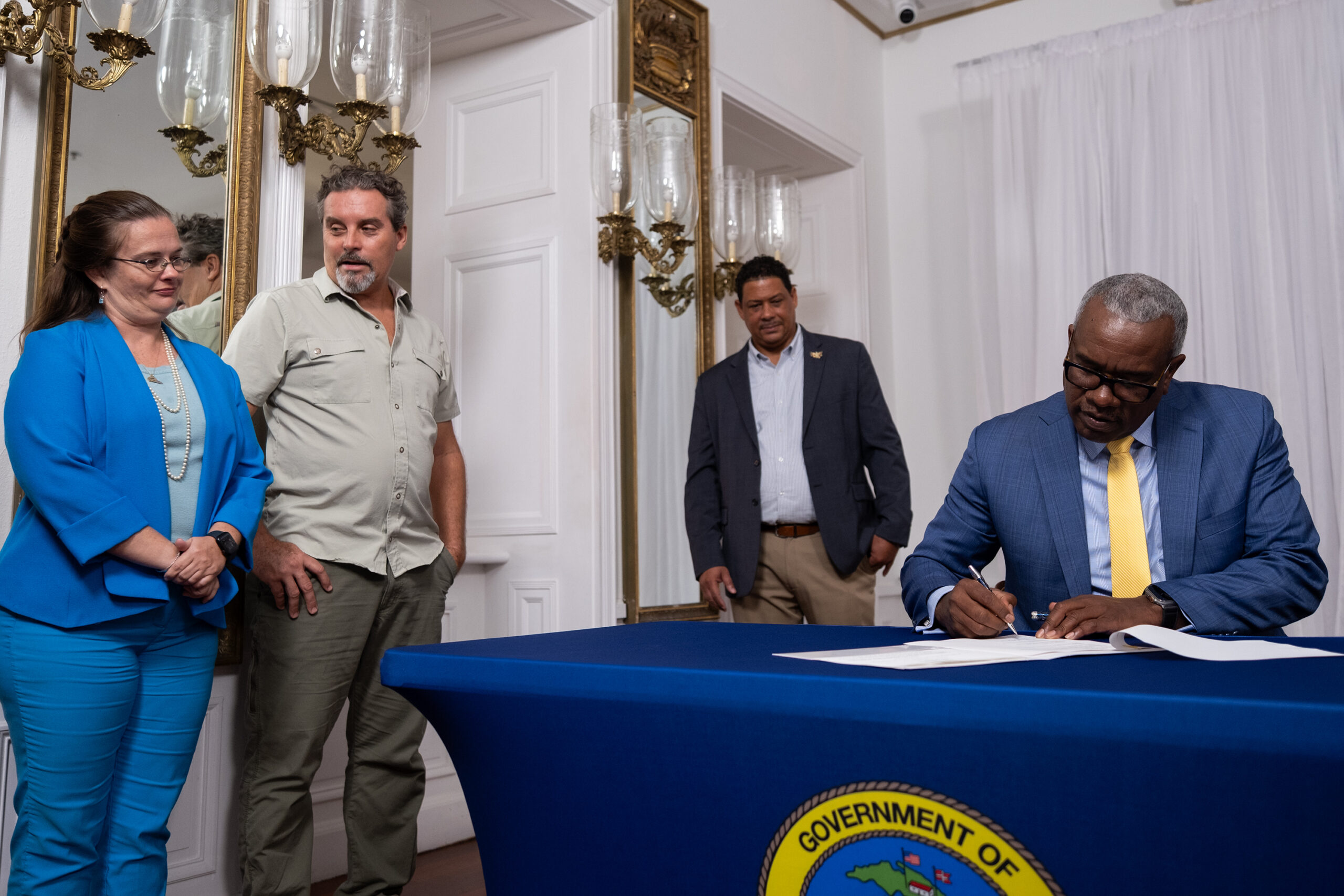
During Monday’s briefing, Bryan and leadership from the Planning and Natural Resources Department also formally announced the territory’s $17.5 million purchase of protected land in the Maroon Ridge and Annaly Bay area of St. Croix. Funded through a $69 million grant from the U.S. Commerce Department and the National Oceanic and Atmospheric Administration awarded by the Biden administration, the land acquisition amounts to a 2,469-acre expansion addition to land managed by DPNR’s Territorial Parks and Protected Areas Division.
From left, Territorial Parks and Protected Areas Director Kristina Edwards, TPPA board member Aaron Hutchins, Planning and Natural Resources Commissioner Jean-Pierre Oriol and Gov. Albert Bryan Jr. sign a resolution designating 2,469 acres in the Maroon Ridge and Annaly Bay area as protected land Monday at Government House on St. Croix. (Source photo by Kit MacAvoy)
“The secured lands represent not only breathtaking natural beauty, but also our sacred heritage: land tied to our legacy of resistance and resilience,” DPNR Commissioner Jean-Pierre Oriol said, adding that the process began years ago and was spearheaded by Territorial Parks and Protected Areas Director Kristina Edwards in partnership with the nonprofit Trust for Public Land. “And now, after two years, we can see that the public’s access to this land is now protected in perpetuity.”
Edwards said she had “about a hundred thank yous” to share.
“We worked really hard over the past two years, but this has been decades in the making,” she said, lauding the work of local community organizations and Virgin Islanders for their input and guidance. Edwards said later that the NOAA grant included funding for a management plan to be formed after a series of public meetings and stakeholder surveys. Oriol said that the nature of the grant restricts use of the area to “low impact conservation-related activities.”
“But we don’t want to make those decisions for the community in a vacuum,” he said. “Again, it’s our park, so we’re going to engage the community in terms of what they would like to see throughout the islands at each of the different park system holdings.”
Oriol teased that another acquisition will be announced in the coming months.
Bryan Warns Legislature Against ‘Self-Inflicted Wounds, Unforced Errors’ in Budget Markup
As the 36th Legislature nears the finish line in putting together the government’s 2026 budget, Bryan voiced concern over financial obligations set to go into effect in the coming weeks and months. Those included: the Legislature’s own mandate to raise salaries for the government’s lowest-paid employees to $35,000 per year; the Government Employees’ Retirement System’s 3% increase to employer contributions; and an overall $20 million increase in health insurance costs.
On Monday, Bryan reiterated claims that the raises will have a “cascade” effect.
“All the people who are making … anywhere between 27 and 35 [thousand dollars per year] will all be making 35 — of course, those people will ask for separation because of tenure, job complexity, et cetera, et cetera,” he said. “And then once those get adopted, then everybody else is going to want an adjustment on their salary, and so on … creating a cascade that could rise as high as $27 million.”
In one of several broadsides against the Legislature, Bryan said lawmakers empowered GERS to raise employer contributions because “they didn’t want to have the pressure.”
“Which I don’t think makes any sense,” he said, “because who would give their … retirement system the ability to raise the contribution?”
Factoring in the salary minimums and the GERS increase, Bryan said hiring any new public employee will cost the government $53,000.
“Together, these factors create kind of like a perfect storm, and it shows how, you know, we continue to shoot ourselves in the foot when it comes to fiscal finance. We’re already behind $140 million in retro pay for government employees over the 40 years,” he said, adding that another $20 million is owed to employees who are members of United Steelworkers. “I have not even ventured upon the continuing debt problems at the two hospitals, which owe at least $40 million. WAPA, Waste Management, that’s well into $30 million as well. So we have to choose priorities, and it’s tough being an elected official, and I always have to show up and be the bad guy, but so be it. The fiscal responsibility has to be taken on by all of us.”
Bryan said he was willing to work with lawmakers and open to implementing a 10-percent raise each year until salaries reach $35,000, “but this vast increase — rapidly, without any research and no financial planning by the Legislature — is foolish at best and irresponsible in reality.”
On Questions About WICO, Bryan Points Finger at Legislature, Judiciary
Asked Monday about the West Indian Company’s lack of financial and organizational transparency, Bryan instead found fault with the other two branches of government.
“The Legislature has been arguing this point — about whether WICO has to comply or not,” he said. “Their job is to write the laws. It wouldn’t dawn on one of 15 of them to say, ‘hey, if we want WICO to comply with every government law, why not write a law that says WICO has to comply with every government law? Instead we have this stupid debate all the time. They have the power to do it. They’ve always had the power to do it. So I’m just a little confused.”
The West Indian Company is a wholly owned subsidiary of the V.I. Public Finance Authority. During a bruising Senate Budget, Appropriations and Finance Committee hearing last week, WICO officials declined to disclose basic information about the entity’s finances because of their status as a publicly-owned private company. Sen. Novelle Francis Jr., who chairs the committee, eventually called the hearing an “exercise in futility.”
The following day, Sen. Hubert Frederick asked PFA’s director of finance administration, Nathan Simmonds, if WICO is public or private. Simmonds said that the PFA “believes that WICO is a public organization” and said the government owns all of WICO’s shares.
“‘Nuff said,” Frederick replied, adding that lawmakers needed to collect on approximately $10 million owed in Payments in Lieu of Taxes. “That’s it. If we own it, we need to collect every dime, and that money needs to go to the general treasury so we can pay our bills.”
Simmonds’s assessment is in line with findings by the V.I. Superior Court, the V.I. Supreme Court, the U.S. Third Circuit Court of Appeals, a former V.I. attorney general and WICO’s own board chair, who told WTJX last week that WICO is a public entity and “as such, it’s subjected to all the rules and regulations of a public entity.” On Monday, Bryan waved away the years of legal precedent.
“Everybody thinks that the judiciary is perfect. These are judiciary statements — lawyers and judges are wrong all the time. That’s why the decisions are overturned,” he said, though it’s not clear which, if any, findings about WICO have been overturned or even challenged. “And when we make statements about what is said, it’s like: it is maybe a public company for some instances — public regarding some instances and not the other. The court said, in terms of transparency, they have some transparency requirements, but in other divisions they don’t. So the courts have been very specific about [what] WICO can and cannot do. Like I said, if the Legislature is concerned, they need to just pass the law — it’s clarity.”
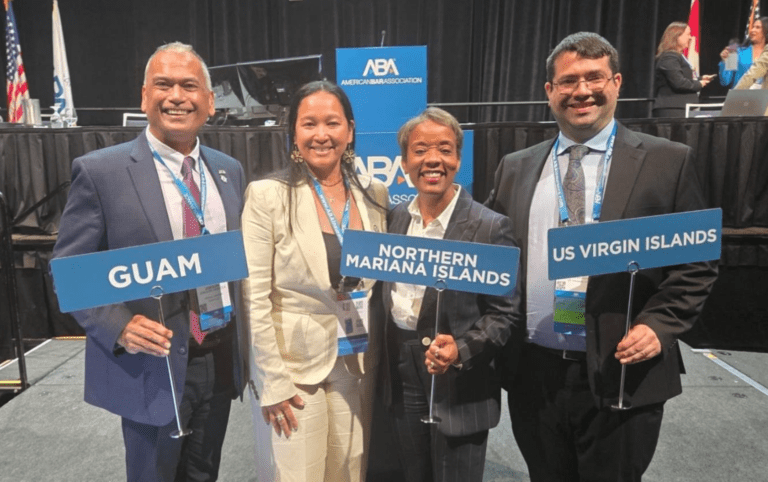
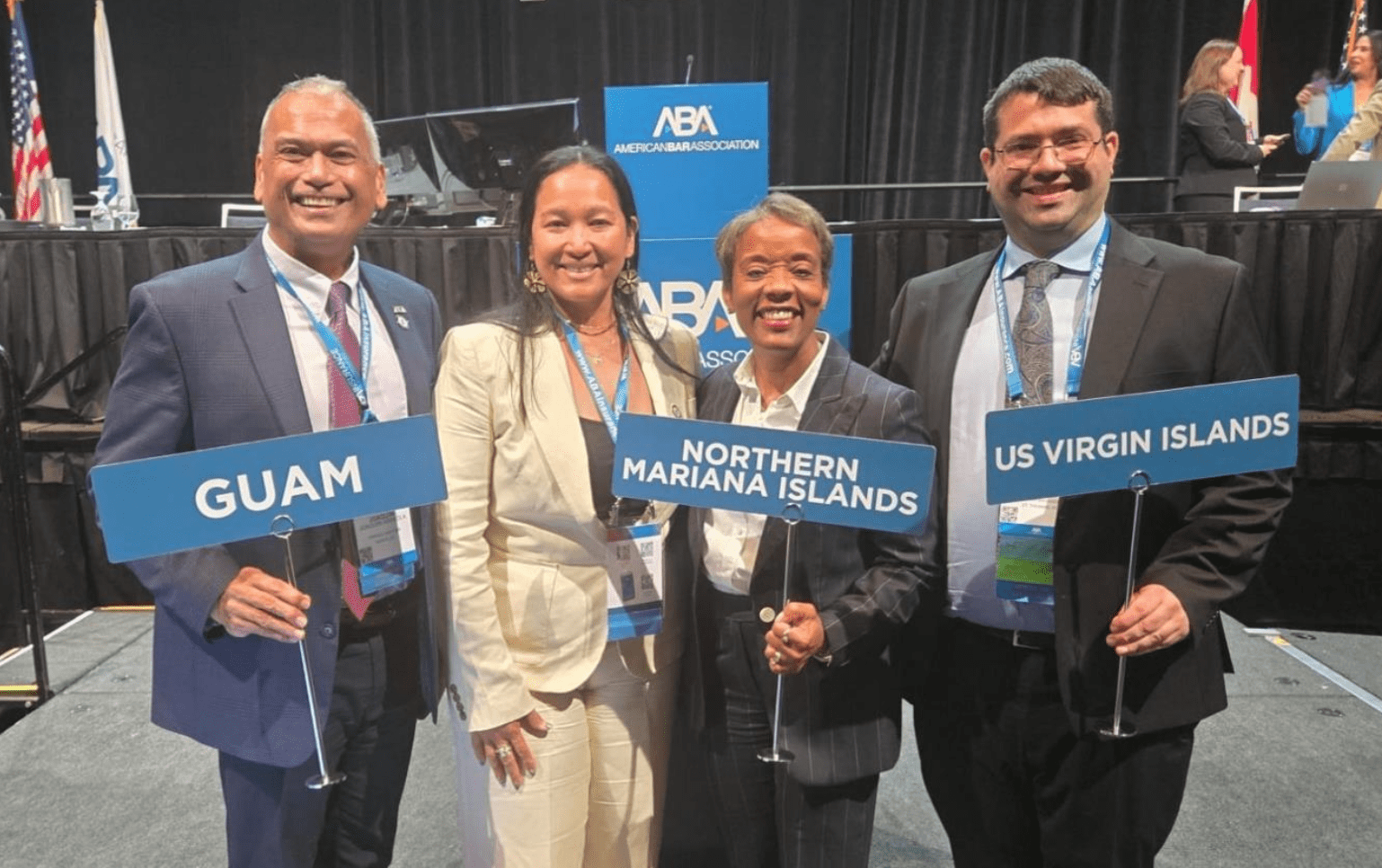
From left, Joaquin C. Arriola Jr., Guam delegate; Jacqueline T. Terlaje, GBA president and NMI alternate delegate; Michelle A. Behnke, ABA president; and Anthony Ciolli, U.S. Virgin Islands delegate-at-large and V.I. Bar past-president. (Submitted photo)
The bar associations of the Virgin Islands, Guam and the Commonwealth of the Northern Mariana Islands on Monday announced a historic milestone achieved at the American Bar Association’s 2025 annual meeting: a vote amending the ABA Constitution to recognize the USVI and the U.S. Pacific Territories as fully participating members.
By a two-thirds majority vote, the ABA House of Delegates adopted Resolution 11-2, authored and submitted by Anthony M. Ciolli of the V.I. Bar Association, amending Sections 2.1 and 2.2 of the ABA Constitution to recognize the U.S. Virgin Islands and the U.S. Pacific Territories (Guam, the Commonwealth of the Northern Mariana Islands, and American Samoa) as states for the purposes of ABA governance, the associations said in a joint press release.
“After nearly 40 years since the first of these four territories petitioned the ABA House of Delegates for representation, our territories finally have a seat at the table,” they said.
This amendment ensures that for the first time, lawyers in these jurisdictions will not only continue to hold delegate seats but will also have full participation rights, including representation on the ABA Board of Governors and a seat on the Nominating Committee, according to the release.
The ABA’s annual meeting was held Aug. 6-12 in Toronto, Canada.
“This milestone reflects the ABA’s commitment to its mission of serving all members and promoting full and equal participation across the profession. It sends a clear message that lawyers from the Virgin Islands and Pacific Territories are integral to the American legal community and will no longer be without a voice at the table,” it said.
“The U.S. Virgin Islands and the U.S. Pacific Territories have done their part to earn a seat at the table,” said Ciolli at the ABA House of Delegates Meeting. “The support and encouragement we have received from all corners of the ABA has been humbling … I must especially acknowledge the support and friendship of the New York State Bar Association and the California Lawyers Association, particularly their past Presidents Sherry Levin Wallach and Emilio Varanini.”
Guam Bar President Jacqueline Taitano Terlaje, who also represented the CNMI Bar Association as the alternate delegate, delivered a moving speech urging the House to lead by example and “give the U.S. Territories a voice in the governance of this body. It gives the U.S. Territories after awaiting 40 years – inclusion and equality.”
The Guam Bar Association, CNMI Bar Association, and the Virgin Islands Bar Association, extend their sincere appreciation to ACiolli for his tireless efforts and leadership in advancing this resolution, and to the ABA delegates who recognized the importance of equity in governance by supporting its passage, the release stated.
“For our bar associations, this victory ensures that our voices will be heard, our perspectives represented, and our communities no longer forgotten,” it said.
Why do some bays on St. John have thriving coral reefs while others look like a wasteland?
Why does sargassum seaweed pile up on certain beaches?
What might happen to nearby marine life if you build a pier in a particular spot?
How long might it take for fuel from a shipwreck to contaminate a nearby reef?
These are some of the questions that a recently published study led by Weifeng “Gordon” Zhang, Ph.D. of Woods Hole Oceanographic Institution, can help answer.
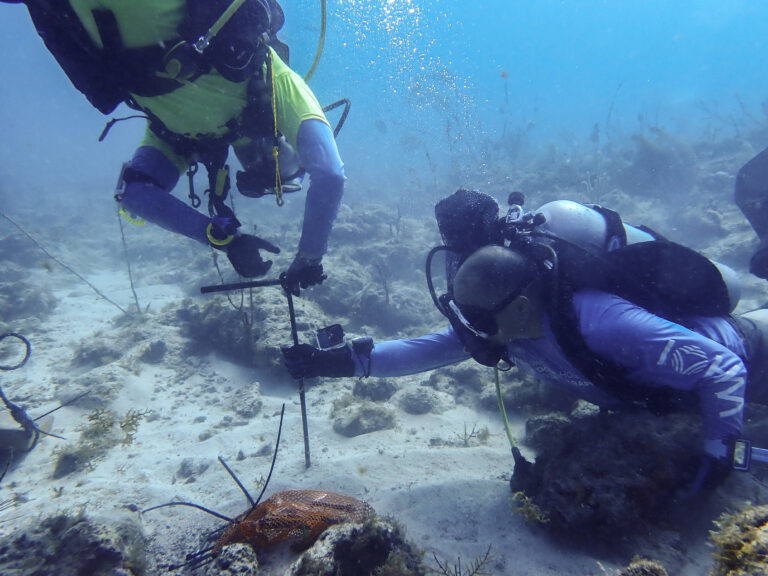
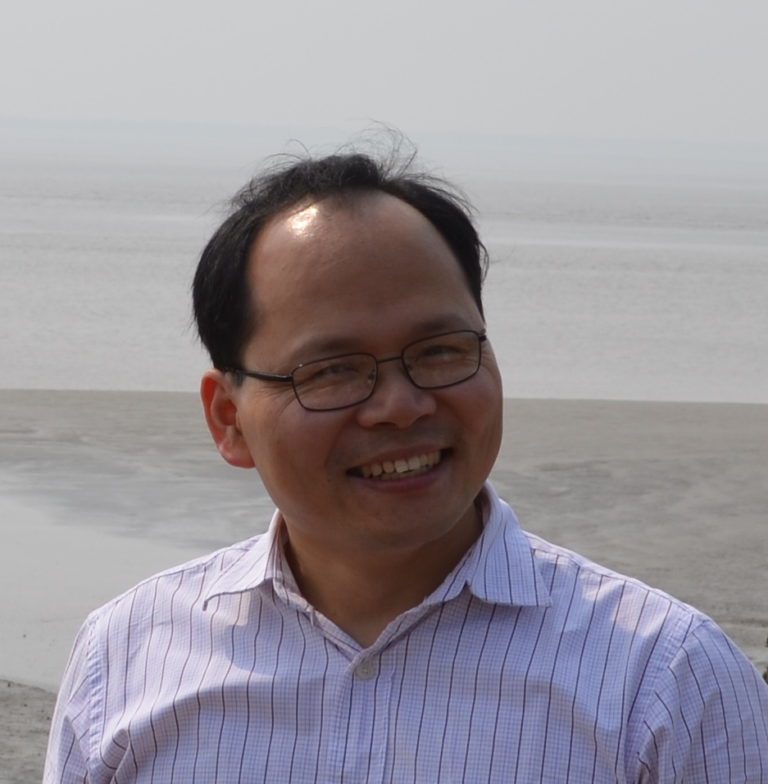
Weifeng “Gordon” Zhang has recently completed a study showing how water flows around St. John coral reefs. (Photo courtesy Woods Hole Oceanographic Institution)Zhang is a member of Woods Hole’s Reef Solutions Initiative, which has been conducting research in the Virgin Islands for more than a dozen years. Each member focuses on at least one aspect of coral reef research; together, they form an interdisciplinary team with the shared goal of rebuilding coral reefs around the world.
Zhang’s specialty is coral reef hydrodynamics — how water flows, and how its movement affects coral reefs. “He deploys instruments at strategic locations to measure water motions and hydrodynamic conditions over coral reefs,” said Amy Apprill, Ph.D., who heads up the Reef Solutions team. “He also develops high-resolution hydrodynamic computer models to quantify underwater weather, study larval transport in reefs, and guide efficient reef experiments and restoration activities.”
Zhang’s most recent studies, which were published in Frontiers, present a very specific computer model of the movement of the waters surrounding St. John. Source readers, beware: the paper is very technical; it’s written for scientists who can use the data for guiding decisions on coral reef restoration as well as others involved in conservation, planning and management activities. (Zhang also has data for St. Thomas, although it is not as refined as the data from St. John at this point.)
Zhang sees his computer model as akin to providing “underwater weather forecasting,” and it is a hugely complex task. It requires observations by those with local knowledge, data gathered from high-tech instruments, and supercomputers to process all the information.
Zhang began to develop the software for this study about three years ago after deploying underwater sensors to measure water flow, temperature, and tide height over time. Every three to six months, team members would collect the sensors, download the data, incorporate it into the model and test it for accuracy.
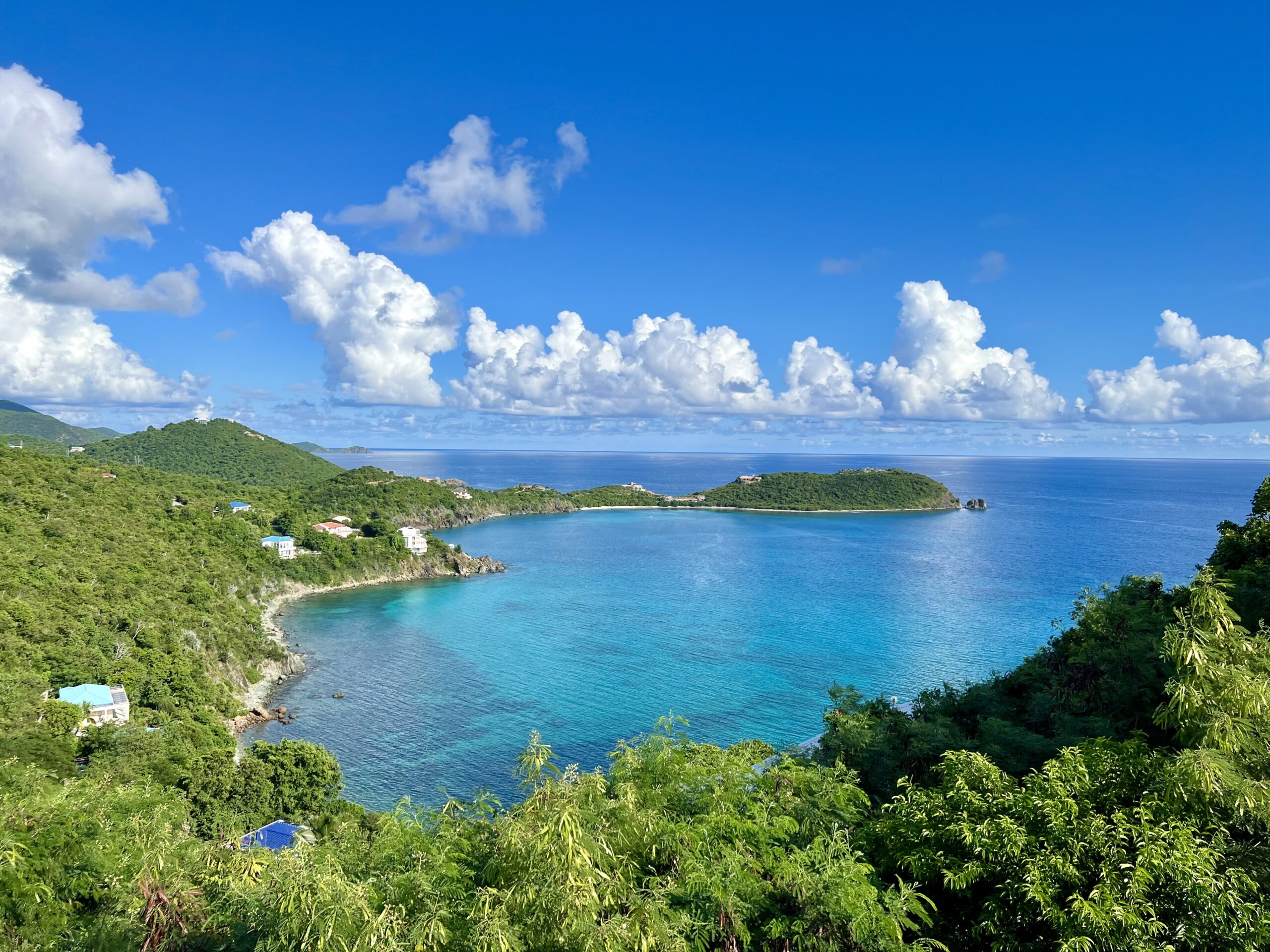
The waters on St. John’s south shore appear tranquil. (Source photo by Amy H. Roberts)
Some of the data comes from a buoy operated by NOAA off the south side of St. John. (Source readers interested in real-time conditions for swimming and boating will find this site useful.)
For each location, the model takes into account air temperature, humidity, wind speed and direction, water temperature, and salinity. There are numerous other factors that alter the flow of water in any particular spot, including the depth and contours of the bottom, the topography (shape) of the surrounding land forms, orientation (whether the location faces into or away from prevailing winds) and seasonal changes.
“The ocean is ‘forced’ by tides, weather, and large-scale ocean flows that change constantly,” said Zhang. During certain months, plumes of water from the Orinoco and Amazon rivers in South America make their way north toward the Virgin Islands, bringing water that is less salty (and therefore less dense). The way these layers of different densities interact can affect the flow of water and the overall health of coral reefs around St. John.
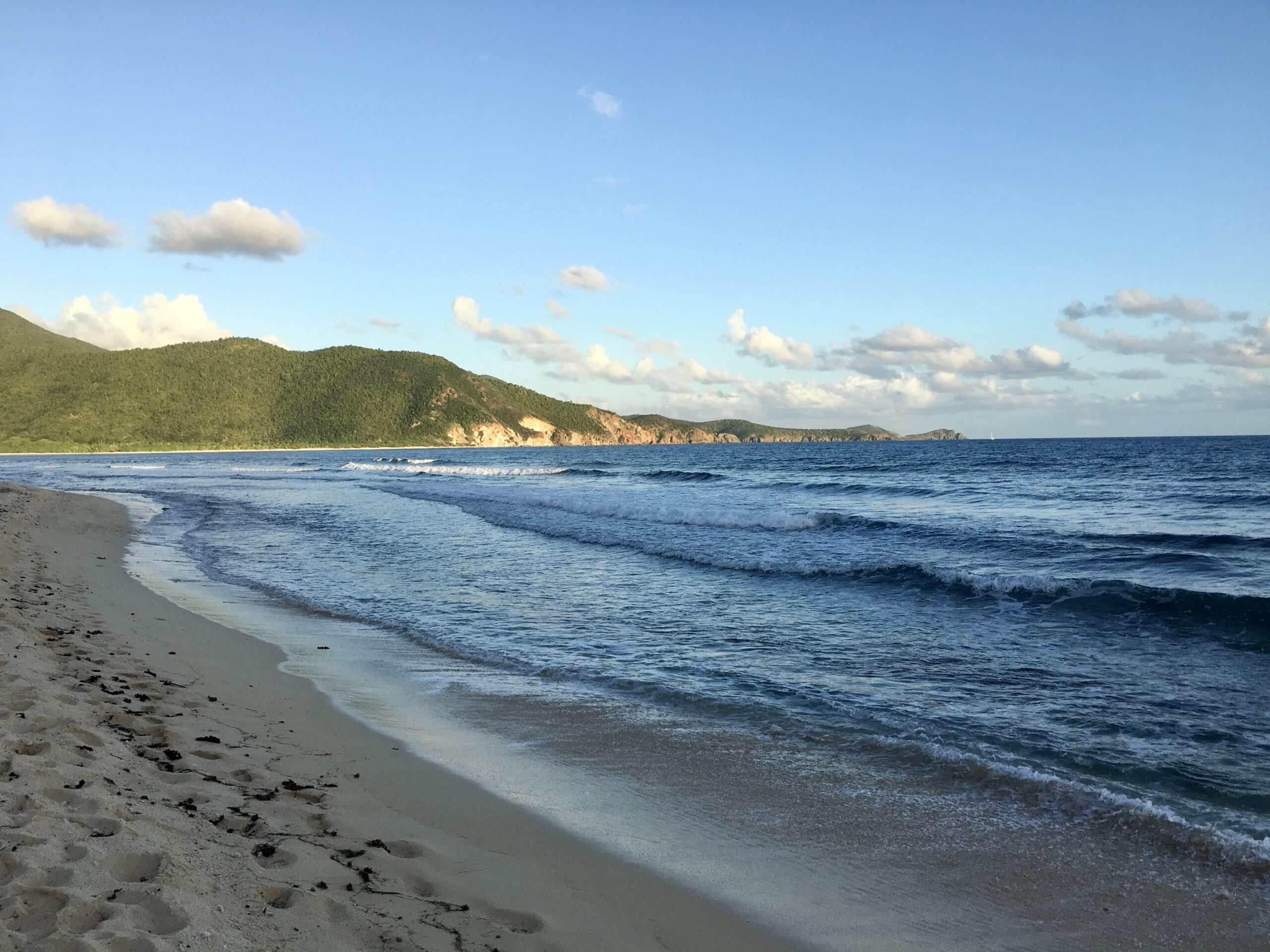
The water at Reef Bay on St. John appears dynamic. (Source photo by Amy H. Roberts)
Zhang’s work has been particularly useful to Reef Solutions team member Aran Mooney, Ph.D., who measures how newly spawned coral larvae are attracted to the sounds of healthy coral reefs.
Aran Mooney and Gordon Zhang deploy a device to measure currents around St. John. (Photo courtesy Woods Hole Oceanographic Institution)
“Corals are mobile only in their larval stage. That’s when they float through the ocean, seeking a good place to settle where they will metamorphize into the stationary animals familiar to divers and snorkelers. They use a wide range of chemical and biophysical cues to locate favorable habitats,” wrote Source writer Bernetia Akin.
“The study showed that larvae were far more likely to settle on a reef when they heard sounds that indicated it was healthy, such as noises indicating fish were present in significant numbers,” Akin continued.
Zhang’s model has helped Mooney determine whether the larvae from coral spawned at a particular reef can drift to sites where they can settle and thrive.
“Some coral larvae are only on the surface at the beginning, then they gradually sink and begin to swim a bit,” said Zhang. The density of the water, the wind-driven currents, the tides and the seasons will all affect where they eventually settle,” he added.
The model could also be used to study the spread of coral diseases, such as Stony Coral Tissue Loss Disease, determine sites with minimal coastal impacts and to aid in the selection of locations where micronutrient supplements might be most useful to enhance coral growth and immunity.
All of this work depends on observation by local experts, and Woods Hole Oceanographic Institution has developed a partnership with the University of the Virgin Islands to conduct research as well as the Virgin Islands National Park.
Zhang is continuing his research in other locations, including the Solomon Islands, Little Cayman, Dominica, Hawaii, and the Marshall Islands; each study will take two or three years. “We want to build highly accurate hydrodynamic models for reefs around the world,” he said.
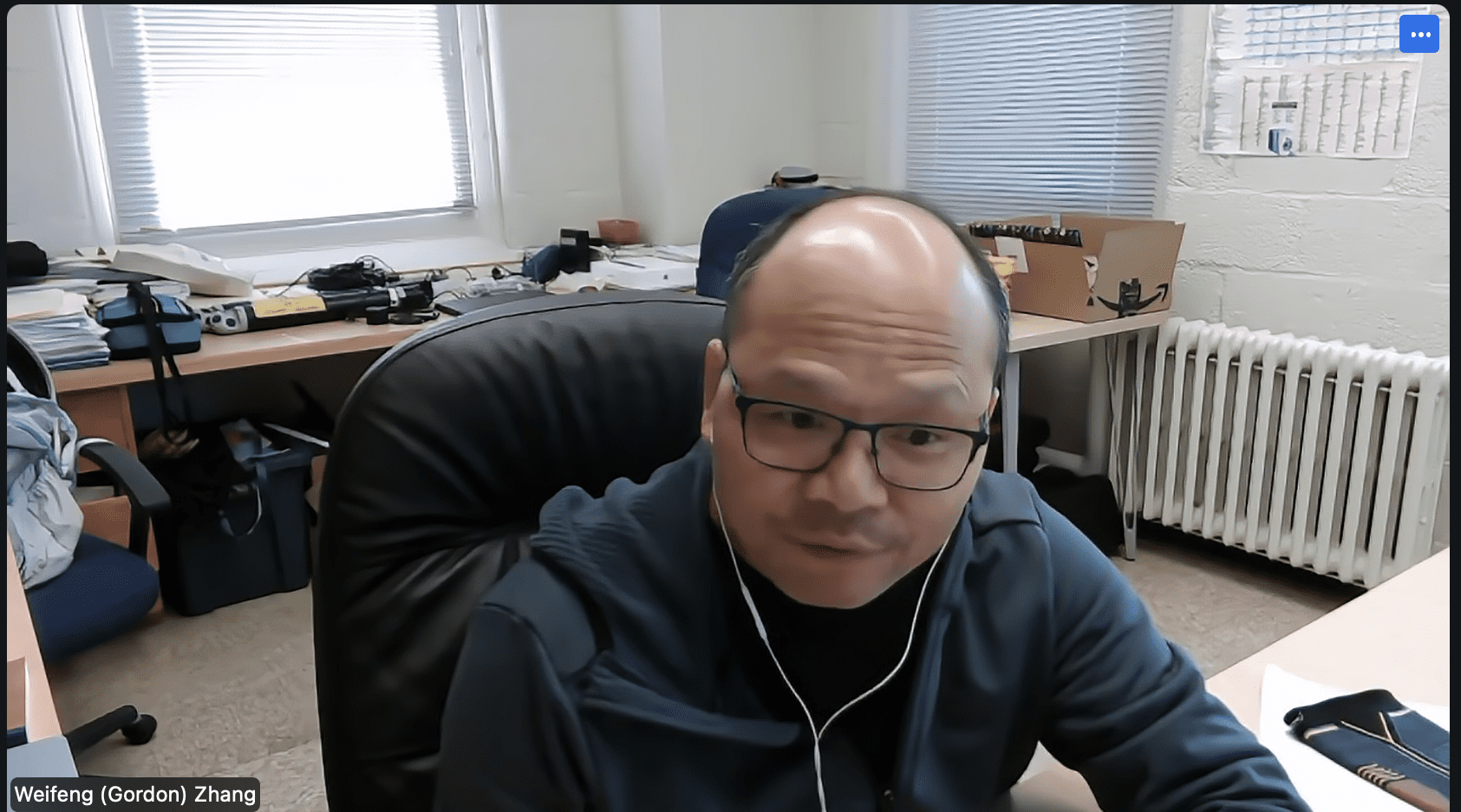
Gordon Zhang responds to a question during an interview on Zoom. (Screenshot on Aug. 22, 2025)
The information he gathers can help guide decisions for conservation and development. Zhang said when Reef Solutions scientists held a public meeting on St. John in April, listeners were curious about applying the model to the controversial Summers End Marina project in Coral Bay, which has been pending since 2014.
Zhang said he would need more detailed information for his model to determine the impact of the marina. “With some investment, we could work on that,” he said, then added, “The model can only say what the impact on flows in the surrounding area would be, not whether we should build it or not.”
The model could also help planners decide how they might deploy booms or other mitigation devices to direct sargassum away from intake valves for desalination plants, a problem that has been ongoing in the Virgin Islands. But Zhang points out that where the sargassum is diverted to is a decision left up to politicians and planners.
The Reef Solutions team’s main purpose is to help protect coral reefs. “If you have limited resources, what do you focus on? You can’t protect it all,” Zhang said. “Coral reefs around the world are under threat, and their health affects the livelihoods of countless local communities.”
With hundreds of thousands of tropical islands, the question becomes how to scale up Zhang’s project. “I want to speed this up. I have some ideas involving machine learning,” he said. “I need some time and financial support to concentrate on it and make headway.”
NOTE: For more information on the Reef Solutions team, click here. By holding down the cursor on team members’ photos, you can see a summary of their work.
Seniors will receive free legal and financial guidance at Thursday’s Senior Financial Health and Wellness Conference in St. Thomas, hosted by Legal Services of the Virgin Islands and partners. (Shutterstock image)
Seniors in the Virgin Islands will be offered free legal advice and financial education this Thursday at the third annual Senior Financial Health and Wellness Conference, which aims to help older residents protect their assets and avoid scams.
The event will be held in St. Thomas at the Philadelphia Seventh-day Adventist Church and is sponsored by Legal Services of the Virgin Islands, the Senior Medicare Patrol, and the Seventh-day Adventist Church.
Legal Services of the Virgin Islands is a nonprofit that offers free legal services for low-income families, the elderly, veterans, and victims of domestic violence. The Virgin Islands Senior Medicare Patrol is housed at the LSVI and is tasked with preventing, detecting, and reporting fraud, errors, scams, and abuse in the territory’s health care system that affect seniors and their caregivers.
At past Senior Financial Health and Wellness Conferences, Spanish- and Haitian-speaking residents were identified as being underserved. To address that, organizers are adding language access this year, including a Haitian Creole translator. That’s according to Jennifer Logie, project director for the Senior Medicare Patrol and outreach coordinator for Legal Services of the Virgin Islands.
Logie said the goal is to help seniors prepare for the future. “We want them to understand the importance of getting your affairs in order and protecting your assets,” an issue that she says causes major issues, such as probate, if seniors are not educated on the importance of financial literacy. Probate is the legal process of settling an estate after a person passes away, which can involve lengthy court proceedings and significant expenses if proper plans are not made in advance.
“One of the driving forces behind the conferences is to educate our seniors so that we can avoid probate,” said Logie. “One of the biggest challenges we have in the Virgin Islands is probate … It’s time consuming and costly. If you get your affairs in order, you avoid all of that.”
She said the sessions cover a wide range of estate planning topics, giving seniors the tools they need to make informed decisions. “We give you all the tools you need. We teach you about the opportunities … Everything that entails estate planning. We cover that so that they are able to make informed decisions.”
The conference will also address scam prevention, as according to Logie, seniors in the Virgin Islands continue to face increasingly sophisticated fraud schemes targeting their personal and financial information. “We have so much fraud in the community … every day these scammers are coming up with different scams to either steal your Medicare number, get your social security number, scam your banking information,” said Logie
According to Logie, seniors are often targeted by callers posing as medical professionals or pharmacies and requesting sensitive information. She stressed the importance of never sharing personal or financial details with unknown callers and urged residents to attend the conference for guidance on avoiding scams.
The broader goal, she said, is to equip seniors with the knowledge they need to protect themselves from fraud, probate issues, or other financial challenges. “We focus a lot on that, to educate you not only on fraud but also scams, so you’re fully aware of what is happening,” Logie said.
As she put it, the conference ultimately comes down to closing dangerous information gaps: “People perish from lack of knowledge. That’s why we are out here, just making sure we give the education.”
Virgin Islands Good Food, with support from Mercy Corps, is providing free emergency preparedness kits to farmers and fishers to strengthen food security and resilience across the territory. (Shutterstock image)
Farmers and fishers across the Virgin Islands will soon receive free emergency preparedness kits through a partnership between Virgin Islands Good Food and Mercy Corps, a global nonprofit focused on disaster resilience.
“Mercy Corps is a leading global organization powered by the belief that a better world is possible. In disaster, in hardship, in more than 40 countries around the world, they partner to put bold solutions into action, helping people triumph over adversity and build stronger communities from within,” according to Mercy Corps’ website.
The distribution of these emergency preparedness kits is the latest effort by Virgin Islands Good Food to support farmers and fishers in strengthening their resilience in the face of natural disasters and other emergencies. Sommer Sibilly-Brown, founder of Virgin Islands Good Food, believes that proactive efforts in supporting local farmers and fishers are a measure that benefits the entire community.
“Our farmers and fishers are on the front lines of food security in the Virgin Islands. When a storm hits or emergency arises, the impact on our food producers can be catastrophic. These kits are about giving them a safety net, so they can recover and continue feeding our community,” Sibilly-Brown said.
Virgin Islands Good Food was founded with the mission of creating a stronger and more sustainable food system in the Virgin Islands through partnering with industry stakeholders and community-based advocacy. “Collaboration is key, by working with Mercy Corps and other programs, we are able to bring real resources directly to the territory and into the hands of those who need them most. It is an investment in both our food system and our people,” Sibilly-Brown said.
Each customizable emergency kit includes critical supplies needed in the aftermath of natural disasters and can include water filtration systems, solar phone chargers, hand tools, tarps, chain saws, radios, and seeds for crop recovery.
Kits are limited to 13 recipients across the territory, with St. Thomas allotted kits for four farmers and one fisher, St. John allotted kits for two farmers and one fisher, and St. Croix allotted kits for four farmers and one fisher.
Interested applicants are encouraged to schedule an eligibility call as soon as possible. Applications can be submitted by clicking here. For more information, contact Virgin Islands Good Food at 340-727-6592.
“Our ultimate goal is a resilient food system, one that not only survives emergencies but thrives beyond them,” Sibilly-Brown said.
For more information about Virgin Islands Good Food and its programs, visit www.goodfoodvi.org.