The second Tart Wars kicks off this Saturday in Frederiksted. (Submitted photo)
The second annual Tart Wars, hosted by local influencer West Gyul, is set to take over the Frederiksted waterfront this Saturday in what has quickly become one of St. Croix’s most anticipated summer events.
Celebrating culture, flavor, and friendly competition, Tart Wars brings together tart dealers from across the island to battle it out for the title of “Best Tart” in several categories—coconut, pineapple, guava, and a specialty tart category featuring island favorites like guavaberry, gooseberry, and mango.
What is considered “a block party for the culture,” promises to be full day of live entertainment, local food, cultural displays, and interactive activities for all ages.
With more than 30,000 social media followers and counting, West Gyul has grown from an anonymous digital voice into a cultural cornerstone for St. Croix. Run by Tatyana Watts-Clarke and Daja Brooks-James, since its launch in 2018, the platform emerged out of a desire to reconnect the community with its traditions and happenings.
Beyond promoting events, West Gyul has supported local businesses through free advertising, pop-up shops, and direct community assistance. Their Tart Wars event is an extension of that mission—celebrating food, identity, and pride in the Virgin Islands.
The action begins at 1 p.m., with voting open until 6 p.m., and winners announced shortly after.
Schedule Highlights
(All events take place on the Frederiksted waterfront)
2:30–3:00 p.m. – Performance by the Sparkling Light Twirlers
3:00–4:00 p.m. – Live music from Stanley and the Ten Sleepless Knights
4:00–5:00 p.m. – St. Patrick’s School Steel Pan & Guardians of Culture Moko Jumbies
5:00–6:00 p.m. – Best Dressed competition
6:30–7:00 p.m. – Tart Dealer and Team Challenge winners announced
7:00–8:30 p.m. – Closing performance: Vio and the Fire Dancers
Unlike last year, all activities will be centralized on the waterfront, creating a walkable, family-friendly experience.
The event also includes Kidsville, located at Mildred Cummings Park, featuring music, live performances, interactive activity stations, and a fashion display by Jr. Miss St. Croix.
In total, over 100 vendors will participate, including 18 tart dealers and 84 food, craft, and snack vendors.
“Every vendor will have a QR code,” explained co-organizer Brooks-James during a live stream. “When scanned, you’ll get access to a scavenger hunt, the event map, and the main schedule.”
Volunteers assigned to each area will be identifiable by lanyards to assist guests throughout the day.
Prior to tart wars social media has been a buzz as challenges in different organizations have been circulating. The V.I. Legislature, One Communications, and the V.I. Housing Finance Authority all have hosted their own tart war challenges.
Residents can also vote for their favorite tart online by downloading the “My Virgin Islands” app and submit your picks for your own favorite tart.
During a Facebook Live, co-host Raydiance Watts-Clarke reminded guests to treat the event space with care.
“Be respectful to the space—not just the park, but the entire area of Frederiksted,” she said.
Tart Wars continues to evolve as more than just a competition—it’s a vibrant display of community pride, cultural resilience, and island creativity. With live music, food, and tarts of every flavor, Saturday’s event promises something for everyone.
For the full schedule and video preview, click here.
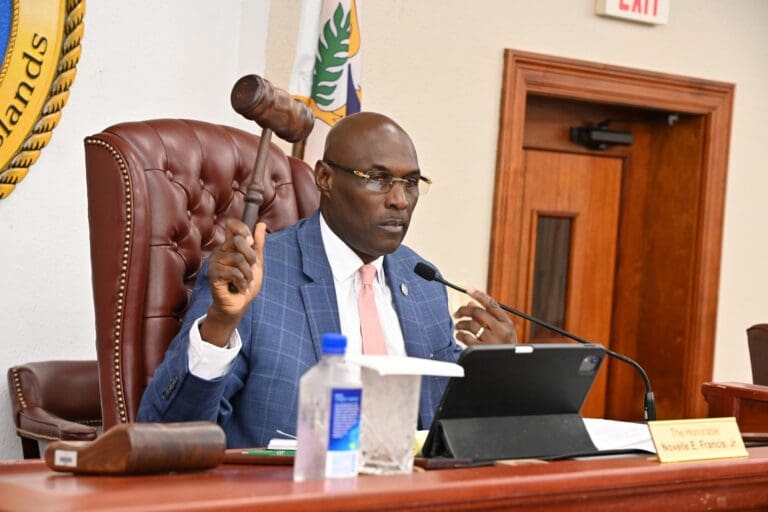
Sen. Novelle Francis Jr., chair of the Senate Budget, Appropriations and Finance Committee, bangs the gavel during a budget hearing Thursday on St. Thomas. (Photo by the V.I. Legislature)
Budget hearings continued Thursday when the Senate Finance Committee received presentations from the Virgin Islands Judiciary and the University of the Virgin Islands, both of which testified to the impact of funding shortfalls and delayed allotments.
Chief Justice Rhys Hodge asked lawmakers for more than $53 million in funds for 2026, far more than the $40.2 million recommended by the central government in its executive budget proposal. Hodge said $1.1 million is needed to properly fund the Office of Conflict Counsel, which the V.I. Supreme Court established in 2023 to address case delays resulting from the lack of volunteer panel attorneys and private attorneys available to serve as court-appointed counsel for indigent defendants and parties in juvenile and family cases.
The office was later legislatively established through Act 8960, but Hodge said the $500,000 appropriation provided by the act has not been released by the V.I. Management and Budget Office.
Hodge also noted during testimony that the judiciary sought close to $4.5 million in 2025 to fund the second phase of a roof replacement at the R. H. Amphlett Leader Justice Complex on St. Croix but instead received a 3.3 percent reduction in funding.
“As a result, the judiciary continues to struggle to meet legislative and other mandates at the expense of other funding priorities — including its critical infrastructure projects,” he said. This year, the judiciary is asking for $4.1 million for the project.
“We have been basically operating lean,” he said while responding to Sen. Hubert Frederick. “Every year, we’ve gotten at least $10 million less than we have asked for, and we have always lived within that — at the expense of ignoring, foregoing actual projects that we need, such as capital projects.”
Hodge said the judiciary has to close buildings, which he described as “not optimal,” at least once a month because of issues with water, air conditioning or something else.
Sen. Novelle Francis Jr., who chairs the Senate Finance Committee, said lawmakers have to make some tough decisions amid federal funds and grants being clawed back by the Trump administration and looming health care costs.
During the budget hearing’s next block, University of the Virgin Islands president Safiya George said federal policy changes posed a particular risk to higher education in the form of deep cuts to the U.S. Education Department, National Science Foundation, National Institutes of Health and other agencies as well as the targeting of programs focused on diversity, equity and inclusion. To date, George said, six federal grants totaling approximately $3.5 million have been terminated.
The executive branch recommended a 2026 budget of nearly $35 million. On Thursday, the university requested closer to $50 million in funding, including $39 million to cover general operating expenses like paying salaries.
George testified that previous funding amounts have failed to keep pace with growing participation in many of the university’s programs. Since launching seven years ago, UVI’s free tuition program has grown from 184 to 548 students.
“While this growth signals strong demand and greater access, it also has significantly outpaced available funding,” she said. “The university has not received annually the $3 million appropriation needed to sustain the program, resulting in a critical depletion of reserves.”
George said the university has only received funding three times during the program’s seven-year lifespan, leaving it with less than $2 million.
“Without supplemental support, the free tuition program will likely be unable to continue at current levels” after 2026, she said.
Parties locked in an ongoing dispute over the legality of the V.I. Parole Board and the enforcement of the territory’s medical and geriatric parole law each asked a Superior Court judge this week to issue a summary judgment in their favor.
The filings came more than a month after Judge Alphonso Andrews Jr. granted a temporary restraining order to the government, which argued that the board has lacked a quorum for two and a half years. The Justice Department filed an emergency motion on behalf of Gov. Albert Bryan Jr. in May to halt parole proceedings after three men convicted for participating in the so-called Fountain Valley killings and another convicted of aggravated rape applied for parole under a new law establishing parole eligibility on medical or geriatric grounds. Bryan signed the measure into law as Act 8791 last January.
During the hearing in June, Assistant Attorney General Christopher Timmons said the board is supposed to have seven members but has only had three since December 2022. The board’s current members are Dennis Howell, Chesley Roebuck and Bentley Thomas, and Attorney General Gordon Rhea also sits on the board as a nonvoting member. Timmons argued that the board’s lack of a quorum prevents it from taking any action.
The government further argued that Act 8791, applied retroactively, “unconstitutionally violates the separation of powers, and is therefore invalid under the Revised Organic Act.”
Andrews granted the government’s request for a TRO (temporary restraining order) after agreeing with the quorum issue, effectively putting all parole decisions made over the past two and a half years in limbo.
Andrews indicated that the question of Act 8791’s constitutionality could be dealt with later.
The government argued in its most recent filing that statutes “are presumed to be applied prospectively, and not retroactively” and that “retroactive application of the geriatric parole statute would impair the rights of the People because eligibility for parole is part of the prosecution of a case and is to be determined at the time of sentencing.”
“To the extent that the geriatric parole statute gives eligibility to prisoners who would otherwise never become eligible for parole… retroactive application would impair the sentencing right of the judge who sentenced them; it would impair the rights of the prosecutors who determined which charges to bring and which penalties to seek; and it would impair the rights of the general public who prior enactment [sic] of the geriatric parole law could rest assured that these violent and notorious criminals never walk the streets again,” Timmons wrote.
For their part in the Fountain Valley killings, which left eight people dead and at least eight more wounded, Warren Ballantine, 76, Beaumont Gereau, 68, and Meral Smith, 74, were sentenced to eight consecutive life sentences in prison. At the time of their sentencing, Virgin Islands law required them to serve a minimum of 10 years for each life sentence in order to be eligible for parole. Timmons argued that 80 years’ imprisonment was “for all intents and purposes longer than their anticipated lifespans.”
“It was clearly the Court’s intent that they are not eligible for parole ever,” he wrote. “To in essence overturn the Court’s determination that Defendants Ballentine [sic], Gereau, and Smith never see the outside of a prison clearly invades the power and authority of the judiciary in a way that cannot be compensated monetarily.”
Timmons later argued that Tydel John, 74, has only served a decade of his 50-year sentence and wouldn’t be eligible for parole for another five years, unless approved by two thirds of the Parole Board.
An attorney for Ballantine, Gereau, Smith and John said in a filing of their own that the statute at the time of their sentencing gave the Parole Board discretion to grant parole earlier.
“In other words,” attorney Vincent Colianni II wrote, the trial court knew “that they could be paroled literally at any time if the parole board, with the approval of the governor, determined that early parole was warranted.”
The government also argued that retroactively applying Act 8791 harmed Bryan, who previously “had control” over parole eligibility.
“He has been stripped of this authority and control in a way that cannot be compensated,” Timmons wrote.
An attorney representing members of the Parole Board, who asked the judge to either dismiss the case or declare summary judgment in their favor, fiercely rejected any suggestion of harm to Bryan.
“First,” attorney Pedro Williams wrote in an 18-page memorandum of law, “if the injunction is removed, there is no certainty that the Board of Parole will approve Parole applications for the applications in question. Secondly, even if the Board of Parole does approve the applicants’ parole applications, Plaintiff/Governor still retains the option to appropriately challenge the Board of Parole’s decision at that time.”
Williams repeatedly noted that Bryan himself signed the measure into law and called the government’s argument about the board’s lack of a quorum “simply wrong,” arguing that the board only has fewer than four members because Bryan failed to appoint more.
“There have been vacancies on the Board of Parole for many years,” he wrote. “Thus, Plaintiff/Governor cannot be heard to complain about a situation that he created or because he failed to fulfill his statutory duties.”
Williams also cited statute and a section of the board’s bylaws which states that the “affirmative votes of three… members of the Board shall be necessary to authorize any action of the Board.” The government has repeatedly argued that the board still needs a four-member quorum for any vote to be legitimate.
The next hearing on the matter is scheduled for Sept. 8 on St. Croix.
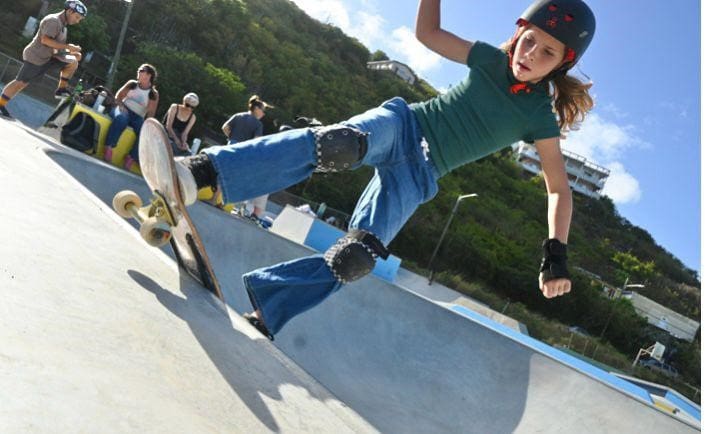
Local Skater does a trick at newly completed Ezra Frederick Skatepark. (Photo by Jessi Raffa)
With the completion of a new skatepark, donor walkway, and a renewed sense of momentum, the revitalization of Ezra Fredericks Ballpark is well underway — and already attracting visitors.
Now open to the public, the over 16,000-square-foot skatepark was designed for all skill levels and supports all forms of nonmotorized wheeled recreation, including skateboards, scooters, and bikes. The skatepark features a diverse array of ramps, rails, and bowls, thoughtfully designed to accommodate riders from beginners to experienced skaters, offering a safe and engaging space for all. It joins a new playground and shaded seating area, both completed in March, as part of the park’s transformation into a vibrant, multiuse recreational facility.
The pace of progress at Ezra Fredericks Ballpark has been as remarkable as the transformation itself. In a territory where public projects often face lengthy delays, construction on the skate park began in mid-January and was completed by early summer — a turnaround that stands in stark contrast to projects like the Paul E. Joseph Stadium in Frederiksted, St. Croix, which has faced years of setbacks.
The group behind this project is the Virgin Islands Surfing Federation. While construction moved quickly once underway, the effort to bring a skatepark to St. Thomas was decades in the making. Multiple attempts have been made over the past 25 years, with the most recent — and ultimately successful — taking four years to realize, according to the Federation’s project lead and treasurer, Alex Israel.
The skatepark has been funded by a broad coalition of supporters. Hundreds of local businesses and individuals contributed — a testament to the strength and unity Virgin Islanders have in building a better future. Key supporters include Heavy Materials, Haugland, Avis, Alpine, Budget, and MSI, with the design by PushParks and construction led by professional skatepark builders Spohn Ranch. They were joined by dozens of private donors, volunteers, and community advocates, both public and anonymous. Many contributors are honored along the park’s Donor Walkway, a lasting tribute to the collective effort that made the project possible.
No government funding was used for the project; however, the federation was permitted to construct the skate park on public land. The Sports, Parks and Recreation Department signed permit applications, and various government agencies signed a memorandum of understanding drafted by the nonprofit.
The revitalization effort also emphasizes sustainability, incorporating recycled and upcycled materials to reduce environmental impact while improving public amenities. For example, the fill for the above-ground sections of the skatepark came from sections of the Cyril E. King airport runway that had to be removed due to damage.
Officials say the project will serve as a cornerstone for community building and promote active, outdoor lifestyles for residents of all ages. The skatepark can also be used for crime prevention, highlighting this idea is VIPD Captain Sandra Colbourne, member of the VIPD Crime Prevention Bureau. “This facility will be a positive environment on St Thomas, making it less likely for youths to get caught up in the street life,” she said.
Israel emphasized the value of “third spaces” — places outside of school and home where youth can connect. “Providing the youth with positive and productive outlets is a way to lead to positive, productive outcomes in their lives,” he said.
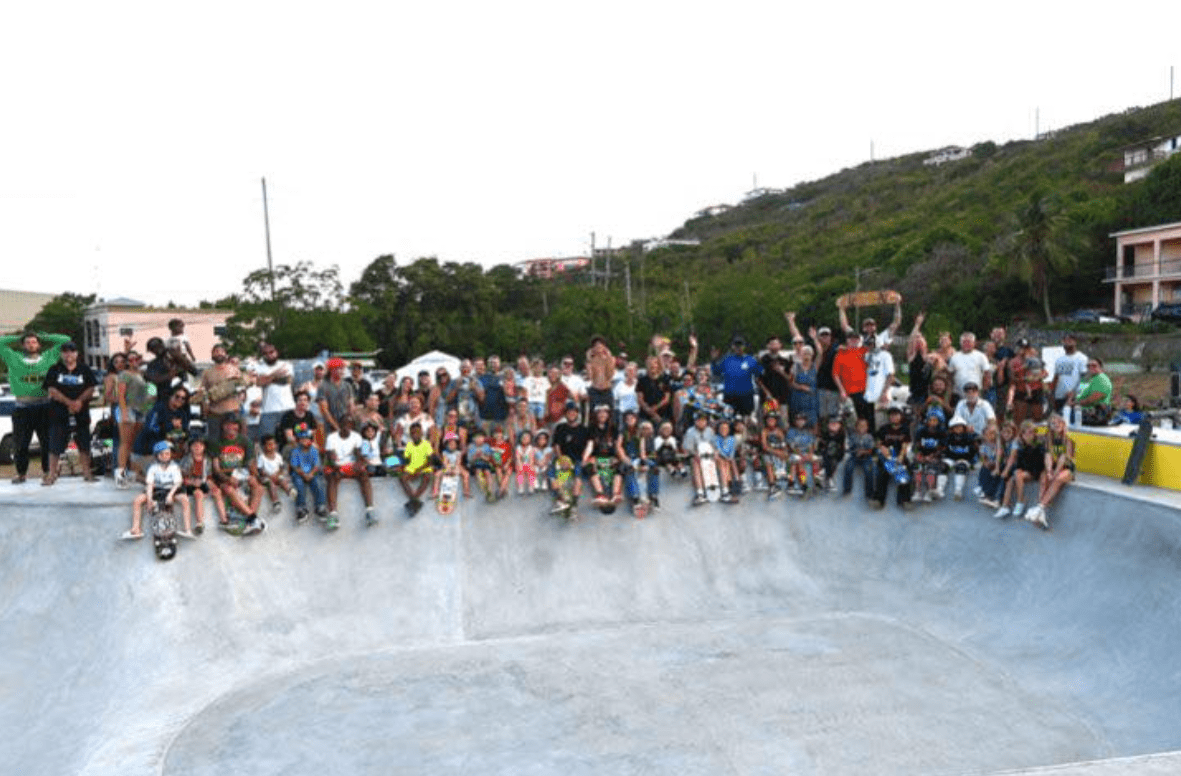
“We’ve already seen it start to build community,” said Israel. “There’s just a lot of joy and new relationships being formed. I’ve seen a lot of children making new friends.”
Local skating group Skate Thomas at the newly completed Ezra Frederick Skatepark. (Photo by Jessi Raffa)
That idea is echoed in the USC study “Beyond the Board: Findings from the Field,” which notes that skate and bike parks foster intercultural communication and that “skaters are excellent critical thinkers and problem-solvers who view success from a communal perspective.”
According to Israel, “Riding is the great equalizer. It doesn’t matter what your skin color is, or what your socioeconomic status is — none of that matters when you’re out riding and learning to use the park. It brings people together through the shared experience of overcoming obstacles — both literal and figurative — and just having fun, being outside, and sharing the experience of joy.”
That sentiment is echoed in a quote etched into one of the bricks along the park’s donor walkway, attributed to Albert Einstein: “Play is the highest form of research.”
Skate Thomas, a local skating group, will now host its weekly Tuesday evening sessions at Ezra Fredericks Ballpark, starting around 5:15 p.m. The group invites skaters of all ages and skill levels to come out, connect, and enjoy the new facility. Looking ahead, organizers are planning a grand opening celebration in late summer or early fall, featuring live bands, professional skate demonstrations, food trucks, and more.
Meteorologists are warning that planned reductions in critical weather resources, including satellite data and National Weather Service staffing, could hinder forecasts as the Atlantic hurricane season nears its peak. Experts say the cuts may leave forecasters with fewer tools to track storms and issue life-saving alerts.
Federal cuts have affected multiple areas across the National Oceanic and Atmospheric Administration and the NWS since the new administration took office in January. Among them is the Defense Department’s plan to discontinue sharing microwave data from the Defense Meteorological Satellite Program with NOAA, with the cutoff set for July 31 due to reported cybersecurity risks.
Information about the Defense Meteorological Satellite Program. Three DMSP satellites are currently scheduled to stop sharing data with NOAA on July 31. (Photo courtesy NHC)
The three aging satellites have long provided critical views of storm structure, allowing forecasters to see beneath cloud tops and monitor hurricanes overnight. While there are ongoing discussions about whether the data will indeed cease to transmit to NOAA, losing that capability could leave forecasters less able to detect key indications of a strengthening storm, including the rapid intensification of cyclones.
The Source spoke with weather experts, including former NOAA leaders and veteran meteorologists, for insights on how these changes could affect forecasting, preparedness, and public safety during one of the busiest periods of the Atlantic hurricane season. The Source also received comments from the Secretary of the Air Force Office of Public Affairs and NOAA, who sought to reassure the public that weather forecasting data will continue to be available even when DMSP satellites stop sharing data with NOAA.
Meteorologist John Morales on Critical Weather Data Reduction John Morales, founder of the consulting firm ClimaData and current Hurricane Specialist at WTVJ NBC6 in Miami, has spent more than four decades in meteorology as a civil servant at the NWS and in broadcast meteorology. Morales provided detailed information to the Source about why satellite data is crucial for forecasters and he expressed concern about not having access to the information from these satellites.
“When you look at satellite pictures during a television weathercast, you’re either looking at what the plain eye can see from space, known as the visible spectrum, or an infrared picture,” Morales said. “Infrared allows satellites to ‘see’ clouds at night. Microwaves have even longer wavelengths than infrared, which lets the Special Sensor Microwave Imager/Sounder penetrate clouds and reveal what is happening underneath,” Morales explained.
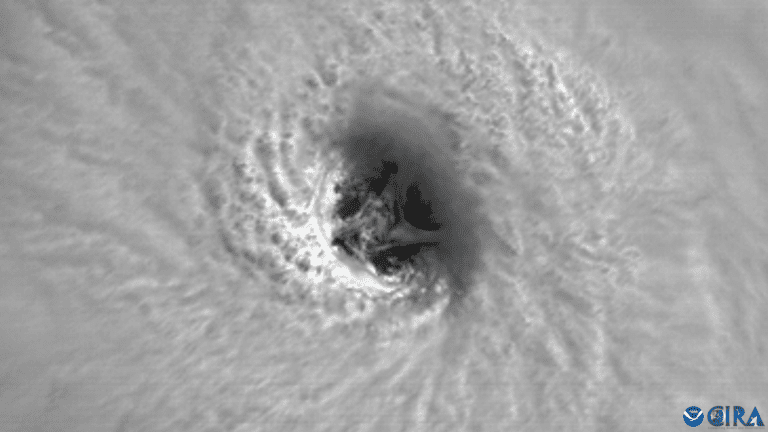
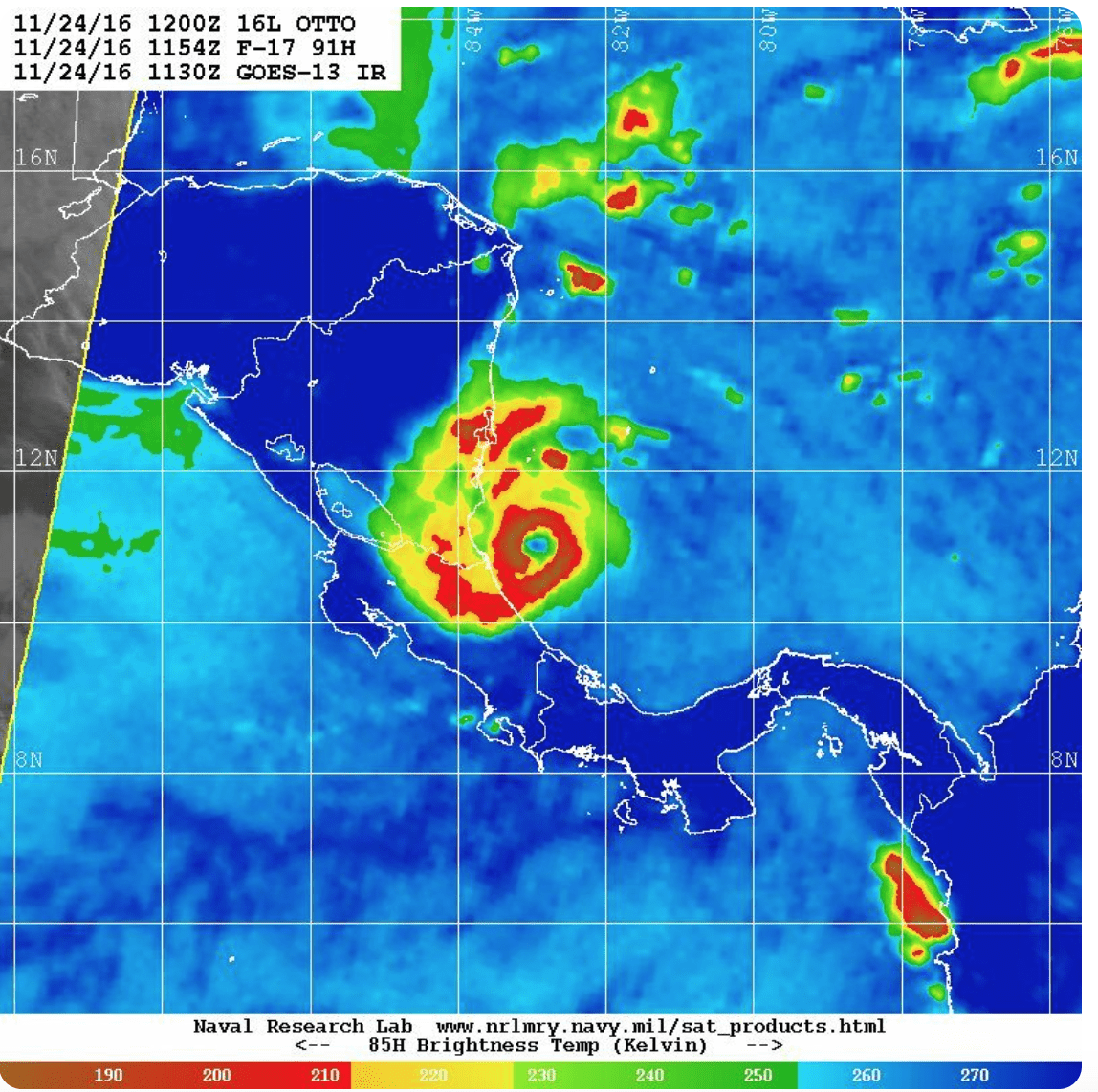
An image of Hurricane Otto in 2016, captured by the Special Sensor Microwave Imager/Sounder aboard a DMSP satellite. The high-resolution images are helpful for weather forecasters. (Photo courtesy Philippe Papin, Ph.D., Hurricane Specialist at NHC and TheConversation.com)
That ability to peer beneath cloud tops, Morales said, is critical for hurricane specialists. “With two-thirds of all Atlantic storms beyond the reach of Hurricane Hunter planes, SSMIS does yeoman’s work in monitoring storms in real time,” he said. “By accurately locating a hurricane’s center — especially in fledgling storms where the eye hasn’t cleared out —SSMIS provides the precise data that forecast models need to project a storm’s path and intensity.”
Morales warned that if SSMIS goes offline July 31, forecasters will lose about half their microwave data scans. “While there are other microwave sensors in polar orbit, the loss of SSMIS means a 50% reduction in data,” he said. “Since models aren’t always correct and hurricane forecasters aren’t either, not being able to track a storm’s lifecycle continuously can lead to unpleasant, costly, and potentially deadly surprises.”
Microwave satellites are not the only resource facing reductions. Morales pointed to radiosondes, which are instrument packages that are carried aloft by weather balloons, as another critical tool now being used less frequently.
“These sensors collect temperature, humidity, pressure, and wind data, giving meteorologists a vertical profile of the atmosphere twice daily over strategic locations,” Morales said. “On days when these profiles go missing, forecast quality suffers. We’ve already been missing about 18% of them since NWS cuts began.”
He also emphasized the human toll of staffing shortages. “The NWS was already short-staffed before the new administration came into power,” Morales said. “I know of meteorologists in charge who have had to cover operational shifts, including overnights, just to keep their NWS offices functioning. Now, with hundreds more NOAA and NWS employees gone, offices running on skeleton crews not only risk data loss but also jeopardize critical roles like Warning Coordination Meteorologists. That vacancy in San Antonio drew questions after the recent Texas flooding tragedy,” Morales noted.
Morales voiced concern about how these changes may erode public confidence in forecasts. “If I myself can’t be as confident as I used to be in my forecasts because of missing data and degraded models, how can the public maintain the trust we’ve worked so hard to build over the decades?”
Robert Atlas on Staffing and Research Lab CutsRobert Atlas, Ph.D., former Director of NOAA’s Atlantic Oceanographic and Meteorological Laboratory, is a leading expert on observing systems and hurricane prediction. Over his career, Atlas has served in roles including head of NASA’s Data Assimilation Office and as NOAA’s director of Quantitative Assessment of Observing Systems.
In comments to the Source, Atlas confirmed that data provided to NOAA from the Defense Meteorological Satellite Program’s Special Sensor Microwave Imager/Sounder is helpful to forecasters. However, he said it is not critical for global numerical weather prediction. “There are 15 other observing systems that have larger impact than the DMSP,” Atlas said. “However, the data can be important to researchers and operational forecasters monitoring hurricanes.”
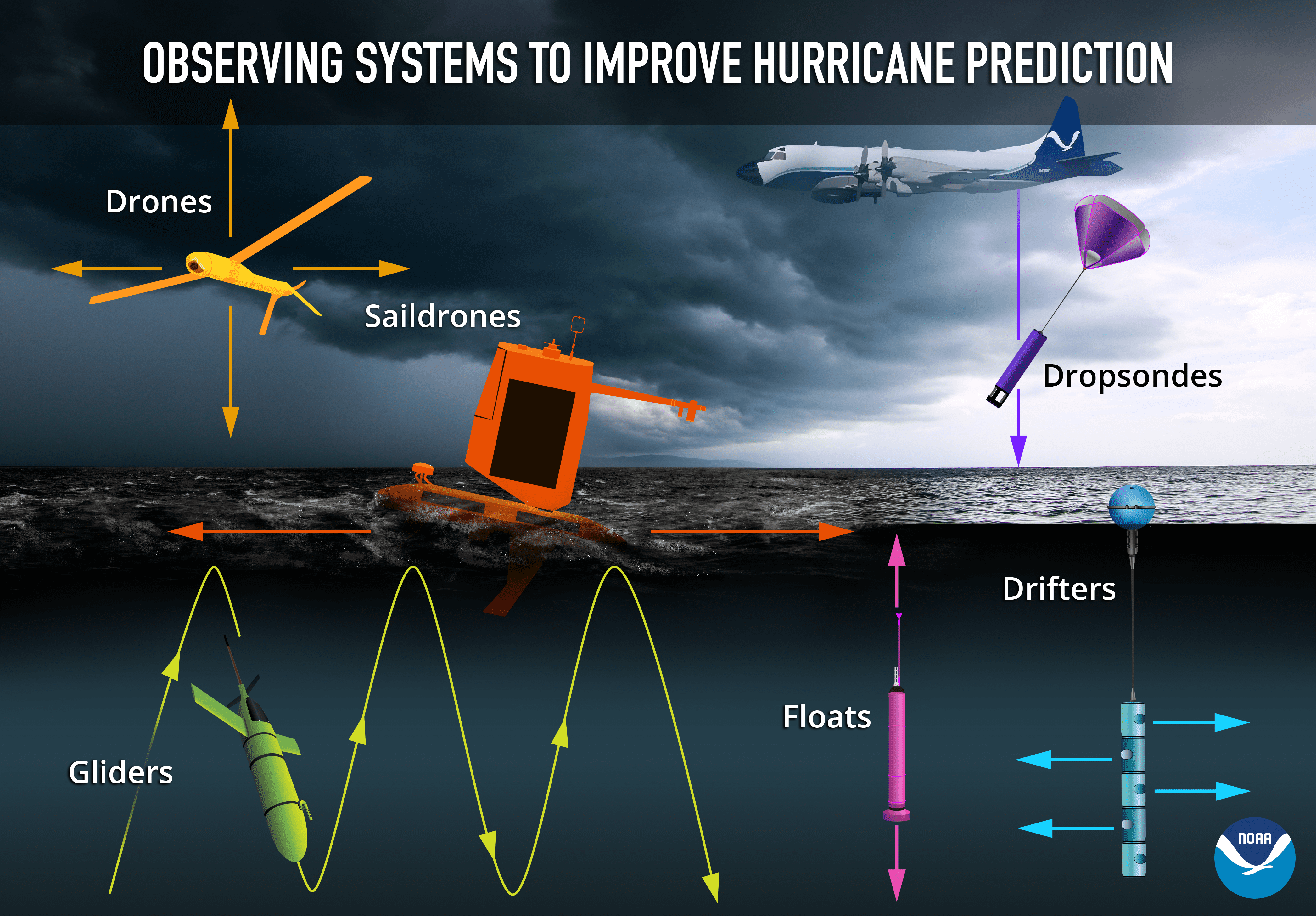
Atlas emphasized the importance of other key datasets and tools that forecasters rely on. “Geostationary imagery, scatterometer data, and both the NOAA and Air Force Hurricane Hunter aircraft observations are the most useful to the forecasters,” he said. “For numerical forecast models, all of the NOAA and European infrared and microwave sounders, atmospheric motion vector winds from geostationary satellites, ocean gliders, and conventional surface and upper-air reports have a large impact.”
Numerous instruments that can help with cyclone prediction will continue to be utilized by meteorologists. (Photo courtesy NOAA)
Still, it is not only observational systems that are under pressure. Atlas warned that cuts to NOAA’s research laboratories could have dire consequences for forecast accuracy. “If NOAA’s research laboratories are eliminated, none of the advances in forecasting being worked on would become operational. Critical observations would not be made, and there would be a dramatic decrease in forecast accuracy,” Atlas said. “For example, if AOML were eliminated, there would be a 20 to 40% decrease in hurricane forecast accuracy, resulting in loss of life and increased economic losses of approximately $5 billion for each major hurricane making landfall.”
When asked about recent events like the recent Texas Hill Country floods, Atlas said sustaining these resources is crucial to improving lead time and accuracy for forecasts and warnings. He said that reductions in observational data and modeling capacity could also undermine public confidence in forecasts. “Such reductions would decrease the accuracy of forecasts, and the public would have less confidence in the warnings. More people might not take the necessary precautions,” Atlas stated.
“The cuts to NOAA’s AOML would lead to less accurate hurricane forecasts if they go into effect,” he added. “And the costs to the economy would be 20 to 50 times larger than the savings from closing AOML,” Atlas warned.
Meteorologist James Franklin on Operational Gaps and Hurricane Forecasting
James Franklin, a meteorologist with decades of experience at NOAA, was also the former Branch Chief of the National Hurricane Center’s Hurricane Specialist Unit. His leadership at the NHC gave him deep insight into the tools and staffing needed to track dangerous storms and issue timely warnings to the public.
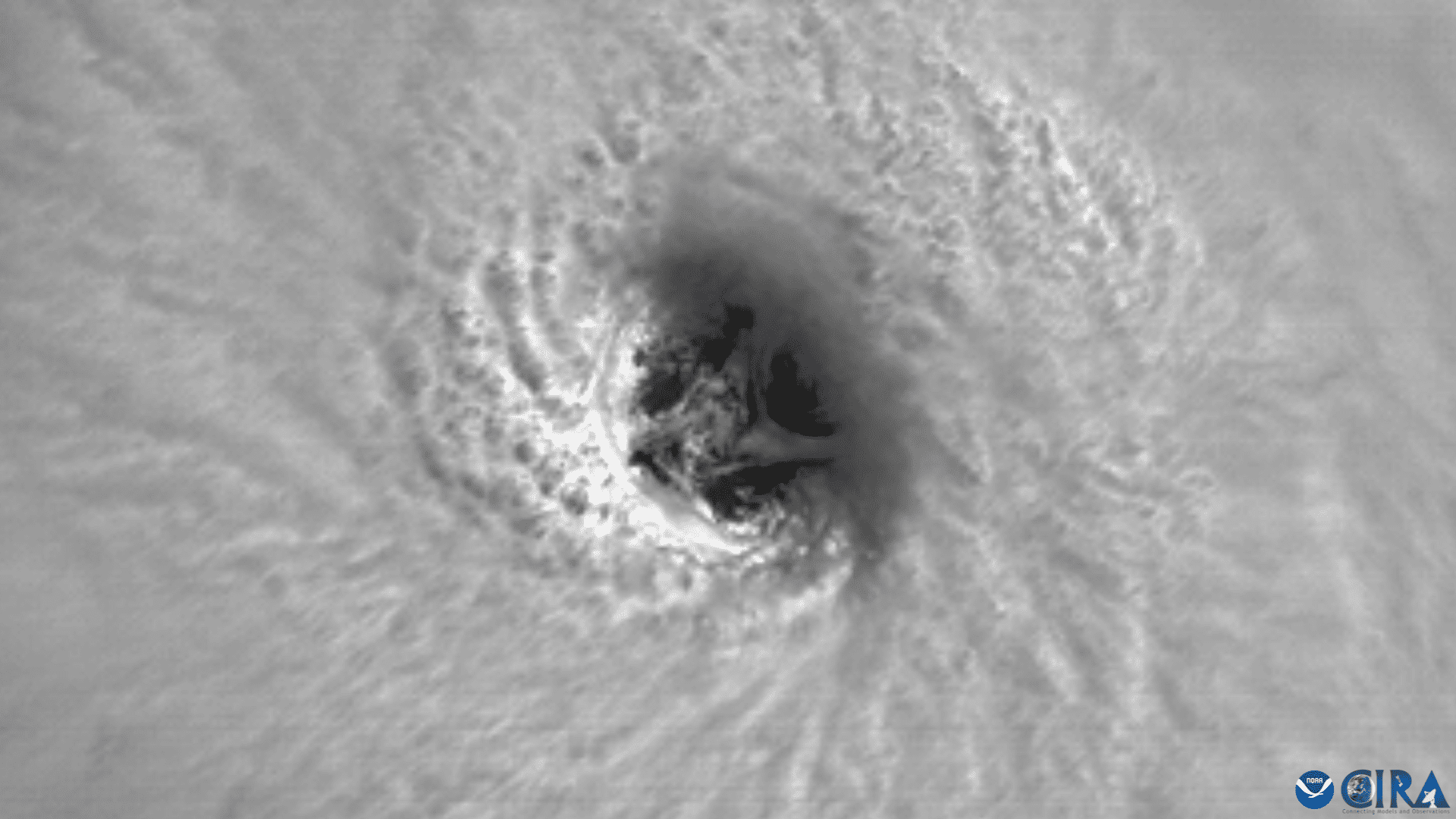
In addition to DMSP satellites, other environmental satellites are available to meteorologists, including NOAA’s GOES-16 satellite, which captured this image of Hurricane Beryl in 2024. (Photo courtesy NOAA)
Franklin shared his concerns about the impact of reduced staffing, potential satellite data loss, and how new artificial intelligence tools may—and may not—help fill the gaps.
On the growing strain inside NOAA and NWS offices, Franklin pointed out the possible effects of understaffing, particularly at local weather forecasting offices, which help to train emergency managers and communicate with disaster officials during an emergency.
“The local Weather Forecasting Offices take the forecasts from the NHC and break that down to share local impacts,” Franklin explained. “When a WFO is short-staffed, then there are fewer people to communicate risks to their local decision makers, such as people who have to make evacuation decisions,” he said.
Franklin also noted that due to federal cuts that have already been implemented, several operations, including the launching of weather balloons to collect data, have already been occurring less frequently due to fewer staff.
Franklin also voiced concern over the potential loss of microwave data from the Defense Meteorological Satellite Program being shared with NOAA. At nighttime, when it is more difficult for a forecaster to view a disturbance, the microwave satellites are able to peer into a cyclone’s internal structure to provide a view of what is happening.
According to Franklin, “The loss of DMSP’s microwave data increases the chance that a forecaster is going to be surprised, or they were tracking a storm in the wrong place. It increases the chance that something’s going to go wrong with their forecast.”
Franklin acknowledged that other tools will still be available to meteorologists, but they may not be as useful as the DMSP microwave data. He said that it will be more difficult to view structures such as a hurricane’s eyewall and rainbands without the DMSP satellites.
“The substitutes are really not satisfactory, because they are lower resolution,” Franklin said. “It is all going to be a blur in some of the other instruments that are still up, and they won’t be useful,” he stated.
Franklin also expressed concern about the potential for federal cuts to NOAA’s Oceanic and Atmospheric Research facilities, which he wrote extensively about on his Substack website.
Despite these challenges, Franklin sees a glimmer of hope in emerging technologies such as artificial intelligence weather forecasting. He has been evaluating several AI-based hurricane models as part of his current work and is optimistic about their potential.
“There’s some interesting stuff with AI,” Franklin said. “I’ve had the opportunity to evaluate a number of AI hurricane models, including one from Google DeepMind.”
“A couple of the models showed really remarkable cyclone track skills, not much on the intensity side, but the track skill was interesting. The NHC now has real-time access to the Google DeepMind model, which will be evaluated this year,” Franklin continued.
“That’s neat and encouraging, and it surprised me to see how good the models performed in tests so far this year,” he added.
Still, Franklin cautioned against seeing AI as a cure-all.
“I don’t think AI is going to solve all the problems,” he admitted. “I think it’s going to have a hard time predicting hurricane intensity in particular, and that is probably where we need to make the most progress.
“However, I’m delighted to see that AI models are continuing an improving trend of cyclone tracking which will allow us to get better track forecasts, but I don’t think it will be the answer to everything in terms of hurricane forecasting. I think it will be another valuable addition to the toolbox.”
When asked about his thoughts regarding storms affecting the U.S. Virgin Islands during this year’s hurricane season, Franklin said that what is most important is to focus on being prepared.
“Prepare like this is the year you’re going to get hit by a hurricane,” he advised. “Every year you need to prepare.”
NOAA and Air Force Respond to Concerns
In statements aimed at addressing expert concerns, NOAA and the Department of Defense emphasized that weather forecasting will remain robust, even as the DMSP program transitions out of service.
“The DMSP is a single dataset in a robust suite of hurricane forecasting and modeling tools in the NWS portfolio,” NOAA said in a statement provided to the Source. “Current forecast models continue to draw from a range of observational systems, including geostationary satellites like Geostationary Operational Environmental Satellite, polar-orbiting satellites such as NOAA’s Joint Polar Satellite System, and the European EUMETSAT’s MetOp series, as well as aircraft reconnaissance, surface observations, buoy networks, radiosondes, and ground-based radar sites in the U.S. and neighboring countries,” the NOAA statement explained.
“The Advanced Technology Microwave Sounder, currently flying on NOAA’s JPSS, provides the richest, most accurate satellite weather observations available. NOAA’s data sources are fully capable of providing a complete suite of cutting-edge data and models that ensure the gold-standard weather forecasting the American people deserve,” NOAA continued.
The DoD, which includes the U.S. Air Force and U.S. Space Force, also sought to ease concerns about the loss of DMSP data with comments provided by Victoria B. Porto, Lt. Col., USAF, from the Air Force Office of Public Affairs.
“DMSP is planned to be operational through September 2026. While the processed data will no longer be provided by a DoD meteorological and oceanographic center, it will continue to be delivered to DoD users via direct downlink terminals in support of worldwide operations.
“The U.S. Space Force is transitioning from DMSP to a modernized environmental satellite architecture. The first Weather System Follow-On–Microwave (WSF-M) satellite, launched in 2024, became operational in April 2025. WSF-M provides enhanced tracking of ocean surface vector wind and tropical cyclone intensity. By late 2025 or early 2026, it will include technical work to deliver the data directly to NOAA,” according to the DoD.
Looking Ahead
As the 2025 Atlantic hurricane season approaches its busiest months, experts and officials alike acknowledge the vital role of sustained investments in observational tools and personnel. While NOAA and the DoD express confidence in the resilience of current systems, veteran meteorologists warn that even incremental losses in data or staffing can have cascading effects on forecast accuracy and public trust. The coming months may prove a critical test of how well the nation’s forecasting infrastructure can adapt to these changes.
Regardless of forecasting tools available, it is vital for USVI residents and visitors to be prepared. An emergency supply kit is essential throughout hurricane season. (Photo courtesy VITEMA)
USVI visitors and residents are encouraged to prepare for hurricanes now, before any cyclones are expected to affect the territory.
In addition to obtaining weather information from the NHC, the NWS, and NOAA, the local weather forecast for the U.S. Virgin Islands is regularly updated on the Source Weather Page and VI Source YouTube Channel. Individuals can also find helpful weather information and alerts from the Virgin Islands Territorial Emergency Management Agency.
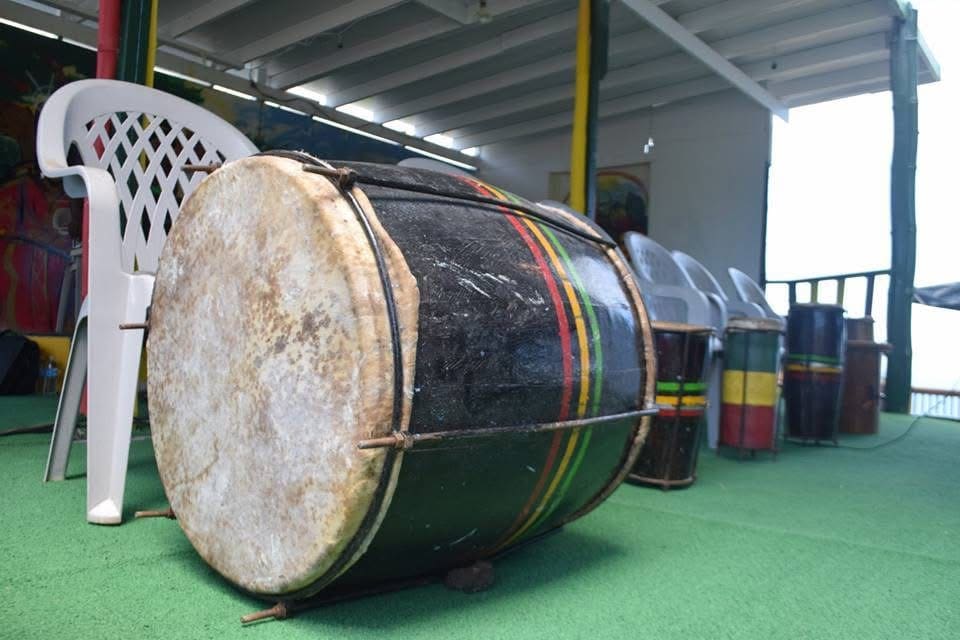
Rastafarian drums set up on stage at the Bordeaux Farmers’ Market on St. Thomas. The inaugural Rastafari Day is July 23, with events planned on all three islands July 22-24. (Conch Shell Media, LLC Photo)
The U.S. Virgin Islands is set to mark a significant moment in its history with the inaugural Rastafari Day on July 23, following a proclamation signed by Gov. Albert Bryan Jr. and Lt. Gov. Tregenza A. Roach on June 16. This declaration includes an official apology to the Rastafari community for the oppression and religious persecution they have suffered as well as cultural events including musical performances and recognition awards, on all three islands between July 22–24.
The community is encouraged to attend these celebrations and learn more about Rastafari culture and its significance to the Virgin Islands. Performers including Ras Batch, Empress Ima, Jah Roni, Mystic Soul, Revolution and others are scheduled to be at the events on all three islands along with others from throughout the U.S. and British Virgin Islands.
The proclamation acknowledges that Ras Tafari is “more than just a religion. It is a movement and way of life” that exists within the United States Virgin Islands. Bryan, on behalf of the Government of the Virgin Islands, issued the apology, stating that Rastafari have endured “many years of persecution and prosecution,” including being jailed, ridiculed, and subjected to “religious profiling because of their Culture and cannabis use.”
A key aspect of this recognition is the Rastafari community’s “knowledge of the Cannabis plant and its many health benefits and its use in sacramental ceremonies for spiritual enlightenment.” The proclamation highlights that cannabis, as a sacrament, “brings them closer to the Almighty and his creation.” This aligns with Act No. 8680, signed into law by Bryan on Jan. 18, 2023, which legalized the sacramental use of cannabis in the Virgin Islands.
“The stone that the builders refuse has become the head cornerstone, and the main thread that binds/ holds the fabric of our community together. Although we were persecuted and prosecuted, we were still able to bring positive vibrations and help to lift up the consciousness of our community on all levels,” said Tafari Tzaddi, president of the V.I. RasTafari Sacramental Cannabis Council, Inc. (VIRSCC INC) and a minister in the Theocracy Reign of the Ancient Ivine Order of the Nyahbinghi.
Gene Emanuel and Jermaine “Ras Koniyah” Pemberton speaking at a cultural event in the Earle B. Ottley legislative chamber, two honorees who will be recognized posthumously during the Rastafari Day ceremonies for their contributions to local cultural advocacy and preservation. (Conch Shell Media, LLC photo)
The VIRCC INC., in collaboration with Theocracy Reign of the Ancient Ivine Order of the Nyahbinghi and the V.I. Rastafari community, extends an invitation to the wider community to celebrate the 133rd Earth Light of Emperor Haile Selassie 1st and the inaugural V.I. Rastafari Day.
The Rastafari movement in the Virgin Islands includes three main houses:
– The Theocracy Reign of the Ancient Divine Order of the Nyahbinghi
– The E.A.B.I.C. (Ethiopian African Black International Congress), also known as the Bobo Ashanti
– The Twelve Tribes of Israel
“I am grateful to Governor Albert Bryan and Lieutenant Governor Tregenza Roach for issuing a proclamation to declare July 23, 2025, as Rastafari Day in the Virgin Islands of the United States. This declaration symbolizes a powerful recognition of not just the mere presence of the Rastafari community in our midst, but our numerous and meaningful contributions to the culture and overall fabric of the Virgin Islands,” said Louis E. Petersen Jr., Virgin Islands Agriculture Commissioner
A series of events across St. Thomas, St. John and St. Croix will commemorate this historic occasion.
St. Thomas-St. John Event Dates
Tuesday, July 22 – St. Thomas:
7 p.m. — Nyahbinghi Opening Ceremony at the Bordeaux Farmers’ Market
Wednesday, July 23, St. Thomas:
9:30 a.m. — Rastafari Day Proclamation program at Government House
10:30 a.m. March to Emancipation Garden after assembling at Coconut Square in Roosevelt Park
Noon–midnight — Cultural Day at Emancipation Garden
Thursday, July 24 – St. John:
4-8 p.m. — Rastafari Cultural Day at the Franklin Powell Sr. Park (Cruz Bay Band Stand)
Thursday, July 24 – St. Thomas:
9 p.m. — Nyahbinghi Ises Seal Up at the Bordeaux Farmers’ Market
St. Croix Event Dates
Tuesday, July 22:
7 p.m. — Nyahbinghi Opening Ceremony at Serenity’s Nest
Wednesday, July 23:
4-8 p.m. — Rastafari Cultural Day at General Buddhoe Park
Saturday, July 26:
Noon — motorcade from Lagoon in Christiansted to Frederiksted
3 p.m.–midnight — Rastafari Cultural Day program at the Department of Agriculture Fair Grounds
On each island, cultural day programs will generally include drumming, prayer, reading of the proclamation, remarks from representatives of various Rastafarian organizations and government representatives, honoring those in the movement who have transcended as well as those still living, live entertainment and poetry.
On St. Thomas, at 9:30 a.m. on Wednesday, July 23, a Rastafari Day Proclamation program will take place at Government House, by invitation only, after which the participants will assemble at Coconut Square in Roosevelt Park. All are encouraged to bring their red, gold and green clothes, banners as well as signs to then march to Emancipation Garden around 10:30 a.m. Once at the garden a DJ will play music, then the official program will start, including a reading of the proclamation by Terrance Positive Nelson, remarks from senators and representative of the various Rastafarian houses, and tributes for the trailblazers who have paved the way. From the British Virgin Islands there will be a representative from the Rastafari Progressive Inity organization. There will also be live entertainment from musical artists and poets including Reggae Dynasty, Ambassadah 7, Niyorah, BamVI and others.
“Rastafari Day is a new day. A day I and I start fresh. A new day to meditate on a new life filled with good health, wealth, abundance and success. A day to rejoice because doors are opening, people are saying yes, and the right idea came at the right time. Confidence is the order of Rastafari Day. Thank you, Governor and Lieutenant Governor of the Virgin Islands,” said Ras Zimba, president of We Grow Food, Inc. and vice president of VIRSCC.
Out of respect for their customs, dress attire for women who choose to attend their opening ceremony in Bordeaux is long skirts or dress and covered hair. For men, no short pants or tank tops, no alcohol, no cigarette smoking and cultural attire preferred at all events. Food vendors are being asked to donate $50 and other vendors $25.
For more information, the community is encouraged to call 340-423-7113 regarding St. Croix events and 340-244-4229 for events in the St. Thomas-St. John district.
A man was fatally shot Thursday afternoon by Virgin Islands Police officers responding to a domestic disturbance call at LBJ Gardens on St. Croix, according to the VIPD.
Police said the shooting occurred just before 4:45 p.m. after officers were dispatched to the housing community following a call from a mother seeking help with her adult son’s behavior. Officers arriving at the scene reportedly made contact with both the mother and son before a physical struggle broke out between the 48-year-old man and both responding officers.
During the struggle, one of the officers fired a single round, striking the man once, police said. The man, later identified as Alejandro Torres III, died from his injuries.
Both officers have been placed on administrative leave as the department’s investigation continues. Police said the case remains active, but did not release additional details regarding the sequence of events, the officer’s identity, or whether body-worn camera footage captured the incident.
The VIPD said updates will be provided as the investigation progresses.
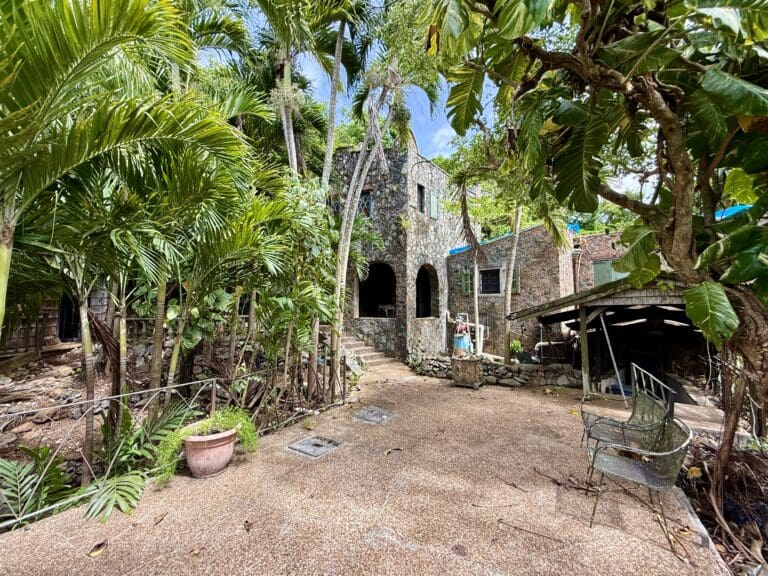
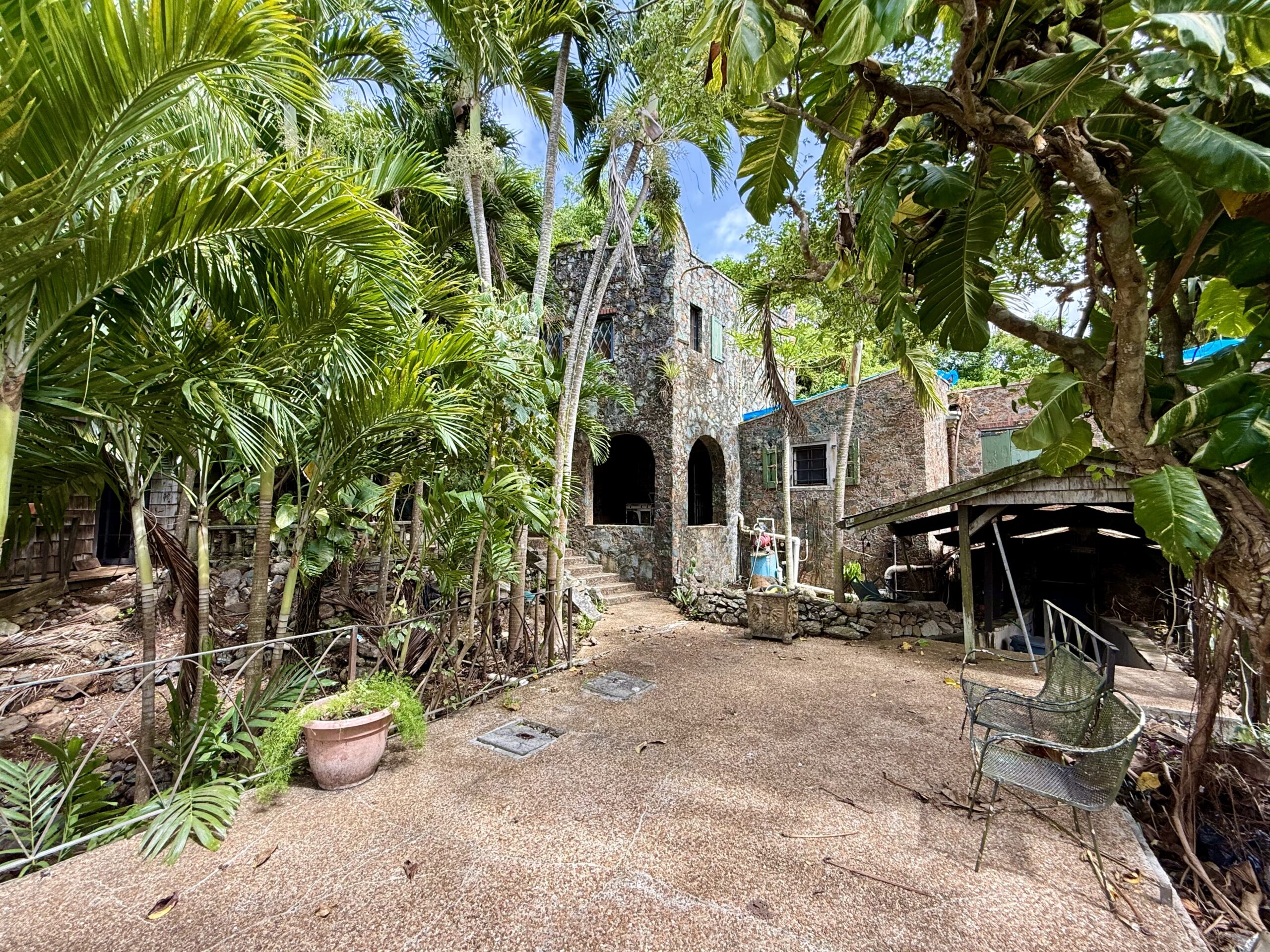
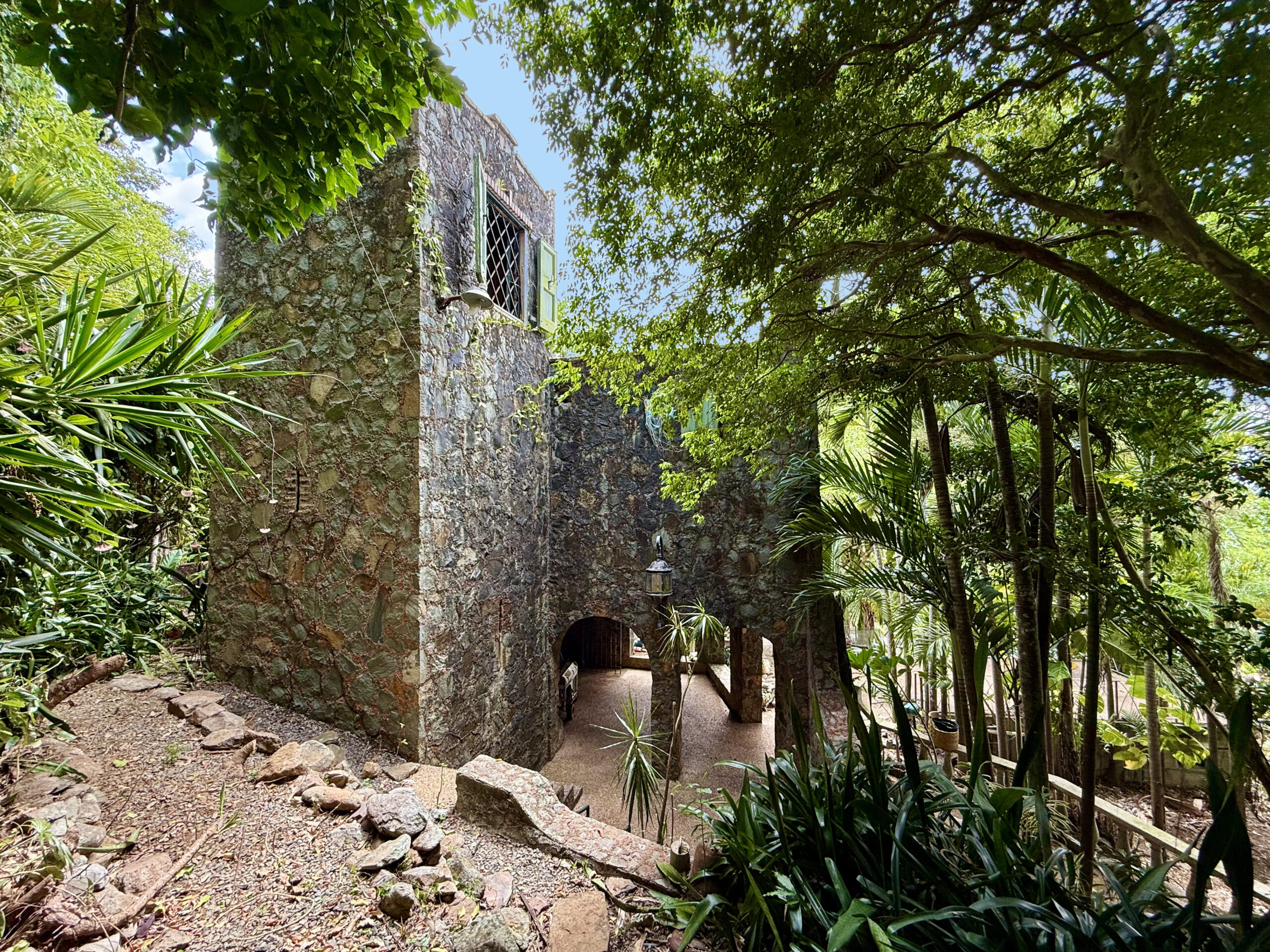
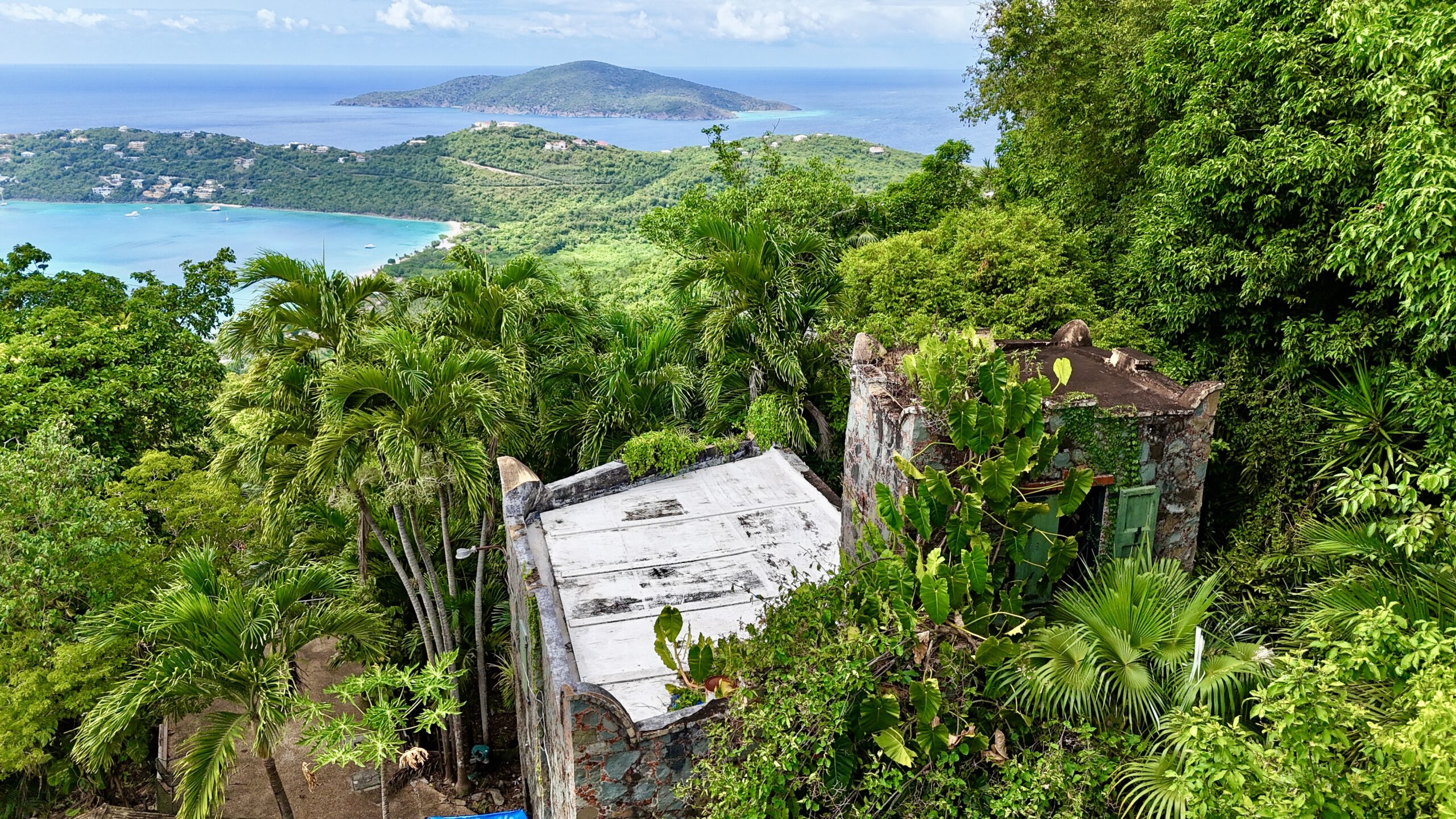
The Louisenhoj guardhouse on St. Thomas, which has been listed for sale. (Photo by Seaglass Properties)
The historic Louisenhoj estate perched atop St. Thomas is more than the island’s most mesmerizing recent real estate offering. The former plantation focal point — with Magens Bay on one side and Charlotte Amalie on the other — was foundational to what the Virgin Islands is today.
Once belonging to members of the Danish Magens family — yes, those Magens — Louisenhoj was built on the Estate Zufriedenheit plantation, which fell into rapid disrepair after the abolition of slavery. In 1917, New York multimillionaire Arthur S. Fairchild followed the U.S. flag to the Virgin Islands in search of his private paradise.
Fairchild built on the Louisenhoj ruins what is now broadly known as the Castle — by all accounts, a resplendent, decadent mashup of classical southern European and colonial Caribbean styles. In 1943, Fairchild deeded 268-acres around Magens Bay to the people of the Virgin Islands, creating the island’s primary tourist attraction and point of local pride. The Castle and its satellite property were gifted, willed, sold, or otherwise passed between new owners.
Over time, the properties fell into disrepair again.
When the Castle’s three-bedroom, two-bath guardhouse — sometimes called the gatehouse — and an adjacent artists’ loft were put on the market in early July, gasps from would-be buyers around the world nearly blew over Seaglass Properties realtor Tonia Garnett.
The guardhouse features thick stone walls with arched windows and passageways. (Photo by Seaglass Properties)
“Oh my God. I’ve had people flying in. I have two more flying in now and another one from St. Croix. I have another one from California and another one from North Carolina. The response has been amazing,” said Garnett, who has been showing the property and entertaining offers for more than a week. “I mean, I was always curious about the property.”
She’s not alone. It’s not too much of a stretch to speculate that nearly every visitor to St. Thomas in the last century has passed by the stone roadside curiosity where Maude Proudfoot Drive to-and-from Charlotte Amalie meets eastbound Valdemar Hill Drive, and Hull Bay Road toward Drake’s Seat meets Magens Bay Road. The asking price was $800,000 as of Thursday.
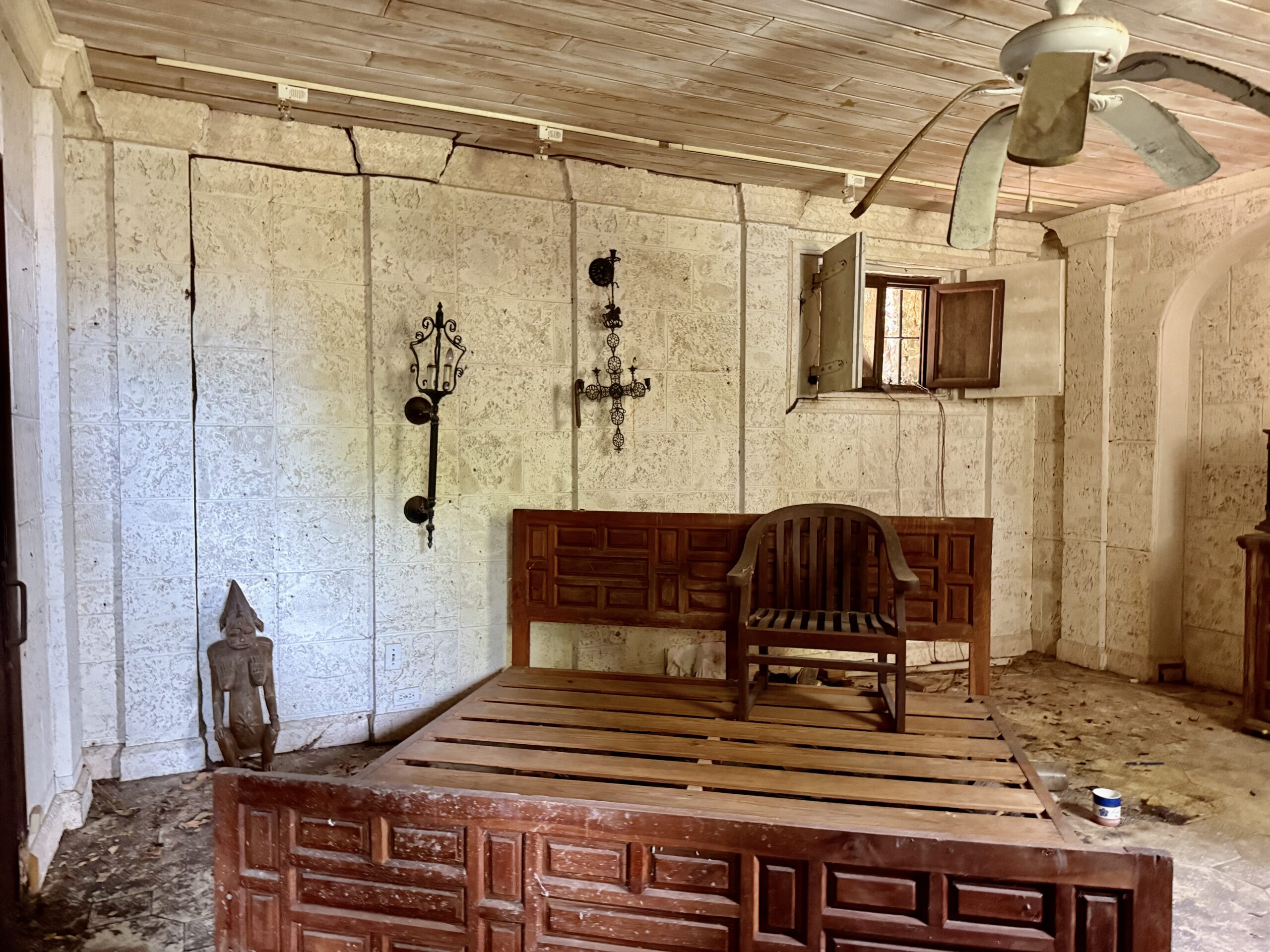
The 1,800-square-foot guardhouse and artists’ loft are set on 0.32 acres accessed by a prominent circular driveway. Thick stone-and-scrabble walls with arched passages and old-world wooden floors give the property a time-machine quality.
Much of the interior is in need of repair and renovation. (Photo by Seaglass Properties)
While historic, charming, and undeniably beautiful, the modern amenities need to be overhauled, Garnett said. Electricity and plumbing works likely haven’t been upgraded since the 1960s and, while functional, won’t meet modern requirements. Garnett described the kitchen as falling in on itself. Ceiling fans and other fixtures sag in a way seemingly desperate for help.
After squatters were removed, the property was cleaned up to temporarily house a caretaker who looks after the place and keeps unwanted visitors away, she said. Although certainly historic, the structure falls outside any historic preservation zone, Garnett said, so new owners would not have to comply with the same rules as owners of structures in parts of Charlotte Amalie.
Michael Creque, a St. Thomas Historical Trust board member, remembered attending events at the house in the 1980s and described it as elegant and refined.
“Wonderful parties. It was immaculate,” Creque said.
Lisa Curreri, who lived in the Castle behind the guardhouse, remembers when this view had no houses or roads. (Photo by Seaglass Properties)
As a young teenager, Lisa Curreri lived in the Louisenhoj Castle behind the guardhouse in the 1950s.
“Talk about Disney World. When was the last time you were living in a castle?” Curreri said with a laugh.
In those years, when there was neither house nor road on Peterborg, and Skyline Drive was only partially paved, the Castle, for all its grandeur, lacked hot water. The guardhouse was largely empty, she said.
Although Curreri had only fleeting memories of the guardhouse, she was certain of a ghost that walked the Castle halls.
“You could hear the footsteps walking from the kitchen wing all the way into the living room and up the stairs, up into the tower,” she said. Her father, uncle, and even the family Great Dane sensed the spirit she speculated may be of Arthur S. Fairchild — roaming the home he so carefully put together.
“It was such a labor of love to build it, why would you not remain,” Curreri said. “It was an absolutely stunning property. The stonework in the castle itself is mind blowing.”
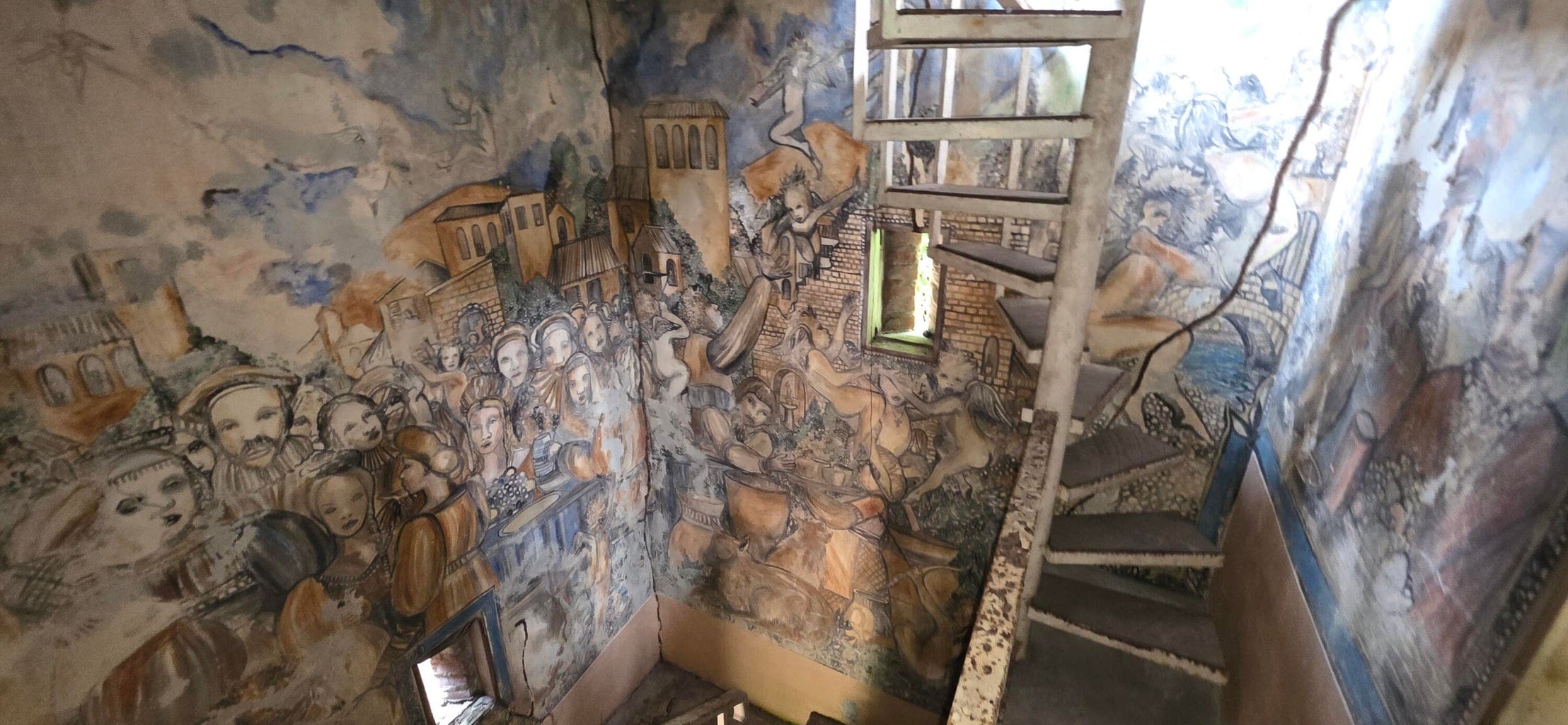
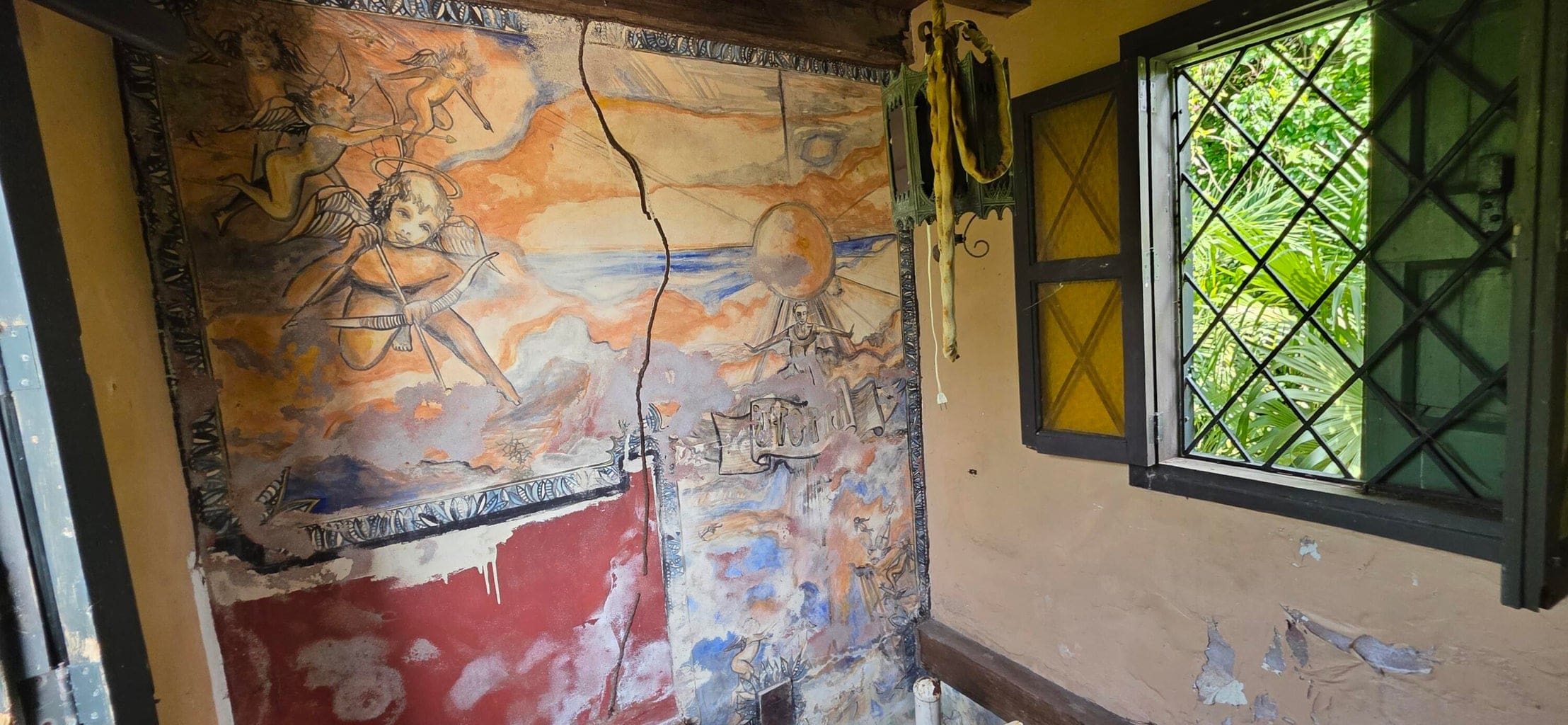
Historians were working to confirm the identity of the painter who created a large mural inside. (Photo by Seaglass Properties)
The guardhouse contains a less spectral mystery. Someone painted a very large mural inside. It seems to depict different layers of potential existence, from hustling post-industrial city life, to a sort of Paradise where playful cherubs reside, to what looks like wine-soaked bacchanalia. The mural stretches up a staircase and over several walls. It’s been damaged in some areas by time and weather.
Garnett said she was researching potential authorship of the artwork. Creque and local historian Felipe Ayala Jr., another member of the Historical Trust board, were also unsure but said it may have been created by a muralist they both knew in the 1980s. They were working to confirm the identity.
The mural stretches across several walls in a staircase. (Photo by Seaglass Properties)
Adeline Williams-Connor appointed new COO at Juan F. Luis Hospital (Photo courtesy JFL)
The Gov. Juan F. Luis Hospital and Medical Center has named Adeline Williams-Connor as its new chief operating officer, according to a press release issued Thursday.
Williams-Connor, a St. Thomas native, brings over 40 years of experience in health care leadership and operations to the role. Her career spans clinical excellence, quality assurance, education, and large-scale system transformation across the Virgin Islands and beyond, the press release stated.
She has held numerous leadership positions including director of Nursing Services, vice president, hospital administrator, performance improvement officer, clinical risk manager, and emergency management coordinator. Her work has been central to helping health care facilities regain CMS certification, secure Joint Commission accreditation, and establish programs for clinical training and professional development, the release stated.
Williams-Connor has also collaborated with health care systems across the Caribbean and the mainland United States, including work in Anguilla, the British Virgin Islands, Bermuda, Utah, and Florida, it said.
“We are honored to welcome Mrs. Williams-Connor to the JFL family,” said Darlene A. Baptiste, CEO of JFL. “Her depth of experience and unwavering commitment to quality care make her an invaluable addition to our leadership team. As we continue our mission to transform health care on St. Croix and throughout the territory, her guidance and vision will be instrumental.”
JFL officials said the appointment supports the hospital’s broader commitment to high-quality, patient-centered care and marks the start of a new chapter in strengthened leadership and service.
The Virgin Islands Police Department positively identified the man found dead in the early hours of Friday, July 11, as Renaldo Antonio Lettsome, 49, officials said Thursday.
The police department received notice of shots fired in the lower Kronprindsens Gade area shortly after 2:30 Friday morning. They found Lettsome lying unresponsive in an abandoned wooden structure with multiple gunshot wounds to his upper body, police said. Emergency medical responders confirmed he was dead a short time later.
Lettsome’s family confirmed his identity later that day.
Lettsome’s death marks the ninth homicide of the year on St. Thomas, and the 20th for the territory, according to the Source Homicide List.*