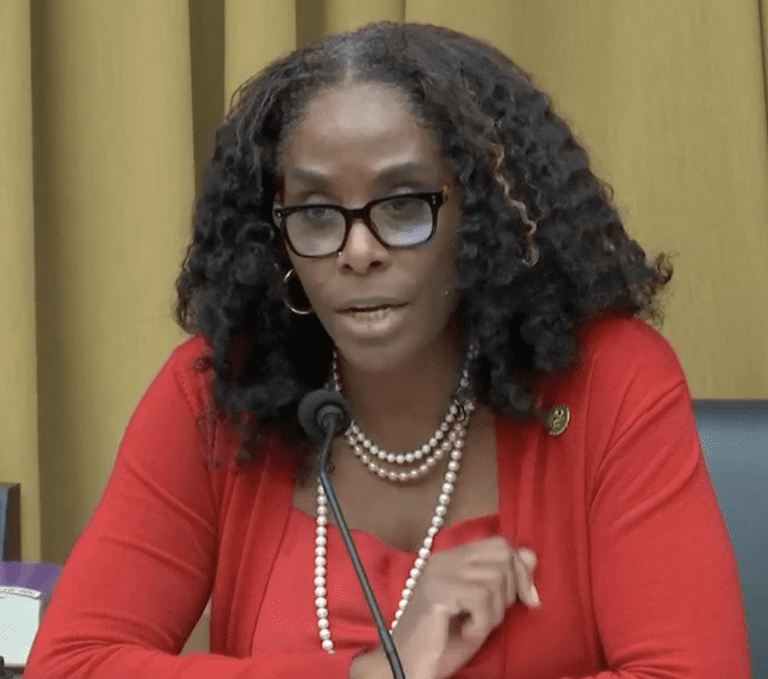


Governor Bryan Reschedules Special Legislative Session to Aug. 1, Calls for Action on Proposals to Protect Public Resources and Expand Civic Participation
St. Croix Man Charged in March Sexual Assault Case

A 56-year-old man was arrested Thursday on multiple charges related to a sexual assault reported in March, according to the V.I. Police Department.
VIPD said Juan Rodriguez turned himself in Thursday with his attorney after investigators secured an arrest warrant on July 7 from the Superior Court. Rodriguez faces charges of first-degree rape, second-degree rape, and first-degree unlawful sexual contact.
The charges stem from a report received March 4, when VIPD’s Criminal Investigation Bureau responded to a sexual assault complaint at the emergency room of Juan F. Luis Hospital around 7:30 p.m. During the investigation, Rodriguez was identified as the suspect, according to police.
Rodriguez was booked and unable to post the $100,000 bail. He was transported to the Golden Grove Adult Correctional Facility, where he remains in custody pending his advice of rights hearing.
Man Found Dead From Multiple Gunshot Wounds on St. Thomas
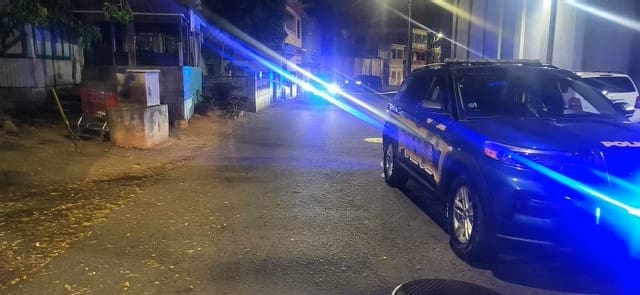
A man was found dead from multiple gunshot wounds early Friday in an abandoned structure in downtown St. Thomas, the V.I. Police Department reported.
The emergency 911 Call Center was alerted by the ShotSpotter system to multiple shots fired in the area of lower Kronprindsens Gade at 2:32 a.m. Friday, according to the police report. Officers arriving on scene found an unresponsive man inside an abandoned wooden structure with multiple gunshot wounds to his upper body. Emergency Medical Technicians determined he had no vital signs, police said.
The victim’s identity is unknown and pending notification of next of kin, the report stated.
His death marks the ninth homicide of the year on St. Thomas, and the 20th for the territory, according to the Source Homicide List.*
The case is under investigation by the Major Crimes Unit. Anyone with information is urged to contact the VIPD at 340-774-2211 or the Criminal Investigation Unit’s Major Crimes Division at 340-714-9823 or 340-714-9829. You can also contact Crime Stoppers anonymously at 1-800-222-8477 (TIPS).
*The Source Homicide List is a chronological log of the homicides recorded in 2025 in the U.S. Virgin Islands, as reported by the VIPD. Cases are broken down by island. While this listing is based on VIPD reports, the Source does not include suicides or vehicular homicides in its listing, which the police and some other media do. This can lead to a discrepancy in the number of incidents reported.
Woman Leaps From Moving Car at Airport To Escape Alleged Domestic Assault

A woman jumped out of a moving rental vehicle at Cyril E. King Airport July 3 to escape what she described as a series of violent assaults by her husband, according to the Virgin Islands Police Department.
Officers responded to the airport terminal after being alerted to a female victim seeking assistance. When they arrived, they met with an adult Hispanic woman who said her husband, 54-year-old Tizoni Mahoney, had repeatedly strangled her and driven her around the island while threatening her life, according to the police report.
The woman told officers the abuse began on June 22 when Mahoney began accusing her of infidelity. She said Mahoney told her he would force her to “self-deport” to the Dominican Republic and later drove her to a remote location in the Fortuna area, where he pointed a firearm at her head and threatened to kill her. She also said Mahoney repeatedly returned to the airport to harass her. Fearing for her life, she said, she jumped from the moving vehicle and ran for help, the police report stated.
According to the police, Mahoney appeared at the Domestic Violence Unit Tuesday where he was read his rights and declined to provide a statement. He was arrested, booked, and turned over to the Bureau of Corrections pending his advice of rights hearing.
Mahoney has been charged with second-degree assault (domestic violence), third-degree assault (domestic violence), simple assault (domestic violence), disturbance of the peace (threat, domestic violence), and possession of a firearm during the commission of a violent crime, the report stated.
The case is being investigated by the Domestic Violence Unit. Police urge anyone with information to contact 911, the unit at 340-715-5534, or the Office of the Police Chief.
Feeder 9B Repairs Outages Planned

- The first outage is scheduled to begin at approximately 8:00 a.m. and last about two hours.
- The second outage will occur in the afternoon for approximately two hours as well.
DPNR Requests $146.9M Budget To Sustain Key Services, Avoid Layoffs
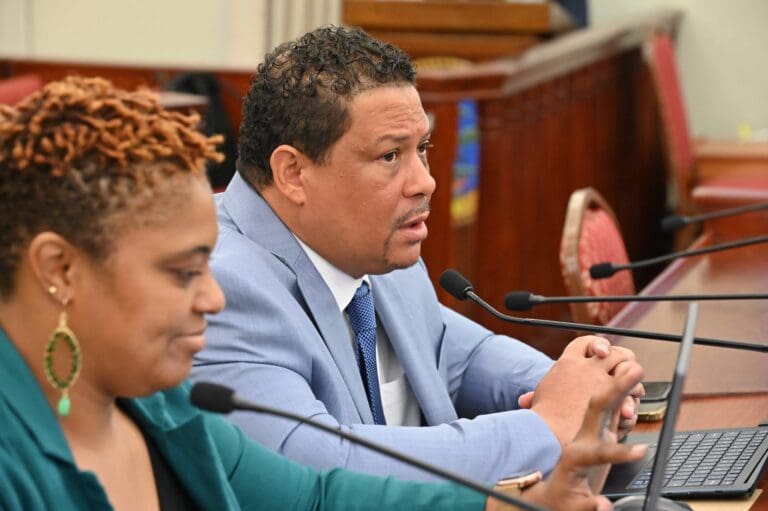
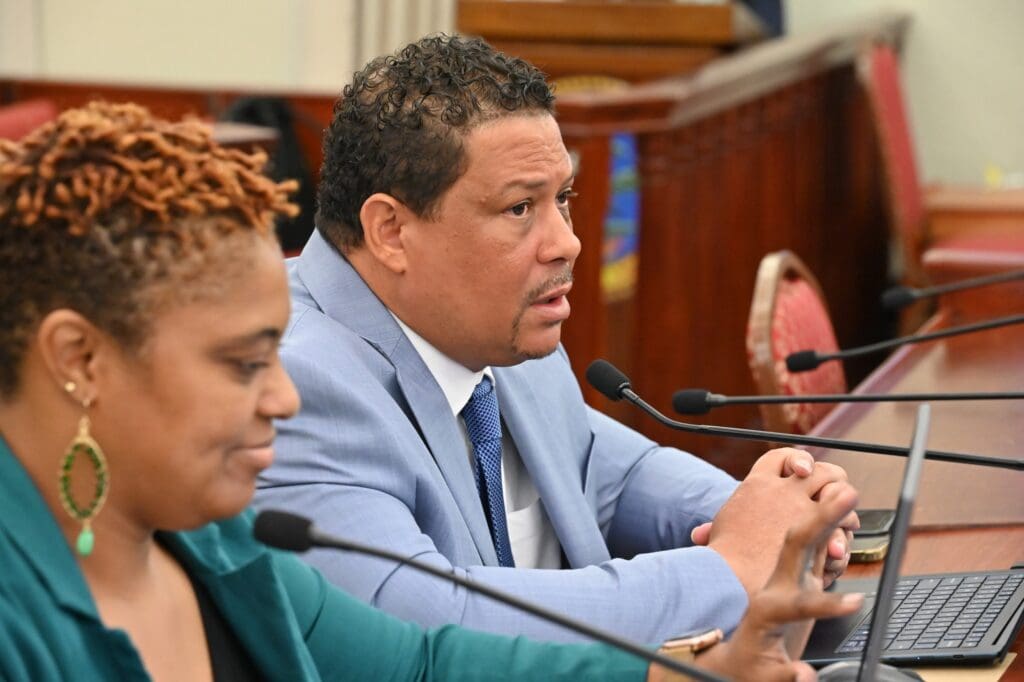
The Virgin Islands Department of Planning and Natural Resources has submitted a $146.9 million budget proposal for fiscal year 2026, along with two supplemental funding requests totaling $2.1 million, aimed at preserving essential services and avoiding layoffs in two of its most critical divisions, officials told senators Thursday.
The proposed budget includes roughly $7 million from the General Fund, $10.9 million in special non-appropriated local funds, and $129 million in federal grants. Of that federal amount, approximately $100 million is earmarked for land acquisition and infrastructure projects that do not directly support the department’s day-to-day operations.
DPNR currently employs 151 individuals across 12 divisions, including 83 classified, 1 general schedule, and 67 exempt employees. While 61 of these positions are funded by the General Fund, the remaining 102 rely on federal grants.
Despite efforts to strengthen staffing capacity, including competitive starting salaries and fellowship programs to attract new hires, DPNR continues to face ongoing human resource challenges, according to Commissioner Jean-Pierre Oriol.
“Without the additional funding we’re requesting, we won’t be able to support all of the salaries, the majority of which are inspectors,” Oriol said during Thursday’s Committee on Finance, Budget and Appropriations hearing, referencing the department’s first supplemental request of $575,143 for the Division of Permits. Many of those inspectors are directly tied to disaster recovery efforts. “This would have a direct impact on recovery projects across the territory,” he added.
The second request, totaling $1.4 million, is for the Division of Libraries, Archives, and Museums, which Oriol said is already operating under financial strain. “The current budget ceiling does not allow for the retention and recruitment of the necessary workforce,” he told lawmakers. “Without supplemental request number two, public libraries will have to remain closed or underutilized, denying access to vital educational and cultural resources.”
Compounding the problem is the recent loss of federal support. Oriol noted that the federal Institute of Museum and Library Services was permanently shuttered in April 2025 under the Trump administration, and that no federal funds are currently allocated to support public library operations. “The $138,000 we received in fiscal year 2025 for subscription services, E-Rate fees, and outreach supplies is likely the last we’ll receive for several years,” he said.
Still, the division remains focused on expanding traditional literacy initiatives, including family literacy nights, intergenerational book clubs, and increased outreach to communities with limited library access. Planning is also underway for new permanent exhibits at libraries and historic forts that highlight the Virgin Islands’ cultural and natural heritage.
In addition to these efforts, DPNR is also modernizing its enforcement systems. The Division of Environmental Enforcement recently rolled out an electronic vessel registration card system, providing digital proof of registration for boaters. “This upgrade will significantly improve efficiency, accuracy, and information sharing between DPNR and local or federal law enforcement agencies,” Oriol said.
As the department looks ahead, Oriol said federal uncertainty remains a concern. While funding under the Clean Water and Clean Air Acts is federally mandated, actual allocations could be reduced under future budget proposals. DPNR is working closely with lobbyists to monitor shifts in federal priorities and prepare for possible impacts.
Overall, the department’s proposed budget reflects the breadth of its responsibilities, ranging from environmental regulation and disaster recovery to cultural preservation and public education. And while the base funding request covers the core of DPNR’s operations, the supplemental requests, according to Oriol, are essential to keeping those operations running smoothly.
“We are committed to doing the work,” he said. “But without these additional resources, the services we provide to the public—and the progress we’ve made — could be at risk.”
WAPA Electric Rate Reduction on Pause Amid PSC Reconsideration
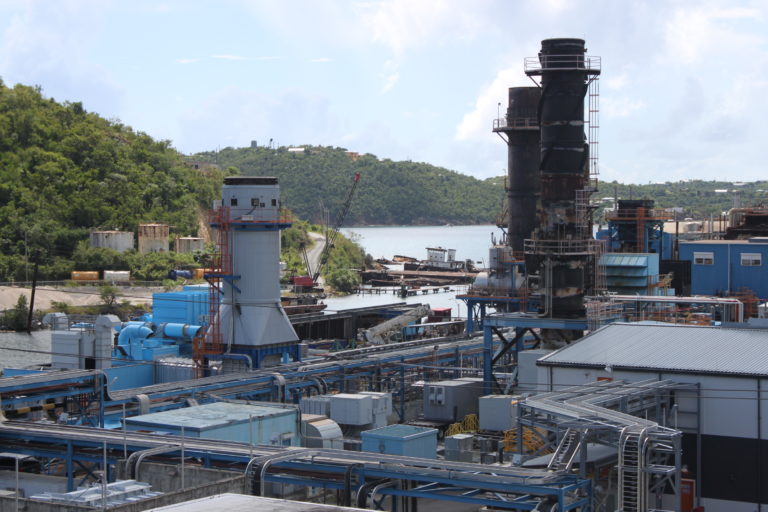
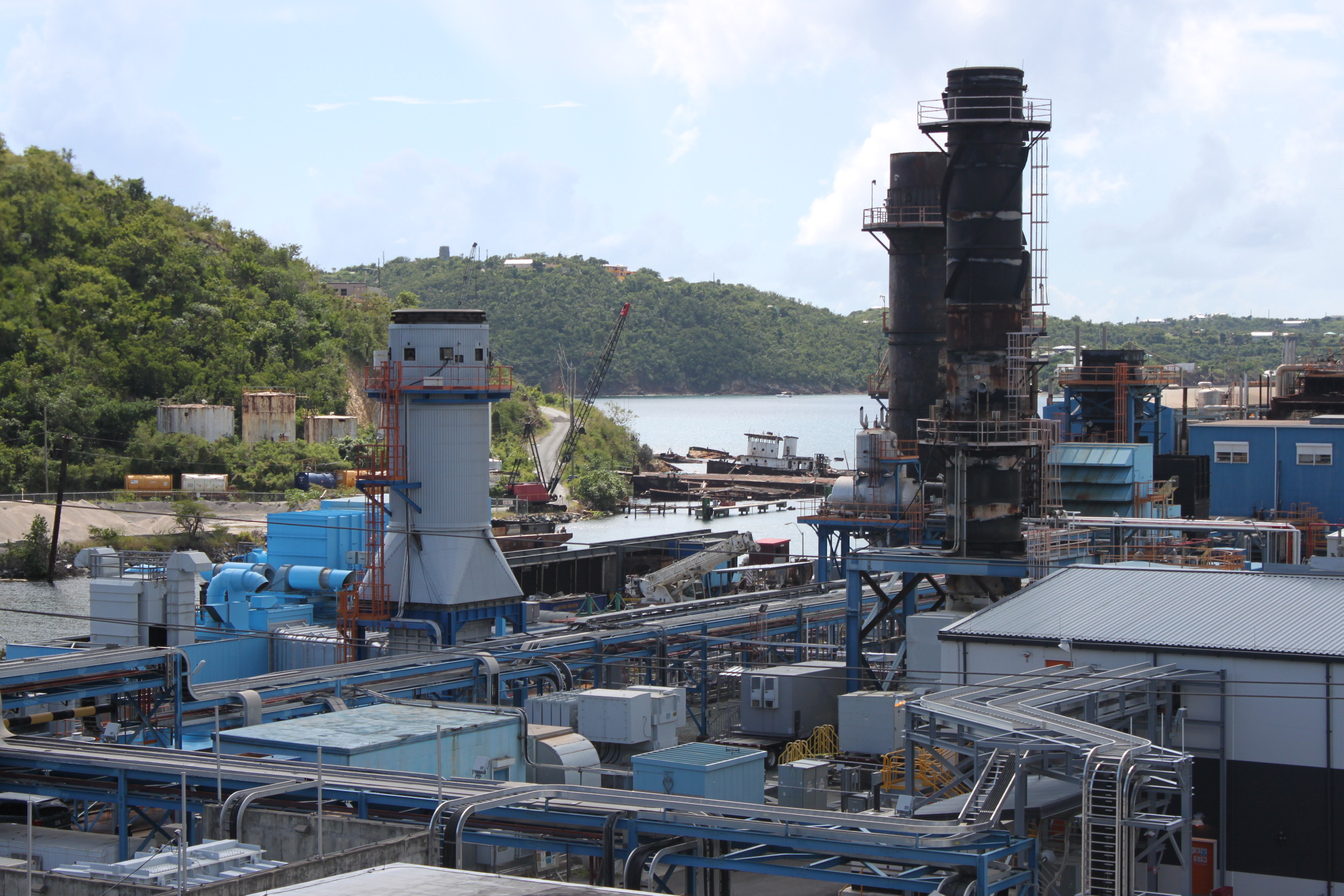
The V.I. Public Services Commission granted the Water and Power Authority’s petition to reconsider a June order lowering electric rates for Virgin Islanders, staying the reduction for at least a month.
The stay came after a brief PSC meeting Thursday, one month after the PSC voted to reduce the electric Levelized Energy Adjustment Clause rate of 22 cents per kilowatt-hour by 5.2 cents. The utility responded to the decision by calling it a “deliberate, ill-considered decision” that would lower WAPA’s budget by $2.5 million every month.
“I fully understand the desire to provide rate relief to the customers of the Virgin Islands Water and Power Authority,” Chief Executive Karl Knight said in a statement last month. “We all share that same desire, and WAPA has been working aggressively to get to that point, but we must do so in a responsible manner that does not immediately jeopardize our ability to provide electric and potable water services in the Virgin Islands.”
During a June 30 meeting of the WAPA governing board, Knight told board members that the PSC’s “considerations on the LEAC side do not take into consideration the shortfalls on the base rate side and do not take into consideration making the company whole, and what the company needs from an operating perspective.”
The PSC is expected to return its decision during its next regular meeting on Aug. 12. If the commission reaffirms its June order, general counsel Boyd Sprehn said Thursday that the utility would then have 60 days to appeal the PSC’s decision in V.I. Superior Court, which would further stay the original order.
At the utility’s urging, the electric LEAC has held steady at 22.22 cents per kilowatt-hour for years, and WAPA has repeatedly maintained that the rate is necessary to keep the struggling utility afloat. The PSC’s consultants have periodically argued in favor of lowering it, particularly given projected energy production savings associated with the commissioning of the St. Thomas power plant’s Wartsila generators.
In December, Jamshed Madan of Georgetown Consulting Group recommended that the PSC start passing some of those savings on to WAPA customers.
“The ratepayers have been denied potential savings for over a decade — that the management auditor had identified — and are entitled to some savings now that some additional efficiencies have been implemented,” he said, recommending a reduction to 21.56 cents per kilowatt-hour. “It’s a very small decrease, but it’s a decrease indicating some change in the right direction.”
He recommended a steeper decrease in June, which the PSC adopted.
WAPA ratepayers have long complained about inflated or bizarre electric bills. Since a disastrous first attempt at installing advanced metering infrastructure left thousands of electric meters offline or unreadable, the utility has had to estimate bills for many of its customers. In February, the utility moved forward with a four-year, $30 million contract with Itron to replace the AMI system. WAPA tapped disaster recovery consultants Witt O’Brien’s to manage the project in June.
St. Thomas, St. Croix Hotel Developments Granted Full EDC Benefits
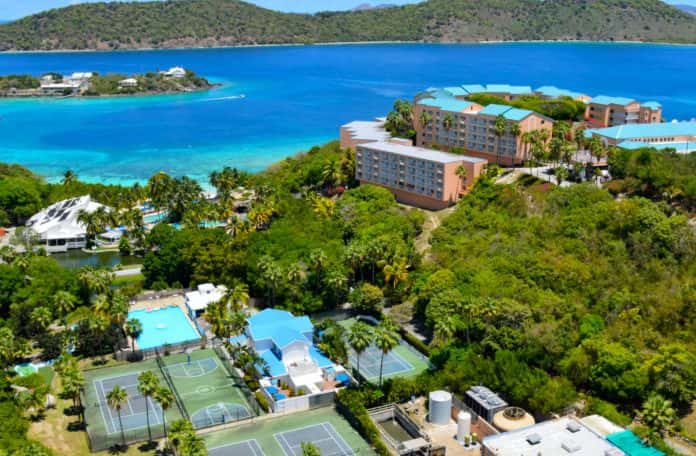
Two hotel developments — one on St. Croix and one on St. Thomas — have been approved for tax incentives under the Economic Development Commission after the agency’s governing board voted unanimously in favor of the applications at a decision meeting Thursday.
DV USVI Investment LLLP plans to reopen what’s been known as the old Sugar Bay Resort on St. Thomas under the Hilton brand, according to its presentation at a public hearing on its application in May, where it was represented by attorney Adriane Dudley.
The St. Thomas property, which has been shuttered since it was damaged in hurricanes Irma and Maria in 2017, will have 300 rooms on 30 acres and is anticipated to open in the first or second quarter of 2026, Dudley told the board at May’s public hearing. Some $20 million was spent to purchase the property in 2022 and the owners will have invested $62 million more for the construction of the resort, she said.
“We believe that this project will contribute significantly to the Virgin Islands tourist industry as well as the Virgin Islands economy,” said Dudley.The hotel will employ 150 people when it opens, which will increase to 175 employees the following year, according to Thursday’s decision meeting, which was held virtually via Zoom.
Historic Heritage Holdings LLP plans a boutique hotel in downtown Christiansted that is expected to feature a minimum of 66 rooms, a gym, a pool and three restaurants, according to the public hearing on its application in March, where it was represented by attorney Marjorie Roberts.
“What we’re really trying to do is build an entire arts, entertainment and hospitality district,” Peter Zielke, majority owner, told the board at the time. “I think that St. Croix should be different from St. Thomas and St. John.”
Under conditions outlined Thursday, Historic Heritage Holdings will employ a minimum of 15 full-time workers within one year of receiving its certificate of occupancy from the Department of Planning and Natural Resources, or within one year from the date its EDC certificate is signed — whichever is later. It is also required to employ five full-time employees in its separate venture capital management and investment entity within one year of starting operations, the board said.
After meeting in executive session, the board approved both applications for tax exemptions at 100% of the incentives authorized under V.I. Code, Title 29, Chapter 12 — DV USVI Investment on St. Thomas for a period of 20 years, and Historic Heritage Holdings on St. Croix for 30 years.
Those benefits include: a 90% reduction on personal income tax; a 90% reduction on corporate income tax; a 100% exemption on the excise tax; a 100% exemption on the business property tax; a 100% exemption on the gross receipts tax, and a reduction in the customs duty from the standard 6% to 1%.
In both cases, retail sales, concessions and rental activities on the resort properties that are not owned and operated by the companies will not be eligible for the tax incentives, the board ruled.
Because Thursday’s meeting was a decision meeting, there was no public discussion. Board members Kevin Rodriquez, chairman; Gary Molloy, vice chairman; Jose Penn, secretary; and Positive Nelson attended.
Property Owners Urged To Act as Tax Delinquencies Top $120M