
















Diabetes is a condition that occurs when the pancreas is not able to produce enough insulin or use the insulin it produces effectively (Diabetes, 2023). Insulin is a hormone the body uses to regulate blood sugar. There are 3 types of Diabetes. Diabetes Mellitus Type 1, Diabetes Mellitus Type 2 and Gestational Diabetes. Even though these are the main 3 Diabetes, one should also consider monitoring Prediabetes as well. Let’s take a closer look.
Type 1 Diabetes, also known as juvenile diabetes, is a chronic condition where the pancreas makes little to no insulin (Type 1 Diabetes, 2024). Symptoms of type 1 diabetes are excessive urination, increase in hunger, bed-wetting in children who never wet the bed at night, unexpected weight-loss, feeling tired and weak, feelings of irritability, and having blurry vision. Though the cause of Type 1 Diabetes is unknown, some factors may include genetics and/or environmental factors (Type 1 Diabetes, 2024).
Type 2 Diabetes, also known as adult-onset diabetes, occurs when the body is having trouble regulating glucose for energy. Like type 1 diabetes, this happens when the pancreas is not able to produce enough insulin. Another cause occurs when cells in our muscles, liver and fats become resistant to insulin, causing the cells to not take in enough glucose. You will mostly find DM2 in older adults, however, with the rising growth of obesity in children, DM2 is becoming more common in young adults and children. Symptoms to look for in Type 2 Diabetes includes, frequent urination, excessive thirst, increased hunger, fatigue, blurred vision, frequent infections, slow-healing sores, numbness or tingling in the feet or hands, dark spots commonly found on the neck and/or armpits (Type 2 Diabetes, 2023).
Gestational Diabetes is diabetes that is diagnosed during pregnancy for the first time. This type of diabetes causes the unexpected mom to have high blood sugar which may also affect her baby. These complications may include severe breathing difficulties, low blood sugar, early birth, need for c-section, obesity and type 2 diabetes later in life, high blood pressure, preeclampsia, and still birth. In gestational diabetes, the blood sugar usually returns to its usual levels after delivery (Gestational Diabetes, 2022). Though the cause of gestational diabetes is still unknown, one factor that seems to play a part is excessive weight before pregnancy. Some risk factors of gestational diabetes include having polycystic ovary syndrome, having an immediate family member with diabetes, being overweight or obese, not being physically active, being of certain ethnicity or race such as Hispanic, Black, American Indian or Asian American, and having prediabetes (Gestational Diabetes, 2022).
Now that we’ve learned about the different types of diabetes and their symptoms, let try to minimize our risks. Exercise more, select healthy food options, loose excess weight and stay positive to decrease stress levels. Let us continue to fight for health lifestyles and minimize diabetes and its risks.
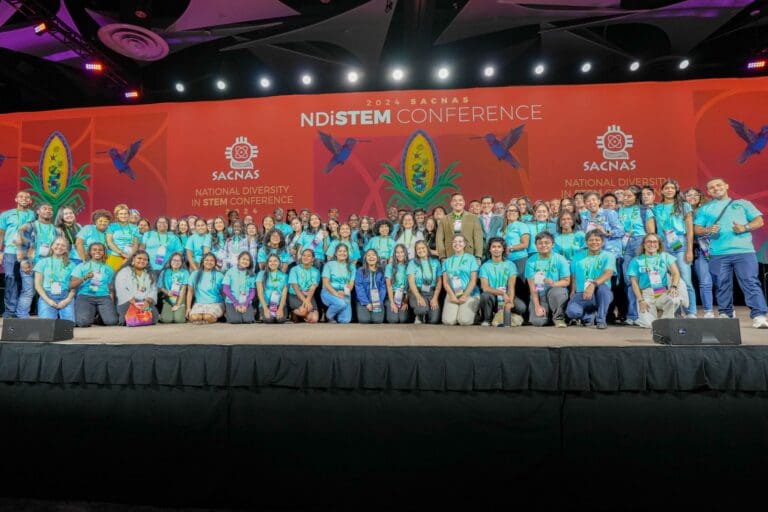
University of the Virgin Islands (UVI) students, faculty and staff joined students from the U.S. Territories of Guam and Puerto Rico at the National Diversity in STEM (NDiSTEM) Conference in Phoenix, Arizona held Oct. 31 – Nov 2. Hosted by the Society for Advancement of Chicanos/Hispanics & Native Americans in Science (SACNAS), the event is the largest multidisciplinary and multicultural STEM diversity conference in the U.S.
Among the 20 USVI participants were seven UVI undergraduate students, four UVI graduate students, four UVI faculty and staff including a representative from the VI Coastal Zone Management Agency (CZM)/ VI Department of Planning and Natural Resources (DPNR), and five UVI workforce fellows. For many it was the first large STEM diversity conference they had attended.
Amanda Boissiere, a St. Croix native, UVI graduate and U.S. National Science Foundation (NSF) Securing STEM Island Pathway Workforce Fellow spoke highly of the experience stating, “I loved the cultural element of SACNAS—it was a STEM conference that truly embraced diversity and welcomed individuals from all walks of life. Networking with and learning from scientists across the nation was incredibly inspiring, and it motivated me to take the next step in my academic journey by applying to graduate programs.”
Participation in the conference was made possible through the Navigating Home project, a National Science Foundation-funded alliance of the United States territories of Guam, the U.S. Virgin Islands and Puerto Rico. The project is dedicated to supporting individuals from historically marginalized and underrepresented groups in the geosciences hailing from one of these territories. A total of seventy-one alliance representatives attended the conference. To learn more about the Navigating Home Project and workforce fellowship opportunities visit https://www.navigatinghomeproject.com.
“Our commitment to diversity brought together a vibrant group of islanders, allowing them to connect across oceans at this conference. In addition to connecting with Alliance members, the conference created opportunities for professional development, cultural celebrations and peer connections,” said Elisabeth Leerdam, UVI’s Center for Marine and Environmental Studies SEAS Islands Alliance coordinator. “It was an honor to represent UVI and our U.S. territories.”
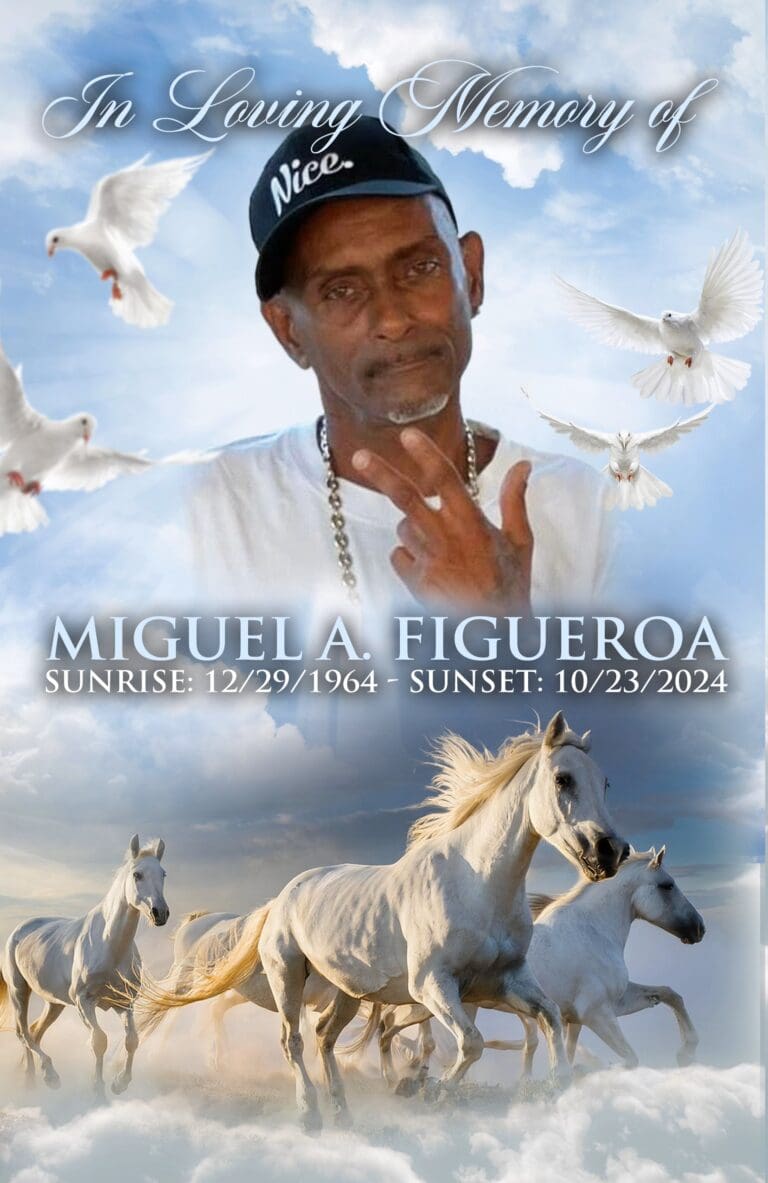
The family of the beloved Miguel A. Figueroa are saddened to announce his passing on Oct. 23.
 He is survived by his mother, Brunilda Ramos, father, Felipe Figueroa, daughter, Maria Angelica Figueroa, son, Miguel A. Figueroa Jr.
He is also survived brothers, Carlos, Luis, and Roberto Figueroa, and sister, Maria E. Figueroa Velezz. His aunts are Irma Cruz, Minerva Acosta, Maria Figueroa Luz, Montalvo, and uncles are Humberto, Carlos Figueroa; Nieces: Yesenia Schultz, Zuleika Figueroa, Kassandra Figueroa, Jahriliz Figueroa, Saidy Figueroa.
His nephew are Roberto Figueroa Jr, Carlos Figueroa Jr., Kayeden Figueroa; and cousins Maria Ramos Olga Robles, Ana Robles, Angel Robles, Josefina Robles, Beatriz Bermudez, Madeline Cruz, Lisa Cruz, Joey, Gabriel, Carmen and Danny Ramos, Roberto Figueroa, Maria, Maritza, Zory, Jessica, Wendy and David Gonzales.
His grandchildren are Miguel Angel Figueroa III, Taliyah Jolie Cook, Mai-Joy Mayana Colon, Mai-Ava Mayana Colon, King Amier Figueroa, Milo Mack Wilson.
Special friends include Maria Garcia, Sandra and other relatives as well as friends too numerous to mention.
Family and friends viewing: Saturday, Nov. 9 at the Kingshill Funeral Home Chapel, Clifton Hill, 303 Kingshill St. Croix., viewing time: 5 p.m. to 6 p.m.
Funeral Service will be held on Sunday, Nov. 10 at La Hermosa M.I., 154 Cliffton Hill, Kingshill St. Croix, Viewing 9 a.m. to 10 a.m.
Interment at Kingshill Cemetery.

Since 1999 the Virgin Islands Source – the only online newspaper of general circulation in the U.S. Virgin Islands – has been providing the community with reliable, accurate and balanced local journalism.
Contact us: visource@gmail.com
© 1999-2025 Virgin Islands Source


Education Seeks Comment on Mandatory Child Abuse, Neglect Reporting Plan
The Virgin Islands Education Department invited the public to review and comment on a newly drafted policy on mandatory reporting of child abuse and neglect in a press release issued on Friday.
Virgin Islanders have until the end of day on Nov. 22 to comment on the policy, which can be found here.
According to Education, the policy “is designed to establish a uniform process for reporting any suspicions of abuse, sexual abuse, or neglect by mandatory reporters within VIDE. This includes prompt reporting to the appropriate authorities, maintaining accurate records, and collaborating with other Government of the Virgin Islands (GVI) agencies.”
The policy, applicable to all Education-affiliated personnel, “aims to standardize VIDE’s approach to safeguarding and supporting the well-being of children across the Territory.”
The new draft comes almost seven months after former Charlotte Amalie High School hall monitor and track coach Alfredo Bruce Smith was sentenced to 35 years in federal prison for sexually abusing numerous students over fifteen years.
Smith was convicted in 2021, and his case raised questions about the Education Department’s reporting policies — and whether school officials knew about Smith’s crimes but failed to report them.
A long-awaited audit — conducted by the Praed Foundation and released in September — found shortcomings in the department’s reporting protocol, noting that 24 percent of survey respondents feared retaliation if they reported abuse and 16 percent said previous reports had gone unanswered. Thirty-eight percent said they felt adequately trained to identify signs of abuse and 13 percent believed students had been provided with information on how to report it.
In the months leading up to the audit’s public release, officials repeatedly stressed that the report was not related to any single incident. During an Aug. 12 press briefing, Gov. Albert Bryan Jr. said the report, completed in May, “didn’t do what I wanted it to do.”
“But that’s … another case — I’m working on something for that shortfall,” he said. “But it really just shows the tweaks in the policy that we need to do.”
When the report was released in September, Government House spokesperson Richard Motta Jr. stated that a follow-up investigation is being conducted, but he did not provide details.
Education did not respond to an emailed request for the department’s current policy on reporting abuse and neglect or questions about how the new draft differs.
According to a Title 5 section of the V.I. Code, teachers and other school personnel are among those who, if they have reasonable cause to suspect child abuse or neglect, shall “immediately report it or cause a report to be made.”
The punishment for failure to report suspected cases was heightened in 2022. The offense is now considered a felony, and mandatory reporters who fail to act could face between two and five years in prison and a fine of up to $10,000.
The Education Department affirmed its commitment to the safety and well-being of students in its Friday press release.
“Protecting children goes beyond instruction. Educators and staff have a profound responsibility to create a secure environment where students’ mental and physical health are prioritized. This commitment extends to swiftly reporting any suspected signs of abuse, neglect, or abandonment, as a matter not only of policy but of ethical duty,” the department stated.