The logo of the flag of the U.S. Virgin Islands (file photo)
The 6th Constitutional Convention of the Virgin Islands marks a pivotal moment for our territory. Unlike the 5th convention held over a decade ago, we now have access to advanced digital platforms that can bring the people of the Virgin Islands closer to the process, ensuring transparency, inclusivity, and public engagement like never before. Technology has matured in ways that can radically transform how we draft our constitution, enabling us to reach a broader audience and empower our community to take an active role in shaping our future.
Digital Platforms: Reaching the Entire Community
In 2009, when the last constitutional convention was held, the internet was not as powerful a tool for engagement as it is today. We now have the ability to use websites, Facebook, YouTube, Instagram, TikTok, and other platforms to inform and engage the public. Through these channels, I envision sharing updates, live-streaming sessions, and allowing residents to watch the drafting process unfold in real time. This will enable our community to see democracy in action and engage directly with the convention.
Additionally, this will allow Virgin Islanders abroad—many of whom may not have been able to participate in previous conventions—to contribute to the process. The ability to connect through digital platforms means that we can finally harness the power of the entire Virgin Islands community, regardless of location.
Real-Time Access and Multilingual Support
One of the most significant advantages of using technology is that it makes the convention more accessible. Not only will the public be able to view drafts in real time, but they will also have the opportunity to critique and comment on these drafts as they are being formed. Moreover, the diversity of our modern Virgin Islands community calls for inclusivity, which means making the constitutional drafts available in multiple languages. This will ensure that all Virgin Islanders, including those who speak languages other than English, can fully participate in this historic moment.
Documenting the Process: Transparency in Action
In the wake of COVID-19, we’ve all witnessed how technology can facilitate meaningful interaction even under difficult circumstances. This same principle can be applied to the convention. Live-streaming sessions, providing weekly updates, and documenting every step of the process will be essential to ensuring that the public stays informed. The level of transparency offered by today’s technology should surpass any previous convention, providing a public record that all Virgin Islanders can access.
Exploring Blockchain: A New Frontier
As we look toward the future, the Virgin Islands has an opportunity to become a leader in technological innovation. Blockchain technology, for example, offers exciting possibilities for the convention. We could issue NFTs (Non-Fungible Tokens) and POAPs (Proof of Attendance Protocols) to commemorate public participation in the convention, creating a secure, digital record of involvement. This not only encourages participation but also opens new doors for documenting the convention’s history in a modern, innovative way.
Rebuilding Civic Education Through Technology
Beyond the drafting process, the 6th Constitutional Convention presents a unique opportunity to re-educate Virgin Islanders on civic responsibility and democracy. For far too long, civic education has taken a back seat. By using short- and long-form video content, we can educate the public about the importance of the constitution, our political system and the democratic process. Platforms like YouTube and Instagram will allow us to promote the drafted constitution in a way that reaches younger generations while also creating more in-depth educational tools for the broader community.
A Renaissance for the Virgin Islands
The 6th Constitutional Convention offers us a chance to step into a new era—a true Virgin Islands renaissance. By embracing technology, we can make our government more transparent, more inclusive, and more efficient. The time has come for us to move away from the “laggard mentality” of the past and fully embrace the tools of the present to build a brighter future for the Virgin Islands. Technology is not just an aid; it is a powerful instrument that can shape our future—and it is up to us to harness it for the betterment of our community.
By making use of modern tools, we can engage our people, connect with our diaspora, and create a constitution that truly reflects the will of the people. This is our chance to make history—let’s not waste it.
Rudel A. Hodge Jr.
Editor’s note: Rudel A. Hodge Jr. is a lawyer and small business owner running as a delegate for the 6th Constitutional Convention of the U.S. Virgin Islands. He advocates for a modern, forward-thinking constitution that reflects the community’s values and promotes long-term growth, focusing on transparency, civic engagement, and protecting both human and environmental rights.
Perla C. Penn-Industrious
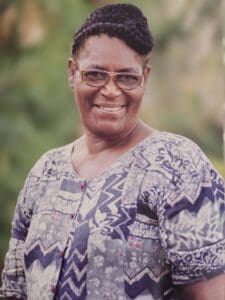
The family announces the passing of Perla C. Penn-Industrious, who died Tuesday, Oct. 15, 2024, at the age of 95.
She is survived by:
Son- U. Gerard Industrious
Daughters- Myrna &Judith Industrious
Grandchildren- Melissa Petersen, Jamal Industrious Sr., Caidia Azille
Great Grand Children- Jamal Industrious Jr., Jai Industrious, Meilani Laurent, Legend Abbott
Sister Eva- Mae Bailey
Sister-in-Law- Thelma Todam
Brother-in-Law- William Industrious
Nieces and Nephews
Children of the Late Collingfred Penn- Maudlyn, Richard Jr., Lesser, Emma
Children of Eva Mae Bailey- Dale, Alonzo, Avril, Bryan, Neal, Celia, Alpheous
Children of Late Ruby Nibbs- Charles, Loretta, Jacqueline, Cheryl, Keturah
Children of Late Doreen Lettsome- Karen, Kurt, Nydia
Children of the late Doris Penn Hodge- Ottley Benett, Carmen, Gerda, Lydia
Children of the late Eldwyth Penn- Ralain, Wayne,Necia, Vern, Troy, Ita Mae
Adopted Children- Jackie, Kelvin, Carolyn, Malvin
Many other relatives and friends too numerous to mention.
The first viewing is scheduled for Tuesday, Oct. 29, 2024, from 4 to 6 p.m., at Turnbull’s Funeral Home and Crematory Service. The second viewing will be Wednesday, Oct. 30, 2024, from 9 to 10 a.m., at Apostolic Faith Church, with the service to follow at 10 a.m. The burial will be at Eastern Cemetery.
Roy BlakeRoy Blake died at the age of 74.Roy Blake is survived by his brothers and sisters: Juanito Benjamin Sr., Eldridge Blake, Marion Peters and Gladys Todman; and brother-in-law and sister-in-law: Eston Todman Sr. and Phyllis Benjamin;
He is also survived by nephews and nieces: Laraine Niles, Cheryl Hazlett, Dwight Nicholas, Keith, Ira, Hillis, Dwayne and Michael Benjamin, Antonio, Carlos, Diane Benjamin, Erica Benjamin Callwood, Lawrence “Barka” Gumbs, Milton Smith Sr., Derek, Clarinda “Olympia” and Edwena Freeman, Arlington and Lawrence Todman, Sandra Burell, Sherwin Blyden, Elesta Peters Morton, Justin Peters Sr., Kathleen Fleming, Amos Peters Jr., Bridget, Mark, Kimberly and Kema Todman, and Alfred “Chicken” Williams.
Other survivors include caregivers: Marion Peters, Sylvia Xavier, Carina and Juana; extended family: Lorriane Daniel, Gail Galloway, Leona Raymo, Carol Joyner and family, Senator Kenneth Gittens, Heirs of Mameta Consuelo Robinson, Heirs of Theodore Turnbull, Heirs of William Alfred Willams, Heirs of Idalia Callwood, Heirs of Lenora Dyer, Heirs of Edita Todman, Heirs of Esme Gumbs Williams, Heirs of Albert Robinson and Heirs of Samuel Robinson; as well as many other family and neighbors too numerous to mention.
The viewing will be held from 9-10 a.m., Thursday, Oct. 31, at St. Andrew’s Episcopal Church, with the service following at 10 a.m. The interment will follow at Western Cemetery No. 1
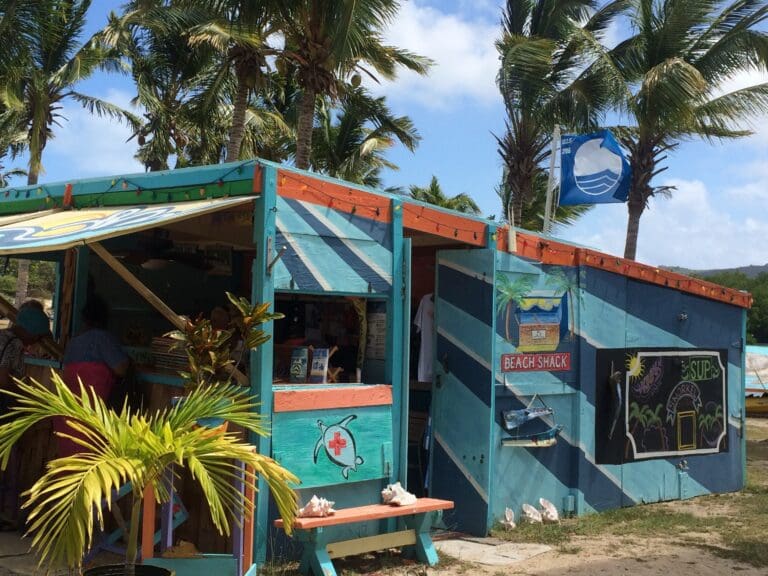
Foundation for Environmental Education has awarded a Blue Flag to Tamarind Reef Resort Green Cay Beach on St. Croix. (Submitted photo)
The VI Conservation Society (VICS) along with the USVI Hotel and Tourism Association (HTA) has announced that three beaches have once again been awarded the Blue Flag status by the Foundation for Environmental Education (FEE). The iconic Blue Flag is one of the world’s most recognized voluntary awards for beaches, marinas and sustainable tourism boats. To qualify for the Blue Flag, a series of stringent environmental, educational, safety and accessibility criteria must be met and maintained. In 2024, there were 5,121 certified beaches, marinas and tourism boats across 51 countries.
The three beaches receiving this coveted certification are: on St. Thomas– Emerald Beach Resort at Lindbergh bay, The Ritz Carlton Resort beach at Great Bay; Tamarind Reef Resort at Green Cay Beach on St. Croix. In addition, all three locations have eliminated Styrofoam from their operations and been certified VI Clean Coast – a perfect example of programs partnering to have a greater impact.
Central to the ideals of the Blue Flag program is the aim of connecting the public with their surroundings and encouraging them to learn more about their environment. As such, environmental education activities must be offered and promoted in addition to a permanent display of information relevant to the site in terms of biodiversity, ecosystems and environmental phenomena.
The process of acquiring Blue Flag certification involves both monetary and manpower investment. The Department of Tourism has been a longtime supporter, and it thanks them for their contribution to this effort. Key agencies, including the Department of Planning and Natural Resources (CZM, EP), Virgin Islands Conservation Society (VICS), Department of Tourism, VI Waste Management Authority, Department of Education, St Croix Environmental Association, National Park Service (NPS), University of the Virgin Islands – VIMAS and VIEPSCOR, Virgin Islands Professional Charter Association (VIPCA), the Hotel and Tourism Association (HTA) and the Environmental Protection Agency (EPA), lent their experts to serve on the Blue Flag Jury who reviewed the beaches’ applications.
The Foundation for Environmental Education (FEE) launched its Gaia 20:30 Strategy and pledged to address the three burning environmental problems that face the planet today: climate change, biodiversity loss and environmental pollution.
“We promote understanding of their causes and of their devastating environmental, social, and economic impacts. Working with our members, we educate and empower our audiences to take actions and implement solutions to mitigate the effects of these critical issues locally, nationally, and globally,” Said the VI Conservation Society.
This year, in alignment with the FEE Gaia 20:30 strategy, local emphasis will be placed on climate change, biodiversity loss and environmental pollution.
The flags will be raised on all three beaches on Dec. 1. The VI Conservation Society encourages residents and visitors to join it in recognizing these locations for their hard work and dedication to implementing sound environmentally sustainable tourism practices. The Blue Flag season runs from Dec. 1 to June 30.
The VI Conservation Society is also happy to announce that new two beaches and two marinas have started their journey to becoming certified over the next couple of years and will be announced once certified. The VI Conservation Society encourages additional beach and marina management organizations to engage in sustainable management of coastal resources and sign up by Nov. 15.
For additional information, visit viconservationsociety.org/programs/blue-flag-usvi/ or contact blueflagusvi@gmail.com.
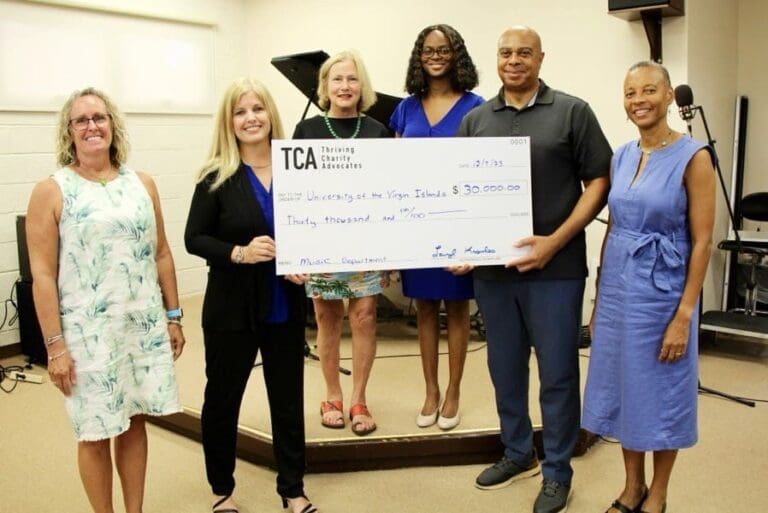
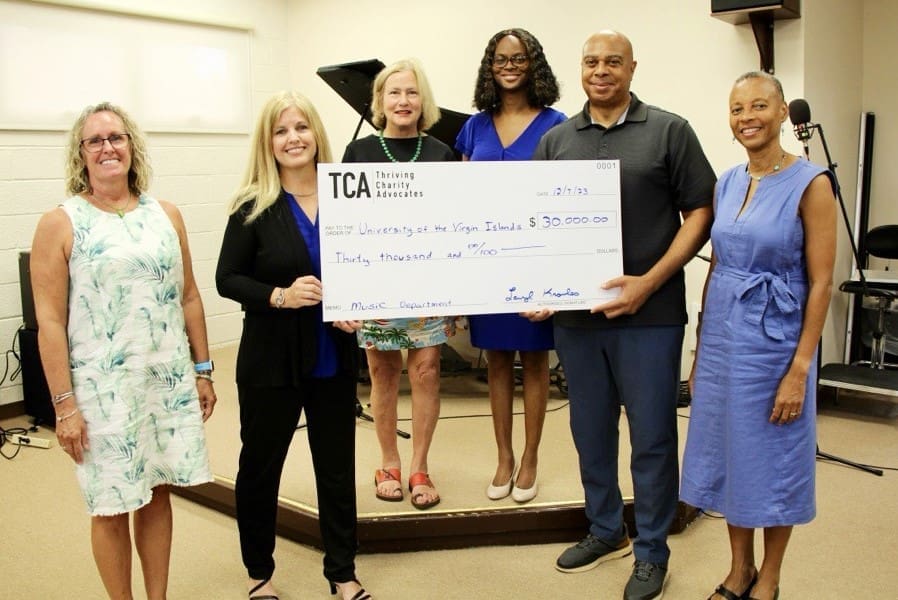
Left to right: Dr. Kimarie Engerman (Dean of College of Liberal Arts and Social Sciences), Kristine Galgay (TCA), Lauryl Knowles (TCA), Dion Parsons (UVI Faculty), Carlton Holmes (UVI faculty) and Dr. Austin Oting Har (UVI faculty). [Submitted photo]The University of the Virgin Islands (UVI) has received a $30,000 gift from Thriving Charities Advocates (TCA), a professional fundraising organization and Economic Development Commission beneficiary on St. Thomas. The gift will be used to support the university’s music program, specifically to enhance the recording capabilities of UVI’s recording studio.
“Thanks to the ongoing generosity of Thriving Charities Advocates, we have made steady progress as we build the recording studio in different phases,” said Dion Parson, UVI chair of the Communication and Performing Arts Department. “We have been able to purchase mics, cables and software thus far and our next step is to buy soundproofing materials. The overall purpose of the recording studio is to make it a performance space that we can use as a teaching classroom and a recording space where we can create quality recordings.”
Designed to engage students deeply with music and the arts, UVI’s music program prepares graduates to teach in the K-12 education system, with specializations available in piano, voice, steel pan, percussion and various woodwind or brass instruments. In addition to offering a Bachelor of Arts in Music Education, UVI also offers a Bachelor of Fine Arts in Music Performance, and a Music Industry Certificate to provide students with training to become audio engineers and successful entrepreneurs in the music business.
Acclaimed jazz musician Dion Parson directs the program, bringing his expertise and vision to ensure students are exposed to a broad spectrum of musical knowledge.
At the check presentation ceremony, UVI Dean of the College of Liberal Arts and Social Sciences, Kimarie Engerman, Ph.D., thanked representatives from Thriving Charities Advocates, noting their ongoing support allowed students to attend the Music Educators National Convention last December. “We are indeed putting the funds to good use, and it’s making a difference. We truly appreciate it,” she said.
In addition to donating to UVI, Thriving Charities Advocates, which has deep ties to the music entertainment industry, has also supported Partners for Strings Inc., which runs a free, after-school youth orchestra program for children aged six to 17 on St. Thomas and St. Croix. Thriving Charities Advocates serves as a boutique brokerage of opportunities to connect artists, tours and live events with nonprofit organizations.
“We are honored to offer this gift to support the growth and creativity of students in UVI’s Music Program. It is our goal to make music accessible to young people and to help them enhance their skills,” said Lauryl Knowles, director of Operations and Compliance at Thriving Charities Advocates. “We are deeply impressed with the quality of UVI’s music program, its visionary approach, and the positive impact it is having on our community.”
Knowles and Kristine Galgay, the Thriving Charities Advocates contract specialist, presented the check in September 2024, in UVI’s Music Building on the Orville E. Kean Campus on St. Thomas.
To learn more about UVI’s Music Program, visit www.uvi.edu.
For more information, contact the UVI Public Relations Office at pr@uvi.edu.
The 2024 General Election Early Voting is approaching its last week. (Shutterstock)
The 2024 General Election Early Voting is approaching its last week. Supervisor Caroline Fawkes continues to encourage voters to come out and vote early to avoid the lines on Election Day. To date, 2,843 voters have cast their ballots within both districts. Early voting is operational daily in both districts, including the upcoming weekend and will close out on Monday, Oct. 28.
The General Election will be held on Nov. 5. Voting hours on St. Croix and St. Thomas are from 9 a.m. to 6 p.m. Voting hours on St. John are from 9 a.m. to 4 p.m. The Early Voting locations are:
St. Croix Elections Office-Sunny Isles Shopping Center, Unit 26
St. Thomas Elections Office – Lockhart Gardens (Upstairs Banco Popular)
St. John Elections Office – Market Place Suite II, 3rd floor
The number of electors who participated in Early Voting as of Monday, Oct. 21, is as follows:
St. Thomas – 1,218, St. John — 23 and St. Croix – 1,602, which is a total of 2,843 votes territory-wide. Supervisor Fawkes assures the public that the process is fair, accessible and transparent.
Fawkes reminds the public that Absentee Ballots are available as an alternative for anyone who is unable to Early Vote or participate on General Election Day. Absentee Ballot applications are available at the Elections System website www.vivote.gov. Absentee Ballots are available in either district if citizens are working or out of their district until Nov. 5. Voters can request an emailed absentee ballot and in-person absentee ballot by Nov. 5, by 5 p.m.
St. Thomas marked its 18th homicide Tuesday. (Shutterstock image)
A 20-year-old man was fatally shot in broad daylight Tuesday afternoon on St. Thomas, marking another tragic incident in a string of violent crimes that have gripped the territory in the past week.
According to the Virgin Islands Police Department, a 911 call came in at approximately 2:50 p.m. Thursday, reporting that a male had been shot in the Hospital Ground area near the Fish Market. Emergency Medical Technicians rushed the victim to Schneider Regional Medical Center, where he was later pronounced dead.
The victim has been identified as Franklin Thomas Archibald Jr.
Archibald is the territory’s 29th homicide and the 18th on St. Thomas, according to the Source Homicide List.*
Authorities are urging anyone with information about this shooting to contact 911, the Major Crimes Unit at 340-642-8449, or Crime Stoppers at 800-222-8476.
This latest homicide follows two others last week, where two men were killed in separate shootings on St. Croix, raising further concerns about escalating violence across the territory.
Walton “Selah” Macedon, 67, was found unresponsive on Sunday morning in St. Croix’s Golden Rock area. Despite efforts to save him, Macedon succumbed to his injuries, marking St. Croix’s 11th homicide of the year. Known for his warmth and strong community presence, Macedon’s sudden death has deeply shaken those who knew him.
A day earlier, 26-year-old Venquon N. Richardson was shot and killed at a gas station in Bovoni, St. Thomas. Found with multiple gunshot wounds, Richardson was pronounced dead at the scene, marking St. Thomas’ 17th homicide this year.
*The Source Homicide List is a chronological log of the homicides recorded in 2024 in the U.S. Virgin Islands, as reported by the VIPD. Cases are broken down by island. While this listing is based on VIPD reports, the Source does not include suicides or vehicular homicides in its listing, which the police and some other media do. This can lead to a discrepancy in the number of incidents reported.
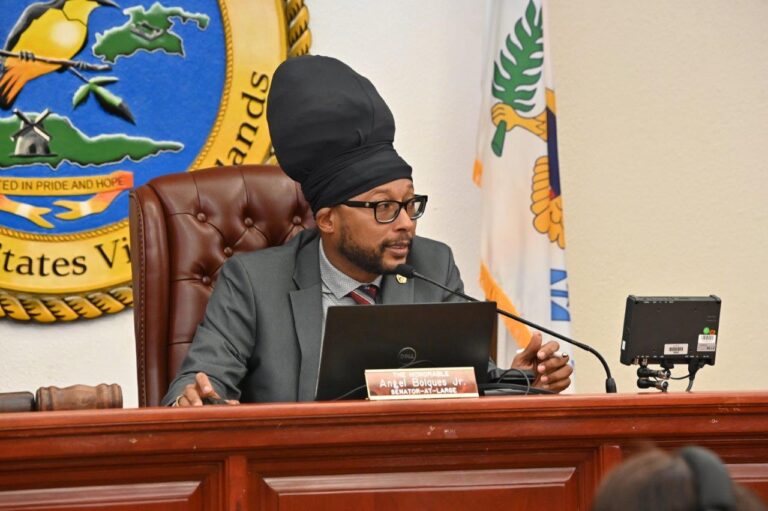
As we gear up for the 2024 Senate elections, it’s crucial to know where each candidate stands on issues that matter most to our community. To keep you informed, The Source has compiled a list of key questions on pressing topics affecting the Virgin Islands. The answers below are from St. Thomas-St. John District Senator-at-Large incumbent Angel Bolques Jr. Sen. Angel Bolques (Photo by Alvin Burke, Jr and Barry Leerdam, Legislature of the Virgin Islands)Why are you running for office, what are your qualifications, and why should voters choose you?
I am running for office to continue my work for the people of the Virgin Islands, ensuring that our territory thrives economically, socially and culturally. With deep-rooted connections to all three islands — St. Croix, St. John and St. Thomas — and extensive experience in both the public and private sectors, I bring a well-rounded approach to governance. As the current Senator at Large, I have a proven track record in legislative research, community advocacy and policy development. My work spans key areas such as education, digital transformation, cultural heritage, and law reforms.
One recent accomplishment is the passage of Bill No. 35-0031, the Child Victims’ and Child Witnesses’ Rights Act, which is slated to be signed into law and aims to provide protection and support for our youth. In addition, Act No. 8802 appropriated $2.5 million to purchase the Department of Labor building in St. Thomas, underscoring my commitment to reducing GVI rent dependency and strengthening government infrastructure. Another key legislative achievement is Act No. 8878, which increases the Motor Vehicle Rental Surcharge, providing additional funds to our treasury; this extra revenue directly benefits our territory by supporting infrastructure improvements, programs and services, and initiatives that enhance the quality of life in the Virgin Islands.
My efforts also include advocating for the modernization of our territory’s energy grid, as demonstrated by my facilitation of renewable energy initiatives like WAPA’s first Solar Battery Storage facility. In education, Act No. 8817 created a scholarship program to support youth pursuing careers in the maritime industry, broadening career paths for our young residents. Furthermore, the Safe Haven Newborn Protection Act, Act No. 8783, reflects my dedication to safeguarding the health of vulnerable populations in our community.
Voters should choose me because I have the experience, leadership, foresight and commitment to address our territory’s unique challenges with innovative and proactive solutions that foster economic growth, enhance public safety and improve the daily lives of Virgin Islanders.
How would you address the high cost of living in the territory and the lack of affordable housing?
Addressing the high cost of living and the lack of affordable housing requires a multi-pronged strategy and approach. I support initiatives that increase local food production and encourage sustainable practices, reducing our dependency on imports that drive up costs. For affordable housing, I plan to incentivize public-private partnerships to build developments that meet the needs of low- and middle-income residents. Zoning reforms, expanded homeownership programs for first-time buyers, and revitalizing existing infrastructure will also play key roles in making housing more accessible for Virgin Islanders.
How would you improve the territory’s electrical grid and implementation of renewable energy?
Modernizing our electrical grid and expanding renewable energy are crucial to sustainability and resilience. I am fully committed to making the necessary investments to ensure our grid is more reliable and better prepared for natural disasters. In April 2024, my office arranged and invited WAPA and the Director of Energy to attend the Eaton Energy launch of their Solar Battery Farm in Puerto Rico, a significant step in understanding how renewable energy projects can benefit the Virgin Islands. This event was the culmination of several meetings my office coordinated in the lead-up to the visit, emphasizing the importance of transitioning to more resilient and sustainable energy solutions for our territory
During the visit, alongside WAPA Governing Board Chair Kyle Fleming, we explored how similar projects can be implemented in the Virgin Islands. The Arecibo facility demonstrated the immense potential of microgrids to create a decentralized power system capable of operating autonomously during outages. With renewable energy integration, such as solar and battery storage, microgrids can provide a sustainable, efficient, and resilient energy solution for our territory. I remain committed to driving these innovations and upgrading our energy infrastructure. By promoting policies that support the development of renewable energy solutions, we can lower costs, reduce dependence on fossil fuels, and position the Virgin Islands as a leader in sustainable energy in the Caribbean. WAPA has now opened its first Solar Battery Storage facility, a milestone in our push toward renewable energy, with plans to expand further and incorporate more advanced technologies in the near future.
What would you do to expedite or improve the territory’s disaster recovery, which has dragged on for seven years now?
We must streamline disaster recovery by ensuring better federal coordination and oversight to ensure funds are used effectively. I propose establishing a disaster recovery task force within our government that works closely with the Office of Disaster Recovery and the federal agencies to fast-track projects and resolve bottlenecks. Transparent communication between the government and residents will help clarify timelines and expectations during recovery efforts.
What reforms would you propose to ensure our children are receiving the public education that they deserve?
As a former teacher and a member of the Board of Education, I’ve seen firsthand the challenges our schools face and the potential our students have. Education reform is critical to unlocking that potential. We must increase teacher salaries to attract and keep the best educators in our classrooms. I also believe we must modernize our curriculum, focusing on STEM and technological literacy so our students are prepared for the jobs of the future.
Vocational and technical training and education are just as important; students should have access to programs that provide practical skills for real-world careers. Act No. 8817, which creates an educational scholarship program to support individuals pursuing careers in the maritime industry, is a testament to my commitment to broadening opportunities for our youth in sectors vital to the Virgin Islands. By upgrading our school facilities and giving students the modern tools they need, we can improve the quality of education across the territory and set up future generations for success.
What are your solutions to address violent crime in the territory, especially among young men?
Preventing violent crime requires a balanced approach that includes proactive community programs and more vigorous law enforcement. We must invest in prevention and intervention services that address the root causes of crime, such as unemployment, lack of education, and limited opportunities for young people. Programs like the V.I. YouthBuild, which provides job training and educational opportunities for at-risk youth, and the My Brother’s Workshop, which offers mentoring and vocational training, are critical in steering young people away from crime and towards positive futures.
I strongly support funding initiatives that provide mentorship, job training, and education to at-risk youth, keeping them engaged in meaningful activities that build their skills and confidence. Additionally, initiatives like the Virgin Islands Behavioral Health Integration Project offer vital intervention services for those dealing with mental health challenges, which can often be a factor in criminal behavior.
At the same time, strengthening our law enforcement agencies through better training and enhanced resources is essential to improving response times and overall crime prevention. Collaboration between local organizations, schools, and law enforcement — along with these prevention programs — is crucial in creating a safer community for everyone. By addressing the issues that lead to crime early on, we can create long-lasting solutions that benefit our young people and the entire Virgin Islands community.
How can the territory improve upon its tourism product while addressing growing concerns about over-tourism? Are we too reliant on cruise tourism and what can be done to bring more overnight visitors?
While cruise tourism remains a key part of our economy, we must diversify our offerings to attract more overnight visitors and extend their stays. Expanding beyond cruise tourism, we can focus on eco-tourism, cultural tourism, agri-tourism, and adventure tourism, each offering unique experiences that showcase the natural beauty and vibrant culture of the Virgin Islands. Eco-tourism, with activities like hiking, kayaking, and exploring our national parks, will appeal to nature lovers. Cultural tourism can highlight our rich history, music, festivals, and culinary traditions, giving visitors an authentic taste of our heritage.
I support incentives for developing boutique hotels, eco-lodges, vacation rentals, and even farm stays, providing visitors with various accommodation options that immerse them in the local experience. We can also promote wellness tourism, tapping into the trend of visitors seeking holistic retreats, spa experiences, and yoga sanctuaries. Developing markets like these attract travelers seeking more personalized and meaningful trips.
Through initiatives like Act No. 8841, which established an official dish and dessert for the Virgin Islands and celebrates our rich culinary heritage, also offering a taste of our culture and attracting food lovers, we can now build culinary tourism on the international level and expand on local food festivals, cooking experiences, and farm-to-table experiences.
In addition to promoting our unique culture and natural beauty, we must improve our infrastructure to accommodate extended stays. This includes enhancing transportation options, developing new attractions, and improving marketing efforts to highlight the diversity of experiences across St. Croix, St. John and St. Thomas. By expanding our tourism portfolio and ensuring high-quality accommodations, we can create a more sustainable and balanced tourism industry that benefits the entire territory and attracts more overnight visitors who contribute significantly to the local economy.
What would you propose to better support people dealing with mental illness, alcoholism, addiction, and homelessness?
Strengthening mental health services in the Virgin Islands is urgent. Right now, we really don’t have the facilities needed to adequately address mental health issues, alcoholism, addiction, and homelessness, leaving many residents without the critical support they need. This gap leads to a cycle of untreated conditions, often resulting in homelessness or criminal activity. To address this, I propose establishing more community-based health clinics and increasing the number of licensed mental health professionals. We also need to build new rehabilitation centers or partner with regional programs to ensure those struggling with addiction receive timely, specialized care.
In addition, I would push for affordable housing programs linked with mental health and addiction support, as well as job training to help people get back on their feet. We need to create emergency shelters that integrate these services to provide immediate relief and long-term stability for those already homeless.
Collaboration is key. By working closely with nonprofits, faith-based organizations, and local government, we can create a network of care that offers real solutions and helps individuals heal, rebuild, and thrive.
What plans do you have to reestablish the libraries in the territory?
Libraries are essential for community connection and lifelong learning. We need to secure federal and private funding to modernize our libraries, turning them into digital learning centers that meet today’s needs. This would include better access to online resources, educational programs, and community workshops, making our libraries vibrant hubs of information and innovation.
On several occasions, I’ve donated books to our libraries and visited schools to read to children because I understand how critical these spaces are for fostering a love of reading and learning. It’s not just about upgrading technology — our libraries are important community spaces where people can unite, learn, and preserve our culture.
I’m committed to revitalizing these spaces so they continue to support lifelong learning and remain valuable resources for everyone in our community. By investing in our libraries, we’re investing in the future of the Virgin Islands.
How can we provide access to affordable healthcare for individuals and small businesses?
Affordable healthcare is one of my top priorities. I believe the key to making healthcare more accessible lies in expanding public-private partnerships to offer subsidized plans that serve both individuals and small businesses. This approach will help reduce costs while ensuring more people access quality care.
Through Act No. 8783, which established the Safe Haven Newborn Protection Act, I’ve shown my commitment to protecting the health of our most vulnerable residents. But we need to do more. By leveraging federal programs like Medicaid and exploring regional partnerships with other Caribbean nations, we can create more affordable insurance options tailored to the unique needs of the Virgin Islands.
Additionally, expanding telemedicine services is critical, especially for those in remote areas where access to care is limited. By embracing technology, we can ensure that more residents, regardless of location, receive timely medical attention without the burden of travel. My goal is to build a healthcare system that is accessible and sustainable for all residents of the Virgin Islands.
Please tell us about any of your other priorities for the territory that are not addressed in the questions above.
One of my key priorities is advancing technological infrastructure across the Virgin Islands, including cybersecurity. In today’s digital age, ensuring our systems are secure from cyber threats is vital for protecting government operations and private sector businesses. A robust and secure technological framework will improve government services, enhance business growth, and provide educational opportunities for our youth. My vision includes further development of digital services for residents, streamlining government processes, and creating opportunities for Virgin Islanders to work remotely within the global economy. Another primary focus is fostering food security by promoting sustainable agriculture and ensuring we have locally sourced food options. This approach would reduce our dependency on imports and boost our local economy. Finally, addressing environmental sustainability through policies that protect our natural resources while encouraging eco-friendly practices remains central to my agenda.
And finally, if you could have one superpower to move the V.I. forward, what would it be and why?
If I could have one superpower, it would be the ability to bring immediate unity and collaboration across all sectors of our community. This superpower would allow us to break down silos between government agencies, businesses, nonprofits, and the people of the Virgin Islands, working together seamlessly to address our territory’s challenges. I believe that working together is the key to unlocking our full potential. Through unity and strong partnerships, we can more efficiently tackle economic development, healthcare, education, and housing issues. By fostering collaboration, we would maximize resources and ideas, propelling the Virgin Islands to a brighter and more prosperous future for all. As Nelson Mandela said, “It is in the power of unity that we can find true strength.”
Let’s move forward together, united in purpose. — Angel Bolques Jr., Senator at Large
As we gear up for the 2024 Senate elections, it’s crucial to know where each candidate stands on issues that matter most to our community. To keep you informed, The Source has compiled a list of key questions on pressing topics affecting the Virgin Islands. The answers below are from St. Thomas-St. John District candidate Derrick Callwood. Derrick Callwood (Submitted photo)Why are you running for office, what are your qualifications, and why should voters choose you?
I am running for office because I am deeply committed to making positive changes in the United States Virgin Islands. With a community organizing and law enforcement background and a passion for public service, I have the experience and determination to address the pressing issues facing our community. My qualifications include:
– A strong understanding of local needs.
– A track record of effective leadership.
– A collaborative approach to problem-solving.
Voters should consider me because I am dedicated to transparency, accountability, and inclusivity in governance. I will work tirelessly to represent the best interests of the people of the United States Virgin Islands.
How would you address the high cost of living in the territory and the lack of affordable housing?
The high cost of living in the United States Virgin Islands is a significant challenge that needs to be comprehensively addressed. One approach to tackling this issue is to focus on increasing the availability of affordable housing. The particulars should involve:
Implementing policies to encourage the development of affordable housing units.
Providing subsidies for low-income individuals.
Provide sliding scales (reduction) in tax obligations for small businesses as an incentive to lower consumer costs.
Additionally, efforts to improve the overall economic situation, create more job opportunities, and lower business costs could alleviate the high cost of living in the territory. By addressing the availability of affordable housing and the overall economic conditions, we can work towards making the United States Virgin Islands a cheaper place for its residents.
How would you improve the territory’s electrical grid and implementation of renewable energy?
The United States Virgin Islands Water and Power Authority is currently grappling with significant challenges in maintaining a reliable electrical grid, mainly due to severe weather events that have exposed its vulnerabilities. Urgent steps need to be taken to improve the territory’s electrical grid and promote the implementation of renewable energy.
Firstly, investing in modernizing and reinforcing the existing grid infrastructure is crucial to enhance its resilience against natural disasters. Upgrading transmission and distribution lines, incorporating intelligent grid technologies, and deploying energy storage systems can help mitigate the impact of outages and improve overall grid stability.
Secondly, increasing the integration of renewable energy sources such as solar and wind power is essential for reducing reliance on imported fossil fuels and enhancing sustainability. Encouraging private investment in solar panel installations, wind farms, and other renewable energy projects can contribute to a more diverse and environmentally friendly energy mix.
Additionally, promoting energy efficiency measures and implementing demand response programs can help balance supply and demand, reducing strain on the electrical grid during peak periods.
Furthermore, fostering partnerships with research institutions and industry experts can facilitate the development of innovative solutions tailored to the unique challenges faced by the US Virgin Islands Water and Power Authority, ultimately contributing to a more resilient and sustainable energy infrastructure.
By addressing these critical areas, the U.S. Virgin Islands, with the support and involvement of government officials, energy policymakers, and stakeholders, can work towards a more reliable, resilient, and environmentally friendly electrical grid, benefitting residents and the local economy.
What would you do to expedite or improve the territory’s disaster recovery, which has dragged on for seven years now?
I would focus on several key areas to expedite and improve the territory’s disaster recovery in the United States Virgin Islands:
— We must streamline the bureaucratic processes and increase transparency to ensure that funds and resources are allocated efficiently.
— We must prioritize community engagement and participation to ensure that recovery efforts are responsive to the needs of the people.
— We must adopt a strategic plan that defines the roles of all administrators, departments, and agencies.
— Strengthening partnerships with federal agencies, nonprofit organizations, and the private sector is crucial. Their expertise and resources are invaluable in our comprehensive recovery strategy.
What reforms would you propose to ensure our children are receiving the public education that they deserve?
Several vital reforms are necessary to ensure our children receive the high-quality public education they deserve in the United States Virgin Islands. First and foremost, improving work environments for teachers, faculty, and support staff is essential. These could involve providing better resources, support, and professional development opportunities to help teachers excel.
Secondly, offering better pay for teachers is crucial to attract and retain top talent in our schools. Competitive salaries can motivate educators and improve overall morale within the education system.
Additionally, I propose implementing advanced economic literacy curricula for our seniors. These curricula will help prepare students for financial independence and success in the real world.
Addressing these areas will help us provide the best possible education for our children in the United States Virgin Islands. As educational policymakers, school administrators, and community leaders, I urge you to take an active role in these reforms. Our persistent involvement is crucial for the success of these initiatives.
What are your solutions to address violent crime in the territory, especially among young men?
To address violent crime in the United States Virgin Islands, especially among young men, I believe we need to take a multifaceted approach. Firstly, we need to aggressively address the consent decree that is hampering policing in the territory. The practices should involve working with relevant stakeholders to find a solution that allows law enforcement to effectively carry out their duties while respecting the community’s rights.
Equally important is our investment in community programs and initiatives that offer young men crucial support, mentorship, and opportunities. These programs, which provide education, job training, and counseling services, can redirect at-risk individuals from a life of crime toward more positive paths.
Furthermore, enhancing collaboration between law enforcement, community leaders, and residents is essential. Building trust and fostering open communication can lead to more effective crime prevention and intervention strategies.
Overall, addressing violent crime in the U.S. Virgin Islands requires a comprehensive approach that combines law enforcement efforts with community-based initiatives aimed at addressing the root causes of crime and providing support to those most at risk.
How can the territory improve upon its tourism product while addressing growing concerns about over-tourism? Are we too reliant on cruise tourism and what can be done to bring more overnight visitors?
To improve tourism products in the United States Virgin Islands while addressing concerns about over-tourism, we can adopt a target marketing strategy to attract responsible and sustainable tourism. This strategy can be achieved by promoting off-peak travel, encouraging longer stays, and highlighting the territory’s unique cultural and natural attractions beyond the typical tourist spots. Diversifying the tourism offerings to include eco-tourism, agro-tourism, and adventure tourism could reduce the over-reliance on cruise tourism and attract more overnight visitors. Investing in infrastructure and accommodations catering to overnight visitors and promoting local home-stays and boutique hotels can contribute to a more balanced tourism approach.
What would you propose to better support people dealing with mental illness, alcoholism, addiction, and homelessness?
To better support people dealing with mental illness, alcoholism, addiction, and homelessness in the United States Virgin Islands, I would propose a comprehensive approach that includes increasing access to mental health services, substance abuse treatment programs, and affordable housing initiatives.
Firstly, the government should increase mental health services and expand facilities across the islands to ensure individuals can access professional support and treatment. These initiatives should involve increasing funding for mental health programs and recruiting more mental health professionals to serve the community.
Secondly, addressing alcoholism and addiction requires a multi-faceted approach, including education and prevention programs, as well as accessible and affordable rehabilitation services. Community outreach and awareness campaigns could help reduce the stigma associated with seeking help for addiction and alcoholism.
Additionally, tackling homelessness involves providing affordable housing options and supportive services for those in need. Initiatives to develop low-income housing, temporary shelters, and supportive employment programs could help individuals experiencing homelessness stabilize their lives and access the necessary resources.
Overall, a holistic approach that combines mental health support, substance abuse treatment, and housing initiatives is essential to better support individuals dealing with these complex challenges in the United States Virgin Islands.
What plans do you have to reestablish the libraries in the territory?
As technology advances, it’s important to modernize public libraries in the Virgin Islands to meet the community’s changing needs. A plan is necessary to integrate computer labs with high-speed internet access to provide resources for research, job hunting, and educational purposes. Additionally, we should aim to create digital archives of local history and cultural information to preserve and make it accessible for research. By combining traditional library services with modern technology, we want to revitalize the public library system and ensure its relevance in the digital age.
How can we provide access to affordable healthcare for individuals and small businesses?
One way to provide access to affordable healthcare for individuals and small businesses in the United States Virgin Islands is to establish community health centers that offer low-cost or free medical services. These centers can cater to the needs of the local population and provide essential healthcare services such as primary care, preventive care, and chronic disease management. Additionally, implementing health insurance programs with subsidies for low-income individuals and small businesses can help make healthcare more affordable and accessible. By working with local healthcare providers and government agencies, we can develop sustainable solutions to address the pressing healthcare needs in the U.S. Virgin Islands.
Please tell us about any of your other priorities for the territory that are not addressed in the questions above.
The infrastructure of the United States Virgin Islands should be our government’s top priority. We must have a comprehensive plan to upgrade the territory’s infrastructure, including initiatives to pave roads, bury power lines, and construct new schools and hospitals. These efforts are crucial for the overall development and well-being of the community. In addition to these priorities, we should also focus on enhancing the public transportation system, expanding access to high-speed internet, and implementing sustainable energy solutions through creative and innovative initiatives. Given the islands’ vulnerability to natural disasters, improving disaster preparedness and response capabilities is another key priority. Addressing these issues will contribute to a more resilient and prosperous future for the United States Virgin Islands.
And finally, if you could have one superpower to move the V.I. forward, what would it be and why?
The United States Virgin Islands are unparalleled in beauty and cultural significance. Their pristine waters, verdant landscapes, and vibrant communities make them an exceptional destination. To propel the V.I. forward, I would choose the superpower of healing. With this ability, I could foster environmental restoration, cultivate harmony among the people, and drive positive transformation for the islands’ future. Healing is a superpower capable of addressing numerous challenges faced by the V.I. and laying the groundwork for a more promising tomorrow.
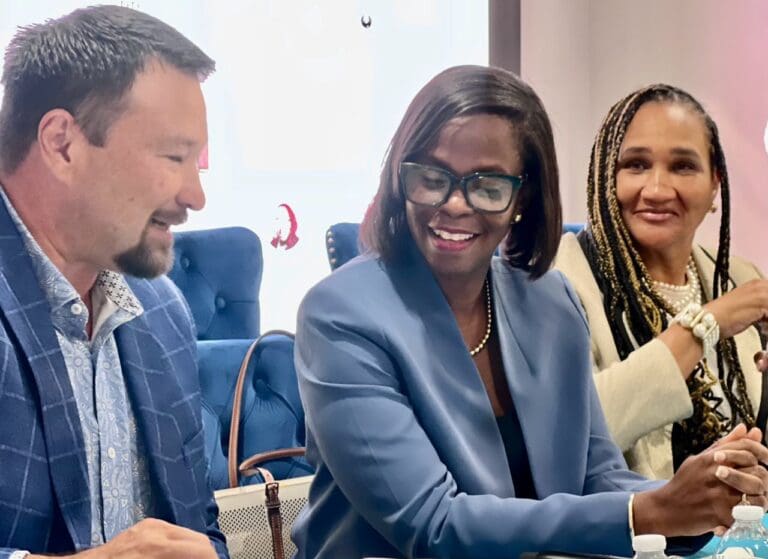
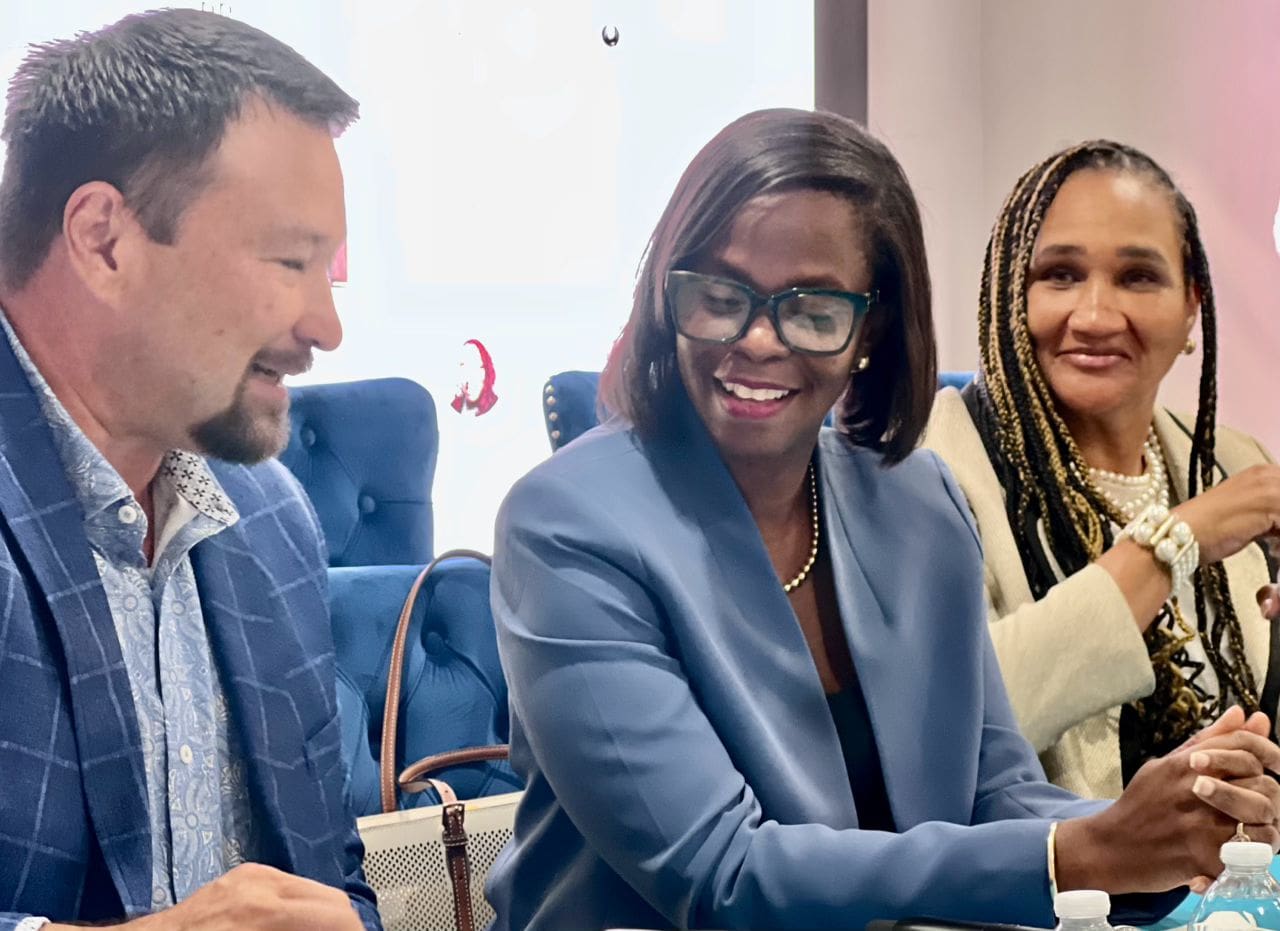
From left, J. Benton Construction president- James Benton, Office of Disaster and Recovery director- Adrienne Williams-Octalien, and Education Commissioner- Dionne Wells-Hedrington on the Industry Open House panel. (Source photo by Ananta Pancham)
The Virgin Islands Education Department hosted an Architecture, Engineering, and Construction Industry Open House on Tuesday to give the public an opportunity to meet with the contractors responsible for the new-build and modernization of Charlotte Amalie High School and Bertha C. Boschulte Middle School.
The event, held in collaboration with the Bureau of School Construction and Maintenance and the Office of Disaster Recovery, took place at the University of the Virgin Islands’ Innovation Center. Local developers gathered to learn about upcoming opportunities in construction, as Education Commissioner Dionne Wells-Hedrington shared that these projects will draw from the $3.2 billion earmarked for renovation efforts across the territory. “We want to see a new building on each island,” Wells-Hedrington said.
Industry Day started and concluded with a panel discussion featuring representatives from various government agencies, who shared insights on the project’s impact on the community. The panel noted that these projects have been in progress since 2019.
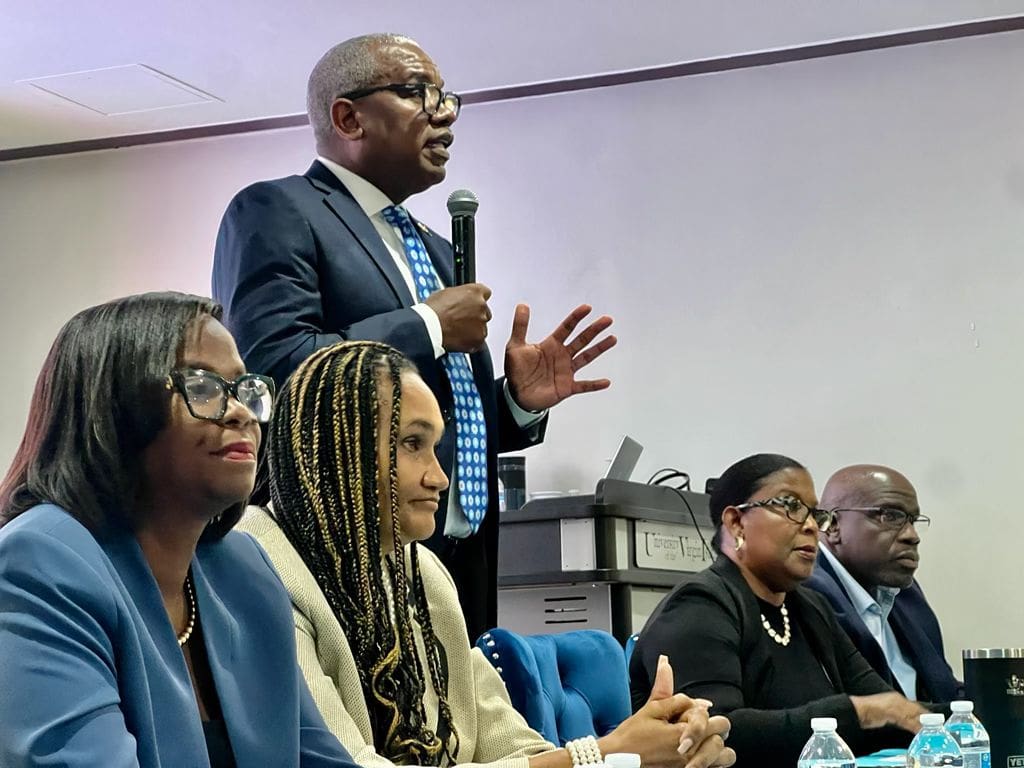
“This is not only the undertaking of rebuilding a high school,” said Gov. Albert Bryan Jr. “This is about the birthright of a community so to speak.”
The governor added that this is the first major project for a school being rebuilt on St. Thomas and essentially a catalyst for the culmination of major rebuilds in the St. Thomas-St. John district, referring to the rebuild of CAHS.
Gov. Albert Bryan Jr. talks about the school renovation projects at the Industry Open House among the panel of speakers. (Source photo by Ananta Pancham)
Adrienne Williams-Octalien, director of the Disaster Recovery Office, said that the mission of the project is “building a resilient school for the children of the Virgin Islands.”
James Benton, president and founder of J. Benton Construction, said that the dual school project will total $550 million.
“When we first reviewed this request for proposal about a year and a half ago, it quickly became clear to me how vital these two projects are for St. Thomas and the future of our children,” said Benton, who shared that his passion for education stems from his upbringing, influenced by his grandparents, both teachers and his mother.
Benton added that his company is now under contract with notice to proceed for the rebuild and modernization. Based on the size, complexity, and impact of the projects, over the next year, the public can anticipate the Benton team working through the balance of the design, educational permitting, and the selection of local trade partners and suppliers.
“The next steps will also include really selecting all of the local trade partners and suppliers. This size project, to be successful, will need the support of the entire community,” from interns to large companies – anyone, Benton said, that has the resources that “cares about our future here.”
When asked by The Source afterward how long the projects will take to complete, Benton responded it is anticipated to be five years.
Throughout the panel discussion, conceptualized views of the rebuild of CAHS and the modernization of BCB were displayed. An open design concept is projected for CAHS with easy accessibility to each building. However, Wells-Hedrington said that the displayed concepts are not concrete.
“It’s not final yet, but it gives us an idea,” said the commissioner.
She added that the demolition of CAHS will begin with the construction of administrative buildings and classrooms, then other facilities will be worked on.
“It’s going to be phased in so we don’t lose instructional time,” Wells-Hedrington said.
Thus far, both projects will be worked on by the design build team Consigli Construction and J. Benton Construction, architects SMMA, Design District Architects, and DLR, and Harris Civil Engineers.
The SMMA group responsible for the design spoke with The Source about their extensive experience in building K-12 schools across the country, including new constructions and modernizations similar to those being planned for the territory. Their team includes an educational planner focused on understanding the needs of the students, faculty and the broader community. What makes this project unique, according to SMMA, is the emphasis on the exterior campus design, offering students the opportunity to explore outdoor spaces, enjoy natural light, and take in scenic views—factors that are essential to how children learn.
“We’re excited about building next-generation classrooms where students can open doors to the outdoors and embrace their learning environment,” said SMMA Principal Lorraine Finnigan. The team also emphasized integrating wellness—physical, social, and emotional—into the overall design.
Finnigan further praised the work the Education Department has done to prepare for the project. “The amount of effort VIDE has put in to lay the groundwork for these projects is tremendous. We’re eager to reconnect with staff and understand what’s changed so we can plan for the future.”
Also in attendance for the panel discussion were Craig Benjamin, director of the Bureau of School Construction and Maintenance, Jomo McClean, highway program manager at the Public Works Department, various members from the Education Department, and investor groups.