The U.S. Virgin Islands Soccer Federation has successfully completed its Spring 2026 Rugrats Soccer Program, an introductory football initiative designed for children ages 3–5.
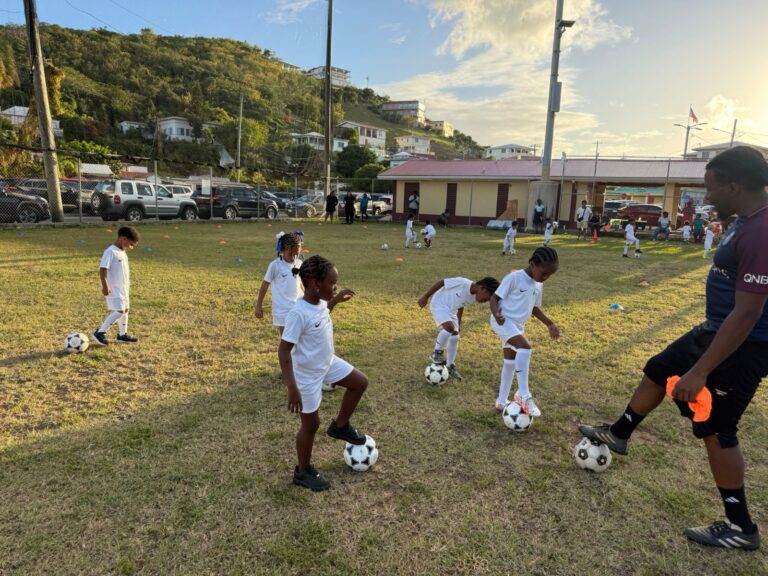
35 children between ages 3 and 5 participated (Submitted photo)
Over five sessions, the program engaged 35 young participants. It focused on providing a positive first experience with the game through play-based activities centered on movement, coordination, and basic ball interaction.
Participation remained consistent throughout the program, with strong attendance across all sessions and continued engagement from players and families.
Participants highlighted that children not only enjoyed the sessions, but also demonstrated meaningful development over the course of the program. Parents observed growth in confidence, improved coordination, increased comfort with the ball, and stronger social interaction with other children.
Families also expressed a clear interest in continued programming, noting the value of structured, age-appropriate activities that support both enjoyment and early development in the sport.
The Rugrats Program represents an important step in strengthening the foundation of football development in the U.S. Virgin Islands by introducing the game at an early age and engaging families in the process.
The federation will continue to build on this initiative as part of its broader efforts to expand access to football and support long-term player development across the territory.
Host Adisha Penn recaps the biggest headlines of last week, covering ongoing WAPA outages and repair efforts, including delays tied to a major power contract, along with a federal court ruling in the Alfredo Bruce Smith case, a Supreme Court challenge to birthright citizenship, new laws signed by Governor Albert Bryan Jr., concerns over unsafe conditions at the Kean track, and strong finishes by Virgin Islands National Guard athletes at a national biathlon competition. There’s always something new on Consider the Source!
The first celebration of Carnival 2026 drew hundreds of children and parents to Emile Griffith Park for an Easter Sunday Children’s Fun Day. It was a day to play, to create, to compete and lavishly spend lots of energy.
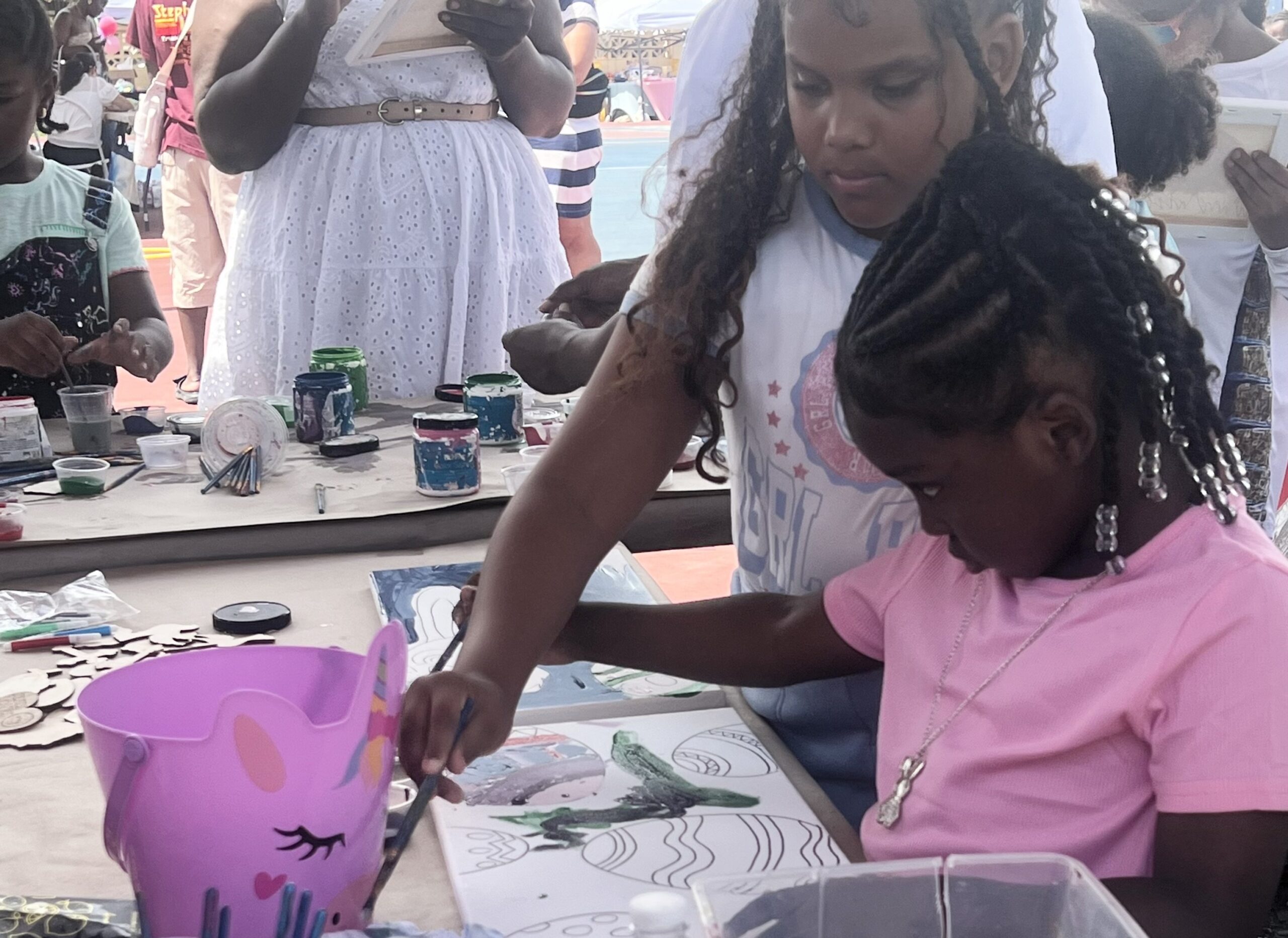
Families filled the playground and basketball court shortly after 1 p.m. Young artists dabbed paint onto diagrams of Easter rabbits and eggs.
Valentina Batera and Isabel Lager dab color onto Easter designs. (Source photo by Judi Shimel)
Others hurled cloth hatchets toward a target a few feet away.
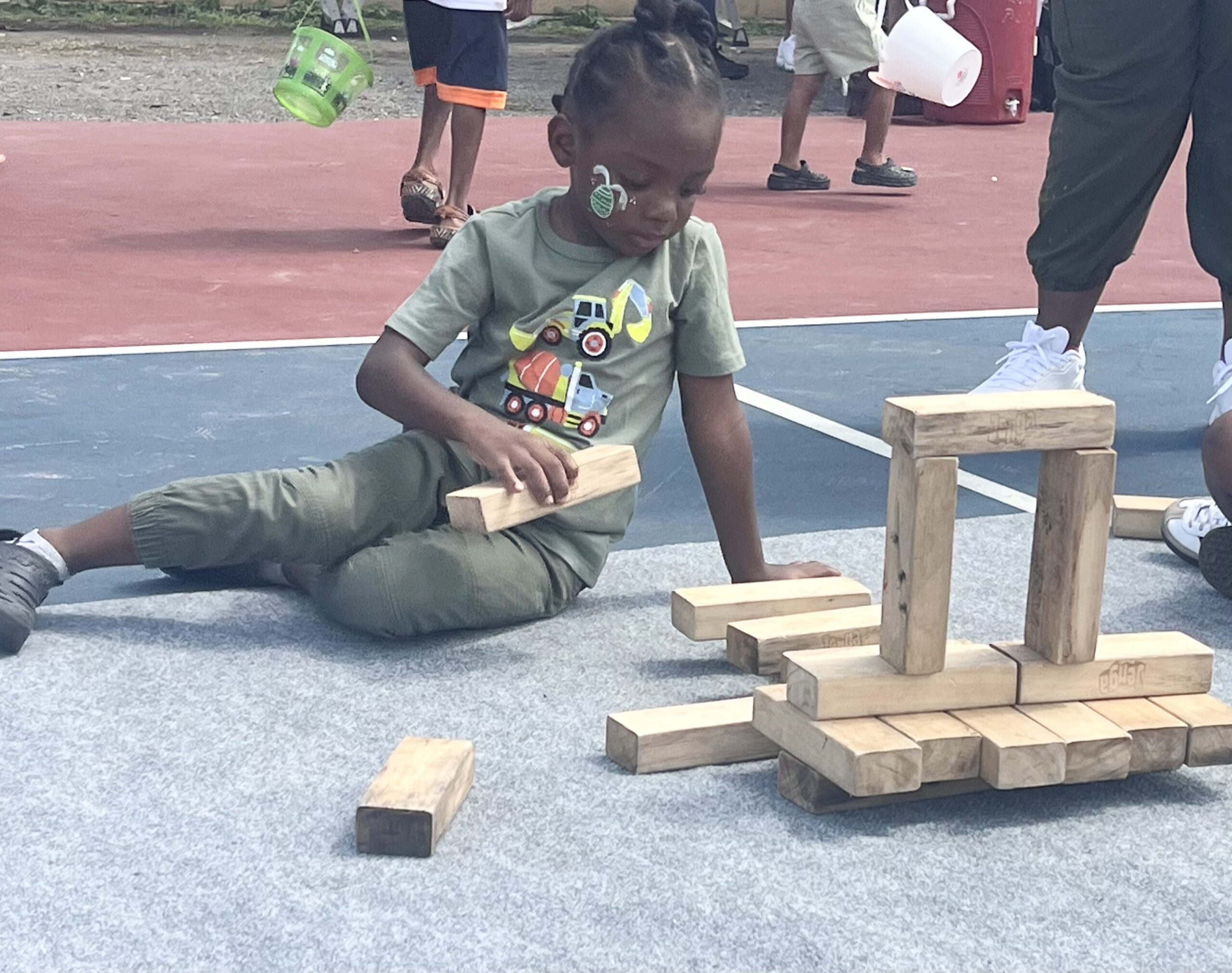
Buckets of chalk and wooden blocks caused others to settle in on the basketball court to build and draw designs.
Caleb Richards builds an archway using wooden blocks. (Source photo by Judi Shimel)
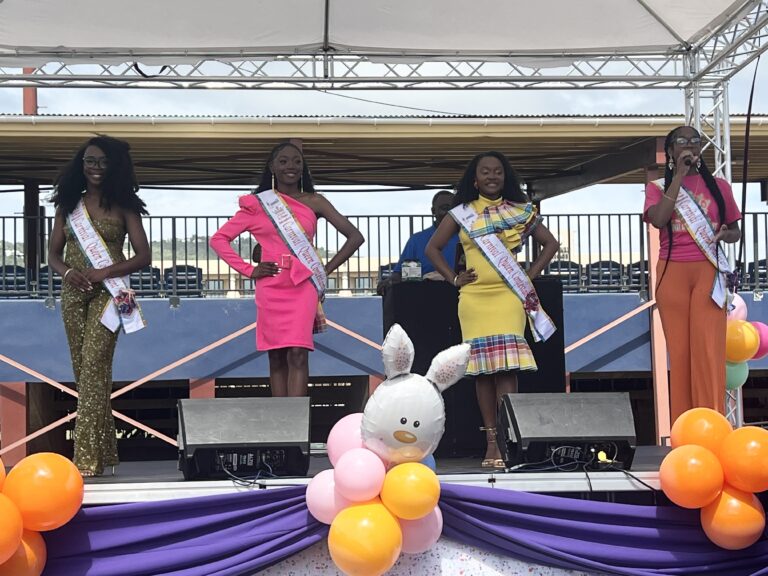
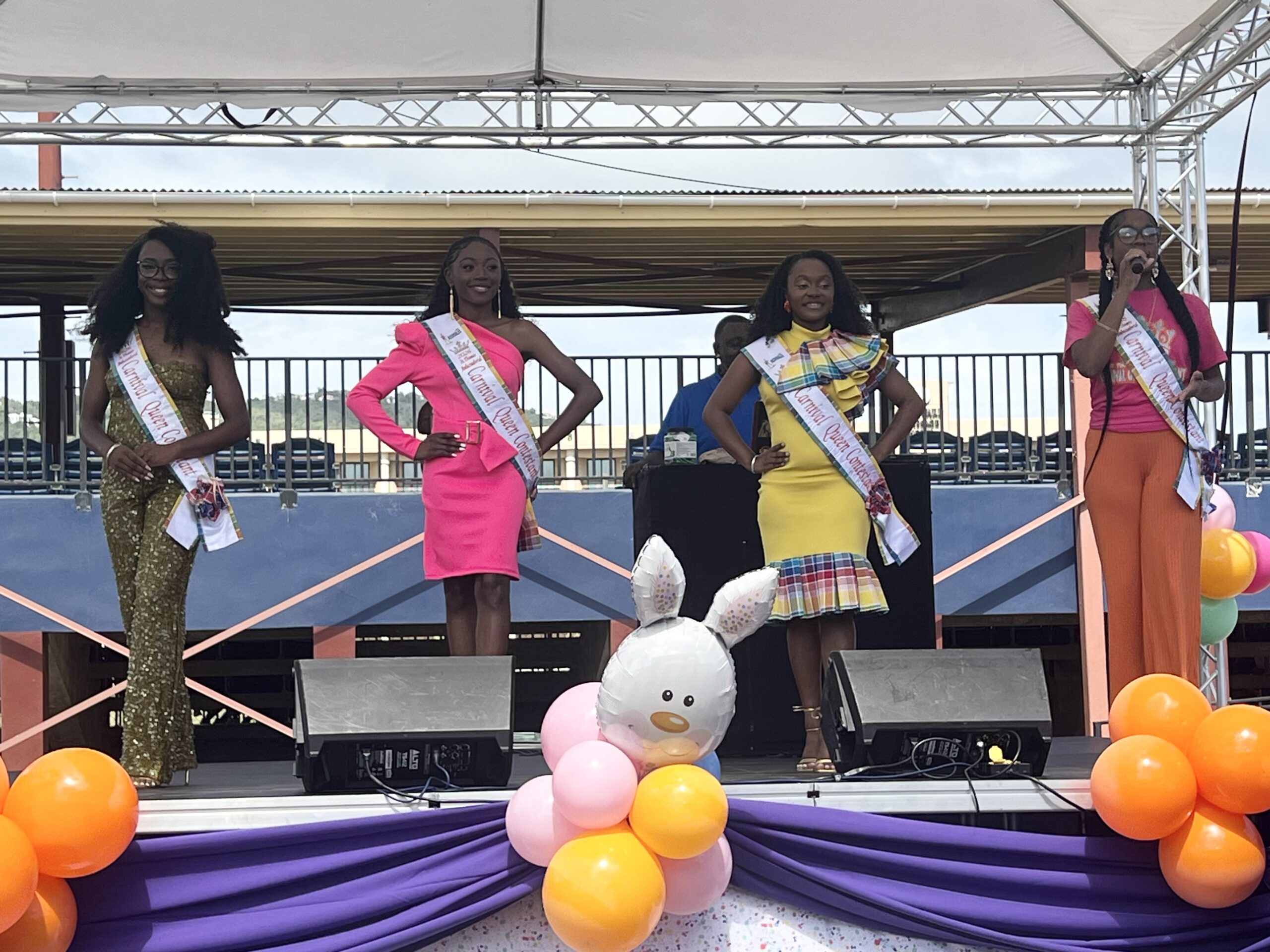
Young ones soared skyward on the playground swings as a deejay pumped soca music through the speakers. Four contestants for the April 18 Ambassadorial Carnival Queen Pageant took to the stage to introduce themselves.
Carnival Queen Pageant contestants, from left, Jahniya Williams, Ajeune Willet-Tyson, D’Quanna Lewis and Safiah Wharton. (Source photo by Judi Shimel)
Families lined up before the popcorn machine to order midday snacks. Division of Festivals Coordinator Kizzey Pinney ticked off the menu of goodies at the free concession. “We have complimentary hot dogs, hamburgers, veggie burgers and chicken nuggets with Tater Tots for the kids,” Pinney said, thanking local vendors for donating supplies. She also thanked a host of volunteers who supervised crafts tables, grilled menu items, served drinks and signed in contestants for the Toddler’s Derby.
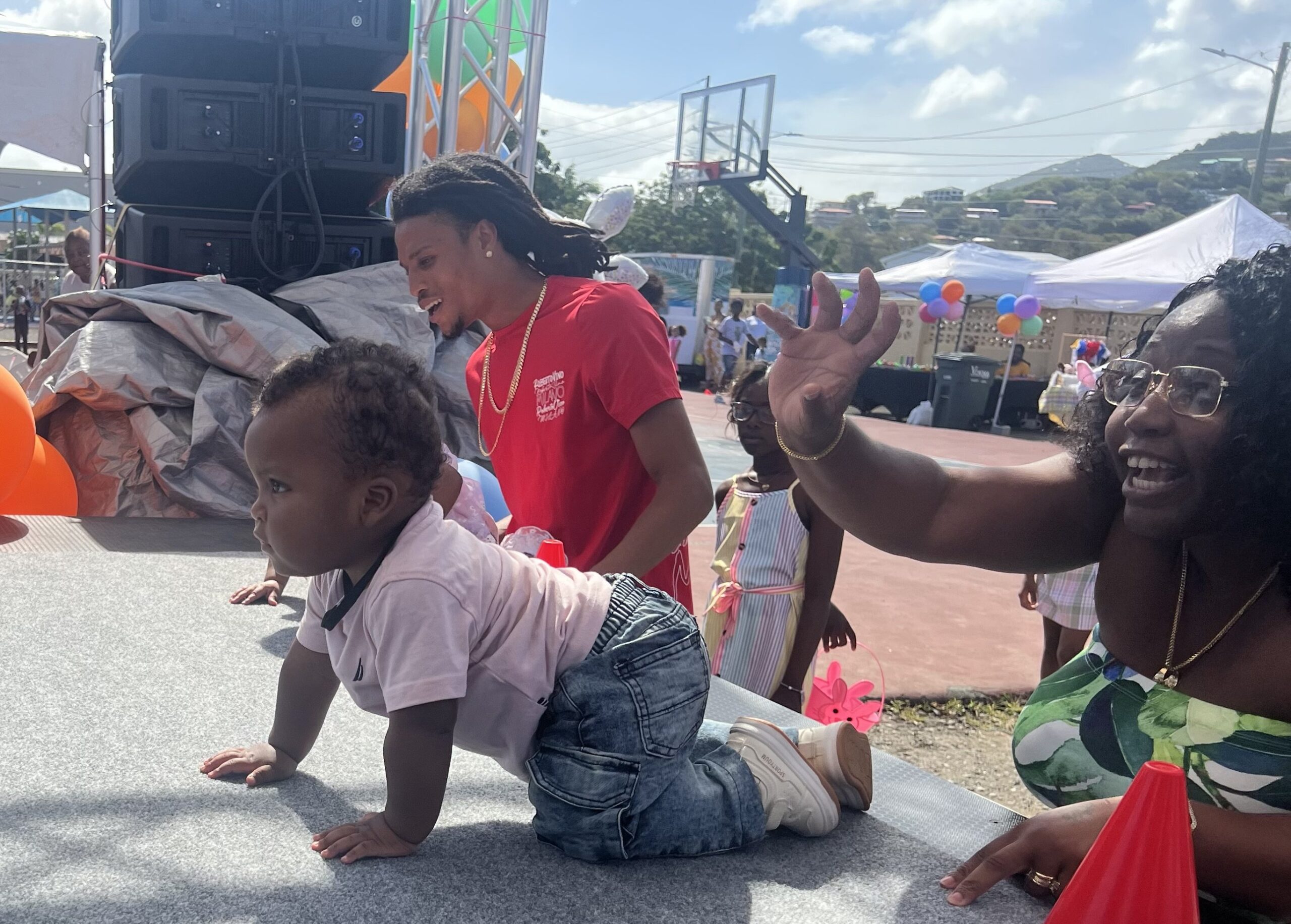
Over 30 entries signed up to compete in derby races set up for crawlers and runners ages six months to six years. Many in the crowd stopped what they were doing to gather to see who would win. Calls for entries in the first race produced one competitor — eleven-month-old Arundel Benjamin — who had one smaller challenger, but when organizers heard the little girl could walk, she was disqualified.
Organizers said they would let Arundel go it alone.
Kandice Benjamin urges her son, Arundel, to head to the finish line. (Source photo by Judi Shimel)
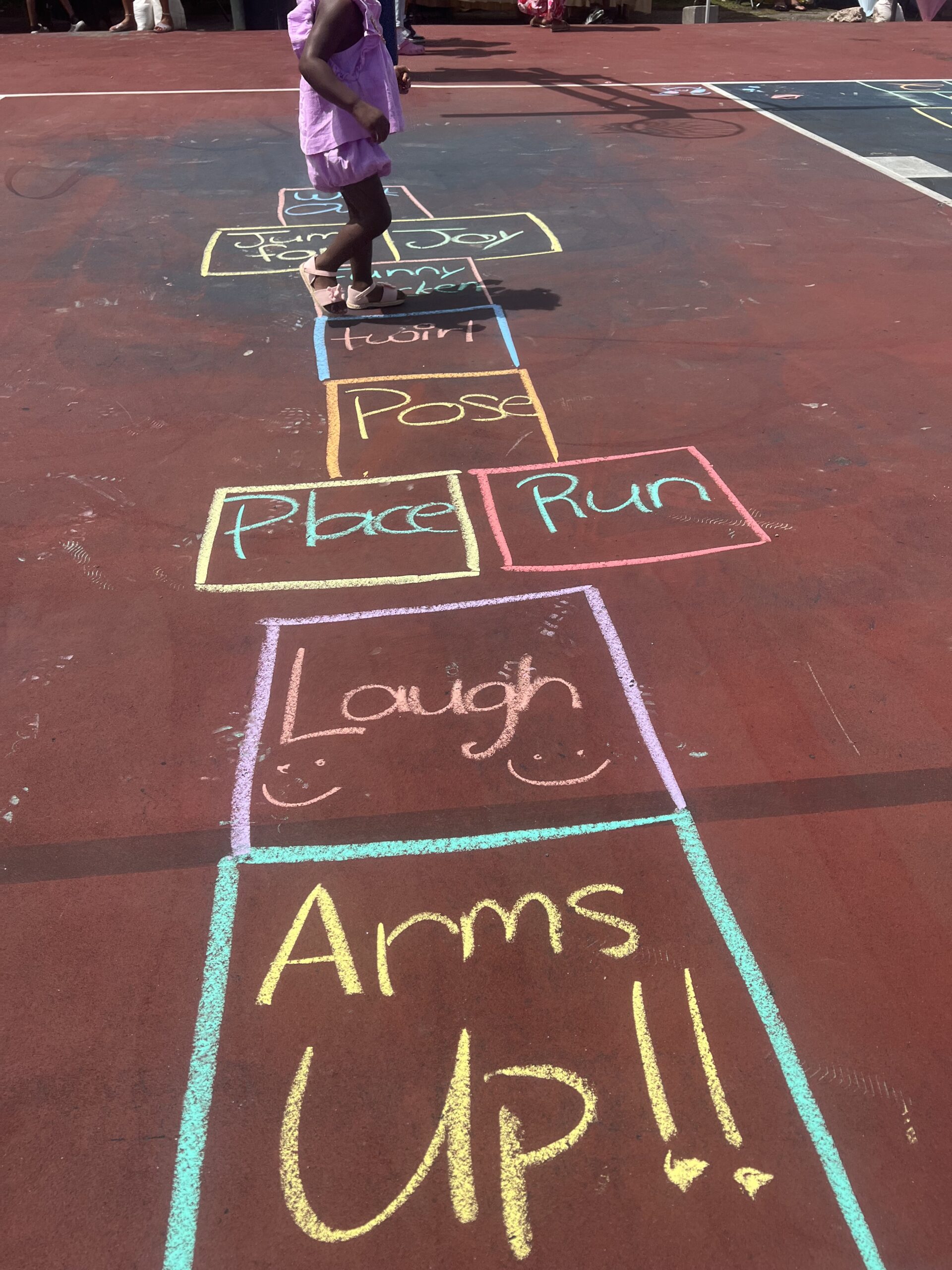
Contests and presentations took place amid a joyful bedlam of hoop tossers, hopscotch hoppers, and playful pugilists bashing each other with club-shaped balloons.
Happy hopscotcher at Griffith Park (Source photo by Judi Shimel)
Rains sprinkled the crowd as the highlight of the day — an Easter Egg Hunt — spilled out across the Griffith Park Ballfield.
Division of Festivals Director Ian Turnbull milled around the scene, inspecting snack boxes, talking to guests, and diverting a happy toddler speeding toward an exit.
Asked if he thought the rest of Carnival would go as smoothly as the Easter fun day, Turnbull said, “I hope so.”
The Water and Power Authority notes the following planned rotation schedule for tomorrow, Monday, April 6. This schedule is subject to change based on load demand, and restoration times may be delayed by up to 15 minutes.
9:30am-11:30am
Feeder 8B
11:30am-1:30pm
Feeder 7A
1:30pm-3:30pm
Feeder 8A
3:30pm-5:30pm
Feeder 6A
5:30pm-7:30pm
Feeder 9C
7:30pm-9:30pm
Feeder 7C
Feeder 7A
9:30pm-11:30pm
Feeder 7B
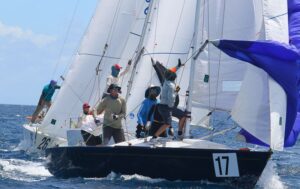
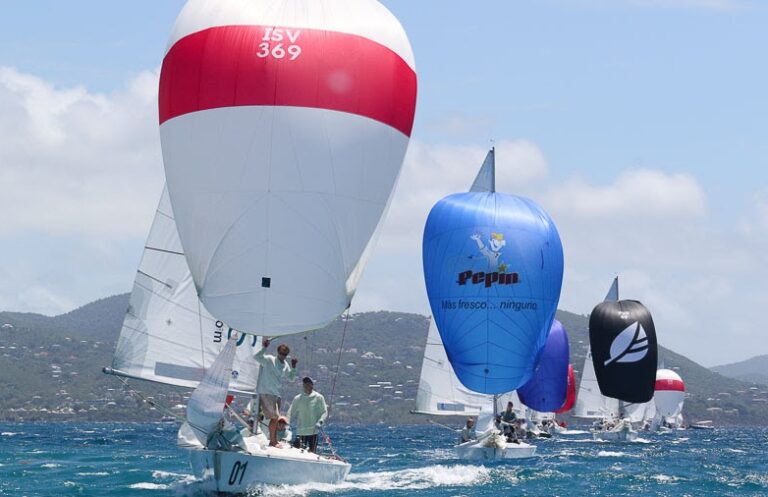
Colorful spinnakers on the IC24 class boats popped up like Easter bonnets on parade on the third and final day of racing at the 2026 St. Thomas International Regatta.Colorful spinnakers on the IC24 class boats look like Easter bonnets on parade. (Photo by STIR)
Hosted by the St. Thomas Yacht Club April 3–5, the event brought together nearly 40 boats competing in CSA Spinnaker Racing and one-design classes, including IC24, ISCA (Sunfish), and Hobie Wave. Sailors came from all three U.S. Virgin Islands, the British Virgin Islands, Puerto Rico, and St. Maarten, as well as several U.S. states—from Massachusetts to California—and from the UK and Ireland, underscoring the regatta’s place as a highlight of the Caribbean sailing calendar. Ultimately, Privateer, Cachondo, Papi, and Boogie Board Bandits finished as class winners.
“Congratulations to this year’s competitors and class winners for an exceptional performance,” says Jennifer Matarangas-King, Commissioner of the U.S. Virgin Islands Department of Tourism. “The St. Thomas International Regatta reflects the strength of our sailing tradition and the extraordinary conditions that continue to draw top competitors to the U.S. Virgin Islands year after year.”
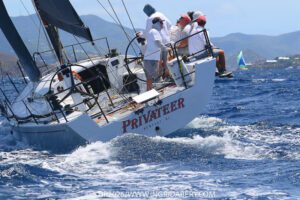
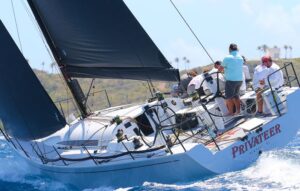
CSA Spinnaker Class Winner – PrivateerPrivateer, the USA’s Ron O’Hanley’s Cookson 50, took first place in the class with a slim two-point lead over Puerto Rico’s Enrique Figueroa on the Melges 24, Exodus.
Privateer wins the CSA Spinnaker Racing Class. (Photo by STIR)
“The first day was all about figuring out the starts due to the disparity of boat speeds in the class. There was flat water on the first day, but on the second, it got lumpier, which favored us. Today, we had a clean start in the first race. In the final race, a huge rain squall blew through Pillsbury Sound with a 70-degree wind shift and gusts up to 27 knots. We had a gear failure and dropped the spinnaker in the water. It cost us the race, but we had a good enough cushion of a lead to win the class,” says Tim Dawson, tactician, of the Newport, RI-based race boat sailing under the burgee of the Royal New Zealand Yacht Squadron.
Puerto Rico’s Juan Mari on his J/100, Freelance, finished third.
Puerto Rico’s Cachondo Tops IC24 Class
Consistency was key to winning this highly competitive class, and Puerto Rico’s Marco Teixidor did so, driving Cachondo. “We had fifteen races, five each day, kept focused as a team, and stuck to our game plan. There was such tight racing, especially in the top five boats, that it was important to stay consistent and avoid having any bad races,” says Teixidor, who last won this class in 2015. Teixidor’s crew was Geraldo Fernandez, tactician; Juan Llavat, deck; Guillermo Toruella, trim; and Ivan Aponte, foredeck.
The USVI’s Teddy Nicolosi, with his team on the IC24, Bill T, finished second in the class, with Olympian Thomas Barrows and U.S. SailGP grinder, Mac Agnese, as crew. The BVI’s INTAC, with Mark Plaxton at the helm, rounded out third place.
Stanton Champions the ISCA Class
St. Croix’s Peter Stanton sailing his Sunfish, Papi, handily won the ISCA Class. Stanton, who was the 1999 Sunfish Youth World Championship, has attended 13 ISCA/Sunfish World Championships, is the current ISCA Master’s World Champion, and a bronze medalist at the 2018 Central American and Caribbean Games. He led an instructional clinic for the class before the regatta started.
“I had the most experience of anyone in the class, but I knew if I took my foot off the gas, the rest would be ready to overtake me,” he says. “The big shifts and big puffs were challenging today, so I had to be on my toes.”
Stanton’s brother Scott Stanton, on Stormy, finished second, while St. Croix’s David Walworth, helming Kittikins, was third.
Boogie Board Bandits Win Hobie Wave Class
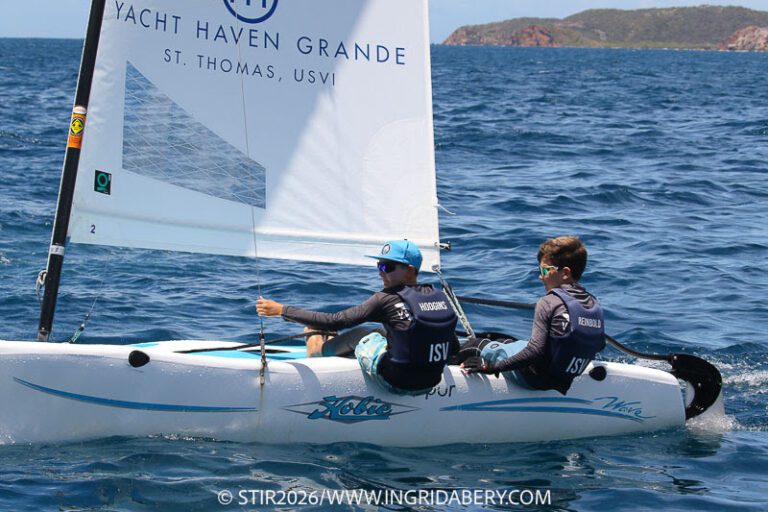
St. John’s Hunter Reinbold, 12, and St. Thomas’ Kip Hodgens, 11, maintained their day one lead to win the class aboard their Boogie Board Bandits.
“This is our first STIR regatta,” says Reinbold. “We were in it to have fun, and it felt good to be first yesterday. Today, the racing was closer. We got two-thirds and a fourth and thought our competition overtook us, but they didn’t.”
Hodgens brother, Finn, and St. Thomas’ Will Zimmerman, finished second in WINN, while St. Thomas’ Rowan Walters, on Hobie Speed, rounded out third.
Real-time results for STIR results are posted at yachtscoring.com/emenu/50483
The Principal Race Officers for STIR 2026 were Mark Foster, Richard Neville, and Diana Margarita.
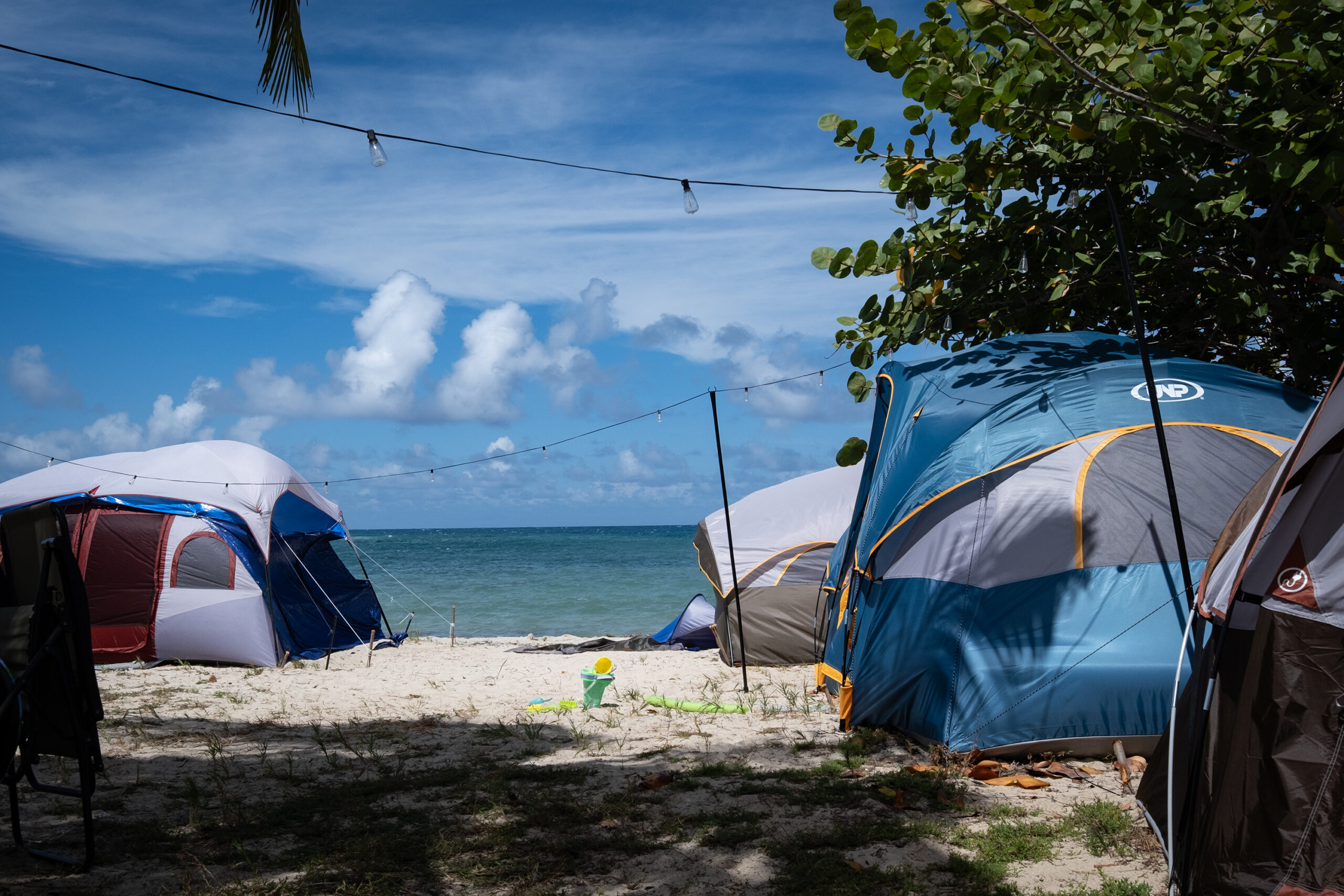
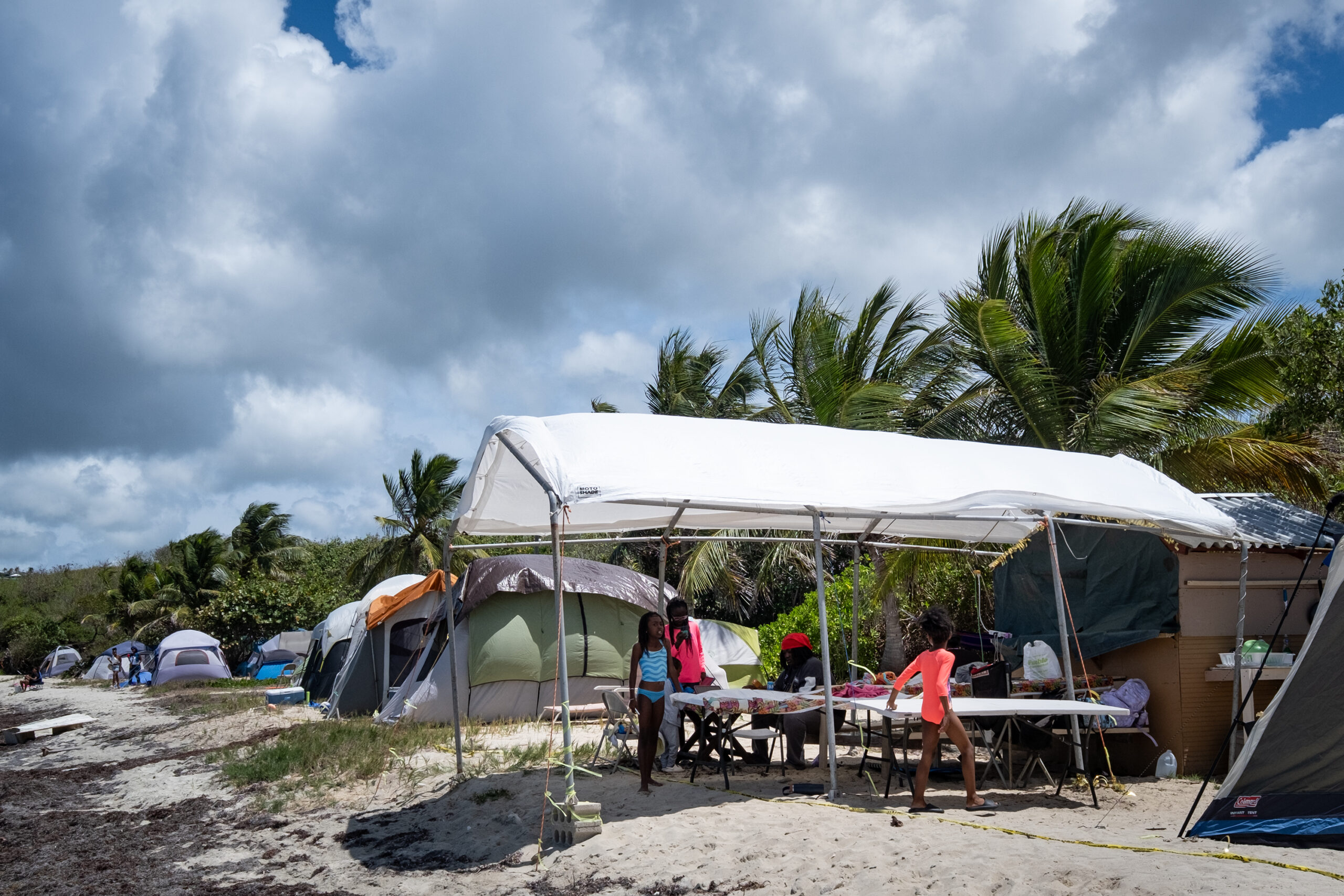
Tents cover the sand of Columbus Landing Beach Saturday on St. Croix. (Source photo by Kit MacAvoy)
From Rainbow Beach on the island’s west end to Cramer Park in the east to Salt River Bay in the middle, Crucians lined St. Croix’s coasts with tents, grills, games and more in celebration of the Easter holiday.
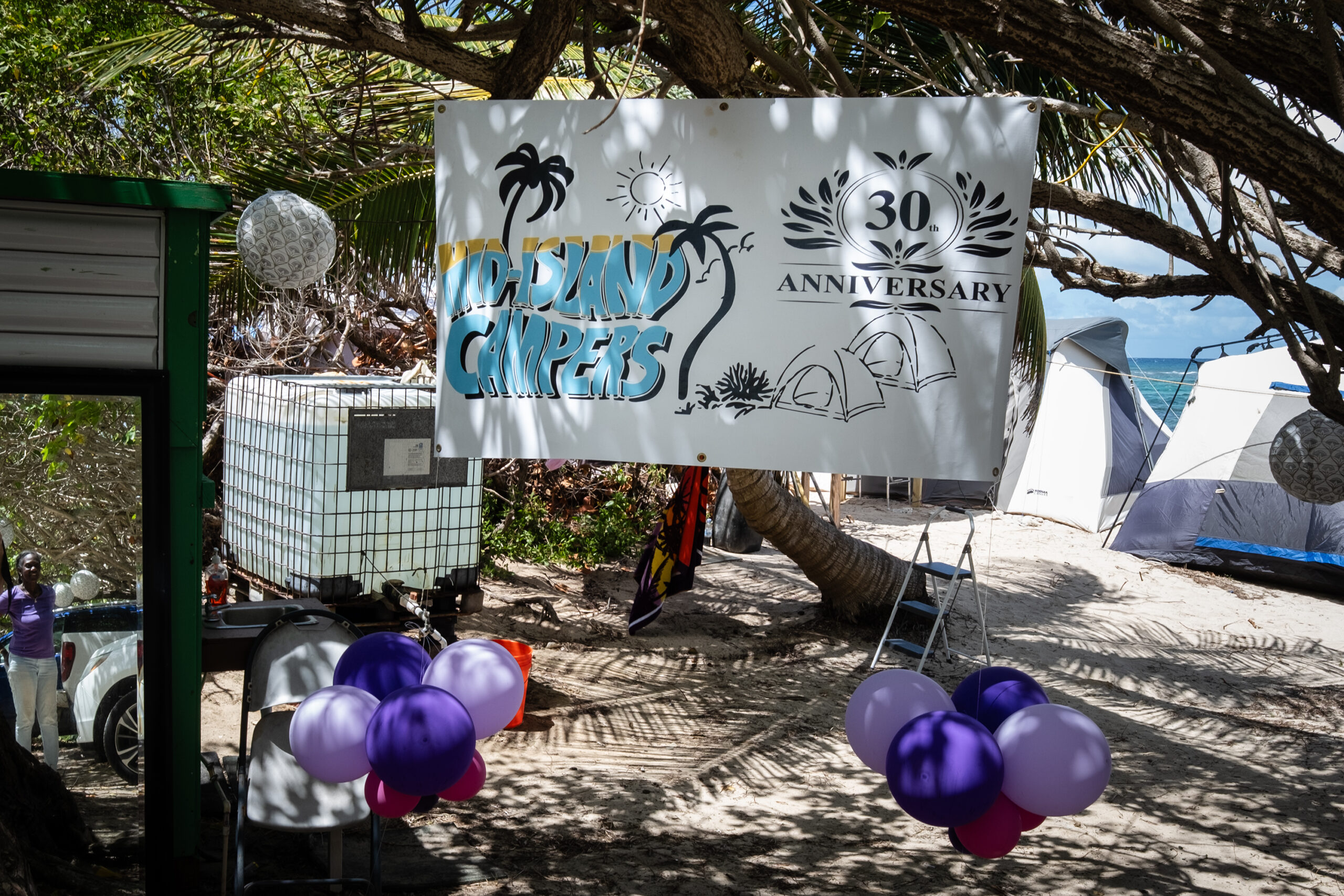
Easter camping is a time-honored St. Croix tradition and some, like Dawn Sewer, have elevated it to an art form. Sewer’s group celebrated its 30th year of camping this year. Their campsite at Columbus Landing Beach in Salt River Bay featured a full kitchen, running water and — new this year — even solar power. With all that infrastructure, it’s no wonder the “Mid-Island Campers” stay longer than the traditional week.
Dawn Sewer, far left, has been camping on St. Croix during the Easter holiday for 30 years. (Source photo by Kit MacAvoy)
“We don’t like to just do the week,” Sewer said Saturday. “It’s a lot, so we come maybe two weeks before, and then sometimes we stay another two weeks after.”
Sewer said they’ve come a long way since she first started camping on the east side of Salt River with the “bare minimum to nothing” compared to what they have now — hot water for showers and karaoke when the sun goes down, and full course meals each day.
“The one thing for us with camping,” Sewer said, “it’s not that you’re camping and then you don’t enjoy having a good meal.”
Zakirah Sewer, Dakarie Charles and Denasia Giddings camp out in Salt River Bay Saturday on St. Croix.
A younger generation of campers closer to the shoreline said they’ve been enjoying staples like fungi, sweet potatoes, saltfish and Johnny cakes. While they seemed to be enjoying their time on the beach, Zakirah Sewer did confide to the Source that her friend Denasia Giddings was less than pleased about the lack of Wi-Fi in Salt River Bay.
Visiting campers on Saturday, Lt. Gov. Tregenza Roach said the tradition reminds him of what makes living in the Virgin Islands special.
“We just finished the celebration of Ramadan in our Muslim community. Now we’re celebrating the Jewish community, celebrating Passover, as well as Holy Week,” he said. “And we get to do that. We get to live in a place where people who have different traditions and different spiritual beliefs can share — number one — and — number two — can live together with fairly slight friction. And that’s a lesson for other places.”
In his biweekly column, Langley Shazor speaks to issues important to men within the territory.
Growth rarely happens in a straight line. It unfolds in stages. First, we confront what we have believed. Then we confront who we have become because of those beliefs. Only after that do we begin to apply what we have learned in the spaces that matter most.
Over the past seasons of this column, that progression has been intentional.
We began with Myth Cracker. That series was not about attacking tradition. It was about examining it. We held up long standing beliefs about manhood and asked whether they still served us. We confronted the myths that said real men do not cry, do not need help, do not apologize, do not break. We assessed what we inherited and separated strength from stubbornness. That was the first step. Assessment requires honesty. It asks what is true, what is outdated, and what has quietly harmed us while pretending to protect us.
Those myths were not random ideas. They were cultural scripts passed down quietly. Some came from survival. Some came from pride. Some came from pain. But many of them shaped men in ways that left little room for emotional depth or relational intelligence. Debunking those beliefs was not about weakening masculinity. It was about refining it. It was about stripping away the parts that restricted growth so we could rediscover what strength truly meant.
Then we moved into Breaking the Cycle. Debunking beliefs is not enough. Once a myth is exposed, something must replace it. In that series, we turned inward. We talked about healing father wounds, redefining leadership, building emotional wealth, loving without fear. We began the work of rewiring ourselves. Breaking a cycle is deeply personal. It demands self-awareness, accountability, and the courage to change patterns that once felt normal. That was reconstruction. It was internal work. Necessary work.
That internal work was not glamorous. It required confronting silence, pride, and emotional habits that had become comfortable. It required men to look at the ways they had been shaped by absence, expectation, and fear. It required humility to admit that some of what we inherited needed to end with us. Breaking the cycle meant choosing intentional growth over inherited instinct.
But self-improvement has a purpose beyond personal peace.
If growth remains internal, it is incomplete. The truest test of transformation is not how enlightened we feel alone. It is how we show up in relationship. That is why this next movement matters so much. The Bridge Work is not a new topic. It is the natural application of everything that came before it.
After we assessed what was broken and began rebuilding ourselves, the single greatest place to apply that growth is in how we relate to others. Especially across the divide between men and women.
It is easy to talk about emotional maturity in theory. It is far harder to practice it in a disagreement. It is one thing to say pride is destructive. It is another to swallow it in real time. It is one thing to understand vulnerability. It is another to offer it when tension rises. Relationship is where growth is tested, refined, and proven.
This progression mirrors something familiar in leadership and business: the continual improvement cycle. First you evaluate the current state. Then you adjust systems and behavior. Then you implement and observe results. After implementation, you evaluate again. Growth is not a one-time revelation. It is a loop.
Myth Cracker was evaluation. We examined our assumptions about manhood. We questioned narratives that shaped our behavior and asked whether they were producing strength or simply producing silence.
Breaking the Cycle was adjustment. We rewired internal systems. We strengthened emotional discipline. We replaced silence with awareness and pride with humility. We made personal decisions to grow beyond the limits of outdated thinking.
The Bridge Work is implementation. It is where we test whether change is real. It is where improved men meet real women in real conversations and see whether growth holds under pressure. It is where listening replaces lecturing and curiosity replaces caricature. It is where emotional intelligence becomes visible rather than theoretical.
Relationships reveal truth. They expose where ego still lingers. They highlight where communication still falters. They show whether our transformation is performative or authentic. If we truly believe that strength includes vulnerability, that help is not weakness, that pride must yield to humility, then the evidence will show up in how we listen, how we argue, how we forgive, and how we love.
This is why this series is important.
Men and women are not opposing teams. We are partners navigating different experiences of the same world. When misunderstanding dominates, division grows. When clarity grows, cooperation becomes possible. The work of the bridge is not about erasing difference. It is about applying maturity to difference. It is about recognizing that perspective does not equal opposition and that disagreement does not require disrespect.
The continual improvement cycle does not end here. As we engage in this relational work, we will uncover new blind spots. We will discover new assumptions. We will realize that growth requires another round of assessment and adjustment. That is healthy. That is evolution. Every relationship becomes a mirror. Every conflict becomes feedback. Every breakthrough becomes reinforcement that change is possible.
The goal has never been perfection. It has been progression.
We assessed outdated beliefs.
We rebuilt internal habits.
Now we apply those lessons where they matter most.
The health of our relationships determines the health of our families. The health of our families shapes the health of our communities. The way men and women understand each other influences everything from home life to public life. When we improve relationally, we improve culturally. When we choose humility over hostility, we shift the tone of entire environments.
If Myth Cracker challenged what we thought.
If Breaking the Cycle changed how we lived.
Then The Bridge Work determines how we love.
And love, practiced well and refined through continual improvement, becomes the strongest proof that growth was real.
Editor’s Note: Opinion articles do not represent the views of the Virgin Islands Source newsroom and are the sole expressed opinion of the writer. Submissions can be made to visource@gmail.com.
Puerto Rico’s Marco Teixidor is already thinking about his tactics and strategy going into Sunday’s last day of sailing in the 52nd St. Thomas International Regatta.
Cachondo with Puerto Rico’s Marco Teixidor at the helm is leading the One Design IC24 Class. (Photo by STIR)
Teixidor, who has raced in this major Caribbean regatta since he was a kid crewing for his father, and his team on Cachondo, are currently leading the highly competitive 14-boat one-design IC24 Class. “For us, it’s all about being consistent. No breakdowns. No bad races. Anything can happen, and that’s what makes it exciting. But for us, it will be all about consistent starts and staying in front.”
Nearly 40 boats, racing in CSA Spinnaker Racing and three one-design classes: IC24s, Hobie Waves, and Sunfish, took to the seas today for the second day of competition. Sailors from all three U.S. Virgin Islands, the British Virgin Islands, Puerto Rico, and St. Maarten; several U.S. states, ranging from Massachusetts to California; and the UK and Ireland, are all here to race in the best sailing conditions and venue in the world.
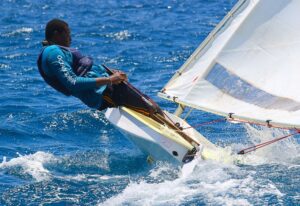
IC24 Class A Chess MatchSt. Thomas Keondy Ambo races in the ISCA Class at STIR 2026. (Photo by STIR)
“The secret sauce for us is having the whole salad bowl on board,” says the BVI’s Mark Plaxton, who’s raced in STIR since 1995 and is helming the IC24 INTAC, and is in second, only four points behind Cachondo. “We have a sailor from Puerto Rico on the bow, a Canadian crewmember, and our jib trimmer is Morgan Avery from St. Thomas. Morgan brings his sailing knowledge and experience from racing with some of the great St. Thomas professional sailors like Peter Holmberg, Anthon Kotoun, and Taylor Canfield. Jersey Bay and Great Bay on St. Thomas are incomparable to anywhere else in the world to sail IC24s, except perhaps North Sound in Virgin Gorda. We’re looking forward to tomorrow. The fun out there is the tactics, the close competition, which makes the racing feel like playing a game of chess.”
The USVI’s Teddy Nicolosi, with his team on the IC24, Bill T, finished third in the class today. With Olympian Thomas Barrows and U.S. SailGP grinder, Mac Agnese, as crew, Bill T is still very much in contention to defend their IC24 Class win from 2025.
Meanwhile, St. Maarten’s Frits Bus, sailing with St. Thomas’ Chuck Pessler on the IC24, Island Water World, moved up to 6th place today. “We weren’t in the groove yet yesterday,” says Bus, who regularly sails Melges 24s and Lasers rather than IC24s. “Today, we had a great day. Great conditions, everybody right on the line at the start, and figuring out the wind shifts through the day. The class is tough because there are so many good sailors in the front of the pack.”
CSA Racing – Starts are EverythingPrivateer, the USA’s Ron O’Hanley’s Cookson 50, took over first place in the class with a slim two-point lead over Puerto Rico’s Enrique Figueroa on the Melges 24, Exodus.
The BVI IC24 team INTAC helmed by Mark Plaxton had a great day racing today. (Photo-by STIR)
“The starts are tricky with the disparity of boat speeds in the class, so once we get off the line, we do our own thing, “says Tim Dawson, tactician, of the Newport, RI-based race boat sailing under the burgee of the Royal New Zealand Yacht Squadron. Dawson says modifications made to both the equipment and crew training for inshore, shorter-leg racing in the RORC’s Admiral’s Cup last year enabled Privateer to better capitalize on the racecourses in STIR. “We sailed in and won our class in the St. Maarten Heineken Regatta in March, and that shook the cobwebs out since we hadn’t sailed since last October. On Sunday, our goal is clean starts and sail smart.”
Puerto Rico’s Juan Jose Mari on his J/100, Freelance, rounds out third in CSA Racing.
ISCAs Take to the Seas
Today was the first day of racing for the ISCA’s, also known as Sunfish. The Sunfish World Championships, first held in St. Thomas in 1970, will be hosted by the St. Croix Yacht Club in November, making STIR a tune-up event for several local sailors. St. Croix’s Peter Stanton leads the Class on the scoreboard with brother, Scott Stanton, second, and St. Thomas’ Tyler Rice in third.
“The trick was applying the learning in the morning, and tips picked up over lunch, to the afternoon of racing,” says St. Croix’s Michele Petersen, who raced today and will compete in the Sunfish Worlds.
For 15-year-old St. Thomas high school sophomore, Keondy Ambo, STIR was his first regatta sailing a Sunfish. “I was introduced to the Sunfish at the Junior Sailing Program hosted by the St. Thomas Yacht Club two summers ago. I really liked it and wanted to continue. This regatta is more for fun than competition, but I am learning a lot about how to rig better and power the sail.”
Hobie Waves Feature Sports Future
Teen and pre-teen sailors dominated the One-Design Hobie Wave Class. Leaders after Saturday’s racing were St. Thomas’ Kip Hodgens and St. John’s Hunter Reinbold in first aboard Boogie Board Bandits.
“Our goal today was not to capsize,” says 12-year-old Reinbold.
“The Sunfish class went before us, so we were able to watch them and have a better idea of where to go,” says 11-year-old Hodgins.
Hodgen’s brother, Finn, and St. Thomas’ Will Zimmerman, finished second in WINN, while St. Thomas’ Rowan Walters, on Hobie Speed, rounded out third.
Check out our weekly weather forecast with Jesse Daley, covering Sunday, April 5, through Saturday, April 11.
Please stay safe and follow the Source for more weather updates!
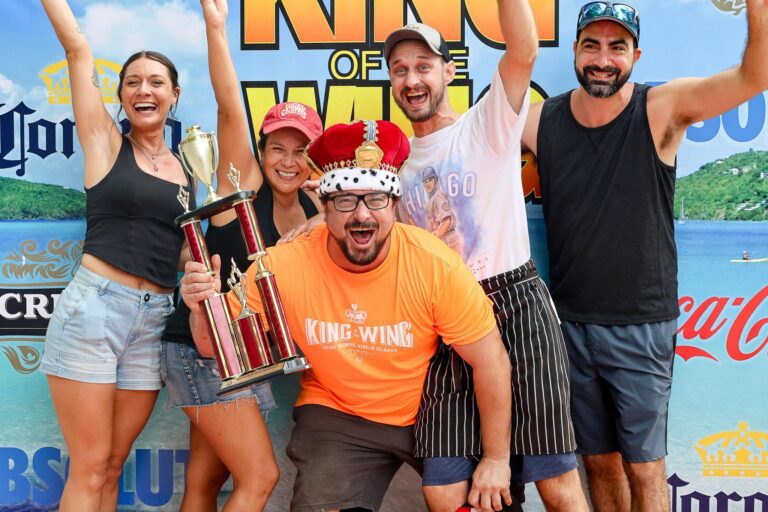
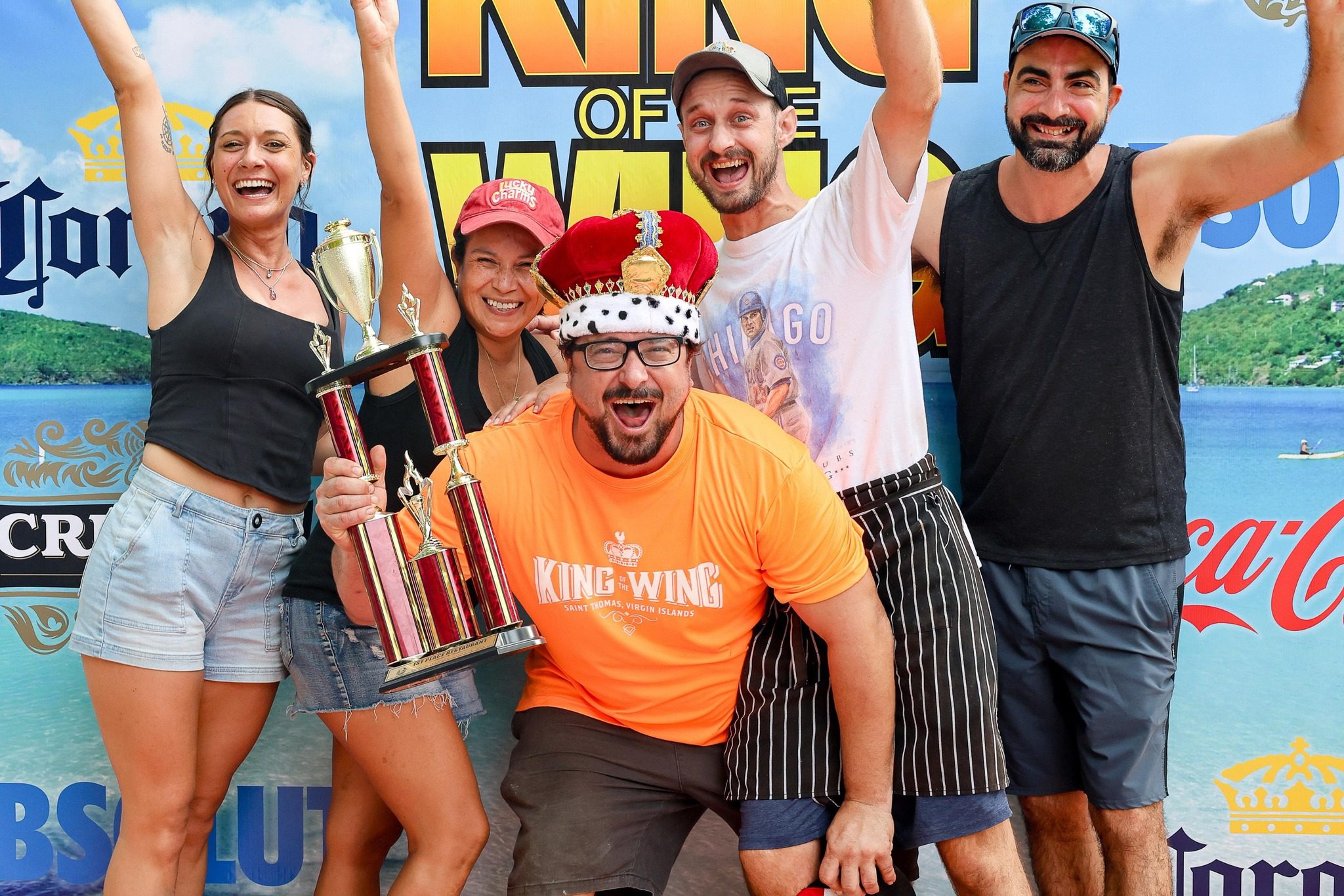
The 2025 crew from STJ Speakeasy restaurant celebrates as King of Wing winners. (Submitted photo)
While finger food enthusiasts wait to celebrate the event that proclaims this year’s King of the Wing, promoters of the contest say they are evolving from a contest into a three-day festival. The director of a newly-formed foundation is inviting the public to “Come for the Wings, Stay for the Culture” in 2026.
Organizers say they will present knitting, basket weaving and coal pot demonstrations; musical acts will perform on two different stages, and young artists from the public and private schools will display their creations. There will also be culinary offerings from a variety of V.I. chefs.
Foundation director Vernon Araujo says the transition will not only help promote local foodways, music and artists, but also create a sustainable vehicle to connect nonprofits with potential benefactors. Among the groups benefitting in the past are Nana Baby’s Children’s Home, Junior Achievement of the Virgin Islands and the V.I. Children’s Museum.
“It’s a good time for a good cause, and that’s what we’re most proud of,” the director said.
This year’s festival — the 15th annual — is scheduled to take place June 13. Since the contest began in 2010, organizers have collected close to $1 million to distribute to half a dozen nonprofit organizations in the St. Thomas-St. John district.
“We are blessed in the V.I.; we have a lot of people here that continuously support the nonprofit sector, continuously reach out and we can count on them year after year to help maintain these programs and services,” Araujo said.
Thousands of foodies converged on Magen’s Bay Beach in 2025 to taste the hand of 36 chicken wing chefs and enjoy the sounds of Grammy Award-winning rap artist Lupe Fiasco.





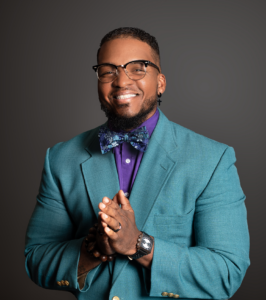 In his biweekly column, Langley Shazor speaks to issues important to men within the territory.
Growth rarely happens in a straight line. It unfolds in stages. First, we confront what we have believed. Then we confront who we have become because of those beliefs. Only after that do we begin to apply what we have learned in the spaces that matter most.
Over the past seasons of this column, that progression has been intentional.
We began with Myth Cracker. That series was not about attacking tradition. It was about examining it. We held up long standing beliefs about manhood and asked whether they still served us. We confronted the myths that said real men do not cry, do not need help, do not apologize, do not break. We assessed what we inherited and separated strength from stubbornness. That was the first step. Assessment requires honesty. It asks what is true, what is outdated, and what has quietly harmed us while pretending to protect us.
Those myths were not random ideas. They were cultural scripts passed down quietly. Some came from survival. Some came from pride. Some came from pain. But many of them shaped men in ways that left little room for emotional depth or relational intelligence. Debunking those beliefs was not about weakening masculinity. It was about refining it. It was about stripping away the parts that restricted growth so we could rediscover what strength truly meant.
Then we moved into Breaking the Cycle. Debunking beliefs is not enough. Once a myth is exposed, something must replace it. In that series, we turned inward. We talked about healing father wounds, redefining leadership, building emotional wealth, loving without fear. We began the work of rewiring ourselves. Breaking a cycle is deeply personal. It demands self-awareness, accountability, and the courage to change patterns that once felt normal. That was reconstruction. It was internal work. Necessary work.
That internal work was not glamorous. It required confronting silence, pride, and emotional habits that had become comfortable. It required men to look at the ways they had been shaped by absence, expectation, and fear. It required humility to admit that some of what we inherited needed to end with us. Breaking the cycle meant choosing intentional growth over inherited instinct.
But self-improvement has a purpose beyond personal peace.
If growth remains internal, it is incomplete. The truest test of transformation is not how enlightened we feel alone. It is how we show up in relationship. That is why this next movement matters so much. The Bridge Work is not a new topic. It is the natural application of everything that came before it.
After we assessed what was broken and began rebuilding ourselves, the single greatest place to apply that growth is in how we relate to others. Especially across the divide between men and women.
It is easy to talk about emotional maturity in theory. It is far harder to practice it in a disagreement. It is one thing to say pride is destructive. It is another to swallow it in real time. It is one thing to understand vulnerability. It is another to offer it when tension rises. Relationship is where growth is tested, refined, and proven.
This progression mirrors something familiar in leadership and business: the continual improvement cycle. First you evaluate the current state. Then you adjust systems and behavior. Then you implement and observe results. After implementation, you evaluate again. Growth is not a one-time revelation. It is a loop.
Myth Cracker was evaluation. We examined our assumptions about manhood. We questioned narratives that shaped our behavior and asked whether they were producing strength or simply producing silence.
Breaking the Cycle was adjustment. We rewired internal systems. We strengthened emotional discipline. We replaced silence with awareness and pride with humility. We made personal decisions to grow beyond the limits of outdated thinking.
The Bridge Work is implementation. It is where we test whether change is real. It is where improved men meet real women in real conversations and see whether growth holds under pressure. It is where listening replaces lecturing and curiosity replaces caricature. It is where emotional intelligence becomes visible rather than theoretical.
Relationships reveal truth. They expose where ego still lingers. They highlight where communication still falters. They show whether our transformation is performative or authentic. If we truly believe that strength includes vulnerability, that help is not weakness, that pride must yield to humility, then the evidence will show up in how we listen, how we argue, how we forgive, and how we love.
This is why this series is important.
Men and women are not opposing teams. We are partners navigating different experiences of the same world. When misunderstanding dominates, division grows. When clarity grows, cooperation becomes possible. The work of the bridge is not about erasing difference. It is about applying maturity to difference. It is about recognizing that perspective does not equal opposition and that disagreement does not require disrespect.
The continual improvement cycle does not end here. As we engage in this relational work, we will uncover new blind spots. We will discover new assumptions. We will realize that growth requires another round of assessment and adjustment. That is healthy. That is evolution. Every relationship becomes a mirror. Every conflict becomes feedback. Every breakthrough becomes reinforcement that change is possible.
The goal has never been perfection. It has been progression.
We assessed outdated beliefs.
We rebuilt internal habits.
Now we apply those lessons where they matter most.
The health of our relationships determines the health of our families. The health of our families shapes the health of our communities. The way men and women understand each other influences everything from home life to public life. When we improve relationally, we improve culturally. When we choose humility over hostility, we shift the tone of entire environments.
If Myth Cracker challenged what we thought.
If Breaking the Cycle changed how we lived.
Then The Bridge Work determines how we love.
And love, practiced well and refined through continual improvement, becomes the strongest proof that growth was real.
In his biweekly column, Langley Shazor speaks to issues important to men within the territory.
Growth rarely happens in a straight line. It unfolds in stages. First, we confront what we have believed. Then we confront who we have become because of those beliefs. Only after that do we begin to apply what we have learned in the spaces that matter most.
Over the past seasons of this column, that progression has been intentional.
We began with Myth Cracker. That series was not about attacking tradition. It was about examining it. We held up long standing beliefs about manhood and asked whether they still served us. We confronted the myths that said real men do not cry, do not need help, do not apologize, do not break. We assessed what we inherited and separated strength from stubbornness. That was the first step. Assessment requires honesty. It asks what is true, what is outdated, and what has quietly harmed us while pretending to protect us.
Those myths were not random ideas. They were cultural scripts passed down quietly. Some came from survival. Some came from pride. Some came from pain. But many of them shaped men in ways that left little room for emotional depth or relational intelligence. Debunking those beliefs was not about weakening masculinity. It was about refining it. It was about stripping away the parts that restricted growth so we could rediscover what strength truly meant.
Then we moved into Breaking the Cycle. Debunking beliefs is not enough. Once a myth is exposed, something must replace it. In that series, we turned inward. We talked about healing father wounds, redefining leadership, building emotional wealth, loving without fear. We began the work of rewiring ourselves. Breaking a cycle is deeply personal. It demands self-awareness, accountability, and the courage to change patterns that once felt normal. That was reconstruction. It was internal work. Necessary work.
That internal work was not glamorous. It required confronting silence, pride, and emotional habits that had become comfortable. It required men to look at the ways they had been shaped by absence, expectation, and fear. It required humility to admit that some of what we inherited needed to end with us. Breaking the cycle meant choosing intentional growth over inherited instinct.
But self-improvement has a purpose beyond personal peace.
If growth remains internal, it is incomplete. The truest test of transformation is not how enlightened we feel alone. It is how we show up in relationship. That is why this next movement matters so much. The Bridge Work is not a new topic. It is the natural application of everything that came before it.
After we assessed what was broken and began rebuilding ourselves, the single greatest place to apply that growth is in how we relate to others. Especially across the divide between men and women.
It is easy to talk about emotional maturity in theory. It is far harder to practice it in a disagreement. It is one thing to say pride is destructive. It is another to swallow it in real time. It is one thing to understand vulnerability. It is another to offer it when tension rises. Relationship is where growth is tested, refined, and proven.
This progression mirrors something familiar in leadership and business: the continual improvement cycle. First you evaluate the current state. Then you adjust systems and behavior. Then you implement and observe results. After implementation, you evaluate again. Growth is not a one-time revelation. It is a loop.
Myth Cracker was evaluation. We examined our assumptions about manhood. We questioned narratives that shaped our behavior and asked whether they were producing strength or simply producing silence.
Breaking the Cycle was adjustment. We rewired internal systems. We strengthened emotional discipline. We replaced silence with awareness and pride with humility. We made personal decisions to grow beyond the limits of outdated thinking.
The Bridge Work is implementation. It is where we test whether change is real. It is where improved men meet real women in real conversations and see whether growth holds under pressure. It is where listening replaces lecturing and curiosity replaces caricature. It is where emotional intelligence becomes visible rather than theoretical.
Relationships reveal truth. They expose where ego still lingers. They highlight where communication still falters. They show whether our transformation is performative or authentic. If we truly believe that strength includes vulnerability, that help is not weakness, that pride must yield to humility, then the evidence will show up in how we listen, how we argue, how we forgive, and how we love.
This is why this series is important.
Men and women are not opposing teams. We are partners navigating different experiences of the same world. When misunderstanding dominates, division grows. When clarity grows, cooperation becomes possible. The work of the bridge is not about erasing difference. It is about applying maturity to difference. It is about recognizing that perspective does not equal opposition and that disagreement does not require disrespect.
The continual improvement cycle does not end here. As we engage in this relational work, we will uncover new blind spots. We will discover new assumptions. We will realize that growth requires another round of assessment and adjustment. That is healthy. That is evolution. Every relationship becomes a mirror. Every conflict becomes feedback. Every breakthrough becomes reinforcement that change is possible.
The goal has never been perfection. It has been progression.
We assessed outdated beliefs.
We rebuilt internal habits.
Now we apply those lessons where they matter most.
The health of our relationships determines the health of our families. The health of our families shapes the health of our communities. The way men and women understand each other influences everything from home life to public life. When we improve relationally, we improve culturally. When we choose humility over hostility, we shift the tone of entire environments.
If Myth Cracker challenged what we thought.
If Breaking the Cycle changed how we lived.
Then The Bridge Work determines how we love.
And love, practiced well and refined through continual improvement, becomes the strongest proof that growth was real.