



Marie Tonge Dies at 77

Virgin Islands National Park Cruz Bay Visitor Finger Pier is Reopening for Public Usage

V.I. Office of Veterans Affairs to Host Seminars on Financial Literacy in May
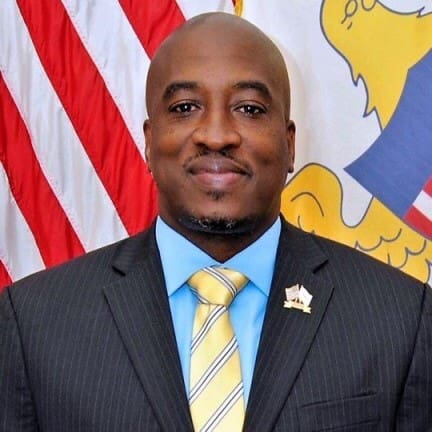
- Savings and Budgeting – Presented by Charlene Brown Reid, First Bank St. Thomas/St. John, District Manager
- Wednesday, May 15, at 5:30 p.m.
- Importance of Credit – Presented by Miguel Farrington, First Bank AVP/ Installment Lending Manager
- Wednesday, May 22, at 5:30 p.m.
- Homeownership/Understanding Your Mortgage – Presented by Dina Perry-Malone, First Bank VP/ USVI Market Manager
- Wednesday, May 29, at 5:30 p.m.
- Homeownership Assistance Program – Presented by Mone’t Francis Gardner, Housing Finance Authority
- Wednesday, June 5, at 5:30 p.m.
USVI Department of Tourism Attends Annual Caribbean Hotel & Resort Investment Summit
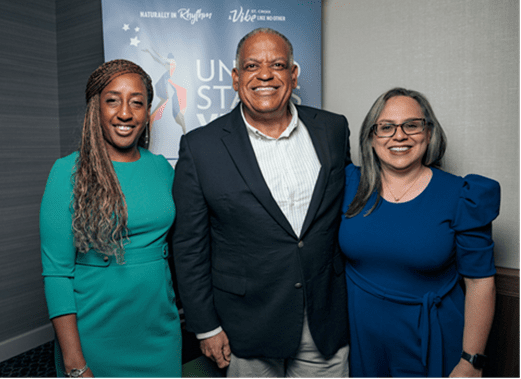
Chairman Kyza A. Callwood Leads VIBE Delegation at 2024 National School Boards Association Conference


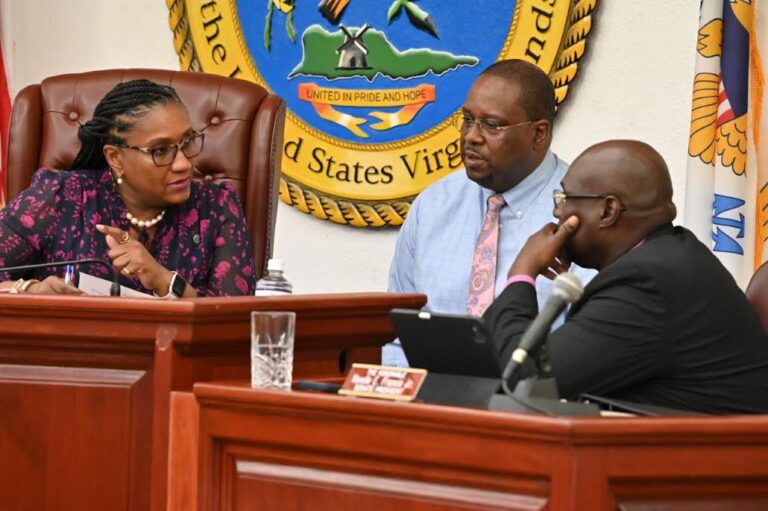
Senate Committee Discusses WAPA Woes in Emergency Meeting

From Rock City to the Rock Hall: Rashawn Ross on Hall of Fame Induction



Hodge Denies Legislature’s Bid to Recoup $100K Cost of Payne Case

V.I. Supreme Court Chief Justice Rhys S. Hodge on Wednesday denied a motion by the V.I. Legislature that sought nearly $100,000 in costs and attorney fees it says it spent defending against a lawsuit brought by former Senator-at-Large Steven Payne Sr. The request was filed two weeks too late, and without the proper notice, he said.

Payne filed the complaint in V.I. Superior Court in July 2022 after he was expelled from the 34th Legislature by his colleagues over allegations of sexual harassment by a staff member.
At issue was whether the Senate is authorized under the Revised Organic Act of 1954 to be the sole judge of the elections and qualifications of its members. Payne contended that lawmakers may discipline, but not expel, a member.
In what it called an “extraordinarily rare” move, the V.I. Supreme Court transferred the lawsuit to its jurisdiction in January, citing in part the Superior Court’s failure to issue a key opinion on a motion to dismiss for more than a year and a half.
Hodge and Associate Justices Maria Cabret and Ive Swan heard oral arguments on March 12 at the high court in Crown Bay on St. Thomas. Ten days later they issued an opinion upholding the Legislature’s expulsion of Payne and dismissing the case with prejudice, meaning it may not be brought again.
On Monday the Legislature, represented by Arellano & Associates, filed two motions seeking to recoup some of the money it says it spent defending against the complaint in both the Superior and Supreme courts.
According to its accounting, the Legislature sought a total award of $99,304.24, including: – $1,904.24 for an award of costs – $48,000 (rounded), for an award of 90 percent of its attorney’s fees in the V.I. Supreme Court – $45,400 (rounded), for an award of 75 percent of fees in Superior Court – $4,000 for fees for the instant fee petition
The Legislature noted in a memorandum of law accompanying its motions for fees and costs that the filing was timely because the case was not an appellate proceeding but an original proceeding because it was transferred, not appealed, to the Supreme Court. In such cases the time limit to seek reimbursement is within 30 days of the final order, it said, citing V.I. Code, Title 5, Section 541, and Rule 54 of the Virgin Islands Rules of Civil Procedure.
“Hence, the instant Motions for Costs and Fees filed herein today are timely,” the memorandum stated. It included a footnote stating that because April 21 fell on a Sunday, the deadline moved to the next business day, so filing the motions on Monday was within the proper timeframe.
However, in his order issued Wednesday, Hodge said the Legislature’s motions and accompanying memorandum were filed two weeks too late. Citing Virgin Islands Rules of Appellate Procedure, he said an itemized and verified request for costs and fees should have been made within 14 days after judgment was entered.
“Here, this Court entered judgment on March 22, 2024, yet the Legislature did not file its motion until 31 days later, well after expiration of the 14-day limitations period codified in Appellate Rule 30(b),” Hodge wrote.
“Moreover, the Legislature has failed to file any motion to file its request for costs and attorneys’ fees out of time, let alone one that demonstrates ‘extraordinary circumstances’ to justify the late filing. As such, Appellate Rule 30(b) mandates that this Court deny the motion as untimely,” he stated.
Linda Garvin Memorial Bench Dedication Ceremony at Midre Cummings Playground Park Saturday




Casper Holstein and David Hamilton Jackson’s Efforts Led to Liberations in the Virgin Islands
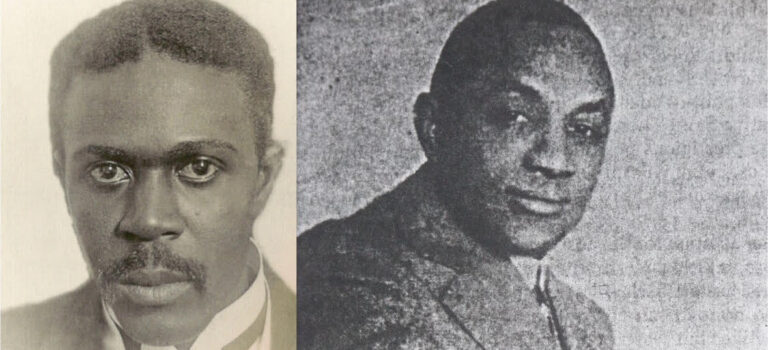
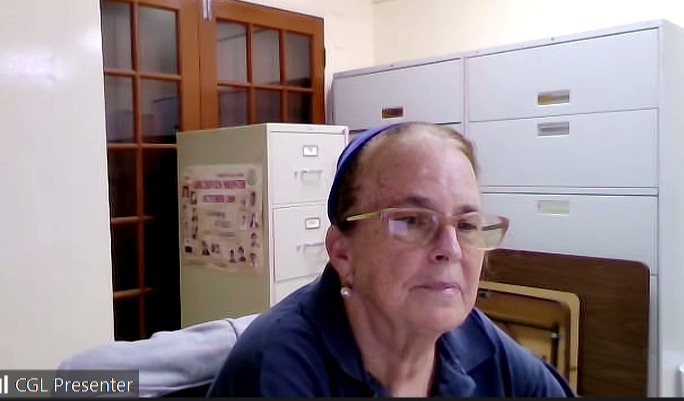
On Sunday, the Caribbean Genealogy Library hosted another virtual event, this time focusing on the efforts and accomplishments of two prominent Virgin Islands men in the 1920s, Casper Holstein and David Hamilton Jackson, who led charges for citizenship, voting rights, and political reform for Virgin Islanders.
Presenter Elizabeth Rezende spoke passionately about Holstein and Jackson in her presentation “David H. Jackson and Casper Holstein: Early Collaboration in Fighting for Political Reform 1921-1927.” She described both men as being poetic and of model leadership. Her presentation answered the question, why did the middle-class men feel the need to uplift the lower classes and work so diligently in providing for their social, economic and political needs?
Both Holstein and Jackson were born on St. Croix, Holstein in Free Gut and Jackson in Estate East Hill. According to Rezende, Holstein left the island at the age of nine in 1886 with his mother where he attended school in Brooklyn. To Rezende’s record, both men would have met in New York in 1915 while Jackson was in transit from New York to Copenhagen to get a license for his newspaper.

“They were brothers-in-law,” said Rezende. She acknowledged that for Holstein, a lot of emphasis is often focused on his horse bets, setting up his numbers game, and his mysterious kidnapping disappearance, but he, along with Jackson, were both determined “to make the Virgin Islands a better place socially, economically and politically.”
After serving the United States during the First World War, Holstein enlisted in the Navy and was able to dock into Sub Base on St. Thomas while serving. While there, he spoke to locals about the living conditions present (potholed roads, derelict housing, lack of sewage system, lack of employment opportunities, the high cost of imported goods, and oppressive Marine soldiers). He saw a need to make better living conditions for Virgin Islanders.
For Jackson, his push for the working class came through his writing. He joined an organization by David Canegata, a colonial council member on St. Croix, for young men who were descendants of the free colored class who wanted to get a formal education in science, psychology, and philosophy when high school was not available in the Caribbean. During this time, Jackson would write articles and submit them to the local newspaper. However, one article he wrote was rejected because it was viewed as too political in its socialist views. This rejection pushed Jackson to create his own newspaper and he would end up procuring a license for The Herald, a newspaper that informed the public on social matters, trade unions, and working conditions.
“He thought that could be a way of changing St. Croix society or Virgin Islands society,” Rezende of The Herald said.
Focusing more on the middle years of Holstein and Jackson and the collaboration between the two men, Rezende highlighted that both would lead strikes, create political reform, and look for economic ways to better the lives of Virgin Islanders. For example, in January 1916, while leading the St. Croix Labor Union, Jackson called a strike to demand wage increases from 20 cents to 50 cents. And later, after studying law in Indiana, he led another strike for wage increases to 75 cents. He even helped establish the St. Thomas Labor Union with James Moorehead.
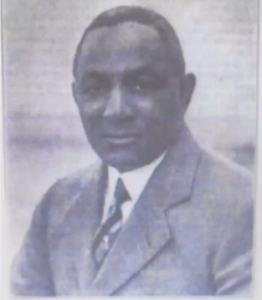
Holstein would also fight back against unfair legal systems and a need for judicial and civil liberties. He bought Estates Hope, Jerusalem and Blessing from the St. Croix Labor Union, which used it for provision production, and decided to use it for dairy production and homesteading. Holstein even brought Congressional council members from New York to recruit members to be a part of a Congressional Congress on St. Thomas and St. Croix to write bills to Congress and fight for wage increases and better housing.
Describing the men, to Rezende’s account, Holstein had a more “calm and measured tone,” had a flair in his actions and words, and had the financial backing to create developmental investments while Jackson was more a “fiery minster seeking to stir up passion in his listeners,” would invest union funds to expand offerings to lower class people, and would be “headstrong.”
According to Rezende, in the 1920s there was a migration of thousands of Virgin Islanders to the mainland, more particularly New York, for a better quality of life due to the decline of the sugar and rum industries after federal prohibition. During that time, both men would petition Congress for citizenship and an end to marine rule, for appropriations for education, for universal suffrage for men, and for a permanent civil government in the territory.
They “were focused on a fight for the many aspects of self-determination for both the New York VI diaspora and the residents of the Virgin Islands,” said Rezende. “Both men wanted to see greater civil and political rights for both groups of Virgin Islanders.”
In all, Rezende gave an account of some of the contributions made by Holstein and Jackson to the strides in social and economic progress of the Virgin Islands.
CGL’s next event, “Ten Steps to Writing & Publishing Your Family History” is April 27 at 2 p.m.
For more information about the Genealogy Library, click visit the official webisite.