

- A valid Unique Entity ID (UEI) number
- Registration on SAM.gov
- Certificate of Incorporation
- IRS Determination Letter regarding 50l(c)3 status.
- Articles of Incorporation
- A current Certificate of Good Standing from the Lt. Governor’s Office.
LEPC Accepting Proposals for Federal Violence Against Women Grants
The Virgin Islands Law Enforcement Planning Commission (LEPC) has announced it is accepting proposals that will become effective April 22 and will be closing on June 3, for two federal Violence Against Women STOP Formula Grants (FY2021 and FY2022).
LEPC, with funding through the U.S. Department of Justice, Office of Violence Against Women, makes available Violence Against Women Formula Grants to private non-profit organizations and Virgin Islands government agencies (local court, law enforcement and prosecution) for programs designed to provide direct services to in response to violent crimes against women, including crimes of domestic violence, dating violence, sexual assault and stalking.
Violence Against Women funds will be awarded to support direct services for victims of violent crimes against women, including but not limited to crisis intervention services, counseling and therapy, emergency services, court-related services, training, data collection, salaries and benefits for law enforcement officers dedicated to the domestic violence unit as well as salaries and benefits for a prosecutor dedicated to the prosecution of domestic violence or sexual assault cases.
Programs should seek to implement comprehensive strategies to address violence against women that are sensitive to the needs and safety of the victims and hold offenders accountable for their crimes.
The U.S. Department of Justice, Office of Violence Against Women requires each state and territory to distribute funds in the following manner: 30% for victims’ services (of which at least 10% must be to culturally specific community-based organizations), 25% to law enforcement, 25% to prosecution, 5% to state and local courts, with the remaining 15% allocated as discretionary programs. Fundings is based on a statutory formula established by the U.S. Department of Justice.
The funding period is up to 12 months from Oct. 1, 2024, through Sept. 30, 2025. All awards are subject to the availability of funds. LEPC as the state administering agency, reserves the right to award as many subgrants and determine appropriate funding levels as it deems necessary.
Non-profit organizations applying must include the following documents in their application package:
PSC Urges Liberty V.I. Customers to Register Complaints
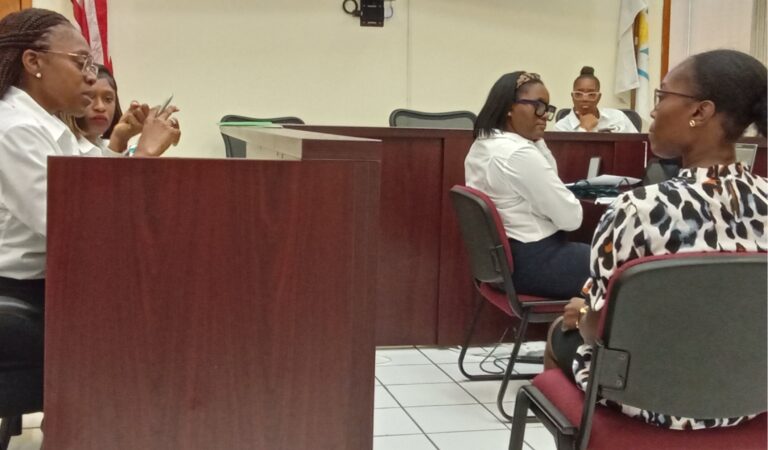
A top official at the Public Services Commission is urging customers of Liberty V.I. services to submit written complaints to the agency. That appeal was heard during two days of public listening sessions held to let consumers air their telecommunications problems.
Less than a dozen people attended sessions in person held Wednesday and Thursday. An unknown number took part by way of live streaming video over social media. What those customers had to say left listeners wondering how many others shared the same woes.
Some reported loss of access to online banking and tech support services; others gave second-hand accounts of failed connections to the 911 emergency call line. Others said sporadic service from Liberty led to lost business, the inability to confirm medical appointments, and lost use of cell phone apps that depend on telecommunications to function properly.
The listening sessions were approved by public regulators acting on a recent vote by the 35th Legislature to file a complaint against Liberty with the Federal Communications Commission. PSC Executive Director Sandra Setorie sat in on the session held Wednesday on St. Croix. Setorie said the PSC’s ability to persuade federal authority depends on public input.
“If we don’t have direct testimony complaints listed on our register, we have no basis for our complaints,” the director said. “Even though some customers have directly contacted the FCC, most of those complaints have been disregarded.”
Setorie described the reports of poor service as major inconveniences that rate payers should not have to experience.
One testifier told PSC staff members how an off-island medical provider could not complete calls to their V.I.-based patient even when they were on the U.S. mainland, standing in front of their desk.
On St. Thomas, Daidre Petersen Heath spoke on behalf of her daughter, currently on the U.S. mainland seeking medical treatment. “My daughter is having a lot of trouble in the States with the area code, and her doctors are having a lot of trouble reaching her for appointments with the 340 exchange,” Heath said.
Those attending the sessions also heard comments from customers expressing frustration about the billing process.
Liberty customer Patricia Lord described her struggle completing online transactions. Since the transition (Liberty migration of customer lines from AT&T), my bank has not been able to send text messages, Lord said.
“It’s a huge inconvenience, since all of my banking is done online,” she said.
St. Thomas business owner Ginelle Francis and others told PSC staff members how she lost the ability to conduct transactions with customers over her Liberty phone.
“The phone was out for three months. That’s not suitable when you’re running a business. My customers can’t call. I can’t manage my credit cards. I call — the technician comes, they fiddle around and leave. The service ran for five minutes, then it drops out again,” Francis said.
In one instance, she said, a customer call stopped abruptly. “I thought the call had just dropped out, then I found out the call was cut off for nonpayment even though the bill was paid,” she said.
Janet Cook-Rutnik spoke of her Liberty billing and service problems from Thursday’s meeting on St. John. Those problems include loss of service lasting more than three months, forcing Rutnik to use What’s App to complete phone calls.
At one point, the testifier said she took the phone to a Liberty business office on St. Thomas where they replaced her SIM card. “But by the time I got back home, it didn’t work,” she said.
Perhaps one of the most unsettling accounts during Wednesday’s session came from Government Retirees, Inc. President Debra Christopher. The group leader said some retirees, and in some cases their caregivers, reported losing the ability to dial 911 and to receive emergency notifications on their phones.
Those concerns were echoed by St. Croix resident Karabo Molyneaux-Molloy. “If you’re not having adequate coverage now, how will they protect us if we’re having a hurricane?” she said.
After the meeting Malloy said she worked as a volunteer at VITEMA, taking calls during the passage of Hurricane Maria in 2017. She said she remembered callers reporting people having health crises, one person who appeared to have died, others calling who were scared and lonely.
AT&T did their best to keep calls coming through at the time she said. If Liberty is having the sort of problems that were mentioned in the listening sessions, she added, what kind of help would they be able to provide in case of the next hurricane?
“I hope they have some sort of a plan,” she said about Liberty.
Liberty V.I. spokesman Tomas Dardet shared a statement from Virgin Islands General Manager Ravindra Maywahlall. “We remain attentive to every request that the Virgin Islands Public Service Commission asks from us,” the manager said.
“As we stated before, we acknowledge that there have been difficulties with the transition process and continue addressing any issues,” he added.
Zoning Variance Request for St. John Container-Housing Development Raises Questions for Senators

When the Senate Committee of the Whole met Wednesday to discuss three applications for zoning changes for St. Thomas and St. John, senators were asked to consider something truly new in the housing industry.
Among the three applications was a request for a zoning variance to allow for the construction of group lodging units made of upgraded shipping containers on St. John.
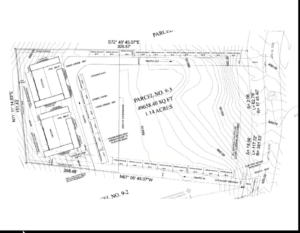
Ari Goldschneider, owner of Gifft Hill Lands LLC – more commonly known as GHL – has asked that a variance be granted to rezone Parcel No. 9-3 Estate Glucksberg on Gifft Hill, St. John. The 1.11-acre site is now zoned R-2 (Residential – Low Density.)
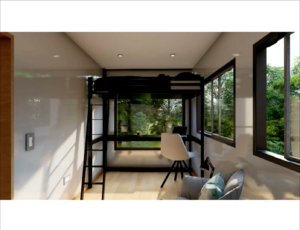
GHL has already received permits from the Department of Planning and Natural Resources to build two single-family residences on the property which are allowed under R-2 zoning. What is unusual is that each of the two residences consists of six individual upgraded shipping containers which will serve as 12 bedroom/bath units.
Given the housing shortage on St. John, Goldschneider says there is a demand for “workforce” housing – small units for workers in the marine, hospitality, or healthcare industries who will be “long-term” residents of the island. (The 160-square-foot units are not designed to accommodate families.)
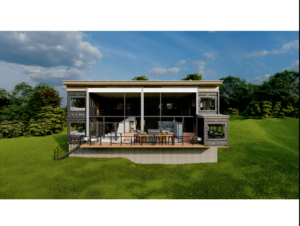
However, under the current residential zoning restrictions, GHL is only allowed to lease out each 12-unit residence to a single entity, such as a hotel or corporation who might want to provide housing for employees.
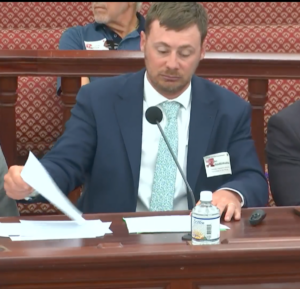
At the Senate hearing, Goldschneider said he wants the personal flexibility of leasing out the two 12-bedroom/bath units to individuals – as opposed to leasing to a business which would manage the master lease. For him to do this, he needs a zoning variance to designate the property as a lodging/rooming house.
Essentially, the only zoning question before the Senate at this time is whether to allow Goldschneider to have this flexibility of managing 24 separate leases for the two 12-unit residences.
But the situation is much more complex. During the Senate hearing, several other critical issues emerged for senators to consider.
Public states opposition to plans at May 2023 hearing
When Goldschneider first brought his plan to the public in February 2023, he said each unit would contain a cooktop stove, microwave and mini-refrigerator. However, the inclusion of these appliances would violate R-2 zoning as each of the 12 units would essentially have its own kitchen. Under R-2 zoning, only two kitchens are permitted on a property.
For Goldschneider to get permits for 24 kitchens, he would need to apply for R-4 (Medium Density Residential) zoning, a category which includes a wide set of uses and allows up to 120 residents per acre.
R-4 zoning would also accommodate Goldschneider’s long-term plan to include two more phases and expand the number of 12-unit residences from two to six, thus constructing 72 residential units on a 1.11-acre property.
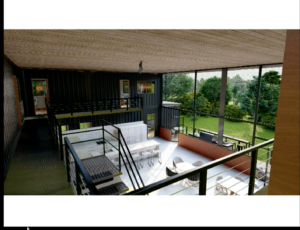
In spring 2023, Goldschneider applied for a zoning change from R-2 to R-4. At the time of the public hearing, Goldschneider amended his plan and said the individual units would not include cooking appliances; all residents would use the kitchen equipment in common living-dining areas.
Following last spring’s public hearing, 44 individuals expressed their support for the project while 78 individuals expressed their opposition, according to DPNR’s report. (Among them was a neighboring ancestral St. Johnian who was against the plan and said GHL had encroached on her property during site preparation.)
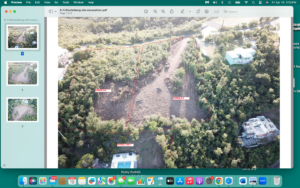
Within weeks of the public hearing, architect Michael Milne of the Barefoot Design Group LLC, filed an appeal with the Board of Land Use Appeals to challenge the building permit granted to Gifft Hill Land LLC. BLUA issued an order to stay the construction.
In his complaint, Milne maintained that the project was inconsistent with V.I. Zoning, Building, and Housing Regulations and did not comply with the International Residential Code and the International Building Code, which govern the Virgin Islands.
In the months since then, Goldschneider withdrew his request for a zoning change to R-4, and applied instead for a zoning variance for the R-2 property as recommended by DPNR. The Board of Land Use Appeals case was then dismissed.
Senators question project’s density
At Wednesday’s Senate session, Roosevelt David, a former senator who is serving as a consultant to GHL, said that Goldschneider agreed to the zoning variance now under consideration “in the spirit of compromise and cooperation.”
David said that St. John neighbors had opposed all the public housing developments on St. John when they were first proposed, including Bellevue Village Housing Community which is within a quarter mile of the Gifft Hill Lands site. (A recent search of Source files did not reveal any significant opposition to the construction of Bellevue Village.)
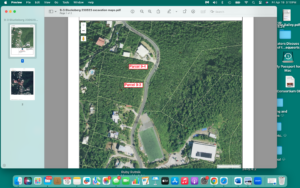
The density of the project is among the chief concerns of St. John residents opposed to GHL’s plan. Nearby Bellevue Village is comprised of 36 duplex buildings (72 housing units) arrayed over 24 acres. However, GHL would have a minimum of 24 units on a little more than one acre.
At the Senate meeting, one senator asked Goldschneider if there was anything to preclude him from expanding to 72 units as shown on the drawings.
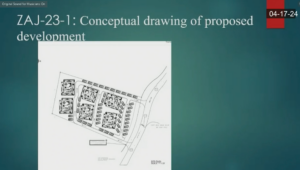
Goldschneider responded that he would need to go back to DPNR and apply for further zoning amendments which would result in additional public hearings. There was some discussion at the Senate session about whether the variance should include a condition to clarify future expansion concerns.
Senators express favorable view of containers for housing
At Wednesday’s meeting, several senators said upgraded shipping containers were an option worth considering given the territory’s housing shortage.
But Milne, who brought the R-4 zoning challenge to the BLUA last summer, said he had concerns about GHL’s construction plans.
Milne said he has seen some excellent building projects that utilize shipping containers; the International Building Code, which was recently approved by the V.I. Legislature, specifies the details for their use in the Virgin Islands.
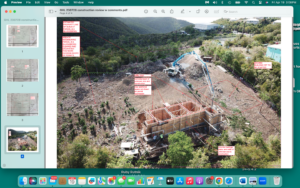
However, Milne said the plans DPNR has shown to the public do not include the specifications for this project as outlined by the International Building Code. He questioned why DPNR has not provided more details.
“If you want to use containers for dwelling, they must be certified by an engineer. The manufacturer has to provide the information, and a V.I. engineer must certify them. As far as I can tell, those certificates from GHL have not been provided to the public.”
Milne said based on the plans he’s seen, he has concerns about the methods of securing the structures for storms, the proximity of the septic system to the cisterns, possible boundary violations, and inadequate parking.
He also questioned DPNR’s decision to treat the project as simple residences when their purpose is clearly commercial. “For multiple dwellings, you have to have a sprinkler system and other fire safety [provisions]. You have to stick with a different set of codes.”
What qualifies as affordable housing?
Goldschneider testified that he expected tenants to pay between $1,400 to $1,500 per unit, not including utilities, per month.
When several senators questioned whether rates like this could be considered as affordable housing, Goldschneider assured them that he had already received a number of applications from businesses whose employees could commit to rents at these rates. He pledged not to rent any units out as short-term housing for vacationers.
DEMUS Foundation Hosts Annual Benny-Demus Carnival Kickball Tournament
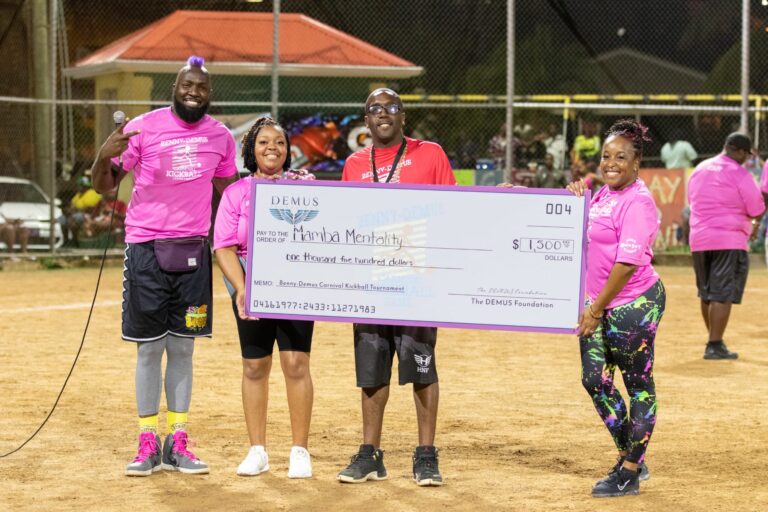

What started out as playful banter on social media about a high stakes marble game, has turned into one of Carnival’s most anticipated and loved events, the Benny-Demus Carnival Kickball Tournament. This year’s game is scheduled for May 1 at 4 p.m. at the Joseph Aubain Ballpark in Frenchtown.
“One year Wally Kyat and I were on social media joking around about playing marbles and the conversation got so heated that we ended up planning to meet at the Emile Griffith Ballpark on my visit during Carnival so we could settle the debate,” said Benny-Demus.
“When we showed up, there was a crowd of people that trickled into the park to watch the game. We were so shocked by how many people actually showed up and were excited to watch with their children. We decided that before we would play, we would get the kids involved,” he said.
“That afternoon we taught the children the game, the rules, and even gave away marbles so they could continue to play and teach their friends. This marble game and the way my community showed up inspired me. I had to continue this, but knew I wanted it to be bigger, and knew I wanted more participants. Kickball felt like the perfect fit,” said Benny-Demus.
Annually, members from various facets of the Virgin Islands community are invited to play in a series of kickball games that are always scheduled during the week of Carnival. Music moguls, commissioners, senators, and V.I. influencers are just a few of the players who are selected for the teams. With four teams included in this year’s event, spectators can expect to enjoy three kickball games, the last being a championship game to determine the winning team.
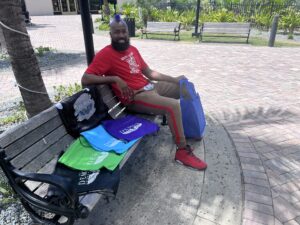
Virgin Islander Benny-Demus, is a prominent disc jockey for worldwide music sensation Akon, and manager for award winning duo Rock City and dancehall prodigy Jada Kingdom, and deeply believes in service to community. This is a pillar of The DEMUS Foundation, a nonprofit organization that was established in 2018
“I always knew that I wanted to be the person I needed when I was growing up. Inspiring and motivating others is a big part of my life’s work and it’s at the forefront of everything I do. I am a Virgin Islander and so my first priority is to my community,” said Benny-Demus.
Along with the kickball tournament, Benny-Demus has recently included a home vs away basketball tournament to his Carnival events through The DEMUS Foundation. This game, scheduled for April 30 at 5pm at the Annas Retreat Ballpark, is free and is intended to bring the Virgin Islands diaspora together in camaraderie and fun. This year includes new jerseys for all the players and a water sponsorship through Soca Shores.
Anyone having questions about The DEMUS Foundation, the upcoming events, or opportunities for donating to these community initiatives, can contact Benny-Demus at thedemusfoundation@gmail.com
V.I. Scientists Converse About Conservation

A panel of scientists and interested community members joined the Friends of V.I. National Park in a virtual meeting on Monday to talk conservation.
“This panel conversation looks to explore the various lenses each of us bring to the conversation, to highlight the common priorities and values we share, and recognize and discuss differences,” Tonia Lovejoy, executive director of Friends of Virgin Islands National Park, said at the beginning of the meeting.
She told the Source the reason for the meeting is that “conservation is a complicated topic with no short, easy answers.”
For the next hour, the participants of the conservation conversation talked about their work and passion for protecting the land and culture of the Virgin Islands.
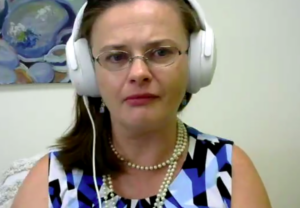
Kitty Edwards, Department of Planning and Natural Resources director of the Territorial Park System, pointed out that she feels the term “environmentalist” is not accurate. She shared that as an example, oil workers call themselves “environmentalists” for no other reason than the fact that they work in the environment.
She believes it should be about preserving our natural and cultural resources.”If you think about what you are conserving and what you are protecting, it is…taking something that exists and making sure it doesn’t go away,” Edwards said.
Lawrence Boschulte and his grandparents were all born in the territory. He is a well-known community figure and has served as an advisory board member for the Friends. He said he is trying to have conversations and educate the public about preserving the environment and what will happen if we don’t.
Professor Hadiya Sewer, director of the Virgin Islands Caribbean Culture Centers and president of the St. John Heritage Collective, said she is deeply concerned about the future of human and non-human life in the territory. Her V.I. roots go back to the 1600s.
She spoke about the exclusion of local and ancestral people when studying how to preserve the ecosystem. She identifies as “a Black, eco-feminist living in good relation to all kin, plants, animals and humans, but keeping in mind systemic racism and other ‘power imbalances’.”
Olasee Davis, professor at the University of the Virgin Islands, holds five degrees, has an extensive scientific background and frequently writes educational essays in the local newspapers. Davis mentioned he defers to the elders for medicines made from local bugs and plants still used in the territory. He added that conservation is a lifestyle.
“Conservation is the ecosystem. I’m a scientist by trade and the indigenous people were conservationists. In order to sustain themselves, they had to be a conservationist. It’s an inborn thing,” he said.
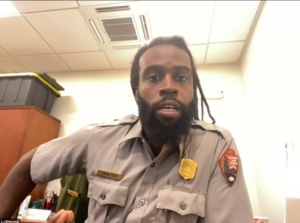
Representing the National Park Service’s visitor services on St. John, Ahmad Toure, division chief for interpretation, education and volunteers, has been working a dozen years as interpreter, trainer and firefighter.
“Human beings have a choice to live in harmony with this planet that we’re on so we can be in symbiosis with the planet, or we can just take from the planet,” Toure said. “And when the world was colonized, most of the colonizers, in turn, basically took and capitalized off of the land’s resources — natural resources.”
He agreed with Sewer that indigenous people have not been included in most conservation plans, despite their having a good record preserving the area in which they live.
Several of the panelists stressed the importance of educating the public and finding out how they feel about how and what to save.
Renata Platenberg is a wildlife scientist who came to the Virgin Islands 20 years ago to assist DPNR in the study and conservation of the red tree boa. She said there are snakes and lizards found only in the Virgin Islands that are certainly worth preserving. Platenberg is also a professor of resource management at UVI.
“I recognized very early on when I was a young scientist, that…if I care about something and want that something to remain on planet Earth, then it’s not other scientists that I need to communicate to, it’s [with] the people that are living with this thing,” she said. She added, “…communicating is not just one way, it has to be both ways. I have to understand how people value that one little piece I care about.”
Panelists also commented about sustainability in reference to conservation. Toure said the populace has been trained to think about themselves first, instead of the ecosystem.
“The goal is to educate youth so they become stewards themselves,” he said.
Also speaking about sustainability, Edwards said her goal is to create a park “for the people.” She said she has seen documents originating in the 1940s of people donating their land to the government for a park system and she takes their legacy seriously.
According to Platenberg, the United Nations defines sustainability as efforts to ensure that future generations have access to what we have access to today. Others said it means keeping public access open, protecting migration corridors, and keeping areas free from noise, pollution and trash.
There was a general consensus that this generation needs to educate the increasing human population to co-exist with nature.
An elderly fisherman told Davis, “only take from the sea what you need,” which seems to define conservation in a few words.
CTEC Students Inducted into Honor Society
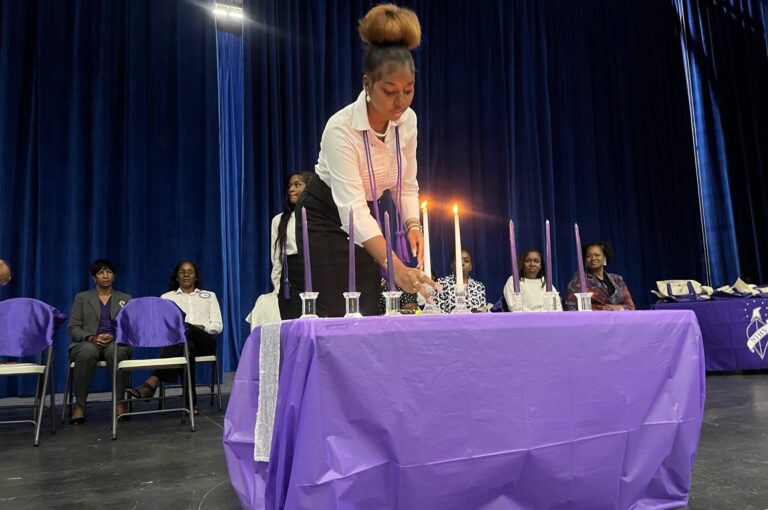
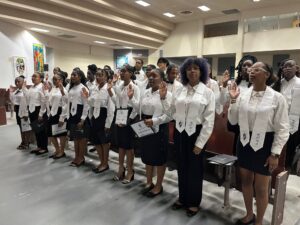
It was a special day for 37 students at the St. Croix Career and Technical Education Center Thursday as they were inducted into the National Technical Honor Society for the 2023-2024 school year.
The occasion, that was held at the St. Croix Educational Complex auditorium, gathered families, friends, and other students to witness the momentous occasion.
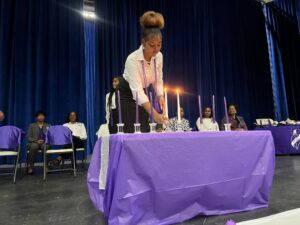
The event included a description of the society’s purpose, colors, emblem, motto, and slogan, a candlelight ceremony, followed by the induction of the students to include the students selected as NTHS officers.
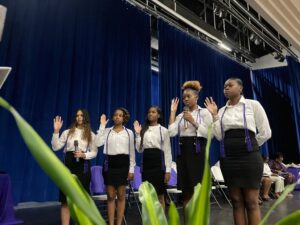
In describing the NTHS, one of the inducted officers, Eriana Rivera said, “The National Technical Honor Society colors are silver, white, and purple. Silver represents value at work, white represents truth and honesty, and purple represents achievement of honor.”
The mission and vision of the National Technical Honor Society is to honor student achievement and leadership, promote educational excellence and enhance career opportunities.
Former senator and Board of Career and Technical Education member, Genevieve Whitaker, shared some words of praise to the inductees saying, “education has always been the cornerstone of progress, and today as we gather to recognize your outstanding achievements, we affirm the value of career and technical education. Your commitment to excellence in your chosen fields not only speaks volumes about your education, but also serves as a testament to the transforming power of education.”
Department of Education Deputy Superintendent Karen Chancellor gave the closing remarks and said, “if you give a man a fish you feed him for the day, but if you teach a man how to fish you feed them for a lifetime. These students this morning have chosen to learn how to fish, and it is their motivation for me because National Technical Honor Society is not a requirement, but it is a choice. These students are not only honor students, but they are the ones who have chosen to embrace the honor society way of life. These inductees have a bright future. You are role models and mentors for your peers and other youth coming after you. Always find ways to give back to your community because you were created intentionally and for a purpose.”
According to the National Technical Honor Society’s history, the society was established in 1984 and prior to its conception nothing was being done to lift outstanding career and technical students. Over the years, educators have seen the National Technical Honor Society at work, lifting-up students, advancing excellence in career and technical education and raising the bar for students’ achievements.
Genealogist Dana Palmer Shares Tips on Using Newspaper Records in Genealogy
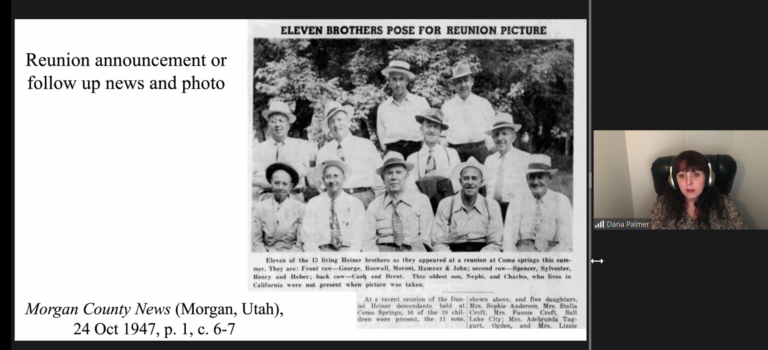
The Caribbean Genealogy Library hosted its virtual “Finding Family Using Newspapers” event Wednesday, that provided tips on how to access and use newspapers to find information on one’s family roots.
Presenter Dana Palmer used her background in genealogy to provide information to viewers on various websites, buildings, types of records, and key research phrases to use in their hunt to better understand their family’s lineage. In her presentation, genealogist Palmer displayed several newspaper clippings from her family’s records and public records to provide viewers examples of the type of information they should be searching for. Newspaper notices of wedding anniversaries, obituaries, funeral announcements, reunion announcements, golden anniversaries, special birthdays, gossipy news, legal notices, crime notices, and military services were referenced.
According to Palmer, notices of lawsuits or other legal matters such as appointments of administrators or executors, can provide pieces of information that lead into genealogy records.
“Sometimes these can give insights to lead to future records you can look for,” she said.
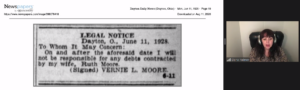
During her presentation, she displayed a 1928 newspaper notice from Dayton, Ohio that Vernie L. Moore placed in the Dayton Daily News that said he will not be responsible for any debts contracted by his wife Ruth Moore. After showing that article to her students at an earlier date, upon further investigation, one of Palmer’s students said that Moore created the notice after a divorce proceeding.
Palmer also made it clear to viewers that they must stay cognizant on how they dive into their research. She highlighted being aware of key terms when searching for records. She gave an example of searching for records surrounding World War I and told viewers that they won’t find data using the term “World War I” during that time period.
“When you’re looking for these papers, think about the words that are used at the time,” said Palmer. “This is World War I. They’re not going to call it World War I because there wasn’t a World War II. So think about that when you’re looking at your paper, about the phrasing that may have been used at the time.”
She also mentioned sometimes narrowing or broadening the location of records for better search results when applicable.
“Include the names of towns, landmarks, or geographic features, Northwest territory instead of just Ohio,” said Palmer.
Palmer also provided successful keywords to use when searching genealogical records for births, deaths, marriages, and military records. They include: born, new baby boy or girl, infant, died, passed away, ill, lingering illness, funeral, funeral home, cemetery, beloved wife or husband, sudden death, departed this life, killed, interment, grave, marriage license, bride, groom, reception, wed, matrimony, soldier, seaman, airman, crewman, conflict, reserve, veteran, battle, service, and overseas.
Palmer said that newspapers are generally kept by historical societies and libraries at the local or state level. The information might be recorded in print, microfilm or digital, so it is important to be aware of the formats of those records.
“If you don’t find it online, don’t get discouraged. You just might have to look for it in another format,” Palmer said.
One more tip that Palmer mentioned to viewers was to be mindful that research tools can be sensitive to words selected for the search. One website she uses, fultonhistory.com (based in Fulton County,N.Y., that collected and digitized postcards and newspapers) uses Boolean research style where you have to type “AND” between a person’s first and last name in order to generate results.
“It can be really really difficult to use this site,” said Palmer.
Overall, Palmer highlighted that while newspapers can be great resources for public interest, they also serve as great resources for personal news and genealogical insight and understanding the daily happenings during an ancestor’s lifetime. She provided many of her favorite sources that can be used for genealogical records and noted that while there are some free sites, there are many subscription websites which charge a fee.
“Don’t pay for subscriptions if your location and time period are not in the collection,” she said.
A list of sources and key information from Palmer’s presentation can be found here.
Resources from the Caribbean Genealogy Library can also be found here.
The next event from the Genealogy Library is on David H. Jackson and Casper Holstein: “Early Collaboration in Fighting for Political Reform 1921-1927” and will be held Sunday at 2 p.m. For access, visit https://www.tickettailor.com/events/caribbeangenealogylibrary/1219518 . For more information on the Genealogy Library, visit https://cgl.vi .
Dominican Republic Man Sentenced in Cocaine Trafficking Conviction

A Dominican Republic national, Ruben Reyes, 37, was sentenced by Chief Judge Robert A. Molloy to 120 months in prison, followed by five years of supervised release and a $100 special assessment, after pleading guilty to conspiracy to possess a controlled substance with intent to distribute while on board a vessel subject to the jurisdiction of the United States, U.S. Attorney Delia L. Smith announced Friday.
According to court documents, on Nov. 18, 2020, Customs and Border Protection Air and Marine Operations intercepted a vessel traveling from St. Thomas toward Puerto Rico at approximately one mile southwest of Savana Island. The vessel was operating without navigational lights, and individuals on board the vessel were observed throwing black objects overboard into the ocean. Agents placed markers in the locations where the objects were discarded while they continued to pursue the vessel. Reyes, Jorge Romero Amaro, Giovanni Graciani, Hector Rivera Concepcion and Pedro Luis Sayan Villanueva were found on board the vessel and seven duffle bags containing approximately 198 kilograms of cocaine were recovered from the ocean.
Amy Veronica Williams Dies
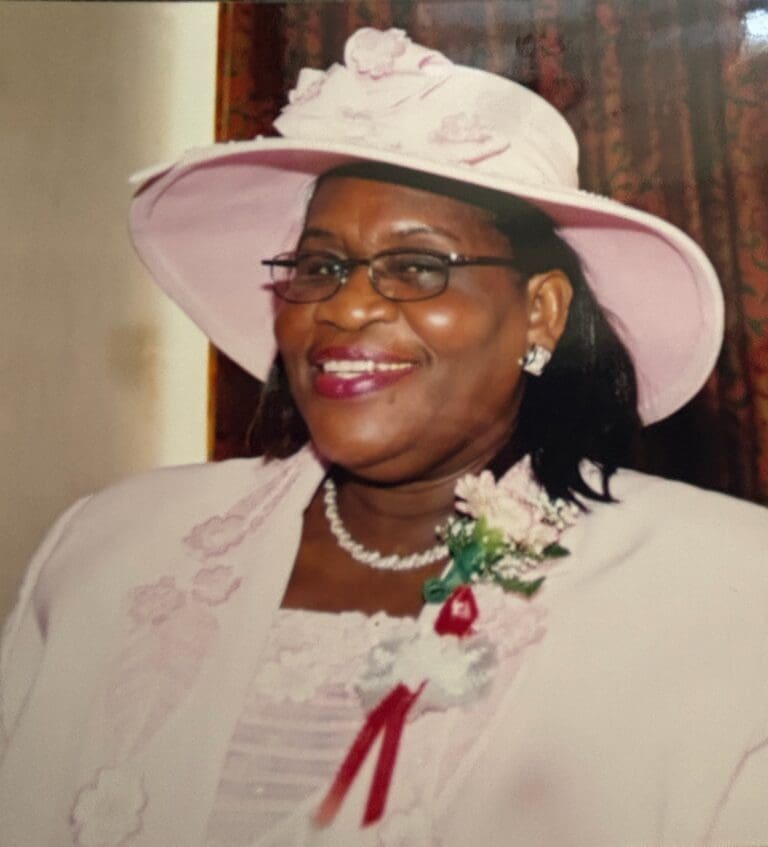
Dr. Barbara Petrolla Hodge Dies at 74