Wartsila generators are being used to meet demand as WAPA works to restore capacity with three major units offline. (Photo courtesy WAPA)
With three of its largest generators down, the Virgin Islands Water and Power Authority said Thursday that power rotations will continue and unexpected outages remain possible, while some areas also face water service disruptions.
According to a WAPA press release, Units 15, 23 and 27 are currently offline for maintenance, significantly reducing available generation capacity and forcing reliance on Wartsila generators that cannot meet demand at all times.
The authority said the limited capacity has required load rotations and contributed to system instability, including districtwide outages reported Thursday morning during restoration efforts, according to the press release.
“The rotation schedule supports system stability, but it cannot eliminate all disruptions,” Lemuel Lavinier, chief operating officer of electric systems at WAPA, said. “We continue working urgently to bring additional capacity online and encourage customers to remain prepared.”
WAPA said a specialized technician is working with crews to restore Unit 15, while critical parts have arrived for Unit 27 and a second technician has been deployed to speed up repairs.
The authority also pointed to the need for additional solar generation and battery storage, noting those resources could help close the current gap in capacity. Long-term improvements are expected through the Prudent Replacement Program, which is intended to modernize aging infrastructure, the press release stated.
In addition to electrical issues, WAPA warned that customers in some areas, including downtown Charlotte Amalie and higher elevation communities, may experience low water pressure or intermittent service, the release stated.
The disruptions are linked to reduced water production caused by power challenges and a major leak at Polyberg Hill, according to the release. Crews are working to stabilize water production and complete repairs.
Customers are encouraged to monitor official updates and sign up for WAPA alerts for information on rotation schedules and restoration efforts.
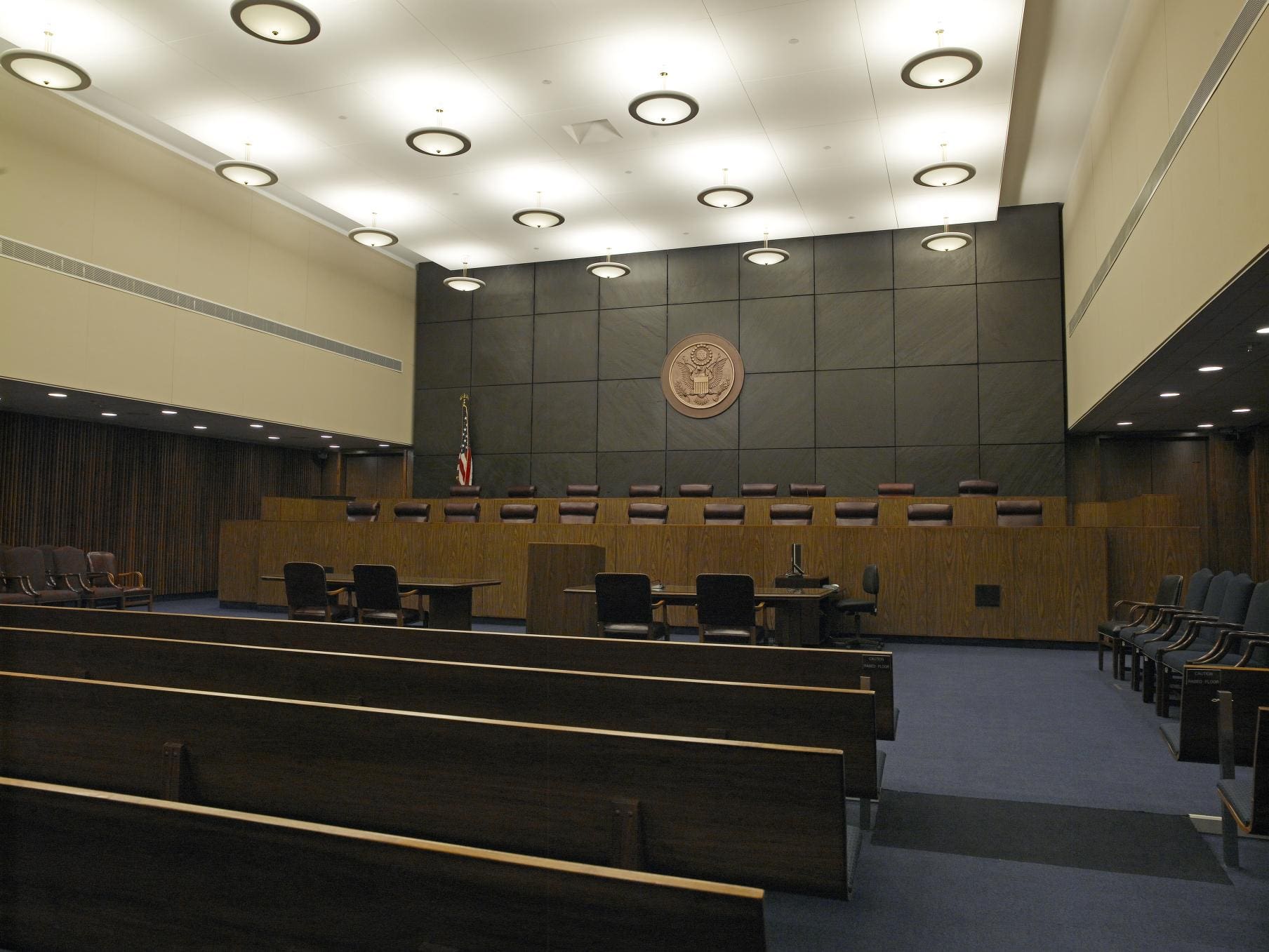
The V.I. Housing Finance Authority appealed a preliminary injunction issued by a U.S. District Court judge this week and claimed the order was disrupting federally funded disaster recovery projects. (Photo by Carol M. Highsmith/Library of Congress)
Seven months after a federal judge blocked the V.I. Housing Finance Authority from moving forward with seven projects amid a contractor’s claims of procurement violations, VIHFA has taken the matter to the Third Circuit Court of Appeals.
U.S. District Court Chief Judge Robert Molloy granted a preliminary injunction to environmental services firm Gandee and Associates in September after the contractor accused VIHFA of unlawfully rescinding contracts and awarding them to competitors at “grossly inflated” costs. Gandee claimed the semi-autonomous agency rescinded seven project awards after the company noted discrepancies between the scope of work outlined during the solicitation process and the contracts themselves. In a searing opinion, Molloy noted that Gandee’s attempt to communicate the discrepancies directly to VIHFA “rang flat.”
“It was distorted, disputed, ignored, and refuted, as it traveled up the ranks and across procurement, contracting, and legal departments at VIHFA — finally culminating in the instant federal lawsuit that could easily have been averted had VIHFA simply adhered to its own published policies and procedures,” he wrote. “Instead, VIHFA appears to have doubled down in a brazen display of disregard for its duty to the public.”
VIHFA’s attorney, Shari D’Andrade of the law firm Kellerhals Ferguson Kroblin, argued in an appeal filed Wednesday that Gandee never had any executed contracts and that the injunction “disrupts federally funded disaster recovery projects and interferes with the timely administration of public programs.”
“Although the public has an interest in fair procurement processes, that interest does not require the extraordinary remedy of an injunction in the absence of a binding contractual entitlement or a showing of irreparable injury,” she argued.
D’Andrade wrote that the case did not involve depriving Gandee of its contractual rights.
“It involves a contractor who did not execute draft agreements, raised concerns about their terms, and never reached agreement with the agency — yet now seeks to transform that unconsummated negotiation into a constitutional claim,” she argued.
Separately, VIHFA found itself in the spotlight last week after V.I. Water and Power Authority Chief Executive Officer Karl Knight said bureaucratic bottlenecks at the agency, which administers federal funding from the U.S. Housing and Urban Development Department, had delayed much-needed funding to the utility.
“There’s $38 million caught up for projects that could make a meaningful difference in the reliability of our system,” he told WAPA board members last week.
Outgoing VIHFA Executive Director Eugene Jones Jr. fired back in an open letter, saying Knight’s claims are “categorically false and reflect a last-ditch and disingenuous effort by the leadership of the utility, to deflect its responsibility by attempting to position the Authority as a scapegoat for its ongoing systemic shortcomings and deficiencies, including the inability to provide consistent power to the people of the Virgin Islands.”
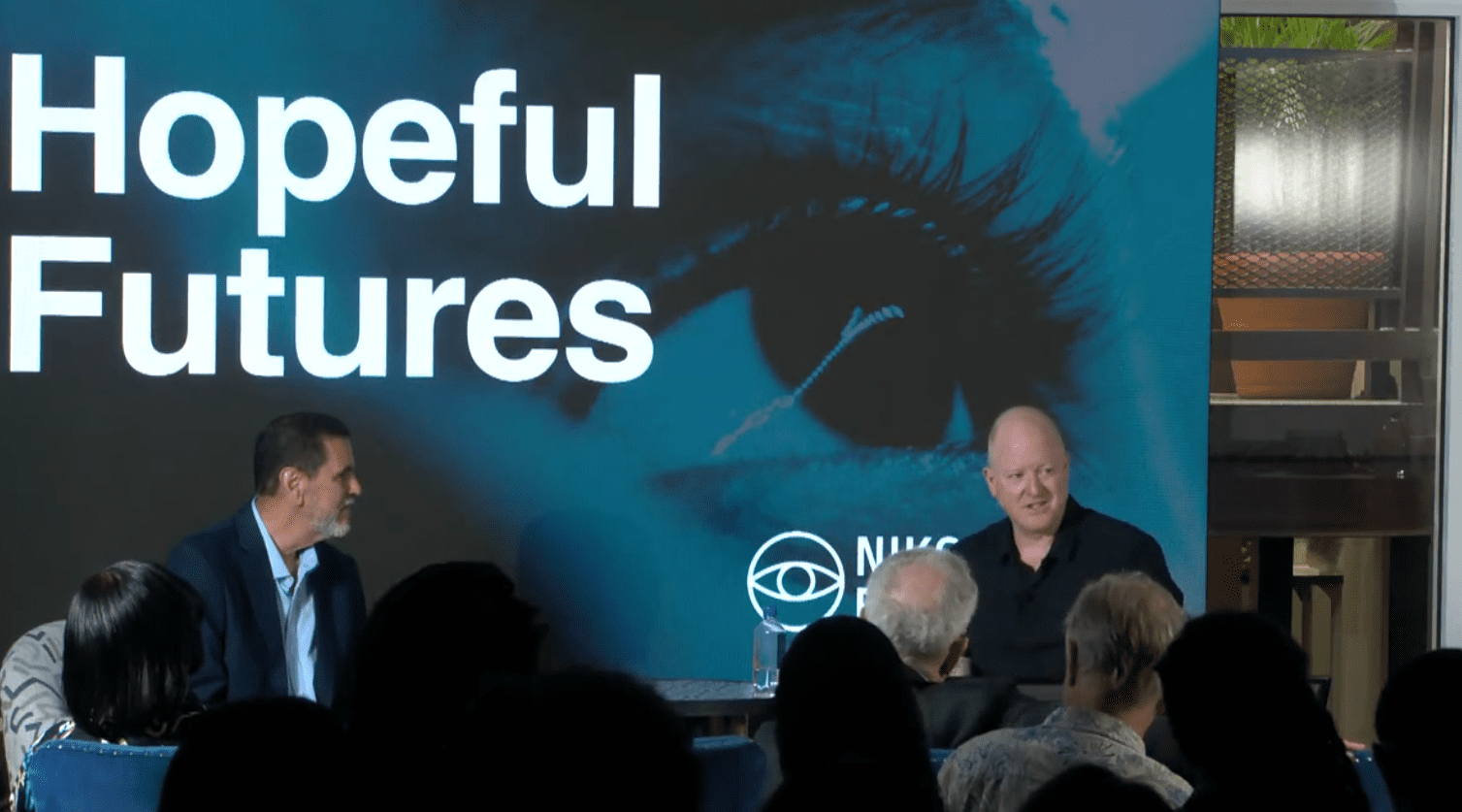
Futurist Nikolas Badminton speaks to an audience during a University of the Virgin Islands event, with the words “Hopeful Futures” displayed behind him. (Screenshot from UVI Facebook livestream)
Futurist Nikolas Badminton told a University of the Virgin Islands audience Wednesday that the territory is “on the edge” of rising global risks and new opportunities as it grapples with climate change, fragile infrastructure and rapid technological change.
Speaking at the annual Business Leadership Lecture hosted by the 13D Research and Strategy Innovation Center, Badminton said the territory’s ongoing struggles with infrastructure and limited resources reflect broader pressures expected to intensify worldwide in the coming decades.
UVI President Safiya George tied the lecture to what she described as the university’s “brand momentum” strategy, a push to connect academic work to real-world challenges in the Virgin Islands.
“At UVI we’re building what we call brand momentum … a bold and intentional push to advance student success, expand innovation, and deepen workforce and business partnerships,” George said. “Through hands-on learning, internships, research experiences and entrepreneurial projects, our students are not simply studying change. They’re learning how to lead.”
In his lecture, Badminton moved from historical examples of technological opportunities to circular economies and social media’s impact on society. Threaded through those themes was a warning that basic systems, especially for water, energy and food, will determine which communities can withstand future shocks.
Badminton urged Virgin Islanders to see themselves not only as navigating global disruptions, but as “hope engineers” capable of shaping better outcomes.
“Hope theory is about setting goals, identifying pathways forward and giving agency to yourself and others — and building networks of people who can deliver on the futures we promise,” he said. “That’s what being a ‘hope engineer’ is all about.”
He argued that the Virgin Islands’ position makes it both vulnerable and strategically important.
“Being here at UVI and being in the U.S. Virgin Islands, it sort of reminds me that we’re on the edge here,” Badminton said. “We’re surviving and we’re thriving and we’re smart and we’re punching above our weight, but we’re also on that edge of innovation — and new ideas can come from anywhere.”
He returned repeatedly to what he described as the water, energy and food nexus, saying the same pressures affecting the Virgin Islands today will increasingly define global stability.
During a question-and-answer session, attendees asked how global conflict, oil markets and artificial intelligence could reshape energy access in the coming years.
“When you put a chokehold on resources, you find another way forward because you don’t have a choice,” Badminton said. “You’re going to see people turning away from failing energy systems and pushing for independence. That will drive greater adoption of solar, influence policy changes and ultimately strengthen resilience, because you can’t wait.”
Badminton also warned that the rise of artificial intelligence and large-scale data centers could place additional strain on fragile island systems if communities do not maintain control over their own resources. He said powerful technology platforms are increasingly shaping how people see themselves and navigate the world.
For territories like the United States Virgin Islands, he said, that dynamic makes local control over infrastructure even more critical.
Sixth Constitutional Convention Delegate Imani Daniel asked how residents can continue bearing the burden of unreliable infrastructure while also being expected to plan for the future.
“We suffer within a system geographically,” Badminton said. “We’re told to fix it, but we don’t have the resources or the ability to do so. So there’s a gap.”
“Hope is recognizing who needs to be in positions of power to create structural change and giving those people the agency to act,” he added. “And it’s not easy.”
Still, he said long-term thinking remains one of the few tools communities can fully control.
“There’s no risk in thinking about the futures ahead of us,” Badminton said. “Not asking the questions and maintaining the status quo is the real risk.”
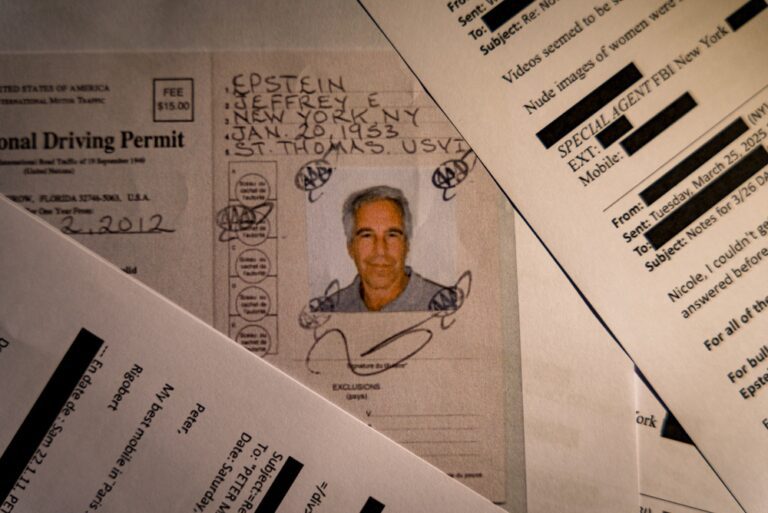
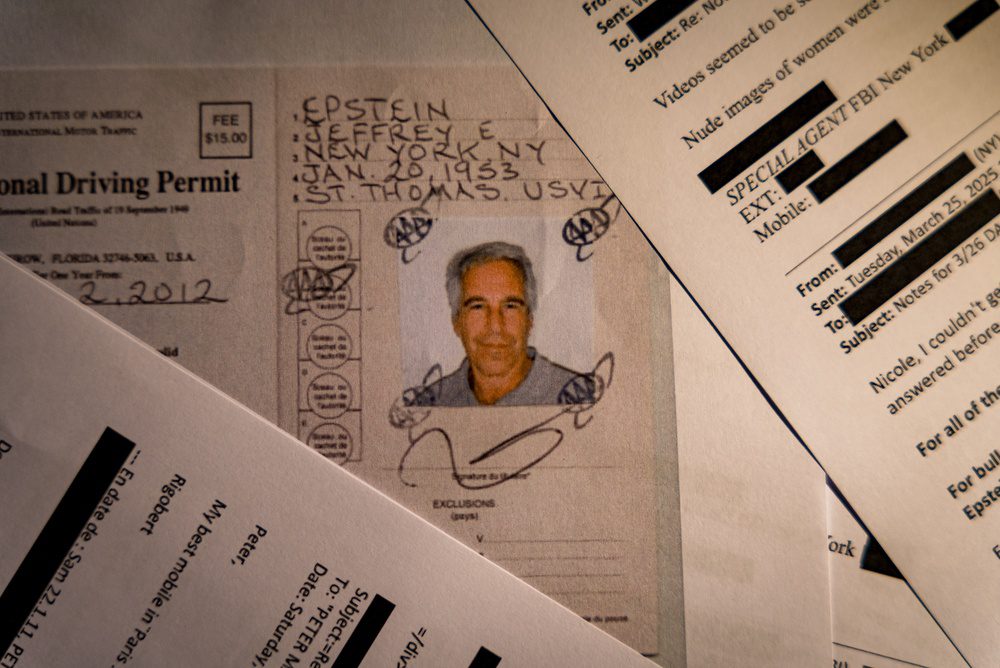
The U.S. Virgin Islands deserve transparency at all times, but especially now that it’s at the center of national news due to the Jeffrey Epstein case. (Shutterstock image)
Editor’s Note: This interview was first published by the Freedom of the Press Foundation on Feb. 5. It is reprinted here with their permission.
Last summer, Shirley L. Smith, an independent investigative journalist from the U.S. Virgin Islands, reached out about her efforts to get lawmakers there to modernize the territory’s public records laws. Having reported from jurisdictions with better (although far from perfect) transparency systems in place, she was sick of getting the runaround, and realized that the archaic and toothless laws on the books made evasion of records requests possible.
Our response was something like, “Where have you been all our lives?” We’ve spent years imploring journalists to advocate for their own legal rights — whether by fighting for transparency, pushing for laws to protect journalist-source confidentiality, or speaking out against abuses of federal and local laws to target newsgathering. No matter what one thinks about the place of “objectivity” in contemporary journalism, it’s absurd to let it get in the way of standing up for reporters’ own rights.
Smith — who has previously worked for outlets including the now-defunct Mississippi Center for Investigative Reporting, The Atlanta-Journal Constitution, The Telegraph in New Hampshire, and The Virgin Islands Daily News — told us she focuses on “long-form enterprise and investigative reporting on social justice issues and institutional inequities.” Her current work looks at “the impact of long-standing and often overlooked environmental hazards in the U.S. Virgin Islands and other issues that affect the welfare of residents.”
We spoke to Smith about her experiences reporting in the territory and why she decided to pursue reforms to its public records laws.
What obstacles are you encountering due to the local public records laws?
Between October 2022 and July 2025, I submitted public records requests to multiple government agencies in the U.S. Virgin Islands for records related to serious health, environmental, and safety issues that pose a risk to the community. Officials have ignored most of my requests. Those that did respond provided incomplete information after lengthy delays, or flimsy excuses — without legal justification — for why they could not release documents.
One of the most outrageous responses I received was from the police department. They said I have to provide proof of “Virgin Islands citizenship” to access public records, and they refused to send me copies of any records. Instead, they insisted I come into the police station to examine records.
A huge part of the problem is that the Public Records Act is outdated and weak. It does not require agencies to respond to public records requests within a specific time frame, which allows for lengthy delays with impunity; the penalty for violating the law is only $100; and the only recourse one has if an agency violates the law is to file a lawsuit, which will cost more than the $100 penalty. Also, the law was enacted in 1921, before the advent of the internet and other technological advances that are commonly used to conduct business and law enforcement efforts, so the law needs to be updated to include electronic records.
You’ve reported from all over the country. What is uniquely challenging about reporting on the USVI?
The USVI is a small territory, consisting of three main islands — St. Thomas, St. Croix, and St. John — with a total population of approximately 87,000, according to the most recent Census. Although there are three branches of government — executive, legislative and judicial — the territory has a somewhat centralized government that is difficult to penetrate, because the governor wields most of the power.
The governor, who manages the affairs of the territory with some federal oversight, appoints the head of almost all government agencies, the members of agency boards, the attorney general, and the local judges. All appointments must be approved by the USVI Legislature, but these officials still serve at the pleasure of the governor.
Historically, the Democratic Party has been the predominant party in the territory, so most public officials, including the governor, are part of the Democratic machine, and most residents work for the government or are affiliated with someone who works for the government. Therefore, a lot of residents are intertwined with the government. As a result, many residents and public officials are either reluctant or fearful to speak to the media for fear of retribution from the administration. Since tourism is a major driver of the economy, some officials also try to downplay certain issues that may reflect poorly on the territory.
Additionally, the territory only has a handful of news outlets, and they do not have the resources to support in-depth investigative reporting, and the national media are usually not interested in issues in the USVI unless there is a major crisis. Hence, many issues are not covered or are underreported.
While the federal government monitors some activities in the territory, the Trump administration has rolled back certain environmental regulations and programs that were intended to protect residents’ health and safety. They have also made it difficult for the media, particularly independent journalists, to access certain federal records and data. This means that USVI residents cannot count on the kind of oversight they had in the past from the federal government to protect them. This is also extremely disturbing because usually, if journalists cannot obtain records from a local government, they can request the records from the relevant federal agency and vice versa. But now, it is difficult to get records related to the USVI from the local and federal government.
The confluence of all these factors impedes the media’s ability to hold public officials accountable, root out corruption, combat misinformation, and provide the public with accurate, untainted information. This can have devastating consequences in an emergency or crisis.
Why should journalists and news consumers in the mainland United States be concerned about public records laws in the USVI when there are so many attacks on press freedom and transparency coming from the federal level?
People born in the U.S. Virgin Islands and other U.S. territories, like our neighbors in Puerto Rico, are U.S. citizens. Yet, we are often treated as second-class citizens by the federal government. Under the First Amendment of the U.S. Constitution, journalists have the right to monitor the activities of the government on behalf of the public, and that includes the right to examine and get copies of public records. Recent events, such as the COVID-19 pandemic and military actions in the Caribbean, have magnified the need for access to public records at every level of government, including U.S. territories, because what happens in the Caribbean can have a ripple effect throughout the country. Also, many national stories emerge from local incidents.
Another case in point is the Jeffrey Epstein case. The private islands formerly owned by Epstein, where he and other powerful men allegedly sexually abused underage girls and women, are located in the U.S. Virgin Islands. The Virgin Islands also receives a lot of federal funds, and American taxpayers have a right to know how this money is spent.
Journalists are often reluctant to go on offense in advocating for their rights to gather news. They might take the government to court over a denial of a specific records request, but they’re less inclined to try to change the law more broadly. Talk about why you chose to go down this path.
As an independent journalist, I do not have the resources to file a lawsuit, and I could not find an attorney or a media advocacy organization to assist me with obtaining the records I requested. So, I wrote an op-ed about the government’s lack of transparency and my personal experience, but I realized that writing an article was not enough to ensure lasting change and accountability. Therefore, I only had two choices. I could capitulate or petition the USVI Legislature to revamp the territory’s archaic and ineffective public records law.
As a journalist, I had some trepidation about petitioning the Legislature because I did not want to be viewed as a biased advocate or a lobbyist. But extraordinary circumstances require extraordinary actions. And, I don’t think journalists should shy away from the term “advocate” anymore. Journalists should be advocates for the truth, justice, and accountability for the public good. This initiative is about preserving journalists’ constitutional rights to seek the truth and monitor the government, so we can hold those in power accountable and provide unbiased, accurate news coverage to the public, so they can make informed decisions.
Journalists cannot afford to wait around for others to fight for us when there are blatant attempts by the government to silence and discredit us, control the news narrative with distorted facts, and when people’s health and safety and our own lives and livelihoods are increasingly at risk because every time those in power succeed in stifling the media — whether it be on the local, national or international level — it emboldens others to follow suit. This will eventually lead to a government-controlled media and the further dismantling of the fundamental principles of democracy that we are seeing play out across the nation.
It has been an exhausting battle, but I am no longer in this fight alone. The Freedom of the Press Foundation (FPF) and the V.I. Source, a local news outlet, have partnered with me in this initiative. Thanks to FPF’s efforts, I have also garnered the support of 11 other national advocacy organizations, including the Joseph L. Brechner Freedom of Information Project at the University of Florida College of Journalism and Communications. They submitted a joint letter of support for this initiative to the V.I. Legislature.
You’re doing this as an independent journalist without a big legal budget. Do you think it’s fair that someone in your position needs to take the lead on this or should bigger outlets, whether in the USVI or elsewhere, be stepping up?
It is definitely not fair, but necessary. Segments of the local media have successfully sued the government in the past, but they either do not have the resources to do so now or are unwilling to sue for whatever reason. Unfortunately, the plight of freelancers is often disregarded or overlooked in the journalism industry. Over the past two years, I reached out to several notable national media advocacy organizations, but I could not find anyone to assist me with obtaining public records.
The lack of access and stonewalling tactics by public officials, including the governor’s communications team, which removed me from their media list shortly after I asked the governor a question about a water crisis at a news conference, have hampered my ability to gather information that is critical to my investigation and report the news. But, as I indicated, this initiative to revamp the territory’s public records statute and strengthen its other sunshine laws is bigger than me. People have the right to know what is going on in their government — especially when it comes to their health, welfare and safety — not just what government officials want them to know to promote their agenda. The ubiquitous lack of access to public records and information is also disconcerting, given the level of corruption at the highest levels of the USVI government.
If I am successful in getting the Legislature to make substantive changes to the sunshine laws, everyone in the Virgin Islands stands to benefit, including the Legislature. Several senators and their staff have admitted that they have also had difficulty obtaining certain records from the executive branch.
Does being a native of the USVI allow you to get things done in ways that a news outlet or advocacy organization from elsewhere wouldn’t be able on its own? Do you think the same principle — that locally led campaigns are more likely to get off the ground — would hold true elsewhere in the country?
Although some people are more likely to talk to me when they realize I am a native of the USVI, being a Virgin Islander has not made it easier for me to penetrate the political system and obtain public records and information. I, like most credible journalists, never want to distract from a story by making it about me. I don’t do this work for my own aggrandizement. However, there are times when you are the subject of the story or your life intersects with a story, and sharing your challenges adds value to a story and may encourage others to come forward. At the end of the day, that is why I became a journalist — to make a difference in society. But speaking up generally comes with a cost, so it is not an easy decision.
I think journalists on the mainland may have an easier time petitioning their government to reform public records laws because it would be easier for them to find community leaders and groups to partner with that are not intertwined with the government. However, independent journalists will face the same challenges that I have unless more media advocacy organizations step up to support them, regardless of whether they work for a big news outlet or not.
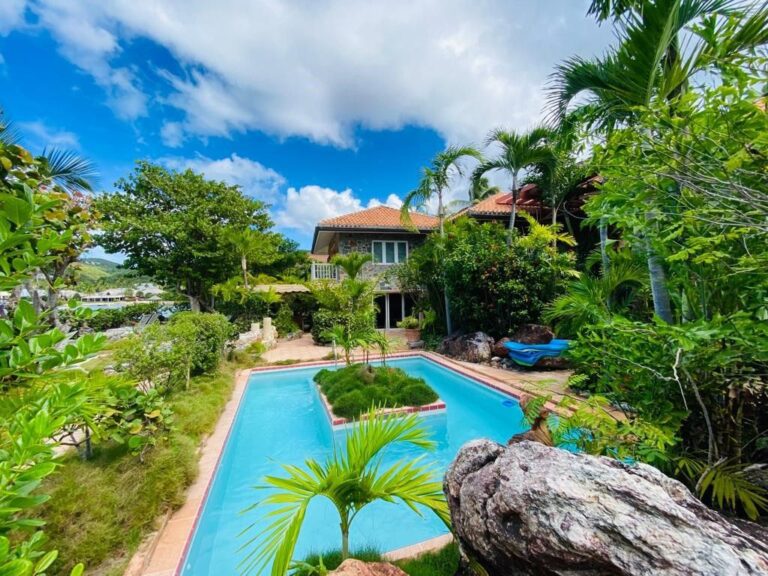
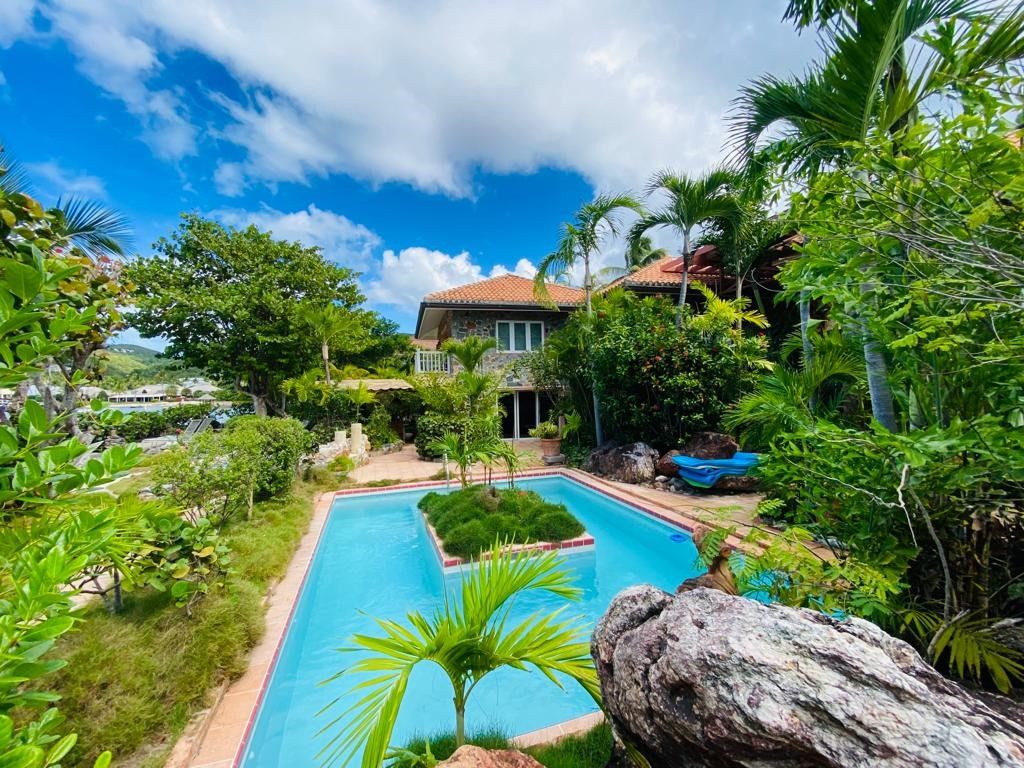
A beachfront villa on St. John, featured as the grand prize in Island Green Living’s Earth Month raffle, includes accommodations for up to 10 guests with a private pool and garden setting. (Photo courtesy Artistic Villas)Editor’s Note: This story has been corrected to say that the end date for the raffle is May 11, not April 30 as initially reported.
Nonprofit Island Green Living is marking Earth Month with a raffle offering a seven-night St. John vacation valued at more than $16,000, with proceeds supporting recycling, food security, greening education and other sustainability initiatives, organizers announced in a press release.
The “Love City Grand Prize Vacation” includes accommodations for two to 10 guests at a five-bedroom beachfront Beach Villa by Artistic Villas, along with an airfare credit of up to $2,000, a four-door Jeep Wrangler rental, a private boat charter, dining experiences, shopping and wellness offerings, according to the press release.
Raffle entries are available here through May 11, 2026. Tickets are priced at $50 each, three for $125, six for $250, or 30 “Golden Ticket” chances for $1,000, the press release stated.
“This year’s Earth Day theme is ‘Our Power, Our Planet,’ and these entities have come together to truly support and empower Island Green’s initiatives to make the territory and the planet a better place,” said Board President Harith Wickrema, who also thanked donors and partners, including Deborah and Donald Schnell and the U.S. Virgin Islands Tourism Department.
The grand prize package includes a seven-night stay for up to 10 guests at the beachfront villa, which features five bedrooms, a private pool, a garden setting, and direct beach access, the release stated.
Additional components include a $2,000 airfare voucher sponsored by the U.S. Virgin Islands Department of Tourism; a one-week Jeep Wrangler rental and private boat charter from Seashell Vacations; and a 60-minute Swedish massage at Crandall Massage in Mongoose Junction, the release stated.
Dining experiences include a private chef dinner for up to six guests prepared by Chef Vincent Alterio of St. John Speakeasy, as well as dining credits at Ocean 362, The Longboard and Morgan’s Mango in Cruz Bay, the release stated.
The package also includes a $100 shopping certificate to Bamboula in Mongoose Junction and a voluntourism opportunity and private tour at Island Green Living’s ReSource Depot, the release stated.
Organizers said additional prize opportunities are available this year. A second prize Adventure and Shopping Experience valued at $1,335 is available to those who purchase three or more entries, the release stated.
That package includes a zipline tour for four with Tree Limin’ Extreme on St. Thomas, a $250 sailing credit for Kekoa, a $200 dining credit at La Tapa Plage, a $100 gift certificate to Salt and Strand, and a handcrafted bag from St. John Sailsack Co. valued at $229, the release stated.
An early bird drawing for a private wine tasting experience in Bovoni, St. Thomas, valued at $500, is available to entrants who purchase tickets by April 20. Winners of that drawing remain eligible for all other prizes, the release stated.
The raffle period runs through 11:55 p.m. on May 11. The winner will be randomly drawn and announced on Facebook in mid-May and notified by email, according to organizers.
All proceeds will fund Island Green Living programs, including the territory’s only ocean-bound plastics and aluminum recycling efforts, along with community education and sustainability initiatives. Since February 2022, the organization has collected more than 150,000 pounds of ocean-bound plastics and more than 5 million aluminum cans, the release stated.
Organizers also said the ReSource Depot, St. John’s only reuse store, has diverted more than 1 million pounds of materials from the landfill, including building materials, furnishings and clothing.
________________________________________________________________________
The Fine Print:
The “Love City Grand Prize Vacation” package is valid from May – December 13, 2026 and May – December 13, 2027 and subject to space availability and certain blackout periods (weeks of Carnival & Thanksgiving). No Sunday arrivals. A form will be provided for the requested available dates. Once returned, signed & the confirmation email is sent, there are no changes.
All prize components are subject to space availability; winners are responsible for confirming reservations. Some businesses/restaurants may be closed during hurricane season and other periods; it is the winner’s responsibility to verify hours of operation for gift certificate redemption. The winner must adhere to the individual property/business rules and restrictions, including the provision of a credit card number for holds/damage deposits, etc. In the event that a property/business closes or becomes uninhabitable due to a storm, fire, or Act of God, the winner agrees to forfeit the prize. We strongly encourage the winner purchase travel insurance. None of the prizes are transferable without the business owner’s consent and are not redeemable for cash. As required by the IRS, a 1099 will be issued for the value of the prize package.
Kekoa: Sails are subject to availability and credit cannot be used during holiday periods. The dollar amount awarded can only be applied to the cost of the sail and cannot be used toward crew gratuity or Kekoa merchandise. Kekoa is dry-docked for the peak of hurricane season and will not be available August 15 – Oct 31.
Car Rental: Renter must provide proof of insurance and a Visa/MC/Discover card on the rental contract. No CDW/LDW is available. Drivers must be 25 years or older. The winner must comply with all terms and conditions. Tax is not included. No cash back for any unused portion of the rental.
The Rotary Club of St. Thomas Sunrise proudly announces the 14th Annual Kids Triathlon, to be held on Saturday, April 11, at the beautiful Magens Bay Beach.
Open to children ages 5 to 15, this community event promotes health, fitness and fun through a three-part race consisting of a swim, bike, and run. Participants may compete individually or form teams of two or three, allowing each child to complete one or more segments of the triathlon.
Event-day registration begins at 7 a.m., with the first race starting promptly at 8 a.m.
Race Distances by Age Group:
Ages 5–8: 25-yard swim | ½-mile bike | ¼-mile run
Ages 9–11: 100-yard swim | 1-mile bike | ½-mile run
Ages 12–15: 200-yard swim | 3-mile bike | 1-mile run
Participants must bring their own bicycles, helmets, and athletic shoes, all of which are required for safety. A limited number of loaner bikes and helmets will be available for those in need on a first-come, early-arrival basis.
All entrants must submit a completed registration form and waiver signed by a parent or guardian, along with a $5.00 entry fee. Registration forms are available at Caribbean Surf locations in Havensight and Red Hook, or by request via email.
This annual event continues to be a highlight of the St. Thomas community calendar, encouraging youth participation in athletics while fostering teamwork, discipline and confidence in a supportive environment.
For additional information or to request registration materials, please contact Jenifer Smith:
Phone: 340-642-7454; Email: jsmith@vilaw.com
The Rotary Club of St. Thomas Sunrise looks forward to welcoming young athletes and their families for another exciting and inspiring day at Magens Bay, the 14th Annual Kids Triathalon – the Day of 5,000 Smiles!.
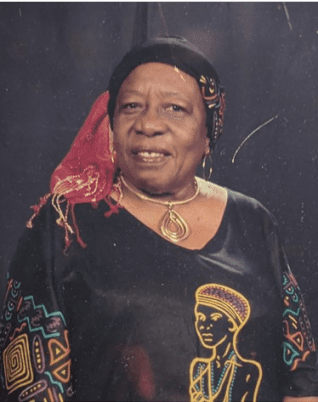
Lilda Eleanora Decaille, of Estate Mon Bijou, passed away on March 23, 2026, at the age of 86.
Lilda Eleanora Decaille
She was preceded in death by her spouse, George Andrew Decaille; son, Timothy Decaille; mother, Matilda Charles; father, Harold Charles; sister, Maulin Charles; and brother, Clinton Charles.
She is survived by her daughter, Donna Decaille; sons, Titus Decaille, Kendell Decaille, and Dexter Decaille.
She also leaves to cherish her memory her grandchildren, Shanelle King, Timothy Decaille Jr., Kendell Decaille Jr., Nia Decaille, Imani Decaille, Noah Decaille, Kendra Decaille, Andrew Hayes, Amaya Decaille, and Joshua Decaille; great-grandchildren: Nastaceya, Na’Ima, and Dominic Charis; sisters, Ucleda Grant, Nesta Charles, Marilyn Charles, and Jennifer Charles; brothers, Nathaniel Charles, Thompson Charles, and Wilburt Charles; and many precious friends and other relatives too numerous to mention.
Funeral services will be held on Friday, April 17, at Sunny Isles Baptist Church. The viewing will begin at 9 a.m., with the service following at 10 a.m. Interment will be held at Kingshill Cemetery.
Funeral arrangements are entrusted to James Memorial Funeral Home, Inc.
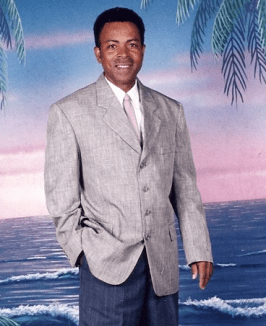
Joseph M. Combie, aka “Mike, Michael, Michael J.”, of Barren Spot, passed away on March 22. He was 71 years old.
Joseph M. Combie
He was preceded by his father, Joseph L. Combie; brother, Christopher Combie; niece, Eugenia Brown; aunts, Marie Paul (Philo), Mary Cadette (Coletta), Marie Mitchell (Angela); brother-in-law, Larry Brown; sister-in-law, Joy Combie
He is survived by his spouse, Marcella Combie; mother, Lucia Combie; sisters, Alena Edwin (Ann), Agnita Brown (Merlin), Marie Holmes, Jen Combie; brothers, Simon Combie, Robert Combie, Saturminus Combie, Oswald Combie; nieces, Christina & Paige Combie, Ebonie Holmes-Samuel, Shanee Henry-Hull & Ashley Henry; nephews, Brandon, Matthew & Dr. Christopher Combie, Kelvin Holmes, Christopher Brown, Oral Henry; aunts, Joan Medard (June), Mary Loius (Iricia), Mary Stephen (Yola), Camilla Haynes; uncle, Matthew Saltibus (Sabbath); brothers-in-law, Bernard Popo, Christopher Popo, Kelvin Holmes, Sr.; sister-in-law, Monica C. Augustin, Dr. Valerie Combie, Eliza (Liz) Combie; godchildren, Shelsa Marcel, Mora Marcel, Michelle Warican, Christopher Brown, Craig Williams, Sherika Alexis, Alexandra Mayapin, Josiah Clifford; special friends, Pastor Steven Marcel, Brother & Sister Edward Sam, Patrick Edwards, Alexander Charles, Felix Eastman, Jerry Jackson, Ms. Zinita DeMyers, Easton Mascal, Pastor & Sister Archibald, Brother & Sister Alexis, Pastor Jackie Kambui, Church of God Holiness Family & District, Patricia Winters, Harella Goodwin, Charlene Jones, Faculty & Staff of Church of God Holiness, The Alfred Family, Charles Family, Ms. Agata & Tony Thomas Family, Granger Family, Cornel Reed, The Valmond Family, The Warrican Family, Mark Saltibus, Duval Family, Saltibus Family, Cousin Anness & Family, Mitchell Family, Joseph Family, Alfred Family, The George’s Family, Pastor Didacius & Mary Caddette, Pastor John & Jennifer Delice; cousins and other relatives, Mark Saltibus and family, Duval Family, Francis Henry & family, The Mitchell Family, The Joseph Family; caretakers, Eugenia Francis, Sheriann Everson, Debbie Stevens; acknowledgements, to Dr. Raymond Clinton, Dr. Leslie Burton, Dr. Dante & Andre Galiber, Dr. Albert Titus, Dr. Gregory Casey, Dr. Walter Gardiner, The Staff of The St. Croix Center Specialist, The Cleveland Clinic (Hospital), all those who visited, called, and left kind messages, and to everyone who took the time to be with us and share in our grief. Your presence, whether near or far, brought us comfort and strength when we needed it most; precious friends and other relatives too numerous to mention.
Funeral service will be held on April 18 at the Church of God Holiness. Viewing begins at 9 am, with service at 10 am. Interment will be held at Kingshill Cemetery.
Funeral arrangements are entrusted to James Memorial Funeral Home, Inc.
Lucia A. Sackey of estate Mon Bijou transitioned into eternal life on March 4, 2026.She was preceded in death by her father, Louis J. Sackey, Sr.; Mother, Clementina (Clementia) Fahie-Milliner-Sackey; Brothers, Camile, Emile & Leroy Sackey; Grandchild, Kysian Nicholas.
She is survived by her daughters, Kysha M.M. Drummond & Kairstin “Kacy” Roberts; Daughter She Raised, Keema Drummond; Brothers, Lionel, Leander, Sr., Louis, Jr., & Tyrone Sackey; Sisters, Caroline Sackey-Lawrence, Louise Sackey-Johnson and Laverne Browne; Adopted Sisters, Omah Adams, Alicia Barnes, Vanessa Yarwood, & Dawn Petersen; Grandchildren, Randall Rising, Jr., Raheem, Isis, & Des’Tiny Ivy; Great Grandchildren, Ky’Lai & Ky’Nan Nicholas, & Vaeda Ivy; Granddaughter in law, Monet Lewis; Nephews, Aarol Charlemagne, Charles Wadsworth, Jr., Houston Pettway, D’Andre, D’Ante & Donnie Johnson-Sackey, Leander, Jr., LeAndre’, Leroy, II, Jahroy, Vernon Sackey, Sr.Vernon Sackey, Jr., Taheim Sackey; Nieces, Makaila Sackey-Gray, Caronique Cromwell, Amanda Sackey, Anna Sackey-Camacho, Alice Sackey, Verna Sackey and Desiree Sackey, Meagan Sackey, Khadishma Albert, Tenisha & Tyesha Sackey, Tremaine Creighton, & Dr. Carla Bastian-Knight; Cousins, Byron, Allick, Milligan, Sackey, Fahie, Milliner, Crabbe & McIntosh families; God Children, Benson Ward, Sanya Faith Joseph, Michael DeLande, & Ohdani Joseph; Special Friends, Rosie Mackay, Willis C. Todmann, Maureen Simmonds, Brenda Bastian, Suzette Bough-James, Coleen Hodge, Irma George, Gwen Pelle, Lisarose Bough, Blanca Maldonado, Paulette Edwards, & Valderia Miller; Close Family Friends, Mr. & Mrs. Clefryn DeLande & Family, Mr. & Mrs. Cornell Creighton & Family, Norma Barnes & Family, Mr. & Mrs. Okemo Felix, Halvor E. Hart, III, Thelma Christopher & Family, Andrea E, Christian & Family, Merline Felicien, Magnolia Paul, Patricia Gomes, Kenneth Henderson, Karen Blake & family, Friends from Prince Street & Whim Frederiksted, St. Joseph Class of 1973, Martin Marietta Aluminum Family, Mon Bijou Community, First Assembly of God Church Family & other family and friends too numerous to mention.
Funeral service will be held on Thursday, April 9 at First Assembly of God Church, #4 ABC Fisher & Queen Cross Street, Christiansted. Viewing will begin at 9 a.m. with service at 10 a.m. Interment will follow at Kingshill Cemetery.
Professional arrangements are entrusted to James Memorial Funeral Home, Inc.
The University of the Virgin Islands will present four outstanding student leaders—Kavone Wyatt, Micah Crawford, Micah McCants, and Ja’Herah Chelcher—as they compete in the 2026–2027 Mister and Miss UVI Ambassadorship Competition on Saturday, April 4, at 6 p.m. at the Elridge W. Blake Sports and Fitness Center on the Orville E. Kean Campus on St. Thomas.
Micah McCants
Hosted by the Student Government Association Ambassadorship Committee, this highly anticipated annual event celebrates student leadership, cultural pride, and academic excellence under the theme: “Crowned by Culture, Empowered for the World.”
The competition will feature outstanding student leaders vying for the prestigious titles of Mister and Miss UVI, serving as ambassadors of the University.
Kavone Wyatt
Three contestants—Kavone Wyatt, Micah Crawford, and Micah McCants—will compete for the title of Mister UVI, while Ja’Herah Chelcher is the sole contestant vying for the title of Miss UVI.
This year’s competition includes:
Kavone Wyatt (Contender #1) – an Applied Mathematics and Civil Engineering student whose platform, “UVI Excellence, Beyond Boundaries,” emphasizes student achievement and global impact
Micah Crawford (Contender #2) – a sophomore Social Sciences major focused on “Culture Restoration Through Education,” with aspirations in public service
Micah McCants (Contender #3) – a junior Music Education major whose platform, “Amplifying Young Black Voices Through Music,” centers on using music as a tool to uplift identity, build confidence, and create visibility for young Black creatives at UVI through performance, mentorship, and artistic collaboration
Micah Crawford
Vying for the title of Miss UVI (uncontested):
Ja’Herah Chelcher – a Biology major whose platform, “A Crown Creates: Where Creativity Becomes Community,” promotes innovation and community engagement
Throughout the competition, contestants will be evaluated on multiple categories including presentation, talent, cultural expression, intellect, and ambassadorial presence. The selected Mister and Miss UVI will represent the University at official functions, community engagements, and regional events throughout their reign.
“This competition reflects the very best of UVI—our students’ intellect, creativity, leadership, and deep connection to Caribbean culture,” said Jelani Smalls, Director of Student Life and Engagement. “Our ambassadors play a vital role in representing the University locally and globally.”
Ja’Herah Chelcher
Tickets are available in advance for $10 for students and $15 for faculty and staff with valid identification. General admission tickets are $20. Tickets may be purchased at the UVI Bookstore, the Student Activities Office, or at the door.
Tickets purchased at the door are $15 for students and $20 for faculty and staff with identification, and $25 for the general public.
The event is open to the University community and the public. Attendees can expect an evening of dynamic performances, inspiring platforms, and a celebration of Virgin Islands culture and excellence.







 Open to children ages 5 to 15, this community event promotes health, fitness and fun through a three-part race consisting of a swim, bike, and run. Participants may compete individually or form teams of two or three, allowing each child to complete one or more segments of the triathlon.
Event-day registration begins at 7 a.m., with the first race starting promptly at 8 a.m.
Race Distances by Age Group:
Open to children ages 5 to 15, this community event promotes health, fitness and fun through a three-part race consisting of a swim, bike, and run. Participants may compete individually or form teams of two or three, allowing each child to complete one or more segments of the triathlon.
Event-day registration begins at 7 a.m., with the first race starting promptly at 8 a.m.
Race Distances by Age Group: