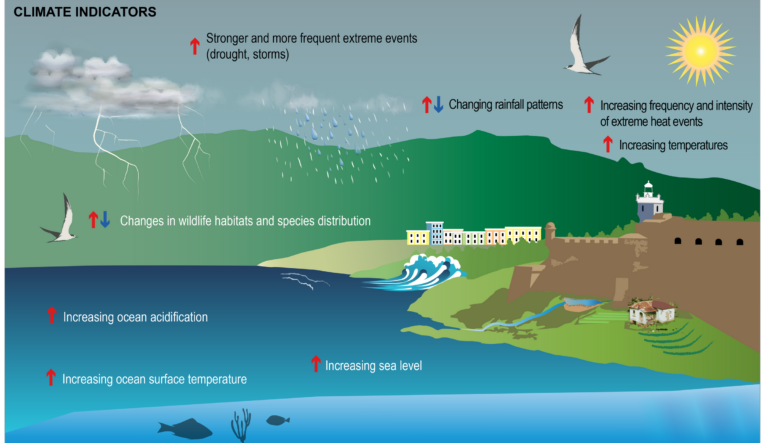
Graphic showing possible effects of climate change in the Caribbean. (Photo courtesy of the National Climate Assessment Website (US Caribbean Chapter)
The Caribbean Climate Network has been supporting the organization of events along with other climate-related initiatives over the past years. During October, community members have been gathering in various Caribbean nations as part of “Power Up, a Global Day of Action” calling for a renewable energy revolution. As fossil fuel companies publish another round of billion-dollar profits, people across the globe took to the streets to spotlight the industry’s greed and reclaim the money and power to fund a just future powered by the sun and the wind.
The leading team of Haiti Climate Network held an activity in Port-Au-Prince where 60 young people received training over a two-day period on solar light installations. Together, they installed solar streetlights in an area that was previously dark and unsafe to traverse at night. Haiti Climate Network is ensuring safer communities through access to sustainable electricity.
In San Fernando, the Trinidad and Tobago Climate Network held an art and writing exhibition around the theme of “Perspectives of Trinidad and Tobago on the Just Transition.” This exhibition of pieces by the people of Trinidad and Tobago aimed to explore the diverse viewpoints and creative expressions of artists and writers in relation to the urgent issue of climate change and the concept of a just transition. An anthology will be published featuring the artwork and writings.
In Guyana, participants engaged in a panel discussion and exhibition organized by Climate Network Guyana. Speakers shared insights on Guyana’s green shift, highlighting renewable energy challenges, opportunities, and what a just transition looks like for Guyanese citizens. Innovative projects and initiatives of organizations leading the charge for renewable energy were on display for attendees to explore.
Jamaican community leaders are powering up renewable energy for schools. Plakortis and Guardians of the Green launched a mural and environmental awareness corner at two primary schools where they continue to engage students and teachers on the importance of switching from fossil fuels, and call for community leaders to invest in renewable energy solutions for schools and other public buildings.
Additional actions have been planned in the Dominican Republic, Grenada and Puerto Rico, where people joined together to call for just and safe renewable energy for all.
The Caribbean Climate Network has been supporting the organization of these events along with other climate-related initiatives over the past years. Power Up is an initiative led by 350 organizations and partners all around the world. The Caribbean Climate Network is joining forces with local movements, groups and communities to spotlight people power and renewable solutions as tools of resistance in the fight against the climate-wrecking fossil fuel industry.
A federal disaster declaration could bring $5 million in federal funds to help deal with the St. Croix water crisis, Government House said Monday during its weekly press briefing. The news comes as the V.I. Health Department reported that of 118 children tested so far for lead exposure, four have come back positive, pending definitive confirmation.
Gov. Albert Bryan Jr. has requested the approval of a federal disaster declaration from President Joe Biden due to lead found in the water supply on St. Croix, Government House Communications Director Richard Motta Jr. said, while offering additional updates on the USVI government’s response to the crisis, including information about testing school-aged children for potential exposure to lead.
Motta explained that, if approved, the disaster declaration will provide the territory with resources to continue addressing and resolving the water issues.
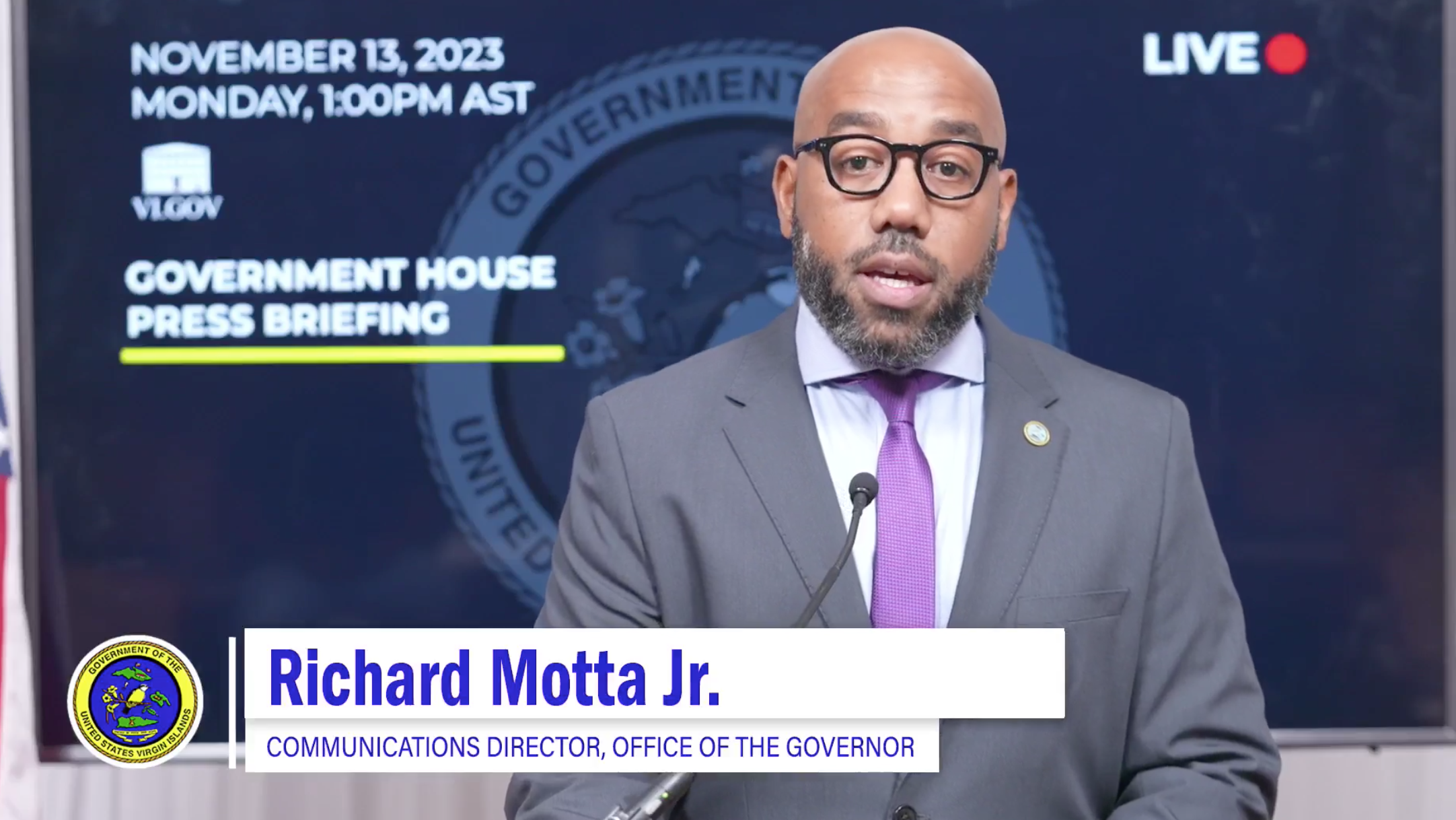
Richard Motta Jr., Government House director of communications, speaks during the weekly briefing on Monday afternoon. (Photo courtesy of Facebook live stream)
“Gov. Albert Bryan Jr. has formally requested an emergency declaration from President Biden in response to this incident,” said Motta. “This action follows the Governor’s declaration of a local State of Emergency on Oct. 30, 2023, in response to hazardous levels of lead and copper detected in the water supply of St. Croix,” he continued. “Gov. Bryan’s request to President Biden for an emergency declaration is crucial to garner federal support to assist the territory in managing this unprecedented situation,” Motta added.
“If approved, the declaration will cover a 90-day period beginning Nov. 15 through Feb. 13, 2024, and will provide up to an additional $5 million in resources to the territory. This support is vital for assisting in implementing immediate solutions to ensure clean and safe water for all St. Croix residents and restore normalcy in the wake of this environmental challenge,” Motta stated.
“As of [Monday] morning, Region Two verified the receipt of the emergency declaration request and stated that it is being vetted through the appropriate channels on its way to the White House,” Jaschen explained. “VITEMA and FEMA will continue to assess and develop all of the efforts and work in conjunction to provide timely assistance.”
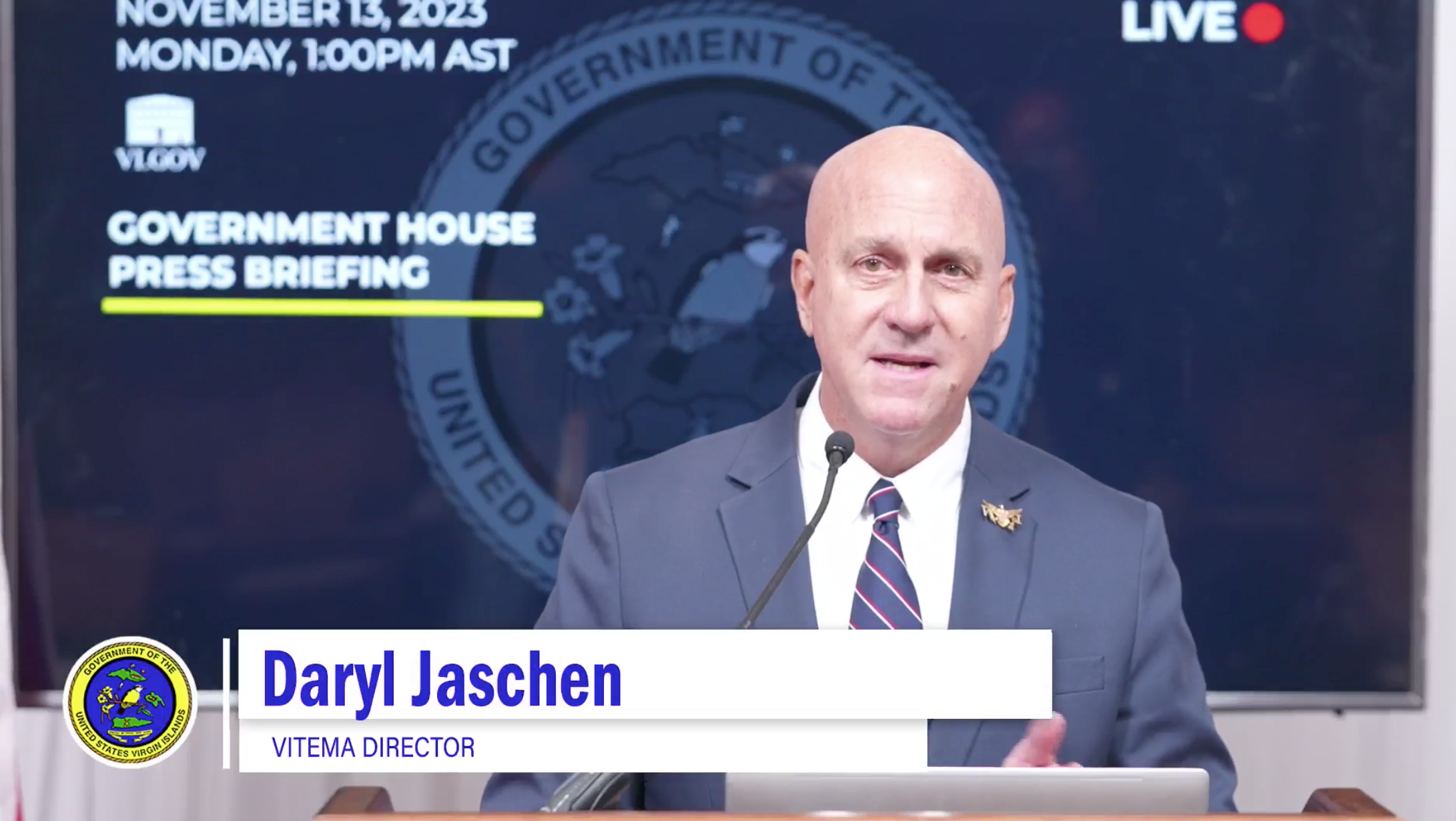
VITEMA Director Daryl Jaschen speaks during Monday’s press briefing. (Photo courtesy of Facebook live stream)
Lead contamination was initially discovered by the Environmental Protection Agency and reported on Oct. 13, after tests conducted at the end of September confirmed elevated lead levels. Since finding lead, Bryan has implemented several measures, including capping bottled water prices, activating the Virgin Islands National Guard, and mobilizing VITEMA to respond to the crisis. Additional water tests have regularly occurred since mid-October, and plans are in place to expand blood tests for school-aged children to protect the safety and health of the community.
Motta added that plans are also in place to issue vouchers to residents for clean drinking water.
“These efforts underscore the territory’s commitment to addressing this crisis comprehensively and ensuring the health and safety of its citizens,” Motta noted.
Health Department Update
Dr. Esther Ellis, Territorial Epidemiologist with the Virgin Islands Health Department, provided an update regarding blood tests for school-aged children to check for any sign of contamination.
“This week, the V.I. Department of Health’s Epidemiology and Laboratory Division are continuing the pediatric testing for children zero to six years old at two sites per day,” Ellis said.
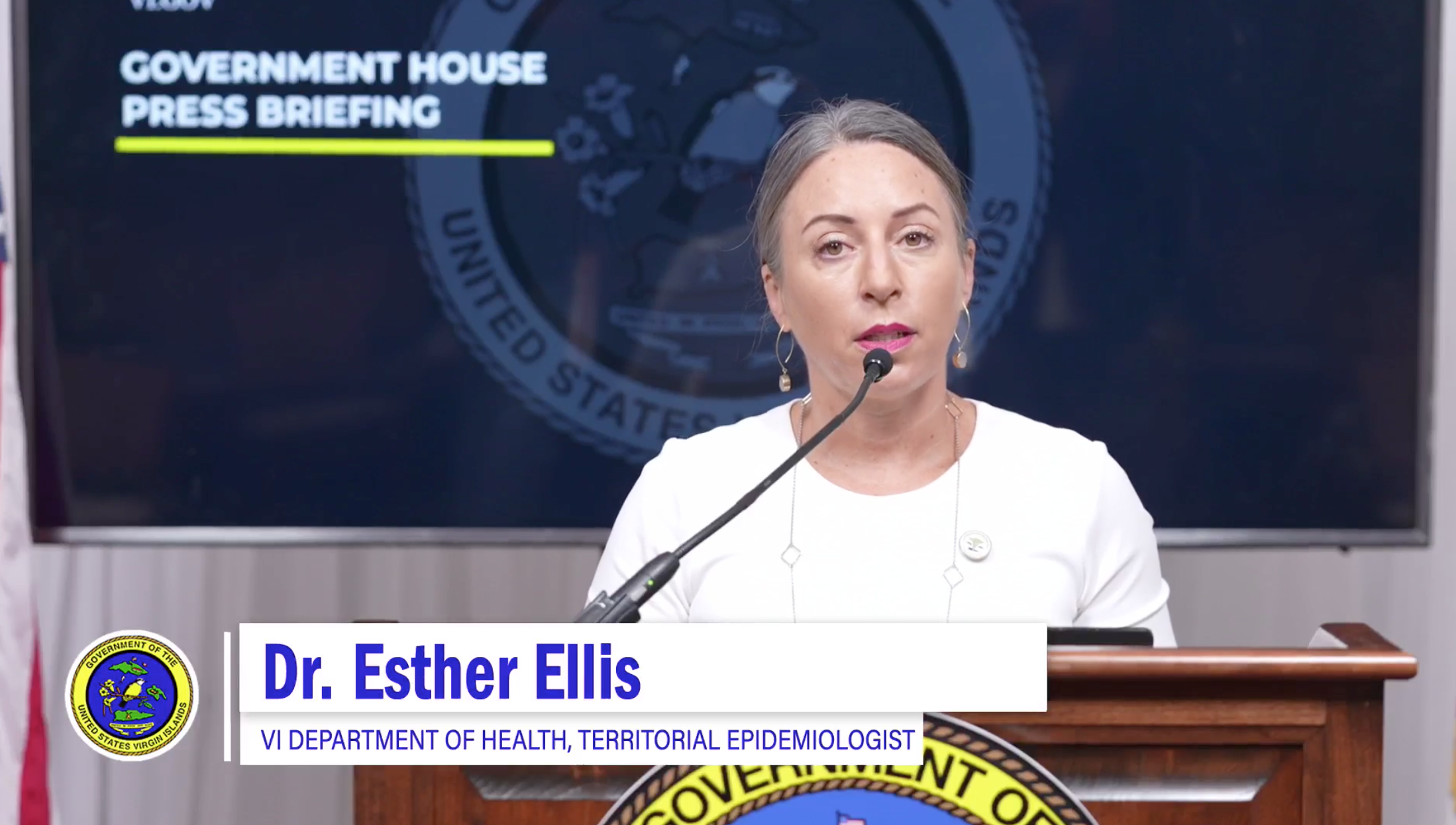
Dr. Esther Ellis, Territorial Epidemiologist with the V.I. Health Department, shared information pertaining to blood tests to check for lead exposure among children. (Photo courtesy of Facebook livestream)
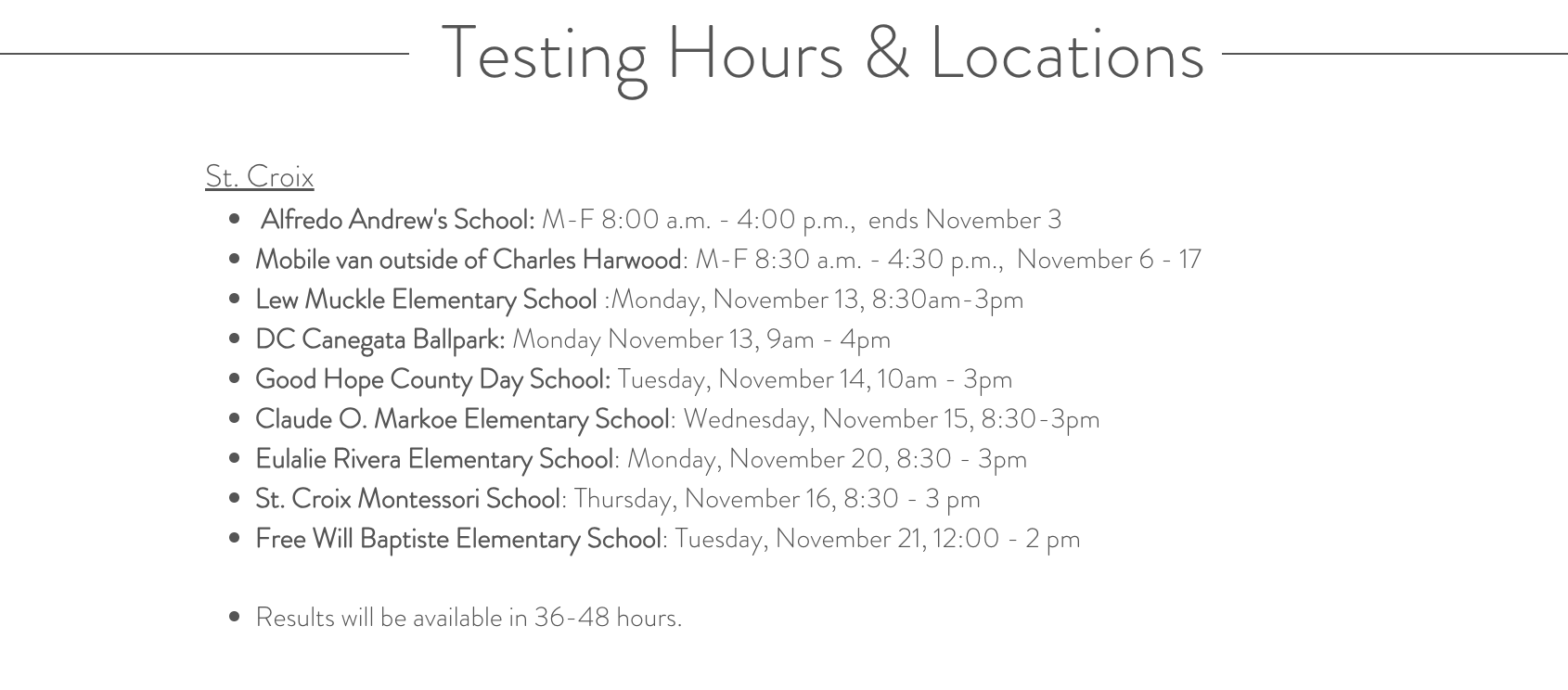
Testing will be completed at various locations across St. Croix, including on-site at school campuses. Information about blood tests for lead exposure can be found on the Health Department’s website here.
“The lead test will be provided at no cost to the child, and parental consent is required upon registration before the test can be scheduled,” Ellis added.
Exposure to lead can have serious health consequences, and Ellis encouraged parents to schedule their children for a test. As of Monday, 118 children had been tested, with four positive results for lead exposure, pending definitive confirmation. The department has requested the aid of the Centers for Disease Control and Prevention, and several individuals, including epidemiologists and laboratorians, have arrived in the USVI to offer support.
“A blood test is the best way to find out if a child has lead poisoning,” Ellis explained. “A child with lead poisoning may not have visible signs or symptoms. Many children who have lead poisoning look and act healthy. Children under the age of six are still developing rapidly, and lead exposure can adversely affect a child’s brain, nervous system, growth, development, and overall behavior,” she cautioned.
Testing hours and locations for blood tests to detect lead exposure. More info is available at the VI Department of Health website. (Photo courtesy of V.I. Health Department website)
Individuals with concerns related to lead exposure can contact the Poison Control Center at 1-800-222-1222. For information regarding testing, Health Department hotlines can be reached Monday-Friday from 8:30 a.m. to 5 p.m. at 1-340-712-6299 and 340-776-1519.
Upcoming Water Quality Virtual Information Session
Finally, Communications Director Motta invited the public to join a virtual online meeting on Tuesday at 5:30 p.m. to learn more about St. Croix’s water quality situation.
“In this moderated session, we will delve into the recent findings of the elevated lead and copper in certain areas of St. Croix,” Motta said. “Our esteemed guests will provide in-depth insights and updates on this urgent matter.”
Drought monitor officials help set up equipment to measure precipitation in Bordeaux on St. Thomas. Someone vandalized the equipment Monday morning. (Photo by Christina Chanes)
Whoever ripped wires out of a moisture-monitoring device in Bordeaux early Monday did more than damage federal equipment. The vandalism may have put St. Thomas agriculture at risk.
It took years to get federal agencies to install the precipitation gauge that helps report drought conditions and rainfall patterns used by farmers and Washington, D.C., policymakers, said Christina Chanes, a research specialist at UVI and volunteer drought coordinator. The device is one of just five in the territory and an important tool in reporting conditions used to get federal aid.
“We need to have data to show short- or long-term drought levels,” Chanes said. “I literally wanted to cry when I got the call at 7:45 this morning that it had been damaged.”
Chanes said she and another volunteer were able to reassemble the equipment but wouldn’t know for sure if it was working again until Tuesday morning.
Despite seasonal rains, the Virgin Islands’ protracted drought has punished the agriculture sector. Without data collected by the Bordeaux device and similar equipment, Gov. Albert Bryan Jr. and federal counterparts can’t make declarations of drought, she said.
“This particular piece of equipment is what is used by the government to tell us whether or not the rain is in fact not happening. It’s required that we register or log the data daily,” Chanes said. “It’s done between 6 a.m. and 9 a.m. every day. So it’s huge to be able to have this equipment here but it’s even more important to maintain it.”
Eldridge Thomas, president and founding member of the non-profit We Grow Food, pleaded for Bryan to release $10 million he said was promised for agriculture. The money could be used to build catchments that would save millions of gallons of water from rolling into the sea.
“We need to build storage facilities and store water to use when we have our dry period,” Thomas said. “We need action from like yesterday.”
Chanes and other volunteers had to supply 12 different locations for the monitoring before U.S. Drought Monitors, the National Oceanic and Atmospheric Administration, and other federal agencies would agree to provide the equipment. It was finally installed earlier this year.
“This station in Bordeaux was really hard to get. I’d been working on it since 2018,” she said. “The majority of the farmland that’s allocated by the Department of Agriculture in the Virgin Islands is in Bordeaux. And so without that support we don’t really know what the drought conditions are.”
Chanes said the Virgin Islands Police Department inspected the vandalism. She urged people to leave the monitoring equipment alone.
“Barktober Fest” sign. (V.I. Source photo by Diana Dias)
The St. Croix Animal Welfare Center held “Barktober Fest” at Leatherback Brewing Company on Sunday.
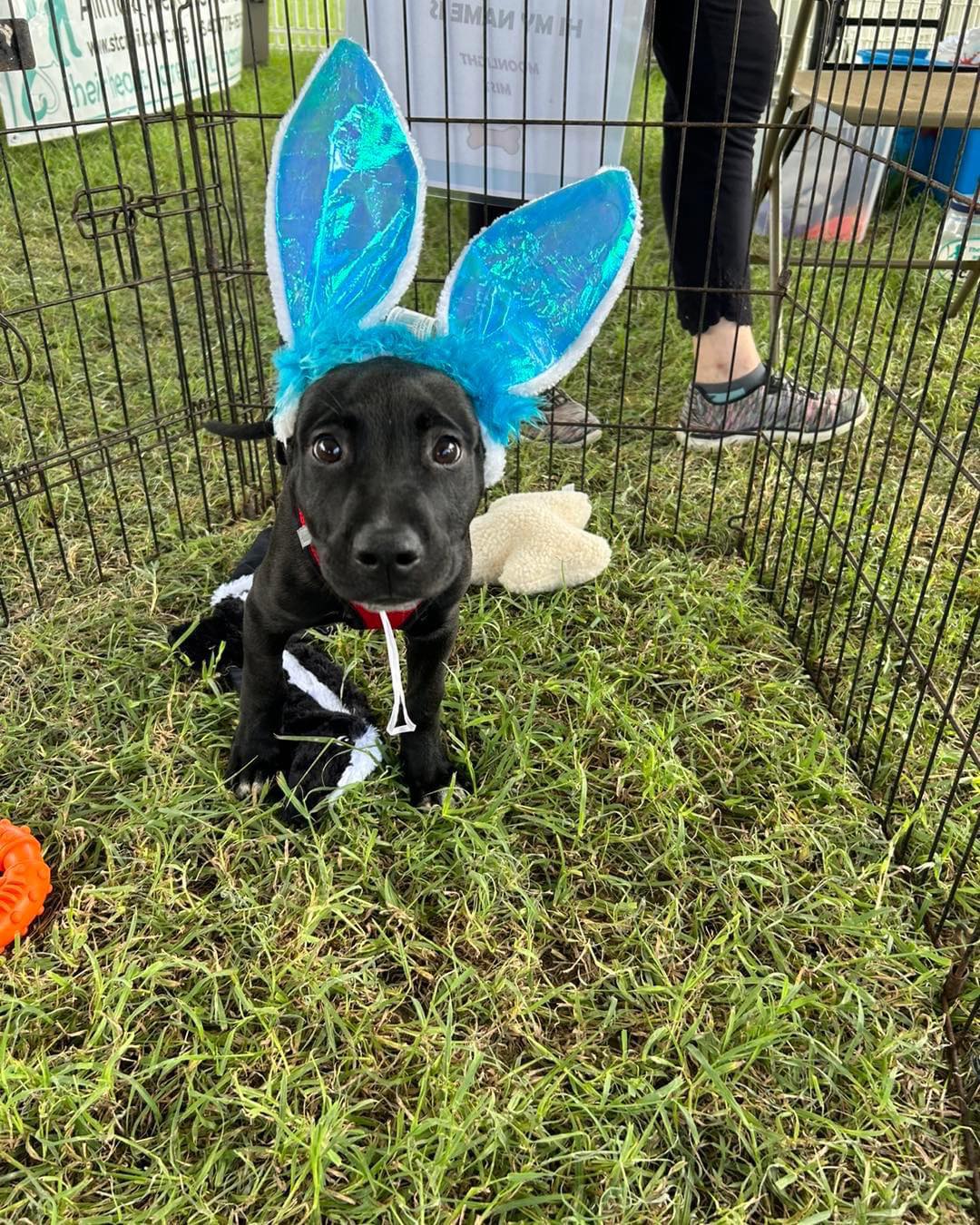
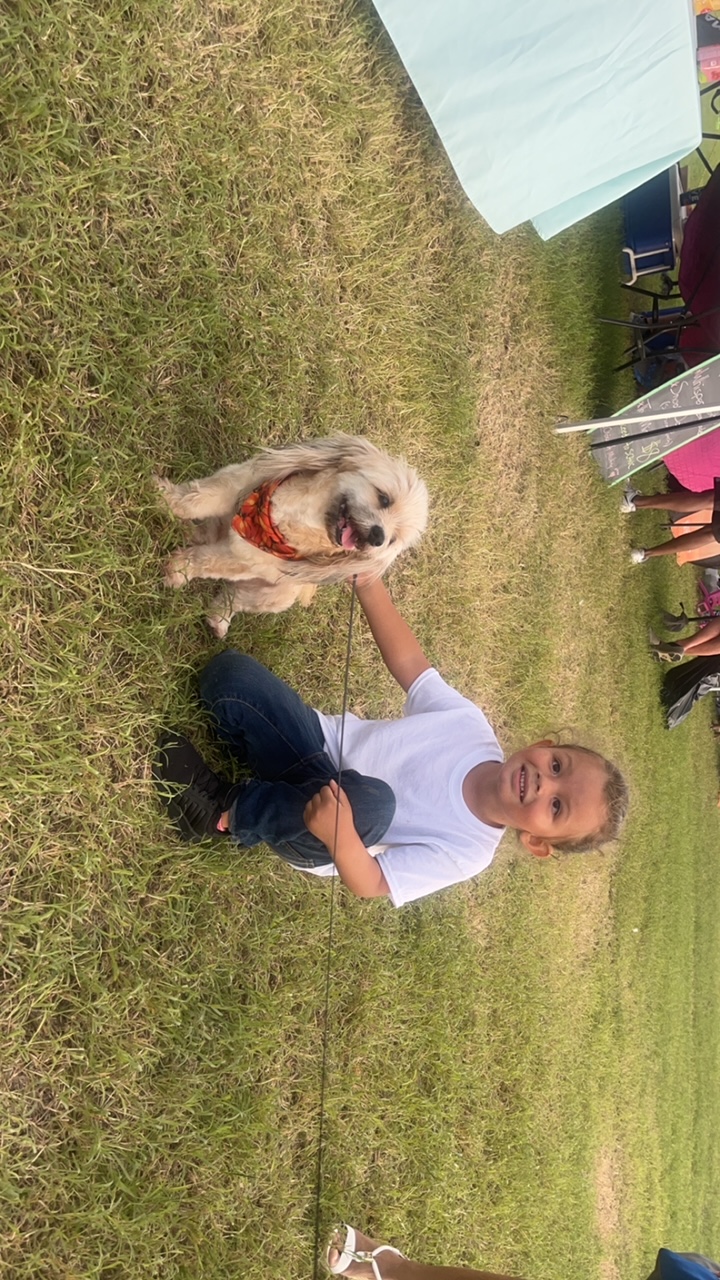
Cute dog looking to be adopted at the “Barktober Fest.” (Photo provided by Evelyne Pena Feliz)
The stars of the event were 20 pets looking for homes from those who attended the event. There were performances from DJ Chubby and DJ Genius, food and craft vendors, trick-or-treating, and a puppy costume parade. Families and other patrons enjoyed an afternoon of fun activities.
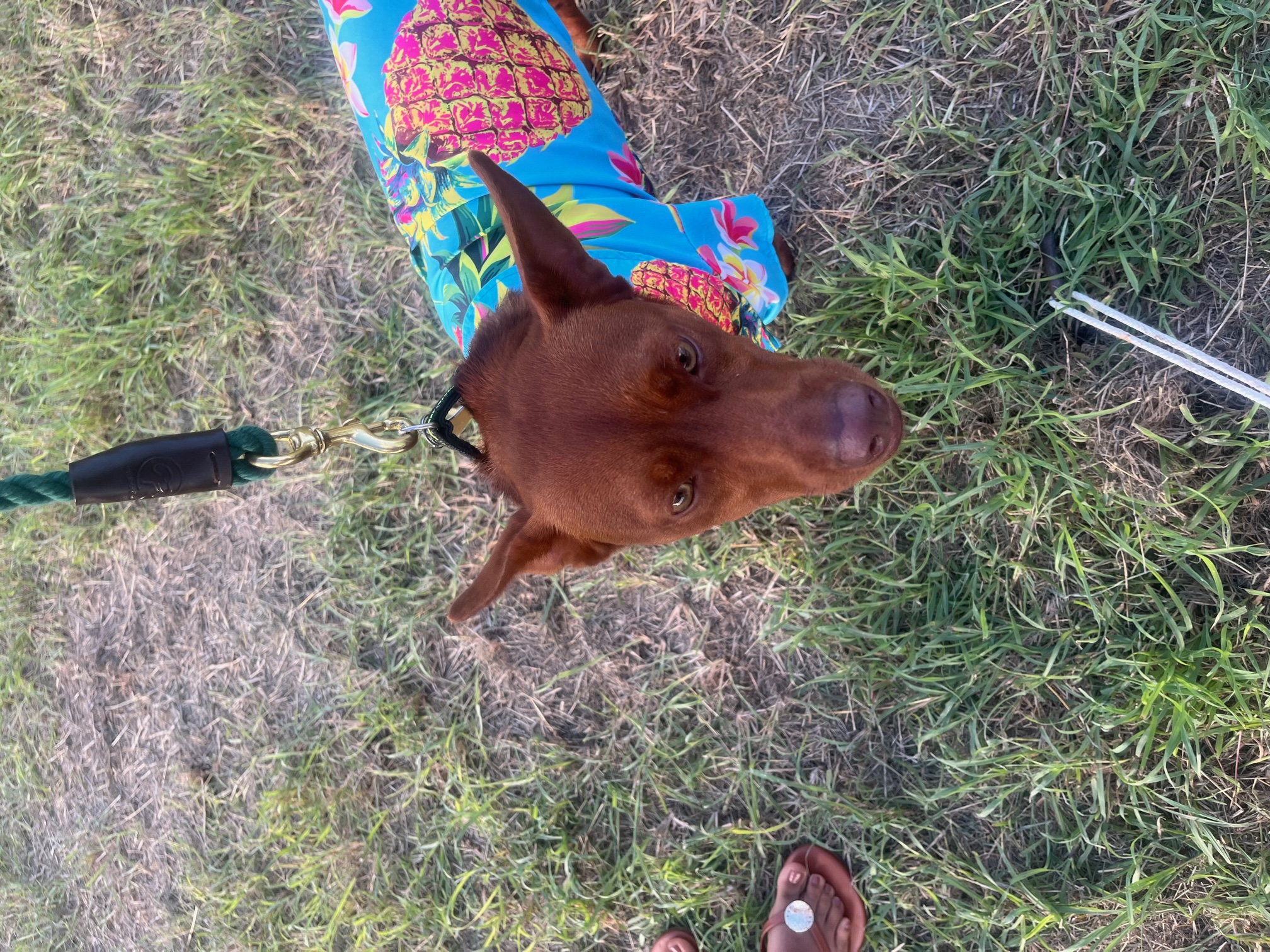
Cooper posing with his shirt at “Barktober Fest.” (V.I. Source photo by Diana Dias)
Board President Emily Weston also gave a tour of the new plans for “Mission Coakley: SOS.” After Hurricane Maria in 2017 destroyed the previous shelter located in Estate Clifton Hill for the past 50 years, while planning the rebuild, they discovered the property was never zoned correctly for an animal shelter. Given this information, they switched gears and purchased the Castle Coakley Great-House property.
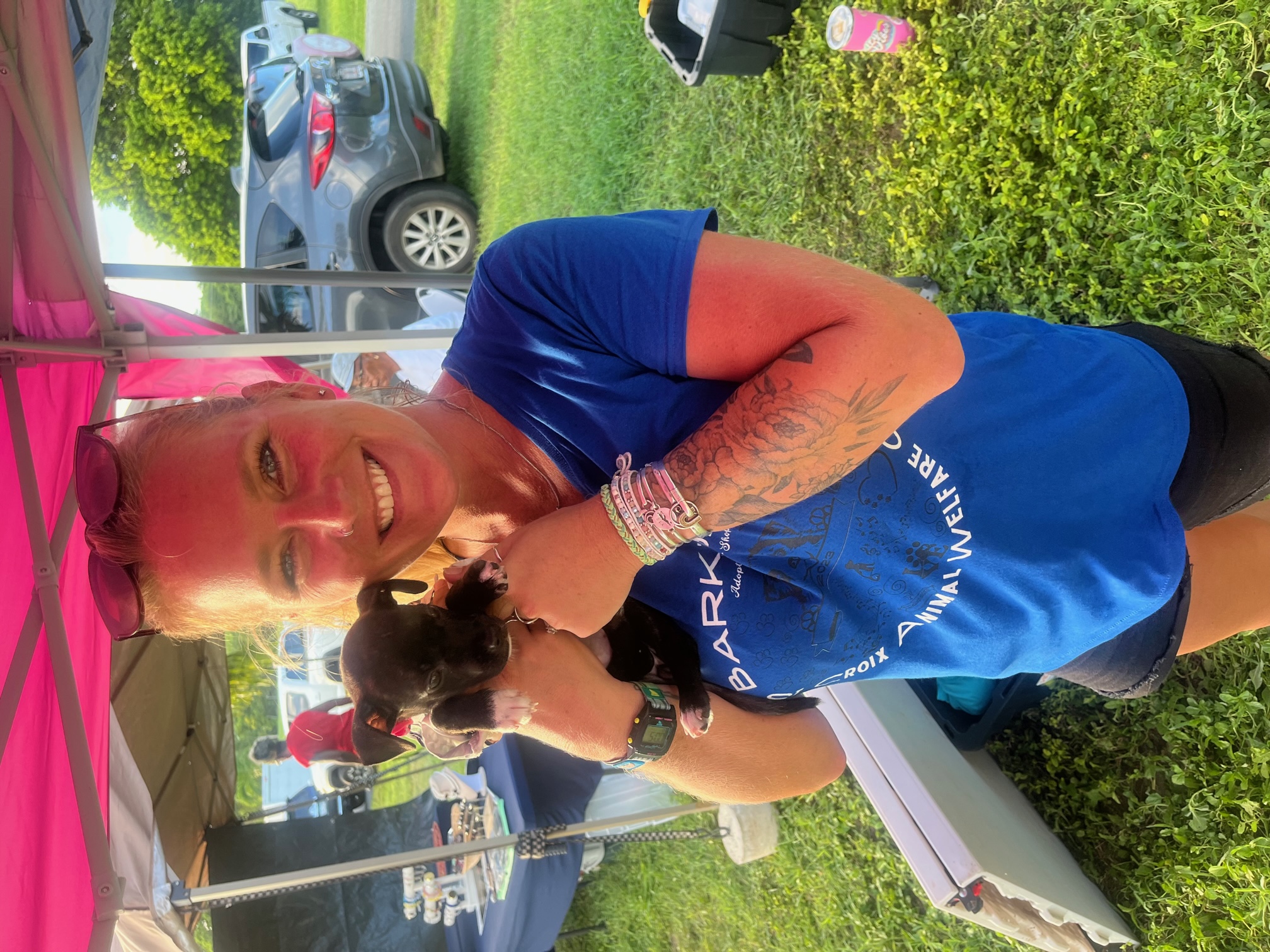
Monkey and her owner Amanda saying cheese. (V.I. Source photo by Diana Dias)
The proceeds from the “Barktober Fest” will go towards the animal shelter and their continued efforts. For those interested in adopting a pet or anyone who would like to make a donation to the St. Croix Animal Welfare Center, you can visit their website at stcroixawc.org.
Isaiah Evans takes a quick picture with adopted pet Gigi. (V.I. Source photo by Diana Dias)
What did some dewy-eyed recent college grad from Milwaukee and her stateside history professor husband know about island conservation in the Eastern Caribbean?
Maybe not that much when they arrived in St. Thomas on a 70-foot motor yacht in 1967.
But Edward and Judith Towle would spend the rest of their lives leading environmental efforts in the region. As founders and leaders of the non-profit Island Resources Foundation, they met several generations of the Who’s Who of the Eastern Caribbean and worked with just about everyone who cared about preservation in the region.
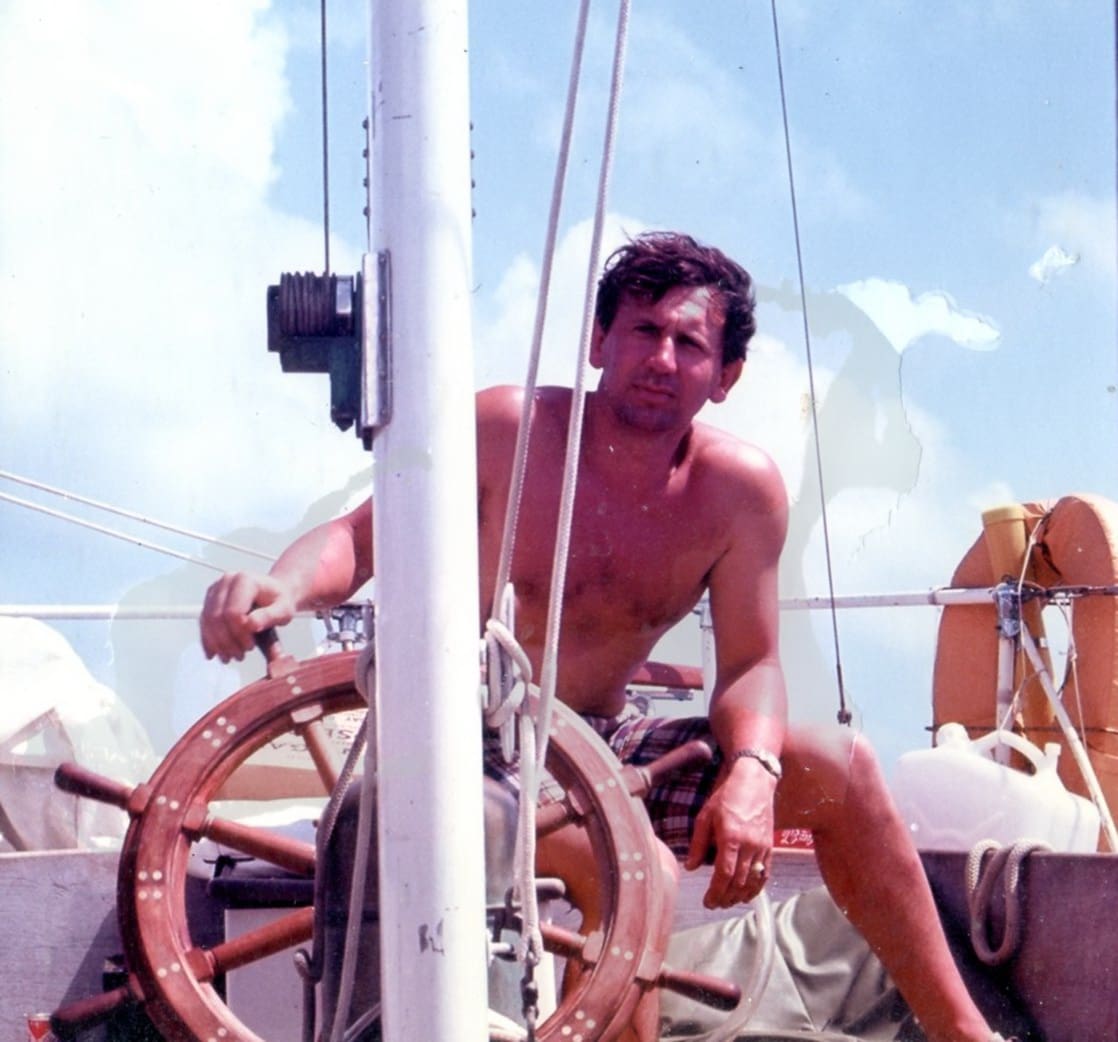
Their introduction to the Caribbean had come when Ed Towle visited Anegada on assignment for the Smithsonian Institute. On a layover in St. Thomas, a chance encounter led to a job offer at the then College of the Virgin Islands as director of its research center.
In 1967, Edward Towle steered his life and academic career for the Virgin Islands and soon took the helm of fledging environmental efforts in the Caribbean. (Photo courtesy Judith Towle)
Soon, Ed was elected president of the fledgling Caribbean Conservation Association, and Judith, a history major who had spent two years working in Congress, went to work for the V.I. Department of Conservation and Cultural Affairs (the forerunner to the Department of Planning and Natural Resources). A few years later, they founded the Island Resources Foundation.
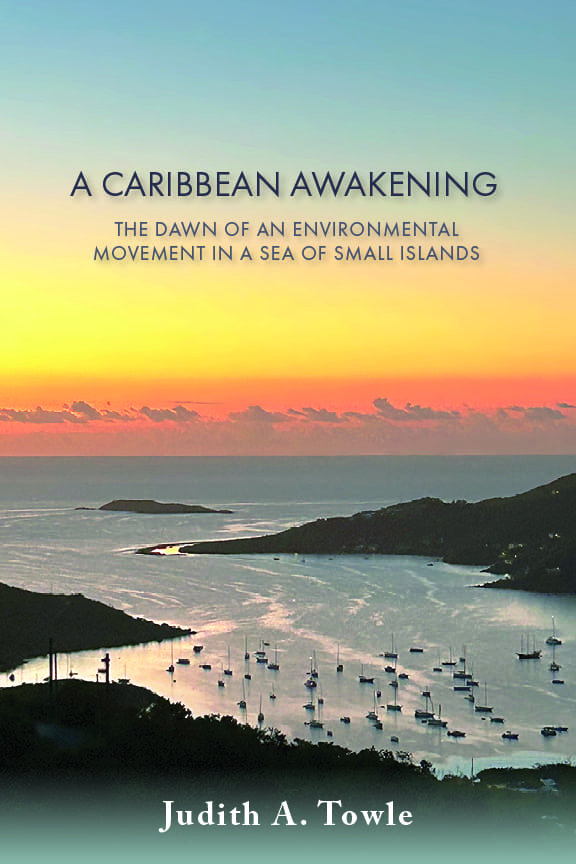
Ed died in 2006. Now Judith has just released the book he always meant to write, albeit with her own expanded take on the subject: “A Caribbean Awakening – the Dawn of an Environmental Movement in a Sea of Small Islands.”
Judith Towle’s new book on the stirrings of ecology in the Caribbean includes a brief history of the National Park on St. John and uses a photo of sunrise over the island’s Coral Bay to illustrate the title “A Caribbean Awakening.” (Photo by Caroline Rogers)
The book makes a wide sweep across the Caribbean and the northern Atlantic but concentrates primarily on the Leeward Islands, especially, though not exclusively, those with English-speaking communities. The author highlights Ed’s heroes in the environmental movement and adds a lot of her own research for context and background.
Of special interest to Virgin Islands readers may be Towle’s retelling of the controversial transformation of nearly two-thirds of St. John into a National Park.
The park was established in 1956 – well before the Towles arrived on the scene, and does not fit into their legacy. But the author has included its history as part of a focus on the growth of park systems and nature preserves throughout the region.
Not long out of college, Judith Towle left a promising position as a congressional aide to Sen. Frank Church to accompany her husband on what became a lifetime of devotion to conservation in the Caribbean region. (Photo courtesy Judith Towle)
In general, she heralds the creation of parks as a manifestation of serious conservation. However, in revealing details she found in the archives surrounding the National Park on St. John, she also helps explain the bitter aftertaste many island residents retain 70 years later.
Originally consisting of 5,086 acres, the St. John park has grown over the years to 7,259 land acreage plus 5,650 acres of undersea or submerged land, according to the Park Service.
Although the super-wealthy developer and philanthropist Laurance Rockefeller is widely recognized as the central figure in the story, Towle makes it clear others played key roles.
To begin with, the idea of the park predates Rockefeller’s public involvement by decades. According to Towle, an official with the U.S. Park Service, Conrad Wirth, “first recognized the potential” for a park on St. John in 1931 when he had oversight for reviewing possible park sites, and he asked then for an internal evaluation of the island.
In 1938, another park official, Harold Huber, proposed that Reef Bay, St. John be turned into a national park and then, in 1939, provided a report calling for the island to be a park.
Both Huber and Wirth were with the NPS in the 1950s when the talk of a park got serious. Wirth, in fact, was head of it, having been promoted to director of the NPS in 1951 and retaining that position until 1964. Huber, who updated his St. John report in the 1950s, became the first superintendent of the St. John National Park in 1957, the year after it was created.
Another prominent figure in the tale, according to Towle, is the stateside real estate developer Frank Stick, who previously had promoted establishing a park in the Outer Banks off North Carolina and who helped secure land donations for what became the first U.S. national seashore recreational area at Cape Hatteras.
While Rockefeller was acquiring land on St. John as the site for the Caneel Bay resort, Stick bought property at Lameshur Bay with ideas for a development that he later backed away from. Meanwhile, Towle says, he secured purchase options for land destined to become part of the National Park and turned those options over to Rockefeller’s foundation, the Jackson Hole Preserve Inc.
Rockefeller, Stick and just 12 other landowners provided the land for the initial park. Few of them lived on the island. Towle cites records at the Rockefeller Archive Center that say 80 percent of the property for the original park came from absentee landowners, including some St. Thomas residents.
There were only about 750 people living on St. John at the time, many of them subsistence farmers and fishers. Some had agreements with absentee landlords to use plots of land for growing provisions, pasturing animals, burning charcoal, and/or for access to shorelines for fishing. The Park Service would place restrictions on such activities, Towle said, unsurprisingly raising concerns and creating resentment.
While many had at first welcomed the park, Towle recounts an early congressional attempt to expand its boundaries that met with strong local opposition. Today, the relationship between the Park Service and ancestral island residents remains complicated, if not tenuous.
“Creating a protected area is a choice,” Towle said in an interview with the Source. “Not everybody’s going to be happy about it.”
Rockefeller may have a mixed reputation in the U.S. Virgin Islands, but Towle said he is “revered” in the British Virgin Islands, where he was also instrumental in establishing a park system.
There could be various reasons for the difference, including that the BVI parks are “not as intrusive” as the single St. John entity. But the overriding factor, Towle said, is that the BVI parks are just that, British Virgin Islands preserves, not part of a National Park Service.
The St. John National Park is more of an anomaly than a model for preservation efforts in the Caribbean, she said.
The modern environmental movement coincided with social and political changes in the region. In the latter half of the 20th century, “There were two tracts running together,” Towle said. Many islands were moving from agricultural economies to service industries and from colonial ties to independence.
“These new governments were faced with controlling their own resources,” she said. At first, “the environment was not even on their agenda. . . It was not so much opposition (to conservation) as it was benign neglect.”
That has changed.
Island Resources Foundation was one of the first non-governmental groups concerned with ecology in the region. By the time Judith Towle and colleagues wrapped it up and closed it down in 2016 (10 years after Ed Towle’s death,) she said, “There was almost no need for it” anymore.
That’s because “more and more Caribbean citizens” are both aware and actively engaged in conservation efforts, Towle said.
The movement is “a fundamental survival issue,” she said. “I think the environment is an existential issue.” Humanity’s future depends on how well people deal with the ecosystem.
Print editions of “A Caribbean Awakening” are available now on Amazon. Towle said she is also trying to arrange for a digital version as well as to offer print copies through outlets throughout the Caribbean.
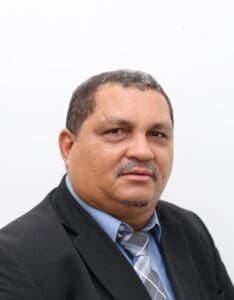
Genealogist Timothy Hodge (Photo courtesy of Caribbean Genealogy Library)
This weekend at the Caribbean Genealogy Library on St. Thomas, an eager audience met in person and via Zoom to learn from Timothy Hodge, president of the Anguilla Genealogical Society, about conducting family history research if your roots are connected to Anguilla, the Caribbean Genealogy Library announced Monday.
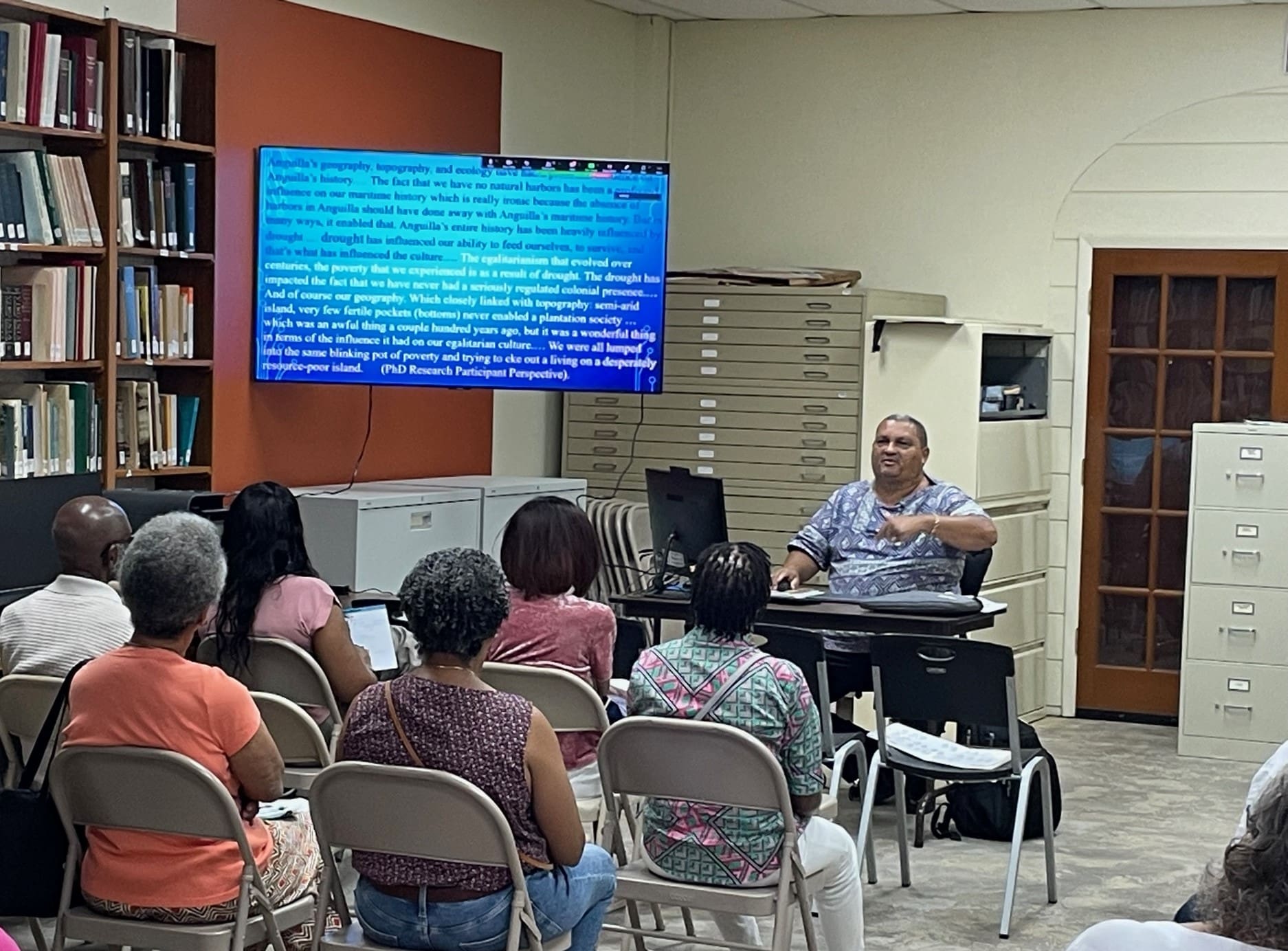
Before the workshop began, audience members chatted with each other, exchanging names of the relatives and ancestors they had in Anguilla and noting where they were in the genealogy research. Hodge began the workshop by describing Anguilla’s location in the Caribbean, giving a brief introduction of its history and how that history influenced migration away from and back to Anguilla over centuries, according to the press release.
Hodge listed the most common last names in Anguilla historically, including Richardson, Gumbs, Hodge, Connor, Carty, Webster, Fleming, Brooks, Hughes, Rogers, Lake, Harrigan, Smith, Bryan, and Romney. He added, “All these names are found in the Virgin Islands.”
Hodge then covered the value of genealogy, methods for conducting research, the difficulties in accessing records in Anguilla and other issues that people can expect to come across as they start or continue their family history research specific to the island, the press release stated.
He shared some personal stories and experiences related to his research. Hodge noted that “a desire to know my ancestors and how connected my family lines are to others” drove the desire to conduct family history research. He noted that he has 12 generations included in his family tree so far, going back to the first generation of European settlers in Anguilla. Hodge added as encouragement that family history research “involves perseverance, detective skills, and some luck; and is very rewarding.”
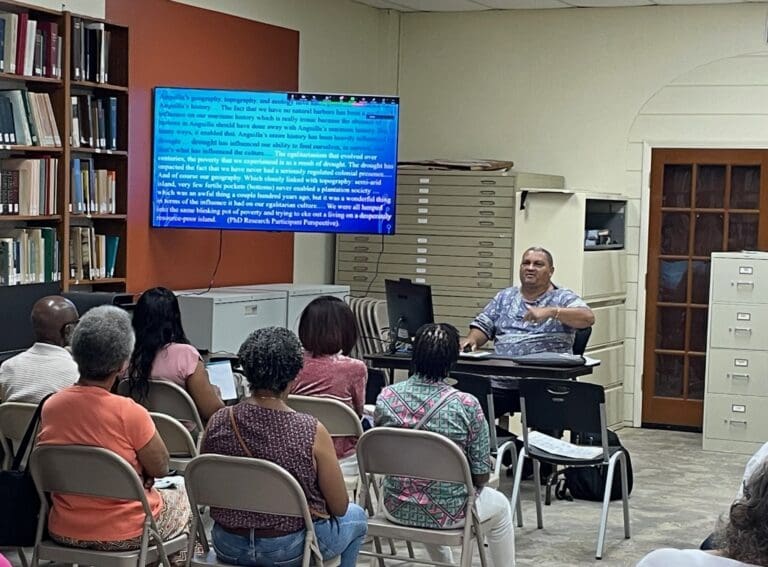
The Caribbean Genealogy Library, when announcing the workshop, encouraged people to bring their own Anguilla family research to share, and where they sought assistance to provide as much information as they could. Those wanting to participate shared information with Hodge, who then used Anguilla records available at the Caribbean Genealogy Library through their affiliation with FamilySearch to conduct searches. This segment was interactive and engaging as audience members, in person and online, provided names of people they were looking for. Hodge was able to locate several people in the records. This really got people excited to conduct further research themselves, the release stated.
Timothy Hodge presents at Caribbean Genealogy Library. (Photo courtesy of Caribbean Genealogy Library)
The records that Hodge accessed at the Caribbean Genealogy Library from FamilySearch related to Anguilla included Parish Records for the Anglican Church, Civil Registrations, Parish Registers, and others. Dates ranged from 1826-1975, it said.
Hodge said of the connection between the Virgin Islands and Anguilla, “These places are very connected historically. Anguillan families have existed in the Virgin Islands for generations and have made great contributions to the territory, and those returning to Anguilla have also made great contributions there.”
It is this migration history that Hodge used to introduce the Great Anguilla Family Tree Project. The project was launched in 2021 and was the idea of fellow Anguillan and genealogist Ronald Harrigan. The project aims to gather information about Anguilla’s families, including those on the island and those who migrated elsewhere. Hodge noted that Tim Duncan, Timothy Lake, and Aliyah Boston, among other well-known Virgin Islanders, have family ties to Anguilla, according to the release.
The Anguilla Family History Workshop is being offered again on Nov. 14 at 5:45 p.m. at the Caribbean Genealogy Library. The workshop will last around two hours. Attendance is $5 per person for non-library members and free for current library members. Virtual attendance via Zoom is also an option. Contact the library at caribgenlibrary@gmail.com for information on attending virtually. The Caribbean Genealogy Library is in Al Cohens Plaza, at the top of Raphune Hill, St. Thomas, it said.
About the Presenter:
Timothy Hodge has a B.A. (Summa Cum Laude) in Business Administration (Finance) from the University of the Virgin Islands (UVI), an MBA from the University of The West Indies, a Graduate Certificate in Creativity Studies from the State University of New York, College at Buffalo, and a Ph.D. in Creative Leadership for Innovation and Change from UVI. He is President of the Anguilla Genealogical Society and an executive officer of the Anguilla Gideons (bible distributors) and the Anguilla Archaeological and Historical Society. He is an award-winning poet, playwright and actor, historian, writer, church leader and genealogist. He is an instructor in UVI’s recently launched Executive MBA program.
About the Caribbean Genealogy Library:
The Caribbean Genealogy Library is a research library with a mission to identify, preserve and provide access to Caribbean genealogy, history and cultural heritage information resources for the Virgin Islands and the Caribbean. The library’s collection includes books on the Virgin Islands and Caribbean history and culture, a large funeral booklet collection, access to census and church records, and is the only FamilySearch affiliate library on St. Thomas. For more information, email the library at caribgenlibrary@gmail.com.
Kishawn Lopez, 35, of St. Croix, was charged and detained by U.S. Magistrate Judge Emile A. Henderson after being charged with possession of firearms and ammunition by a convicted felon, United States Attorney Delia L. Smith announced Monday.
According to court documents, on Nov. 8, federal law enforcement agents executed a search warrant at Lopez’s Frederiksted home. During the search, agents recovered more than 30 firearms, including multiple “ghost guns,” assault rifles, and other handguns. “Ghost guns” are assembled from firearm kits which can be purchased from various kit manufacturers or secondary retailers. “Ghost guns” are unregistered, lack serial numbers and are untraceable. During the search, agents also recovered approximately 5830 rounds of ammunition and a cache of extended magazines. In 2011, Lopez was convicted of firearm possession in federal court and was sentenced to 15 months imprisonment.
“The rate of gun violence in the Virgin Islands is unacceptable, and the proliferation of ghost guns and other illegal firearms is a main source of the problem,” said Smith. “Working in collaboration with our federal and local law enforcement partners, we are committed to taking ghost guns and other illegal firearms off the streets. Targeting firearms traffickers and those who illegally possess firearms is a priority for this office, and those who commit such crimes will be brought to justice,” she said.
Crime Stoppers V.I. offers cash rewards for information leading to the arrest of individuals responsible for past homicides on St. Thomas, St. Croix, or St. John, involvement in government corruption, manufacturing and/or distributing drugs and trafficking guns.
Sept. 23
At approximately 11:28 p.m., a citizen called 911 and reported that shots were being fired on Turpentine Run Road in the area of “Concrete” Bar. VIPD was dispatched to Turpentine Run Road for an unresponsive man lying in the roadway. Upon the unit’s arrival, an unresponsive man was observed with what appeared to be gunshot wounds about his body. Emergency Medical Technicians were on scene and stated that the male did not have any vital signs. The man was identified by next of kin as 39-year-old Archie Perry Jr.
Nov. 4
VIPD was dispatched to the area of Frenchtown and Veterans Drive intersection, St. Thomas, concerning an auto collision. Upon the officers’ arrival, 911 notified them that there was possibly a gunshot victim in one of the vehicles involved in the auto collision. The shooting victim was transported to Roy Lester Schneider Hospital.
If you have information regarding the origin of this shooting or homicide, please contact the CRIMESTOPPERS USVI hotline at 1-800-222-8477 or submit an anonymous tip using the free mobile app or online at www.P3Tips.com.
Dan Mele (Submitted photo)
81C is hosting a two-week pop-up art exhibition beginning Nov. 13 featuring artist Dan Mele. Exhibited photographs by Mele will be on view and for sale. Guests will have the opportunity to meet Dan Mele and discuss his work. On Friday, Nov. 17, Mele will be joined by Marilyn Brandt Ph.D. for a panel discussion and audience Q&A.
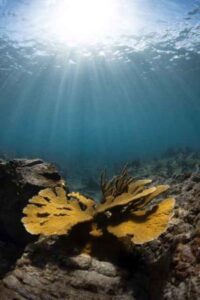
“Reefs Reimagined” examines the U.S. Virgin Islands coral reefs and a small group of dedicated scientists working to restore them. This unique blend of sci-art informs and eloquently showcases how art and science harmoniously converge, as depicted through captivating photography and film.
81C’s pop-up art events and regular gallery hours are also promoted as networking opportunities for local artists. 81C is open weekdays from noon to 8 p.m.
Artist bio:
Dan Mele is a conservation photographer/filmmaker and coral biologist at the University of the Virgin Islands and VI-EPSCoR.
Additionally, he is an Emerging League Fellow in the International League of Conservation Photographers. His work has been published in several books, magazines and news articles, and he has worked on numerous TV series and films including PBS’ “NOVA” and the Emmy-nominated film, “Hope for Corals in Crisis.” Where spoken language can cause communication roadblocks by geographic region, photography is a universal language.
‘Elkhorn’ by Dan Mele (Submitted photo)
Through his lens, Mele tells the compelling stories of those working diligently to safeguard at-risk species and vulnerable ecosystems. In an era where nature preservation often takes a back seat, Mele’s imagery is a powerful tool for fostering empathy towards the natural world and building support for scientific research.
Dr. Marilyn Brandt / bio:
Marilyn Brandt is a research associate professor of marine and environmental science at the University of the Virgin Islands (UVI). She fell in love with the Caribbean in college when she visited a childhood friend and pen pal in Trinidad. She went on to study Caribbean coral disease ecology while earning a bachelor’s degree in biology from New York University and then her Ph.D. in marine biology and fisheries from the University of Miami.
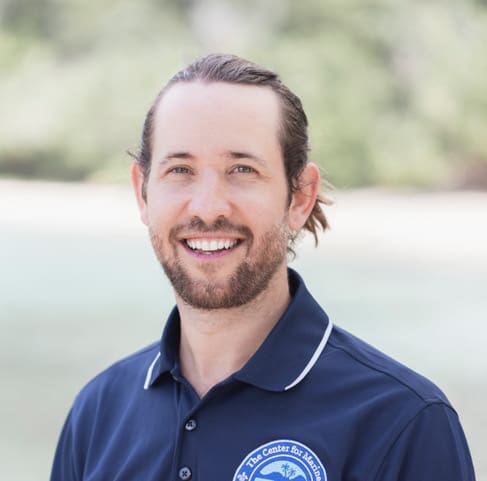
Marilyn Brandt (Submitted photo)
She moved to St. Thomas to join the research faculty in the Center for Marine and Environmental Studies at UVI in 2010. Her research focuses on understanding how disease is damaging coral reefs and how coral conservation and restoration can reverse that damage. She is the research team lead and an executive team member for the USVI Coral Disease Advisory Committee, and she directs Reef Response, a coral restoration program at UVI which is focused on science-based coral restoration in the northern USVI.
Location:
81C – Downtown Charlotte Amalie. Strand Gade between Waterfront and Market Square. Right around the corner from Moe’s Grocery on Waterfront. Visit www.81CVI.com for a map link. Or google 81C Virgin Islands.
About 81C:
81C is an event venue, art gallery, and coffee + wine bar in historic downtown Charlotte Amalie is open weekdays 12-8PM. In addition to its in-house arts programs, the venue is available for private and public event rentals. Visit wwww.81CVI.COM / Instagram and Facebook: @81CVI or Telephone (917)327-1561.
USVI Division of Personnel
The Government Employment Service Commission (GESC) Health Insurance Board has released the election results. Director Cindy L. Richardson announces the results of GESC Board of Trustees election for the St. Thomas-St. John and St. Croix active employee representatives. The results for the election held on Tuesday, Nov. 7, are as follows:
The St. Thomas-St. John results – Active Employee Candidates:
Dr. Gilbert Commissiong – 82% of votes cast
Dr. Krishna Kilaru – 15% of the votes cast
Dr. Luis Slyvester – 3% of the votes cast
The St. Croix results – Active Employee Candidates:
Ms. Beverley Joseph – 66% of the votes cast
Dr. Ann Treasure – 34% of the votes cast
Both candidates, who are currently board members, have successfully retained their seats to represent the government’s active employees in their respective districts.
The two retiree candidates: Lori Anderson in the St. Thomas-St. John District and Debra Christopher in the St. Croix District were unopposed. They automatically retained their seats on the GESC Board representing the government retirees and forgoing an election in this category. The winners will serve on the GESC Health Insurance Board for the next two years.
Richardson adds that this year’s election garnered a 49% increase in participation compared to the previous election held in 2021. The Division of Personnel thanks all government employees who took the time to exercise their right to vote. Special congratulations go to the winners with thanks for their willingness to serve.