



After years of anticipation and extensive community engagement, the Virgin Islands Department of Planning and Natural Resources has unveiled a draft Comprehensive Land and Water Use Plan (CLWUP) to guide the territory’s growth while safeguarding its natural resources. The long-awaited plan, presented before the 35th Legislature Tuesday, establishes a framework for sustainable development, balancing the often competing priorities of conservation, infrastructure, and economic progress.
“This comprehensive plan is a shared vision for the future of the Virgin Islands,” said Jean Pierre Oriol, commissioner of the DPNR, during his testimony. “It provides a clear path for making better decisions about land use, protecting our environment, and investing in infrastructure to ensure a more resilient and prosperous territory.”
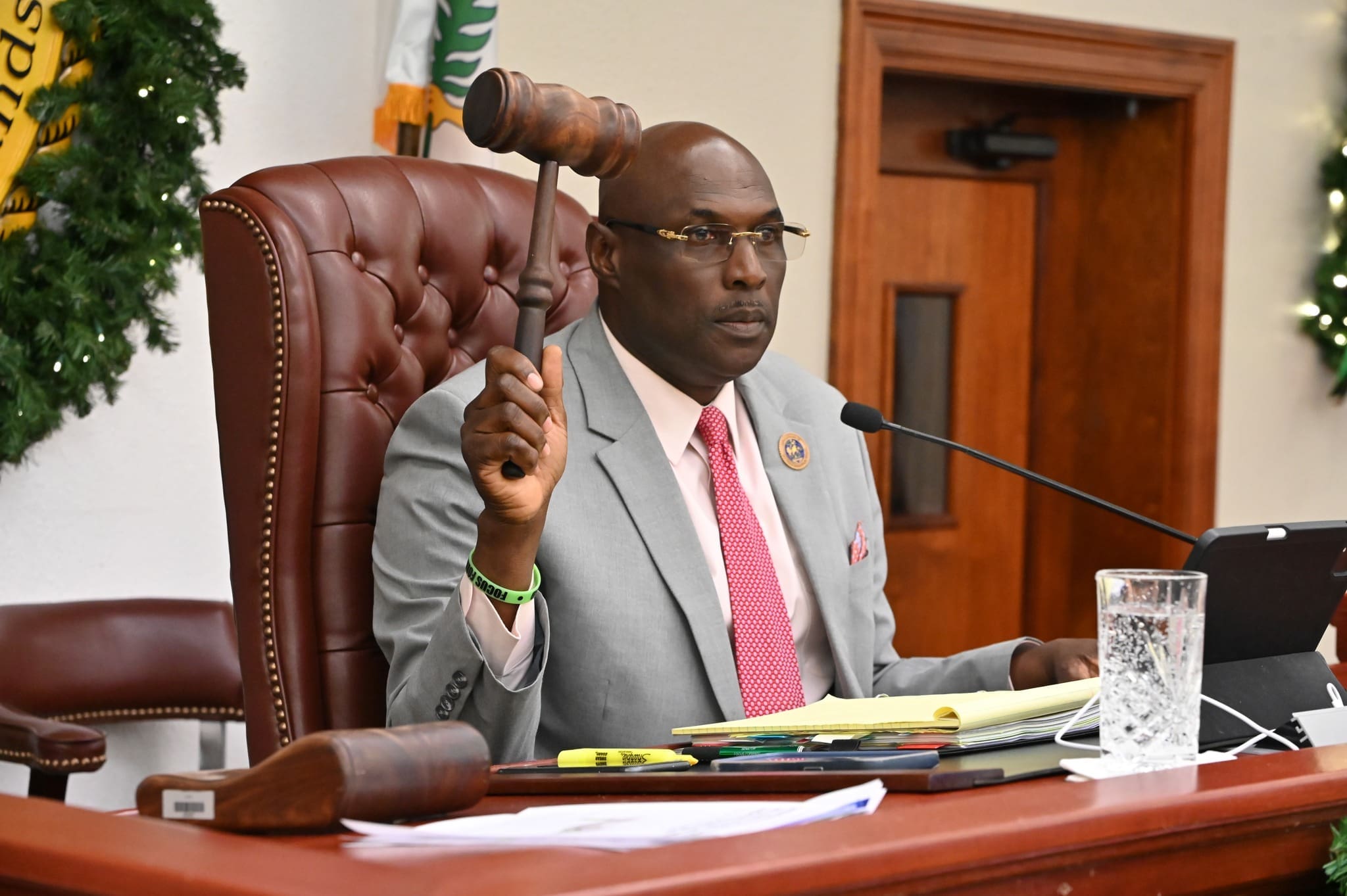
The announcement sparked an optimistic yet critical tone among members of the Legislature, who described the plan as a long-overdue but necessary step toward addressing the territory’s development challenges. Senate President Novelle Francis Jr. emphasized the importance of accountability in implementing the plan.
“This is a historic moment for the Virgin Islands,” Francis said during the hearing. “But we must ensure that this plan does not end up as just another document on the shelf. Our communities are watching, and they need to see real results — infrastructure that works, natural spaces that are protected, and neighborhoods that thrive.”

For decades, the Virgin Islands has struggled with the tension between development and conservation. This comprehensive plan is intended to end the cycle of disjointed zoning amendments and uncoordinated projects that have often left communities frustrated. Legislators underscored the need for the plan to serve as a living document — a framework that evolves to meet the shifting needs of the islands.
The Comprehensive Land and Water Use Plan establishes principles for improving land and water use decisions, protecting resources, and preparing for a sustainable future. These principles were developed through public engagement, where residents expressed the need for stronger protections for coastlines, flood mitigation measures, and more accessible permitting processes. The plan also addresses economic resilience by aligning land use priorities with transportation, agriculture, and housing goals.
“Our goal was to create a plan that reflects the priorities of the people who live here,” said Leah Laplace Matthew, territorial planner for DPNR. “Residents want to see smarter development decisions, stronger protections for our coastlines and natural resources, and investments in infrastructure that will serve future generations.”
Senators were particularly vocal about ensuring the plan addresses tangible infrastructure issues, such as outdated zoning laws and a permitting system that many residents say favors developers over long-term community well-being. Sen. Alma Francis Heyliger urged the department to address delays and inefficiencies in land use processes.
“People are tired of hearing about plans; they want action,” she said. “We need to make sure that the policies you’re proposing are not just sound in theory but are practical and enforceable. Let’s clean up the permitting system, let’s make enforcement stronger, and let’s do right by the people who live here.”
From its inception, the plan has been shaped by the voices of Virgin Islanders. Beginning in October 2022, DPNR embarked on a robust public outreach campaign, hosting town halls, workshops, and collaborative working groups across St. Thomas, St. John, and St. Croix. More than 1,500 residents participated in these meetings, and 92 volunteers played a critical role in representing local perspectives during planning stages.
“We heard loud and clear that the people of the Virgin Islands want their voices to matter in how decisions are made,” said Marlon Hibbert, director of the Division of Coastal Zone Management. “This plan represents their vision, their concerns, and their aspirations for the future.”
On St. John, residents emphasized enhancing government services, protecting natural resources, and improving walkability in Cruz Bay, which is both a tourism hub and a vital community center. For St. Croix, participants highlighted the need to maximize the island’s agricultural potential, develop infrastructure to support food sovereignty and capitalize on its designation as a National Heritage Area. St. Thomas, where land availability remains limited, will focus on redeveloping urban spaces, incorporating mixed-use zoning, and improving watershed management to address persistent flooding.
“Each island has its own identity and set of challenges,” said Nathan Kelly, president of Horsley Witten Group, the consulting firm that assisted DPNR. “The plan reflects those differences while ensuring a cohesive vision for the territory as a whole.”
The CLWUP also addresses long-standing frustrations with zoning and permitting processes. Residents expressed a desire to eliminate spot zoning practices and improve the transparency of land use decisions. In response, the plan proposes streamlined processes that prioritize fairness and equity while enabling economic growth. By addressing these issues head-on, the plan aims to build trust between developers, government agencies, and the broader community.
Sen. Milton Potter emphasized the need for ongoing collaboration, saying, “This plan is a starting point. Now, we must ensure that every step forward includes the people it impacts. This cannot be a one-time effort; it has to be an ongoing dialogue between the government, developers, and the community.”
The unveiling of the CLWUP represents a shift from previous attempts at comprehensive planning in the territory. Earlier efforts focused on regulatory changes and zoning maps faced resistance due to concerns about feasibility and public support. This version establishes a clear framework while not immediately altering existing regulations.
“We are not here to replace existing zoning or regulations overnight,” Oriol explained. “This plan is about setting the vision. The next steps will involve updating laws, regulations, and zoning maps in alignment with the community’s goals.”
The plan incorporates scenario planning and visual renderings to help residents understand potential outcomes for their communities based on its guiding principles. These tools aim to provide clarity as DPNR works to implement the plan through phased updates to policies and regulations. As the plan moves toward legislative approval, its success will depend on consistent follow-through and ongoing collaboration, officials said.
“This is our chance to get it right,” said Laplace Matthew. “The plan gives us the tools we need to protect what we love about the Virgin Islands while creating opportunities for future generations.”
Sens. Novelle E. Francis, Jr., Marvin A. Blyden, Angel L. Bolques Jr., Samuel Carrión, Diane T. Capehart, Dwayne M. DeGraff, Ray Fonseca, Alma Francis Heyliger, Donna A. Frett-Gregory, Kenneth L. Gittens, Marise C. James, Franklin D. Johnson, Carla J. Joseph, and Milton E. Potter attended the Committee of the Whole meeting Tuesday.