


Rising Tensions and Increased Military Presence in the Caribbean
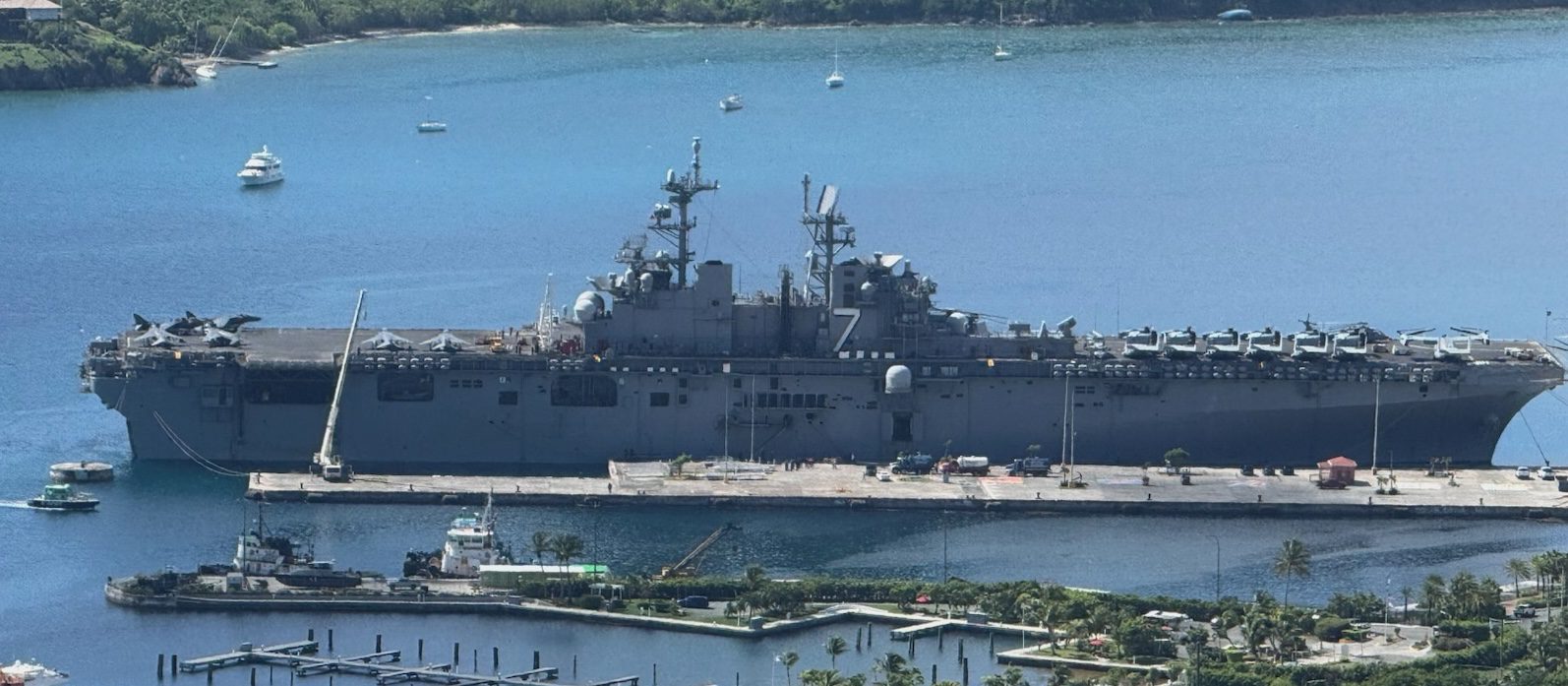
Tensions and fears are escalating throughout the Caribbean Basin as the military presence in the region reaches its highest level since 1983, when the United States invaded Grenada with 7,600 military personnel and 16 naval ships. Historically, the Caribbean has been characterized by peace and stability, with regular democratic elections and peaceful transfers of power. While there have been occasional incidents of military action or political violence — most notably in Haiti, the Dominican Republic, Grenada, and Cuba — the region has generally remained free from large-scale conflict. Since World War II, the Caribbean Sea has predominantly been a route for cruise ships, yachts, and passenger aircraft, rather than warships, fighter jets, or heavy bombers.
Recent U.S. Military Deployments and Operations
On Aug. 19, 2025, Donald Trump ordered three Navy warships into the Southern Caribbean to intercept suspected drug-carrying vessels leaving Venezuela. Since then, the deployment has rapidly expanded to eight warships, a nuclear submarine, the Special Forces-unmarked converted cargo ship MV Ocean Trader, and approximately 83 planes, helicopters, and drones. The number of military personnel now exceeds 4,500, and the USS Gerald Ford aircraft group is en route to further augment the U.S. forces in the area.

By Nov. 1, 2025, U.S. forces had conducted 15 kinetic strikes on 16 vessels, resulting in 64 deaths and three detentions. Nine of these strikes occurred in the Caribbean off the coast of Venezuela, while seven took place in the Eastern Pacific near Ecuador, Panama, and Colombia.
Strategic Use of U.S. Territories and Regional Partnerships
Puerto Rico and the U.S. Virgin Islands, both unincorporated U.S. territories in the Caribbean, are being used to house military personnel and provide logistical support for operations. The Jose Aponte Torre airport — formerly part of the Roosevelt Roads Naval Station in Puerto Rico — is serving as a base for 10 F-35s and most land-based personnel. On St. Croix in the U.S. Virgin Islands, additional military personnel are housed at the Port Hamilton Refining and Transportation (PHRT) “Man Camp.” A restricted flight zone has been announced by the FAA, affecting airspace off the southeast coast of Puerto Rico from Nov. 1, 2025, to March 31, 2026, to facilitate high-tempo military operations near Jose Aponte de la Torre Airport.
U.S. military capacity is also being expanded in the Southern Caribbean, with requests to install a military radar at Grenada’s Maurice Bishop International Airport, and joint training exercises with the Trinidad and Tobago Defense Force have taken place. U.S. Special Forces Aviation Units have also been observed conducting “proficiency training” offshore Trinidad.
Escalation of Covert Operations
Further heightening regional tensions, Trump authorized the Central Intelligence Agency (CIA) on Oct. 15, 2025, to conduct covert operations inside Venezuela, coinciding with the rapid buildup of U.S. naval forces.
Analysis of U.S. Actions Against Venezuela
The stated rationale for targeting Venezuela — preventing the flow of fentanyl and cocaine to the United States — is unsubstantiated. Transnational criminal organizations in Mexico, supported by China and India (which provide precursor chemicals), are the principal source of fentanyl to the U.S., not Venezuela. Likewise, Venezuela is not a major producer of coca or cocaine; instead, it serves as a transshipment hub for cocaine produced in neighboring countries. While some ex-FARC combatants have recently established labs in Venezuela’s border states, Colombia remains by far the largest producer of coca and refined cocaine.
Efforts to interdict supply have historically failed to reduce demand. As long as there is strong demand for illicit products some ambitious and risk-loving parties will find a way to supply the demand. Despite decades of “Wars on Drugs” declared by Nixon and Reagan, the prevalence of illicit drug use in America has increased, from 10% of Americans aged 12 and older in 1971 to 16.8% in 2023. Cocaine consumption reached an estimated $28 billion among 5.1 million Americans in 2023, compared to minimal use in 1971.
If the goal were truly to disrupt cocaine supply, military action would be more logically directed at Colombia, which cultivates the majority of the world’s coca (65%) and produces most of the world’s refined cocaine (70-80%), according to the United Nations Office on Drugs and Crime and the Drug Enforcement Agency (UNDOC). Other significant producers include Peru and Bolivia, with Venezuela playing a minor role in the processing of these commodities. Furthermore, Trump’s decision in January 2025 to pardon Ross Ulbricht, creator of the Silk Road dark web marketplace, who was convicted in 2015 and sentenced to double life terms on multiple counts for continuing a criminal enterprise, distributing illicit drugs on the internet, and using BITCOIN to facilitate payment of drug transactions, undermines claims of dedication to fighting drugs and protecting Americans from “poison.”
These facts suggest that the Trump administration’s actions are not aimed at curbing drug trafficking, but rather at achieving regime change in Venezuela and installing a pro-American government that favors U.S. business interests, especially in the oil sector. This pursuit follows the expropriation of ExxonMobil and ConocoPhillips assets by Hugo Chávez in 2007.
Legal and Constitutional Concerns Regarding Use of Force
There is no legal justification for the use of lethal force against non-combatant foreign nationals in international waters. Trump’s actions violate international law by employing the U.S. military for extrajudicial killings. The administration has reclassified “criminal organizations” as foreign terrorist organizations and individuals on suspected drug vessels as “unlawful combatants,” bypassing established legal procedures for maritime interdiction. Historically, the U.S. Coast Guard has adhered to a standard protocol, including intercepting vessels, seizing evidence, ensuring due process for alleged smugglers, charging smugglers in a court, and either sentencing or deporting smugglers of contraband. The sudden shift to military involvement in crime-fighting activities, law enforcement, and the reclassification of transnational criminal organizations lacks credibility.
Additionally, the administration appears to be preparing for direct military action —potentially including aerial attacks, incursions, or blockades — without obtaining the required congressional approval as mandated by the War Powers Resolution of 1973. This law requires consultation and notification of Congress before deploying troops into hostilities, with a request for formal authorization for engagements lasting more than 60 days. Previous Authorizations to Use Military Force (AMUFs) have expired (Iraq and ISIS), and Venezuela does not qualify as a terror actor, so it does not qualify for the AMUF for Global Terror. Trump argues that his commander-in-chief powers allow him to act against drug cartels and non-state actors, but this rationale is questionable.
Unlike previous presidents, Trump has not presented evidence to Congress or the public to justify intervention. There is no imminent threat to U.S. national security: alleged smugglers have not attacked U.S. personnel, Venezuela’s armed forces have not engaged U.S. forces, and Venezuela’s small and inept armed forces have no offensive capabilities of striking or invading the USA. Admiral Alvin Hosley’s abrupt resignation after disagreements about the legality of fast boat strikes raises further questions about the operation’s legitimacy. Ultimately, the demand for cocaine is driven by millions of American consumers, not by Venezuela’s production or trafficking activities.
Political and Economic Implications for the U.S. Virgin Islands
The U.S. Virgin Islands (USVI) and Puerto Rico are being separated from most (CARICOM) nations, which generally seek to de-escalate the situation and avoid militarization. Only Trinidad and Tobago and Guyana have openly supported U.S. escalation, while 11 former CARICOM prime ministers have condemned U.S. military deployment. Under the leadership of Gov. Albert Bryan Jr., the USVI has welcomed the U.S. presence, expecting economic benefits from military visits, such as the recent Iwo Jima liberty visit that injected money into the local economy. The presence of military personnel at the Man Camp and local hotels has also provided economic stimulation, with future naval visits expected to further benefit local businesses.
As a fiscally constrained territory reliant on federal transfers and welfare programs, USVI political leadership is cautious about antagonizing the Trump administration, fearing potential reductions in assistance or unfavorable treatment. However, it is essential that Virgin Islands residents understand the broader power dynamics, historical precedents, and legal and ethical implications of these developments. The Trump administration’s actions represent reckless imperialism, extrajudicial killings, and an attempt to engineer regime change in Venezuela under the guise of combating drug trafficking.
Broader Regional and Ethical Considerations
The current situation is fundamentally a contest over control of valuable natural resources, reopening Venezuela to American businesses, and reducing Chinese influence in a vulnerable, weak country that is in a state of economic and political turmoil. The USVI, as a territory of the United States, serves primarily as a recreational destination for military personnel and a minor logistical hub. In the event of a full-scale conflict, the USVI would likely remain physically safe, but tourism throughout the region would suffer, especially in countries closer to Venezuela. Both the USVI and Puerto Rico may become increasingly isolated from sovereign Caribbean states for their complicit role.
Intellectuals, artists, activists, and conscientious citizens should recognize and resist manipulation and power plays, advocating for pan-Caribbean unity, transparency, accountability, good governance, and justice. The current U.S. policy will harm more people than it benefits and will undermine the international rule of law. Virgin Islanders, while limited in their ability to influence mainland U.S. policy, should strive to speak the truth, remain informed, and avoid parroting imperialist propaganda. While economic pragmatism may dictate continued commerce with military personnel, residents should remind them of the risks and improprieties inherent in these operations. It is crucial to oppose reckless policies, encourage congressional oversight, and maintain moral clarity and conviction in the face of imminent geopolitical challenge.
— Mark D. Wenner is an assistant professor of economics at the University of the Virgin Islands who resides on St. Thomas.
Editor’s Note: Opinion articles do not represent the views of the Virgin Islands Source newsroom and are the sole expressed opinion of the writer. Submissions can be made to visource@gmail.com.