


For more than two centuries, families from the French island of St. Barthélemy have crossed the narrow stretch of water to St. Thomas, building lives in neighborhoods like Frenchtown and on the North Side while leaving an unmistakable mark on the Virgin Islands’ culture, economy and identity.
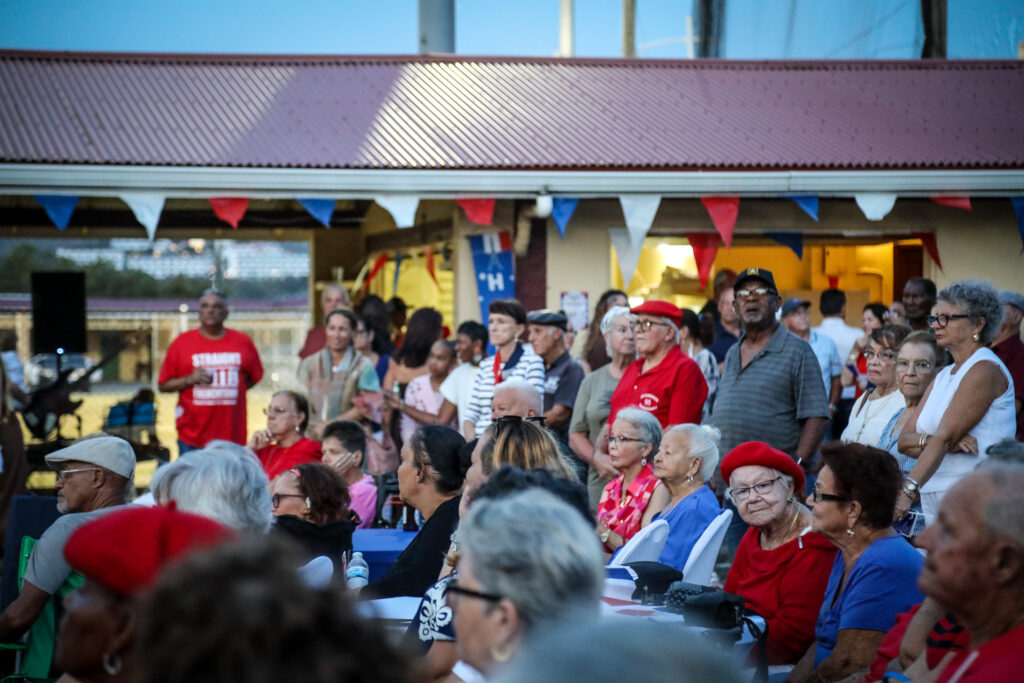
That shared history was on full display Tuesday evening as the Frenchtown Civic Organization transformed the Frenchtown parking lot into a celebration of the community’s past, present and future. Beneath the fluttering of red, white and blue decorations and dozens of small French flags, residents, elected officials, visiting dignitaries and generations of French Virgin Islanders gathered to commemorate Bastille Day while celebrating the people who have carried French traditions forward in the Virgin Islands for more than 200 years.
For Frenchtown Civic Organization President Cindy Richardson, that was exactly the goal.
This year’s program was intentionally designed to be as interactive as it was educational, inviting attendees not simply to listen to speeches, but to explore genealogy exhibits, learn French phrases, try their hand at traditional fishing net making, and discover the history that continues to shape one of St. Thomas’ oldest communities, she said.

Although Bastille Day commemorates the storming of the Bastille prison on July 14, 1789, and the beginning of the French Revolution, the annual celebration in Frenchtown has evolved into something uniquely local. Throughout the evening, speakers returned to a common message: preserving the traditions of the French community means more than remembering history. It means creating opportunities for the next generation to understand it, celebrate it and build upon it.
Senate President Milton Potter reflected on the lasting contributions of French immigrants and their descendants, noting that their influence reaches far beyond Frenchtown – from the territory’s fishing traditions and neighborhood culture to its political leadership, food, music and small businesses.
“The fight for liberty is not just a chapter in history,” Potter said. “It is a living promise.”
Lt. Gov. Tregenza Roach echoed that sentiment while describing the Virgin Islands as a place where cultures from around the world have blended into something uniquely its own.
Sharing stories of tracing family connections stretching across St. Thomas, St. Croix and St. Barthélemy, Roach said those relationships are reminders that the territory’s diversity has long been one of its greatest strengths and that the French community remains an important part of that story.
“We have become brothers and sisters from many different cultures,” he said, urging residents to continue building on that legacy together.
That spirit of connection took on new significance this year.
In the past few months, the U.S. Virgin Islands and St. Barthélemy formalized a twinning agreement designed to strengthen cultural, educational, athletic, environmental and economic ties between the neighboring islands – relationships that have existed informally for generations.
Former Honorary Consul of France to the U.S. Virgin Islands Odile de Lyrot, who has long championed French heritage in the territory and helped foster the relationship between the two islands, said the partnership is already moving beyond symbolism.
Discussions are underway about student exchanges, youth sports, environmental collaboration – including sharing strategies to address sargassum – and other opportunities for residents of both islands to learn from one another. Rather than simply honoring the past, she said, the agreement creates new ways for that shared history to continue shaping the future.
“We’re making history,” de Lyrot said. “And I have a feeling that we’re just getting started.”
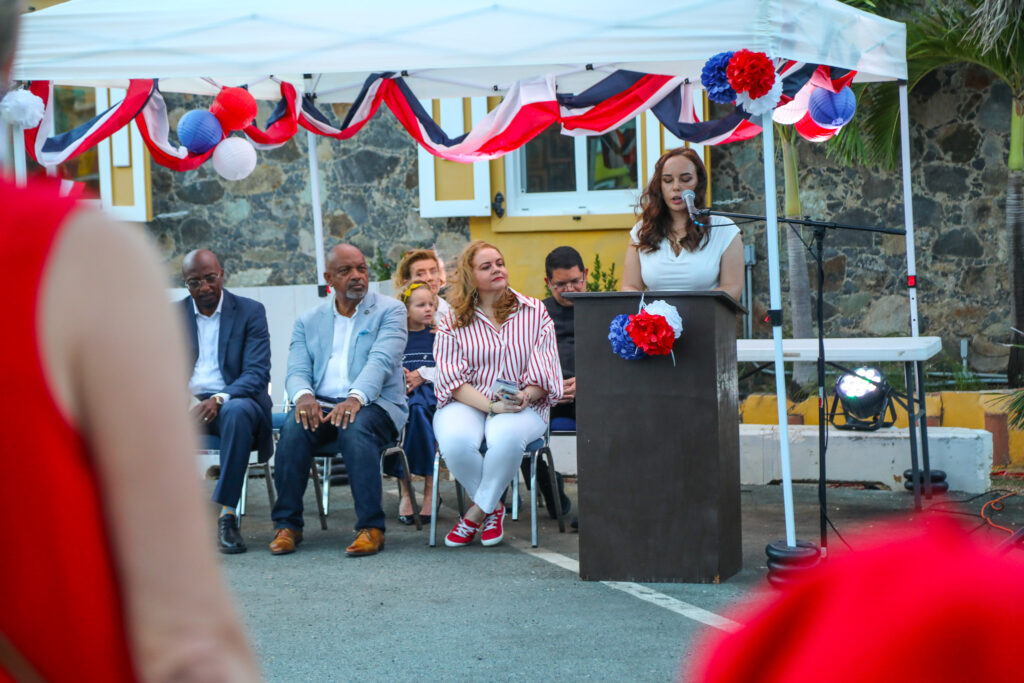
That idea – that heritage must be lived rather than simply remembered – was perhaps best captured by Frenchtown Civic Organization Public Relations Officer Gabrielle Querrard.
Reflecting on the meaning of the French Revolution, Querrard suggested history often remembers the revolutionaries who stood on the front lines while overlooking the ordinary people who quietly carried those ideals forward through service, sacrifice and community.
She drew a direct parallel to Frenchtown, where generations of French families crossed the sea seeking opportunity before building homes, businesses and traditions that continue to define the neighborhood today.
“The revolution is not merely something that happened in 1789,” Querrard said. “It is something that we are invited to participate in today – not by asking what the world owes us, but by asking what we owe each other.”
That philosophy could be seen throughout the evening.
Representatives from the Caribbean Genealogy Library invited residents to explore church records, family histories and photographs documenting more than 200 years of migration from St. Barthélemy to St. Thomas while encouraging younger generations to discover their own connections to the community’s past. Plans were also announced for future genealogy workshops to help families trace those roots.
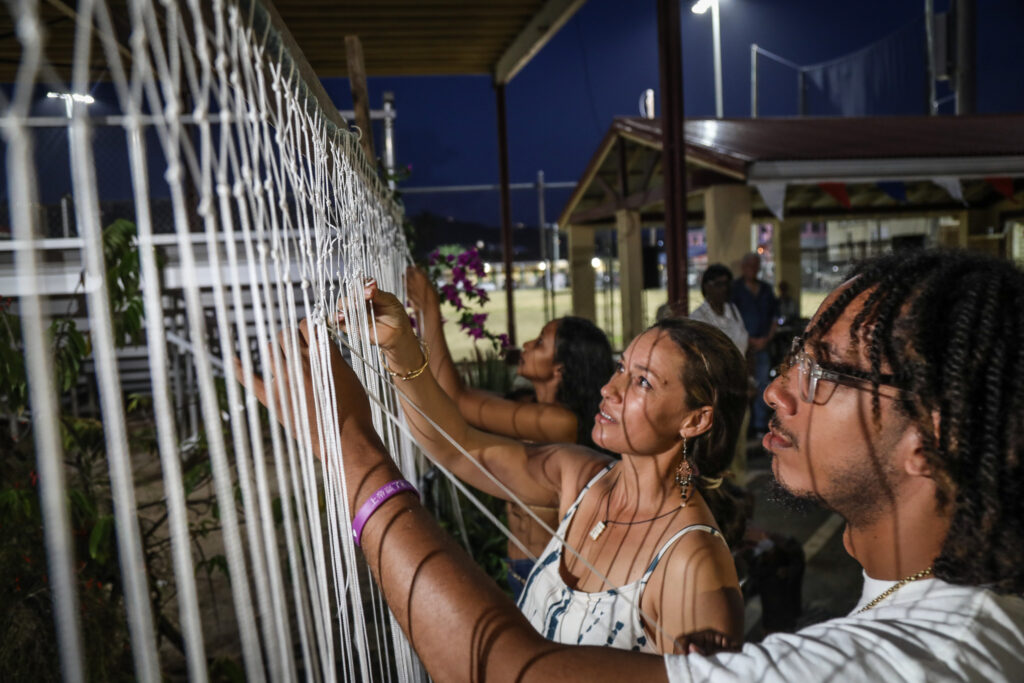
Local farmer and environmental educator Shelly Brin introduced an interactive fishing net demonstration that quickly drew participants of all ages.
Before inviting the crowd to tie their first knots, Brin reflected on the role women have long played in the territory’s fishing communities and encouraged younger generations to become stewards not only of cultural traditions but of the marine environment itself.
“There was a time when we needed the ocean to survive,” she said. “Now we’re transitioning to a time where the ocean needs our generation in order to survive.”
The Frenchtown Civic Organization also looked beyond the celebration itself, announcing plans for a community town hall later this month focused on neighborhood concerns including drainage, road maintenance and solid waste collection, while continuing fundraising efforts for the French Heritage Museum.
Those initiatives reflected another recurring theme of the evening: that preserving history requires more than looking backward. It also requires investing in the places and people who will carry those stories into the future.