


Juan F. Luis Hospital has less than half its full complement of emergency room doctors to provide critical round-the-clock care, hospital officials said in a budget hearing before the Senate Friday.
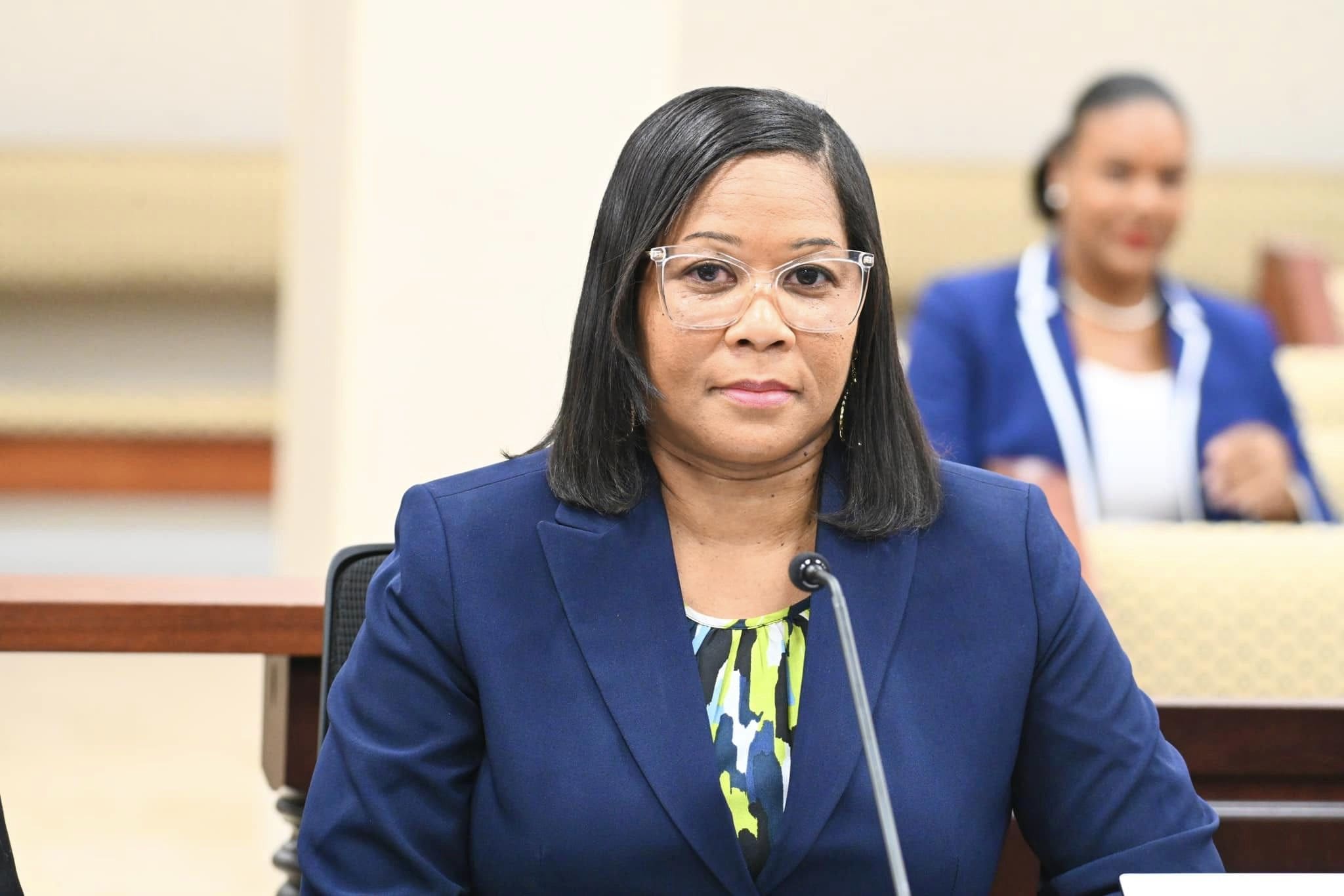
Interim CEO Hazel M. Philbert said ideally, the St. Croix medical center would have seven emergency room doctors on staff. As of Friday morning, it had just three. Aggressing recruitment efforts were underway, she said.
Although Philbert and other hospital administrators put average wait times at around an hour, senators in the Committee on Budget, Finance, and Appropriations hearing suggested they were much longer.
On the job less than a month after the departure of former CEO Douglas Koch for personal reasons, Philbert’s budget testimony accentuated the positive while acknowledging challenges. The hospital would likely finish fiscal year 2024 with $10.1 million less in revenues than projected but was current with its Government Employees Retirement System contributions.
“Despite JFL’s advancement through the improvement of revenue cycle practices, a challenge persists in utilizing narrow operating margins to settle longstanding liabilities. For instance, the commitment to the $1.5 million annual payout to the Internal Revenue Bureau continues to divert funds from critical necessities essential for enhancing care quality,” Philbert said.
Some of the hospital’s challenges are relatively new and others have long been a problem.
“We collected $12.3M in Medicaid and Medicare funding between October 2022 and May 2023, compared to $7.6M in the same period in FY24, representing a 62 percent decrease in collections and only seven percent decrease in discharges of patients that we care for. At the same time, the Medicaid disenrollment has significantly decreased our Medicaid eligible patients by 43 percent,” Philbert said.
“JFL has encountered challenges with Medicaid payments. JFL and the Department of Human Services have met several times to review and identify avenues that we are working through to increase our Medicaid revenues. We are also aware that 16,480 Virgin Island residents were disenrolled from Medicaid and have lost Medicaid coverage. With the approximately 17,000 enrollees no longer eligible for Medicaid, we anticipate a significant increase in people seeking charity care from JFL,” she said.
This uncompensated care was a large draw on hospital resources. With a mandate to treat patients regardless of their ability to pay, Juan F. Luis Hospital would be on the hook for $47 million in unpaid billables in fiscal year 2024, she said. Philbert predicted it would be even more expensive in 2025, rising to $54.9 million in charity care.
The lack of cash coming in put the hospital in a deficit, Philbert said, while operating costs were projected to increase by nearly $2 million.
Much of that uncompensated care went to so-called boarders. These are patients who have been discharged and have no medical reason to remain admitted to the hospital.
“Boarders present several challenges for our hospital. Boarders are at the hospital because they are unable to care for themselves and have no family members who are willing to care for them. The lack of community resources such as skilled nursing homes or long-term care facilities, which would be suitable for many of our boarders to care for their specific needs, including recreation and socialization, is a significant challenge. Neither Medicare, Medicaid, nor private insurance carriers cover their continued stay at our hospital for no medical reasons,” Philbert said.
The six boarders currently at the hospital not only aren’t getting the sort of care they need — regular socialization, exercise, cultural stimulation — they take up valuable bed space.
“Note that the monthly cost of a boarder is estimated at over $140,000 per boarder. Also, JFL is paying for three boarders at Casa de Salud in Puerto Rico for an average of $5,100 monthly each,” she said. “The best short-term solution for the boarders at JFL is to allocate Department of Human Services funding to place them in one of their contracted long-term care facilities.”
The Virgin Islands government itself also owes the hospital money.
“The total owed by government agencies for services provided by JFL is over $8.9 million however, only $1.6 million of that is current. In July 2023, JFL and the Department of Labor completed a settlement agreement of $2,314,303 to be paid in Fiscal Year 2024,” she said.
On the positive end, Philbert said the hospital was exploring new revenue streams.
The hospital hopes to grow its outpatient surgical volume, pediatric and cardiovascular care, laboratory services, diagnostic imaging, and post-op follow-ups, as well as behavioral health services, she said.
Also on Friday, Frederiksted Health Care, Inc. presented their budget request, with CEO Masserae Sprauve Webster saying the clinic provided services to 10,000 in 2023 — more than 96 percent of whom had income at or below 200 percent of the poverty guidelines.
“The ability for our patients to survive “at 100 percent of the poverty guidelines” is a difficult concept to understand,” Sprauve Webster said. “A single individual earning 100 percent of the poverty guideline means income of $15,060 annually or $1,225 per month. Imagine paying for rent, utilities, food, medicine, clothing, and all the basic essentials needed to live on an income of $1,225 per month. As we know, the cost of groceries is 30 percent higher in the U.S. Virgin Islands compared to the mainland United States. Additionally, electricity is about three times the average cost on the mainland. Patients with income at 200 percent of poverty guidelines, translates to earnings of $30,120 per year or $2,510 per month. We must admit that trying to make ends meet on $1,225 or even $2,510 per month with our cost of living is a great challenge.”
The clinic cares for 112 people experiencing chronic homelessness and 78 people being treated for HIV/AIDS, she said.
“In addition, we provided prenatal care to 325 women as they prepared to give birth to the next generation of future Virgin Islanders. We cared for 114 children under the age of one and over 1,900 individuals aged 65 and over. It is our honor and our responsibility to provide care to everyone, including the most vulnerable among us,” Sprauve Webster said.
The clinic sought approval for $3.2 million from the Legislature.
“FHC’s annual allotment from the Virgin Islands government represents the local share of the Medicaid Match required for the services we provide. This allotment also supports reimbursement for uncompensated care that we provide to uninsured and underinsured patients,” she said. “Frederiksted Health Care understands the importance of improving healthcare in our community. We are eager to participate in a coalition to identify specific steps we can take to strengthen our health care system and reduce overall health care costs.”