


For 109 years, the people of the U.S. Virgin Islands have lived under American sovereignty without full democratic rights – a condition originally deferred in the 1916 Treaty that transferred the islands from Denmark to the United States. Today, that continued deferment of civil and political rights is not only untenable – it is unconstitutional, immoral, and incompatible with modern human rights norms. And now, incredibly, this long-unresolved injustice is being dragged into contemporary Arctic geopolitics, as if the rights of Virgin Islanders were mere collateral in a great-power bargaining game. This cannot continue.
The Unkept Promise of 1917
When Denmark agreed to sell what are now the U.S. Virgin Islands, it did so only after securing a peculiar promise: Article VI of the 1916 treaty stipulated that “the civil rights and the political status of the inhabitants of the islands shall be determined by the Congress” at a later date. In other words, the islanders’ rights were put on hold – deferred until Congress chose to act. Over a century later, Congress still has not granted Virgin Islanders equal civil and political rights. U.S. citizenship was eventually conferred in 1927, but to this day Virgin Islanders cannot vote for President, lack any voting representation in Congress, and remain unable to fully participate in their own self-government at the federal level. As a recent U.S. Civil Rights Commission advisory concluded, citizens in the territories “share the following: None can vote for President, none are represented by a voting member of Congress… each has a lower status of citizenship compared to citizens living in the fifty states.” This reality – American citizens governed without consent – flouts the fundamental principle of equal rights under the U.S. Constitution.
The deferral of Virgin Islanders’ rights was not an accident of history; it was intentional. During the 1916 negotiations, Denmark pushed for guarantees that the islands’ inhabitants would be granted full U.S. citizenship rights and even proposed a local plebiscite on the transfer. The United States flatly rejected those proposals, insisting that questions of political status and civil rights must be left to future “subsequent congressional determination” rather than enshrined in the treaty. Denmark reluctantly acquiesced, ratifying the treaty on terms that explicitly deferred the civil and political status of Virgin Islanders to the discretion of a future U.S. Congress. In hindsight, that “future” never truly arrived. The people of the Virgin Islands were transferred in 1917 without a vote, without any enforceable rights guarantees, and without any post-transfer plan to achieve self-government. That broken promise has left generations of Virgin Islanders in a democratic limbo – governed by the United States, yet not fully part of it.
Collateral in Arctic Diplomacy
It is bad enough that this colonial-era injustice has persisted into 2026. But now it risks being compounded by geopolitics half a world away. The 1916 treaty that sealed the fate of the Virgin Islands also included another key element: as part of the deal, the U.S. formally recognized Danish sovereignty over all of Greenland, via a diplomatic assurance known as the Lansing Declaration. In other words, the United States promised it would “not object” to Denmark’s control of Greenland – a pledge given as reciprocal consideration for Denmark’s agreement to the sale. Fast-forward to today, and that century-old assurance has become a focal point of renewed U.S.–Denmark–Greenland tensions. Washington’s current administration has openly mused about acquiring Greenland, even suggesting military action is “always an option” to take the strategic Arctic island. Senior figures like White House adviser Stephen Miller have insisted that “obviously, Greenland should be part of the United States,” brazenly adding that “nobody is going to fight the United States militarily over the future of Greenland.” Such rhetoric not only alarms our Nordic allies – it directly undermines the 1916 treaty framework that the U.S. itself established. In fact, in March of this past year the U.S. government effectively repudiated the Lansing Declaration’s guarantee, casting doubt on the very treaty that underpins both Greenland’s status and the U.S. Virgin Islands’ political limbo.
Danish leaders, for their part, have responded with outrage and appeals to principle. Foreign Minister Lars Løkke Rasmussen has called for calm dialogue instead of “a shouting competition,” urging the U.S. to return to sensible diplomacy. Greenlandic officials like MP Aaja Chemnitz have been blunt in asserting that “Greenland is not for sale, never will be for sale” – emphasizing that any decision about Greenland’s future belongs to the Greenlandic people, not to Washington or anyone else. Even America’s own bipartisan voices have chimed in: U.S. senators overseeing NATO affairs reminded the White House this week that “the United States must honor its treaty obligations and respect the sovereignty and territorial integrity of the Kingdom of Denmark,” and that coercion of an ally “undermines the very principles of self-determination that our Alliance exists to defend.” These statements underscore an uncomfortable irony. How can the United States so righteously invoke treaty obligations and the right of peoples to self-determination in the Arctic, while denying those same principles to the 87,000 American citizens (2020 Census) living in the Virgin Islands?
As Washington escalates its Arctic ambitions, the people of the Virgin Islands find themselves in an absurd and unjust position – their unresolved political status seemingly used as a bargaining chip. Is the United States prepared to discard one part of the 1916 deal (the promise to Denmark) in order to pursue Greenland, while continuing to ignore the other part of that deal (the deferred promise of equal rights for Virgin Islanders)? Such cynical realpolitik treats Virgin Islanders’ rights as transactional – as if we are pawns on a chessboard of Arctic strategy. This is morally repugnant. The civil and political rights of an entire community are not currency to be traded in high-stakes diplomacy. We are not Denmark’s to bargain over any longer, and we are certainly not Washington’s to indefinitely put on hold.
An Urgent Moral and Constitutional Imperative
After 109 years, the status quo in the U.S. Virgin Islands is untenable. A condition that might have been dismissed as “temporary” in 1917 has hardened into a permanent second-class status. It is often said that this arrangement is “constitutional” under the Insular Cases. That is true only in the narrow, technical sense that those cases have not yet been formally overruled.
But the Insular Cases themselves—rooted in early-20th-century racial and colonial assumptions—stand in direct conflict with the Constitution’s core guarantees of equal protection, consent of the governed, and democratic legitimacy. Recent opinions of the United States Supreme Court have openly questioned their validity and moral authority.
In that light, the continued reliance on the Insular Cases to justify the permanent deferment of Virgin Islanders’ civil and political rights is not a defense of the Constitution, but a deviation from it—and one that grows more untenable with each passing year.
The United Nations, through its decolonization mandates, has long held that the U.S. must bring the Virgin Islands to a “full measure of self-government.” In April 2025, a coalition of Virgin Islanders even filed a petition before the Inter-American Commission on Human Rights, charging that the centuries-old disenfranchisement and inequality in the territory constitute ongoing human rights violations. (The Commission has taken the case seriously – it accepted the petition and invited the U.S. to negotiate a friendly settlement.) It should not take international tribunals to tell Americans what our own history and values already should: governing people without their consent is wrong. Colonially deferencing the Constitution is as immoral in 2026 as it was in 1776.
Crucially, one need not prescribe any particular status solution – statehood, independence, or otherwise – to recognize the urgent need for change. Indeed, this is not about partisanship or a specific political agenda; it is about fundamental fairness and the rule of law. The current arrangement, in which Virgin Islanders are U.S. citizens subject to U.S. laws yet have no vote in the government that makes those laws, is a clear example of “government without consent.” It is no coincidence that this exact phrase echoes the grievances of the American Revolution. How can the United States champion democracy on the world stage – whether in the Caribbean or the Arctic – while perpetuating disenfranchisement in its own Caribbean territory?
After 109 years, the deferment contemplated by Article VI can no longer be treated as an open-ended option. If Congress claims the authority to determine the political status and civil rights of the People of the U.S. Virgin Islands, then it also bears the responsibility to exercise that authority transparently, deliberately, and without further delay.
At minimum, this moment demands two concrete actions.
First, a formal congressional hearing—within the next legislative year—specifically examining Article VI of the 1916 Convention, its historical execution, and its continuing legal and constitutional effects on the people of the Virgin Islands.
Second, the establishment of a defined timetable for a federally recognized political-status process, including a binding referendum conducted under terms that ensure informed consent and meaningful choice.
Anything less amounts to the continued suspension of democratic rights by inertia.
Whatever the outcome of Greenland-related negotiations, the people of the U.S. Virgin Islands cannot remain structurally collateral to a revived treaty framework. In 2026, permanent deferment is no longer governance—it is avoidance. And avoidance, after more than a century, is indefensible.
About the Author
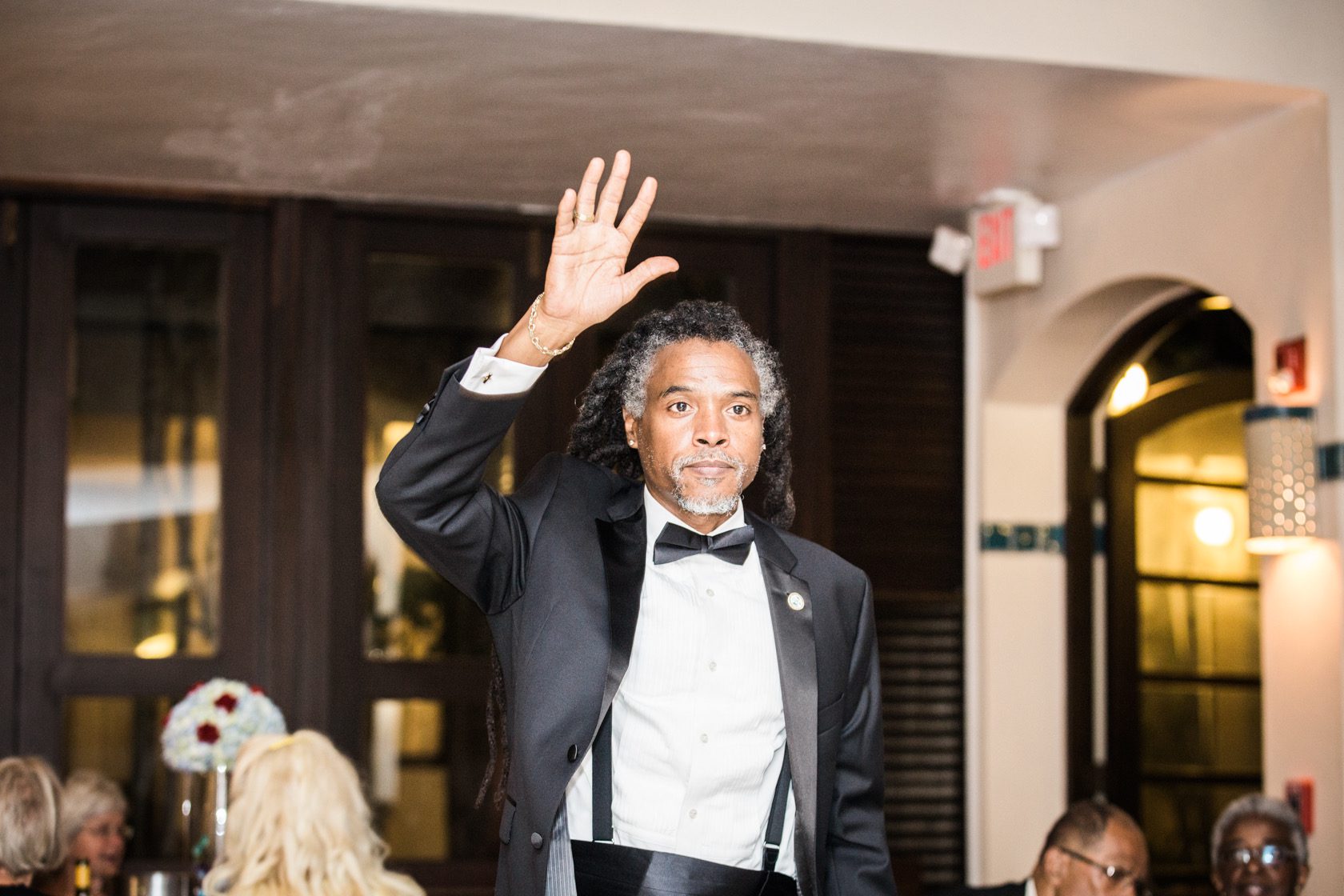
Shelley A. H. Moorhead is President of the African-Caribbean Reparations and Resettlement Alliance (ACRRA) and an Associate Member of the CARICOM Reparations Commission. He has served as Minister of State for External Affairs of the U.S. Virgin Islands and as Secretary-General and Chairman of the Standing Committee of the Inter-Virgin Islands Council. His work focuses on treaty law, decolonization, and the continuing legal consequences of slavery and colonial transfer.
Editor’s Note: Opinion articles do not represent the views of the Virgin Islands Source newsroom and are the sole expressed opinion of the writer. Submissions can be made to visource@gmail.com.