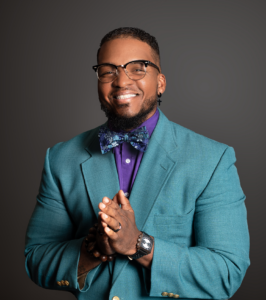
 In his biweekly column, Langley Shazor speaks to issues important to men within the territory.
Leadership has always been one of the clearest expectations placed on men. From childhood, we are told that one day we will need to lead a family, a team, a community, or at the very least, ourselves. The idea of leading carries weight, pride, and purpose. But for many men, it also carries confusion. We are rarely taught how to lead in a way that honors both strength and balance. We are told to be firm but not cruel, confident but not arrogant, compassionate but not weak. The result is that many men lead by performance instead of authenticity, wearing leadership like a costume instead of carrying it as a calling.
The danger in that approach is that it easily turns leadership into self-erasure. When leadership becomes about appearance, about being the man with all the answers or the one who never falters, we begin to lead from ego rather than purpose. We start confusing control with care and authority with worth. We chase results and neglect relationships. We pour ourselves into being dependable but forget to be present. Somewhere in the effort to guide others, we lose sight of ourselves.
True leadership begins not with command but with clarity. Before you can lead anyone else, you must first learn to lead yourself. That means knowing what drives you, what drains you, and what defines you. It means learning when to speak and when to listen, when to move and when to rest. Many men struggle with this balance because they were raised to see rest as laziness and reflection as weakness. Yet the most effective leaders are the ones who understand the rhythm of both action and stillness. They know that a man who cannot pause will eventually burn out.

The old image of the leader as the unshakable provider may have once served a purpose, but today it limits growth. The world we live in demands leaders who can adapt, who can empathize, who can see beyond their own perspective. Leadership today is not about dominance; it is about discernment. It is the ability to read the room, to understand the moment, and to make decisions that serve the collective good. That requires emotional intelligence, patience, and humility, qualities often dismissed in the traditional blueprint of manhood.
Leadership without self-awareness becomes performance. Leadership with self-awareness becomes legacy. When a man leads from self-awareness, he stops chasing validation. His confidence no longer depends on control or applause. He begins to understand that authority is not given by position but earned through consistency. He realizes that respect cannot be demanded; it must be cultivated. And he learns that the greatest influence he can have is not in how loudly he speaks but in how steadily he lives.
Leading without losing yourself also means recognizing that you cannot give what you do not have. A man who never allows himself to rest, reflect, or heal will eventually lead from depletion. He will try to inspire others from an empty well. That kind of leadership may work for a season, but it will not sustain over time. Real strength is the ability to refill yourself so that you can keep giving without resentment. It means creating boundaries that protect your peace without sacrificing your purpose. It means knowing when to say yes and when to say no.
Leadership also requires honesty about motives. Some men lead to serve; others lead to be seen. When leadership becomes about proving worth, it becomes exhausting. The constant need to perform creates pressure that eventually erodes authenticity. A man who leads for approval will compromise his values to keep his image intact. But a man who leads from purpose can stand firm even when misunderstood. Purpose anchors you when popularity fades.
The best leaders are those who can balance conviction with compassion. They understand that guiding others does not mean controlling them. They create space for growth, for failure, and for truth. They know that their authority is not diminished by empathy; it is deepened by it. Leadership rooted in compassion fosters trust, and trust sustains influence far longer than fear ever could.
One of the quiet traps of leadership is loneliness. Many men carry the unspoken belief that leaders must stand alone, that to ask for help or to show struggle is to lose credibility. But isolation does not make a man strong; it makes him brittle. Every great leader needs counsel, community, and accountability. Mentorship is not a sign of weakness; it is proof of wisdom. Surrounding yourself with people who can challenge and sharpen you is how leadership matures. A man who cannot be led will eventually fail to lead well.
We also have to talk about grace. Leadership, no matter how noble, will never be perfect. You will make mistakes, misread moments, and sometimes hurt people you intended to help. Grace allows you to learn without self-condemnation. It teaches you to apologize, to adjust, and to keep going. The men who lead well are not those who never fall short — they are those who refuse to stop growing. Grace keeps a leader grounded. It reminds him that humility is not a weakness but a weapon against pride.
In every setting, home, work, or community, leadership is an opportunity to serve. The most effective leaders understand that influence is stewardship. You are responsible for the atmosphere you create, the words you speak, and the way you model resilience. People may not remember every instruction you give, but they will remember how you made them feel under your guidance. Leading without losing yourself means remembering that leadership is not about being above others but walking alongside them.
At its core, leadership is a mirror of manhood. It reflects how well a man knows himself, how much he trusts his purpose, and how deeply he values those he leads. When leadership is grounded in self-awareness, anchored in purpose, and guided by empathy, it becomes a force for healing, not harm. It transforms not only the people under your influence but also the man within you.
To lead without losing yourself is to remember that leadership is not a destination; it is a discipline. It is the daily decision to choose balance over burnout, purpose over pride, and authenticity over performance. It is understanding that before you can guide others toward peace, you must first find your own.
When men begin to lead from that place, whole, self-aware, and compassionate, leadership becomes more than a title. It becomes a testament.
Editor’s Note: Opinion articles do not represent the views of the Virgin Islands Source newsroom and are the sole expressed opinion of the writer. Submissions can be made to visource@gmail.com.
Related Links:
Op-Ed: The Lounge | A Column for Men: Breaking the Cycle: From Myths to Manhood
Op-Ed: The Lounge | A Column for Men: Breaking the Cycle: Healing the Father Wound