Editor’s Note: This is the first article of a three-part series. A Spanish version follows below.
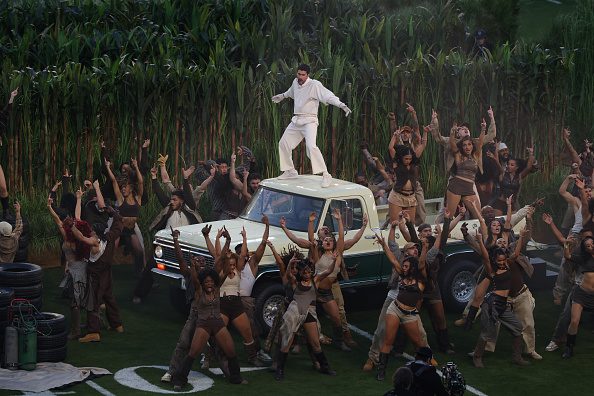
Much has been written about the performance by Benito Antonio Martínez Ocasio (Bad Bunny) during the halftime show at Super Bowl LX, and there is much still to be said.
What Benito Antonio/Bad Bunny did during his performance transcended personal achievement or glory. It was a truly unique moment in entertainment history for many reasons, some more obvious than others. The artist expressed generosity seldom seen at such a career highlight where the tendency is to say “look at ME,” not “look at WE.”
Benito turned the show into a love letter to his island, his origins, the people that made him who he is, to all the children that dream of success, and asked for God to bless every country of our American continent, callling their names, one by one, from Chile in the South to Canada in the North, plus the Greater Antilles, Cuba to Puerto Rico (he summarized the Lesser Antilles as las Antillas, but did not forget a single one of its flags during the show’s finale).
He sang in Spanish, because, as most people by now know, Bad Bunny is a native Spanish speaker from Vega Baja, Puerto Rico, USA. Spanish has been the main language of Puerto Rico for five centuries, and remains the official language (together with English), even after the U.S. take-over of the island in 1898. Puerto Ricans were granted U.S. citizenship in 1917.
He sings in the language that better expresses the feelings he wants to convey. Beyoncé, Kendrick Lamar, and Taylor Swift do exactly the same, except that their native language is English. And they always sing in English. Nobody would expect otherwise.
For viewers that did not know Bad Bunny existed it might have been puzzling to understand why he was headlining the 2026 Super Bowl’s halftime show. To say that the artist and his music are very, very, popular is an understatement.
Let me share some facts:
He has been the most streamed artist on Earth in four of the last six years, with numbers reaching almost 20 billion in 2025 alone.
Last year he staged 31 sold-out concerts in his native Puerto Rico. The final performance was telecast live on Amazon Prime. The show broke all records for the most-watched single-artist performance on Amazon Music’s history.
Three weeks ago Bad Bunny won the 2026 Grammy award for Best Album of the Year. It was the first Album of the Year in the history of the award to be handed to a non-English language album.
He has won another five Grammy Awards, 17 Latin Grammys, 16 Billboard Music Awards, and 54 Billboard Latin Music Awards. Billboard named him the Greatest Pop Star of the year in 2023, becoming the first Spanish-language artist to be recognized, and he won the title again in 2025. He has won ASCAP awards, People’s Choice awards, GLAAD Media awards, MTV Music awards, the list goes on and on.
Looking at the numbers and awards just listed makes it obvious that for the executives in charge of putting the halftime show together it did not matter if Bad Bunny sang in Spanish, Kwéyòl, Quechua, or Taíno. For Amazon, Apple Music (official sponsor of the show), Roc Nation (which produces it and is owned by Jay Z), the National Football League (NFL), and NBC (which charged 8 to 10 million dollars for a 30-second ad during the game), the language that Bad Bunny sings in is dollars, pesos, pounds and yuans. That is capitalism.
And still, that the artist was not going to sing in English was turned by some prominent people into a political issue. Attacks against the artist and his singing in Spanish attempted to reduce the show’s appeal for potential viewers. It backfired spectacularly.
The Benito Bowl was the most watched halftime show in the Super Bowl’s history when all media consumption (television, social media, YouTube, etc.) is counted and set a new record with over 4 billion views in the first 24 hours. “Thank you Benito for letting them play football at your concert,” somebody wrote on YouTube.
After the concert, his performance playlist was the most-played on Apple Music. Twenty of his songs were among the 100 songs most played in the world.
In the U.S., Bad Bunny’s streamed numbers skyrocketed 470% after the performance.
The NFL’s Instagram clip with highlights of the show reached 179 million views. It is the league’s most-watched clip ever.
The halftime show has also influenced travel behavior. Expedia reported a 245 percent surge in searches for flights to Puerto Rico compared to the same period of time last year (Feb. 8-11). And several cities where Bad Bunny will play during his present world tour, which does not include any U.S. cities, have also seen an increase in flight searches coinciding with the days prior to his performance.
What makes all those statistics more remarkable is that Bad Bunny did not just sing in Spanish, at the halftime show, he sang in Puerto Rican.
Just as every Caribbean island has its territorial variation of English, French, etc., the Spanish speaking Caribbean, and Latin America as a whole, speaks Spanish with characteristic words, expressions, and grammatical differences from what is considered formal or standard Spanish. Yes, we all understand each other, but the differences exist, and they are important to know, particularly when traveling from one country to another, or listening to music.
Many websites explaining Puerto Rican slang, linguistic forms, words and style, for his not Boricua (not Puerto Rican) fans exist. Other sites decode and translate his lyrics line by line. He didn’t need to sing in standard Spanish, his fans are willingly and joyfully learning Puerto Rican.
That Benito Antonio did not “code switch” to a more standard Spanish is a tribute to all colloquial forms of speech. Many of us have heard that our nations’ expressive forms of talking are second class: bad Spanish, bad English, bad French — not to Bad Bunny.
But that is the way he has sung since his first album. What we saw and heard was authentically him. He has conquered the entertainment world without artifice, or pretense. That is the beauty and the irony of it. By “just” being Benito Antonio Martínez Ocasio from Vega Baja, Puerto Rico, he has become universal.
The love of the artist for his language and culture even paid off for Benito and the NFL at the game’s merchandise stands.
The NFL now has a whole line of products in Spanish (el Super Tazón LX) and merchandise with the sapo concho, the endangered Puerto Rican crested toad, in football gear. Regardless of your team preference, you can get something with Super Tazón or the sapo concho on it. A win for culture, a win for Benito, a win for the bottom-line.
For an artist to celebrate her or his culture and origins on such an important stage as the Super Bowl, whether it is Puerto Rico, Texas, Hawaii, Barbados, or anywhere else, through music seems so simple, so enriching for the audience, and now we know, so commercially savvy, and yet it had never been done before, not as Benito did it.
But it was not the cultural and language components alone that made Bad Bunny’s show different from any other halftime performance. The artist wanted to share the top spot he presently holds in the entertainment world with every viewer, and insisted with genuine modesty that he owed much to many, and that his success could be attained by others.
About four minutes and 45 seconds into the performance, with violin music in the background, Bad Bunny spoke directly to his millions of viewers, “My name is Benito Antonio Martínez Ocasio, and if I am here at the Super Bowl 60 it’s because I never, never stopped believing in myself. You should also believe in you. You are worth more than you think.”
Just one week before the Super Bowl, while accepting the Album of the Year award, at the 2026 Grammy Awards Ceremony, he said something that applies to every one of our island nations: “Puerto Rico, believe me when I tell you that we are much bigger than 100 by 35 (miles), and there is nothing we cannot achieve.”
We all share that feeling towards our islands. For us, our nations are much bigger than their width and length measured in miles or kilometers.
He continued by thanking God, the Academy, thanking his mother for giving birth to him in Puerto Rico, he thanked his producers, and the team responsible for the album, and then he dedicated his award to all of those that had to leave their countries in search of a better future, and to those who have lost loved ones and keep on going.
Those simple words expressing so much humanity, but also so much national orgullo, pride, for who he is and also for where he came from, are important. The respect for family and friends, dedicating the award not only to those that helped him get to where he is, but also to those less fortunate than him, are powerful and unifying lessons in any language, and they came from the biggest music star on the planet right now. I thought in particular of the young people in our communities, always looking for role models and guidance.
And much to our orgullo, he is one of us, Puertorriqueño and Caribbean, American y Americano, without contradictions, and all at the same time.
— Mario Picayo is a Caribbean cultural activist, writer and publisher. He is chief editor of the publishing houses Little Bell Caribbean and Guaní Press. Born in Cuba, he lived many of his formative years in Puerto Rico, and later in the U.S. Virgin Islands. For close to four decades he has resided between the U.S. Virgin Islands and New York. Previously, and also parallel, to his publishing career he has worked as photographer specialized in documenting cultural celebrations, like carnival, and similar joyful, musical, community-unifying events from Trinidad to the Bahamas.
Editor’s Note: Opinion articles do not represent the views of the Virgin Islands Source newsroom and are the sole expressed opinion of the writer. Submissions can be made to visource@gmail.com.
****
El espectáculo caribeño de Bad Bunny durante el Super Bowl LX.
Primera parte: Cantando en puertorriqueño, hablando en caribeño.
Este es el primer artículo de una serie de tres partes.
Mucho se ha escrito sobre la actuación de Benito Antonio Martínez Ocasio (Bad Bunny) durante el espectáculo de medio tiempo del Super Bowl LX, y aún queda mucho por decir.
Lo que Benito Antonio/Bad Bunny hizo durante su actuación trascendió el logro o la gloria personal. Fue un momento verdaderamente único en la historia del entretenimiento por muchas razones, algunas más obvias que otras. El artista expresó una generosidad pocas veces vista en un momento tan destacado de su carrera, donde la tendencia es decir “mírenme a MÍ”, no “mírennos a NOSOTROS.”
Benito convirtió el espectáculo en una carta de amor a su isla, a sus orígenes, a la gente que lo hizo quien es, a todos los niños que sueñan con el éxito, y pidió a Dios que bendijera a cada país de nuestro continente americano, nombrándolos uno por uno, desde Chile en el sur hasta Canadá en el norte, además de las Antillas Mayores, desde Cuba hasta Puerto Rico (resumió las Antillas Menores como las Antillas, pero no olvidó ninguna de sus banderas durante el final del espectáculo).
Cantó en español, porque, como la mayoría ya sabe, Bad Bunny es hispanohablante de Vega Baja, Puerto Rico, EE. UU. El español ha sido el idioma principal de Puerto Rico durante cinco siglos y sigue siendo el idioma oficial (junto con el inglés), incluso después de la toma de posesión de la isla por parte de Estados Unidos en 1898. Los puertorriqueños obtuvieron la ciudadanía estadounidense en 1917.
Canta en el idioma que mejor expresa los sentimientos que quiere transmitir. Beyoncé, Kendrick Lamar y Taylor Swift hacen exactamente lo mismo, solo que su lengua materna es el inglés. Y siempre cantan en inglés. Nadie esperaría otra cosa.
Para quienes no conocían a Bad Bunny, pudo haber sido desconcertante entender por qué encabezaba el espectáculo de medio tiempo del Super Bowl de 2026. Decir que el artista y su música son muy, muy populares es quedarse corto.
Compartamos algunos datos:
Ha sido el artista con más reproducciones en streaming del mundo en cuatro de los últimos seis años, alcanzando casi los 20 mil millones solo en 2025.
El año pasado, ofreció 31 conciertos con entradas agotadas en su natal Puerto Rico. La última actuación se transmitió en vivo por Amazon Prime. El espectáculo rompió todos los récords de la actuación individual más vista en la historia de Amazon Music.
Hace tres semanas, Bad Bunny ganó el premio Grammy 2026 al Mejor Álbum del Año. Fue el primer Álbum del Año en la historia de los premios otorgado a un álbum en una lengua distinta al inglés.
Ha ganado otros 5 premios Grammy, 17 Grammy Latinos, 16 Premios Billboard de la Música y 54 Premios Billboard de la Música Latina. Billboard lo nombró la Mejor Estrella Pop del Año en 2023, convirtiéndose en el primer artista hispanohablante en recibir el reconocimiento, y volvió a ganar el título en 2025. Ha ganado premios ASCAP, premios People’s Choice, premios GLAAD Media, premios MTV Music, y la lista continúa.
Al observar las cifras y los premios recién mencionados, es evidente que para los ejecutivos encargados de organizar el espectáculo de medio tiempo no importaba si Bad Bunny cantaba en español, kweyòl, quechua o taíno. Para Amazon, Apple Music (patrocinador oficial del programa), Roc Nation (productora y propiedad de Jay Z), la Liga Nacional de Fútbol Americano (NFL) y NBC (que cobró entre 8 y 10 millones de dólares por un anuncio de 30 segundos durante el partido), el idioma en el que canta Bad Bunny es el dólar, el peso, la libra y el yuan. Eso es capitalismo.
Y aun así, el hecho de que el artista no cantara en inglés fue convertido por algunas figuras prominentes en un problema político. Los ataques contra el artista y su canto en español intentaron reducir el atractivo del programa para los espectadores potenciales. El resultado fue absolutamente lo opuesto.
El Benito Bowl es el espectáculo de medio tiempo más visto en la historia del Super Bowl, considerando todo el consumo de medios (televisión, redes sociales, YouTube, etc.), y estableció un nuevo récord con más de 4 mil millones de videntes en las primeras 24 horas. “Gracias, Benito, por dejar que jugaran fútbol americano en tu concierto”, escribió alguien en YouTube.
Después del concierto, sus canciones fueron las más escuchadas en Apple Music. Veinte de sus canciones se encontraban entre las cien más escuchadas del mundo.
En Estados Unidos, las canciones de Bad Bunny se dispararon un 470 % tras su actuación en los medios de “streaming.”
El vídeo de Instagram de la NFL con los mejores momentos del espectáculo alcanzó una audiencia de 179 millones para convertirse en el vídeo más visto en la historia de la liga.
El espectáculo también ha influido en los planes de viajes de muchos. Expedia reportó un aumento del 245 % en las búsquedas de vuelos a Puerto Rico en comparación con el mismo periodo el año pasado (del 8 al 11 de febrero). Y varias ciudades donde Bad Bunny actuará durante su gira mundial, que no incluye ninguna ciudad estadounidense, también han experimentado un aumento en las búsquedas de vuelos coincidiendo con los días previos a su actuación.
Lo que hace aún más interesante estas estadísticas es que Bad Bunny no cantó en español, durante el espectáculo del Super Bowl, él cantó en puertorriqueño.
Así como cada isla caribeña tiene su propia variante territorial del inglés, francés, etc., el Caribe hispanohablante, y Latinoamérica en general, habla español con palabras, expresiones y diferencias gramaticales características y diferentes al español formal o estándar. Sí, todos nos entendemos, pero las diferencias existen y es importante conocerlas, sobre todo al viajar de un país a otro o al escuchar música.
Existen muchos sitios web que explican la jerga, las formas lingüísticas, las palabras y demas características del puertorriqueño para sus fans no boricuas (no puertorriqueños). Otros sitios decodifican y traducen sus letras línea por línea. Bad Bunny no necesitó cantar en español estándar; sus fans están gustosamente aprendiendo puertorriqueño.
Que Benito Antonio no haya sentido la necesitad de cambiar su lengua a un español más estándar es un homenaje a todas las formas coloquiales del habla. Muchos hemos oído que las formas expresivas del habla de nuestros países son de segunda clase: mal español, mal inglés, mal francés; no para este Conejo Malo (Bad Bunny).
Pero hay the entender que el artista ha cantado así desde su primer álbum. Lo que vimos y escuchamos en el Super Bowl XL fue auténticamente él. Ha conquistado el mundo del entretenimiento sin artificios ni pretensiones. Ahí reside la belleza y la ironía. Siendo “sencillamente” Benito Antonio Martínez Ocasio, de Vega Baja, Puerto Rico, se ha vuelto universal.
El amor del artista por su idioma y cultura incluso rindió frutos para Benito y la NFL en los puestos de mercancía del juego.
La NFL ahora cuenta con una línea completa de productos en español (el Super Tazón LX) y mercancía con el sapo concho, el sapo crestado puertorriqueño en peligro de extinción, en artículos de fútbol americano. Independientemente de tu preferencia de equipo, puedes conseguir algo con el Super Tazón o con Concho. Una victoria para la cultura, una victoria para Benito, una victoria para los inversionistas.
Que un artista celebre su cultura y orígenes en un escenario tan importante como el Super Bowl, ya sea el artista de Puerto Rico, Texas, Hawái, Barbados o cualquier otro lugar, a través de la música parece tan sencillo, tan enriquecedor para el público, y ahora lo sabemos, tan comercialmente inteligente, y sin embargo, nunca antes se había hecho, no como lo hizo Benito.
Pero no fueron solamente los componentes culturales e idiomáticos los que hicieron que el espectáculo de Bad Bunny fuera diferente de cualquier otra actuación de medio tiempo. El artista quiso compartir el lugar que actualmente ocupa en el mundo del espectáculo con todos los espectadores e insistió con genuina modestia en que les debía mucho a muchos, y que su éxito podría ser alcanzado por otros.
Aproximadamente a los cuatro minutos y cuarenta y cinco segundos de iniciada la actuación, con música de violín de fondo, Bad Bunny se dirigió directamente a sus millones de espectadores: “Mi nombre es Benito Antonio Martínez Ocasio, y si estoy aquí en el Super Bowl 60 es porque nunca, nunca dejé de creer en mí. Ustedes también deberían creer en ustedes. Valen más de lo que creen.”
Apenas una semana antes del Super Bowl, al aceptar el premio al Álbum del Año en la Ceremonia de los Premios Grammy 2026, dijo algo que aplica a cada una de nuestras naciones insulares: “Puerto Rico, créeme cuando te digo que somos mucho más grandes que 100 por 35 (millas), y no hay nada que no podamos lograr.”
Todos compartimos ese sentimiento hacia nuestras islas. Para nosotros, nuestras naciones son mucho más grandes que su ancho y largo medidos en millas o kilómetros.
Continuó agradeciendo a Dios, a la Academia, a su madre por “haberme parido en Puerto Rico”, a sus productores y al equipo responsable del álbum, y luego dedicó su premio a todos aquellos que tuvieron que dejar sus países en busca de un futuro mejor, y a quienes han perdido a seres queridos y siguen adelante.
Esas sencillas palabras, que expresan tanta humanidad, pero también tanto orgullo nacional, por quién es y por sus orígenes, son importantes. El respeto a la familia y los amigos, dedicando el premio no solo a quienes lo ayudaron a llegar hasta donde está, sino también a aquellos menos afortunados que él, son lecciones poderosas y unificadoras en cualquier idioma, y las dijo la estrella musical más grande del planeta en este momento. Pensé en particular en los jóvenes de nuestras comunidades, siempre en busca de modelos a seguir y guía.
Y para nuestro orgullo, Benito, Bad Bunny, es uno de nosotros, con mayusculas, Puertorriqueño y Caribeño, American y Americano, sin contradicciones, y todo a la misma vez.
— Mario Picayo. Activista cultural caribeño, escritor y editor. Es director de las editoriales Little Bell Caribbean y Guaní Press. Nacido en Cuba, vivió gran parte de sus años formativos en Puerto Rico y en las Islas Vírgenes de los EEUU. Durante casi cuatro décadas ha residido entre las Islas Vírgenes y Nueva York. Anteriormente, y en paralelo a su carrera editorial, ha trabajado como fotógrafo especializado en documentar fiestas tradicionales de un lado al otro del Caribe insular. Estas incluyen carnavales, fiestas patronales y otras celebraciones comunitarias honrando la musica, las artes y las tradiciones de sus pueblos.