


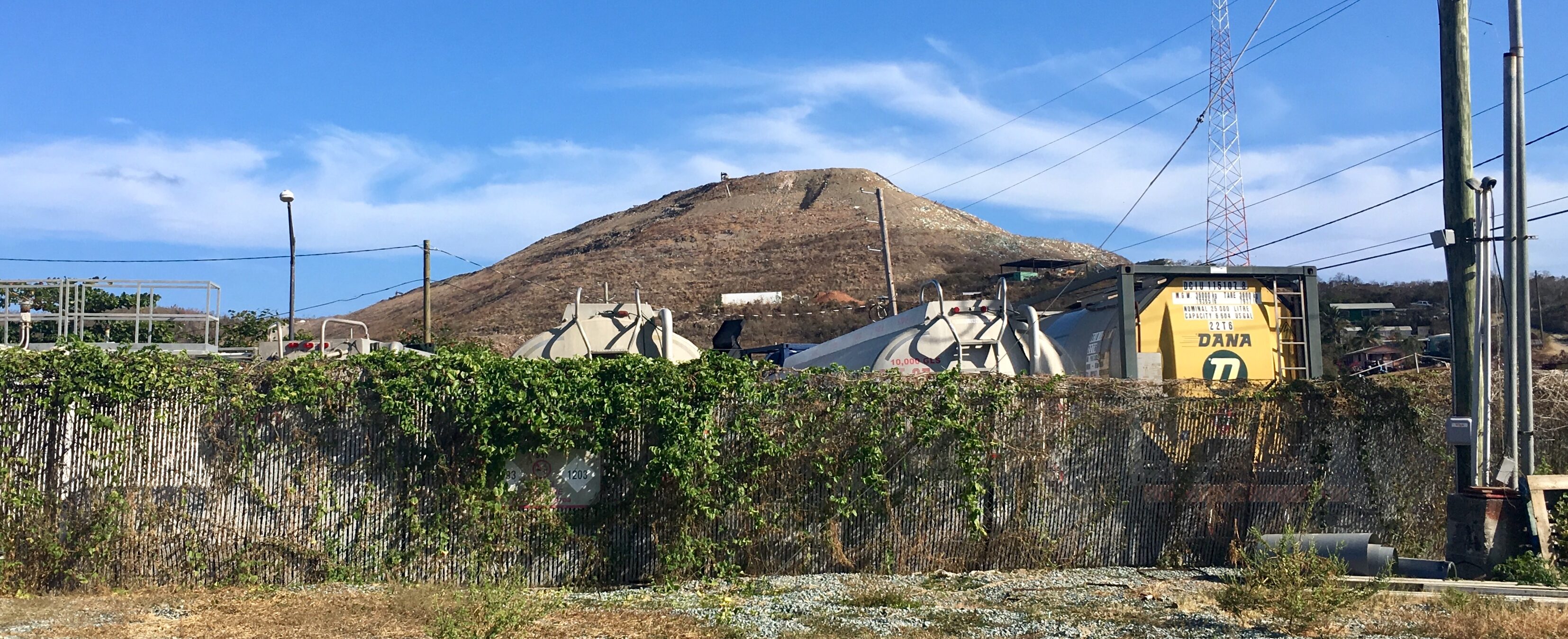
A group of scientists and environmental, agricultural, and community groups are warning lawmakers and the public that Bill No. 36-0232 could harm air quality, public health, and waste management in the U.S. Virgin Islands. The measure would reverse Act 8018, the territory’s “Ban the Burn” law, and allow air curtain incineration to burn vegetative debris.
There is a petition opposing the bill, supported by groups such as the Bovoni Council, Virgin Islands Good Food, St. Croix Environmental Association, Virgin Islands Conservation Society, Virgin Islands Farmers Alliance, Coral Bay Community Council, Empowering People for Real Change, Virgin Islands Alliance for Consumer Justice, Virgin Islands Environmental Association and Island Green Living. Members say the proposal threatens both public health and environmental sustainability.
Polly Hoppin, ScD, research professor emeritus at the University of Massachusetts Lowell, submitted testimony March 19, to Sen. Avery L. Lewis, warning that air curtain incinerators could pose significant health risks. She said she was writing on behalf of the scientific community and noted that experts have long opposed burning vegetative debris.
“In the aftermath of hurricanes Irma and Maria, I submitted a letter from air pollution scientists and environmental health professionals to the USVI Legislature,” she said. “We were unanimous in our strong opposition to burning vegetative debris then, and my concern about burning remains today.”

Hoppin said pollution from air curtain incinerators would threaten residents’ health and well-being, with risks increasing as the volume of debris increases. She added that “elders, pregnant people and children” would be especially at risk.
She said burning vegetative debris would release harmful pollutants, including fine particulate matter, carbon monoxide, nitrogen oxides and volatile organic compounds, many of which can cause both short- and long-term health effects, including cancer.
Focusing on the Bovoni landfill, she estimated that burning roughly 20 tons of vegetative debris per day could produce tens of pounds of pollutants, potentially exceeding U.S. Environmental Protection Agency air quality standards and World Health Organization guidelines.
Hoppin pointed to composting, mulching and chipping as safer and more effective alternatives, calling them proven methods that improve soil health, reduce greenhouse gas emissions and support local economic development. “Choosing this alternative would be the responsible decision.”
Judith Enck, former U.S. Environmental Protection Agency Region 2 administrator, also urged lawmakers to reject the proposal, saying air curtain incinerators produce harmful pollutants, including fine particulate matter, volatile organic compounds and carbon monoxide, and can trigger asthma and contribute to heart and lung conditions. “Air Curtain Incinerators are a significant source of air pollution,” she wrote, adding that composting and chipping would be safer alternatives that improve soil health and reduce pollution.
Enck said that while managing stockpiled green waste is a challenge, composting offers a better solution. “The answer to that looming problem is to immediately chip and compost the green waste,” she wrote. “This will not only avoid local air pollution but will also help improve soil health on the islands.”
Mark Lichtenstein, principal of Embrace Impatience Associates and Executive Operating and chief sustainability officer at the State University of New York College of Environmental Science and Forestry, said he has worked for more than a decade with governments in the Caribbean, including in the U.S. Virgin Islands, on waste management and disaster debris recovery.
In a March 16 letter to Lewis, Lichtenstein acknowledged landfill fires but cautioned against using air curtain incinerators as a long-term solution.
“The urgency of addressing landfill fires is understandable,” he said. “However, adopting ACI as a primary strategy would create new and significant public health risks while destroying valuable materials.”
He added that even under ideal conditions, air curtain incinerators emit fine particulate matter, volatile organic compounds, and carbon monoxide, pollutants associated with asthma, cardiovascular disease, and premature mortality. “ACI does not eliminate pollution,” he said. “It merely transforms valuable organic material into air emissions, ash and wasted heat.”
Lichtenstein framed the issue as a broader policy decision. “The question is whether the Virgin Islands will treat organic materials as pollution to be burned, or as valuable resources that can strengthen soils, agriculture, and the local economy,” he said.
In the petition, supported by many local environmental and community organizations, residents are urged to oppose the bill, saying that it would undermine long-standing public policy against burning vegetative debris and could jeopardize the territory’s clean air. It also emphasizes that composting and related practices would better support agriculture, support the economy, reduce reliance on imports and protect future generations.