Check out our weekly weather forecast with Jesse Daley, covering Sunday, June 14, through Saturday, June 20.
Please stay safe and follow the Source for more weather updates!
The Virgin Islands Police Department has said little publicly about the killing of Tre’Vante Etienne. That is not necessarily a criticism.
Our detectives have a responsibility to protect the integrity of a case, follow the evidence where it leads, and avoid saying anything that could jeopardize a future prosecution. Those are responsibilities we should all want them to take seriously.
But while investigations require silence, leadership often requires something else.
At the center of this tragedy is a family mourning the loss of a son. Tre’Vante’s family is grieving, as are his friends, classmates, teammates, teachers, neighbors, and a community trying to make sense of a loss that has left far more questions than answers.
The investigation will hopefully confirm what happened and determine who is responsible, and those answers matter. But they are not the only questions being asked. Parents are wondering how to help their children process what happened. Young people are trying to understand a tragedy that has shaken their sense of normalcy. Families are asking what support exists for those most affected and who is bringing those conversations together.
Saturday night, Gov. Albert Bryan Jr. called on the community, government included, to come together and create safe spaces for young people. The question now is what that means in practice.
Who is responsible for convening schools, coaches, counselors, churches, youth organizations, parents, and community leaders? Who is coordinating the support that young people and families may need in the days and weeks ahead?
These questions are not answered by an arrest, nor do they require details from an active investigation. They require leadership.
To its credit, the Department of Health quickly announced behavioral health support for those affected by Tre’Vante’s death, recognizing that violence leaves behind more than an investigation. It leaves behind grief, trauma, fear, and confusion. There should be room for more of those conversations, more resources that support emotional health and healing, and more discussion about what support looks like in practice.
Because leadership, particularly in moments like this, is not only about solving a crime. It is about standing before a grieving community and making clear that our young people matter enough to deserve a coordinated response.
The investigation may tell us what happened. Leadership should help us decide what happens next.
And as that conversation unfolds, remembering the young life at the center of this should also be a priority. Tre’Vante was a son, a brother, a friend, a teammate, a classmate, and a young man known and loved by many people in this community.
Let’s rally around his family and hold them up in our thoughts, prayers, and actions. Those with information about what happened, please report it by calling the Criminal Investigation Bureau at 340-774-2211, extensions 5555 or 5556, or Crime Stoppers V.I. at 800-222-8477.
Publisher’s Note: As with all signed editorials, the views expressed here are those of the author and do not necessarily reflect the opinions of the Source’s staff, contributors, or affiliated organizations.
As police continue investigating the fatal shooting of 15-year-old Tre’Vante Etienne, Health officials are urging Virgin Islanders to focus on another reality unfolding across the territory: the emotional toll the tragedy is taking on students, families, friends, and the wider community.
On Saturday, the Virgin Islands Department of Health announced that behavioral health services are available for anyone struggling in the aftermath of Friday’s shooting, which claimed the life of the Charlotte Amalie High School student and left classmates, relatives, and community members grappling with grief and unanswered questions.
“This is a profoundly difficult time for our community,” Health Commissioner Justa Encarnacion said in a statement. “Our hearts are with Tre’Vante’s family, friends, classmates, and all those who loved and cared for him.”
Residents seeking assistance may contact the St. Thomas Behavioral Health Clinic at 340-774-6380, St. John Behavioral Health Services at 340-776-6400, or the St. Croix Behavioral Health Clinic at 340-773-1311. Individuals experiencing emotional distress or a mental health crisis may also call or text 988 for free and confidential support 24 hours a day, seven days a week.
The department’s response comes as investigators continue to piece together what happened Friday afternoon in the Savan neighborhood and basketball court where witnesses have said Etienne was reportedly playing baseball with his friends. While various accounts of the incident have circulated on social media and within the community, including claims that the shooting stemmed from an attempted robbery and reports that a suspect has been taken into custody, none have been confirmed by the Virgin Islands Police Department.
Officials have said instead that the investigation remains in its early stages and have cautioned against releasing details that could compromise the case.
What is known is that Etienne’s death has reverberated far beyond the scene of the shooting.
Encarnacion said the loss of a child to gun violence affects not only a family, but an entire community. The Department of Health’s Behavioral Health Division is offering counseling referrals, emotional support, and information about available mental health services to residents affected by the tragedy.
Deputy Commissioner for Behavioral Health Renan Steele noted that exposure to violence can trigger a range of emotional responses, including grief, fear, anxiety, anger, confusion, and helplessness, particularly among young people.
“Following a traumatic event, it is normal to experience a wide range of emotions,” Steele said. “However, if feelings of sadness, anxiety, fear, or distress persist or begin to interfere with daily functioning, seeking professional support can be an important step toward healing.”
Health officials encouraged parents and caregivers to check in with children and teenagers in the days ahead, noting that young people may respond to trauma through changes in behavior, difficulty concentrating, anxiety, withdrawal from friends and activities, or trouble sleeping.
For many residents, the tragedy has become a difficult conversation taking place around dinner tables, in group chats, at churches, and among students processing the loss of a classmate and friend.
“In times of tragedy, the greatest strength of our community is our ability to come together,” said Dr. Gesil Ramos, director of the Behavioral Health Division. “I encourage all of us to intentionally reach out to our young people, listen without judgment, and remind them that they are valued, supported, and never alone.”
Meanwhile, police continue to investigate the circumstances surrounding Etienne’s death. Anyone with information is urged to contact the Virgin Islands Police Department.
The Virgin Islands Energy Office has completed its first Community Electrical Innovation-funded solar and battery microgrid project at a St. Croix day-care center and has issued a request for proposals for five additional projects across the territory, a press release announced.
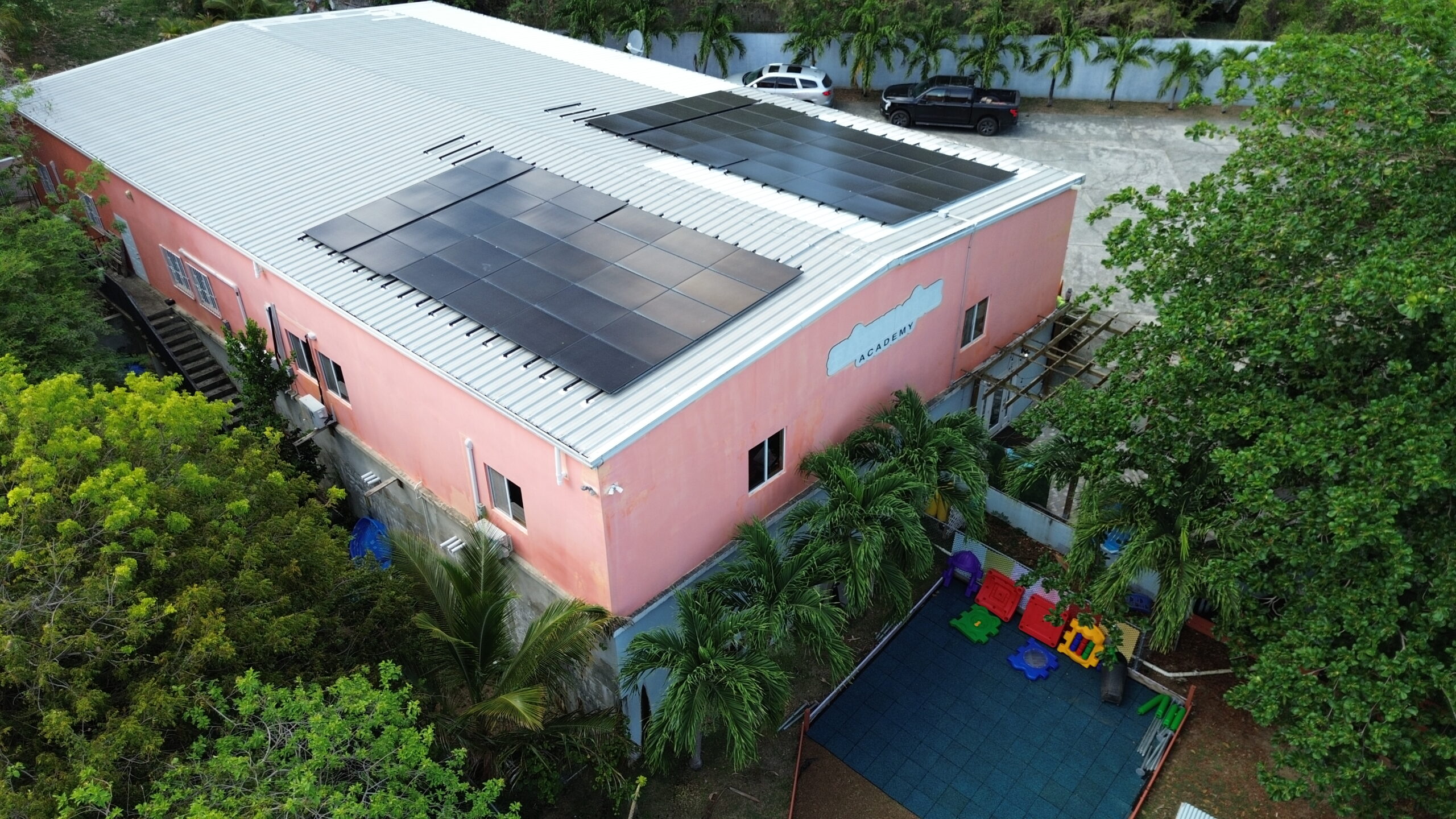
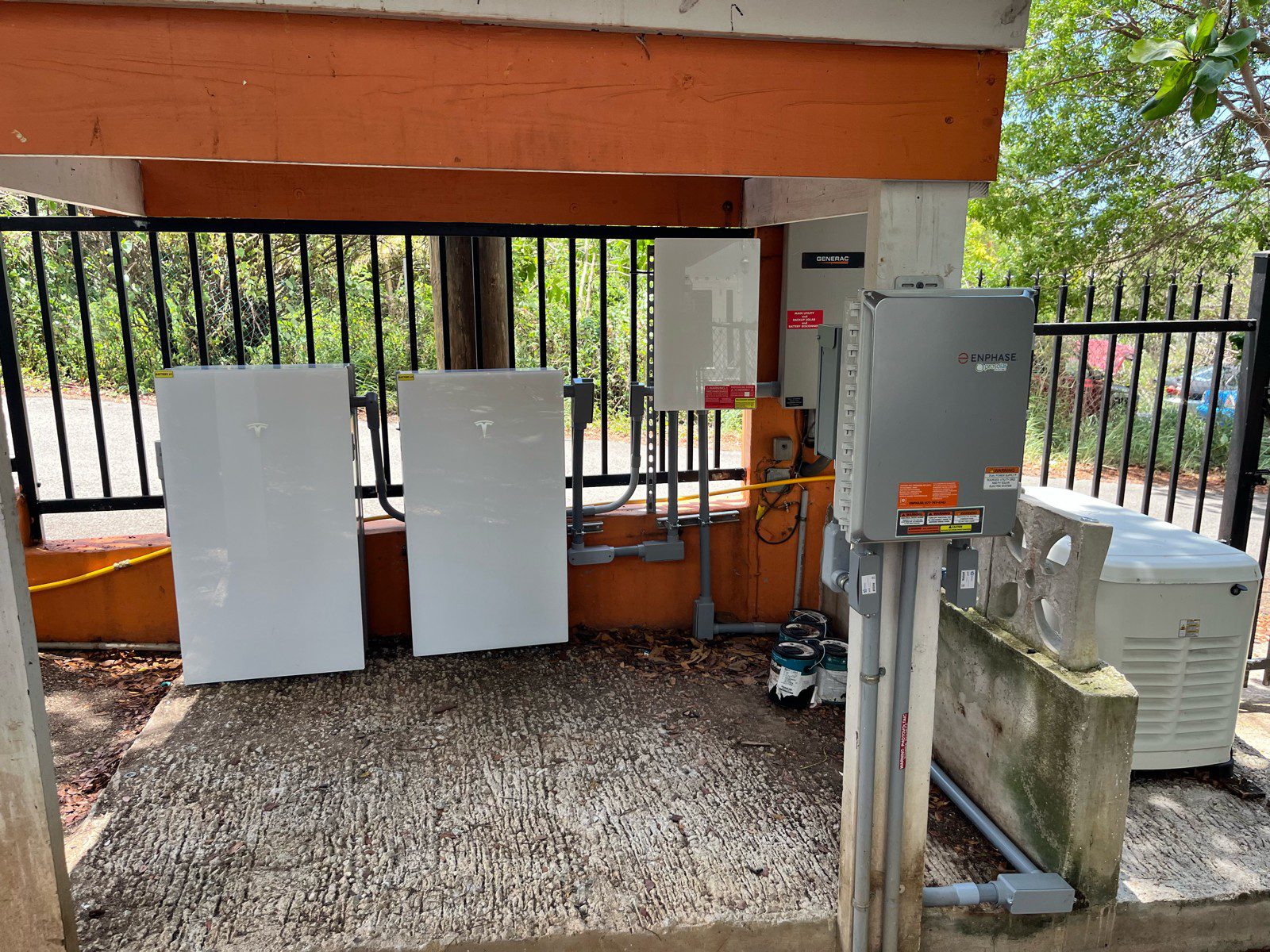
The completed installation is at Happy Faces II on St. Croix. The system, installed and commissioned by ProSolar Caribbean in May, includes 9.9 kilowatts of solar photovoltaic generation and 40.5 kilowatt-hours of battery energy storage. According to the Energy Office, the project is designed to reduce electricity costs while allowing the facility to continue operating during power outages.
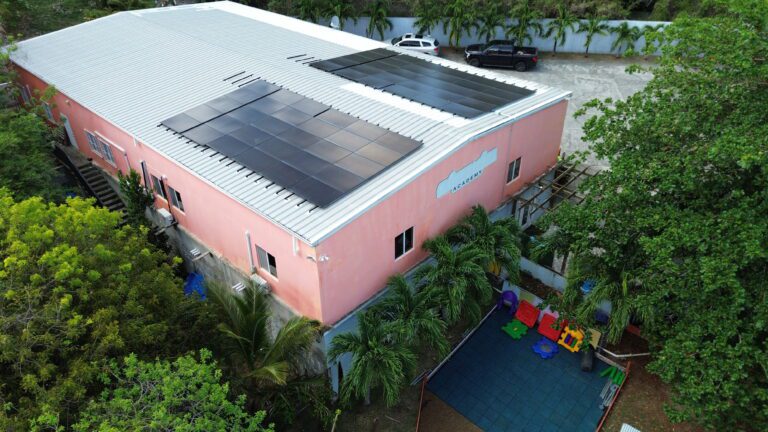
Happy Faces II on St. Croix is the first site completed under the Virgin Islands Energy Office’s Community Electrical Innovation Program, which supports resilient energy infrastructure at community facilities. (Submitted photo)
The battery system includes three Tesla Powerwall 3 units that have been enrolled in the Energy Office’s Virtual Power Plant program, which is intended to support future grid services through distributed energy storage, according to the press release.
At the same time, the Energy Office released a request for proposals for solar and battery microgrids at five additional day-care and Head Start facilities on St. Thomas, St. John and St. Croix. Collectively, the projects call for 149 kilowatts of solar generation and 600 kilowatt-hours of battery storage, the press release stated.
A battery-backed renewable energy system recently commissioned at Happy Faces II on St. Croix is designed to help maintain operations during power outages while reducing energy costs. (Submitted photo)
The proposed sites are DHS Sugar Estate Head Start on St. Thomas, DHS Cruz Bay Head Start on St. John, DHS Anna’s Hope Head Start on St. Croix, DoReMi Daycare on St. Croix and Tenacious Toddlers Learning Center on St. Croix, the release stated.
The Community Electrical Innovation program is funded through the Virgin Islands Housing Finance Authority using U.S. Department of Housing and Urban Development Community Development Block Grant-Disaster Recovery E-Grid funds. According to the release, the program supports the development of solar and battery storage systems at community facilities and nonprofit organizations in underserved areas, the release stated.
Last year, the Energy Office identified 29 critical facilities across the territory for potential participation in the program and is now moving into the implementation phase, according to the release.
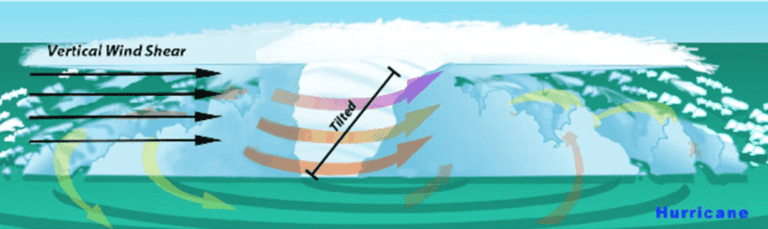
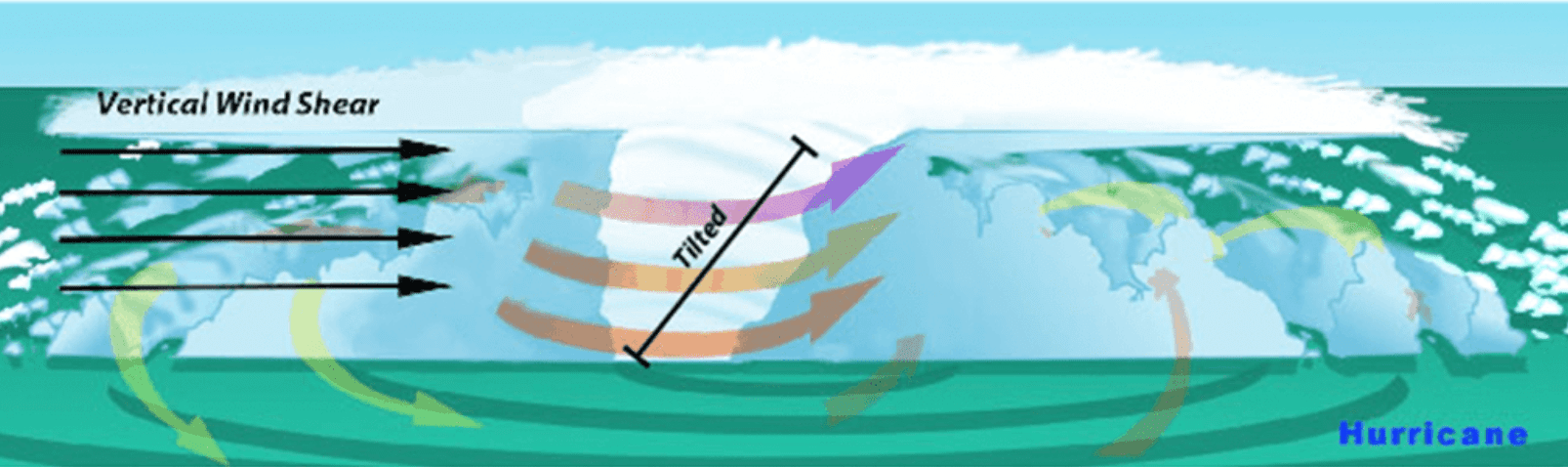
NOAA graphic showing how vertical wind shear can tilt a hurricane’s structure, disrupting the flow of heat and moisture needed for the storm to strengthen. (Photo courtesy NOAA)
Wind shear is a weather term often used during hurricane season, but it can sometimes sound like technical jargon. For residents in the U.S. Virgin Islands and across the Caribbean, understanding what wind shear means can help explain why some tropical waves struggle to develop, while others can organize when conditions are favorable.
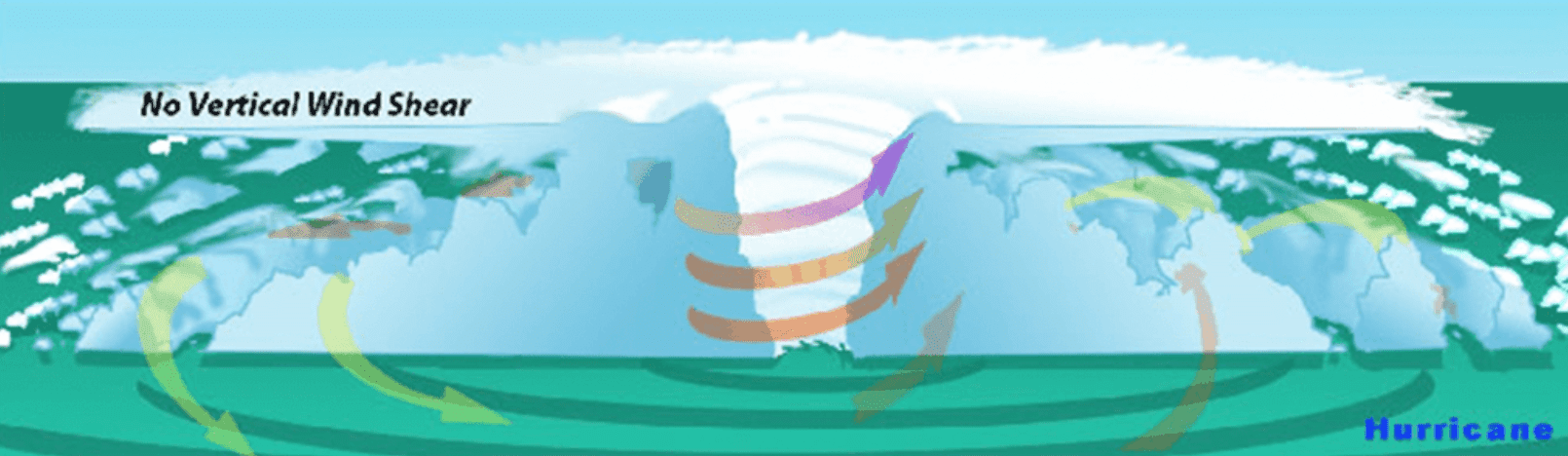
A graphic from NOAA showing how a hurricane can remain vertically aligned when there is little to no vertical wind shear. (Photo courtesy NOAA)Understanding Wind Shear
In simple terms, wind shear refers to a change in wind speed or direction with height in the atmosphere. During hurricane season, meteorologists talk about vertical wind shear, or how winds change from the lower part of the atmosphere to the upper levels.
“Wind shear is the variation of the wind’s speed or direction over a short distance within the atmosphere,” according to information from the National Oceanic and Atmospheric Administration’s Atlantic Oceanographic and Meteorological Laboratory. “For tropical cyclones, wind shear is important primarily in the vertical direction, as these storms occupy a large vertical slice of the atmosphere from sea level to the top of the troposphere, which extends up to about 40,000 feet altitude in the tropics in summer,” NOAA said.
How Wind Shear Can Disrupt Tropical SystemsNOAA explained in further detail how wind shear can affect tropical storms and hurricanes:
“Tropical weather systems are vulnerable to changes in the broader atmosphere surrounding them, often influenced by large features such as areas of high and low pressure and fronts. If there’s too much wind, these weather systems have trouble organizing and developing into a tropical cyclone. As a tropical system forms, heavy thunderstorms build near the center. Given the right environment, these systems can eventually begin turning counter-clockwise, or cyclonically, in the northern hemisphere. With little to no wind shear, the turning within the tropical system is uniform and the storm becomes vertically aligned, helping to keep it intact and likely strengthening.”
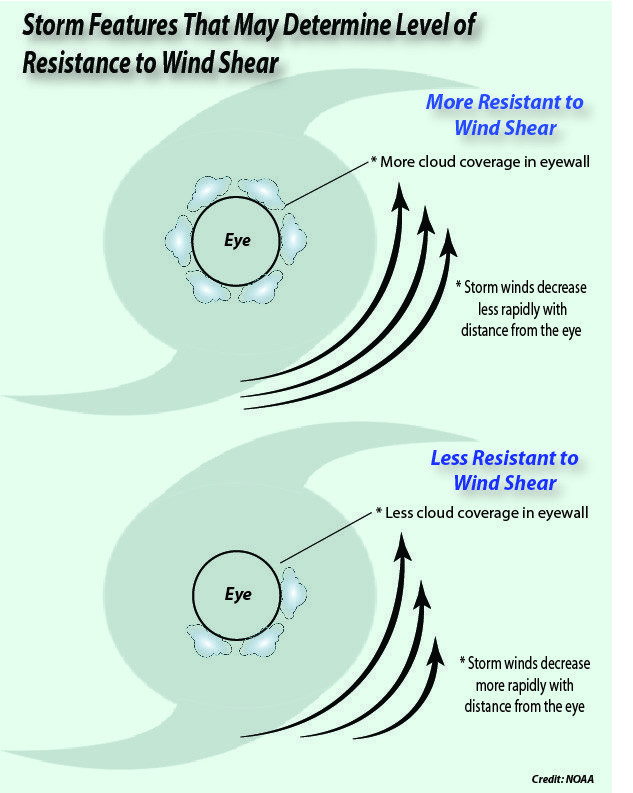
NOAA graphic showing storm features that may make a hurricane more or less resistant to the disruptive effects of wind shear. (Photo courtesy NOAA)
“The most favorable condition for tropical cyclone development is the absence of wind shear. When wind shear is present, however, a storm’s core structure becomes vertically tilted in relationship to the wind shear, disrupting the flow of heat and moisture. Tropical cyclones are heat engines powered by the massive heat release associated with water vapor condensing into liquid water. Vertically-tilted systems are less efficient at drawing in warm and moist air from the surrounding ocean and will be less likely to develop and strengthen,” NOAA stated.
The National Hurricane Center’s Mariner’s Tropical Cyclone Guide lists low vertical wind shear as one of the key ingredients for tropical cyclone development, describing it as, “Little change in wind speed or direction throughout the depth of the troposphere.”
Notably, wind shear does not necessarily mean residents will feel stronger winds at the surface. Breezy conditions across the Virgin Islands are more often tied to trade winds, pressure patterns, passing tropical waves, or local weather features.
The El Niño Connection
The latest El Niño update adds a timely reason to explain wind shear this season. The NOAA’s Climate Prediction Center issued an El Niño Advisory on Thursday, June 11, stating that El Niño conditions are now occurring.
“El Niño conditions are present and expected to strengthen into the Northern Hemisphere winter 2026-2027,” the CPC said.
The CPC noted that above-average sea surface temperatures have developed across the central and eastern equatorial Pacific Ocean, and that there is a 63% chance of a very strong El Niño during the November-January period.
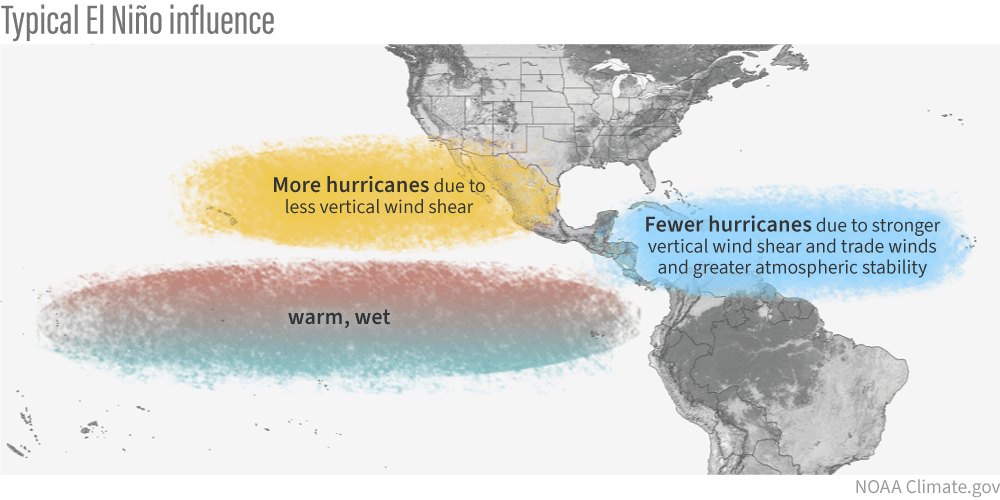
That matters for hurricane season, because El Niño often increases wind shear across parts of the Atlantic basin, including the Caribbean, while reducing wind shear in parts of the Pacific. NOAA/AOML explains that during El Niño, changes in the jet stream can lead to decreased wind shear in the Pacific and increased wind shear across much of the Caribbean and Atlantic.
A Weather Expert’s Perspective
The Source contacted Alex DaSilva, AccuWeather’s lead hurricane expert, to obtain additional information about wind shear, and why it is expected to play a major role this season.
A graphic showing typical El Niño influences, including increased vertical wind shear across parts of the Atlantic basin and reduced wind shear in the eastern Pacific. (Photo courtesy NOAA)
“El Niño typically leads to fewer storms in the Atlantic, because it increases wind shear, creating hostile upper-level winds that disrupt tropical development,” DaSilva said. “That tends to keep storm numbers lower overall, with more frequent periods of wind shear across the Atlantic basin. It’s the opposite in the Pacific. During El Niño years, there is generally less wind shear, which allows for more active hurricane seasons there,” DaSilva explained.
“Overall, during this hurricane season, wind shear is expected to be higher across the Atlantic, which should limit development for much of the season. However, it will not be constant. There will still be periods of lower wind shear, and those are the windows when powerful storms can form, especially with very warm ocean temperatures. The stronger El Niño becomes, the lower the total number of storms is likely to be. If we reach a ‘Super El Niño,’ storm totals would likely fall toward the lower end of the forecast range,” DaSilva said.
That combination of higher wind shear overall and very warm ocean water in parts of the basin, is one reason forecasters continue to stress preparedness.
“I am still concerned about the risks this season. Ocean temperatures are expected to be extremely warm, and ocean heat content will be very high. Any storm that finds a pocket of lower wind shear could rapidly intensify. That’s the risk this year. People may see a season with fewer storms and assume there is little to worry about. But that can actually make it more dangerous, because people may let their guard down,” DaSilva cautioned.
Wind Shear Does Not Eliminate Development Risk
Indeed, wind shear also is not the only factor that determines whether a tropical system develops. Warm ocean water, ocean heat content, moisture, dry air, Saharan dust, tropical waves and steering patterns are all examples of components that can contribute to the development of a storm.
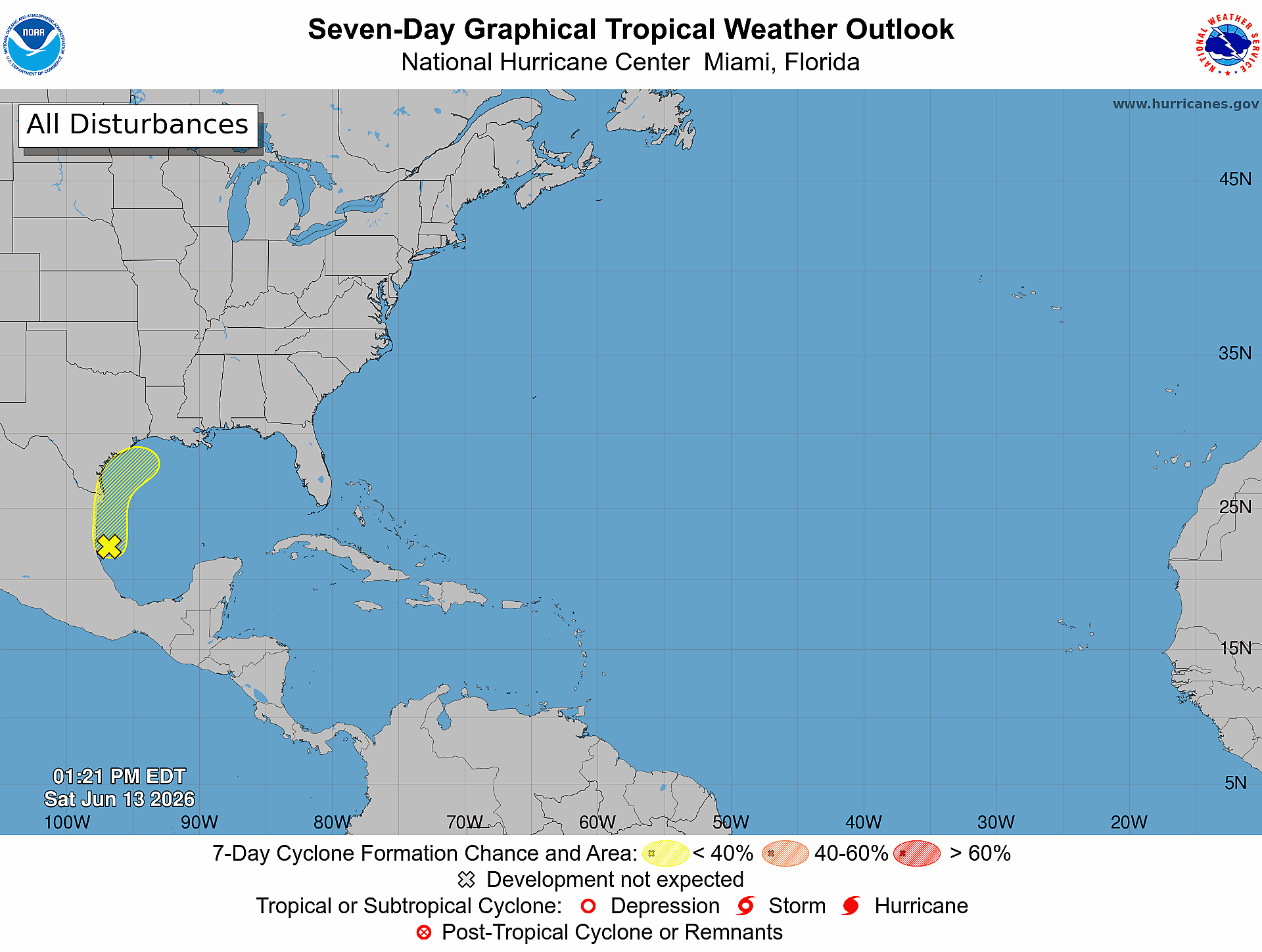
As the Source reported recently, the Atlantic basin remains relatively quiet overall, although there is a slight chance for development in the Gulf region.
A NHC seven-day outlook released on Saturday afternoon indicates a slight possibility for tropical development near the Gulf region. (Photo courtesy NHC)As of Saturday afternoon, the NHC said a broad area of low pressure just offshore of eastern Mexico was producing disorganized showers and thunderstorms in the southwestern Gulf. Significant development is not expected before the system moves inland over eastern Mexico by early Sunday. The NHC gave the system a low, 10% chance of formation through 48 hours and a low, 20% chance through seven days.
The NHC added that the system could re-emerge over the northwestern Gulf on Tuesday or Wednesday while interacting with a frontal boundary, although conditions there are expected to be only slightly conducive for development.
In the eastern Pacific, the NHC is monitoring a trough of low pressure located southwest of the Baja California Peninsula. Significant development is not expected, and the system has a low, 10% chance of formation through 48 hours and seven days. Tropical cyclone formation is not expected in the central North Pacific during the next seven days.
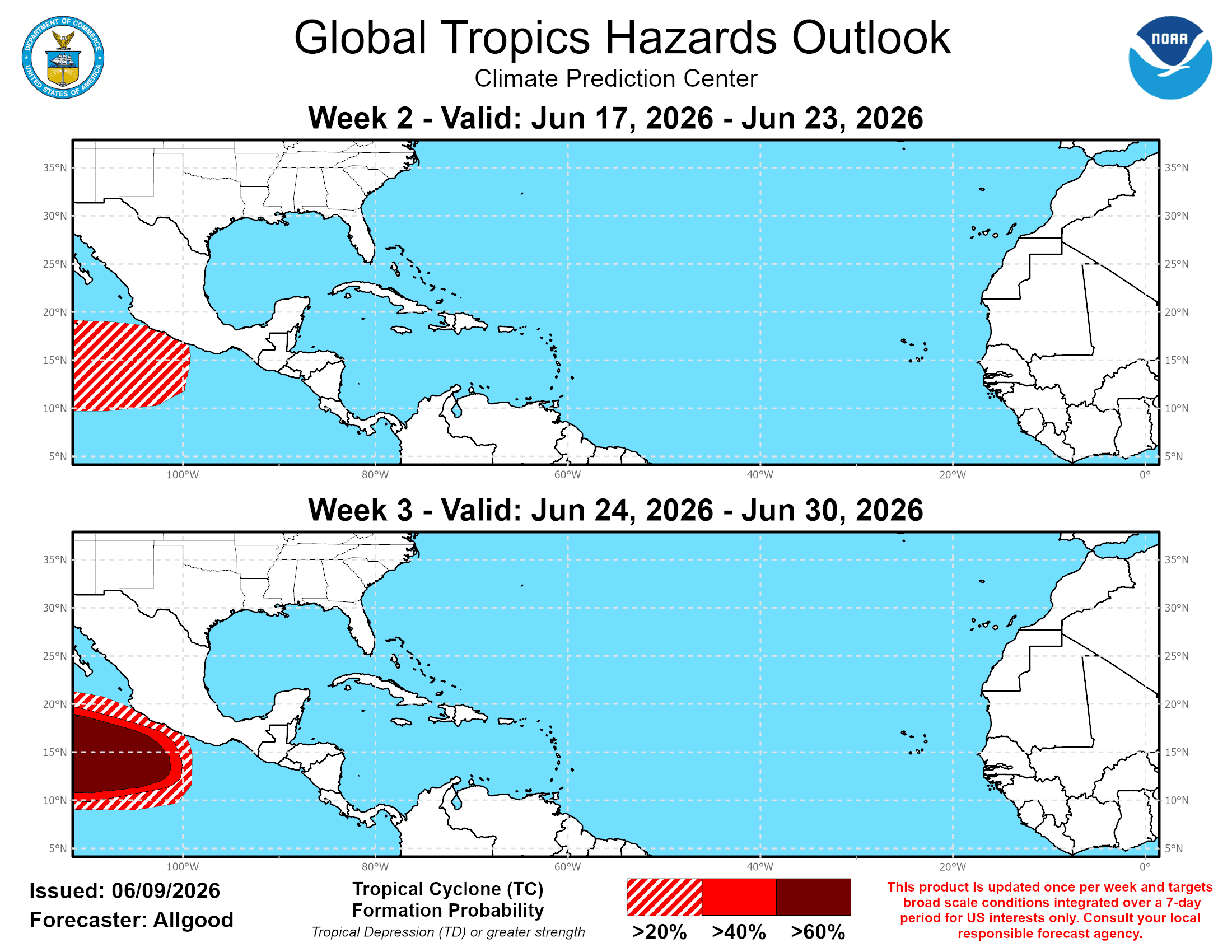
Still, the Pacific has already shown early-season activity, and NOAA’s CPC has indicated that conditions may become highly favorable for additional East Pacific tropical cyclone development later in June.
Forecast Updates
DaSilva said that Caribbean residents and visitors should remain aware as the season progresses.
NOAA Climate Prediction Center Global Tropics Hazards Outlook issued June 9, showing potential tropical cyclone development areas in the eastern Pacific for late June. (Photo courtesy NOAA Climate Prediction Center)
“For the Caribbean, especially the eastern Caribbean, the higher risk typically comes later, usually starting in July and increasing into August. Early in the season, it is more common to see tropical waves that have not fully developed yet. If El Niño becomes very strong, especially a super El Niño, wind shear would likely be stronger during the second half of the hurricane season,” DaSilva noted.
Information regarding the weather across the USVI, including marine forecasts, is available from the NWS and NOAA. The latest tropical forecasts can be viewed on the official website of the NHC.
The local forecast is regularly updated on the Source Weather Page, and a weekly video forecast is available. Additionally, residents and visitors can view weather alerts and disaster preparedness information from the Virgin Islands Territorial Emergency Management Agency
An arrest warrant was obtained on June 8, in connection to a report made in March of inappropriate touching. On June 12, Rafea Abdallah Hassan, 30, was arrested by members of the Criminal Investigation Bureau without incident, reported the Virgin Islands Police Department.
According to a police report, on March 29, a woman presented at the Wilbur H. Francis Command Police Station and reported being inappropriately touched by a man while at work. Following an investigation, the suspect was identified as Hassan.
He was booked, processed, and posted bail in the amount of $500. Hassan was released pending an advice of rights hearing on Monday, June 15, at the Superior Court.
The Virgin Islands Port Authority announced that the parking lot adjacent to the U.S. Customs facility in Cruz Bay, St. John, will be closed for public parking beginning Tuesday, June 16. This parking lot will be transformed into the St. John Celebration Village, featuring local vendors and live performances by local and international artists. After the Celebration ends on July 4th, the Village booths will be dismantled, and VIPA will clean, paint, and re-stripe the parking lot. The lot will re-open for public parking on Saturday, July 18. VIPA apologizes for any inconvenience this may cause the public.
Virgin Islands Sports Ambassador and University of Georgia standout Michelle Smith has delivered another exceptional performance on the national stage, advancing to the NCAA Division I Championships finals in both the 400m Hurdles and the 4x400m relay at the historic Hayward Field.
Michelle Smith advances in NCAA Finals. (Submitted photo)
Smith will line up in the 400m Hurdles final as one of the top contenders, continuing a season marked by consistency, speed, and major championship composure. The event is scheduled for 6:27 p.m. Pacific Time, which is 9:27 p.m. in the Virgin Islands, on Saturday June 13 giving fans back home the perfect primetime moment to tune in and cheer her on.
Less than an hour later, Smith will return to the track for the 4x400m relay final, where she and her Georgia teammates will battle for a podium finish. Smith has been a crucial relay leg all season, known for her powerful splits and ability to close gaps under pressure. The relay final begins at 7:21 p.m. Pacific Time, 10:21 p.m. VI Time.
As she steps onto the track, the Virgin Islands will be watching with pride, excitement, and unwavering support.
Three Virgin Islands athletes, Mikaela Smith, Malique Smith, and Omar Simpson, continued their international competition tour in Canada with determined performances at the Johnny Loaring Classic WACT Bronze Meet on June 7.
Sprinter Omar Simpson in Canada. (Submitted photo)
Middle‑distance standout Mikaela Smith delivered a solid effort in a competitive 800m field, placing 9th with a time of 2:12.75. The race provided valuable race‑pace sharpening as she continues to build toward peak form for the national championships.
In the men’s 400m hurdles, Malique Smith placed 4th in Heat 1, finishing in 53.91. His performance showed continued progression following his earlier race in Guelph, reinforcing his readiness for championship‑level competition later this month.
Sprinter Omar Simpson delivered the highlight of the day for Team ISV, powering to a personal best of 20.96 to finish 3rd in Heat 2 of the men’s 200m. The sub‑21 breakthrough marks a major milestone in Simpson’s season and positions him as a strong contender heading into the national championships.
Following their Canadian competitions, Mikaela Smith, Malique Smith, and Omar Simpson will travel back to the Virgin Islands to compete in the Adrian Durant VI National Championships on June 20, at the St. Croix Educational Complex Track & Field Facility.
A 15-year-old boy died Friday after being shot multiple times in the area of Vester Gade on St. Thomas, according to the Virgin Islands Police Department.
The ShotSpotter Detection System alerted 911 to multiple gunshots fired at approximately 2:17 p.m. Friday. Shortly afterward, a concerned citizen called 911 to report that a male victim had been injured, according to a VIPD police report.
Officers responded to the scene and found a responsive male suffering from multiple gunshot wounds, police said. The victim was transported by ambulance to Roy Lester Schneider Hospital, where medical personnel performed life-saving measures. He later died from his injuries, the police report stated.
The victim was identified by his next of kin as Tre’Vante Etienne, 15, the report stated.
Police said no suspect information was immediately available. The investigation is being handled by the Major Crimes Unit.
Etienne’s death marks the eighth homicide on St. Thomas and the 17th for the territory, according to the Source Homicide List.*
Anyone with information about the shooting is asked to contact the Criminal Investigation Bureau at 340-774-2211, extensions 5555 or 5556, or Crime Stoppers V.I. at 800-222-8477.
*The Source Homicide List is a chronological log of the homicides recorded in 2026 in the U.S. Virgin Islands, as reported by the VIPD. Cases are broken down by island. While this listing is based on VIPD reports, the Source does not include suicides or vehicular homicides in its listing, which the police and some other media do. This can lead to a discrepancy in the number of incidents reported.