A hemp retailer filed a lawsuit this week alleging that government agencies illegally searched a St. Thomas business and seized legal hemp-derived products. (Shutterstock image)
A St. Thomas business that sold hemp products has accused local law enforcement and regulatory agencies of violating both U.S. Virgin Islands and federal law after they seized more than $18,000 in an April 2025 raid, according to a lawsuit filed in U.S. District Court this week.
Homegrown Bar and Grill named the Virgin Islands government, V.I. Attorney General Gordon Rhea, Health Commissioner Justa Encarnacion, Licensing and Consumer Affairs Commissioner H. Nathalie Hodge and Cannabis Regulation Office Director Joanne Moorehead in its complaint, which stated that the hemp products were legal at the time they were seized and that the government failed to compensate the business for its loss.
The 36th Legislature approved a measure last month making the sale of such products illegal without a license from Cannabis Regulation, and Gov. Albert Bryan Jr. signed the bill into law on Jan. 23.
Robert Leycock, an attorney representing Homegrown, said in a statement to media outlets that hemp-derived products like the ones authorities confiscated had been legal under federal law since 2018 and that the territory’s own hemp retail program issued licenses to qualified sellers.
“Homegrown Bar and Grill did everything right. They applied for a license. They got one. They bought products from licensed wholesalers. They opened their doors. The government that licensed them then raided them,” he wrote. “Nine months before it had any law on the books that could arguably justify what it did.”
Leycock also took aim at a section of the recent law, which requires hemp retailers to surrender their products to the Health Department for storage until the OCR develops regulations and begins issuing licenses, “again without any provision for just compensation, and without any mechanism to compensate retailers for the destruction of their inventory and their reasonable investment-backed expectations.”
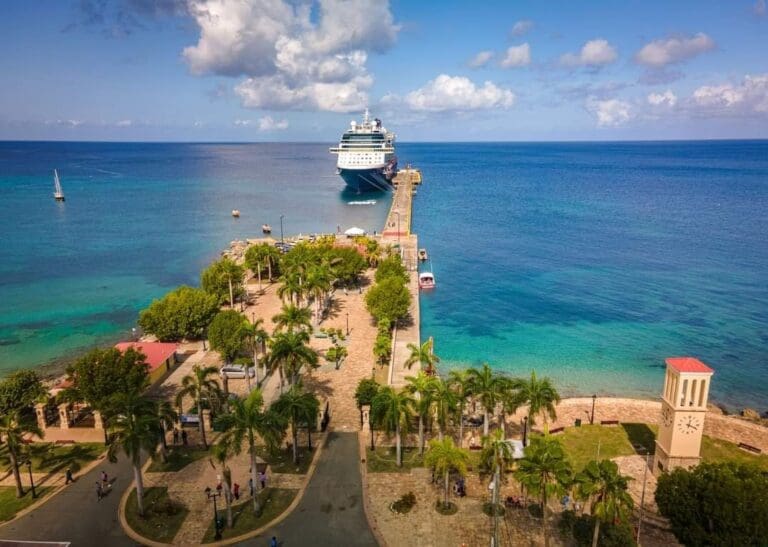
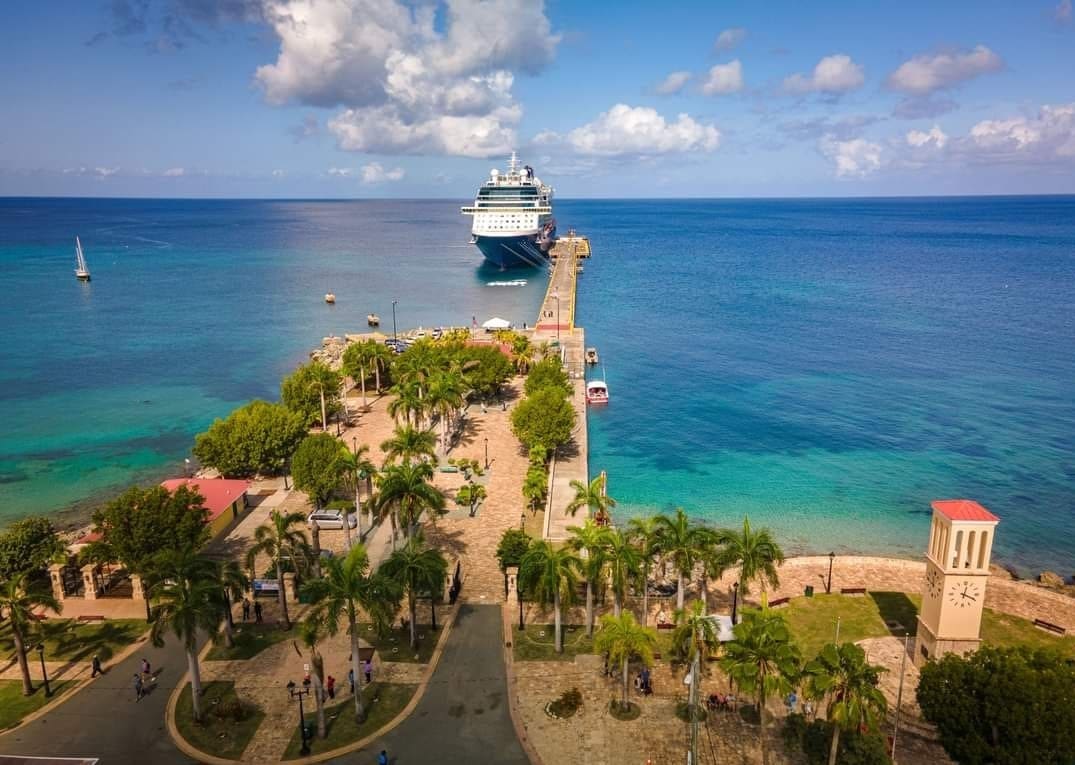
The Ann E. Abramson Pier in Frederiksted, St. Croix (Submitted photo)
Recent news confirms the people want the Frederiksted Pier open to recreation. The V.I. Port Authority says no. Why? The question has been pending for years without a sufficient explanation.
VIPA’s purported reasons include liability risks — the cancel button for fun everywhere. However, the Legislature has the power to neutralize the liability. I suggested this as fair trade for public access to the pier in a nostalgic love letter published here in 2024.
We have a statute limiting liability for private property owners who allow public use of their land, 32 V.I.C. 25a. Some minor repackaging of that section could limit the government’s and VIPA’s pier liability however the Legislature sees fit.
VIPA now cites another challenge, the code of federal regulations — specifically, 33 CFR 105. That part deals with port security, an important and demanding mission. But the regulations are flexible. Part 105 contains a waiver provision, which states:
“Any facility owner or operator may apply for a waiver of any requirement of this part that the facility owner or operator considers unnecessary in light of the nature or operating conditions of the facility.”
Part 105 also provides that a facility operator “may designate an area within the facility as a public access area” open to all people, not just ship passengers and crew.
The Frederiksted Pier is historically an open public space with relatively infrequent ship traffic. VIPA has failed to articulate a good reason why access must be restricted forever at the expense of residents and shore-based visitors. VIPA should consider a creative waiver application and a “public use area” designation, tied to the ship schedule, to conform with the will of the local people. We can have a port that is both secure and open to public use.
Perhaps VIPA has thoroughly reviewed these options. However, if VIPA did, that fact was not evident in recent news reports about a VIPA community meeting held Tuesday. In that meeting, which concerned Frederiksted improvement plans, attendees reportedly wanted to talk about public access to the pier, but not so much about enhancing the experience for cruise-ship passengers. VIPA officials’ statements did not reflect any effort to restore public use by regulatory exception or otherwise. Instead, VIPA authorities simply say the old days of pier strolling, fishing, and swimming are over.
VIPA’s outlook should not end the discussion. The regulations appear to leave open doors. If VIPA has found public access unworkable after a diligent review of all options, it owes the people a detailed report. If the review is incomplete in any respect, they should call me and I will give them some pro bono hours.
— Ryan Stutzman is an attorney on St. Croix.
Editor’s Note: Opinion articles do not represent the views of the Virgin Islands Source newsroom and are the sole expressed opinion of the writer. Submissions can be made to visource@gmail.com.
Bad Bunny performs the halftime show during the Seattle Seahawks versus the New England Patriots Super Bowl LX game on Feb. 8 at Levi’s Stadium in Santa Clara, California. (Photo by Matthew Huang/Icon Sportswire via Getty Images)
Editor’s Note: This is the first article of a three-part series. A Spanish version follows below.
Much has been written about the performance by Benito Antonio Martínez Ocasio (Bad Bunny) during the halftime show at Super Bowl LX, and there is much still to be said.
What Benito Antonio/Bad Bunny did during his performance transcended personal achievement or glory. It was a truly unique moment in entertainment history for many reasons, some more obvious than others. The artist expressed generosity seldom seen at such a career highlight where the tendency is to say “look at ME,” not “look at WE.”
Benito turned the show into a love letter to his island, his origins, the people that made him who he is, to all the children that dream of success, and asked for God to bless every country of our American continent, callling their names, one by one, from Chile in the South to Canada in the North, plus the Greater Antilles, Cuba to Puerto Rico (he summarized the Lesser Antilles as las Antillas, but did not forget a single one of its flags during the show’s finale).
He sang in Spanish, because, as most people by now know, Bad Bunny is a native Spanish speaker from Vega Baja, Puerto Rico, USA. Spanish has been the main language of Puerto Rico for five centuries, and remains the official language (together with English), even after the U.S. take-over of the island in 1898. Puerto Ricans were granted U.S. citizenship in 1917.
He sings in the language that better expresses the feelings he wants to convey. Beyoncé, Kendrick Lamar, and Taylor Swift do exactly the same, except that their native language is English. And they always sing in English. Nobody would expect otherwise.
For viewers that did not know Bad Bunny existed it might have been puzzling to understand why he was headlining the 2026 Super Bowl’s halftime show. To say that the artist and his music are very, very, popular is an understatement.
Let me share some facts:
He has been the most streamed artist on Earth in four of the last six years, with numbers reaching almost 20 billion in 2025 alone.
Last year he staged 31 sold-out concerts in his native Puerto Rico. The final performance was telecast live on Amazon Prime. The show broke all records for the most-watched single-artist performance on Amazon Music’s history.
Three weeks ago Bad Bunny won the 2026 Grammy award for Best Album of the Year. It was the first Album of the Year in the history of the award to be handed to a non-English language album.
He has won another five Grammy Awards, 17 Latin Grammys, 16 Billboard Music Awards, and 54 Billboard Latin Music Awards. Billboard named him the Greatest Pop Star of the year in 2023, becoming the first Spanish-language artist to be recognized, and he won the title again in 2025. He has won ASCAP awards, People’s Choice awards, GLAAD Media awards, MTV Music awards, the list goes on and on.
Looking at the numbers and awards just listed makes it obvious that for the executives in charge of putting the halftime show together it did not matter if Bad Bunny sang in Spanish, Kwéyòl, Quechua, or Taíno. For Amazon, Apple Music (official sponsor of the show), Roc Nation (which produces it and is owned by Jay Z), the National Football League (NFL), and NBC (which charged 8 to 10 million dollars for a 30-second ad during the game), the language that Bad Bunny sings in is dollars, pesos, pounds and yuans. That is capitalism.
And still, that the artist was not going to sing in English was turned by some prominent people into a political issue. Attacks against the artist and his singing in Spanish attempted to reduce the show’s appeal for potential viewers. It backfired spectacularly.
The Benito Bowl was the most watched halftime show in the Super Bowl’s history when all media consumption (television, social media, YouTube, etc.) is counted and set a new record with over 4 billion views in the first 24 hours. “Thank you Benito for letting them play football at your concert,” somebody wrote on YouTube.
After the concert, his performance playlist was the most-played on Apple Music. Twenty of his songs were among the 100 songs most played in the world.
In the U.S., Bad Bunny’s streamed numbers skyrocketed 470% after the performance.
The NFL’s Instagram clip with highlights of the show reached 179 million views. It is the league’s most-watched clip ever.
The halftime show has also influenced travel behavior. Expedia reported a 245 percent surge in searches for flights to Puerto Rico compared to the same period of time last year (Feb. 8-11). And several cities where Bad Bunny will play during his present world tour, which does not include any U.S. cities, have also seen an increase in flight searches coinciding with the days prior to his performance.
What makes all those statistics more remarkable is that Bad Bunny did not just sing in Spanish, at the halftime show, he sang in Puerto Rican.
Just as every Caribbean island has its territorial variation of English, French, etc., the Spanish speaking Caribbean, and Latin America as a whole, speaks Spanish with characteristic words, expressions, and grammatical differences from what is considered formal or standard Spanish. Yes, we all understand each other, but the differences exist, and they are important to know, particularly when traveling from one country to another, or listening to music.
Many websites explaining Puerto Rican slang, linguistic forms, words and style, for his not Boricua (not Puerto Rican) fans exist. Other sites decode and translate his lyrics line by line. He didn’t need to sing in standard Spanish, his fans are willingly and joyfully learning Puerto Rican.
That Benito Antonio did not “code switch” to a more standard Spanish is a tribute to all colloquial forms of speech. Many of us have heard that our nations’ expressive forms of talking are second class: bad Spanish, bad English, bad French — not to Bad Bunny.
But that is the way he has sung since his first album. What we saw and heard was authentically him. He has conquered the entertainment world without artifice, or pretense. That is the beauty and the irony of it. By “just” being Benito Antonio Martínez Ocasio from Vega Baja, Puerto Rico, he has become universal.
The love of the artist for his language and culture even paid off for Benito and the NFL at the game’s merchandise stands.
The NFL now has a whole line of products in Spanish (el Super Tazón LX) and merchandise with the sapo concho, the endangered Puerto Rican crested toad, in football gear. Regardless of your team preference, you can get something with Super Tazón or the sapo concho on it. A win for culture, a win for Benito, a win for the bottom-line.
For an artist to celebrate her or his culture and origins on such an important stage as the Super Bowl, whether it is Puerto Rico, Texas, Hawaii, Barbados, or anywhere else, through music seems so simple, so enriching for the audience, and now we know, so commercially savvy, and yet it had never been done before, not as Benito did it.
But it was not the cultural and language components alone that made Bad Bunny’s show different from any other halftime performance. The artist wanted to share the top spot he presently holds in the entertainment world with every viewer, and insisted with genuine modesty that he owed much to many, and that his success could be attained by others.
About four minutes and 45 seconds into the performance, with violin music in the background, Bad Bunny spoke directly to his millions of viewers, “My name is Benito Antonio Martínez Ocasio, and if I am here at the Super Bowl 60 it’s because I never, never stopped believing in myself. You should also believe in you. You are worth more than you think.”
Just one week before the Super Bowl, while accepting the Album of the Year award, at the 2026 Grammy Awards Ceremony, he said something that applies to every one of our island nations: “Puerto Rico, believe me when I tell you that we are much bigger than 100 by 35 (miles), and there is nothing we cannot achieve.”
We all share that feeling towards our islands. For us, our nations are much bigger than their width and length measured in miles or kilometers.
He continued by thanking God, the Academy, thanking his mother for giving birth to him in Puerto Rico, he thanked his producers, and the team responsible for the album, and then he dedicated his award to all of those that had to leave their countries in search of a better future, and to those who have lost loved ones and keep on going.
Those simple words expressing so much humanity, but also so much national orgullo, pride, for who he is and also for where he came from, are important. The respect for family and friends, dedicating the award not only to those that helped him get to where he is, but also to those less fortunate than him, are powerful and unifying lessons in any language, and they came from the biggest music star on the planet right now. I thought in particular of the young people in our communities, always looking for role models and guidance.
And much to our orgullo, he is one of us, Puertorriqueño and Caribbean, American y Americano, without contradictions, and all at the same time.
— Mario Picayo is a Caribbean cultural activist, writer and publisher. He is chief editor of the publishing houses Little Bell Caribbean and Guaní Press. Born in Cuba, he lived many of his formative years in Puerto Rico, and later in the U.S. Virgin Islands. For close to four decades he has resided between the U.S. Virgin Islands and New York. Previously, and also parallel, to his publishing career he has worked as photographer specialized in documenting cultural celebrations, like carnival, and similar joyful, musical, community-unifying events from Trinidad to the Bahamas.
Editor’s Note: Opinion articles do not represent the views of the Virgin Islands Source newsroom and are the sole expressed opinion of the writer. Submissions can be made to visource@gmail.com.
****
El espectáculo caribeño de Bad Bunny durante el Super Bowl LX.
Primera parte: Cantando en puertorriqueño, hablando en caribeño.
Este es el primer artículo de una serie de tres partes.
Mucho se ha escrito sobre la actuación de Benito Antonio Martínez Ocasio (Bad Bunny) durante el espectáculo de medio tiempo del Super Bowl LX, y aún queda mucho por decir.
Lo que Benito Antonio/Bad Bunny hizo durante su actuación trascendió el logro o la gloria personal. Fue un momento verdaderamente único en la historia del entretenimiento por muchas razones, algunas más obvias que otras. El artista expresó una generosidad pocas veces vista en un momento tan destacado de su carrera, donde la tendencia es decir “mírenme a MÍ”, no “mírennos a NOSOTROS.”
Benito convirtió el espectáculo en una carta de amor a su isla, a sus orígenes, a la gente que lo hizo quien es, a todos los niños que sueñan con el éxito, y pidió a Dios que bendijera a cada país de nuestro continente americano, nombrándolos uno por uno, desde Chile en el sur hasta Canadá en el norte, además de las Antillas Mayores, desde Cuba hasta Puerto Rico (resumió las Antillas Menores como las Antillas, pero no olvidó ninguna de sus banderas durante el final del espectáculo).
Cantó en español, porque, como la mayoría ya sabe, Bad Bunny es hispanohablante de Vega Baja, Puerto Rico, EE. UU. El español ha sido el idioma principal de Puerto Rico durante cinco siglos y sigue siendo el idioma oficial (junto con el inglés), incluso después de la toma de posesión de la isla por parte de Estados Unidos en 1898. Los puertorriqueños obtuvieron la ciudadanía estadounidense en 1917.
Canta en el idioma que mejor expresa los sentimientos que quiere transmitir. Beyoncé, Kendrick Lamar y Taylor Swift hacen exactamente lo mismo, solo que su lengua materna es el inglés. Y siempre cantan en inglés. Nadie esperaría otra cosa.
Para quienes no conocían a Bad Bunny, pudo haber sido desconcertante entender por qué encabezaba el espectáculo de medio tiempo del Super Bowl de 2026. Decir que el artista y su música son muy, muy populares es quedarse corto.
Compartamos algunos datos:
Ha sido el artista con más reproducciones en streaming del mundo en cuatro de los últimos seis años, alcanzando casi los 20 mil millones solo en 2025.
El año pasado, ofreció 31 conciertos con entradas agotadas en su natal Puerto Rico. La última actuación se transmitió en vivo por Amazon Prime. El espectáculo rompió todos los récords de la actuación individual más vista en la historia de Amazon Music.
Hace tres semanas, Bad Bunny ganó el premio Grammy 2026 al Mejor Álbum del Año. Fue el primer Álbum del Año en la historia de los premios otorgado a un álbum en una lengua distinta al inglés.
Ha ganado otros 5 premios Grammy, 17 Grammy Latinos, 16 Premios Billboard de la Música y 54 Premios Billboard de la Música Latina. Billboard lo nombró la Mejor Estrella Pop del Año en 2023, convirtiéndose en el primer artista hispanohablante en recibir el reconocimiento, y volvió a ganar el título en 2025. Ha ganado premios ASCAP, premios People’s Choice, premios GLAAD Media, premios MTV Music, y la lista continúa.
Al observar las cifras y los premios recién mencionados, es evidente que para los ejecutivos encargados de organizar el espectáculo de medio tiempo no importaba si Bad Bunny cantaba en español, kweyòl, quechua o taíno. Para Amazon, Apple Music (patrocinador oficial del programa), Roc Nation (productora y propiedad de Jay Z), la Liga Nacional de Fútbol Americano (NFL) y NBC (que cobró entre 8 y 10 millones de dólares por un anuncio de 30 segundos durante el partido), el idioma en el que canta Bad Bunny es el dólar, el peso, la libra y el yuan. Eso es capitalismo.
Y aun así, el hecho de que el artista no cantara en inglés fue convertido por algunas figuras prominentes en un problema político. Los ataques contra el artista y su canto en español intentaron reducir el atractivo del programa para los espectadores potenciales. El resultado fue absolutamente lo opuesto.
El Benito Bowl es el espectáculo de medio tiempo más visto en la historia del Super Bowl, considerando todo el consumo de medios (televisión, redes sociales, YouTube, etc.), y estableció un nuevo récord con más de 4 mil millones de videntes en las primeras 24 horas. “Gracias, Benito, por dejar que jugaran fútbol americano en tu concierto”, escribió alguien en YouTube.
Después del concierto, sus canciones fueron las más escuchadas en Apple Music. Veinte de sus canciones se encontraban entre las cien más escuchadas del mundo.
En Estados Unidos, las canciones de Bad Bunny se dispararon un 470 % tras su actuación en los medios de “streaming.”
El vídeo de Instagram de la NFL con los mejores momentos del espectáculo alcanzó una audiencia de 179 millones para convertirse en el vídeo más visto en la historia de la liga.
El espectáculo también ha influido en los planes de viajes de muchos. Expedia reportó un aumento del 245 % en las búsquedas de vuelos a Puerto Rico en comparación con el mismo periodo el año pasado (del 8 al 11 de febrero). Y varias ciudades donde Bad Bunny actuará durante su gira mundial, que no incluye ninguna ciudad estadounidense, también han experimentado un aumento en las búsquedas de vuelos coincidiendo con los días previos a su actuación.
Lo que hace aún más interesante estas estadísticas es que Bad Bunny no cantó en español, durante el espectáculo del Super Bowl, él cantó en puertorriqueño.
Así como cada isla caribeña tiene su propia variante territorial del inglés, francés, etc., el Caribe hispanohablante, y Latinoamérica en general, habla español con palabras, expresiones y diferencias gramaticales características y diferentes al español formal o estándar. Sí, todos nos entendemos, pero las diferencias existen y es importante conocerlas, sobre todo al viajar de un país a otro o al escuchar música.
Existen muchos sitios web que explican la jerga, las formas lingüísticas, las palabras y demas características del puertorriqueño para sus fans no boricuas (no puertorriqueños). Otros sitios decodifican y traducen sus letras línea por línea. Bad Bunny no necesitó cantar en español estándar; sus fans están gustosamente aprendiendo puertorriqueño.
Que Benito Antonio no haya sentido la necesitad de cambiar su lengua a un español más estándar es un homenaje a todas las formas coloquiales del habla. Muchos hemos oído que las formas expresivas del habla de nuestros países son de segunda clase: mal español, mal inglés, mal francés; no para este Conejo Malo (Bad Bunny).
Pero hay the entender que el artista ha cantado así desde su primer álbum. Lo que vimos y escuchamos en el Super Bowl XL fue auténticamente él. Ha conquistado el mundo del entretenimiento sin artificios ni pretensiones. Ahí reside la belleza y la ironía. Siendo “sencillamente” Benito Antonio Martínez Ocasio, de Vega Baja, Puerto Rico, se ha vuelto universal.
El amor del artista por su idioma y cultura incluso rindió frutos para Benito y la NFL en los puestos de mercancía del juego.
La NFL ahora cuenta con una línea completa de productos en español (el Super Tazón LX) y mercancía con el sapo concho, el sapo crestado puertorriqueño en peligro de extinción, en artículos de fútbol americano. Independientemente de tu preferencia de equipo, puedes conseguir algo con el Super Tazón o con Concho. Una victoria para la cultura, una victoria para Benito, una victoria para los inversionistas.
Que un artista celebre su cultura y orígenes en un escenario tan importante como el Super Bowl, ya sea el artista de Puerto Rico, Texas, Hawái, Barbados o cualquier otro lugar, a través de la música parece tan sencillo, tan enriquecedor para el público, y ahora lo sabemos, tan comercialmente inteligente, y sin embargo, nunca antes se había hecho, no como lo hizo Benito.
Pero no fueron solamente los componentes culturales e idiomáticos los que hicieron que el espectáculo de Bad Bunny fuera diferente de cualquier otra actuación de medio tiempo. El artista quiso compartir el lugar que actualmente ocupa en el mundo del espectáculo con todos los espectadores e insistió con genuina modestia en que les debía mucho a muchos, y que su éxito podría ser alcanzado por otros.
Aproximadamente a los cuatro minutos y cuarenta y cinco segundos de iniciada la actuación, con música de violín de fondo, Bad Bunny se dirigió directamente a sus millones de espectadores: “Mi nombre es Benito Antonio Martínez Ocasio, y si estoy aquí en el Super Bowl 60 es porque nunca, nunca dejé de creer en mí. Ustedes también deberían creer en ustedes. Valen más de lo que creen.”
Apenas una semana antes del Super Bowl, al aceptar el premio al Álbum del Año en la Ceremonia de los Premios Grammy 2026, dijo algo que aplica a cada una de nuestras naciones insulares: “Puerto Rico, créeme cuando te digo que somos mucho más grandes que 100 por 35 (millas), y no hay nada que no podamos lograr.”
Todos compartimos ese sentimiento hacia nuestras islas. Para nosotros, nuestras naciones son mucho más grandes que su ancho y largo medidos en millas o kilómetros.
Continuó agradeciendo a Dios, a la Academia, a su madre por “haberme parido en Puerto Rico”, a sus productores y al equipo responsable del álbum, y luego dedicó su premio a todos aquellos que tuvieron que dejar sus países en busca de un futuro mejor, y a quienes han perdido a seres queridos y siguen adelante.
Esas sencillas palabras, que expresan tanta humanidad, pero también tanto orgullo nacional, por quién es y por sus orígenes, son importantes. El respeto a la familia y los amigos, dedicando el premio no solo a quienes lo ayudaron a llegar hasta donde está, sino también a aquellos menos afortunados que él, son lecciones poderosas y unificadoras en cualquier idioma, y las dijo la estrella musical más grande del planeta en este momento. Pensé en particular en los jóvenes de nuestras comunidades, siempre en busca de modelos a seguir y guía.
Y para nuestro orgullo, Benito, Bad Bunny, es uno de nosotros, con mayusculas, Puertorriqueño y Caribeño, American y Americano, sin contradicciones, y todo a la misma vez.
— Mario Picayo. Activista cultural caribeño, escritor y editor. Es director de las editoriales Little Bell Caribbean y Guaní Press. Nacido en Cuba, vivió gran parte de sus años formativos en Puerto Rico y en las Islas Vírgenes de los EEUU. Durante casi cuatro décadas ha residido entre las Islas Vírgenes y Nueva York. Anteriormente, y en paralelo a su carrera editorial, ha trabajado como fotógrafo especializado en documentar fiestas tradicionales de un lado al otro del Caribe insular. Estas incluyen carnavales, fiestas patronales y otras celebraciones comunitarias honrando la musica, las artes y las tradiciones de sus pueblos.
A proposed nursing home facility is under review by the Department of Planning and Natural Resources following a public hearing on a zoning map amendment request. (Shutterstock image)
On Thursday morning, the Department of Planning and Natural Resources held a public hearing via Zoom to consider a zoning map amendment request for a proposed nursing home facility on St. Croix, outlining the legal process and inviting community input before moving forward.
Applicant Andrea L. Christian-Michel outlined her vision for a facility that would offer retirees a place to feel safe, cared for, and at home. She described the project as more than a business venture, emphasizing her desire to create a peaceful setting where elderly residents can live with dignity and comfort.
The property in question is located at Plot No. 395 Estate Whim, Westend Quarter, St.
Croix.
The home would operate within a residential setting, maintaining a scale that blends into the surrounding neighborhood. The facility is expected to provide personalized care support, assistance with daily living activities, and monitoring to ensure residents’ health and safety. Christian-Michel explained that the proposed facility would serve seniors who may no longer be able to live independently but still desire a calm, residential atmosphere.
Her goal, she said, is to provide a supportive space tailored to the needs of aging residents while remaining mindful of the surrounding community.
“I’m praying that everything goes successful so I can begin, and people who are retired and want some place to go and relax could feel at home,” she said.
If approved, the facility would expand the territory’s senior care options and provide another residential alternative for families seeking long-term accommodations for aging loved ones.
During the hearing, Territorial Director Leia LaPlace asked a series of clarifying questions regarding the scope and impact of the project. LaPlace sought details about how the facility would operate within the neighborhood, how construction would be managed, what safeguards would be in place for surrounding residents, and whether the proposal aligns with existing zoning requirements.
LaPlace emphasized the importance of ensuring that development balances community need with neighborhood compatibility, noting that public hearings are designed to allow residents to voice both support and concerns before decisions move forward.
One resident, Hermina Joseph, raised concerns about potential construction impacts, particularly dust and airborne debris affecting nearby homes. Joseph, who shared that she has medical limitations due to metal rods and screws in her spine, asked whether protective mesh barriers would be required around the construction site.
DPNR official Amanda Jackson-Acosta confirmed that best management practices, including dust control measures, are required during construction and that the department would monitor compliance. Residents were encouraged to report any issues should the project move forward.
Planning Technician Gail Pagan, of the Division of Comprehensive and Coastal Zone Planning, chaired the hearing and explained that once the public hearing concludes, DPNR has 30 days to prepare a recommendation report for the commissioner’s signature. After the commissioner signs off, the report is forwarded to the Legislature and the applicant.
The public comment period remains open until March 1. After reviewing submitted comments and evaluating the proposal, DPNR will issue a recommendation that could approve, modify, or deny the zoning request.
A 43-year-old man has been arrested in connection with a sexual assault investigation involving a minor on St. Croix, the Virgin Islands Police Department reported.
According to the police report, the arrest stems from a report made Jan. 21 at approximately 3:48 p.m., when a female walked into the Wilbur H. Francis Command Police Station to report a sexual assault. The matter was assigned to the Criminal Investigation Bureau for further investigation.
During the investigation, detectives determined that the female was a minor at the time the alleged assault occurred, the police report stated.
Police identified the suspect as Francis T. Capone, 43.
Detectives made contact with Capone, who voluntarily agreed to appear for questioning. On Feb. 19, he appeared at the Wilbur H. Francis Command Police Station and was advised of his Miranda rights, the report stated.
During questioning, Capone denied the allegations of sexual assault but admitted to kissing the minor, police reported.
Based on the findings of the investigation, Capone was placed under arrest and formally charged. Bail was set at $75,000. Unable to post bail, he was remanded to the custody of the John Bell Correctional Facility pending his advice of rights hearing scheduled for Friday in Superior Court, the report stated.
The case remains under active investigation.
Anyone with additional information is urged to contact the Criminal Investigation Bureau at 340-778-2211 or call 911.
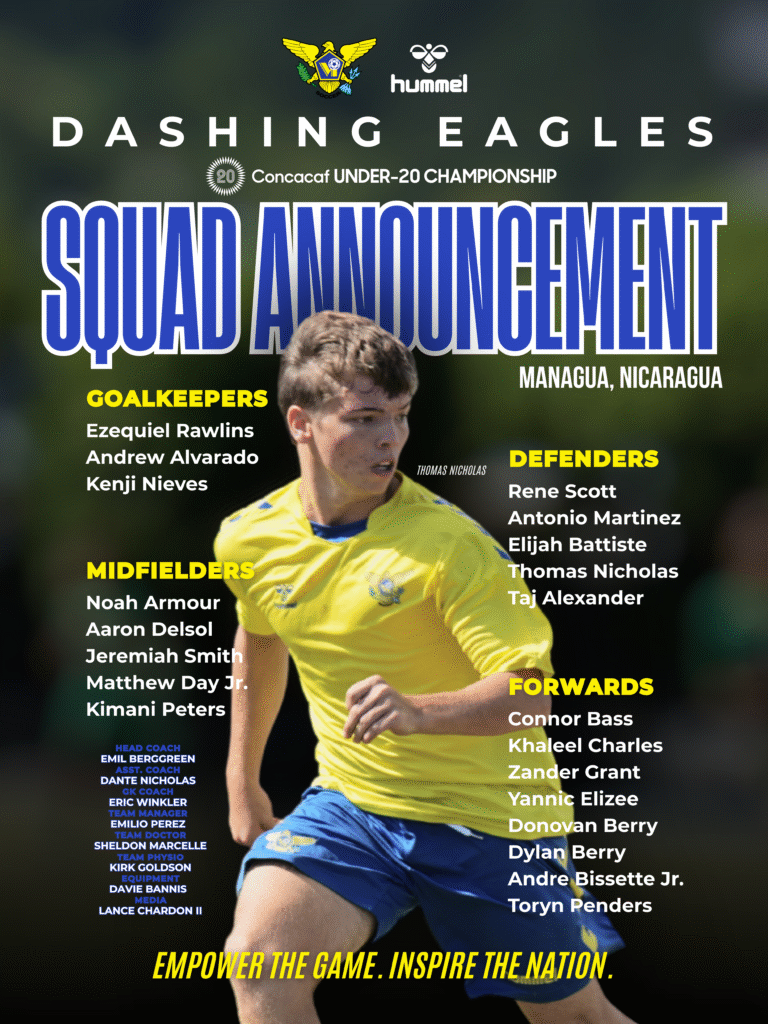
The U-20 Men’s National Team, the Dashing Eagles, departed for Managua to compete in the 2026 CONCACAF U-20 Championship Qualifiers, the U.S. Virgin Islands Soccer Federation said.
The U.S. Virgin Islands will open its campaign against Martinique on Tuesday, Feb. 24, at Estadio Miguel Chocorrón Buitrago in Managua. Kickoff is scheduled for 6 p.m. AST. Local streaming availability will vary; fans are encouraged to check their local cable listings for broadcast details.
This year’s squad marks an important milestone for the program, as Head Coach Emil Berggreen makes his official debut leading the U-20 Dashing Eagles in CONCACAF competition.
Competing against some of the Confederation’s top programs, the Dashing Eagles will look to embody the Federation’s mission to develop, inspire, and elevate the game throughout the territory. The team enters the competition determined to showcase the growth of the sport in the U.S. Virgin Islands and to represent the Territory with pride and resilience on the regional stage, federation officials said.
When asked what it means to guide the team into his first official CONCACAF tournament, Coach Berggreen shared:
“I am proud to lead the team alongside the rest of our staff. The CONCACAF competition is an opportunity to show our potential and to show that we carry ourselves with pride when we represent the USVI.”
Reflecting on the lessons he hopes his players will take from competing on this stage, regardless of results, Berggreen emphasized character and work ethic:
“We want to show grit and character. We will face players who are better than us right now, but we want to send the signal that we are prepared to outwork our opponents in order to overtake them in the future. The important lesson is that if you want to become better than someone who is better than you, you have to outwork him.”
The USVISF calls on all supporters at home and abroad to rally behind the Dashing Eagles as they represent the U.S. Virgin Islands with determination and national pride. The Federation remains committed to building pathways for young athletes and strengthening the foundation of the sport across the territory.
The Virgin Islands Department of Education proudly congratulates all student participants in the District Spelling Bee Competitions held across the territory in the St. Thomas–St. John District and the St. Croix District. These remarkable students demonstrated exceptional academic excellence, courage, focus, and determination as they competed for the prestigious title of District Champion.
The District Spelling Bees brought together some of the territory’s most talented young scholars, each representing their schools with pride and perseverance. Through rigorous preparation, long hours of practice, and an unwavering commitment to learning, these student spellers showcased the power of literacy, discipline, and intellectual curiosity.
Commissioner Dionne Wells-Hedrington, Ed.D., applauded the students for their achievements and dedication. “Our student spellers exemplify what it means to pursue academic greatness with confidence and determination. Their hard work and passion for learning inspire us all. Every participant is a champion, and we celebrate their courage to step onto the stage and represent their schools and families with distinction.”
VIDE also extends sincere appreciation to the dedicated teachers, principals, parents, guardians, and school communities whose encouragement and support helped prepare students for this meaningful academic milestone. Their collective efforts continue to strengthen literacy development and foster a culture of academic achievement throughout the territory.
The Spelling Bee competitions highlight the importance of language, communication, and scholarship, skills that empower students to succeed in school and beyond. Whether advancing to the next level of competition or returning to the classroom with new confidence, each participant has gained valuable experience that will contribute to their future success.
St. Thomas-St. John District
Winner – Melaya Petersen – 3rd Grade
2nd – Kashyma Paul – 6th Grade
3rd – Messiah Smith – 7th Grade
4th – Brendan Jackson – 4th Grade
5th – Raj Mipuri – 8th Grade
6th – Ashlyn Potter – 8th Grade
7th – Malik Williams – 8th Grade
8th – Nikai VanBeverhoudt – 8th Grade
9th – Tansy Vital – 8th Grade
10th – Hosea Sello – 7th Grade
St. Croix District
Winner – Rayan Felix – 7th grade
2nd – Patricia Daytic – 8th grade
3rd – Guillian Canceko – 4th grade
4th – Zawadi Bergan – 5th grade
5th – Jahmir Greaux – 8th grade
6th – Aisha Al-Jaloudi – 8th grade
7th – Grace Sookraj – 7th grade
8th – Charles Francis – 5th grade
9th – Aliyah Rivera – 8th grade
10th – Emmanuel Almestica – 6th grade
Have you ever wondered how transportation improvements are chosen across the territory?
The Department of Public Works is leading the way — from road projects to VITRAN bus services and even ferry transportation — and now, they want to hear from you.
You’re invited to attend a public meeting to receive an update on the USVI Transportation Master Plan and share your thoughts on projects planned through 2050.
Meetings will be held from 5:30 to 7 p.m.:
On St. Croix — Tuesday, Feb. 24 at the University of the Virgin Islands Research and Technology Park or join virtually via Zoom call.
On St. John — Wednesday, Feb. 25 at the Cleone Henriette Creque Legislative Conference Room.
And on St. Thomas — Thursday, Feb. 26 at the Department of Planning and Natural Resources at Tutu Park Mall.
For more information, visit https://dpw.vi.gov/comprehensive-transportation-master-plan/ or search “USVI 2050 Transportation Study” on Facebook.
Help us shape your future of transportation in the Virgin Islands. Your voice matters
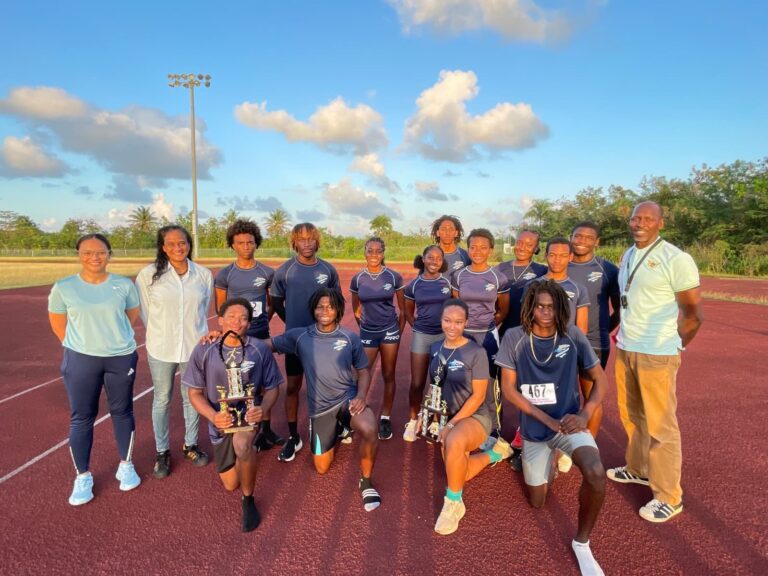
The 2026 Cipriani Phillips Ag Fair Meet / High School Championships delivered a full day of excitement, athletic excellence, and school pride as St. Croix’s top young athletes competed at the St. Croix Educational Complex Track. When the final points were tallied, the host school, St. Croix Educational Complex (SCEC), emerged as the undisputed champion, capturing both the Female and Male team trophies in commanding fashion.
Educational Complex runners. (Submitted photo)
SCEC’s depth and consistency across sprinting, middle‑distance, field events, and relays proved decisive. The SCEC females scored 80 points, while the SCEC males accumulated 82 points, comfortably ahead of the competition.
Good Hope Country Day School finished second in both divisions, earning 12 points in the female standings and a strong 40 points on the male side. St. Croix Central High School rounded out the podium finishes with 10 points among the females and 17 points among the males, showcasing notable individual performances throughout the meet.
The championship action opened with the 100‑meter dash, where Charlise Morris claimed gold in the female 100M with a time of 13.39 seconds, followed by Nehalia Giddings (13.91) and Sarai Gomez (14.01). Morris later doubled down on her success by capturing the female long jump title with an impressive leap of 5.10 meters.
On the boys’ side, Rajon Charles was the class of the field in the male 100M, sprinting to victory in 11.21 seconds. He backed that performance with another gold in the 200M at 23.26 seconds, cementing himself as one of the meet’s standout sprinters. Yahraya Doctrine placed second in both the 100M and 200M, while Kolebert Daisely added a bronze in the 100M.
Distance events highlighted endurance and strategy, particularly from Kennedy James, who dominated the girls’ middle‑distance races. James captured gold in the female 1500M with a time of 6:00.33, then returned to win the female 800M in 2:58.51, a double victory that significantly boosted SCEC’s team total.
In the boys’ 1500M, Ayden Cintron took top honors, crossing the line in 4:24.97, while David Morton Jr. claimed gold in the male 800M with a winning time of 2:14.81. Kolebert Daisely added another podium finish with silver in the 800M.
The 400‑meter races were among the most competitive events of the meet. Faith Eatmon led the female field, winning in 1:02.01, followed by Sarai Gomez and Juvantia Hurst. On the boys’ side, Juvante Hurst captured gold in 51.96 seconds, edging out Vedant Mittal in a tightly contested race.
Jahleya George was a dominant force in the girls’ throws, winning both the javelin (16.81m) and shot put (7.65m). Anna Simon earned silver medals in both events, contributing valuable points for her team.
The boys’ throwing events were equally impressive. Kahlan Beaupierre captured the male javelin title with a throw of 34.26 meters, while Jordan Vaughn followed closely behind and later claimed victory in the male shot put with a top throw of 13.94 meters.
In the male high jump, Isaiah Benjamin cleared 1.80 meters to take first place, also earning silver in the long jump behind Quinn Sayre, who won the event with a leap of 5.81 meters.
The Cipriani Phillips Ag Fair Meet / High School Championships is the official Virgin Islands High School Track & Field Championships for the past three decades, traditionally bringing together high schools from St. Croix and St. Thomas to compete on a single championship stage.
For the past two years, St. Thomas high school track and field teams were unable to attend, not due to lack of interest or preparation, but because the Department of Education did not provide the necessary logistical support for travel to St. Croix, despite formal requests being submitted more than three months in advance of the championship dates.
These championships are meant to unite Virgin Islands student‑athletes across districts. Ensuring equitable access and support for all schools is essential to preserving the integrity and inclusiveness of VI high school Track and Field.
Schneider Regional Medical Center’s medical staff met Thursday night with the Virgin Islands Government Hospitals and Health Facilities Corporation board of directors in the wake of a formal vote of no confidence, marking the first face-to-face discussion since physicians publicly rebuked the board over its handling of the territory’s hospital consolidation.
A recent no-confidence resolution from Schneider Hospital medical staff came after the board removed the hospital’s chief executive, Tina Comissiong, and elevated Luis Hospital CEO Darlene Baptiste to a role overseeing both hospitals as part of a structural consolidation.
Schneider staff said that consolidation began without consultation and without a detailed plan for the transition. Staff communicated their concerns in a closed-door meeting with the board Wednesday night, after which board secretary Christopher Finch reported that they had a “robust discussion” and gathered opinions while providing “information about additional steps for the integration and plans going forward.”
Jerry Smith, who chairs the V.I. Government Hospitals and Health Facilities Corporation board, told the Source Thursday that it was helpful to hear the physicians’ position.
“I do have a sense that they have an idea of the road map,” Smith said after Wednesday night’s meeting. “I also have a sense that they don’t agree with it, but they know what it is.”
With the consolidation, Smith said the GHHFC is “becoming a corporation that has central leadership for its institutions.”
“It’s going to be HR, it’s going to be finance, it’s going to be supply chain management, it’s going to be facilities — that’s all we’re doing, really,” he said. Historically, “the corporation was created to manage the hospitals, but then what happened was the hospitals were just cut loose to run themselves. And it’s not necessarily that the individuals were doing a bad job; they were just doing different jobs. So then it makes it difficult to maximize what you can achieve in a rural environment like we’re in.”
Smith added that most of the hospitals’ issues are financial.
“If you have money … you don’t have problems with buying supplies,” he said. “However, when you don’t have much money, you need to be doing a very good job of inventory management. You have to manage your supplies well. You have to have the policies that state how supplies are to be used. When you have an abundance of everything, you could kind of just haphazardly do what you want, but when you have minimal amounts of things, you have to manage them extremely well. And I see great examples of excellent work being done in different spots of each hospital, but there’s some learning that can take place.”
But physician leaders say their concerns go beyond disagreement with the board’s direction.
Dr. George Rosenberg, former SRMC chief medical officer, and Dr. Lori Thompson, president of the SRMC Medical Staff, said the vote was not about consolidation itself, but about process.
“We have, in theory, absolutely no problem with the hospitals merging,” Thompson said. “In many ways, it could be beneficial — purchasing power, shared IT resources, and the skill sets we already help each other with. What we are not comfortable with is the way that it happened.”
According to Rosenberg, the Medical Executive Committee received an email on a Thursday night requesting an emergency meeting the following morning, where they were informed of Baptiste’s appointment as territorial CEO and the naming of a territorial chief operations officer. Later that same day, Comissiong was released.
The medical staff requested a meeting with the board prior to its Feb. 13 meeting, Rosenberg said, but received no substantive response. At that Feb. 13 meeting, physicians voted by what they described as a significant majority to approve the resolution of no confidence, citing lack of transparency, stakeholder engagement, and planning.
“None of us as physicians, and none of the board members, in their individual capacities or as a group, has the skill, knowledge, or education to evaluate whether a merger is beneficial — and, if it is, how to proceed,” Rosenberg said. “You need an experienced consulting firm that specializes in hospital mergers. That was not done.”
He acknowledged that Ernst & Young was engaged, but said its role was limited to financial matters and did not include operational interviews with medical staff or senior leadership.
“There was no transition. There was no handoff,” Rosenberg said. “It was done in an extremely haphazard fashion.”
Physicians have also questioned the creation and filling of new leadership positions without public posting or what they describe as a traditional vetting process. Rosenberg said morale at SRMC “has never been lower.”
“This isn’t about the current leadership,” he said. “It’s about the process the board initiated — and our complete loss of confidence in their ability to manage and lead the hospital through something this complex.”
The medical staff is now drafting proposed changes they consider mandatory and plan to present them internally before determining next steps. While the board maintains that consolidation will strengthen centralized leadership and financial controls, SRMC physicians say their objection remains focused on how the restructuring was launched — and whether it was done with the preparation and engagement such a transition demands.
Meanwhile, the GHHFC issued a formal Request for Proposals titled “GHHFC System Strategic Planning, Integration and Turnaround Implementation Services” (RFP TB-2026-001), updated Feb. 17. The RFP seeks qualified firms to provide system strategic planning, integration, and turnaround implementation services for the corporation in both the St. Croix and St. Thomas–St. John districts. Proposals are due March 11.









 The U.S. Virgin Islands will open its campaign against Martinique on Tuesday, Feb. 24, at Estadio Miguel Chocorrón Buitrago in Managua. Kickoff is scheduled for 6 p.m. AST. Local streaming availability will vary; fans are encouraged to check their local cable listings for broadcast details.
This year’s squad marks an important milestone for the program, as Head Coach Emil Berggreen makes his official debut leading the U-20 Dashing Eagles in CONCACAF competition.
Competing against some of the Confederation’s top programs, the Dashing Eagles will look to embody the Federation’s mission to develop, inspire, and elevate the game throughout the territory. The team enters the competition determined to showcase the growth of the sport in the U.S. Virgin Islands and to represent the Territory with pride and resilience on the regional stage, federation officials said.
When asked what it means to guide the team into his first official CONCACAF tournament, Coach Berggreen shared:
“I am proud to lead the team alongside the rest of our staff. The CONCACAF competition is an opportunity to show our potential and to show that we carry ourselves with pride when we represent the USVI.”
Reflecting on the lessons he hopes his players will take from competing on this stage, regardless of results, Berggreen emphasized character and work ethic:
“We want to show grit and character. We will face players who are better than us right now, but we want to send the signal that we are prepared to outwork our opponents in order to overtake them in the future. The important lesson is that if you want to become better than someone who is better than you, you have to outwork him.”
The USVISF calls on all supporters at home and abroad to rally behind the Dashing Eagles as they represent the U.S. Virgin Islands with determination and national pride. The Federation remains committed to building pathways for young athletes and strengthening the foundation of the sport across the territory.
The U.S. Virgin Islands will open its campaign against Martinique on Tuesday, Feb. 24, at Estadio Miguel Chocorrón Buitrago in Managua. Kickoff is scheduled for 6 p.m. AST. Local streaming availability will vary; fans are encouraged to check their local cable listings for broadcast details.
This year’s squad marks an important milestone for the program, as Head Coach Emil Berggreen makes his official debut leading the U-20 Dashing Eagles in CONCACAF competition.
Competing against some of the Confederation’s top programs, the Dashing Eagles will look to embody the Federation’s mission to develop, inspire, and elevate the game throughout the territory. The team enters the competition determined to showcase the growth of the sport in the U.S. Virgin Islands and to represent the Territory with pride and resilience on the regional stage, federation officials said.
When asked what it means to guide the team into his first official CONCACAF tournament, Coach Berggreen shared:
“I am proud to lead the team alongside the rest of our staff. The CONCACAF competition is an opportunity to show our potential and to show that we carry ourselves with pride when we represent the USVI.”
Reflecting on the lessons he hopes his players will take from competing on this stage, regardless of results, Berggreen emphasized character and work ethic:
“We want to show grit and character. We will face players who are better than us right now, but we want to send the signal that we are prepared to outwork our opponents in order to overtake them in the future. The important lesson is that if you want to become better than someone who is better than you, you have to outwork him.”
The USVISF calls on all supporters at home and abroad to rally behind the Dashing Eagles as they represent the U.S. Virgin Islands with determination and national pride. The Federation remains committed to building pathways for young athletes and strengthening the foundation of the sport across the territory. 
 The District Spelling Bees brought together some of the territory’s most talented young scholars, each representing their schools with pride and perseverance. Through rigorous preparation, long hours of practice, and an unwavering commitment to learning, these student spellers showcased the power of literacy, discipline, and intellectual curiosity.
Commissioner Dionne Wells-Hedrington, Ed.D., applauded the students for their achievements and dedication. “Our student spellers exemplify what it means to pursue academic greatness with confidence and determination. Their hard work and passion for learning inspire us all. Every participant is a champion, and we celebrate their courage to step onto the stage and represent their schools and families with distinction.”
VIDE also extends sincere appreciation to the dedicated teachers, principals, parents, guardians, and school communities whose encouragement and support helped prepare students for this meaningful academic milestone. Their collective efforts continue to strengthen literacy development and foster a culture of academic achievement throughout the territory.
The Spelling Bee competitions highlight the importance of language, communication, and scholarship, skills that empower students to succeed in school and beyond. Whether advancing to the next level of competition or returning to the classroom with new confidence, each participant has gained valuable experience that will contribute to their future success.
St. Thomas-St. John District
Winner – Melaya Petersen – 3rd Grade
2nd – Kashyma Paul – 6th Grade
3rd – Messiah Smith – 7th Grade
4th – Brendan Jackson – 4th Grade
5th – Raj Mipuri – 8th Grade
6th – Ashlyn Potter – 8th Grade
7th – Malik Williams – 8th Grade
8th – Nikai VanBeverhoudt – 8th Grade
9th – Tansy Vital – 8th Grade
10th – Hosea Sello – 7th Grade
St. Croix District
Winner – Rayan Felix – 7th grade
2nd – Patricia Daytic – 8th grade
3rd – Guillian Canceko – 4th grade
4th – Zawadi Bergan – 5th grade
5th – Jahmir Greaux – 8th grade
6th – Aisha Al-Jaloudi – 8th grade
7th – Grace Sookraj – 7th grade
8th – Charles Francis – 5th grade
9th – Aliyah Rivera – 8th grade
10th – Emmanuel Almestica – 6th grade
The District Spelling Bees brought together some of the territory’s most talented young scholars, each representing their schools with pride and perseverance. Through rigorous preparation, long hours of practice, and an unwavering commitment to learning, these student spellers showcased the power of literacy, discipline, and intellectual curiosity.
Commissioner Dionne Wells-Hedrington, Ed.D., applauded the students for their achievements and dedication. “Our student spellers exemplify what it means to pursue academic greatness with confidence and determination. Their hard work and passion for learning inspire us all. Every participant is a champion, and we celebrate their courage to step onto the stage and represent their schools and families with distinction.”
VIDE also extends sincere appreciation to the dedicated teachers, principals, parents, guardians, and school communities whose encouragement and support helped prepare students for this meaningful academic milestone. Their collective efforts continue to strengthen literacy development and foster a culture of academic achievement throughout the territory.
The Spelling Bee competitions highlight the importance of language, communication, and scholarship, skills that empower students to succeed in school and beyond. Whether advancing to the next level of competition or returning to the classroom with new confidence, each participant has gained valuable experience that will contribute to their future success.
St. Thomas-St. John District
Winner – Melaya Petersen – 3rd Grade
2nd – Kashyma Paul – 6th Grade
3rd – Messiah Smith – 7th Grade
4th – Brendan Jackson – 4th Grade
5th – Raj Mipuri – 8th Grade
6th – Ashlyn Potter – 8th Grade
7th – Malik Williams – 8th Grade
8th – Nikai VanBeverhoudt – 8th Grade
9th – Tansy Vital – 8th Grade
10th – Hosea Sello – 7th Grade
St. Croix District
Winner – Rayan Felix – 7th grade
2nd – Patricia Daytic – 8th grade
3rd – Guillian Canceko – 4th grade
4th – Zawadi Bergan – 5th grade
5th – Jahmir Greaux – 8th grade
6th – Aisha Al-Jaloudi – 8th grade
7th – Grace Sookraj – 7th grade
8th – Charles Francis – 5th grade
9th – Aliyah Rivera – 8th grade
10th – Emmanuel Almestica – 6th grade