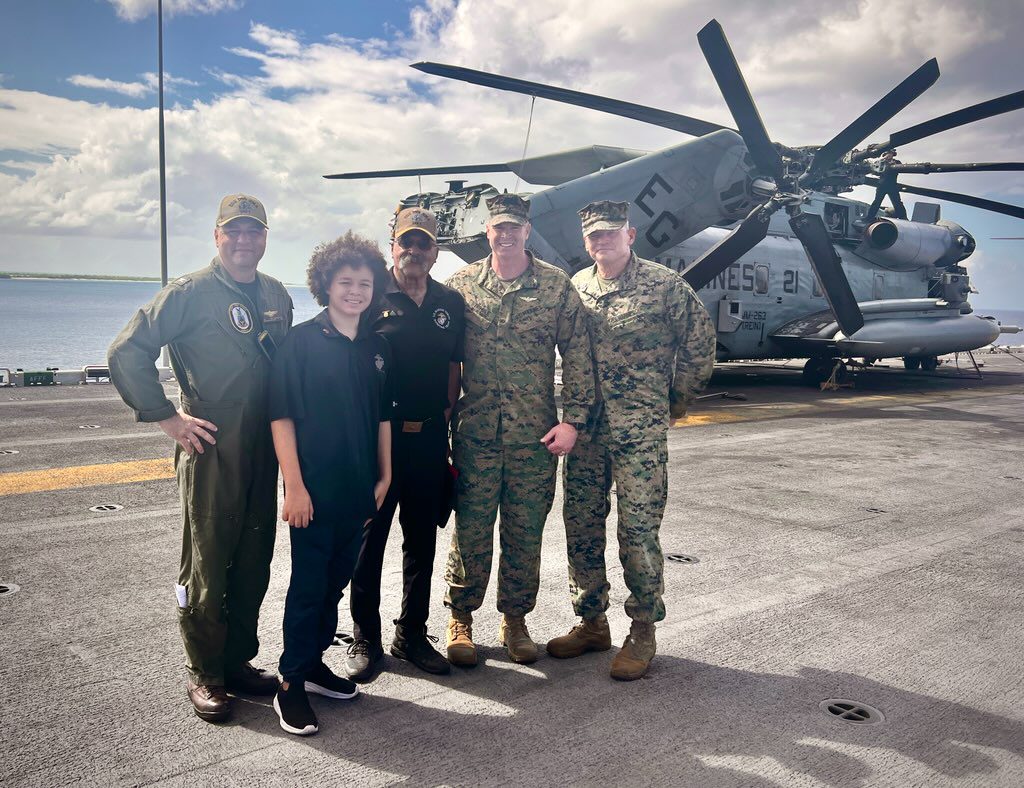
Capt. Richard Haley, Kaleb Clendenin Scott, retired Lt. Col. John Clendenin, Marine Expeditionary Unit Commander Col. Tom Trimble, and another Marine, on the flight deck of the USS Iwo Jima. (Submitted photo)
John Clendenin stood shoreside with his grandson, Kaleb, watching the USS Iwo Jima glisten in the harbor. Like many Virgin Islanders drawn to the increased presence of military ships visiting the territory, 12-year-old Kaleb Clendenin Scott wanted to go aboard.
His grandfather had been on many such vessels. Retired Lt. Col. Clendenin devoted 38 years to the U.S. Marine Corps. A sixth-generation Crucian from a very long line of military servicemen, the older Clendenin could reasonably assume young Kaleb may be inside military ships before too long.
But it wouldn’t be today, he told the boy. The Navy was not offering tours.
Nearby, marines and sailors were lined up “10-deep” waiting for taxis on the half-flooded street, Clendenin said.
“You know what? Just jump in the car,” Clendenin told a group. He and his grandson drove them to the Buccaneer Hotel, where they introduced themselves to Iwo Jima Capt. Richard Haley. The interaction led to Clendenin and his wife, Bonnie, hosting an island tour.
“The captain was the same age as the younger of my kids and just older than my dog. So we started adopting them. Bonnie and I took them around the island,” Clendenin said. Beaches, historical sites — including Danish and American military settings — the rainforest, shopping, local food, they packed in a full day. “It was just tremendous.”
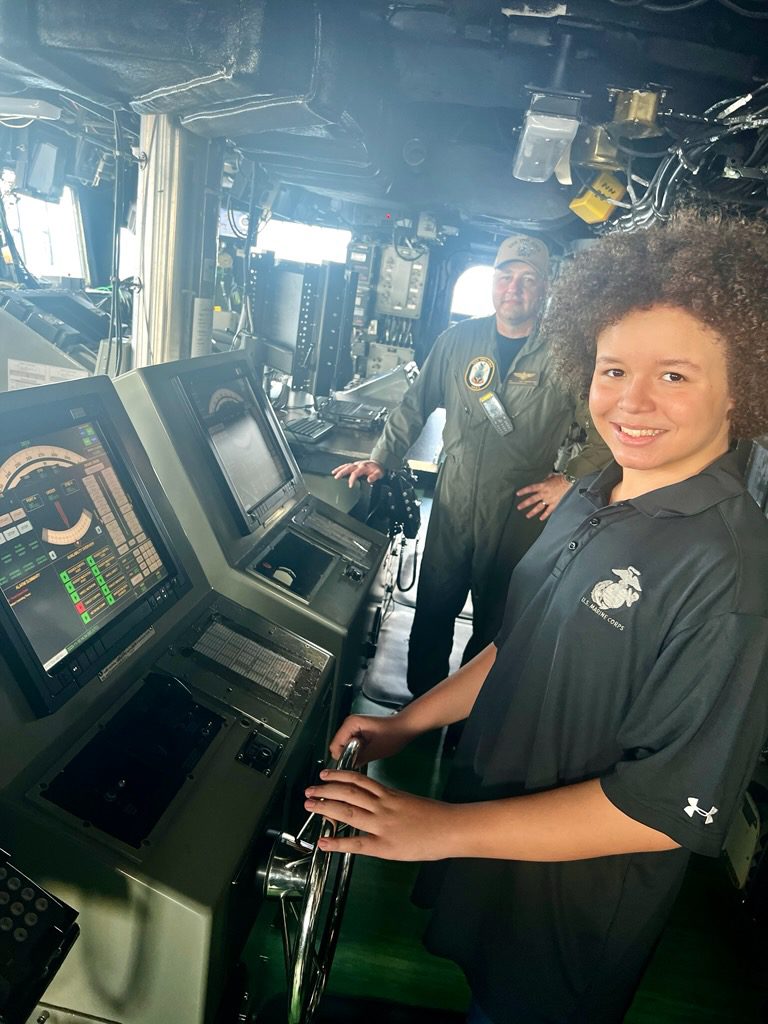
Capt. Richard Haley watches Kaleb Clendenin Scott, 12, at the helm of the Iwo Jima. (Submitted photo)
When Haley invited the couple aboard the ship the next day, which happened to be the Marine Corps’ 250th birthday, the battle-hardened Clendenin couldn’t bring himself to ask a favor of the commanding officer. It fell to his wife to ask if their grandson could join.
More than a ship tour, he wound up on the bridge, at the helm of the warship.
“I got to sit in the captain’s chair! I also got to sit in the chair that he sits on to think about his life, which is in the open air outside of the bridge,” Clendenin Scott wrote in a homeschool report about the day. It included interactions with Navy and Marine officers like Capt. Kathryn Wijnaldum. “Later, before we left Captain Kathryn’s office, I took a lollipop out of her bowl… well, the better word would be stole a lollipop, but she didn’t really mind.”
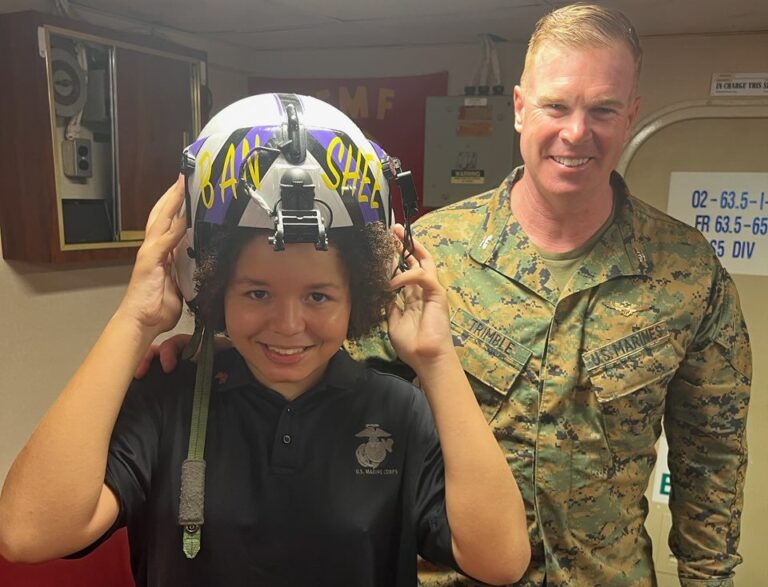
Twelve-year-old Kaleb Clendenin Scott trying on Col. Tom Trimble’s flight helmet. (Submitted photo)
They snapped photos on the flight deck, and he attempted to squeeze his tall, bushy hair into Marine Expeditionary Unit Commander Col. Tom Trimble’s flight helmet.
A dozen or so Marines “ambushed” the visitors after the bridge tour to hear Clendenin’s remarks on the Marine Corps birthday, military history, and the history of the Virgin Islands, he said. The meeting ended in typical Marine fashion. Everyone dropped to the floor for 10 pushups — plus one more for the Corps.
“Even Capt. Haley did push-ups with the Marines,” he wrote. “But I didn’t do them.”
He may have a second chance. Clendenin Scott is now interested in joining the Marines.
Clendenin credits his grandson’s wonder with making the day happen.
“So it was good — and all from a little kid looking at the Navy ship, and said, one day I’m gonna go on a ship and, you know, so I said, OK. Well, I’m your grandfather. Let’s see if we can make that happen,” he said.
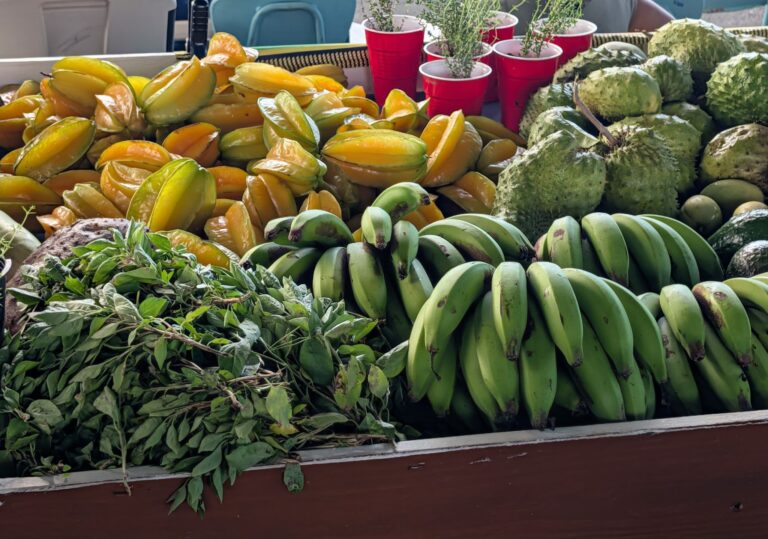
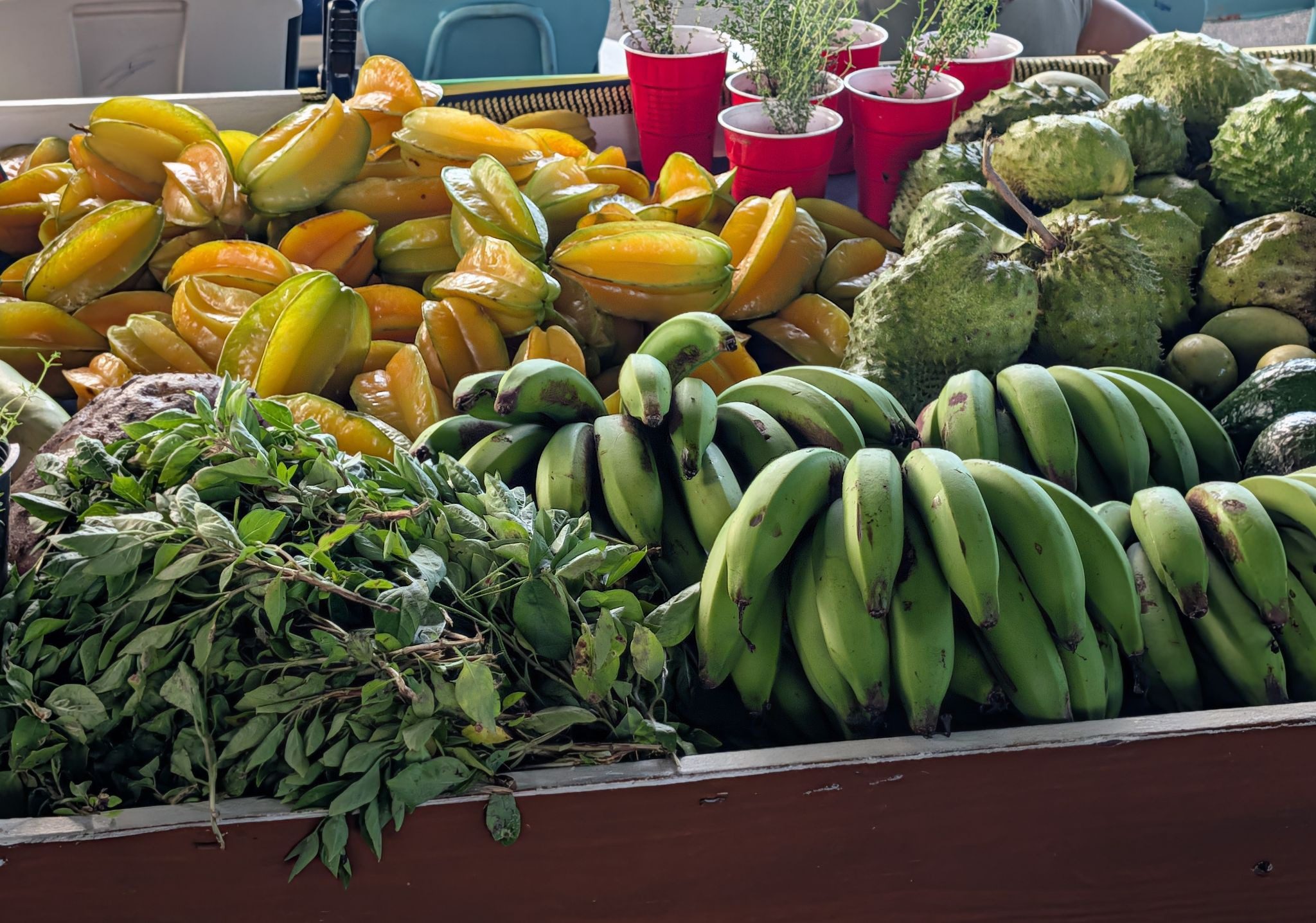
Just a taste of the colorful array of fruits, herbs, and other local foods on display at the St. Thomas–St. John Agriculture Fair on Nov. 22. (Source photo by Finn Sharpless)
The St. Thomas–St. John Agriculture and Food Fair returned to the Bordeaux Farmers Market on Saturday, bringing together farmers, consumers, vendors, artists, and community groups for a day focused on food, culture, and the future of agriculture in the territory.
At the We Grow Food Pavilion, a panel of local leaders stressed that rebuilding agriculture in the Virgin Islands will depend on shared responsibility, stronger youth involvement, and infrastructure upgrades.
The panel began with an emphasis on shared responsibility, with officials urging residents to see agriculture not as a niche sector but as a cornerstone of the community. Agriculture Commissioner Louis E. Petersen Jr. opened by calling agriculture “a sacred task,” telling the crowd farming cannot fall solely on the Department of Agriculture.
“Agriculture is a sacred task for us,” he said. “It’s not just the Department of Agriculture’s job…. This is a task for all of us, and every single one of us has a role to play.”
Petersen outlined several initiatives, including new federal funding to train farmers in cooperative business models and a proposal to restore the long-defunct St. Thomas abattoir. He said the department is preparing a plan and is optimistic that the abattoir will once again be functional. “In my mind, this is not a matter of if. It’s a matter of when,” he said.
He also highlighted upcoming water-infrastructure investments, including two new cisterns expected to add more than 100,000 gallons of storage. “This is going to support our farmers and increase food production,” he said.
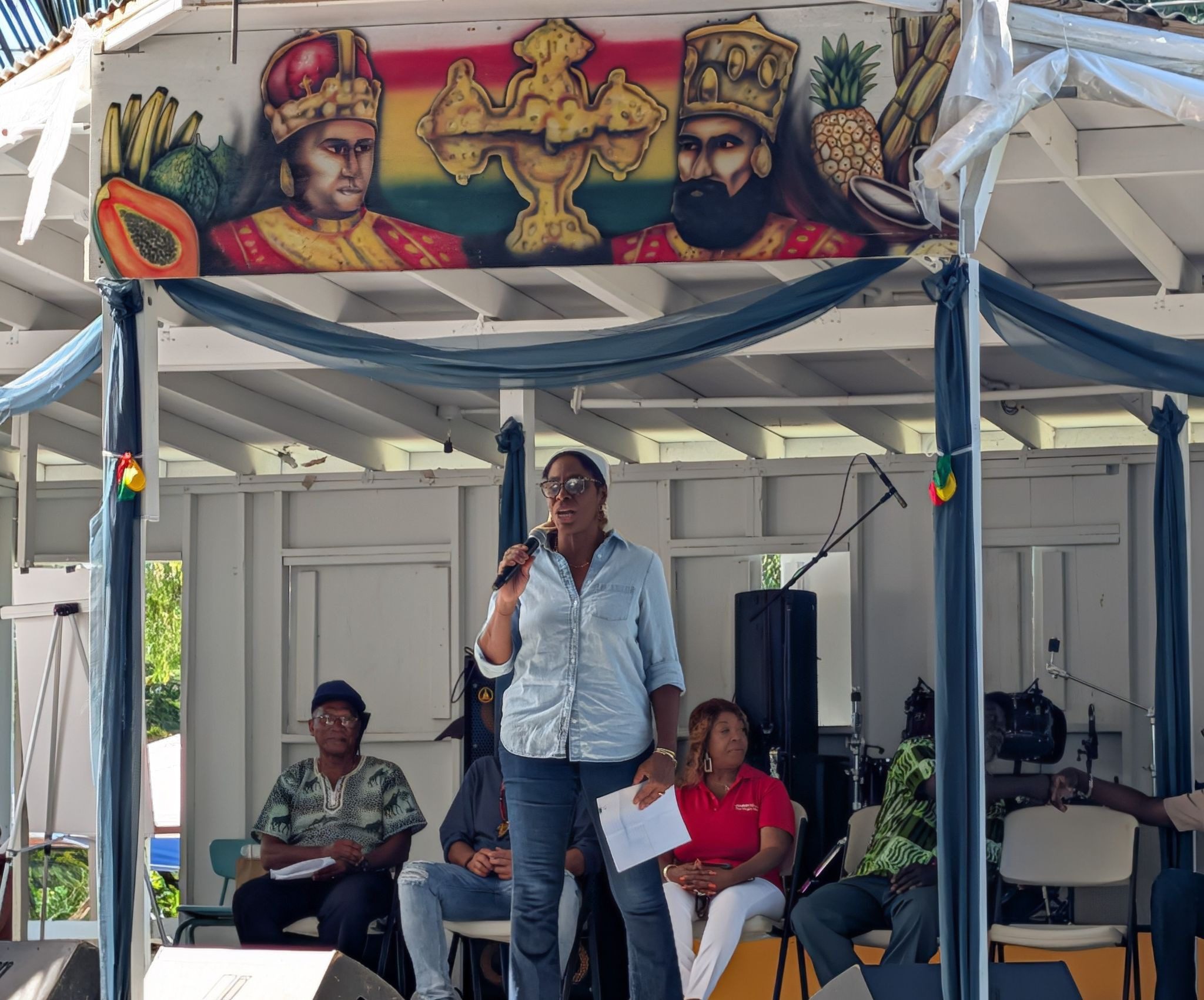
Delegate to Congress Stacey E. Plaskett praised the territory’s farmers for persevering through drought, hurricanes, and rising costs. “Your presence is what keeps agriculture alive,” she told the crowd.
Delegate to Congress Stacey E. Plaskett speaks to a crowd at the St. Thomas–St. John Agriculture Fair, highlighting the importance of strengthening food security in the territory. (Source photo by Finn Sharpless)
Plaskett announced several recent federal allocations, including $1.7 million for the Virgin Islands Good Food Coalition to create a food and technology hub, $1 million for We Grow Food to install a desalination system in Bordeaux, and $825,000 for renovations to the St. Thomas abattoir. “These aren’t just grants,” she said. “They’re investments in our self-sufficiency.”
The federal support, she explained, is part of a wider effort to strengthen local food systems and foster a culture of care and responsibility. “Agriculture is not just about cultivation. It’s about caring for our neighbors, caring for the land, and caring for one another,” she said.
Land use and community input also surfaced as major points of tension, reflecting broader debates about development and environmental protection across the territory.
Sen. Ray Fonseca called for stricter government compliance with land-use laws, pointing to a controversial development in Fortuna that he said has alarmed nearby residents. “One thing we must do in this government is always comply with the law and give residents the opportunity for input,” he said.
Fonseca also applauded recent youth-focused efforts by the Department of Agriculture. “Just last week, we introduced about 160 Head Start and first-grade students to agriculture,” he said. “That’s what we need, the young ones getting involved.”
Speakers connected local agriculture directly to community health, arguing that food security is not only an economic issue but a public-health priority in a territory heavily dependent on imports. Sen. Hubert L. Frederick stressed the health implications of imported food and argued that rebuilding a strong local farming base is essential. “Our food is our medicine, and that’s a fact,” he said.
“We need to take food security seriously. We need to make sure we can grow healthier foods and consume healthier food,” Frederick added. “This is an opportunity for our security… to finally grow our own fresh food and have good medicine for our bodies.”
Throughout the panel, multiple speakers repeatedly stressed the urgency of recruiting younger farmers, warning that the territory is losing agricultural knowledge faster than it can be replaced.
Elridge Thomas, treasurer of We Grow Food, said the fair continues a long tradition of celebrating the harvest but explained that the Virgin Islands is not fully capitalizing on its year-round growing climate. “We live in the tropics. We can grow all 365 days a year,” he said. “We are not taking advantage of that enough.”
He noted that with most farmers in their 60s, food production will continue to decline unless younger people enter the field. “We desperately need more programs to recruit and train young people,” he said.
Across the fair, farmers and vendors echoed common hopes and challenges. They shared ideas for making local foods more accessible, stressed the importance of teaching agricultural skills to the youth, and viewed the fair as key for building business relationships and community support.
They emphasized collaboration and the preservation of local traditions, whether by teaching children about agriculture, creating opportunities for local artists, or gathering as a community.
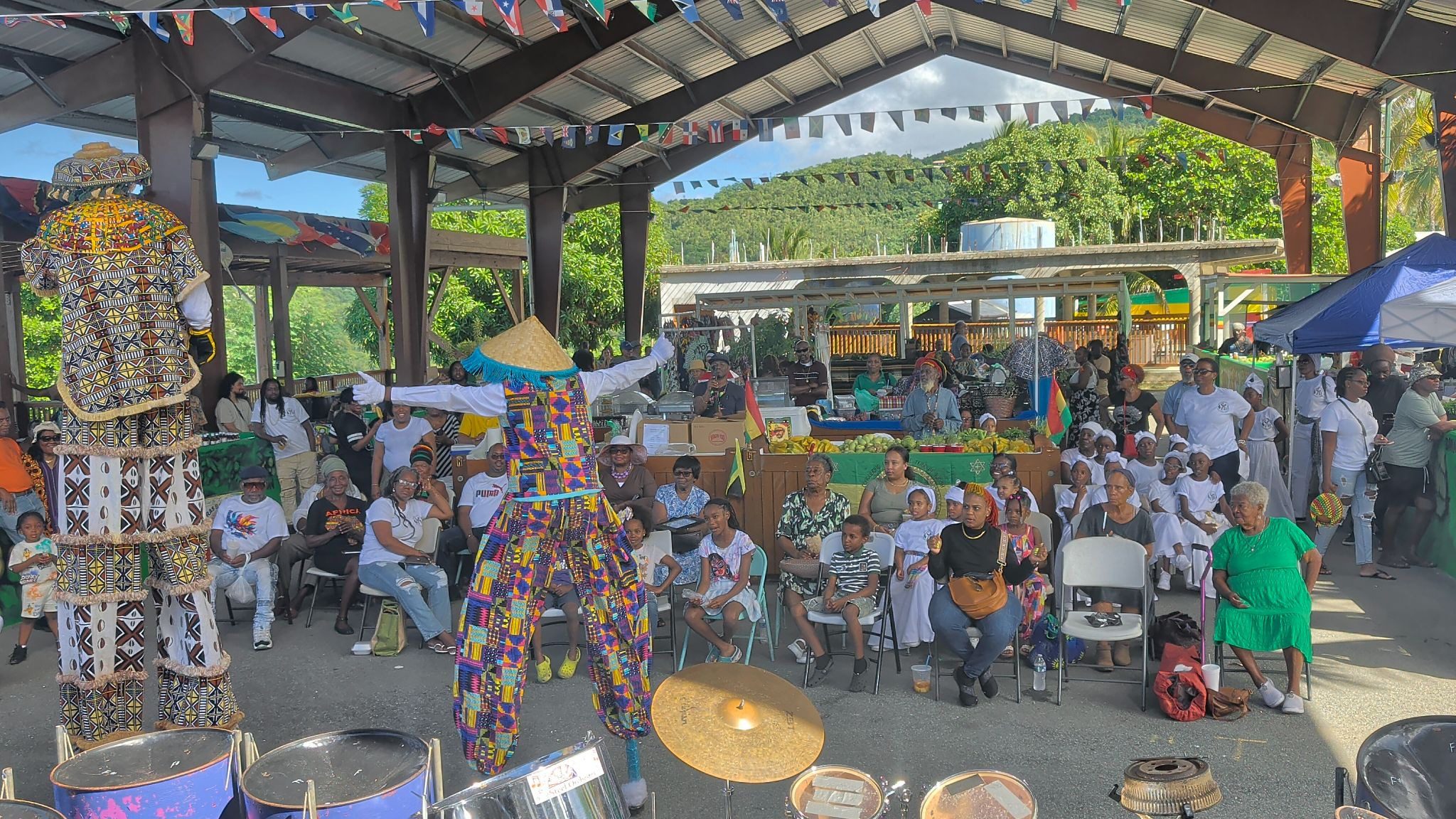
Embodying the fair’s festive spirit, local community groups brought the grounds to life with high-stepping moko jumbies, music, and energetic dance performances, celebrating tradition and togetherness in vibrant displays of culture.
A young moko jumbie performs for a crowd of all ages, carrying on the territory’s important cultural traditions. (Source photo by Finn Sharpless)
Families could also visit a petting zoo featuring bunnies and pigs, and community organizations such as VIDA and the WIC program offered resources and information to attendees.
Shelli Brin, owner of Que Sera Farms, said the fair served as a timely reminder of how important it is to invest in local food production. “If there is ever a time that we should be really investing in growing our food, it is now,” Brin said. “We need everybody at the table in this day and age. Whether you’re a consumer or a producer.”
Brin said stronger connections between farmers, small food businesses, and residents are key to building a resilient food system, especially when those relationships help make fresh, seasonal foods more accessible.
“It’s really important for our small food businesses to source more locally … to engage in the food system through healthy eating and seasonal options,” she said. “That’s how we build food security, by making choices that sustain our land and our health.”
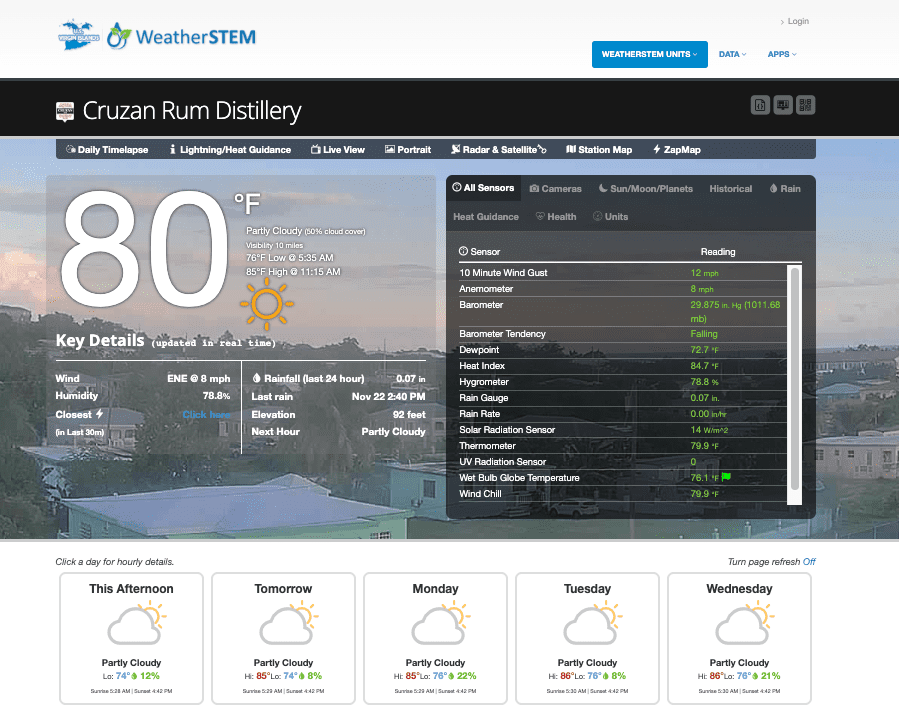
The Weatherstem dashboard for the Cruzan Rum Distillery station displays live conditions and sensor data from St. Croix. (Photo courtesy Weatherstem)
A private weather technology company, Weatherstem, provides high-tech weather stations that have helped to collect and share critical weather data across the United States and the Caribbean. One weather station is already operating on St. Croix, and a possible Caribbean expansion could improve weather monitoring and assist with disaster preparedness.
In an exclusive video interview with the VI Source, Edward Mansouri, a meteorologist, engineer, and the CEO of Weatherstem, provided the Source with details about the company, its mission, and how the meteorological and atmospheric data it gathers could benefit the U.S. Virgin Islands community.
Weatherstem Explained
Weatherstem — “stem” stands for Science, Technology, Engineering, and Mathematics — was launched in 2015 and combines hardware and software into what Mansouri calls a “hyperlocal weather monitoring system.” Mansouri has spent a lifetime working within the fields of meteorology and technology before creating the company. He holds bachelor’s degrees in meteorology and engineering from Pennsylvania State University and a master’s degree in meteorology from Florida State University.
“Weatherstem has become a fusion of my passion for computer programming and meteorology,” Mansouri said.
Weatherstem Stations
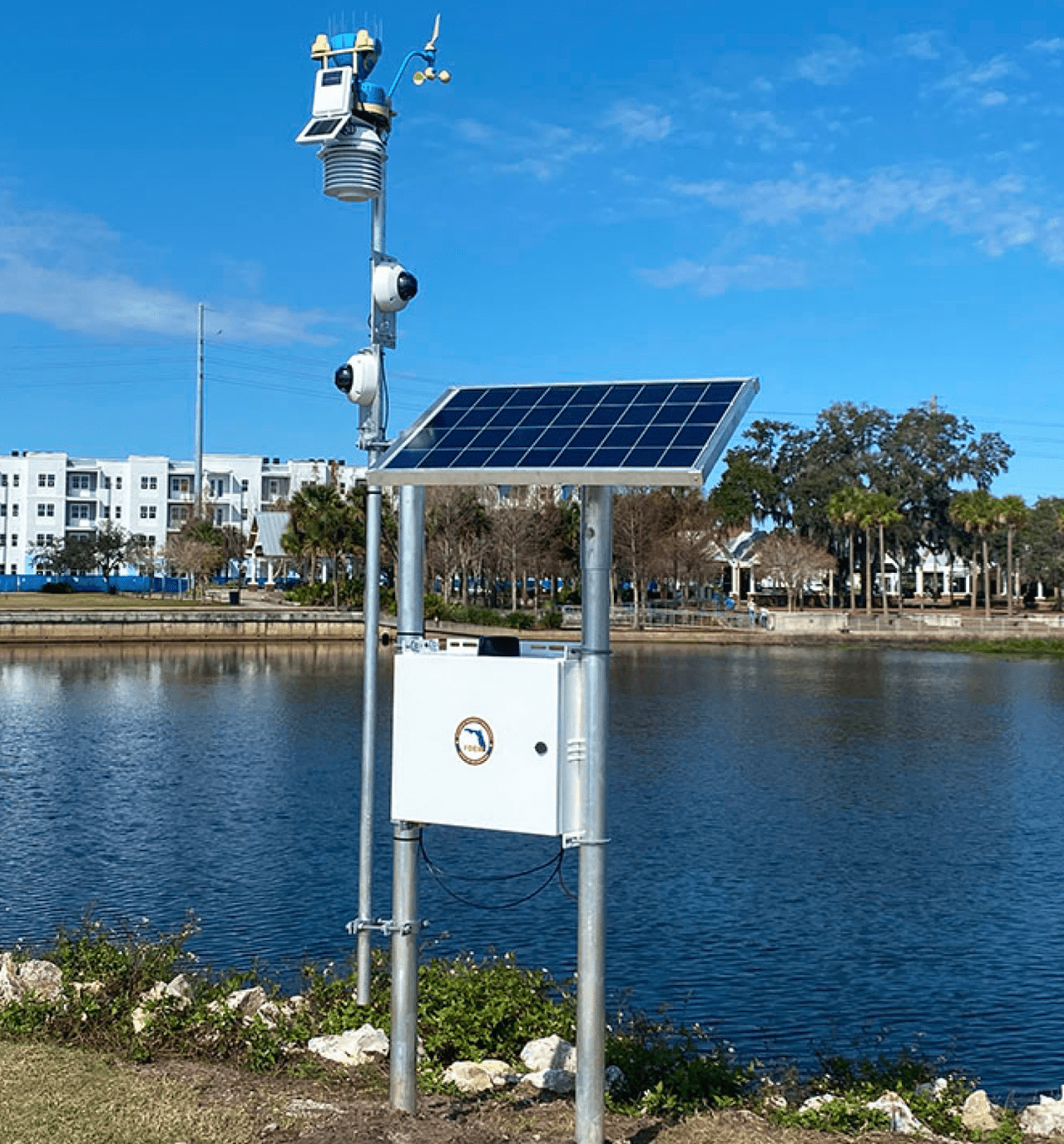
A Weatherstem weather station measures temperature, barometric pressure, wind speed and direction, humidity, rainfall, solar and ultraviolet radiation, and dew point. Each unit also includes cameras that provide still images and live streaming video. On the ground, stations are equipped with sensors, cameras, and communications gear, while the system’s web, mobile, and social media tools allow users to track changing conditions in real-time.
One of Weatherstem’s unique features is how fast it provides weather updates. Mansouri said its data system reports changes nearly instantaneously. “We are streaming data literally in one-second or less increments,” he stated.
Weatherstem stations operate on solar power and use high-speed sensors and live cameras to deliver real-time weather updates, even during severe storms. (Photo courtesy Weatherstem)
“The Weatherstem Weather Station is the ultimate all-in-one solution for monitoring environmental conditions,” according to information on the organization’s official website.
“With our industry-leading rapid data sampling rate, advanced algorithms, and durable hardware, you’ll see accurate weather information, ensuring no critical detail is overlooked. Weatherstem empowers you to make informed decisions and protect what matters most. Advanced data sampling speeds of 0.8 seconds get you one step closer to informed decisions in high-pressure situations. Because with weather, every second counts. Made to withstand hurricane-force winds, our weather stations deliver real-time data every second,” the Weatherstem website explained.
“All of the weather systems are publicly available, and anyone can access them with a web browser or with a mobile app,” Mansouri noted.
Additionally, Weatherstem permanently archives all of the retrieved information and camera videos, which Mansouri calls “weather forensics.”
“Weatherstem stations obtain images and video and perpetually store the data,” he said. “Individuals have the ability to look back at a specific time of a reported weather incident and view what the camera recorded and the data that was collected,” he continued.
Mansouri added that another major feature of Weatherstem involves the ability to produce automated alerts and warnings. He explained that units can be configured to issue warnings when thresholds are reached, such as dangerous wind speeds or nearby lightning. The system can trigger connected signals, such as warning lights at pools, marinas, or bridges.
Benefits for the U.S. Virgin Islands and Caribbean Region
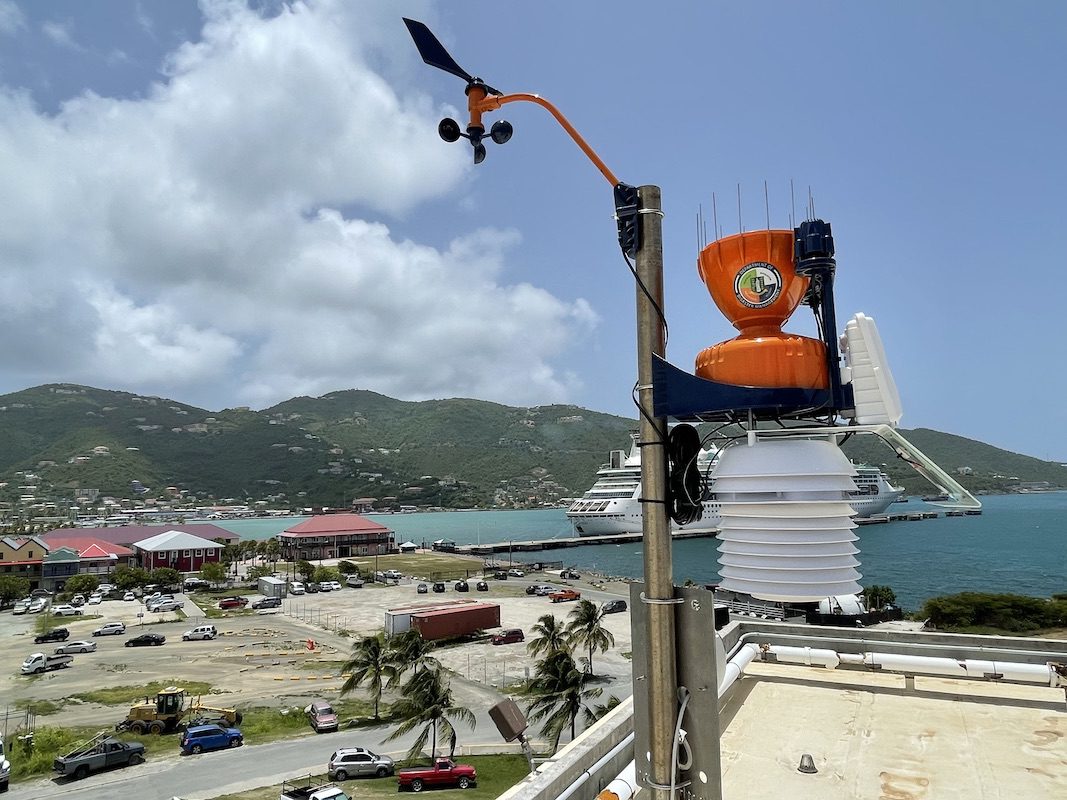
The Weatherstem station in Tortola, British Virgin Islands, captures real-time wind, rain, and atmospheric conditions overlooking Road Town and the harbor. (Photo courtesy Weatherstem)
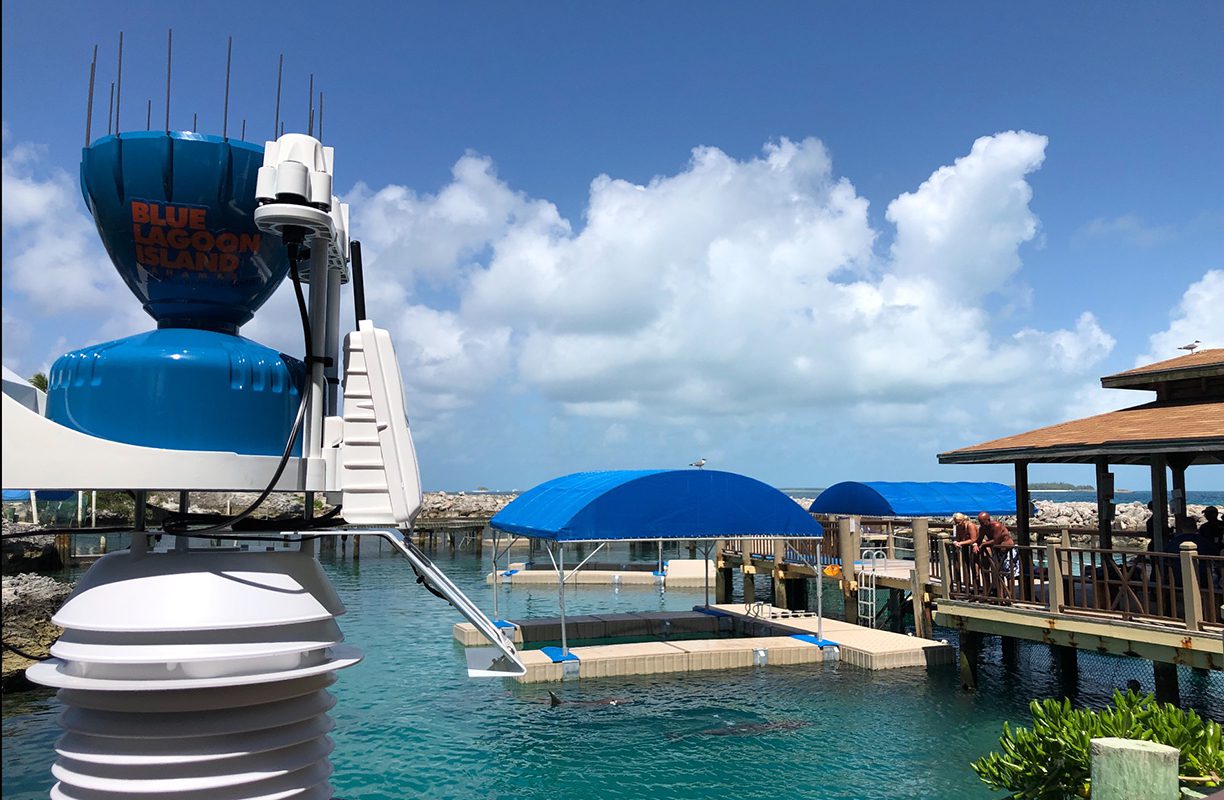
Weatherstem currently operates about 1,000 systems, primarily located in the southeastern United States, along with several stations across the Caribbean, including Blue Lagoon Island in the Bahamas, Tortola in the British Virgin Islands, and the Cruzan Rum distillery on St. Croix. Mansouri told the Source that the company intends to continue expanding in hurricane-prone regions. He shared details about the company’s partnership model with the state of Florida, where public agencies and corporate sponsors fund solar-powered stations as a possible blueprint for expansion across the Caribbean.
The details collected by Weatherstem stations can be particularly useful in areas where weather shifts quickly, including across the USVI, by offering communities a clearer, moment-by-moment view of local conditions.
Mansouri explained that speed matters in the tropics, where conditions vary rapidly in both time and space. “You can be sitting in St. Croix and looking down the road where it’s raining down the street, and it’s sunny and dry where you are situated,” he said. Multiple stations across the major islands of the USVI could help residents and emergency managers track rainfall totals in real time, monitor heat risks, and confirm wind speeds during fast-moving rainstorms.
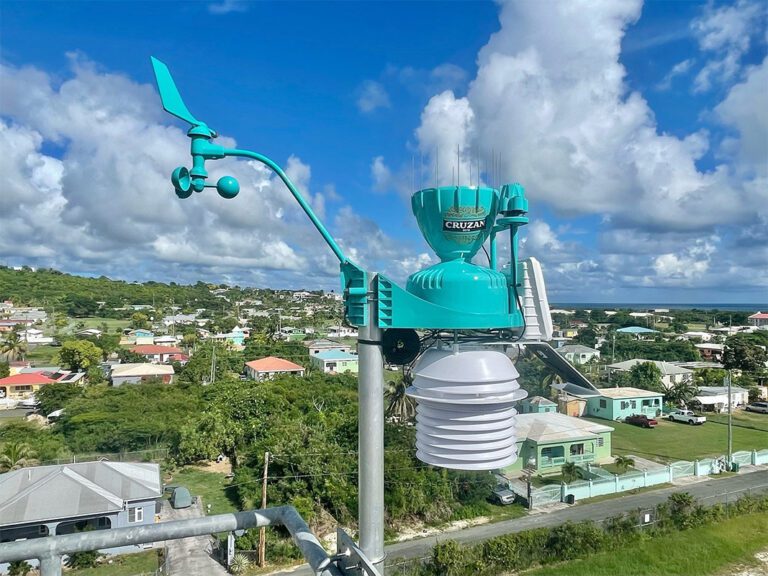
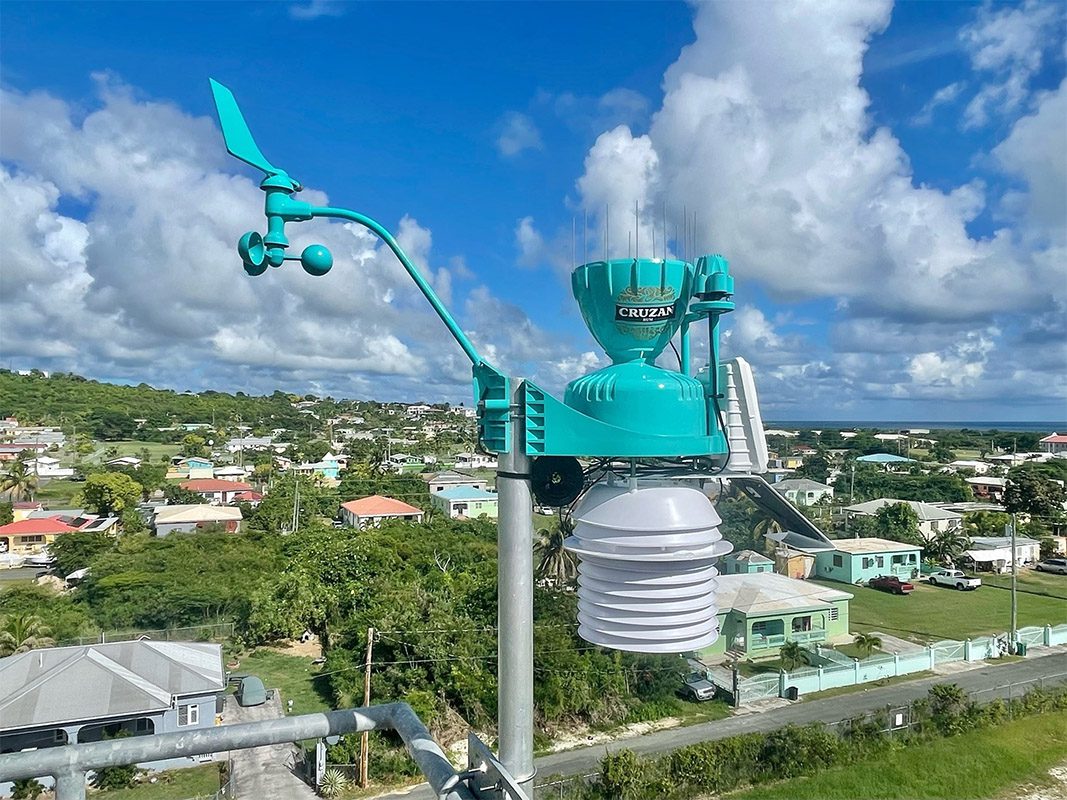
The Weatherstem station installed at the Cruzan Rum distillery on St. Croix provides hyperlocal weather data for the community. (Photo courtesy Weatherstem)
The existing St. Croix station, located at the Cruzan Rum facility, was installed through a corporate partnership, and according to Mansouri, its design is well-suited for hurricane-prone islands.
“A lot of the systems, like the one at the Cruzan Rum facility, are solar-powered and operate off of cellular towers,” he said. He added that systems are built to keep running even when power and internet fail, which is critical for remote monitoring during severe weather.
Mansouri hopes to grow the regional footprint into a network of interconnected weather stations across the Caribbean region. In meteorology, this type of system is known as a ‘mesonet,’ a dense network of high-quality stations designed to capture hyperlocal conditions.
“Ideally, our goal would be to help establish a mesonet in the Caribbean,” Mansouri declared. He noted that Weatherstem already has systems in the Bahamas and the British Virgin Islands. He indicated that he looks forward to possible collaboration with the National Weather Service office in San Juan, Puerto Rico, which currently provides detailed weather forecasts for the USVI.
The Weatherstem system on Blue Lagoon Island in the Bahamas streams rapid weather updates and camera imagery used by tourists, operators, and the National Weather Service. (Photo courtesy Weatherstem)
Mansouri explained that Weatherstem measurements have already appeared in National Weather Service and National Hurricane Center storm reports, and he highlighted one example in Florida, where a Weatherstem station captured an extreme rainfall event.
“There is a Weatherstem system at the Fort Lauderdale International Airport, and it once measured 26.54 inches of rain in a 24-hour period,” Mansouri said. The observation later “ended up entering the record books as the greatest 24-hour rainfall total ever measured in Florida history.”
Potential to Boost Emergency Preparedness
Mansouri believes that the collaboration between local agencies, private partners, and Weatherstem could help the Caribbean region strengthen its early-warning capabilities and disaster preparedness. For the USVI, he emphasized that the goal is straightforward: more reliable, localized weather data that residents, emergency managers, and forecasters can see instantly, especially when a storm threatens.
With real-time data that refreshes every second, communities could spot developing hazards sooner, from sudden downpours to dangerous wind bursts. Mansouri noted that conditions can vary sharply across short distances in the territory.
As Weatherstem continues expanding across hurricane-prone regions, Mansouri hopes the Virgin Islands and neighboring islands will consider adding more stations to strengthen local awareness and preparedness.
Residents and visitors across the USVI can explore current Weatherstem stations’ real-time data feeds, camera views, and additional information about the organization at the company’s official website.
Volunteers providing life-saving services on St. John, now facing fiscal challenges. (Submitted photo)
Weeks after sounding the alarm about an apparent lapse in funding, St. John Rescue is thanking local donors for showing their support. But one of the organization’s volunteers says they’re still unclear about the stability of their funding mix.
Like its all-volunteer counterpart on St. Thomas, St. John Rescue relies in part on government funds supplied through VITEMA. Private donations and grant awards make up the rest. In a statement issued Nov. 1, St. John Rescue President Bob Malacarne said monies once thought of as a sure thing were left in doubt.
A $65,000 allocation approved to cover operations in 2024 came in a few months later than expected, and Malacarne said so far, there’s been no word about the request sent in for 2025. “We haven’t received any funding yet,” the group’s president said.
State grants, private-source grants, fundraising drives, and public-private partnerships are some of the ways an estimated 1,150 search and rescue groups support their operations nationwide. Speaking on condition of anonymity, one person familiar with the V.I. support system says the annual allotment usually arrives in February, but this year was delivered in August.
To make up the shortfall, the group is tapping a savings account that could support continued operations for up to two years. If deficits persist, he said, St. John Rescue may have to trim back its array of services.
“ … Without additional support, we will be forced to scale back non-emergency operations .. reducing the very training and preventive efforts that make St. John safer every day,” the statement said.
One of those services is recovery and transport of the dead on St. John — a service that is not seen anywhere in the territory, Malacarne said.
Relatives and friends are advised of the passing of Liston Todman on Nov. 3, 2025 at the age of 60.Liston Todman
Liston is survived by his father Maxwell Todman, his mother Misjoe Todman Chalwell, his step Dad Leopold Chalwell, sisters: Deloise Todman-Charles, Zina David, Trisha Crooke, Brenda Chalwell Brothers: Lucien Todman, Troun Chalwell, Elroy Knight Brother in-law: Roland Charles Sister in-laws: Renay Todman, Josephine Williams KnightUncles: Charles Todman, Kenneth Todman, Ishmael Todman, Winston James Aunts: Eileen Wells, Marjorie Ible Nieces and Nephews: Inieka Nimchan, Derrick Frederick, Didra Raymond, Darrel Raymond Jr., Darren Raymond, Angel L. Garcia, Ziray David, Shakeel Bramble, Shakeel Crooke, Shondella Crooke, Shakeel Reid, Shankar Crooke, Quinton, Qiana, Xian Todman, Akili Todman, Maddox Todman, Makati Todman, Elroy Knight Jr.,Terrell Knight Special Cousin: Delta Trotman Cousins: Adrienne Warner-Joseph, Rodolphe Warner, Neal Trotman ,DaleTrotman, Natalie Hodge, Debra Wells, Randy Wells Jr. Emily Arnett, Michael James, Carisa Sutherland, Chrystal Todman, Christopher Todman, Fred Todman, Bebe Todman, KennyTodman, Butch Todman, Boyzie Todman, Verne Todman, Carrie Sibilly Special Friend: Rosiline Richards Friends: Sherwood Heyliger, Lucinda Millin Home Posse, Housing Authority Staff, Special Neighbor: Ms. Bernice and Mr. Todman (Toddy).
Viewing will be Wednesday Dec. 3 from 9 a.m. to 10 a.m.
Service will be 10 a.m. at Mount Zion Church of God, Anna’s Retreat Interment Private
Vedora M. Small died Nov. 19, 2025.Vedora M. Small
Viewing will be Wednesday, Nov. 26, 2025 from 4 p.m. to 6 p.m. at Turnbull’s Funeral Home. Interment will be private.
She is survived by her son, Joel Floyd Orlando Small, granddaughter T’nique Jacobs Small, brothers, Calvert and Langford Jeremy, sisters, Carmen Jeremy, Julie Jeremy, Elaine Jeremy, nephews too numerous to mention, and nieces, Euodia Jeremy, Delita Jeremy, Thatcher Jeremy, Exordia Jeremy, Sumita Jeremy, Shermaine Jeremy and others too numerous to mention.
Funeral Arrangement by Turnbull’s Funeral Home and Crematory Service
Day 2 of the 26th edition of Basketball Travelers Inc.’s Paradise Jam brought highly competitive collegiate and high school games to the University of the Virgin Islands’ Elridge W. Blake Sports and Fitness Center on Saturday.
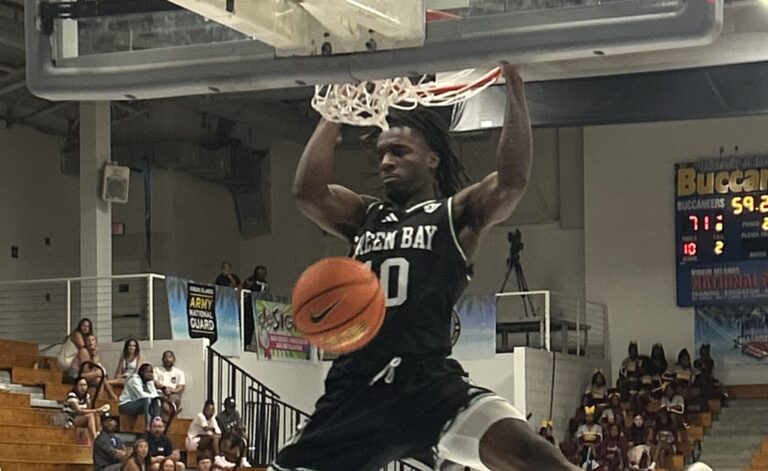
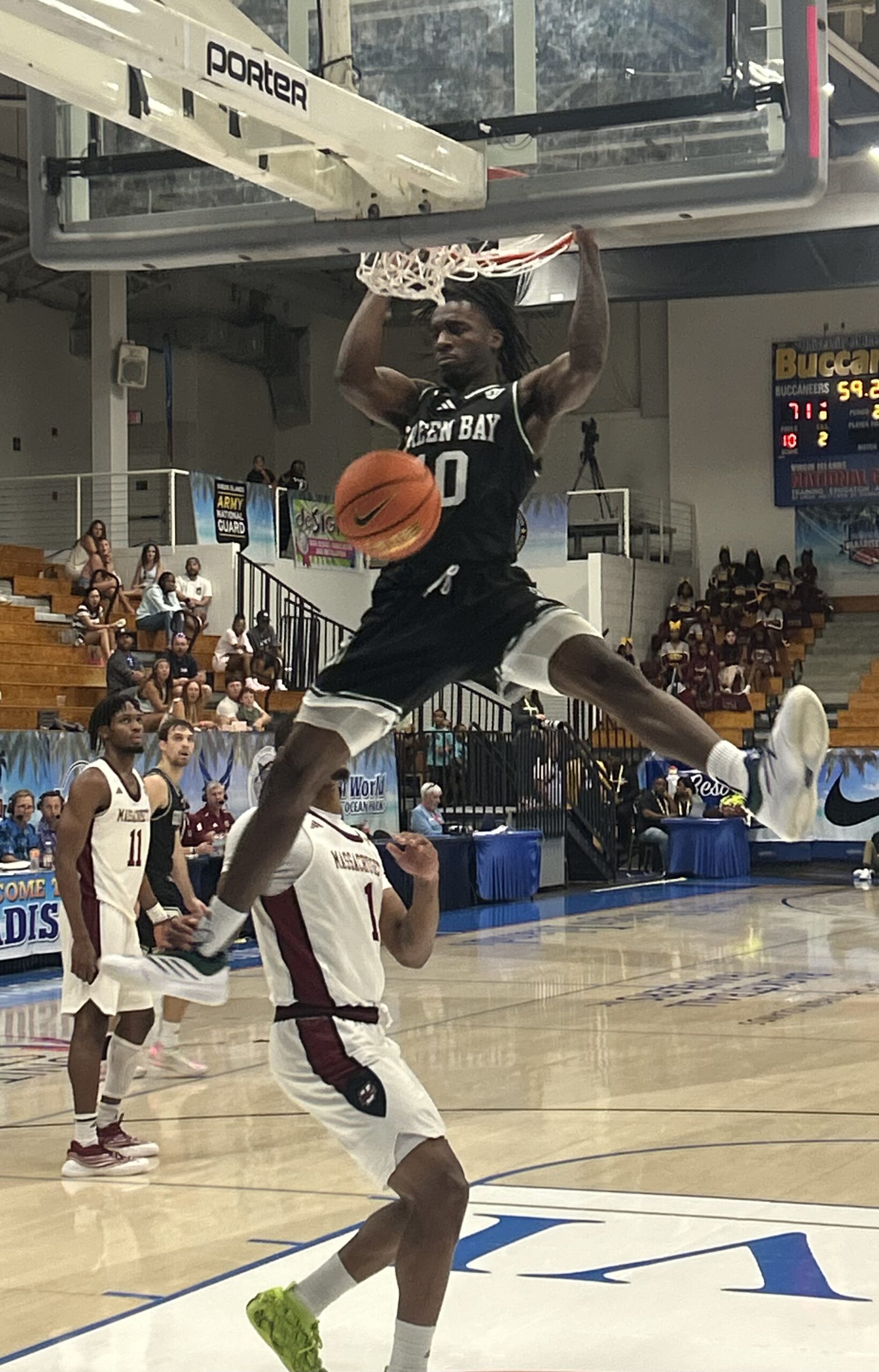
C.J. O’Hara, #10 of Green Bay, dunks the ball during a game against the University of Massachusetts. (Source photo by Mark J Daniel)
GAME 5 – Green Bay 79 – University of Massachusetts 75
The dynamic duo of Justin Allen and C.J. O’Hara fueled Green Bay’s win over the University of Massachusetts (UMass) on Day 2 of the 2025 Paradise Jam. The Minutemen of UMass marched out to a 5-0 early advantage. However, the Minutemen had no answer for O’Hara as he scored 21 points for Green Bay. His teammate Allen was the game’s leading performer with 27 points. Leonardo Bettiol led Umass with 21 points, 8 rebounds, and 4 assists. Marcus Banks added 19 points for the Minutemen.
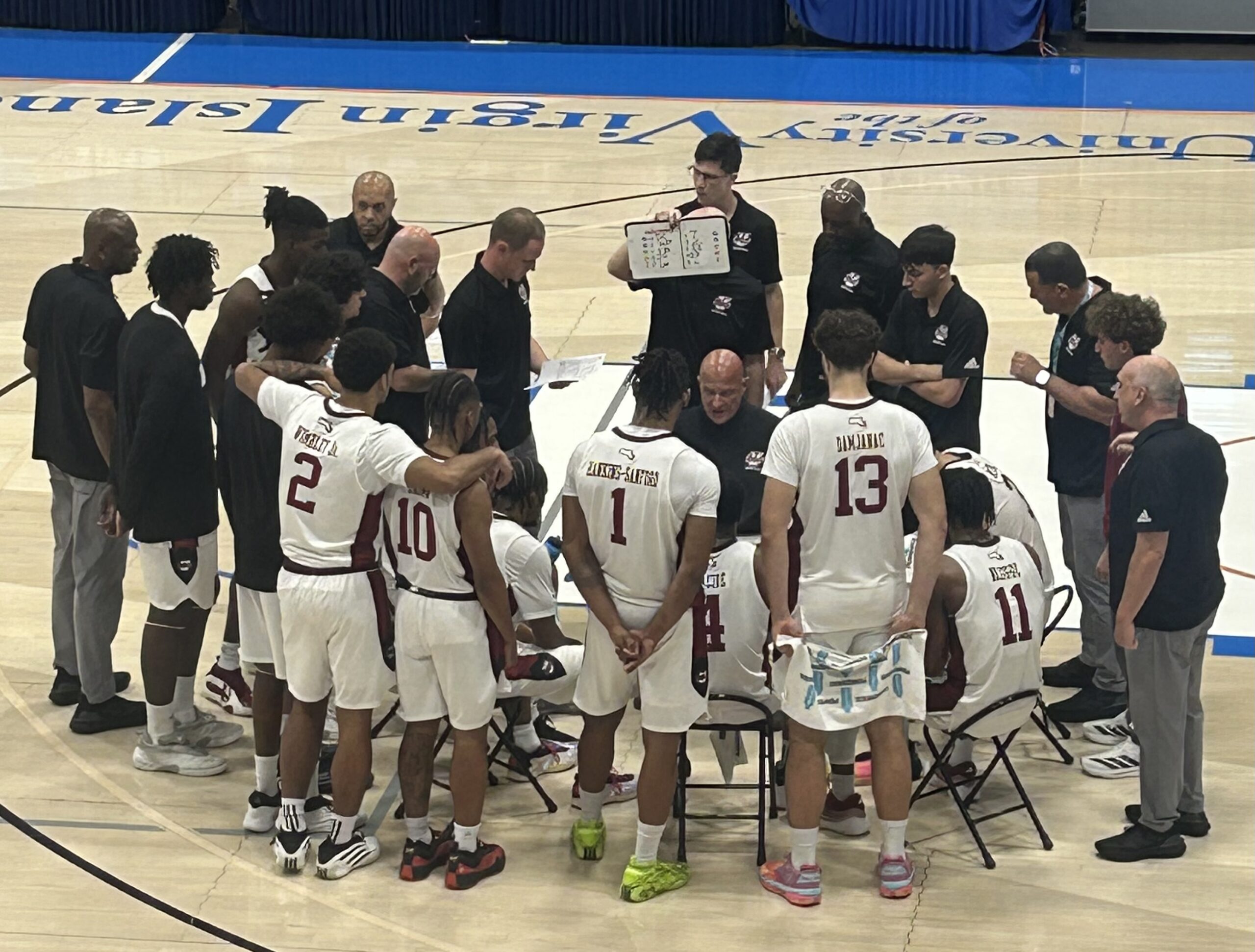
University of Massachusetts Head Coach, Frank Martin, talks to his team during a timeout of their game against Green Bay. (Source photo by Mark J. Daniel)
GAME 6 – Iona 91 – Oregon State 84
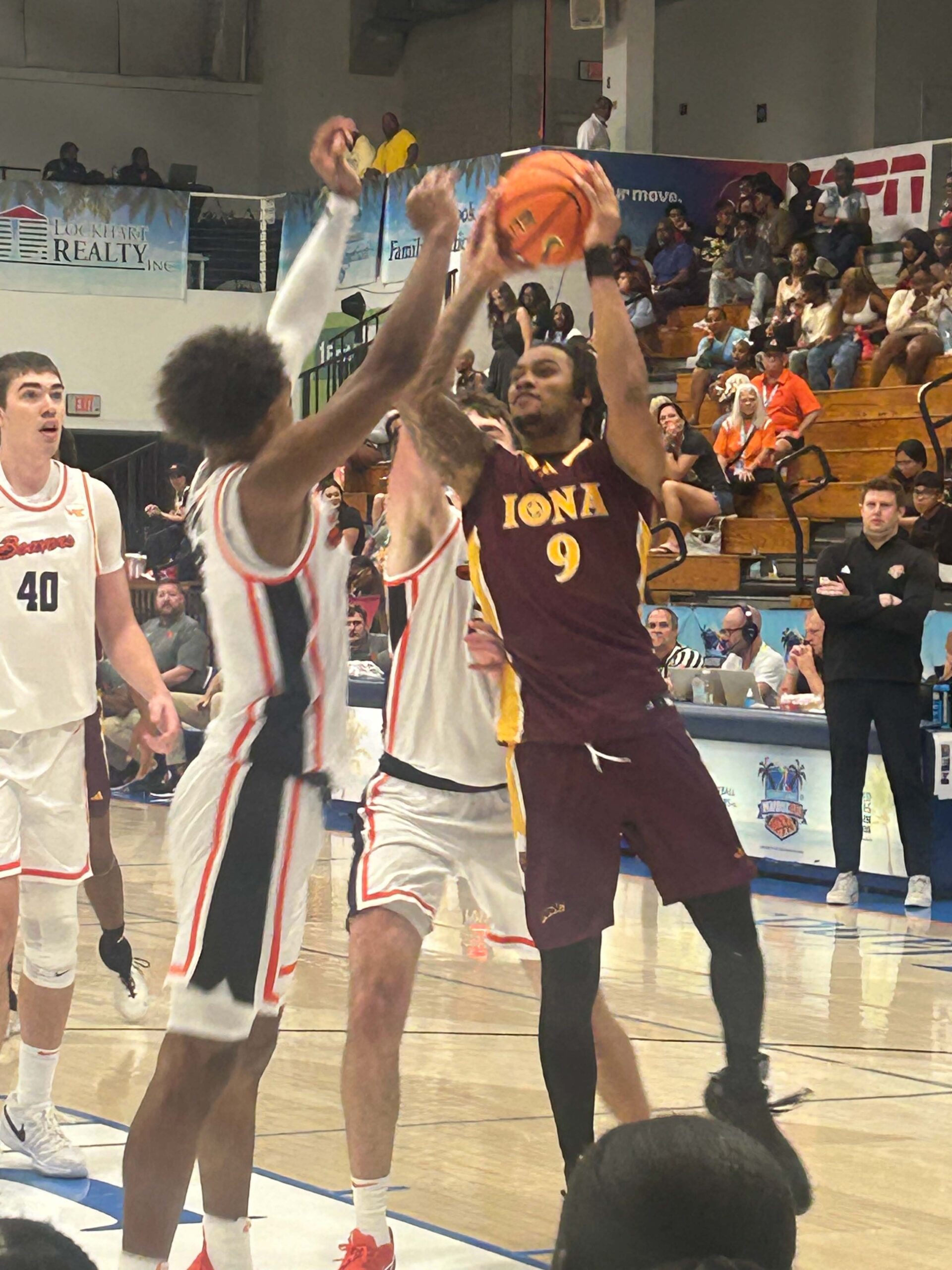
It wasn’t a pleasant day in paradise for the Beavers of Oregon State as they built a concrete 19-point lead with under 11 minutes to go in the game, only to have the Gaels of Iona methodically chip away until the dam burst in double overtime. The Beavers were in control for much of this contest, nursing a 5-point advantage with under one minute to go in regulation. C.J. Anthony hit two clutch free throws, and the Iona defense held, prompting Coach Dan Geriot to call a timeout. Senior forward Luke Jungers was “as cool as the other side of the pillow,” coined by Stuart Scott, as he nailed the game-tying 3-point basket with under five seconds to go in the regulation. The Beavers were up two with less than 10 seconds to go in the first overtime, but they fouled Anthony. Once again, Anthony made both free throws. In the second overtime, Iona finished the game on a 10-0 run, giving them a hard-fought 91-84 victory. Anthony scored 22 points for Iona, while Noah Amenhauser dropped 20 for the Beavers.
Iona University Lamin Sabally #9 makes the layup in his game against Oregon State. (Source photo by Mark J. Daniel)
Local High School Game – CAHS 64 – IEKHS 61
The final game of the evening featured the local public high schools, Charlotte Amalie High School (CAHS) Chicken Hawks, versus Ivanna Eudora Kean High School (IEKHS) Dynamic Rays. It was the first game of the season for both teams, and they were working out the kinks. CAHS found its rhythm early, instituting its full-court press and taking a 5-point lead after the first eight minutes of play. The Rays did a much better job handling the pressure and took a 4-point advantage into intermission. During halftime, the Lady Hawks and the Lady Rays had a mini exhibition game. They played two eight-minute halves. IEKHS won the girls’ game 15-4. CAHS dialed back up the pressure in the second half, giving the Hawks the 3-point victory. Kareem Turnquest was the top scorer for CAHS with 18 points. Cameron Hill was the game’s top performer, scoring 23.
The tournament continues on Sunday, Nov. 23, with two tournament games at the Elridge Blake Sports and Fitness Center. Yale will play Charleston at 6:30 p.m. Akron will take on Evansville at 9 p.m.
The Virgin Islands Water and Power Authority recently participated in two impactful youth outreach events that brought financial literacy, role-playing, and STEAM (Science, Technology, Engineering, Arts, and Mathematics) learning to life for students across the territory.
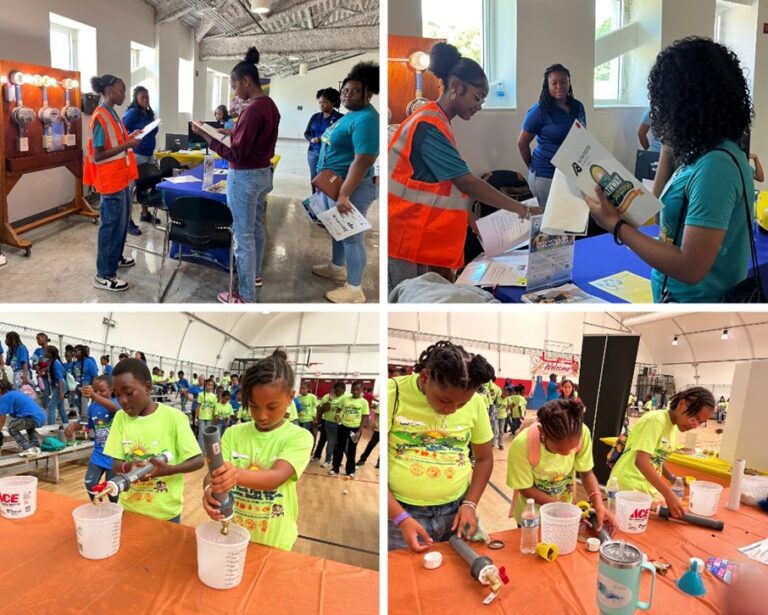
(Top, left and right): Students at the Pathway to Purpose Youth Finance Summit role-play as WAPA meter readers and customers, learning how to read electric meters and understand their WAPA bills at UVI. (Bottom, left and right): Students at the VI Youth Fun Quest repair simulated leaky pipes, experiencing firsthand what it takes to maintain and protect the territory’s water infrastructure at Central High School.
Through interactive activities and immersive simulations, students gained a deeper understanding of how energy and water systems support daily life — and the important role they themselves play as future community members, innovators, and utility customers.
At the Pathway to Purpose Youth Finance Summit on November 8, hosted by Aaliyah Boston at UVI on St. Thomas, 8th-grade students stepped into a “day in the life” as adults managing household responsibilities. As part of the simulation, WAPA representatives guided students through financial decision-making tied to energy use. Students learned to read electric meters, interpret utility bills, and even signed up for the Net Energy Billing program.
Students also role-played as WAPA employees, gaining firsthand insight into how the Authority supports the community. The experience reinforced the importance of financial literacy and responsible energy management, while giving students a meaningful look at real-world utility operations.
Yesterday, at the VI Youth Fun Quest on St. Croix hosted by the Virgin Islands Department of Education at Central High School, WAPA continued its hands-on approach with 4th- to 6th-grade students through a STEAM-focused activity station. Children learned how WAPA uses solar energy to power St. Croix, exploring fun facts about the Spanish Town, Petronella and Hogensborg solar farms.Students also learned how expanding solar energy reduces reliance on fossil fuels, diversifies the territory’s energy sources, strengthens reliability, and moves the Virgin Islands toward a more sustainable future. They discovered additional practical uses of solar energy by learning how solar ovens work and taking home instructions to build their own.
The role-playing theme continued with WAPA’s water-focused demonstrations. Through a lively “leaky pipes” repair game, students acted as water maintenance crews. This immersive activity offered a new appreciation for the crews responsible for maintaining and protecting the territory’s water infrastructure.
“Hands-on learning and role-playing help students connect the dots between the services they rely on and the systems that make them possible,” shared Shanell Spencer, Director of Communications at WAPA. “We are proud to inspire future leaders and foster a deeper connection to the essential services our teams provide.”
The Virgin Islands Water and Power Authority Communication’s Department is committed to reaching, informing, and connecting with the youngest members of the community to the eldest, through meaningful, transparent and effective communication.
Check out our weekly weather forecast with Jesse Daley, covering Sunday, Nov. 23, through Saturday, Nov. 29. Our YouTube playlist is updated every week, AND check out Jesse’s daily weather updates here.
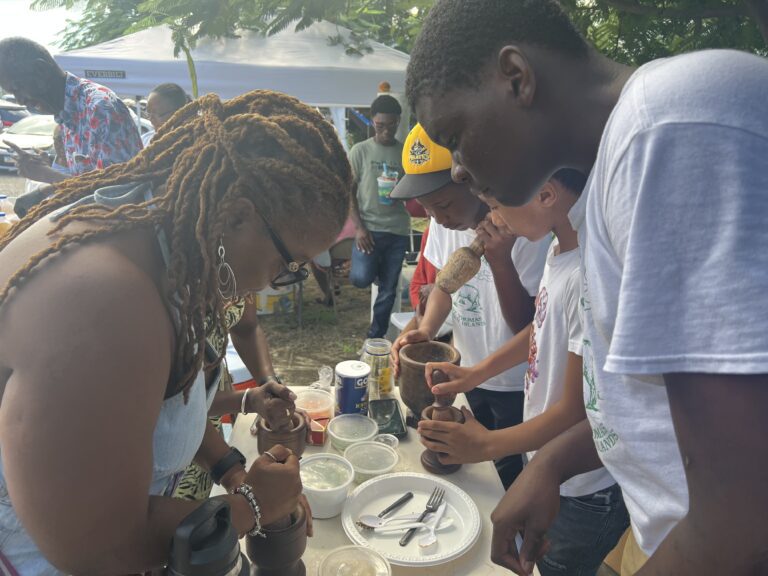
Students from Moravian School teach agriculture fair visitors how to make their own pound seasoning. (Source photo by Judi Shimel)
The spirited celebration of agriculture in the Virgin Islands began Saturday on St. Thomas. The St. Thomas-St. John Agriculture and Food Fair took place at the We Grow Food Pavillion in Estate Bordeaux where Agriculture Commissioner Louis Petersen announced the event would be extended into Sunday.
The district’s ag fair is a staple event, taking place on the weekend before Thanksgiving for many years. Once staged on the grounds of the Reichhold Center for the Performing Arts, the fair was displaced after the center was damaged by Hurricanes Irma and Maria in 2017. This year, it found accommodation at the traditional site of the Bordeaux Farmers Rastafari Cultural and Agricultural Fair.
Residents and visitors enjoyed a selection of soups, pates, small meals, snacks, and sweets. They browsed through tables filled with fruits, vegetables, and herbs, along with potted fruit trees.
Farmer Badega Agusta said she enjoyed sharing her love of horticulture with friends and neighbors. “They’ve all been grown from seed. They grow very well here; everything here will produce fruit within five-to-seven years,” she said.
Also growing well this year – soursop. Several displays in the pavilion held an abundance of the heart-shaped fruit with the knobby green skin. Attorney Judith Bourne spoke with delight at also finding breadfruit, having two tucked into her tote bag.
Petersen said he, too, was pleased to see the yield.
“It just seems to be a good season for soursop. They sometimes like a nice, wet season followed by a dry season, and they do well, and I’ve even seen where they don’t have the typical pest issues they normally have. It’s a really good season for soursoup, and as we say in agriculture, all of the elements came together,” the commissioner said.
Saturday’s fair also enjoyed the talents of young performers in dance, music, and the culinary art of making pound seasoning. Students from the Moravian School held demonstrations for fairgoers.
Instructor and culture bearer Glen ‘Kwabena’ Davis said he taught students how to combine the ingredients and the technique of crushing and grinding them together in a mortar and pestle. “They learned how to prepare a local pound seasoning, and I told them in order to get a grade, you have to go out in public without my instruction and teach adults how to prepare a local pound seasoning,” Davis said.
By late afternoon, those in attendance gathered around the front of the stage to cheer on participants in a coal pot lighting contest.
Agriculture officials, lawmakers, and members of We Grow Food, Inc. addressed the gathering during a midday ceremony. Petersen pointed to the progress made by his department and supported through local and federal funding; they included a groundbreaking for the installation of two cisterns at Bordeaux and a proposal drawn up by Agriculture to fund restoration of the district’s abattoir.
“About a month ago, we had a ceremony on this very site to build two new cisterns. The contractor has committed to us that the work will begin Dec. 1,” the commissioner said.
Delegate to Congress Stacey Plaskett listed the federal programs directed by her office to support ag initiatives in the VI. And Sen. Hubert Frederick praised a recent event that brought pre-schoolers in the district together with farmers and Agriculture officials to explore the possibilities of growing food, fishing, and raising livestock at home.
Frederick — head of the Committee for Economic Development and Agriculture — also encouraged adults to raise small crops at home and share the experience with youth in the family.
“Let’s start practicing those habits and pass it down to them so we can grow our own food and have good medicine for our bodies,” the lawmaker said.