



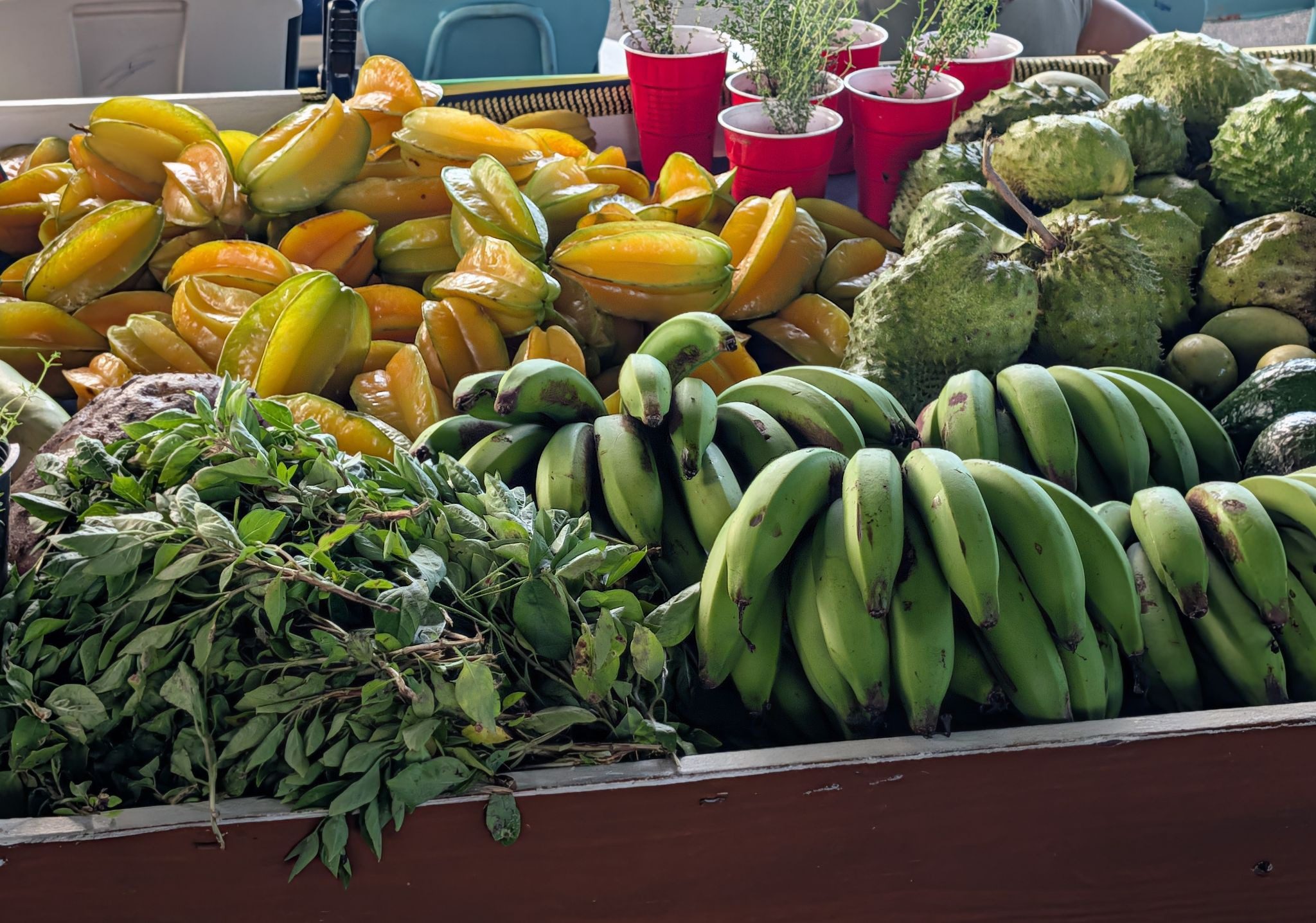
The St. Thomas–St. John Agriculture and Food Fair returned to the Bordeaux Farmers Market on Saturday, bringing together farmers, consumers, vendors, artists, and community groups for a day focused on food, culture, and the future of agriculture in the territory.
At the We Grow Food Pavilion, a panel of local leaders stressed that rebuilding agriculture in the Virgin Islands will depend on shared responsibility, stronger youth involvement, and infrastructure upgrades.
The panel began with an emphasis on shared responsibility, with officials urging residents to see agriculture not as a niche sector but as a cornerstone of the community. Agriculture Commissioner Louis E. Petersen Jr. opened by calling agriculture “a sacred task,” telling the crowd farming cannot fall solely on the Department of Agriculture.
“Agriculture is a sacred task for us,” he said. “It’s not just the Department of Agriculture’s job…. This is a task for all of us, and every single one of us has a role to play.”

Petersen outlined several initiatives, including new federal funding to train farmers in cooperative business models and a proposal to restore the long-defunct St. Thomas abattoir. He said the department is preparing a plan and is optimistic that the abattoir will once again be functional. “In my mind, this is not a matter of if. It’s a matter of when,” he said.
He also highlighted upcoming water-infrastructure investments, including two new cisterns expected to add more than 100,000 gallons of storage. “This is going to support our farmers and increase food production,” he said.
Delegate to Congress Stacey E. Plaskett praised the territory’s farmers for persevering through drought, hurricanes, and rising costs. “Your presence is what keeps agriculture alive,” she told the crowd.
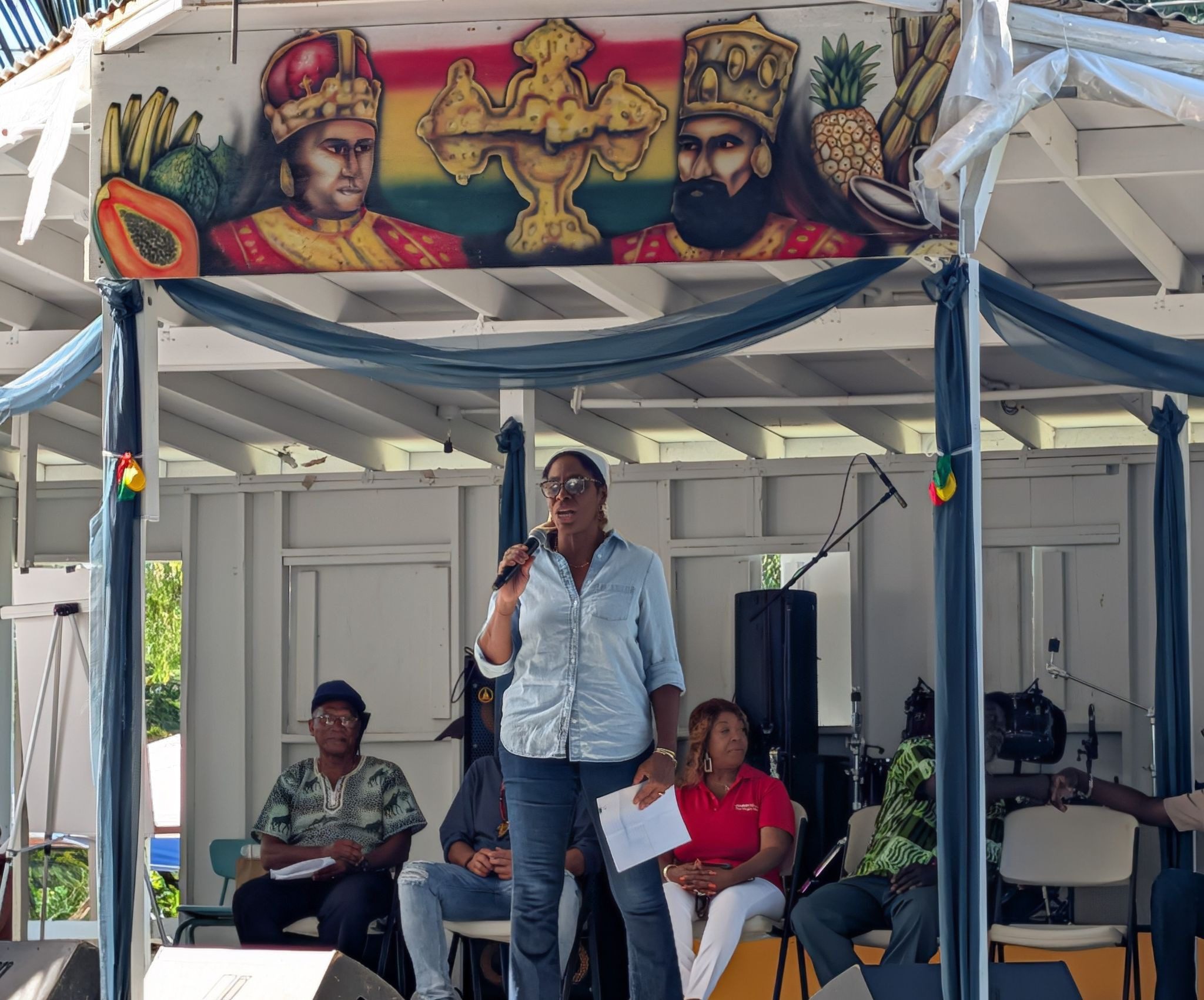
Plaskett announced several recent federal allocations, including $1.7 million for the Virgin Islands Good Food Coalition to create a food and technology hub, $1 million for We Grow Food to install a desalination system in Bordeaux, and $825,000 for renovations to the St. Thomas abattoir. “These aren’t just grants,” she said. “They’re investments in our self-sufficiency.”
The federal support, she explained, is part of a wider effort to strengthen local food systems and foster a culture of care and responsibility. “Agriculture is not just about cultivation. It’s about caring for our neighbors, caring for the land, and caring for one another,” she said.
Land use and community input also surfaced as major points of tension, reflecting broader debates about development and environmental protection across the territory.
Sen. Ray Fonseca called for stricter government compliance with land-use laws, pointing to a controversial development in Fortuna that he said has alarmed nearby residents. “One thing we must do in this government is always comply with the law and give residents the opportunity for input,” he said.
Fonseca also applauded recent youth-focused efforts by the Department of Agriculture. “Just last week, we introduced about 160 Head Start and first-grade students to agriculture,” he said. “That’s what we need, the young ones getting involved.”
Speakers connected local agriculture directly to community health, arguing that food security is not only an economic issue but a public-health priority in a territory heavily dependent on imports. Sen. Hubert L. Frederick stressed the health implications of imported food and argued that rebuilding a strong local farming base is essential. “Our food is our medicine, and that’s a fact,” he said.
“We need to take food security seriously. We need to make sure we can grow healthier foods and consume healthier food,” Frederick added. “This is an opportunity for our security… to finally grow our own fresh food and have good medicine for our bodies.”
Throughout the panel, multiple speakers repeatedly stressed the urgency of recruiting younger farmers, warning that the territory is losing agricultural knowledge faster than it can be replaced.
Elridge Thomas, treasurer of We Grow Food, said the fair continues a long tradition of celebrating the harvest but explained that the Virgin Islands is not fully capitalizing on its year-round growing climate. “We live in the tropics. We can grow all 365 days a year,” he said. “We are not taking advantage of that enough.”
He noted that with most farmers in their 60s, food production will continue to decline unless younger people enter the field. “We desperately need more programs to recruit and train young people,” he said.
Across the fair, farmers and vendors echoed common hopes and challenges. They shared ideas for making local foods more accessible, stressed the importance of teaching agricultural skills to the youth, and viewed the fair as key for building business relationships and community support.
They emphasized collaboration and the preservation of local traditions, whether by teaching children about agriculture, creating opportunities for local artists, or gathering as a community.
Embodying the fair’s festive spirit, local community groups brought the grounds to life with high-stepping moko jumbies, music, and energetic dance performances, celebrating tradition and togetherness in vibrant displays of culture.
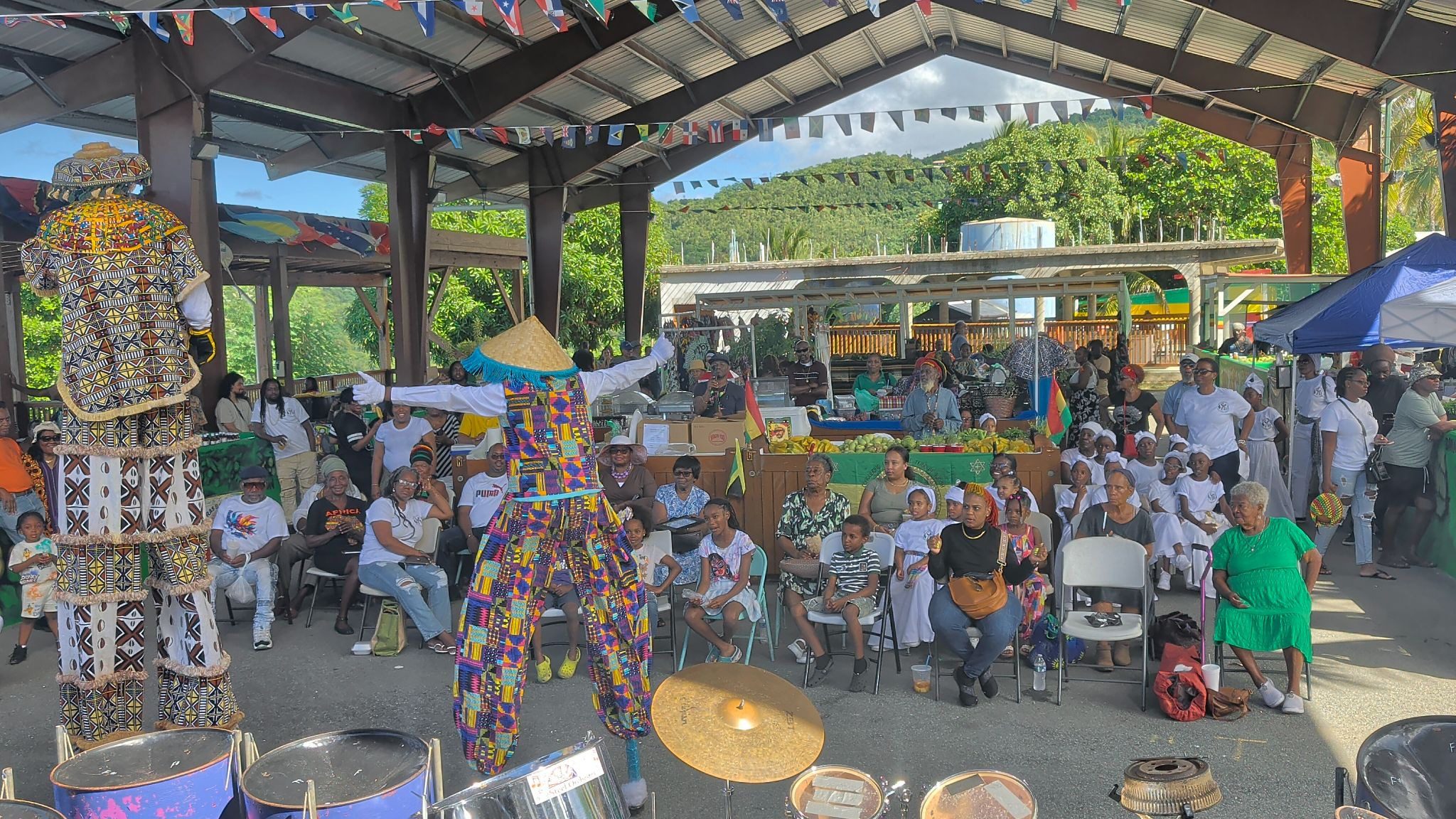
Families could also visit a petting zoo featuring bunnies and pigs, and community organizations such as VIDA and the WIC program offered resources and information to attendees.
Shelli Brin, owner of Que Sera Farms, said the fair served as a timely reminder of how important it is to invest in local food production. “If there is ever a time that we should be really investing in growing our food, it is now,” Brin said. “We need everybody at the table in this day and age. Whether you’re a consumer or a producer.”
Brin said stronger connections between farmers, small food businesses, and residents are key to building a resilient food system, especially when those relationships help make fresh, seasonal foods more accessible.
“It’s really important for our small food businesses to source more locally … to engage in the food system through healthy eating and seasonal options,” she said. “That’s how we build food security, by making choices that sustain our land and our health.”