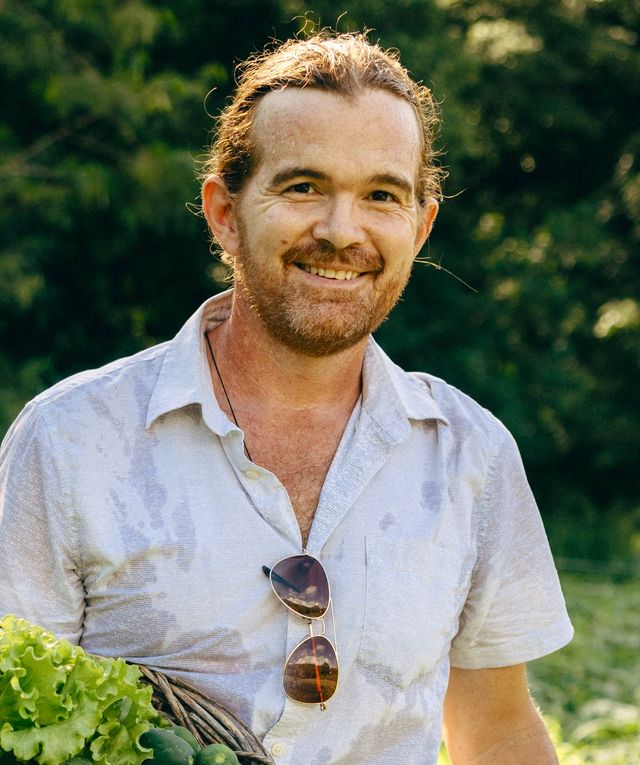
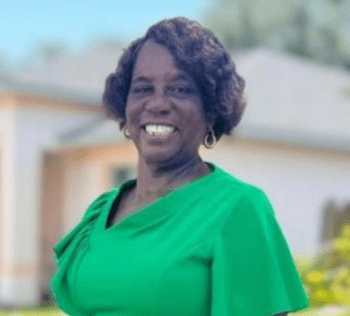
Island Green Living Association proudly announces the election of a new board member: Dr. Nate Olive, farmer and director of Ridge to Reef Farm in St. Croix, the only certified organic farm in the territory.Dr. Nate Olive, farmer and director of St. Croix’s Ridge to Reef Farm. (Submitted photo)
Olive is also president and co-founder of the Virgin Islands Farmers Alliance, which through strength in numbers, helps farmers coordinate resources, advance research and education, and pursue grants to improve production, logistics, and market opportunities. He brings a wealth of knowledge regarding food security and environmental issues in the U.S. Virgin Islands. The selection underscores Island Green’s dedication to improving sustainable food sovereignty in the territory.
“Nate has been at the forefront when it comes to advancing the tenets of organic farming and pushing to reverse food import dependency in the territory, which stands currently at 97%,” said Harith Wickrema, Island Green Living President. “He also shares a commitment to expanding sustainability overall in the U.S. Virgin Islands. As a fellow member of the Virgin Islands Food & Farm Council, his commitment and expertise are unparalleled.”
Olive, who holds a Ph.D. in Forestry and Natural Resources from the University of Georgia, is a staunch supporter of organic, ecologically regenerative, and culturally appropriate agricultural practices and is determined to see the territory’s farmers eliminate harmful chemical pesticides and synthetic fertilizers. To that end, he is the USDA’s “Transition to Organic Partnership” program coordinator for the region. One of the projects closest to his heart is the territory’s Farm to School program, expanding the provision of fresh food from local farms for public school lunch. To date, 30 local small farms, in addition to R2R, participate. Additionally, R2R’s 80+ person Farm Share program delivers local produce territory-wide on a weekly basis.
Along with running R2R and leading the VIFA, he is a Principal Investigator for Producer Grant Programs for SARE (Sustainable Agriculture Research and Education). He also serves as board member and treasurer for the Virgin Islands Conservation District. He is an honorary board member on the Local Food and Farm Council, charged with implementing the territory’s Agricultural Plan, and served as Farmer Representative on the Agricultural Plan Task Force as well.
Other Island Green board members include Harith Wickrema (president), Dawn Henry (vice president), Curtis Penn (Treasurer), Akhil Deshwal (Secretary), Trey Goldsmith (Executive Committee), Donald Schnell, Rob Crane, Jim Dobrowolski, Dr. Greg Guannel, and Dr. David Hall.
Island Green Living advocates for sustainability throughout the territory, including recycling, protecting the environment and expanding food security while supporting the community’s health and economic security. To date Island Green has recycled nearly 5 million aluminum cans and 65.5 metric tons of ocean-bound plastic. The Resource Depot reuse store has kept more than one million pounds of used building/construction materials, furniture and home goods, clothing, etc. from our overburdened landfills while extending the life cycle of this valuable material. Advocacy efforts have protected coral and marine life from toxic sunscreen, “Banned the Burn,” lead to bans on plastic bags and straws, expanded greening education, clean energy, and so much more.
Established in 2004, Island Green Living Association is a registered 501 (c)(3) nonprofit organization on St. John dedicated to sustainability throughout the USVI. For more information: www.islandgreenliving.org.
The Virgin Islands Department of Human Services, Division of Family Assistance, confirms that full November Supplemental Nutrition Assistance Program benefits were successfully posted to client Electronic Benefit Transfer accounts last Thursday Evening. With the conclusion of the federal shutdown and the restoration of national SNAPsystems, benefit files were transmitted and processed under normal operating procedures.
Virgin Islands Department of Human Services
Earlier this month, DHS implemented a locally funded emergency relief measure to maintain continuity of food access during the federal disruption. Under this special action, the Department of Finance executed a one-time manual issuance of paper relief checks—equal to half of each household’s normal monthly SNAP allotment—based on DHS-provided eligibility files. These payments were processed outside of the federal EBT system to ensure immediate local support. This evening’s benefit load reflects the full federal SNAP entitlement for November 2025.
The Department of Human Services extends its appreciation to Governor Albert Bryan Jr., the Bryan-Roach Administration, the 36th Legislature of the Virgin Islands, the Department of Finance, the Office of Management and Budget, Programming Solutions Inc., the U.S. Postal Service and DHS Division of Family Assistance Staff, for their ongoing support and collaboration in ensuring the effective administration of SNAP benefits across the Territory earlier this month, and for their strategic efforts in helping DHS identify solutions to continue serving clients during the federal shutdown.
For additional information, clients may contact the Division of Family Assistance at:
St. Croix – Phone: (340) 772-7100 Ext. 7159; 7166; 7066; 7012
St. Thomas – Phone: (340) 774-0930 Ext. 4303; or (340) 774-2399
St. John – Phone: (340) 774-0930 Ext. 4275; (340) 725-6221; or (340) 776-6334
Clients can also check their card balance by calling 1-866-884-2868 or by logging on to the EBT App at
www.fisglobal.com/ebtedgemobile
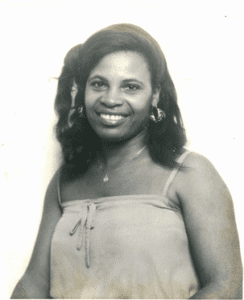
Marilyn Roberts Lindo, of Estate Flamboyant Welcome, passed away on Oct. 26. She was 79 years old.
Marilyn Roberts Lindo
She is survived by her spouse, Vernon Lindo; son, Darnell Lindo, grandchildren, Nazir Lindo, Darnell Lindo, Jr.; sister, Kathleen Roberts Matthew; nieces, Avion Matthew- James, Yeisan Matthew, Kirlice Carr- Lett; nephew, Gary Hazzard; great-nieces, Brittney Matthew, Kathleen Ludwig-Mathew, Bria James, Kyei’El Lett; great-nephews, Brendon James, Z’Nye McNeil, Ty, Are Duncan; great great nephew, Idris James; nephew-in-law, Christopher Lett; cousins and other relatives, Cheryl-Ann Roberts, Allison Peters, Joyce Dallas, Franklin Sylveter, Carol Sylvester-Durant, Dena Marshall, Teri Helenese- DeAbreu; special friends, Alexandra Hinkson, Francillia Hinkson, Chaplain Ludger Berkitt, Sanuel Huggins, Virginia Ventura, SD James; other precious families and friends too numerous to mention.
Funeral services will be held on Dec. 5 at Evangelistic Pentecostal Church. Viewing begins at 9 a.m. with service at 10 a.m. Interment will be held at Kingshill Cemetery.
Funeral arrangements entrusted to James Memorial Funeral Home.
We announce the death of Madelien Vilna Sonia Victorine better known as Mado. She died on Oct. 12, 2025 in Belfast, Dominica at the age of 75.Madelien Vilna Sonia Victorine
She leaves to mourn her Daughters, Glenda (Joanna) Richards (STX), Corinne Francis (FL) and Peaches Cornelia Francis (FL); Adopted Son, Winston Delmore; Grandchildren, Calvin (Chris) Richards (STX), Glendasai Richards (FL), Neil Richards (STX), Dominique Thomas (GA), Monique Davis-Edwards (NC), and Tarique Davis (GA); Great Grandchildren, Zuri Richards (STX), Jahsai Hilaire (STX) and Noa Thomas (GA); Sisters, Sonia Vauclena-Robert (NY), Rosemarie Samuel, Dian Durand-Charles, Marilyn Victorin, Cheryl Victorin-Anthony and Rosemary Victorin-Joseph (STX); Brothers, Conrad (Irad), David and Curtis (Angus) Victorine; Aunt, Grace Ann Julien (NJ); Son-In-Law, Calvin Richards (STX); Daughters-In-Law, Yolande Richards (STX), Danielle Thomas (GA); Grandson-In-Law, Anthony Edwards (NC); Sisters-In-Law, Marilyn Victorin, Tiana Viveralli-Victorin, Onia Greenaway; Brothers-In-Law, Augustus Robert (NY), Allan Dexter Joseph (STX), Julius Anthony, and Augustus Caprice; Nieces, Aziza Vauclena (NY), Delia (MD), Iyisha (STX), Sherae (STX), Aquenel, Aleneque, and Julyn Victorin, Valda Victorin-Faustin, Vanessa Victorin-Thomas, Aminah Pemberton-Williams, Kerry-Ann Richards, Earnica Esprit, Sharissa Lockhart, Ethlyn Charles, Charita Anthony, Cornelia Charles-Jones, Sherniah Charles, Wendy Glenville, and Cleo Etinoffe; Nephews, Harvey Vauclena (NY), Glenis Abdul Messiah (ANU), Curtis, Cecil, Demy, Leo, Stellan, Akenel, and Alenek Victorin, Steve and Shawn Martin, Sherwyn Lockhart, Junius Anthony, Carl Etinoffe, Cornel, Deron and Jevony Charles; Grand Nieces, Quishylah, QuiNyah, Anailah Navarro (STX), Keiziah Darwton, J’Myiah Bonnie, Jeneive Martin, Gia Barton, Tshiamo Charles, Sienna Frank, Amara Williams, Carniah and Cassiah Etinoffe, Tanayah Joseph, Shakibah Fanus, Rennesha Thomas; Grand Nephews, Jamaal, Jahili, Zahali Vauclena (NY), Derlani and Aiden Charles, Ayden Johnson, A’Janick, Dwighton, Ezekeil, Darnelle, Makonnen, Mennelik and Javeen Victorin, Jedidiah and Mishael Faustin, Rashad Paul, Clayton and Rashad Thomas, Ahmani Navarro and Kiyon Fahie (STX); Great Grand Nephews, Levon Jr and Levio Fanus; Nephew-In-Law, Arnel Jones; Nieces-In-Law, Shirl Caprice and Enisha Daisy; Cousins, Selah, Lydia, Clyde (STJ), Nicholas (STT), Rose (STJ), Kerine and Phaise Victorin, Kelvin, Jeff (PA) and Vivian McPherson (NJ), Wilson Prevost (ANU), Debbie Riviere-Batich (NJ), Darrell Riviere, Merle Williams & Family (STX), Kendra Frank (MA), Mary-Jane Murrel & family (CT);Special Family Friends, Irvin Durand, Jahvon Hilaire, Ashley Simpson; Special Adopted Daughters, Jo-Anne Rolle-Carrette, Dana George, Shirl Isidore; Special Friends, Mervin Dodds & family, Mervin George & family, Dr. Anne-Marie JohnRose-Brown & family (FL), Nathalie Defoe (FL), Kenny Durand, Gina Williams-Severin, Angela Williams (STX), Agnes Andrews (STX), Madelin Oscar (STX), Rene Joseph (STX), Virginia Michaud (STX), Mary Joseph (FL), Rosema Africa, Pastor & Mrs. Emmanuel Parrillon (FL), Shaniqua Greenich (STX), Linus Nicholas (STX), Evan Phillip (STX), Mathias George & family (STX), Pastor Anthony Benjamin and members of Calvary Baptist Church (STX), Lucyanna Poleon (STX), Josephine Chitolie (STX), Ken Francis & family, Conrad Francis & family, John & Virginia Alexander (Aruba); Special Mention, Doctors and staff at Moffit Cancer Institute and Advent Health in Florida, Care Givers at PHARCs, Dr. Grogan, Dr. James, Roxann Rodriguez, APRN; Hannah Tyon, Vanessa Hypolite, Dr. Curtis St. John, Beatrice Perez, Leonardo Gonzalez, Lena Seaman, and Mollin John. Other relatives and friends too numerous to mention.
The body of the late Madelien V. S. Victorine better known as Mado was laid to rest on Oct. 29 at the Roseau Public Cemetery, Dominica.
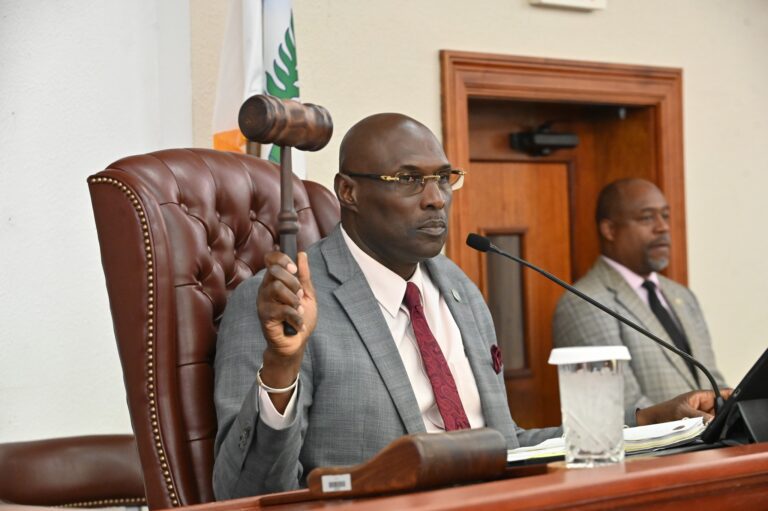
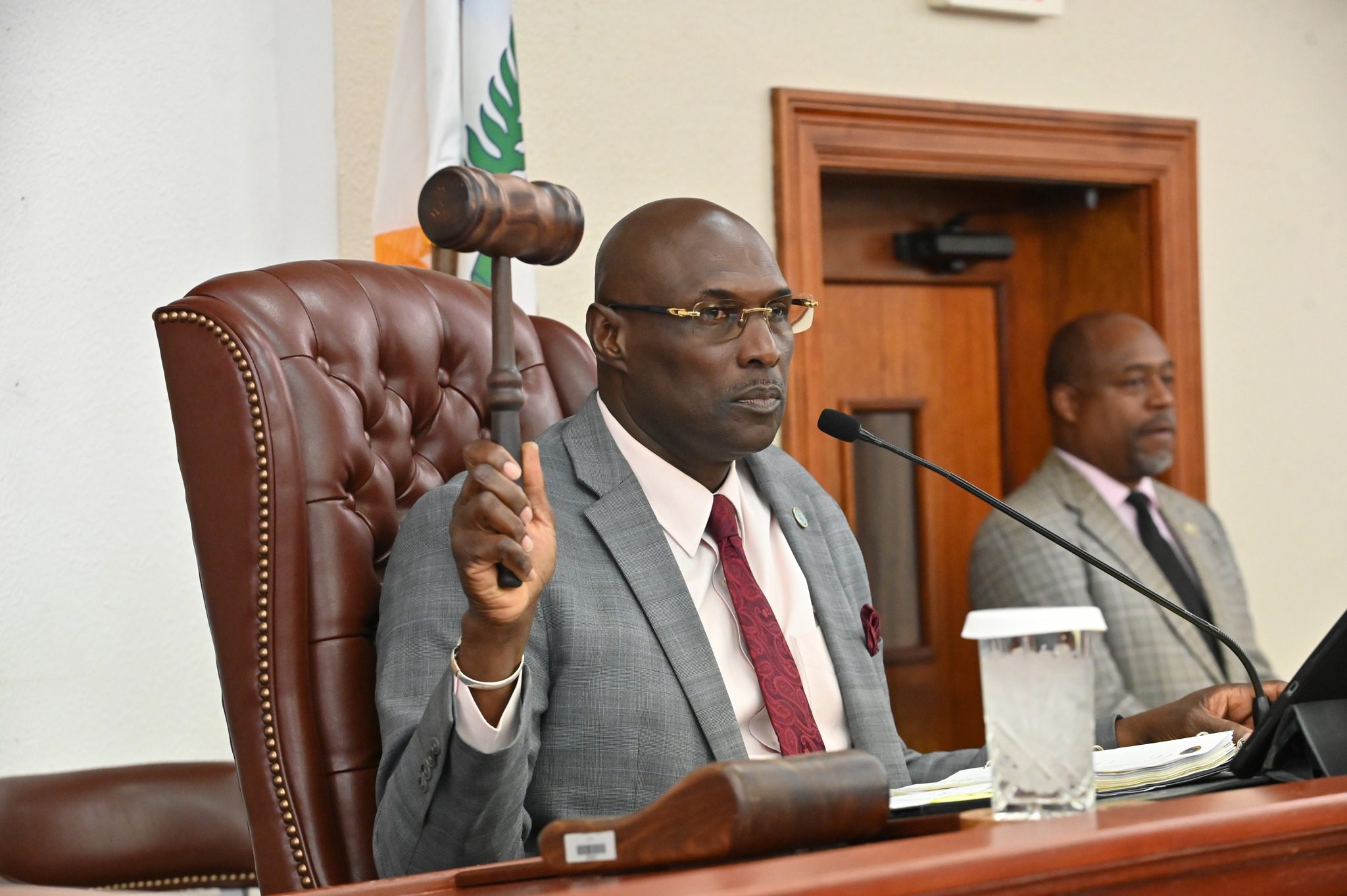
Sen. Novelle Francis Jr. chairs the Senate Budget, Appropriations and Finance Committee Monday. (Photo courtesy V.I. Legislature)
The Senate Budget, Appropriations and Finance Committee voted Monday to advance a bill that would raise the territory’s minimum wage through phased increases.
Bill No. 36-0030 would raise the territory’s minimum wage from $10.50 in a phased schedule, starting at $12 an hour on June 1, 2027, increasing to $14 an hour on June 1, 2028, and reaching $15.03 an hour on June 1, 2029, under a revised schedule approved by a committee amendment. The measure now moves to the Senate Rules and Judiciary Committee.
Sen. Franklin D. Johnson, the sponsor of the bill, talked about the importance of this discussion, “These are conversations we definitely have to have. Not want to. It’s a must.”
“If you work in the Virgin Islands, you should be able to live in the Virgin Islands,” Johnson said. “Our minimum wage has been frozen at $10.50 since 2018. The law required annual review by the wage board starting in 2019, yet for seven years nothing moved — meanwhile, everything else did.”
In his testimony, Johnson pointed to steep increases across nearly every major expense facing residents. He noted that the overall cost of living has climbed by more than 39 percent since the last wage increase, with essential categories like food and housing rising sharply.
“We must face a hard truth: the Virgin Islands now rank among the most expensive places to live in the United States, with costs comparable to California and Hawaii. But here’s the difference: those states adjusted their minimum wage regularly. Ours has been stuck for seven years,” Johnson said.
“We cannot ask Virgin Islanders to survive 2025 prices on 2018 wages. This bill is simply asking us to catch up to inflation, catch up to the cost of living, and to do dignity for our workers who deserve it,” he added.
Johnson argued that a phased increase would “provide business with predictability and stability for workers and begin correcting a wage structure that has fallen dangerously out of sync with reality.”
Haldane Davies, director of the Bureau of Economic Research, said that keeping the minimum wage stagnant “usually widens the gaps of income and racial inequalities, and demoralizes the society where people see constant obstacles to advancement, to credit, home ownership, and better days for themselves and their families.” He added that a higher minimum wage “also gives hard working individuals and families across the territory a better likelihood of getting ahead financially and building generational wealth.”
“It is highly probable that a higher minimum wage will boost the local economy by putting more money into the hands of lower wage workers, who are more likely to spend it than business owners on goods and services in the community,” Davies said.
Labor Commissioner Gary Molloy offered inflation-adjusted figures showing how much purchasing power has eroded. “The cost of living in the Virgin Islands has risen sharply over the past decade, but wages have remained the same,” Malloy said. “When we adjust the 2015 minimum wage of 10.50 for inflation, it would equal about $14.40 in 2025, which shows how much buying power workers have lost.”
Molloy also highlighted broader consequences of stagnant wages. “This wage stagnation has also caused many young Virgin Islanders to seek work elsewhere, which weakens our local talent pool and makes it harder for businesses to find and keep qualified workers,” he said.
Some business leaders said they support raising the minimum wage but cautioned lawmakers about potential economic consequences. Scott Barber, board member of the St. Thomas–St. John Chamber of Commerce said the chamber supports increasing the minimum wage from $10.50 to $13 an hour. “We believe that this proposed increase of $2.50 per hour is needed and justified and will not negatively impact the majority of the business community or the economy,” he said.
However, Barber warned that further increases could have significant effects. “The chamber feels that any further increases would definitely have a negative impact on the business community and the economic well-being of our entire community, which would ultimately affect the people of the Virgin Islands with higher costs and higher unemployment,” he said.
He cautioned that raising the minimum wage could lead some employers to reduce hiring. “Raising the minimum wage would increase the cost of employing low-wage workers. As a result, some employers would employ fewer workers than they would have employed under a lower minimum wage,” Barber said.
He cited academic research, noting, “The main findings of economic theory and empirical research over the past 70 years is that minimum wage increases tend to reduce employment. The higher the minimum wage relative to competitive market wage levels, the greater the employment loss that occurs.”
Barber also opposed the bill’s use of automatic, scheduled wage increases, saying the built-in increases could leave businesses unable to respond flexibly to unpredictable events, such as technological changes or natural disasters.
Sen. Marvin A. Blyden emphasized a measured approach to raising wages. “For the good of workers and for the health of the economy, the best approach to the minimum wage is to increase it in small and regular increments, rather than in large chunks,” he said.
Sen. Ray Fonseca also expressed support for the bill, citing both social and economic benefits. “It’s good for the employees, it’s good for the economy. It reduces poverty. So I’m definitely in favor of this,” Fonseca said.
After hearing hours of testimony, the committee voted to move Bill No. 36-0030 forward as amended. The measure now heads to the Senate Rules and Judiciary Committee for further consideration and possible action.
“The passage of this bill is a necessary step towards a stronger, fairer, more prosperous, more resilient, and a more sustainable Virgin Islands for everyone,” said Davies “It is an investment in our people and our collective future. It is also a commitment to the principle that hard work should be enough to afford a decent life in the Virgin Islands.”
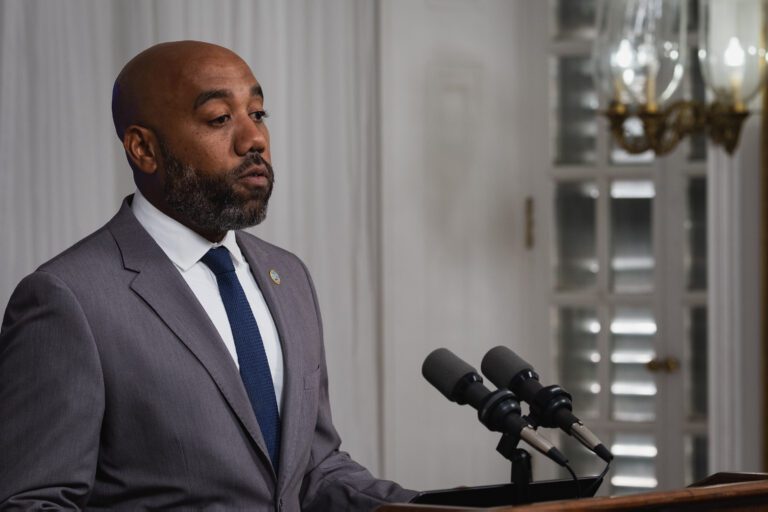
Government House spokesperson Richard Motta Jr. provides updates on the resumption of SNAP benefits and announces Gov. Albert Bryan Jr.’s nomination of attorney Pedro K. Williams to the V.I. Superior Court during a briefing Monday on St. Croix. (Source photo by Kit MacAvoy)
Gov. Albert Bryan Jr. has nominated attorney Pedro K. Williams to serve on the V.I. Superior Court.
After announcing the nomination during a weekly Government House press briefing Monday, spokesperson Richard Motta Jr. said Williams’s confirmation would fill the last remaining vacancy on the Superior Court’s bench and “allow the court to operate at full strength.”
“That means greater capacity to move cases, shorter wait times for families and businesses that seek resolution, and a stronger foundation for justice across the territory,” he said.
Williams graduated from Charlotte Amalie High School before earning a degree in economics from Tufts University, near Boston, and a juris doctorate from the University of Texas. He worked as legal counsel for V.I. Delegate Ron de Lugo, counsel to the Coastal Zone Management program and in private practice with former V.I. Attorney General Vincent Frazer. Williams’s work representing both government agencies and private individuals “gives him a balanced perspective on the duties and limits of government power and on the rights of individual citizens,” Motta said.
“That breadth of practice means he has seen our justice system from many angles — from serious criminal matters to complex civil disputes and sensitive family cases,” he said.
The nomination comes two weeks after Bryan tapped Magistrate Judge Venetia Harvey Velazquez to serve on the Superior Court in the district of St. Croix.
November SNAP Benefits ‘Fully Restored’
Motta said Monday that as of last week, Supplemental Nutrition Assistance Program benefits put on pause amid a 43-day shutdown of the federal government have been fully restored and posted to Virgin Islanders’ EBT cards. The restoration came after the local government tapped into its rainy day funds and sent food assistance checks to more than ten thousand households across the territory.
“The emergency checks that went out earlier this month are yours,” Motta said. “I’ll repeat that: the emergency checks that went out earlier this month as payment for half your November EBT benefits are yours. They were funded with local dollars to bridge the gap created by the federal government shutdown. The full federal SNAP benefit that posted on Friday is your regular November benefit from the federal government — it is not reduced because you received a local relief check, and it is not being clawed back.”
Some Detained for Questioning After Another School Threat
Addressing a threat made to the Lockhart K-8 School on St. Thomas Monday, Motta said some individuals have been detained for questioning.
“And that’s the extent of details with respect to the investigation that I have right now, but in the coming days we should have some more information,” he said. “But they have detained some individuals as persons of interest — and for questioning — and we will make further announcements in the very near future.”
In a statement Monday, the V.I. Education Department said the school was placed on lockdown after a call was made to 9-1-1 reporting a potential threat to the campus. The campus was evacuated and police later gave the “all clear.”
“All potential threats to campus are taken seriously and the safety of our students and school personnel remains our highest priority,” according to the statement. “Students are reminded of the seriousness of making any kind of threats that could compromise the safety of fellow students and school personnel.”
Monday’s incident marked at least the fourth such threat made against Virgin Islands schools in the past three weeks. Separately, a 17-year-old was arrested at St. Croix Central High School last Friday after a loaded gun was found inside the student’s backpack.
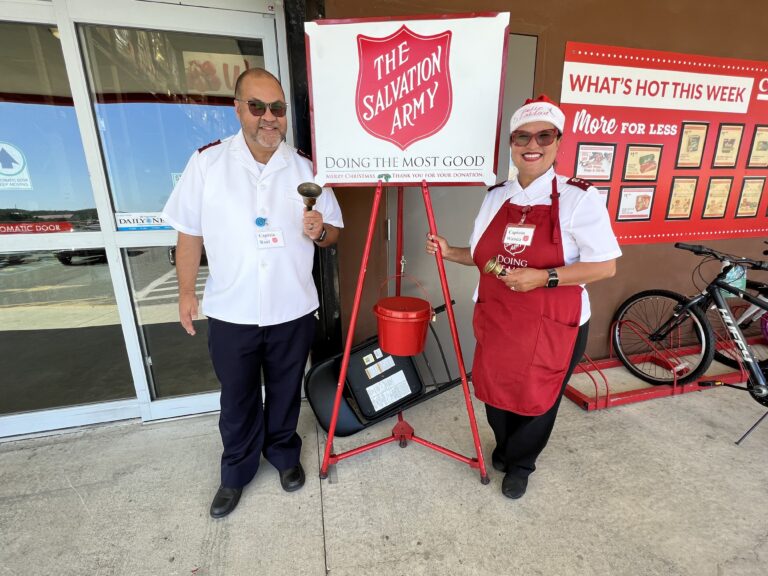
The Salvation Army St. Thomas Corps is seeking volunteers to support this year’s Red Kettle Campaign, which begins the day after Thanksgiving and helps fund food, shelter and social services for residents in need, according to a press release from the organization.
The Red Kettle tradition dates back to 1917, when a Salvation Army officer in San Francisco used a soup pot to collect donations to feed the hungry. That same year, the organization launched its ministry on St. Thomas, marking more than a century of local service, the press release stated.
Tom Bolt, chair of the St. Thomas Advisory Board and a longtime bell ringer, encouraged residents to take part in what he described as a meaningful holiday experience. “It’s truly the best thing about the Christmas season,” Bolt said. “The joy, smiles and community spirit experienced while ringing the bell remind us of what Christmas is really about, helping those most in need in our island community.”
According to the release, individuals, families, and community groups can sign up for two-hour volunteer shifts Monday through Saturday between 9 a.m. and 9 p.m. The six locations include Kmart at Tutu Park Mall, PriceSmart, The Market at Tutu Park Mall, Walgreens and Cost U Less. Two bell ringers per shift are encouraged, and all materials will be supplied by The Salvation Army.
“Every ring of the bell represents hope for someone in need,” said Major Mig Lavenbein, Corps Officer of the St. Thomas Corps. He noted that volunteer support directly helps provide food, shelter and assistance for the poor, homeless and elderly throughout the community.
Those interested in volunteering or seeking more information can contact Major Tim Lavenbein at 215 510 8440 or tim.lavenbein@use.salvationarmy.org.
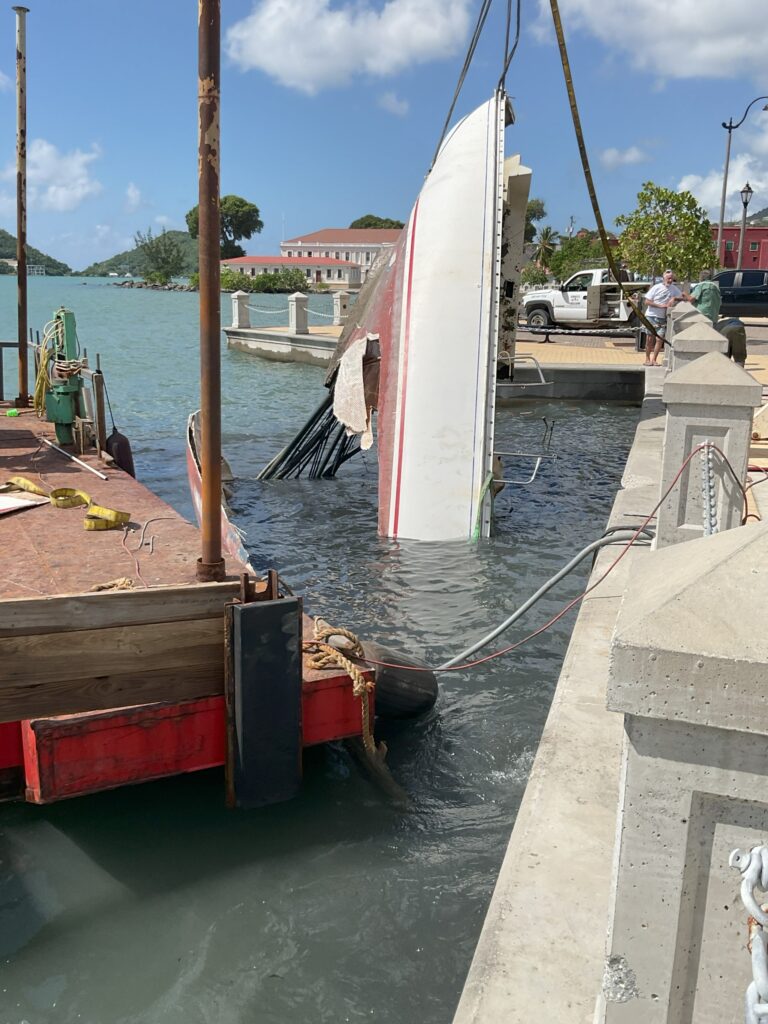
A sailboat that had been lodged on the St. Thomas waterfront for more than a year was finally removed following months of environmental setbacks and coordination between agencies, according to a press release from the Department of Planning and Natural Resources.
DPNR Commissioner Jean Pierre L. Oriol announced that the vessel Shameles, Registration Number NO 905471, was taken off the waterfront apron where it had been grounded since August 14, 2024. The boat broke free during the last hurricane and became stuck along the promenade, creating navigational and environmental concerns.
According to the press release, removal efforts were delayed by poor water quality after collapsed lines caused discharges near a nearby outfall. The Virgin Islands Waste Management Authority repaired the lines, and once water conditions improved, contractors were able to safely begin work.
Above and Below Marine Services handled the operation. The vessel was dismantled in sections along the waterfront and the debris transported to the DPNR facility at Krum Bay Boat Yard, where it was destroyed before being disposed of in an environmentally responsible manner, the press release stated.
Oriol stated that the department “remained steadfast in ensuring that private obligations were met without incurring new costs to the people of the Virgin Islands.” He said maintaining the safety and beauty of the territory’s waterfronts remains a priority.
The release noted that the vessel’s removal came at no cost to the government, as all expenses were covered by the owner’s insurance company. For additional information, DPNR directed the public to contact its Division of Environmental Enforcement.
A 20-year-old St. Thomas man was arrested Nov. 14 after police said he struck and strangled his brother during a confrontation inside their home, the Virgin Islands Police Department reported.
Officers responded to the residence on Nov. 14 at about 12:13 p.m. after receiving a report of an assault in progress. The victim told officers that he had been lying on his bed when his brother, T’Juannie Harrigan, entered the room and began punching him in the face with a closed fist. According to the police report, the victim said a struggle followed and Harrigan then began to strangle him. When Harrigan let go, the victim ran from the room and called for help. Police noted that the victim had visible injuries to his face.
Officers made contact with Harrigan, who was taken into custody on charges of assault in the second degree DV, simple assault DV, and disturbance of the peace DV. Police said he was transported to the Richard Callwood Command, booked, processed, and turned over to the Bureau of Corrections pending his advice of rights hearing. No bail was set under the domestic violence laws of the Virgin Islands.
A St. Thomas woman was arrested early Sunday after police said she assaulted two people and shattered a glass door during back-to-back incidents in the Savan area, the Virgin Islands Police Department reported.
Police said the series of offenses began Sunday at about 1:06 a.m., when a female caller reported she had been punched in the face by another woman. Patrol officers arrived at En Canto Bar, where a witness told them the suspect, identified as Santa Cabral, was standing outside the establishment when she threw a rock at the door and shattered the glass.
While officers were still investigating, the 911 Emergency Call Center dispatched them to a second assault in progress at Classico Bar on Gamble Gade, located near En Canto Bar. When officers reached the scene on foot, they met a second victim who reported that the same suspect entered the business, spat in her face, punched her, and repeatedly slammed the bar’s door, according to the police report.
According to the report, officers conducted a foot search through Savan and found Cabral, who appeared intoxicated. She was taken to Schneider Regional Medical Center for treatment of a head laceration, then advised of her constitutional rights and arrested.
Cabral faces charges of destruction of property, assault and battery in the second degree, simple assault and battery, and disturbance of the peace. Her bail was set at $1500 under the Virgin Islands Code. Police said she was unable to post bail and was turned over to the Bureau of Corrections pending her advice of rights hearing, police said.