Check out our weekly weather forecast with Jesse Daley, covering Sunday, May 24, through Saturday, May 30.
Please stay safe and follow the Source for more weather updates!
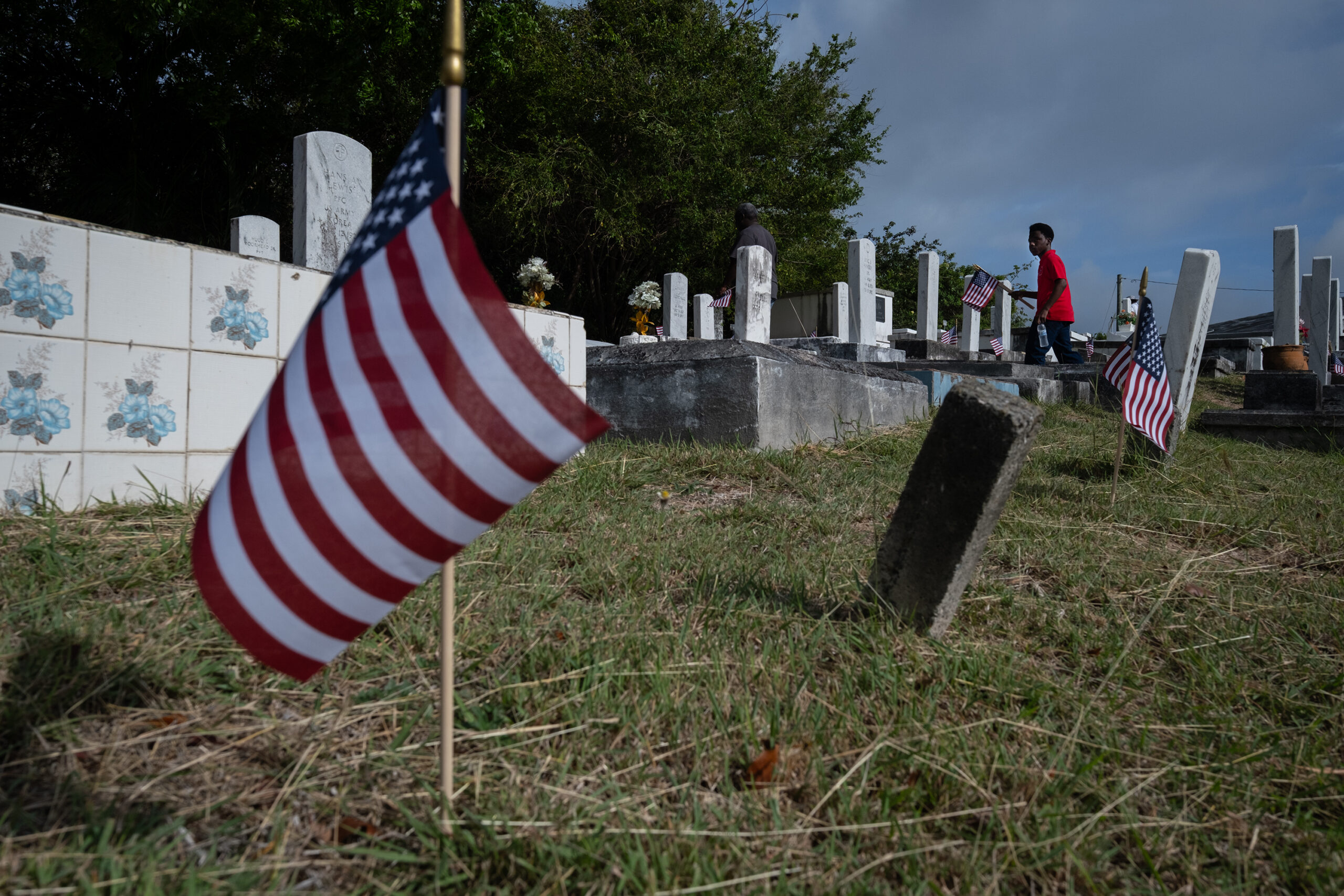
Glendon Henry Jr., a young member of the Virgin Islands Chapter Tuskegee Airmen, carries flags to the gravesites of deceased veterans Saturday morning at the Kingshill Cemetery on St. Croix. (Source photo by Kit MacAvoy)
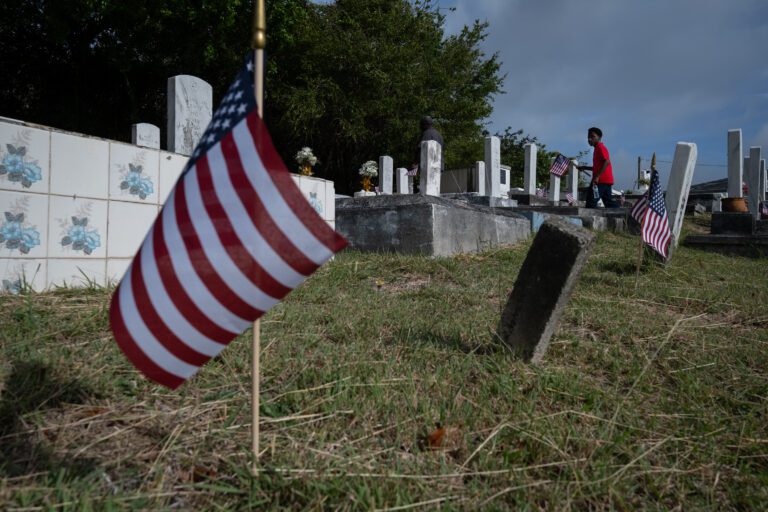
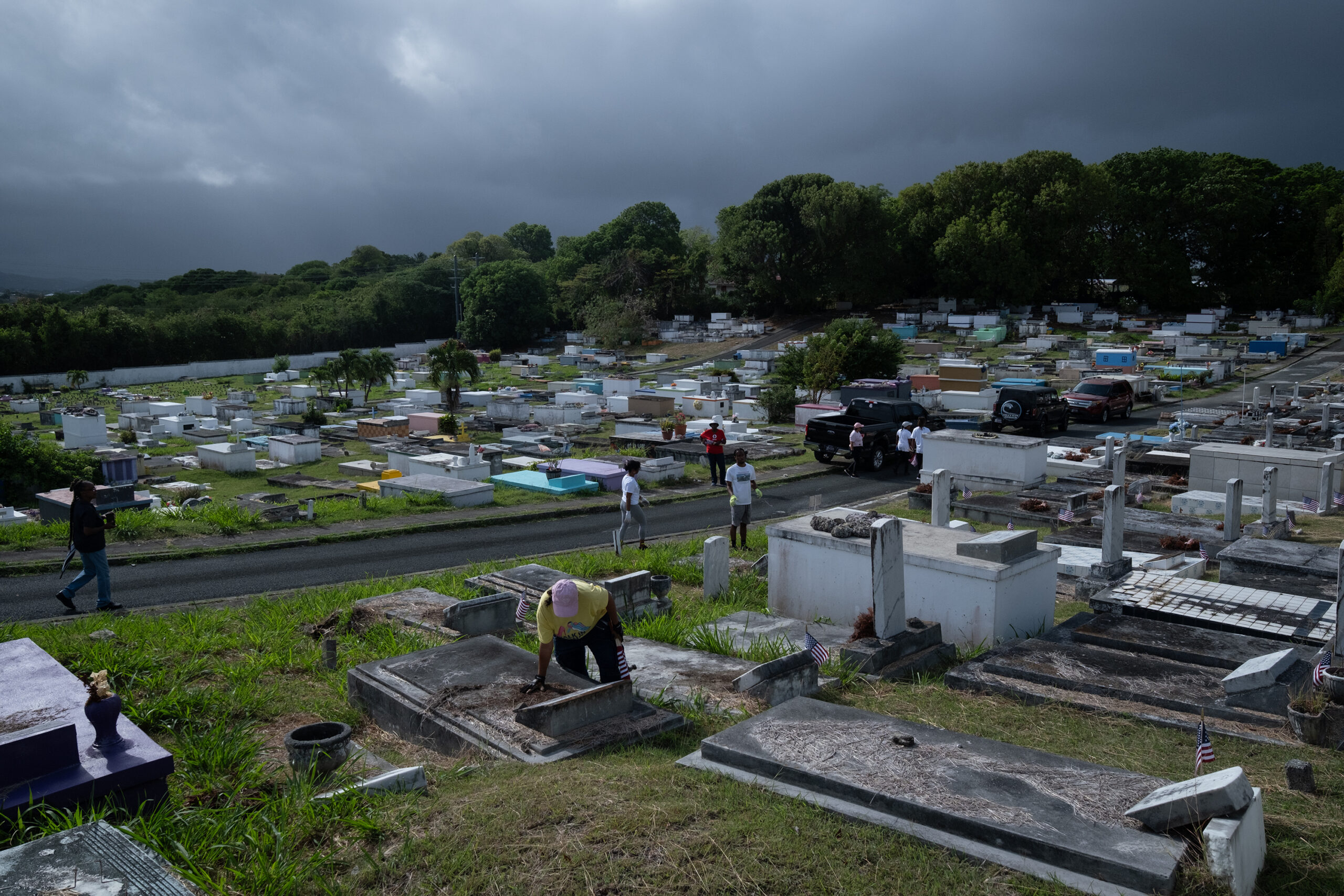
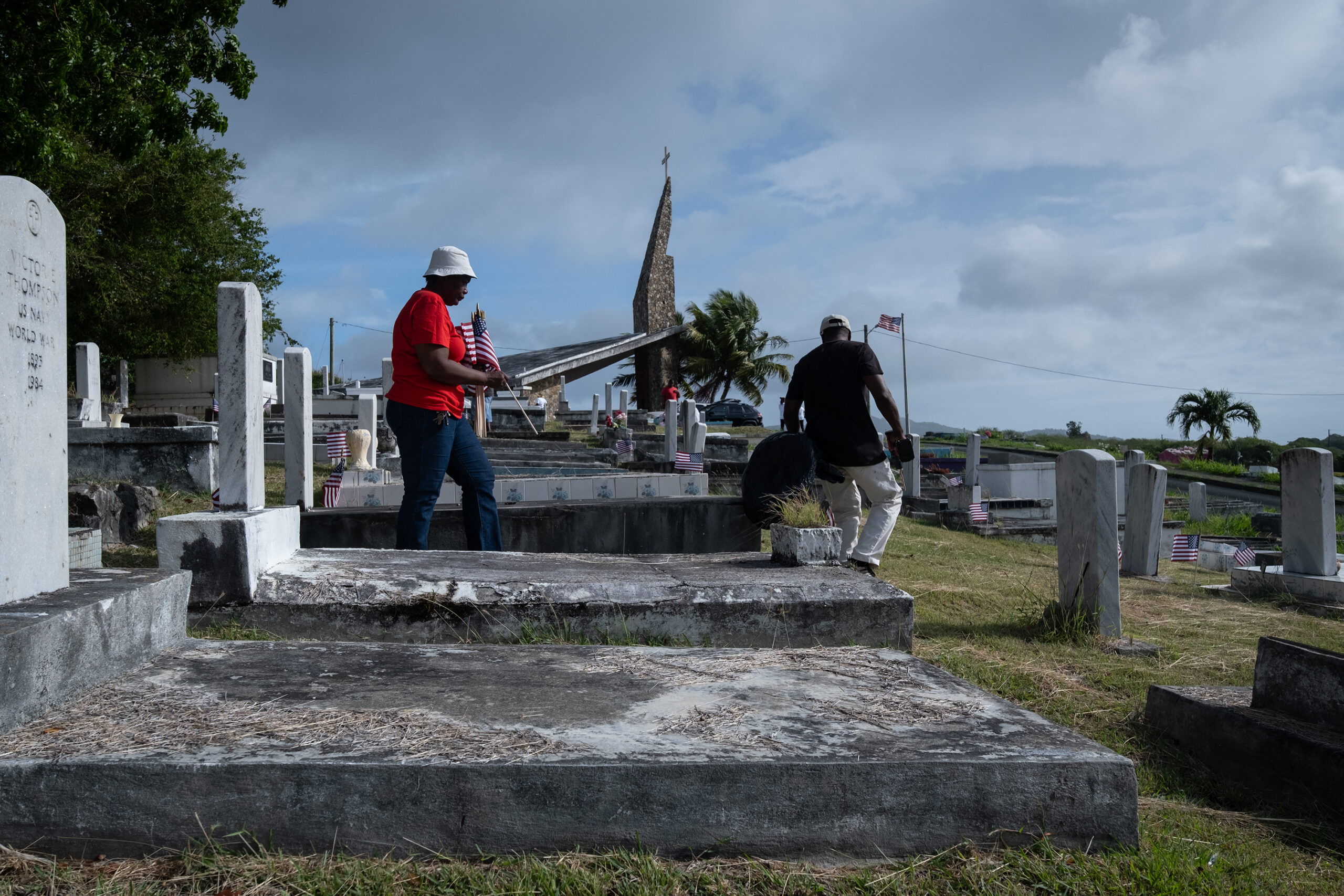
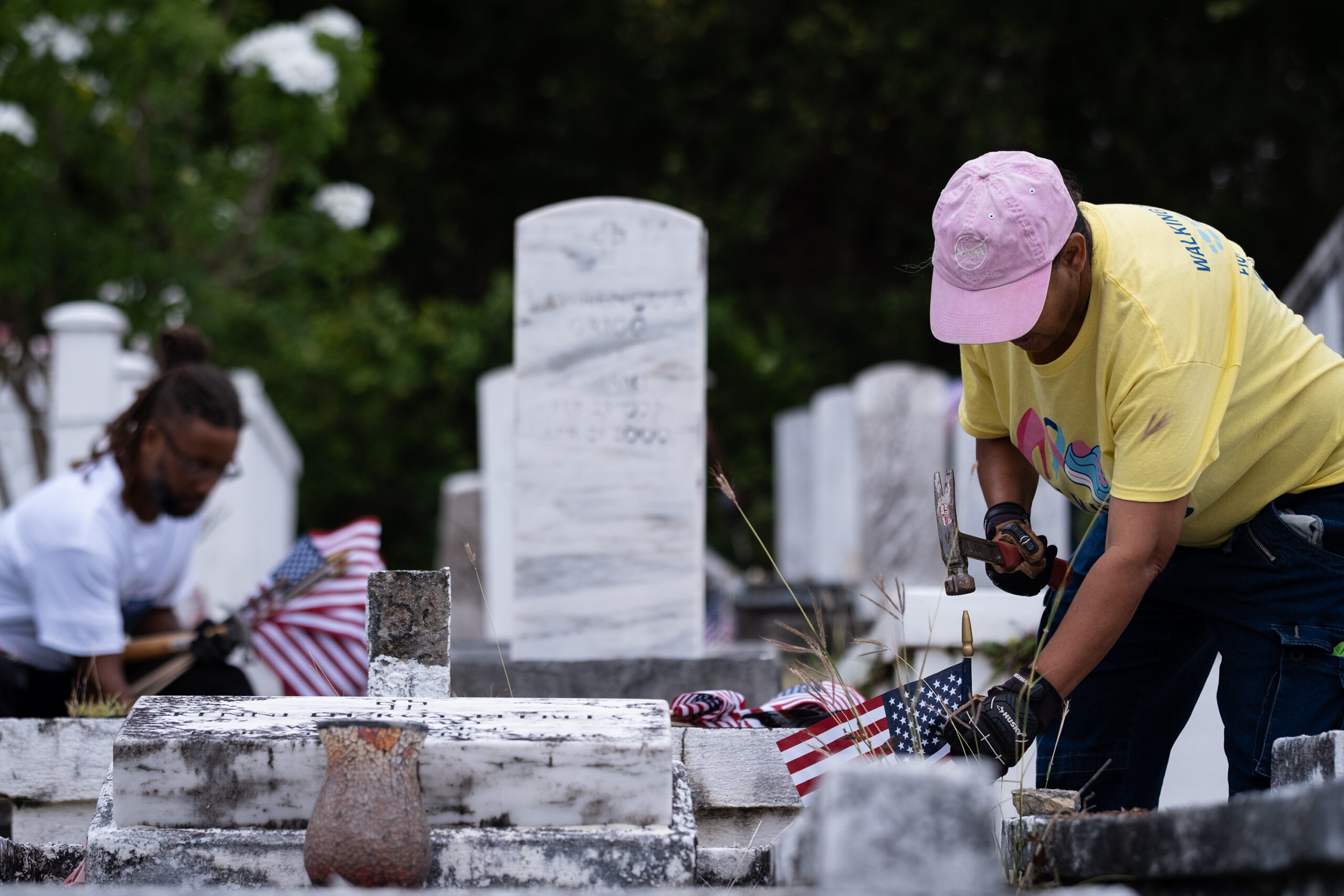
Members of the American Legion Post 102, the V.I. Chapter Tuskegee Airmen and volunteers, braved the rain Saturday morning on St. Croix to place flags on the graves of veterans interred at the Kingshill Cemetery.
“This is not ‘happy Memorial Day,’” 1st Vice Commander Annie Henry said. “This is honoring and remembering those who have fallen.”
Members of the American Legion Post 102, auxiliary unit, and V.I. Chapter Tuskegee Airmen replace flags throughout the Kingshill Cemetery ahead of Memorial Day. (Source photo by Kit MacAvoy)
Henry estimated that the group would end up placing around 750 flags throughout the cemetery that morning, in addition to other resting places across the island. This Memorial Day, she said she wants Virgin Islanders to remember the living veterans as well as those who have passed, and she noted that the freedoms enjoyed by so many Americans are “not cheap.”
“We wouldn’t be here if they were cheap, because we wouldn’t be honoring those that have fallen,” she said.
Army veteran Gaynell Meyers, left, and Navy veteran Ira Williams, right, make their way through the Kingshill Cemetery Saturday morning on St. Croix. (Source photo by Kit MacAvoy)
Despite the high percentage of Virgin Islanders who serve in the armed forces, Post 102 Commander Secundino Roman-Cruz said that the territory’s veterans face greater challenges than their counterparts on the mainland, particularly when it comes to accessing health care.
“The costs that we put on the veterans to get the treatment that they should get for free is unfair,” he said. “Sometimes they have to travel, and then they will get reimbursement sometimes — but at a later time. It’s not that they come and are handed tickets and they get the money back immediately.”
Sylvie Renaud places a flag Saturday morning at the Kingshill Cemetery on St. Croix. (Source photo by Kit MacAvoy)
Roman-Cruz lauded the work of V.I. Veterans Affairs Director Patrick Farrell but urged community members to show their support too.
Ceremonies to commemorate territory veterans have been planned for all three islands at 9 a.m. Monday. On St. John, a wreath-laying ceremony will be held at the Franklin Powell Park in Cruz Bay. On St. Croix, the ceremony will be held at the Verne I. Richards Veterans Memorial Park. On St. Thomas, the ceremony will be held in the Veteran Section of the Eastern Cemetery in Smith Bay.
A four-week summer arts program for youth will return to downtown Charlotte Amalie next month, offering students ages 9 to 15 hands-on instruction in visual art, creative writing and performance-based practices, 81C Arts announced in a press release.
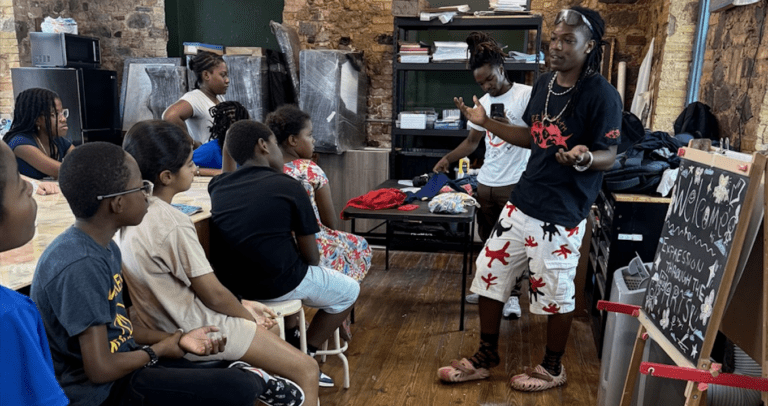
Class in session at 81C Arts’ Creative Education Center located in the Camille Pissarro Building on Main Street, Charlotte Amalie. (Photo courtesy 81C Arts)
“Expression Through the Arts” by 81C Arts will run from June 22 through July 17 at the organization’s Creative Education Center inside the historic Camille Pissarro House. The program is free for participating students and families through scholarship support provided by IPB and ICMC, according to the press release.
According to organizers, the program is led by instructor Dyonna Potter and is designed to provide students with “consistent, hands-on engagement in creative work while building confidence, communication skills, and critical thinking through artistic exploration.”
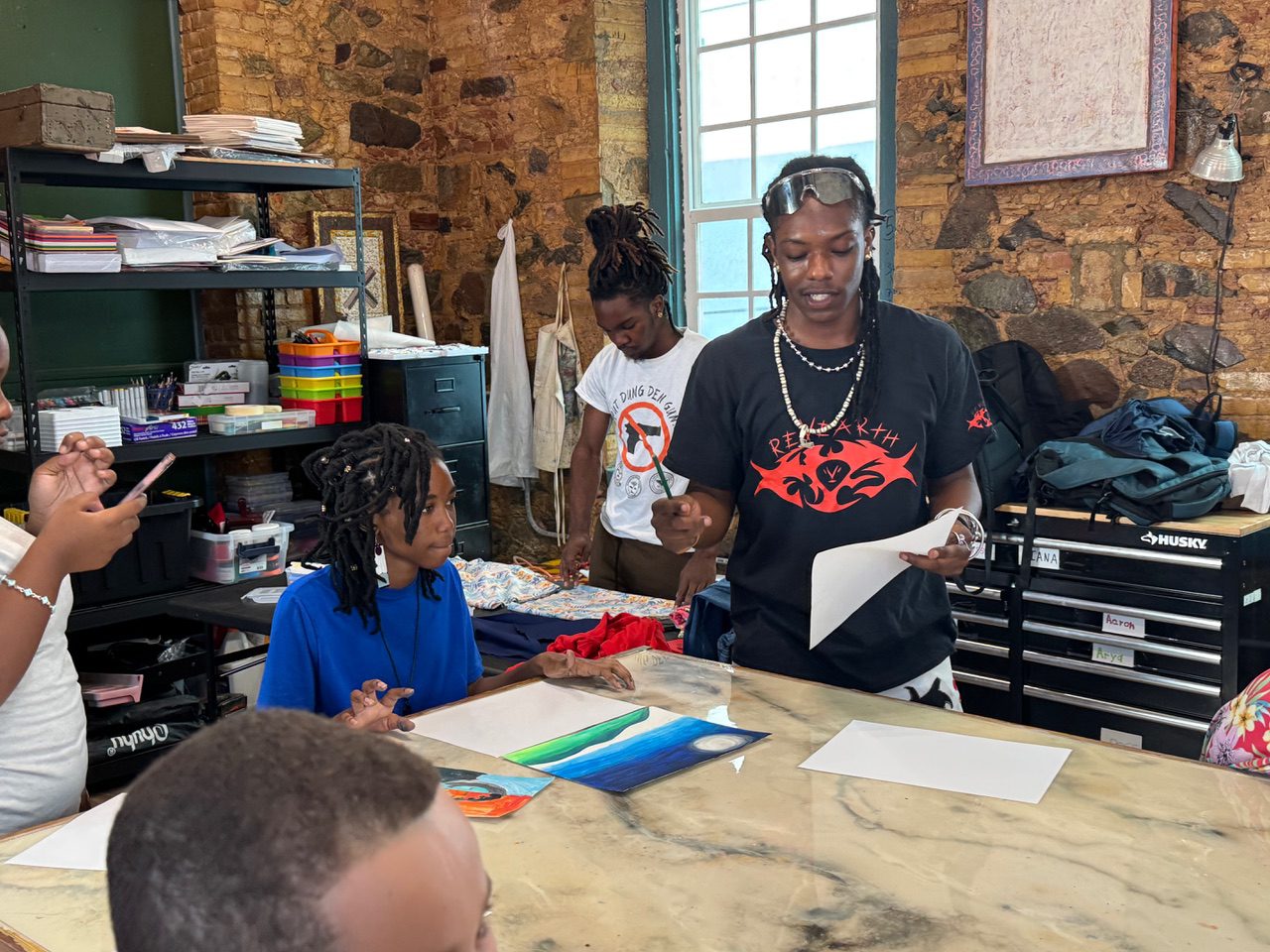
Instructor Dyonna Potter with class students (Photo courtesy 81C Arts)
Now entering its third year, the program will incorporate active exhibition programming at the Camille Pissarro House, allowing students to engage alongside 81C Arts’ upcoming “Birth Papers” fine art exhibition curated by LEHWE Projects and supported in part by Princeton University, the press release stated.
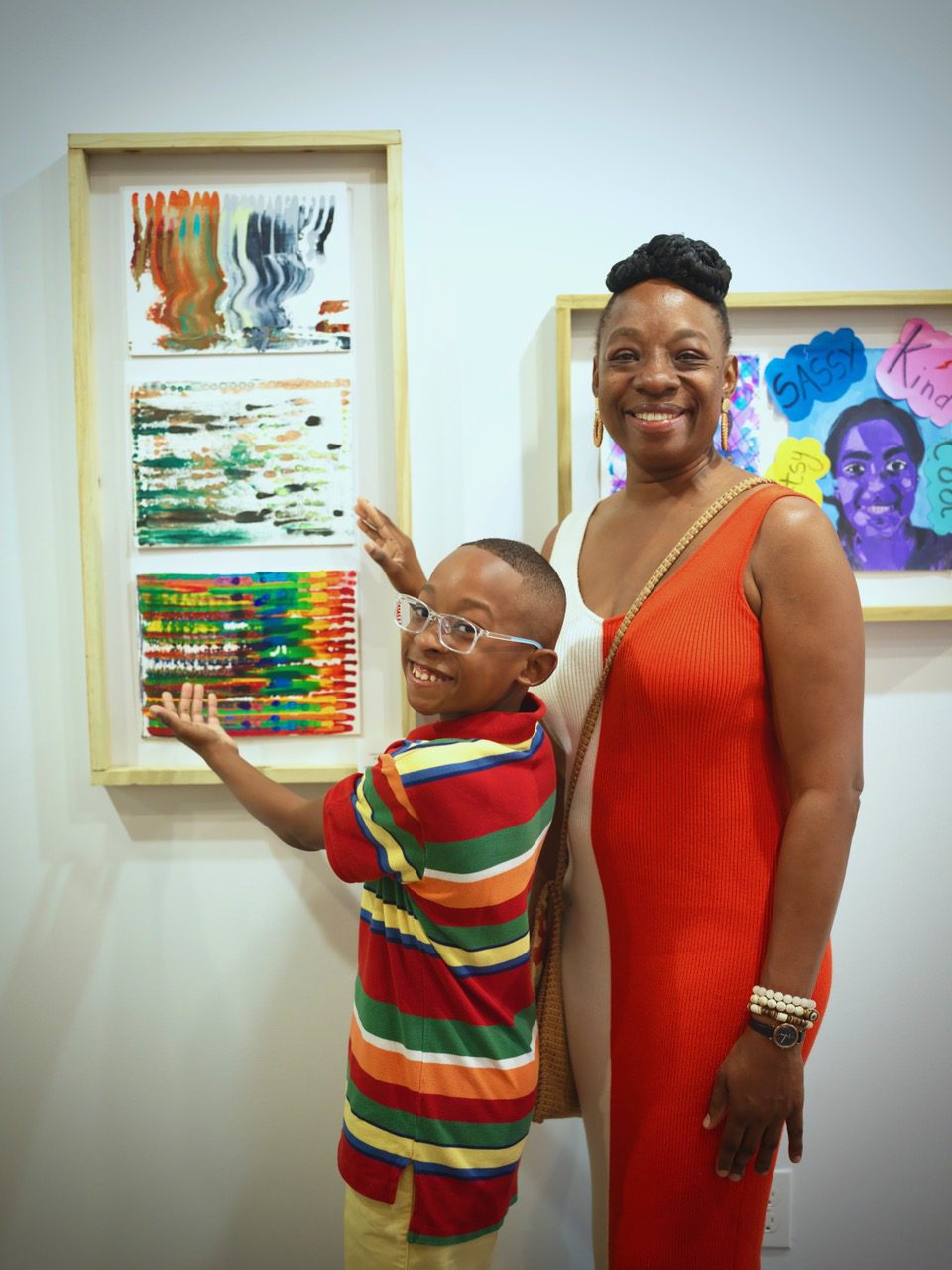
A program student and family member amongst student artwork derived from the program. (Photo courtesy 81C Arts)
Organizers said the expanded framework is intended to connect students with real-world gallery and exhibition practices, including installation awareness and curatorial thinking.
The curriculum includes drawing, painting, mixed media and interdisciplinary activities, with students ultimately developing independent work for a public showcase exhibition at the conclusion of the program, the release stated.
Local St Thomas artisan brand makers ReVearth conducting a creative class visit (2025) / mentoring students. (Photo courtesy 81C Arts)
In addition to studio instruction, visiting artists and creative professionals will contribute specialized sessions throughout the four-week schedule, the release stated.
Applications for the 2026 program are now open at 81CVI.ORG.
The Virgin Islands Parole Board advises the public that the board will convene June 22-29, to hear testimony from victims, victims’ family members and other interested persons regarding parole applications submitted by inmates incarcerated at various penal institutions.
Anyone wishing to submit written comments or testify for or against an inmate must notify the board by June 20. Requests should be directed to the chairman of the Parole Board at the John A. Bell Adult Correctional Facility, 9909 Industrial Park, Kingshill, VI 00850-9715, or by email at viparoleboard@vi.gov.
The board will conduct hearings for inmates housed at Tallahatchie County Correctional Facility on the following dates:
Monday, June 22
Delroy Thomas — attempted retaliation against a witness
Gibson Charles — first-degree aggravated rape, second-degree aggravated rape, unlawful sexual contact, child abuse
Luis Fratecilli — first-degree robbery, promoting dangerous prison contraband
Adisa Bertrand — second-degree murder
Shomari Ferrance — unauthorized possession of a firearm
Edictor Esquillin — first-degree assault, contempt of court
Manuel Davis — first-degree assault, third-degree assault
Jahani Joseph — attempted first-degree assault
Raskoemo Archibald — voluntary manslaughter
Zamouy Rodriguez — third-degree assault, discharging or aiming a firearm
Amari Krigger — voluntary manslaughter
Daren Hodge — domestic violence in the second degree
Tuesday, June 23
Kishawn Smith — second-degree murder, carrying a firearm during the commission of a crime
Craig King — unauthorized possession of ammunition
Jahreem Lake — unauthorized possession of ammunition
Hansel Castillo — first-degree robbery
Vaughn Lee McHargue — grand larceny, aiding and abetting
Ottley Smith — third-degree assault
The board also will conduct parole hearings for inmates housed at Wallens Ridge State Prison, Keen Mountain Correctional Facility and Red Onion State Prison in Virginia.
Thursday, June 25
Maurice Richardson — first-degree murder, voluntary manslaughter
Thomas T.W. Hightree — first-degree aggravated rape
Jermaine Williams — second-degree murder
The Board additionally will conduct hearings June 29 for inmates housed at the John A. Bell Adult Correctional Facility on St. Croix.
Monday, June 29
Daniel Ramos — third-degree assault
Alvin Battiste — obtaining money by false pretenses
Xavier Lutchman — obtaining money by false pretenses
Chris Carty — second-degree murder, attempted first-degree murder, first-degree assault, using a dangerous weapon during the commission of a crime, using a dangerous weapon during second-degree murder
Eugene Roberts — attempted first-degree murder, first-degree assault, unauthorized possession of a firearm during the commission of a crime, possession of ammunition
Ralph Titre — second-degree murder
Vergile Lemy — first-degree murder, felony murder, using a dangerous weapon during felony murder, second-degree assault, third-degree assault
Abrey Frett — second-degree murder
According to the release, eligibility to apply for parole does not guarantee parole will be granted or that a hearing will take place as scheduled. The Bureau of Corrections noted that inmates also must be recommended for parole by the director of the Bureau of Corrections, and release dates may be delayed pending compliance with additional conditions. The agenda remains subject to change.
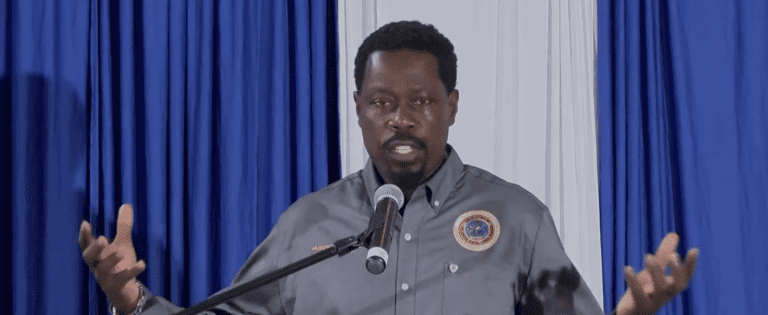
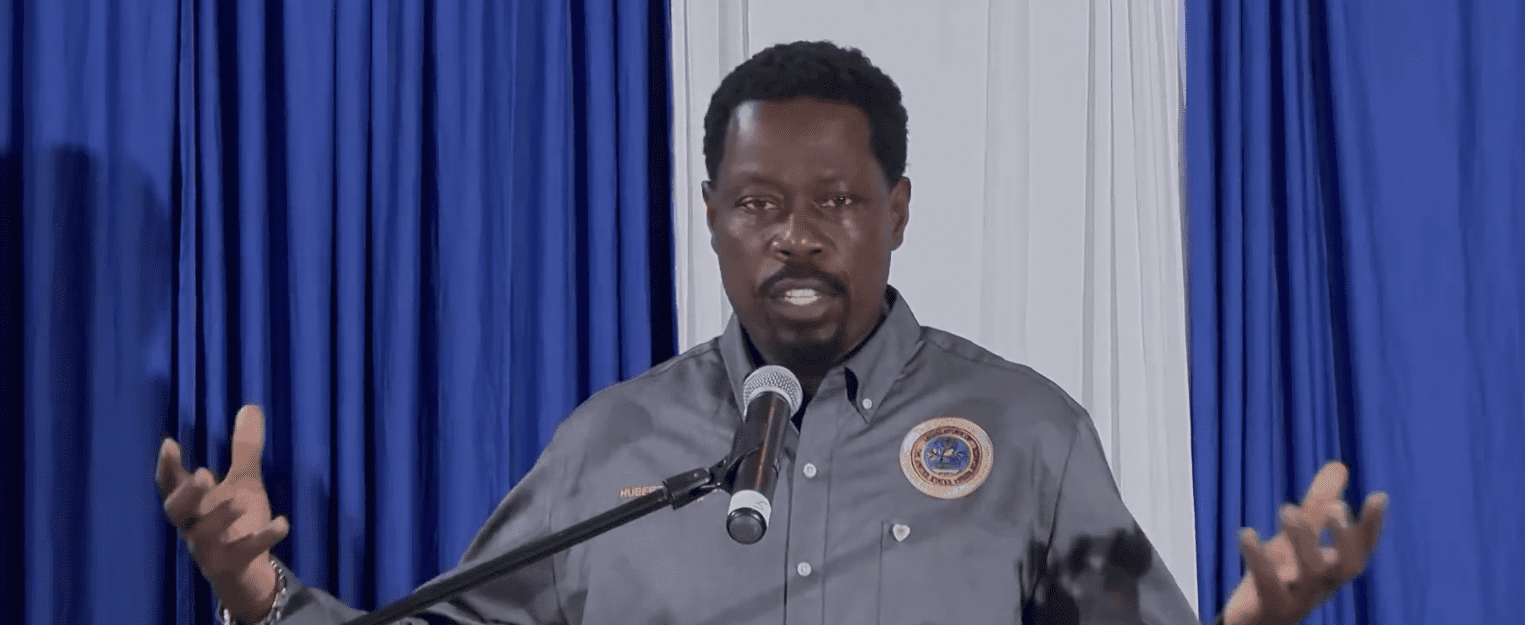
Sen. Hubert L. Frederick speaks at the 2026 Economic Development Summit, hosted by the 36th Legislature’s Committee on Economic Development and Agriculture. (Screenshot from V.I. Legislature livestream)
With approximately $25 billion in federal disaster recovery and infrastructure funds committed to the U.S. Virgin Islands, lawmakers and business leaders gathered on St. Croix on Friday to ask whether the rebuilding will truly transform the territory’s economy or simply fuel a short-lived construction boom that collapses once federal spending winds down.
At the 2026 Economic Development Summit, hosted by the 36th Legislature’s Committee on Economic Development and Agriculture and chaired by Sen. Hubert L. Frederick, senators, agency heads, contractors, energy executives and nonprofit leaders met under the theme “From Recovery to Renaissance.” Throughout the day, panels examined whether post‑hurricane reconstruction, infrastructure upgrades and economic development projects can translate into lasting gains in jobs, local ownership and economic resilience.
The discussion repeatedly returned to a central concern: whether the Virgin Islands has the workforce, business capacity and infrastructure to absorb and sustain a surge of federally funded rebuilding work. Speakers pointed to three interconnected pressures, a shrinking population, high operating costs and limited local contracting capacity, that they said could determine whether the recovery becomes a turning point or a temporary spike.
One of the sharpest pressure points was the territory’s workforce shortage. Bureau of Economic Research Director Haldane Davies told lawmakers that as peak construction years approach around 2027 to 2029, the Virgin Islands will need thousands more workers on top of an already constrained labor pool, even as population levels have fallen sharply over the past decade.
He attributed the decline to the closure of the Hovensa refinery, the 2017 hurricanes and the COVID-19 pandemic, which together accelerated the loss of residents to the states.
Labor Commissioner Gary Molloy underscored the scale of the gap. He cited a study by the RAND Corporation, a nonprofit policy research organization that provides economic and workforce analysis for governments, estimating that the territory will still be short between 5,000 and 7,000 workers even if every employable Virgin Islander is working. “We are not going to be able to do this ourselves,” he said, arguing that outside labor will be required in the near term as the territory rebuilds its own workforce pipeline.
Contractors said that even when workers are available, structural barriers can still limit local participation in the rebuilding effort. Contractor Jay Benton said many local firms “can do the work … in the field,” but lack the “back of house staff” needed for larger projects, including estimating, project management, marketing and accounting. Without upfront support, he said, companies struggle to scale in time for major contracts.
“You need money to be able to hire people to do all these things,” he said, arguing that on today’s mega‑projects, many local firms are already behind by the time awards are made. Once the contracts land, he said, companies often don’t have enough time to build the internal systems they need to manage them. The territory “needs an incubator program,” he added, to help firms staff up and invest in back‑office capacity before bids are awarded.
Energy and permitting emerged as two additional structural constraints shaping the recovery. Business leaders said electricity costs, several times higher than in many mainland markets, are already a major drag on competitiveness, increasing operating costs for hotels, manufacturers and small businesses.
Steven Adams, chief executive of the Virgin Islands Next Generation Network, said high power prices “stifle growth … across all industries,” noting that hotels here spend a far larger share of their costs on electricity than their stateside counterparts and that the burden also hits education and health care.
Deanna James, president of the St. Croix Foundation, warned that the Virgin Islands is drifting into what she called a “disaster economy,” sustained by a “windfall of resources” rather than lasting structural change. “This disaster economy is not real,” she told the summit, cautioning that “if we don’t start thinking about what happens on the other end of it … we will be in the worst case that the Virgin Islands has ever been at the end of this windfall of resources.”
In the end, the day’s debate left a clear test for the years ahead: whether billions in recovery spending will build a larger, better-trained workforce and stronger local businesses, or leave the territory with new infrastructure but the same structural weaknesses that existed before.
Election season is here. As of May 19, the filing deadline for the November 2026 elections, unofficially, 107 aspirants had filed for Governor and Lt. Governor teams, Delegate to Congress, 15 Senate seats, and 10 Boards of Education and Elections seats. Eighteen persons in nine teams are seeking the Governorship/Lt. Governorship, 10 people are competing for Delegate, and more than 57 for the Senate. Most are running as Independents, followed by Democrats, with two Republicans and one Independent Citizen Movement. This raises a larger question: how effective are political parties in the USVI? Are they vetting candidates, building coherent policy platforms, and helping produce good governance — or do they need major reform?
Background
Mark D. Wenner
The USVI has three registered parties: the Democratic Party of the Virgin Islands (DPVI), the Republican Party in the Virgin Islands (USVIGOP), and the Independent Citizens’ Movement (ICM). Since the mid-1980s, however, the DPVI has dominated territorial politics, holding the governorship for 32 of 56 years and controlling the Legislature in all but two terms since 1970. That one-party dominance has coincided with economic stagnation, fiscal imbalance, weak public services, dependence on federal aid, procurement problems, patronage hiring, and corruption.
The Democratic Party began in 1936, formally sponsored candidates in 1952, and merged with the Unity Party in 1962. The Republican Party was founded in 1948, succeeding the earlier Republican Committee started in 1924. The ICM emerged in 1968 as a reform breakaway from Democrats frustrated by corruption and the hostile takeover of the Donkey Democrat Party by the Unity Party. Although the local Democratic and Republican parties are tied to their national counterparts, all three territorial parties have long been weakly institutionalized, candidate-centered, personality-driven, and only minimally differentiated ideologically. Those traits limit how well they govern and represent the public.
Core Functions of Modern Political Parties
In a democracy, political parties should encourage civic participation, coalesce interests, recruit leaders, shape policy, structure debate, educate voters, raise campaign funds, win elections, and govern transparently and accountably.
The key functions are:
Candidate recruitment and nomination: Parties identify and nominate qualified candidates, so voters have meaningful choices.
Voter Mobilization: Parties encourage voting and strengthen democratic participation.
Policy formulation and ideological guidance: Parties create platforms that reflect their values and guide legislative priorities.
Governance coordination and accountability: Parties coordinate government activities once in power and hold party officials accountable.
Representation of social interests: Parties represent key groups and build broad coalitions to win governing majorities.
Internal organizational and institutional development: Parties need democratic internal structures and procedures, staff, and capacity for fundraising, research, and data analysis to remain effective over time.
Evaluation of Party Effectiveness in the USVI
USVI parties can be evaluated against these benchmarks.
A. Recruitment and Nomination
The Democratic Party is the only consistently functional party in the USVI and the only one that regularly holds primaries. Even so, party loyalty is weak. Candidates frequently leave the party to run as independents or under another label when it offers a strategic advantage, then return when convenient. That pattern underscores how personal ambition often outweighs party identity in territorial politics.
By contrast, the Republican Party participates mainly in presidential primary cycles and does not conduct local primaries or caucuses. The last time the Republican Party had an electoral presence was in the 1990s. The ICM likewise does not field full slates consistently and has relied heavily on the same gubernatorial candidate despite repeated losses. The last ICM senator held office between 2016 and 2018. Meanwhile, independent candidates remain competitive and have won both the governorship and multiple Senate seats since 1970. The number of Independent Senate seats ranges from 2 to 5 in most terms, and Independents have won the governorship three times.
Overall, party labels matter less in the Virgin Islands than personal reputation, family networks, and community ties. The parties do not consistently perform the gatekeeping role expected in mature democracies, and candidate vetting appears limited. Politics remains highly candidate-centered, but the Democratic Party is still the dominant electoral vehicle. With roughly two-thirds of registered active voters, it usually enters general elections with a decisive structural advantage.
B. Voter Mobilization
Between elections, voter outreach is limited. During campaign season, however, the Democratic Party is by far the most effective at mobilizing turnout. The other organized parties are largely inactive, with little evidence of sustained outreach or voter-registration efforts. As of May 2026, the DPVI had 19,058 registered active voters (66%), compared with 743 for the ICM (2.5%), 1,007 for Republicans (3.5%), and 8,022 independents (27%), according to the V.I. Board of Elections. The DPVI also maintains seven political clubs and organizes registration drives, campaign outreach, get-out-the-vote efforts, and transportation to polling places.
In short, voter mobilization is reasonably effective during elections but weak between them. Civic engagement is not sustained. Voter turnout is trending downward and currently averages in the low to mid-50% range. Moreover, voters ages 18 to 24 are the least likely age bracket to participate (3.8%). In this environment, even though the number of eligible voters is approximately 50,000, gubernatorial races can be won with roughly 10,000 to 12,000 votes, and Senate seats with about 3,000 to 5,000 votes.
C. Policy Formulation and Ideological Guidance
No major party appears to maintain a formal internal structure for research, data analysis, policy development, or long-term strategy formulation, and none publishes detailed, well-supported policy or strategy papers. The DPVI and ICM also remain only loosely differentiated ideologically. Both generally support a larger public role in the economy, stronger public services, continued reliance on legacy industries, the use of tax incentives to attract business, access to federal support, and a close relationship with the United States. Differences tend to be pragmatic rather than ideological. The Republican Party’s current territorial platform is even less clear, with little public evidence of an updated local agenda. The party’s website has mostly dated materials from 2012 and 2013.
In sum, the parties lack detailed policy statements, rarely articulate long-term development strategies, and seldom enforce policy discipline among elected officials. Public debate, therefore, centers more on personalities than on programs and policies, weakening ideological and policy coherence.
D. Governance Coordination and Accountability
In strong party systems, elected officials coordinate through formal caucuses, committees, and coalitions that set priorities and enforce discipline. In the USVI, by contrast, legislators often act independently, party discipline is weak, and coalition-building is informal. Although the DPVI has held legislative majorities for most of the past 50 years, that dominance has not produced sustained fiscal discipline, major institutional reform, or robust checks on the executive. Difficult reforms involving pensions, utilities, education, housing, waste management, policing, procurement, and public finance have repeatedly been deferred, while symbolic legislation often outpaces substantive reform.
The result is a weak governing structure marked by inconsistent policy and limited accountability. Major corruption and procurement scandals have often been pursued by federal authorities rather than local institutions, reinforcing the perception that territorial parties have not built strong mechanisms for self-correction, oversight, and disassociation from members guilty of misconduct and ethical lapses.
E. Representation of Social Interests
USVI parties represent the Territory’s diverse communities only partially and mostly through informal, personalized networks rather than structured outreach. Some groups have historically received attention, but many others remain weakly engaged or largely absent from party organization and platform development. Few parties maintain formal outreach bodies or sustained efforts to incorporate the concerns of immigrant communities, environmental advocates, Ancestral St. Johnians, small business owners, or other distinct constituencies into a coherent policy agenda.
F. Internal Organization and Institutional Development
Compared with mainland state parties, USVI parties have smaller organizations, limited professional staff, weaker fundraising capacity, and less developed data and voter-targeting systems. Overall, they remain resource-constrained. The DPVI appears to be the most fully developed organization with well-articulated committee structures and regular meetings, while the ICM remains heavily tied to founding personalities and is largely non-functional, and the Republican Party continues to recover from prolonged internal conflict over leadership and presents neither a policy agenda nor a set of competitive candidates to the public.
The Impact of Weak Political Parties
Weak parties and de facto one-party dominance have had three broad effects on the Territory. First, they have weakened accountability, reduced public trust, and contributed to civic disengagement. Second, they have encouraged short-term, inconsistent policymaking and hindered structural economic reform, leaving the USVI vulnerable to external shocks and natural disasters. Third, they have reinforced patronage and cronyism, which undermine merit-based hiring, distort contracting, weaken institutions, and deepen social divisions. These patterns also diminished public sector performance, lower private investment, and foster out-migration. Honest businesses struggle to compete in a pay-to-play environment; competent and highly qualified people are not attracted to public service because government jobs are given to political supporters, and political party sycophants are the only ones promoted. Lastly, many younger residents see limited opportunities, disengage, and ultimately leave, contributing to depopulation and an aging, unproductive workforce. The cumulative, long-term result is a cycle of weakened institutions, low trust in government, reduced voter participation, and continuing stagnation.
What Should Be Done?
The future of party politics in the Virgin Islands depends on renewal: stronger internal governance, broader participation, clearer policy platforms, more substantive public debate, and genuine accountability in office. If the established parties are unwilling or unable to reform, the case for a new political party becomes stronger. At present, the Democratic Party remains dominant but shows little sign of meaningful internal reckoning; the ICM has struggled to move beyond familiar personalities; and the Republican Party has little visible territorial presence. The large number of independent gubernatorial candidates in the current election is itself evidence that many aspirants are unwilling to affiliate with ineffective and compromised established political parties, and that party labels have diminished in meaning. The rise of Independents just reinforces personality-driven politics and retards the development of sustained political movements.
— Mark D. Wenner is a resident of St. Thomas, USVI, and a professor of economics at the UVI.
Editor’s Note: The opening paragraph of this column was updated Monday, May 25 to reflect the latest information on candidate filings from the Supervisor of Elections office.Editor’s Note: Opinion articles do not represent the views of the Virgin Islands Source newsroom and are the sole expressed opinion of the writer. Submissions can be made to visource@gmail.com.
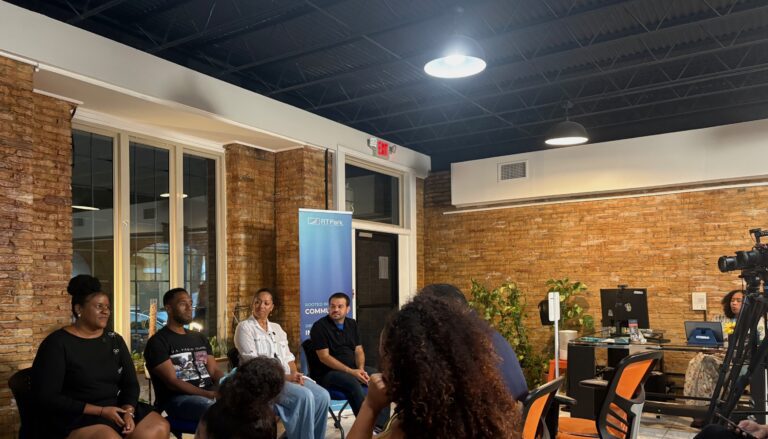
The evening’s panel featured photographer and archivist David Berg, visual artist and educator Eliana Schuster Brown, director, educator and filmmaker George Cannon III, and historian and photographer Stephanie Chalana Brown. (Source photo by Diana Dias)
The University of the Virgin Islands RTPark hosted another installment of its “Art Thursday” series on Thursday, bringing together artists, educators, filmmakers and creatives for a wide-ranging discussion on how technology continues to shape artistic expression in the Virgin Islands.
Held at the AVICS Co-Working Space in downtown Christiansted, the event drew the largest crowd of the season, according to Sydney Paul, hostess and director of marketing for the RTPark.
“We’ve been doing a series for the entire season of our Art Thursdays from November to May, the third Thursday of every month,” Paul said. “The RTPark has been opening up our coworking space to the community to showcase the space itself, but also to provide a safe space for artists to have conversations with us around the intersection of art, technology and innovation.”
Paul also highlighted the organization’s broader mission as an economic development organization focused on business attraction and building a technology-centered ecosystem throughout the territory.
“Right now, through our program in the territory, there are over 70 knowledge-based companies operating in the territory today through the RTPark program,” she said.
According to Paul, the organization’s initiatives extend beyond attracting technology companies. She noted that RTPark supports STEM education, entrepreneurship programs and professional development opportunities for students at the University of the Virgin Islands.
Among the programs highlighted was the organization’s after-school STEM enrichment initiative, which this year expanded to serve every public school in the territory.
The evening’s panel featured photographer and archivist David Berg, visual artist and educator Eliana Schuster Brown, director, educator and filmmaker George Cannon III, and historian and photographer Stephanie Chalana Brown.
Throughout the discussion, panelists explored how modern technology has transformed the way they create, research and share their work.
Berg, owner of Blackwood Imaging, spoke about using digitized Danish West Indies archives and online databases to rediscover historical photographs connected to the Virgin Islands.
“A lot of my research and work has actually been done through digitized archives,” Berg said, explaining that advances in searchable databases have allowed him to uncover previously unknown images of the territory.
Brown discussed how digital access to colonial records has helped deepen her understanding of Virgin Islands history and identity.
“Technology has allowed me to access their records better,” Brown said. “You can just type in a keyword sometimes and find something. You have to go through logs of a whole year and thousands and thousands of pages, but through those pages you hit a lot of great information and stories.”
She also reflected on how online learning resources helped her develop photography skills while living on an island without large creative conferences or institutions.
“For all my photography people in here, I learned photography from the University of YouTube,” Brown said.
Schuster Brown shared how technology recently became part of her annual “Prolific” exhibition, which promotes local artists and creates opportunities for them to connect with the community.
“This year was the first year we were able to fully integrate technology, and we did augmented reality,” she said. “It’s the first exhibition in the Virgin Islands to ever do augmented reality.”
Cannon spoke about the role technology plays throughout the filmmaking process at Blue Tarp Productions and the Film over Gun Violence program, from preproduction planning to editing and postproduction.
“We use technology in our preproduction, in our production and our post,” Cannon said. “When are we not using technology?”
The panel also tackled concerns about artificial intelligence and whether emerging digital tools threaten traditional artistic practices.
Paul noted that debates surrounding technology and art are not new, comparing current conversations about artificial intelligence to the way photography once disrupted portrait painting.
“At one point, the camera and taking a photograph was a threat to portrait painters,” she said.
Panelists acknowledged both the opportunities and challenges that AI presents for artists and educators.
Brown, who works closely with young artists, expressed concern about students relying heavily on AI-generated artwork instead of developing foundational artistic skills.
During a recent student art challenge, she said many of the submissions appeared to have been created using AI.
“Everybody’s work looked the same because they just put it through AI,” she said. “AI has this distinctive look, and you can tell.”
Still, several panelists emphasized that technology itself is not inherently negative and can instead become another tool for creativity and storytelling.
Berg said accessibility to professional-quality tools has also changed perceptions around photography and creative work.
“I actually love the idea that now somebody can take an iPhone and create professional work,” Berg said. “People don’t always believe what is possible within themselves until technology gives them access to try.”
Cannon acknowledged how quickly technology — including AI — is changing creative industries.
The Art Thursday series continues through May as RTPark seeks to foster collaboration between artists, entrepreneurs and the broader community while introducing residents to the Co-Working Space and other RTPark initiatives.
For more information about RTPark programming and coworking spaces, visit the organization’s official social media platforms or website. To see the full discussion, click here.
Of the more than 650 National Wildlife Refuges and Fish Hatcheries across the United States, St. Croix’s Sandy Point was one of 25 selected to participate in the U.S. Fish and Wildlife Service’s “Flags Across America” initiative in celebration of the nation’s 250th birthday.
Silmarie Padron, project leader for USFWS’s Caribbean Islands National Wildlife Refuge Complex, and State Coordinator Claudia Lombard said during a celebration Friday evening that Sandy Point stands out in large part because of its dedicated volunteers. Three species of sea turtle rely on the refuge for nesting, and Lombard said researchers wouldn’t know what they know about turtles without the people who monitor and protect them.
Silmarie Padron, a project leader for the U.S. Fish and Wildlife Service, presents USFWS State Coordinator and biologist Claudia Lombard with a certificate of appreciation Friday evening at the Sandy Point National Wildlife Refuge. (Source photo by Kit MacAvoy)
Friday’s ceremony also honored Otto Tranberg, who almost single-handedly kick-started efforts to protect the island’s turtles.
“We stand on his shoulders today, and we honor his legacy by continuing the work that he started,” Padron said.
Born in 1918, Tranberg enlisted in the U.S. Navy in 1942. He eventually met and married Emily Heathman before moving back to St. Croix with his family in 1973, his daughter Patricia said. Tranberg began moonlighting as a turtle monitor while working as an enforcement officer for the Department of Conservation and Cultural Affairs after someone told him about a leatherback turtle found with all four of its fins cut off.
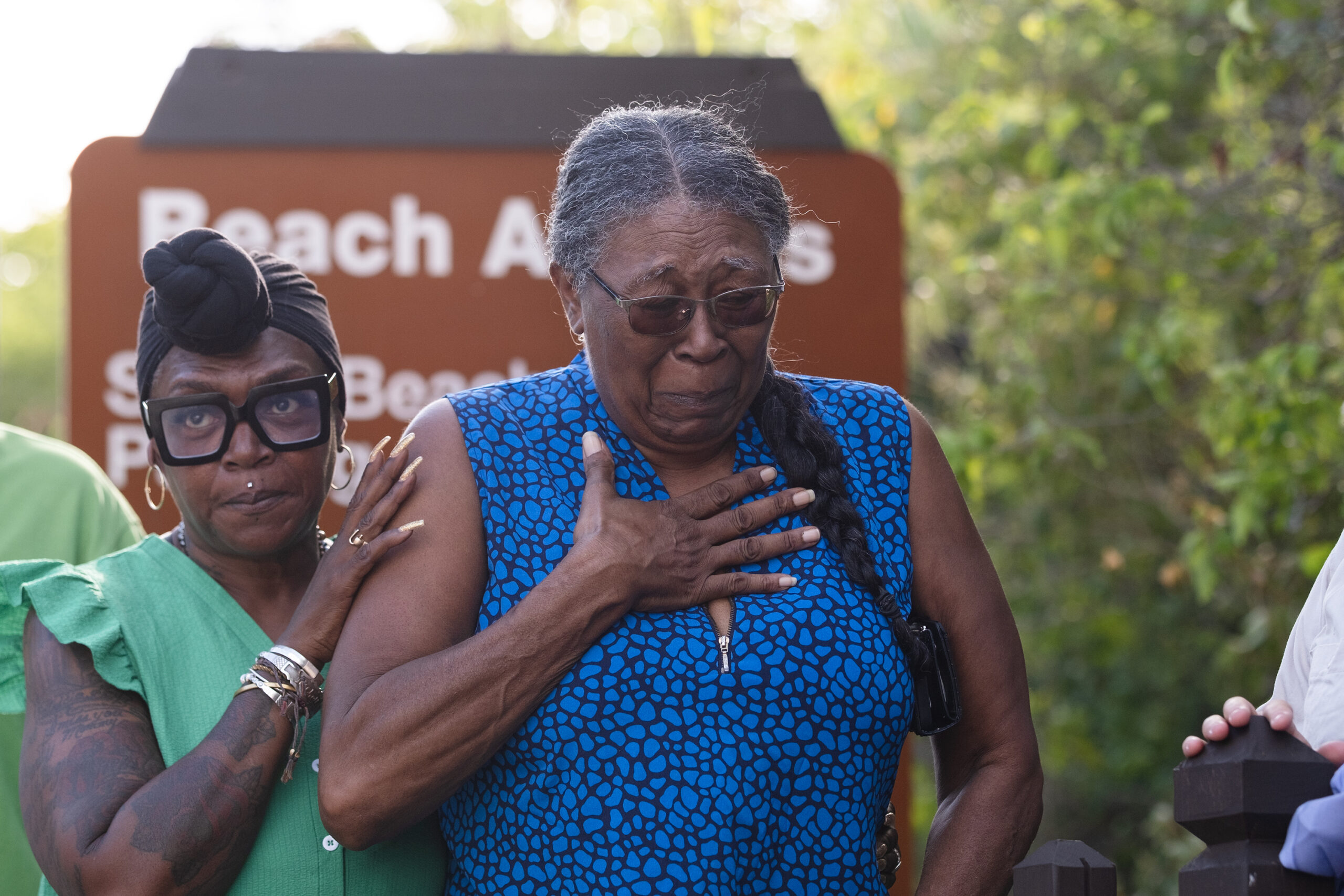
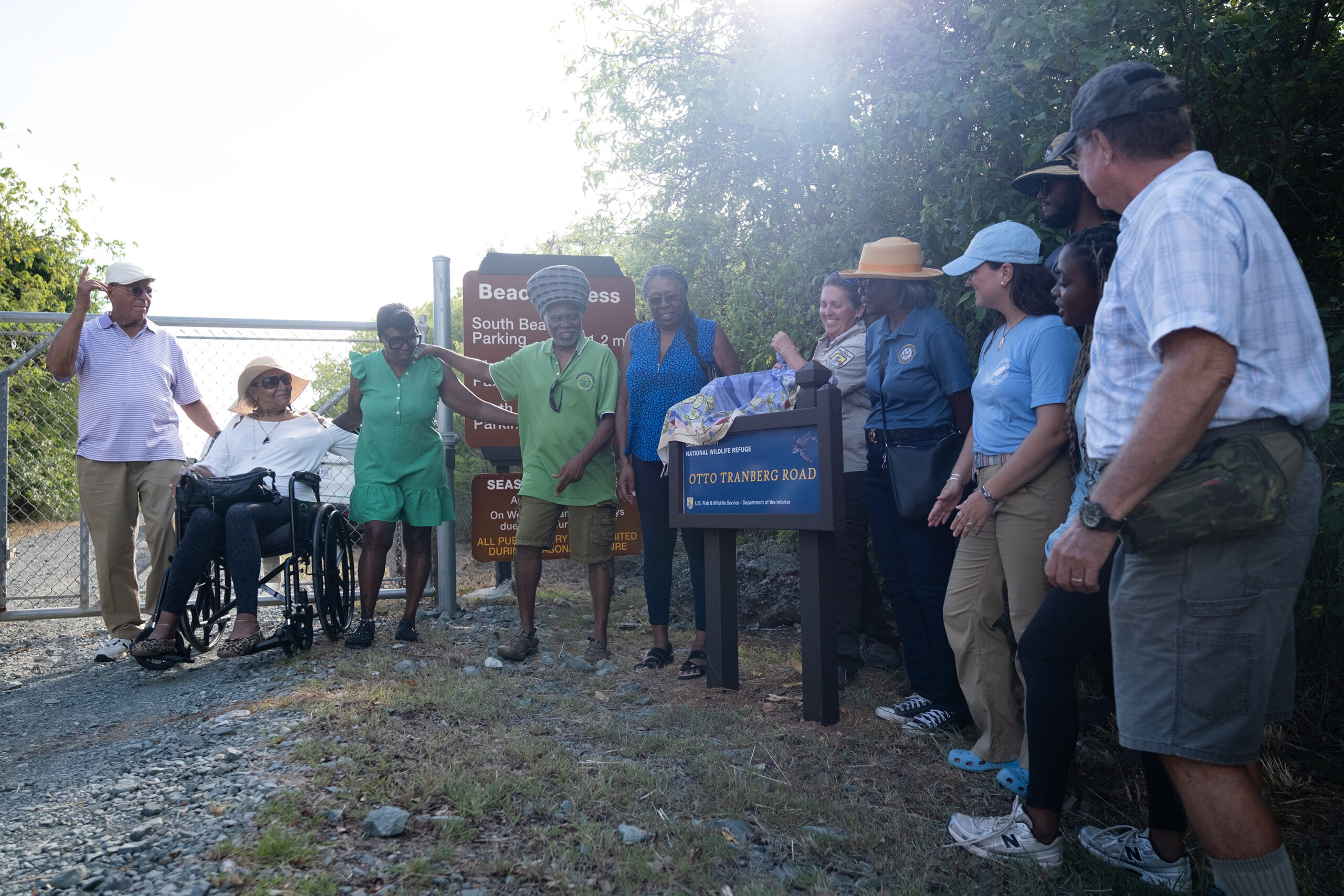
Patricia Tranberg, daughter of Otto Tranberg, reacts after the unveiling of a sign honoring her father, Otto Tranberg, for whom the road leading into Sandy Point National Wildlife Refuge was named. (Source photo by Kit MacAvoy)
“He was a special person,” Patricia Tranberg said. “Not because he’s my dad, but he took it upon himself when he heard the story about the turtle with the fins getting cut off, and that night he came down here by himself — no weapons, no nothing — and he started every single night, for the whole night until morning, to protect the turtles.”
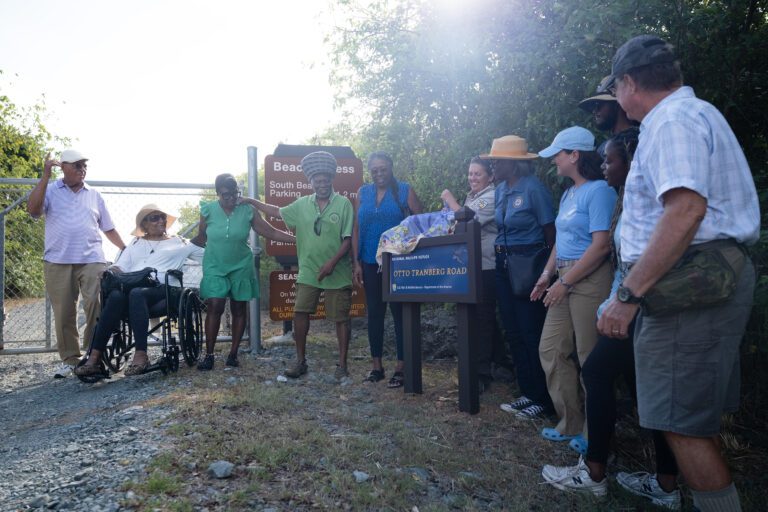
An article Tranberg wrote about the island’s turtles for the St. Croix Avis made its way into The New York Times and, ultimately, to the U.S. Interior Department. Patricia Tranberg said she was a little overwhelmed when Fish and Wildlife employees, conservationists and volunteers unveiled a sign marking the route leading into Sandy Point as “Otto Tranberg Road.”
A commemorative sign honoring Otto Tranberg, a pioneering St. Croix turtle conservationist, is unveiled Friday evening at the Sandy Point National Wildlife Refuge on St. Croix. (Source photo by Kit MacAvoy)
“One of the major things that I would carry with me from my dad: always stand, even if you stand alone,” Patricia said. “And that’s what he did, and that’s what I continue to do.”
Decades later, the island boasts a dedicated group of biologists, conservationists and volunteers who comb St. Croix’s beaches for evidence of turtle activity. Donna Boles moved to the island from St. Kitt’s 16 years ago, specifically to work with turtles at the Sandy Point National Wildlife Refuge.
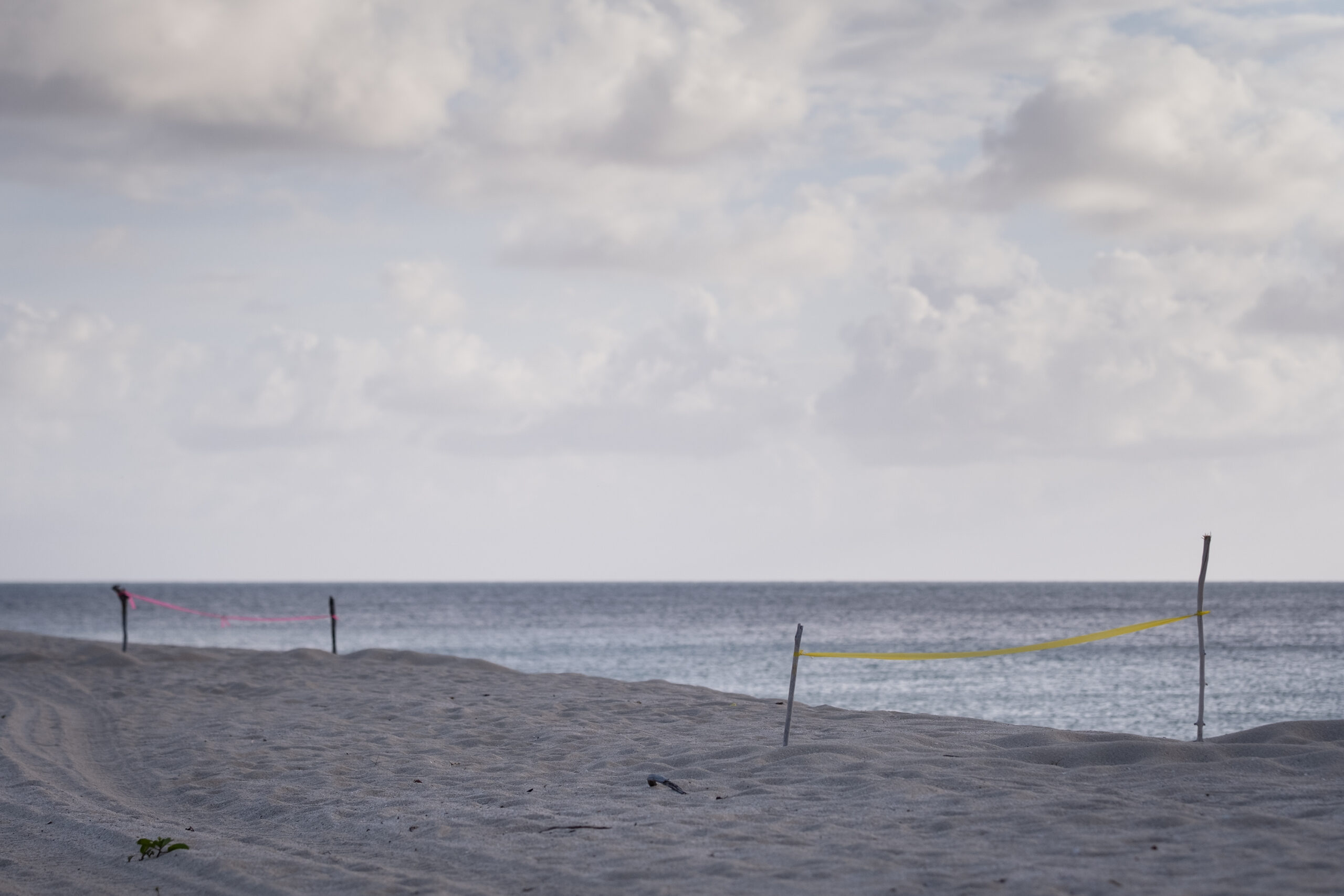
Sticks and ribbons mark turtle nests along the beach at the Sandy Point National Wildlife Refuge on St. Croix. (Source photo by Kit MacAvoy)
“There’s a number of things that people can look up that are ways to conserve and protect our beaches for turtle nesting,” she said. “One of the biggest ones is lights — not having lights on the beach.”
Boles said even just switching to motion-activated lights can be helpful. Sabrina Sorace, biologist and coordinator for the St. Croix Sea Turtle Project, added that removing beach furniture and cutting down on beachfront parking also helps protect nests.
“And we wouldn’t have known that these were big problems without us going, without our volunteers going out and actually witnessing what is happening on the beach,” she said.
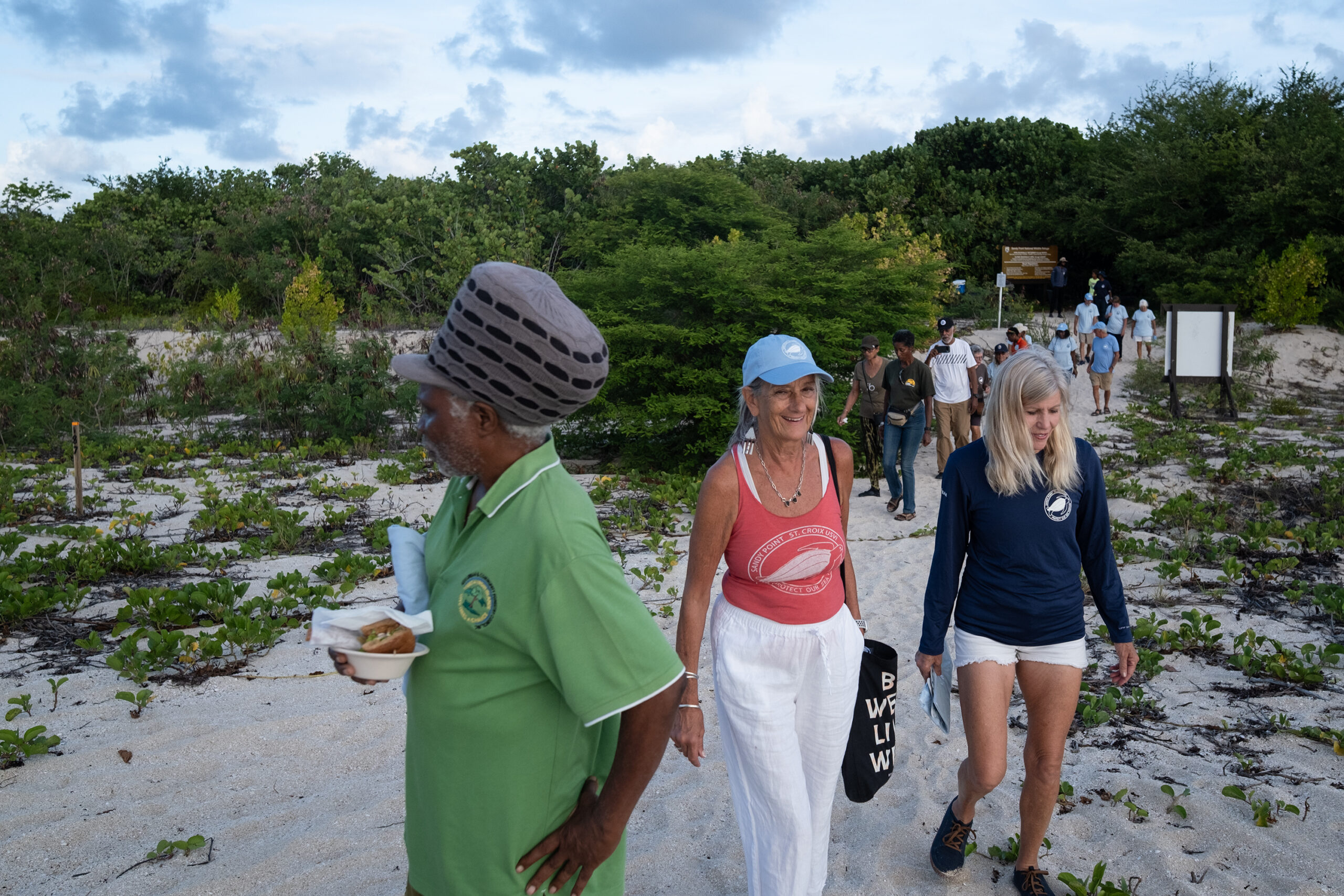
Volunteers make their way to Sandy Point’s north beach after being recognized by the U.S. Fish and Wildlife Service’s “Flags Across America” initiative. (Source photo by Kit MacAvoy)
Sorace said the conservation effort has grown since the refuge was created but that there’s more work to be done — particularly around hard-to-reach beaches along the island’s south shore, which has long stretches of private property and few access points.
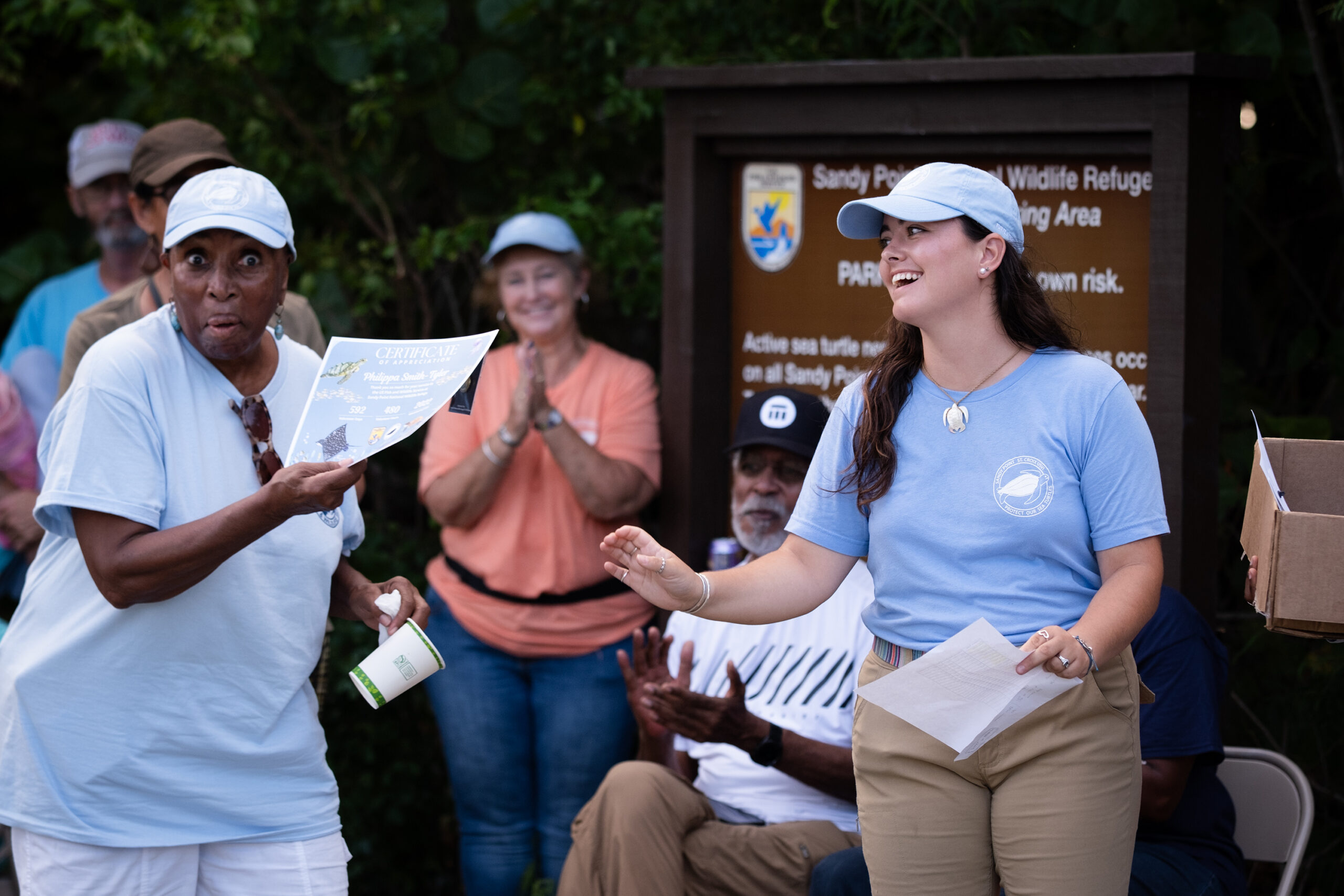
St. Croix Sea Turtle Project biologist and coordinator Sabrina Sorace, right, presents Philippa Smith-Tyler, left, and other long-term volunteers with certificates for their work monitoring the island’s beaches for turtle nests. (Source photo by Kit MacAvoy)
“We definitely need more support,” she said. “We need more volunteers to be walking, and just also more funds to help support the research, because it is expensive,” she said.
Fitzherbert Harry will lead a virtual discussion and demonstration on practical movement strategies designed to support mobility, confidence, and overall wellness in daily life during the upcoming VIUCEDD Mindful Living Series session.(Shutterstock image)
The Virgin Islands University Center for Excellence in Developmental Disabilities, a program affiliated with the University of the Virgin Islands, will host Part II of its three-part Virtual Mindful Living Series, titled “Mindful Movement: Supporting the Body in Daily Life,” on Wednesday, May 28, at 3 p.m. via Zoom.
The interactive virtual presentation will be facilitated by Fitzherbert Harry, owner of Harry Physical Therapy & Wellness, PLLC.
The Mindful Living Series explores the connection between mind, body, and overall wellness through expert-led discussions focused on practical approaches to everyday well-being. Part I of the series examined the relationship between nutrition, behavior, and mental wellness through a culturally grounded discussion on food and wellness. Part III, “The Art of Living: Sustainable Practices for Daily Living,” will focus on mindfulness practices, stress reduction techniques, and sustainable strategies for supporting emotional wellness in everyday life.
The Part II session is designed for adults interested in practical strategies to improve mobility, reduce fall risk, and support the body through everyday activities. Participants will be encouraged to actively engage in simple movement exercises throughout the presentation.
Harry will demonstrate accessible techniques that require no special equipment and can be incorporated into routine daily tasks such as getting out of a chair, reaching for objects, walking through a grocery store, or navigating stairs. These small adjustments, when practiced consistently, can support long-term independence, physical confidence, and overall well-being.
While mobility support and fall prevention are often associated with older adults, the techniques presented are beneficial for individuals at many stages of life. Young adults, middle-aged individuals, and seniors alike may benefit from improved body awareness, movement efficiency, and mindful daily practices.
Interested participants can register by clicking here.
For more information, contact Khalifa Thomas at khalifa.thomas@uvi.edu or 340-693-1322.
Additional information about VIUCEDD and other University of the Virgin Islands programs is available here.
A St. Thomas man was identified as an alleged burglar while in police custody for alleged car theft. (Shutterstock image)
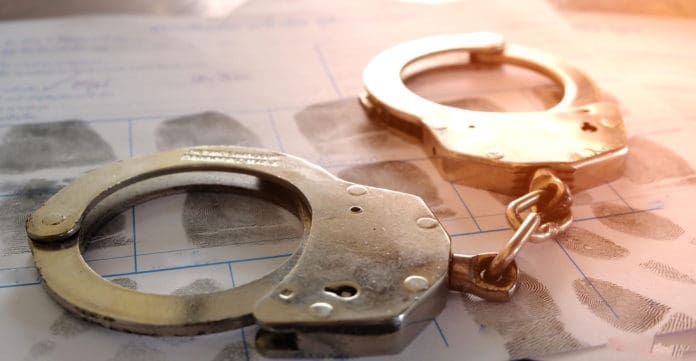
A St. Thomas man being held on suspicion of car theft was charged with burglary after a witness recognized him in the police station, according to court records posted Friday.
A Haugland Virgin Islands safety manager noticed a GPS monitor attached to one of its Jeeps parked in Nazareth April 19 was moving unexpectedly. Two weeks later, Haugland employees and a tow truck tracked the red four-door to the Nadir area and towed it back to where it belonged. A review of security footage revealed the likely culprit was a man commonly known as “Doo Wah,” according to court records.
Police made contact with Burton Fahie Wednesday morning as he walked through Vendors Plaza with a fishing rod, according to court records.
Fahie was charged with unauthorized use of a vehicle. At the police station, Fahie allegedly said he had the keys to the Jeep in his bag. Instead, police found the keys to a Ford. Fahie allegedly told police he’d thrown the Jeep keys into a hole in the holding cell where he’d been temporarily placed. Police said he showed them where the keys were and acknowledged having taken the Jeep and used it for a week.
On Wednesday, after police cut through the wall and recovered the keys, Fahie faced additional charges of possession of stolen property and three counts of damage to a vehicle.
That same day, Fahie was identified as the alleged burglar who jimmied a window and made off with a cash register containing roughly $100.
On March 14, an employee at V.I Pawfect Natural Dog Food in Anna’s Retreat called police, saying their cash register had been stolen. Although the shop had been locked and there were no signs of forced entry, the employee said a faulty shop window was an easy entry point.
Video surveillance footage showed an unidentified “Black male dressed in clothing resembling that of a homeless individual, wearing yellow Crocs” taking the cash register, which was later found by some trash cans, according to court records.
Two other video cameras outside the building showed a Black man in a T-shirt, long pants, and yellow Crocs, police said.
On Wednesday, as police were cutting a hole in the wall to find missing Jeep keys, someone noticed Fahie fit the description of the alleged burglar.
Shown a brief section of the video footage, Fahie allegedly said, “Oh, that’s my look-alike. We have the same shoes, too, but that’s not me.”
After further interview, police said Fahie acknowledged taking the cash register, which he said only contained coins, according to court records.
Fahie was charged with burglary, unlawful entry, petit larceny, and destruction of property. Unable to make bail, he was remanded to jail.