The 1733 St. John African Revolution Commemoration Committee is planning for the 41st annual pilgrimage and commemoration of the 1733 revolution by enslaved Africans on St. John.
A depiction of the St. John 1733 Revolt
Participants are invited to experience the courage and revolutionary spirit of our ancestors. This year’s observance will be held on St. John Friday, November 28, 2025, from at the Cruz Bay beach by the ferry dock, where a short welcoming program will be held before boarding the safaris. Those joining from St. Thomas would take the 9:00 a.m. ferry to be on time. Space will be limited, and participants are asked to bring their own lunch/snacks.
To express interest in participating, please register at www.fortsberg1733.org or through this direct link by November 15th: https://forms.gle/DKF1D9Fqow5j1P2PA.
Call 340-423-3578 or 340-203-3885 by November 15, 2024, for more information.
Costs are $47 for 12 years and above ($12 for ferry and $35 for land transportation) or $22 for 11 years and under ($2 for ferry and $20 for land transportation).
Following the opening ceremony at the beach in Cruz Bay at 9:30 a.m., the tour stops at Susannaberg, Adrian will be pointed out on the way to Catherineberg, then there will be a brief pause at the Coral Bay Overlook before moving on to the Fortsberg and Annaberg sites. Any updates or reminders will be posted on the Fortsberg 1733 Facebook page and event: https://www.facebook.com/events/1186486246696398
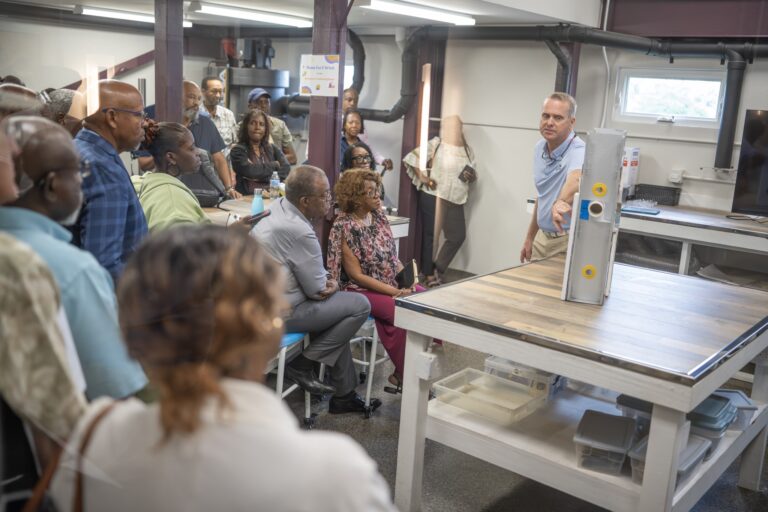
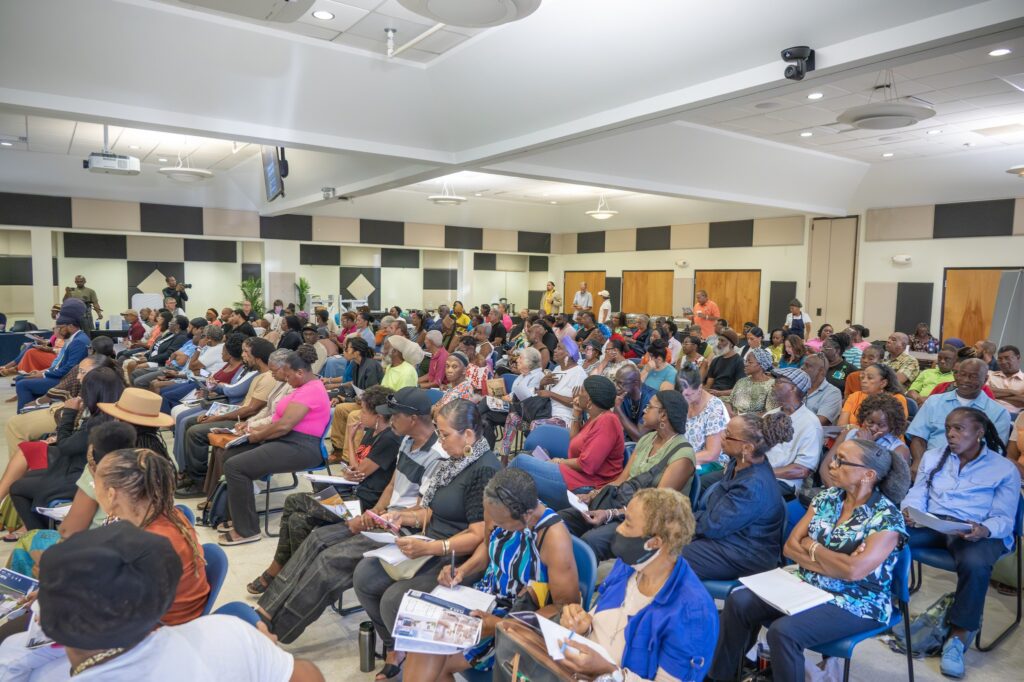
Residents packed the UVI Great Hall on St. Croix to hear more from Summit panelists (Submitted photo)
More than 600 residents attended the Innovative Housing Construction Summit held last week on St. Thomas and St. Croix, reflecting growing public interest in how new building technologies could help reduce construction costs in the territory.
The summit, hosted by Sen. Marvin Blyden in partnership with the Virgin Islands Territorial Association of REALTORS, focused on approaches that proponents say could lower the cost of home construction by as much as 40 to 50 percent while improving resilience and energy efficiency.
The two-day event featured panel discussions, hands-on demonstrations, and presentations from local and visiting construction firms, government agencies, developers, and financial institutions. Exhibitors highlighted a range of options, including insulated concrete forms, modular components, compact “tiny home” designs, and alternative wastewater systems.
Representatives from the Virgin Islands Housing Finance Authority, the Licensing and Consumer Affairs Department, the Virgin Islands Housing Authority, and several private lenders provided information on financing, permitting, estate planning, contractor bonding, and homeowner support services.
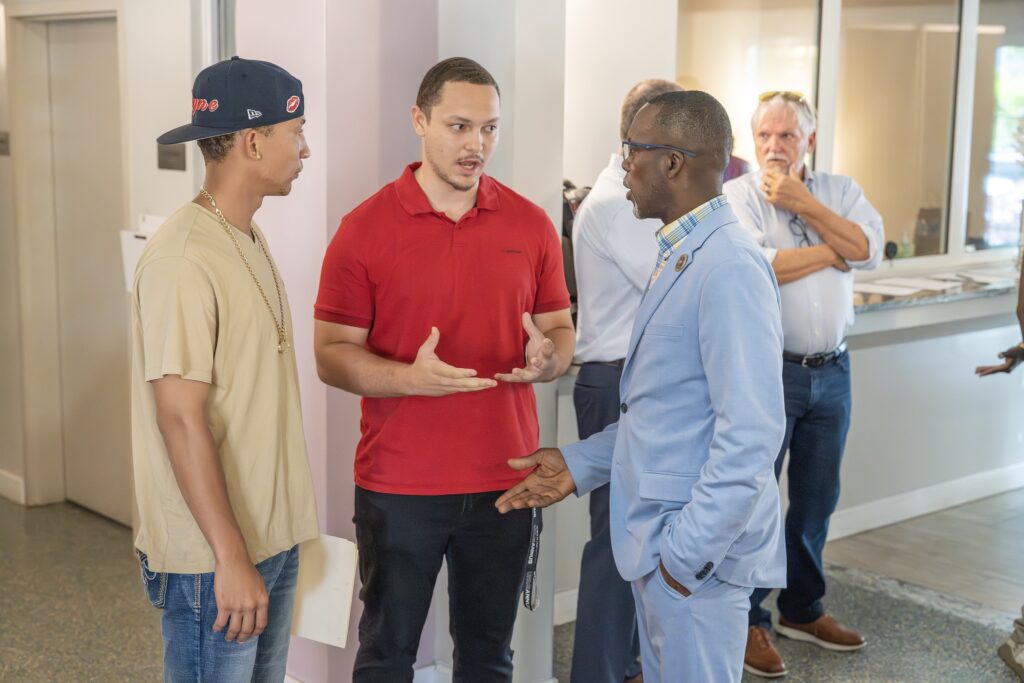
Elijah Hood (middle) speaks to Sen. Marvin Blyden about housing construction options (Submitted photo)
On St. Thomas, panelists discussed the challenges facing residents who want to build or buy homes amid high material and labor costs. Speakers included VIHFA Executive Director Eugene Jones, former Sen. Clifford Graham of Jackson Development Corporation, Historic Preservation Commission member Enrique Rodriguez, and FirstBank representative Andres Amaro. The discussion centered on balancing affordability and building standards, as well as how banks and developers might approach new construction models. A second panel on St. Croix included Jones, Office of Disaster Recovery Executive Director Adrienne Williams, and contractor Darien Jackson, focusing on resiliency and disaster recovery planning.
While Blyden organized the summit in his role as chair of the Senate Housing, Transportation and Telecommunications Committee, attendees represented a broad cross-section of public and private stakeholders. Several participants said the event was the first time they had seen multiple construction approaches, permitting guidance, and financing information presented in one setting. Some noted that the demonstrations made alternative building methods easier to understand, though others said questions remain regarding contractor availability, insurance acceptance, and timelines for local approval.
Blyden said he hopes the summit will help residents better evaluate construction options and connect directly with vendors and agencies. “Attendees left not just informed but inspired,” he said in closing remarks, adding that discussions are underway to hold another summit in the spring. VITAR board member Jamila Harris also noted the value of bringing industry groups and homeowners into the same conversation, pointing to ongoing territory-wide concerns about rising housing costs and limited affordable inventory.
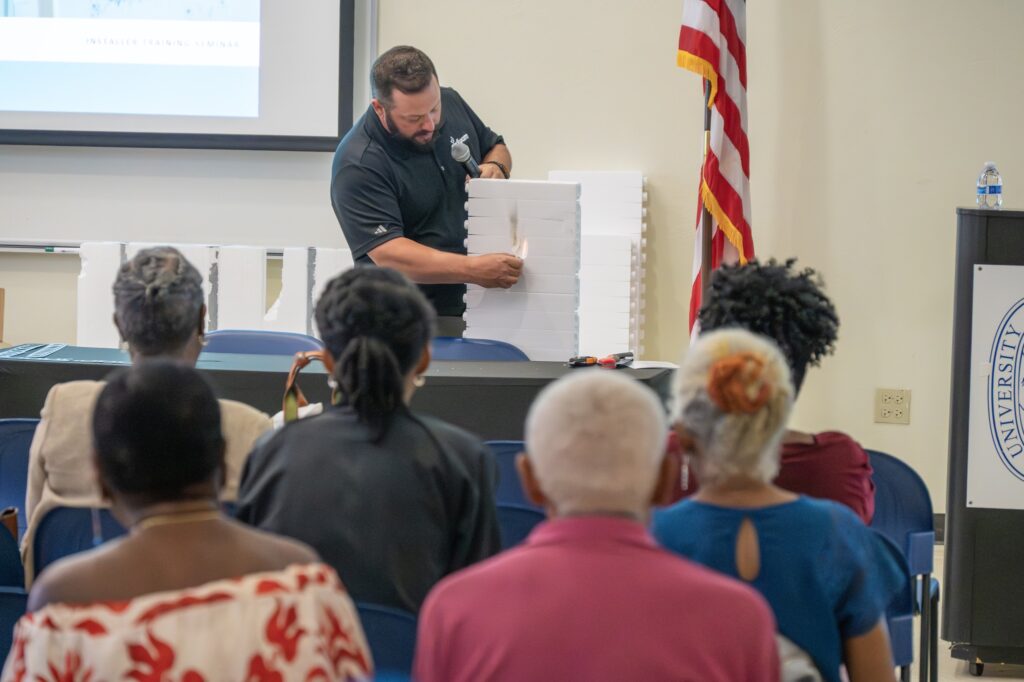
Presenters on St. Croix demonstrate fireproof building technology (Submitted photo)
The event also highlighted the need for continued coordination on long-term planning and policy alignment — especially in areas such as permitting, contractor capacity, and financing. Panelists and agency officials said those conversations are expected to continue in the months ahead as stakeholders look for practical ways to expand affordable home construction across the territory.
Exhibitors at the St. John Home Expo join host members from the Board of Realtors: from left, Dwight Lascaris, Jessica Williams, NaOmi Cagan and Luchia Polius. (Source photo by Judi Shimel)
A group of St. John professionals invited the public to explore different aspects of home and land ownership at a weekend event held in Estate Enighed. Saturday’s St. John Home Expo gave visitors a chance to learn about owning property, acquiring property, managing and maintaining property, and passing property along to future generations.
One of the exhibitors at the event brought word of a plan to fulfill a promise of home ownership to residents at an affordable housing development built in 2005.
Members of the St. John Board of Realtors staged this year’s event at the Marketplace shopping center with the goal of “strengthening our neighborhoods and supporting the future of homeownership in the Virgin Islands,” said chief organizer Keleigh Rees.
Exhibitors handed out business cards and shared details about services being offered to property owners and villa managers.
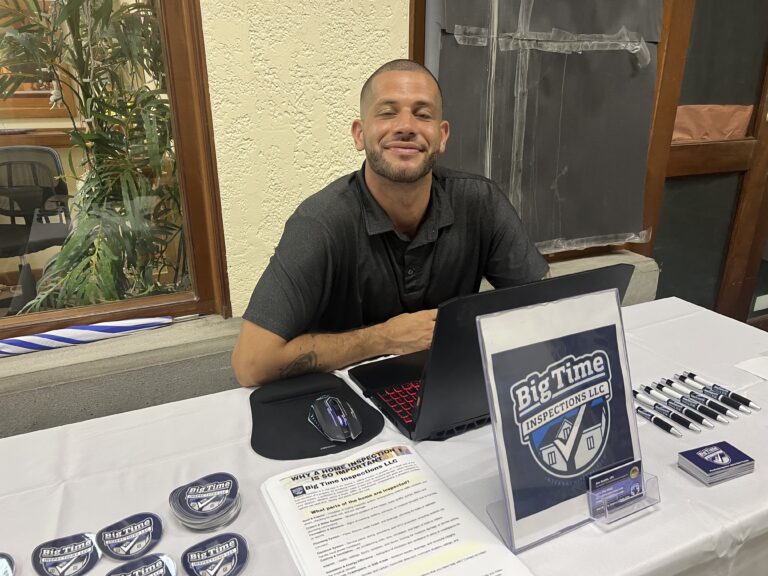
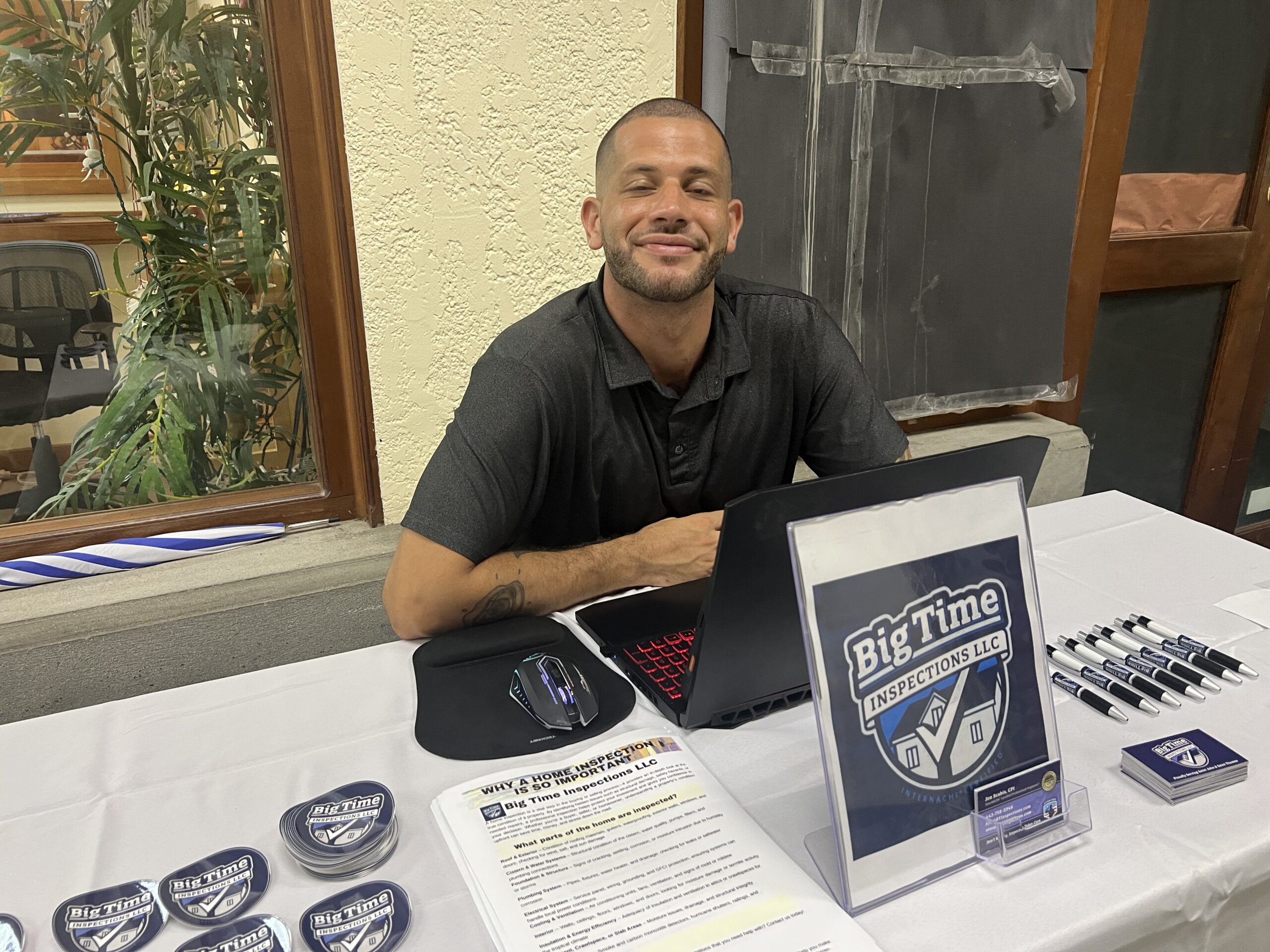
John Scabis explains the home inspection process to expo visitors. (Source photo by Judi Shimel)
For two new business owners, it was a way to introduce themselves to potential clients. “One of the things I try to get into people’s heads is preventive maintenance,” said John Scabis, owner of the company Big Time Maintenance, “It’s the small things that go unnoticed that turn into big things down the line.”
For the founder of My Estate Shield, wills and trusts are essential tools for family property management. “Across the country in America, 75 percent of folks don’t have something as simple as a will,” said business owner Steve Lowe.
Without having the formalities in place, he said, families can’t make good decisions about protecting, managing or sharing homes and land. “We’re completely focused on helping families get their affairs in order. We have about $170 million of V.I. wealth from average people like you and me protected with proper estate plans,” Lowe said.
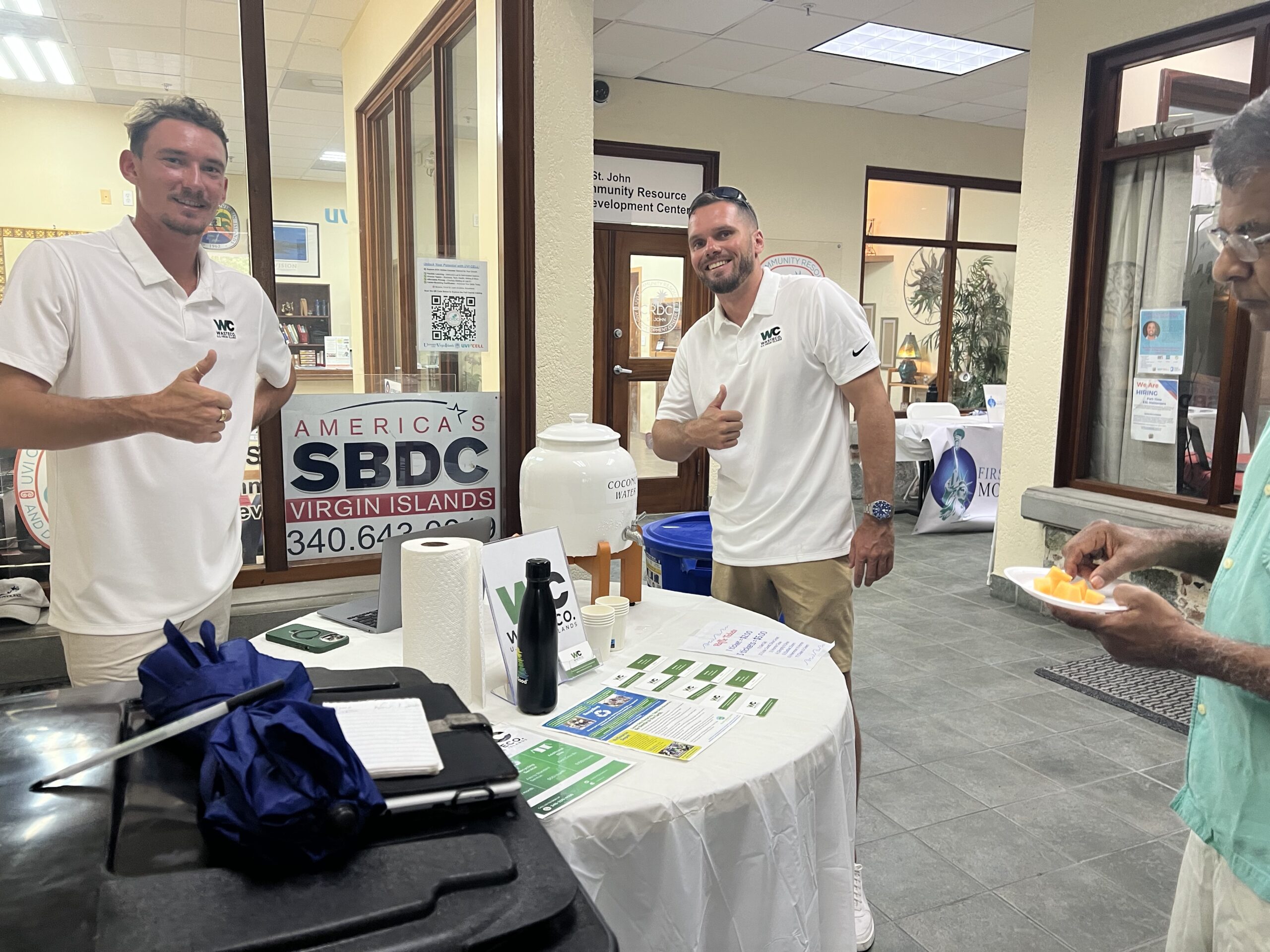
In another corner of the expo, new business owners Scot McQuaide and Kade Wallace told the story of buying a waste management business to relieve St. John villa renters from having to drop off recyclable plastics and aluminum.
“We pick up primarily from villas, but we also do some local and residential pickups at custom rates,” McQuaide said.
Kade Wallace and Scot McQuaide introduce their customized recycling system. (Source photo by Judi Shimel)
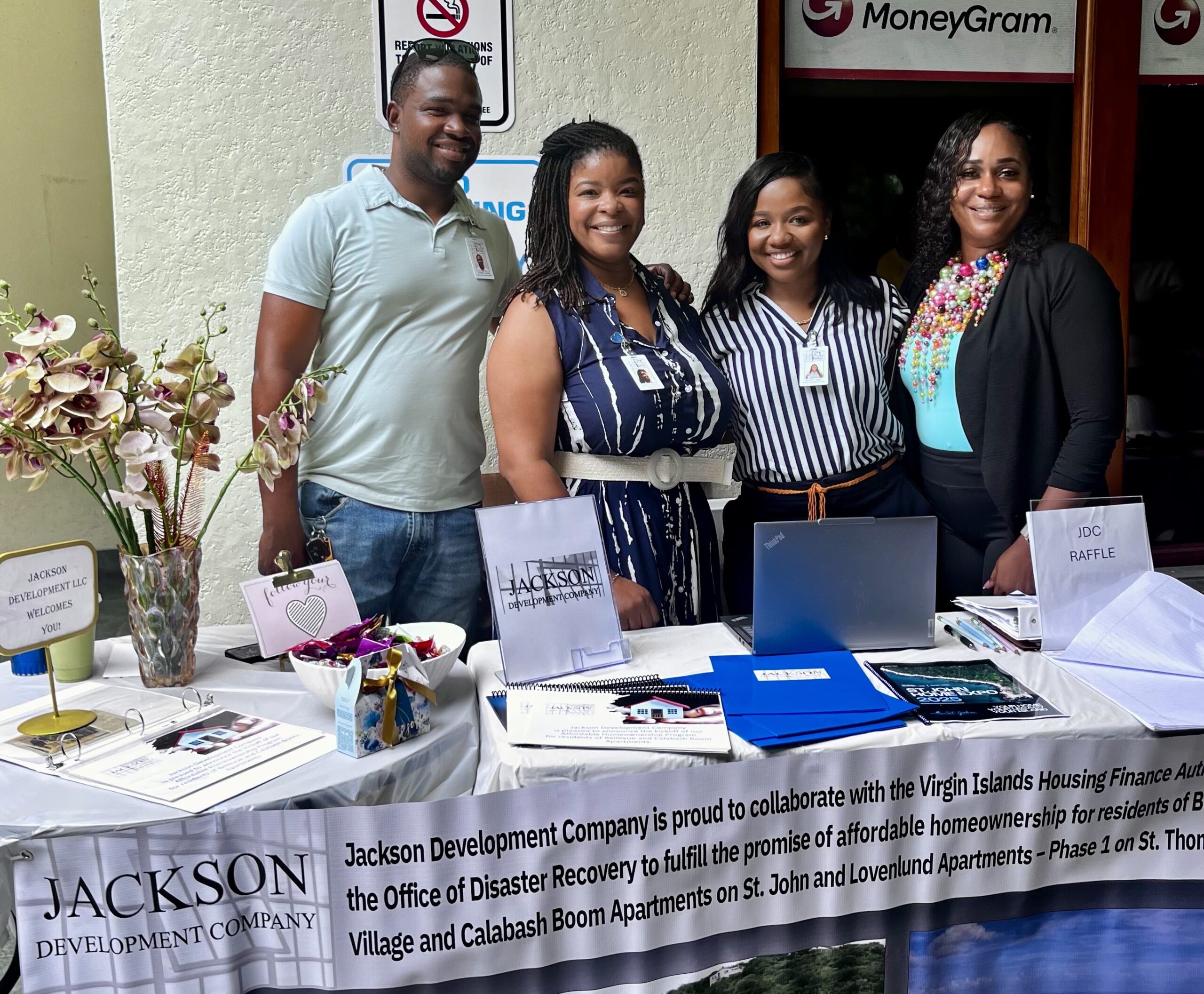
Housing contractor Robert Jackson sent a team to help spread the word about a plan to make good on a promise made when Bellview Housing Community was built 20 years ago. The promise was made to ground-floor occupants of duplex apartment buildings who stayed in their units for a specified time.
At that time, those residents were supposed to be given an option to buy their apartments. But when their company, Jackson formed, was sold, the new owners did not follow through with the rent-to-homeowner commitment, said team member NaOmi Cagan.
So, Johnson bought the company back and sought financial support from the Community Development Block Grant Program. “He’s trying to do his part by doing right by the locals, and sell them back their units,” she said.
In her biweekly column, “State of the Territory,” former Sen. Janelle K. Sarauw delves deeper into issues of concern for V.I. residents.
If the Legislature is the people’s house, the Executive the hands and feet, and the Judiciary the conscience, then the Delegate to Congress is the voice of the Virgin Islands in the nation’s capital. It is a role born out of compromise, shaped by colonial status, and sustained by the determination of Virgin Islanders to be heard in the halls of American power.
The position of Delegate is not a local creation. It comes directly from federal law, specifically the Revised Organic Act of 1954, which was amended by Congress in 1972 to authorize the Virgin Islands to elect a non-voting Delegate to the United States House of Representatives. The details are codified in Title 48 of the United States Code, Chapter 16, sections 1711 through 1715. These provisions spell out the role: how the office is elected, the length of the term, privileges in the House, and the Delegate’s ability to serve on committees, speak on the floor, and introduce bills, but not cast final votes. The Virgin Islands Code does not create or define the Delegate’s powers, because it is a federal office, not a territorial one. The Code only governs the mechanics of how we elect the Delegate, but not what the Delegate does once sworn into Congress.
The seat itself is relatively young in American political history. In 1972, Congress amended the Revised Organic Act to create the office, and later that year Virgin Islanders held their first election. Ron de Lugo became the inaugural Delegate to Congress in 1973, bringing the Virgin Islands a formal presence in Washington for the first time. From that moment forward, Virgin Islanders finally had an elected voice in Congress, even if it was a limited one. Through the 1980s, 1990s, and into the present, the office has matured into a critical link between the territory and the federal government.
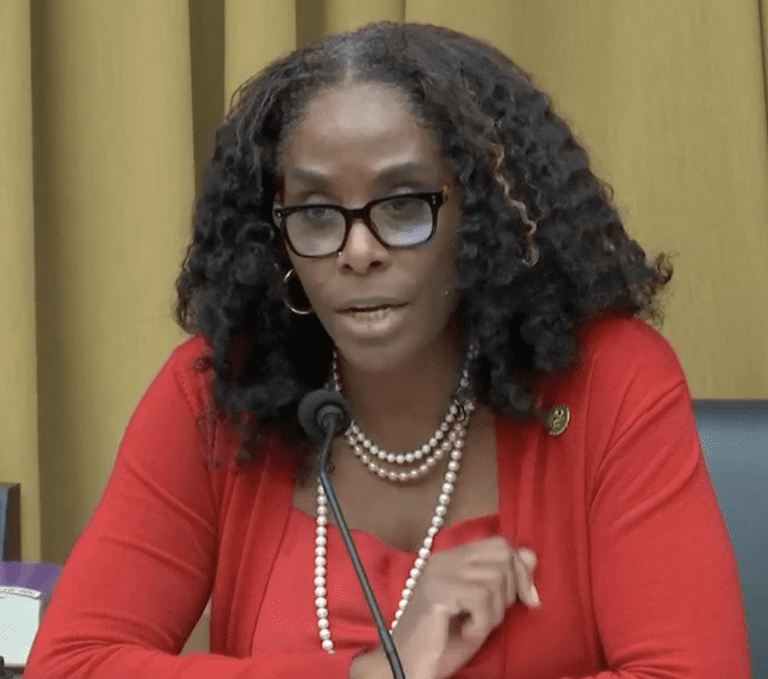
Each Delegate has used committee assignments to push Virgin Islands priorities. Ron de Lugo served on the Interior and Insular Affairs Committee, where he was able to advocate for territorial issues such as infrastructure and natural resources. Donna Christian Christensen sat on the influential Energy and Commerce Committee, where she shaped national health policy and worked to secure parity for Virgin Islanders in Medicare and Medicaid. Stacey Plaskett has served on both the Ways and Means Committee, which oversees taxation and trade, and the House Agriculture Committee, where she has fought for programs that support farmers and rural communities in the territory. These assignments reflect the quiet but critical influence that Delegates can wield, even without a final floor vote, because much of the real work of Congress happens in committees.
This makes the office both powerful and powerless at the same time. Powerful, because the Delegate is the official bridge between the Virgin Islands and the federal government, with the ability to introduce bills, negotiate with colleagues, and secure federal funding. Powerless, because when history is written in votes on the House floor, our Delegate cannot cast a binding vote. The paradox is a reminder that the Virgin Islands is not a state but an unincorporated territory, subject to the authority of Congress yet without full representation in it.
The role is also unique because the Delegate wears two hats. At home, Virgin Islanders often view the office as a kind of fourth branch of government, holding town halls, addressing constituent concerns, and explaining federal law. In Washington, the Delegate joins a small coalition of territorial representatives from Puerto Rico, Guam, American Samoa, and the Northern Mariana Islands who push together for greater equity. Few political roles in America demand such constant translation between local needs and federal realities.
Still, the position is often misunderstood. Many Virgin Islanders expect the Delegate to wield the power of a full voting member of Congress, able to deliver sweeping reforms or guarantee specific outcomes. In truth, the Delegate’s influence lies in advocacy, coalition building, and persistence, not in final votes. Expecting the Delegate to deliver state level results is like asking a coach to win the game without being allowed on the field. The coach can draw up the plays, rally the team, and argue with the referees, but someone else has the ball when the score is tallied.
The Delegate’s role also highlights the unfinished business of democracy in the Virgin Islands. More than a century after transfer from Denmark, Virgin Islanders are United States citizens who can fight in wars, pay federal taxes, and serve in federal service, but who cannot vote for president and whose voice in Congress is constrained. The office itself is a daily reminder of both progress and limitation. Progress in that we have a representative, limitation in that the representation is incomplete.
Yet the Delegate to Congress remains indispensable. Without a seat in Washington, the Virgin Islands would be voiceless in federal debates that shape our daily lives. With it, we have a platform, a messenger, and an advocate who can carry our stories, our struggles, and our aspirations into the halls of Congress. A voice without a vote is like a singer without a microphone. You can still hear the tune, but not at full volume. Until full equality is achieved, the role of the Delegate will remain both a symbol of our persistence and a measure of our unfinished fight for self-determination.
Editor’s Note: Opinion articles do not represent the views of the Virgin Islands Source newsroom and are the sole expressed opinion of the writer. Submissions can be made to visource@gmail.com. Editor’s Note: Opinion articles do not represent the views of the Virgin Islands Source newsroom and are the sole expressed opinion of the writer. Submissions can be made to visource@gmail.com.
Related Links:
Op-Ed: State of the Territory | The People’s House: Understanding the Role of the Virgin Islands LegislatureOp-Ed: State of the Territory | The Executive Branch: Governing at the Front LinesOp-Ed: State of the Territory | The Lieutenant Governor: The Most Unique Office in American GovernmentOp-Ed: State of the Territory | The Judiciary: The Guardian of Justice
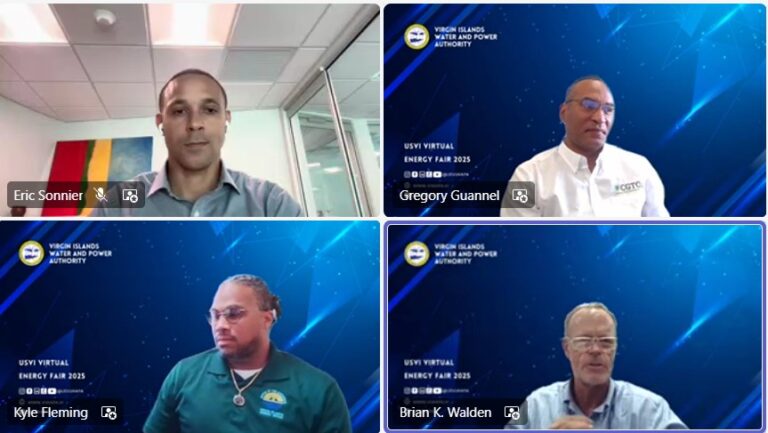
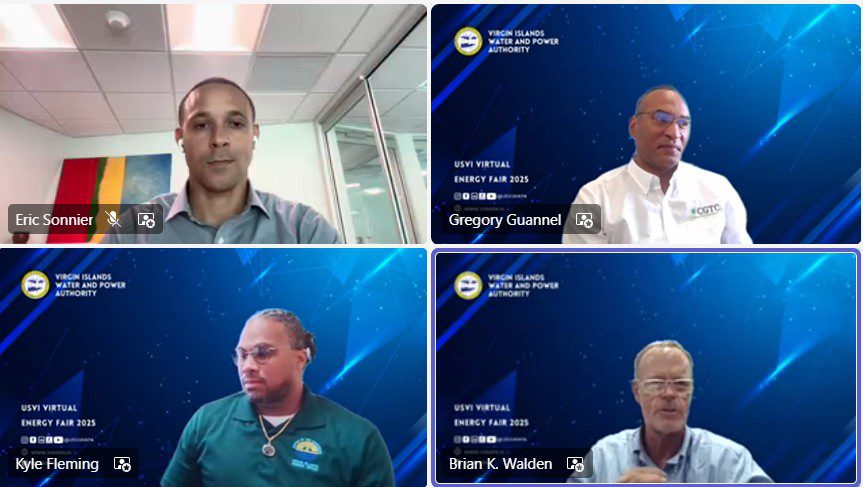
Clockwise from top left, Research and Technology Park executive director Eric Sonnier, Caribbean Green Technology Center director Greg Guannel, V.I. Energy Office director Kyle Fleming and VIEnergize director Brian Walden form a panel during the V.I. Water and Power Authority’s “Virtual Energy Fair” Friday afternoon. (Screenshot from Zoom meeting)
Movers and shakers from across the territory’s energy and construction sectors gathered Friday over the video conferencing platform Zoom to discuss renewable energy in the U.S. Virgin Islands during the V.I. Water and Power Authority’s “Virtual Energy Fair.”
WAPA Chief Executive Karl Knight said during opening remarks that the utility was about more than just maintaining the territory’s aging, troubled energy grid.
“We are about modernizing it, future-proofing it, and making sure that it meets the needs of the next generation of Virgin Islanders,” he said. “Reliability begins with maintaining the assets that we have while we transition to new generation — more efficient generation — while we transition to utilizing renewable energy resources.”
Knight said those efforts include building resiliency by moving some parts of the energy grid underground, conducting more vegetation management, and further developing the territory’s solar capacity to reduce fossil fuel dependency, lower emissions, and improve grid stability, “all while creating opportunities in clean energy careers and technology.”
The utility’s move to solar and battery projects includes the Petronella and Hogensborg solar farms unveiled on St. Croix this year. WAPA’s governing board approved energy storage service agreements for two more solar farms, in estates Bovoni and Fortuna on St. Thomas, in September.
“It still makes good sense to us,” Knight said of solar power at the time, “because we do not have a lot of indigenous resources, and we’re still very much dependent on the importation of fuel oil — and now propane. Having indigenous sources of energy are actually in our best interest for a variety of reasons. Foremost, we’re still a part of the country where we can produce solar power for less expense than our fossil fuel generation.”
The push toward more renewable energy also contrasts with the goals of the Trump administration, which has rolled back or eliminated programs like the $7 billion “Solar For All” initiative meant to make solar power more accessible and affordable for lower-income Americans. Multiple states, nonprofits and other groups have sued the U.S. Environmental Protection Agency over the program’s cancellation. More recently, the administration put what would have been among the largest solar projects in the world — the Esmerelda 7 solar farms in Nevada — in their crosshairs.
Panelists who participated in Friday’s energy fair discussed how residents and businesses can still implement solar options amid that backdrop. During one panel, Brian Walden, director of WAPA’s VIEnergize net energy billing program, asked Caribbean Green Technology Center director Greg Guannel to describe the challenges involved.
“The biggest hurdle is the cost. It costs a lot of money to do that, and I think that the second hurdle is clear communication — understanding the technology that you are getting,” he said, calling solar and battery solutions “something that requires a lot of attention and understanding.”
“Is it being done for just reducing a bill? Is it being done for having some form of energy security — resilience — when there’s some uncertainty with WAPA? Is it being done because … you really want to have energy at night?” he asked. “Really sort of communicating those, and then matching those various needs that the population has with what the utility can do, I think, is something that requires a lot of attention.”
A later panel focused on workforce development and retention. Sabrina King-Leonce, WAPA’s director of human resources, said that “anything that really touches our energy sector is in high demand.”
“We need everybody, from line workers to electricians, substation techs, individuals that are skilled in safety, protection, control, PV installers when you’re thinking about how we can support the territory’s clean energy push,” she said. “We’re looking for engineers, people that are skilled in power systems — I mean the list goes on.”
Rosalie Drago, vice president of external affairs and strategic engagement at frequent WAPA contractor Haugland VI, said more training opportunities are needed.
“And what we’ve been doing is trying to partner with local schools, and — we’re going to do this more — to take folks with no experience and get that hands on experience,” she said, adding that Haugland has also sent employees off-island to receive training. “But really what we need, if we want resilience and sustainability, is to bring training to the island so that there’s a consistent pipeline.”
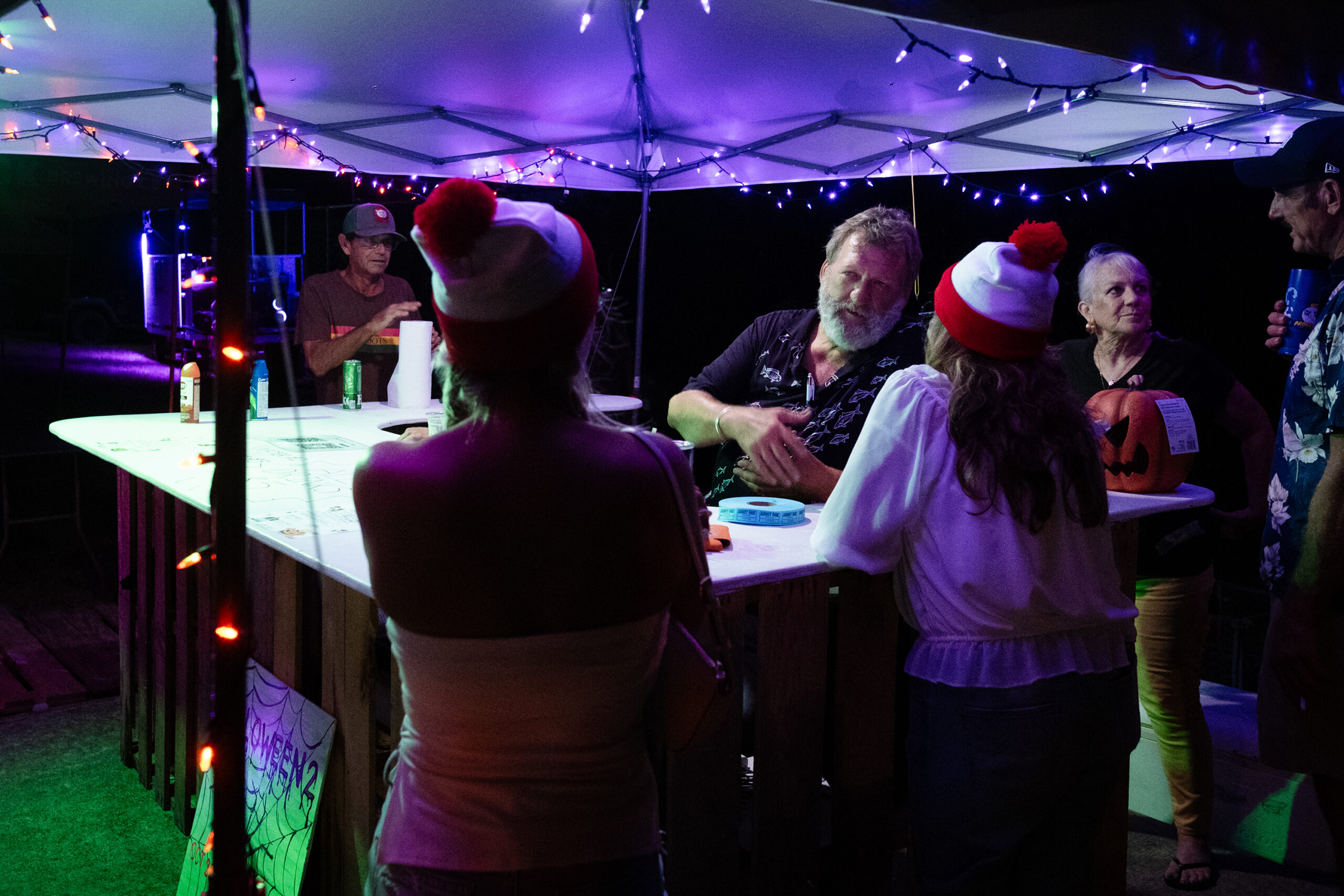
Halloween swept through Chenay Bay, St. Croix this weekend, filling the air with bloodcurdling screams, maniacal laughter and ominous drums during the second “Paul-o-ween Halloween Spectacular” at Bungalows on the Bay.
Organizer Paul Blair said the weekend-long fright fest was also a fundraiser for the Moffitt Cancer Center in Tampa, Florida. Blair said he was inspired to support the center after surviving pancreatic cancer last year.
Paul Blair, center, said he was inspired to give back after surviving pancreatic cancer with the help of oncologists and surgeons at the Moffitt Cancer Center in Tampa. (Source photo by Kit MacAvoy)
“I’ve always done fundraisers. I’ve always done big events to try to bring the community together. I think the island’s been so good to me in so many ways. While I was sick, so many people reached out to me on a daily basis — I really feel like it helped me heal,” he said. “And I think when the island gives you something, you have to give back.”
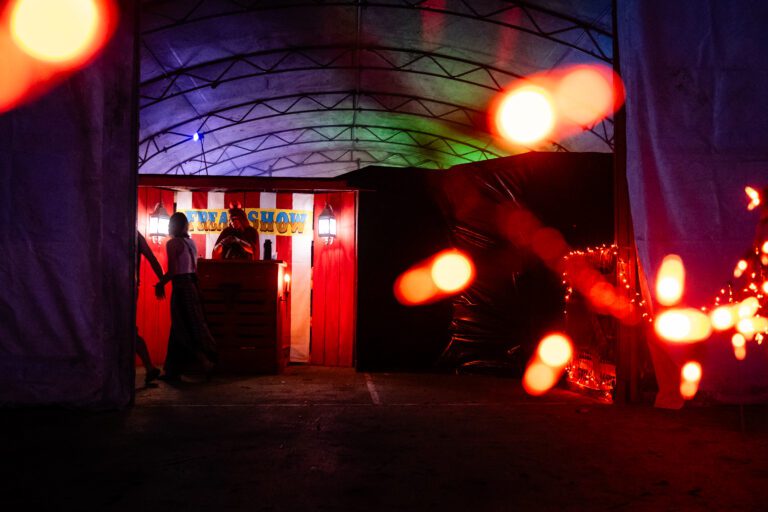
The main event was a multiroom haunted house filled with jaw-dropping sets and Oscar-worthy performances by volunteers inspired by horror staples like The Exorcist and — scariest of all, for some — the V.I. Water and Power Authority.
Bill Stafford welcomes attendees to the haunted house at “Paul-o-ween,” a multiday Halloween celebration and fundraiser for the Moffitt Cancer Center in Tampa, Florida. (Source photo by Kit MacAvoy)
“There are so many people involved, so many volunteers, so many sponsors. It would take me minutes to go through all that,” Blair said. “But it started with an idea and a concept years ago, and we kind of just built on it.”
Mimsel Riley, who said she’s worked with Blair on haunted houses before, and Puerto Rico-based production designer Marc Greville took this year’s haunted house to a new level. Greville said being original is key to designing a scary experience.
“I think the more stuff you can do yourself — and the less you buy from the big stores,” he said. “Because everybody’s seen that stuff. Get creative. Do your own fun thing.”
For Riley, it’s all in the details.
“It’s the tiny little, silly details that pull it together,” she said.
Police arrested 39-year-old Nelson Navarro early Saturday morning after a woman reported being assaulted in her New Works residence, the Virgin Islands Police Department reported.
At about 6:39 a.m. Saturday the 911 Emergency Call Center received a report of a domestic disturbance in progress. Responding officers said the victim told them Navarro forced his way into her home by damaging the front door, assaulted her, and caused additional property damage. The woman said she could not breathe during the assault and that Navarro did not have permission to enter her residence, according to the police report.
A member of the Criminal Investigation Bureau was assigned to the case. Navarro was detained and transported to the Wilbur H. Francis Command Police Station, where he was advised of his Miranda Rights. He was arrested and charged with second-degree assault, classified as an act of domestic violence, the police report stated.
No bail was set, and Navarro was taken to the John Bell Adult Correctional Facility pending his advice of rights hearing, scheduled for Monday at the Superior Court, police said.
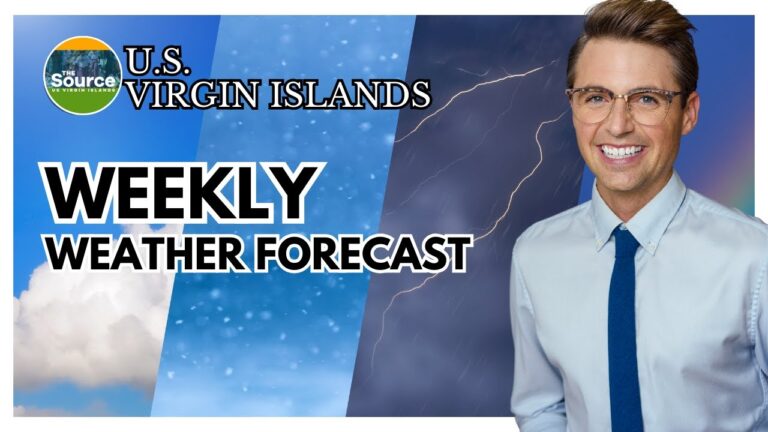
Check out our weekly weather forecast with Jesse Daley, covering Sunday, Nov. 2, through Saturday, Nov. 8. Our YouTube playlist is updated every week, AND check out Jesse’s daily weather updates here.
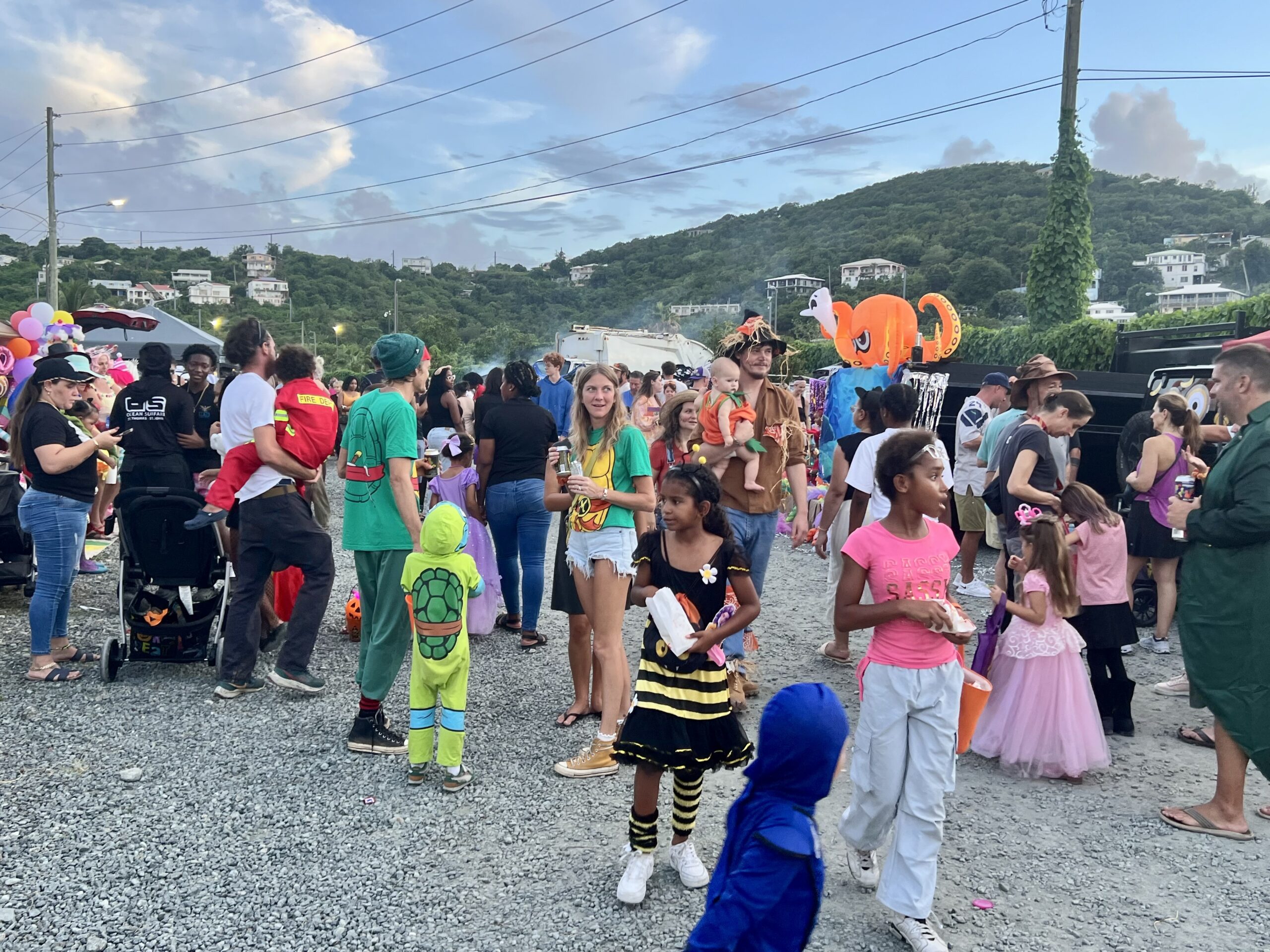
Youngsters on St. John had no trouble finding candy this Halloween on St. John. Trick-or-treaters found plenty of goodies at Mongoose Junction and at the Trunk-or-Treat event at the gravel lot in Cruz Bay.
(Source photo by Amy H. Roberts)
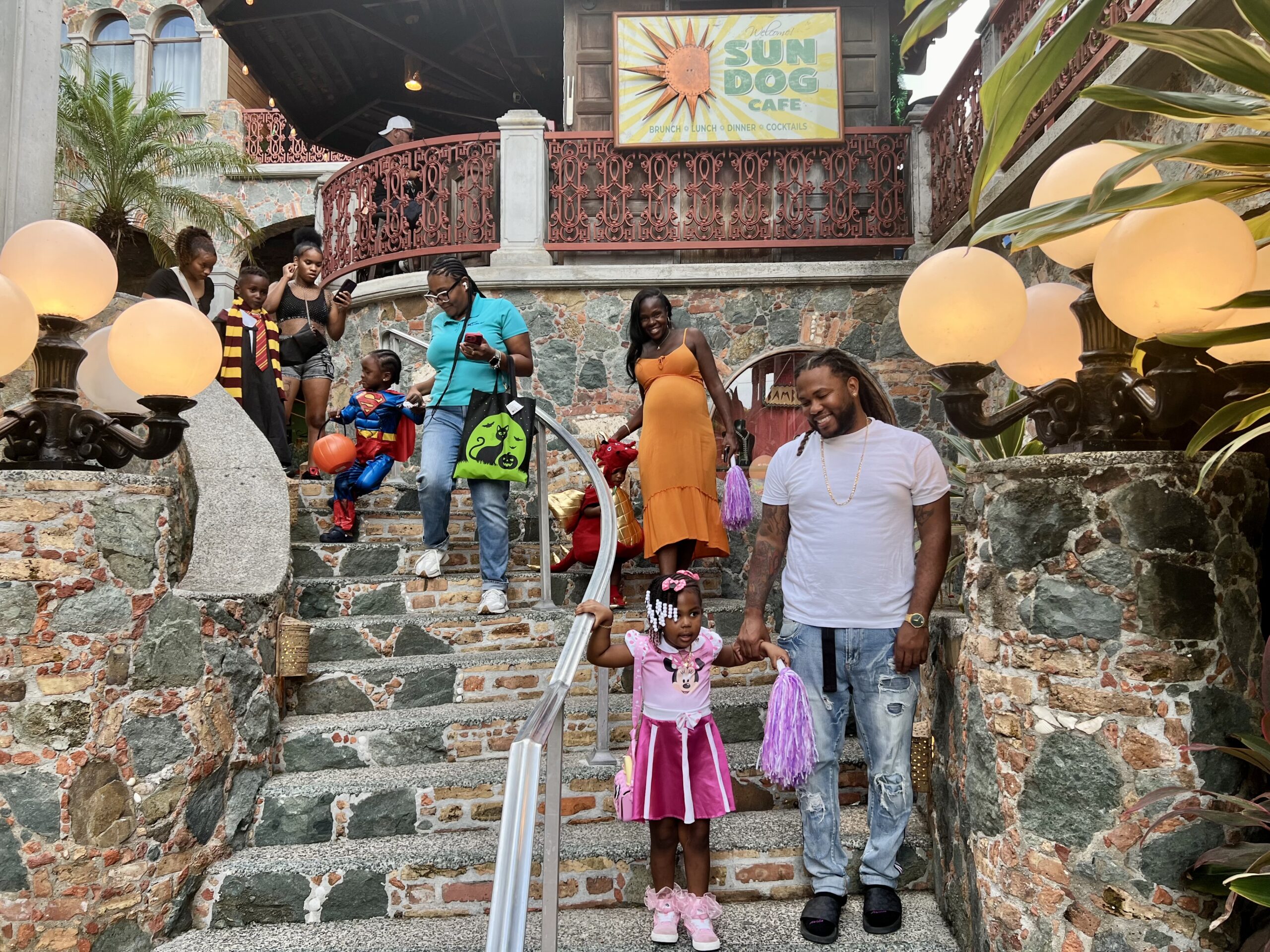
Parents held on to their little ones as they made their way down the main staircase at Mongoose Junction.
(Source photo by Amy H. Roberts)
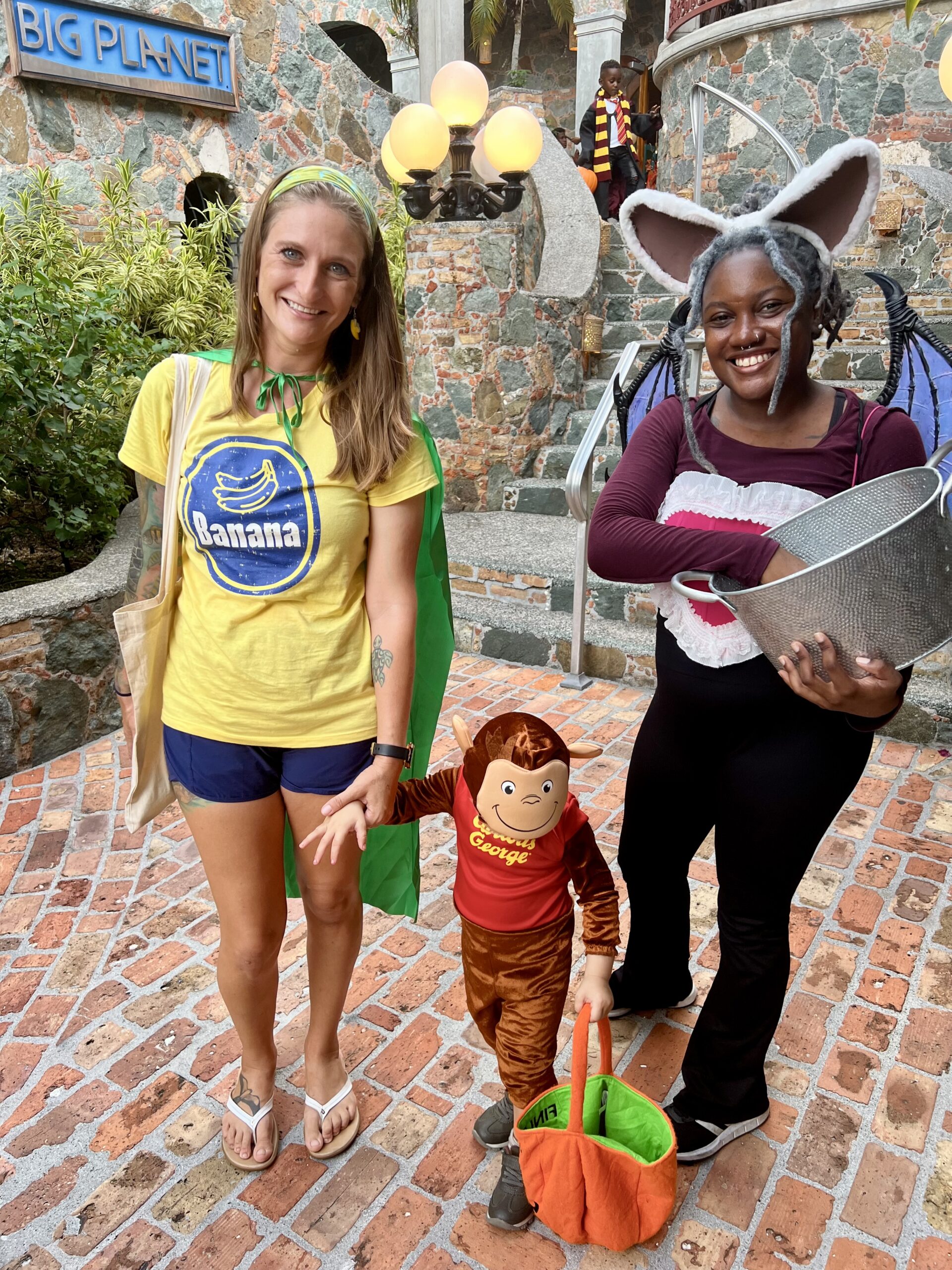
There they met up with Raven Phillips (right) of Bajo El Sol, who distributed candy to children, including this Curious George (Finn) and his mom, Willow Melamet.
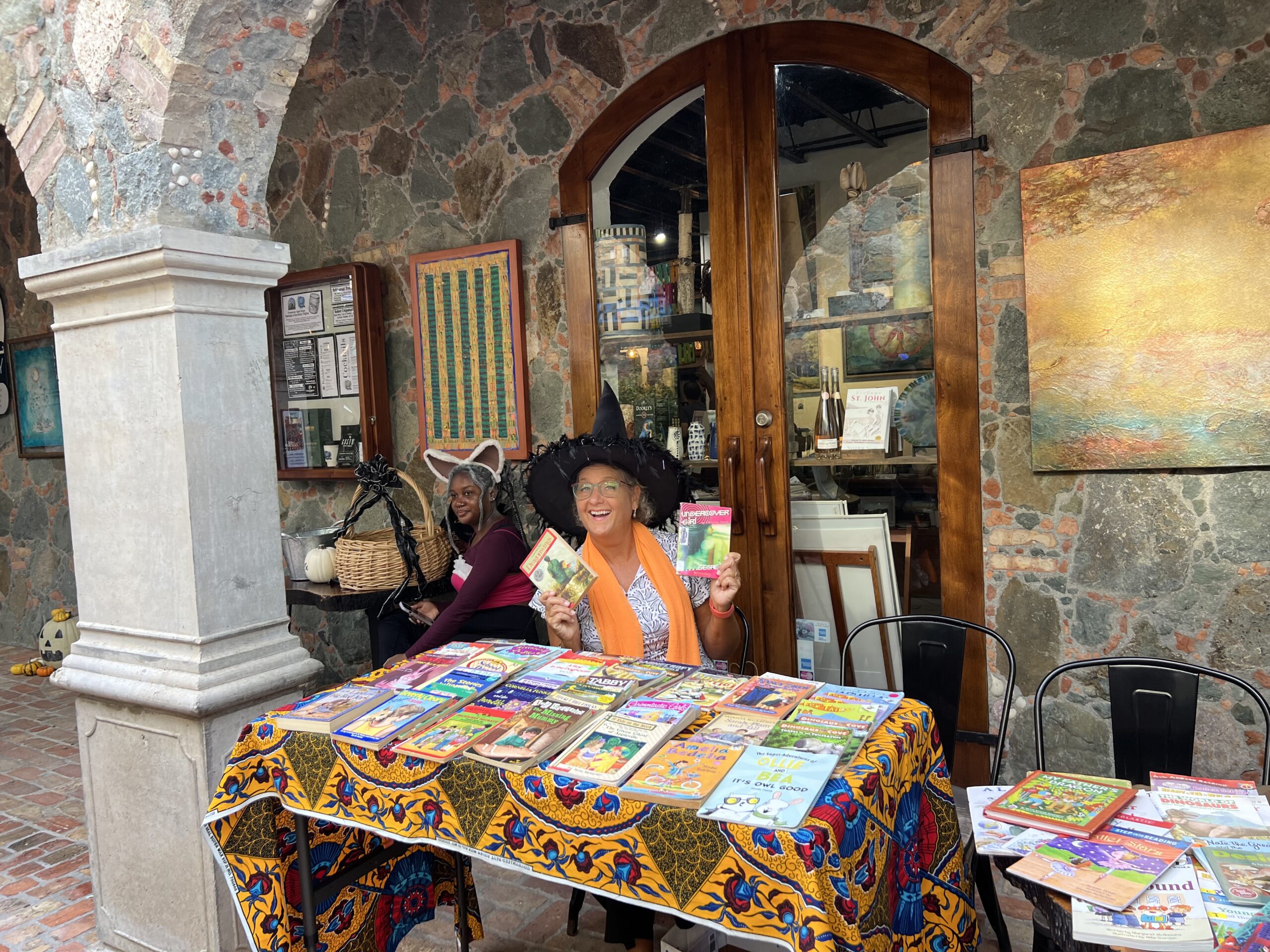
Those who got to Mongoose before 5 p.m. received a gift of free books from the Little Free Library.
(Source photo by Amy H. Roberts)
Jeannie Bishop distributes books while Phillips looks on.
(Photo by Jeannie Bishop)
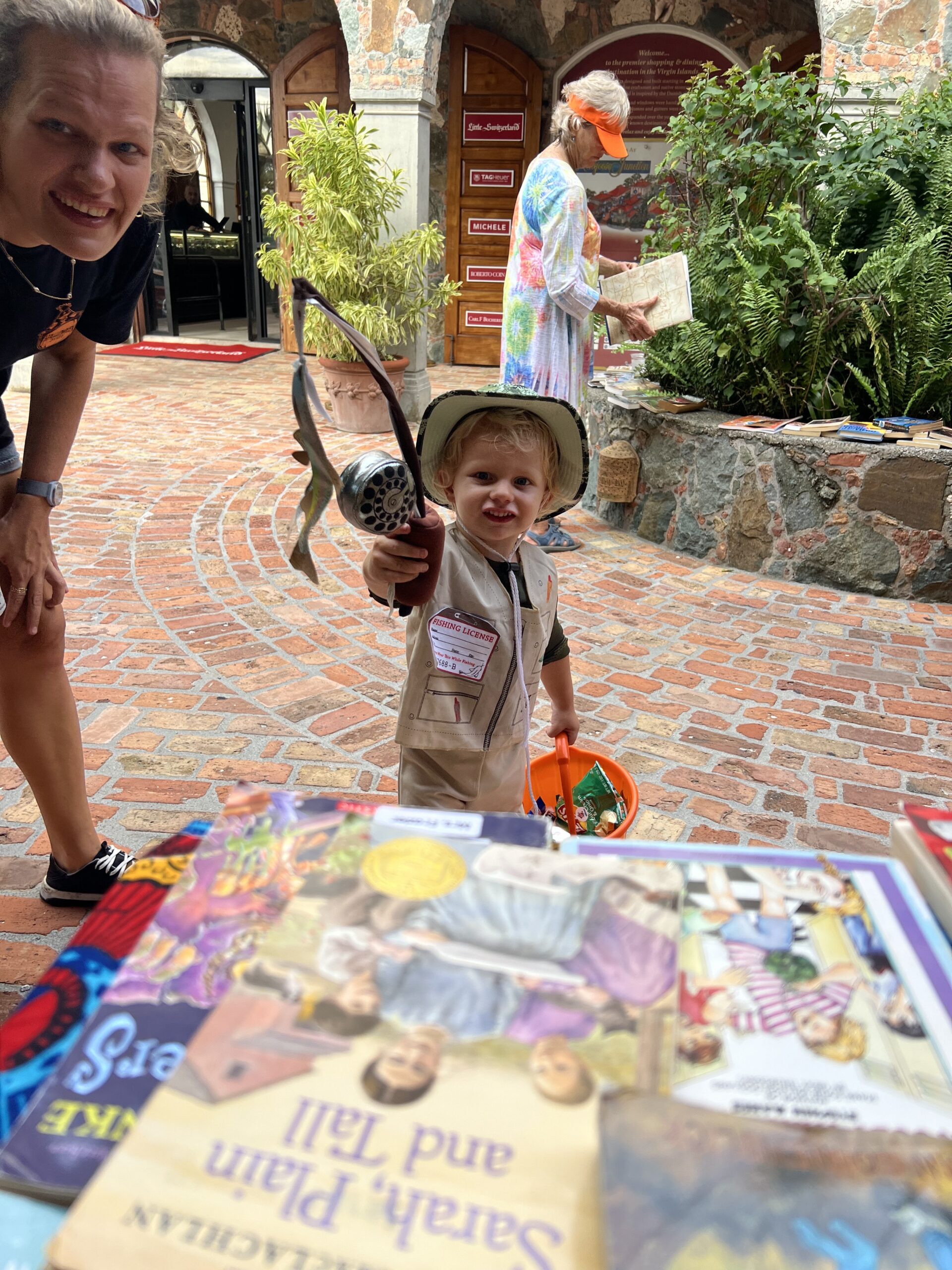
This young fisherman was tempted by the table of books.
(Source photo by Amy H. Roberts)
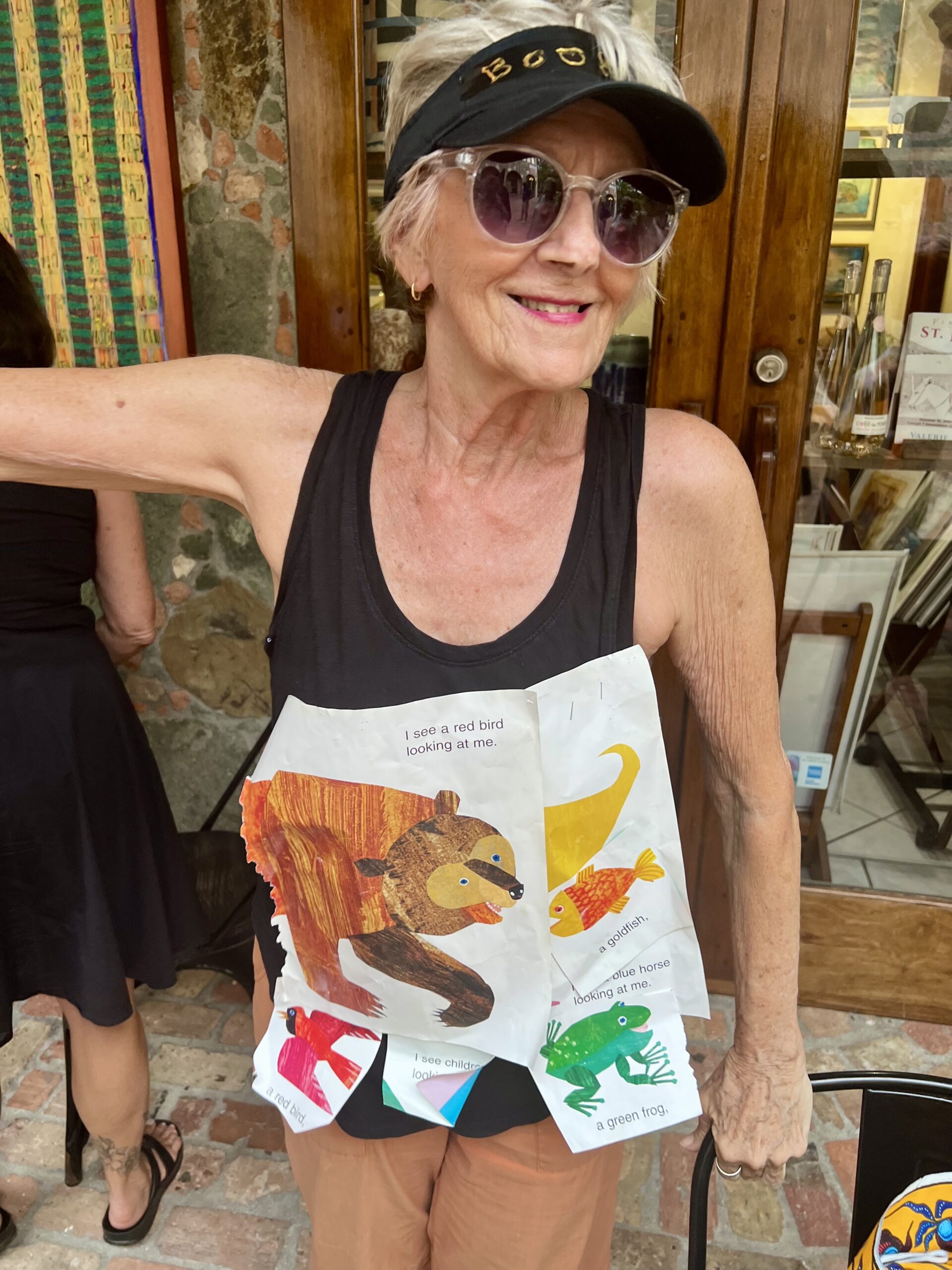
Janet Cook-Rutnik, who helped give out books, decorated herself as one of her favorite Eric Carle books.
(Source photo by Amy H. Roberts)
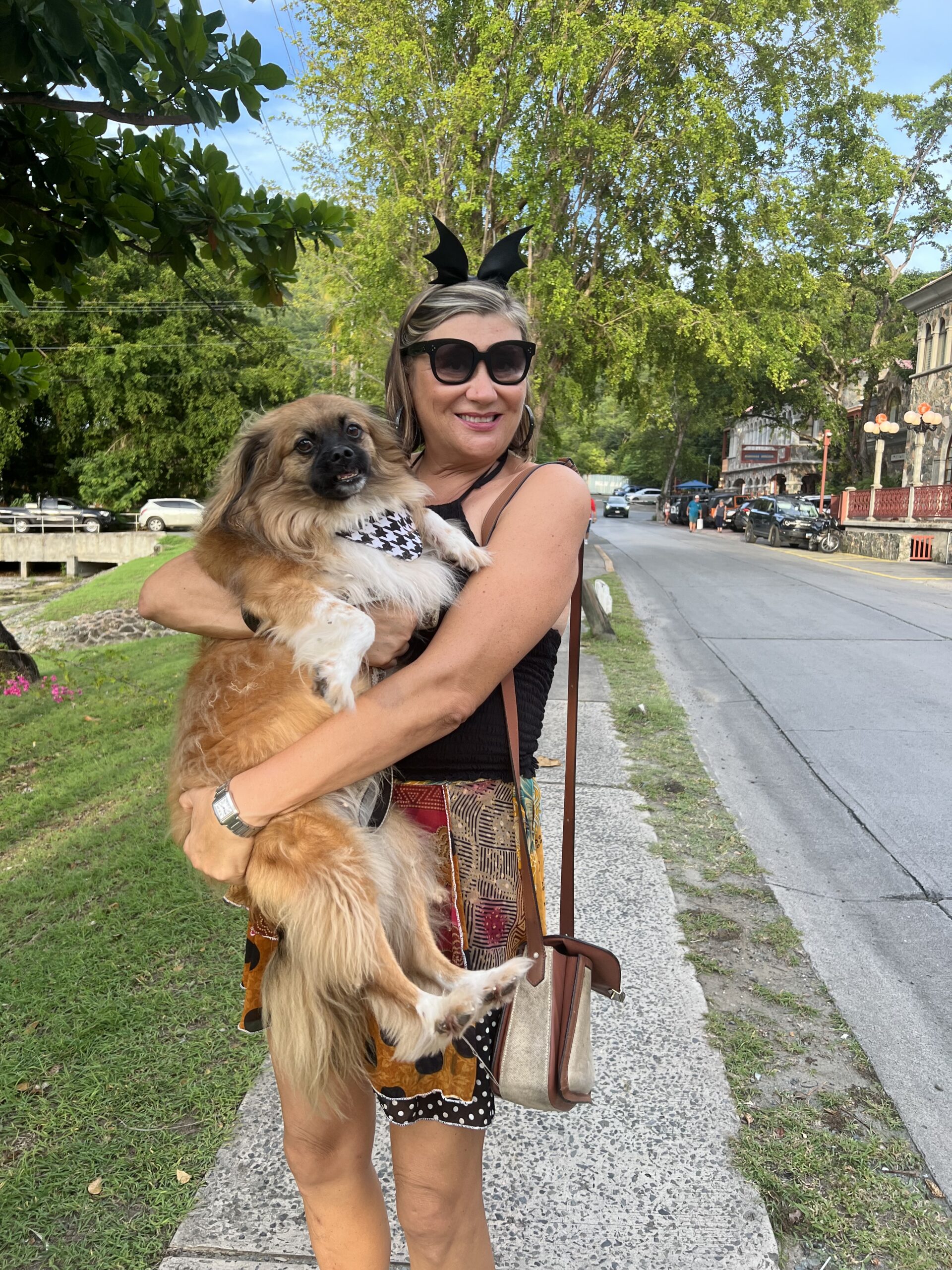
Photographer Yelena Rogers and her pup posed for a photo as they left Mongoose.
(Source photo by Amy H. Roberts)
As daylight faded, most trick-or-treaters moved on to the gravel lot for Trunk-or-Treat.
(Source photo by Amy H. Roberts)
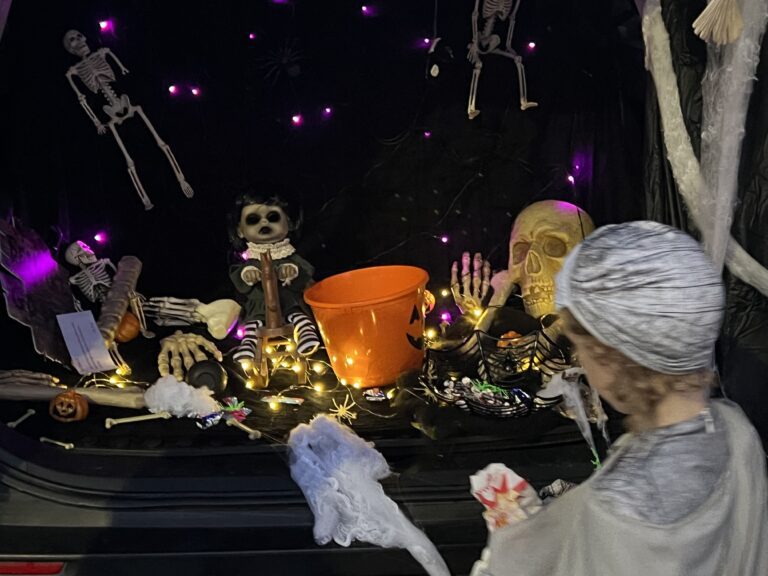
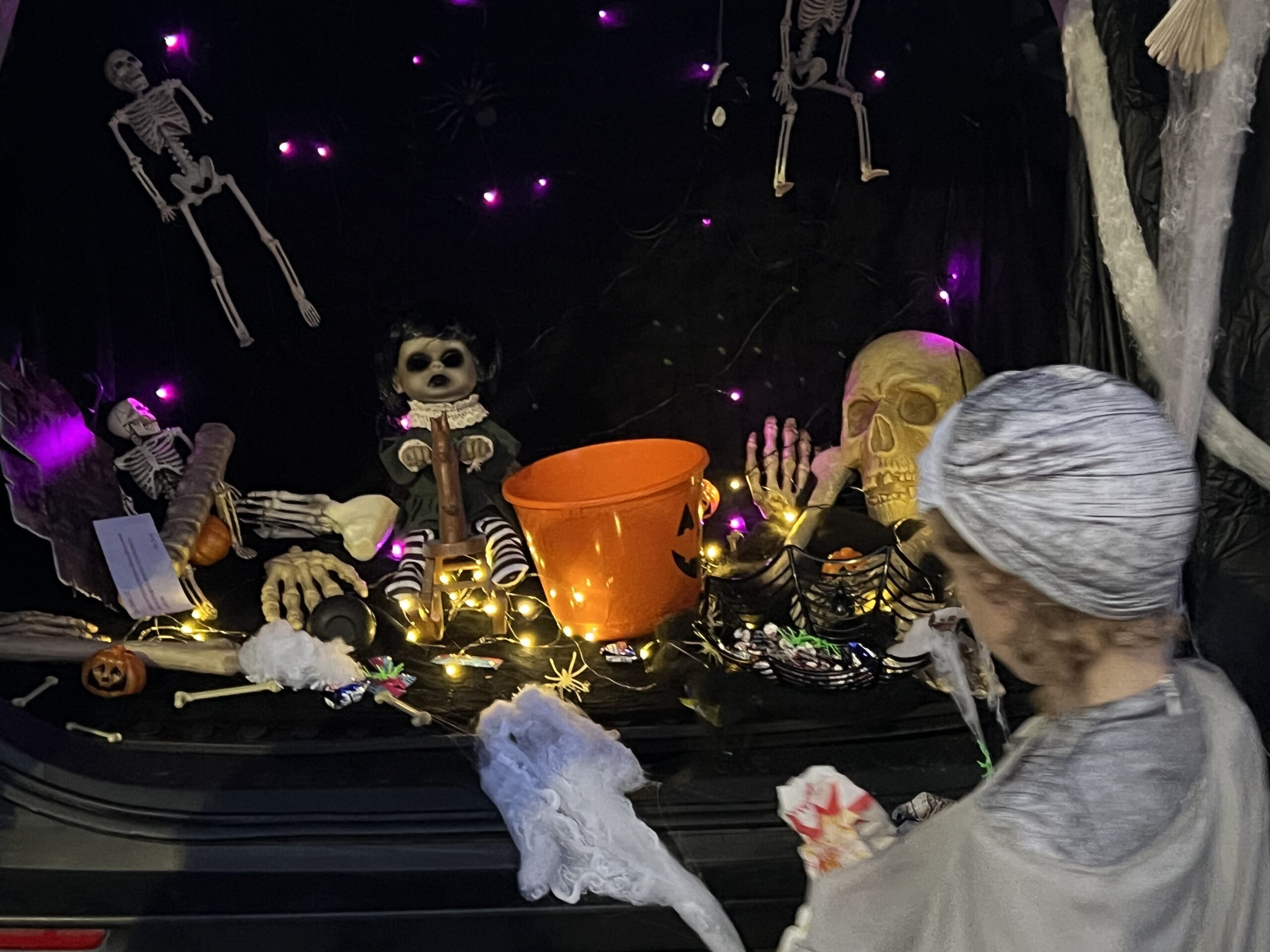
Adults set up some spooky scenarios in the trunks of their cars, like this tableau by Jennifer Costanzo and Tessa Chilson of Moms Who Trunk.
(Source photo by Amy H. Roberts)
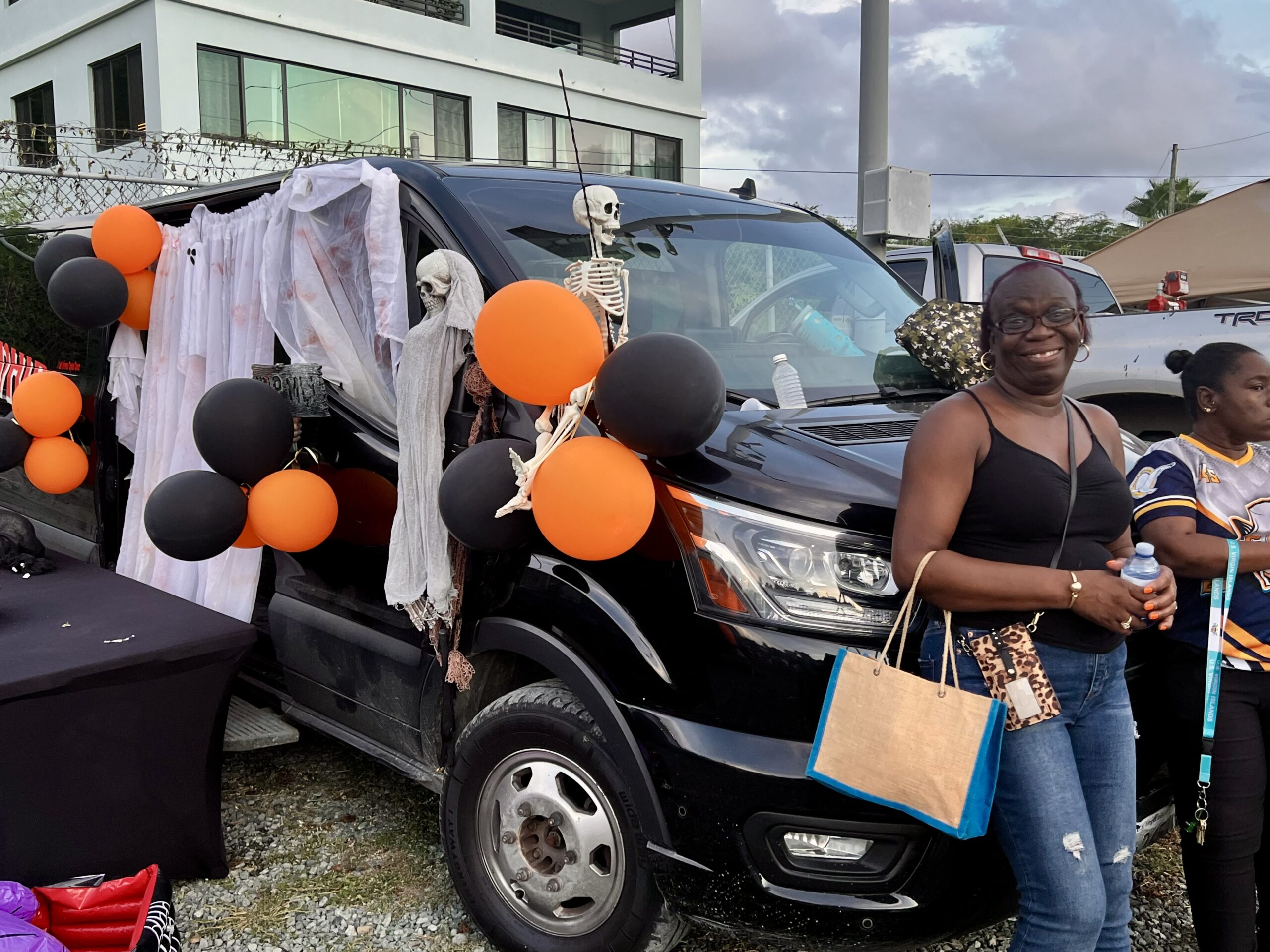
Recently-retired teacher Lucille Parsons took a moment to rest on Dawn Samuel’s black taxi, IslandVybz Whipz, decorated at its Halloween best.
(Source photo by Amy H. Roberts)
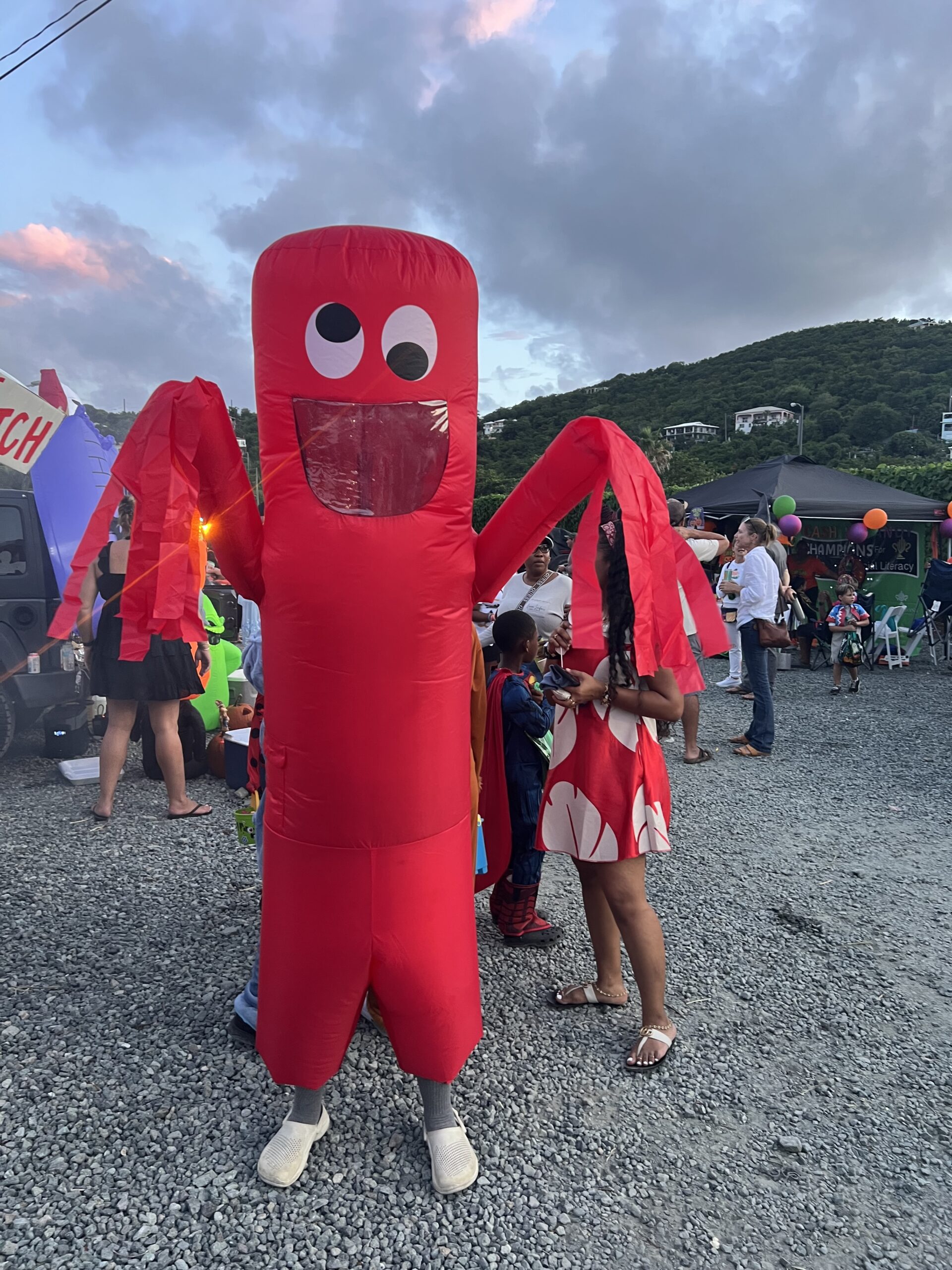
This trick-or-treater had to get pumped up for Trunk-or-Treat.
(Source photo by Amy H. Roberts)
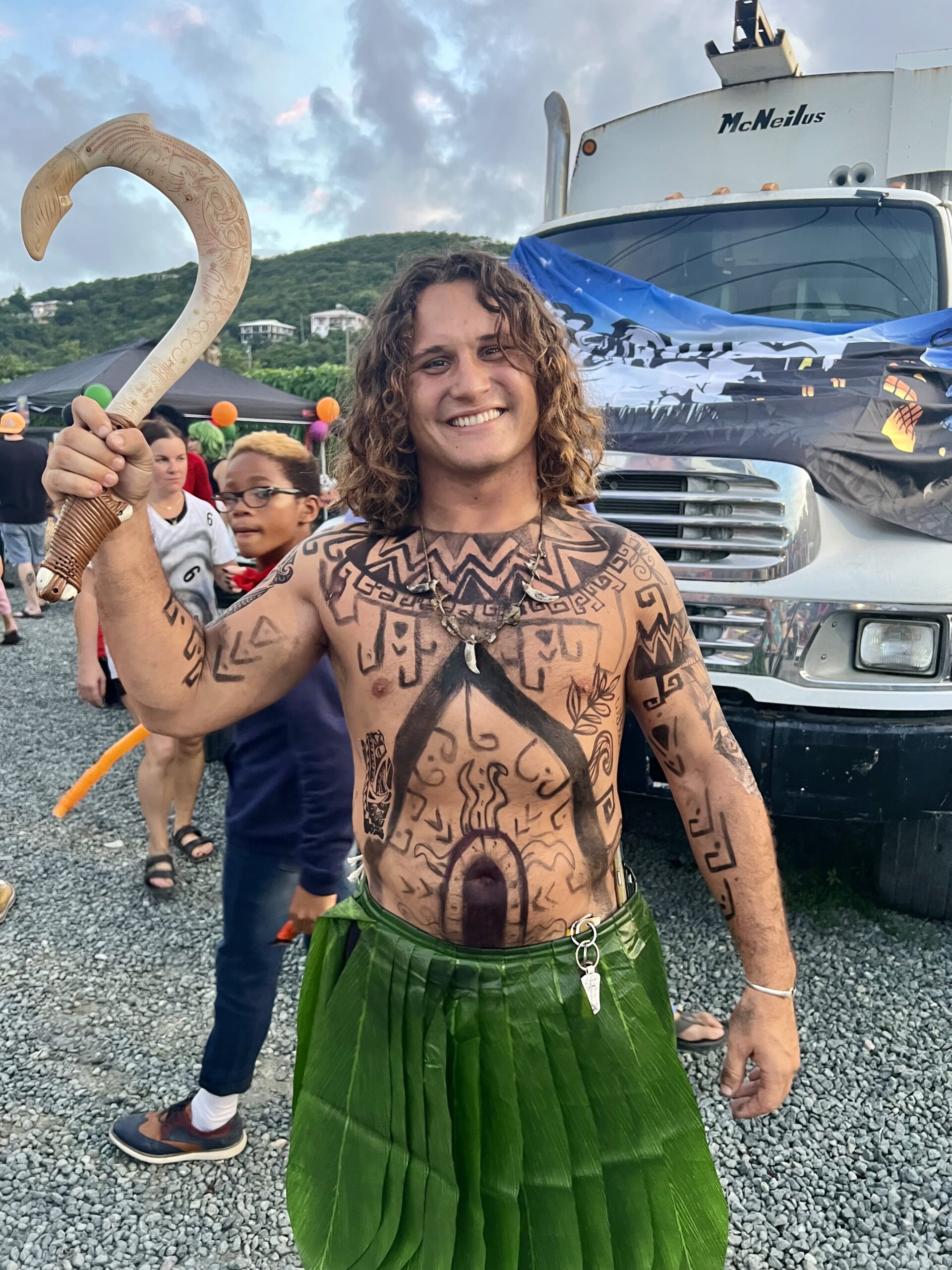
Bo Ransom was also pumped up. His body paint was the work of three female friends.
(Source photo by Amy H. Roberts)
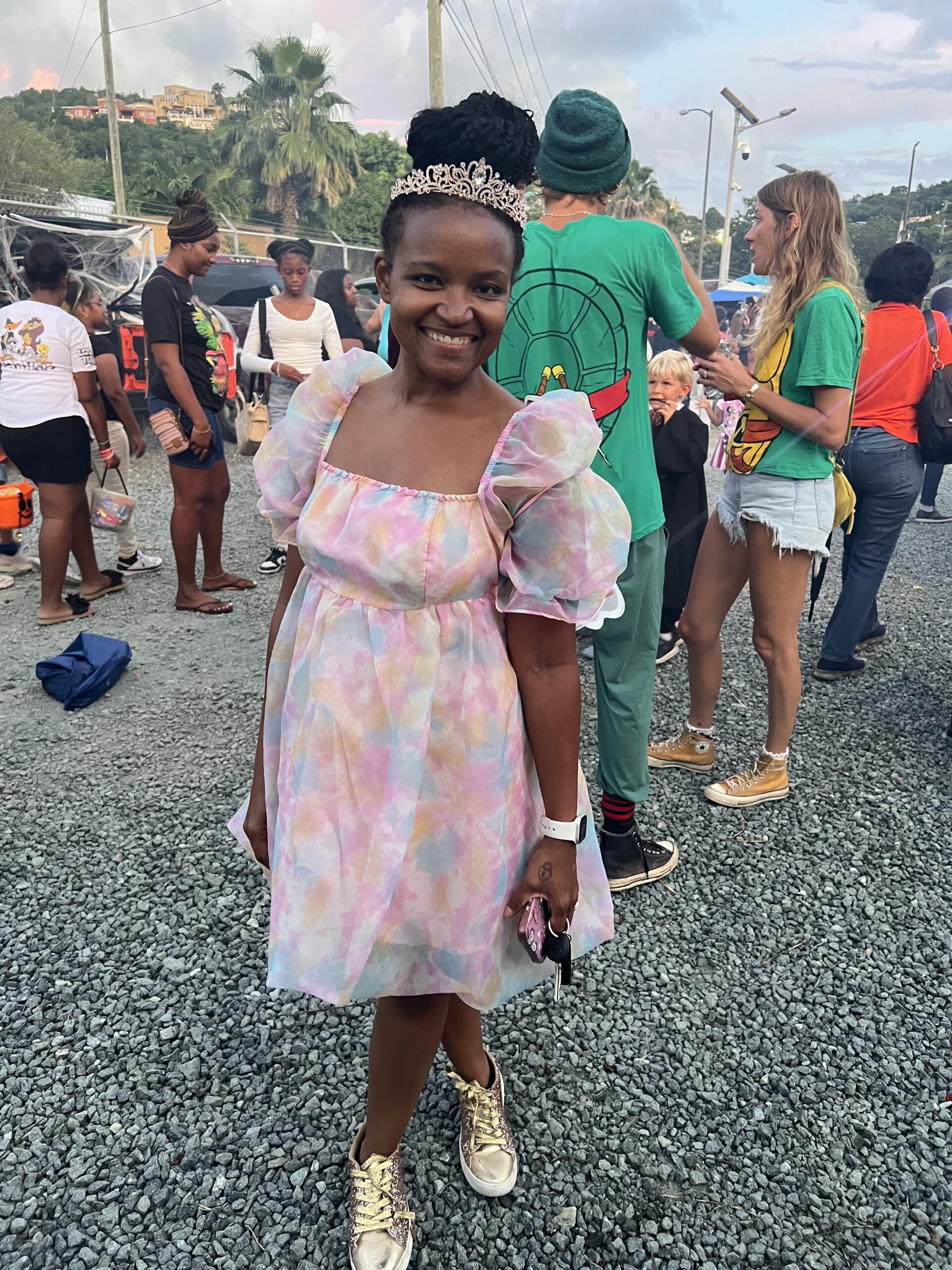
St. John School of the Arts director Jeune’ Provost almost passed as a little princess.
(Source photo by Amy H. Roberts)
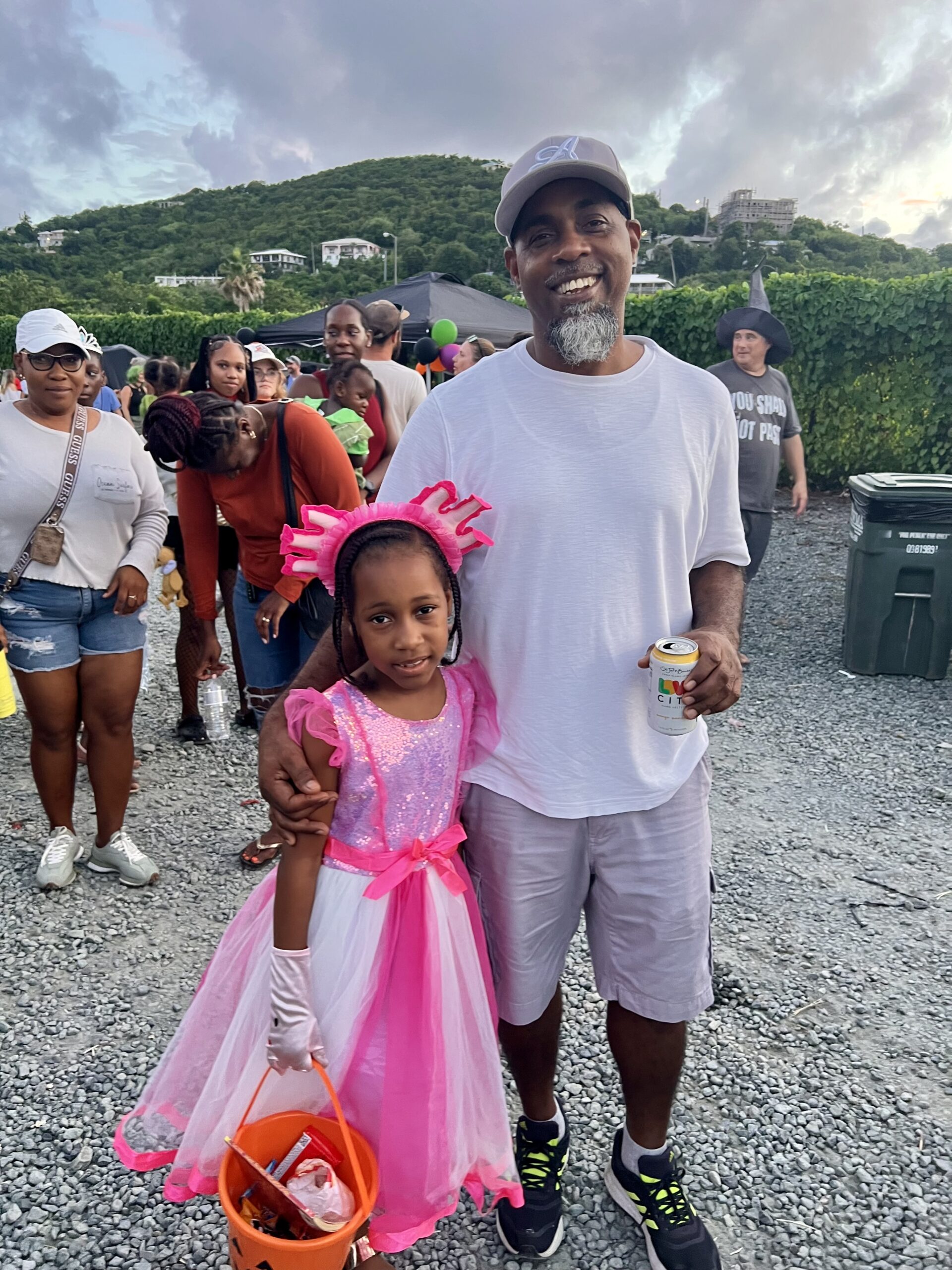
Meanwhile, she had some competition from some real princesses, including Nailah Cazaubon, who was escorted by her dad, Edward.
(Source photo by Amy H. Roberts)
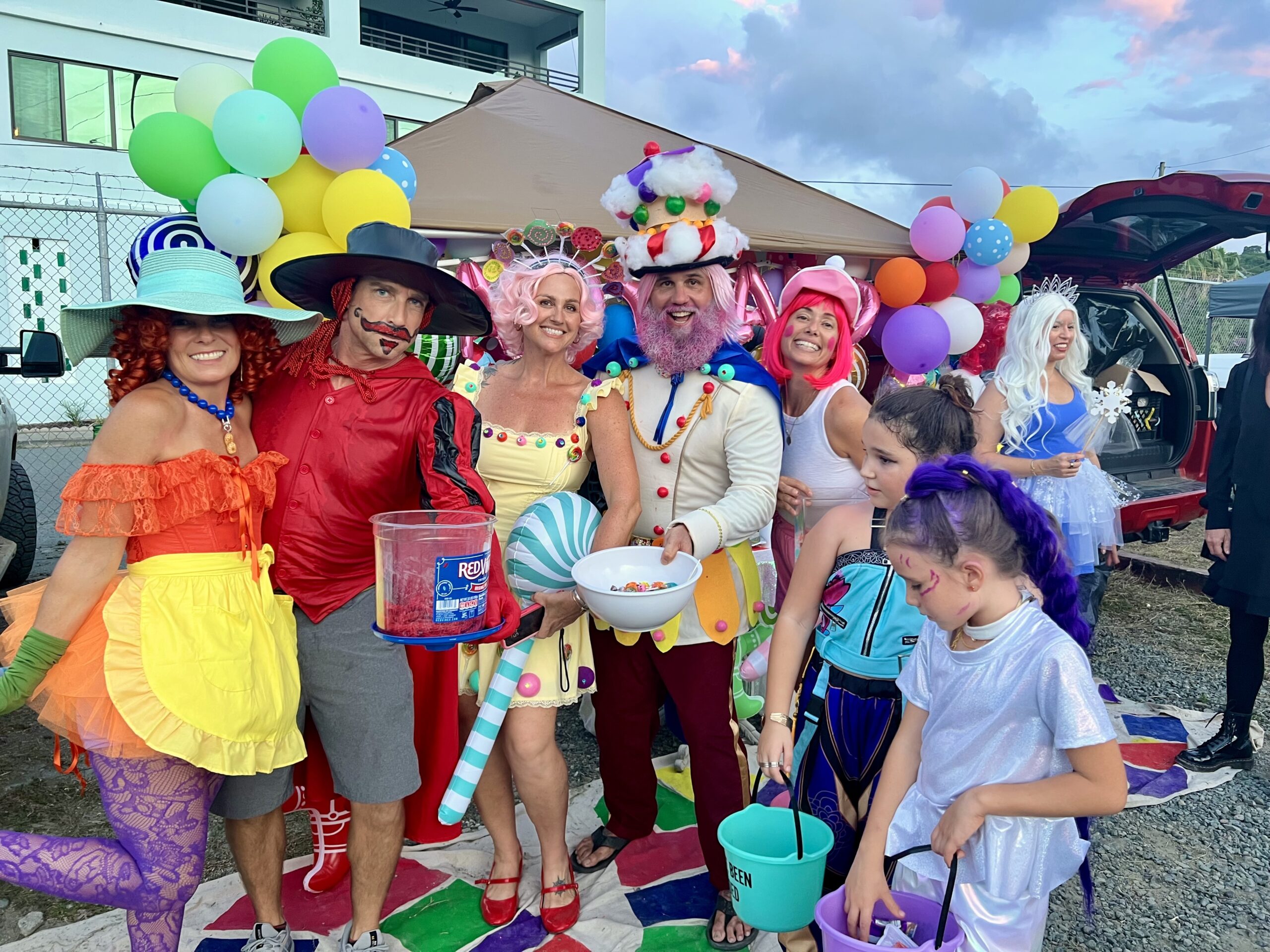
The adult crew from “We Are Candyland” had as much fun dressing up as the kids.
(Source photo by Amy H. Roberts)
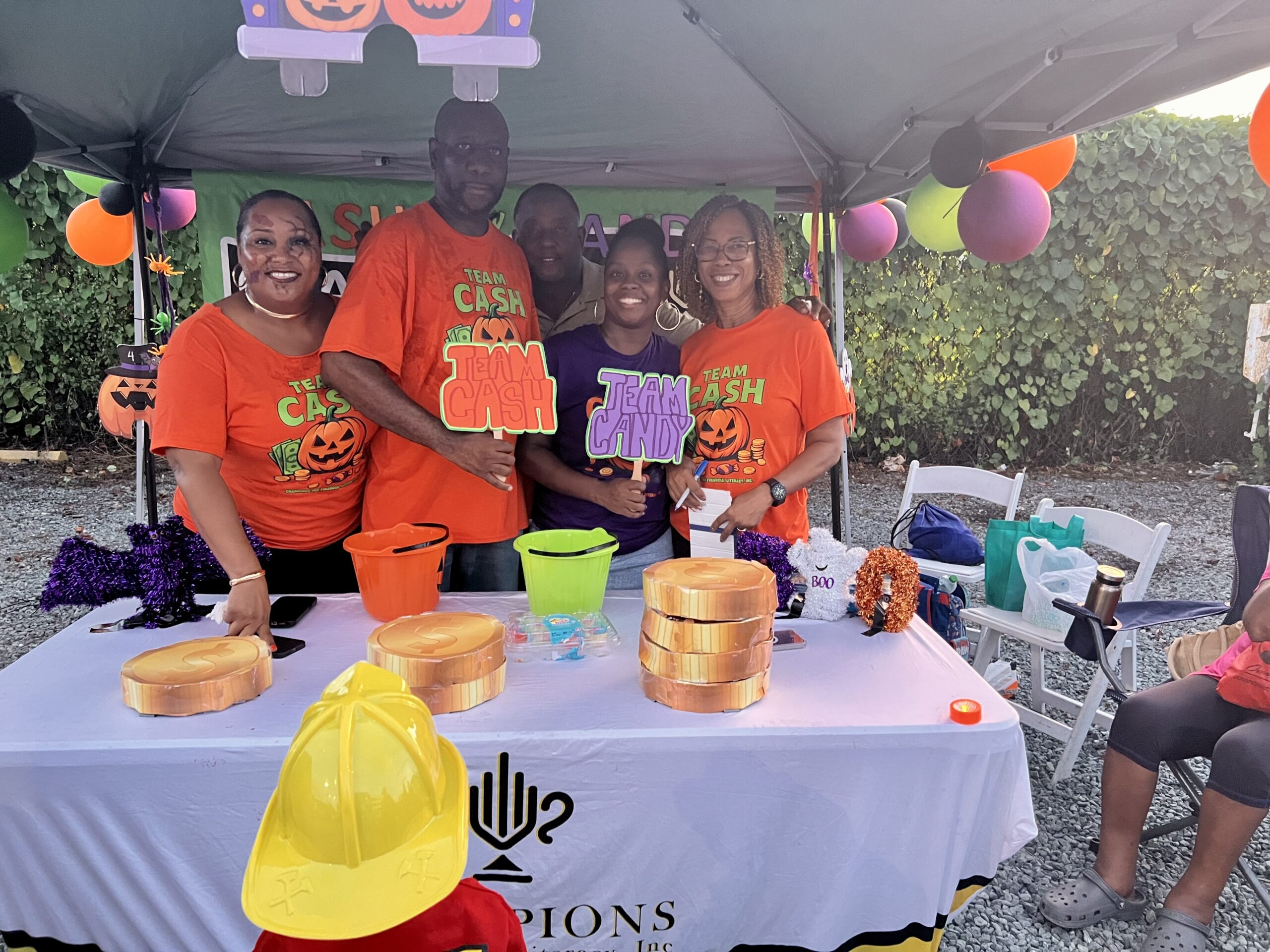
The Champions for Financial Literacy (founded by educator Racquel Berry-Benjamin) invited youngsters to consider the value of candy versus cash. From left, Racquel Berry-Benjamin, Ivan Williams, David Marsh, Deitra Powell, Lisa Penn.
(Source photo by Amy H. Roberts)
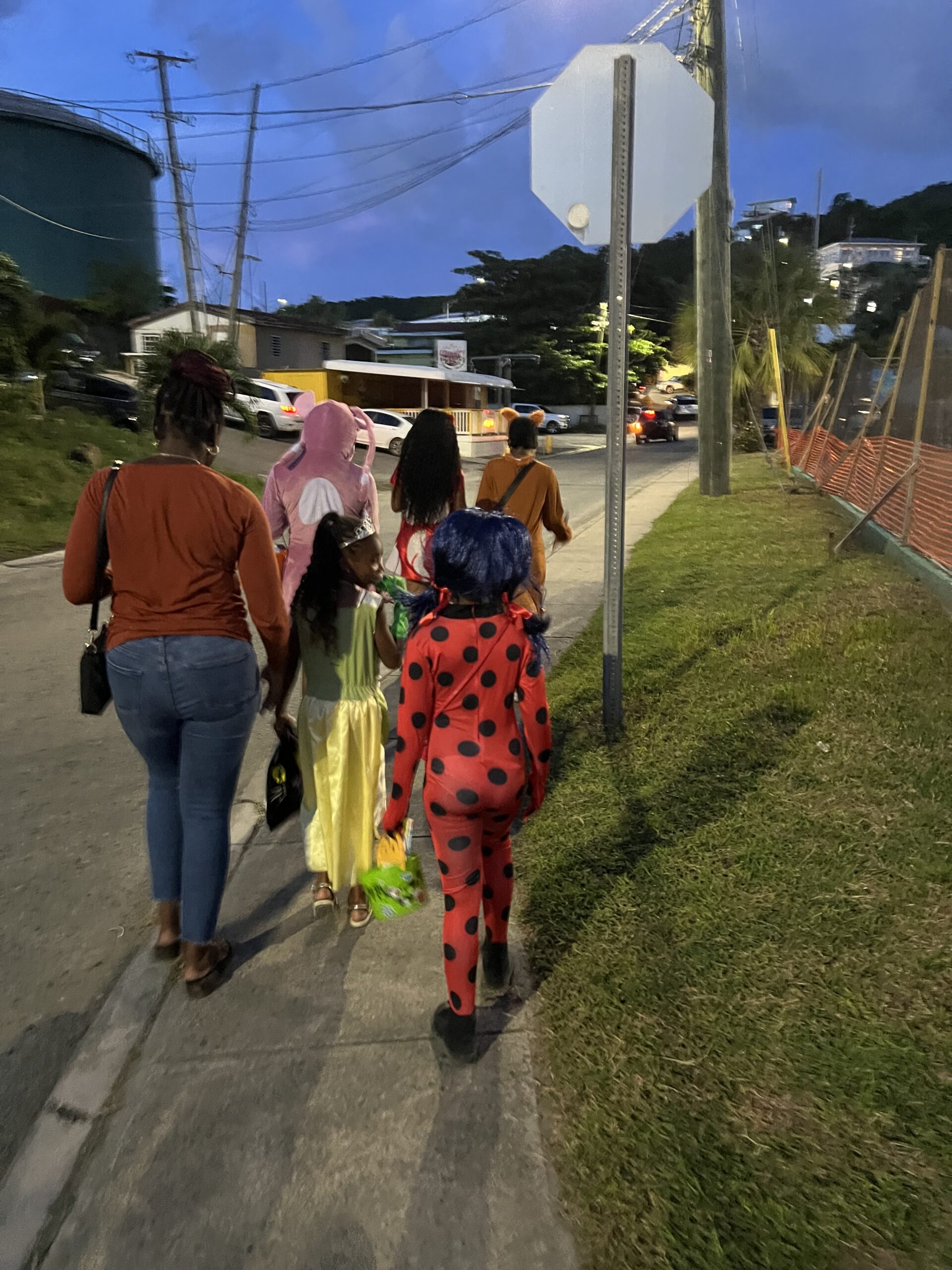
After a hard afternoon of collecting candy, trick-or-treaters headed home.
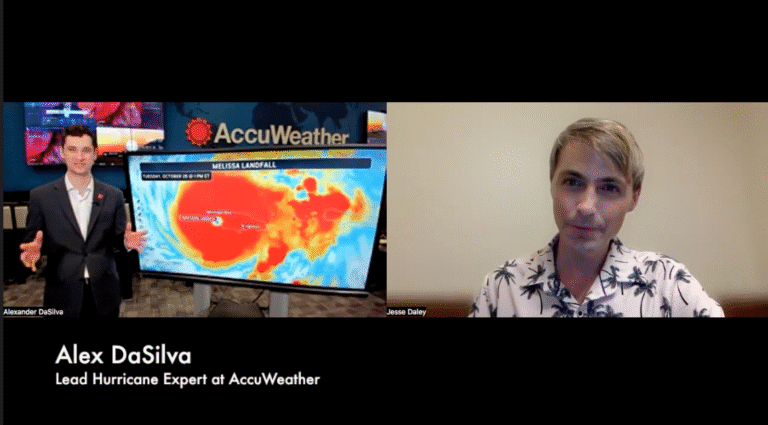
In an exclusive video interview with the VI Source, Alex DaSilva lead hurricane expert at AccuWeather, joins reporter Jesse Daley to discuss key events from the 2025 Atlantic hurricane season, which officially ends on Nov. 30. DaSilva highlights major systems such as Hurricane Melissa, explains the atmospheric patterns that shaped the season, and shares what residents across the Caribbean and U.S. East Coast can expect through the final weeks of hurricane season.





 In her biweekly column, “State of the Territory,” former Sen. Janelle K. Sarauw delves deeper into issues of concern for V.I. residents.
If the Legislature is the people’s house, the Executive the hands and feet, and the Judiciary the conscience, then the Delegate to Congress is the voice of the Virgin Islands in the nation’s capital. It is a role born out of compromise, shaped by colonial status, and sustained by the determination of Virgin Islanders to be heard in the halls of American power.
The position of Delegate is not a local creation. It comes directly from federal law, specifically the Revised Organic Act of 1954, which was amended by Congress in 1972 to authorize the Virgin Islands to elect a non-voting Delegate to the United States House of Representatives. The details are codified in Title 48 of the United States Code, Chapter 16, sections 1711 through 1715. These provisions spell out the role: how the office is elected, the length of the term, privileges in the House, and the Delegate’s ability to serve on committees, speak on the floor, and introduce bills, but not cast final votes. The Virgin Islands Code does not create or define the Delegate’s powers, because it is a federal office, not a territorial one. The Code only governs the mechanics of how we elect the Delegate, but not what the Delegate does once sworn into Congress.
The seat itself is relatively young in American political history. In 1972, Congress amended the Revised Organic Act to create the office, and later that year Virgin Islanders held their first election. Ron de Lugo became the inaugural Delegate to Congress in 1973, bringing the Virgin Islands a formal presence in Washington for the first time. From that moment forward, Virgin Islanders finally had an elected voice in Congress, even if it was a limited one. Through the 1980s, 1990s, and into the present, the office has matured into a critical link between the territory and the federal government.
Each Delegate has used committee assignments to push Virgin Islands priorities. Ron de Lugo served on the Interior and Insular Affairs Committee, where he was able to advocate for territorial issues such as infrastructure and natural resources. Donna Christian Christensen sat on the influential Energy and Commerce Committee, where she shaped national health policy and worked to secure parity for Virgin Islanders in Medicare and Medicaid. Stacey Plaskett has served on both the Ways and Means Committee, which oversees taxation and trade, and the House Agriculture Committee, where she has fought for programs that support farmers and rural communities in the territory. These assignments reflect the quiet but critical influence that Delegates can wield, even without a final floor vote, because much of the real work of Congress happens in committees.
This makes the office both powerful and powerless at the same time. Powerful, because the Delegate is the official bridge between the Virgin Islands and the federal government, with the ability to introduce bills, negotiate with colleagues, and secure federal funding. Powerless, because when history is written in votes on the House floor, our Delegate cannot cast a binding vote. The paradox is a reminder that the Virgin Islands is not a state but an unincorporated territory, subject to the authority of Congress yet without full representation in it.
The role is also unique because the Delegate wears two hats. At home, Virgin Islanders often view the office as a kind of fourth branch of government, holding town halls, addressing constituent concerns, and explaining federal law. In Washington, the Delegate joins a small coalition of territorial representatives from Puerto Rico, Guam, American Samoa, and the Northern Mariana Islands who push together for greater equity. Few political roles in America demand such constant translation between local needs and federal realities.
Still, the position is often misunderstood. Many Virgin Islanders expect the Delegate to wield the power of a full voting member of Congress, able to deliver sweeping reforms or guarantee specific outcomes. In truth, the Delegate’s influence lies in advocacy, coalition building, and persistence, not in final votes. Expecting the Delegate to deliver state level results is like asking a coach to win the game without being allowed on the field. The coach can draw up the plays, rally the team, and argue with the referees, but someone else has the ball when the score is tallied.
The Delegate’s role also highlights the unfinished business of democracy in the Virgin Islands. More than a century after transfer from Denmark, Virgin Islanders are United States citizens who can fight in wars, pay federal taxes, and serve in federal service, but who cannot vote for president and whose voice in Congress is constrained. The office itself is a daily reminder of both progress and limitation. Progress in that we have a representative, limitation in that the representation is incomplete.
Yet the Delegate to Congress remains indispensable. Without a seat in Washington, the Virgin Islands would be voiceless in federal debates that shape our daily lives. With it, we have a platform, a messenger, and an advocate who can carry our stories, our struggles, and our aspirations into the halls of Congress. A voice without a vote is like a singer without a microphone. You can still hear the tune, but not at full volume. Until full equality is achieved, the role of the Delegate will remain both a symbol of our persistence and a measure of our unfinished fight for self-determination.
Editor’s Note: Opinion articles do not represent the views of the Virgin Islands Source newsroom and are the sole expressed opinion of the writer. Submissions can be made to visource@gmail.com.
Editor’s Note: Opinion articles do not represent the views of the Virgin Islands Source newsroom and are the sole expressed opinion of the writer. Submissions can be made to visource@gmail.com.
Related Links:
Op-Ed: State of the Territory | The People’s House: Understanding the Role of the Virgin Islands Legislature
Op-Ed: State of the Territory | The Executive Branch: Governing at the Front Lines
Op-Ed: State of the Territory | The Lieutenant Governor: The Most Unique Office in American Government
Op-Ed: State of the Territory | The Judiciary: The Guardian of Justice
In her biweekly column, “State of the Territory,” former Sen. Janelle K. Sarauw delves deeper into issues of concern for V.I. residents.
If the Legislature is the people’s house, the Executive the hands and feet, and the Judiciary the conscience, then the Delegate to Congress is the voice of the Virgin Islands in the nation’s capital. It is a role born out of compromise, shaped by colonial status, and sustained by the determination of Virgin Islanders to be heard in the halls of American power.
The position of Delegate is not a local creation. It comes directly from federal law, specifically the Revised Organic Act of 1954, which was amended by Congress in 1972 to authorize the Virgin Islands to elect a non-voting Delegate to the United States House of Representatives. The details are codified in Title 48 of the United States Code, Chapter 16, sections 1711 through 1715. These provisions spell out the role: how the office is elected, the length of the term, privileges in the House, and the Delegate’s ability to serve on committees, speak on the floor, and introduce bills, but not cast final votes. The Virgin Islands Code does not create or define the Delegate’s powers, because it is a federal office, not a territorial one. The Code only governs the mechanics of how we elect the Delegate, but not what the Delegate does once sworn into Congress.
The seat itself is relatively young in American political history. In 1972, Congress amended the Revised Organic Act to create the office, and later that year Virgin Islanders held their first election. Ron de Lugo became the inaugural Delegate to Congress in 1973, bringing the Virgin Islands a formal presence in Washington for the first time. From that moment forward, Virgin Islanders finally had an elected voice in Congress, even if it was a limited one. Through the 1980s, 1990s, and into the present, the office has matured into a critical link between the territory and the federal government.
Each Delegate has used committee assignments to push Virgin Islands priorities. Ron de Lugo served on the Interior and Insular Affairs Committee, where he was able to advocate for territorial issues such as infrastructure and natural resources. Donna Christian Christensen sat on the influential Energy and Commerce Committee, where she shaped national health policy and worked to secure parity for Virgin Islanders in Medicare and Medicaid. Stacey Plaskett has served on both the Ways and Means Committee, which oversees taxation and trade, and the House Agriculture Committee, where she has fought for programs that support farmers and rural communities in the territory. These assignments reflect the quiet but critical influence that Delegates can wield, even without a final floor vote, because much of the real work of Congress happens in committees.
This makes the office both powerful and powerless at the same time. Powerful, because the Delegate is the official bridge between the Virgin Islands and the federal government, with the ability to introduce bills, negotiate with colleagues, and secure federal funding. Powerless, because when history is written in votes on the House floor, our Delegate cannot cast a binding vote. The paradox is a reminder that the Virgin Islands is not a state but an unincorporated territory, subject to the authority of Congress yet without full representation in it.
The role is also unique because the Delegate wears two hats. At home, Virgin Islanders often view the office as a kind of fourth branch of government, holding town halls, addressing constituent concerns, and explaining federal law. In Washington, the Delegate joins a small coalition of territorial representatives from Puerto Rico, Guam, American Samoa, and the Northern Mariana Islands who push together for greater equity. Few political roles in America demand such constant translation between local needs and federal realities.
Still, the position is often misunderstood. Many Virgin Islanders expect the Delegate to wield the power of a full voting member of Congress, able to deliver sweeping reforms or guarantee specific outcomes. In truth, the Delegate’s influence lies in advocacy, coalition building, and persistence, not in final votes. Expecting the Delegate to deliver state level results is like asking a coach to win the game without being allowed on the field. The coach can draw up the plays, rally the team, and argue with the referees, but someone else has the ball when the score is tallied.
The Delegate’s role also highlights the unfinished business of democracy in the Virgin Islands. More than a century after transfer from Denmark, Virgin Islanders are United States citizens who can fight in wars, pay federal taxes, and serve in federal service, but who cannot vote for president and whose voice in Congress is constrained. The office itself is a daily reminder of both progress and limitation. Progress in that we have a representative, limitation in that the representation is incomplete.
Yet the Delegate to Congress remains indispensable. Without a seat in Washington, the Virgin Islands would be voiceless in federal debates that shape our daily lives. With it, we have a platform, a messenger, and an advocate who can carry our stories, our struggles, and our aspirations into the halls of Congress. A voice without a vote is like a singer without a microphone. You can still hear the tune, but not at full volume. Until full equality is achieved, the role of the Delegate will remain both a symbol of our persistence and a measure of our unfinished fight for self-determination.
Editor’s Note: Opinion articles do not represent the views of the Virgin Islands Source newsroom and are the sole expressed opinion of the writer. Submissions can be made to visource@gmail.com.
Editor’s Note: Opinion articles do not represent the views of the Virgin Islands Source newsroom and are the sole expressed opinion of the writer. Submissions can be made to visource@gmail.com.
Related Links:
Op-Ed: State of the Territory | The People’s House: Understanding the Role of the Virgin Islands Legislature
Op-Ed: State of the Territory | The Executive Branch: Governing at the Front Lines
Op-Ed: State of the Territory | The Lieutenant Governor: The Most Unique Office in American Government
Op-Ed: State of the Territory | The Judiciary: The Guardian of Justice