



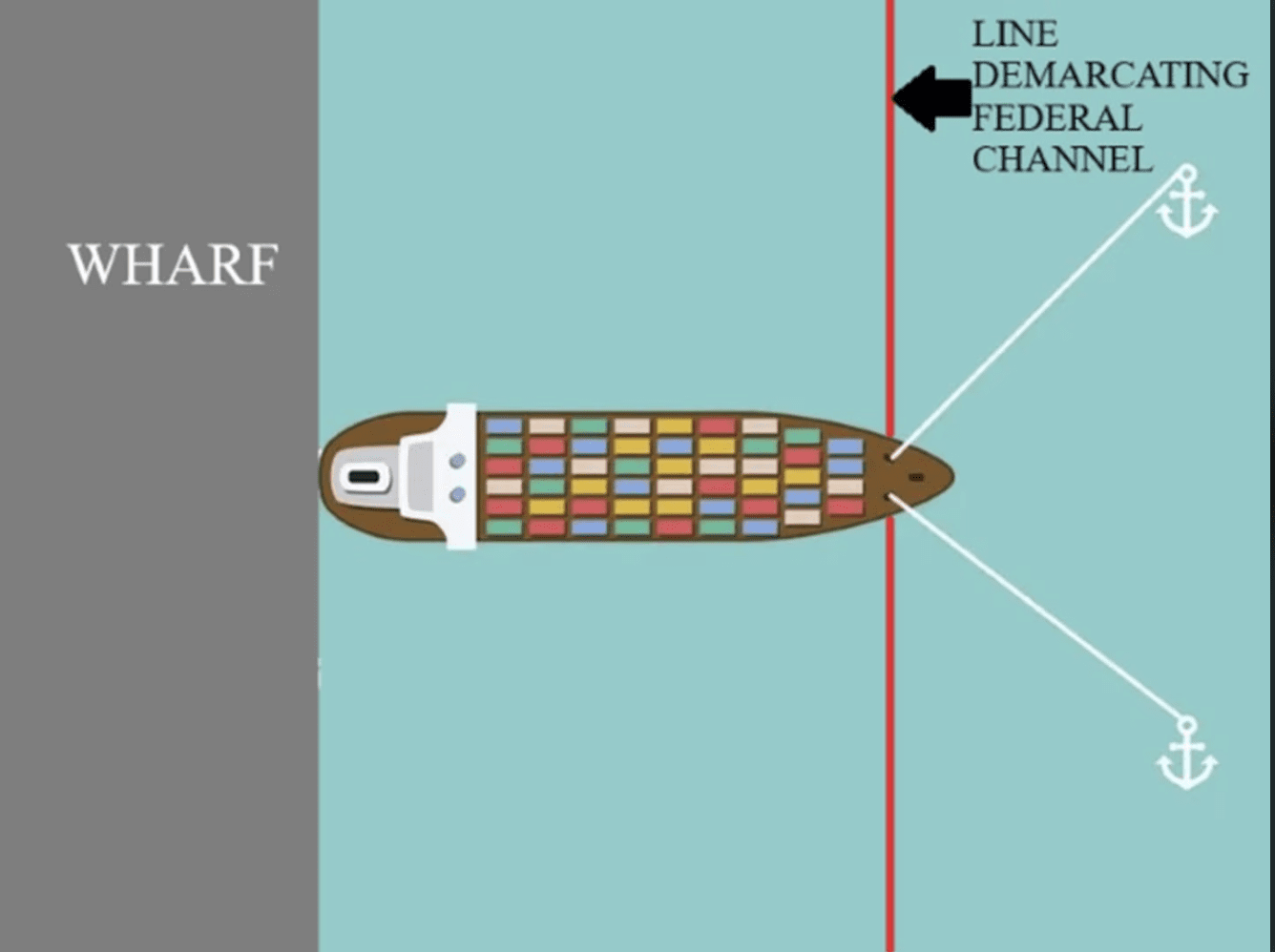
A diagram released by the Coast Guard shows the Water Spirit 2 stern-first against a wharf with two chains from its bow extending into the channel. (Photo courtesy U.S. Coast Guard)

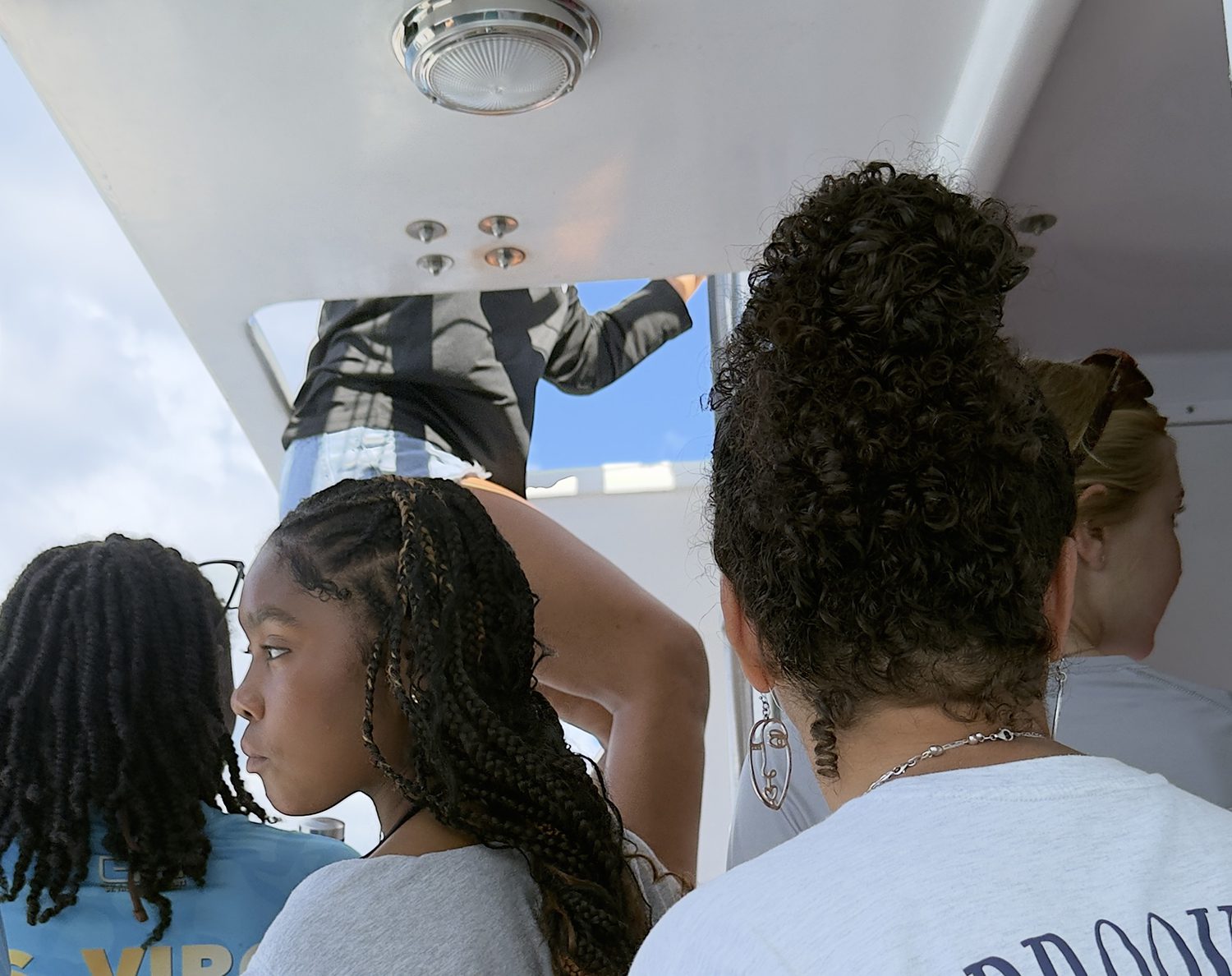
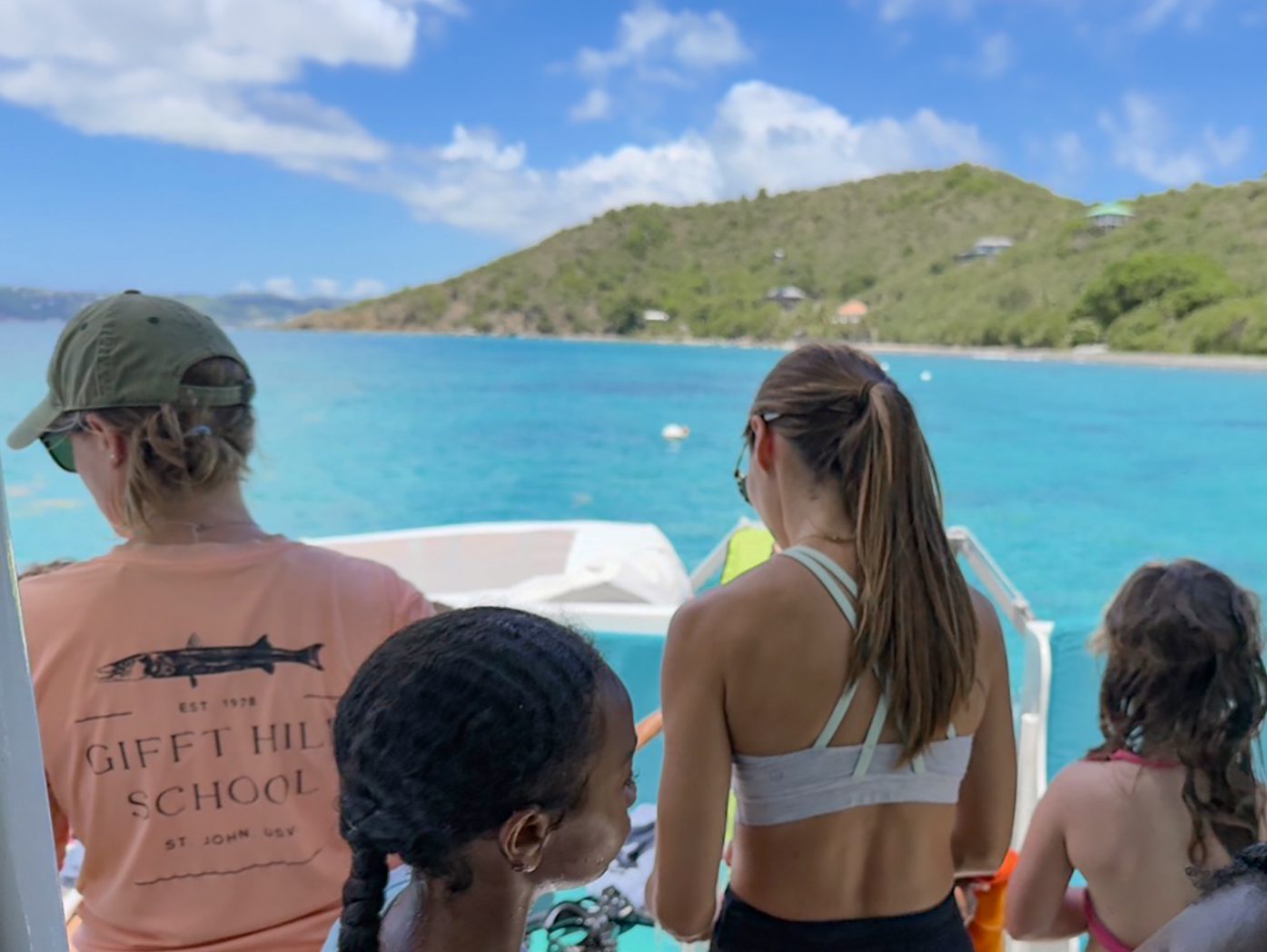
Students from Gifft Hill School’s third and ninth grades recently went out on a boat to look for nesting seabirds on some of the small islands north of St. John. The trip was sponsored by the V. I. Audubon Society as part of a bird study program designed to help build awareness about the wide variety of birds in the Virgin Islands, and the importance of protecting them.
At this time of year, many different seabirds come from around the Caribbean to the small offshore islands in this area so they can mate and nest in secluded spaces.
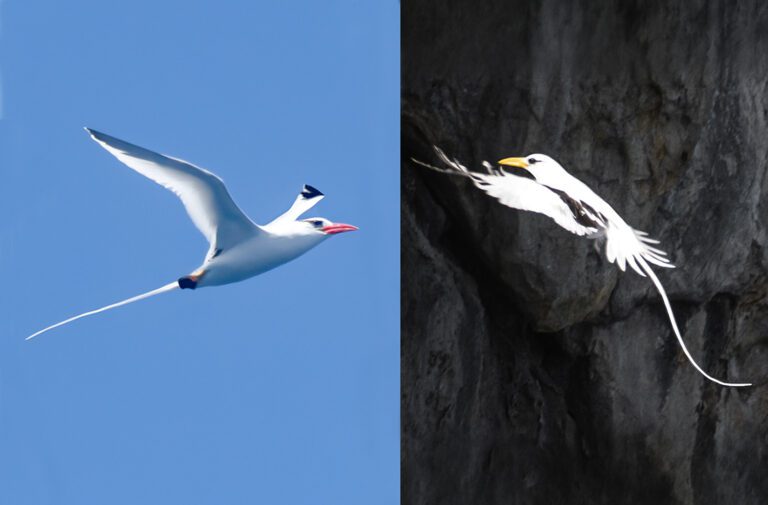
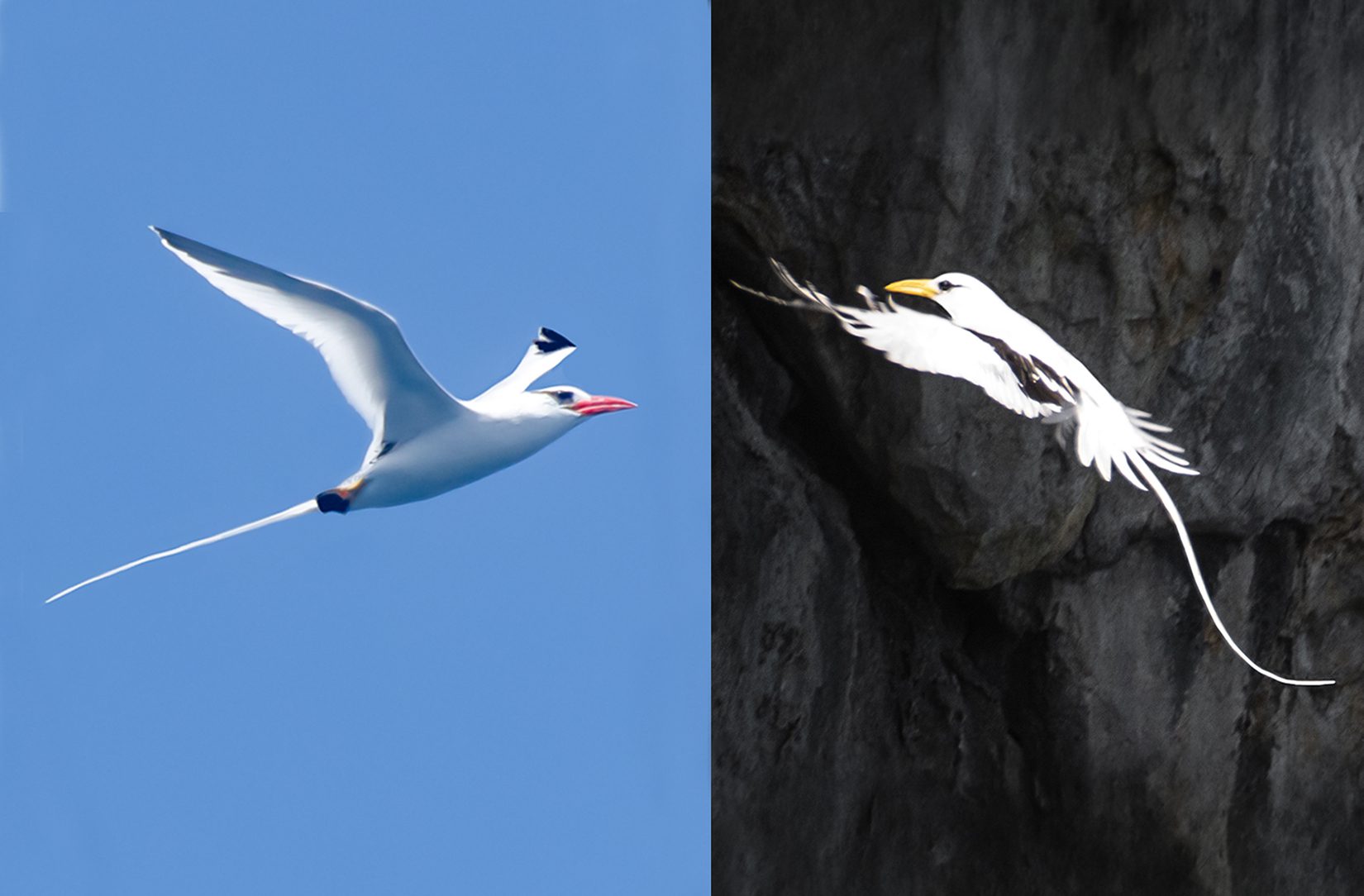
Heading northeast out of Cruz Bay, the students, and accompanying teachers and Audubon Society members, were quickly rewarded with views of a group of about ten White-billed Tropicbirds flying back and forth from nests on the cliffs at Congo Cay. There were also a few of the somewhat larger Red-billed Tropicbirds (17-20 inches compared to 14-15 inches for white-tailed ones).
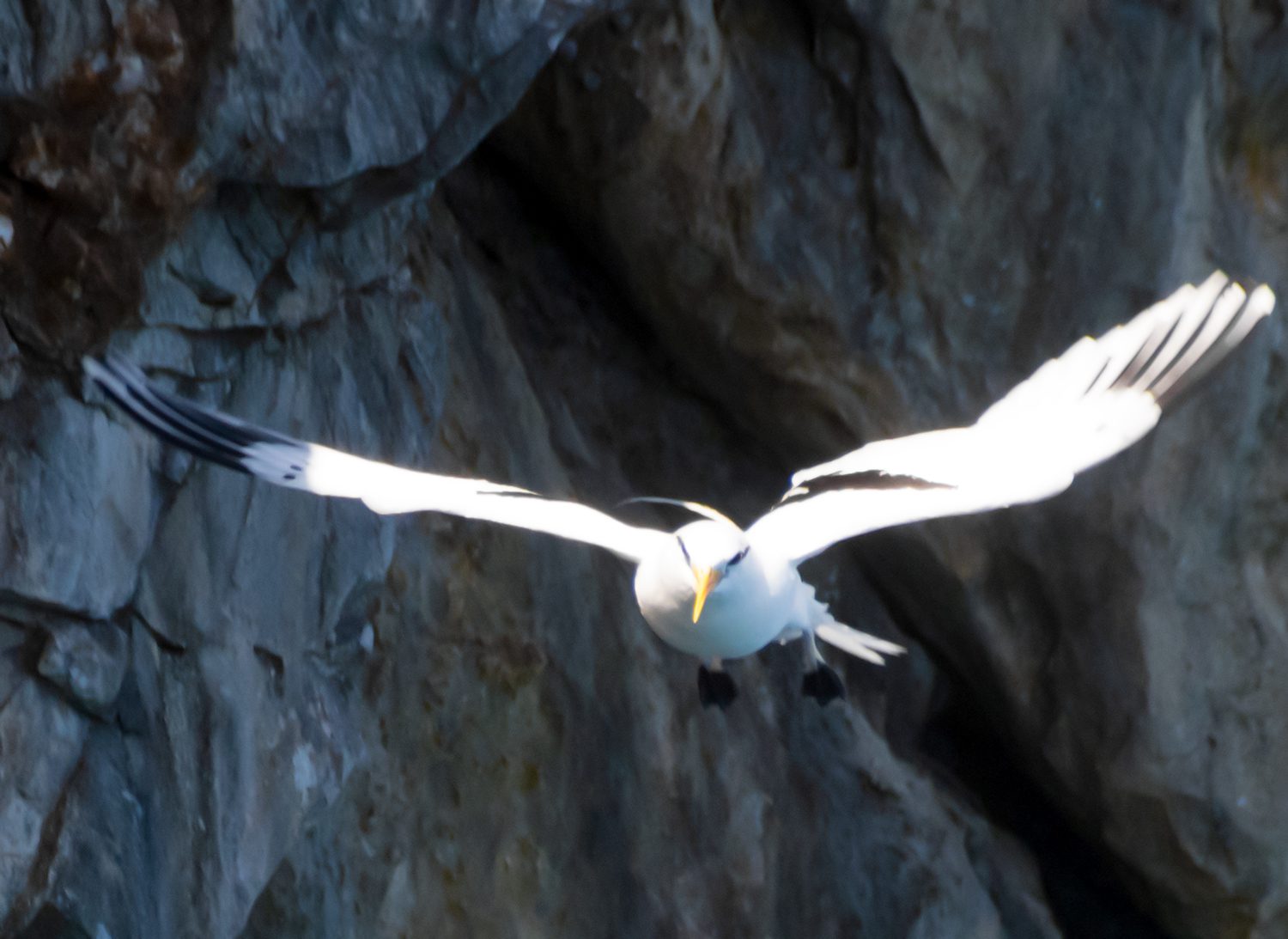
Tropicbirds are pelagic, which means they spend most of their time flying around over open water. The tropicbirds stay in warmer ocean areas, catching fish far from land, then resting on the surface of the water. They are usually alone or in pairs, not large flocks.
Sometimes sailors will see tropicbirds hovering over boats, maybe watching for fish that rise to the surface due to boat-related activity. They are rarely seen by people on land, though, and sometimes seem mythical to non-sailors.
However, since tropicbirds can’t nest out on the surface of the sea, they seek out isolated rocky cliffs when it is time to breed. They come together in small groups to find mates and make their nests, and then they are more easily visible. However, you generally still need a boat to go see them.
Tropicbird nesting is not limited to a specific month, but usually takes place at times when there are plenty of small fish available in the water nearby. I saw some nesting near Congo in December, and now others nesting in May.
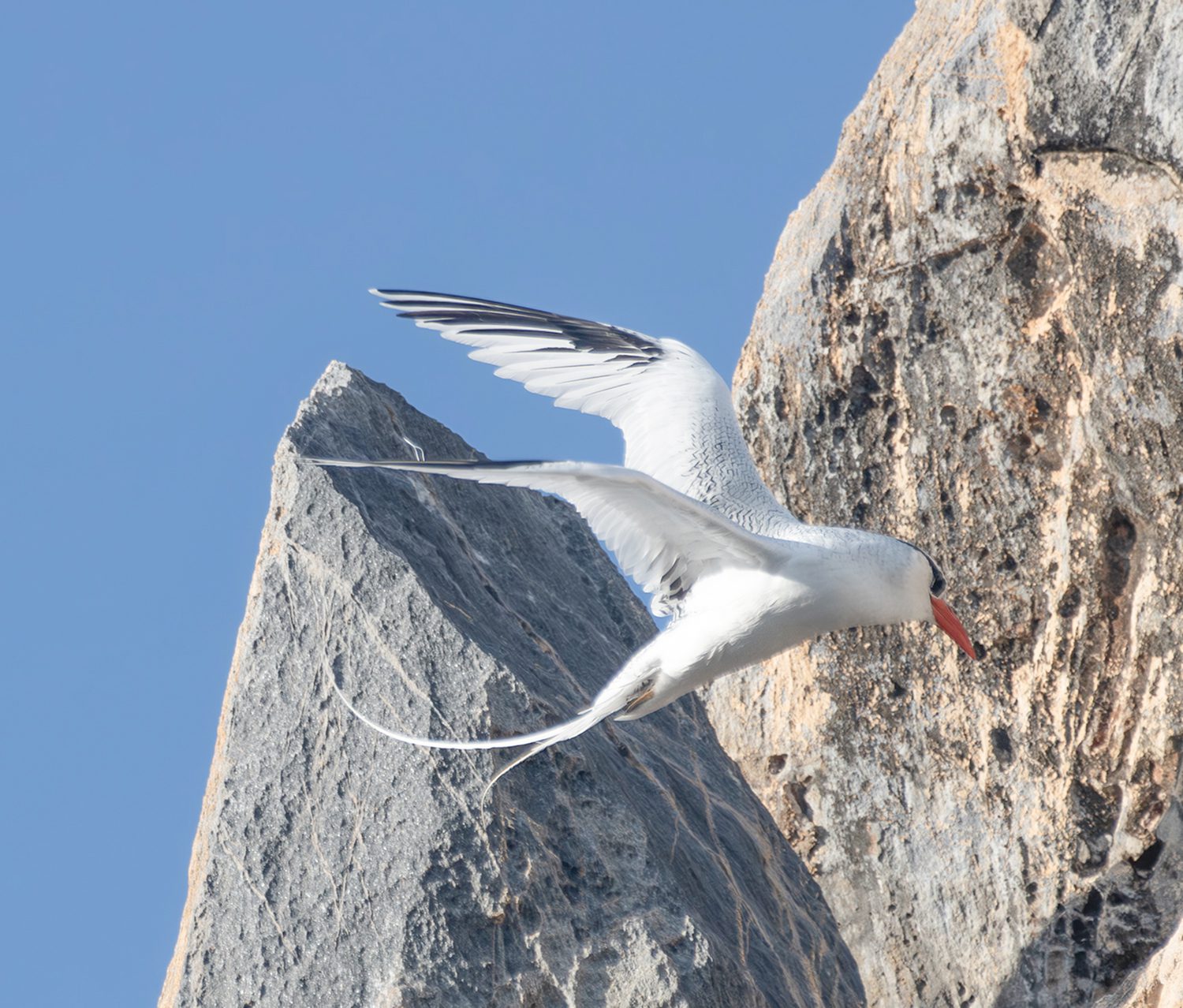
The tropicbirds’ long, white ribbon-like tails, or streamers, are lovely and most distinctive. Yet they don’t seem very practical. It turns out that, like many impressive bird traits, they are primarily designed to attract a mate. During courtship, the tropicbirds engage in aerial courtship displays, circling around each other and alluringly swinging their tails from side to side.
After the courtship and mating period, they find a spot on a rocky ledge, or in a crevice, for a minimalist nest. Invasive, non-native rats are now living on many of the offshore cays, and they will eat unprotected eggs, so the seabirds are now facing new dangers. The steepest, slippery cliff faces may be the safest.
There is usually only one tropicbird egg, and it is incubated mostly by the female. She sits with it for about six weeks while the male brings her food. When the chick hatches, both parents bring food for it as it grows. Then after about three months the chick is ready to leave the nest and start its pelagic, ocean wandering life.
Nearby, on the imposing cliffs of Carvel (or Carval) Rock, about 20 pairs of smaller Bridled Terns were nesting. These birds get their name from the dark lines reaching from their mouths to the backs of their heads, like a bridle used to control a riding horse. These terns are also pelagic and widespread in warm ocean waters. They tend to stay somewhat closer to shore than tropicbirds, though, and like to find something floating to sit on, like mats of the sargassum seaweed, rather than settling down right on top of the water.
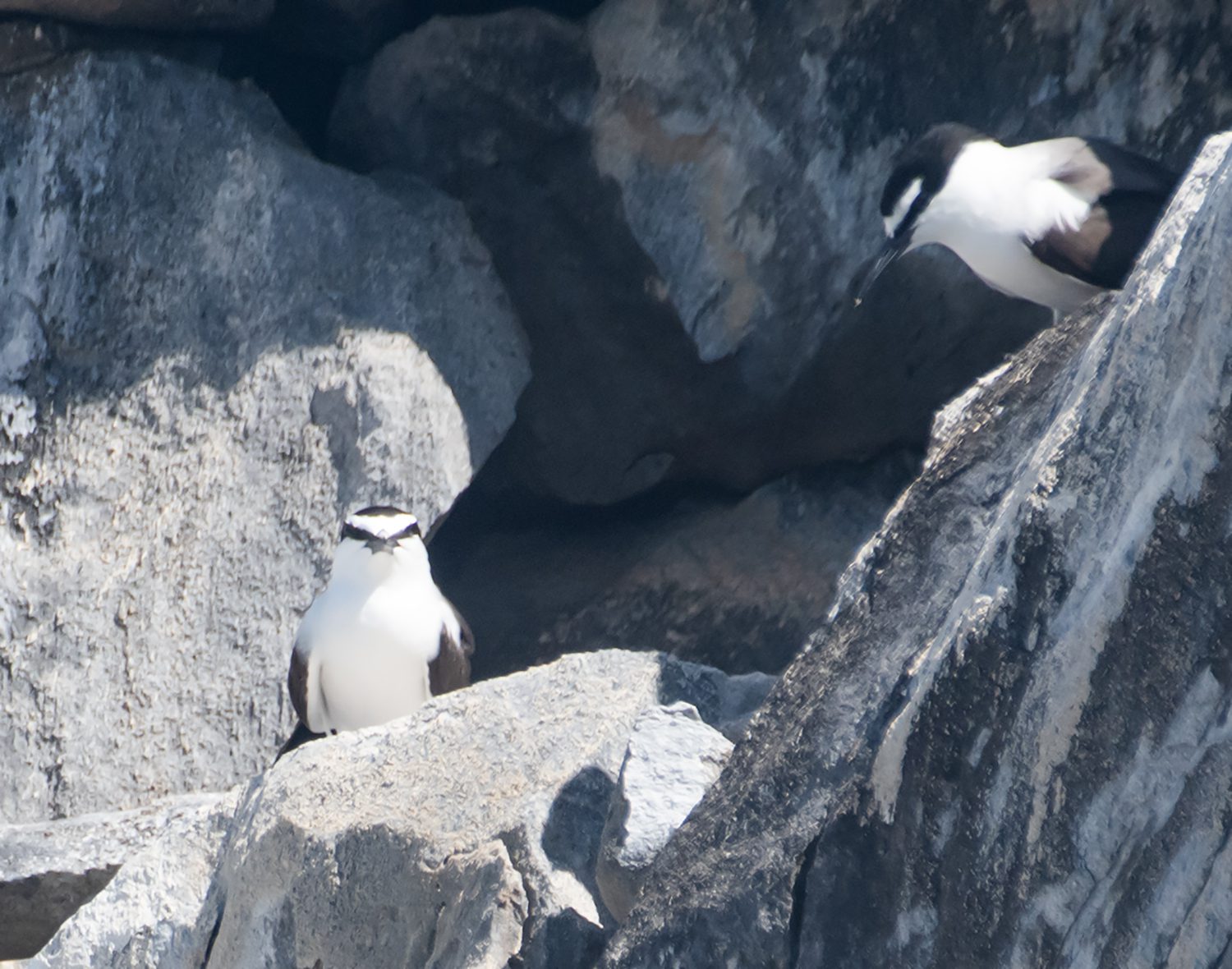
The bridled terns have longish forked tails, and their courtship involves some high flight displays, but their moves are not as dramatic as the tropicbirds. A male will fly by offering a fish to entice the females, and there is also a ground-level dance involving bowing and strutting.
The female will produce only one egg, and place it on or under a ledge, without building a substantial nest. Both parents will guard the egg, and then feed and protect the chick from predators, which seems like a strategy that increases the likelihood of its survival.
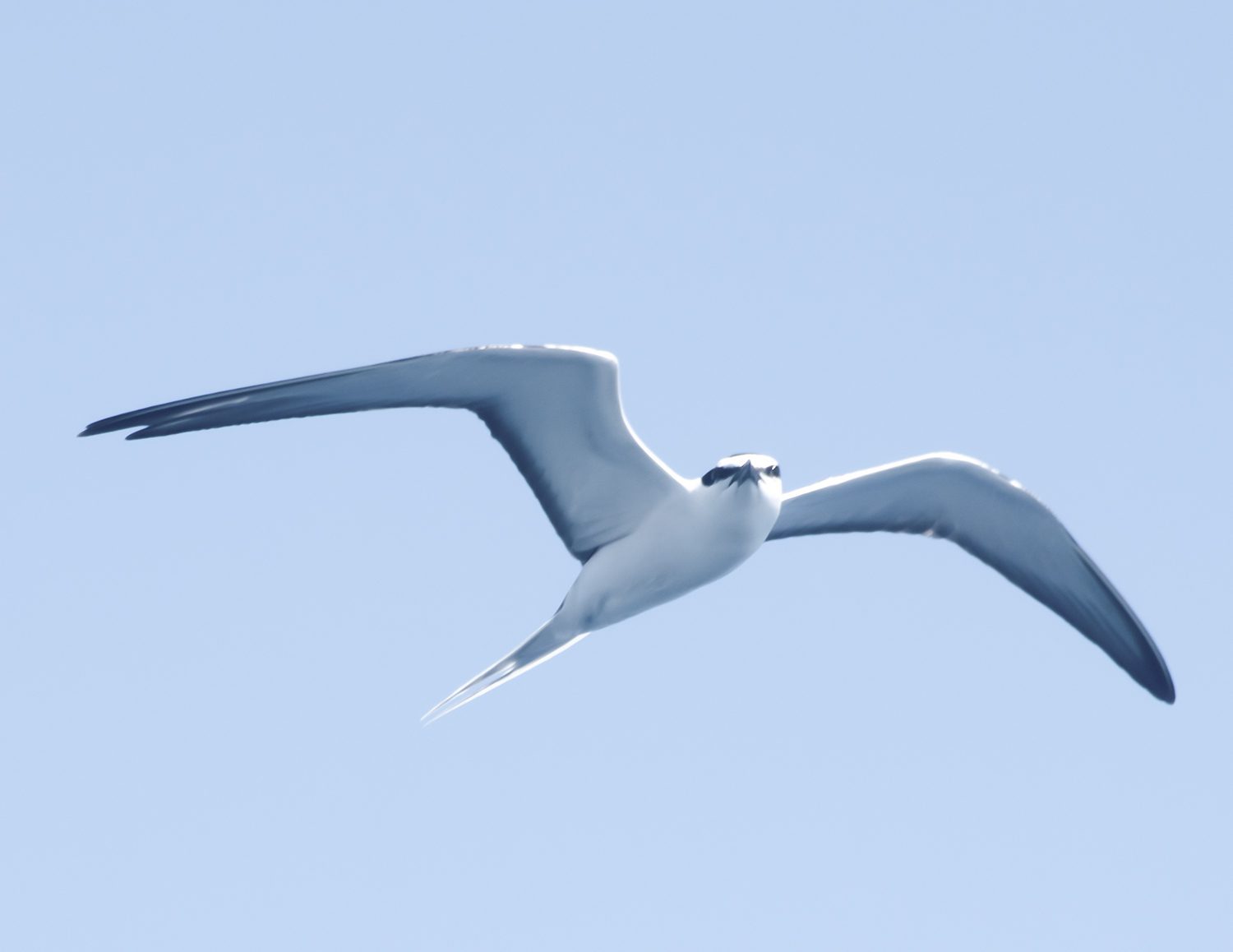
Laughing Gulls also come to some of the offshore islands in the Virgin Islands to nest during the summer, but they are not welcome near the terns. Gulls will eat the terns’ eggs or chicks if they get a chance, and will also chase adult terns and try to grab fish out of their mouths. The gulls also frequently gather in groups along the beaches, and will eagerly steal food from people as well.
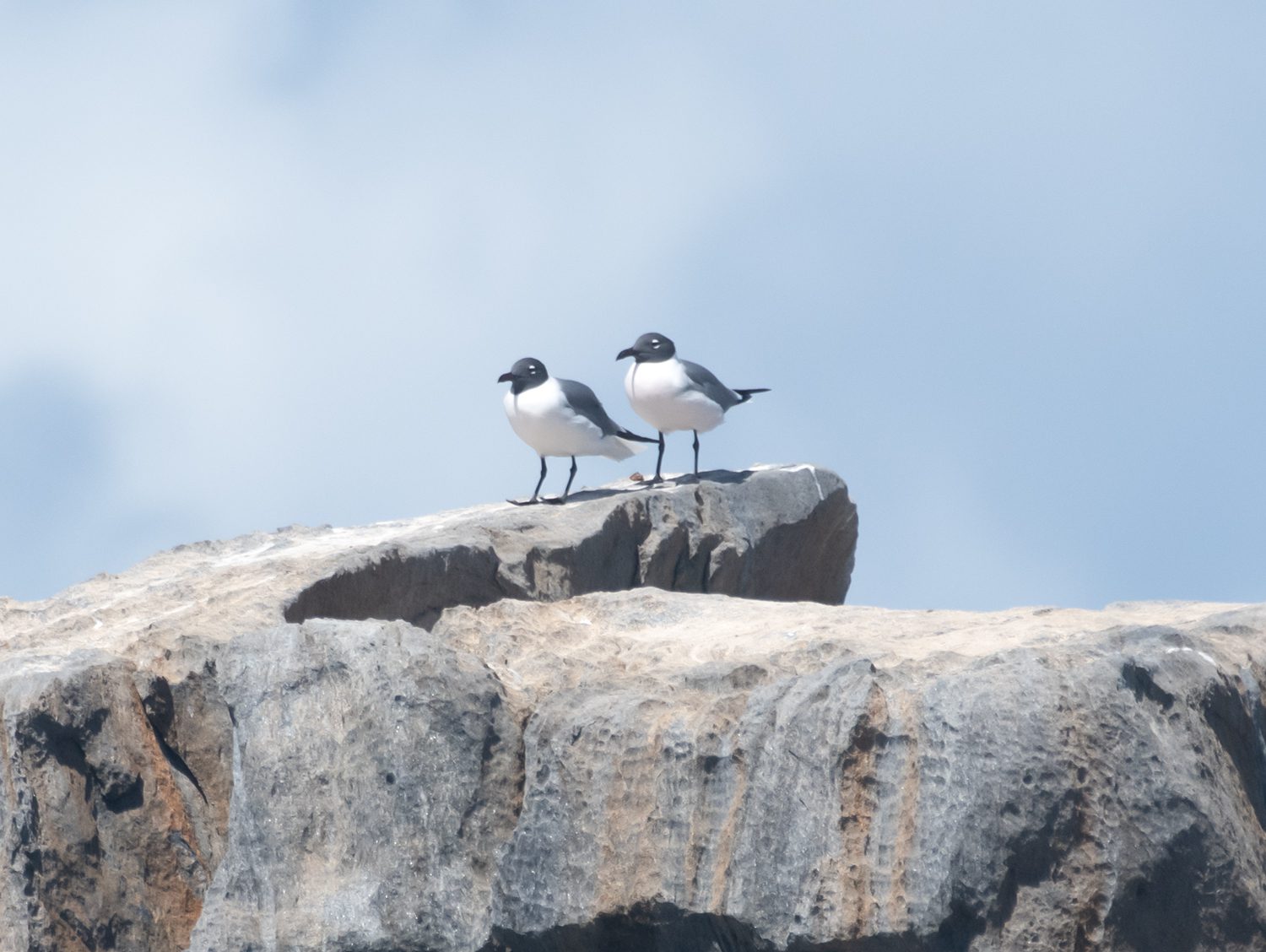
Royal Terns will also steal fish from other, smaller terns. They are more commonly visible from land as they like to sit on buoys in the harbor. They have black caps when breeding, and there are a few of them that nest in this area.
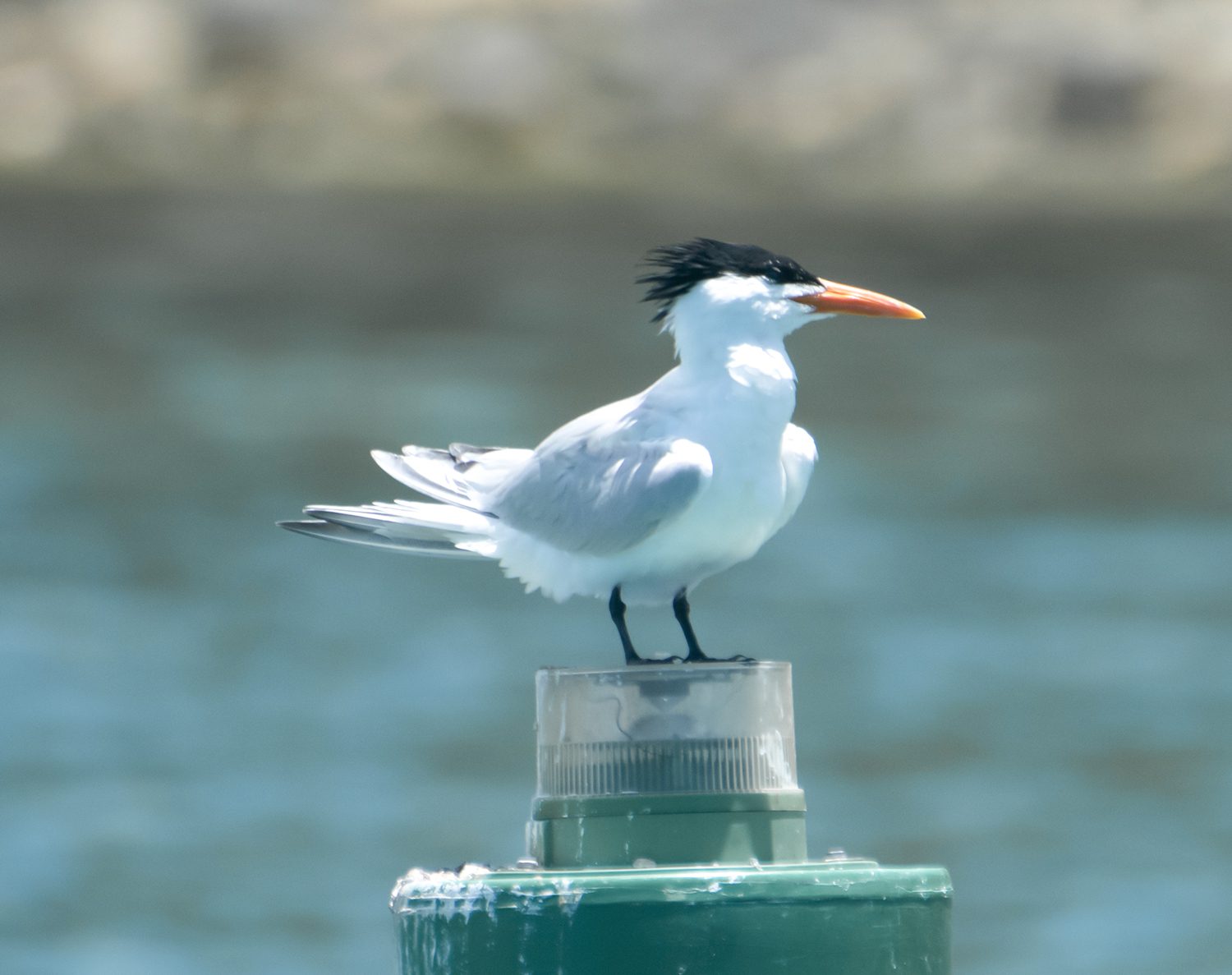
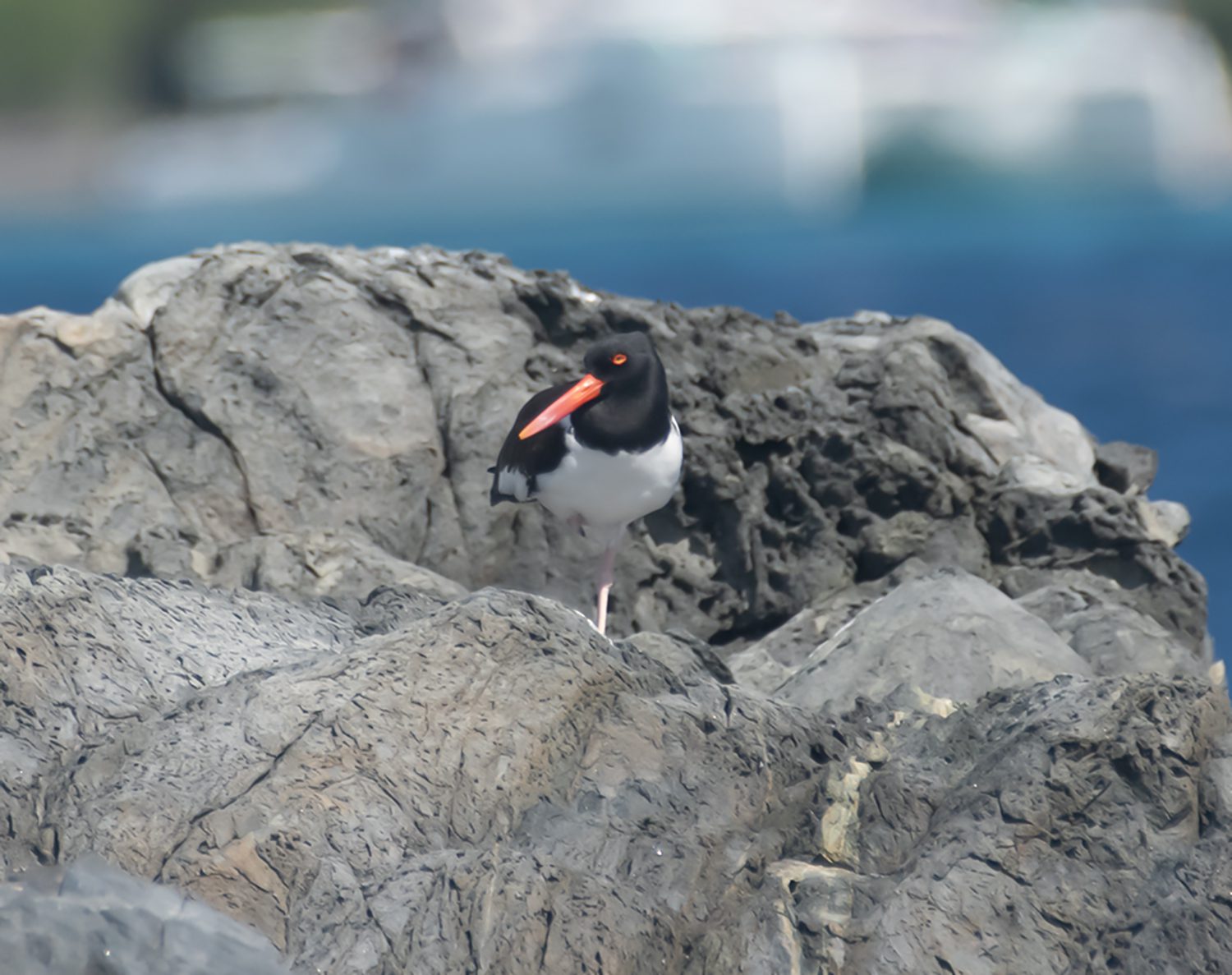
From the boat, we also saw a couple of Oystercatchers on Rata Cay between St. John and Lovango. Oystercatchers have long, carrot-like bills that give them a cartoonish appearance. They actually stay through the year in some areas in the Virgin Islands, and are almost always seen in pairs. They nest on beaches in remote parts of the larger islands, as well as on small cays close to shore. The parents will take turns sitting on the nest and bringing food, which often includes local whelks that they break open with their strong bills.
The students on the trip learned about the importance of preserving isolated offshore spaces for birds so they can continue to nest and reproduce, and be as free as possible from invasive predators and human disturbance. Because seabirds are not just fun to watch. Their widespread migrations, fishing, and nesting activities are critical for maintaining the health of our interconnected oceans, islands and sky.
At the end of the trip, the students also got to jump in the water off Lovango Cay to cool off and also take a look under the water with snorkels. A pretty great day.
Gail Karlsson is the author of a photo book Looking for Birds on St. John, as well as two other books about nature in the Virgin Islands –The Wild Life in an Island House, and Learning About Trees and Plants – A Project of the Unitarian Universalist Fellowship of St. John. Follow her on Instagram @gailkarlsson and gvkarlsson.blogspot.com. More info at gailkarlsson.com
IN THE SUPERIOR COURT OF THE VIRGIN ISLANDS DIVISION OF ST. THOMAS & ST. JOHN
| IRMA D. PEETS, Plaintiff, vs. INGRID SMITH, LANVILLE QUEELEY, BRIAN PEETS, SHAWNA DEFOUR (F/K/A SHAWNA PEETS), NADIA PEETS, AND PATRICIA PEETS, AND ALL PERSONS CLAIMING AN INTEREST IN PARCEL 394-109 ESTATE ANNA’S RETREAT (TUTU), NO. 1 QUARTER., ST. THOMAS, U.S. VIRGIN ISLANDS, Defendants. | Civil No. ST-2025-CV-00163 ACTION TO QUIET TITLE AND FOR ADVERSE POSSESSION |
IN THE SUPERIOR COURT OF THE VIRGIN ISLANDS DIVISION OF ST. THOMAS & ST. JOHN
| IRMA D. PEETS, Plaintiff, vs. INGRID SMITH, LANVILLE QUEELEY, BRIAN PEETS, SHAWNA DEFOUR (F/K/A SHAWNA PEETS), NADIA PEETS, AND PATRICIA PEETS, AND ALL PERSONS CLAIMING AN INTEREST IN PARCEL 394-109 ESTATE ANNA’S RETREAT (TUTU), NO. 1 QUARTER., ST. THOMAS, U.S. VIRGIN ISLANDS, Defendants. | Civil No. ST-2025-CV-00163 ACTION TO QUIET TITLE AND FOR ADVERSE POSSESSION |
Within the time limited by law (see note on the next page) you are hereby required to appear before this Court and to answer to a Complaint filed against you in this action. In case of your failure to appear or answer, judgment by default will be taken against you as demanded in the Complaint for damages.
Witness my hand and the seal of this Court on this 19th day of May, 2026. TAMARA CHARLES Clerk of the Court By: _________________________________ Deputy Clerk BARNES, D’AMOUR & VOGEL P.O. Box 10829 St. Thomas, VI 00801 Tel: (340) 774-8188 / Fax: 776-8664 /s/Gaylin Vogel Gaylin Vogel, Esq.; VI Bar No. 1077 gvogel@usvilawfirm.com Attorneys for PlaintiffNOTE: The Defendant, if served personally, is required to file his/her answer or other defense with the Clerk of the Court, and to serve a copy thereof upon the Plaintiff’s attorney within twenty (20) days after service of this summons, excluding the date of service. If served by publication or by personal service outside of the jurisdiction, the Defendant is required to file his/her answer or other defense with the Clerk of this Court, and to serve a copy thereof upon the attorney for the Plaintiffs within thirty (30) days after the completion of the period of publication or personal service outside of the jurisdiction.

NOTICE OF INTENT TO REQUEST RELEASE OF FUNDS
Program/Project Title: Electrical Power System Improvement/Distribution Automated Devices
Project Description: The Virgin Islands Water and Power Authority (VIWAPA) currently has limited isolation points and limited Distribution Automated (DA) devices. Consequently, the territory experiences a wide array of power outages that arise from system faults. The Distribution Automated (DA) Devices project aims to decrease the number and duration of outages across the territory by detecting and isolating faulted areas to allow quicker service restoration and optimize power flow. DA devices enable real time monitoring and control with minimal human interference. With the use of Supervisory Control and Data Acquisition (SCADA), the DA devices will be able to isolate and restore electrical service to customers during abrupt power outages. The proposed project includes the installation of thirty (30) DA devices across the territory to assist with localizing systems during power disruptions. DA device installation will include components such as brackets, reclosers, tie-switches, isolation switches and fault indicators. The maximum elevation/height of each existing pole will not be altered as a result of the proposed project. Although the installation will solely take place on the islands of St. Thomas, St. John, and St. Croix, the beneficiaries of the proposed project also includes residents in the Water Island district.
Location: Territory Wide – St. Thomas, St. Croix, St. John
Estimated Project Cost: The total HUD funding and estimated project cost is $1,500,000, fully funded by HUD through the Community Development Block Grant Disaster Recovery (CDBG-DR) – Electrical Power Systems Improvement (CDBG-EGRID) Program under Grant Number B-18-DE-78-0001.
| Grant Number | HUD Program | Funding Amount |
| B-17-DM-78-0001 | CDBG-EG | $1,500,000 |
| Law, Authority, or Factor | Mitigation Measure |
| Airport Hazards 24 CFR Part 51 Subpart D | – WAPA will adhere to all governmental requirements for construction works near airports, including but not limited to the filing of Form 7460-1 Notice of Proposed Construction or Alteration, prior to any construction works, as necessary – WAPA will not commence construction activities without the necessary approvals from the Federal Aviation Administration, through the approval of Form 7460-1 Notice of Proposed Construction or Alteration and all other subsequent information requests, as deemed applicable |
| Permitting | WAPA is required to obtain all necessary permits to implement the project where applicable. |
OBJECTIONS TO RELEASE OF FUNDS
HUD will accept objections to its release of fund and the Virgin Islands Housing Finance Authority certification for a period of fifteen days following the anticipated submission date or its actual receipt of the request (whichever is later) only if they are on one of the following bases: (a) the certification was not executed by the Certifying Officer of the Virgin Islands Housing Finance Authority; (b) the Virgin Islands Housing Finance Authority has omitted a step or failed to make a decision or finding required by HUD regulations at 24 CFR part 58; (c) the grant recipient or other participants in the development process have committed funds, incurred costs or undertaken activities not authorized by 24 CFR Part 58 before approval of a release of funds by HUD; or (d) another Federal agency acting pursuant to 40 CFR Part 1504 has submitted a written finding that the project is unsatisfactory from the standpoint of environmental quality. Objections must be prepared and submitted in accordance with the required procedures (24 CFR Part 58, Sec. 58.76) and shall be addressed to HUD at U.S. Department of Housing and Urban Development at HUD Caribbean Area Office, Region VI, 235 Federico Costa Street, Suite 200, Parque Las Américas I Building, San Juan, Puerto Rico, 00918. Potential objectors should contact HUD to verify the actual last day of the objection period. Sincerely, Dayna Clendinen Chief Operating Officer and Chief Disaster Recovery Officer Virgin Islands Housing Finance AuthorityAVISO DE INTENCIÓN DE SOLICITAR LA LIBERACIÓN DE FONDOS
El mayo 28, 2026 o o después, la Virgin Islands Housing Finance Authority presentará una
solicitud al Departamento de Vivienda y Desarrollo Urbano (HUD) en los Estados
Unidos para la liberación del fundos del Programa de Subvención en Bloque de Desarrollo Comunitario – Programa de Recuperación ante Desastres (Red Eléctrica) bajo el Título 1 de la Ley de Vivienda y Desarrollo Comunitario de 1974, (PL93-383), en su forma enmendada, para llevar a cabo:
Título del Programa/Proyecto: Electrical Power System Improvement/
Distribution Automated Devices
Project Description: La Autoridad de Agua y Energía de las Islas Vírgenes (VIWAPA) tiene actualmente puntos limitados de aislamiento y dispositivos automáticos de distribución (DA) limitados. En consecuencia, el territorio experimenta grandes cortes que surgen de fallos del sistema. El proyecto de dispositivos automatizados de distribución (DA) tiene como objetivo disminuir el número y la duración de las interrupciones en todo el territorio mediante la detección y el aislamiento de áreas con fallos para permitir una restauración más rápida del servicio y optimizar el flujo de energía. Los dispositivos DA permiten monitorear y controlar en tiempo real con una interferencia humana mínima. Con el uso del Control de Supervisión y Adquisición de Datos (SCADA), los dispositivos DA podrán aislar y restaurar el servicio eléctrico a los clientes durante cortes de energía bruscos. El proyecto propuesto incluye la instalación de treinta (30) dispositivos DA en todo el territorio para ayudar con la localización de sistemas durante interrupciones de energía. La instalación del dispositivo DA incluirá componentes como soportes, reconectadores, interruptores de conexión, interruptores de aislamiento e indicadores de falla. La elevación/altura máxima de cada poste existente no se modificará como resultado del proyecto propuesto. Aunque la instalación se llevará a cabo únicamente en las islas de Santo Tomás, San Juan y Santa Cruz, los beneficiarios del proyecto propuesto también incluyen residentes en el distrito de Water Island.
Ubicación: En todo el territorio – St. Thomas, St. Croix, St. John, US Virgin Islands
Costo Estimado del Proyecto: El total de la financiación del HUD y el costo estimado del proyecto es de $1,500,000, financiado en su totalidad por el HUD a través del Programa de Subvención en Bloque de Desarrollo Comunitario – Programa de Recuperación ante Desastres (CDBG-DR) – Programa de Mejora de los Sistemas Eléctricos de Energía (CDBG-EGRID) bajo la Subvención Número B-18-DE-78-0001.
| Número del Subsidio | Nombre del Proyecto | Programa de HUD | Funding Amount |
| B-17-DM-78-0001 | Distribution Automated Devices | CDBG-EG | $1,500,000 |
Las actividades propuestas están categóricamente excluidas bajo las regulaciones del HUD en el 24 CFR Parte 58 de los requisitos de la Ley Nacional de Política Ambiental (NEPA). Información adicional sobre el proyecto se encuentra en el Registro de Revisión Ambiental (ERR) en los archivos de la Virgin Islands Housing Finance Authority a 3202 Demarara Plaza, Suite 200, St. Thomas, VI 00802-6447, Atención Sra. Dayna Clendinen, Oficial de Operaciones y Oficial de Recuperación de Desastres o por correo electrónico a environmental@vihfa.gov. El ERR también puede ser examinado o copiado los días laborables de 8AM a 5PM.
Distribution Automated Devices debe cumplir con las siguientes medidas de mitigación para garantizar que se mantenga en regla con las normativas medioambientales de HUD y VIHFA.
| Ley, Autoridad, o Factor | Medida de Mitigación |
| Peligros en el Aeropuerto 24 CFR Part 51 Subparte D | – WAPA cumplirá con todos los requisitos gubernamentales para obras de construcción cerca de aeropuertos, incluyendo pero no limitado a la presentación del Formulario 7460-1 Aviso de Propuesta de Construcción o Alteración, antes de cualquier obra de construcción, según sea necesario. – WAPA no comenzará las actividades de construcción sin las aprobaciones necesarias de la Administración Federal de Aviación, a través de la aprobación del Formulario 7460-1 Aviso de Propuesta de Construcción o Alteración y todas las demás solicitudes de información posteriores, según se considere aplicable. |
| Licencias | WAPA debe obtener todos los permisos necesarios para llevar a cabo el proyecto cuando sea aplicable. |
Cualquier individuo, grupo o agencia puede presentar o enviar a comentarios por escrito sobre el
ERR a la Virgin Islands Housing Finance Authority, 3202 Demarara Plaza, Suite 200, St. Thomas, VI 00802-6447, Atención Sra. Dayna Clendinen, Directora de Operaciones y Directora de Recuperación ante Desastres o por correo electrónico a environmental@vihfa.gov. Todos los comentarios recibidos por del 28 de mayo de 2026 serán considerados por la Virgin Islands Housing Finance Authority antes de autorizar la presentación de una solicitud de liberación de fondos.
CERTIFICACIÓN MEDIOAMBIENTAL
La Virgin Islands Housing Finance Authority certifica a HUD que la Sra. Dayna Clendinen en su capacidad de Directora de Operaciones y Directora de Recuperación ante Desastres consiente en aceptar la jurisdicción de los Tribunales Federales si una acción se presenta para hacer cumplir las responsabilidades en relación con el proceso de revisión ambiental y que estas responsabilidades han sido satisfechas. La aprobación de la certificación por parte de HUD satisface sus responsabilidades bajo de NEPA y las leyes y autoridades relacionadas y permite a la Virgin Islands Housing Finance Authority utilizar los fondos del Programa.
OBJECIONES A LA LIBERACIÓN DE FONDOS
HUD aceptará objeciones a su liberación de fondos y a la certificación de la Virgin Islands Housing Finance Authority durante un período de quince días después de la fecha de presentación anticipada o de la recepción real de la solicitud (lo que ocurra más tarde) solo si se basan en una de las siguientes bases: (a) la certificación no fue ejecutada por el Oficial Certificador de la Virgin Islands Housing Finance Authority; (b) la Virgin Islands Housing Finance Authority ha omitido un paso o no ha tomado una decisión o hallazgo requerido por las regulaciones de HUD en 24 CFR parte 58; (c) el beneficiario de la subvención u otros participantes en el proceso de desarrollo han comprometido fondos, incurrido en costos o realizado actividades no autorizadas por 24 CFR Parte 58 antes de la aprobación de una liberación de fondos por parte de HUD; o (d) otra agencia federal que actúe de conformidad con 40 CFR Parte 1504 ha presentado una determinación por escrito de que el proyecto es insatisfactorio desde el punto de vista de la calidad ambiental. Las objeciones deben prepararse y presentarse de acuerdo con los procedimientos requeridos (24 CFR Parte 58, Sec. 58.76) y deberán dirigirse a HUD en la Oficina de HUD en el Caribe, Región VI, 235 Calle Federico Costa, Suite 200, Edificio Parque Las Américas I, San Juan, Puerto Rico, 00918. Los posibles objetores deben comunicarse con HUD para verificar el último día real del período de objeción.
Sinceramente, Dayna Clendinen Oficial Certificadora, Principal Agente de Operaciones, Principal Agente de Recuperación de Desastres Virgin Islands Housing Finance Authority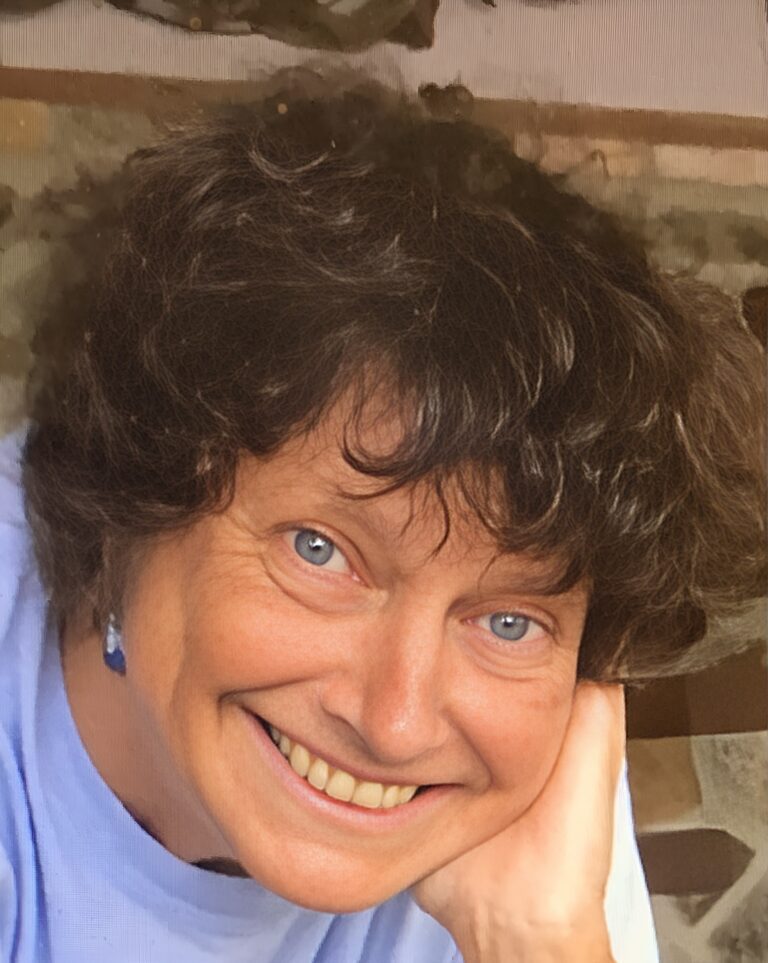
Since 1999 the Virgin Islands Source – the only online newspaper of general circulation in the U.S. Virgin Islands – has been providing the community with reliable, accurate and balanced local journalism.
Contact us: visource@gmail.com
© 1999-2025 Virgin Islands Source

