




 Virtue of the Week — Perseverance
Virtue of the Week focuses on building peaceful and caring communities through understanding and fostering the practice of virtues. The Source supports the Virtues Project and will publish one virtue developed by the project each week.
Perseverance
Perseverance is the will to carry on. Once we discern true direction, we stay the course for however long it takes, regardless of obstacles that arise. We patiently pursue our goals, remaining steadfast and focused. We persist with a task until it is completed. People can trust us to finish what we start. When our relationships are tested, we have the commitment to work things through. We are determined to succeed.
Quote: “Just don’t give up trying to do what you really want to do. Where there’s love and inspiration, I don’t think you can go wrong.” —Ella Fitzgerald
The Practice of Perseverance
I have a strong sense of purpose.
I work consistently towards my goals with flexibility.
I have the will to overcome obstacles.
I remain committed to what I want to do.
I am trustworthy in my relationships.
I am determined to finish what I start.
Questions for Discussion
Virtue of the Week — Perseverance
Virtue of the Week focuses on building peaceful and caring communities through understanding and fostering the practice of virtues. The Source supports the Virtues Project and will publish one virtue developed by the project each week.
Perseverance
Perseverance is the will to carry on. Once we discern true direction, we stay the course for however long it takes, regardless of obstacles that arise. We patiently pursue our goals, remaining steadfast and focused. We persist with a task until it is completed. People can trust us to finish what we start. When our relationships are tested, we have the commitment to work things through. We are determined to succeed.
Quote: “Just don’t give up trying to do what you really want to do. Where there’s love and inspiration, I don’t think you can go wrong.” —Ella Fitzgerald
The Practice of Perseverance
I have a strong sense of purpose.
I work consistently towards my goals with flexibility.
I have the will to overcome obstacles.
I remain committed to what I want to do.
I am trustworthy in my relationships.
I am determined to finish what I start.
Questions for Discussion
 About the Community Foundation of the Virgin Islands
Since 1990, CFVI has been a catalyst for positive change in the territory through initiatives committed to youth, learning, family support and the environment. With a professional staff and a volunteer Board of Directors composed of community leaders, CFVI is a trusted advocate and supporter of programs that ensure opportunity and sustainability for current and future generations. CFVI is a registered non-profit organization entirely supported by individual donors, grants, trusts, corporate donations and estate planning. For more information, visit cfvi.net.
About the Community Foundation of the Virgin Islands
Since 1990, CFVI has been a catalyst for positive change in the territory through initiatives committed to youth, learning, family support and the environment. With a professional staff and a volunteer Board of Directors composed of community leaders, CFVI is a trusted advocate and supporter of programs that ensure opportunity and sustainability for current and future generations. CFVI is a registered non-profit organization entirely supported by individual donors, grants, trusts, corporate donations and estate planning. For more information, visit cfvi.net.
 About Virtues Matter
Virtues Matter was started by a passionate wife-husband team of social entrepreneurs seeking to positively uplift as many lives as possible. We aim to inspire and empower, to build capacity, strengthen relationships, and help everyone lead lives of passion and purpose.
Virtues Matter believes in a world where people are committed to kindness and respect, strive to be their best, and live with hope, courage, and in unity. We built the Virtues Cards mobile app, an interactive personal and team development tool, to help people identify and develop key virtues skills. We also offer dynamic workshops, online training, and customized programs to help people cultivate these positive qualities of character. To learn more, visit virtuesmatter.com.
To learn more about the Virtues Project, visit virtuesproject.com.
About Virtues Matter
Virtues Matter was started by a passionate wife-husband team of social entrepreneurs seeking to positively uplift as many lives as possible. We aim to inspire and empower, to build capacity, strengthen relationships, and help everyone lead lives of passion and purpose.
Virtues Matter believes in a world where people are committed to kindness and respect, strive to be their best, and live with hope, courage, and in unity. We built the Virtues Cards mobile app, an interactive personal and team development tool, to help people identify and develop key virtues skills. We also offer dynamic workshops, online training, and customized programs to help people cultivate these positive qualities of character. To learn more, visit virtuesmatter.com.
To learn more about the Virtues Project, visit virtuesproject.com. 
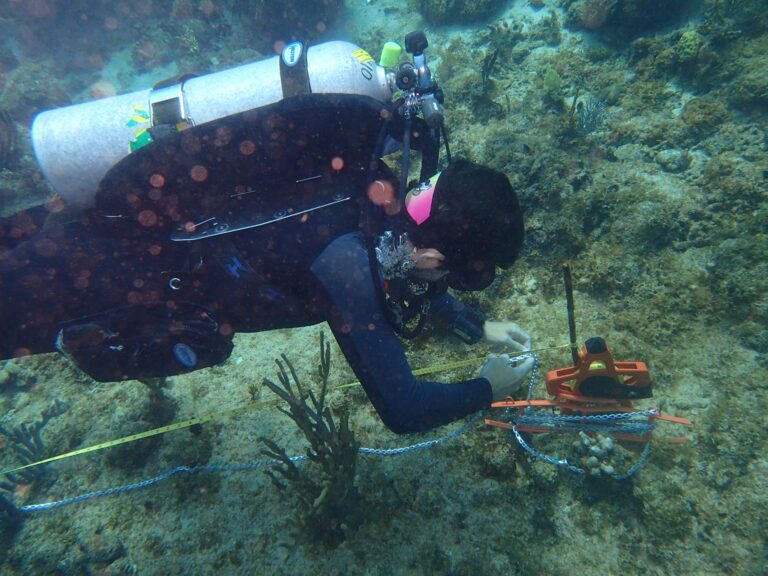
Two scientists with the National Oceanic and Atmospheric Administration recently visited St. Croix to better understand and protect coral reefs around the island. Long-term evaluation of the reefs has revealed both their beauty and the vulnerabilities they face.
The NOAA scientists who visited St. Croix from Miami included Ian Enochs, Ph.D., head of NOAA’s Coral Program at the Atlantic Oceanographic and Meteorological Laboratory (AOML), and oceanographer Nicole Besemer, the Caribbean Climate Operations Coordinator for the National Coral Reef Monitoring Program (NCRMP).
During their time on St. Croix, the researchers continued reef monitoring efforts and shared insights into what drew them to this field and why the island plays such a vital role in advancing coral reef science.
Researchers’ Backgrounds
Both Enochs and Besemer have been captivated by the marine sciences for many years, a passion that ultimately led them to their current positions at NOAA’s AOML and NCRMP.

“I have always been interested in coral reefs, even as a kid growing up in the U.S. Midwest who had never seen the ocean,” Enochs said. “At that time, I was more focused on their beauty and discovery. However, as I have grown to understand their importance and have experienced firsthand the challenges they face, I have become focused on how we can better understand and save the reefs before it is too late.”
Enochs emphasized the importance of NOAA’s work to protect reefs.
“NOAA recognizes the incredible economic and societal value of coral reefs, including the billions of dollars in tourism and fisheries they support for the U.S. economy, as well as the coastal and storm protection they provide to homes and communities,” he explained. “Our work is targeted at making sure that our American reef infrastructure is maintained for all that benefit from it.”
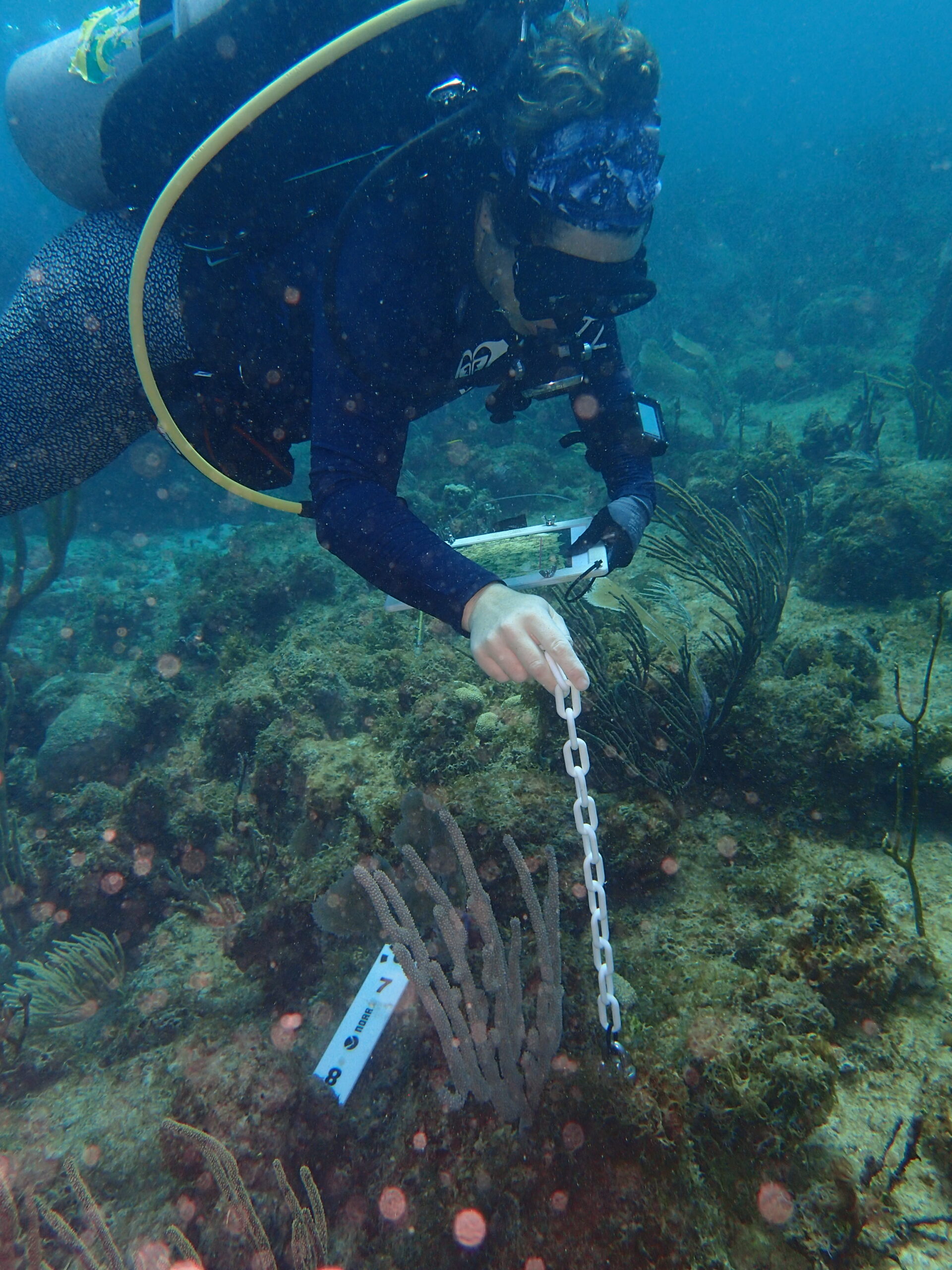
Besemer told the Source that her interest in marine life began at an early age.
“My spark for the marine science field started with going fishing with my dad as a child,” Besemer said. “My passion for coral reefs didn’t come until later in starting my career when I moved to South Florida shortly after my undergraduate studies and when I started to get more into scuba diving. I fell in love with being underwater and exploring local ecosystems. I worked on a variety of projects focusing on invasive species removal, water quality, sea turtle nesting, and seagrass habitat restoration. After experiencing these projects, I wanted to find my way back into diving.”
“I wanted to work in a position that would involve studying coral reefs to achieve my goals, and I am very fortunate to have the opportunities with AOML Coral Program to research coral reef habitats,” Besemer added.
St. Croix’s Coral Reefs
According to a NOAA report, the U.S. Virgin Islands are surrounded by a wide variety of coral reefs.
“Coral reefs are found around the three main islands of St. Croix, St. John, and St. Thomas as well as most offshore cays. Fringing reefs, deep reefs, wall and shelf-edge, patch reefs, and spur and groove formations are present on all three islands, although only St. Croix has well-developed barrier reefs. Bank reefs and scattered patch reefs with high coral diversity occur on geological features offshore at greater depths,” according to the report.
“St. Croix has coral growth along much of the insular shelf with a well-developed barrier reef on the eastern end and deep coral walls on the north shore.”
Enochs and Besemer shared details about St. Croix’s reefs and explained why they have long been a focus of NOAA research.
“St. Croix is home to beautiful coral reefs that support important fish populations and buffer the shore from wave energy, as well as provide amazing diving and snorkeling opportunities that bring in tourists and support local businesses,” Enochs said.
“Anyone flying into or out of St. Croix can immediately see the importance of reefs from the air, as waves break on them instead of pummeling into the shoreline,” he added. “Anyone walking through the towns can see the importance of diving and ocean tourism, and anyone that is lucky enough to actually see the reefs themselves underwater can view their beauty. Reefs are such a vital part of what makes St. Croix what it is.”
Monitoring the Reefs
Enochs explained that his work on St. Croix began more than a decade ago during a NOAA coral research project at Salt River Bay. Since then, the effort has expanded to include monitoring coral reefs around the entire island.
“I started working in the area over 10 years ago as part of NOAA’s monitoring program in Salt River. Since, we have collaborated with the National Park Service and the University of the Virgin Islands and worked to expand monitoring of St. Croix’s reefs to include multiple sites on each side of the island,” Enochs stated.
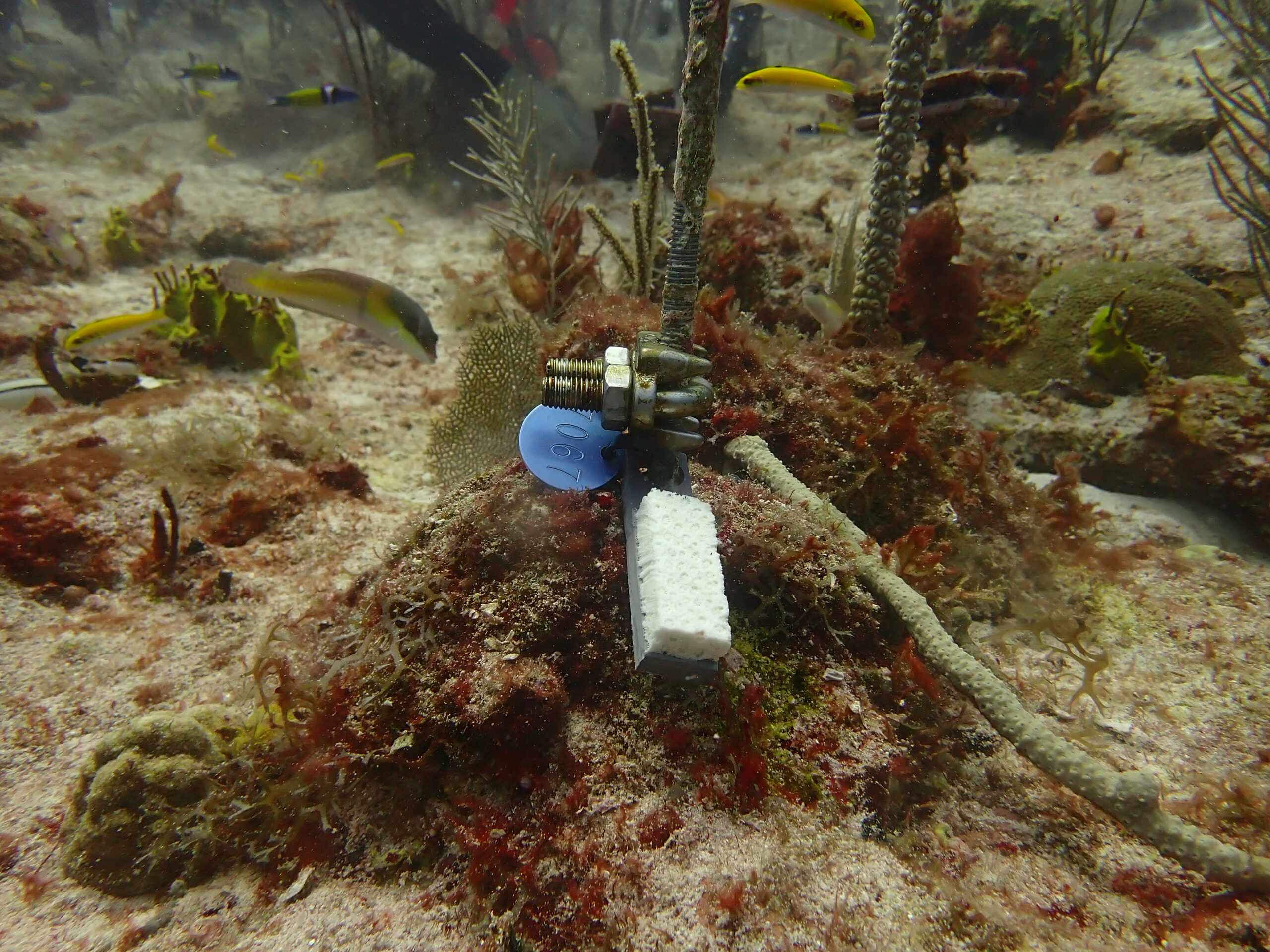
“We monitor coral cover reef structure that provides homes to diverse fish and invertebrates as well as water chemistry and temperature. I am fortunate to lead a team of some of the most passionate and brilliant scientists working on coral reefs today,” he continued.
Besemer further explained the methods NOAA uses to monitor coral reefs on St. Croix. She noted that the program is designed not only to track coral growth, but also to measure signs of decline, such as when erosion from fish, urchins, and sponges outpaces the reef’s ability to build new structure.
“Our monitoring program was set up to have comparable methods across jurisdictions that we visit. We deploy temperature recorders that record high precision temperature at a depth gradient around the island,” Besemer said. “We also deploy Bioerosion Monitoring Units to monitor bioerosion and Calcification Accretion Units to monitor calcification. We have six long-term transects in Salt River Bay, where we collect photomosaics to track community changes over time as well as Carbonate Budget Surveys.
“These surveys incorporate rates of coral production that build the reefs as well as quantifying the eroders, such as parrotfish, urchins, and sponges, that degrade the reef to determine if reefs are either growing or eroding,” Besemer continued.
Coral Reef Vulnerabilities
Among the major vulnerabilities to coral reefs are bleaching events and disease.
NOAA explains coral bleaching. “When corals are stressed by changes in conditions such as temperature, light, or nutrients, they expel the symbiotic algae living in their tissues, causing them to turn completely white. When a coral bleaches, it is not dead. Corals can survive a bleaching event, but they are under more stress and are subject to mortality.”
Regarding coral diseases, NOAA stated, “A disease is any deviation from, or interruption of, the normal structure or function of any body part, organ, or system that has a distinct group of observable symptoms whose cause(s) may be known or unknown. Coral diseases are often observed as either color change or skeletal damage and may be accompanied by tissue loss.
Coral diseases generally occur in response to biological stressors, such as bacteria, fungi, algae, and viruses, as well as non-biological stressors, like increased water temperatures, ultraviolet radiation, and pollutants. One type of stress may exacerbate another.”
Enochs acknowledged the seriousness of the dangers threatening coral reefs.
“The scale of the coral reef problem is huge, and the number of challenges they face is large,” Enochs asserted. “As such, our response is multifaceted, and our expertise is broad. We conduct important monitoring operations like NCRMP, but also advanced laboratory-based experiments, detailed molecular and physiological studies, computer modeling, and even technological development. Our team is made up of coral scientists, software and hardware engineers, technicians and students, and we all work together to protect our reefs.”
Besemer noted that she has personally witnessed the losses caused by bleaching and coral disease.
“My first time at the monitoring sites was in 2019, and we have now visited in 2022 and 2025,” Besemer said. “I have seen firsthand the difference and amount of coral that we have lost due to bleaching and coral disease in our photomosaics. It’s very important to track these changes and make sure managers, stakeholders and the general public are aware of the status of their reefs so informed decisions can be made to protect and restore them,” she added.
The Future of St. Croix’s Reefs
As their work in St. Croix continues, both scientists emphasized that while monitoring is vital, it is equally important to use the data collected to guide protection and restoration efforts. Enochs noted that diving on the island’s reefs highlights both the urgency of the challenges and the reasons for hope.

“NOAA’s National Coral Reef Monitoring Program spans the Caribbean, western Atlantic, and the Pacific, holistically monitoring the health of U.S. coral reefs,” Enochs explained. “With the data we are collecting, we can identify areas that are particularly vulnerable and in need of attention, as well as resilience areas that we should be looking to for answers about persistence and restoration.”
“Diving in Saint Croix, I’m struck not just by the importance and beauty of the coral reefs, but also by the seriousness of the issues they face. In some areas, there has been so much coral death from bleaching and disease. Swimming for hundreds of feet past the skeletons of dead corals really puts things in perspective for me in terms of how much has already been lost. But it’s not too late. There’s still so much we can do,” Enochs emphasized.
He closed his remarks with a message of optimism about the future of reef protection.
“In the last 10 years I have seen a recognition by people around the globe that reefs are dying and a willingness to start doing something about it,” Enochs acknowledged. “The initiation of nation-wide monitoring programs like NCRMP and the beginning of large-scale restoration efforts such as NOAA’s Mission Iconic Reefs give me hope as we start to face these massive challenges head-on,” he concluded.
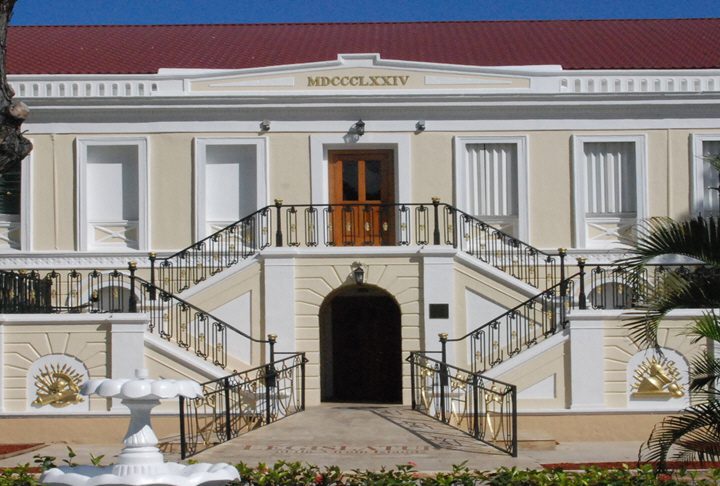




It’s mid-September in the Eastern Caribbean — the time of year when all eyes turn toward the Central Atlantic to see what kind of tropical storms will pass this way. But on Friday, the Virgin Islands Territorial Emergency Management Agency staged a drill on St. John to remind everyone there are other forces in nature that can overwhelm the population sometimes with little warning.
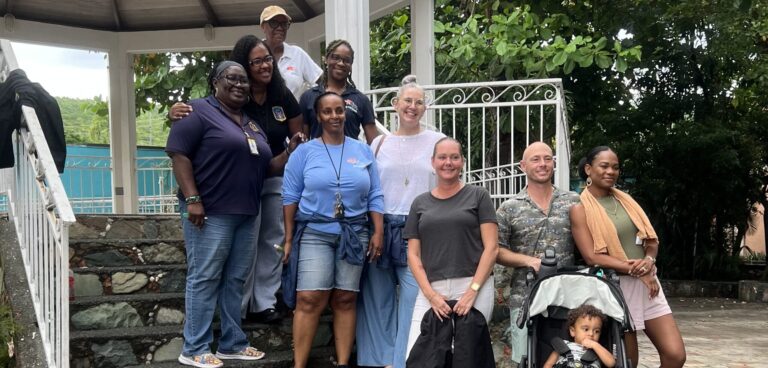
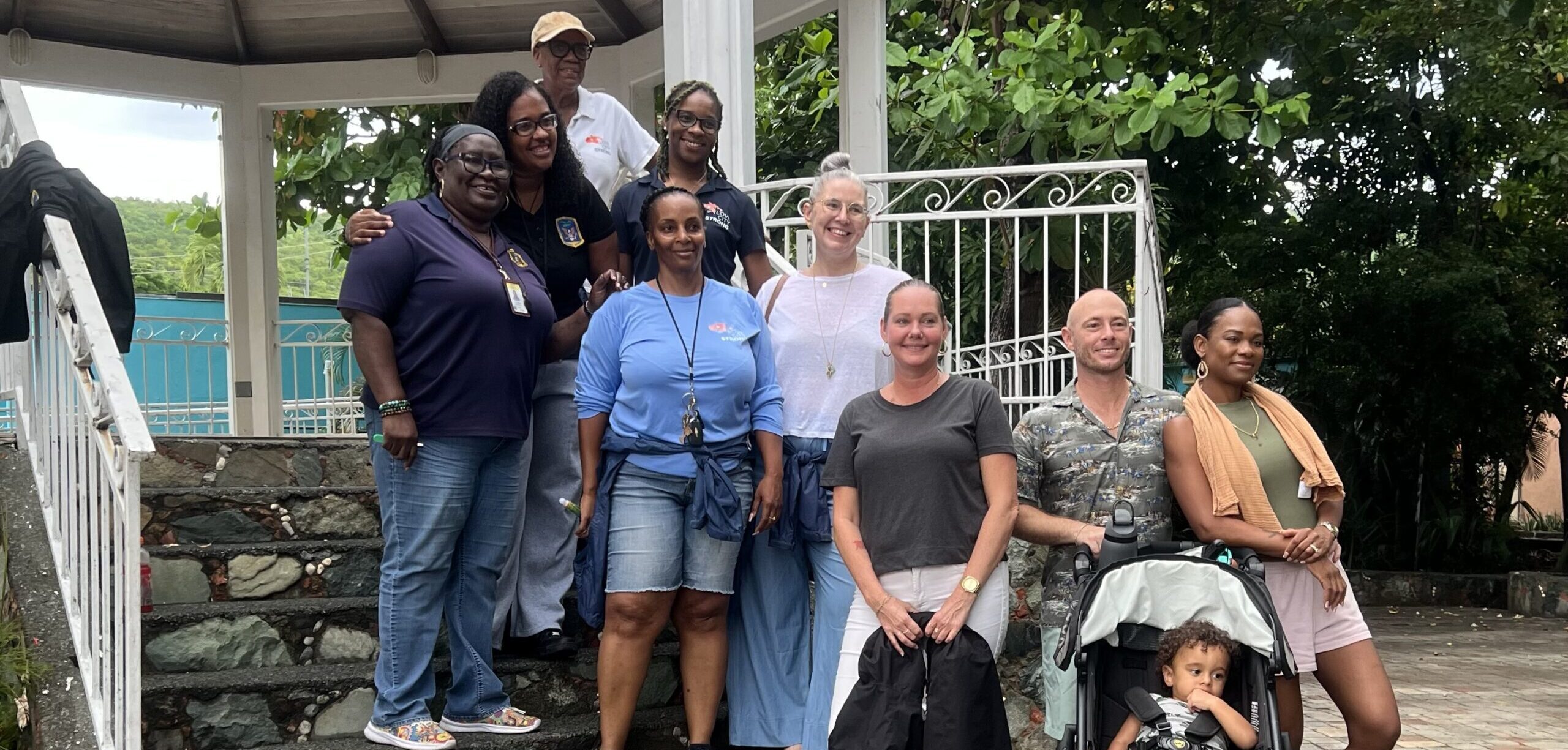
Friday saw the first of three tsunami walks sponsored by VITEMA for St. John, St. Thomas, and St. Croix. About 10 people gathered near the bandstand at Franklin Powell Sr. Park in Cruz Bay to see how quickly they could get out of the way of a powerful tsunami.
The deadly force of a tsunami — or tidal wave — was seen worldwide on Dec. 26, 2004, when a 9.1 magnitude undersea earthquake sent a wall of ocean water across the Indian Ocean, killing 220,000 people. The Virgin Islands experienced its own tsunami disaster on Nov. 18, 1867, when a wave overtook Charlotte Amalie, claiming an estimated 50 lives.
“… the waves were over 25 feet. So we just want you to know it’s not if it’s gonna happen, it’s when it’s gonna happen,” said Deputy Director of Planning and Preparedness Regina Browne as she addressed the gathering after a brisk walk from the bandstand to a few feet past Veteran’s Circle.
The goal of the tsunami walk was to reach a spot 82 feet above sea level, considered a place of safety. Among those in the group were members of Love City Strong, a nonprofit formed to help the community recover from the 2017 Hurricanes Irma and Maria.
One team member, Kenisha Small, said she had been leading community members through earthquake and tsunami preparedness drills for about five years. “This year, I’m going to be at Gifft Hill School participating with them during their Career Day,” Small said.
The one thing Small said those exercises taught her is how vulnerable people living with disabilities can be. “I would say the thing that I learned the most was how the vulnerable population — anyone who is … disabled in a wheelchair using any medical equipment should respond during an earthquake,” she said.
Scientists studying these phenomena say earthquakes can trigger tsunamis, as was the case in Sumatra, Indonesia, in 2004.
During her brief address, Browne explained the difference between rapidly occurring and long-distance tsunamis; how much warning time affected populations might receive, and the different kinds of alerts and warnings they can expect to hear if a tsunami occurs.
St. Thomas residents are invited to take part in a scheduled Tsunami Walk on Saturday morning. People on St. Croix can experience the walk on Oct. 4.
The Magens Bay Authority board met Friday to tackle a packed agenda, addressing salary hikes, sargassum cleanup, artwork relocation, and new business partnerships as the territory’s most popular beach prepares for the future.
In compliance with Act 3636 (VI Code Act 8995) passed by the 36th Legislature, the Authority will raise the minimum salary for full-time employees from $27,040 to $35,000, effective Oct. 1. Board chair Barbara Petersen said the change is “mandatory and out of our hands,” warning it will have a “massive impact” on the Authority’s budget.
All employees earning below the new threshold will receive immediate adjustments, and long-serving staff will see additional increases. Merit-based raises will be postponed until performance evaluations are completed and finances are reviewed, according to member Dayle Barry.
The financial strain comes as Magens Bay weathers a difficult late summer. “All the categories of income are down from last year,” board member Katina Coulianos noted. Executive Director Monique Simon attributed the decline to repeated beach closures caused by sargassum, compounded by the slow season.
Despite the challenges, staff and concessionaires were praised for their quick, environmentally conscious cleanup efforts, which helped reopen the beach as swiftly as possible.
Virgins Taxi and Walk on Water will begin operations in late October, following a competitive bidding process.
In addition to approving the June 2025 meeting minutes, the board reviewed ongoing capital projects, including the renovation of bathhouse number one, managed by Grant Engineering with construction by Romina Construction. They also discussed plans for renovating the beach entrance.
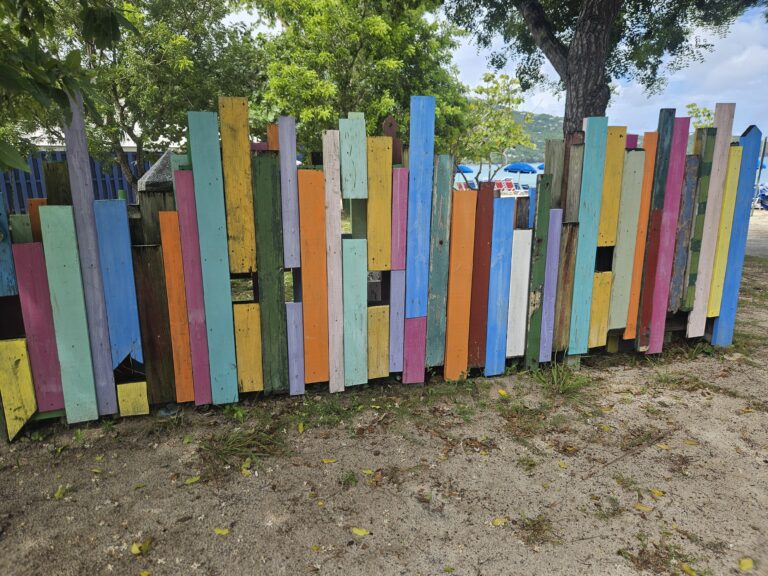
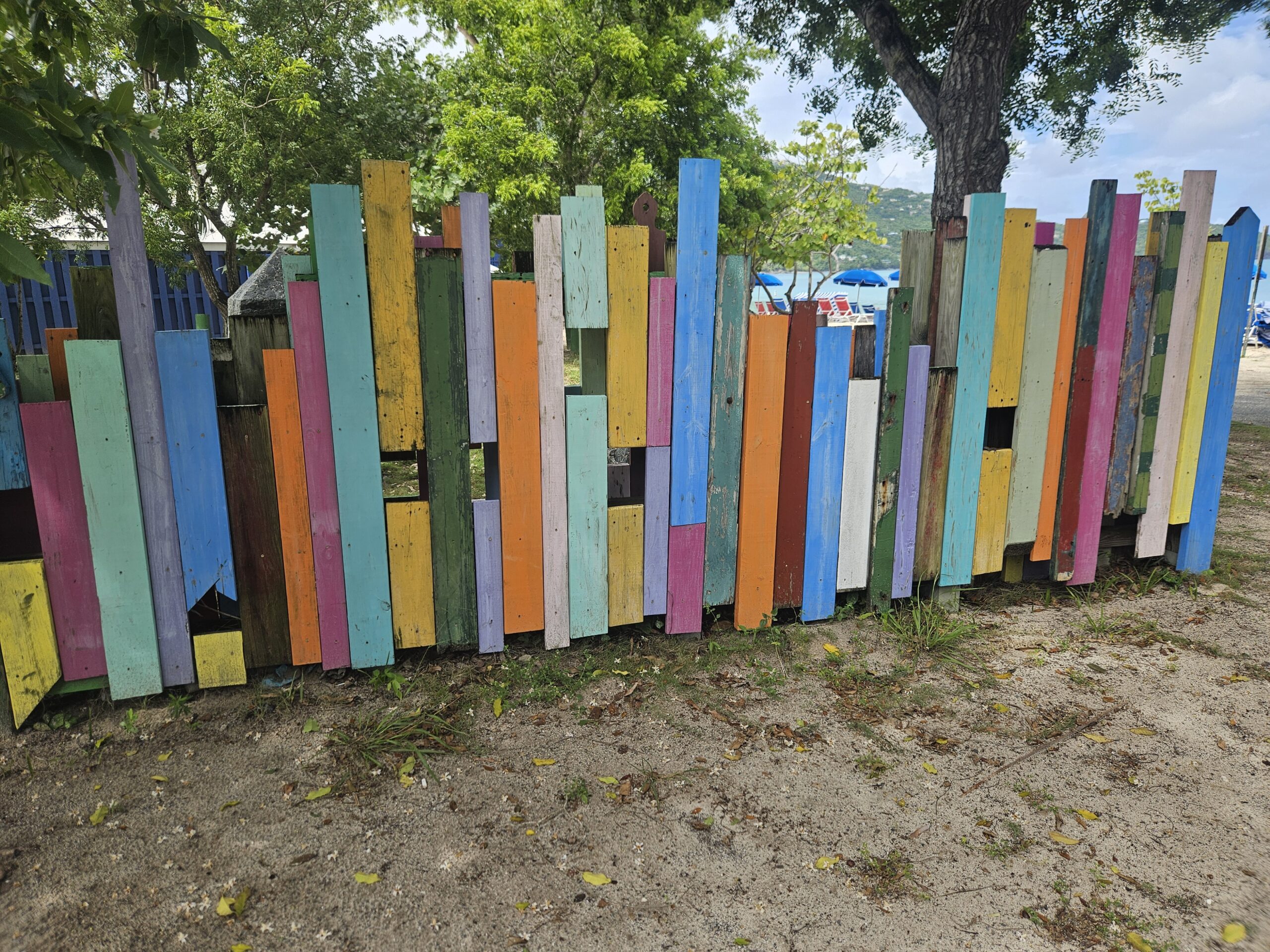
The board took up the issue of relocating a set of public art installations that have stood as a symbol of post-hurricane recovery for years. The colorful wooden structures, created from debris left by hurricanes Irma and Maria, were commissioned with funding from Royal Caribbean as part of a broader effort to restore the beach and support the community.
During the meeting, board members discussed the history and meaning of the artwork, noting that while it had served as a powerful reminder of resilience and partnership, the area where it stands is now needed for improved transportation flow.
There was no contractual requirement for how long the art should remain in place, but several members stressed the importance of honoring the original spirit of cooperation with Royal Caribbean.
Rather than simply removing the art, the board voted to relocate it to a new, yet to be determined location. The motion also directed the general manager to formally notify Royal Caribbean by mail of the Authority’s intentions, and to wait at least 30 days after notification before moving the pieces of art.
Coulianos delivered a heartfelt speech reflecting on her 26 years of service with the Magens Bay Authority board. She recalled some of the board’s toughest challenges — weathering the 2017 hurricanes, navigating the COVID-19 pandemic, and challenging legislative changes that sought to reshape the authority’s structure.
She praised the board’s resilience in reopening parks, defending the Authority’s autonomy, and launching new concession opportunities. She shared her passion for park infrastructure and planning, noting her enjoyment of projects such as the construction of the Davis Trail.
Coulianos closed by urging new and veteran members alike to honor and build on the board’s years of policy and planning work.
Since 1999 the Virgin Islands Source – the only online newspaper of general circulation in the U.S. Virgin Islands – has been providing the community with reliable, accurate and balanced local journalism.
Contact us: visource@gmail.com
© 1999-2025 Virgin Islands Source