NOAA Scientists Study St. Croix’s Coral Reefs to Guide Protection Efforts

0

Two scientists with the National Oceanic and Atmospheric Administration recently visited St. Croix to better understand and protect coral reefs around the island. Long-term evaluation of the reefs has revealed both their beauty and the vulnerabilities they face.

The NOAA scientists who visited St. Croix from Miami included Ian Enochs, Ph.D., head of NOAA’s Coral Program at the Atlantic Oceanographic and Meteorological Laboratory (AOML), and oceanographer Nicole Besemer, the Caribbean Climate Operations Coordinator for the National Coral Reef Monitoring Program (NCRMP).

During their time on St. Croix, the researchers continued reef monitoring efforts and shared insights into what drew them to this field and why the island plays such a vital role in advancing coral reef science.

Researchers’ Backgrounds

Both Enochs and Besemer have been captivated by the marine sciences for many years, a passion that ultimately led them to their current positions at NOAA’s AOML and NCRMP.

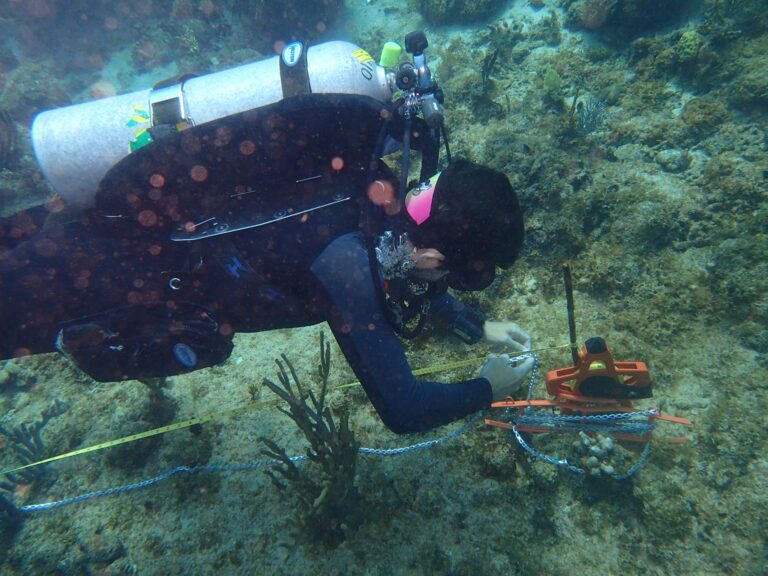
NOAA scientist Ian Enochs measures reef structure to monitor coral health, fish habitats, and long-term ecosystem changes on St. Croix’s coral reefs. (Photo courtesy Ian Enochs, Nicole Besemer, NOAA)

“I have always been interested in coral reefs, even as a kid growing up in the U.S. Midwest who had never seen the ocean,” Enochs said. “At that time, I was more focused on their beauty and discovery. However, as I have grown to understand their importance and have experienced firsthand the challenges they face, I have become focused on how we can better understand and save the reefs before it is too late.”

Enochs emphasized the importance of NOAA’s work to protect reefs.

“NOAA recognizes the incredible economic and societal value of coral reefs, including the billions of dollars in tourism and fisheries they support for the U.S. economy, as well as the coastal and storm protection they provide to homes and communities,” he explained. “Our work is targeted at making sure that our American reef infrastructure is maintained for all that benefit from it.”
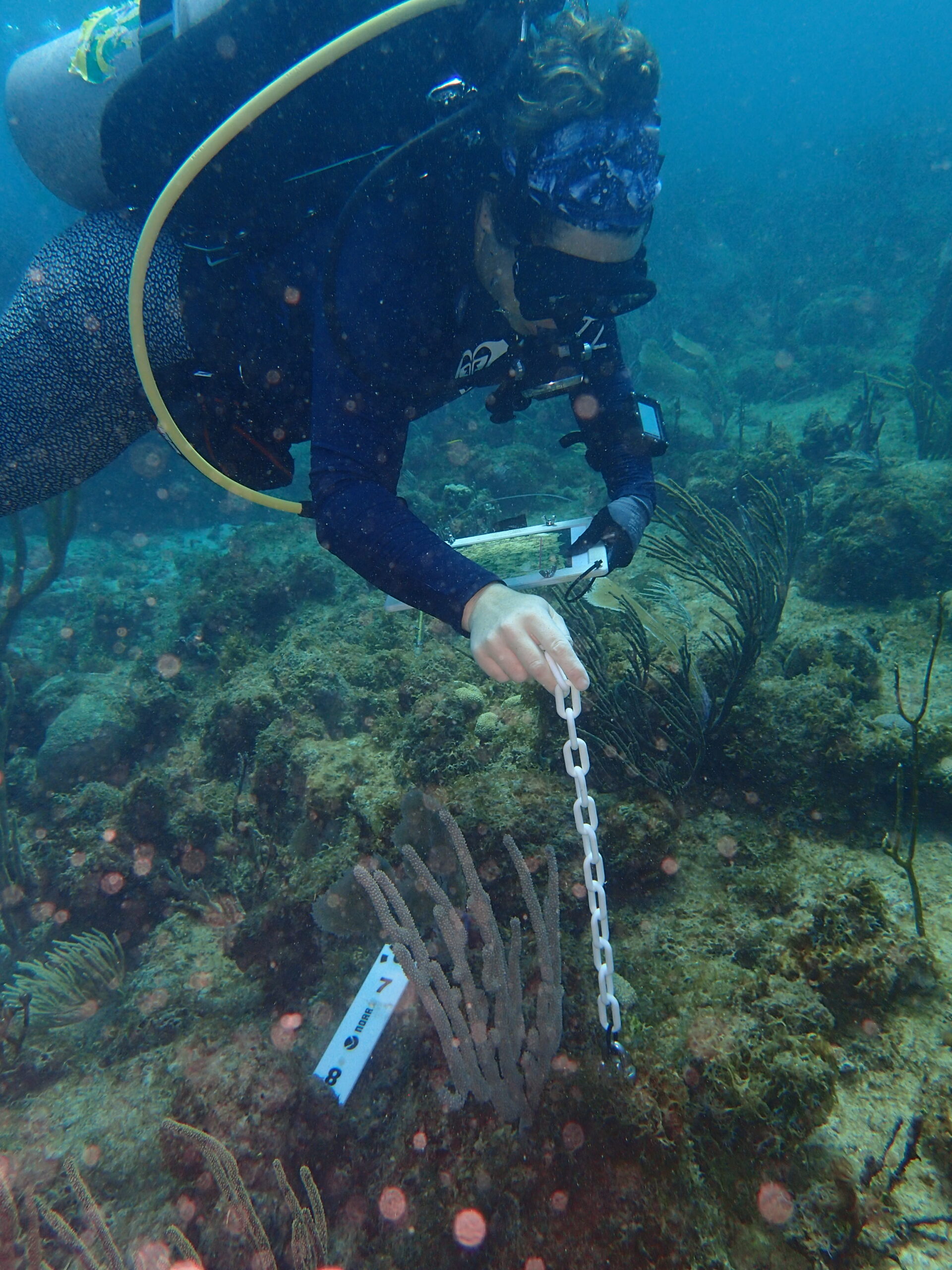
NOAA researcher Nicole Besemer establishes a monitoring plot for photomosaic imaging of coral reefs on St. Croix. The imaging allows scientists to track changes in coral reef communities over time. (Photo courtesy Ian Enochs, Nicole Besemer, NOAA)

Besemer told the Source that her interest in marine life began at an early age.

“My spark for the marine science field started with going fishing with my dad as a child,” Besemer said. “My passion for coral reefs didn’t come until later in starting my career when I moved to South Florida shortly after my undergraduate studies and when I started to get more into scuba diving. I fell in love with being underwater and exploring local ecosystems. I worked on a variety of projects focusing on invasive species removal, water quality, sea turtle nesting, and seagrass habitat restoration. After experiencing these projects, I wanted to find my way back into diving.”

“I wanted to work in a position that would involve studying coral reefs to achieve my goals, and I am very fortunate to have the opportunities with AOML Coral Program to research coral reef habitats,” Besemer added.

St. Croix’s Coral Reefs

According to a NOAA report, the U.S. Virgin Islands are surrounded by a wide variety of coral reefs.

Coral reefs are found around the three main islands of St. Croix, St. John, and St. Thomas as well as most offshore cays. Fringing reefs, deep reefs, wall and shelf-edge, patch reefs, and spur and groove formations are present on all three islands, although only St. Croix has well-developed barrier reefs. Bank reefs and scattered patch reefs with high coral diversity occur on geological features offshore at greater depths,” according to the report.

“St. Croix has coral growth along much of the insular shelf with a well-developed barrier reef on the eastern end and deep coral walls on the north shore.”

Enochs and Besemer shared details about St. Croix’s reefs and explained why they have long been a focus of NOAA research.

“St. Croix is home to beautiful coral reefs that support important fish populations and buffer the shore from wave energy, as well as provide amazing diving and snorkeling opportunities that bring in tourists and support local businesses,” Enochs said.

“Anyone flying into or out of St. Croix can immediately see the importance of reefs from the air, as waves break on them instead of pummeling into the shoreline,” he added. “Anyone walking through the towns can see the importance of diving and ocean tourism, and anyone that is lucky enough to actually see the reefs themselves underwater can view their beauty. Reefs are such a vital part of what makes St. Croix what it is.”

Monitoring the Reefs

Enochs explained that his work on St. Croix began more than a decade ago during a NOAA coral research project at Salt River Bay. Since then, the effort has expanded to include monitoring coral reefs around the entire island.

“I started working in the area over 10 years ago as part of NOAA’s monitoring program in Salt River. Since, we have collaborated with the National Park Service and the University of the Virgin Islands and worked to expand monitoring of St. Croix’s reefs to include multiple sites on each side of the island,” Enochs stated.
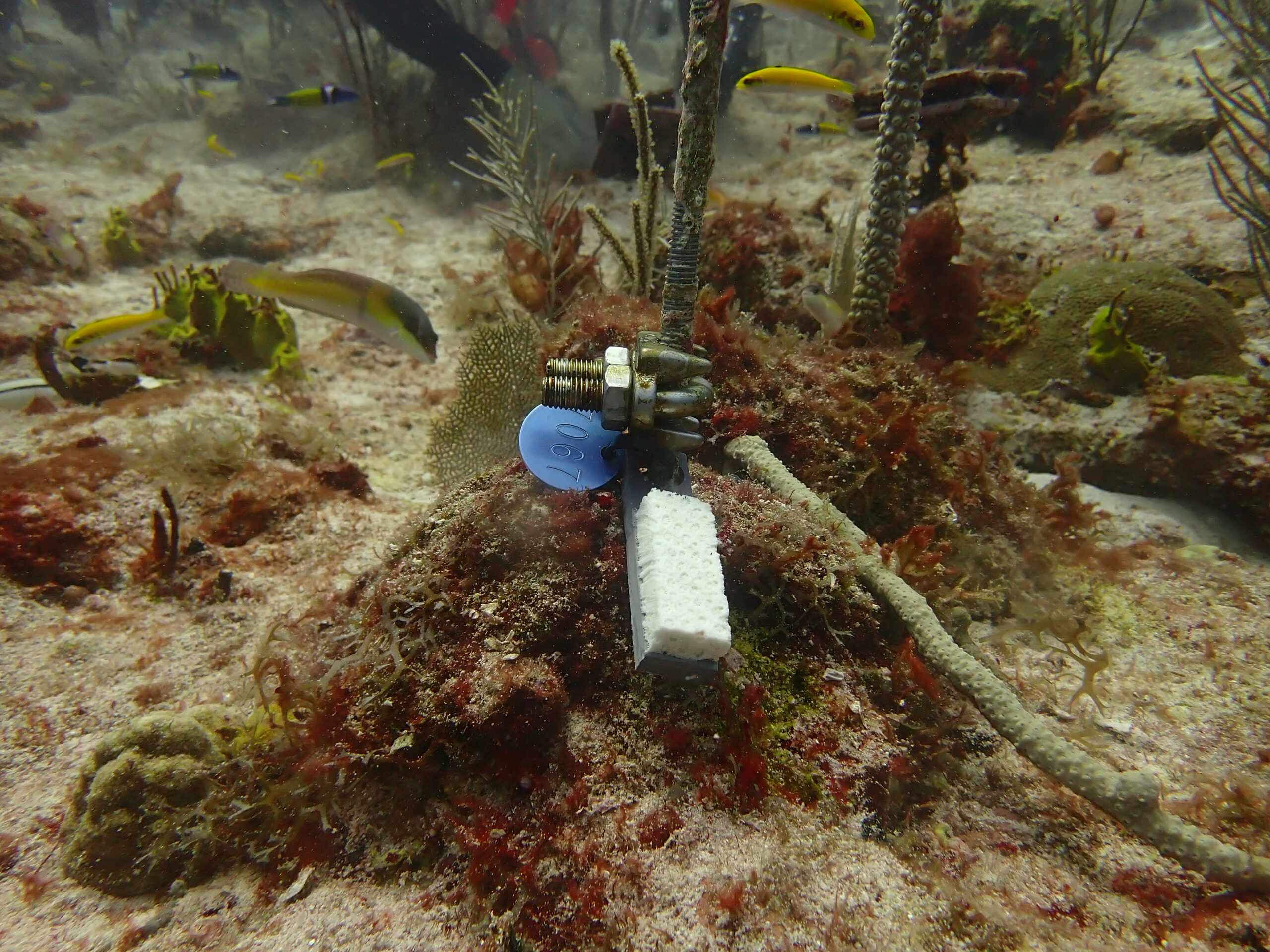
A newly installed Bioerosion Monitoring Unit (BMU) on St. Croix’s reef, tagged and secured for long-term monitoring of coral growth and erosion. (Photo courtesy Ian Enochs, Nicole Besemer, NOAA)

“We monitor coral cover reef structure that provides homes to diverse fish and invertebrates as well as water chemistry and temperature. I am fortunate to lead a team of some of the most passionate and brilliant scientists working on coral reefs today,” he continued.

Besemer further explained the methods NOAA uses to monitor coral reefs on St. Croix. She noted that the program is designed not only to track coral growth, but also to measure signs of decline, such as when erosion from fish, urchins, and sponges outpaces the reef’s ability to build new structure.

“Our monitoring program was set up to have comparable methods across jurisdictions that we visit. We deploy temperature recorders that record high precision temperature at a depth gradient around the island,” Besemer said. “We also deploy Bioerosion Monitoring Units to monitor bioerosion and Calcification Accretion Units to monitor calcification. We have six long-term transects in Salt River Bay, where we collect photomosaics to track community changes over time as well as Carbonate Budget Surveys.

“These surveys incorporate rates of coral production that build the reefs as well as quantifying the eroders, such as parrotfish, urchins, and sponges, that degrade the reef to determine if reefs are either growing or eroding,” Besemer continued.

Coral Reef Vulnerabilities

Among the major vulnerabilities to coral reefs are bleaching events and disease.

NOAA explains coral bleaching. “When corals are stressed by changes in conditions such as temperature, light, or nutrients, they expel the symbiotic algae living in their tissues, causing them to turn completely white. When a coral bleaches, it is not dead. Corals can survive a bleaching event, but they are under more stress and are subject to mortality.”

Regarding coral diseases, NOAA stated, “A disease is any deviation from, or interruption of, the normal structure or function of any body part, organ, or system that has a distinct group of observable symptoms whose cause(s) may be known or unknown. Coral diseases are often observed as either color change or skeletal damage and may be accompanied by tissue loss.

Coral diseases generally occur in response to biological stressors, such as bacteria, fungi, algae, and viruses, as well as non-biological stressors, like increased water temperatures, ultraviolet radiation, and pollutants. One type of stress may exacerbate another.”

Enochs acknowledged the seriousness of the dangers threatening coral reefs.

“The scale of the coral reef problem is huge, and the number of challenges they face is large,” Enochs asserted. “As such, our response is multifaceted, and our expertise is broad. We conduct important monitoring operations like NCRMP, but also advanced laboratory-based experiments, detailed molecular and physiological studies, computer modeling, and even technological development. Our team is made up of coral scientists, software and hardware engineers, technicians and students, and we all work together to protect our reefs.”

Besemer noted that she has personally witnessed the losses caused by bleaching and coral disease.

“My first time at the monitoring sites was in 2019, and we have now visited in 2022 and 2025,” Besemer said. “I have seen firsthand the difference and amount of coral that we have lost due to bleaching and coral disease in our photomosaics. It’s very important to track these changes and make sure managers, stakeholders and the general public are aware of the status of their reefs so informed decisions can be made to protect and restore them,” she added.

The Future of St. Croix’s Reefs

As their work in St. Croix continues, both scientists emphasized that while monitoring is vital, it is equally important to use the data collected to guide protection and restoration efforts. Enochs noted that diving on the island’s reefs highlights both the urgency of the challenges and the reasons for hope.

A Bioerosion Monitoring Unit (BMU) on St. Croix’s reef after three years underwater, showing growth, erosion, and marine life interactions. (Photo courtesy Ian Enochs, Nicole Besemer, NOAA)

“NOAA’s National Coral Reef Monitoring Program spans the Caribbean, western Atlantic, and the Pacific, holistically monitoring the health of U.S. coral reefs,” Enochs explained. “With the data we are collecting, we can identify areas that are particularly vulnerable and in need of attention, as well as resilience areas that we should be looking to for answers about persistence and restoration.”

“Diving in Saint Croix, I’m struck not just by the importance and beauty of the coral reefs, but also by the seriousness of the issues they face. In some areas, there has been so much coral death from bleaching and disease. Swimming for hundreds of feet past the skeletons of dead corals really puts things in perspective for me in terms of how much has already been lost. But it’s not too late. There’s still so much we can do,” Enochs emphasized.

He closed his remarks with a message of optimism about the future of reef protection.

“In the last 10 years I have seen a recognition by people around the globe that reefs are dying and a willingness to start doing something about it,” Enochs acknowledged. “The initiation of nation-wide monitoring programs like NCRMP and the beginning of large-scale restoration efforts such as NOAA’s Mission Iconic Reefs give me hope as we start to face these massive challenges head-on,” he concluded.

Senate Calendar Sept. 22-Oct. 3

0
Senate Calendar Sept. 22-Oct. 3 MONDAY, SEPTEMBER 22, 2025  Committee on Government Operations, Veterans Affairs and Consumer Protection 9:30 A.M. Frits E. Lawaetz Legislative Conference Room The Committee on Government Operations, Veterans Affairs, and Consumer Protection has scheduled a meeting for Monday, September 22, 2025, at 9:30 AM in the Frits E. Lawaetz Legislative Conference Room, St. Croix, Virgin Islands to provide testimony on the following bills:  BLOCK I 9:30 A.M. – 11:00 A.M. Bill No. 36-0061 An Act amending title 3 Virgin Islands Code, chapter 27, section 706 and chapter 28A, section 755 allowing retirees who are receiving an annuity from the Government Employees Retirement System who are subsequently employed by the University of the Virgin Islands (“UVI”), to continue to receive their GERS annuity while receiving their salary from the University if the retiree enrolls in a different retirement plan. Invited Testifiers:  Mr. Angel E. Dawson, Administrator, Government Employees Retirement System  Ms. Safiya George, PhD, President, University of the Virgin Islands  BLOCK II 11:00 P.M. – 12:30 P.M.  Bill No. 36-0102 An act amending title 31 Virgin Islands Code, chapter 23 by re-enacting section 236b requiring the use of construction materials manufactured in the Virgin Islands, to the greatest extent practicable, for locally or federally funded contracts with the Government of the Virgin Islands.  Invited Testifiers:  Honorable Lisa Alejandro, Commissioner, Department of Property and Procurement  Honorable Derek A. Gabriel, Commissioner, Department of Public Works Dr. Haldane Davies, Director, Virgin Islands Bureau of Economic Research (BER) Mr. Donald Stevens, Partner, Cat5 Builders, LLC Mr. Eric Castro, Owner, Universal Concrete Ms. Yvette Williams, Manager of Accounting, Heavy Materials  Mr. Dion Alibocas, General Manager, Masters Concrete VI 36th Legislature of the Virgin Islands BLOCK III 12:30 P.M. – 2:00 P.M.  Bill No. 36-0058 An Act honoring and commending Dennis “Pumpa” Lennox Leroy Liburd, Jr. for  his many contributions to the Virgin Islands culture and music industry as a Soca  artist by awarding him the Official key to the Territory and naming the main  entrance of 6-Y Peters Rest Road, Christiansted, St. Croix in his honor. Invited Testifiers: Mr. Bryan “Benny Demus” Boulai, DJ, Music Director, Manager & Producer Mr. Ian M. Turnbull, Director, Division of Festivals  Mr. Yohannes Worede, President, USVI Soccer Federation & Peters Rest Apts. Inc.  Ms. Ushana Khublal, Owner of KUSH ENT Mr. Kai Hendricks, Director, Converged Networks ONE Communications VI BLOCK VI 2:00 P.M. – 3:30 P.M.  Bill No. 36-0107 A resolution honoring and commending Dr. Alfred Lee Anduze for his outstanding  achievements and significant contributions to the fields of medicine, science, public  health, and community empowerment. Invited Testifiers:  Mr. Terrance E. Highfield, Long time close fiend  Ms. Jennifer Jackson, Good friend and Former UVI Chancellor Ms. Rita Dudley Grant, PhD, Cousin Judge Patricia D. Steele, Cousin  Judge George W. Cannon, Jr., Good friend Ms. Angela Torres McGhee, PhD, Cousin Mr. Richard A. Schrader, Sr., Mentor, Patient & Friend Mr. Frank Duggan, Long time close friend BLOCK V 3:30 P.M. – 5:00 P.M.  Bill No. 36-0121 An act to rename the Peter Carl Limpricht Park the TSK Park in honor of the Ten Sleepless  Knights quelbe band and making an appropriation to effectuate that change.  Invited Testifiers:  Mr. Stanley Jacobs, Treasurer/Founder and Band Leader, Ten Sleepless Knights, Inc. Dr. Lauren Larsen, President, Ten Sleepless Knights, Inc.  Ms. Vivian Ebbesen, President, Crucian Cultural Group (CCG) Mr. Myron Jackson, Former Senator, Legislature of the Virgin Islands Mr. Vincent Roberts, Commissioner Designee, Department of Sports, Parks and Recreation Honorable Derek M. Gabriel, Commissioner, Department of Public Works  TUESDAY, SEPTEMBER 23, 2025  Committee on Health, Hospitals, and Human Services 9:00 A.M. Emancipation Garden Health Fair  The Office of Senator Ray Fonseca, Chairman of the Committee on Health, Hospitals, and Human Services, is  honored to announce the forthcoming Annual Community Health Fair. This event is scheduled for September  23, 2025, and will be held at the Emancipation Garden from 9:00 AM to 3:00 PM. We look forward to your  participation in this important community initiative. In collaboration with the Departments of Health and Human Services, the East End Medical Center Corporation, the  V.I. Dental Center, the American Cancer Society, the Department of Agriculture, the Department of Education, the  V.I. Diabetes Center of Excellence, We Grow Food Inc., and various other nonprofit organizations, we are organizing  a community health fair for the residents of the St. Thomas/St. John district. This complimentary event will provide  health screenings and referrals, aiming to identify early indicators of prevalent health issues while promoting the  services available to many displaced residents. We anticipate that the insights gathered through direct engagement  with our citizens will significantly inform our legislative discussions and funding priorities. This initiative seeks to  address critical public health challenges and improve the living conditions for numerous individuals.

“Lunchtime With The Artist” at Fort Frederik

Commissioner Jean-Pierre L. Oriol of the Department of Planning and Natural Resources warmly invites the community to attend the next installment of the Division of Libraries, Archives and Museums’ (DLAM) ongoing artist talk series, “LUNCHTIME WITH THE ARTIST.” The second session will take place on Thursday, Sept. 25, from 1:30 to 3:00 p.m. at the Fort Frederik Museum.
Divine Feminine. Mixed media, by Lucien Downes (Photo courtesy Lucien Downes)
This dynamic series highlights artist featured in DLAM’s annual Emancipation art exhibition, “Tides of Freedom: Histories of Resistance from the USVI to the USA.” The upcoming event will showcase a conversation between Lucien Downes, a multidisciplinary artist and curator, and Regina Kay Keels, a Crucian artist, writer, poet, and educator. Lucien Downes, whose heritage spans Crucian, Trinidadian, and Bajan roots, brings a powerful voice to the exhibition through his mixed-media work. His featured piece, “The Man on a Mission,” portrays General Buddhoe leading a group of freedom fighters on horseback through Frederiksted during the 1848 Emancipation movement—an evocative tribute to self-liberation and resistance. Regina Kay Keels’ work, “Maternal Lines,” explores resistance as a legacy passed through generations. Her mixed-media piece blends poetry and symbolism, drawing inspiration from her late mother’s “Crucian Women” series and a family warning: “Don’t Let ThemPut You Back in the Barracoon!” She describes her work as “woman-voiced,” honoring known and unknown Queens who paved paths to freedom. “LUNCHTIME WITH THE ARTIST” will continue throughout the duration of the exhibition, which runs until late October. Each session offers a rare opportunity to hear directly from artists about their creative process, inspiration, and how their work contributes to the broader narrative of emancipation in the Virgin Islands and beyond. Admission is $5, with free entry for students under 18, who are especially encouraged to attend and participate in the conversation. For more information, please contact: Amy Parker DeSorbo, DLAM Director: amy.desorbo@dpnr.vi.gov Monica Marin, DLAM Chief Curator: monica.marin@dpnr.vi.gov Fort Frederik Museum: 340-772-2021

Fiber Network Construction at Estate Kings Quarter, St. Thomas 

0
Liberty VI will begin work on a fiber installation project at Estate Kings Quarter in St. Thomas on Monday, Sept. 22. The project will provide fiber to residents of the Estate Kings Quarter area. The job will be completed by Friday, Sept. 26.
The Virgin Islands Department of Planning and Natural Resources
“As we acquire the necessary permits, we are moving forward with our Fiber to the Home construction projects so more locations in the territory can have access to our fiber fast internet,” said Ravindra Maywahlall, general manager of Liberty VI. “We will continue informing VI consumers about the next areas where we will schedule Fiber to the Home construction projects.”  The work includes the microtrenching of approximately 99 feet from an existing underground vault at the intersection of Williams G. Lewis Lane and Alton Adams Sr. Drive. This willprovide Liberty’s Fiber to the Home broadband service to over 500 customers. Construction will begin on Monday night between 9 p.m. and 12 a.m. The work will continue Tuesday through Friday from 3 p.m. to 5 p.m. Work times may change depending on the work to be performed. Burying the fiber cables increases the network’s resiliency while protecting it from hazards such as natural disasters. As per the permit, the work also uses a micro-trenching technique, which produces up to a 1 ¾ -inch cut and uses existing ducts where possible, thus diminishing pavement breakage and dust emission significantly. In addition, crews will be using other underground technologies to minimize the impact to the roadways. The job will be performed with minimal traffic impact. However, residents and drivers within the area should expect delays due to lane and partial road closures and must exercise caution when traveling on the narrow roadways.  Liberty VI will be providing updates on its website https://www.libertyvi.com/news on when and where the company will be working around the territory so people can plan their daily commutes ahead of time.

Different Kind of Disaster Preparedness at Height of Hurricane Season

Tsunami walk participants gather at the exercise starting point in Cruz Bay Friday afternoon. (Source photo by Judi Shimel)

It’s mid-September in the Eastern Caribbean — the time of year when all eyes turn toward the Central Atlantic to see what kind of tropical storms will pass this way. But on Friday, the Virgin Islands Territorial Emergency Management Agency staged a drill on St. John to remind everyone there are other forces in nature that can overwhelm the population sometimes with little warning.

Friday saw the first of three tsunami walks sponsored by VITEMA for St. John, St. Thomas, and St. Croix. About 10 people gathered near the bandstand at Franklin Powell Sr. Park in Cruz Bay to see how quickly they could get out of the way of a powerful tsunami.

The deadly force of a tsunami — or tidal wave — was seen worldwide on Dec. 26, 2004, when a 9.1 magnitude undersea earthquake sent a wall of ocean water across the Indian Ocean, killing 220,000 people. The Virgin Islands experienced its own tsunami disaster on Nov. 18, 1867, when a wave overtook Charlotte Amalie, claiming an estimated 50 lives.

“… the waves were over 25 feet. So we just want you to know it’s not if it’s gonna happen, it’s when it’s gonna happen,” said Deputy Director of Planning and Preparedness Regina Browne as she addressed the gathering after a brisk walk from the bandstand to a few feet past Veteran’s Circle.

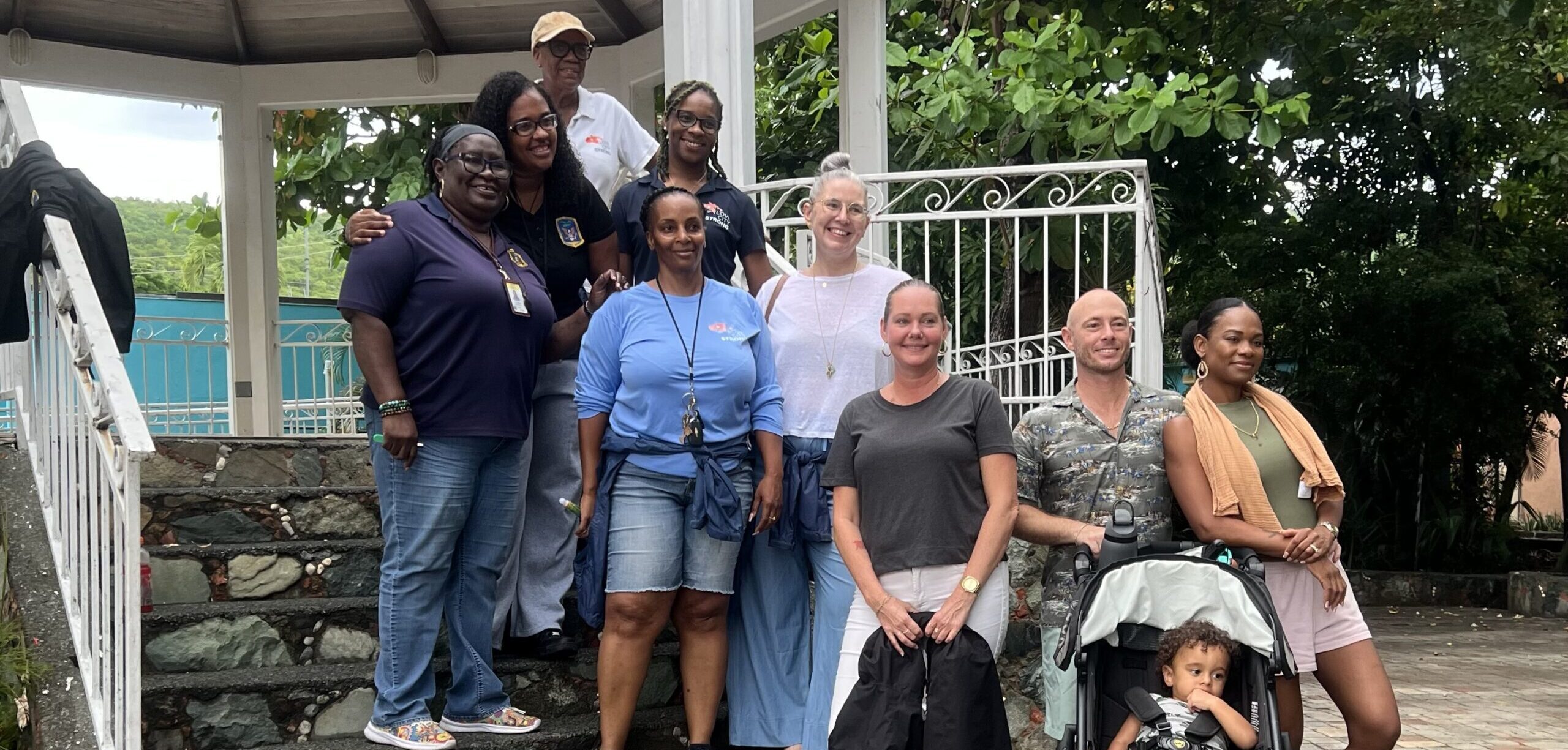
The goal of the tsunami walk was to reach a spot 82 feet above sea level, considered a place of safety. Among those in the group were members of Love City Strong, a nonprofit formed to help the community recover from the 2017 Hurricanes Irma and Maria.

One team member, Kenisha Small, said she had been leading community members through earthquake and tsunami preparedness drills for about five years. “This year, I’m going to be at Gifft Hill School participating with them during their Career Day,” Small said.

The one thing Small said those exercises taught her is how vulnerable people living with disabilities can be. “I would say the thing that I learned the most was how the vulnerable population — anyone who is … disabled in a wheelchair using any medical equipment should respond during an earthquake,” she said.

Scientists studying these phenomena say earthquakes can trigger tsunamis, as was the case in Sumatra, Indonesia, in 2004.

During her brief address, Browne explained the difference between rapidly occurring and long-distance tsunamis; how much warning time affected populations might receive, and the different kinds of alerts and warnings they can expect to hear if a tsunami occurs.

St. Thomas residents are invited to take part in a scheduled Tsunami Walk on Saturday morning. People on St. Croix can experience the walk on Oct. 4.

Magens Bay Authority Board Addresses Pay Raises, Sargassum, Artwork Relocation

0
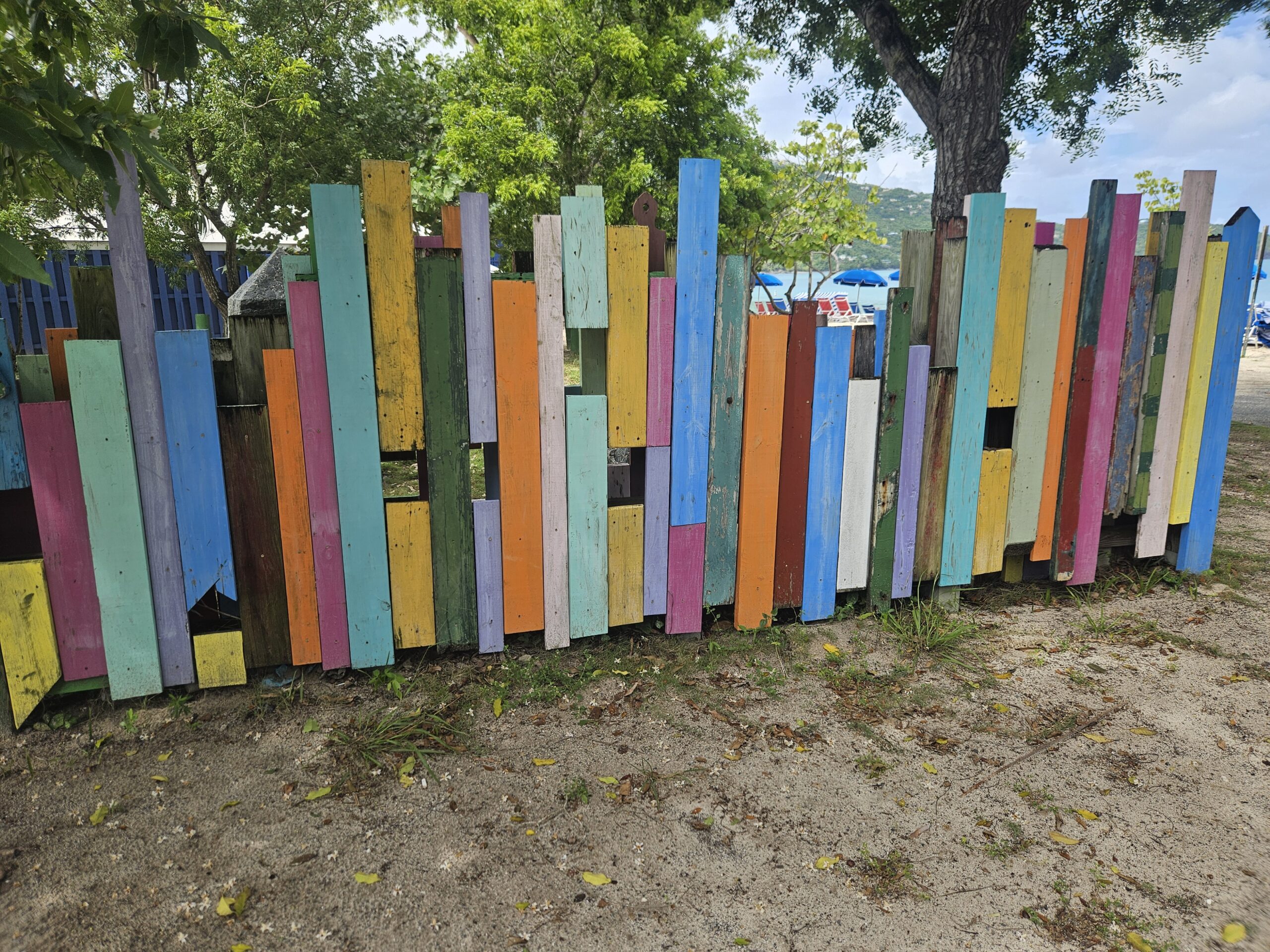
A need for improved transportation flow at Magens Bay has prompted the Magens Bay Authority board to vote on relocating this public art installation, made from recycled wood. (Source photo by Finn Sharpless)

The Magens Bay Authority board met Friday to tackle a packed agenda, addressing salary hikes, sargassum cleanup, artwork relocation, and new business partnerships as the territory’s most popular beach prepares for the future.

In compliance with Act 3636 (VI Code Act 8995) passed by the 36th Legislature, the Authority will raise the minimum salary for full-time employees from $27,040 to $35,000, effective Oct. 1. Board chair Barbara Petersen said the change is “mandatory and out of our hands,” warning it will have a “massive impact” on the Authority’s budget.

All employees earning below the new threshold will receive immediate adjustments, and long-serving staff will see additional increases. Merit-based raises will be postponed until performance evaluations are completed and finances are reviewed, according to member Dayle Barry.

The financial strain comes as Magens Bay weathers a difficult late summer. “All the categories of income are down from last year,” board member Katina Coulianos noted. Executive Director Monique Simon attributed the decline to repeated beach closures caused by sargassum, compounded by the slow season.

Despite the challenges, staff and concessionaires were praised for their quick, environmentally conscious cleanup efforts, which helped reopen the beach as swiftly as possible.

Virgins Taxi and Walk on Water will begin operations in late October, following a competitive bidding process.

In addition to approving the June 2025 meeting minutes, the board reviewed ongoing capital projects, including the renovation of bathhouse number one, managed by Grant Engineering with construction by Romina Construction. They also discussed plans for renovating the beach entrance.

The board took up the issue of relocating a set of public art installations that have stood as a symbol of post-hurricane recovery for years. The colorful wooden structures, created from debris left by hurricanes Irma and Maria, were commissioned with funding from Royal Caribbean as part of a broader effort to restore the beach and support the community.

During the meeting, board members discussed the history and meaning of the artwork, noting that while it had served as a powerful reminder of resilience and partnership, the area where it stands is now needed for improved transportation flow.

There was no contractual requirement for how long the art should remain in place, but several members stressed the importance of honoring the original spirit of cooperation with Royal Caribbean.

Rather than simply removing the art, the board voted to relocate it to a new, yet to be determined location. The motion also directed the general manager to formally notify Royal Caribbean by mail of the Authority’s intentions, and to wait at least 30 days after notification before moving the pieces of art.

Coulianos delivered a heartfelt speech reflecting on her 26 years of service with the Magens Bay Authority board. She recalled some of the board’s toughest challenges — weathering the 2017 hurricanes, navigating the COVID-19 pandemic, and challenging legislative changes that sought to reshape the authority’s structure.

She praised the board’s resilience in reopening parks, defending the Authority’s autonomy, and launching new concession opportunities. She shared her passion for park infrastructure and planning, noting her enjoyment of projects such as the construction of the Davis Trail.

Coulianos closed by urging new and veteran members alike to honor and build on the board’s years of policy and planning work.

Man Wanted for Assault Now in Custody

0

On Thursday, 47-year-old Alexander Mateo was placed under arrest and booked in connection with an assault that occurred in August, reported the Virgin Islands Police Department.

On Aug. 30, at approximately 11:44 a.m., an adult male victim was transported to the Juan F. Luis Hospital Emergency Room via ambulance. The victim reported to officers that while he was asleep inside the old gym located upstairs from Subway in Golden Rock, he was assaulted by a male with a knife and a metal pipe. As a result of the assault, the victim sustained serious injuries to his arm, according to the police report.

An investigation conducted by detectives of the Criminal Investigation Bureau identified Mateo as the suspect in this case, and an All Points Bulletin (A.P.B.) was put out on him.

He was charged with assault in the third degree, with bail set at $75,000. Mateo was unable to post bail. He was transported to the John A. Bell Golden Grove Adult Correctional Facility, where he was remanded pending his advice of rights hearing on Friday, at the Superior Court.

National Day of Murder Victims Remembrance

0
The Women’s Coalition of St. Croix is hosting a community event on the National Day of Remembrance for Murder Victims Thursday, Sept. 25.
The Women’s Coalition of St. Croix
This event will be held at the Sunny Isles Amphitheatre at  5:30 pm and will include a panel discussion, the short movie “Bulletproof Dreams” by Blue Tarp Productions, the “Wall of Remembrance”, and an Open Mic for Survivors. As of Aug. 22, people have been murdered in the territory in 2025. Nine were on St. Croix. Ending violence is an important aspect of NDRMV and a focus of The Women’s Coalition of St. Croix. We are responding to this significant issue, and standing by our mission to support and empower people impacted by violence. Sept. 25 will be the 18th anniversary of the National Day of Remembrance for Murder Victims’ designation by the U.S. Congress, in the Virgin Islands by the Women’s Coalition of St. Croix,  to recognize the impact of homicides on surviving loved ones and communities.

WAPA Board Convenes Amid Territory-Wide Outages

0
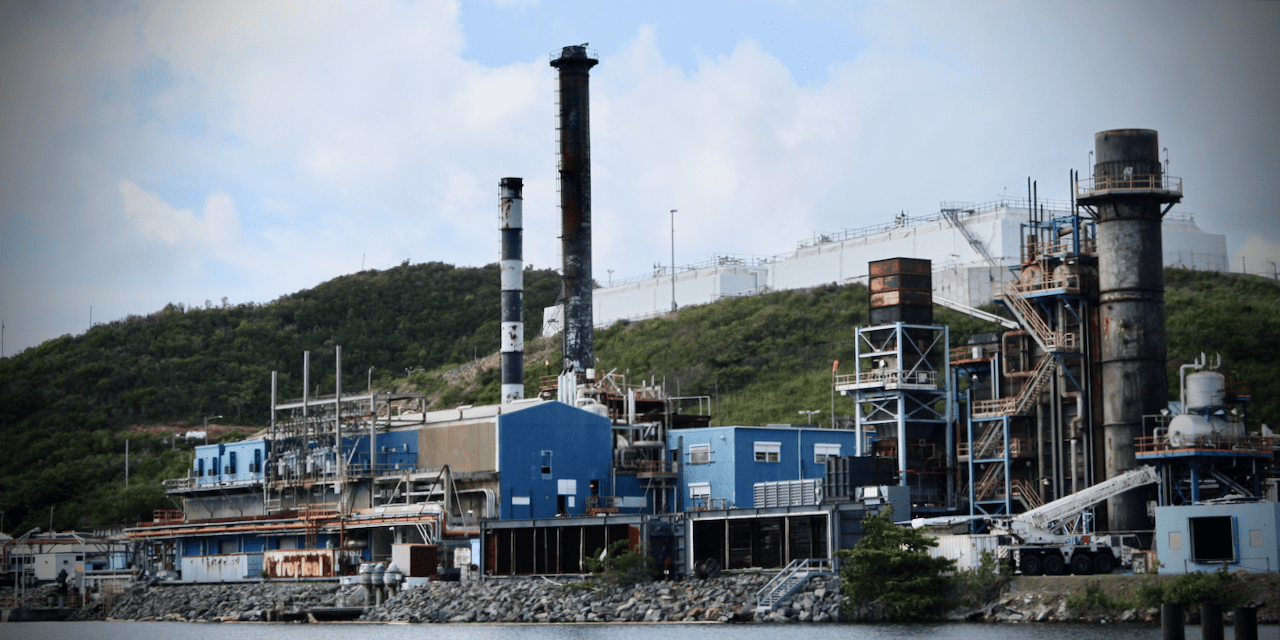
The V.I. Water and Power Authority Governing Board convened Thursday to discuss generation issues on St. Thomas and vote on a slate of contracts during a regular meeting held virtually on Microsoft Teams. (Source file photo)

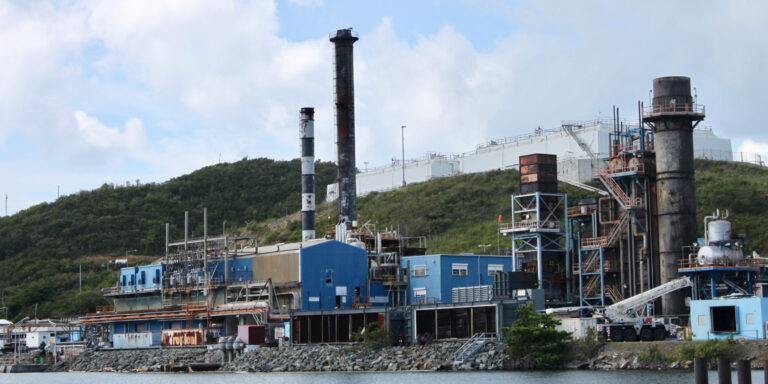
Water and Power Authority Chief Executive Karl Knight reported to the utility’s governing board Thursday that power should stabilize for customers on St. Thomas and St. John after several weeks of “flirting with disaster.”

“It’s been a very eventful month of September thus far, and we’re still … just about halfway through the month, so who knows what else the month holds for us,” he said before acknowledging that customers on St. Thomas and St. John have been particularly inconvenienced in recent weeks. “It has been a very difficult patch for us, and underpinning most of those events is essentially a shortage of generation capacity.”

Knight said the authority has been running “thinly” with two generators at the Randolph Harley Power Plant — units 23 and 27 — offline, and the summer’s heightened power demands stretched capacity further.

“Unit 27 had been down for several weeks now,” he said. “We had — earlier this year — briefly got it back online. It gave us some breathing room for about two, maybe three weeks, and then it faltered again for an unrelated issue. We have repaired the fuel pumps and some other matters, and we’ve gotten Unit 27 back online.”

Knight said years of deferred maintenance have caught up to the authority, which is unable to take its legacy units offline for major overhauls.

“And so as we fix one component, some other component becomes due for repairs. And so we’ve had our challenges,” he said. At least one recent issue occurred when one of the utility’s newer Wartsila generators developed a leak in its air delivery system Wednesday. “And so that air leak caused the other unaffected units to also trip offline, because they … share a common air system.”

As a result, the district lost 36 megawatts of generation. Knight said they were able to fix the problem and “breathe a sigh of relief” before thunderstorms roiled the territory.

“What I will say is, lightning is not our friend. Rain is usually not a problem. I know a lot of folks, especially in the social media sphere, their belief is ‘oh that little bit of rain and now you’re out,’” he said. “You know, the two enemies of the electrical system are wind blowing obstructions into the lines and lightning striking the system.”

The weather had less of an impact on St. Croix, where Knight said only three or four feeders were offline at any given time. He attributed those outages to lightning strikes.

Knight’s report came after the board approved a handful of contracts, including a nearly $3.39 million agreement with the Island Roads Corporation for the Blackbeard Hill waterline rehabilitation project. Island Roads Corporation was also awarded a $2.72 million contract for the Mahogany Estate waterline rehabilitation. Board members also approved a $181,297 cost reduction to its contract with J. Benton related to undergrounding work in Hannah’s Rest.

Board Chair Maurice Muia asked WAPA mechanical engineer Matthias Clark how many times the authority has reduced costs for a project.

“To my knowledge,” Clark said, “none that I’ve worked on. So yes, this might be the first — at least for me.”

The board then approved a $293,964 cost reduction to the authority’s contract with J. Benton for undergrounding work along Queen Mary Highway, as well as a $5 million, two-year contract with Falcon USVI for security services at the Randolph Harley and Richmond power plants.

SRMC Board Hears Updates on Rebuilding Projects, Cancer Center Delays, and Ongoing Financial Strain

0
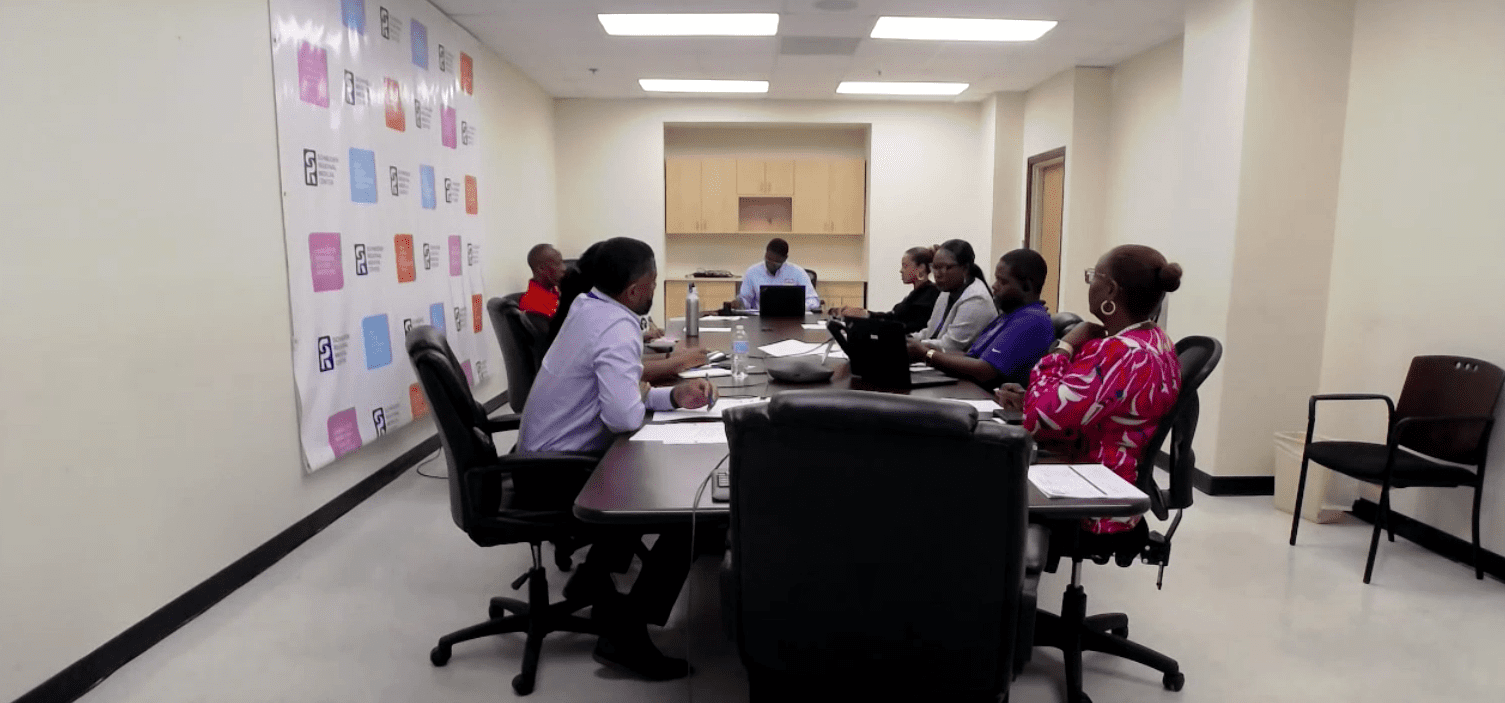
Schneider Regional Medical Center’s board members during Wednesday’s district governing board meeting. (Screenshot from Microsoft Teams meeting)

During Wednesday’s Schneider Regional Medical Center district governing board meeting, updates were provided on ongoing projects regarding medical facilities, financial challenges, and progress within the territory’s health care community.

The Territorial Hospitals Redevelopment Team director, Daryl Smalls, shared updates with the board on the projects for the health facilities. Regarding the Myrah Keating Smith clinic, a contractor has been selected.

“The contract is being negotiated through the Public Finance Authority/Office of Disaster Recovery. We will have a contractor on board shortly, and we will begin the program management of our facilities,” Smalls said.

Smalls added that the contractor is responsible for rebuilding the Smith clinic, the Department of Health Facilities on St. John, and a school for the Education Department. He added that the first thing his team will do is develop a program regarding the services being offered at the clinic.

“Currently, we knew it was originally designed as an emergency room,” Smalls said. “We didn’t function in that capacity, and one of the things we’re going to be looking at is the direction we’re going to be going with Myrah Keating.”

The contract is anticipated to be executed within the next 30 days.

Regarding the construction of the Schneider Regional Medical Center, a contractor has been selected and will be the same contractor constructing the Juan F. Luis Hospital. According to Smalls, one benefit of this is “standardization and optimization across the facilities” from a maintenance and operational standpoint, such as having the same generators, elevators, air conditioning systems, and sterilizers, to support both facilities simultaneously.

The existing structure for SRMC will serve as the temporary hospital and will then be demolished to utilize the space as a parking lot.

“The biggest concerns that we have for all of our projects, and that’s why we go through the program manager phase, is we have a set budget. It’s not as though we can go back to the federal government and say we need another $10 million or $100 million. Our budget is already capped,” Smalls said.

Moreover, Smalls said that a major change order has pushed back the completion date for the Charlotte Kimmelman Cancer Institute. The original completion date was Nov. 11, but it is now set for Nov. 19. The current goal is to get full power in the facility, and after that, the linear accelerator can be installed, which is anticipated for Oct. 1, followed by the installation of the CT simulator on Oct. 15.

“We’re up to about $33, $34 million in construction. Equipment is probably another three to four million. So we’re still within the overall cap of funding for this particular project,” Smalls said.

“I do get a little nervous when I drive by and it still looks like it’s very early in the construction process,” said board Chair Jerry Smith.

Smalls then welcomed Smith to tour the facility to see the progress that has been made.

Additionally, Tina Comissiong, SRMC’s chief executive officer, after acknowledging the recent medical staff retreat on St. Croix and the department’s placement at the Battle of the Agencies, spoke about financial constraints still affecting the facility.

“Things are extremely tight right now. We’ve only received about $600,000 of our August allotment. We’ve not received any of our September allotment, so that makes things very very tough for us,” said Comissiong.

During her own presentation, Kenisha Angol, SRMC’s director of financial services, said that due to allotment delays, “This means the hospital has gone over five weeks without paying vendors,” which places strain on hospital operations.

Financial concerns remain pressing. With limited government funding and delays in reimbursements impacting cash flow, the hospital is edged to pursue revenue cycle enhancements. Comissiong mentioned to the board that First Source is a third-party billing service the hospital is using to increase collections and help with financial management. Coding, billing, and claim follow-ups are some of the things First Source handles.

“One of the most impactful developments has been our engagement with First Source,” Angol added.

“I’m very confident that with that engagement, over the next two to three months, we’re going to start seeing collections get back up to where we had been previously of $5.5 million, you know, $6 million, and in the future going even above that as we’re making really strategic improvements,” Comissiong said.

Additionally, Angol told the board that collections are expected to close the fiscal year at approximately $45 million compared to $55 million last year and that the fiscal year budget for 2026 remains “unchanged” from the 2025 budget, with the exception of a $1.5 million allotment for the Myrah Keating Smith Clinic.

Comissiong also shared that the hospital is working on a chargemaster increase, renewing and improving its outdated payer contract with Cigna, cybersecurity enhancements, and physical system repairs to ensure safety and compliance. The radiology, rehabilitation, and respiratory departments are seeing progress in staffing and equipment, and efforts are underway to expand GI services and outpatient procedures. The CEO also shared that the hospital is up to date on its hurricane preparedness for this season.

“We’re hoping to see a great shift in the care that we provide. Build the community’s trust in the care,” Comissiong said.