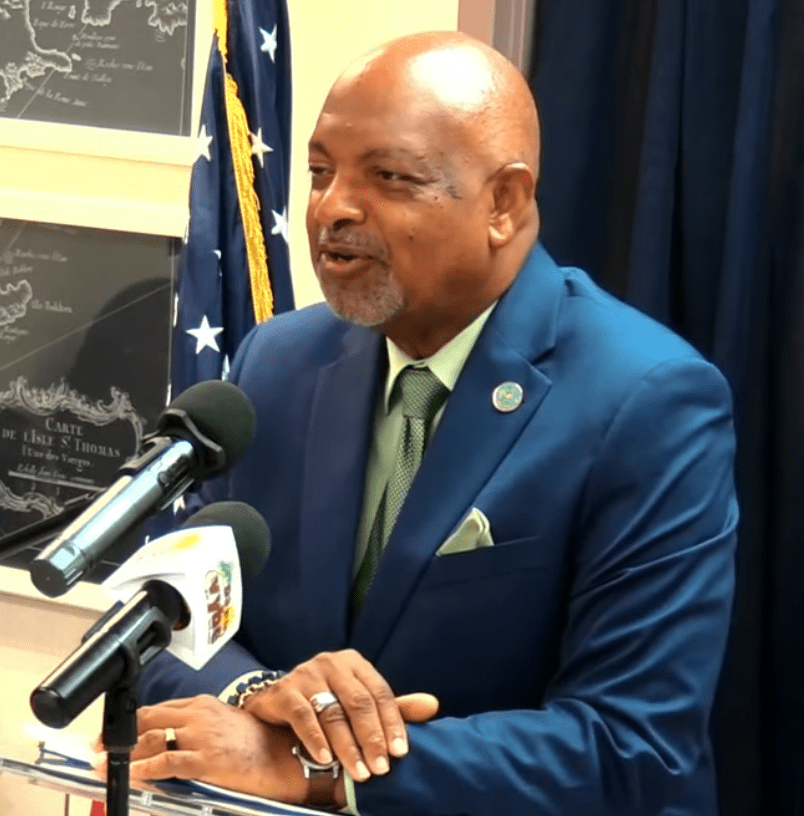
In a recent news release, the Virgin Islands Police Department (VIPD)/Virgin Islands Office of Highway Safety (VIOHS) urged the community to make smart, safe choices this holiday.
“Too many still think driving impaired, unbuckled, speeding, or texting behind the wheel isn’t a big deal. One bad decision can change your life forever, “stated VIOHS Impaired Driving Program Manager K’ Tonya Petrus. “This Labor Day, slow down, think ahead, and protect each other.”
According to the release, simple steps can save lives:
Buckle up every time—front seat and back.
Don’t drive impaired: Plan ahead for a designated sober driver.
Avoid distractions: Put the phone down; stay focused.
Obey speed limits: Slow down and give yourself time to react.
Share the road: Watch out for pedestrians and cyclists.
Protect Our Children: Children under 8 should use an appropriate car or booster seat, and those under 14 should sit secured in the back.
The release stated, only 71% of Virgin Islanders wear seat belts in the front seat compared to 92% nationally – a dangerous traffic safety gap. “The simple three-second habit of wearing a seat belt is a preventive strategy that just makes sense,” advised Denise Gomes, VIOHS occupant protection program manager. “Seat belt compliance is a law that literally saves lives.”
The U.S. District Court for the Southern District of New York in Manhattan, where a lawsuit accusing V.I. officials of conspiring with Jeffrey Epstein was heard. (Shutterstock image)
A lawsuit brought by six Jeffrey Epstein victims against Congresswoman Stacey Plaskett has been voluntarily dismissed with prejudice and without costs against Plaskett, according to a notice filed on the docket Thursday in the District Court for the Southern District of New York.
The dismissal ends nearly two years of litigation that initially included the Virgin Islands government, past governors and other territory officials that the plaintiffs alleged supported and benefitted from Epstein’s sex-trafficking scheme.
The Source sought comment from Plaskett and her attorney, Eric R. Breslin of Duane Morris LLP, and Jordan K. Merson, the attorney for the plaintiffs, but had not received a response as of Thursday afternoon.
The complaint alleged negligence and violations of the Trafficking Victims Protection Act, or TVPA, and the Racketeer Influenced and Corrupt Organizations Act, or RICO.
Plaskett was the sole remaining defendant in the suit — first filed in November 2023 by Jane Does 1-5, amended that December to add a sixth plaintiff, and amended again last May — after Judge Arun Subramanian dismissed the charges against the rest in March. He said in that ruling that the congresswoman was the only defendant the complaint alleged ever traveled to New York or actively solicited funds from Epstein in that city and that the court lacked personal jurisdiction over the other six officials named in the lawsuit.
Because it is voluntarily dismissed with prejudice, the complaint may not be resurrected against Plaskett. However, the plaintiffs previously indicated that they plan to appeal Subramanian’s order dismissing the charges against the other defendants who include former governors John de Jongh Jr. and Kenneth Mapp, former senators Celestino White and Carlton Dowe, former Attorney General Vincent Frazer, and former first lady Cecile de Jongh, who was Epstein’s longtime office manager.
In April the plaintiffs filed a motion for a partial judgment as to the dismissed parties so they could appeal the decision to the Second Circuit Court of Appeals, rather than wait for the case against Plaskett to conclude, but last month Subramanian denied that request.
Among the reasons the Jane Does cited in their motion for a partial judgment was that Plaskett was now the lone defendant in a case against six plaintiffs “and a potential class,” meaning more victims could join the suit.
“The likelihood this case will be able to resolve by settlement prior to trial is highly unlikely as she is unlikely to be able to cover near to what the case is worth. However, if the dismissed Defendants in this matter, were [to] reappear in this matter, the likelihood of settlement would increase significantly, presenting an opportunity to expedite resolution of this matter on all claims,” the plaintiffs stated.
Late last week, Plaskett’s attorney Breslin stated in a letter to the judge that both sides had met and conferred, as ordered by the court on July 30, “and the parties believe that this case may be resolved shortly.”
On Thursday, Breslin filed the notice of voluntary dismissal.
Plaskett had strenuously denied the allegations in the suit and last July filed notice with the court that she would seek sanctions against attorney Merson, saying the claims against her amounted to “outright untruth, fiction, and misrepresentation.”
A registered sex offender who pleaded guilty to procuring a minor for prostitution in Florida in 2008, Epstein died by apparent suicide in August 2019 at age 66 while in detention in New York on federal trafficking charges. His primary residence was Little St. James, his private island off St. Thomas, where for years he ran a complex web of shell companies registered in the USVI — and was afforded some $300 million in tax breaks through the territory’s Economic Development Commission — that enabled his crimes.
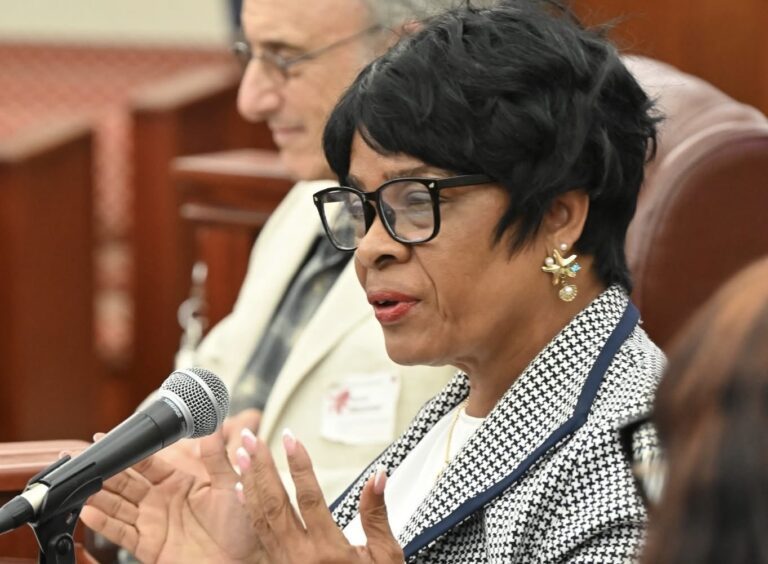
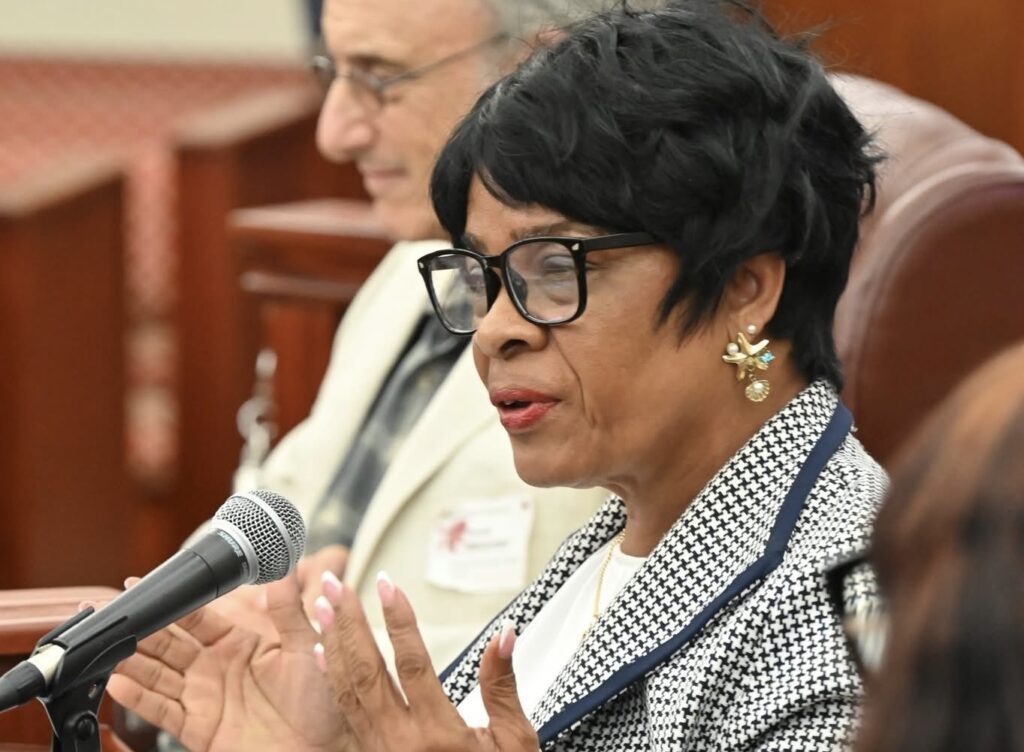
Jacquelyn Clendinen testifies before senators during Wednesday’s legislative session, sharing her family’s concerns about the lease agreements tied to the Summer’s End Marina project. (Photo by the VI Legislature)
A legislative hearing and subsequent vote Thursday on Bill No. 36-0145 reignited longstanding debate over the proposed Summer’s End Marina in Coral Bay, St. John — not just over the project itself, but over the legitimacy of the permits that support it.
The bill, introduced by Senate President Milton Potter at the request of Gov. Albert Bryan Jr., sought to ratify the governor’s approval of a modification and extension to two Consolidated Major Coastal Zone Management (CZM) permits tied to the development. But in a decisive 9-3 vote, senators rejected the measure — halting its progress for now and signaling strong resistance to reviving expired permits through legislative intervention.
Voting in favor of the bill were Sens. Marvin Blyden, Avery Lewis, and Novelle Francis. Opposed were Sens. Dwayne DeGraff, Ray Fonseca, Alma Francis Heyliger, Kenneth Gittens, Franklin Johnson, Carla Joseph, Clifford Joseph, Milton Potter, and Kurt Vialet. Sens. Angel Bolques Jr. and Marise James were absent.
While many lawmakers said they support economic development on St. John and agreed that a marina could benefit the island, they stood firm that proper procedure must be followed. The primary concern, they emphasized, was not the project itself but the precedent of bypassing the established CZM process.
Under Virgin Islands law, CZM permits expire if development doesn’t begin within 12 months of issuance or if construction stops for more than 360 days. Once expired, the Department of Planning and Natural Resources (DPNR) cannot extend or modify them — and neither can the governor, whose authority under Title 12, Section 911(g) applies only to active permits under enforcement review.
“The Legislature may ratify only those coastal zone permits that have been duly approved by the appropriate Coastal Zone Management Committee,” CZM Commission Chair May Adams Cornwall testified before the Senate Thursday. “In this case, that has not occurred. There is no existing valid CZM permit for this project to extend and/or modify. The law is explicit, and the failure of the applicant to timely act cannot be cured through legislation. The permit is no longer valid, and under the law, cannot be revived administratively.”
For a comprehensive history of this project, click here.
Because of those limitations, the governor submitted the bill to the Legislature — the only body with the power to revive the permits through a formal ratification. It’s a rare move, but one the administration says is necessary to preserve years of regulatory review and interagency coordination.
Speaking to the Source Thursday, Bryan said nothing had changed in the previously approved project. “It’s an extension to ensure that we get the Army Corps permit as well as take advantage of funding options that are time sensitive,” he said, adding that the revised proposal includes reduced scope and enhanced environmental provisions.
“The project extension also calls for a reduction of the project scope as well as an environmental add-in to replant the mangrove in the surrounding areas,” he said.
Bryan also pointed to the delays under the previous administration. “Governor Mapp held this on his desk for four years, further delaying the project,” he said. “As a territory that has a lengthy permit process at the local and federal level, we have to do all we can to move projects ahead.”
The governor stressed the urgency of seizing economic opportunity. “Our neighbors and competitors get permits in months, not years. We are losing on the marine front and this is one push to get this project done and establish a marina closer to the sailing grounds of the BVI.”
During Monday’s Committee of the Whole hearing, Chaliese Summers, managing member of the Summer’s End Group, characterized the marina not just as a private venture but as a generational investment in the future of St. John.
“How do we stop our kids and our families from leaving? How do we keep our schools open on St. John? How do we save our dying culture? The St. John Marina development begins to answer those questions,” Summers testified.
The proposed $130 million development includes a 115-slip marina, restaurant and retail space, a Customs and Border Protection office, a boardwalk, and an open-air market. Summers said the marina would also provide permanent slips for DPNR, U.S. Coast Guard, and National Park Service enforcement vessels.
She said the group had spent 10 years working through litigation and federal requirements and was now at the final stage of securing approval from the U.S. Army Corps of Engineers. “We’re at the final stages of U.S. Army Corps of Engineers approval. If this permit is allowed to expire, we lose everything,” she said.
Summers also noted the inclusion of a $5 million environmental mitigation plan that would replant mangroves, propagate coral, and restore wetlands in Coral Bay.
Family Ties and Emotional Testimony
Much of the hearing’s emotional weight came from testimony offered by Jacquelyn Clendinen, daughter of the late Eglah Marsh Clendinen and Vincen Clendinen, Sr., whose family land is at the heart of the proposed lease to the developers.
Clendinen testified that the lease agreements were signed at a time when her mother had already been diagnosed with dementia and her father was confused about the process. She said the family was not fully informed about the scope of the development and did not knowingly consent to the lease arrangements now being pursued.
Her story resonated with senators.
“The message I’m picking up is, if we can get to the governor, we can skip the process — and that’s where I’m getting concerned,” Sen. Alma Francis Heyliger said.
Attorney David Cattie, representing Summer’s End Group, said the developers have made multiple efforts to address the family’s concerns and remain open to continued engagement. He noted that the lease issues are not being litigated and added that passage of the bill would allow the developers to finally “make the family whole.”
Sen. Dwayne DeGraff, however, said the lease questions and the perception of procedural unfairness remained unresolved. “This is the second issue of an expiration of a permit. The persons in position to address it have addressed it and said to me, as a reasonable man, that we should not move forward,” he said.
Sen. Franklin Johnson also pointed to the unanimous denial of the project by the St. John CZM Committee. “When you’re going to have an entire CZM Commission and everybody is saying no, why should I say yes? I am not the expert — they are. The law is the law. And it has to be followed.”
Even Potter, who introduced the bill, said that the legislative legal counsel did not support its advancement. He said he moved the measure forward only to allow for a public hearing that would give all parties a chance to speak.
“It was made very clear that the legal counsel of the Legislature did not agree with this legislation,” Potter said before the vote. “But I felt it was important for the people of St. John, and for the community, to be heard and for the senators to make a decision based on the totality of the testimony.”
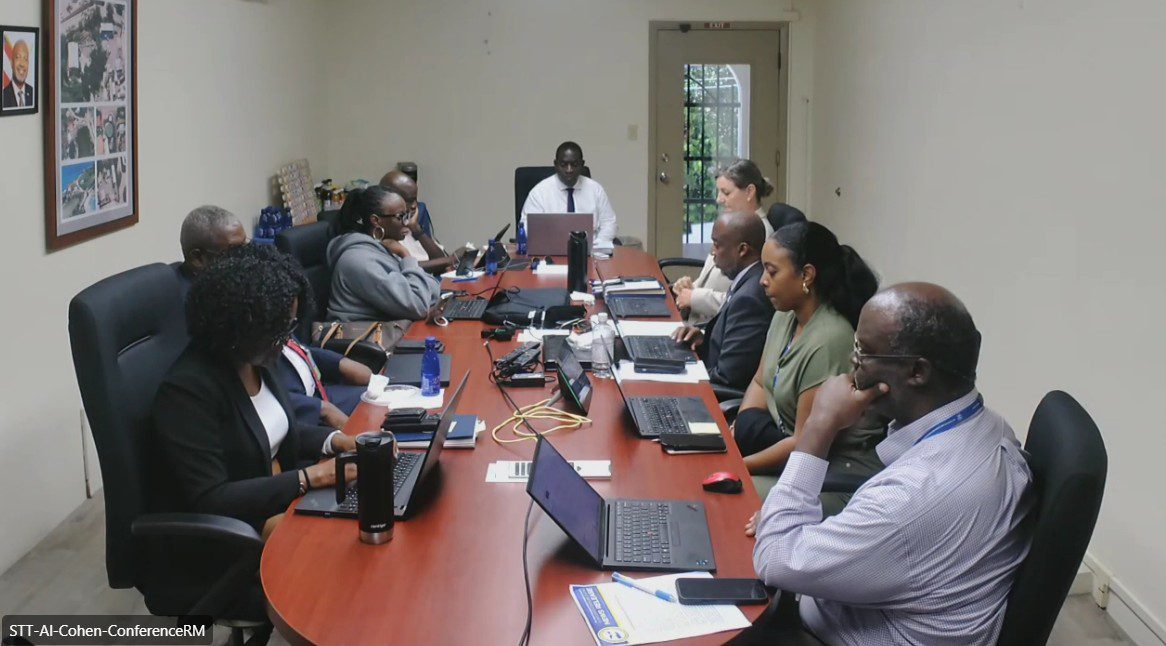
The V.I. Water and Power Authority Governing Board convened Thursday. (Screenshot from Thursday’s meeting)
Two weeks after the V.I. Water and Power Authority governing board voted to revoke the utility’s contract with liquid petroleum gas supplier Empire Gas Company, WAPA chief executive Karl Knight told board members Thursday that the utility entered into a temporary supply contract with the Puerto Rico-based Empire while the utility reissues a request for proposals.
The board narrowly approved the initial contract with Empire in July, but the award was criticized after it became known that WAPA gave up on the RFP process and negotiated directly with Empire. Board members ultimately voted to rescind the contract during an emergency meeting earlier this month and authorized Knight to find a temporary supplier. On Thursday, he reported that the utility is sticking with Empire for the next six months.
“They provided a fairly decent rate of fifty-one and a half cents, which is a reduction from what we’re currently paying on our current fuel contract, and so we look forward to that new partnership — albeit on a temporary basis,” he said. “But it does mark the transition from what has been a more exclusive arrangement for the last upwards of a decade.”
During his report to board members, Knight also noted that the utility weathered the effects of Hurricane Erin and did a “fairly good job” restoring power to the territory.
“Most of our issues, of course, it’s just the wind,” he said. “It’s not the rain, it’s really the lightning strikes as well as the wind blowing debris and trees in the lines.”
Knight also addressed a recent visit from Acting U.S. Interior Department Assistant Secretary William Hague, who toured the Richmond power plant this month.
“He came just in time to see our sargassum-covered bay,” Knight quipped, “and to get a first-hand understanding of why that is a challenge — why at one point, it rose to the level of a national disaster declaration — and the fact that it does threaten the ability to produce potable drinking water on the island of St. Croix.”
The report came after board members approved a full slate of federally-funded resiliency contracts, including a three-year, $2,322,500 award to Stanley Consultants to manage waterline replacement projects on St. Croix, St. John, and St. Thomas, and a $4,485,000 addition to the utility’s contract with Barkley Technologies to harden secondary distribution infrastructure. The board approved a $7,627,473 contract with Haugland VI to underground electric infrastructure in Christiansted as well as two no-cost extensions to lines of credit with FirstBank and Banco Popular.
“The benefits for this are that the authority has a weak cash position currently and is not in a position to repay all of these facilities in full at this time,” WAPA chief financial officer Lorraine Kelly said. “And it is in our best interest that the expiry of these facilities be extended as proposed and offered by the bank.”
The V. I. Public Finance Authority Board of Directors authorized preliminary contracts in the plan to rebuild the Juan F. Luis and Roy L. Schneider Hospitals at its meeting Thursday.
Both contracts went to Clark/MCN USVI. The preconstruction contract for the Gov. Juan F. Luis Hospital and Medical Center has a value not to exceed $139 million, lasts 18 months, and covers preconstruction services. Upon completion, authorization will be sought for contract amounts to complete subsequent phases.
The one for Roy L. Schneider Hospital and Schneider Regional Medical Center has similar details but was approved not to exceed $173 million.
Board member Dorothy Isaacs said she was not comfortable with the method of issuing contracts. She called it piecemeal. She referred to the past, where Virgin Island projects because of contract malfunctioning, were delayed.
Office of Disaster Recovery Director Adrienne Williams-Octalien, who presented the projects as part of the Rebuild USVI Initiative, said the method helped to “get the projects started and moving.”
Board member Keith O’Neale said he had read that many projects were being done this way and could be “very successful.”
He said if this method had been used for the Paul E. Joseph stadium and other projects, the Virgin Islands would not be in the situation it is in today. The Paul E. Joseph Stadium project has spanned more than 12 years, with repeated funding allocations, shifting timelines, and limited visible progress.
Gov. Albert Bryan, who chaired the meeting, said the process might be more “laborious” but was “a good move.”
According to the ODR website, the Juan F. Luis Hospital is to be completed in the spring of 2031 at a cost close to a billion dollars.
Preconstruction services, according to ODR, include the completion of designs, constructability reviews, and value engineering.
Issacs also had questions about authorizing ODR to enter into a lease with Henry Properties for office space located at 1AH Estate Diamond first and second floor suites for the St. Croix ODR staff.
She said that adding what appeared to her to be about a $1 million in building improvements for a five-year lease appeared excessive. This time, O’Neal agreed with her. The resolution was amended to make it a 10-year lease.
According to an email from ODR’s communication office, “For the period between Sept. 1, 2025, and Feb. 28, 2027, the cost is $63,806.94 per month, which includes build-out, and for the period between March 1, 2027, and August 31, 2030, the cost is $37,050 per month.”
After a lengthy executive session, the board approved obtaining extended lines of credit at local banking institutions for $200 million, some of which could be used to help the government with critical needs. The credit would be repaid with federal money.
Board members Kevin McCurdy and Julio Rhymer also attended the meeting.
Chevell Simeon will lead VIUCEDD’s upcoming IEP training series Sept. 9 and 11, offering parents and educators practical tools to better support students with disabilities. (Shutterstock image)
The Virgin Islands Center for Excellence in Developmental Disabilities is continuing its commitment to supporting families and professionals with a new training series, “Inside the IEP: A Comprehensive Guide for Educators and Parents,” scheduled for Sept. 9 and 11.
The initiative comes in direct response to concerns raised at VIUCEDD’s annual Autism Conference in April 2025, where many attendees described the Individual Education Program process as overwhelming and intimidating. Recognizing the vital role IEPs play in securing the proper educational supports for students with disabilities, VIUCEDD has designed this training to provide clarity, confidence, and actionable strategies for those navigating the system.
“The general feedback that we’ve gotten from the community is that the IEP process is intimidating. By offering this series, we hope to give both parents and educators a fresh, new outlook on the process, which should be a rewarding and collaborative experience. All are welcome: parents and caregivers, teachers, administrators, paraprofessionals, counselors, and anyone else who engages in the IEP process,” said Khalifa Thomas, assistant director at VIUCEDD.
Leading the workshop series is Chevell Simeon, a respected educator, autism advocate, and founder of the Virgin Islands Parents of Autistic Children. As both a professional and an Autism Mom, Simeon brings invaluable expertise and lived experience to the sessions.
Participants can expect practical tools for developing and implementing IEPS, as well as a deeper understanding of students’ rights and how to advocate effectively within the education system. One of the goals of the training is to break down the process into clear, manageable steps, allowing families to focus on ensuring that their children receive the education and support they deserve.
The IEP Training Series is open to families, educators, and professionals invested in improving outcomes for students with disabilities.
Community members who are interested in participating in the workshop series can register here.
For more information, contact Khalifa Thomas at 340-693-1322 or khalifa.thomas@uvi.edu.
Guests will gather Sept. 6 for The Villa Wealth Lab, where networking, panel discussions, and hands-on training will combine in a luxury setting focused on financial growth. (Shutterstock image)
The Wealth Collective, founded by visionary Kyle Sexius, invites the community to participate in “The Villa Wealth Lab,” a one-day mastermind and mixer designed to equip Virgin Islanders with the tools, strategies, and connections needed to turn ideas into income.
This event, scheduled for Saturday, Sept. 6, blends luxury, learning, and launching into an immersive wealth-building experience. “The inspiration came from the same reason I started The Wealth Collective. Too many times, in the Virgin Islands, people feel isolated in their goals. I wanted to create a collective that goes beyond just one event, where people can connect, collaborate, and grow together,” Sexius said.
Attendees of the event will have opportunities to engage with entrepreneurs, executives, and innovators through panel discussions, networking, and one-on-one training. The topics span essential areas of modern wealth building, including structuring and growing a business, marketing and branding techniques, writing winning sponsorships and grant proposals, monetizing social media content, using credit for business and real estate, and building wealth through life insurance.
It was important to Sexius that the theme of Luxury, Learning, and Launching be one that was chosen with intention. “Luxury is about changing the environment; we tend to learn better in inspiring spaces. Learning is about the financial literacy tools we plan to share and launching is about action, helping people to take the next step in their journey,” Sexius said.
With the cost of living rising and limited job opportunities in the territory, Sexius views financial literacy as an important step in building prosperity for Virgin Islanders. “We are at a turning point. The old ways just aren’t working. When you have a community of people learning and growing together, it shifts the culture,” says Sexius.
Tickets range from $50 for virtual access, $75 for General Admission, $100 for VIP and $350 for an all-inclusive bundle, with food included for ALL in-person attendees. The event begins at noon
For more information and to reserve tickets, click here.
“We are building a culture of connection, accountability, and growth. The impact I want is generational, with families breaking cycles, community creating wealth, and young people seeing that dreams are possible right here at home,” Sexius said.
A St. Thomas horse owner sued the district’s Horse Racing Commission and its members this week after they barred seven-year-old Guillaume over concerns about the horse’s fitness. (Source file photo)
The owner of the purse-winning Guillaume took the St. Thomas-St. John Horse Racing Commission to court this week after they barred the seven-year-old horse from future races over fitness concerns.
Arturo Watlington Jr., an attorney who formerly chaired the V.I. Elections Board and a longtime horse owner, said in a complaint filed in V.I. Superior Court Tuesday that another veterinarian had cleared the horse to race and suggested that a conflict of interest existed because the commission’s veterinarian, Dr. Laura Palminteri, is also a voting member.
“Further,” he wrote in the complaint, “there is no written veterinary rules or standard as exist in other jurisdictions which the defendants or their representatives can rely upon to authorize the prevention of a race horse from participation in a race days or weeks prior … to that event.”
Watlington told the Source Wednesday that he’s been part of the Virgin Islands horse racing community for decades and that just this week, he scratched an injured horse from a race scheduled for Sunday.
“I cannot run an injured horse; I will not run an injured horse,” he said. “That’s what you can really write: Arturo Watlington Jr. would not run a horse that he believes, who his trainer believes, is injured.”
Watlington wrote in the complaint that he purchased Guillaume in Florida, where he raced three times and “at no time … was the horse restricted from racing in either nationally accredited racing jurisdictions or by any state or track veterinarian.” The horse was later moved to Puerto Rico, where he raced four times, before arriving in the U.S. Virgin Islands. He raced at the Clinton E. Phipps Race Track three times and took first place on May 2 and second place on July 5, “making him the number one money earning horse thus far in 2025.”
According to exhibits attached to Watlington’s complaint, Palminteri emailed the owner in April after a veterinary exam, noting both front fetlocks had “no mobility when attempted flexion” and “Grade 1 lame Right front limb.”
“At this time ‘Guillaume’ is unfit for racing and is not racing sound,” she wrote. “It is highly advised that this horse be retired from racing.”
Despite the horse’s subsequent successful races, Palminteri continued to voice “grave concerns” about his fitness and wrote in a July email that his front fetlocks were “completely fused.”
“These joints should flex 90 degrees and his do not flex at all,” she wrote, noting that the joints should be acting as shock absorbers to lessen strain on tendons, ligaments and bones. “Despite his limitations, he has a big heart and races hard. This also increases his risk factors. [If] he continues to race, there is a high probability of breaking down on the track. He has treated you well and deserves to be retired a winner and not breakdown [sic] on the track. I strongly urge you to retire the horse to his next career. He will not pass the next veterinary examination.”
Watlington replied by noting that Guillaume consistently trains at the track four days a week and spends two at the beach without issue and that his own veterinarian, Puerto Rico-based Dr. Randi Armand, disagreed with Palminteri’s assessment. According to Watlington’s complaint, Horse Racing Commission members met in August without Watlington’s knowledge to affirm Guillaume’s racing ban.
The Clinton E. Phipps Race Track reopened last year, but horse racing in the territory got off to a rocky start after multiple breakdowns. Three horses had to be euthanized after a disastrous race day in December, which prompted a temporary closure and commission investigation into the track surface. The track reopened in time for the 2025 Carnival Races, and HRC Chair Hugo Hodge Jr. said the surface was never an issue.
“Some of the horses were lame,” he said. “We put things in place — the vet’s doing their job to make sure lame horses don’t run, and that’s all we got to say.”
The case may ultimately be heard by a judge in the St. Croix district. Since Watlington filed his complaint Tuesday, two St. Thomas judges have already recused themselves. Superior Court Judge Denise Francois noted that Hodge is a close family friend, and Judge Carol Thomas-Jacobs noted that Watlington’s wife is a judge in the same district.
Lt. Gov. Roach speaks at a press conference about the progress of the Virgin Islands’ Street Addressing Initiative. (Screenshot from the Office of the Lieutenant Governor Facebook livestream)
The Virgin Islands are on track to become the first place in the Caribbean with a comprehensive mapped street network, as officials announced that 97% of roads and addresses in St. John have been completed as part of a territory-wide street addressing initiative.
“St. John is distinguished as the first island with a total urban and rural grid, where you can be taken from one place to the other, following the road signs,” said Lt. Gov. Tregenza A. Roach at a press conference Wednesday, referencing travelers using popular mapping software. “We are the first place in the Caribbean that will have an urban grid of this nature.”
Over 70% of named roads across the territory have been addressed, with full project completion, including signage, targeted for summer 2026. Chris George, director of the Geographic Information System, said the territory is now ready to submit the updated addresses to major digital mapping platforms and public agencies. “We are in a good place to do our official submission to the global mapping engine — Google, Apple Maps, Esri — as well as all the public-facing agencies that need the data,” he said. “Whether it’s Public Works, the Department of Health, or 911, all of that data submission is happening this week.”
The initiative, now in its final phase, aims to provide accurate addresses for all roads in the territory, improving emergency response, public safety, and business services.
“We have more elderly people living alone, so it is vital that we’re able to access these people quickly,” Roach said. “When we talk about public health and safety, it’s critical. But then also, this is a major improvement for business. It results in effective delivery services.”
Even with those practical benefits, Roach acknowledged that the territory’s current system of giving directions is rooted in a long-standing cultural practice.
“All of us who have traveled throughout the Caribbean know how people give directions,” Roach said. “You go down the street, and then you’re going to see a big pink house, and then after … you make a left, and then you go past the mahogany trees … make a left there, and then it’s the pink and white house.”
Roach noted that while landmark-based directions can be culturally beneficial — helping residents learn and recognize places in the community — they are not the most efficient way to navigate. “That might be nice from a cultural standpoint, because it helps you to identify landmarks,” he said. “If somebody references a point by a landmark, now you learn a landmark. But it is not the most efficient means of getting somewhere, especially if there’s a person waiting for assistance.”
In keeping with that focus on culture, the street addressing initiative is designed not only to modernize navigation and emergency response, but also to reflect and involve the community. Community groups and residents have played a significant role, particularly in St. John, where local activists and organizations helped achieve 97% completion of addresses. “We had the community groups in St. John. We had activists in St. John. Everybody came together, and that is why we were able to complete St. John first,” Roach said.
Roach said the project creates space for neighborhoods to honor their own history. “This has really become an opportunity for community dialogue — people who lived here, events that took place here,” he said. “How do we enshrine these things in our history so that people will come along? This is the opportunity to say, ‘I want a road named for Mr. So-and-so,’ because whenever the children were coming home, he used to act like the school crossing guard and help them cross the street safely. So this gives an opportunity for us to look at and enshrine some of these people.”
Roach emphasized that the street-naming initiative is a community-driven process, not dictated by a single individual. “You come in, you get a form, and then you speak to the people in your community, you speak to property owners on that road, and we get a certain percentage of people to agree. Then that name is added,” he explained. Some roads, however, were named by the Legislature and require a formal legislative petition to change. “Some of the roads have been named by the Legislature, so we’re not able to change those, but you can petition the Legislature as well,” he said.
The project is currently at the execution stage for street sign contracts in St. John, with every intersection set to receive a street name sign, including two illuminated highway signs at Gifft Hill and Bordeaux Mountain. Once all three major islands and outlying keys are complete, officials plan to make a formal proclamation of a fully functioning system.
“We’re looking at summer 26 completion time, but the addressing portion should be done before that,” said George.
Officials encouraged all residents, from individuals to neighborhood groups, to participate in the final phases of the project, ensuring that the new system is both functional and representative of the Virgin Islands.
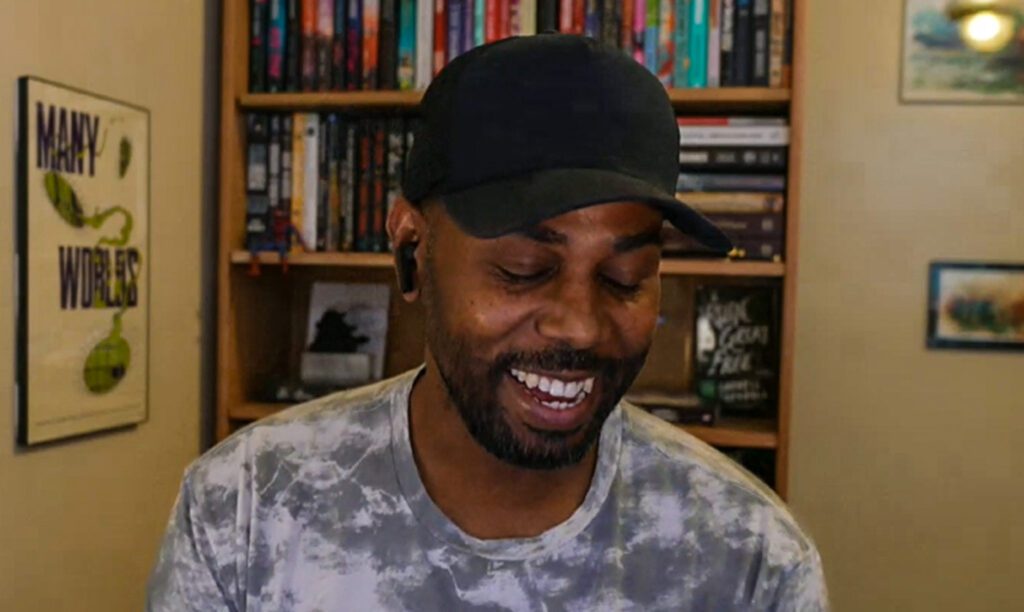
Author Cadwell Turnbull is set to release “A Ruin, Great and Free” in September, the final installment of his genre-bending Convergence Saga (Virtual interview screenshot)
Cadwell Turnbull didn’t set out to be a writer. As a boy on St. Thomas, he instead imagined himself a scientist, but when a middle school teacher praised a last-minute essay on “The Diary of Anne Frank” and asked if he had ever considered becoming an author, something clicked.
He started writing and never really stopped.
Years later, that spark became “The Lesson,” a debut novel that planted alien visitors on a version of St. Thomas not so different from the one he knew, forcing its characters — and readers — to confront questions of power, resistance, memory, and what it means to be a good neighbor in extraordinary circumstances. He wrote the first two-thirds over years, then, after a well-timed introduction to a literary agent, finished the rest in a nine-month sprint. That rhythm — slow build, intense push — has become a hallmark of his creative process.
Now, Turnbull is on the cusp of releasing the final book in “The Convergence Saga,” his genre-defying trilogy that blends speculative fiction with searing social commentary. The new novel, “A Ruin, Great and Free,” arrives in September, and it brings with it the full weight of a journey that began with “No Gods,” “No Monsters,” and deepened in “We Are the Crisis.” Together, the series unfolds across fractured timelines and overlapping lives, weaving a universe where monsters are real, magic breathes just beneath the surface, and society teeters on the edge of collapse — or convergence.
Unlike “The Lesson,” which grew organically from a series of short stories, “The Convergence Saga” was always meant to be a trilogy. It begins with individuals discovering the monstrous within and around them, moves to disparate groups grappling with visibility and power, and culminates in community — fragile, complex, and radical in its togetherness. This final book, Turnbull said in a recent interview with the Source, closes the loop. Alliances are tested. Worlds collide. The hidden monster city of Moon is no longer safe, and even the gods must make choices.
“The idea behind ‘The Convergence Saga’ was always about trying to articulate what I was feeling about the world in a way that didn’t feel direct but was still emotionally true,” Turnbull said. “I’ve always been interested in how we survive systems that aren’t built for us — and what we’re willing to become in order to change them.”
Throughout it all, Turnbull remains grounded in his approach. He writes 250 words a day —just one manuscript page. “If I do more, that’s great, but 250 words is the floor,” he said. “The goal is to keep the story close, keep it alive.”
That practice of staying close to the story is what allows Turnbull to bring nuance and intimacy to even the most fantastical of plots. His characters struggle with grief, injustice, and the ache of not knowing where they belong. They navigate neighborhoods and family dinners with the same urgency as they do magical disappearances and political uprisings. For all the supernatural elements, his books never forget that the most profound monsters— and miracles — live in plain sight.
“I’m writing about monsters, but I’m also writing about family,” he said. “I’m writing about community and what happens when it breaks — and what it takes to rebuild it.”
As the saga comes to a close, Turnbull said he isn’t necessarily slowing down. A short story collection is on the horizon. He’s collaborating on a shared-world project with other writers. And he’s beginning a new novel — a political horror story told through a single voice, a departure from the chorus-like structure that defined his trilogy.
Still, no matter the genre or structure, the Virgin Islands remains a constant presence. It’s in the cadence of his prose, the complexity of his characters, and the landscapes they move through. His stories may span galaxies, but their emotional gravity pulls from home.
“I didn’t always know how to talk about where I’m from,” Turnbull said. “But the more I wrote, the more I found my way into it. “The Lesson” is set on St. Thomas for a reason. I wanted to explore what it means to live in a place with a history of invasion, and how that shapes the way we respond to something extraordinary – like aliens landing here, instead of in a big city. Our perspective is different. And that perspective deserves to be seen.”
As September approaches and “A Ruin, Great and Free” readies for release, Turnbull reflected on the journey with humility and wonder. He built a world, yes. But more than that, he invited readers to step into it — to imagine differently, feel deeply, and ask what kind of future we’re building, together.
“There’s still so much to say,” he says. “And I want to keep saying it.”