Superior Court Judge Denise Francois ordered the records related to the case of Mohammed Salem sealed. (Shutterstock image)
The judge overseeing the pretrial measures ordered in the case of Mohammed Salem has set a February 2026 hearing date to assess his fitness for trial.
Salem was arrested on St. Thomas’ North Side in March 2025, accused of staging a knife attack in the family home that killed Hakim Salem — his father — and wounded Jamil Salem — his brother.
Also included in the order issued in mid-August was a directive for the clerk of the court to seal the records related to the case.
Since his March 5 arrest on charges of murder and assault, Salem has been held in detention subject to mental health evaluations because of actions linked to the case and because of threatening and sometimes violent behavior while in custody.
At a hearing held July 23, Superior Court Judge Denise Francois gave the Health Department 30 days to transfer Salem to a treatment center in Florida that informed authorities in the V.I. that they had an available bed. The directive was issued after the court received word from the Bureau of Corrections that Francois said she had been advised that Salem had become a danger to himself and to prison guards at the John A. Bell Adult Correctional Facility. Previous appeals to the court in May led Francois to permit forced administration of those medicines.
Information that was available on the Superior Court’s public access portal for a brief time after Francois’ order showed the court received a response from officials at Health on or around Aug. 8.
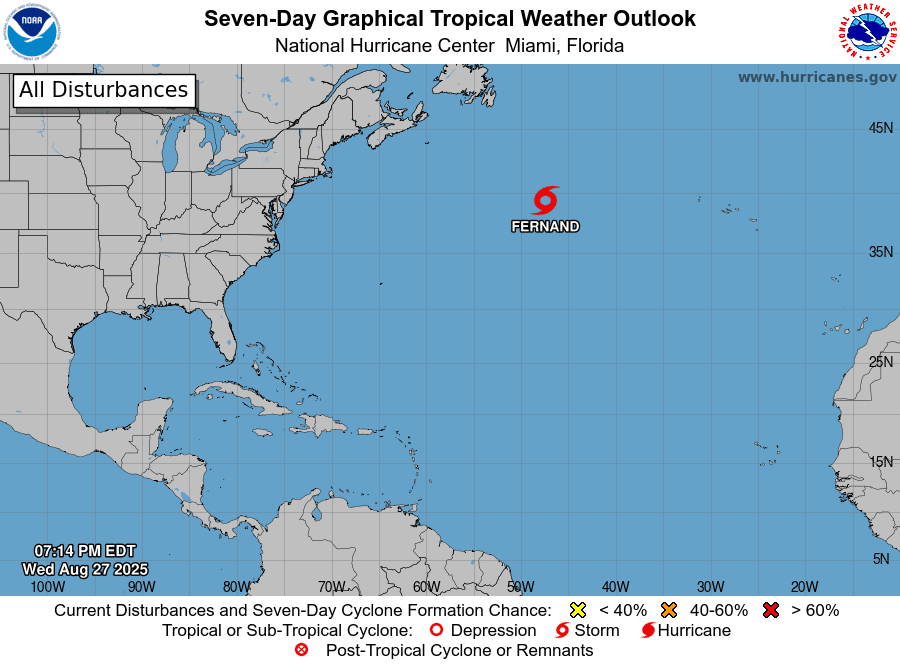
The NHC is currently monitoring Tropical Storm Fernand across the Atlantic basin. After Fernand, the NHC expects a brief lull in activity across the Atlantic. (Photo courtesy NHC)
Meteorologists say the Atlantic basin may be entering a brief lull in tropical activity, though conditions are expected to turn more favorable for cyclone development in September, when hurricane season reaches its climatological peak.
As of Wednesday, the National Hurricane Center continued to monitor Tropical Storm Fernand in the North Atlantic, though the system is expected to dissipate soon. Additional development is considered unlikely until a tropical wave emerges off the west coast of Africa on Sunday, with a low chance of development as it moves across the Atlantic next week.
The pause comes as factors, including dry, dusty Saharan air, remain across the Atlantic Main Development Region, creating hostile conditions for tropical waves to organize. With limited moisture and unfavorable vertical winds, storm formation is forecast to remain suppressed into early September.
Hurricane Forecaster’s Perspective
The Source contacted Alex DaSilva, AccuWeather’s lead hurricane expert, to better understand why the Atlantic may not support tropical development in the coming days.
“Currently, Saharan dust and dry air conditions are present across the Atlantic basin, which can help to inhibit development, and there is also a lot of sinking air in the Atlantic basin,” DaSilva said. “For active patterns to develop, you usually look in areas of high moisture and good vertical motion. Through at least Sept. 3, we expect dry and sinking air to dominate across the Main Development Region. This will make it very hard for tropical waves to develop,” he explained.
DaSilva cautioned that, while current conditions may make it difficult for tropical cyclones to develop, pauses during hurricane season don’t usually continue for a long period of time. He noted a possibility of some development off the southeast U.S. coast, though the NHC has not highlighted the area as of Wednesday.
“While pauses like this are unusual, they are not unheard of, and there was a long pause last year as well,” DaSilva said. “Still, it’s rare to go through a Labor Day holiday weekend without a named storm in the Atlantic basin, and in 2024, there were also no cyclones on Labor Day. It’s been more than 30 years since we experienced back-to-back Labor Days without a named storm in the Atlantic basin. The last time that happened was in 1991 and 1992. This could happen again this year if nothing develops off the southeast coast.”
How Long Will the Pause Last?
Assuming no cyclones develop in the coming days — which forecasters caution is never guaranteed — the question becomes how long the quiet stretch could last. DaSilva shared his thoughts on when conditions may turn more favorable for tropical development. He explained that a Madden-Julian Oscillation wave may approach the region in the coming weeks, enhancing development potential.
The National Weather Service defines the MJO as “an eastward-moving disturbance of clouds, rainfall, winds and pressure that traverses the planet in the tropics and returns to its initial starting point in 30 to 60 days on average.”
“I think things will pick up during the end of the first week of September and beyond,” DaSilva said. “It looks like there will be an MJO wave coming through, which can help to increase shower and thunderstorm activity across the basin. There will also be more vertical motion across the basin, which can help lead to more storms.
“Also, we expect the dry, dusty air to back off a little bit during this time,” he said. “Atmospheric conditions conducive to tropical development are forecast to return by the end of the first week of September, just as cooler water temperatures rebound in the wake of Hurricane Erin. The tropics could be quite active by mid-September,” DaSilva added.
“Sea surface temperatures in the Gulf are extremely warm. This concerns me a lot because if a storm is able to get into the waters of the Gulf, it could rapidly intensify,” DaSilva cautioned.
Nearing the Peak of Hurricane Season
Indeed, the Atlantic hurricane season reaches its climatological apex around Sept. 10, with the majority of storms forming between the second half of August and early October. As sea surface temperatures remain elevated and vertical wind shear begins to relax, residents across the USVI and Puerto Rico are advised to remain vigilant — even during this current lull — for signs of renewed tropical development in the weeks ahead.
As the season approaches its peak, DaSilva said another weather phenomenon to watch is the El Niño–Southern Oscillation. ENSO, which encompasses El Niño, La Nina and a neutral phase, can influence atmospheric conditions in ways that either enhance or inhibit cyclone formation.
“Officially, we are in a neutral phase of ENSO. So that means that water temperatures along the equator in the Eastern Pacific are near average,” DaSilva said. “It is worth noting that we have seen a cooling trend in this area over the last few weeks,” he added.
“Back in March, when we released our forecast for the season, we were concerned that we could start to see a shift toward a La Niña during the second half of the season,” DaSilva stated. “This is what happened last year, and we saw a very active second half of the season. While La Nina technically was never declared during the 2024 hurricane season, it got close enough that the atmosphere started acting like a La Niña.”
“I have the same concern for this year,” DaSilva warned. “La Nina typically yields more activity in the Atlantic due to less frequent periods of vertical wind shear. Tropical storms and hurricanes are more likely to develop in areas with lower wind shear. I would expect a very busy second half of the season across the basin,” he predicted.
NOAA Global Tropics Hazards Outlook
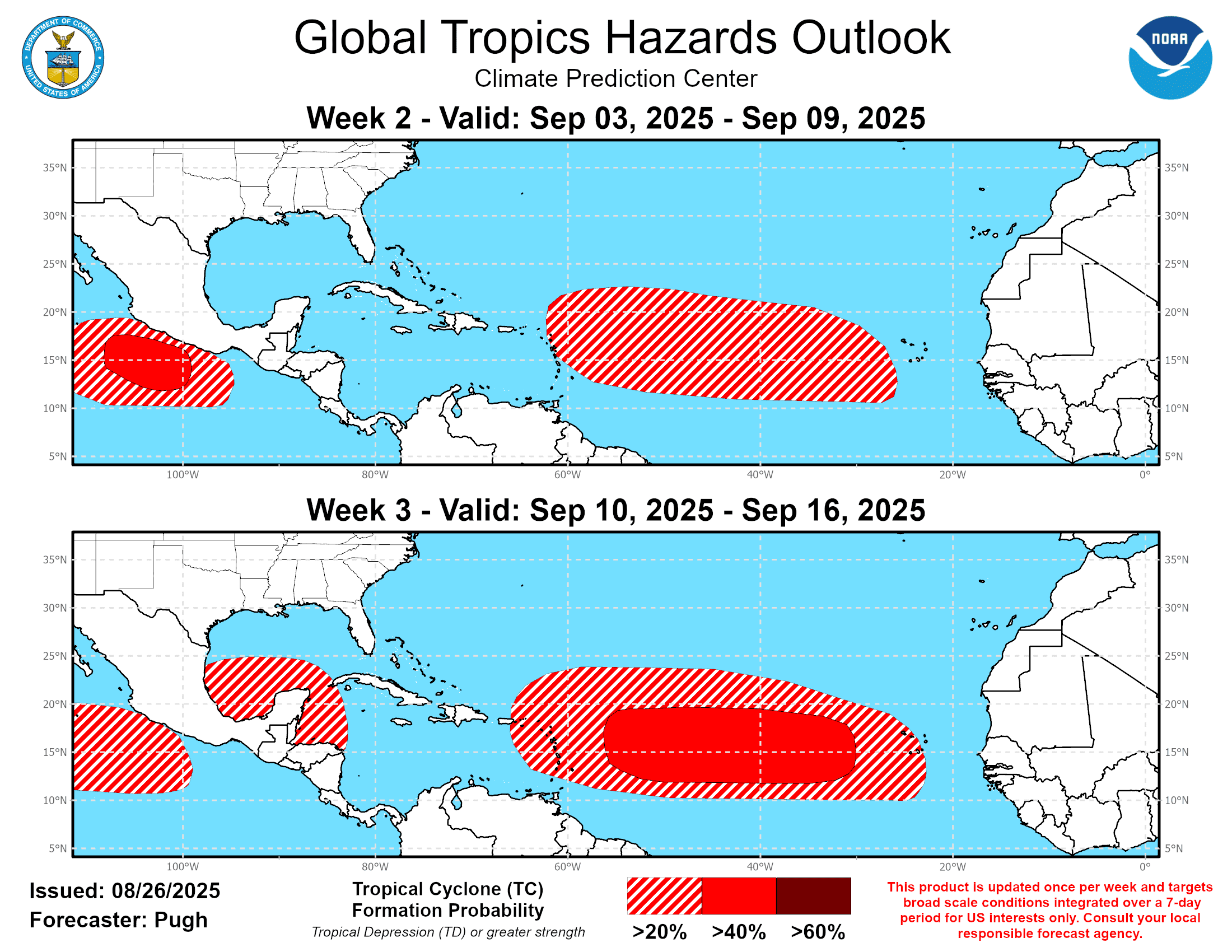
Looking ahead into September, the likelihood for tropical development is expected to increase, according to a Global Tropics Hazards Outlook released Tuesday, Aug. 26. The forecast tool, which is issued weekly by the National Oceanic and Atmospheric Administration’s Climate Prediction Center, provides insight into potential activity across tropical basins up to three weeks in advance.
NOAA’s Climate Prediction Center released its weekly Global Tropics Hazards Outlook on Tuesday. NOAA highlighted areas near the western Caribbean and within the Main Development Region — the zone between the west coast of Africa and the Caribbean — as having increased chances for tropical activity in September. (Photo courtesy NOAA)
In its latest update, NOAA said that the Atlantic basin may experience a 20-40% chance of cyclonic development across the Main Development Region — the zone between Africa and the Caribbean — during the ‘Week Two’ outlook period, which runs from Sept. 3 until Sept. 9. A 40-60% chance of tropical cyclogenesis is forecast in the ‘Week Three’ outlook, running from Sept. 10 through 16.
Areas across the western Caribbean Sea and the southwestern Gulf are also anticipated to see an increased chance of development.
Meanwhile, the Eastern Pacific basin, which continues to remain active, is also expected to experience an elevated risk for cyclonic development in the coming weeks.
NWS Details and Local Weather Forecast Information
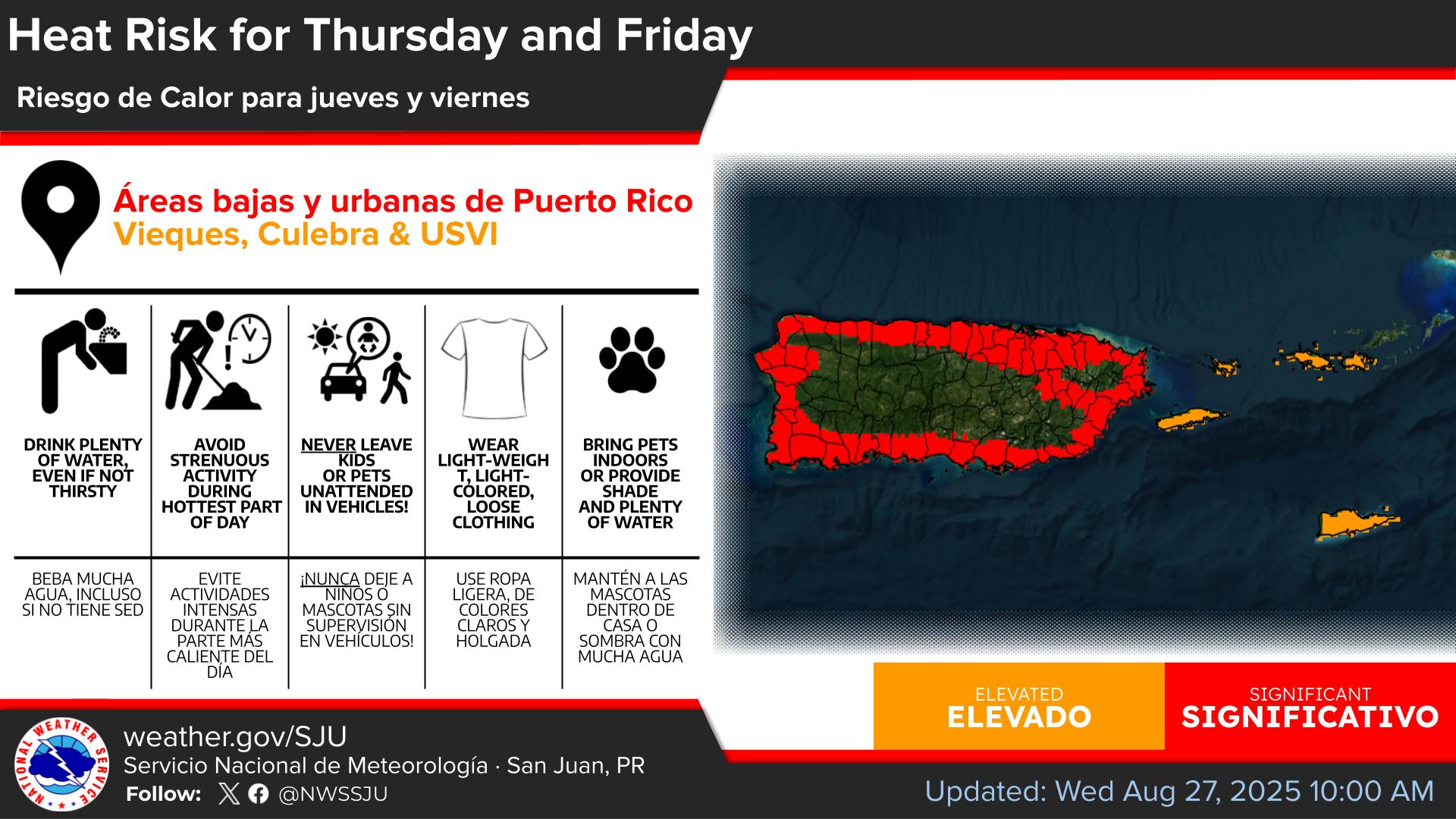
While it comes as good news that the tropics are relatively quiet, the NWS in San Juan, Puerto Rico, has warned that temperatures will be very warm, particularly on Thursday and Friday. The agency continues to remind residents to stay as cool as possible to avoid heat-related illnesses.
The NWS in San Juan, Puerto Rico, expects hot temperatures across the local islands for the next few days. Heat alerts could be issued across the region. (Photo courtesy NWS)
A weak tropical wave, located east of the Leeward Islands as of Wednesday afternoon, may also help increase the chance of precipitation across the local islands.
“For the U.S. Virgin Islands, heat advisory conditions are expected during the second part of this week, and passing showers will continue to move through from time to time,” forecasters at the NWS said on Wednesday afternoon.
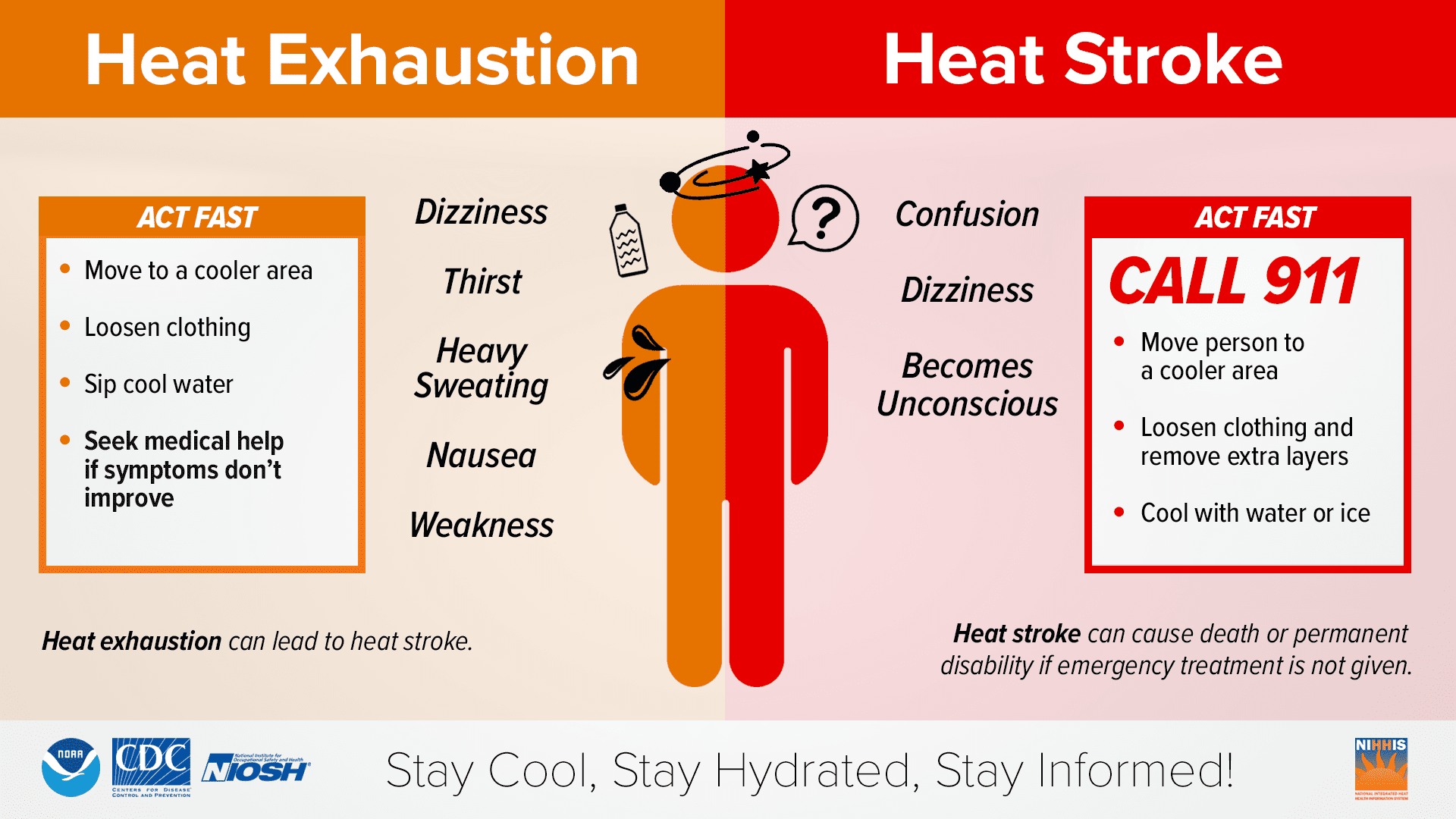
Information about heat-related illnesses. (Photo courtesy NWS)
Finally, a fading northerly swell may continue to result in choppy seas and an elevated risk of rip currents. Swimmers and boaters are advised to exercise caution.
USVI residents and visitors are encouraged to continue to remain prepared. Weather information is available from the NWS, the NHC, and NOAA.
The local weather forecast for the U.S. Virgin Islands is regularly updated on the Source Weather Page and VI Source YouTube Channel. A weekly Tropical Outlook article from the Source is also published throughout hurricane season to provide in-depth updates.
Residents and visitors can find additional weather alerts and preparedness information from the Virgin Islands Territorial Emergency Management Agency.
Angel E. Dawson Jr. (Submitted photo)
This marks my third “Annual Overview of Operations” as Administrator and Chief Executive Officer of the Government Employees’ Retirement System.
In my first Overview of Operations in 2023, I spoke, metaphorically, about the GERS glass being half full, and not half empty.
In my second Overview of Operations last year, I spoke about the GERS being a “glimmer of light” in an otherwise gloomy budget season. And, I trust that we have brought some more “glimmers of light” again this year in what has been another gloomy budget season.
In my third Overview of Operations this year, I will conclude by offering a detailed diagnosis of the Government Employees’ Retirement System of the Virgin Islands – a 65-year-old patient that has faced life-threatening conditions over the years.
The American Hospital Association advises physicians to use the following one-word conditions in describing a patient’s condition to those inquiring, including the media:
Good – Vital signs are stable and within normal limits. Patient is conscious and comfortable. Indicators are excellent.
Fair – Vital signs are stable and within normal limits. Patient is conscious but may be uncomfortable. Indicators are favorable.
Serious – Vital signs may be unstable and not within normal limits. Patient is acutely ill. Indicators are questionable.
Critical – Vital signs are unstable and not within normal limits. Patient may be unconscious. Indicators are unfavorable.
Dead – Vital signs have ceased. Patient has died.
I’m happy to paraphrase the American author and humorist, Mark Twain, by stating that “any reports of the GERS’ death were exaggerated.” So, fortunately, we can rule out “Dead” from the conditions that we will consider here today.
Similarly, however, we can state definitively that, despite the positive indicators shared with you thus far today, the GERS’ vital signs are not within normal limits. Based upon the Preliminary September 30, 2024, Valuation Results prepared by Segal, our actuarial firm, GERS has a Funded Percentage of 14.1%. as outlined earlier. That is to say, with an Actuarial Accrued Liability (“AAL”) of $3.91 billion, and a Market Value of Assets totaling $552 million, at September 30, 2024, GERS only has 14.1 cents in assets for every dollar of liabilities, on an actuarial reserve basis. To place this 14.1% Funded Percentage in proper context, a commonly used rule of thumb for what’s considered to be a “good” funding ratio is 80%. Even if one were to take the present value of the Funding Note, which is $1.65 billion, utilizing a 6% discount rate, the Funded Percentage would be 56.3%. Considerably better than 14.1%, but far less than fully funded.
GERS is a member of the National Conference of Public Employee Retirement Systems (“NCPERS”). According to its 2025 Public Retirement Systems Study, system-funded percentages in the United States had been averaging between 70 – 80% since the first half of 2020 and reached an average of 83.1% in 2024.
With a Funded Percentage of 14.1% (or even 56.3%), then, the GERS’ condition cannot be considered “Good” or “Fair,” as these both require the patient’s vital signs to be within normal limits. This leaves just “Serious” and “Critical” for our consideration. The distinction here is whether the patient’s vital signs are unfavorable, in which case their condition is “Critical,” or if the patient’s vital signs are questionable, in which case their condition is “Serious.”
Honorable Members of the Committee on Budget, Appropriations and Finance; other senators present, ladies and gentlemen, my considered assessment of the Government Employees’ Retirement System’s condition is that it has improved from “Critical” but remains “Serious.” The key determinants are:
Some of its vital signs remain unstable, and
Some of its indicators are questionable
I shall elaborate.
Let there be no mistake about it, one reason that the GERS’ condition has improved from “Critical” to “Serious” over the past couple of years is directly related to the historic Funding Note totaling some $3.8 billion over 30 years, or so, that was initiated in 2022.
However, when I state that some of the GERS’ vital signs remain unstable, I refer specifically to the unevenness of the annual cashflows over the thirty-year term of the Funding Note. As I have stated previously, this presents a challenge that must be carefully managed and overcome. To wit, annual contributions from the Funding Note are heavily backloaded, with half of the total contributions being funded in the last twelve years – mostly at the expense of the middle years (Fiscal Years 2033 through 2038).
The challenge, then, is to bridge the gap in the middle years in order to get to the $1.9 billion on the back end. If this is not achieved, the GERS is actually projected to become temporarily insolvent under two different scenarios.
First, an acknowledgment that, at long last, the rum cover-over rate has become permanent at $13.25 per proof gallon. It was an honor to travel to Washington, D.C. this past February at the invitation of Virgin Islands Congressional Delegate, Stacey Plaskett, along with Senate President Milton Potter, Senator Novelle Francis, Senator Kurt Vialet, Senator Marvin Blyden, GERS Board Chairman Dwane Callwood, and the Senate President’s Chief of Staff, Cosme Christian. While there, we met with several members of Congress, or their staff, to advocate in favor of making the $13.25 rum cover-over rate permanent.
Although the rum cover-over rate is increasing permanently, but not retroactively, from $10.50 to $13.25 after December 31, 2025, there is still a risk that the actual Funding Note payouts will be lower than originally anticipated due to lower overall demand in rum consumption. It was previously estimated that at the $10.50 rate, the Funding Note payouts were going to be about $20 million less than originally projected for 2023 and 2024. However, the actual shortfalls during those years were $34 million in 2023 and $56 million in 2024, for a total shortfall of $90 million.
Assuming that the $20 million shortfall due to the lower cover-over rate is accurate, then the estimated shortfalls in 2023 and 2024, due to lower rum consumption, were $14 million and $36 million, respectively. For projection purposes and to quantify the impact of the lower rum consumption risk, scenarios were run utilizing an average shortfall of $25 million per year in the original Funding Note payout schedule, at the $13.25 rate.
Scenario 1
Assumptions:
Payroll Contribution Rate: 23.5%
$25 Million Funding Note Shortfall per year due to lower rum consumption
6% Annual Investment Return
Under this scenario, the GERS is temporarily insolvent from 2033 to 2039 and would need at least $290 million from GVI General Fund revenues to pay full benefits.
Scenario 2
Assumptions:
Payroll Contribution Rate: 26.5%
$25 Million Funding Note Shortfall per year due to lower rum consumption
6% Annual Investment Return
Under this scenario, the GERS is temporarily insolvent from 2036 to 2038 and would need at least $82 million from GVI General Fund revenues to pay full benefits.
Several Additional Observations:
Benefits Payments, Employee Contribution Refunds and Administrative Expenses are projected to be at least $300 Million per year over the next 15 years.
With this in mind, we would ideally want our asset levels not to decline below $300 million to ensure that we have enough liquid assets to pay out retiree benefits in full every year.
Even without lower rum consumption, if the employer contribution rate remains at 23.5% of payroll, GERS assets are projected to go below $300 million during the years 2032 through 2040, at a 6% investment return.
If GERS earns a 4% investment return instead of a 6% return each year, assets are projected to dip below $100 million during the years 2036 through 2039.
For the reasons detailed above, in its meeting of September 26, 2024, and pursuant to Title 3 Virgin Islands Code Section 718(b), the GERS Board resolved that the Employer Contribution Rate be increased from 23.5% to 26.5%, effective January 1, 2025. In its meeting of November 18, 2024, the GERS Board of Trustees changed the implementation date to October 1, 2025. While this medicine may, admittedly, taste bitter, this increase in Employer Contributions is required if the Government Employees’ Retirement System of the Virgin Islands – a 65-year-old patient that has faced life-threatening conditions over the years – is to continue the further progression of its condition from “Serious” to “Fair” and from “Fair,” ultimately, to “Good.”
Mr. Chairman, that concludes my diagnosis and presentation.
Editor’s Note: Opinion articles do not represent the views of the Virgin Islands Source newsroom and are the sole expressed opinion of the writer. Submissions can be made to visource@gmail.com.
Occupational therapist Katie Craig helps a child enjoy playtime in the water on St. Thomas. (Photo from JS Therapies Virgin Islands Facebook)
A new aquatic therapy program on St. Thomas is helping autistic children build swim safety skills while also boosting confidence, emotional regulation and motor development.
The program, run by JS Therapies, takes place at the beach and is part of their growing aquatic therapy offerings. “Our original aquatic therapy program started on St. Croix a couple of years ago through a partnership with the St. Croix Dolphins pool; our physical therapist intermittently offered 6-week aquatic sessions as a complement to traditional land-based therapy,’ said Julie Sommer, occupational therapist and clinic director on St. Croix. “More recently, our team has offered ‘Speech on the Beach’ and ‘OT by the Sea’ as we recognized the unique therapeutic opportunities inherent to beach settings.”
According to Sommer, occupational therapist Katie Craig created the new program on St. Thomas after recognizing a need for a program that teaches customized swim safety and swim skills among the autistic children and families she works with. “She developed and implemented this program with a handful of her current clients and their families by combining occupational therapy strategies with swim safety education, tailored specifically to the unique needs of autistic children.”
That approach is what sets it apart from traditional swim lessons. “Swim lessons usually focus on strokes and technique. Our program starts with safety — asking before going in, staying with an adult, recognizing shallow vs. deep water, and learning how to float or hold onto a rescue tube,” said Sommer
Sommer emphasized that the need for such a program in the Virgin Islands is especially high. Families spend much of their time near beaches, pools, and boats, which makes water safety an important concern. For autistic children, being around water can bring additional risks, and programs like this can provide extra support.
“Families here are surrounded by beaches and pools, and many parents want their kids to enjoy that safely. For autistic children, the risk of drowning is especially high,” Sommer said. “This program gives families a safe, structured way to teach skills that matter most in our island environment.”
Beyond teaching safety, the setting itself is part of what makes the program unique. This new approach doesn’t just stand apart from swim lessons — it also differs from traditional therapy. According to Sommer, the ocean isn’t simply a backdrop for the sessions; it’s an active part of the work being done. The rhythm of the waves and the buoyancy of the water combine to create an environment that helps occupational therapists teach autistic children important skills.
“The ocean itself plays a therapeutic role,” Sommer explained. “The waves and buoyancy help with body awareness and movement, while the water’s pressure has a calming effect. We use that setting to teach safety skills, but also to support confidence, emotional regulation, motor skills, and communication — all of which carry over to everyday life.”
Although designed for autistic children, Sommer noted that aquatic therapy can benefit many others. “Aquatic therapy can also benefit children with sensory processing challenges, motor delays, anxiety, or those recovering from injury,” Sommer said.
The ocean is an important part of life for Virgin Islanders — not only a source of culture and connection, but, as Sommer noted, also a tool that can help children grow. “Aquatic therapy can target so many skills … posture/balance/coordination, strength and range of motion, body awareness and sensory processing, enhancing emotional regulation, supporting executive functioning skills. Swim safety education is essential for ALL children here,” Sommer said.
Sommer emphasized that the program is as much about building confidence as it is about learning skills. “With the right support, every child can find both safety and joy in the water,” she said. “This program isn’t only about skills — it’s about building confidence, creating routines, and giving families tools to safely enjoy the beauty of our beaches together. Our team is passionate about ‘meeting children where they are,’ building on their unique strengths & preferences to create meaningful progress in their ability to fully participate in everyday activities.”
According to Sommer, the program not only builds important skills and confidence, but also lets children enjoy a playful day at the beach. “As OTs, we adapt everything to each child’s sensory, communication, and motor needs, making the beach both therapeutic and fun. In our practice, occupational therapy always looks like PLAY, as we believe that is the key to true meaningful participation, learning, and progress for all children.”
For more information, visit the JS Therapies website.
The USVISF Men’s Premier League heats up as we quickly approach the Big 4 championships.
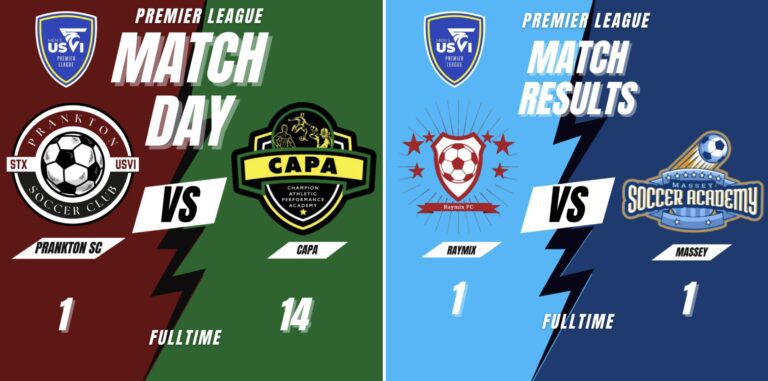
On Sunday evening, St. Croix’s number one-ranked CAPA refused to come off the gas against last-place Prankton SC, securing a flashy 14-1 victory. The action continued on St. Thomas, where Raymix FC held Massey SA to a 1-1 draw to secure second place in their division.
Prankton vs CAPA was a short story, ending in a 14-1 defeat for the winless team at Bethlehem Soccer Complex on St. Croix. Prankton’s lone goal was scored in the 12th minute by Kiran Thomas, an answer to the 8th-minute score by CAPA’s Ramesses Moore McGuinnes. Threvon Thrope and Rakeem Joseph tag-teamed Prankton goalkeeper Andre Thomas, each with first-half hat tricks.
Not satisfied with a 7-1 lead, Joseph opened the second half with an eighth goal. Jamol Yorke followed suit nine minutes later, floating in CAPA’s ninth goal. Moore McGuinnes found the back of the net again, followed by Thorpe, Hasani Edgar Evans, and Davion Bell. Two yellow cards on each side hardly slowed the momentum as CAPA continued their unrelenting front. A last-minute goal by Thorpe sealed the team’s showy 14-1 win.
At Ivanna Eudora Kean High School field on St. Thomas, Raymix FC and Massey SA saw a heated contest that resulted in a 1-1 draw. Bendy Omilus scored Raymix’s only goal in the 27th minute. Each side’s defense fought hard to hold the first half to 1-0, with one yellow card on each side and two last-minute substitutions for Raymix.
The second half was even more gritty as Massey SA grappled for a spot-on the scoreboard. Three quick substitutions resulted in a 68th-minute goal by Jonathan Joseph to tie the game 1-1. As the competition stiffened, tempers flared among players, coaches, and officials. Massey’s Patrice Regala added a red card to his first-half yellow card. Hacheton Sima and Captain Caleb Tarvenier received yellow cards as well. Raymix striker Wood Pierre received the last yellow card of the game, which ended tied at 1-1.
CAPA’s weekend victory helped them break away from Helenites SC, their toughest competitors this season. While CAPA has already solidified their spot in the Big 4, Helenites can steal first place in the St. Croix division by winning their next two games against Rovers SC and CAPA. Last season’s dominant Rovers have maintained a quiet third-place ranking and must win the next two games to have a shot at this season’s championships.
Raymix’s draw against Massey was all the young team needed to punch their ticket to the Big 4. Fans eagerly await their Sept. 7 match against New Vibes SC, the only team to overcome them this season. St. Thomas powerhouse New Vibes has held the number one spot all season and will return to the Big 4.
This upcoming Sunday, Aug. 31, Helenites SC will face off with Rovers SC at Bethlehem Soccer Complex on St. Croix at 4 p.m. LRVI FC and New Vibes SC will battle it out at Ivanna Eudora Kean High School on St. Thomas at 6 p.m.
Contour Airlines launches nonstop jet service linking Dominica, San Juan and St. Thomas. (Photo courtesy Contour Airlines)
Contour Airlines will begin nonstop jet service later this month, connecting Dominica with San Juan, Puerto Rico, and St. Thomas, U.S. Virgin Islands — marking the carrier’s official entry into the Caribbean market, the airline announced in a press release.
The new routes, announced by Contour this week, will operate aboard the airline’s fleet of 30-seat regional jets, offering passengers extra legroom, complimentary snacks, and in-flight service. The carrier will provide the only nonstop jet service between Dominica and both Puerto Rico and the U.S. Virgin Islands, according to the press release.
“We’re thrilled to bring Contour’s brand of reliable, comfortable jet service to the Caribbean,” said Ben Munson, president of Contour Airlines. “Launching service in Dominica is an exciting step for us, and we look forward to making it easier for Dominicans to travel and for visitors to discover Dominica, the Nature Island.”
Flights from Dominica to San Juan will run Tuesdays, Thursdays, Fridays and Sundays beginning Sept. 25. Departures from Dominica are scheduled for 9 a.m., arriving in San Juan at 10:25 a.m. Return flights leave San Juan at 4:15 p.m. and land in Dominica at 5:40 p.m., the press release stated.
Service between Dominica and St. Thomas will begin Sept. 24, with departures from St. Thomas to Dominica on Mondays, Wednesdays and Saturdays at 3 p.m., arriving at 4:15 p.m. The return leg leaves Dominica at 9 a.m. and arrives in St. Thomas at 10:15 a.m., the release stated.
Prime Minister Roosevelt Skerrit of Dominica said the direct service fulfills a request he heard during a visit to St. Thomas. “With the launch of Contour Airlines’ inaugural service, that vision has become reality,” Skerrit said. “This new link strengthens ties between our islands and opens new doors for tourism, trade, and investment. It is a meaningful step toward greater regional connectivity, and I am proud that Dominica can be at the center of this progress.”
Dominica’s Minister of Tourism, Ports and International Transportation, Denise Charles-Pemberton, said the new routes will improve access for visitors, returning nationals and business travelers. “We look forward to working with Contour Airlines as part of our ongoing efforts to support sustainable tourism growth and showcase Dominica’s natural and cultural offerings,” she said.
Carlton Dowe, executive director of the Virgin Islands Port Authority, said the service enhances convenience for residents and visitors in the U.S. Virgin Islands. “With improved access, we anticipate increased opportunities for tourism, deeper cultural exchange, and a positive boost to our economy,” Dowe said. “This milestone highlights the significance of collaboration in maintaining the Caribbean as a premier travel destination worldwide.”
Puerto Rico officials also welcomed the announcement. “We are delighted to welcome Contour Airlines to Puerto Rico with the launch of its new nonstop service between San Juan and Dominica,” said Willianette Robles Cancel, executive director of the Puerto Rico Tourism Company. “This represents an important step in recovering intra-Caribbean capacity and reaffirms our government’s commitment to restoring connectivity via the San Juan hub.”
The family of the late John Hughes is saddened to announce his passing on Aug. 8, 2025.
John Hughes
He was preceded in death by his beloved wife, Oreta Hughes; his mother, Marjorie Hughes-Carty; his father, James Emanuel Carty, his brother, Theophilius Carty, and sisters, Mabel and Isalie Richardson.
He is survived by his daughters: Jan Hughes-Allen, Janice Hughes, and Jackie Hughes; his sons: John Hughes and Johnny Hughes; and his grandchildren: Nakeem Carty, Jahkeem Garray, Je’Lesia Hughes, Nakeisha Sealey, Jonathan Hughes, Nakosi Prentice, Jahkeema Garray, Nakeeya Prentice, Jaheem Garray, Janiya Hughes, and Nakeera Prentice, Nakeel Prentice, Jianna Hughes, Jaquan Hughes, Javon Hughes, Jelanie Hughes, Jaheema Garray, Jahreema Garray, Jahniqua Garray, Jarian Hughes, Janasias Hughes, Janalis Hughes, Larynzo Albernathy, Christopher Highfield, and Nyraliz Suliveres. Great grandchildren: Kayce Prentice, Kohl Sealey, Kayden Matthews, Kosy Prentice, McKayla Hughes, Garray, Zayn Sealey, Kaylee Prentice, Jalyse Hughes, Shakeel Prentice, Jaheem, Hughes Garray Jr., Jhamil Bell, Shakryrie Prentice, Amari Highfield, A’Ryan Highfield, Kasem Cupid, Kelis Abernathy, Azrea Abernathy, Reginald Abernathy Jr. , Madison Lawson.
His memory will also be cherished by his nieces: Shelia Richardson, Carol Carty, Angela Carty, Brenda Carty, and Ruth Richardson; his nephews: Lawrence Richardson, Derick Richardson, Julian Carty, Morris Richardson, and John Richardson; and his cousins: Gloria Richardson, Sandra Carty, Atthea Carty, Grace Richardson, Lilyth Carty, Minlow Carty, Patsy Romney, Gretchen Lake, Lynette Dewaever, Cromfield Moses, Cyril Moses, Nathaniel Romney, Eldon Rey, Namoie Connor, Howard Connor, and Ashton Romney.
In-laws: Rose Carty, Dulcie Richardson, Mildred Connor, and Rosabelle Connor.
Special friends and extended families include: Evert Richardson, Rita Brin, and the Hughes, Carty, Richardson, Niles, Romney, Gumbs, Moses, Connor, Lake, Bryan, Webster, Boirard, Andrew, James, Martin, Hodge, Bertie, Braithwaite, Bess, Richards, Ramsundar, and Creese families.
John Hughes will be deeply missed and forever remembered by all who knew and loved him.
Friends and family viewing will be held on Aug. 28, at Divine Chapel between 5 p.m.-7 p.m.
Funeral Service will be held on Aug. 29, at Bethel Methodist Church , Frederiksted, viewing 9 a.m., service at 10 a.m.
Interment will follow to Kingshill Cemetery.
Lieutenant Governor Tregenza A. Roach, Esq. reminds the public that the 2025 real property tax bill, which was issued in June, will become delinquent after August 30, 2025. Lieutenant Governor Roach urges taxpayers to adhere to that deadline to avoid added interest and penalties.
“Although the bill carries a June 30, 2025 due date, legislation makes it payable up to August 30, 2025 without added interest or penalties.” stated Lieutenant Governor Roach. “Taxpayers are reminded that while payments to the portal can be made up to midnight August 30, 2025, in person payments must be made by the close of business on Friday, August 29, 2025.”
Property owners may pay their property tax bill online at https://propertytax.vi.gov. Upon payment of all due property taxes, property owners may also request, remit payment for and receive a Tax Clearance Certificate on the same online web portal.
Property owners that did not receive a 2025 tax bill are responsible for contacting the Office of the Tax Assessor to inform them that a property tax bill was not received. A property owner that wishes to challenge the valuation of their 2025 property tax bill, may:
File an Informal Review with the Office of the Tax Assessor in their District within 45 calendar days after the issuance of the tax bill.
OR
File a Formal Appeal with the Board of Tax Review. Property owners who wish to file an appeal, may contact the Virgin Islands Department of Finance at (340) 774-4750.
Any property taxes not paid by August 30, 2025, is considered delinquent and will become subject to Final Collection Activity, which includes publication, auction sales and/or judicial foreclosure.
The 2025 bill also includes information on unpaid tax years. Property owners who have not paid their prior tax year bills are encouraged to contact the Office of the Tax Collector for payment options. Payments can be made in person at the following locations:
St. JOHN
Islandia Building, 18-23 Enighed, St. John, VI 00830
(340) 776-6737
St. THOMAS
Nisky Center, 8000 Nisky Center Suite 1A, Charlotte Amalie, VI 00802
(340) 774-2991
St. CROIX
1131 King Street, Suite #101, Christiansted, VI 00820
(340) 773-6459
or
4008 Estate Diamond (Department of Finance, Sunny Isle), Christiansted, VI 00820
(340) 773-6449
or
Lagoon Street Commercial Building No. 1, Frederiksted, VI 00840
(340) 772-3115
Property owners desiring assistance with delinquent property taxes are urged to utilize payment plans that are made available to all taxpayers with delinquencies. Payment plans require a 15% down payment of all outstanding taxes, interest penalties and fees, and can be started and maintained online at https://propertytax.vi.gov. Payment of property taxes does not confer property ownership rights to the tax payor.
Any property that has a current payment plan, will not be forwarded for final collection activity. Also, any property which is involved in probate and has been duly registered as a probated property with the Office of the Tax Collector, will not be forwarded for final collection activity.
For additional information, customers may contact the Office of the Tax Collector on St. Thomas/St. John at (340) 774-2991 and on St. Croix at (340) 773-6449.
It is with heartfelt sadness that we announce the passing of Hazeline Sanchez, devoted wife of the late Jose L. Sanchez Sr.
She leaves behind her beloved children: Jose Sanchez Jr., Julio Sanchez, Cicilia Sanchez, and Malicia Sanchez. Cherished grandchildren: Jahkiel Maynard, Shenequa Maynard, Racoy Hart, Jahkoi Sanchez, Lynisha Lawrence, Ma’liqwa Lawrence, Julio Jr. Julito Sanchez, Jevaughn Sanchez, Jose Sanchez III, Josiah Sanchez, Jahnai Sanchez, Jahkai Sanchez, and Vinae Sanchez. Adored great-grandchildren: Josie Sanchez, Jose IV Sanchez, Joslyn Sanchez, and Jiovanni Sanchez. Survived by her loving sisters: Celestine Henry, Edith Henry, Angela Henry Challenger, Marie Rocque, and Yvette Hughes; and brothers: Leo G. Henry and Anthony Henry. Preceded in death by her sister Bernadette Ragsdale and brother Louie Henry.
First viewing Wednesday, Sept. 3, from 4 p.m. to 6 p.m. at Turnbull’s Funeral Home, St. Thomas.
Funeral Service will be Thursday, Sept. 4 at 9:30 a.m. at St. Peter and Paul Cathedral.
Internment will be at Smith Bay Eastern Cemetery
Her life was a blessing, her memory a treasure. She is loved beyond words and missed beyond measure.
The USVI HIDTA Prevention Initiative, in partnership with the Virgin Islands Department of Education, is excited to bring students an engaging educational workshop series:
“Positive Vibes Alone”
These workshops are designed to help students:
Build confidence to resist peer pressure
Make positive life choices
Prevent substance abuse and misuse
Stand strong against bullying and violence
Our goal is to promote safer, healthier schools and communities across both districts.
When and Where:
Workshops will be ongoing throughout the 2025–2026 school year in St. Thomas–St. John and St. Croix districts.
Training Format:
Sessions can be tailored for individual classrooms or delivered to larger student groups by teams.
Join us in creating a culture of safety, respect, and positive choices for all students! Together, we can make a difference.
For more information, contact:
DeShawn Williams (STTJ) – deshawn.williams@vide.viGisele Schjang (STX) – gisele.schjang@vide.vi