Army Corps Approves Permit for Summers End Marina in Coral Bay

For more than 11 years, the Summer’s End Group has been awaiting a permit from the U.S. Army Corps of Engineers in order to move forward with their plan to build an upscale marina in Coral Bay. On April 20, that permit was quietly issued, paving the way for construction to begin on the 115-slip marina and land-based development that includes a retail complex, boardwalk, and a luxury boutique hotel.
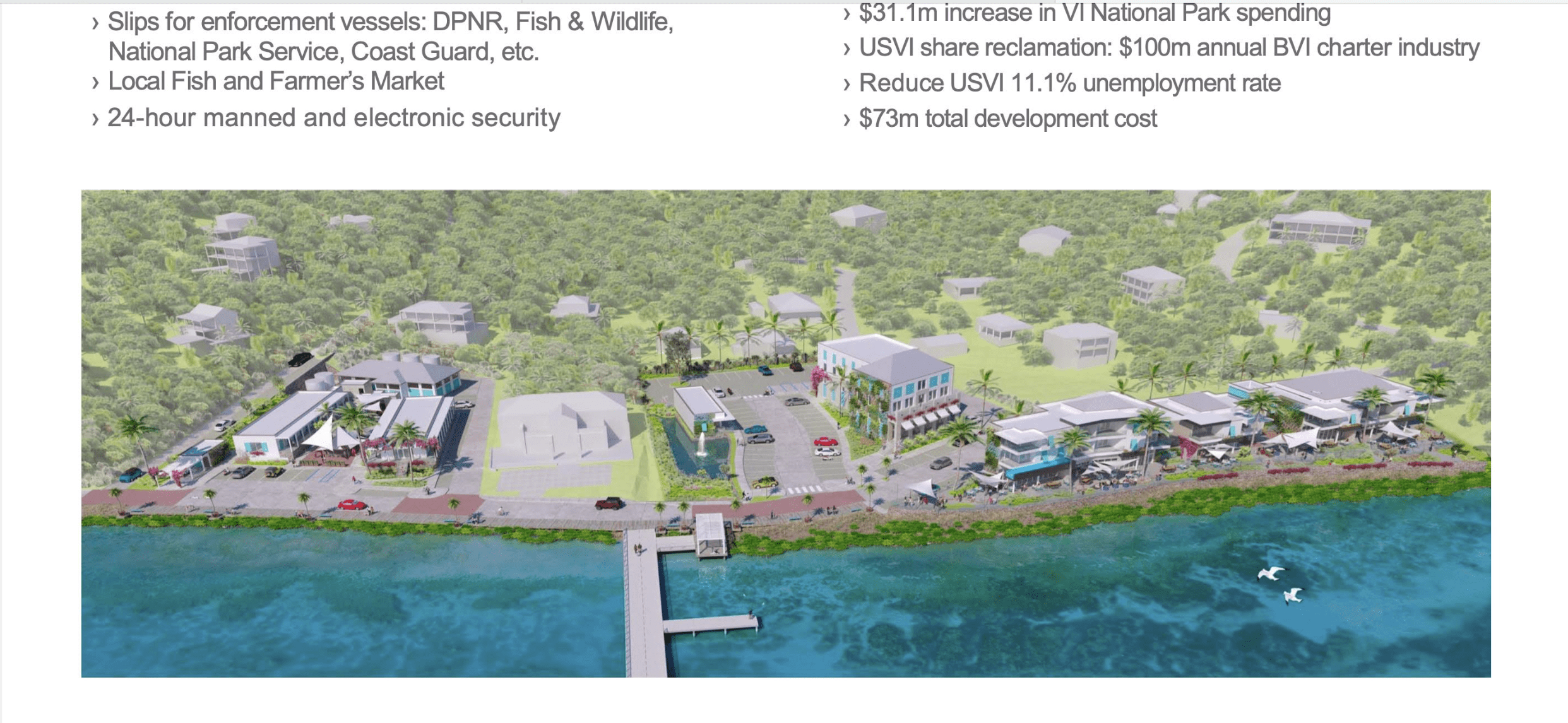
A drawing shows a plan for the land portion of the Summer’s End Marina project. (Image from Summer’s End’s website in 2024)
But opponents of the project, including David Silverman, president of Save Coral Bay, say they will continue to fight the project, which they consider structurally unsound and detrimental to the environment. The project has been controversial since it was first presented to the public in 2014. Challenges have been mounted in local and federal courts and even submitted to the U.S. Supreme Court. The V.I. Coastal Zone Management Commission, the Board of Land Use Appeals, the Virgin Islands Senate, and numerous federal agencies have all been involved in rulings that have temporarily hastened or halted the project’s viability.
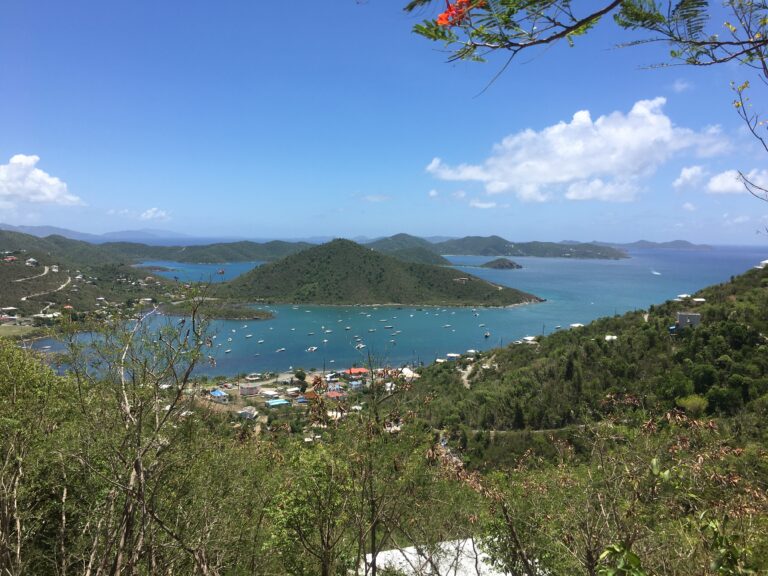
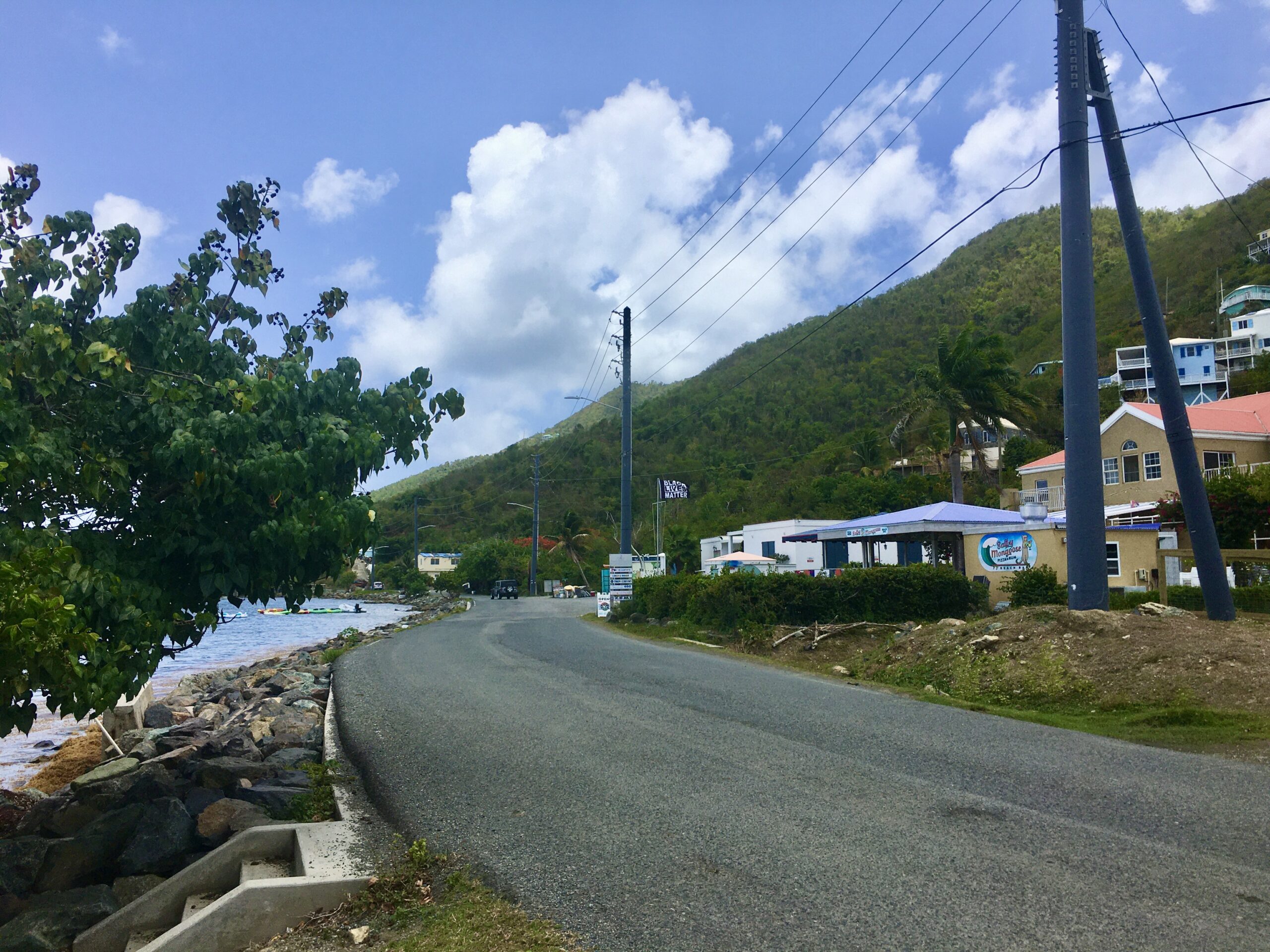
The Summer’s End Marina has been planned for the southwest shore of Coral Bay since 2014. (Source photo by Amy H. Roberts)
The Army Corps’ permit has been considered critical to the project’s survival. As recently as April, Save Coral Bay presented the Corps with a petition including 3,000 signatures asking that the federal agency hold public hearings on the project. That request was denied. The Army Corps’ announcement of the permit’s approval dated May 1 stated that the agency is moving forward with its “Building Infrastructure Not Paperwork” initiative. The policy is intended to “provide faster decisions” and accelerate “the delivery of vital infrastructure projects.” “USACE (U.S. Army Corps of Engineers) is neither a proponent nor opponent of any proposed project. USACE’s mission is to provide the regulated public with fair and reasonable decisions while providing protection of the Nation’s aquatic resources and navigation,” the statement concludes. The Army Corps statement outlines the scope of the project:
  • “The Standard Permit issued to the Summer’s End Group will allow construction of a marina within the Coral Harbor.
  • “The 67,833 square-foot fixed-dock marina would consist of 115 slips to accommodate vessels of varying lengths estimated to range from 30 feet to over 160 feet in length.
  • “There would be an additional 12 single moorings constructed southeast of the marina so that the marina could accommodate a total of 127 vessels.
  • “The marina includes a boardwalk along the shoreline and associated upland amenities.
  • “As mitigative measures, the applicant would relocate four Solenastrea bournoni corals near the dock, outplant 3,000 coral specimens, install seven informational buoys, install information signs at the marina, provide pump out or waste disposal facilities, plant 300 red mangrove seedlings along the shoreline, and maintain 50 stormwater features in the uplands.
  • “The applicant would also implement actions that result in the avoidance of impacts to a historic shipwreck.”
  • “The project would result in impacts to 2.39 acres of seagrasses.
  • “The applicant will be required to provide compensatory mitigation to offset the unavoidable impacts of the marina by restoring, enhancing, and establishing 4.596 acres of a complex of mangrove islands and 0.975 acres of sea grass habitat, conducting annual cleanup events in Coral Harbor, and complying with monitoring requirements and ecologically based performance standards.
  • “The central components of that compensatory mitigation project have already been verified under Nationwide Permit 27 as an aquatic ecosystem restoration, enhancement, and establishment project. That project will now be relied on by the Summer’s End Group to provide compensatory mitigation for the authorized marina.”
Chaliese Summers, managing partner for the Summer’s End group, said the developers were pleased to receive the permit. “First, it is critical to understand that the USACE cannot issue this permit unless the project has a net positive impact to the environment.”
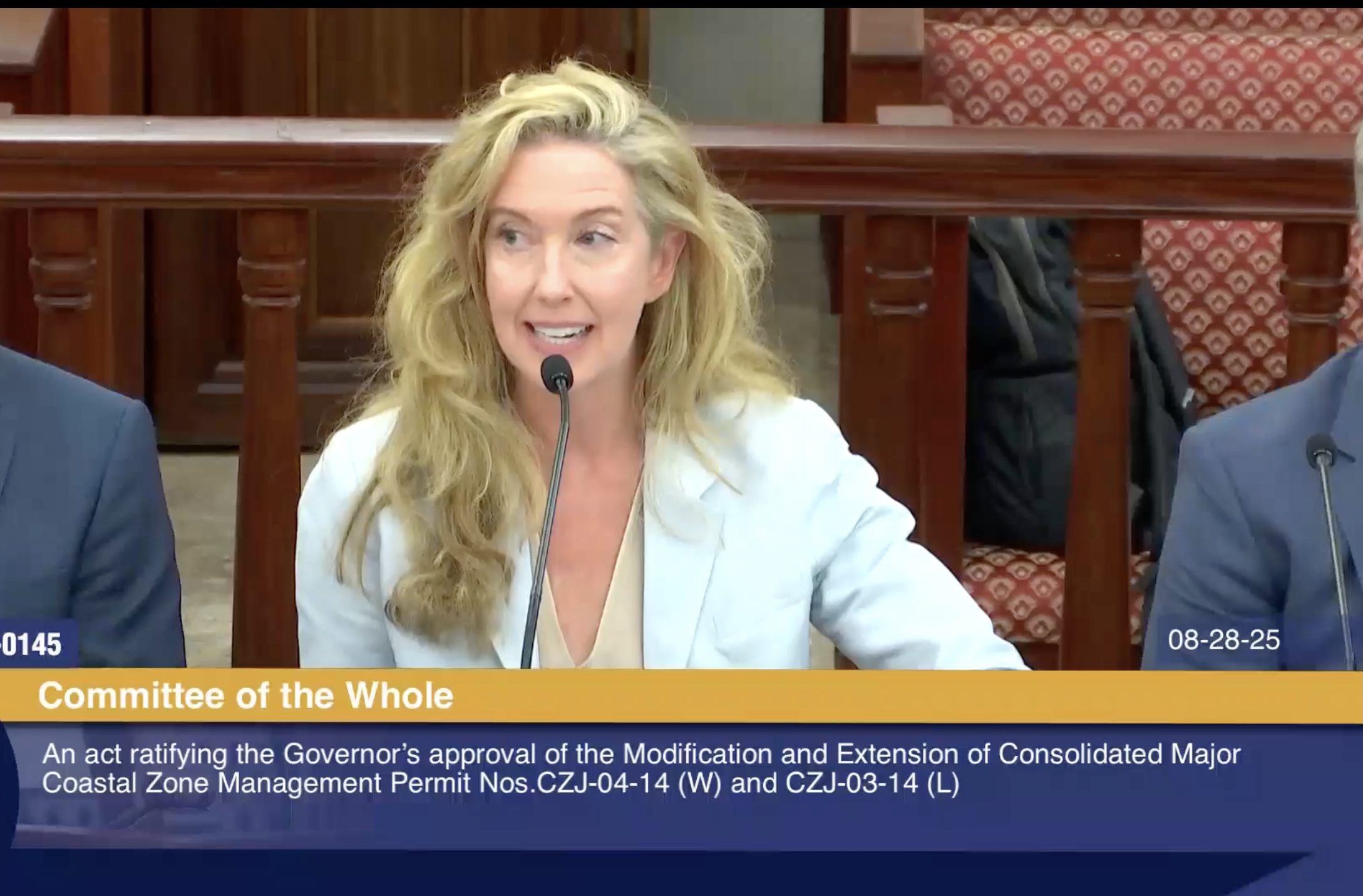
Chaliese Summers, managing member of the Summer’s End group, testifies at the Senate’s Committee of the Whole meeting about the Summer’s End Group’s permit. (Screenshot from Senate Committee of the Whole, Aug. 28, 2025)
“From the project’s inception, Summer’s End has worked tirelessly with both our federal and territorial permitting partners to ensure the long-term health and vitality of St. John’s precious marine environment,” Summers continued. “Summer’s End will spend over $5.3 million in the protection of coral, sea grass, mangroves, and shore protection.” Summers said the developers’ initial investment will be $130 million and will create more than 80 “direct and indirect, long-term full-time employment jobs for the island of St. John.” She said that debris removal and site demolition have already begun, and work will “proceed uninterrupted until completed, barring any unforeseen circumstances or acts of God.” Save Coral Bay sees much to dispute in her statements. “A fundamental flaw in the permit issuance is that the project has changed dramatically since it was proposed. Yet, the applicant and the Army Corps relied on required approvals given more than a decade ago for a project that simply no longer exists in that form,” said Silverman. Among his concerns is “a mitigation plan that requires extensive dredging and at least 20,000 cubic yards of fill discharged into Coral Harbor. That quantity of fill is equivalent to two thousand truckloads of fill transported over Centerline Road and dumped into the harbor.”
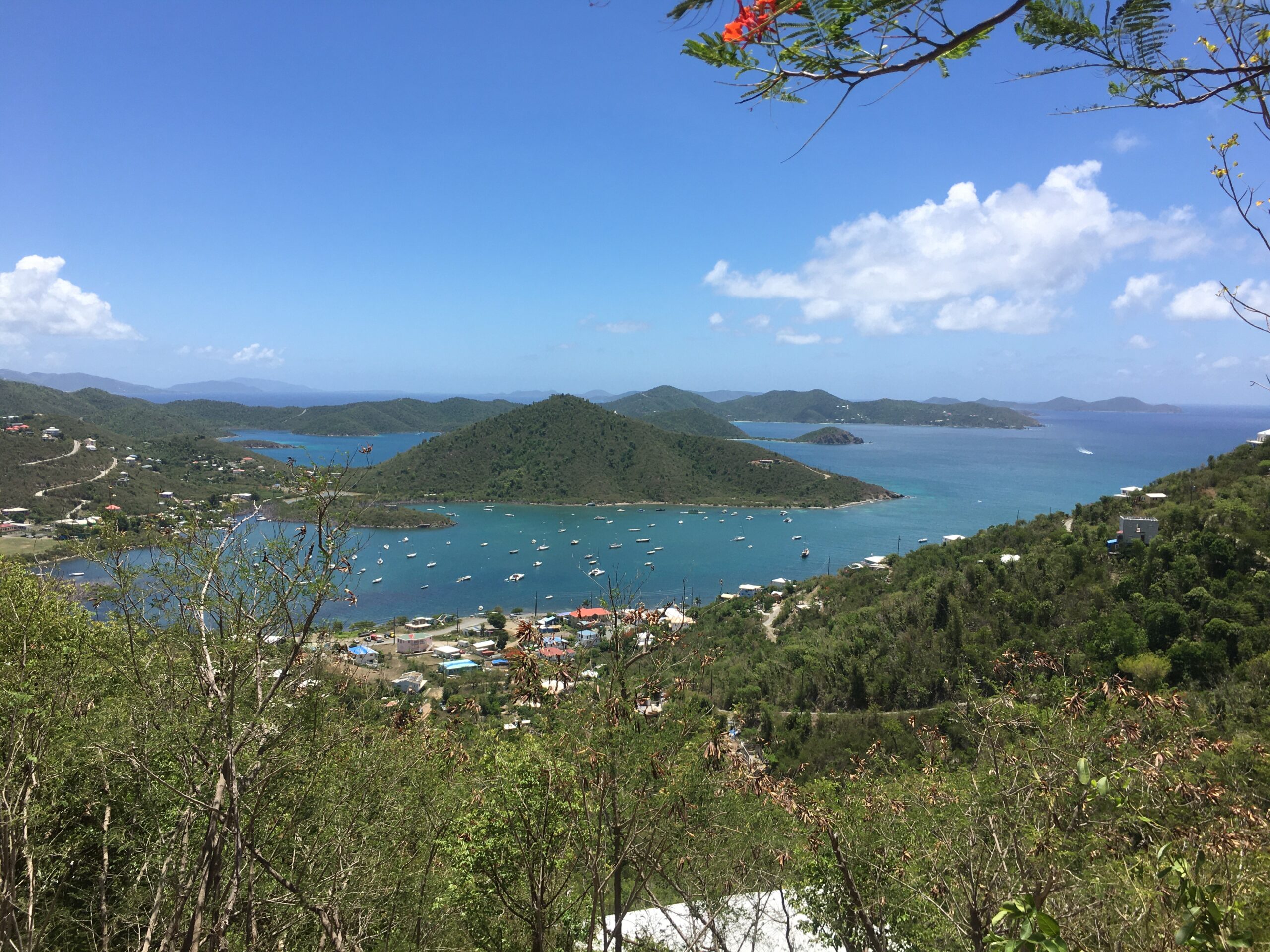
Summer’s End Marina will develop the shoreline along Route 107 in Coral Bay. (Source photo by Amy H. Roberts)
He said this plan contradicts a 2014 Water Quality Certificate “which expressly states that there may not be any dredge or fill activity.” In a post on Facebook, Silverman said he has not yet seen the Army Corps’ permit, so he can’t comment on what Save Coral Bay’s next actions will be. And although “the approval of a federal permit clearly removes a major hurdle for marina construction … it does not, and cannot, provide the territorial approvals required for construction to begin.” “Summers End will need authorizations for use of submerged trust lands, for planting of coral, for placing 20 thousand cubic yards of fill in Coral Harbor, for excavation of shoreline land on Fortsberg, as well as a number of other authorizations not currently in place,” he added. “So, although some may say, and some may believe that the story is over, this is actually just the beginning of a new chapter in the long-running saga of the Summer’s End Group,” Silverman said.

Baha’i Community Elects Delegates During Ridvan Observance

0
Baha’i delegates take part in the 85th governance assembly. (Submitted photo)

The local Baha’i community in the U.S. Virgin Islands recently selected delegates as part of its annual Ridvan observance. Chosen at the close of the 10-day festival, the delegates will help elect members of the National Spiritual Assembly, the faith’s governing body.

Local spokesperson Rodney Clarken and other followers say the Ridvan marks the time just before their leader — called Baha’u’llah — was exiled by the Persian government to Constantinople. The period from April 21 to May 2 is set aside for followers to fast from dawn to dusk, pray and gather in community.

Baha’i is considered one of the newest world religions, dating back to the mid-19th century; adherents follow the teachings of a Persian nobleman who renounced his affluent lifestyle and preached a doctrine of peace and brotherhood, Clarken said.

Followers in the faith number in the thousands in Jamaica and in Antigua/Barbuda; other communities exist in Trinidad and Tobago, and throughout the Lesser Antilles. The group’s spokesman said the count of Virgin Islanders active in the faith is uncertain; there were 85 active members involved in picking leaders in 2026. “It’s the most holy time for Baha’is; it’s also the time we annually reelect our local administrative bodies, which we call Spiritual Assemblies,” Clarken said.

Because the community functions without clergy, Baha’is count on assembly members to serve on one of three local boards of trustees for the year ahead. “Baha’is have a threefold purpose we’re all working on; to make ourselves better people and draw closer to God; to use God-given talents to make our communities a better place, (and) to make the world a better place,” said St. Croix Baha’i member Xawntoia Franklin. “We are all charged with the hard work to grow closer to God and make our communities a better place.”

St. Croix Baha’i in service as part of devotion. (Submitted photo)

“We do have some standard Baha’i activities that we engage in which are called the Core Activities,” Franklin said, “We also have study circles that allow us to have guided, meaningful conversations about things that are important — what does an individual stand for, what will they do; how can they help.”

She also described the group’s prayer circles and other activities. Her personal commitments led her to work with displaced residents from the JFK housing community and to help young people organize a bicycle repair clinic.

Those who join the effort are not required to follow Baha’i faith practices, but through their efforts with like-minded organizations, they help different nonprofits serve young and old, support after-school programs, tenant advocacy in public housing and educational support.

Two Kittitians Tell UVI Success Stories Before Graduation Day

For two of the 280 students awaiting their degrees from the University of the Virgin Islands Thursday, graduation day was far more than marking an academic accomplishment. Their time at UVI served as a middle ground between their native St. Kitts and Nevis and the hustle-bustle demands of the U.S. mainland — and beyond. Computer science major Zeidan Bass and accounting major Trevincia Browne both wrote to the university’s website Friday to say studying in the U.S. Virgin Islands helped them find their confidence. Bass, whose brother and cousins also studied at UVI before him, came to the territory in 2023 — his first time away from home. It took some getting used to.
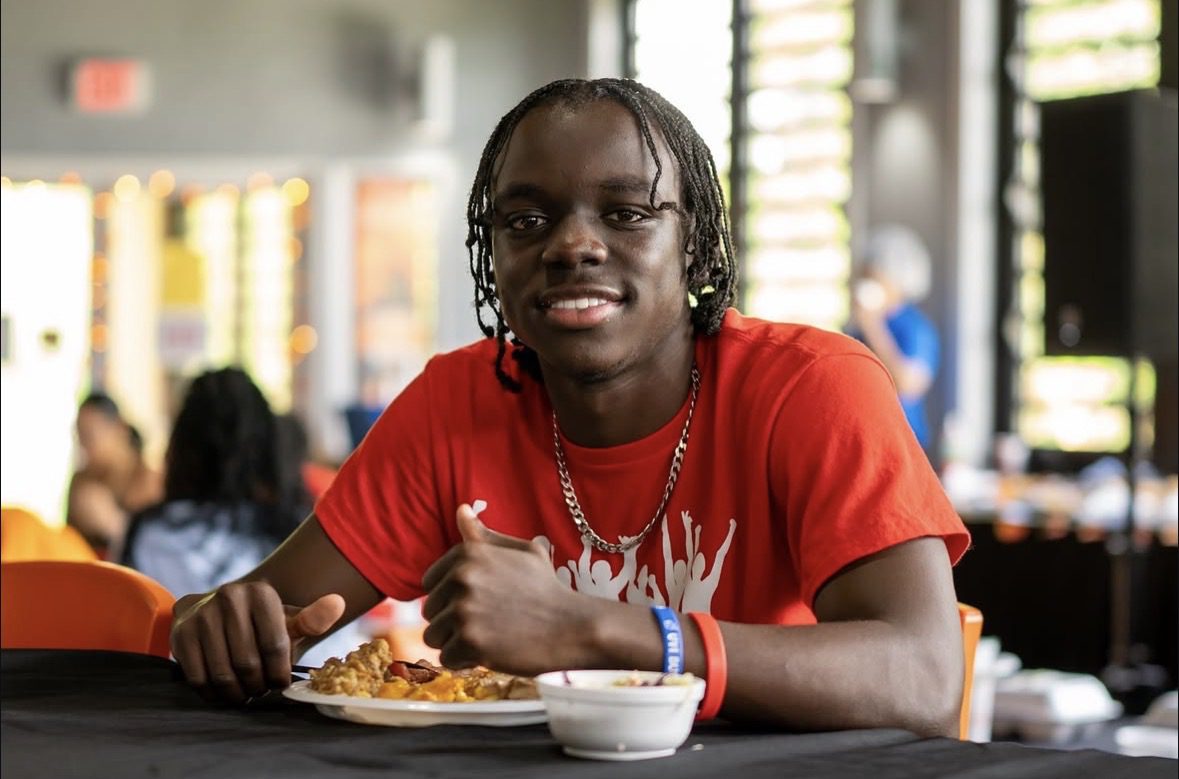
Computer science major Zeidan Bass said leaving St. Kitts and Nevis for St. Thomas was a big adjustment, but one that may help him transition more easily to the fast-paced mainland. (Photo courtesy University of the Virgin Islands)
“For the first three months of the semester, I ate by myself, attended events by myself, and I had no friends. It wasn’t until later on in the semester that I immersed myself in the community. The people here were never mean; it just took some adjusting,” he told UVI Today. “If I came straight from Saint Kitts to the mainland, it’s much more fast paced. The adjustment here was easy.” If Bass started as a loner, he quickly found his tribe. In 2024, he was elected Student Leadership Council president and will be a student speaker at the St. Thomas graduation ceremony. Browne, graduating magna cum laude, told a similar story, saying studying at UVI brought her out of her shell. In 2024, Browne started chairing the student government’s entrepreneurial committee. It was a role that required networking, leadership, and public speaking.
Accounting major Trevincia Browne, of St. Kitts and Nevis, said her time at UVI helped her grow into a more confident leader ahead of Thursday’s commencement ceremony. (Photo courtesy University of the Virgin Islands)
“I found myself stepping into spaces I never imagined,” said Browne, also from St. Kitts and Nevis, told UVI Today. “I had the opportunity to speak in front of large crowds, which is something I have never done before and that experience helped me grow in confidence.” The 2026 Commencement Ceremonies take place Thursday at the Elridge W. Blake Sports and Fitness Center on St. Thomas, and Friday at the Island Center for the Performing Arts on St. Croix. Both ceremonies are scheduled for 1 p.m. “It is with great pride and joy that I congratulate the Class of 2026 on reaching this extraordinary milestone,” UVI President Safiya George said in a written statement. “Your journey reflects resilience, determination, and excellence. As you leave UVI, you carry forward the knowledge, skills, and spirit needed to lead, innovate, and make a lasting impact in your communities and beyond.” Degree candidates represent a wide range of academic programs across UVI’s schools and colleges, including doctoral, graduate, bachelor’s, and associate degrees, according to the university. The Class of 2026 student speaker on St. Croix will be SaVaughna John-Baptiste, who will graduate Cum Laude with a Bachelor of Science in Horticulture. The university also plans to issue an Honorary Doctor of Humane Letters to Rena Brodhurst as recognition of her career in journalism. The longtime publisher and editor of The St. Croix Avis “helped shape public discourse in the territory and championed the importance of a free and independent press,” according to the university. The keynote speaker will be Adam O’Neal, known professionally as Adam O., who will also receive an Honorary Doctor of Humane Letters degree in recognition of his contributions to music, entrepreneurship, and community engagement. The ceremonies will be livestreamed via UVI YouTube, UVI Facebook, UVI Events Calendar, www.uvi.edu, and the Government Access Channel.

Plaskett Comments on St. Croix Shootings

Congresswoman Stacey E. Plaskett released the following statement in response to a report of over 100 gunshots fired in Frederiksted, St. Croix:
V.I. Delegate to Congress Stacey Plaskett gives an opening statement Tuesday on the 10th hearing of the Select Subcommittee on the Weaponization of the Federal Government. (Screenshot from video)
V.I. Delegate to Congress Stacey Plaskett. (Screenshot from video)
“The ongoing violence in our territory weighs heavily on me. Every incident is a painful reminder of how much work remains for us. “Frederiksted holds a very special place in my heart and in the work of my office. We have seen this town endure years of neglect and deterioration — and we have also seen the resilience of the people who refuse to give up on it. I am continually inspired by the residents, business owners, advocates, and community members who show up every single day committed to making the town of Frederiksted better. My team and I stand with you, as we always have. “Frederiksted deserves safety, investment, and the full attention of every level of government. We will continue to fight for nothing less.”

Police Department Hosts Cadet Program Ceremony on St. Croix

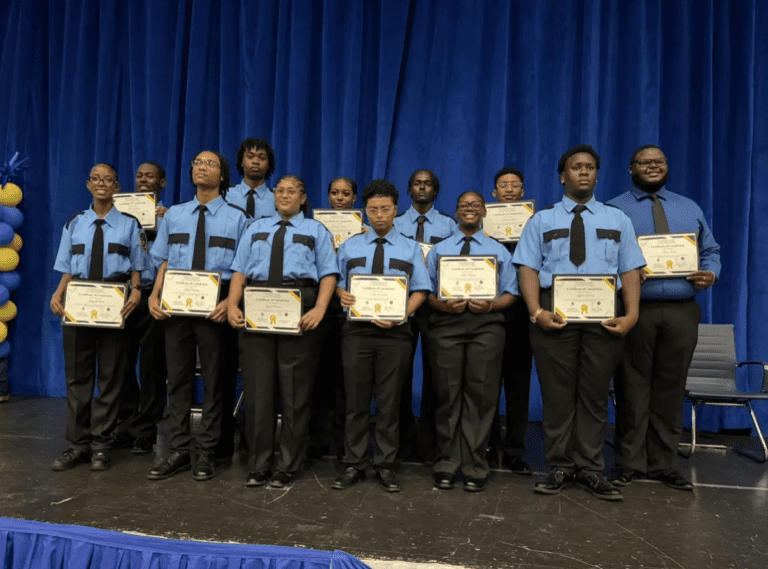
The Virgin Islands Police Department proudly hosted its third Cadet Program Ceremony on Thursday, May 7, at the St. Croix Educational Complex, recognizing and celebrating the dedication and achievements of its participating youth.
This year’s cohort included students from the St. Croix Educational Complex and St. Croix Central High School. (Submitted photo)
This year’s cohort included students from the St. Croix Educational Complex and St. Croix Central High School. The ceremony highlighted the cadets’ commitment, growth, and successful completion of the program, which is designed to build awareness of careers in law enforcement while strengthening community engagement. The VIPD Cadet Program is a structured youth development and pre-professional initiative aimed at engaging young residents of the United States Virgin Islands. The program provides participants with valuable training and preparation for future careers in law enforcement, while also fostering personal development, discipline, and leadership skills. Through hands-on experiences, cadets actively participate in community service and gain insight into policing and public safety. The program serves as a recruitment tool for the VIPD, targeting high school students with a strong interest in law enforcement careers. Upon graduation and reaching the age of 18, participants may be offered positions within the department, providing a pathway toward eventual entry into the VIPD Police Academy. This initiative is a collaborative effort between the Virgin Islands Police Department and the Department of Education (21st Century Program), working together to create meaningful opportunities for youth while building a pipeline for future law enforcement professionals in the territory. The Virgin Islands Police Department extends its sincere congratulations to the following cadets: Lucianick Alexander Maleigha Bannis Je’Quan Barnes Ke’Mykah Barnes Catrice Benjamin Yarelis Bermudez Jealynneth Cepeda Jahmal Christian Cecilia Commabatch Linroy Forde Richard James Mah’Kaijah Jean Kymani Richards Jaylin Velazquez The VIPD remains committed to investing in programs that strengthen community ties, promote civic responsibility, and create positive pathways for the territory’s youth. The next Cadet Program graduation ceremony will be held on May 18, on St. Thomas, with nine graduates from Ivanna Eudora Kean High School. For more information on the Cadet Program, please contact Ms. Carol Cuffy, Director of Community Affairs at 340-774-2211.

New Archery Hours

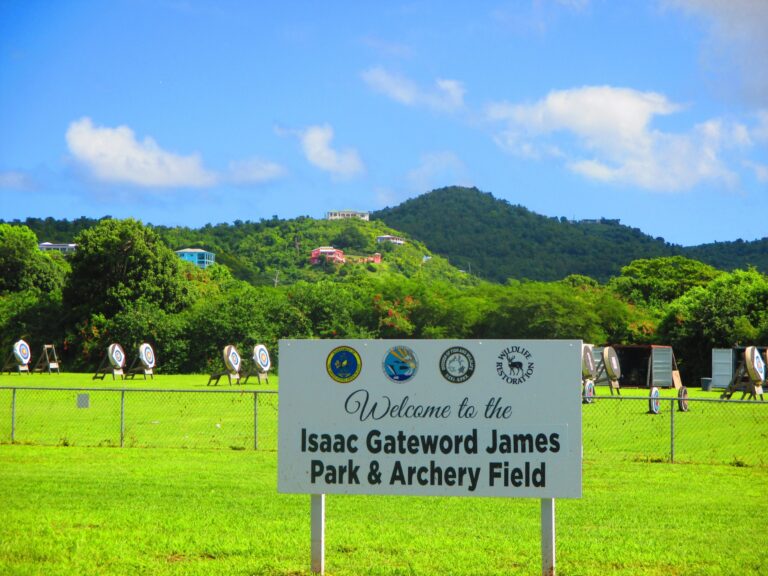
Commissioner Jean-Pierre L. Oriol of the Department of Planning and Natural Resources is advising the St. Croix community that the Division of Fish and Wildlife is offering free public access to the Isaac Gateword James Park  Archery Range during designated times each week.
The Isaac Gateword James Park Archery Range. (Submitted photo)
Beginning the week of May 11, the archery range will be open Thursday evenings from 5 p.m. to 6:30 p.m.and Saturday mornings from 10 a.m. to 11:30 a.m. Please note that these hours represent a change from previous opening days and times. To ensure safe use of the facility, access is limited to a maximum of 10 individuals per session, with one DPNR staff member overseeing up to nine participants. Each session will consist of a 90-minute time slot, and advance registration is required. Sign-ups open each Monday for the upcoming week, subject to availability. “DPNRremains committed to providing the Virgin Islands community with safe and accessible outdoor recreational opportunities,” said Commissioner Oriol. Through our collaboration with the Department of Sports, Parks and Recreation, the archery range offers a designated space where residents can responsibly practice with their equipment. Standard archery targets are permitted. The shooting of domesticated or wild animals is prohibited in the Virgin Islands, except in limited circumstances approved on a case-by-case basis. All safety rules for archery use at IGJP have been carefully reviewed and must be followed. The government-operated archery range adheres to all Government of the Virgin Islands policies and safety standards. Individuals interested in participating must register online to check availability and reserve a time slot by visiting:Permits & Applications -Virgin Islands Department of Planning and Natural Resources and filling out the DPNR Archery Field Use application. DPNR receives funding through the U.S. Fish and Wildlife Service Wildlife Restoration Program, which supports the maintenance and availability of public archery ranges nationwide. Groups or individuals with their own archery equipment who are interested in learning or practicing more advanced archery or hunting-related skills are encouraged to contact the Division of Fish and Wildlife directly. For more information, visit https://dpnr.vi.gov or contact the Division of Fish and Wildlife call St. Croix:(340) 773-1082 or St. Thomas: (340) 774-3320 DFWElectronic@usvi.onmicrosoft.com

Allen Alphonso Niles Sr. Dies at 81

0
With unwavering faith in God, we announce the passing of Allen Alphonso Niles, Sr. who transitioned from labor to reward on April 29, 2026 at the age of 81. 
 Allen Alphonso Niles, Sr.
He is preceded in death by his grandson, Jahni Niles; brother, Liston Niles; and sister, Alicia Maduro  He leaves behind precious memories that we will cherish forever.  He is survived by his: Wife: Gladys Niles of 49 years Children: Allen Alphonso Niles, Jr, Alyssa Patricia Johnson Pradieu, Glenroy Albeon Niles Grandchildren: Abigail Johson and Isis Niles Sisters: Linda Robinson and Lela Neymour Brother: Alphonso Emanuel Aunt: Lucia Donovan Penn Daughter-in-law: Dezarea Niles Special friends: Yolanda Santiago, Corinthia Douglas, Calvary Baptist Church family and other friends and family too numerous to mention  A celebration of Life Service will be held at Calvary Baptist Church (Altona) on Thursday, May 14. Reflection begins 9 a.m. – 10 a.m. with service to follow at 10:00am. We rejoice knowing Allen Niles is in the presence of the Lord. Matt 25:23 Funeral arrangements are under the care of Dan Hurley Home for Funerals and Cremation Centers of St. Thomas, St. John, and St. Croix. For online condolences or to share a special memory, visit www.hurleydavisfuneralhome.com 

Criminal Investigation Bureau Investigates Discharging of Shots in Frederiksted

The St. Croix 911 Emergency Call Center received multiple notifications from ShotSpotter and several phone calls of shots being fired in the area of the fire station on Queen Street, Frederiksted on Saturday, May 9, at 4:05 a.m., reported the Virgin Islands Police Department.

VIPD officers were dispatched and observed multiple spent cases in the area upon their arrival, however there was no report of any injuries or any suspect information, the police report stated.

The VIPD is actively investigating this matter. Anyone with information regarding this incident can call 911, the Criminal Investigation Bureau at 340-778-2211 or Crime Stoppers VI at 1-800-222-8477(TIPS).

Weekly Weather Forecast With Jesse Daley

Check out our weekly weather forecast with Jesse Daley, covering Sunday, May 10, through Saturday, May 16. Please stay safe and follow the Source for more weather updates!

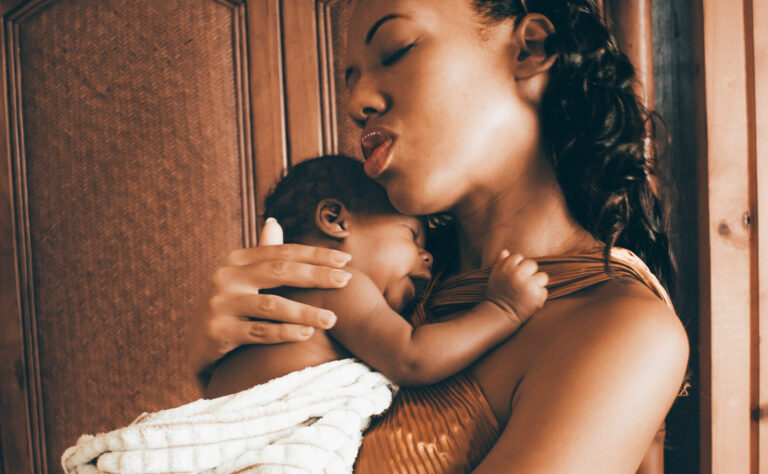
Op-Ed: Political Candidates: Start with Mothers

If you want to do something heroic this election cycle, start with mothers. Put us at the forefront of your platforms. Then follow through.

This weekend, the entire nation is recognizing us in honor of Mother’s Day.

But I implore you to consider that mothers – especially those raising young children – need more than a day of social media graphics, throwback photos and platitudes. We need consistent and tangible support. The way we support mothers during the earliest stages of parenthood eventually echoes throughout the entire society.

What Happens to Mothers Eventually Happens to Society

If we’re serious about reducing violence, improving public health, strengthening the workforce, and retaining families in the Virgin Islands, then we need to stop treating support for mothers and young children like some sort of personal luxury.

It’s public infrastructure.

The truth is: many of the crises we’re trying to solve downstream are rooted much closer to the beginning of life than we often realize.

We have a mental health crisis. We are losing too many young people — especially young men — to violence and instability. At the same time, many of our leading causes of death are tied to chronic illnesses like diabetes, hypertension, obesity, and cardiovascular disease, all while our healthcare infrastructure remains stretched thin.

These are deeply complex issues. But healthier family foundations are a meaningful place to start.

Countries like Denmark — one of St. Croix’s former colonial powers — along with Sweden, Norway, Finland, and Canada have spent decades investing in early childhood development and family stability. Today, they’re seeing the dividends in the form of healthier adults, stronger workforces, and lower long-term social strain.

Meanwhile, the United States remains the only developed nation where paid parental leave is not federally guaranteed.

And yes, we are deeply shaped by American systems here in the USVI. But we don’t have to accept every limitation of the federal baseline as the ceiling for what we can become.

Like states, we have the ability to create local policies that reflect our own values, priorities, and vision for family life here.

So where exactly are our mothers and families falling through the cracks?

We Expect Mothers to Recover in Six-12 Weeks – Or Face the Financial Consequences

 Let’s be real: six to 12 weeks is barely enough time to physically recover from childbirth, much less adjust emotionally, establish routines, bond with your baby, and stabilize your household.

Anyone who’s studied early childhood development will tell you that’s not enough time for a baby to develop a secure attachment. Additionally, any mother will tell you how unnatural it feels to be separated from your baby so soon.

Most of us don’t go back because we’re ready. We go back because we have to.

FMLA helps somewhat, but it doesn’t account for enough time with the baby, and not everyone is eligible for that.

I will never forget the daunting feeling that came over me when I learned about short-term disability for the first time.

STD… lol… imagine that – giving birth documented as STD. Even the name sounds icky…but I digress.

Anyway, it means your family can rely on only 60% of your income for five weeks while you recover from childbirth and care for your newborn at the same time.

That’s wild.

But sometimes I grapple with the question: Is it an attitude of entitlement to want and expect more for mothers?

Someone recently told me: “You should have saved more. Or keep your legs closed.” True story. Lol.

Jarring. But I just laughed because the place it came from is so familiar to me.

It came from that old West Indian ‘Tough Love’ mindset many families inherited after generations of hardship – where there wasn’t much room to think about emotional wellbeing or systemic barriers. Just survival.

The truth is: we did save.

And thank God we did, because it helped carry us through the unpaid portions of leave. Twice.

But how long would a middle-class family realistically need to save in order for one parent to stay home with a baby for six months? A year? And even if they could, what happens to job security afterward?

More and more, ordinary family life feels financially out of reach unless you already have some sort of built-in advantage — inherited property, multigenerational support, or income levels far beyond what many working families realistically earn.

The goalposts for middle-class stability keep shifting, which begs the question: Should wealth increasingly determine who gets to build healthy families?

Raising Children Here is Financially Suffocating

The average household income in the USVI is estimated somewhere between $37,000–$50,000 annually. Now compare that to basic monthly costs:

  • Rent or mortgage: $1,500+
  • Childcare: $750+ per child
  • WAPA: $300+
  • Gas: $160+
  • Groceries: $600+

For a household with one to two children, we’re already at around $39,720 – $48,720 in annual expenses.

That’s before emergencies. Before healthcare costs. Before deductions from your paycheck. Before trying to build savings.

And depending on your income, you may still not qualify for meaningful government assistance.

“Save more???” Sounds like simple advice, but it ignores the economic reality many working families are already navigating.

Policies that better support families in the first year of a child’s life would not be charity. They would be long-term social investment.

Breastfeeding Was Never Meant to Happen Like This

A pump room is not enough.

That’s technically all employers have to provide when you come back to work between six-12 weeks after giving birth.

But breastfeeding is hard enough already.

What we don’t talk about enough is how devastating it feels when being away at work for long stretches disrupts breastfeeding entirely.

Babies become accustomed to bottles. Milk supply drops. It feels like you’re a failure. But it’s really the structure around us that has made what should be a natural process so hard to sustain.

Why is this such a big deal?

We now know that breastfeeding has major long-term health benefits for both babies and mothers, including lower risks of obesity, diabetes, certain cancers, and cardiovascular disease. (FYI: These are some of the leading causes of death here.)

Experts recommend breastfeeding for at least six months.

Going back to an office after six weeks does not make this likely.

Which brings me to flexibility.

Flexible Work Shouldn’t Depend on Having a “Nice Boss”

 Not every job can be remote. I get that.

But many knowledge-based jobs can now be performed remotely or through hybrid arrangements without sacrificing productivity.

That’s why I’m a strong advocate for giving mothers of young children greater access to flexible schedules, hybrid arrangements, and remote work protections where feasible.

Of course there should be guardrails and protections for employers who may face people who abuse the system or severe performance issues.

But right now, the protections for moms are optional and dependent on the happenstance of being under compassionate leadership.

That shouldn’t be.

To be fair – many employers are operating within the constraints of the current system themselves. And that’s exactly why policy matters.

We should create structures that make investing in families easier and more sustainable, not something dependent on exceptional corporate goodwill.

What If Community Investment Started at Home?

Systemic changes that address these gaps can’t be driven by government alone.

It will take a public-private partnership to make many of these things happen.

 But public policy can be a catalyst.

Our economic development programs, for example, can be great vehicles for this type of systemic change.

Many successful companies are already drawn to our islands for the tax incentive programs – programs tied to local employment and community giving requirements.

What if certain family-supportive benefits — like expanded parental leave or childcare assistance — could count toward portions of those community investment obligations?

I would argue that investing directly into the wellbeing of employees raising families here may have a deeper long-term community impact than simply distributing small amounts of money across dozens of organizations for optics’ sake.

That’s not an attack on businesses. It’s an invitation to think creatively about what community investment can mean.

I won’t pretend to have all the answers.

But I have faith that we are totally capable of building systems that reflect the values we claim to care about.

Protect Mothers Like the Future Depends on It

So this season, while candidates file papers, launch campaigns, and make promises about the future of the Virgin Islands, I hope they remember this:

The future is already here.

It’s being raised right now by exhausted mothers trying to nurture children while surviving economic pressure, limited support systems, and a culture that too often treats burnout like strength.

Protect the women raising the next generation of Virgin Islanders.

Protect the children bubbling with potential to do revolutionary things in this place.

Support parental presence, secure attachment, and healthy development in the earliest years of life.

Help families thrive instead of merely survive here.

Yes, this is a small place. But small places can do ‘big tings.’

And this, my friends, is a big thing.

— Wyndi Ambrose is a Virgin Islands-based marketing strategist, former journalist, and mother of two who cares deeply about family wellbeing, community development, and the future of the territory. She believes small places can do ‘big tings.’

Editor’s Note: Opinion articles do not represent the views of the Virgin Islands Source newsroom and are the sole expressed opinion of the writer. Submissions can be made to visource@gmail.com.