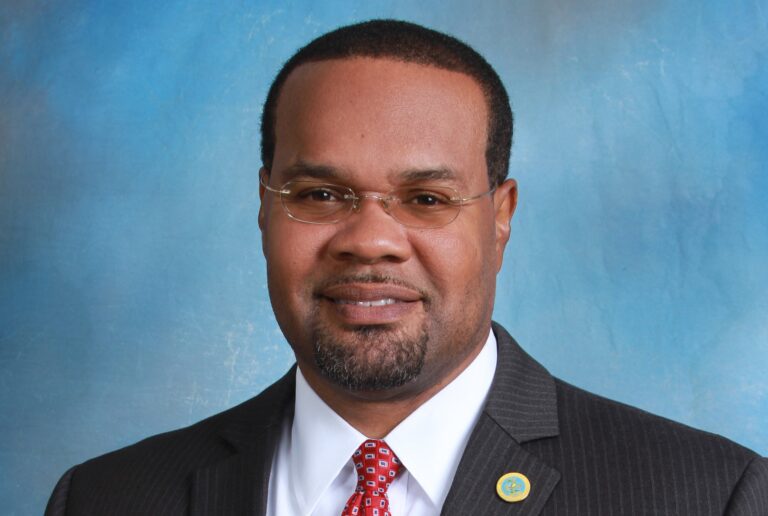



Max Hilaire has been places.
The scholar and international law expert was born in Dominica and grew up on St. Thomas. After graduating summa cum laude from Morgan State University in Baltimore, Hilaire furthered his studies in New York City, earning a Master of Arts and Philosophy degree and a Doctor of Philosophy degree in International Relations from Columbia University. From there, he traveled the world working in conflict resolution, lecturing and teaching.

In his seventh book to date, “The Permanent Members of the United Nations Security Council and International Law,” Hilaire said he was interested in exploring how international law shapes foreign policy for China, France, Russia, the United Kingdom and the United States of America, “and how they can use international law either as a rhetorical device or as justifications for their actions.”
“So the invasion of Ukraine would be a good example,” he said, “where Russia is using international law to justify its actions, even though it’s pretty obvious that the justification is not legal under the Charter of the United Nations.”
Hilaire said he looked at how each of the five permanent member states of the U.N. Security Council implements international law domestically and whether they can be held accountable for breaching that law, whether domestically or internationally. Hilaire noted that decisions made by players on the national stage have far-reaching implications that can and do impact the U.S. Virgin Islands — something he tells local students during speaking events in the territory. He said climate change is a good example.
“We contribute to global warming and carbon emissions, but yet we in the Caribbean — and small island nations in general, whether it’s in the Pacific or in the Caribbean — we bear the brunt of it, the intensity and the severity of our hurricanes, the destruction of our coral reefs, the erosion of our coastal lines,” he said. “And we rely heavily on tourism, so if our beaches are polluted, the water is contaminated, we become less competitive.”
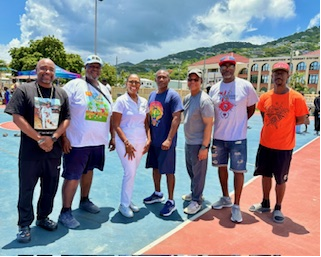
Hilaire said he tries to show students that it’s important to see the world beyond the U.S. Virgin Islands.
“That curiosity of what it is out there, whether it’s in Asia or in Africa, you could really find yourself by traveling and meet people who are likely to change your mindset and change your life,” he said.
Hilaire’s passion for and expertise in international law are palpable. Despite regulating everything from the climate and human rights to conflicts and diplomacy, Hilaire said, there’s still room for improvement in the field. International law, he said, “is still very much a Western institution, because much of the writing in international law is done by native English speakers.”
“It’s done by people who either attended or work at some of the top, elite universities in Europe and in the United States, so … you’re writing for a small group of people — what my professor called the ‘Invisible College of International Law,’” he said. “But I think we have to go beyond that, because given how the law is impacting everyday lives of people — whether it’s what you buy, what you wear, the phone you use, the computer you’re using — these are all facilitated by international law, and people have no clue.”
His latest book, Hilaire said, is an attempt to bring the subject to the level of everyday people, which he said is a different approach than the one taken by his colleagues.
“Because the voices coming from developing countries or even from the Caribbean are not heard and simply don’t exist,” he said. “So my book is intended to sort of fill that void.”
Hilaire said he plans to return to the territory in the fall, and book signings and lectures have been tentatively planned for late October or early November.