The Virgin Islands Water and Power Authority announces a shift in construction activity and upcoming traffic changes as the Queen Mary Highway Electrical Underground Project advances.
(Submitted photo)
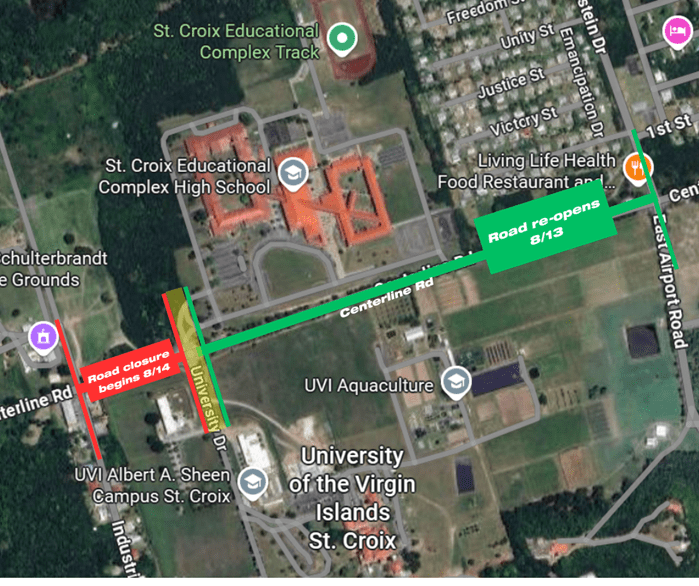
On Wednesday, August 13, 2025, the stretch of Queen Mary Highway/Centerline Road from the Castle Burke traffic light at East Airport Road to the University of the Virgin Islands/St. Croix Educational Complex High School traffic light will reopen in time for the first day of school.
Starting at 9:00 a.m. on Thursday, August 14, 2025, construction will shift to the next segment of Queen Mary Highway/Centerline Road, stretching from the UVI/SCECHS/St. Croix Career and Technical Education Center (CTEC) traffic light to Industrial Road/Upper Love Road. In this area, both eastbound and westbound lanes will be closed to traffic through Saturday, August 23, 2025. Once this segment begins, the westbound traffic entering Queen Mary Highway at the Castle Burke traffic light/East Airport Road will be limited to accessing UVI, CTEC, and the St. Croix Educational Complex.
Any necessary traffic changes will be clearly marked to ensure drivers can navigate safely through the area. To receive timely updates on this project and other important announcements, sign up for WAPA Alerts. You can receive notifications directly to your mobile device and/or email by registering at: https://member.everbridge.net/index/892807736728730#/signup.
WAPA thanks the public for their patience and cooperation as we work to make our electrical infrastructure more resilient.
The scholar and international law expert was born in Dominica and grew up on St. Thomas. After graduating summa cum laude from Morgan State University in Baltimore, Hilaire furthered his studies in New York City, earning a Master of Arts and Philosophy degree and a Doctor of Philosophy degree in International Relations from Columbia University. From there, he traveled the world working in conflict resolution, lecturing and teaching.
Max Hilaire’s latest book is “The Permanent Members of the United Nations Security Council and International Law.” Book signing events in the U.S. Virgin Islands are tentatively planned for autumn. (Photo courtesy Max Hilaire)
In his seventh book to date, “The Permanent Members of the United Nations Security Council and International Law,” Hilaire said he was interested in exploring how international law shapes foreign policy for China, France, Russia, the United Kingdom and the United States of America, “and how they can use international law either as a rhetorical device or as justifications for their actions.”
“So the invasion of Ukraine would be a good example,” he said, “where Russia is using international law to justify its actions, even though it’s pretty obvious that the justification is not legal under the Charter of the United Nations.”
Hilaire said he looked at how each of the five permanent member states of the U.N. Security Council implements international law domestically and whether they can be held accountable for breaching that law, whether domestically or internationally. Hilaire noted that decisions made by players on the national stage have far-reaching implications that can and do impact the U.S. Virgin Islands — something he tells local students during speaking events in the territory. He said climate change is a good example.
“We contribute to global warming and carbon emissions, but yet we in the Caribbean — and small island nations in general, whether it’s in the Pacific or in the Caribbean — we bear the brunt of it, the intensity and the severity of our hurricanes, the destruction of our coral reefs, the erosion of our coastal lines,” he said. “And we rely heavily on tourism, so if our beaches are polluted, the water is contaminated, we become less competitive.”
Hilaire said he tries to show students that it’s important to see the world beyond the U.S. Virgin Islands.
“That curiosity of what it is out there, whether it’s in Asia or in Africa, you could really find yourself by traveling and meet people who are likely to change your mindset and change your life,” he said.
Hilaire’s passion for and expertise in international law are palpable. Despite regulating everything from the climate and human rights to conflicts and diplomacy, Hilaire said, there’s still room for improvement in the field. International law, he said, “is still very much a Western institution, because much of the writing in international law is done by native English speakers.”
“It’s done by people who either attended or work at some of the top, elite universities in Europe and in the United States, so … you’re writing for a small group of people — what my professor called the ‘Invisible College of International Law,’” he said. “But I think we have to go beyond that, because given how the law is impacting everyday lives of people — whether it’s what you buy, what you wear, the phone you use, the computer you’re using — these are all facilitated by international law, and people have no clue.”
His latest book, Hilaire said, is an attempt to bring the subject to the level of everyday people, which he said is a different approach than the one taken by his colleagues.
“Because the voices coming from developing countries or even from the Caribbean are not heard and simply don’t exist,” he said. “So my book is intended to sort of fill that void.”
Hilaire said he plans to return to the territory in the fall, and book signings and lectures have been tentatively planned for late October or early November.
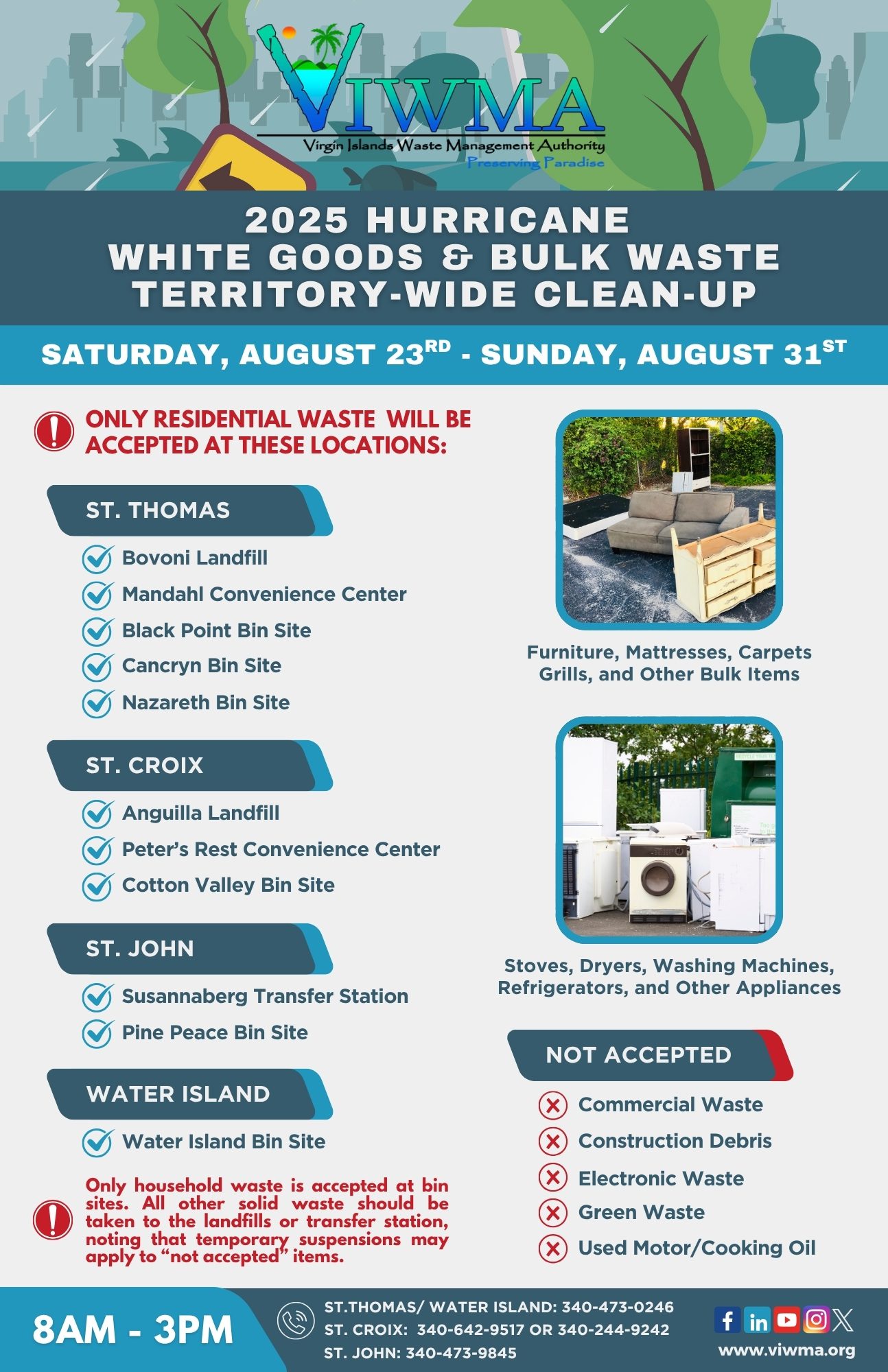
The Virgin Islands Waste Management Authority will conduct a Territory-wide Hurricane Residential White Goods and Bulk Waste cleanup from Saturday, Aug. 23, through Sunday, Aug. 31, operating daily from 8 a.m. to 3 p.m., according to a press release from the authority.
Residents may bring bulk waste such as furniture, mattresses, carpets, grills and other large household items, along with white goods including stoves, dryers, washing machines, refrigerators, water heaters and other appliances, to designated drop-off locations on each island, the press release stated.
(Photo courtesy VIWMA)
Commercial waste, construction debris, electronic devices, fats, green waste, and used motor or cooking oil will not be accepted at bin sites, VIWMA officials said. Those materials must be taken to the landfills or transfer stations, where temporary suspensions may be in effect.
For more information, residents may contact Ms. Stevens at 340-473-0246 (St. Thomas/Water Island), Mr. Lake at 340-244-9242 (Peter’s Rest Convenience Center), Ms. Tyson at 340-642-9517, Mr. Jacobs at 340-626-7768 (Anguilla Landfill), or Ms. Powel at 340-473-9845 (Susannaberg Transfer Station).
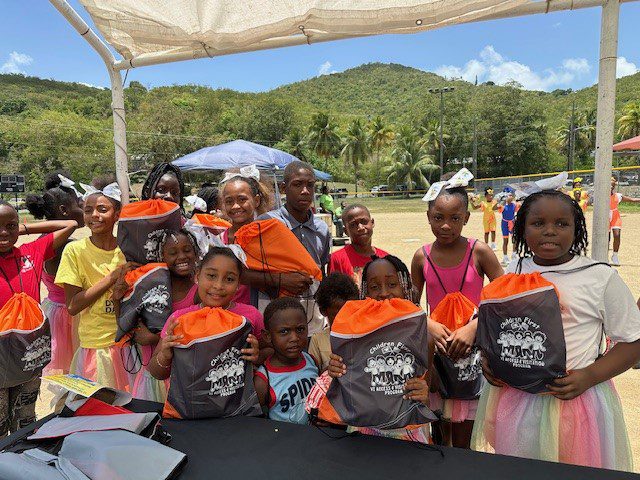
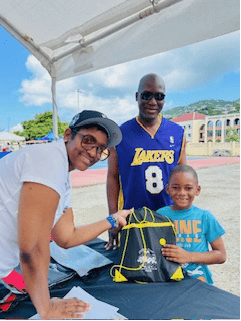
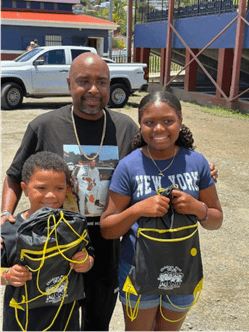
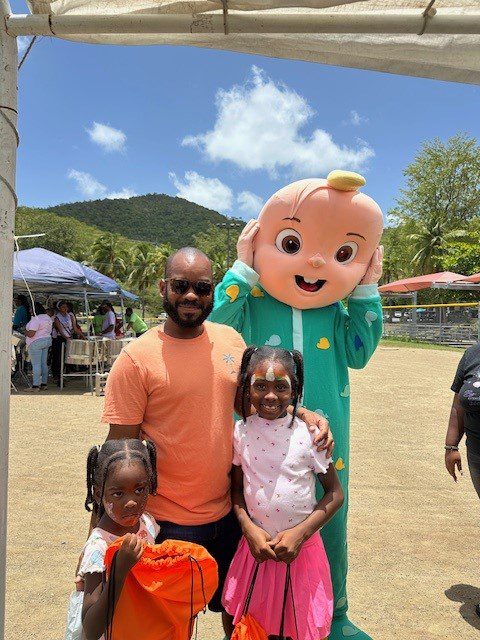
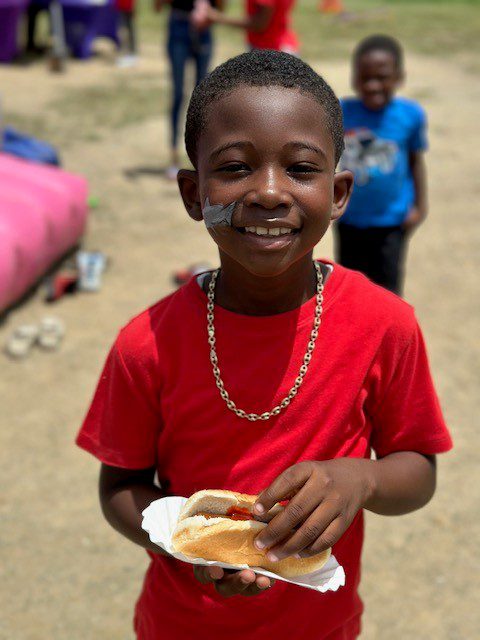
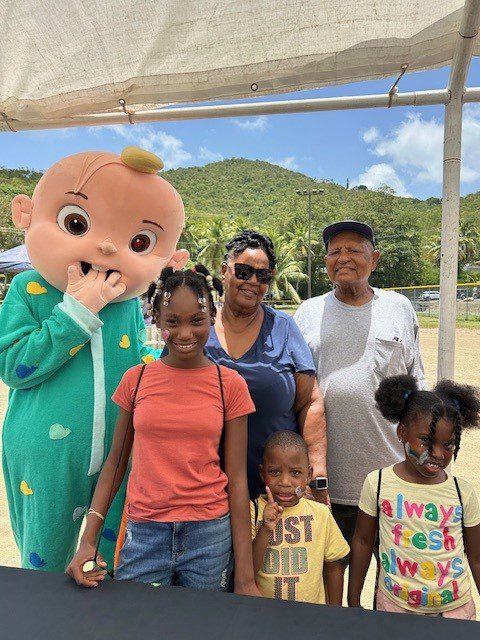
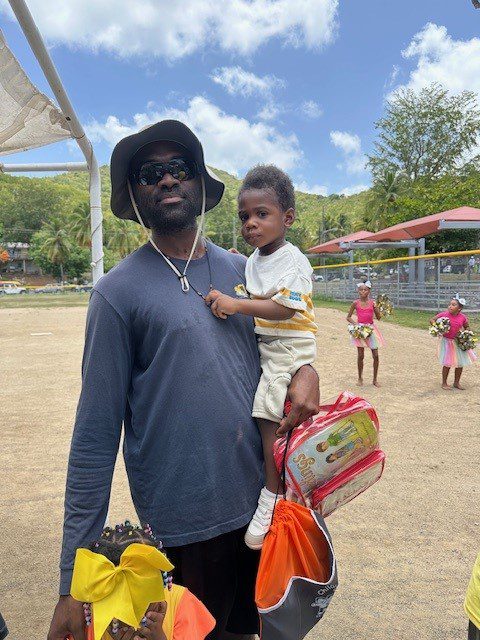
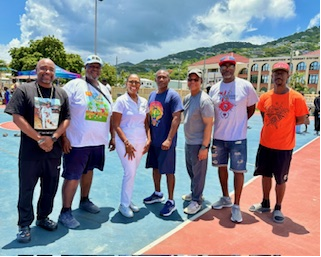
Children laughed, parents cheered, and backpacks filled with school supplies found new owners as the V.I. Department of Justice’s Paternity and Child Support Division’s Access and Visitation Program, in partnership with the Department of Sports, Parks and Recreation, hosted two Father’s Initiative Back-to-School Fun Day & School Supply Giveaway events — first at Emile Griffith Park in St. Thomas on July 19, and then at the National Park Ballfield in St. John on July 26.
Dana Todman, AVP coordinator, hands out school supplies. (Photo courtesy DOJ)DPW Commissioner Derek Gabriel and children (Photo courtesy DOJ)Shamal Thomas and children (Photo courtesy DOJ)Dynamic Dancers (Photo courtesy DOJ)Duane Laurencin and Children (Photo courtesy DOJ)Kyng Richards (Photo courtesy DOJ)Garnet and Juliette Alexander and grandchildren (Photo courtesy DOJ)Ryan Morton and Children (Photo courtesy DOJ)Commissioner Derrick Gabriel, Richard Clendinen, Sharon Jackson McDonald, Leon Martin Jr., Coach Teddy, Leroy Thomas Jr. and Afibae Henley Jr. (Photo courtesy DOJ)
Relatives and friends,
It is with deep sorrow that we announce the passing of our beloved Jeanette Maria Querrard, who died on Sunday, July 27, 2025, at Broward Healthcare in Fort Lauderdale, Florida.
Jeanette Maria Querrard
Her husband, Joseph William Querrard; her daughter, Sheila Marie LaPlace, her son, William Robert Querrard, her sister Germain Petersen, brothers precede her in death:Edville Bryan and Edward Bryan.
She is survived by her children: daughters Nancy Aubain and Jacklyn Querrard; and her son Warren Querrard.Grandchildren: Brenda Aubain, Suzanne Lawrence, Zackary LaPlace, Nicholas LaPlace, Angelique LaPlace-Bryan, Coral Tobey, and Rhiannon Querrard.
Great grandchildren: Kassandra Lopez, Brianna Lopez, Jayda LaPlace, Adaline Toby, Autumn Toby, Wyatt William Toby, Opal Foster, and Noelle Foster.
She is also survived by her sons in law:Ricky LaPlace, Franklin Lewis and Kevin LaPlace; daughter in law: Theresa Querrard; granddaughter in law: Lindsay Nordeen- LaPlace andgrandson in law: Daryl Bryan.
Sisters: Joycelyn Harris and June Aubain; her brother Edmund Bryan; brothers in lawJoseph E. Aubain, Alpha Jennings Harris, and Donald Petersen.
Special friends: Pastor Sam Weeks, Beverly and Claudius Jennings, Valencia Berry-Krause,Linda Questel and Anna Querrard, as well as many other family and friends too numerous to mention.
Relatives and friends are respectfully invited to attend the Mass of Christian Burial on Thursday, August 14, 2025, at Our Lady of Perpetual Help Catholic Church in Estate Mafolie. Viewing will be held at the church from 9:30 a.m. to 10:30 a.m., with the mass immediately following.
Burial will take place at Our Lady of Perpetual Help Cemetery.
Arrangements are under the care of Dan Hurley Home for Funerals and Cremation Center of St. Thomas, St. John, and St. Croix. For online condolences, directions, or to share a special memory, visit www.hurleydavisfuneralhome.com
Former Sports, Parks and Recreation Commissioner Calvert White and business owner Benjamin Hendricks have asked a U.S. District Court judge for a new trial, two weeks after the pair was convicted on charges of wire fraud and bribery. (Source photo by Kit MacAvoy)
Former Sports, Parks and Recreation Commissioner Calvert White, who was found guilty of honest services wire fraud and federal program-related bribery two weeks ago, requested a new trial Thursday, citing an answer the trial judge gave to jurors during their deliberations.
White’s attorney, Clive Rivers, said the court “failed to adhere to the rules of evidence that questions of fact should always be determined by the jury.”
“The jury must evaluate factual circumstances to determine issues of fact relating to each and every element of an offense,” he wrote. “In the case … the trial judge invaded the province of the jury when it answered a question of fact although there was sufficient evidence to establish an inquiry that was for the jury to decide. The existence and effect of certain communications presented a factual question that was decided by the trial court instead of the jury. This is grounds for a new trial.”
Jurors began deliberating in the afternoon on June 24 and returned guilty verdicts for White and another defendant, business owner Benjamin Hendricks, the following day. During their deliberations, they asked U.S. District Judge Mark Kearney three questions, including one asking whether it’s common knowledge that things like text messages, phone calls and emails constitute a wire transaction. Kearney did not speak to what is common knowledge but did give jurors a legal definition of wire transactions in interstate commerce.
In the motion filed Thursday, Rivers asked the court for time to file a memorandum of law in support of White’s motion for a new trial. Hendricks’s attorney, Darren John-Baptiste, asked for a joinder to White’s motion, according to a filing later Thursday.
Sedgwick Claims Management Services must give people with oily-cistern claims documents about their damages, a federal judge ruled Thursday. (Source photo by Linda Morland)
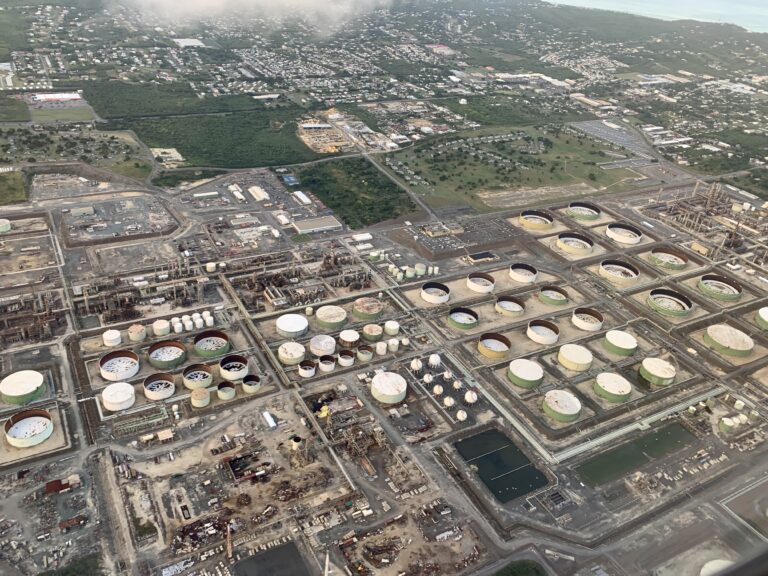
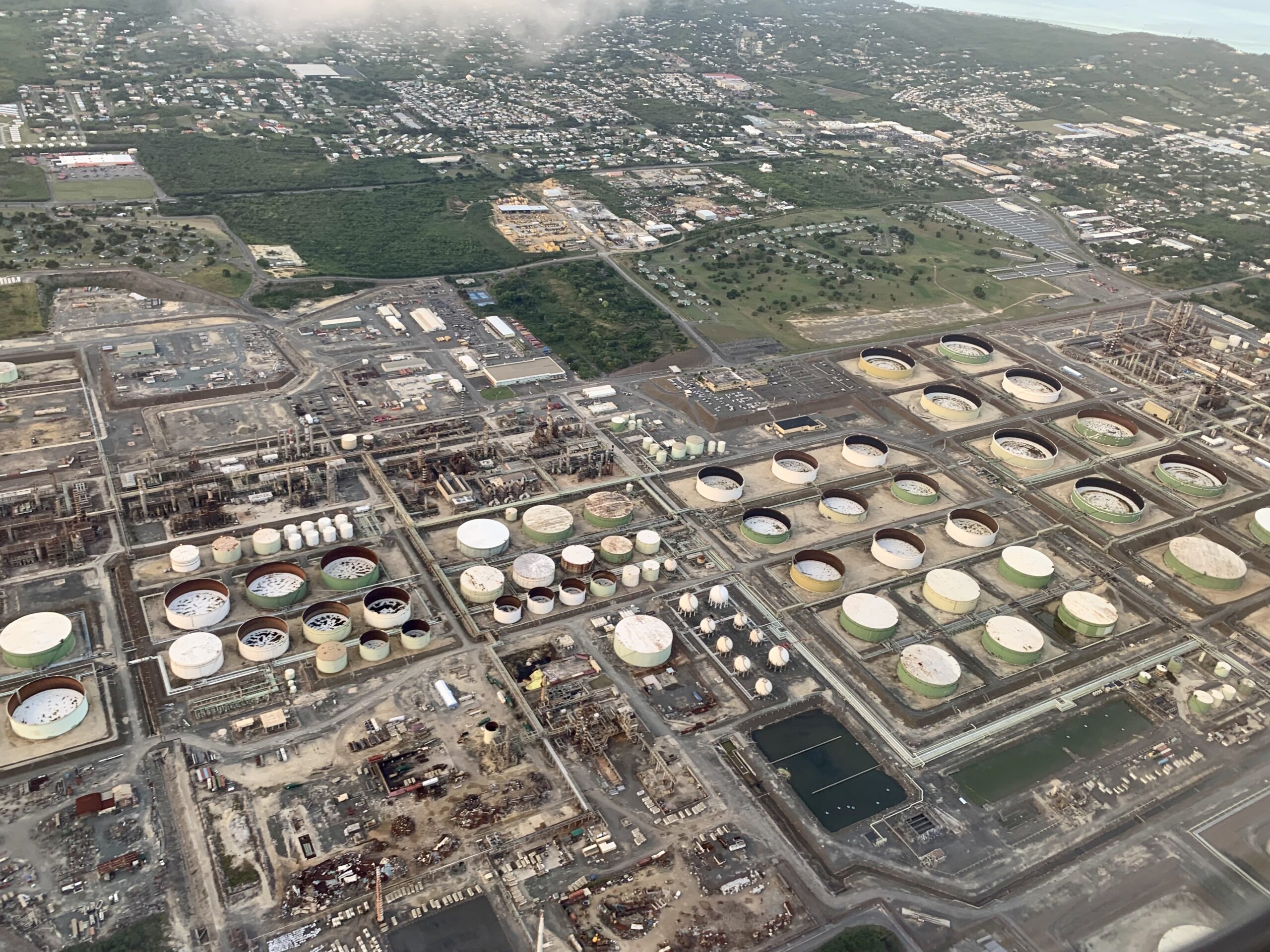
A federal judge Thursday ordered the release of previously withheld documents about how many homes were sprayed by toxins from St. Croix’s refinery in 2021 and the extent of the damage, according to court records.
Limetree Bay Terminals and associated companies attempted to restart the dormant petroleum refinery in early 2021, causing the release of airborne oil. By May of that year, Limetree hired Sedgwick Claims Management Services to assess complaints from St. Croix residents claiming their property, including cisterns, had been fouled by the toxins, according to court records.
That report was hidden away while Sedgwick attempted to collect a $1.1 million outstanding invoice from Limetree. The more than four-year-long argument included disagreement about which Limetree-associated entity even hired Sedgwick, according to court records.
On Thursday, however, U.S. Magistrate Judge Emile A. Henderson III ordered Sedgwick to release the findings crucial to lawsuits against Limetree, which had surrendered the refinery in a June 2021 bankruptcy.
Sedgwick must turn the documents over to Crucians who have sued for damages by Aug. 18, Henderson ordered. In a twist, however, the plaintiffs were ordered to pay $25,000 to offset a portion of Sedgwick’s unpaid claim against Limetree.
Shortly after the early 2021 oil-release incidents, Limetree sought to both minimize the spray’s reach and emphasize the company’s response. In a June 2021 court filing, Jeffrey Charles, Limetree Terminal’s vice president and incident commander, said, “On or about May 12, 2021 an incident occurred at the Limetree facility in St Croix, USVI which caused very small amounts of oil to disperse in certain areas downwind of Limetree.”
He said Sedgwick was hired the next day — the same day the Environmental Protection Agency ordered the refinery closed for 60 days.
And by June 10, “ … Limetree has washed over 700 cars arranged for thousands of roofs Cisterns, exterior walls, and other structures to be washed and has delivered over 16,000 cases of water to affected residents,” Charles said in a court filing.
Limetree would later argue delivering water to people with oily-cistern claims was too much of a financial burden. Several court rulings disagreed.
In September 2024, Limetree sought $44,000 from an oily-cistern claimant, successfully arguing that a law bringing the elderly man’s case to court quickly was unconstitutional.
The refinery encountered numerous problems during its brief restart in February 2021. It had been largely shuttered since 2012 by former owner Hovensa following several years of heavy losses. Hovensa declared bankruptcy in 2015. Limetree had hoped to take advantage of a brief period when sulfur regulations for maritime shipping fuel were changing. The refinery was originally slated to reopen before January 2020, but started its aborted run a year later. By then, worldwide shipping had slumped from the COVID pandemic.
Gov. Albert Bryan Jr. announces the launch of the VI Leap Fund, a multimillion-dollar initiative to support small businesses and underserved communities in the Virgin Islands. [Submitted photo]
The RTPark Community Impact Fund is launching the VI Leap Fund, a multimillion-dollar initiative that provides loans to small business entrepreneurs and underserved communities while offering financial literacy and support.
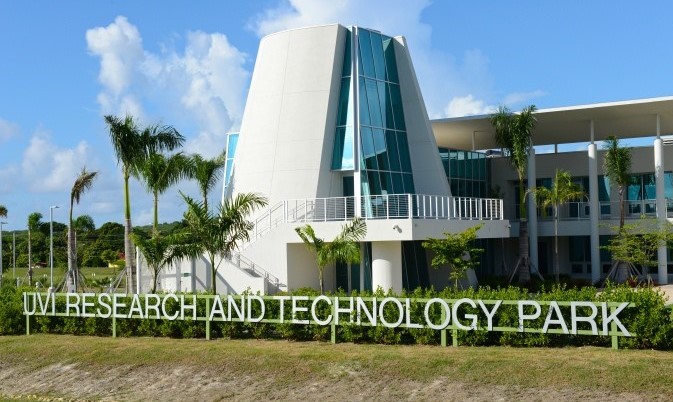
Gov. Albert Bryan Jr. announced Wednesday that the RTPark Community Impact Fund, a 501(c)(3) nonprofit and a separate entity from the UVI Research and Technology Park, has received a $3.6 million private grant to strengthen its operations and launch the program this fall. The grant was provided by an anonymous donor.
The VI Leap Fund will operate as a revolving loan program, offering flexible financing alongside grants for financial literacy and technical assistance. Of the $3.6 million, $2 million is set aside for loans and $400,000 for grants, with the remainder covering operating costs.
From September to December, the program will focus on building infrastructure, hiring key staff and preparing its CDFI certification application. Loan disbursements are expected to begin in September, with full-scale operations planned between January and May 2026.
The VI Leap Fund targets small businesses in the Virgin Islands that have struggled to access traditional loans, prioritizing those that have never received bank financing. Eligible applicants must have been in business for at least 18 months and hold a valid business license. Focused on driving innovation, the CIF is also exploring the distribution of nano-loans to support local small businesses.
“We can now directly address systemic challenges that have stifled growth for local businesses and communities,” CIF Board Chair Aminah Saleem said. “By building a loan portfolio, the fund also lays the groundwork to become a Certified Community Development Financial Institution through the U.S. Treasury Department’s CDFI Fund.”
The VI Leap Fund aims to become the first certified CDFI in the U.S. Virgin Islands. Certified Community Development Financial Institutions are specialized lenders that focus on providing financial services and technical assistance to communities traditionally underserved by conventional banks. “Once you become a certified CDFI, you can get money from the Federal Reserve and apply for grants to match your funds, so it’s a way to ensure we’ll always have funds coming in — not just now, but forever,” said Saleem.
They also noted that a key difference with CDFIs is their focus on teaching financial literacy. “One of the big things that makes community development financial institutions different from a bank is that they do financial literacy and technical assistance, and getting people loan ready,” Saleem explained. “A lot of times, people go to the bank and they don’t get a loan and they’re just rejected, and there’s nowhere for them to go to hear, ‘This is why you didn’t get the loan, and you need to do this.”
Community feedback during the development of Vision 2040 highlighted gaps in access to capital for local entrepreneurs and nonprofits, according to Richard Motta, press contact for Government House. “One of the concerns that was raised by many in the community was having some sort of lending institution outside of the traditional banking institutions,” said Motta. “That was something that was expressed in the Vision 2040 report that was needed and not something that was existing in the community at the time, and so that’s what prompted the creation of this.”
“This is not just a Vision 2040 accomplishment — it is a win for the territory that opens up a cadre of financial and economic opportunities available only through a certified CDFI,” Bryan said, referring to the Certified Community Development Financial Institution status the fund aims to achieve.
The VI Leap Fund will roll out in three phases. From July to December 2025, the focus will be on building infrastructure, hiring key staff, and preparing its CDFI certification application. From January to May 2026, the fund will launch lending and grant programs, enroll businesses in technical assistance, and host Small Business Summits. Starting in June 2026, the program will aim for full operations, secure CDFI certification, and fully disburse funds to ensure long-term sustainability.
Established in 2022, the RTPark Community Impact Fund currently manages the $5 million VI Catalyst Revolving Loan Fund, created by the Legislature under Act 8464. Executive Director Eric Sonnier explained that this experience was key to securing the new grant.
“In 2021, RTPark took the first step toward forming a Certified Community Development Financial Institution by creating the CIF as an independent 501(c)(3) nonprofit partner. Because CDFIs cannot be managed by government agencies, establishing a nonprofit was essential. Since 2022, the CIF has managed the VI Catalyst Revolving Loan Fund, which has given us valuable loan experience, a loan portfolio, and a strong pipeline – all major factors in receiving this new grant,” Sonnier said.
“I want to give people hope — not just that we have this grant, but that we actually can do something and help people.” Said Saleem, “We really want to come through and be transformational.”
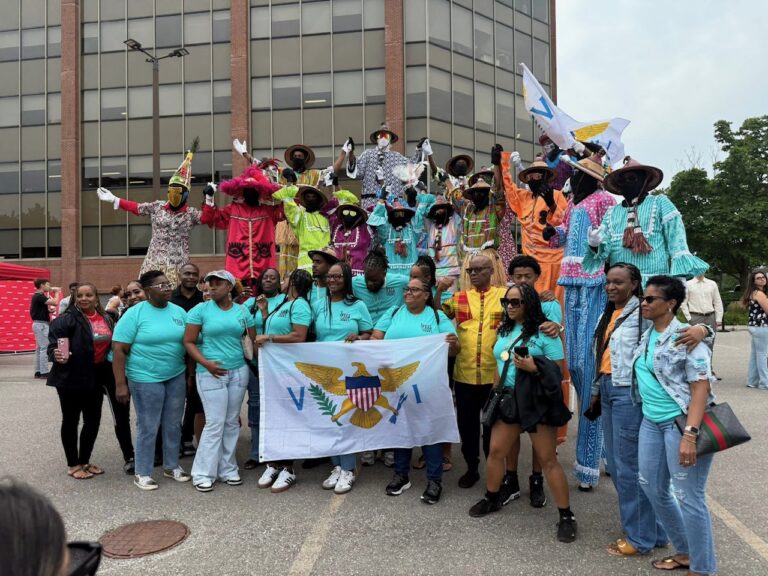
The Guardians of Culture Moko Jumbies and their supporters proudly represent the U.S. Virgin Islands in full traditional attire at Caribana 2025 in Toronto. (Photo courtesy Guardians of Culture Moko Jumbies)
The Guardians of Culture Moko Jumbies recently returned from an unforgettable cultural journey to Toronto, Canada, where 20 young moko jumbies traveled to participate in a week filled with celebration, performance, and purpose. Altogether, 45 travelers — including the performers and their dedicated parents — embarked on this meaningful experience.
One of the proudest moments of the trip was when the Guardians were invited to open the prestigious King and Queen of the Band Showcase — a major honor during Caribana, North America’s largest Caribbean Carnival, which draws over a million attendees annually. This year’s festivities took place from July 31 to Aug. 4.
“We were the first act out there,” said founder Willard John, who has practiced and studied the art form for over 50 years and established the Guardians of Culture in 1993. “If you’re asked to open King and Queen of the Band, it means they think highly of you,” John said he was told at the event.
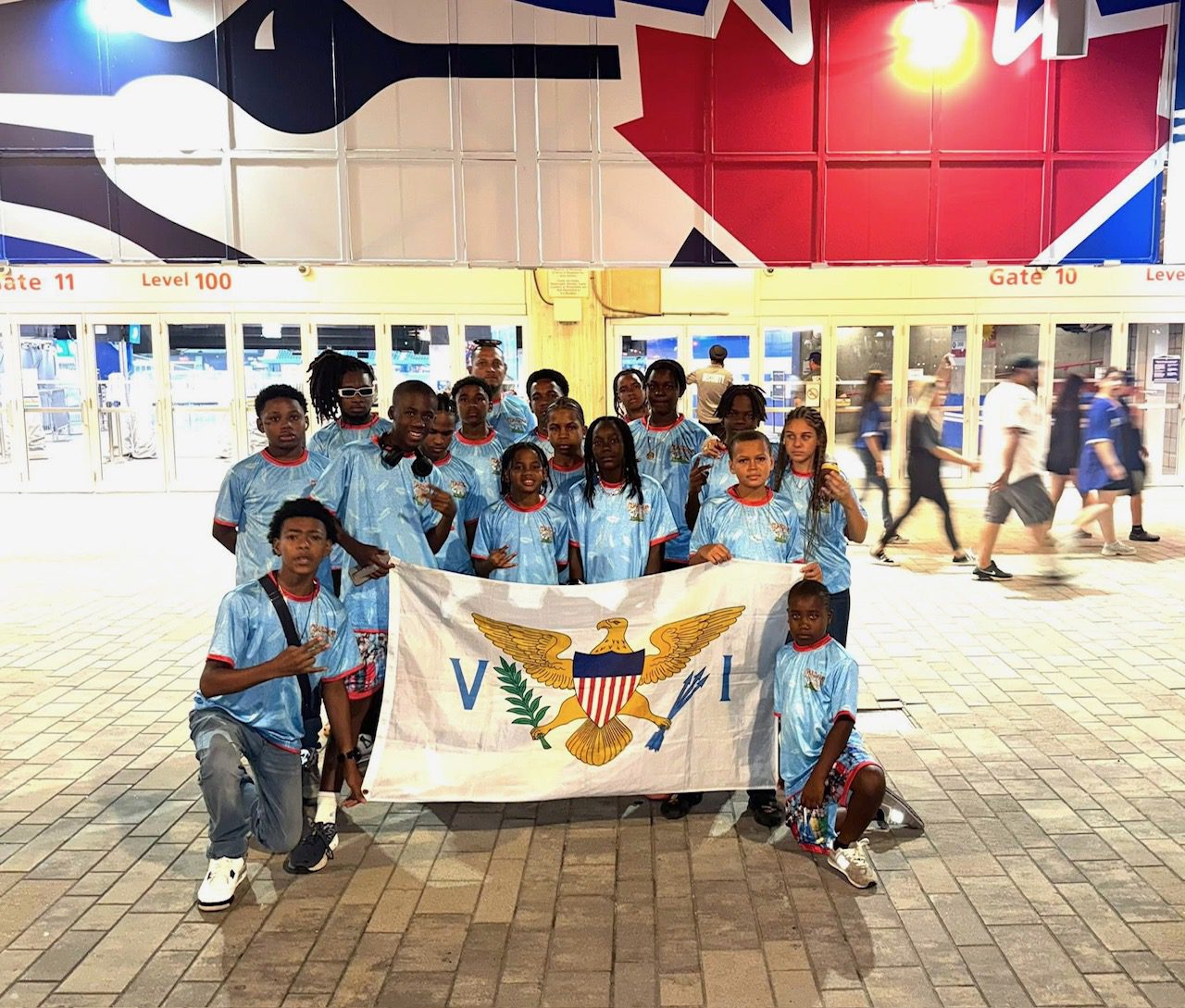
Members of the Guardians of Culture Moko Jumbies proudly pose with the U.S. Virgin Islands flag during their cultural exchange trip to Toronto, Canada, where they performed at Caribana 2025. (Photo courtesy Guardians of Culture Moko Jumbies)
The group’s presence in Toronto was about more than performance – it was a bridge of history, heritage, and hope. “One of the things I do with the moko jumbies is remind us from where we come,” John said. “This tradition came to the Caribbean through slavery. Here in the Virgin Islands, we’ve made special efforts to preserve and honor it,” he said.
The Guardians performed three official shows, including a private event hosted by Aecon Group, the parent company of SkyCity. “They asked us to perform for more than 200 employees. I narrated what we call ‘Mokolution,’ where I tell the full history of the Moko Jumbie and what it means.” They also participated in the Caribana parade.
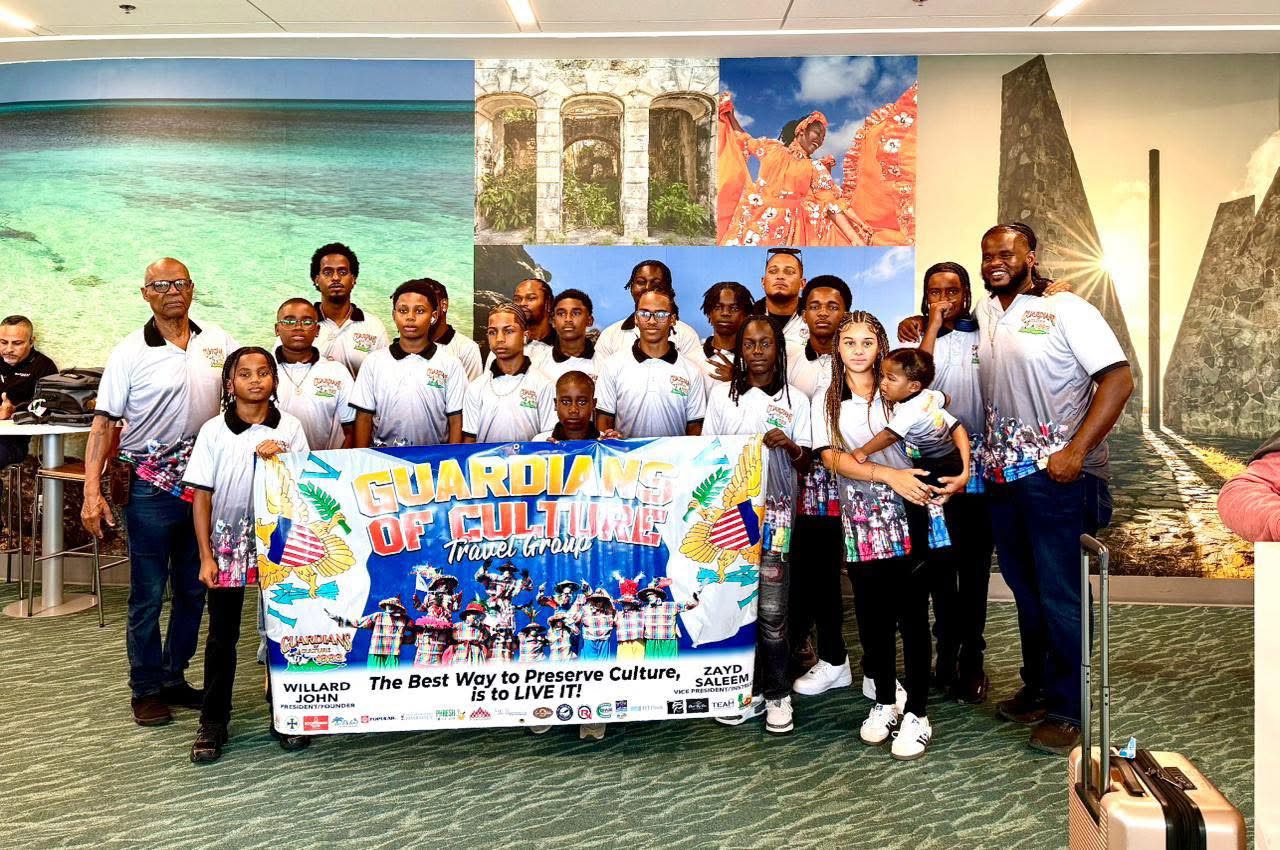
The Guardians of Culture Moko Jumbies at the airport representing the U.S. Virgin Islands in full traditional attire at Caribana 2025 in Toronto. (Photo courtesy Guardians of Culture Moko Jumbies)
Primary instructor Zayd Saleem, who plays a key role in training and mentoring the group, emphasized the powerful connection built with the youth. “It gives you that purpose. Being an instructor is about more than teaching them how to stilt dance. It’s that purpose of giving right now — that’s the bottom line,” Saleem said. “We have a really strong bond, and I write them a letter for every trip. I let them know, ‘I see you. I see what you’re doing.’ Not just as moko jumbie, but as people growing into themselves.”
“There’s real risk in what they do,” he added. “Moko jumbie is a dangerous art form. That’s why we stress safety above all.”
For many of the children, the experience extended beyond cultural performance. Thanks to their parents and supporters, they got to experience sights like Niagara Falls, a Toronto Blue Jays game, and outings to the aquarium, water parks, and more. “You should’ve seen them sleeping on the plane today,” John laughed. “We want to give these youngsters an opportunity to see the world as much as they can.”
“These kids perform from November to August. To see them have fun and just be kids — that was everything. I don’t think it’s going to sink in until years from now. We took a cruise to the Falls and seeing them get splashed — just a fun day,” Saleem added.
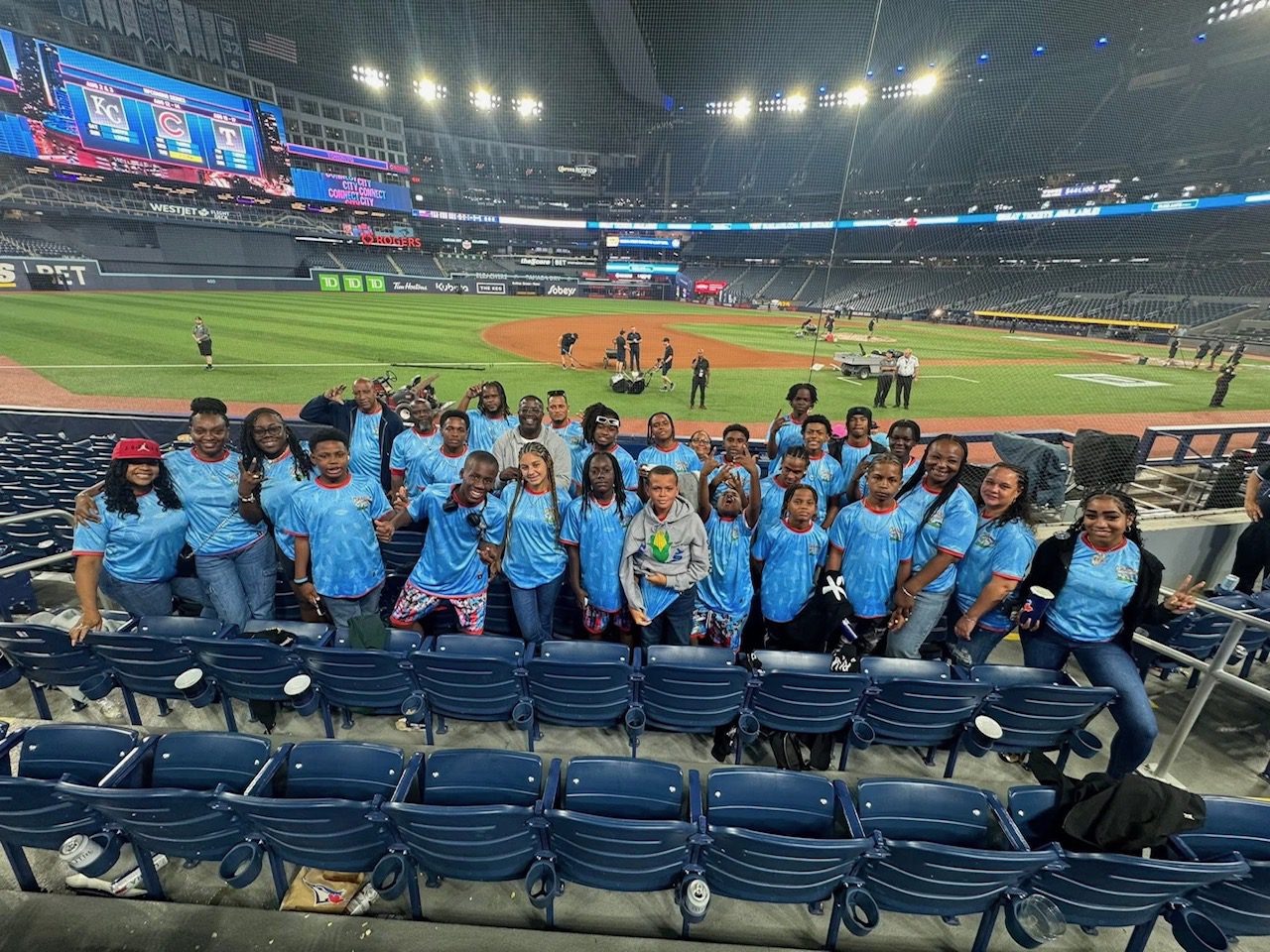
The Guardians of Culture Moko Jumbies and their supportive parents enjoy a night at the Toronto Blue Jays game as part of their enriching cultural journey during Caribana 2025. (Photo courtesy Guardians of Culture Moko Jumbies)
The trip wouldn’t have been possible without the support of the Virgin Islands community, generous donors, and the tireless efforts of the “Moko Moms and Dads,” as John lovingly calls them. “They are our backbone,” he said. “They help with fundraising, they support every step of the way, and just about all of them paid their own way on this trip.”
A special shoutout was extended to Tresa Civil, Sarah Maynard, and Marcela “Chelly” Cruz de Schjang, who, without them, the Guardians of Culture Moko Jumbies performing in Caribana would have never happened. Also, to Deputy Commissioner RoseAnne Farrington of the V.I. Department of Tourism, for her support.
Though the group has previously traveled to the British Virgin Islands and Tortola, the Toronto journey marked an exciting expansion. “We don’t do this just to dance on stilts. We’re working with young people, and it’s our job to provide guidance — to give them more than just an art form, but a future,” said John.
NOAA released an updated hurricane season forecast on Thursday, maintaining its outlook for an active Atlantic season. (Photo courtesy NOAA)
In an update released Thursday, the National Oceanic and Atmospheric Administration reaffirmed its forecast for an above-normal Atlantic hurricane season, pointing to very warm ocean temperatures and favorable atmospheric conditions that remain in place as the season enters its peak months.
While the predicted number of named storms was slightly reduced from the initial forecast released in May, NOAA emphasized that the season is still expected to be active and urged residents to remain prepared.
NOAA shared the following information in Thursday’s updated hurricane season forecast:
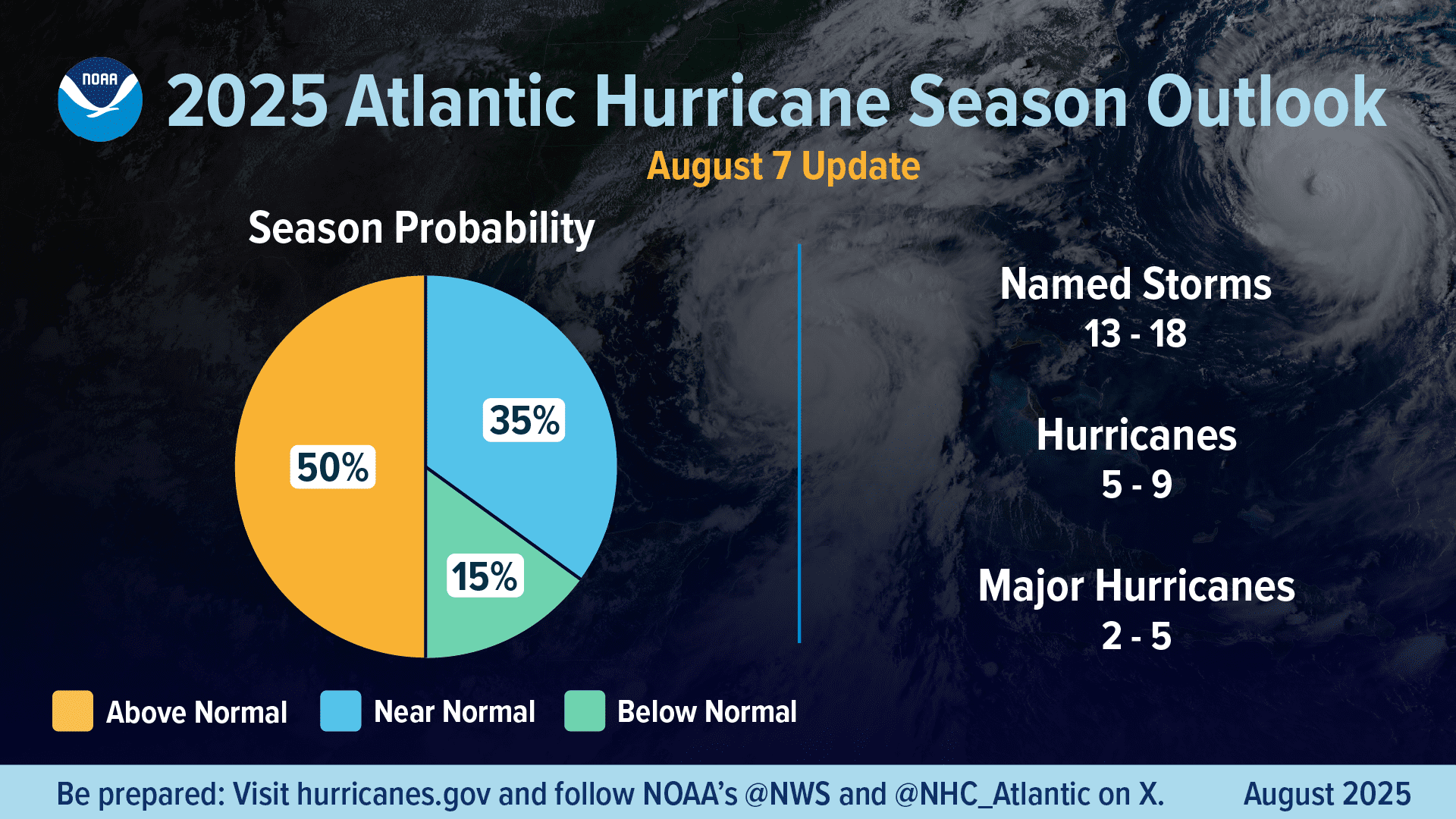
“Forecasters from NOAA’s National Weather Service updated the number of expected named storms to 13 to 18, with winds of 39 mph or greater, of which five to nine could become hurricanes, with winds of 74 mph or greater, including two to five major hurricanes with winds of 111 mph or greater.
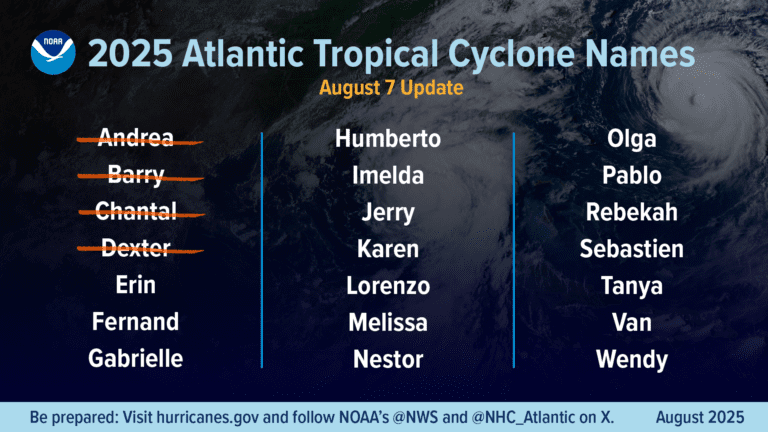
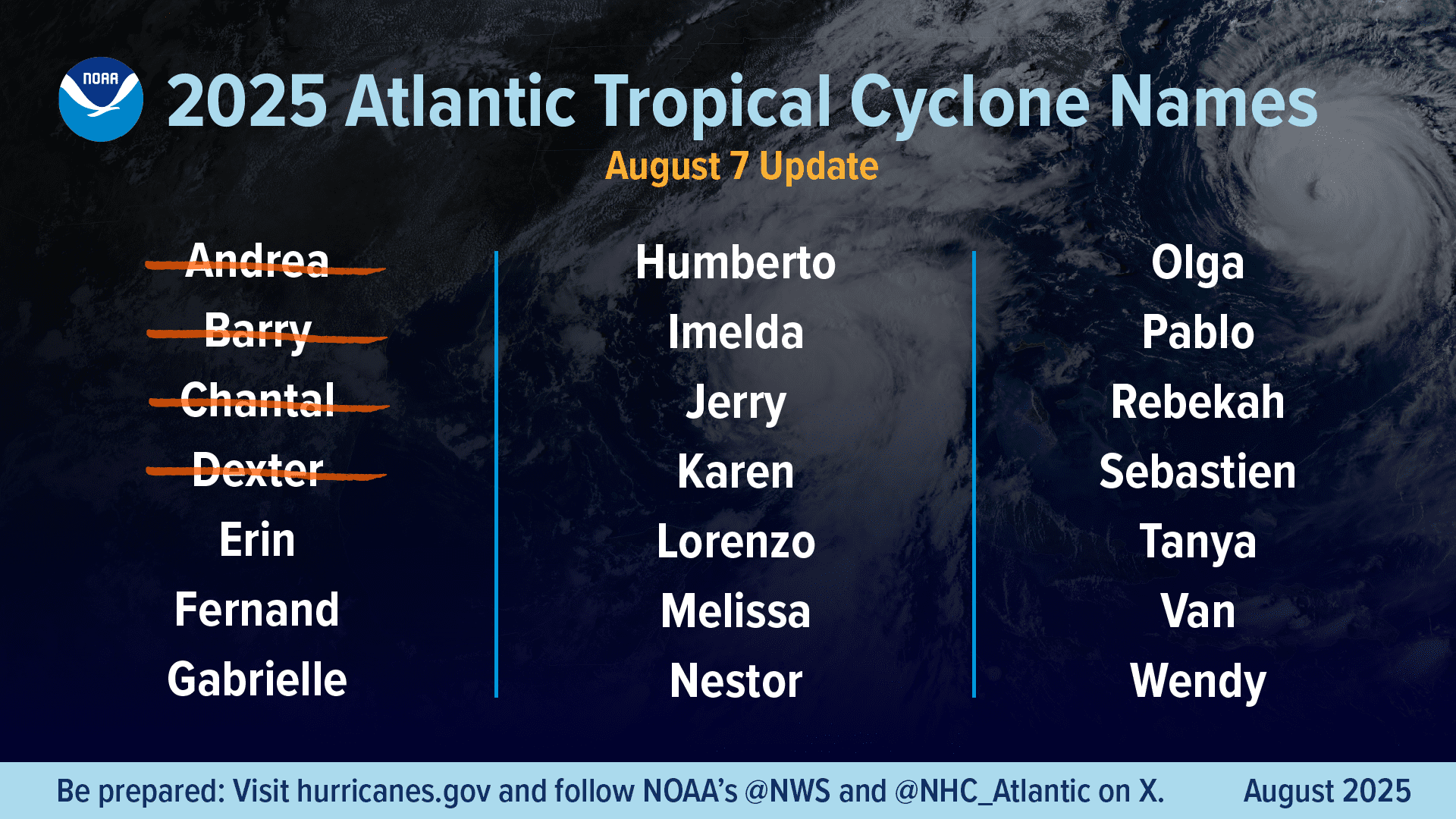
As of Thursday, Aug. 7, four named storms have developed across the Atlantic basin, according to NOAA. (Photo courtesy NOAA)
“The adjusted ranges are for the entire season from June 1 through Nov. 30, and are inclusive of the four named tropical storms that have already formed. In the Atlantic basin, a typical hurricane season will yield 14 named storms, of which seven become hurricanes and three become major hurricanes.
“The likelihood of above-normal activity is 50%, a 35% chance of a near-normal season, and a 15% chance of a below-normal season. This updated prediction is similar to the initial outlook issued in May.”
NOAA’s updated forecast highlights environmental conditions that remain favorable for tropical cyclone formation, including warm Atlantic Ocean temperatures and a busy West African Monsoon, which often generates tropical waves off the coast of Africa. Forecasters also cited the current neutral phase of the El Niño-Southern Oscillation, which can help to reduce wind shear and allow storms to organize more easily.
“Atlantic basin tropical storm activity is expected to be elevated due to a combination of factors, including warmer-than-average sea surface temperatures in the tropical Atlantic Ocean and Caribbean Seas, and an active West African Monsoon,” NOAA said. “ENSO-neutral conditions are expected to continue, meaning there is neither an El Niño nor La Nina to influence this season’s storm activity,” NOAA continued.
“‛Many of the factors we identified ahead of the season are still at play, and conditions are largely tracking along with our May predictions,’ said Matt Rosencrans, lead hurricane season forecaster with NOAA’s National Centers for Environmental Prediction, part of the National Weather Service,” NOAA’s press release added.
Additionally, forecasts for the Eastern and Central Pacific basins also remain consistent, according to NOAA.
“NOAA’s outlook for a below-average Eastern Pacific season — with 12 to 18 named storms — remains on track, but it did have a rapid start with nine named storms. The Central Pacific hurricane season remains unchanged, calling for one to four named storms,” NOAA reported.
Atlantic Basin Tropical Cyclones
As of Thursday afternoon, four named cyclones have developed in the Atlantic basin since the hurricane season began on June 1.
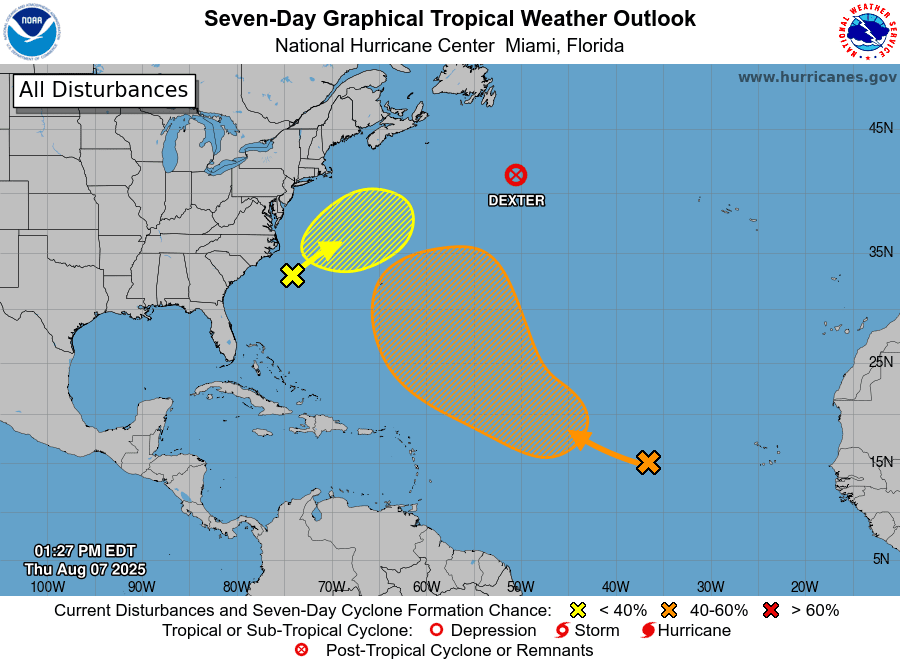
Several disturbances are being monitored by the National Hurricane Center as environmental conditions remain favorable for tropical development. (Photo courtesy NHC)
“So far, the season has produced four named tropical storms and no hurricanes. Tropical Storm Chantal made the first U.S. landfall of the season and brought high winds and deadly flooding to the Carolinas during the Independence Day holiday weekend,” NOAA reported.
The National Hurricane Center is currently monitoring several disturbances across the Atlantic basin, including Invest 96L, a tropical wave moving westward across the central tropical Atlantic. An “invest” is a system being investigated for potential tropical development.
As reported Wednesday in a Tropical Outlook story by the Source, meteorologists are closely watching the track of Invest 96L, which may pass to the northeast of the Lesser Antilles in the coming days.
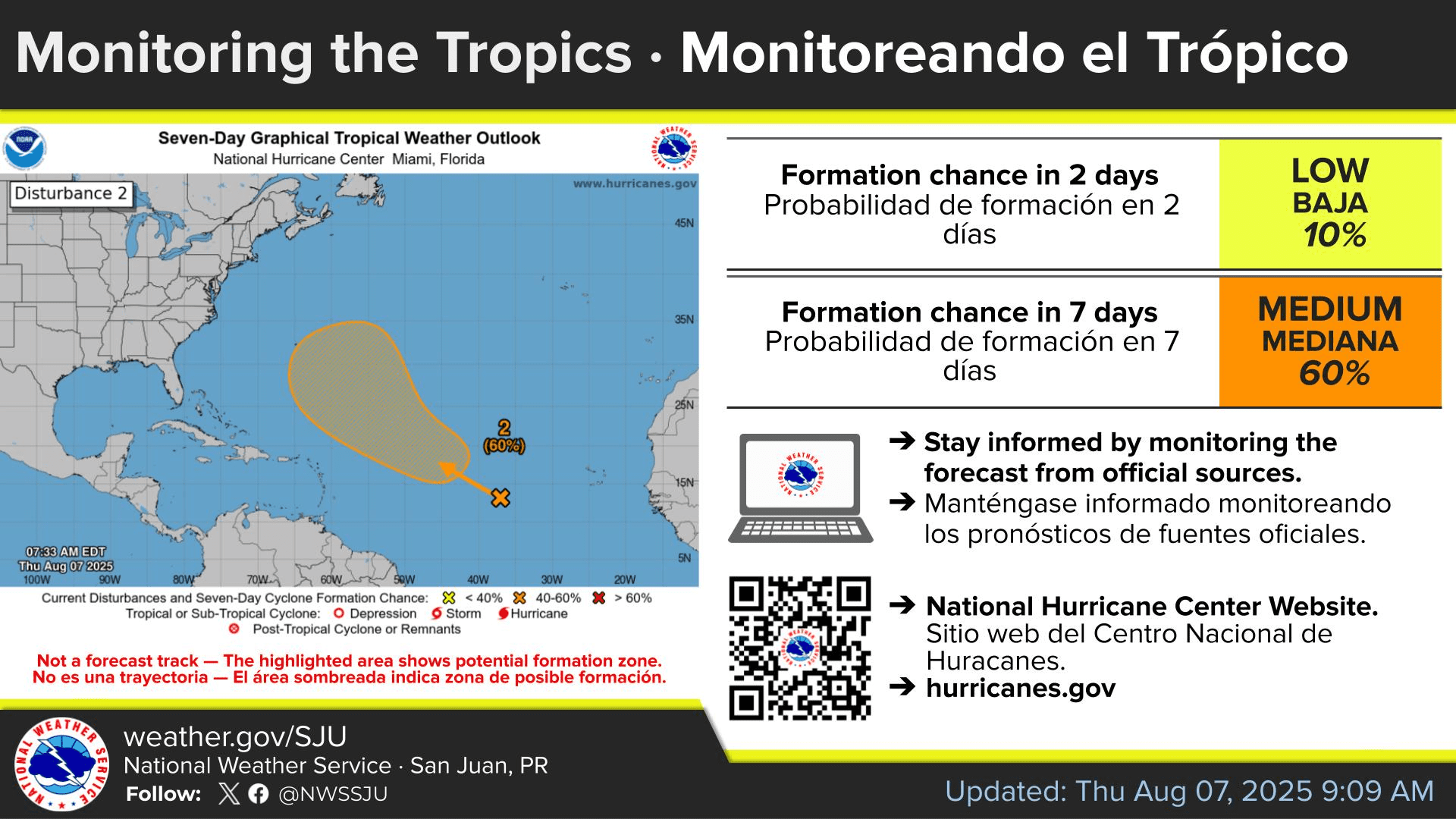
The National Weather Service in San Juan, Puerto Rico, continues to track Invest 96L, a tropical wave under investigation by the NHC. While the system may pass northeast of the region, forecasters said Thursday it is still too early to determine whether Puerto Rico or the U.S. Virgin Islands will be affected. (Photo courtesy NWS)
Still, on Thursday, the National Weather Service in San Juan, Puerto Rico, noted that some uncertainty remains regarding any possible impacts from the disturbance.
“Forecast model guidance has been very inconsistent in the last few days with the track of this system,” the NWS said. “However, there is a trend for this tropical system to remain northeast and away from the northeastern Caribbean region. At this time, the forecast confidence remains low, and it is too early to determine impacts associated with the systems for the region. Despite the model trends for early next week, an increase in moisture over the area is anticipated next Monday, followed by much drier air and Saharan dust on Tuesday,” the NWS explained.
However, a second tropical wave expected to move off the west coast of Africa in the coming days could potentially pose a threat to the Caribbean by mid-August.
“Some global forecast models indicate the possible cyclonic formationlater in August,” the NWS said in a message to the Source on Wednesday. “However, given its long-range nature, confidence in the forecast is very low at this time. No action is needed for now, but staying informed is essential,” the NWS added.
Local Weather Updates
Residents and visitors in the U.S. Virgin Islands are encouraged to monitor tropical updates regularly, as forecasts can change quickly. Weather information is available from the NWS, the NHC, and NOAA.
Additionally, the local weather forecast for the U.S. Virgin Islands is regularly updated on the Source Weather Page and VI Source YouTube Channel. A weekly Tropical Outlook article from the Source is also published throughout hurricane season to provide in-depth updates.
Finally, residents and visitors can find weather details and preparedness information from the Virgin Islands Territorial Emergency Management Agency.