

Board of Education Seeks $2.1M Amid Push to Improve Test Scores, Teacher Certification

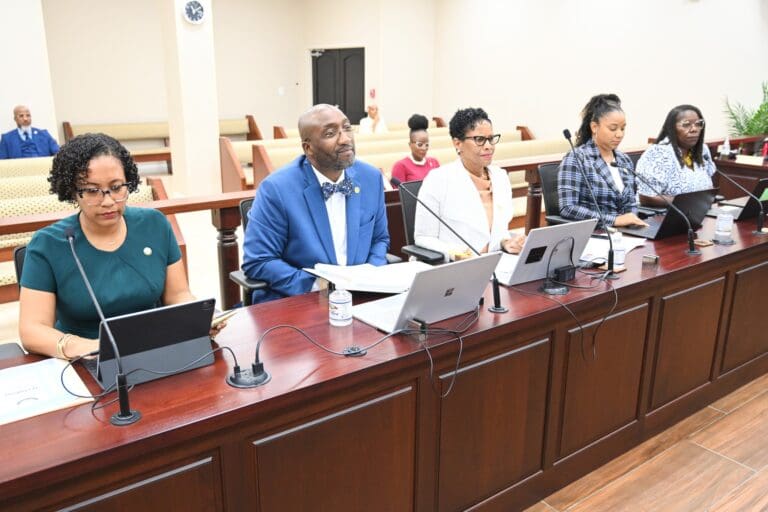
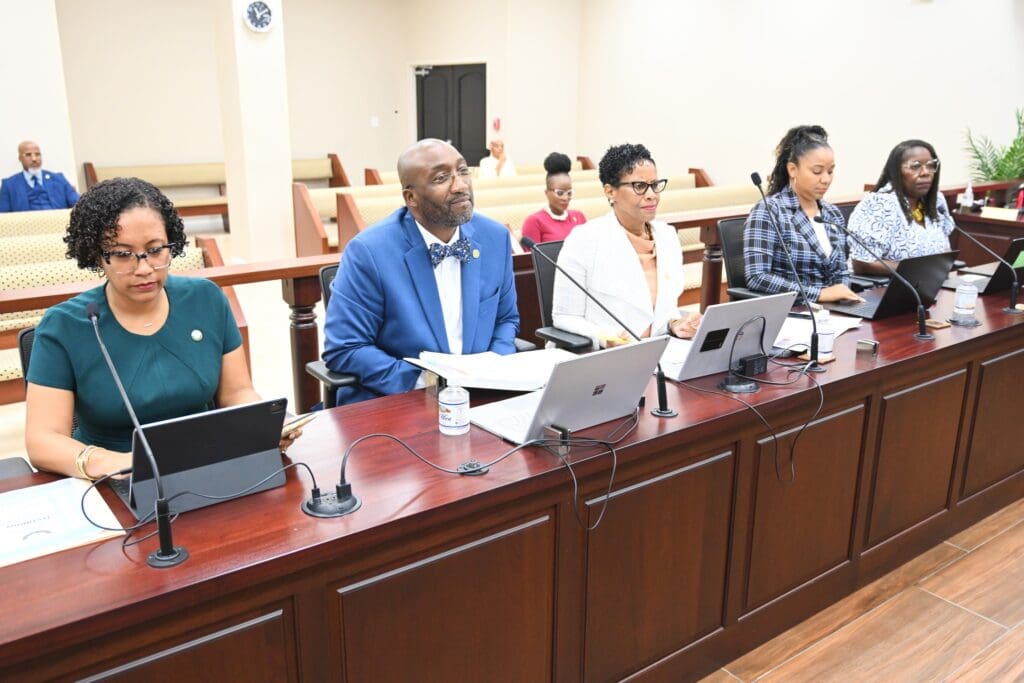
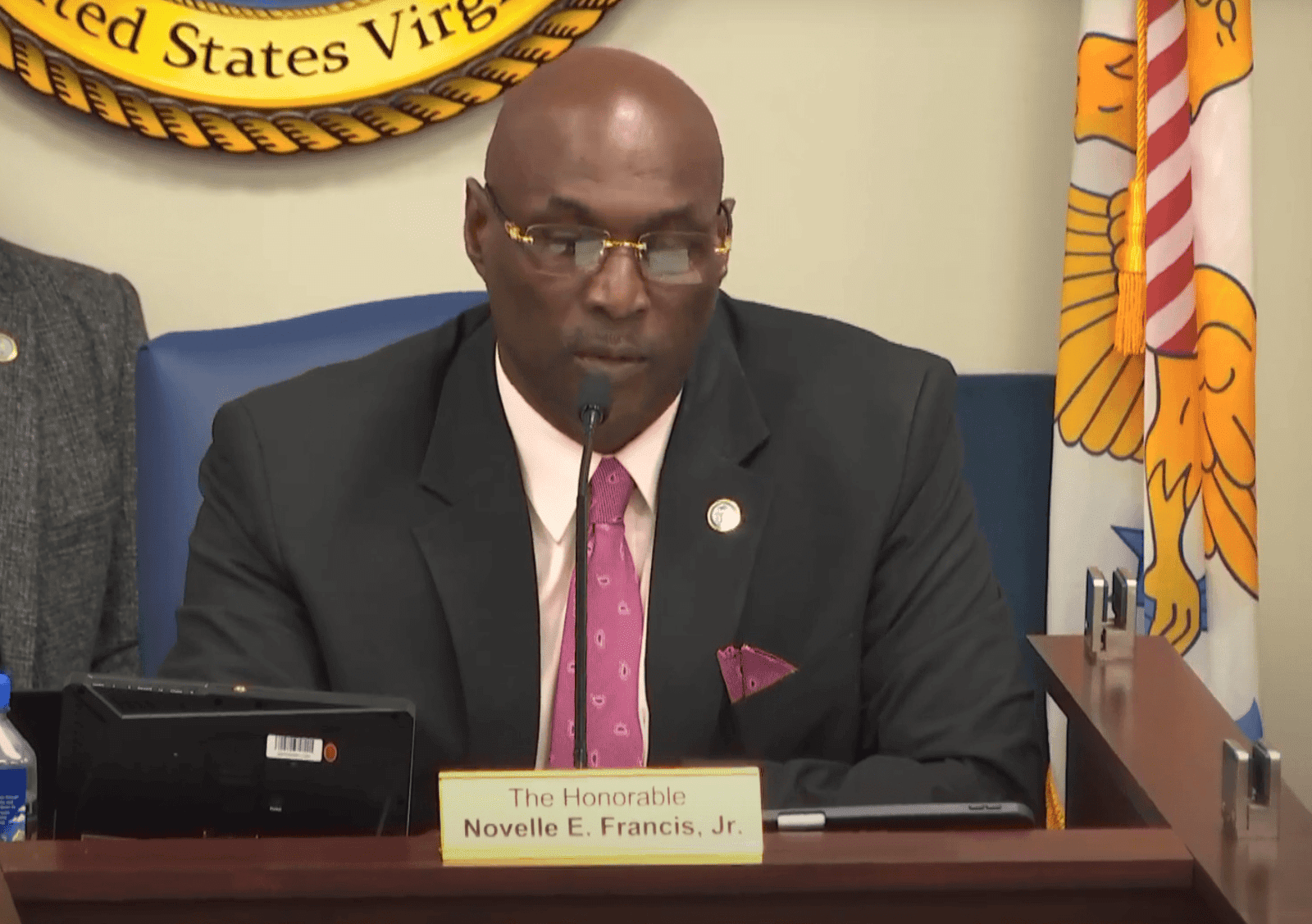
Senator Novelle E. Francis Jr. chairs at the Committee on Budget, Appropriations and Finance. (Photo courtesy V.I. Legislature)

The Virgin Islands Board of Education is requesting just over $2.1 million for fiscal year 2026, signaling what board officials called a renewed focus on accountability, educator support, and strategic investments in student opportunity.

Speaking during a Senate Committee on Budget, Appropriations and Finance hearing Thursday, Board Chair Kyza Callwood described the request as a “reaffirmation of fiduciary discipline, accountability and dedication to advancing public education.”

The board’s proposed $2,137,697 budget reflects a $250,000 reduction from FY 2025, when it was allocated $2.38 million. As of mid-July, $1.6 million has been spent, with no overruns projected, according to Callwood.

The board reports full compliance with a 2020 Inspector General audit and is preparing a fiscal audit covering FY 2023 forward. Outstanding vendor payments total $22,718, including $17,608 overdue by more than 90 days — delays the board attributes to Finance Department processing bottlenecks.

The Board of Education is an independent territorial agency tasked with awarding student financial aid, certifying educators, and overseeing public education policies and standards across the territory.

Between FY 2023 and May 2025, the board issued 882 educator certifications and implemented an amnesty program to reduce the burden of professional development requirements, according to testimony Thursday. Uncertified teacher rates remain a concern — 23.5% on St. Croix and 10% in St. Thomas/St. John.

Senators raised serious concerns about persistently low proficiency rates in English Language Arts among Virgin Islands students when using the Smarter Balanced Assessment System. According to the 2025 accountability report, titled “Turning the Tide, Reclaiming Promise,” only about 19% of students across St. Thomas and St. John were proficient, leaving 60 to 70 percent below grade level.

Sen. Ray Fonseca sought clarification on whether the low English proficiency stemmed from a high number of students not speaking English as their first language. Board member and Chair of Curriculum, Instruction and Learning Environment Winona Hendricks acknowledged the challenge, emphasizing that the Education Department and the board must implement effective strategies to support these students.

“The scores from 2023 to 2024 do indicate that our students are struggling with English language arts,” Hendricks said. “The Department of Education, with the Board of Education, must put strategies or programs in place to assist our students. Some schools already have intervention programs where, in addition to regular classroom instruction, students receive targeted support from specialized educators to address deficiencies.”

Hendricks emphasized that improving student outcomes is a shared responsibility among the Education Department, the Legislature and the Governor’s Office — all of which receive accountability reports intended to drive informed action. She also stressed the crucial role of parents, urging them to stay consistently informed about what test scores reveal about their children’s progress. “Parents need to be aware of what the test scores are sharing about their students, and that needs to be done on a consistent basis,” Hendricks said, also noting that no single test should define a student’s abilities, calling instead for a more well-rounded approach to assessment.

Fonseca pressed for more detail on what the Board of Education is doing to directly confront low English proficiency and broader academic gaps. In response, Hendricks outlined the implementation of a detailed checklist, which guides twice-yearly school visits during which the board evaluates whether classroom instruction meets established standards. These visits assess student engagement, teacher certification, student enthusiasm, and whether students are developing critical thinking and communication skills. She added that with the current round of school visits complete, the board expects to report its findings soon, categorizing schools as strong, moderate, deficient, or in need of significant support regarding curriculum and instruction quality.

Callwood expressed their view that the Smarter Balanced test should be eliminated altogether, arguing that it does more harm than good by demoralizing students and teachers. They pointed to local infrastructure issues — like unreliable internet and power outages — that often disrupt testing and force students to restart, as just one of the many compounding factors contributing to low test scores. They emphasized the need for a locally developed assessment better aligned with the realities of Virgin Islands classrooms.

Sen. Kurt Vialet proposed the idea of implementing simple exit exams by grade level to better measure if curriculum goals are being met. In response, Callwood said the concept has been discussed in the past but noted challenges, including differing opinions between districts and concerns about reliability and bias. They emphasized the importance of collaboration between policymakers and educators before major legislative decisions are made

As the start of the new school year approaches, lawmakers turned their focus to whether Virgin Islands public schools will be physically ready to welcome students. Sen. Marise James asked Callwood to outline the board’s engagement in school maintenance oversight and preparations for the fall reopening.

Callwood clarified that the board plays an observational role in school site assessments, and the Bureau of School Construction and Maintenance is the lead agency. Still, the Board of Education will participate in a series of walkthroughs scheduled for early August. These visits are part of a broader inspection effort coordinated with multiple regulatory agencies. Callwood said that every school facility under the Education Department will be evaluated, with agencies such as DPNR and Fire Services taking part in the inspections.

The multi-agency team will examine every aspect of each facility — from classrooms to kitchens, auditoriums, and outdoor areas — to ensure they meet health, safety, and fire code standards. The findings from each agency will determine whether schools are deemed suitable for occupancy before students return.

The board also manages the Territorial Scholarship Fund and reported an increase in scholarship applications this year — 659, up from 627. In FY 2025, $1.57 million was allocated to financial aid programs, bolstered by $299,000 in Economic Development Commission contributions and $65,000 in private donations. However, officials noted that 41 of 99 EDC beneficiaries remain non-compliant with their mandatory contributions.

To improve scholarship recovery efforts, the board launched a targeted initiative in FY 2024 to review delinquent accounts, update borrower contact information and reconcile aged files. This included outreach to borrowers and cosigners. Additionally, the board implemented a loan repayment amnesty period from July to December 2024, waiving penalties and interest to encourage voluntary payments. This effort yielded nearly $30,000 in collections.

Despite these efforts, the total outstanding delinquent loan balance remains over $1.18 million, with many accounts more than 20 years old. Recovery remains difficult due to borrowers relocating off-island, ignoring repeated outreach attempts, or even blocking follow-up communication. The board’s staff continues to update loan records, cross-reference public databases, and explore additional recovery options through credit bureaus and legal counsel.

Callwood emphasized that the board’s mission goes beyond numbers. “We remain committed to improving student outcomes, enhancing institutional accountability and promoting educational excellence across the Virgin Islands.”

Bolques Enters No Contest Plea in Ethics Inquiry — Senate to Vote on Findings by Aug. 14

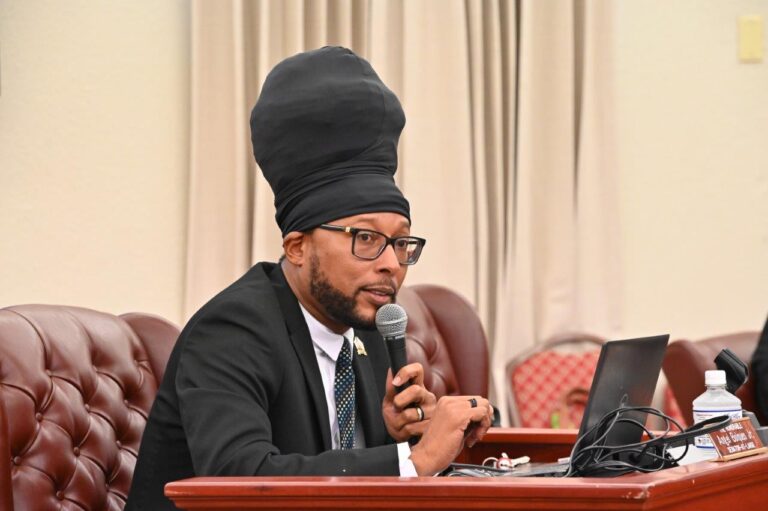
Senator At-large Angel Bolques Jr. entered a no contest plea Thursday to a charge of violating his oath of office, concluding a monthslong inquiry by the Legislature’s Committee on Ethical Conduct into a complaint filed by a legislative employee. Now the Senate must vote by Aug. 14, a press release announced.

The committee formally launched the investigation on March 28, following Senate President Milton E. Potter’s directive. The complaint, submitted two days earlier, met all procedural requirements and was accepted for review. What followed was an extensive investigation involving subpoenas, document requests, interviews, and legal deliberations, according to the press release.

On June 17, the committee issued a Statement of Alleged Charges to Bolques and his representative, who responded on July 7, raising objections based on Rule 810(e) of the Legislature’s Rules. That rule prohibits complaints filed more than 60 days after the alleged violation. The committee concurred that many of the charges fell outside that time frame and could not be considered, the press release stated.

Despite that, the committee proceeded with a hearing scheduled for July 24 on St. Croix. Ahead of the hearing, the Legislature’s legal counsel and Bolques’s attorney reached a Stipulated Settlement Agreement. Bolques agreed to enter a no contest (nolo contendere) plea to the single remaining charge that fell within the valid reporting window. While not an admission of guilt, the plea means Bolques will not dispute the charge, the release stated.

During the formal hearing Thursday, Bolques entered the plea, which the committee accepted. The CEC will now forward its findings and recommendations to the full Senate, which must vote within 15 business days – no later than Aug. 14, it said.

The committee stressed that its proceedings are administrative and do not limit the complainant’s ability to seek civil or legal remedies elsewhere. To protect the privacy of the complainant and witnesses, the CEC said it will not make further public statements at this time.

Countdown to the Classroom: Education Department Launches Back-to-School Campaign

  Public school students return to the classroom Aug. 13 and to help them prepare, the Education Department has launched its Back-to-School Countdown Campaign, a daily initiative designed to keep families informed, engaged, and fully prepared for a successful start. This year’s theme, “Igniting Innovation & Elevating Excellence,” sets an inspiring tone for the school year ahead, emphasizing academic achievement, creativity, and continuous growth across every school in the territory, the department said in a release as it begins the countdown to opening day. That includes back to school events in both districts, with a “Community Connectivity” celebration from 11 a.m. to 3 p.m. Saturday at Tutu Park Mall on St. Thomas, and a “Food Truck Festival” from 11 a.m. to 5 p.m. Aug. 9 at the St. Croix Educational Complex High School. Throughout this time, VIDE announced that it will be sharing important reminders, helpful tips, and updates to support a successful return to school for all stakeholders. To ensure families receive accurate, up-to-date information, VIDE encourages all parents, guardians, and students to follow and subscribe to our official communication platforms:
  • Facebook: Virgin Islands Department of Education
  • YouTube: Virgin Islands Department of Education
  • Website: vide.vi
  • VIDE Alerts: Sign up at vide.vi/stayconnected
Families are also urged to register for PowerSchool, the student information system that allows parents guardians, and students to track academic progress, attendance, grades, receive direct updates from their child’s school, and important VIDE announcements. School-Specific Back-to-School Information Each public school maintains its own Facebook page and webpage, where families can access essential back-to-school details such as orientation schedules, supply lists, uniform guidelines, and more. All school webpages can be accessed through VIDE’s main website at www.vide.vi. The department has also released the official start and end times for every school in both the St. Thomas-St. John and St. Croix districts. “As we count down to August 13th, we invite everyone to stay engaged, stay informed, and stay inspired. Together, we are igniting innovation and elevating excellence in every classroom, every hallway, and every school across the Virgin Islands,” the department stated.

MyIsland Ballers Host Second Annual Summer Madness Hoops Classic

Winner at the 2024 Summer Madness Hoops Classic (Submitted photo)
After building a competitive youth basketball program in the U.S. Virgin Islands and taking teams to tournaments across the U.S. mainland, MyIsland Ballers Inc. hit a major roadblock when Hurricanes Irma and Maria forced many players and coaches to relocate. Now, under the leadership of President Maurice Wells and Vice President Jeffrey Jones, the organization is charting a new course to keep its vision alive. “We wanted to start at a younger age. When MyIsland Ballers was a travel team, the players came to see me in Florida, but it was too late. Most of the scholarships were already given out,” said Jones. “The only way to make this happen is to give them exposure at a younger age. Why not bring that event to the Virgin Islands to give them that exposure?” “Travel programs just get those couple of kids that get to go away. So, bringing the tournament to the territory allows teams from abroad to come in, giving those players who are able to travel a chance to play against quality opponents here,” Wells added. MyIsland Ballers presents the second annual Summer Madness Hoops Classic 2025. The tournament features 12 teams competing in three divisions. The 11U Division will feature The Process from St. Thomas, Positive Guidance out of St. Croix, and Bowie, all the way from Maryland. The Process, Guidance, and Bowie have also entered a team in the 12U Division. Joining them are Out the Mud, based in the British Virgin Islands (BVI), and Alliance from St. Croix. Sports Vision Academy from the BVI will do battle against The Process, Guidance, and Bowie in the 14U Division. “The end goal is to follow the Little League structure, where they have peewee league, T-ball, and Little League. We want to have a structured discipline training structure for basketball here in the Virgin Islands,” said Wells when asked about the future goals for this program.” The tournament starts on Friday at 5 p.m. at Antilles School’s MCM Center. Admission is $5.00 for kids. Adults pay $10.00 on Friday and $ 15.00 on Saturday and Sunday. The weekend pass is available for just $30.00. MyIsland Ballers expressed their appreciation to the following tournament supporters: The V.I. Education Department The Virgin Islands Lottery The V.I. Sports, Parks, and Recreation Department Marriott Vacation Club One Communication Merchant Commercial Bank, Alliance Point Charters Antilles School Vividstreaming Family Redemption Foundation Haugland Group Qyteventful Caribbean USSSA Basketball   Games for Friday: Out the Mud vs Guidance – 12U Division Bowie vs Process – 11U Division Process vs Alliance – 12U Division Bowie vs Guidance – 12U Division Bowie vs SVA – 14U Division

WAPA Brings Clean Energy Progress and Customer Support Directly to Seniors

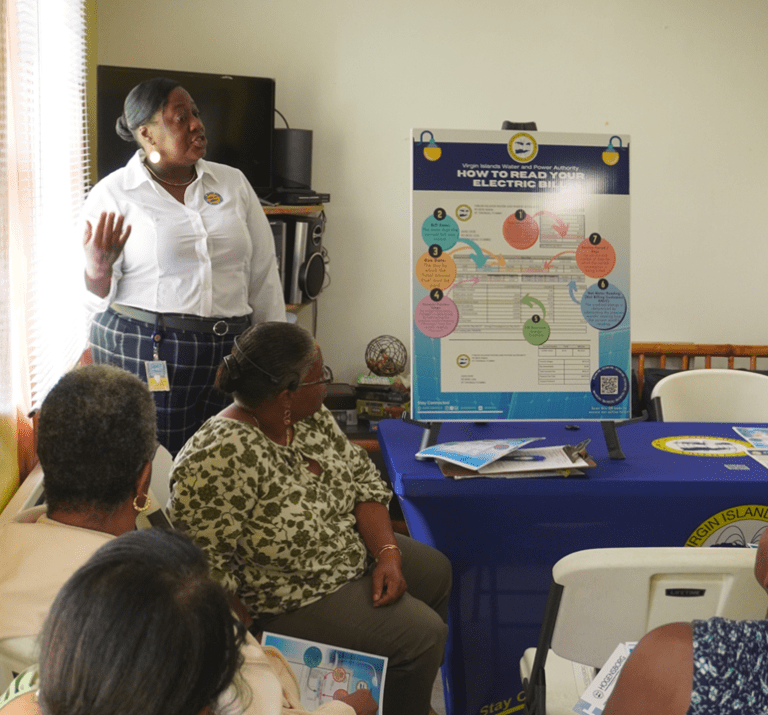
The Virgin Islands Water and Power Authority brought its message of progress and resilience to the community on Wednesday, July 22, during an outreach session with elderly residents at Sunny Isles Housing on St. Croix.
WAPA senior outreach in Sunny Isles. (Submitted photo)
Members of WAPA’s Communications and Customer Service teams connected with several residents to share updates on key projects aimed at strengthening and modernizing the territory’s electrical grid. These included the ongoing installation of composite poles, the undergrounding of power lines, and WAPA’s milestone of being 51% powered by solar energy on St. Croix. “As WAPA moves toward clean energy and use of battery energy storage systems, we’re becoming more resilient — so we can keep the lights on with fewer and shorter interruptions,” said Shanell Petersen, WAPA’s Communications Director. “By reducing the territory’s dependence on costly fossil fuels, we also expect to lower overall energy costs which will be a benefit to all of us and the environment.” The team helped residents understand how to read their WAPA bill and explained the Medical Certificate Form which allows for temporary continued service for customers unable to pay their bill due to a medical emergency. In addition, WAPA shared how customers can authorize a trusted individual to handle their account using the Authorization to Release Utility Information form — a helpful tool for seniors who may want added support in managing their WAPA services. “Our goal is to make sure customers feel informed, supported, and heard,” said Marlene Francis, WAPA’s Customer Service Director. “Whether it’s helping you understand your bill or connecting you with available resources, such as the E-CAP program, we’re here to give you the tools and support you need.” With hurricane season underway, the team closed the visit by sharing storm preparedness tips and encouraging residents to sign up for WAPA Alerts to stay updated during weather emergencies. This outreach event reflects WAPA’s goal to support the community by keeping residents informed, empowered, and connected as we work toward a more resilient and sustainable energy future. The Virgin Islands Water and Power Authority Communication’s department is committed to reaching, informing, and connecting with the youngest members of the community to the eldest, through meaningful, transparent and effective communication.

USVI U14 Girls to Face Bahamas in International Friendlies

The U.S. Virgin Islands Soccer Federation proudly announces that the U14 Girls National Team will travel to Nassau, Bahamas, to compete in a two-day international friendly series against the Bahamas U14 Girls Team on July 25 and 26. The matches will be held at Roscow A.L. Davies Field and serve as key preparation for the upcoming Caribbean Football Union (CFU) Girls U14 Challenge Series, where the young team will represent the USVI on a regional stage. The friendlies are organized in collaboration with the Bahamas Football Association and underscore both nations’ shared commitment to youth development and international exposure for young female athletes. Each day will feature two matches — a morning game at 8:30 AM and an evening match at 7:30 p.m. The U14 Girls Team have been preparing through their weekly training sessions as well as their recent camp held on St. Croix the weekend of June 26th – June 30th. The team focused on team cohesion, tactical awareness, and skill development. These matches will provide valuable match experience against regional competition just weeks ahead of the CFU tournament.

AARP Applauds ABLE Act

In April of 2025, AARP stood alongside Virgin Islands leadership and advocated for and testified in favor of the Achieving a Better Life Experience (ABLE) Act in the US Virgin Islands. Sponsored by Senators Novelle E. Francis, Jr., Avery L. Lewis, and Kurt A Vialet, the ABLE Act (Act no. 9000) was signed into law by Governor Albert Bryan, Jr. on July 9, 2025. The ABLE Act works to create a program for financial security for individuals with disabilities, without penalizing families for saving for the future.  Troy de Chabert-Schuster, AARP State Director of the Virgin Islands testified in support of the establishment of the ABLE Act, “The ABLE Act addresses long-standing inequities in income and asset limits for individuals with disabilities, that often discourages saving. AARP stands on the principles that support reforms to these outdated financial eligibility rules, that will allow people to enjoy a fuller life. The ABLE Act represents a step forward by allowing individuals to build resources without the fear of losing access to critical health and income assistance.” AARP stands with individuals with disabilities, their families, and caregivers in support of policies that promote independence, financial security, and quality of life. As an organization dedicated to empowering individuals as they age, AARP represents the interests of over 100 million Americans aged 50 and over, including the more than 22,000 members living here in the Virgin Islands. AARP urged the committee to act in favor for advancing the financial security for disabled Virgin Islanders and their families, by ultimately passing this legislation.  “We commend Senators Novelle Francis, Avery Lewis, Kurt Vialet, and the Bill Co-Sponsors for recognizing the value of this legislation and for his leadership in ensuring that all Virgin Islanders – regardless of their ability – and those who care for them – can thrive and age with dignity and financial security,” stated Troy de Chabert-Schuster.  AARP would also like to thank Senators Marise C. James, Ray Fonseca, Hubert L. Frederick, Angel L. Bolques Jr, Clifford A. Joseph Sr, Milton Potter, and Marvin A. Blyden for Co-Sponsoring the ABLE Act, and would also like to express gratitude to Governor Albert Bryan, Jr. for signing the ABLE Act into law. Signing the ABLE Act into law is a huge win for Virgin Islanders and coincides with the Anniversary of the Americans with Disabilities Act (ADA). ADA was signed into law 35 years ago on July 26, 1990. This historic civil rights law protects the rights of people with disabilities in all areas of public life; including jobs, schools, transportation, and all public and private places that are open to the general public. The purpose of the law is to make sure that people with disabilities have the same rights and opportunities as everyone else. If you are interested in learning more about the ADA, AARP Movies for Grownups is offering a free virtual screening of Change, Not Charity: The Americans with Disabilities Act on Monday, July 28th at 8:00 pm. This is the dramatic story of the decades-long push for equality and accessibility that culminated in the passage of the Americans with Disabilities Act (ADA) in 1990. While curb cuts, ramps at building entrances and braille on elevator buttons seem commonplace today, they were once the subject of a pitched battle that landed on the steps of Congress. 

Witness Testimony in White, Hendricks Trial Concludes

0
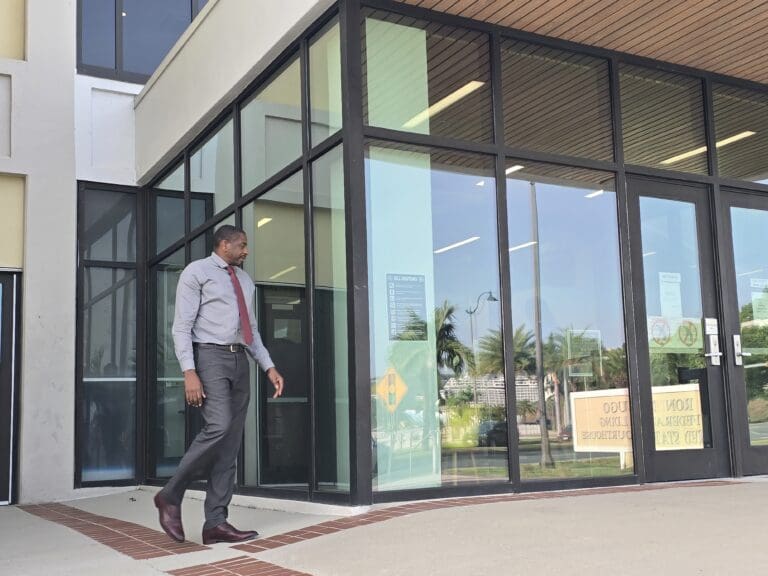
Calvert White, the former Sports, Parks and Recreation commissioner on trial for allegedly committing wire fraud and bribery, exits the federal courthouse Wednesday afternoon on St. Thomas. (Source photo by Kit MacAvoy)

A jury of Virgin Islanders heard from the last witness Wednesday in the federal wire fraud and bribery trial of Calvert White, the former Sports, Parks and Recreation director, and Benjamin Hendricks, a business owner and government contractor. White and Hendricks have pleaded not guilty to the charges.

The government’s key witness in the case, David Whitaker, took the witness stand Tuesday. Amid questioning from the prosecution, Whitaker told the court that White helped steer what ultimately ended up being a $1.43 million federally-funded government contract to Whitaker’s former company, Mon Ethos Pro Support, to install surveillance cameras at DSPR facilities in exchange for a bribe. Though the contract was awarded to Mon Ethos, it was never executed.

The 15-page grand jury indictment of White and Hendricks included partial transcripts of multiple recordings in which Whitaker could be heard discussing elements of the alleged kickback scheme with White, Hendricks or both. Over two days, jurors heard more complete versions of those recordings, most of which were made using a Federal Bureau of Investigation recording device operated by Whitaker. The government also presented multiple screenshots of WhatsApp and text conversations. In one, White told Hendricks to “Let David know I cannot go Into [sic] this meeting today and fight for him unless he settles with me,” an apparent reference to White’s attempts to influence contract award decision of a Property and Procurement Department evaluation committee meeting.

“Done deal I’m on it,” Hendricks replied.

Jurors also heard a recording from the evaluation committee meeting, during which Whitaker and White could be heard colluding to make Mon Ethos’s bid more competitive with rival bidder SmartNet — without the knowledge of evaluation committee members on the call.

Whitaker eventually wired $5,000 to Hendricks — labeling the payment “Partial payment for contract” with his bank — for which he was reimbursed by the Justice Department. That same amount was deposited into one of White’s bank accounts 90 days later. According to Whitaker, White agreed to help him secure the contract in exchange for one percent of the bid price, or $16,000 at the time the alleged scheme was hatched.

White and Hendricks’s attorneys began cross-examining Whitaker Tuesday and attempted to paint Whitaker as a career con man and unreliable witness, citing his lengthy and well-publicized criminal history. According to a plea agreement unsealed in U.S. District Court last September, Whitaker admitted to two counts of wire fraud and one count of bribery concerning programs receiving federal funds in connection with a separate case. One of those charges stemmed from Whitaker “finding” surveillance devices in Virgin Islands government offices after he was hired to sweep the offices for bugs in 2022.

In actuality, Whitaker acknowledged, he planted them himself and billed the V.I. Police Department more than $130,000 for the work. Whitaker maintained in court that he never turned the devices on and that he removed them on the same day that he planted them. Whitaker also said he monitored people at the direction of Ray Martinez, the former police commissioner, who was indicted by a grand jury in January for allegedly accepting thousands of dollars in bribes and kickbacks from Whitaker. Martinez has filed a civil suit against Whitaker alleging entrapment.

Prior to arriving in the Virgin Islands, Whitaker was arrested in Mexico in 2008 and returned to the United States to face charges related to bilking millions from customers by selling — and not delivering — electronic equipment. While on the lam in Mexico, Whitaker allegedly made millions selling steroids and human growth hormone on the black market. He was convicted but received a dramatically reduced sentence in exchange for working with federal investigators in a sting operation that would cost search giant Google $500 million in fines for facilitating online drug sales. While being questioned by White’s attorney, Clive Rivers, Whitaker at times appeared to forget the specifics of previous convictions.

On Wednesday, Judge Mark Kearney denied the defense’s motion to allow the jury to hear certain details about Whitaker’s criminal history. The government argued that many of the crimes occurred decades ago and had no bearing on the matter at hand. According to Whitaker, White and Hendricks were well aware of his history.

Rivers and Hendricks’s attorney, Darren John-Baptiste, attempted to show Whitaker as a technology expert capable of manipulating or doctoring data. An FBI special agent called to the stand, Kiernan Whitworth, told the court that the device used to make most of the recordings heard at trial was a proprietary government recorder that can only be downloaded by federal law enforcement.

The sole witness called by either of the defendants was Julio Rhymer, the current Management and Budget director, whom Rivers asked about information listed on OMB’s website.

The government and the defendants rested Wednesday afternoon, and the trial will continue Thursday with closing arguments and instructions to the jury before they deliberate.

Judge Gives Health A Month To Transfer Prisoner Held in Father’s Death

Homicide suspect Mohammed Salem is led in handcuffs up the boat ramp at Hull Bay on St. Thomas after a manhunt Tuesday. (VIPD photo)
Jury selection in the murder trial of Mohammed H. Salem, set for July 28, has been suspended pending further advisories. (Photo courtesy VIPD)

A Superior Court Judge ordered Health Department officials Wednesday to come up with a plan to place Mohammed H. Salem, accused of killing his father, at the John Bell Correctional Facility in an appropriate treatment program within the next 30 days. Superior Court Judge Denise Francois also ordered that Health Commissioner Justa Encarnacion receive notice of the court’s order.

Failure to do so will lead to a show-cause hearing and compel Encarnacion to explain in court why the transfer did not occur, the judge said. “The court is asking what progress is being made by the Department of Health in transferring Mr. Salem to an appropriate facility,” Francois said.

Two Health officials appearing Wednesday said they could not predict compliance. When asked whether they believed their agency would complete the transfer within the designated time frame, Dr. Rolinda McCarthy said, “Unfortunately, no.”

McCarthy added that money matters may factor into any failure to carry out the court’s order within the next 30 days.

Salem, the subject of the Wednesday hearing, was arrested in March 2024 after the fatal stabbing of his father, Hakim Salem, and for an assault on Jamil Salem — his brother — at the family home in Hull Bay on March 5. Jury selection for a July 28 murder trial was called off for now, pending further advisories.

Francois said she had been advised that Mohammed Salem has become a danger to himself and a danger to prison guards because of his behavior. The situation had become so extreme that guards at Bell Correctional once used a taser on the inmate to regain control, Francois said.

One of the factors contributing to those dangers is the reported refusal by Salem to take prescribed psychiatric medications. Previous appeals to the court in May led Francois to permit forced administration of those medicines.

Echoing statements made to the court by psychiatrist Dr. Evadney Sang for a medical transfer, the judge said, “Mr. Salem does not belong in a prison.”

Assistant Attorney General Jeremy Weddle said there had been a number of discussions and follow-ups on the subject of Salem’s behavior and requests for relocation. Francois ordered Weddle to notify Health that Larkin Hospital Behavioral Health Facility in Hollywood, Fla., had a bed available and was willing to accept the transfer.

Francois further ordered that Justice file other matters pertaining to the inmate’s health condition be kept under seal by order of the court.

From Cannabis to Consumer Protection, Agencies Defend Budget Hikes as Operations Expand

0
Agency heads testify before the Senate Wednesday on budget priorities ranging from cannabis regulation to cybersecurity and consumer protection. (Photo by the VI Legislature)

With the territory’s cannabis industry expanding, cybersecurity threats evolving, and consumer protections under increasing pressure, top officials from four government agencies appeared before the Senate this week to defend their FY 2026 budget requests—most of which include hikes aimed at staffing, enforcement, and modernization.

The Office of Cannabis Regulation, which would receive the largest relative increase, is requesting $1.64 million for the upcoming fiscal year—$1.44 million from the General Fund and $200,000 from the Tourism Advertising Revolving Fund (TARF). That’s up more than $500,000 over FY 2025, as the agency transitions from what Executive Director Joanne Moorehead called a “start-up phase” into a full-fledged regulator overseeing the licensing of cultivation and dispensary operations, along with education, enforcement, and the rollout of a seed-to-sale tracking system.

The bulk of the new money will support salaries for three new positions and continued development of enforcement tools. Since last year, OCR has grown from one to six employees and launched a medical and sacramental use registry, opened cultivation and dispensary license applications, and received 26 submissions so far. Moorehead told lawmakers the office has also collected over $103,000 in fees to date.

“The cannabis industry is new, heavily scrutinized, and unlike any other in the territory,” Moorehead testified. “This budget gives us the tools to regulate it effectively, keep the public informed, and ensure our decisions are data-driven and grounded in health and safety.”

The Office used more than $616,000 in TARF funding in FY 2025 to outfit offices, purchase law enforcement vehicles, build digital infrastructure, and support national training for local staff. In FY 2026, additional TARF resources will be used to expand the seed-to-sale tracking system and bolster inter-island compliance.

OCR’s testimony drew questions from lawmakers, including Sen. Novelle Francis Jr., who pressed for more transparency on salary levels and funding allocations. “We want to support your mission,” he said, “but we also need full disclosure on where the money is going before the budget process closes.”

Francis, who chairs the Committee on Budget, Appropriations, and Finance, also fielded testimony from the Department of Licensing and Consumer Affairs (DLCA), which is requesting $6.67 million in FY 2026—$5.87 million from the General Fund and $800,000 from the Consumer Protection Fund (CPF). That’s nearly $1 million more than last year, with the increase tied to boosting personnel and public outreach, modernizing enforcement, and launching new studies on local pricing and licensing.

DLCA Commissioner Nathalie Hodge said the agency’s work touches every corner of the economy. In FY 2025, DLCA processed over 8,200 business licenses and collected $3.1 million in fees, up slightly from the previous year. More than 180 consumer complaints were resolved, resulting in over $16,800 in restitution, while enforcement actions yielded more than $100,000 in fines.

“Our work is about fairness, transparency, and giving consumers confidence,” Hodge said. “This budget allows us to increase visibility, expand after-hours enforcement, and build a better regulatory environment.”

Much of DLCA’s funding—$3.27 million—would go toward salaries and $1.55 million to fringe benefits. The rest supports rent, supplies, public information campaigns, and professional services. New initiatives include updating the fee structure for business licenses, completing cost-of-living and fuel price studies, and restructuring the way short-term rentals are monitored and regulated.

Meanwhile, the Bureau of Information Technology (BIT) asked for $12.3 million—its largest request to date—to support ongoing cybersecurity upgrades, critical infrastructure development, and staffing for 29 positions. Director and Chief Information Officer Rupert Ross said the bureau’s work underpins every government agency’s ability to function.

“In FY 2025, we rolled out ServiceNow to more than 3,700 users, helped manage cybersecurity threats using Microsoft Defender and Sentinel, and continued building the $160 million Land Mobile Radio system to support first responders,” Ross testified. “We’ve made real progress—but we need to stay vigilant, and that means sustained investment.”

BIT’s request includes funding for enterprise tools, software licenses, training programs, and additional technical positions. Among the bureau’s goals are consolidating outdated systems, completing the LMR buildout, and safeguarding citizen data through strengthened network defenses.

Senators raised concerns about delayed hiring and project execution, to which Ross responded by pointing to “market demand for qualified IT professionals” and government procurement processes that lengthen timelines. Still, Ross emphasized that BIT had already saved the government money by leveraging shared tools and reducing agency redundancies.

The final testimony came from Marvin Pickering, Chair and CEO of the Casino Control Commission, who requested $1.72 million—a lump sum allocation to support 17 positions and help launch internet gambling operations. Pickering reported $112,750 in license and permit fees collected so far this fiscal year, along with $381,299 in casino revenue taxes—up 35 percent from FY 2024.

Pickering also noted a clean FY 2022 audit, correction of a prior finding, and ongoing efforts to clear a backlog of 385 enforcement investigations.

“We are preparing to regulate the online gaming environment, which is a major step for us,” he said, adding that a summit to roll out the Internet Gaming and Gambling Act is scheduled for July 31. “We’ve made real strides, but the demand for oversight keeps increasing.”

He said the Commission has issued 432 licenses and permits since October 2024, and now needs to invest in staff training, digital licensing systems, and outreach. The agency is also preparing to celebrate 30 years of service.

Several senators—including Sen. Kurt Vialet and Sen. Carla Joseph—urged agency heads to ensure transparency in staffing and spending, while Sen. Marvin Blyden asked for more inter-agency collaboration, especially as the cannabis and gaming sectors grow.

Sen. Marise James echoed those sentiments, emphasizing the need for regulators to be proactive, not reactive.

“This is a chance to do it right,” she said. “But doing it right means being ready—technologically, legally, and in the eyes of the public.”