


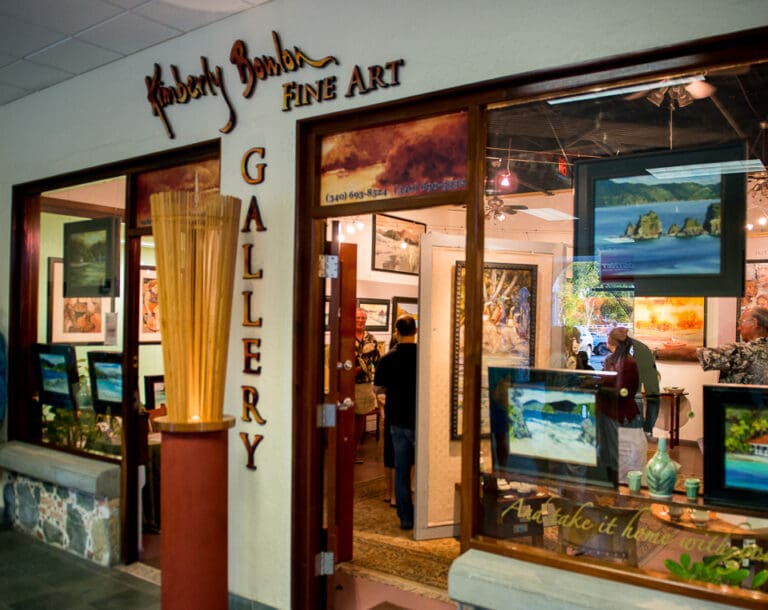
courtesy Kimberly Boulon)


seascapes by Kimberly Boulon. (Photo courtesy the Vickers Collection)



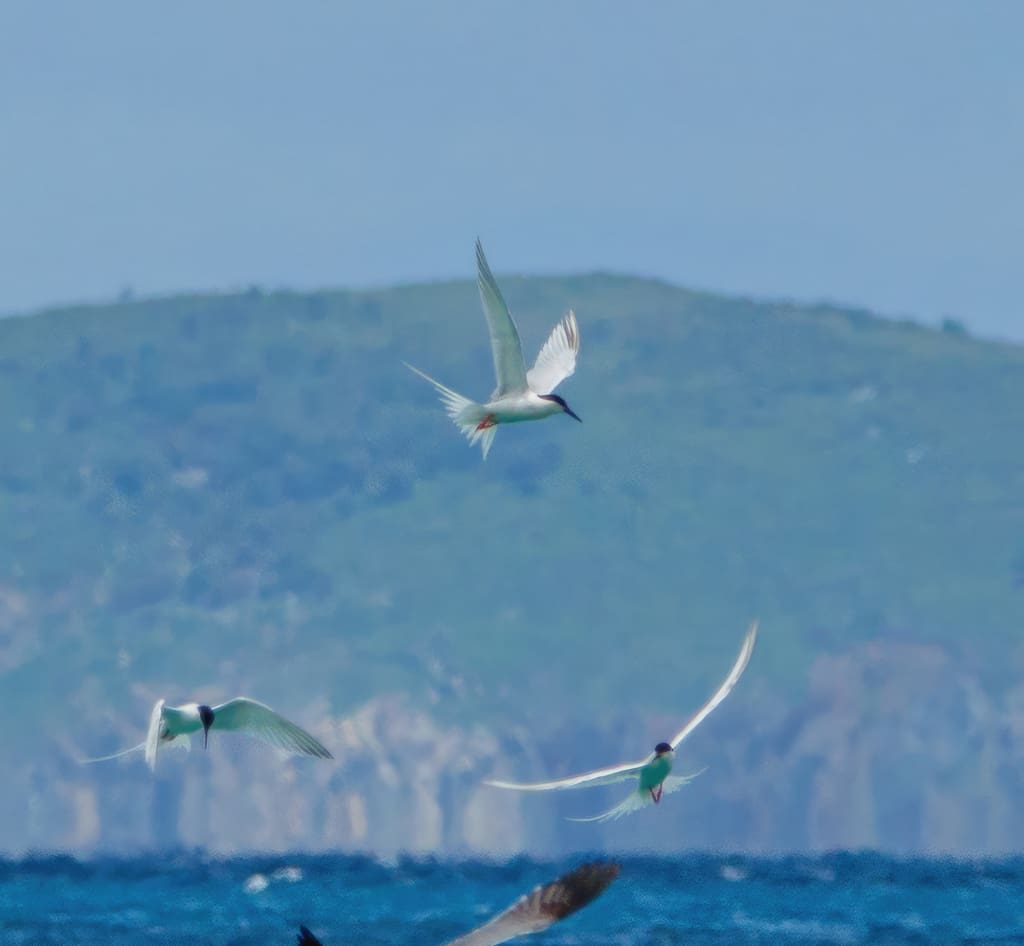
The Department of Planning and Natural Resources recently issued a public reminder that recreational bird hunting is prohibited in the U.S. Virgin Islands.
The DPNR emphasized in a recent press release that no hunting permits will be issued for species such as pigeons, doves, ducks, plovers, hawks, and thrushes.
The collection or possession of eggs from booby and parakeet species is also forbidden. Violations may result in fines or other enforcement actions under territorial and federal law.
These rules reflect long-standing territorial policy and are consistent with the federal Migratory Bird Treaty Act of 1918 — a landmark law that makes it illegal to hunt, capture, or possess migratory birds without a permit.
The act currently protects more than 1,000 species across the United States and its territories, including those native to the Caribbean, and was created to safeguard species that travel and migrate across international borders, ensuring their survival through coordinated protections.
“Nearly 10 percent of all migratory nongame birds that are likely to become endangered reside in the USVI for at least part of the year,” said Nicole Angeli, director of the Division of Fish and Wildlife for the DPNR. “More than 150 other species of bird are known to reside in the territory full-time or for part of their lives. These new protections ensure that birds are protected where they nest, forage, and roost in the USVI so that they continue to thrive.”
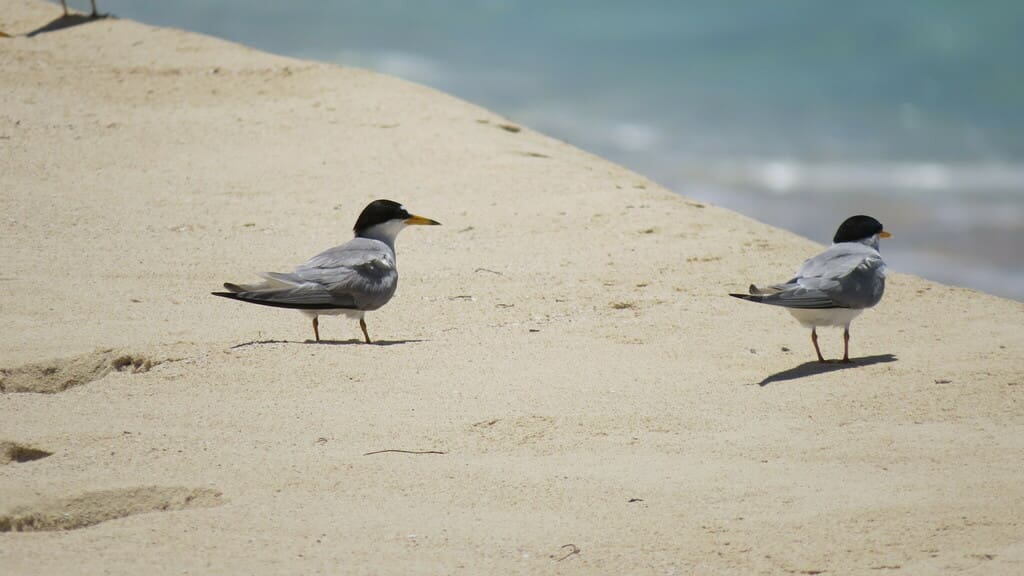
DPNR officials noted that the rules are not new but serve as a seasonal reminder, particularly during times when residents might mistakenly assume hunting is allowed. The agency has observed increased public inquiries during summer months, when certain species are more visible and active.
The Virgin Islands’ rich biodiversity makes these protections especially important. The territory is home to several native species and serves as a key migratory stopover for birds traveling between continents.
Local Virgin Island habitats support nesting, feeding, and resting for a wide range of avian life. Many of these ecosystems are under pressure from development, pollution, and climate change, making regulatory protections even more vital.
Under current territorial guidelines, DPNR only issues wildlife permits for research, culling, or nuisance control — not for recreational hunting. Officials say this policy underscores their commitment to conservation and ensures territorial laws align with federal standards.
For more information on DPNR permits and applications, click here.

Swimming at Lindqvist Beach has been temporarily suspended due to a heavy accumulation of sargassum seaweed, according to a press release from Magens Bay Authority Wednesday.
The beach remains open for walking and other land-based activities, but officials are urging the public to avoid entering the water due to degraded water quality and potential health risks, the press release stated.
Sargassum, a naturally occurring brown seaweed, has been appearing more frequently and in larger volumes throughout the Caribbean. Scientists attribute this trend to shifting ocean currents, rising nutrient levels, and broader climate conditions. While the seaweed itself is non-toxic, large buildups can produce foul odors, disrupt marine life, and pose safety concerns for swimmers, the release stated.
“We appreciate your understanding and cooperation as we work to ensure the safety and enjoyment of all beachgoers,” the authority stated in the release.
Updates on the beach’s status will be available at www.magensbayauthority.org and on the Authority’s social media pages.
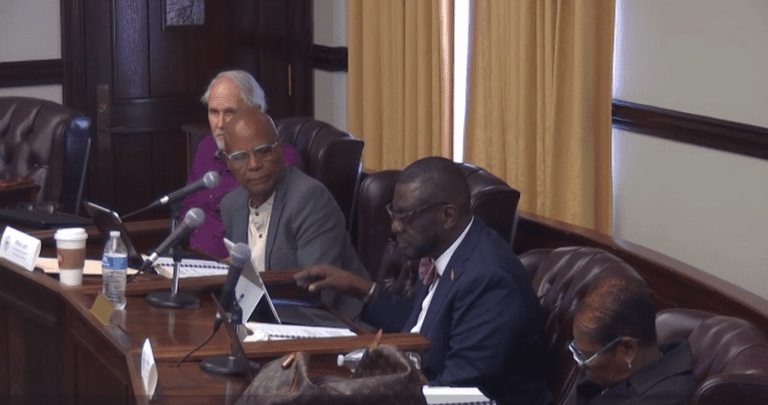
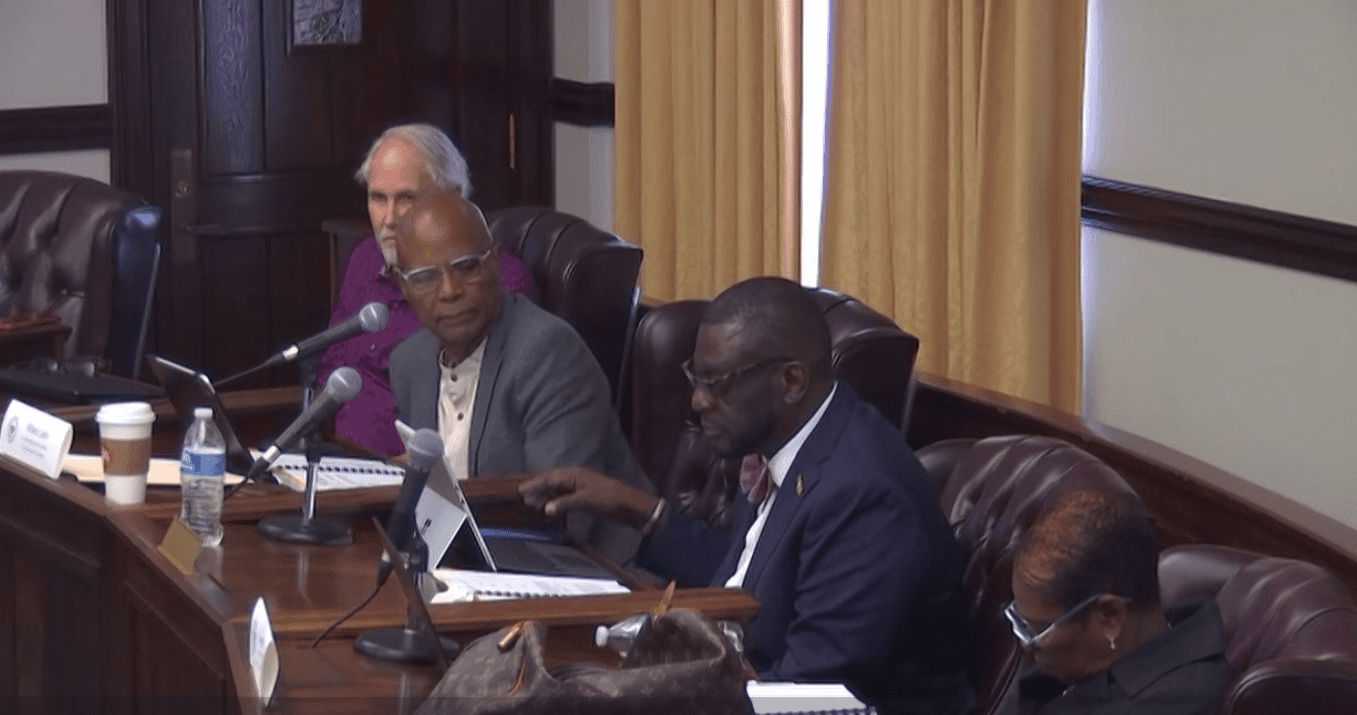
The V.I. Port Authority’s governing board met Tuesday on St. John and voted on several items including the execution of an airport improvement program, lease credits, and project agreements.
During the meeting, the board authorized Executive Director Carlton Dowe’s execution of the Federal Aviation Administration Airport Improvement Program FY2023 Community Projects Supplemental Grant Program. It will allow for the Cyril E. King Airport to improve airfield stormwater drainage. According to the board, the FAA will cover 90% of the costs, with a maximum obligation of $3,423,820.
The board also approved a consolidated lease agreement for five years with Priority RoRo to lease 36,000 square feet and an additional 37,500-square-foot space of land for the staging of containers and loose cargo. Further, the board approved a four-year lease agreement with Crowley Caribbean Services LLC for 72,000 square feet of land in the Wilfred “Bomba” Allick Port and Transshipment Center area.
Moreso, the board authorized the use of rent credits to reimburse Tropical Shipping and Construction LLC for modification work made to their leased premises. The modification is for the roof spouting system and hardening the floor slabs inside the bays due to water issues caused by flooding.
“The downspout issue, is that a design or a construction flaw,” asked board Chair Willard John.
“It’s my understanding it was designed that way,” responded Vincent Frazer, legal counsel for the Port Authority. “Not in house, it was designed by consultants.”
“So, how do we deal with our consultants with that flaw?” questioned John.
“When it was designed, it was designed that the water would come off the roof, not go into a cistern,” said Dowe. “What the design was for the building, was met.”
“It was approved, VIPA approved, the design, with this shortcoming, I call it. And then after it was built then I think, different staff now realize that we probably should have accommodated for proper disposal of that water,” said Frazer.
Tropical will be reimbursed $9,166.41 per month for 24 months via credits.
Regarding projects, the board authorized up to $118,218 to Moffat and Nichol to provide master planning services for the Frederiksted waterfront and up to $117,082 to Moffatt and Nichol to provide design services related to the Enighed Pond community park project on St. John. Both projects are funded by legislative appropriation.
Lastly, the board accepted a bid for the Charlotte Amalie Harbor and Yacht Haven Grande Dredging Package on St. Thomas. The bid, placed by Custom Builders, is $2,527,504. The proposal includes the abatement of hazardous materials and the demolition of the former Addelita Cancryn Junior High School to create space for the storage of dredge material.
Board members Willard John, Derek Gabriel, Gordon Rhea, Kevin Rodriguez, Leona Smith, and Celestino White were present.


A federal judge has scheduled December sentencing dates for Calvert White and Benjamin Hendricks, who were convicted of honest services wire fraud and bribery last week. According to orders filed in U.S. District Court Tuesday, White’s sentencing will take place on Dec. 5 and Hendricks’s on Dec. 2 at the federal courthouse on St. Thomas.
A jury found White and Hendricks guilty Friday after federal prosecutors successfully demonstrated that the pair used White’s influence as then-commissioner of the Sports, Parks and Recreation Department to steer a surveillance camera contract to the company of a convicted felon and cooperating witness in exchange for a $16,000 bribe. During the trial’s closing arguments, Hendricks was described as White’s “middleman, helper, aider and abettor.” Each was found guilty of both charges.
Honest services wire fraud carries a penalty of up to 20 years in prison, and bribery carries a maximum of 10 years. In deciding their sentences, a judge will consider the findings of a presentence report, federal sentencing guidelines and the recommendations of the parties’ attorneys.
According to Friday’s orders, the government and White have until Nov. 25 to file sentencing memoranda and any motions related to federal sentencing guidelines. Hendricks, whose sentencing date is earlier, has until Nov. 21.
Since 1999 the Virgin Islands Source – the only online newspaper of general circulation in the U.S. Virgin Islands – has been providing the community with reliable, accurate and balanced local journalism.
Contact us: visource@gmail.com
© 1999-2025 Virgin Islands Source