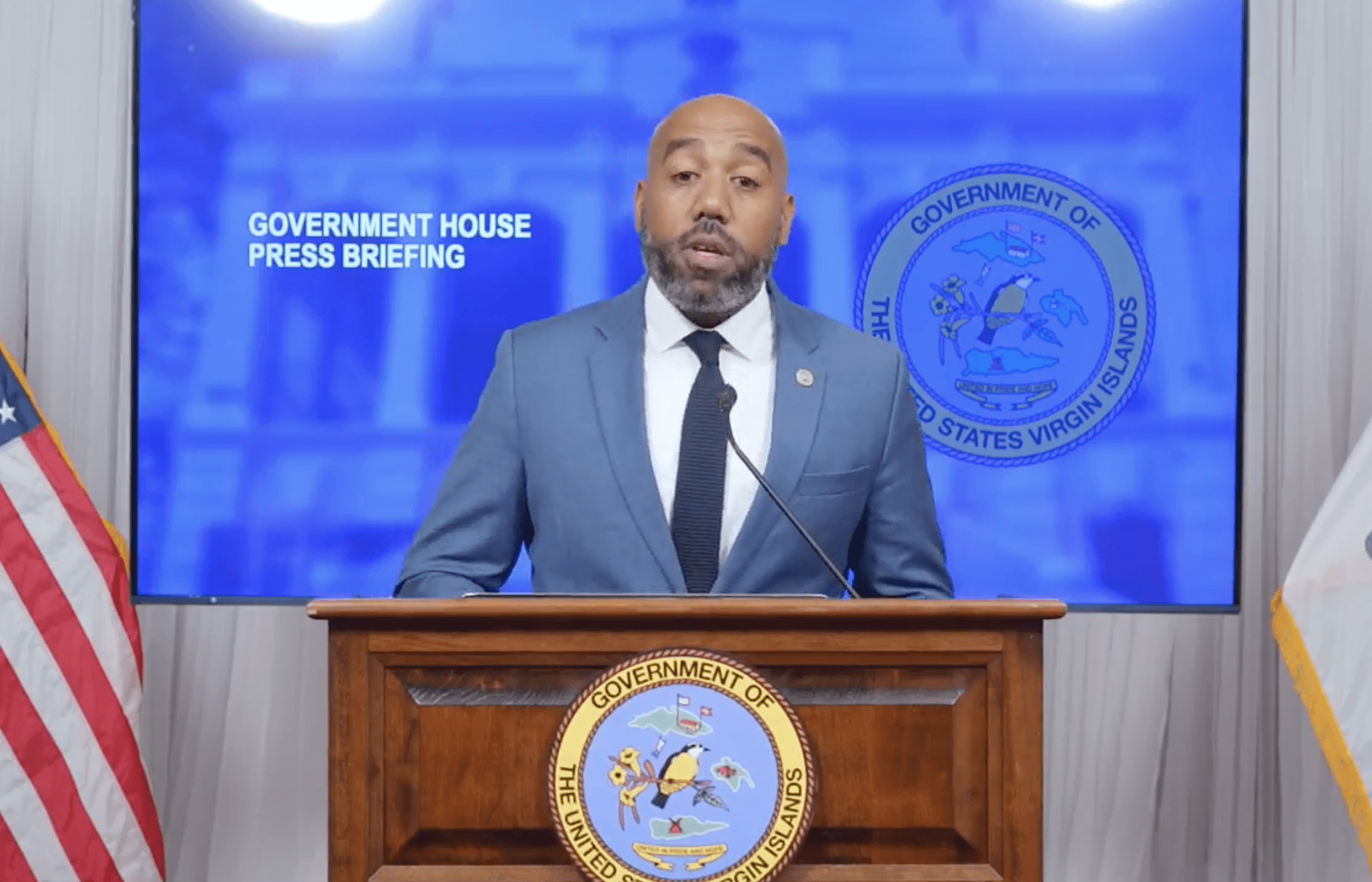
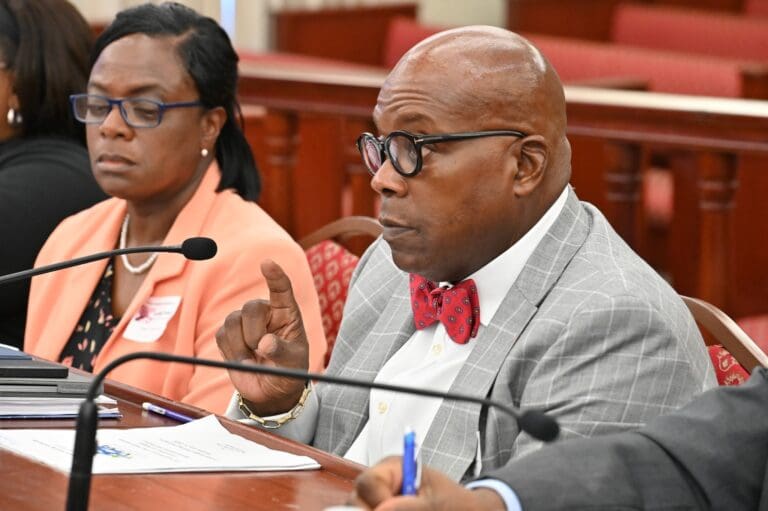
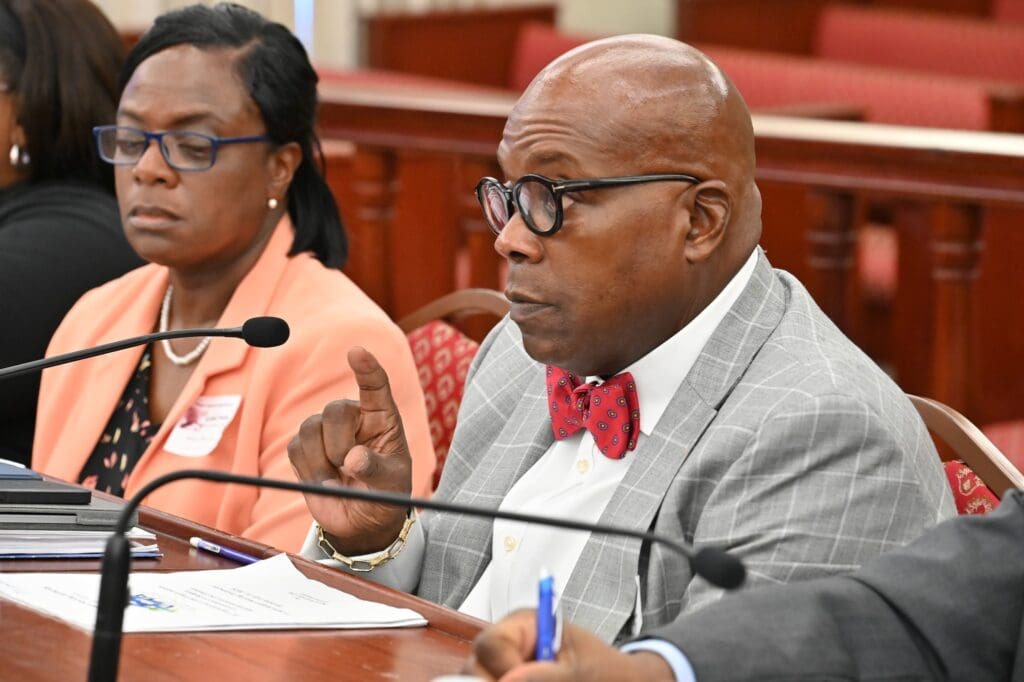
Government House Communications Director Richard Motta urged Virgin Islanders Monday to phone their senators to support three new laws proposed by Gov. Albert Bryan Jr. (Screenshot from V.I. Government House Facebook livestream)
Bryan called for the Senate’s special session to address, in part, an aberration in V.I. law that allows for legislators to collect pensions from previous government jobs while collecting their Senate salaries, said Government House Communications Director Richard Motta.
“The Double Dipping Act of 2025 would end a deeply unfair practice in Virgin Islands law that allows members of the legislature to collect a full pension — a full government pension — for prior service while also receiving a legislative salary,” Motta said during Monday’s press briefing.
“But it doesn’t stop there. While collecting both, senators are also accruing additional pension benefits based on their legislative service, all funded by the same government retirement system — essentially being allowed to stack benefits from the same Government Employees’ Retirement System. This is not allowed for other public employees or elected officials who return to government service. It is a carveout that benefits only one class of public servants and it places an increasing strain on an already burdened pensions system,” Motta said. “The governor believes this not only fiscally irresponsible but also erodes public trust.”
The Senate calendar published Monday has Senate President Milton Potter chairing the special session at 10 a.m. Monday before a 1 p.m. Committee of the Whole session.
Potter had rejected a previous call from Bryan for a special session, saying he’d been given improper notice, having only learned of the proposed meeting through media reports.
Potter said Bryan’s reasoning for the session was disingenuous and was in fact retaliation for legislators cutting executive branch pay raises.
“Let us be honest: this sudden push is a direct response to the Legislature rightfully repealing a $50,000 salary increase that the governor quietly inserted into the FY2024 budget,” Potter stated July 2. “Rather than accept that decision, the governor has chosen to lash out, dressing up political spite as policy reform.”
Potter said Bryan was attempting to “divide lawmakers and incite public ire without offering policy clarity or legal grounding” on the pension issue.
Two other changes proposed by the governor deserved inspection but were not as simple as they may seem, Potter said.
Moving government employee health insurance to a self-funded model might seem like a fiscally responsible choice, potential budget shortfalls and lack of cash reserves, Potter said.
“Under a self-funded model, the government is responsible for paying claims directly. Any disruption in liquidity puts employees’ access to care at risk. A misstep here would result in delayed payments to providers, eroded trust in the system, and serious legal and ethical consequences,” Potter said
He advocated investigating the issue with input from the Lieutenant Governor’s Office and GERS.
Another proposed law would repeal rules barring public employees from seeking elected office unless they took a leave of absence from their current government job.
Motta said it would allow more Virgin Islanders to run for office without having to choose between public service and financial stability.
“Instead, it would allow them to campaign while remaining in their position providing they do not use work hours or government resources for political activity,” he said.
Motta said there would be fines for violations.
Potter acknowledged there had been efforts within the Legislature to change the law but that the issue was more complex. Unlike federal and state legislative bodies on the mainland, Virgin Islands senators don’t go on recess. They have to campaign while still conducting budget hearings and other forms of oversight.
Motta said the three proposals were resolutions to long-standing problems and asked Virgin Islanders to phone their elected officials.
“Now is the time for the legislature to act,” Motta said. “Call your senators and urge them to support this legislation on Aug. 1 during that special session hearing.”
Hurricane preparedness
Also during Monday’s briefing, officials from the Virgin Islands Territorial Emergency Management Agency and the Human Services Department said they’d identified seven emergency hurricane shelters that met Federal Emergency Management Agency standards. FEMA required shelters to have 20 square feet per person during evacuation and 40 square feet per person after evacuation.
Averil George, Human Services Department commissioner, said there were three hurricane shelters on St. Thomas — one of which, at Lockhart School, was pet friendly. Lockhart School could accommodate 248 people before and during a storm, and half as many after. The Eudora Kean High School cafeteria could shelter 166 people pre-landfall and 80 post-landfall, and the same school’s gym could accommodate 782 before the storm hits and 390 after.
The two shelters on St. John — the Adrian Senior Center and the Gifft Hill School upper campus — would not allow pets.
There were two shelters on St. Croix — with D.C. Canegata Recreational Center, able to shelter 161 pre-landfall and 80 post-landfall, and the pet-friendly Educational Complex, able to accommodate 466 people before and during the storm and 233 after it passes.
People sheltering with their pets would need to bring leashes and cages, food and water, and, if needed, medicine for their cats and dogs, VITEMA Director Darryl Jaschen said.
Electric vehicles
Kyle Fleming, director of the Virgin Islands Energy Office, said the Virgin Islands had executed a contract with TJ Ocean Auto Group to help service both public and private electric cars in the territory.
“This partnership builds upon our promise to make sure that we’re not just bringing vehicles and deploying charging stations but we’re also that the life cycle of these vehicles can continue to be supported,” Fleming said.
The territory offers a rebate of $5,000 for new and used electric vehicle purchases.
“Most of those purchases so far have been for vehicles outside of the territory. This agreement also opens up the door for locally purchased vehicles to qualify for a rebate,” he said.
The $7,500 federal tax credit for new electric vehicles expires Sept. 30.
“If you are thinking about investing in an electric vehicle, now is the perfect time to combine an expiring federal incentive with a $5,000 local incentive to really drive down the up front cost of electric vehicle investment, which has really been a barrier,” Fleming said.
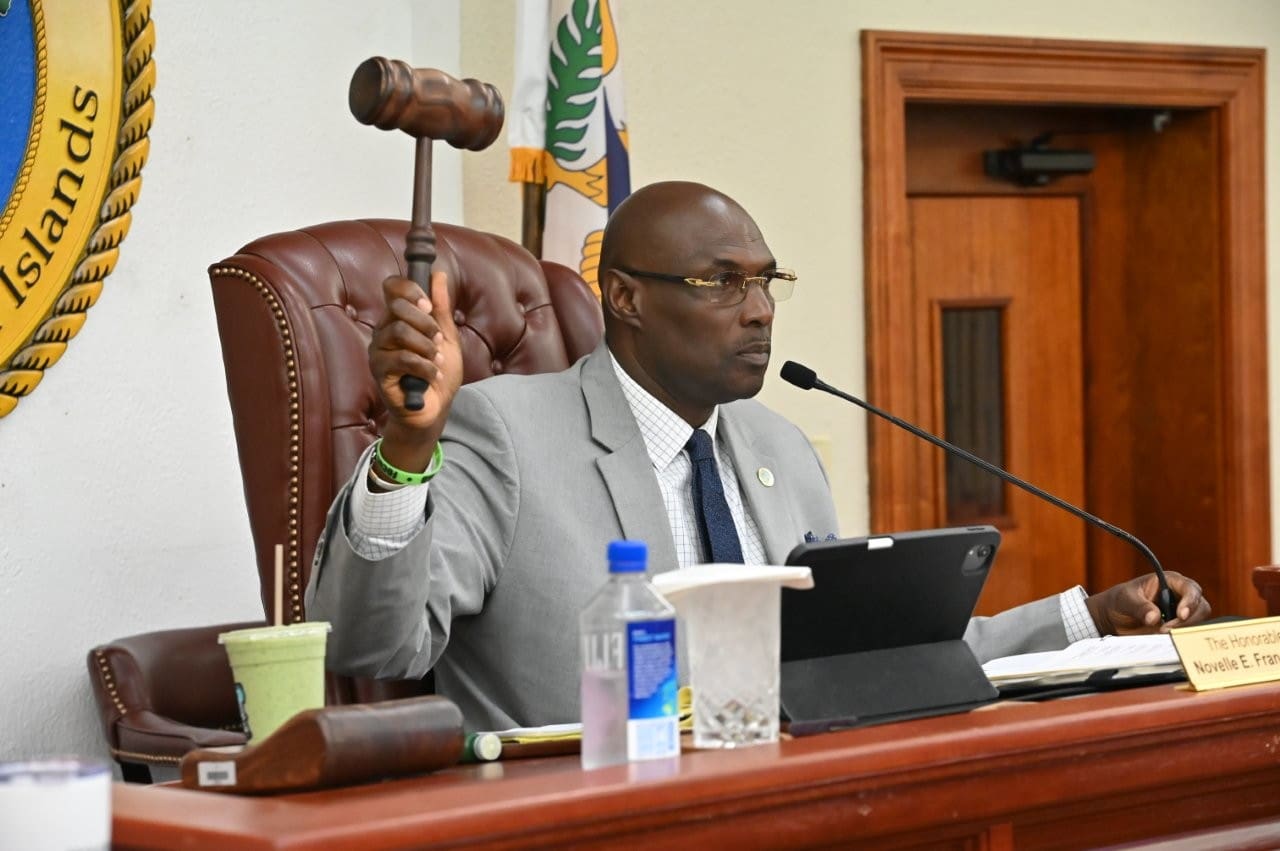
Sen. Novelle Francis chairs the Senate Budget, Appropriations and Finance Committee Monday. (Photos by Alvin Burke Jr. and Barry Leerdam Legislature of the Virgin Islands)
The Virgin Islands Economic Development Authority is requesting a $7.3 million budget for fiscal year 2026 to support expanded efforts in lead generation, international outreach, small business development, and industrial growth across the territory.
The budget request — presented Monday to the Senate Budget, Appropriations and Finance Committee — includes a $6.6 million General Fund appropriation and $700,000 in internally generated revenue. EDA CEO Wayne Biggs said the proposal goes beyond operational needs.
“This budget is not solely about maintaining current operations,” said Biggs. “It is about building capacity, driving outcomes, and expanding our reach throughout the territory.”
The agency, which promotes sustainable economic growth by attracting investment, supporting entrepreneurship, and enhancing workforce development, plans to expand enterprise zones, promote new industrial hubs, and increase access to moderate-income homeownership in FY 2026.
Approximately 70% of the proposed budget is allocated to personnel costs supporting 46 full-time positions. Professional services — such as legal counsel, audit, and marketing — make up the second-largest expense, according to EDA Chief Financial Officer Kelly Thompson Webb.
In FY 2025, the agency celebrated several milestones. The South Shore Trade Zone welcomed its first approved client, Mix Cakery, marking a step toward building a new industrial and logistics hub. EDA also participated in international investment events in Miami, Maryland, Puerto Rico, and Trinidad, boosting the territory’s visibility among global investors.
Media exposure increased as well, with a national feature on PBS’s “Viewpoint with Dennis Quaid” scheduled to showcase the USVI’s growing appeal. The agency reported generating over $650 million in qualified investment leads and a 26% increase in participation in the Economic Development Commission program, which provides tax incentives for companies serving markets outside the territory.
Through the Economic Development Bank, EDA leveraged local and federal funds to support small businesses, energy sustainability, and homeownership. A major initiative was the State Small Business Credit Initiative 2.0, which reduces lender risk and increases access to capital.
“The U.S. Virgin Islands was awarded $57.8 million under the SSBCI program,” said Biggs. “As of July 15, 2025, $15.7 million of the first tranche has been expended or obligated through small business loan guarantees. These investments are projected to create 109 new jobs and retain 100 existing jobs across the territory. Approved businesses represent a diverse cross-section of our economy, from aviation and construction to health care, marine services, social support, hospitality, tourism, and more.”
In addition to SSBCI funding, the EDB approved $705,000 in direct loans in FY 2025, supporting 22 new jobs and retaining 13 across sectors such as food service, transportation, retail, and wellness.
“In total, EDB approved or committed over $16.4 million in financing through both direct loans and SSBCI loan guarantees. These efforts are projected to create 131 new jobs and retain 113 existing positions, reflecting EDB’s critical role in supporting sustainable economic growth and financial empowerment across the territory,” Biggs said.
The VI Slice Moderate Income Home Ownership Program also made headway, with 82 applications requesting $8.7 million in gap financing and 61 approvals totaling $6.2 million. Those funds supported $17.6 million in home purchases and construction.
The EDA’s role in tourism development continues under the Hotel Development Act, which incentivizes hotel construction, renovations, and expansions. Projects supported by the program include the $44.1 million Hampton by Hilton on St. Thomas — set to open in August — along with a luxury resort at Botany Bay, a $12 million revitalization of Sugar Bay, and the historic Hotel 1829 restoration.
Sen. Marvin Blyden emphasized the importance of supporting the local food economy and referenced the success of Tart Wars on St. Croix. He urged the EDA to invest in cultural culinary staples like tarts and johnny cakes. Biggs responded, noting that the upcoming Agro and Food Innovation Center at the Padilla Complex in Frederiksted will provide critical resources to support and grow food businesses.
Sen. Hubert Frederick praised the agency’s return on investment. “The EDA’s ability to secure over $81 million in grant funding — far exceeding its $6.3 million government allocation — speaks for itself,” he said. He rejected the narrative that the agency wastes money and highlighted its community impact, including charitable support for schools.
Sen. Kurt Vialet raised questions about how the territory can attract companies looking to reshore or expand manufacturing, particularly in pharmaceuticals and light manufacturing. He pointed to the EDC’s tax benefits, modern ports, and strategic location as selling points.
“The Virgin Islands lie outside the U.S. Customs zone, meaning recent tariff policies do not apply here,” Biggs replied. He said this has attracted interest from companies in India, China, and Vietnam that are considering establishing production lines in the territory to avoid U.S. tariffs without relocating entire operations.
Vialet said this benefit needs broader promotion and called for legislative support to fund a targeted marketing campaign to attract manufacturers.
VIHA Executive Director Dwayne Alexander spoke Monday about the impact of federal funding cuts (Photo courtesy V.I. Legislature)
Confronted with what both housing leaders described as a “dire” situation, senators pressed officials from the Virgin Islands Housing Finance Authority and Virgin Islands Housing Authority Monday for solutions to the territory’s worsening housing crisis — where thousands of families remain on waiting lists and affordable units remain scarce.
“We have a very strong need for low-income housing,” VIHA Executive Director Dwayne Alexander told senators. “That’s where any community starts — that’s almost the next stop before you become homeless.”
Testifying during a Senate Finance Committee budget hearing, Alexander stressed that discussions around “affordable housing” often exclude the poorest Virgin Islanders. While “affordable housing” typically targets residents earning between 100% to 130% of the area median income, Alexander said federal guidelines define “low-income” as 80% or less of AMI — and that’s where the demand is greatest.
“When people talk about affordable housing, they leave the low-income folks out,” he said bluntly.
VIHA, which oversees 2,129 public housing units across 18 communities, presented a FY 2026 budget built almost entirely on federal HUD funds — yet those funds face deep cuts under President Donald Trump’s proposed federal budget. Alexander warned that HUD support could shrink by 44%, threatening both public housing operations and rental assistance programs. At this point, Alexander said VIHA remains designated as “troubled” under HUD’s Public Housing Assessment System — which he added could eventually put it at risk of receivership — though it is working to improve the overall outlook with reported clean audits and improved metrics, among other things.
“If Congress converts rental assistance into block grants, the burden will fall squarely on the local government,” Alexander said, warning that such a move could destabilize public housing across the territory.
Meanwhile, VIHFA Executive Director Eugene Jones Jr. said the lack of stable, predictable federal and local funding is hamstringing his agency’s ability to respond to the crisis.
VIHFA Executive Director Eugene Jones Jr. shares about the authority’s efforts to collect Stamp Taxes owed since fiscal year 2022. (Photo courtesy V.I. Legislature)
“We’re pointing fingers at the wrong people,” Jones said. “It’s Congress — it’s the appropriators. There’s no commitment to providing affordable housing, additional housing, and until we get Congress to understand what housing means to every American, it’s going to be highly impossible to commit to 100 units, 1,000 units; whatever the number is it’s not going to be attainable until we have a national housing policy.”
Jones emphasized that wages and housing must be addressed together: “How do we keep our young people here? Wages need to go up, but you also have to balance that with affordable housing — and that’s always the difficult task.”
VIHFA, responsible for financing homeownership and development projects, requested a flat $2 million General Fund appropriation for FY 2026 — funded entirely by Stamp Tax collections. But, Jones revealed, the agency still has not received its $2 million Stamp Tax allocation since fiscal year 2022, which now amounts to about $20 million. “We still haven’t gotten our money,” Jones said, underscoring the pressure on the agency’s staffing and operations.
That $2 million covers just 20 of VIHFA’s 105 employees, all classified as “core” positions—non-federally funded personnel. Senators repeatedly questioned how the agency funds its remaining 33 “core” employees, with Jones and VIHFA Chief Financial Officer Valdez Shelford eventually explaining that revenues from home sales, mortgage payments, commercial leases, and collections cover the difference. Senators added that they needed the facts and figures in order to “clearly” understand how the employees are covered, and what the Stamp Tax funds are being used for, as it also is supposed to be used for “infrastructure and other areas as prescribed by law,” along with administration, said Sen. Kurt Vialet.
“We do talk about the Stamp Tax every day,” Jones told Sen. Hubert Frederick later in the hearing. “We’re advising the board and being responsive, but it’s tight.”
Senators, including Sen. Dwayne DeGraff, raised concerns over VIHFA’s missing funds from both the Stamp Tax and the Land Bank Fund, which Jones confirmed had not been received.
While VIHFA relies on Stamp Tax collections for its core operations, its broader portfolio is dominated by federal funding streams:
$749.6 million in CDBG-DR (Disaster Recovery) funds.
$774 million in CDBG-Mitigation funds.
$67.6 million in electrical grid modernization grants.
These funds are designated for long-term projects and are not available for staffing or operational costs.
At the same time, Jones acknowledged that more outreach is needed about critical federal programs under VIHFA’s management, such as the Homeowner Assistance Program and the Emergency Rental Assistance Program, both of which have helped thousands of Virgin Islanders stay housed. “Those programs — it’s so critical that the message gets out,” said Sen. Marvin Blyden.
While VIHFA focuses on development and financing, VIHA directly manages public housing units and the Housing Choice Voucher Program, serving 2,092 families — but with over 3,500 on waiting lists.
Senators zeroed in on VIHA’s backlog of vacant units and unpaid rents. Alexander admitted that several units had been vacant for extended periods and said the agency was using a combination of contractors and in-house staff to bring those units back online, with turnaround times ranging from 15 days to over 100 days depending on the unit’s condition. “Some of these units have been sitting for years,” Alexander said.
He also confirmed that VIHA is carrying more than $1 million in outstanding tenant rents —funds senators said could be critical for making repairs. Nearly $8 million is spent yearly on water, Alexander added, explaining to senators that it’s the authority’s duty to cover that cost for its tenants, though he was urged to find a way to decrease it.
“We need creative ways of bringing in more revenues,” Blyden told both agencies, pressing VIHA on how much it receives per occupied unit from HUD. Alexander explained that rental income is minimal and said the agency depends on HUD subsidies to fund operations. Even so, Alexander said VIHA’s modernization department is making progress on capital improvements, including rehabilitation projects and efforts to exit its federal “troubled” designation.
Throughout the hearing, senators pressed both Jones and Alexander to explain not only how they’re using current funds but also how they’re preparing for potentially steep federal cuts.
In closing, Jones called for a broader national conversation. “Until we have a housing policy, until Congress appropriates year after year, we’re going to be fighting the same battle.” Alexander agreed, but added: “Here in the Virgin Islands, our situation is already dire.”
Former Sports, Parks and Recreation Commissioner Calvert White, left, exits the federal courthouse Monday afternoon on St. Thomas. (Source photo by Kit MacAvoy)
A jury of Virgin Islanders heard opening statements Monday in the trial of Calvert White, the former Sports, Parks and Recreation commissioner, and Benjamin Hendricks, a business owner and government contractor, who in January were charged with wire fraud and soliciting bribes.
White and Hendricks have both pleaded not guilty to the charges, which stem from an alleged kickback scheme involving a contract to install security cameras at DSPR facilities throughout the territory. In its 15-page indictment, a grand jury alleged that White — with Hendricks as a go-between — steered the contract award to a company owned by convicted fraudster and government informant David Whitaker in exchange for a $16,000 kickback.
Instead of working for the people of the Virgin Islands, U.S. Justice Department trial attorney Lina Peng told jurors Monday, White chose to enrich himself. Peng walked jurors through evidence the government plans to present, which includes multiple recordings of conversations between White, Hendricks and Whitaker. In one instance, White was recorded allegedly showing Whitaker and Hendricks confidential bid information during a meeting at the V.I. Police Department Mobile Command Center on St. Croix in January 2024.
“I’ve been doing this a while, and I know the less evidence you have, the better you’ll be,” he told them after asking them not to take pictures of a document.
Whitaker subsequently wired Hendricks $5,000, according to the indictment, and marked the transfer as “Partial payment for the contract.” He later texted Hendricks to let him know that he had sent the wire “for Cal.”
At White’s urging, Whitaker lowered his company’s bid to make it more palatable to a Property and Procurement evaluation committee and more competitive with other bids. Whitaker and Hendricks discussed lowering the bid during a recorded call in February 2024.
“Yeah, I made a phone call to … an individual. Actually … one of the Senators,” Hendricks said, according to a transcript of the recording included in the indictment. “And he said ‘Benji, don’t worry about it.’”
That senator has not been identified in court documents, but according to Hendricks, he “said ‘They’ll get it.’”
The contract was eventually awarded to Whitaker’s company, Mon Ethos Pro Support, for $1.43 million, and White deposited $5,000 into his Banco Popular account 90 days after Whitaker wired that amount to Hendricks.
Based on their opening statements Monday, White and Hendricks’s respective attorneys will spend much of the potentially two-week trial attempting to convince jurors that Whitaker is an unreliable witness and informant. According to a plea agreement unsealed in U.S. District Court last September, Whitaker pleaded guilty to two counts of wire fraud and one count of bribery concerning programs receiving federal funds for his role in a scheme allegedly involving former Police Commissioner Ray Martinez and former Management and Budget Director Jenifer O’Neal.
Benjamin Hendricks, right, a business owner who was indicted alongside former Sports, Parks and Recreation Commissioner Calvert White in January, leaves the federal courthouse on St. Thomas Monday. (Source photo by Kit MacAvoy)
Whitaker’s criminal history predates even those offenses. In 2008, he was arrested in Mexico and returned to the United States to face charges of stealing more than $10 million from customers by selling, but not delivering, electronics. While in Mexico, Whitaker allegedly made millions by selling steroids and human growth hormone on the black market. He received a drastically reduced five-year sentence after working with the Federal Bureau of Investigation in a sting operation that cost Google $500 million for its facilitation of illegal online drug sales. According to a Wired Magazine expose published in May 2013, Whitaker has been in and out of jail since he was first arrested for bank fraud and e-racketeering in 1997. He was 22 years old at the time.
White’s attorney, Clive Rivers, called Whitaker a “con man of the highest class” Monday, and Hendricks’s attorney, Darren John-Baptiste, walked jurors through Whitaker’s long history of working with law enforcement to attenuate the consequences of “fraud after fraud after fraud after fraud.”
Editor’s Note: A previous version of this story misstated the name of David Whitaker’s company, Mon Ethos Pro Support.
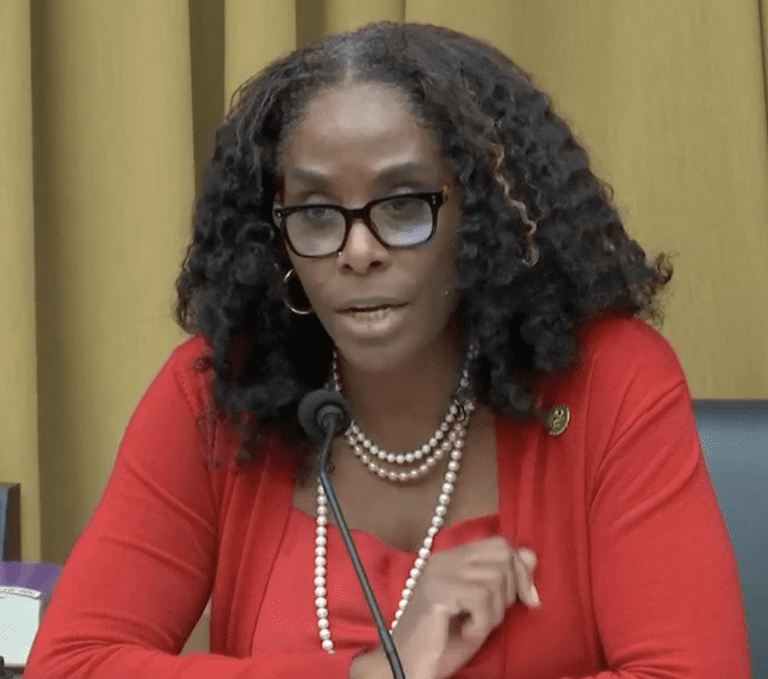
Congresswoman Stacey Plaskett addressed the H.R. 1 bill, federal funding, and the rum cover-over during a wide-ranging virtual event hosted by the League of Women Voters of the Virgin Islands recently as part of the group’s “Saturday Sessions.”
The conversation drew community members and residents eager for updates about how the sweeping federal legislation could impact health care access, economic development, and the territory’s long-term political future.
Plaskett said Medicaid will face roughly $900 billion in cuts nationwide, with additional work requirements expected every six months. About 21,000 Virgin Islanders are currently enrolled in Medicaid.
“That’s going to create a level of bureaucracy we’re concerned with,” Plaskett said.
“This represents some of the largest cuts to health care in American history, and it will have a tremendous effect on us in the Virgin Islands, where we have an outsize number of individuals who deal with these things,” Plaskett said.
Plaskett added that Medicare will also be affected due to the link between federal formulas and Medicaid spending, noting that there are more than 20,000 Medicare enrollees in the territory.
“Medicare, which is for those of us who are older, will be cut by about $500 billion,” Plaskett said.
SNAP benefits — also known as food stamps — are expected to see cuts too, with a $200 billion reduction nationwide, a 20% cut for all participants, along with a possible loss of federal funding for school lunch programs, which many students in the Virgin Islands rely on.
“Cuts to SNAP, which is our food stamp program, will also affect our school lunch programs,” Plaskett said.
In addition to federal funding, Plaskett highlighted her office’s outreach efforts to support youth in the territory — especially through military academy opportunities.
Plaskett said her office has hosted virtual meetings with parents and counselors to walk through the process.
“Our office supports young people … we’re going to the schools to try and get students ready to be able to apply,” Plaskett said.
Her office attempted to sound the alarm before the bill became law, warning residents that cuts to federal funding would impact programs across the territory, including education, school lunches, public health, and food assistance.
“People said I was fearmongering,” Plaskett said, “but I want us to be clearheaded and plan ahead.”
While the bill is already law, Plaskett emphasized the need for local planning and resilience.
“The issue for us now is how do we be creative with what we have?” Plaskett said. “[We need to] jump-start our economy so that we can have private sector revenues so that we are not so reliant on the federal government.”
One possible source of new revenue, Plaskett noted, is the rum cover-over program — a long-standing federal arrangement that returns excise taxes collected on rum sold in the mainland back to the Virgin Islands and Puerto Rico.
“We know that in the Virgin Islands we receive rum cover-over for the rum that we produce and bring to the United States,” Plaskett said. “That money comes back to us.”
She added that securing a consistent and permanent rate would help stabilize a major source of income for the territory.
A goat pauses outside a gate. (Photo by Kathy Vargo)
If the wild goats roaming around the East End of St. John knew what was being planned for them, they’d be kicking up their hooves with joy right now.
As of Friday afternoon, a plan to bring in sharpshooters in the next coming weeks to reduce the goat population has apparently been canceled.
Goats have roamed the hillsides of St. John as long as anyone can remember. Initially, goats were all raised by St. John families, primarily for meat. Over the years, the goats have strayed far beyond their owners’ properties, especially since fences were blown down during major hurricanes in 1989 and 1995.
Upscale villa owners on the East End see the goats as a nuisance, but wildlife biologists see them as something worse — a cause of major environmental destruction. Goat hooves tear up the soil, disturb plant roots and cause erosion on steep hillsides. On the remote East End of St. John, the goats eat whatever they can find, including rare and endangered plant species.
Two years ago, the Division of Fish and Wildlife (within the V.I. Department of Planning and Natural Resources) signed off on a goat culling plan proposed by the Wild Ecology Group headed by Nick Morrison.
According to some homeowners, the project was a success; more than one hundred goats — some say as many as 150 — were killed.
To others, however, the culling operation was a fiasco. “Some goats were wounded and suffered a slow death, and some were killed with a clean shot,” said Karen Granitz, a property owner on the East End. “All were left to die where they fell,” resulting in “rotting carcasses and unbearable stench for weeks,” she added. As a volunteer with local wildlife organizations, she was deeply troubled.
Wild goats tend to be camera-shy. (Photo by Karen Granitz)
Two weeks ago, Granitz discovered that members of two homeowners’ associations received notification of a new upcoming goat-culling operation. She started a campaign to find an alternative, contacting DPNR officials and posting messages on social media. “I’m not against killing goats,” she said. “I am against leaving them on a hillside and not using them for meat.”
Granitz now plans to call a community meeting to discuss the best way to decrease the population of goats on the St. John’s East End. She thinks it’s feasible to trap them and give them to people who want to use them for food. “People would love to have the meat. I’ve been talking to people who say, ‘Call me first!’” she said.
Wild goats pose for a moment for a photo. (Photo by Kathy Vargo)
St. Johnian hunters told Granitz they estimate that 2,000 goats, 1,000 deer, 200 sheep, and 50 donkeys now roam the steep terrain from the Johnny Horn trail to the tip of the East End of St. John.
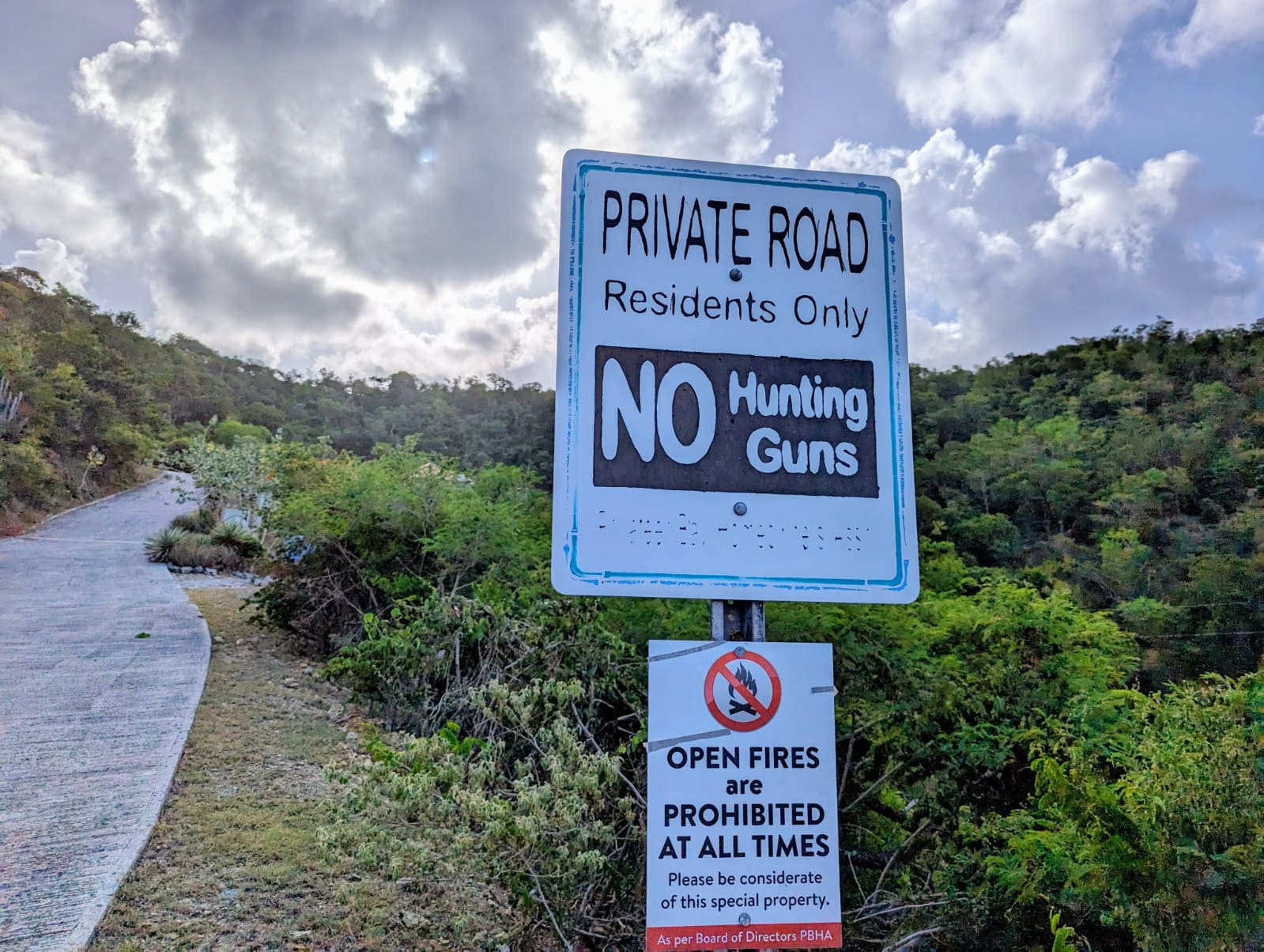
Hunting goats was common until the 1990s, according to East End resident Sloop Jones. That’s when real estate on the remote East End became desirable, property owners formed homeowners’ associations, and “No Hunting” signs were posted.
The sign on the road to Privateer Bay on the East End proclaims “No hunting.” (Photo by Kathy Vargo)
Jones said one hunter told him that goats hate to get mud in their hooves, so when it rained, the hunter would head to the rocks on Long Point where the goats became easy targets as they gathered.
Nancy Gold, president of the Hansen Bay Homeowners Association, said property owners in her group supported the culling initiative proposed by the Wild Ecology Group in 2023 and again this year. “This is an important project for this very historical section of the island,” she told the Source.
“There are well over 500 wild goats roaming around defacing the area and causing erosion to the hillsides. Each female has two to three litters a year of two to three goats. This problem cannot be solved by locals trapping,” Gold said. “Furthermore, it is not safe to encourage unlicensed shooting on private lands.”
Granitz agrees that hunting in a residential area is not safe; in 2023, when the goat culling was about to begin, not everyone in the neighborhood was warned, she said. “Some of us went door to door warning neighbors and handing out brightly colored collars for pet goats and dogs.”
Some East End property owners, including those who were not members of a homeowners’ association, said they never heard of the plan, and the results almost led to tragedy.
One resident maintains that on Sept. 5, 2023, a bullet whizzed by as she was out taking a walk on a paved road in the Hansen Bay subdivision.
“I remember it vividly,” she told the Source. “I was on my regular morning walking route. I felt and heard the strangest sound go right by my head. It had a buzz quality to it and I could sense it. Nothing I had ever experienced before but definitely scary. I remember being confused. Should I hide? Should I go home? I decided to stick to my route since I had no clue where a safe place was. I continued up the road that goes past (several) houses when I saw a man come out of the bush with a gun — not the kind of gun I think of as a hunting rifle but more modern,” she said.
“I knew then exactly where the near miss had come from,” she continued. “It was a bullet from a gun. I said something like, ‘You almost hit me.’ His reaction was immediately defensive. He asked me if I lived there and said something about being hired by the community to shoot goats. I later saw him and another man go up a subdivision road in a jeep, so maybe the bullet was from the other man’s gun.
A young goat. (Photo by Karen Granitz)
During the conversation, the man with the gun mentioned the name Nancy, so the homeowner texted Hansen Bay Homeowners Association President Nancy Gold, who was off island. The resident also contacted DPNR and filed a police report. A week later, she found two bullet casings in the area.
Gold told the Source that the homeowner’s story has never been substantiated. “There were several witnesses in the area who all verified that the shooting was occurring on the downside of the mountain and could not possibly have ‘whizzed’ by as was claimed,” Gold said.
Gold’s neighbor, Sloop Jones, was alarmed at the possibility of a bullet from a culling operation going astray. “Who is liable if someone gets hurt?” he asked.
It’s not a simple question. Would it be the contractor, Wild Ecology Group? Or would it be the homeowners’ association that gave them permission to hunt goats on private property? Or would it be the Division of Fish and Wildlife within DPNR, which signed off on using a federal grant to fund the operation?
Nicole Angeli, who heads up DPNR’s Division of Fish and Wildlife, explained that the Wild Ecology Group proposed the culling operation on St. John. “We are mandated to protect endangered species, and the proposal from WEG fit into the goals of habitat restoration on St. John,” she told the Source. “When they came to us after several years of work culling goats and removing rats on other cays, it made sense and we funded it.”
“We welcome any group that would like to work on invasive herbivores to approach us with good ideas,” she said. We also fund many other nonprofit and community initiatives — more than 10 each year to do everything from provide backup power at coral reef nurseries, fund wildlife rehab on all three islands, rat eradication on Savana, and create hiking trails, for example. The mission of DFW is to empower and support community groups to work in a place-based manner and create an overall pattern and lifestyle of conservation.”
On July 14, DPNR commissioner Jean-Pierre Oriol announced DPNR is updating its State Wildlife Action Plan as it does every 10 years and invited the public to review it and provide feedback. Readers can access the site here.
In fact, the East End of St. John is a critical habitat for the endangered plant Solanum canocarpum, locally known as Marron Bacora. “It federally listed,” said Clare Weaver, a field botanist and researcher with the Virgin Islands Rare Plant Initiative. “It’s absolutely beautiful, member of the eggplant family, and it does bear fruits, with seeds, so it’s easy to grow. It was thought that there were only a few on St. John.”
Marron Bacora is one of the federally listed endangered plants that grows on the East End of St. John. (Photo by Clare Weaver)
Weaver said that she also works with another rare plant, Machaonia woodburyana, a plant with scented white flowers. Homeowners within the Privateer Bay development are advised to survey their property before building a home to avoid disturbing the plant’s habitat, she said.
Machaonia woodbryana is a rare plant that needs protection from goats and other wild plant- eating mammals on St. John. (Photo by Clare Weaver)
No one interviewed for this story expects that goats will be eradicated on St. John. Virtually everyone said goats should be treated humanely, and once captured, the meat should be shared with those who want it. And as one resident said, “If you don’t want goats in your yard, build a fence.”
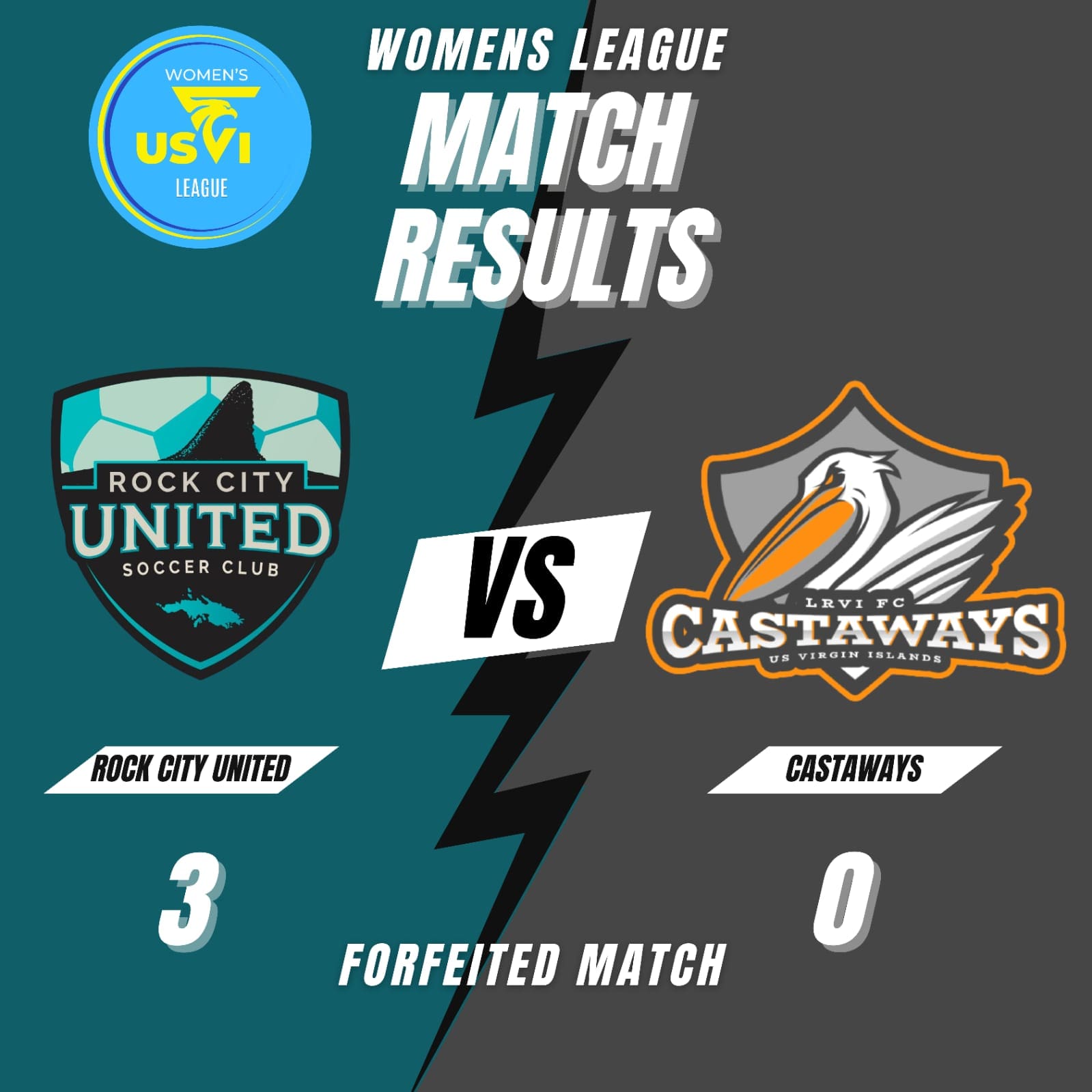
Rock City United SC is on the receiving end of this weekend’s points after another forfeited match against Castaways. (Photo courtesy USVISF)
Forfeitures by 340WSC and Castaways and a short break for the men’s teams gave St. Croix Kestrels and Champion Athletic Performance Academy a Premier League weekend all to themselves.
On St. Croix, Lady Rovers received a forfeit victory over 340WSC, adding another win to their record as the defending champions continue their strong form this season. On St. Thomas, Rock City United SC also received three goals by default, further solidifying their position at the top of the St. Thomas standings.
Lady Rovers extend first-place lead after 340WSC forfeits. (Photo courtesy USVISF)
The forfeitures reflect the growing pains of an expanding league in just its second year of operation. 340WSC is one of three newly formed teams that joined the USVISF Women’s Premier League this season, and building consistent rosters has proved to be a significant barrier to competition among other startup struggles.
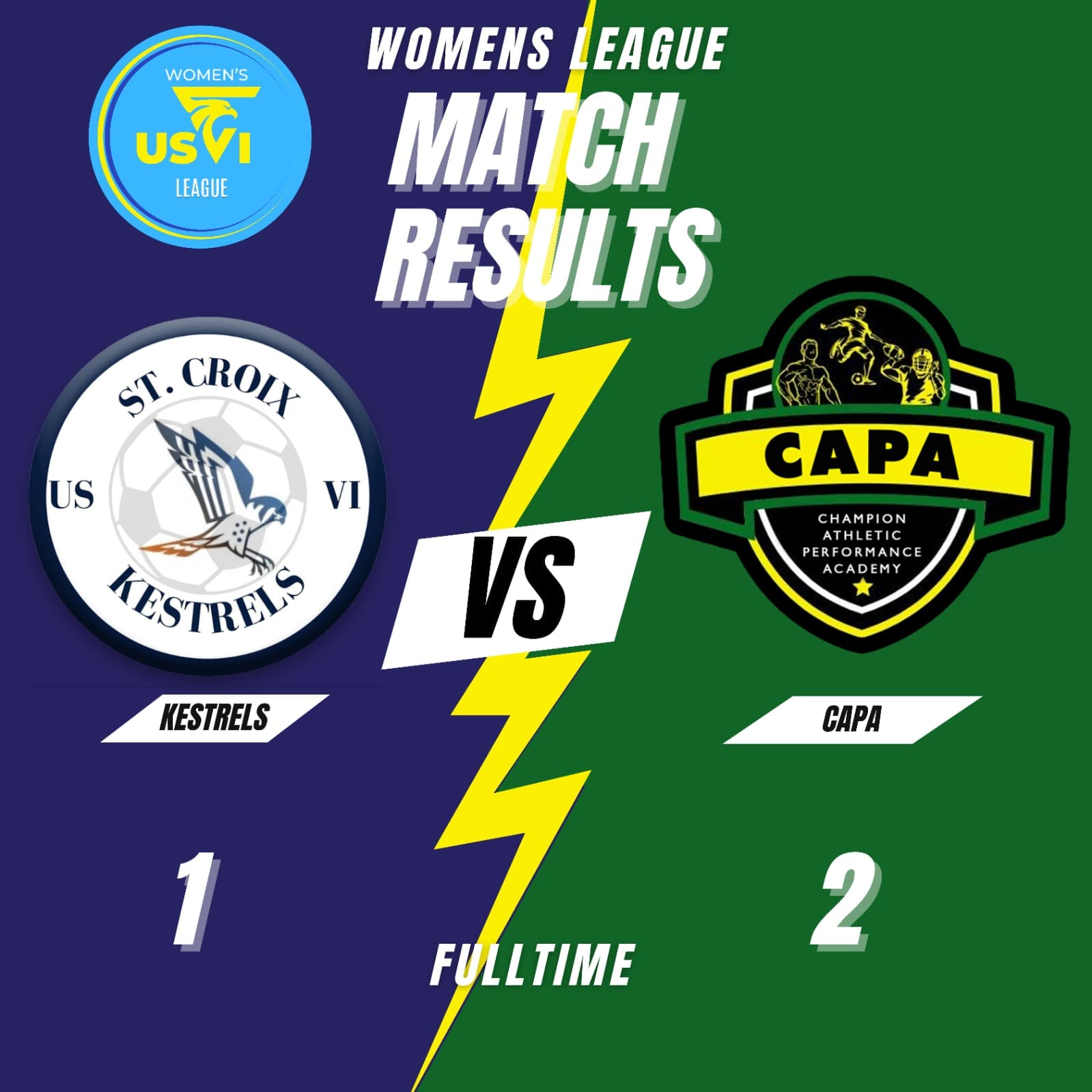
Despite these early challenges, Saturday’s completed match between Kestrels and CAPA demonstrated the quality and competitiveness of the league as it continues to grow. Both teams showcased their defensive prowess, but CAPA ultimately broke through for a narrow 2-1 victory over Kestrels.
Champion Athletic Performance Academy claims 2-1 victory over St. Croix Kestrels. (Photo courtesy USVISF)
The Aug. 2-3 weekend marks the close of regular season matches for the Women’s Premier League, setting the stage for the much-awaited championship rounds where interisland matchups will bring together the top teams from St. Croix and St. Thomas for what promises to be an exciting conclusion to the league’s second season.
Follow USVISF to find out who will make the championships.
The family of Carmelita Muhammad Rhymer Benta announces her passing May 9, 2025.Carmelita Muhammad Rhymer Benta
Carmelita served as an electrical engineer and retired from WAPA and DPNR on St. Croix. She was a faithful contributing member and supporter of the St. Croix Muhammad Study Group and Nation of Islam.
Carmelita is survived by many too numerous to mention but the family acknowledges immediate family members to include her daughter Khaijad Felecia Muammad Tonachel, sister Diane Rodgers, niece Nadia Rodgeres, nephews Tariq and Douglas Rodgers, and son-in-law Jae Tonachel.
The family also offers thanks to everyone for extending their prayers, words of condolences, and well wishes prior to and during this time of bereavement. Thank you.
Yolanda Henry was born on April 13, 1968, on the island of St. Lucia and spent majority of her life on St. Croix, Virgin Islands. Where she built her home, raised her family, and touched the lives of many with her quiet strength and resilience.
Yolanda Henry
Yolanda dedicated much of her life to caring for others, working for many years as a Certified Nursing Assistant at Herbert Grigg Home for the Aged. Her kindness and commitment left a lasting impact on the residents she served and the colleagues who worked alongside her.
She was preceded in death by her beloved son Kadeem Crosbie; her father Joseph Henry; younger brother Joseph Henry Jr. and cherished niece Brenda-Lee Laudat. Their memories live on in the hearts of those who loved them.
Yolanda is survived by her loving mother Marina Edwin, and her children: Khalid Crosbie, Khadija Crosbie, Khaisha Crosbie, Tasheem Stapleton and Tyresha Stapleton. Yolanda will be dearly missed by her sister Sophia Francis, along with her nephews including Benrick, Benaiah and niece Athiya-Merre. She is also survived by her cherished grandchildren, Ciara, Khailan, Kendrick, Skai, Tiara, Khalid Jr. and Yuna who brought her immense joy.
Friends and family viewing will be held Thursday, July 24, at Divine Chapel,#129 Peter’s Rest, between 3-5 p.m.
Funeral service will be held on Friday, July 25, at Way of the Cross Baptist Church, viewing at 9a.m. and service at 10 a.m.
Interment follows to the Kingshill Cemetery.
The Virgin Islands Waste Management Authority will install a new pump to assist with the flow of sewage at the Cancryn bridge, located at the intersection of Kronprindsens Gade. The areas between Veterans Drive and Kronprindsens Gade will be impacted.
This work is scheduled to take place on Monday, July 21, from 6:00 p.m. to midnight. During this time, the VIWMA advises the motoring public that the right lane heading east will be closed. Please drive slowly and remain attentive to the road crew or any personnel directing traffic during this period.
The VIWMA apologizes for the inconvenience and appreciates the community’s patience and cooperation as we work to maintain and improve the territory’s wastewater infrastructure.
For updates or further assistance, please contact the Division of Wastewater at (340) 715-9151 or Communications Management at communications@viwma.org. Follow us on Facebook, Twitter, and LinkedIn.