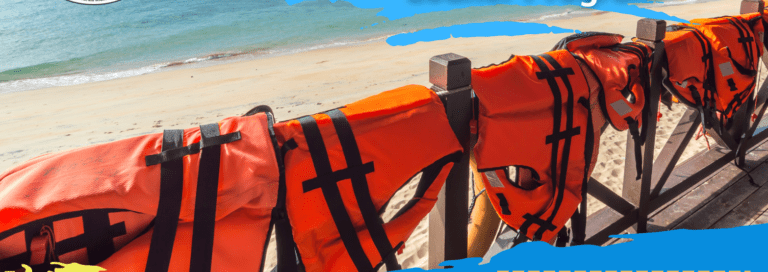
Commissioner Jean-Pierre L. Oriol of the Department of Planning and Natural Resources announces the launch of a new Life Jacket Loaner Program through the Division of Fish and Wildlife, aimed at increasing access to safe recreational boating throughout the U.S. Virgin Islands.
Borrow a life jacket from DPNR. (Submitted photo)
In observance of National Boating Safety Week, DFW is introducing the program to help both adults and children participate in boating activities who may not otherwise have access to a life jacket. Beginning May 18, individuals 18 years of age and older may visit any DFW or Division of Environmental Enforcement office in the territory to sign out an adult- or child-sized life jacket for day use.
“Life jackets are not only required by law, but they are also critical to protecting boaters while enjoying the waters of our territory,” said Commissioner Oriol. “We are pleased to offer this program to ensure that everyone has the opportunity to boat safely, even if they do not own a life jacket.”
The Division of Fish and Wildlife encourages all residents and visitors to exercise caution and prioritize safety while on the water.
For more information about the Life Jacket Loaner Program, please contact the Division of Fish and Wildlife at 340-773-1082 on St. Croix or visit the DPNR website at https://www.dpnr.vi.gov.
The Department of Public Works advises the community that payment operations at the Fort Christian Parking Lot will resume on Monday, May 18.
All vehicles currently in the lot must be removed to allow for scheduled cleanup and maintenance on Saturday, May 16, and Sunday, May 17. Vehicles remaining in the lot during that time will be towed at the owner’s expense.
A Heat Advisory will be in effect from 11 a.m. to 4 p.m. AST for areas across Puerto Rico and the U.S. Virgin Islands. Additional heat alerts may be issued in the coming days. (Photo courtesy NWS, San Juan, Puerto Rico)
A Heat Advisory will be in effect across the U.S. Virgin Islands and Puerto Rico on Thursday as hot weather affects the region. Additionally, marine conditions will be choppy and passing showers are possible, according to the National Weather Service in San Juan.
Heat Advisory Issued
The Heat Advisory, issued by the NWS, will be in effect from 11 a.m. to 4 p.m. AST Thursday for the U.S. Virgin Islands and portions of Puerto Rico, according to an update from the NWS on Thursday morning. The excessive heat is expected to continue over the coming days, and additional heat alerts could be issued.
“Dangerous heat conditions will continue through the weekend across urban and coastal areas of Puerto Rico and the U.S. Virgin Islands, with heat indices exceeding 100°F at times. Additional Heat Advisories may be required,” the NWS said.
“Heat indices are expected to reach values up to 111°F in urban and coastal areas,” the NWS added.
The NWS explained that a Heat Advisory “means that temperatures of at least 100°F or heat index values of at least 105°F are expected generally within the next 24 hours.”
The NWS defines the heat index, also known as the apparent temperature, as “what the temperature feels like to the human body when relative humidity is combined with the air temperature.”
Residents and visitors are encouraged to stay hydrated, limit strenuous outdoor activity during the hottest part of the day, and check on vulnerable individuals, including children, older adults, outdoor workers, pets, and people without access to adequate cooling.
“These conditions can be dangerous, particularly for people sensitive to heat, those without adequate hydration or cooling, outdoor workers, and vulnerable populations,” the NWS warned. “Heat stress may also impact some healthcare systems and heat-sensitive industries.”
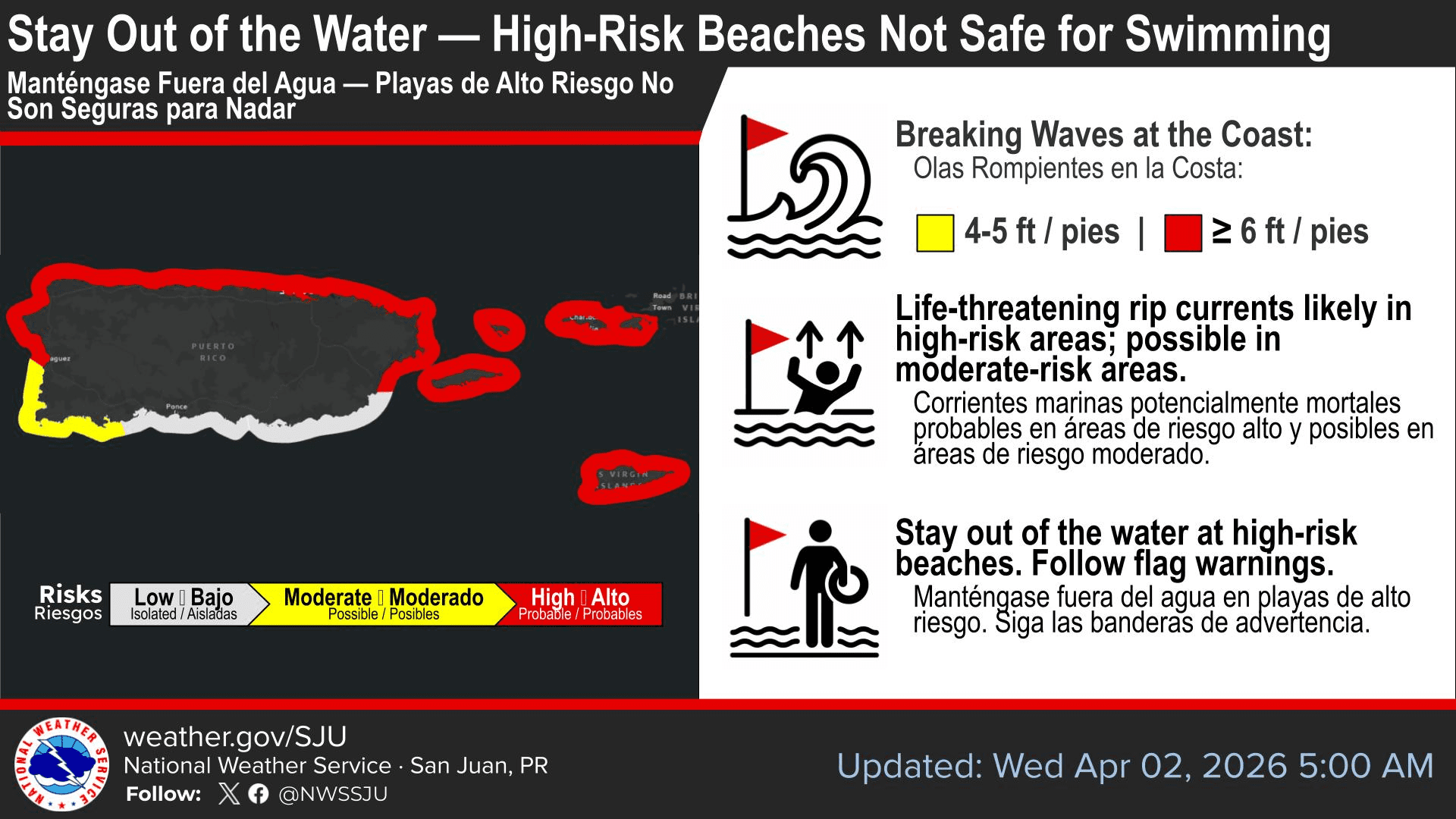
The National Weather Service in San Juan warns of life-threatening rip currents along north- and east-facing beaches in Puerto Rico and the U.S. Virgin Islands. (Photo courtesy NWS, San Juan, Puerto Rico)
Marine Conditions
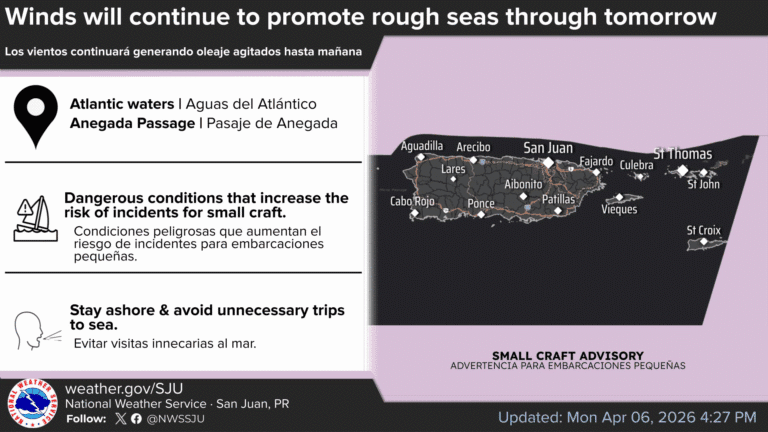
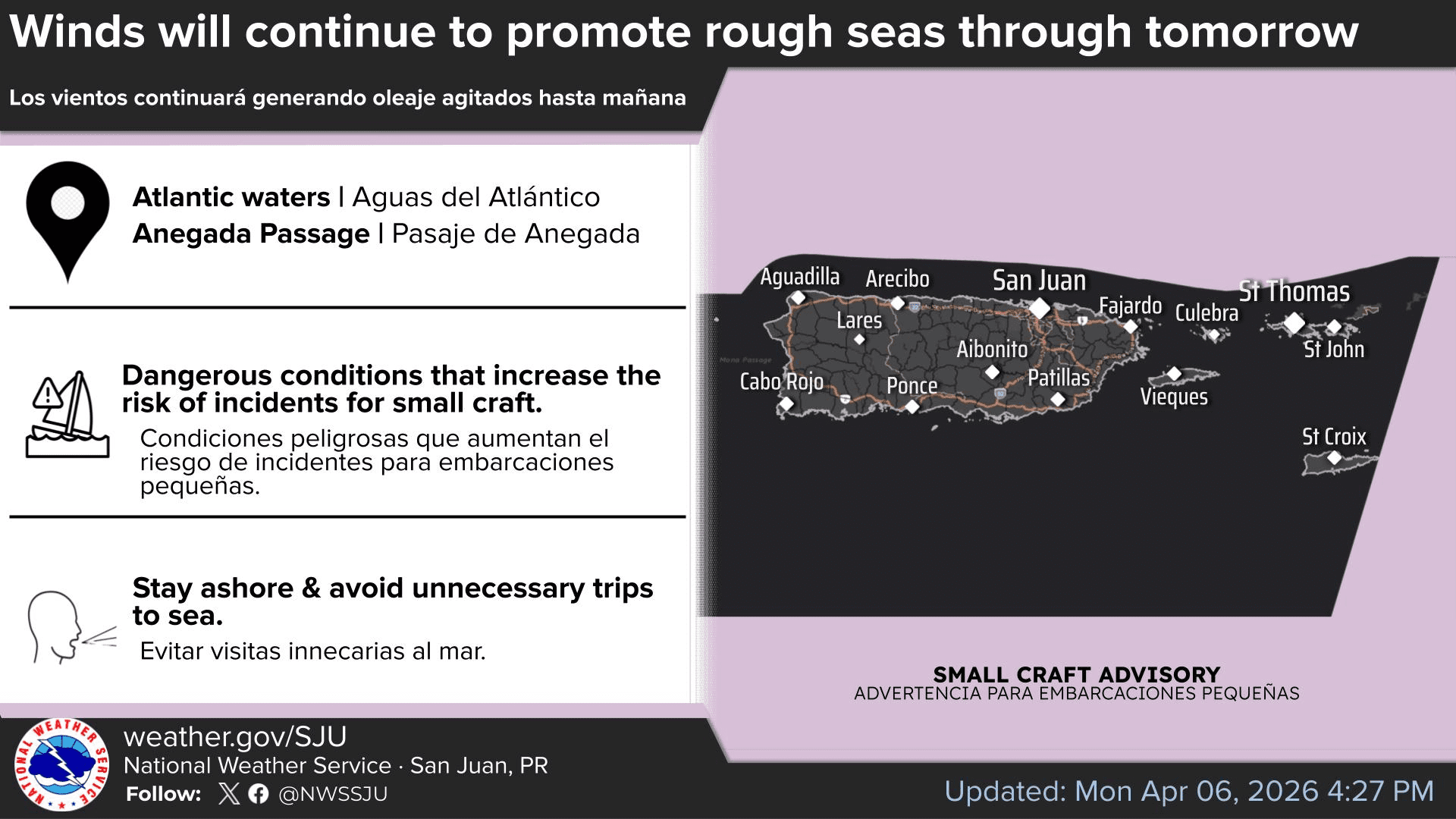
Marine conditions will remain somewhat choppy due to breezy east to east-southeasterly winds across the regional waters. A high risk of rip currents is in effect for the U.S. Virgin Islands until 6 a.m. on Friday.
“A northeasterly swell combined with locally generated wind waves will maintain a high risk of dangerous rip currents along portions of the north- and east-facing beaches of Puerto Rico and the US Virgin Islands,” the NWS stated.
Residents and visitors are encouraged to practice heat safety by staying hydrated, limiting outdoor activity, checking on vulnerable individuals and never leaving children or pets unattended in vehicles. (Photo courtesy NOAA)
Unsettled Weather Possible
Regarding rainfall chances, the NWS reported that passing showers are expected at times, especially across windward areas during the overnight and morning hours. The NWS said that ponding of water on roads, reduced visibility, and isolated urban and small stream flooding will be possible. Additional unsettled weather could arrive by next week as an area of low-pressure arrives near the islands.
“A wetter and slightly more unstable weather pattern may develop early next week as an upper-level trough approaches the region, increasing the potential for more frequent showers and isolated thunderstorms,” the NWS stated.
Finally, minor amounts of Saharan dust are also expected to affect the region.
“Traces of Saharan dust particles are expected between Friday and Saturday. Although the highest concentrations should remain south of the islands, hazy skies and minor air quality reductions will still be possible,” the NWS explained.
The morning sun shines over Christiansted Harbor, St. Croix, on Thursday, as hot temperatures affect the U.S. Virgin Islands. (Source photo by Jesse Daley)
Local Weather Forecast Information
Information regarding the weather across the USVI, including marine forecasts, is available from the NWS and NOAA. With the Atlantic hurricane season set to begin June 1, individuals across the islands are also encouraged to begin preparing for hurricane season.
The Governing Board of the Virgin Islands Water and Power Authority has scheduled an Emergency Governing Board Meeting today, Thursday, May 14, at 11 a.m. The meeting is open to the public and will be held via Microsoft Teams:
Join: https://teams.microsoft.com/meet/221927497601554?p=hpWR9xlxYZSKpSNprh
Meeting ID: 221 927 497 601 554
Passcode: Ux7Ed7NT
NOTICE IS HEREBY GIVEN that a Petition for Intestate Probate has been filed on behalf of the Estate of Catherine Grace Kelly, deceased. All persons having claims against the Estate are required to file such claims, along with proper vouchers duly verified by Affidavit, with the Superior Court of the Virgin Islands Division of St. Croix, or Charlotte Sheldon, Esq., Attorney for the Estate of Catherine Gracy Kelly, McChain Hamm & Associates, LLC, 5030 Anchor Way, Ste. 13, Christiansted, VI 00820, within six (6) months from the date hereof. All persons indebted to the Estate shall make payment to the undersigned.
This 14th day of May 2026.
/s/ Charlotte S. Sheldon
Charlotte S. Sheldon
VI Bar No. R2070
McChain Hamm & Associates
Suite 13, 5030 Anchor Way
Christiansted, VI 00820
340-773-6955 (Telephone)
855-456-8784 (Fax)
csheldon@usvilaw.com
Ferries raft up at Cruz Bay. (Source file photo by Amy H. Roberts)
A final Public Services Commission hearing scheduled for Thursday could shape the future of ferry oversight between St. Thomas and St. John, as hearing examiner Jed JohnHope defends a months-long investigation he says uncovered millions in unwarranted earnings and significant transparency concerns within the territory’s ferry system.
The 2 p.m. closing conference comes days after a contentious PSC meeting in which attorneys for ferry operators challenged nearly $190,000 in hearing examiner assessments tied to the ongoing rate investigation. The broader regulatory fight, however, centers on ferry finances, fuel costs, vessel compensation, and how rates are calculated for one of the territory’s most heavily relied-upon transportation systems.
Ferry operators and their attorneys have argued that portions of the investigation became unnecessarily expensive and overly broad. During Tuesday’s PSC meeting, attorney Maria Tankenson Hodge accused JohnHope of charging excessive fees tied to the proceeding, including high travel and lodging costs associated with February’s public hearing on St. John. The companies also questioned billing totals connected to the investigation and raised concerns about the overall scope of the hearing examiner’s work.
In filings submitted to the PSC this month, JohnHope argued that the current investigation extends far beyond prior ferry rate cases, involving independent financial analysis, public engagement tools, interim reporting, hearing coordination, and comprehensive review of ferry operations and revenue structures.
“The Commission’s last ferry rate investigation occurred about eleven years ago,” JohnHope wrote in a May 4 response to objections raised by ferry operators. “When spread over that period, the total cost of this proceeding amounts to less than $10,000 per ferry company per year.”
According to the filing, the ferry companies collectively generate approximately $7 million annually in revenue. JohnHope further argued that the investigation identified roughly $7 million in what he described as “unwarranted earnings” under the existing regulatory framework — findings he said underscore the importance of stronger financial scrutiny and public oversight.
The hearing examiner has already recommended denying the ferry operators’ proposed rate increases and called for deeper audits tied to fuel consumption, staffing, payroll, vessel disposition, and ticketing operations.
During Tuesday’s PSC meeting, JohnHope questioned whether ferry companies were continuing to receive compensation tied to vessels no longer operating within the territory.
“There are boats that have been outside of the territory for almost 10 years that are being compensated for,” he told commissioners. “There are boats that have been retired — they’re being compensated for.”
JohnHope also criticized the structure of the current ticketing system, arguing that the ferry companies’ joint ownership of the ticketing apparatus makes it difficult to independently verify ridership and revenue figures.
“The numbers were not very transparent,” he said Tuesday while recommending further audits and operational review.
Among his broader recommendations is separating the Charlotte Amalie-to-Cruz Bay route from the Red Hook ferry route for future rate analysis, arguing that the downtown route accounts for only a small percentage of overall ferry traffic and should be evaluated independently.
JohnHope also pushed back against criticism surrounding travel and accommodation expenses tied to the investigation, stating in filings to the PSC that certain travel arrangements had been discussed in advance with PSC administration and represented the lowest available option at the time. He argued that remaining overnight on St. John after February’s public hearing ultimately reduced additional billable travel time that would have been incurred returning to St. Thomas.
Thursday’s closing conference is expected to continue discussions surrounding the proposed rate increases, fuel surcharge requests, hearing examiner assessments, and the broader structure of ferry oversight moving forward.
The St. John Ferry Rate Investigation Closing Conference is scheduled for Thursday at 2 p.m. and will be accessible virtually through Zoom.
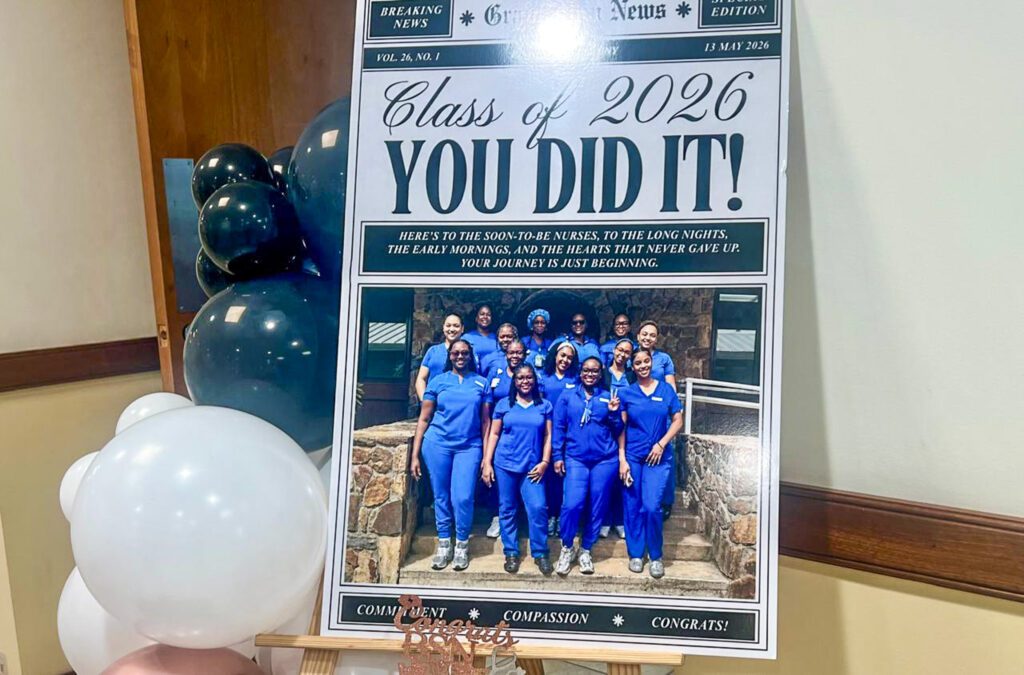
Fourteen students were pinned during UVI’s Nursing Ceremony on Wednesday (Photo by Judi Shimel)
Wednesday was the big day for fourteen undergraduate students from the University of the Virgin Islands School of Nursing, as a pinning ceremony held in their honor celebrated the hard work and persistence each of those students invested in their future nursing careers.
School administrators, government leaders, family and friends filled the conference room at the Laverne E. Ragster Administration and Conference Center on St. Thomas, where they witnessed the tradition marking the entry of graduates into the nursing profession.
On Thursday they will join with other UVI students wearing caps, gowns and sashes at the 62nd Annual Commencement Ceremony.
At the pinning ceremony students wore white uniforms, shoes and caps. Pins were installed by friends and loved ones as host Samantha Duval read personal essays written by each student.
School of Nursing Dean Lisa Lewis commended the Class of 2026. “Your belief in nursing education is an investment in the health of this territory,” Lewis said.
The dean also noted that some of the students pursued studies overseas on the U.S. mainland and in Costa Rica.
Keynote speaker Sierra Jno-Lewis, a psychiatric nurse practitioner, spoke about the ups and downs of lengthy shifts, impatient patients and taxing workloads. “Nursing is more than a career; it is a call to community, compassion and service,” she said.
The ceremony ended with a recitation of the Florence Nightingale Pledge. Students pledge to observe ethical standards, to serve as part of health care teams; to do no harm and to guard confidential information learned on the job.
“May my life be devoted to service and to the high ideals of the nursing profession,” ended the pledge heard at Wednesday’s gathering.
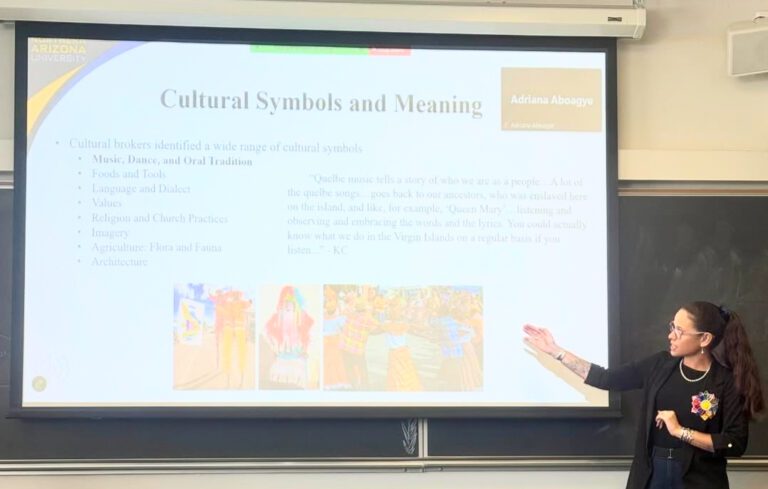
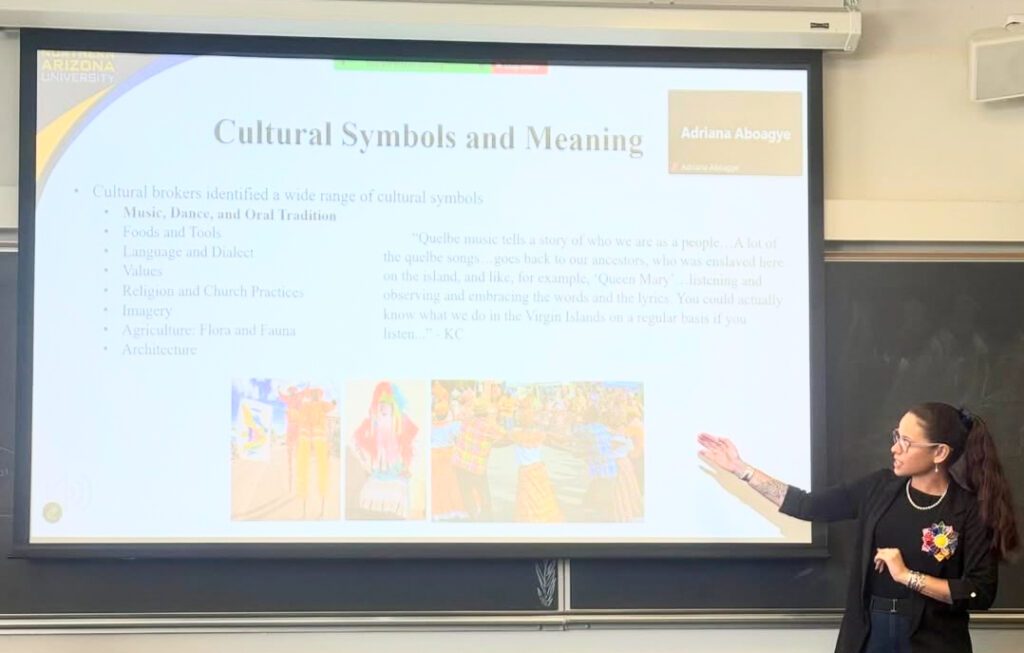
Izhani Rosa presents her doctoral research project “Dynamic and Persistent: Cultural Broker Perception of Crucian Culture.”(Photo courtesy of Izhani Rosa)
St. Croix native and doctoral candidate Izhani Rosa is exploring how Crucian cultural symbols — from quelbe music and masquerade traditions to language, food, religion, and oral storytelling — are understood, preserved, and reflected within local education systems.
Rosa, a graduate of Good Hope Country Day School and current doctoral student in a dual PhD program in School & Counseling at Northern Arizona University, recently presented research entitled “Its Dynamic and Persistent: Cultural Broker Perception of Crucian Culture.” The project examines how local “Culture Brokers” — respected community figures deeply connected to Crucian traditions — interpret cultural symbols and their place in schools and learning environments.
“At present, our local educational system is bound by the expectations and standards of mainland schooling, and so the role that local culture plays is limited and peripheral,” Rosa explained. Through her research, she said, local cultural experts are “calling for a reform that would include a more consistent and intentional integration of cultural symbols within our education system.”
At the outset of the project, Rosa discovered there was little existing research focused specifically on interpreting Crucian cultural symbols within educational settings. “But how,” she asked, “do I get to education and culture, if there are no formal research studies to draw from?” That gap ultimately shaped the direction of the study.
Describing her positionality as an “Afro-Latina Crucian woman” and “fourth generation Crucian native,” Rosa said her upbringing on St. Croix — combined with years spent studying and living on the mainland — positioned her as what she calls a “Partial Insider” in the research process. Her familiarity with Crucian dialect, traditions, and community relationships afforded her both trust and access during extensive interviews with five local culture brokers.
“St. Croix is culturally unique in a variety of ways,” Rosa explained during a Zoom call from Northern Arizona University. “We are kind of an amalgamation of various cultures put together.”
A graduate of Good Hope Country Day School’s Class of 2017, Rosa is also well known in the community for serving as “Miss St. Croix Festival Queen” from 2019 to 2022. She lived on St. Croix for the first 17 years of her life, but said her experience living “within mainland systems” positioned her “slightly further away” from the community she was studying. At the same time, her Crucian roots and shared understanding of local culture helped shape the research process. “They knew who I was and I knew how to interact in a respectful and culturally appropriate way,” she said.
Rosa organized the study around local “Culture Brokers,” which she describes as “individuals who help bridge gaps for historically marginalized communities by serving as voluntary, respected and trusted cultural experts.” The five participants selected for the project represented a wide cross-section of Crucian cultural knowledge and public life — including educators, musicians, historians, legal professionals, and tradition bearers connected to masquerade, quelbe, storytelling, and culinary arts.
Among those who participated were a local storyteller and teacher of masquerade and culinary arts traditions, a University of the Virgin Islands history professor and member of Stanley and the Ten Sleepless Knights, an administrator for Virgin Islands Cultural Education, a quelbe musician and fellow member of the Sleepless Knights, and an Associate Justice.
Serving as a foundation for the study were two guiding questions: How do cultural brokers describe Crucian culture and its symbols? And how do they describe the relationship between education and Crucian culture? Rosa said the work was rooted in the understanding that “culture shapes so many aspects of life, including how kids learn,” adding that research has shown culturally responsive curriculum and pedagogy can help build belonging, identity, and engagement among students.
In describing her methodology, Rosa said she approached the project as “a qualitative pilot study using a focused ethnographic approach” through a “post-positivist theoretical background,” while also utilizing an “Insider/Indigenous psychology perspective.” The interviews focused on defining Crucian culture, interpreting a “constellation” of cultural symbols grouped by likeness, and discussing the role of culture within schools and learning spaces.
Those symbols included language and dialect, music, dance and oral traditions, religion and church practices, architecture, and agriculture. Rosa found that many of the symbols identified by participants were rooted in honoring and remembering African ancestry. “Many of our symbols stem from African practices that were brought in by our enslaved ancestors and persisted despite attempts at erasure during slavery,” she explained. Several traditions, she added, evolved through what participants described as the “Africanization of European practices.”
The culture brokers interviewed agreed that Crucian cultural symbols should be preserved and more intentionally integrated both at home and within schools. Four of the five participants strongly supported the development of curriculum that incorporates cultural practices across core subject areas, while the fifth advocated specifically for a comprehensive K-12 local history and social studies curriculum. Participants said such efforts could help strengthen students’ sense of pride, belonging, and connection to Crucian heritage.
Speaking about the study, the territory’s State Director of Virgin Islands Cultural Education Stephanie Chalana Brown described the work as a “structured and locally grounded examination of how culture is understood by those who actively carry, teach, and shape it.”
“The research centers five Culture Bearers working across education, law, arts, and community practice,” Brown said. “That sample may be small, but it is intentionally selected for depth, and it produces consistent patterns that deserve attention within both academic and policy spaces.” She added that the study identifies “where culture currently lives in schools, how it is experienced by students, and what direction cultural experts are calling for.”
Rosa also expressed appreciation for her own educational experience at Good Hope Country Day School, crediting the school with helping prepare her for doctoral-level research and academic work.
“GHCDS gave me the skills needed to thrive in academia,” she said. “I was exposed to, dare I say, advanced content. I believe that GHCDS instilled values for critical thinking and productive questioning. I was taught to analyze and think deeply about what information is being presented. I also believe that we were taught skills for effective communication and an appreciation for science and research.”
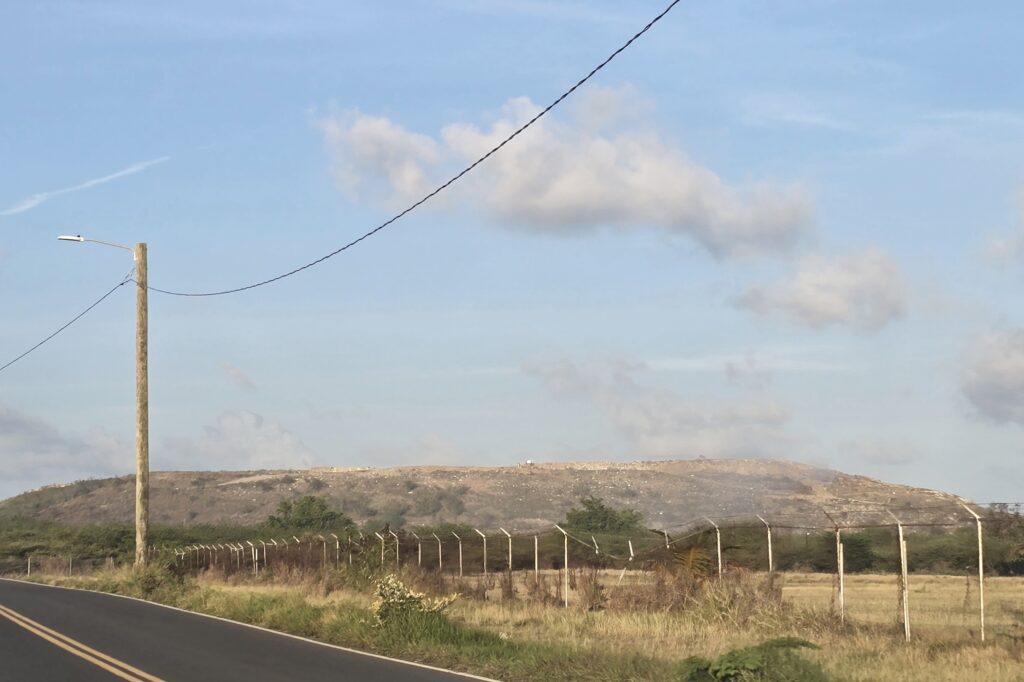
The smell of smoke lingered over the Anguilla Landfill after the V.I. Waste Management Authority and the V.I. Fire and Emergency Medical Services extinguished a fire Wednesday afternoon on St. Croix. (Photo by Kit MacAvoy)
Personnel from the V.I. Waste Management Authority and the V.I. Fire and Emergency Medical Services Wednesday afternoon extinguished a fire at the Anguilla Landfill that temporarily halted dump operations and blanketed the surrounding area in foul-smelling smoke.
The Waste Management Authority announced the fire, which erupted in the southwest side of the landfill’s “working phase” where trash is deposited, shortly after 2 p.m. A WMA spokesperson told the Source after 5 p.m. that the fire was contained and the smoke was diminishing, and she said the fire had been extinguished by 6 p.m. No injuries were reported.
Wednesday’s fire was at least the third to close the St. Croix landfill in 2026. Anguilla temporarily closed during the first weekend in March after flames erupted on the landfill’s southeastern and western sides. A fire on Jan. 2 also closed the landfill, which reopened the following day.
Following the latest fire, WMA had not yet provided information about the landfill’s reopening schedules by Wednesay evening.
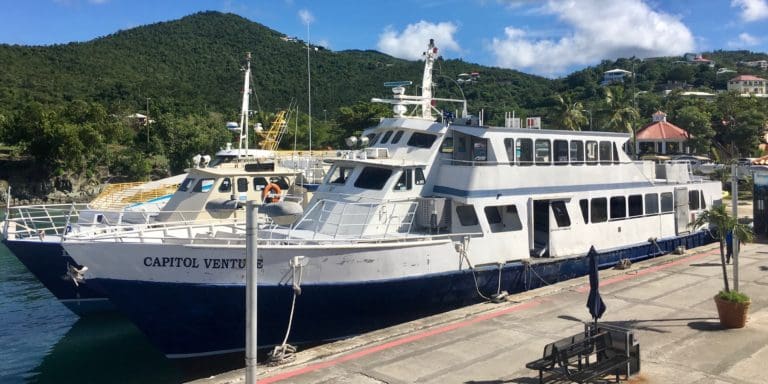
The Virgin Islands Department of Public Works is issuing a clarification regarding statements made during the recent ferry rate hearing concerning the operation of the Spirit of 1733, as well as references to other government-owned vessels, Cruz Bay I and Red Hook I.
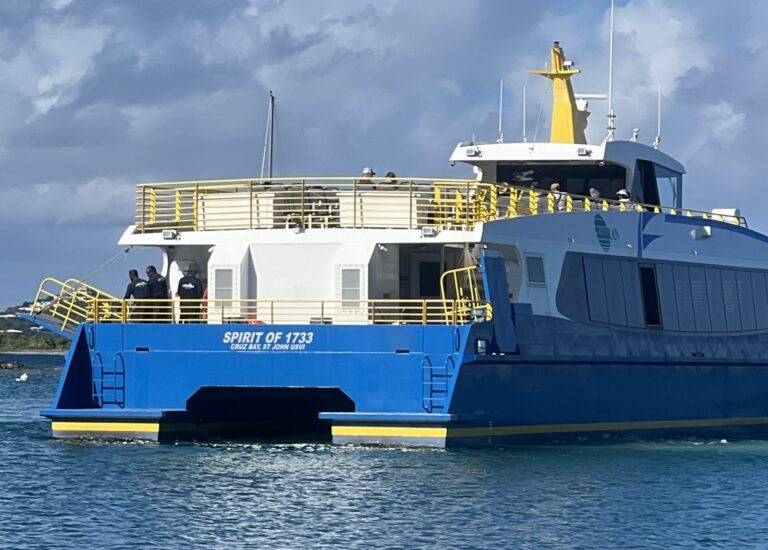
Spirit of 1733 arrives on St. Thomas (Photo courtesy DPW)
The Spirit of 1733 was acquired using federal grant funding based on ridership demand and service commitments for the Red Hook to Cruz Bay route (Route 32M). As such, its use is restricted to that designated service area in accordance with federal requirements.
While a request was made to operate the vessel on the Charlotte Amalie route on a limited basis to access lower fuel costs, the Department cannot authorize passenger operations outside of the federally supported route. The Department has advised the operator that the vessel may transit to Charlotte Amalie for refueling purposes only. No passengers may be transported, and no revenue service may be conducted during such movements.
The Department also clarifies statements made regarding other government-owned vessels. In August 2025, authorization was granted for the use of Cruz Bay I and Red Hook I by Transportation Services and Varlack Ventures, respectively, to operate along Route 30M between Cruz Bay and Charlotte Amalie.
Additionally, the Department is not aware of any conditions that would support claims of significant or prolonged downtime for these vessels. Operating agreements require that the Department be notified of operational challenges. While routine maintenance and repair activities do occur, the Department does not concur with characterizations of excessive downtime.
The Department supports efforts to mitigate rising operational costs and is in favor of reasonable measures, including the consideration of a fuel surcharge applied to non-resident passengers as a means of offsetting increased fuel expenses.
Commissioner Derek Gabriel stated, “We recognize the real cost pressures facing our ferry operators and support practical solutions that help sustain service, including the implementation of a reasonable fuel surcharge for non-resident passengers. At the same time, we have a responsibility to ensure that federally funded assets are operated strictly within the conditions under which they were awarded.”
The Department will continue to engage with the Federal Transit Administration and Federal Highway Administration to explore other compliant operational alternatives.